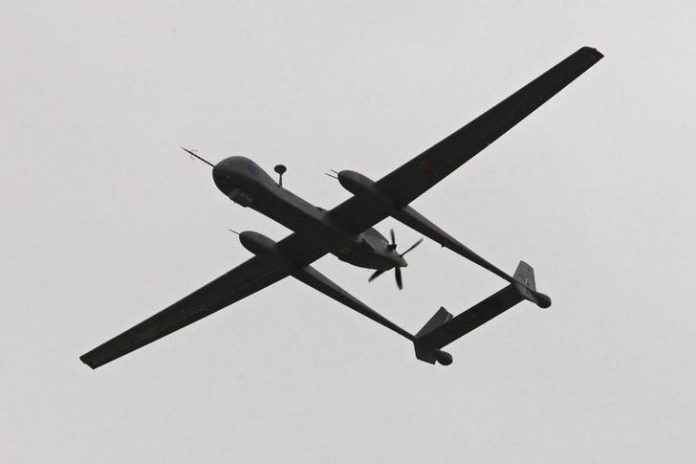
A German court dismissed a legal challenge from U.S. weapons maker General Atomics to Germany’s plans to lease armed drones from Israel Aerospace Industries (IAI), clearing the way for the drone program to go ahead, Reuters reported. Judge Heinz-Peter Dicks said the ruling was effective immediately and meant that Germany can now procure drones as it had planned.
Early last year Defence Minister Ursula von der Leyen announced the German military (Bundeswehr) would lease Heron TP drones for about 580 million euros ($652 million). The German favored the Israeli proposal over other offers from General Atomics and Switzerland’s RUAG, prompting protests by the two firms. General Atomics took its fight to Germany’s anti-trust regulator and then to court. The higher court in Duesseldorf that dismissed the complaint on Wednesday was the final arbiter in the case.
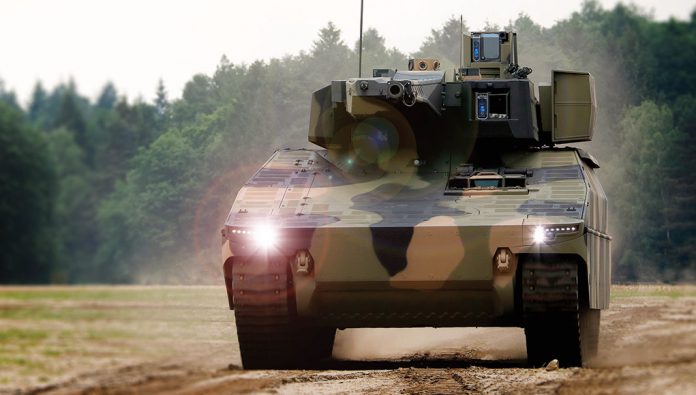
Lynx KF 31 Infantry Combat Vehicle from Rheinmetall Landsystems.
Rheinmetall is showcasing its new family of LYNX combat vehicles at the IDET 2017 in the Czech Republic city of Brno. Based on mature technologies and components the LYNX is positioned as an advanced, mid-weight armored vehicle designed to replace AFVs that are gradually being phased out, such as the BMP-1 and BMP-2 used by many of the Eastern European countries, including the Czech Republic.
Rheinmetall has already integrated Czech contractors – RayService and Quittner & Schmiek – into its production and supply chain for defense projects. In addition, the German group is seeking to expand cooperation with Czech enterprises in both the public and the private sector. Initial talks have already taken place and agreements reached with VOP CZ.
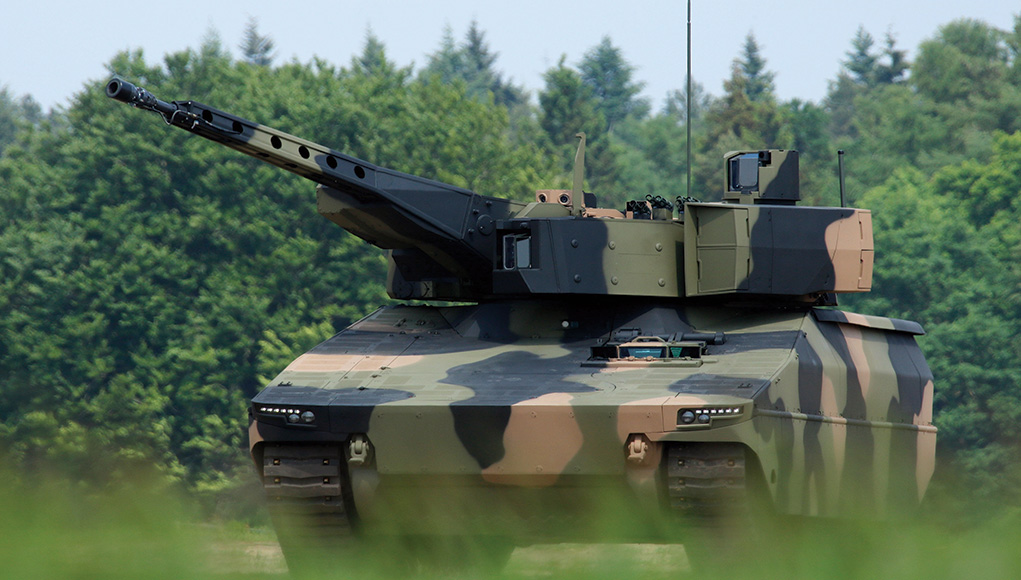
Developed by Rheinmetall Landsysteme GmbH, this combat vehicle family comes in two different versions: the KF 31 (on display at IDET) and KF 41. KF stands for “Kettenfahrzeug”, which is German for ‘tracked vehicle’; the number refers to the military weight class.
The KF 31 features a two-man LANCE turret armed with a medium-calibre, airburst-capable Rheinmetall MK30-2/ABM machine cannon, which serves as the vehicle’s main armament and a twin launcher for the SPIKE anti-tank guided missile. Photo: Rheinmetall Landsysteme
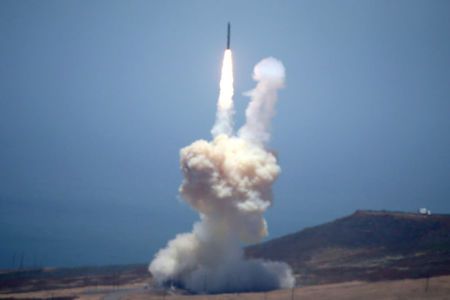
The U.S. Missile Defense Agency conducted today a successful, long-awaited test of the Ground-Based Midcourse Defense (GMD) element of the Missile-Defense system protecting the Continental USA from attacks by intercontinental ballistic missiles (ICBM). Initial indications are that the test met its primary objective, but program officials will continue to evaluate system performance based upon telemetry and other data obtained during the test.
During the test, an ICBM-class target was launched from the Reagan Test Site on the Kwajalein Atoll in the Republic of the Marshall Islands. Multiple sensors provided target acquisition and tracking data to the command, control, battle management and Communications (C2BMC) system that supports the BMD. The Sea-Based X-Band radar, positioned in the Pacific Ocean, also acquired and tracked the target. The GMD system received the target tracking data and developed a fire control solution to intercept the incoming missile. On 13:30 a ground-based interceptor was launched from Vandenberg Air Force Base, Ca. and its exo-atmospheric kill vehicle intercepted and destroyed the target in a direct collision.
“The intercept of a complex, threat-representative ICBM target is an incredible accomplishment for the GMD system and a critical milestone for this program,” said MDA Director Vice Adm. Jim Syring. “This system is vitally important to the defense of our homeland, and this test demonstrates that we have a capable, credible deterrent against a very real threat. I am incredibly proud of the warfighters who executed this test and who operate this system every day.”
The $244 million test, designed to validate reliability improvements to the Boeing/Orbital ATK booster and Raytheon/Aerojet Rocketdyne Exoatmospheric Kill Vehicle (EKV), specifically the “Configuration 2” booster and “Capability Enhancement-II Block 1” EKV. The successful test will enable Boeing to proceed with production and upgrading of 44 Ground-based Interceptors that (GBI) to be equipped with the new EKV by year’s end. By the end of 2018 MDA plans to follow on with a tougher test – intercepting a salvo of ICBMs.
Fake or true? Intriguing Intercept Video
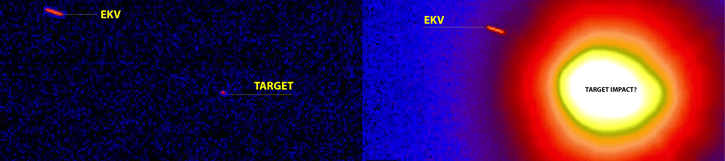
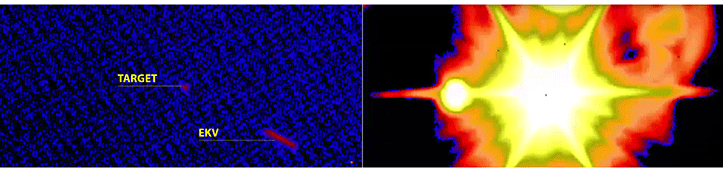
Carefully inspecting the video that provided evidence of the successful intercept, one cannot ignore the anomaly visible on 00:59, showing an object closing in rapidly from the left and surviving the explosion.
On 00:59 the target blasts in a glowing fireball, with an object, likely the Exoatmospheric Kill Vehicle (EKV) interceptor that would have caused the explosion on impact – seemingly continue flying into the fireball. Photo: MDA VideoThe second shot from a different angle (01:04) does not show this anomaly. Photo: MDA Video
Defense-Update consulted missile experts about this anomaly. We were assured that these anomalies do happen in tests, particularly at extremely high speed and long ranges. “Although it seems intriguing, visual tracking of such high-speed events, particularly in thermal vision, is challenging, particularly in the high resolution and high speeds required for exoatmospheric intercept of such fast targets. The high energy released on impact would also saturate the sensors and could cause the ‘smear’ in the infrared. It is likely that Boeing and MDA do not rely their assessment on visual evidence, but on other data, including telemetry from the interceptor and target, that would cease at the same time, to indicate an impact.”
The GMD element of the Ballistic Missile Defense system provides combatant commanders the capability to engage and destroy intermediate and long-range ballistic missile threats to protect the U.S. The mission of the Missile Defense Agency is to develop and deploy a layered ballistic missile defense system to defend the United States, its deployed forces, allies, and friends from limited ballistic missile attacks of all ranges in all phases of flight.
The GMD system uses globally deployed sensors to detect and track ballistic missile threats. The interceptor made by Boeing, using a solid propulsion system made by Orbital ATK. It carries an exoatmospheric kill vehicle (EKV) made by Raytheon. The test was the first intercept for the new CE-II Block 1 kill vehicle that uses a newly designed divert thrusters meant to fix persistent problems guiding the kill vehicle. The test also validated upgrades on the boost vehicle side – including improving avionics and performance enhancements, refreshing technology on communication data terminals and modernizing ground systems, command launch equipment, and fire-control systems.
The test, designated Flight Test Ground-Based Interceptor (FTG)-15, will provide the data necessary to assess the performance of the GMD system and provide enhanced homeland defense capabilities. The last flight test of GMD in 2014 was successful but it did not engage a real target. The system failed during the three prior attempts. As important as this test is, the GMD system is still far from being able to provide reliable protection from a real-world missile threat – LAURA GREGO, Senior scientist at the Union of Concerned Scientists commented in a recent post.
The test comes as North Korea is pacing up its effort to develop and field intercontinental ballistic missiles that already can reach Guam and could soon reach Hawaii, Alaska and the US Pacific west coast. The 44 GBI interceptor force positioned at Vandenberg, CA and Fort Greely in Alaska are currently countermeasures capable of defeating such threats.
Enhanced Scud-ER is claimed by North Korea to hit within few meters of its targets, at a distance of 1,000 km. Defense analysts are doubtful if the Korean scientists can deliver on these claims. Photo: Yonhap
North Korea asserted Tuesday that it has developed a means to strike moving targets at sea with precision. The capability was validated during a recent missile test conducted yesterday (Monday) when Pyongyang tested an upgraded Hwasong-7 (Scud-ER) type missile equipped with trajectory correction and Maneuvering Reentry Vehicle (MaRV), transforming the ballistic missile into ‘precision-guided’ one.
The rocket, fired from the country’s east coast early Monday morning, traveled around 450 kilometers to splash into the East Sea, according to the South Korean military. The North said it has halved the range for the test. It means the missile’s actual range is similar to a Scud-ER (extended range) at about 1,000 km.
According to official sources, the upgraded missile is capable striking targets at sea or on land, including warships. North Korea is pursuing such capability for a long time, in an effort to negate the US capability to strike from the sea. However, missile experts are doubtful whether the upgraded Scud-ER will be able to target a ship-size target at sea. It could, however, be accurate enough to target naval and air bases with reasonable precision. On the recent test, the missile flew to a range of 450 kilometers (280 miles). The event planned to test the missile and the specially designed tracked launcher. The official announcement goes into unprecedented details saying the missile hit the target seven meters from the ‘bullseye’. While such lucky strike could be a coincidence, consistent accuracy like this cannot be taken for granted and is not achievable with current guidance controls.
The North’s Nodong mid-range missiles are known to have an accuracy of 2,000 – 3,000 meters when flown over 1,000 km. A Scud missile would hit 450 to 1,000 meters from its target, after flying 300 km. China’s DF-21D Anti-Ship Ballistic Missile (ASBM) reportedly has a CEP of 30-40 meters. Another improvement claimed by Pyongyang was the reduction in the pre-launch process, achieved by implementing automated processes. The Hwasong uses liquid propulsion that requires a lengthy pre-launch fueling process.
The enhanced variant of the North Korean Hwasong 7 (Scud-ER) missile was unveiled during the military parade in Pyongyang, 15 April 2017. The missile is carried on a tracked launcher, designed to move and operate on rough terrain.The upgraded Scud-ER missile was unveiled on April 15, 2017, mounted on a new tracked transporter-erector-launcher (TEL) at the military parade in Pyongyang. It showed distinct changes from the standard Hwasong-7, with control fins added in the fore section, adding stability and refining the flight trajectory during the boost stage. According to Korean sources, the missile uses some propulsion augmentation in the mid-phase to maintain speed control and stabilization. It also added guidance measures in the terminal phase, to achieving ‘ultra-precision guidance’.
Regardless of the issue of accuracy, North Korea does not currently have the means to find and localize such targets over the horizon, lacking satellite and aerial surveillance means that would deliver the coordinates and motion vector of a ship in real time for the targeting of such missiles.
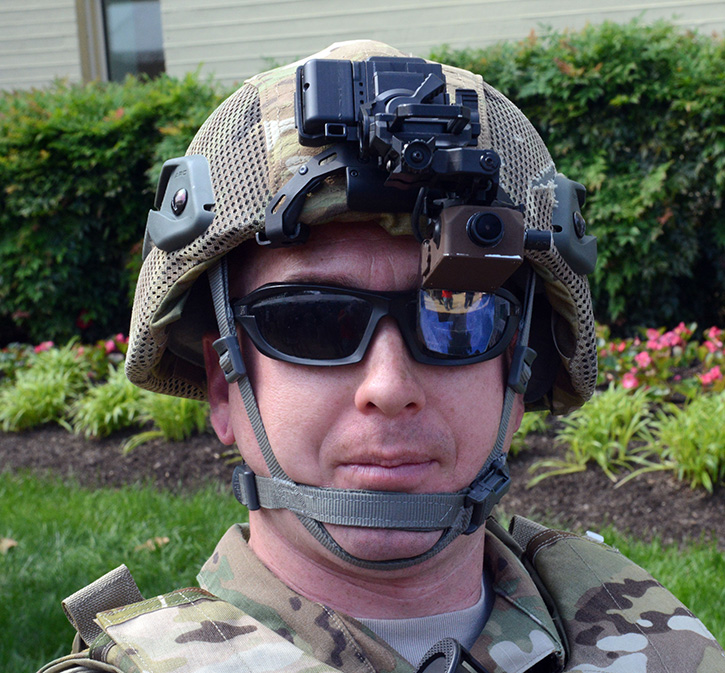
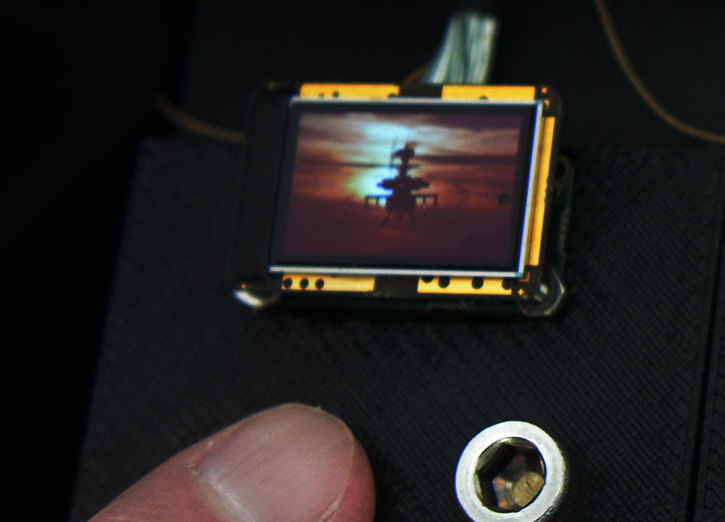
The US Army Communications-Electronics Research, Development and Engineering Centre (CERDEC), recently introduced a futuristic heads-up display (HUD) that have the potential to empower the dismounted warfighter by laying a synthetic, game-like information and sensor overlay over the battlefield picture they currently experience.
The Army has been working on developing miniature eyepiece technology since 2008. Current commercial technology compresses images into sizes small enough to fit into tablet and cell phone-sized windows, but getting a high-definition image into the very tiny eyepiece was a challenge that could not be met with commercial, off-the-shelf hardware.
Current technology is able to compress monochrome images, but the ultimate goal is to display video, and augmented reality images in full color.
Currently, CERDEC is working on producing more advanced versions that are in full color and have a brightness display that can even be seen in daylight. The current monochrome versions are also bright enough to be seen in daylight.
Staff Sgt. Ronald Geer, a counterterrorism non-commissioned officer at CERDEC’s Night Vision and Electronics Sensors Directorate demonstrates the ‘Tactical Augmented Reality’ – TAR – a technology that superimposes tactical data and graphics on the night vision and sight display using a tiny heads-up display attached to the helmet. The system was displayed during Lab Day at the Pentagon, May 18, 2017. Photo: US Army by David Vergun)Current technology is able to compress monochrome images, but the ultimate goal is to display video, and augmented reality images in full color. Photo: US Army
Such ‘Tactical Augmented Reality’ (TAR) system will use a helmet-mounted eyepiece which connects via a wireless connection to a small ‘wearable’ computer and positioning system. The thermal sight the soldier wears will also link wirelessly to the system, as well as the weapon’s sight, adding day/night view, orientation and weapon aiming data.
When soldiers point their weapons or look at targets, the sight image of the target is displayed in the eyepiece, with relevant details like the distance to target, and velocity of its movement. Other relevant information related to the situation, such as ‘combat ID’ and location of other targets or friendly forces can also be displayed. The eyepiece also has The eyepiece even has a split screen, so for example, if the rifle is pointed rearward and the Soldier is looking forward, the image shows both views, he said. The eyepiece even has a split screen, to maintain critical information in sight (for example, a weapon’s view and a forward view).
Tactical Augmented Reality provides sensor imagery with integrated mapping, navigation, and 3D surface models for greatly enhanced operational maneuver and fires. The wireless links enable seamless integration of devices and sensors and sharing information and images with other members of the squad.
Tactical Augmented reality provides sensor mapping, navigation, and 3D surface models for greatly enhanced operational maneuver and fires. This capability increases the Soldier’s ability to maneuver the battlefield and enhances survivability in dangerous operations.
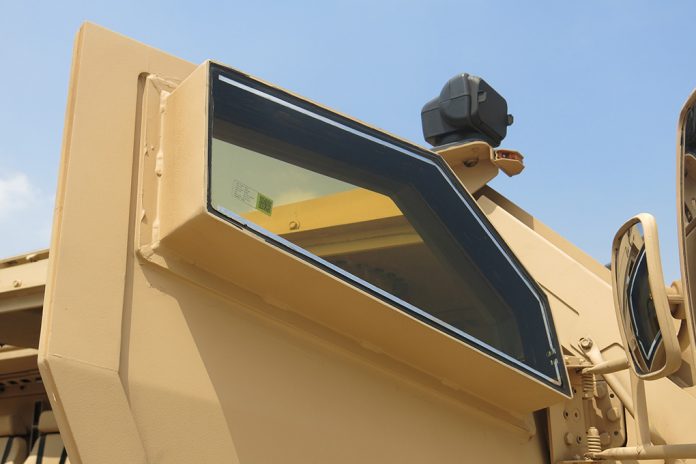
A side window made of layered glass, used on Oshkosh M-ATV. Photo: Noam Eshel, defense-Update
Military operations have changed in the 21st century, from linear, massive battles between peers, to asymmetric engagements involving unequal forces. Military against insurgents, law enforcement against terror and air power against elusive combatant elements hidden underground and immersed within the civilian population. This new type of warfare has changed the perspective of military planners. The linear battlespace of the past required combat vehicles protected by massive frontal armor, supported by unprotected logistic formations that operated away from the danger at the front line. Today’s warfare exposes all elements to threats, and requires all-around vehicle protection for the heavy forces and support elements alike; frequent increases in threat level requires constant improvements in protection.
This requirement has increased the demand for armored, mine protected vehicles for the military, law enforcement as well as other government and civilian agencies that operate in high threat environments. Such vehicles should provide an elevated level of protection and operate on roads, within the civilian environment for extended missions.
These vehicles require various levels of protection, meeting specific threat levels they may face in battle. Almost all vehicles in this class have a mix of opaque and transparent armor (TA) solutions, enabling the crew to operate the vehicle on road and in the confined spaces of an urban area. Traditionally, opaque armor is produced of steel or aluminum, that offer the thinner but heavier solution for a given level of protection; metal armor is often augmented by ceramic or composite materials to add protection and reduce weight. Lacking a transparent metal solution, TA facilitates ballistic protection through a combination of layered transparent glass and composites bonded with resins and adhesives to meet the level of protection like that provided by opaque armor. As the level of protection increases, the windows become thicker and heavier.
Developers of transparent armor are always seeking to bring lighter and thinner solutions to reduce the weight of an armor kit and increase the available volume inside the protected capsule, enabling protection for lighter vehicles.
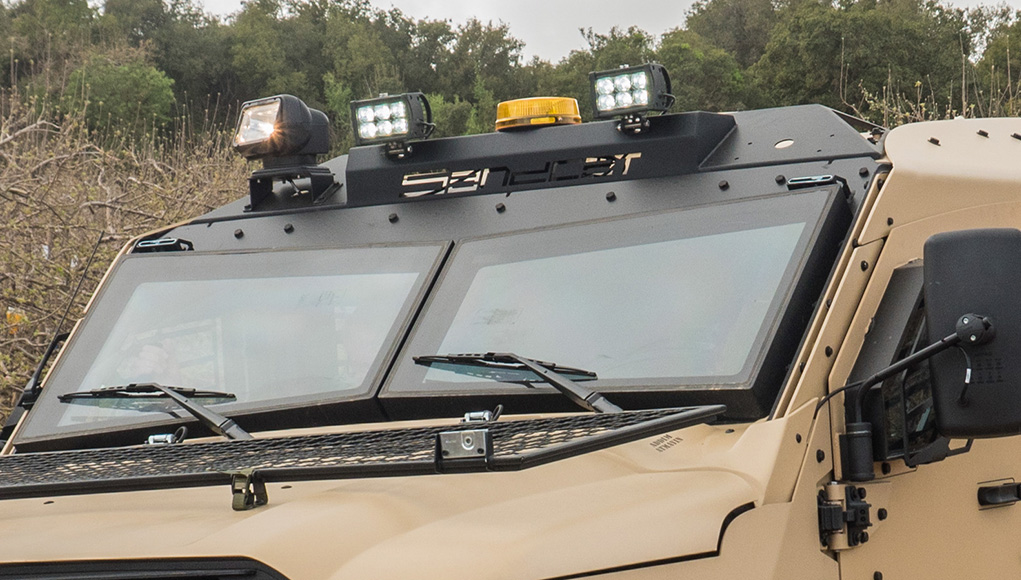
A Sandcat armored vehicle (also known as Stormer) fitted with a two-piece windshield. Photo: Noam Eshel, Defense-Update
“Our transparent armor is made for both military and civilian security and defense applications.” Daniel Cohen, President, and CEO of OSG told Defense-Update. We spend significant research and development in the development of advanced TA solutions that reduce thickness and aerial weight and improve the life cycles of fielded systems. For example, OSG TA modules designed to defeat 7.62×51 mm (BR6) are 30 mm thick while OSG armor solutions defeating the 7.62×51 AP threat (BR7) are 60 mm thick. Some of our products are up to 40% lighter than previous industry standards.”
Combat vehicles are constantly exposed to harsh field environmental conditions including impact and abrasion, extreme temperature changes and humidity, and exposure to chemicals. These effects could damage the complex layered glass structure of transparent armor, causing delamination and deteriorate transparency that shortens the lifespan of the armor. As an approved supplier of TA for numerous military forces, including the USA Army, USMC, German BWB, British, French, Italian, Australian and other MODs, OSG has developed the ADI series of transparent armor that provides reduced life cycle cost.
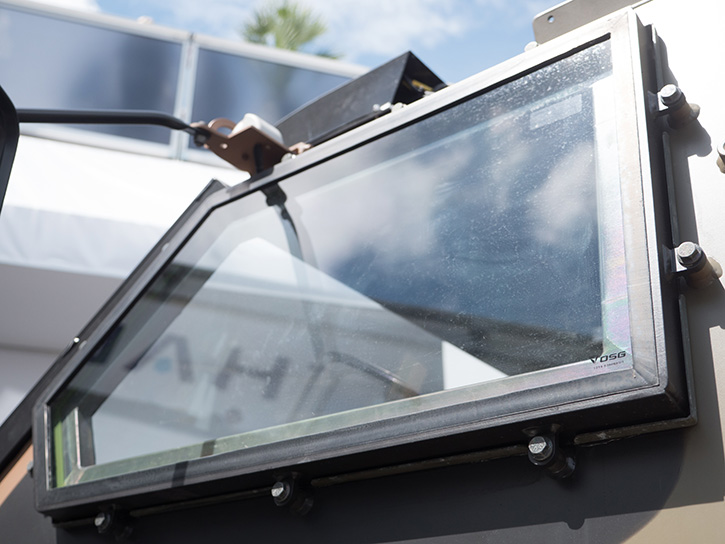
The ADI Transparent Armor system was developed by OSG to enhance the life cycle of transparent armor and improve its transparency across a wide spectral range. Photo: Noam Eshel, Defense-Update
“By employing new materials and technology ADI considerably extends the durability and life cycle of the Transparent Armor, while preserving a no-spall environment within the vehicle,” Cohen said. “This armor has been proven to be lighter and stronger than “conventional” glass-polycarbonate products.” The ADI series has been extensively tested and certified for field deployment, allowing customers to benefit from easier maintenance and longer service life.
“ADI technology also offers high resistance to impact from projectiles, which allows the thickness and areal density of the product to be reduced,” Cohen added.
OSG is the largest supplier of armored windows for the MRAP and MATV family of vehicles operated by the US military and international customers. Operating with vehicle designers and manufacturers, OSG delivers optimized transparent armor solutions to meet specific requirements and platform design. The company supply such solutions to two of the latest tactical vehicles programs – the American JLTV made by Oshkosh and Australian Hawkei, made by Thales Australia.
“To meet increasing threats, we have pioneered many of our industry’s most important innovations.” Cohen said, “One of the most innovative technologies currently in development is CERALITE – an ultra-light transparent armor solution developed by OSG in cooperation with CeramTec of Germany. CERALITE transparent armor is lighter and thinner when compared to conventional transparent armor solutions at defined protection levels. It also has an increased multi-hit capability and provides better light transmission, particularly when used with night vision devices.”
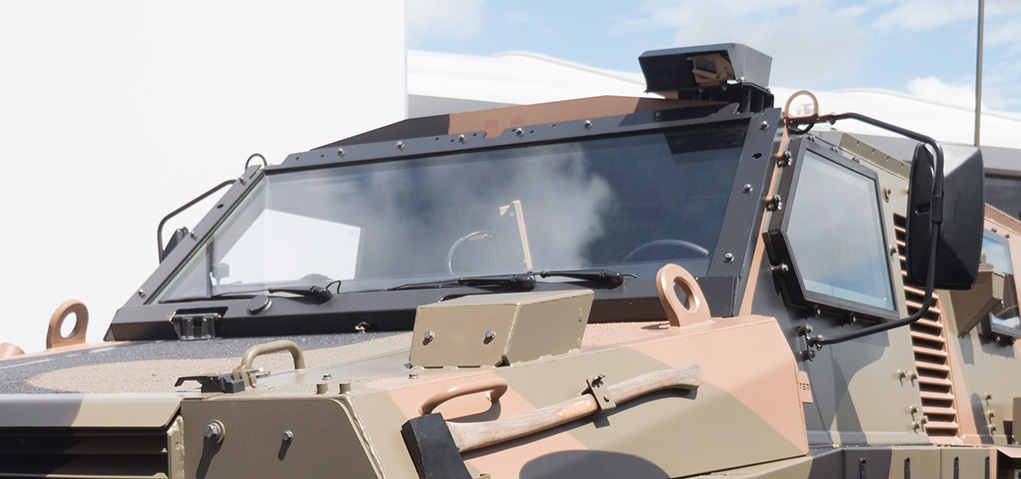
Overall, CERALITE achieves greater than 50% reduction both in weight and thickness when compared to traditional glass solutions. It also improves the surface resistance to abrasion, scratches and rock impact. Reduced weight and thickness of the transparent armor also means a significant reduction in volume and therefore the weight of framing materials, further contributing to the overall reduction of gross vehicle weight. Meeting a higher level of protection at a given weight means a single transparent solution that meets all protection requirements, eliminating the need for a replacement armor (B-kit) to meet a higher level of threat. It also allows the use of a single armored windshield, contributing to better visibility for the driver. Elimination of B-kit armor represents significant cost-saving implications in design, production, operation and maintenance of the vehicle fleet across its operational lifespan. The lower weight further Improves performance, increases the vehicle’s life cycle.
A single piece windshield used on the Thales Bushmaster. Photo: Noam Eshel, Defense-Update
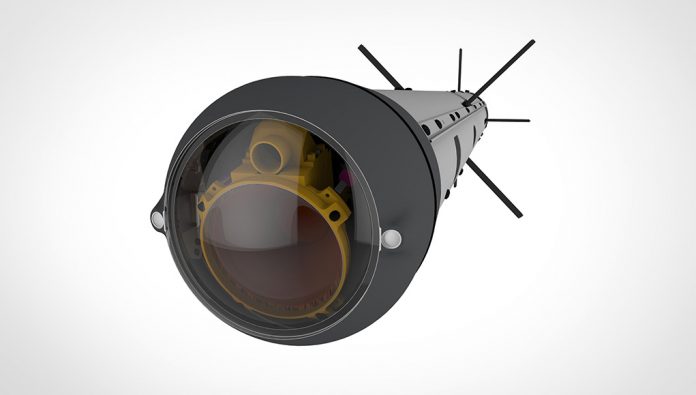
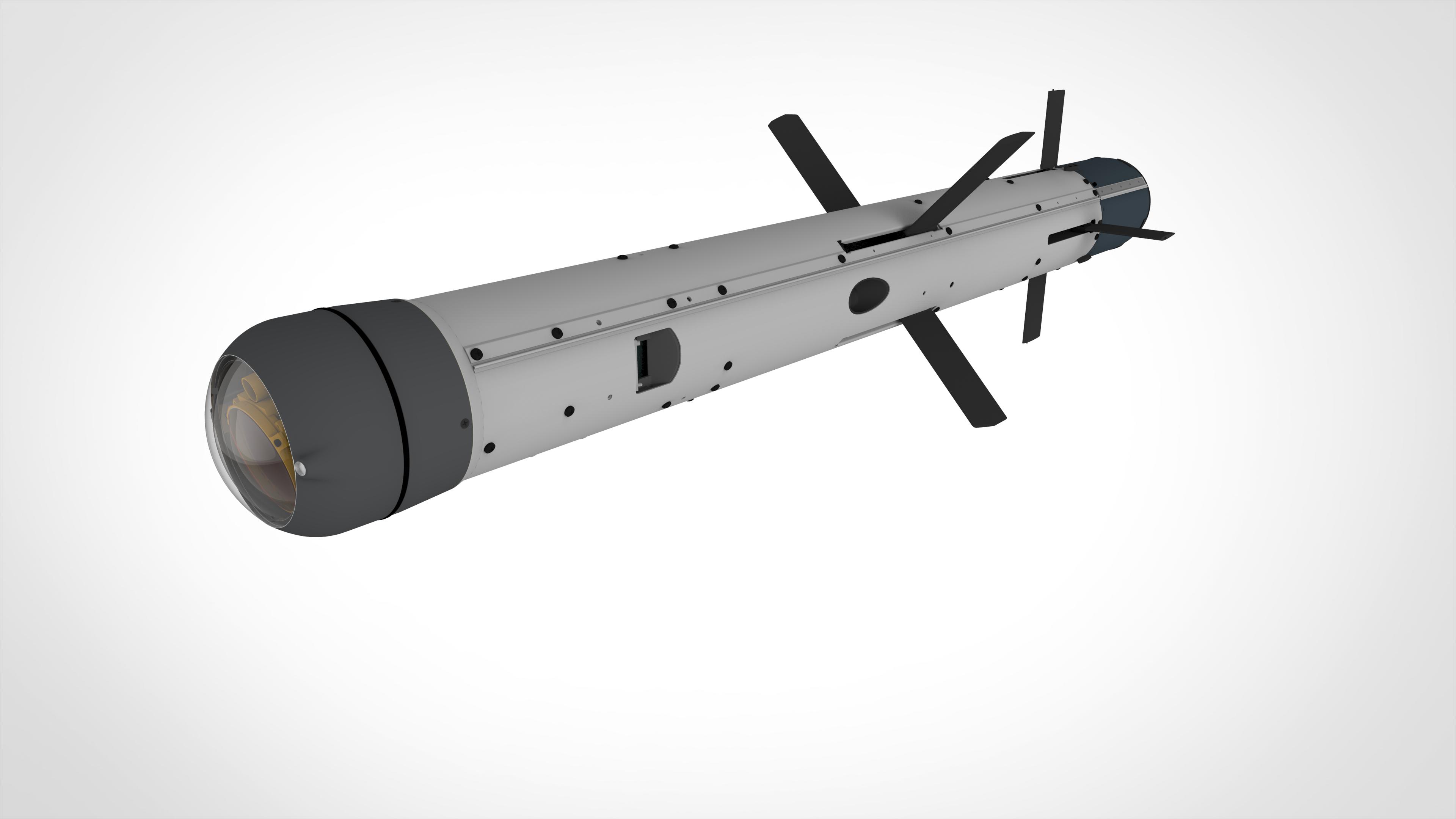
RAFAEL's Spike LR II missile. The warhead's lethality has increased by 30% and the range extended by 35%. The new seeker uses an uncooled IR and color HD sensors. Image: RAFAEL
Israel’s missile pioneer Rafael Advanced Defense Systems unveiled today the latest member of its Spike multi-purpose missile family – Spike LR II. Defined as the first “5th generation”, the multi-purpose missile is a variant of the Spike Family, designed to defeat the toughest targets in the battlefield, modern main battle tanks, fast vehicles or bunkers. Currently, the new weapon is in full-scale development; it is scheduled to be operational by the end of 2018.
Spike-LR II is smarter, sharper and agiler than its predecessors, but is designed to operate from the same launchers used for Spike MR and LR, in dismounted configurations, on vehicles, weapon stations, marine platforms, and helicopters. It will also fit the new lightweight launcher developed by RAFAEL for aerial platforms, enabling light helicopters to defeat tanks, vehicles or bunkers from ten kilometers away. The new missile will be presented for the first time at the Paris Air Show in June.
Weighing 12.7 kg – 10% less than the legacy LR, Spike LR II provides major enhancements over the current LR variant -in lethality, range, and resolution. First and foremost, the new version enhances the Spike’s capability to defeat targets of all types – from main battle tanks with advanced, reactive and active protection, to fortified and evasive targets and those hidden in bunkers, buildings.
To handle such a wide range of targets RAFAEL offers the missile with a choice of two warheads – an anti-tank missile optimized with an enhanced tandem warhead that increases armor penetration by 30 percent over the previous generation. Another advantage of the new missile is its ability to strike at higher impact angles – Spike LR II will be able to hit targets at up to 70 degrees, delivering more lethal top attack profile. According to RAFAEL, the SPIKE LR II is the only missiles known to have an inherent Counter-APS (CAPS) capability.
RAFAEL’s Spike LR II missile. The new, fifth-generation weapon is currently in full-scale development. Image: RAFAEL
The second type is the multi-purpose version, provided with a different tandem warhead using multiple fusing presets designed to defeat light or fortified targets. The variable fusing enables the operator to set the fuse to penetrate a target or explode on impact. Designed to operate as a penetrating warhead, the missile’s warhead would breach a small hole through reinforced concrete, for the main charge to follow through.
The missile maintains the fiber-optic data link for man-in-the-loop control but the new missile can defeat those targets from an extended range of up to 5,500 meters. When launched from helicopters, it uses may opt to use a new HD datalink that almost doubles the missile’s range to 10 km. RAFAEL has designed a lightweight launcher that carries two missiles, that, fully armed weighs less than a single Hellfire missile.
The missile Spike LR II introduces a new, passive and uncooled multi-band seeker that integrates both thermal and High Definition (HD) color imagery, increasing the weapon’s target acquisition and tracking efficiency even against complex and evasive targets. The new seeker includes capabilities of a smart target tracker with AI features (Artificial Intelligence).
Those software-based AI functions enable the seeker to maintain target lock even in situations that auto trackers generally fail – target disappearing behind obstacles, or against a low-contrast background, where third generation (fire and forget) missiles would fail, and fourth generation missiles would need operator assistance. The new Spike LR II can overcome such challenges and track its target automatically. Moreover, as a software defined feature those seeker functions can be changed and upgraded, enabling designers to implement innovative techniques against new enemy counter-countermeasures.
Designed for use against elusive targets with low signature, time-sensitive characteristics, SPIKE LR II has an embedded IMU (Inertial Measurement Unit) for missions supporting third party target acquisition, allowing the firing of the missile to grid target coordinates. These functions are particularly useful in ‘blind launch’, engaging ‘disappearing targets’ even when the launching platform do not have visual identification of the target.
Rafael has supplied over 27,000 SPIKE Missiles and systems to over 26 countries, many of them operate the MR and LR variants. Spike-LR II is designed to be compatible with all legacy launchers, enabling all users to enhance their operational capabilities every time they replenish their missile stocks.
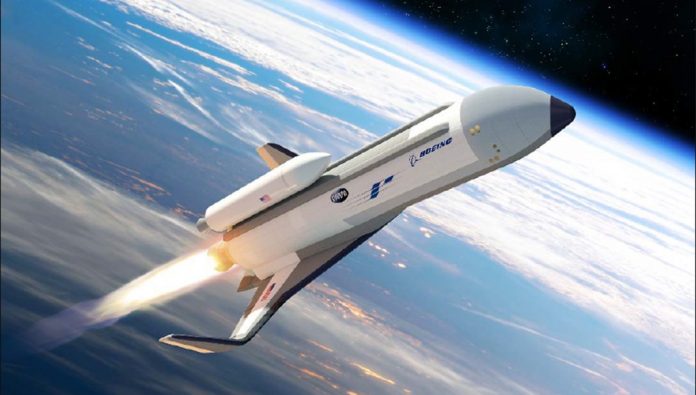
DARPA’s Experimental Spaceplane (XS-1) program seeks to build and fly the first of an entirely new class of hypersonic aircraft that would break the cycle of escalating launch costs and make possible a host of critical national security options. As the next step toward a future of routine, responsive, and low-cost space access, DARPA has awarded Phases 2 and 3 of the program to The Boeing Company.
The X-37B landed at Vandenberg AFB on December 3, 2010, concluding its more than 220-day experimental test mission. Photo: Boeing
DARPA has selected the Boeing Company to complete advanced design work for the Agency’s Experimental Spaceplane (XS-1) program, which aims to build and fly the first of an entirely new class of hypersonic aircraft that would provide short-notice, low-cost access to space. The new space plane will be able to rapidly deploy satellites and payloads to low Earth orbit in days, rather than months or years of preparation currently needed to get a single satellite on orbit. Such capabilities will enable the Pentagon to replace critical capabilities compromised by catastrophic damage or hostile action from ground-based or space-based weapons. Such weapons were tested by China and Russia.
Unlike the X-37 space plane launched by satellite launchers on extended missions in space that span over a year, but lands on a runway, the future XS-1 envisions a fully reusable suborbital unmanned vehicle that will be able to take off and land like an aircraft. Roughly the size of a business jet, it would take off vertically like a rocket and fly to hypersonic speeds. The vehicle would be launched with no external boosters, powered solely by self-contained cryogenic propellants. Upon reaching a high suborbital altitude, the booster would release an expendable upper stage able to deploy a 3,000-pound satellite to polar orbit. The reusable first stage would then bank and return to Earth, landing horizontally like an aircraft, and be prepared for the next flight, potentially within hours.
“The XS-1 would be neither a traditional airplane nor a conventional launch vehicle but rather a combination of the two, with the goal of lowering launch costs by a factor of ten and replacing today’s frustratingly long wait time with a launch on demand,” said Jess Sponable, DARPA program manager. “We’re very pleased with Boeing’s progress on the XS-1 through Phase 1 of the program and look forward to continuing our close collaboration in this newly funded progression to Phases 2 and 3—fabrication and flight.”
Once delivered for testing, XS-1 will perform a series of flight tests demonstrating the capability to fire the engine 10 times in 10 days. This test is scheduled to begin in 2019. Beginning the actual test flights in 2020 XS-1 will perform 12-15 shakedown flights then perform the test’s goal flying 10 missions on 10 days at speeds as high as Mach 5-10. its final test flight XS-1 will carry an upper-stage payload delivery system that will deliver a satellite weighing 900-3,000 lbs into low earth orbit.
If successful, the program could help enable a commercial service in the future that could operate with recurring costs of as little as $5 million or less per launch, including the cost of an expendable upper stage, assuming a recurring flight rate of at least ten flights per year—a small fraction of the cost of launch systems the U.S. military currently uses for similarly sized payloads.
Some of the technologies used in the XS-1 derive from space vehicles – the advanced, lightweight composite cryogenic propellant tanks are designed to hold liquid oxygen and liquid hydrogen propellants. The propulsion system is an Aerojet Rocketdyne AR-22 engine, a version of the legacy Space Shuttle main engine (SSME). On the other hand, the space plane will use easily accessible subsystem components configured as line replaceable units, similar to the systems used in repairing and maintaining military planes. To endure the high temperature of reentry, hybrid composite-metallic wings and control surfaces are used, able to withstand the physical stresses of suborbital hypersonic flight and temperatures of more than 2,000F. Automated flight-termination and other technologies for autonomous flight and operations, including some developed by DARPA’s Airborne Launch Assist Space Access (ALASA) program.
DARPA intends to release selected data from the XS-1 to companies interested to commercialize this capability. “We’re delighted to see this truly futuristic capability coming closer to reality,” said Brad Tousley, director of DARPA’s Tactical Technology Office (TTO), which oversees XS-1. “Demonstration of aircraft-like, on-demand and routine access to space is important for meeting critical Defense Department needs and could help open the door to a range of next-generation commercial opportunities.”
If successful, the program could help enable a commercial service in the future that could operate with recurring costs of as little as $5 million or less per launch, including the cost of an expendable upper stage, assuming a recurring flight rate of at least ten flights per year—a small fraction of the cost of launch systems the U.S. military currently uses for similarly sized payloads.
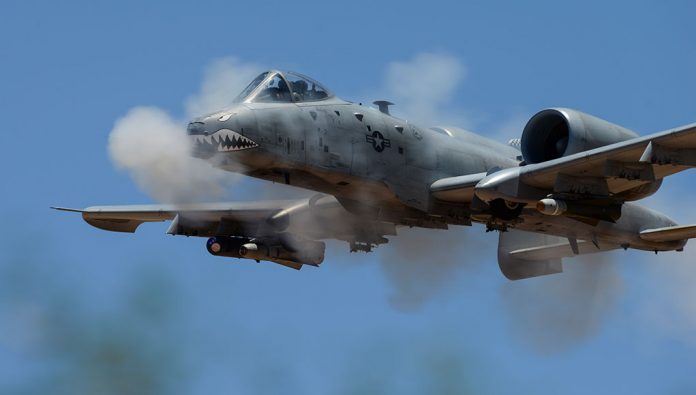
An A-10C Thunderbolt II assigned to 75th Fighter Squadron performs a low-angle strafe during the 2016 Hawgsmoke competition at Barry M. Goldwater Range, Ariz., June 2, 2016. Photo: U.S. Air Force, by Senior Airman Chris Drzazgowski
The U.S. Air Force plans to maintain its fleet of Fairchild A-10 Thunderbolts close air support aircraft and the Lockheed Martin U-2 high altitude spy plane, shelving plans to phase out these cold-war era platforms. The strategy change acknowledges the need CAS and ISR capabilities, particularly to maintain and preserve present operational capabilities against insurgencies in Syria, Iraq, and Afghanistan, in parallel of developing new capabilities for future operations against much more sophisticated and capable enemies.
The Air Force confirmed Tuesday that it plans to maintain the majority of its A-10 Warthogs in coming years, despite previous plans to phase out the entire A-10 fleet, replacing the armored flying gunslingers’ Close Air Support (CAS) capability by fifth-generation F-35 stealth fighters and new, off the shelf light attack platform.
An Air Force official said the A-10 fleet was being kept indefinitely, but in the future, some A-10 aircraft could be retired as other aircraft become operational.
A-10C, HH-60G Pave Hawks, and HC-130J Combat King II aircraft from the 23d Wing conducted a surge exercise May 22, 2017, at Moody Air Force Base, Ga. The exercise was conducted in order to demonstrate the wing’s ability to rapidly deploy combat ready forces across the globe. for precision attack, personnel recovery and combat support worldwide. Photo: U.S. Air Force, by Staff Sgt. Ryan CallaghanA U-2 Dragon Lady approaches an altitude near 70’000 ft. above California, Mar. 23, 2016. The pilot must wear a full-pressure suit similar to NASA astronauts. Photo: U.S. Air Force by Staff. Sgt. Robert Trujillo.
The U.S. Air Force also dropped plans to begin retiring the U-2 Dragon Lady spy plane around 2019. The Pentagon’s budget request for fiscal 2018 does not include any funding request or time schedule for the U-2 retirement. As a result of additional spending in the recently enacted 2017 budget and the proposed 2018 plan, the Air Force has more resources to maintain both the RQ-4 Global Hawk unmanned platforms intended to replace the U-2 and the manned spy plane. “We plan to keep that platform well into the future. It’s a capability that we need and we also need the capacity as well,” Said Maj. Gen. James Martin, the Air Force’s deputy assistant secretary for budget. “We need both [platforms] to meet the demand of ISR,” Martin said.
Budget uncertainty in previous years played a role in recent recommendations to retire the U-2, the general said. The U-2 retirement could save about US$2.2 billion, the Air Force estimated last year. But “the world changed in August 2014,” Martin said, in an apparent reference to the start of the U.S. military campaign against the Islamic State of Iraq and Syria, or ISIS.
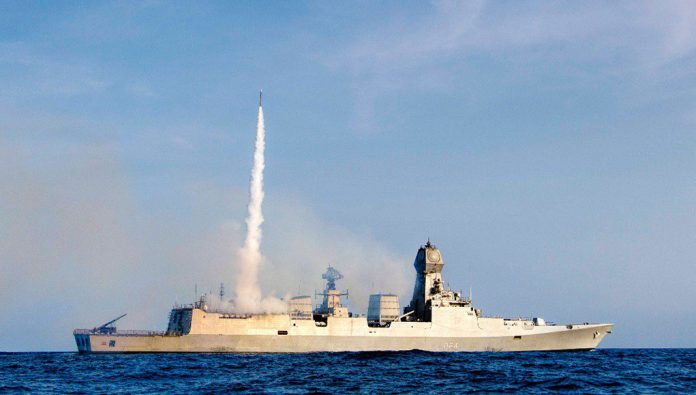
LRSAM missile launched from INMS Kochi, on its first firing test, May 17, 2017.
Israel Aerospace Industries (IAI) announced today it has been awarded an additional, $630 million- contract for the supply of LRSAM air & missile defense systems for four ships of the Indian navy. The type of ships was not released but are likely to be Project 15B Visakhapatnam-class missile destroyers, scheduled for commissioning from 2018 through 2024.
The system was successfully tested last week in India as part of operational interception trial aboard India’s naval missile destroyer INS Kochi. The test validated the integration of the missile and the associated fire control system with the indigenously developed ship-borne combat management suite. INS Kochi is one of three Kolkata class missile destroyers – the first class of ships to receive the LRSAM air defense system. Last month India ordered the system for its new aircraft carrier, INS Vikrant.
Each system comprises at least one launcher, carrying eight missiles, a command-and-control system, and a tracking radar. The Indian Navy plans to procure 12 LRSAM systems at a cost of more than $2 billion. The Indian Air Force has also ordered a land-based derivative of the system, known as MRSAM systems, at an additional cost of $2 billion while the Indian Army plans to purchase a different land-based version of MRSAM, at a cost of $1 billion. In addition, IAI is offering the Indian military a new, Quick Reaction Surface-to-Air (QRSAM) variant of Barak-8 addressing the Army’s requirement for mobile air defense.
The contract will be carried out, for the first time, with Indian government company Bharat Electronics Ltd (BEL), which serves as the prime contractor on the project as part of India’s “Make in India” policy. IAI and BEL have established the cooperation in 2012, under a memorandum of understanding (MOU). The MOU provides a framework for BEL-IAI cooperation, under which BEL functioned as the Lead Integrator and produce major sub-systems. IAI continue to act as Design Authority and produced sub-systems as a main sub-contractor of BEL. Another main subcontractor, Bharat Defence Ltd. (BDL) is also positioned to benefit from the program, BDL will supply the Barak-8 missiles from a new production line established in Hyderabad. BDL is working with the missile integrator RAFAEL, which is the Design Authority for the interceptor.
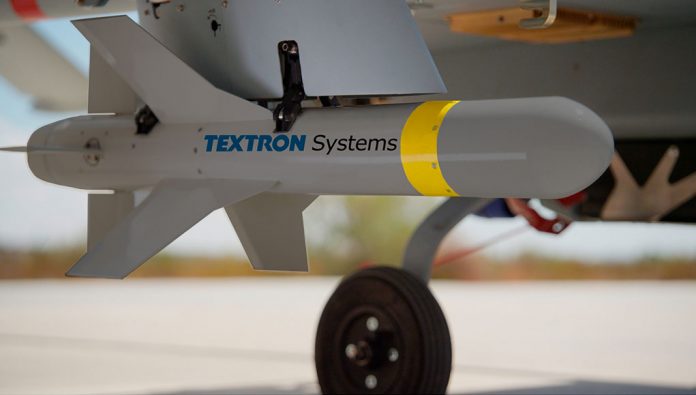
Textron Systems Weapon & Sensor Systems successfully tested the ‘Fury’ lightweight precision-guided glide munition against moving targets at Yuma Proving Grounds in Arizona. The test marked the completion of the weapon’s development testing.
The test series included 13 Fury test flights that accumulated a total of 23.8 flight hours between captive carriage, survey flights and ten weapon releases from unmanned aircraft systems (UAS). Two tests were conducted from Textron Systems’ own Shadow Tactical UAS at an altitude of 8,000 feet and a 1.5 kilometer standoff against a moving target. Both munitions successfully impacted the target. These results demonstrate end-to-end testing of the Fury weapon and improve both system maturity and Technology Readiness Level (TRL).
The Fury weapon uses a common interface for rapid integration on multiple manned and unmanned platforms. The weapon’s tri-mode fuzing – impact, height of burst and delay – further enables a single Fury to address a broad target set, ranging from static and moving light armored vehicles to small boats and dismounted personnel. Fury is guided by a GPS-aided inertial navigation system with a Semi-Active Laser terminal guidance, enabling engagement of moving targets.
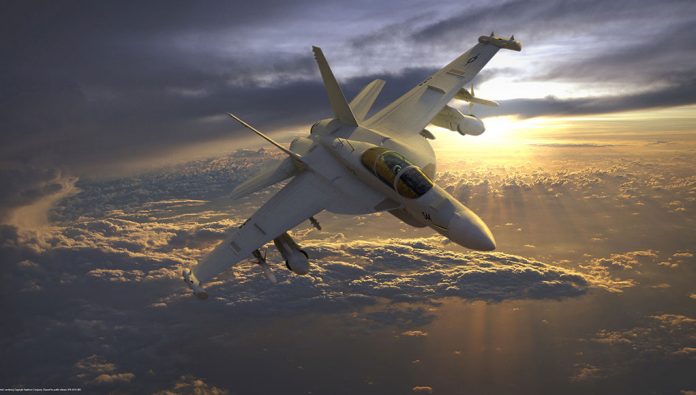
The Airborne Electronic Attack Systems and EA-6B program office (PMA-234) of the US Naval Air Systems Command (NAVAIR) completed a critical design review (CDR) for the AN/ALQ-249 Next Generation Jammer (NGJ) Increment (Inc) 1 Mid-band program at Naval Air Station Patuxent River, Maryland, in late April.
The system is now in the Engineering and Manufacturing Development phase with Raytheon Space and Air Systems, the pod prime contractor, and Boeing, the EA-18G GROWLER aircraft integration prime contractor. The AN/ALQ-249 NGJ Inc 1 Mid-band capability, once fielded, will transform the way the U.S. Navy conducts electronic warfare.
The system is now in the Engineering and Manufacturing Development phase with Raytheon Space and Air Systems, the pod prime contractor, and Boeing, the EA-18G GROWLER aircraft integration prime contractor. The AN/ALQ-249 NGJ Inc 1 Mid-band capability, once fielded, will transform the way the U.S. Navy conducts electronic warfare.
Next Generation Jammer (NGJ) Increment 1 Mid-band program at Naval Air Station Patuxent River, Maryland, in late April.
During CDR, it was determined that the design and development are on track to meet crucial warfighter requirements, and fabrication, demonstration, and testing could proceed. The system is now in the Engineering and Manufacturing Development (EMD) phase with Raytheon Space and Air Systems, the pod prime contractor, and Boeing, the EA-18G aircraft integration prime contractor. The AN/ALQ-249 NGJ Inc 1 Mid-band capability, once fielded, will transform the way the U.S. Navy conducts electronic warfare.
The system will address the emerging, advanced threats and increased threat density using the latest Active Electronically Scanned Array, also known as AESA, digital and software-based technologies.
This article was first published by the US Naval Air Systems Command (NAVAIR): www.navair.navy.mil
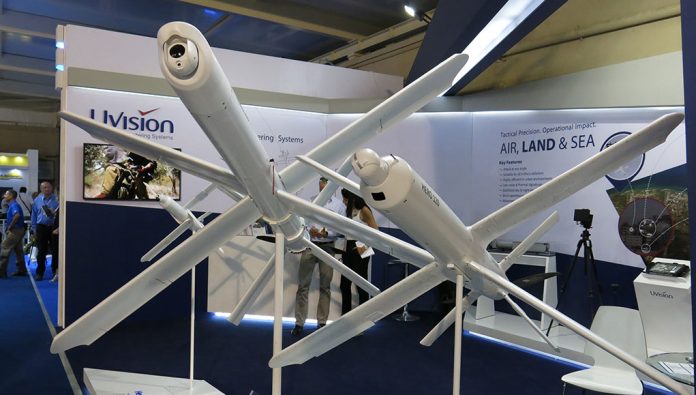
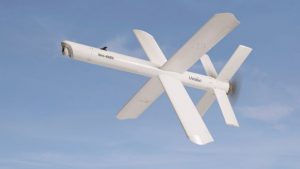
UVision has introduced an extended-range variant to the Hero family of loitering weapons. The Hero-400EC offers extended range and loitering capability,
The new Hero-400EC combines some of the features of smaller Hero family platforms, with a larger fuselage and cruciform wing design which performs better against targets in complex terrain. The new variant replaces the traditional Hero-400 piston engine motor with electrical propulsion, which delivers high-speed transit and low-speed loitering, with much lower acoustic and thermal signatures.
Compared with the original Hero 400 the LE variant uses a heavier 10 kg tandem-shaped charge multipurpose warhead designed to defeat a wide range of targets, including armored vehicles. The new missile was unveiled by UVision this week at the Land Forces conference in Latrun.
The first ALPHA - ELM-2258 radar installed on the first Hetz class Saar 4.5 missile boat. The new radar replaces the main search radar and, eventually, will augment and later replace the ELM-2221 weapon guidance radar seen on the right. Photo: IAI
The Israel Navy has recently equipped the first Saar 4.5 (Hetz Class) missile boat with a new, multi-mission, digital phased array radar system developed and produced in Israel by Israel Aerospace Industries (IAI) Elta Systems. The Advanced Lightweight Phased Array (ALPHA, designated ELM-2258) radar system is the newest radar system installed on those missile boats, replacing the previous radar also developed by Elta in the 1980s. The missile boat has proceeded to operational sea trials. According to IAI, before the year ends the company plans to deliver two additional radars and, eventually deliver a total of 11 systems, all to be installed on the Navy’s missile ships.
In the future configuration, ALPHA is slated to replace several radars on board, including the main (search) radar, as well as other radars engaged with fire direction, self-protection etc.
As an Active Electronically Scanned Array (AESA), ALPHA rotates in the horizontal plan but produces a large number of simultaneous beams searching and tracking maritime and aerial targets. The system provides a high-quality situation picture in the most extreme marine environment. The radar can perform multiple, simultaneous tasks including detection and classification of naval targets, tracking of a large number of targets, and integration into guided missile systems for defense and attack etc. As a derivative of Elta’s maritime AESA radars, ALPHA is designed anks to its size, from small and medium-sized vessels such as the Saar 4.5, corvettes, and medium-sized patrol ships. In addition, the radar provides a solution for upgrading existing navy vessels or installation on new platforms.
The unique system will upgrade the operational capabilities of the Israeli Navy missile ships Saar 4.5 and Saar 5, and is able to support existing and future weapon systems, including the current generation of Barak-1 and new Barak-8. ALPHA will be an integrative part of the future operational capability of the vessels. The system provides one of the most advanced operational solutions in the field of naval situation picture and its light weight enables it to be installed on a large variety of maritime platforms.
Lockheed Martin Skunk Works® and XTEND have achieved a major milestone in JADC2 by integrating the XOS operating system with the MDCX™ autonomy platform. This technical breakthrough enables a single operator to simultaneously command multiple drone classes, eliminating the friction of mission handoffs. From "marsupial" drone deployments to operating in GPS-denied environments, explore how this collaboration is abbreviating the data-to-decision timeline and redefining autonomous mission execution.
As traditional defense primes face mounting competition from agile “neoprimes” such as Anduril, Palantir and Helsing, the balance of innovation is shifting toward software-defined warfare and scalable, dual-use technologies, while global industry consolidation—marked by Boeing’s integration of Spirit AeroSystems and other strategic mergers—signals an intensified race to secure control over the defense technology value chain. Our Defense-Tech weekly report highlights these trends.
In early October 2025, a coordinated wave of unmanned aerial system (UAS) incursions—widely attributed to Russia—targeted critical infrastructure across at least ten European nations. The unprecedented campaign exposed the fragility of Europe’s air defenses...
Executive Summary
The past week (September 18-25, 2025) represents an inflection point where strategic defense concepts have transitioned from doctrine to tangible reality. An analysis of global events reveals four primary, interconnected trends shaping an...
At the 2025 Air, Space & Cyber Conference, U.S. Air Force and Space Force leaders unveiled major updates on next-generation fighters, bombers, unmanned systems, and space initiatives, highlighting both rapid innovation and critical readiness challenges as the services race to outpace global competitors. A short version is available here, with a more detailed version for subscribers.
The Taipei Aerospace & Defense Technology Exhibition (TADTE) 2025 crystallized around four dominant strategic themes that collectively illustrate Taiwan's comprehensive approach to defense modernization amid escalating regional tensions. Based on a detailed report by Pleronix (available upon request). Includes a Podcast discussion on TADTE 2025's highlighting Taiwan's four strategic themes beyond the post's coverage.
Israel’s Iron Beam 450 high-power laser system has completed final testing, marking a major leap in air defense. Developed by Rafael, it offers precise, cost-effective interception of rockets, UAVs, and mortars, and is set for IDF deployment by 2025.