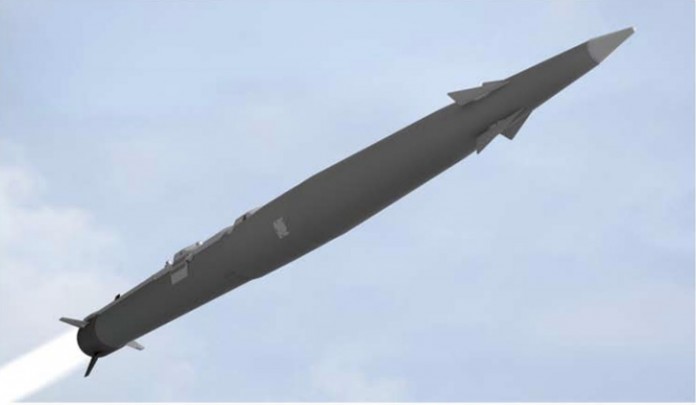
IAI SkySniper is an air-launched, precision attack ballistic missile developed by IAI MLM. Image: IAI
IAI is reviving the concept of using ground based ballistic missiles as air-launched weapons enabling precision strike from standoff range. Dubbed ‘SkySniper’, the weapon is configured as an autonomous, air to ground precision strike missile.
Powered by a rocket motor the SkySniper strikes its target at supersonic speed. The high velocity impact with multi-purpose blast-fragmentation warhead and three-mode fuse enables effective penetration of hard targets. Tailored to destroy a wide range of targets, the missile can also detonate in airburst or impact action modes to maximize effect on area or soft targets.
Designed as an affordable weapon, the SkySniper uses GPS/INS guidance to achieve pinpoint targeting under all weather conditions. Coordinates and trajectory commands can be loaded to each missile on the ground or in the air, by the pilot, prior to launch. Once launched, the missile flies to its assigned target, navigating its way passively on GPS/INS. Trajectory shaping can be employed to gain the range, and required attack angles as well as to evade enemy defenses.
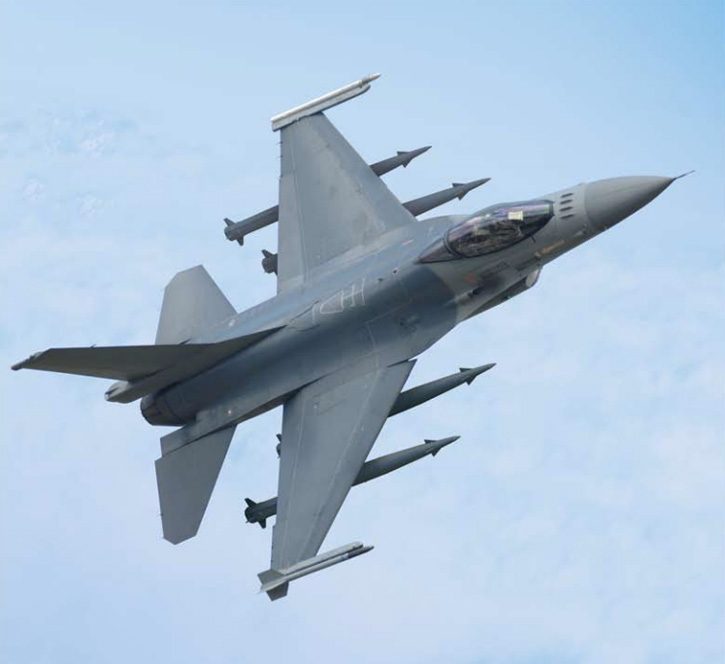
IAI designed the SkySniper for a maximum loadout of four missiles per aircraft, Potential carriers include both western and eastern platforms such as Boeing F-15 and F/A-18, Lockheed Martin F-16, UAC MiG-29, Su-30 and IAI Kfir.
IAI designed the SkySniper for a maximum loadout of four missiles per aircraft. Image: IAI
Rebel TOW team destroys a Syrian T-72 tank equipped with SHTORA APS. Photo: Via FSA Video.
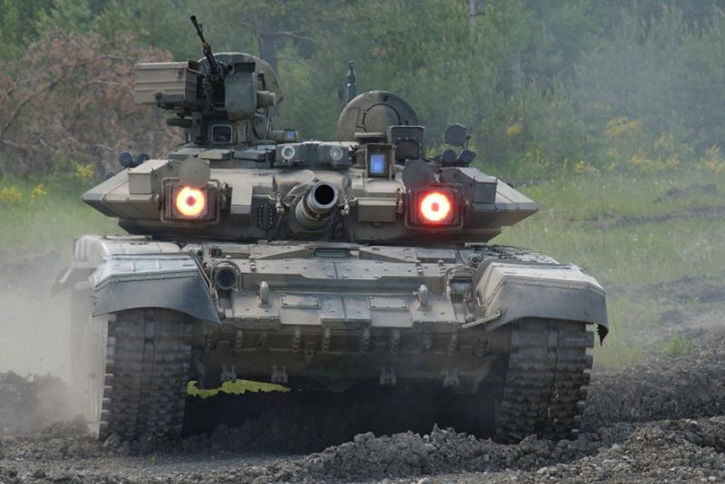
An anti-tank team of the Free Syrian Army (western supported rebels) has successfully used a TOW anti-tank missile (Raytheon BGM-71) missile to hit a Russian T-90 tank equipped with a SHTORA ‘soft-kill’ active defense system. The close-range engagement was recorded on video at Sheikh Aqil, in Syria. The Shtora is an electro-optical active-protection system designed to disrupt the missile tracking using EO disruptor.
Russian T-90 tanks fitted with SHTORA were spotted in recent months in Syria, operated by Russian tank crews. The video report from Sheikh Aqil, northwest of Aleppo.
An active SHTORA soft kill APS (countermeasures) operating on a T-90 tank.
Once a missile attack is detected, the system uses EO countermeasures and launches instant smoke screens against incoming missiles. None of these measures are observed on the video, alluding to the possibility that the countermeasures were not engaged or did not detect the threat. Although the missile seems to hit its target, the explosion effect could be caused by the reactive armor designed to defeat such threats. While a crew member is seen escaping, the tank seems intact, without catastrophic fire erupting as would be the case in frontal attack penetration of such weapon. The SHTORA APS is mounted on the Russian T-80 and T-90 series tanks, as well as the Ukrainian T-84 the Serbian M-84AS and BMP-3.
Commenting on the incident, deputy director of Uralvagonzavod which manufactures the T-90, Vyacheslav Khalitov, noted that the video is too blurry so that it’s difficult to determine what vehicle it is, admits it “closely resembles the T-90.” According to Khalitov. “Shtora is part of T-90s multi-layer protection. It is a subsystem designed to protect the vehicle against flare-tracked ATGMs,” Khalitov told Vzglyad.
He also suggests the SHTORA was switched off, but added, “the reactive armor suite was activated which prevented the tank from suffering serious damage and the crew was able to leave it… If that missile penetrated the armor, nobody inside the tank would have survived. Shtora is part of T-90s multi-layer protection which includes the ballistic protection and Kontact 5 reactive armor.
Rafael Advanced Defense Systems will supply three Mini Typhoon remotely controlled weapon mounts to arm three multi-purpose attack crafts (MPAC MKIII) of the Philippine Navy. The contract amount is $12 million (PhP 594,319,550), each RWS will operate 12.7 heavy machine guns also mount Spike-ER launchers, extending the boat’s firepower to more than 8 kilometers.
The new boats are constructed by a joint venture between Philippine shipbuilder Propmech Corporation and Taiwanese builder Lung Teh Shipbuilding Corporation. MPAC Mk III will also have provisions for two M60/7.62mm Light Machine Gun. According to Philippine sources each Mini-Typhoon will contain 2,000 rounds and 10 missile canisters. The Philippine Navy is known to be operating six MPACs which are not armed with missiles. Three, 15-meter Mk I, were built by Lung Teh while the other three, 17-meter Mk II, were built by Propmech.
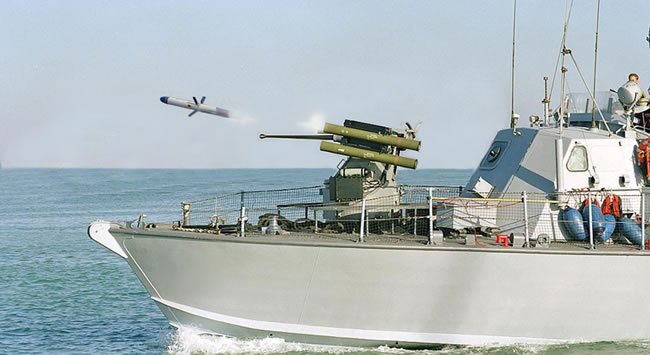
Spike LR Missile launched from a Typhoon weapon station on an Israel Navy Super Dvora Mk 2. A similar configuration was recently tested by the US Navy, from an unmanned surface vessel (USV-PEM). Photo: RAFAEL
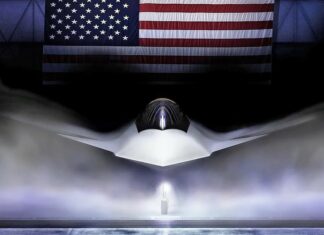
Artist impression of the USAF new B-21 Stealth Bomber. Image: USAF
After years of intense speculation, the Air Force finally revealed a first image of its long-awaited new bomber, formerly known as the Long Range Strike Bomber (LRS-B) and gave it an official designation – B-21. “Designation B-21 recognizes the LRS-B as the first bomber of the 21st century,” the Air Force said. The program recently entered the Engineering and Manufacturing Development phase and the Air Force plans to field the initial capability of the aircraft in mid-2020s.
“The B-21 will allow the Air Force to operate in tomorrow’s high end threat environment” Air Force Secretary Deborah Lee James said, “Our fifth-generation global precision attack platform will give our country a networked sensor-shoot capability that will allow us to hold targets at risk in a way the world and our adversaries have never, ever seen” Air Force Secretary Deborah Lee James said at her “state of the air force” address at the Air Force Association’s Air Warfare Symposium in Orlando, yesterday.
The new bomber is designed and will be built by Northrop Grumman that also made its predecessor – B-2 Spirit. In fact, the new bomber looks very similar to the B-2. While the B-21 is expected to improve over its predecessor, the B-2 itself was quite an advanced stealth bomber. Its main problem was that of the acquisition of 132 aircraft planned, only 21 were actually built, as it entered service right as the Cold War ended and, after producing only 21 aircraft the production ceased.
16 years later, the Russian threat is back and the need for a new bomber seems acute. In October 2015 the Air Force announced the award of the LRS-B contract to Northrop Grumman. A protest by Lockheed and Boeing slowed the process briefly, but following the removal of this obstacle last week, Northrop Grumman was cleared to proceed. The Air Force plans to purchase a minimum 100 B-21 at a cost of $564 million each. The initial value of the contract is $23.5 billion, but the deal could eventually be $55 or up to $80 billion, of which development costs alone could amount to $23 billion.
“We’ve got to be forward thinking enough to balance winning today’s fight while preparing for tomorrow’s,” said James. “Though the horizon may seem distant, it’s actually just around the corner, and we’re getting ready for takeoff.” Deborah Lee James said.
Indeed, by the mid 2020 B-21 will not be the only new strategic bomber in service. In fact, the development of its Russian stealthy rival – PAK-DA is expected to enter operational service by the mid of the next decade, about the same time for the scheduled initial operational capability of the B-21. Both bombers will be subsonic, and have a flying wing shape, proved most suitable for low observability (stealth). The Russian PAK-DA is developed by the Tupolev Design Bureau, that developed all previous Russian bombers operational today – Tu-160, Tu-95 and Tu-22M3.
B-21 Rival: PAK-DA On the Horizon
The Russians and Americans also share a common view of future growth – speculations said the B-21 could be unmanned at some point of its life; the Russians also plan to introduce unmanned capabilities with their new bombers in the 2040s. Future use of autonomous capabilities may be more subtle than flying an unmanned bomber. “Autonomous platforms could conduct initial [intelligence, surveillance and reconnaissance missions] to identify surface-to-air threats, and relay the information back to the manned package for follow-on electronic warfare operations,” James said. Both Russian and US bombers are expected to fly at high subsonic speeds powered by four turbofan engines. The weight class and range of the B-21 were not released, the Russian bomber will weigh about 120 tons. The requirement is to have an unrefueled range of 6,740 nautical miles. The PAK-DA will be able to carry a payload weight of 60,000 pounds, and will be able to launch new, hypersonic cruise missiles currently in early research and development. The B-21 is also expected to carry a similar weapon. According to Russian Air Force Commander Col. Gen. Viktor Bondarev the prototype will be ready for flight by late 2021, three years later than its original plan for 2019. Accordingly, the completion of the flight testing program could extend to the second half of the 2020s.
The US air force’s current bomber force of B-1Bs, B-52s and B-2s average 34 years of age and the new B-21 is expected to replace all but the Northrop B-2A through the mid-2030s. It will supplement the tiny B-2 fleet and, hopefully, allow the air force to retire is ancient fleet of B-52s that made its first flight in 1952 and seems to be the first aircraft to operate for more than 100 years. The Air Forces’ goal is to operate 175 – 200 bombers, of which at least 100 will be B-21 and the 21 B-2s.
The formal endorsement of the B-21 program comes just weeks after James and Air Force Chief of Staff Gen. Mark A. Welsh III delivered the fiscal year 2017 posture statement before the Senate Appropriations Committee, making it clear modernization is a top priority for the Air Force. “The platforms and systems that made us great over the last 50 years will not make us great over the next 50,” Welsh said during his testimony on Capitol Hill Feb. 10. “There are many other systems we need to either upgrade or recapitalize to ensure viability against current and emerging threats… the only way to do that is to divest old capability to build the new.”
Building a series of X-planes fueled by green energy, use half the fuel and are only half as loud, as well as the world’s first "quiet" supersonic X-plane, is part of the budget proposal. Illustration: NASA by Lillian Gipson
NASA is planning to embark next year on a bold and exciting research program aimed to reduce fuel use, emissions, and noise. NASA Aeronautics plans to achieve these exciting goals exploring ‘New Aviation Horizons’, a 10 year research program that will changing the way aircraft are designed, built and operated, in the air and on the ground. Part of the plan is reviving the agency’s “X-planes” experimental aircraft program.
Thanks to recent extraordinary results coming out of six years of technology demonstrations done with other government agencies, industry and academia, NASA Aeronautics feels confident to enter X-plane territory.
The demos included advancements in lightweight composite materials that are needed to create revolutionary aircraft structures, an advanced fan design to improve propulsion and reduce noise in jet engines, designs to reduce noise from wing flaps and landing gear, and shape-changing wing flaps, and even coatings to prevent bug residue buildup on wings. Researchers predict the tech could save the airline industry $255 billion accrued during the first 25 years after being put into service.
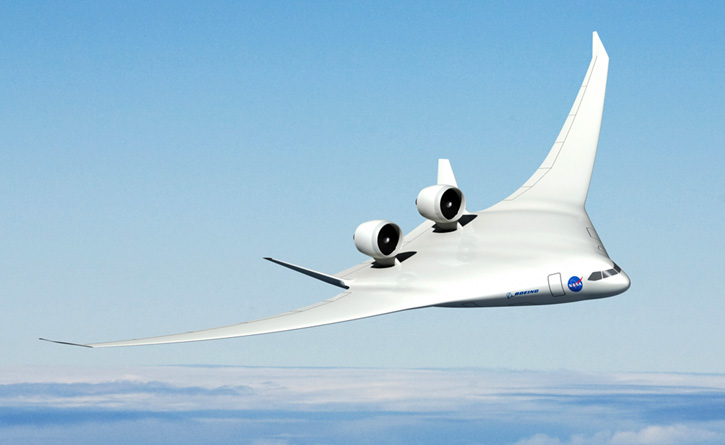
This version of a hybrid wing body aircraft concept has turbofan engines on top of the back end, flanked by two vertical tails to shield people on the ground from engine noise. Illustration: NASA / Boeing
“We’re at the right place, at the right time, with the right technologies,” said Jaiwon Shin, associate administrator for NASA’s Aeronautics Research Mission Directorate. “The full potential of these technologies can’t be realized in the tube-and-wing shape of today’s aircraft,” he explained. “We need the X-planes to prove, in an undeniable way, how that tech can make aviation more Earth friendly, reduce delays and maintain safety for the flying public, and support an industry that’s critical to our nation’s economic vitality.”
One of the first X-planes is expected to be a hybrid wing body shape, where the familiar tube-and-wing instead becomes a wing that blends into the body. It flies the same speeds as commercial transport aircraft.
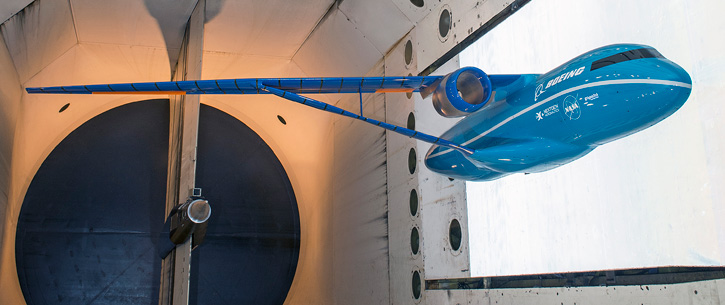
Engines are on top of a fuselage that is itself revolutionary because of the shape and what’s required to build it to withstand the stresses of flight. For the past decade, NASA and partners have studied the performance and benefits of the hybrid wing body configuration using computers, wind tunnels and even subscale unpiloted flight tests. A lot of data is already in hand to inform an X-plane that will test the highest number of advanced technologies.
Other X-planes will demonstrate specific technologies related to ultra-efficient subsonic aircraft designs in flight – possibilities include very long but narrow wings, forms of electric propulsion, a double-wide fuselage, or engines embedded into the vehicle.
And in a world “first,” another X-plane will be a business-jet-sized supersonic vehicle that burns low carbon bio-fuels and generates such quiet sonic booms that people on the ground will barely hear them.
The New Aviation Horizons X-planes will typically be about half-scale of a production aircraft, although some may be smaller or larger, and are likely to be piloted. Design-and-build will take several years, with vehicles going to flight starting around 2020 depending on funding.
This truss-braced wing concept could be another subsonic X-plane; the supported wing has proven in wind-tunnel testing to reduce fuel use by 5 to 10 percent over advanced conventional wings. Photo: NASA Langley by Sandie Gibbs
The 10-year plan also includes major field tests in collaboration with airlines, airports and the Federal Aviation Administration to continue improving air traffic flow in the air and on the ground at airports. Improving the flow leads to reduced fuel use and emissions, and less noise during takeoff, approach and landing. And NASA will continue researching and testing technologies that could be used to safely integrate unmanned aircraft systems, or drones, into the airspace.
“This is an exciting time for the entire NASA Aeronautics team and for those who benefit from aviation, which, frankly, is everyone,” Shin said. “With this 10-year plan to accelerate the transformation of aviation, the United States can maintain its status as the world’s leader in aviation for many years to come.”
NASA Aeronautics research takes place primarily at the Ames Research Center and Armstrong Flight Research Center in California, the Glenn Research Center in Ohio and the Langley Research Center in Virginia. Defense-Update will publish more details on the programs, following NASA’s presentation of the new programs next week.
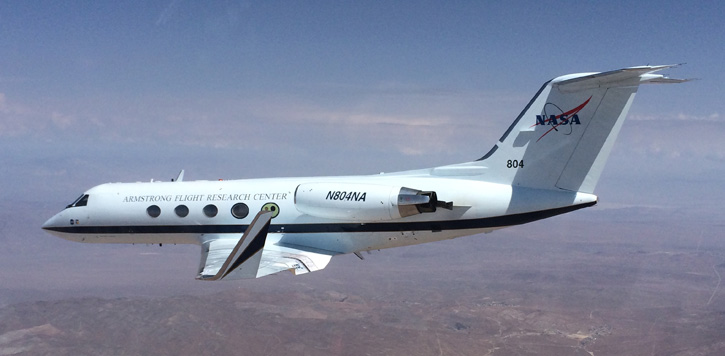
One tech demo successfully completed tests of flaps that can be changed to different angles during flight, reducing drag and noise. Photo: NASA
China has begun construction of a logistics base in Djibouti, Chinese Ministry of Defence confirmed today; the base at the Horn of Africa will be China’s first military facility overseas. Djibouti’s president defended Beijing’s right to build what will be its first foreign military outpost on one of the world’s busiest shipping routes. “The Chinese government has decided to move to this area,” President Ismail Omar Guelleh said to Reuters on an interview in Addis Ababa. “They have the right to defend their interests, just like everybody else does.” The base will be used primarily for military rest and resupply of military ships carrying out naval escort, peacekeeping and humanitarian duties, Chinese Defence Ministry spokesman Wu Qian said. China had conducted anti-piracy operations in the region in recent years and is seeking to expand its capacity to respond to growing threats to its interests abroad.
Strategically located at the southern entrance to the Red Sea on the route to the Suez Canal, Djibouti is already home to U.S. and French bases, while other navies often use its port. China said last year it was in talks to build what it describes as naval “support facilities” in the Horn of Africa nation, which has less than a million people but is striving to become an international shipping hub.
The Chinese facilities would be at the new, Multi-Purpose Port being built in the south of the country in partnership with China Merchants Holdings International. The navy would use one of the berths. Djibouti is expanding its port facilities to handle more bulk commodities, containers and other goods. Djibouti plans investment worth $12.4 billion between 2015 and 2020, with the Chinese providing much of the financing.
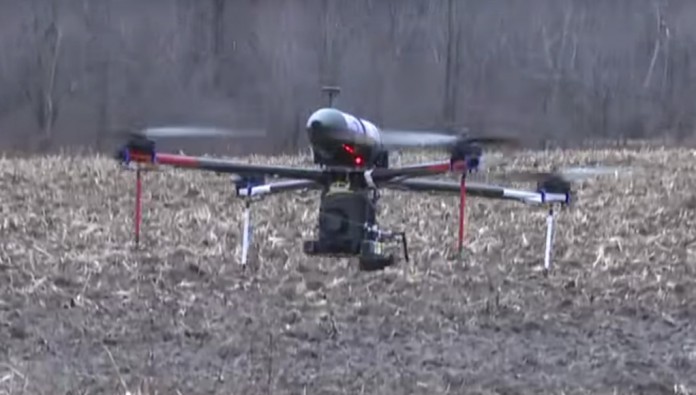
The H2Quad 400 electrically powered multirotor drone flew for more than two hours on record setting flight. Photo: EnergyOrr
Canadian fuel-cell developer EnergyOr Technologies Inc. has entered a Joint Development Agreement (JDA) with the French Air Force’s Centre d’ Expertise Aérienne Militaire (CEAM), to develop and optimize energy sources for long endurance unmanned aerial vehicle (UAV) platforms powered by EnergyOr’s Polymer Electrolyte Membrane (PEM) fuel cell system technology.
“The extended flight hours allow a novel approach to missions and, even more importantly, open the door to missions that were previously inconceivable.” said ADC Jan, project leader from CEAM. He noted that “The total flight distance capability for a miniature drone has now reached 600 km – this has never been seen before.”
Small, electrical UAVs are a rapidly growing segment of the unmanned aircraft market and are especially suited to military
applications. Battery powered UAVs have very limited flight times due to the relatively low specific energy (Watt-hours/kg)
of existing rechargeable battery technologies, and that’s where new fuel cells such as Energy Orr’s PEM cells come to place.
“This JDA further reinforces EnergyOr’s leadership position in the field of long endurance UAV fuel cell systems.” EnergyOr’s CEO, Michel Bitton, stated, adding “Our fuel cell technology is trusted for applications in real-world operating environments.”
In december 2015 EnergyOr demonstrated the world’s longest multirotor drone flight in real-world operating conditions flying its H2Quad 400 multirotor drone for more than two hours, while recording 4K video, using a 3-axis stabilizing gimbal to control the camera. “The H2Quad 400 performed beyond our expectations and the success of this demonstration not only gives confidence to move forward with commercialization, but to also develop larger multirotor platforms with even greater payload capacity.” Bitton commented.
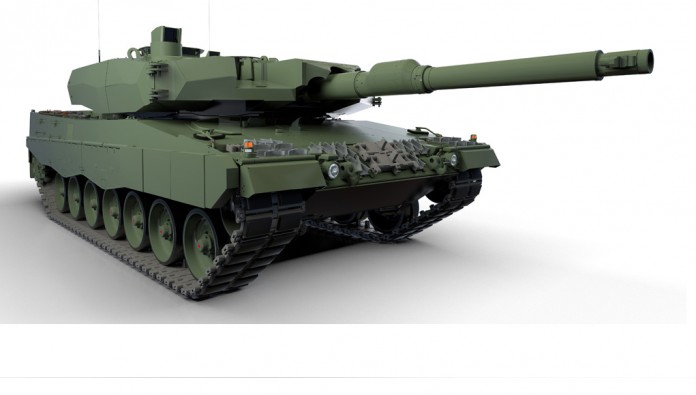
The German Rheinmetall company outlined today its role in the overhaul and upgrade of 128 Leopard 2 main Battle Tanks for the Polish military. The project represents roughly €220 million in sales volume for Rheinmetall. The consortium includes the German company that teamed with local prime contractor PGZ and system integrator ZM Bumar-Łabędy S.A., both were awarded the Leopard 2A4 modernization contracts on 28 December 2015, offering an upgrade program developed in partnership with Rheinmetall.
The 128 Leopard 2 A4 MBTs were purchased in 2002 by the Polish Army from surplus Bundeswehr stocks. They will be upgraded to Leopard 2 PL standard, which corresponds to the German Leopard 2 A5 and A6. Rheinmetall has been awarded similar modernization contracts for Leopard 2 tanks from Canada and Indonesia. with over 3,600 Leopard II tanks built, serving the armed forces of 17 countries,
The consortium will deliver a prototype for Polish Armed Forces evaluation by the end of 2017. Once approved for series production, Rheinmetall will revamp a further five tanks starting in 2018. The next 12 tanks will undergo modernization at Bumar-Łabędy, under Rheinmetall supervision. Follow-on upgrades will be done by the Polish contractors, retrofitting and shipping the remaining 110 tanks. The entire work is expected to conclude by the year 2020. An option for the upgrade of 14 additional tanks is also included, to be signed upon the conclusion of the program in 2021.
A specialized unit dedicated to detecting and dealing with small unmanned aircraft has been set up within the People’s Liberation Army Air Force. Its main focus is small, slow-moving drones flying at an altitude of less than 1,000 meters, Zhao Lei of the China Daily reports.
The unit performs drills against a squadron equipped with multiple types of drones to simulate reconnaissance, infiltration or strike operations. The unit commander Liu Hui said his men have been closely following developments in the aviation industry and keep improving their drone database.
As unmanned aircraft have become increasingly popular in China, their use has sometimes brought civilians and businesses into conflict with the police, civil aviation and military authorities. Small drones can pose a substantial threat to key positions as their small size and low speed makes them difficult to detect with radar.
RIYADH—Saudi Arabia said Friday it will suspend $3 billion in military aid to the Lebanese army in response to what it called Hezbollah’s domination of the Lebanese government. The Wall Street Journal reported.
Saudi Arabia’s Sunni Muslim government announced in 2013 that it would give Lebanon’s army the bulk sum to purchase weapons from France. The kingdom later agreed to a separate $1 billion deal to equip the Lebanese police. The amount paid remains undisclosed. Riyadh intended the aid to bolster the Lebanese army as a counterbalance to the Iran-backed militant group.
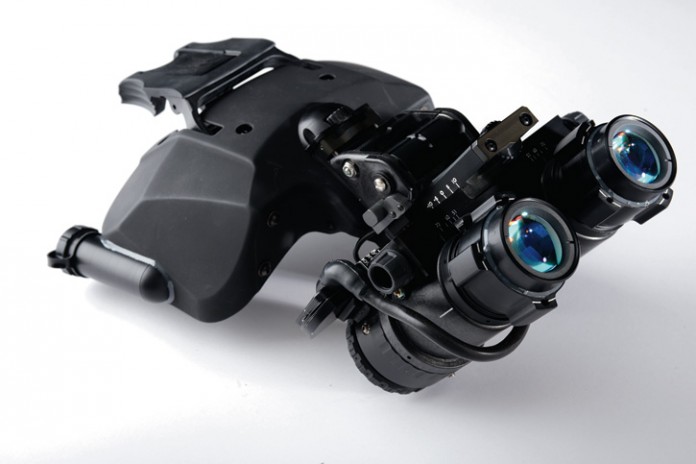
The 'Digital Eye Piece' brings daytime cueing and display capabilities into night operations without the need for costly upgrades, modifications or changes to the aircraft or software. Photo: Elbit Systems.
Combat pilots flying at night have used specialized aviator’s night vision goggles (ANVIS) for many years. These night vision devices were designed to be lightweight and comfortable for use in cockpits specially modified with light filtering to match night vision devices. While ANVIS solutions are highly useful for helicopter pilots, fighter pilots flying fast jets that use ANVIS lack the advanced capabilities they are accustomed to, when flying in daylight with Joint Helmet Mounted Cueing Systems (JHMCS).
Recognizing the aviator’s need for advanced nighttime cueing and display capabilities, Elbit Systems of America, the original developer and manufacturer of JHMCS, has developed the ‘Digital Eye Piece’ (DEP), a lightweight night vision applique designed specifically for the JHMCS. DEP is showcased this week at the 32nd Annual Air Force Association Air Warfare and Technology Exposition. As a lightweight night vision cueing and display solution for the JHMCS, DEP brings daytime cueing and display capabilities into night operations without the need for costly upgrades, modifications or changes to the aircraft or software.
“Our plug-and-play capability fits seamlessly into currently fielded night vision devices, driving costs down and bringing crucial JHMCS day capabilities into nighttime operations, as it should be” said Raanan Horowitz, president and chief executive officer, Elbit Systems of America.
DEP matches existing JHMCS as well as the next generation Digital JHMCS. An upgraded system that provides aviators with immediate and accurate recognition of friendly units, threats, and unknown targets, giving the aircrew a comprehensive view of the entire battle-space. Already in full production, DJHMCS is a backwards compatible system that provides the same performance and increases growth capabilities.
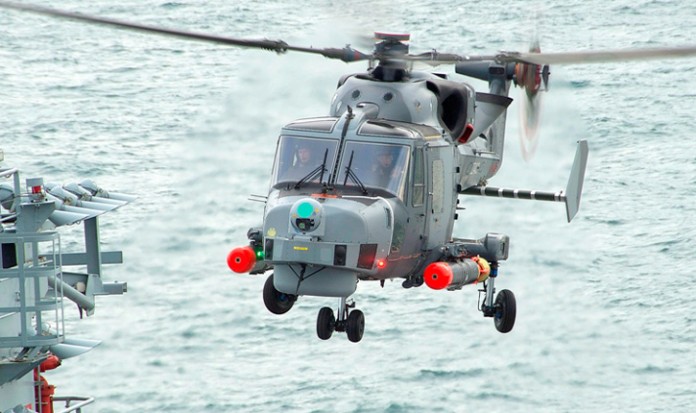
The AW159 is the latest twin-engine multi-role, maritime and utility aircraft developed from the extremely successful AgustaWestland Lynx family of helicopters. Photo: AgustaWestland
The Royal Malaysian Navy (RMN) has also begun preliminary evaluations of the AgustaWestland AW159 maritime and utility aircraft for the country’s anti-submarine warfare (ASW) helicopters requirement. The RMN has indicated a requirement for six such ASW platforms, to be operated from its new Second Generation Patrol Vessel – Littoral Combat Ships (SGPV-LCSs). malaysia is considering three competing options – the AW-159, Sikorsky MH-60R Seahawk and the Airbus Helicopters H225M.
The Philippine government is edging closer towards the acquisition of two AW159 helicopters, as the acquisition has now proceeded with the final evaluation stage. The acquisition process of two maritime surveillance /ASW helicopters for the Philippine Navy (PN) began in September 2014 and is expected to be decided this year.
Designated the Lynx Wildcat by the UK MOD, the AW159 is the multi-role helicopter chosen by the British Army and Royal Navy to replace the Lynx helicopter and to meet maritime combatant and land utility and reconnaissance requirements. The helicopter has also been selected as the Naval-ASW platform to be operated by the Navy of the Republic of Korea. The AW159 can be configured to carry a number of submarine-prosecuting systems, including active dipping sonar (ADS), sonobuoys, and torpedoes. Besides ASW, the platform can also be configured for anti-surface warfare and armed with anti-ship missiles, rockets, and guns.
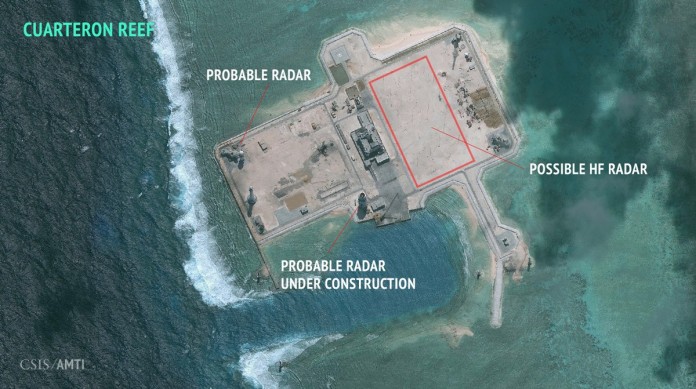
China’s artificial island on Cuarteron Reef, as of January 24, 2016. Photo: CSIS/AMTI
China continues its force buildup across islands throughout the South China Sea. A study compiled by Asia maritime Transparency Initiative (AMTI) of the Center for Strategic & International Studies (CSIS) unveiled new installations and preparations on a number of islands.
Apart from air strips and air defense sites reported in the larger islands, China is actively deploying permanent airspace and maritime surveillance capabilities at its smaller Spratly Island outposts—Gaven, Hughes, Johnson South, and especially Cuarteron reefs—will prove equally important to Beijing’s long-term strategy. Improved radar coverage is an important piece of the puzzle—along with improved air defenses and greater reach for Chinese aircraft—toward China’s goals of establishing effective control over the sea and airspace throughout the nine-dash line.
New radar facilities at Cuarteron Reef, the southernmost of China’s occupied features in the South China Sea, are particularly important. Construction of facilities at Cuarteron seems nearly complete and the artificial island now covers about 52 acres (211,500 square meters). Two probable radar towers have been built on the northern portion of the feature, and a number of 65-foot (20-meter) poles have been erected across a large section of the southern portion. These poles could be a high-frequency radar installation, which would significantly bolster China’s ability to monitor surface and air traffic across the southern portion of the South China Sea. In addition to these radar facilities, China has constructed a buried bunker and lighthouse on the northern portion of the feature, a number of buildings and a helipad in its center, communications equipment to the south, and a quay with a loading crane on the western end of the outpost.
How these three capabilities overlap is highlighted in the interactive above. For illustrative purposes, radar ranges are shown as 300 kilometers from Cuarteron Reef and 50 kilometers from other features known to have likely radar towers. Fighter ranges are shown based on China’s J-10. To toggle each layer on and off, click on the dropdown box in the upper-right of the graphic.
The Italian government last month quietly began allowing armed American drones to fly out of the US Naval Air Station Sigonella on the island of Sicily, on military operations against Islamic State in Libya and across North Africa — a breakthrough for Washington after more than a year of negotiations. U.S. drones have been based in Sigonella since 2011 but until last month they were used exclusively on surveillance missions.
The Italians granted permission for the drones to be used only defensively, to protect U.S. special-operations forces in Libya and beyond, the officials said. The permission granted does not include sending drones on an air attacks such as the one conducted last Friday by U.S. air Force F-15Es based in the U.K, against a training camp near Sabratha, Libya, targeting a senior Islamic State operative from Tunisia.
Lockheed Martin Skunk Works® and XTEND have achieved a major milestone in JADC2 by integrating the XOS operating system with the MDCX™ autonomy platform. This technical breakthrough enables a single operator to simultaneously command multiple drone classes, eliminating the friction of mission handoffs. From "marsupial" drone deployments to operating in GPS-denied environments, explore how this collaboration is abbreviating the data-to-decision timeline and redefining autonomous mission execution.
As traditional defense primes face mounting competition from agile “neoprimes” such as Anduril, Palantir and Helsing, the balance of innovation is shifting toward software-defined warfare and scalable, dual-use technologies, while global industry consolidation—marked by Boeing’s integration of Spirit AeroSystems and other strategic mergers—signals an intensified race to secure control over the defense technology value chain. Our Defense-Tech weekly report highlights these trends.
In early October 2025, a coordinated wave of unmanned aerial system (UAS) incursions—widely attributed to Russia—targeted critical infrastructure across at least ten European nations. The unprecedented campaign exposed the fragility of Europe’s air defenses...
Executive Summary
The past week (September 18-25, 2025) represents an inflection point where strategic defense concepts have transitioned from doctrine to tangible reality. An analysis of global events reveals four primary, interconnected trends shaping an...
At the 2025 Air, Space & Cyber Conference, U.S. Air Force and Space Force leaders unveiled major updates on next-generation fighters, bombers, unmanned systems, and space initiatives, highlighting both rapid innovation and critical readiness challenges as the services race to outpace global competitors. A short version is available here, with a more detailed version for subscribers.
The Taipei Aerospace & Defense Technology Exhibition (TADTE) 2025 crystallized around four dominant strategic themes that collectively illustrate Taiwan's comprehensive approach to defense modernization amid escalating regional tensions. Based on a detailed report by Pleronix (available upon request). Includes a Podcast discussion on TADTE 2025's highlighting Taiwan's four strategic themes beyond the post's coverage.
Israel’s Iron Beam 450 high-power laser system has completed final testing, marking a major leap in air defense. Developed by Rafael, it offers precise, cost-effective interception of rockets, UAVs, and mortars, and is set for IDF deployment by 2025.