A small, submersible drone developped at John Hopkins’ research institute’s Applied Physics Laboratory (APL) can stay submerged for months, and instantly surface and launch on command without leaving a trace.
Watch this video describing APL’s Corrosion Resistant Aerial Covert Unmanned Naval System (CRACUNS).
The drone is fabricated from composite materials and coatings that prevents salt water corrosion. 3D printing enables production of complex, low cost structures necessary to endure the pressure at depths of hundreds of feet, yet be light enough for flight.
CRACUNS can carry various payloads to support different missions.
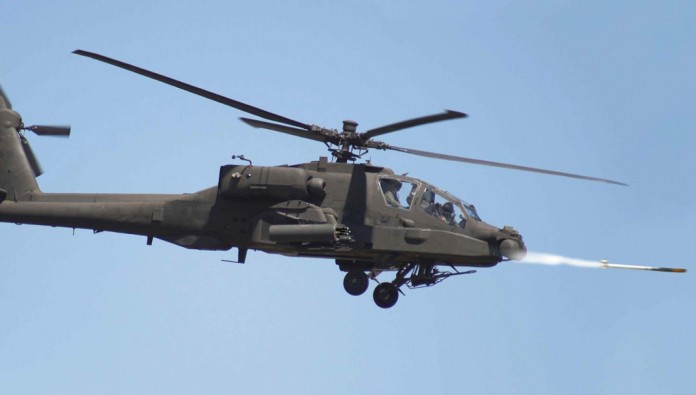
In december 2015 the US Army acquired a first lot of APKWS rockets from BAE Systems for immediate deployment. The weapon was successfully tested with AH-64 Apache gunships in 2013. Photo: BAE Systems.
Currently in its third year of full rate production, the APKWS rocket is the only U.S. Department of Defense fully qualified guided 2.75-inch rocket. It uses semi-active laser guidance technology to strike both soft and lightly armored targets in confined areas, providing greater accuracy and mission effectiveness.
The majority of conflicts that have been fought in the 21st century are asymmetric, involving regular military forces fighting such as terrorists, guerrilla and other irregular forces. Such conflicts are often waged in urban areas and close or within civilian population.
Under these circumstances military forces are required to act decisively and forcefully but, at the same time to engage and neutralize their opponents with precision and with minimal or no collateral damage as possible, thus avoiding risk to innocent population and avoid escalation.
Traditionally, military power has focused on achieving lethality by massive firepower. But in asymmetric warfare, military users often avoid massive firepower for their high potential of collateral damage. Therefore, users turn to weapons that can deliver focused lethality at much higher precision available by statistical weapons of past generations. However, these precise weapons are more expensive and require more experienced operations, which is not always available at the tactical level. Therefore, military users are seeking to acquire weapons that improve those they already maintain in their inventory, yet, be more precise and effective, and thus adapt to the new realities of asymmetric warfare.
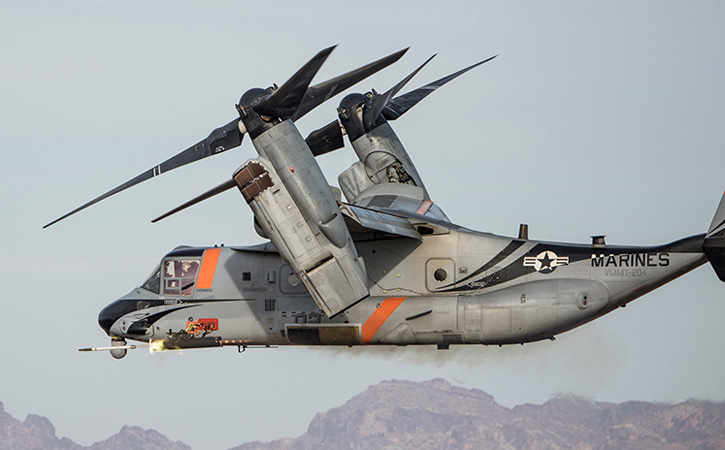
Hydra 70 rocket launchers have also been tested with the new weapon attachment on the V-22.
These wishes are now fulfilled with the introduction of the 70mm (2.75inch) laser guided rocket BAE Systems have developed for the US Navy and marine Corps; a precise, lethal and affordable weapon used with attack and assault helicopters, fixed wing aircraft and ground launchers. The ‘Advanced Precision Kill Weapon System’ (APKWS) homes in on a laser spot designated by the firing platform or remote designator, from a distance. This target acquisition method enables the guided rocket to hit moving or stationary targets from a distance of 1,500-5,100 meters, with precision within tens of centimeters from the designated spot. The new rocket has already been used for some time with the US Marine Corps in Iraq and Afghanistan. Last year the US Army has the first order for APKWS rockets, to equip its helicopter gunships with the new weapon. This Army order concluded a long acquisition process that has spanned over many years, which attracted quite a few competitors in the field, including Raytheon and Elbit Systems-ATK.
APKKWS is not a new weapon. Its development began in the mid 2000s, as part of the US military services need to save costs and standardize logistics. Under this plan the US Army approached industry with the requirement to introduce a guided variant for the 2.75” family of rockets. Such a rocket should utilize existing hardware and logistics, and utilize existing rocket launchers (such as the hydra) used with helicopters and some fixed wing aircraft. Such system would use existing laser designators for targeting, the same ones already supporting the Hellfire and US Air Force’s laser Guided Bombs (LGB). Carried on aircraft and drones. Given the lower weight of the rocket, compared to the hellfire or GBU—12, the guided rockets would also provide a suitable weapon for armed UAVs.
The requirement also addressed the need to engage small targets, particularly unarmored and light armored vehicles (soft targets), for which the Hellfire is considered an excessive overmatch effect. At a cost of third or quarter of the Hellfire, the laser guided 2.75 rocket would deliver an optimized, affordable effect. Additionally, same platforms (Apache, A-10) would be able to carry more guided weapons, sustaining longer and more productive missions. It would also retain the Hellfires for use against the targets these weapons were designed for.
Despite the clear requirement and cost conscious intent, the project did not reach acquisition, as the Army aborted the program, transferring the lead to the navy and Marine Corps. The corps evaluated several approaches proposed by different companies, the majority of developers opted for a conventional design placing the laser seeker in the nose cone – similar to laser guided missiles and bombs. However, unlike the rail-mounted missiles that are fired off the open rail, the 2.75” rockets are contained in a multi-barrel launcher, causing significant loads on ignition and launch.
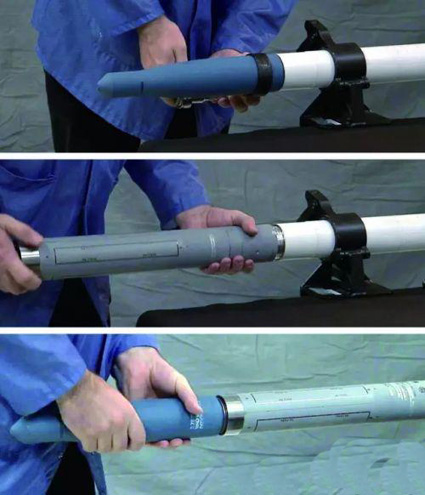
The ‘plug in’ integration of the new guidance system enables the use of existing rockets without changes to existing components. Photo: BAE Systems.
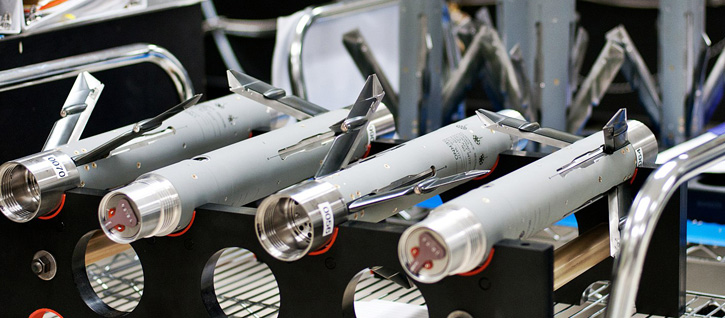
BAE Systems proposed another design, mounting the laser sensors on the stabilizers. As the stabilizers are recessed into the rocket body until it clears the launch tube, the sensitive seekers are also protected from environmental and thermal effects of the launch. The weapon retains both the original Mk66 Mod 4 rocket motor and M151 / Mk 152 4.53 kg (10-pound) high-explosive warhead adding the 18.5 inches (47cm) long integrated targeting and guidance section between the two segments. The overall length of the extended rocket is 1.87 m (73.8 inches) and its weight is 14.8 kg (32.6 pounds).
The upgrading of the standard 2.75″ rocket into APKWS using the plug-in assembly.
This design proved superior to nose mounted seekers, as it offered important advantages, such as easier ‘plug in’ integration of the new system (without the need to move or change the warhead). Fiber-optic cables, enabling fast and reliable connectivity, link the seekers to the processor. With no modifications to the rocket (except for the addition of ‘plug-in’ guidance kit), the firing platform or fire control/launcher systems also remain intact, supporting the new precision fires capability.
In 2009 the Navy selected BAE Systems as a prime contractor for the weapon’s development and Low Rate Initial Production (LRIP) and, by mid 2012 approved the program for full rate production. To date BAE Systems delivered more than 5,000 rockets; more than 100 were used in combat, particularly by the US Marine corps in Afghanistan. Following the endorsement of the US services, the Pentagon has made the APKWS rocket available for export under the foreign military sales (FMS) process.
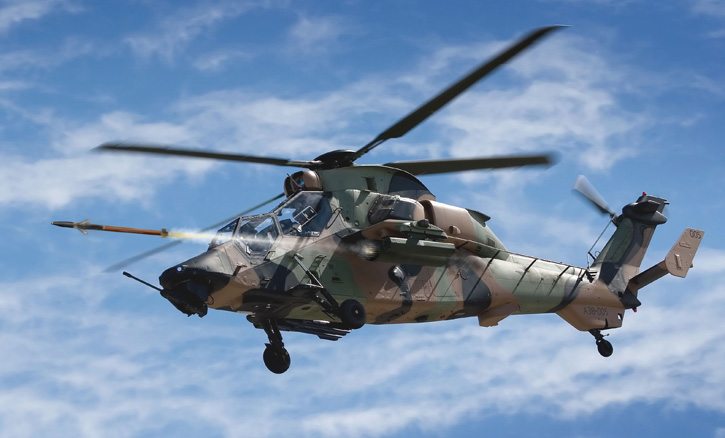
In 2014 the Australian Defence Force demonstrated the precision strike capability of APKWS, firing FZ-1 modified rockets from an Airbus Tiger Armed Reconnaissance Helicopter. Photo: BAE Systems
Since 2012, APKWS has primarily been used on the Marine Corps Bell AH-1 and UH-1 platforms. In 2014 the Navy declared early operational capability for the Lockheed martin-Sikorsky MH-60S fleet and followed up in 2015 with the MH-60R fleet. The Marine Corps has begun activities to integrate on the AV-8B, while the Air Force is pursuing integration for their A-10 and Lockheed Martin F-16 platforms. APKWS has also been tested and approved for use on Bell 407, OH-58 and Boeing AH-64 as well as fixed wing aircraft including the OV-10, and Beechcraft AT-6, along with a number of fixed and rotary wing unmanned aerial vehicles (UAVs). In 2014 the weapon was also demonstrated on an Australian Tiger helicopter.
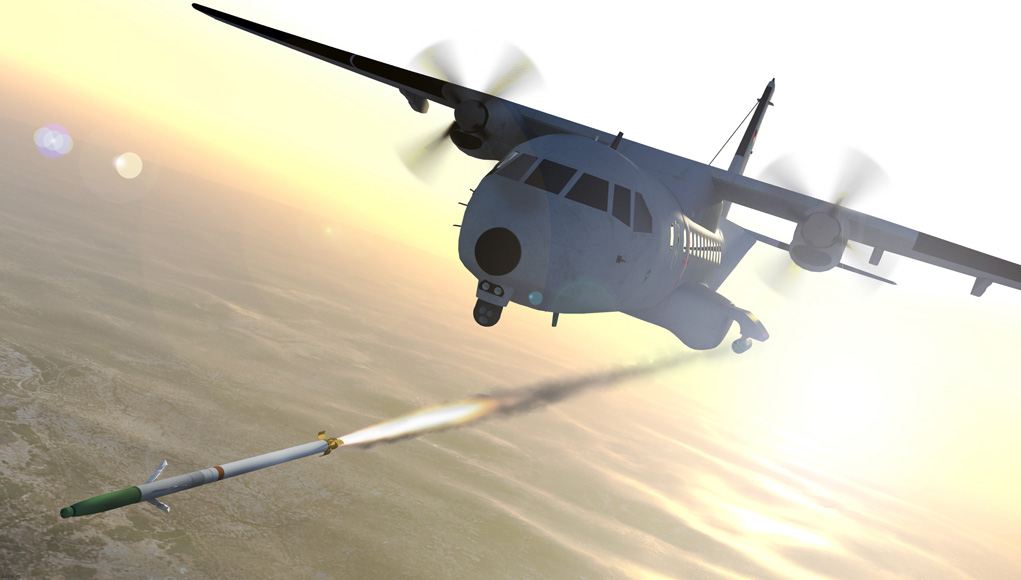
Additional platforms currently in integration by the US Navy include the Boeing F-18C/D and Airbus Defense & Space CN-235 light gunship for the Royal Jordanian Air Force. Jordan is the first international partner to receive the APKWS. In 2013 the APKWS demonstrated the capability to engage fast, highly maneuverable attack crafts and speedboats, fired from a helicopter. Such threats are considered an imminent and challenging threat in naval asymmetric warfare.
Since the weapon has been cleared for export the US NAVY program has received 13 formal letters of request (LORs) from international customers expressing interest in acquiring APKWS. In 2015 the Navy signed FMS cases with Iraq and the Netherlands and the U.S Army Security Assistance Command signed a case with Tunisia. Further exports are conducted through a marketing partnership BAE Systems struck with MBDA, addressing primarily the European market. According to the agreement MBDA will lead the marketing for the APKWS in Europe, with the system developed by BAE Systems’ US subsidiary.
BAE’s Advanced Precision Kill Weapon System will be fitted to Jordanian CASA-235 light gunships. Photo: BAE Systems
North Korean leader Kim Jong Un inspects a miniaturized nuclear warhead designed for ballistic missiles. Un stands in front of a KN08 ballistic missile, that is likely to carry the new, thermo-nuclear warhead, The undated photo was released today by the North Korean Central News Agency (KCNA).
The tip of the KN-08 missile carries a tri-conical reentry vehicle, containing the warhead. This section weighing 700-1000 kg is likely to carry a miniaturized nuclear device. The diameter of the nose cone, estimated to be 1.25 meters in its base (4 ft) fits well with the diameter of the warhead, likely to be less than one meter in diameter.
North Korea claims it has the know how and capability to develop a nuclear warhead to equip ballistic missiles. This claim has been substantiated today, by the leader of the Democratic People’s Republic of Korea (DPRK), Kim Jong-Un, presenting a complex spherical object claimed to be the country’s miniaturized thermonuclear warhead.“The nuclear warheads have been standardised to be fit for ballistic missiles by miniaturising them,” Kim noted during a visit with nuclear technicians that was reported by the DPRK state media today.
It is possible that the new warhead is designed for the Korean KN08 intermediate range ballistic missile that has yet to be tested in flight. Once proven, the missile is expected to boast the range and payload capacity to deliver attacks on US targets in the Pacific and west coast. Kim also stressed that the miniaturised warheads were “thermo-nuclear” devices, echoing the North’s claim that the nuclear test it conducted in January was of a more powerful hydrogen bomb.
This is the first time Kim has directly claimed the breakthrough that experts see as a game-changing step towards a credible North Korean nuclear threat to the US mainland.
His comments came a day after the North’s powerful National Defence Commission threatened pre-emptive nuclear attacks on South Korea and the US mainland, as Seoul and Washington kicked off large-scale joint military exercises.
Military tensions have surged in the region since the North carried out its fourth nuclear test in January and a long-range rocket launch last month.
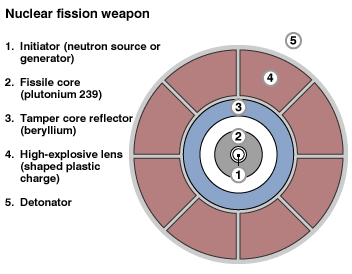
Schematic view of a nuclear fission weapon.“His comments and the photos are making the message very explicit: ‘We have a nuclear weapon and you have to respect us’,” Melissa Hanham, another expert on North Korea’s weapons program at MIIS, James Martin Center for Nonproliferation Studies of the Middlebury Institute of International Studies (MIIS) in California.
North Korea’s claim to have successfully tested an H-bomb in January was greeted with scepticism at the time as the estimated yield was seen as far too low for a full-fledged thermo-nuclear device.
However, weapons experts have suggested it may have been a “boosted” fission device, which makes more efficient use of nuclear material and can be made smaller without sacrificing yield.
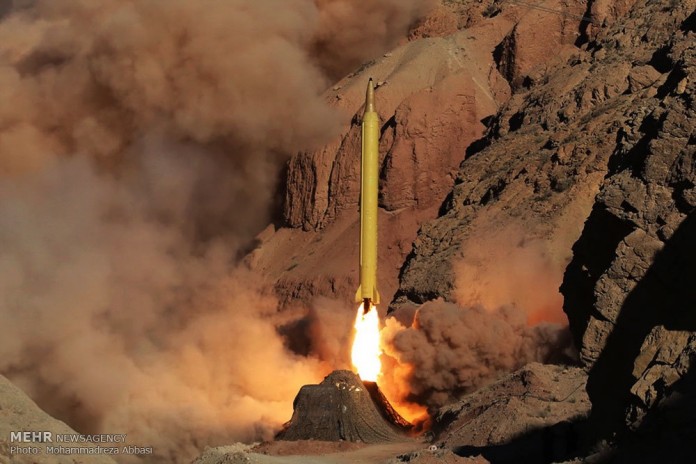
Iran conducted today multiple launches of ballistic missiles as part of ‘Velayat Strength’ (Eqtedar-e Velayat) military drills conducted in the past week by the Iranian Revolutionary Guards Corps (IRGC). The launch of long range missiles was a preplanned part of the exercise, announced last month by the Iranian military.
While the types of missiles fired in the recent exercise were the familiar Shihab 1, 2 and Qadr-F and -H, the unique aspect of the recent test was the use of hitherto unknown missile base near Qom, in central Iran desert, where missiles are maintained in high readiness in underground silos, tucked inside the hills. The missiles were fired from the base at targets at a distance of 700 km and were claimed to hit their targets with high precision.
While the current is thought to reflect Iran’s contest of US sanctions, Tehran has fired such missiles before, even in a larger scale. The commander of IRGC Aerospace Force Brigadier General Amir Ali Hajizadeh confirmed that the IRGC has fired various types of ballistic missiles from spread out underground sites with a range of 300, 500, 800 and 2,000km.
A day later, on the morning of March 9, two Ghadr-H ballistic missiles were fired from another site hidden over land in the Eastern Alborz Range, at predetermined targets in Makran coastal strip, covering a distance of 1,400km. Sources in Tehran said the mission range was shorter than the missile’s maximum range, restricting the mission to Iranian territory.
“These huge underground missile depots and silos are part of the Islamic Republic of Iran strategy to cope with regional missile defense in the region, in Israel and the gulf. The fact that the missiles are prepared for launch underground, with no visible signature could be used for first strike.” said Tal Inbar, Head of the space research center at the Fisher Institute for Air and Space Strategic Studies.
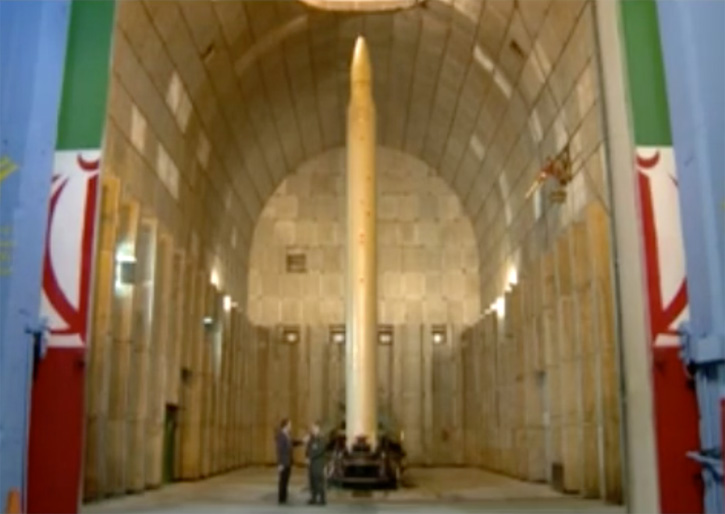
The new missile base is an underground maze of large tunnels containing ready to launch missiles, transporter-erector vehicles, spare boosters and warheads, that can be assembled underground and transported to the launch pads, located in spacious silos fitted with adequate space for missile erection, flame extractors and blast doors, isolating the silo from the rest of the underground complex. Photo: Mashregh News
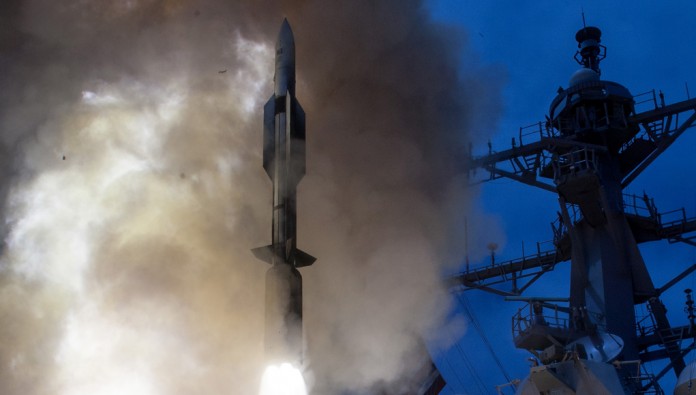
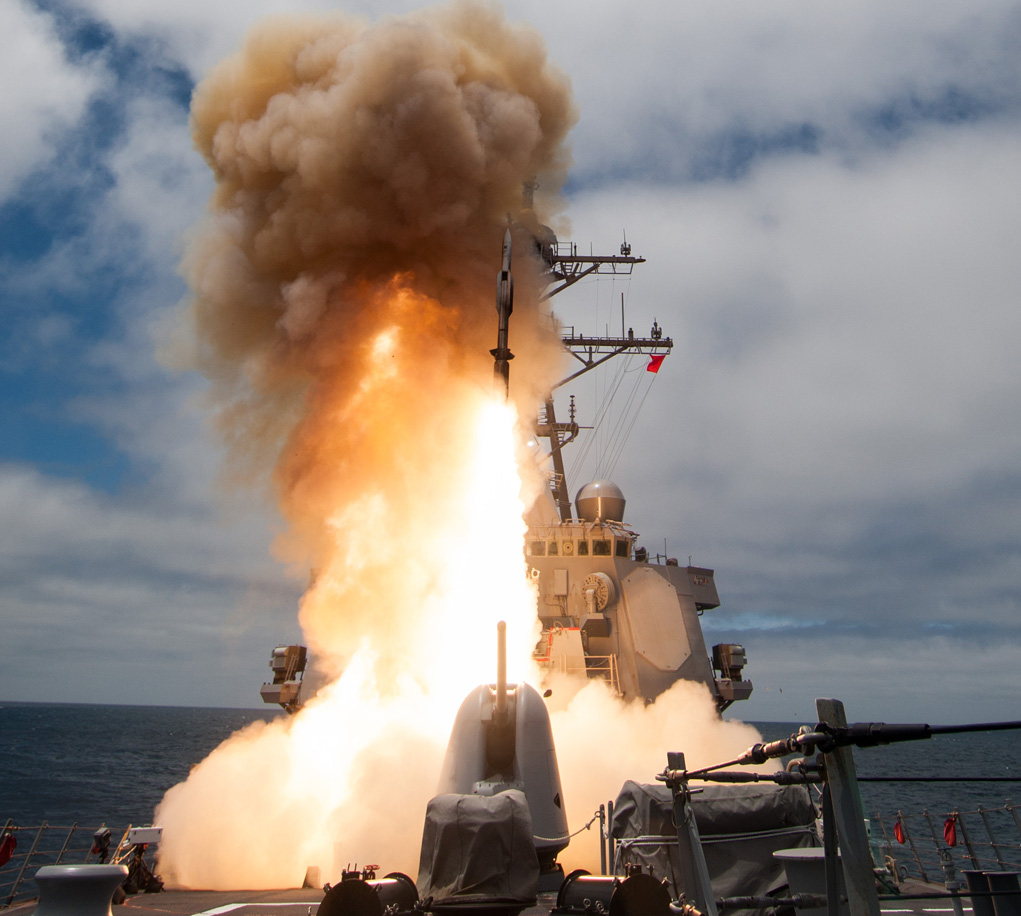
The Arleigh-Burke class guided-missile destroyer USS John Paul Jones (DDG 53) launches a Standard Missile-6 (SM-6) during a live-fire test of the ship’s aegis weapons system in 2014. Photo: US Navy
The Standard Missile-6 (SM-6) continues to demonstrate its prowess in operational tests – in a challenging multi-threat intercept test SM-6 missiles successfully engaged five targets, struck a surface target and shattered its previous maximum engagement range record, set in June of 2014. In recent testing SM-6 has shown expanded mission capability in three key areas: Anti-Air Warfare, Sea-Based Terminal and Anti-Surface Warfare.
The test series supported by the Cooperative Engagement Capability (CEC), validated the tactical warfighting capability of SM-6, by demonstrating both maximum down range and a maximum cross range intercepts in over-the-horizon, engage-on-remote missions. The Arleigh-Burke class guided-missile destroyer USS JOHN PAUL JONES (DDG 53), configured with AEGIS Baseline 9.C1, executed the series of four missions with five SM-6 missiles for Follow-on Operational Test and Evaluation (FOT&E), part of the final testing leading to a likely declaration of Full Operational Capability in 2017.
The Arleigh-Burke class destroyer USS GRIDLEY (DDG 101) was on station to perform as the AEGIS assist ship for the engage-on-remote missions. The tests also proved the ability of SM-6 to conduct complex, multiple target scenarios. In prior tests JOHN PAUL JONES also tested the SM-6 Dual-1 missiles, fitted with a software update that lets the missile identify, track and kill ballistic missile warheads. First launched in July 2015, Raytheon’s SM-6 ‘Dual 1’ is expected to continue flight testing in 2016, as part of the Missile Defense Agency’s Sea-Based Terminal program.
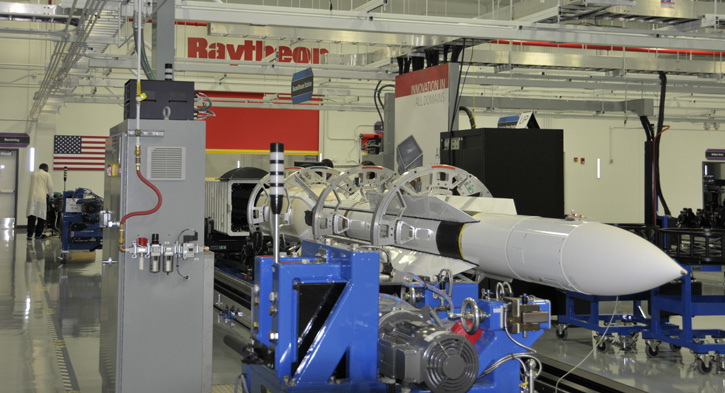
A Standard Missile-6 is loaded into a specialized container at the Raytheon Redstone Missile Integration Facility for delivery to the U.S. Navy. The all-up-round production facility at Redstone Arsenal in Huntsville, Ala. is where final assembly of SM-3 and SM-6 takes place. Photo: Raytheon
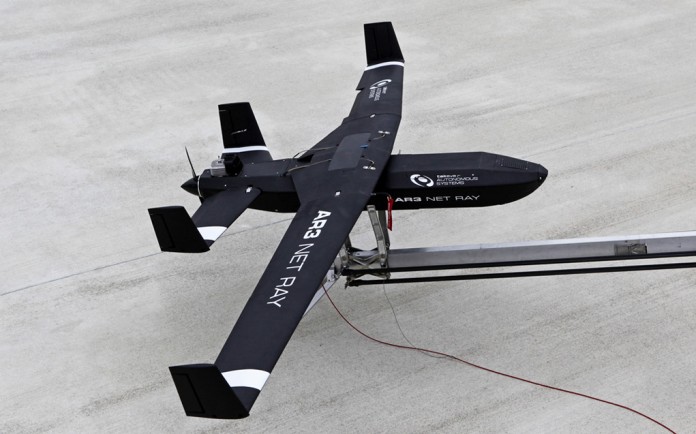
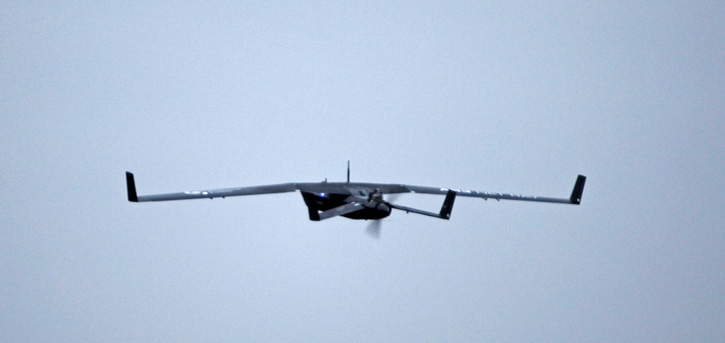
Tekever AR3 Net-Ray maritime drone weighs 22 kg on takeoff, carrying 8 kg of payload. Photo: Tekever
Lacking reliable launch and retrieval capabilities, particularly in high sea states and strong winds, Unmanned Aerial Vehicles (UAV) often support maritime forces from shore, relying on large, long endurance platforms that can carry multiple payloads, including maritime search radar. The Tekever Group is introducing a new, lightweight shipborne UAV – the AR3 NET-RAY, a small drone with an empty weight of 14 kg, designed to carry 8 Kg payload. The new version of AR3 NET-RAY increases its payload capacity by 33%, with the main purpose of providing customers with the option to carry a radar with effective range of 25 nm.
The previous maritime variant weighs 12 kg and could carry six kg payloads, comprising EO and wide area surveillance systems. The new drone that is currently undergoing testing will be able to perform missions with more than 10 hour endurance. It can be launched by catapult and retrieved with a net, operating from small vessels, providing an easily deployable range extender for maritime platforms. The new drone debut at the UMEX 2016 taking place in the UAE this week.
The Net-Ray AR3 can be operated from a ship deck using rail (cat) launch and net arresting. Photo: Tekever
“with an extra payload capacity and the integration of a maritime radar, our goal is to provide customers with unprecedented capabilities in a very small and affordable package.” said Ricardo Mendes, Tekever Chief Operating Officer. “We’re still testing these new capabilities, but we’re very happy with the results we’re getting”. Mendes added.
According the company, the AR3 NET-Ray will be the first UAS in its class to offer a maritime radar capability.
The Tekever Group is building up a UAS program to perform multiple types of near shore and maritime missions, including search and rescue, surveillance, illegal fisheries control, maritime patrol and pollution detection, among others. The program is a result of the close cooperation between Tekever and the Portuguese Navy.
Tekever’s knowledge in maritime scenarios is becoming recognized by multiple institutions. The European Space Agency and the European Maritime Safety Agency have selected the Tekever AR5 Life Ray Evolution UAS for a new European maritime surveillance system composed of drones. The RAPSODY Project, led by Tekever, will test this year the use of unmanned aerial systems in a maritime context through real-world demonstration of two scenarios: search and rescue missions; and pollution and oil spill monitoring. The systems will operate over the Atlantic Ocean, the North Sea and the Mediterranean Sea. This is the first time unmanned aerial systems will be introduced into maritime surveillance missions in Europe.
China is setting up a conglomerate that will merge three aircraft engine manufacturers. The three companies joining the conglomerate are Sichuan Chengfa Aero Science & Technology Co., Avic Aviation Engine Corp. and Avic Aero-Engine Controls Co. The merger of the three companies, each already strong in its area of expertise, is expected to strengthen position of China in the sphere of aircraft development and production. The move will improve China’s standing in plane design and manufacturing. Though one of the biggest aviation markets, the country is still heavily reliant on imported engines for military and commercial aviation. The move is also expected to improve the variety and reliability of aero-engines for unmanned aerial systems.
Russia arms exports remained stable in 2015, despite the sharp drop in oil prices, that has drawn economical difficulties in some of the markets Russia is active in. Russia delivered defense related exports in a total amount of US$ 5.483 billion in 2015, compared to 5.468 in 2014, the Stockholm International Peace Research Institute`s (SIPRI) arms transfer database indicates.
In 2015, India remained the biggest importer of Russian defense production, having received arms and military equipment amounted to $ 1.964 bilion. China, was the second largest customer buying a total worth of $824 million in 2015. Vietnam is placed third with totaldefense acquisition of $812 million in Russia in 2015.
Other major customers include Iraq ($426 million), Kazakhstan ($412 million), Algeria ($284 million), Azerbaijan ($181 million), Belarus ($155 million), Nigeria ($87 million) and Bangladesh ($79 million).
The Russian Armed Forces are testing a new, yet unnamed disposable rocket-propelled grenade launcher, according to a Russian defense industry source. According to Russian industry sources quoted by the TASS news agency, the new launcher slightly resembles the Swedish AT-4 system. The new launcher is shatterproof and protected against occasional drops. As of early 2016, Russian Armed Forces are equipped with a number of disposable rocket launchers, including the RPG-26 Aglen (Surf), RPG-27 Tavolga (Meadowsweet), RPG-28 Klukva (Cranberry), RPG-30 Kryuk (Hook), RPG-32 Barkas (Launch ship) – all are disposable anti-tank grenade launchers. These are operated in addition to RPG-7 and RPG-29 reusable rocket launchers.
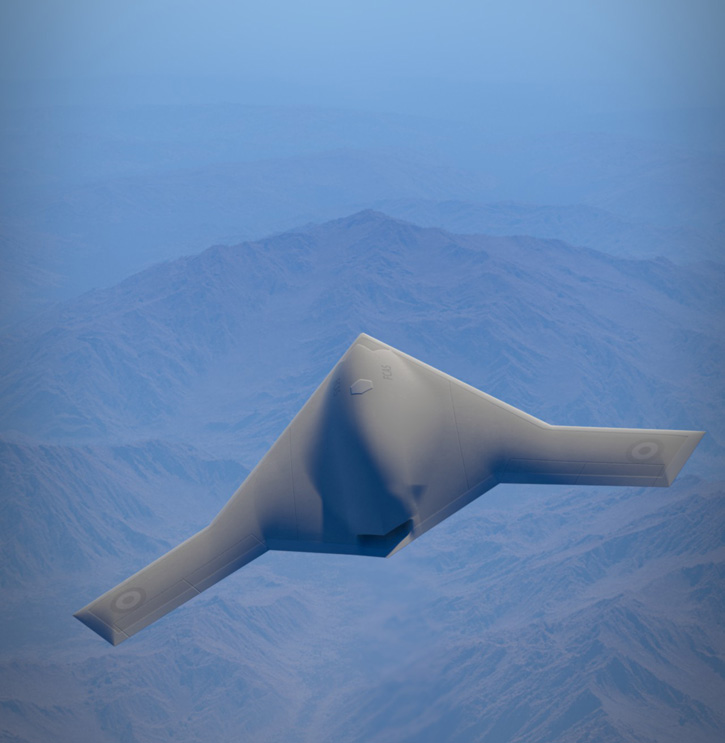
FCAS (Future Combat Air System) candidate design. Illustration: Dassault Aviation.
Defense ministers of France and the United Kingdom endorsed today the plan to launch the development of full scale operational demonstrator of the ‘Future Combat Air System’ Unmanned Combat Air System (UCAS) next year. This phase will prepare for the full-scale development of unmanned combat air system (UCAS) operational demonstrators by 2025. At a cost of €2 billion this demonstration programme, the most advanced of its kind in Europe, will be centered on a versatile UCAS platform that could serve as the basis for a future operational capability beyond 2030.
FCAS (Future Combat Air System) candidate design. Illustration: Dassault Aviation.
The first phase of the program was launched at the Brize Norton Summit in 2014, at an investment of £120 Million, where France and the UK explored the feasibility of such future combat air systems. The first phase was a two-year feasibility study, which will continue next year into the follow-on demonstration programme. The project partners are Dassault Aviation, BAE Systems, Rolls Royce, SNECMA/Safran, Finmeccanica Airborne and Space Systems Division and Thales. The FCAS program continues following previous research programs conducted separately in the UK and France, including the BAE Systems’ Taranis and the international collaborative nEUROn program lead by Dassault Aviation.
The next phase will be a technical review, scheduled for 2020. Under the research programs the two countries will also to analyse the future combat air environment including how manned and unmanned systems might operate together.
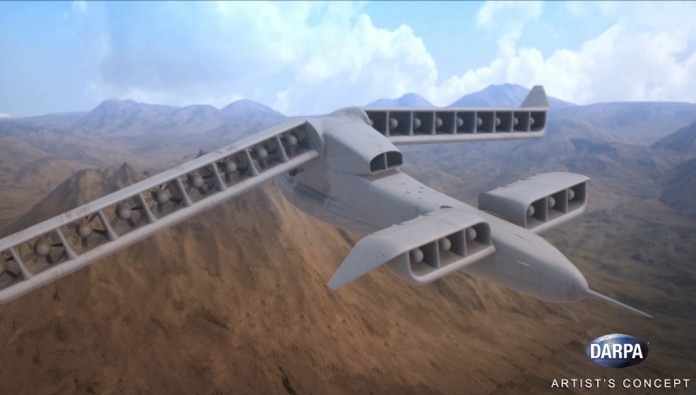
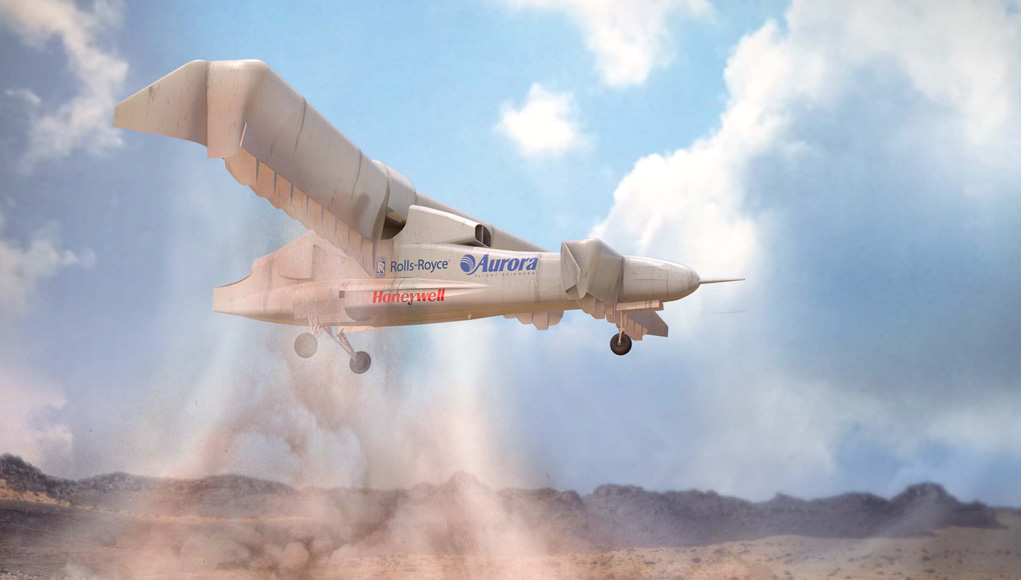
DARPA’s Vertical Takeoff and Landing Experimental Plane (VTOL X-Plane) program seeks to provide innovative cross-pollination between fixed-wing and rotary-wing technologies and develop and integrate novel subsystems to enable radical improvements in vertical and cruising flight capabilities. In an important step toward that goal, DARPA has awarded the Phase 2 contract for VTOL X-Plane to Aurora Flight Sciences. Image: DARPA
A canard aircraft using 24 electrically driven rotors tucked inside its wings was selected by DARPA to demonstrate high speed and vertical takeoff and landing (VTOL) capabilities. The innovative multi-rotor design proposed by Aurora Flight Sciences was awarded a cost-plus-fixed-fee contract worth nearly US$90 million will cover the second and third phases of a research program into high speed vertical takeoff and landing (VTOL) aircraft. The program has the goal of performing flight tests in the 2018 timeframe.
“This VTOL X-plane won’t be in volume production in the next few years but is important for the future capabilities it could enable,” Bagai said. “Imagine electric aircraft that are more quiet, fuel-efficient and adaptable and are capable of runway-independent operations. We want to open up whole new design and mission spaces freed from prior constraints, and enable new VTOL aircraft systems and subsystems.” Bagai added that while the technology demonstrator would be unmanned, the technologies that VTOL X-Plane intends to develop could apply equally well to future manned aircraft.
Aurora’s Phase 2 ‘LightningStrike’ design for VTOL X-Plane (VXP) envisions an unmanned aircraft with two large rear wings and two smaller winglets (canards) mounted near the nose of the aircraft. The unmanned aircraft will use the Rolls-Royce AE 1107C turboshaft engine that would power three Honeywell generators, providing a generator delivering 3 megawatts (4,000 horsepower) of electrical power, driving 24 ducted fans.
The aircraft’s electric distributed propulsion (EDP) system would consist of highly integrated, distributed ducted fans that, combined with the synchronous electric drive system, would enable the design’s potentially revolutionary hover efficiency and high-speed forward flight. 18 of these electrically-driven propellers will be tucked in the main wings (nine ducts on each wing) and three inside each canard. Both the wings and the canards would rotate, to direct fan thrust as needed: rearward for forward flight, downward for hovering and at angles during transition between the two, also allowing the aircraft to rotate or reverse. Each rotor will be controlled separately, enabling the aircraft to maneuver and position itself in flight and hovering with maximum efficiency.
The DARPA technology demonstrator’s flight control system (FCS) builds on the heritage of Aurora’s Centaur and Orion optionally manned and unmanned aircraft platforms. The FCS system runs on a triplex-redundant design to ensure detection and correction of flight anomalies in both vertical and forward flight. The brushless electric motors are supplied by ThinGap the wing fans use 100 kW constant-speed motors and 70 kW for the canard fans. Thrust is controlled by varying blade pitch.
The new hybrid propulsion concept is expected to raise the aircraft hover efficiency from 60 percent to at least 75 percent; with cruise lift-to-drag ratio doubled from 5-6 to more than 10, the new design is expected to achieve top sustained flight speed of 300 – 400 kt. Efficiency will also translate to higher payload carrying capacity – the vehicle, projected to weigh 10,000-12,000 pounds (4,535 – 5,443 kg) will be able to haul nearly 3,000 pounds of useful payload (1.5 tons).
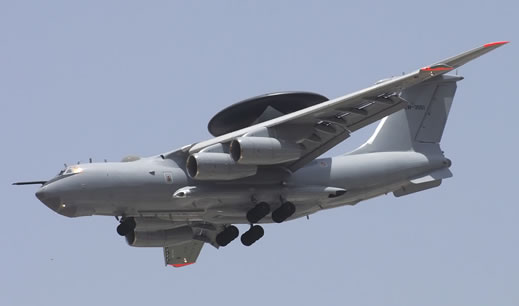
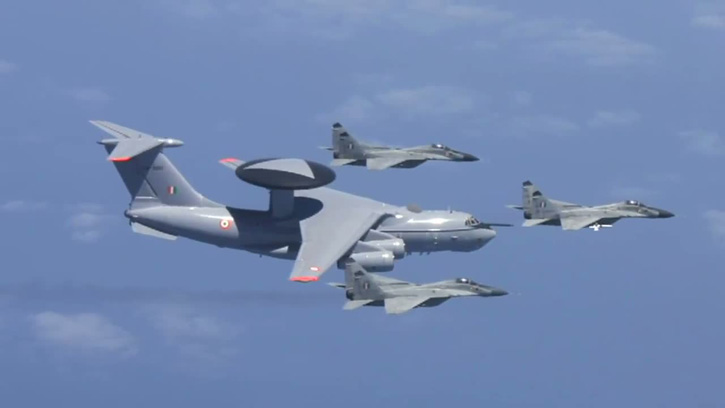
The Indian Cabinet Committee on Security (CCS), the highest executive body that takes a call on defense matters, has cleared the acquisition of two Airborne Warning and Control System (AWACS) platforms, from Israel Aerospace Industries (IAI) at a cost of US$1.1 billion (Rs 7,500 crore).
The acquisition of the AEW mission systems installed on two IL-76 (A-50) aircraft will be processed as a follow-on phase under the tripartite contract with Israel and Russia, under which India bought three such aircraft for the same amount, from Israel and Russia in 2009 and 2010. The Indian Business Standard reported.
The IL-76 Phalcon AWACS platform plays significant role in Indian Air Force’s Network-Centric Operations. It can detect aircraft, drones and cruise missiles from a range of 400 km.The AWACS platform plays significant role in Indian Air Force’s Network-Centric Operations. In addition to the three arrays comprising the ELM-2075 L-band early warning radar located in the static dome, these aircraft have electronic intelligence (ELINT) and communications intelligence (COMINT)-gathering capabilities that help intercept signals from enemy areas, in monitoring troop build-up and to detect aerial threats. It can detect aircraft, drones and cruise missiles from a range of 400 km.
The CCS has also cleared a proposal for the induction of the fourth regiment of Brahmos missile and two more of Pinaka rocket-launchers for the Army.
The first of three PHALCON AEW aircraft delivered to India under the Russian-Israeli-Indian deal.
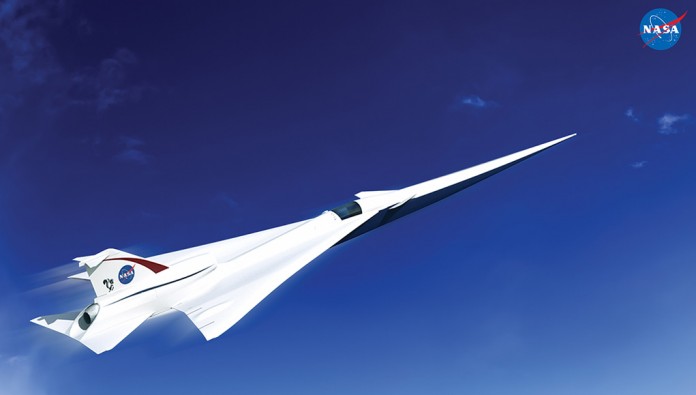
NASA has begun the preliminary design of a “low boom” supersonic flight demonstration aircraft, as part of its renewed ‘X-planes’ program, under the ‘New Aviation Horizons’ initiative, introduced in the agency’s Fiscal Year 2017 budget. Under the contract a team led by Lockheed Martin Aeronautics Company of Palmdale, California, will complete a preliminary design for Quiet Supersonic Technology (QueSST). The Lockheed Martin team includes subcontractors GE Aviation of Cincinnati and Tri Models Inc. of Huntington Beach, California.
“Developing, building and flight testing a quiet supersonic X-plane is the next logical step in our path to enabling the industry’s decision to open supersonic travel for the flying public,” said Jaiwon Shin, associate administrator for NASA’s Aeronautics Research Mission.
The team will develop baseline aircraft requirements and a preliminary aircraft design, with specifications, and provide supporting documentation for concept formulation and planning. This documentation would be used to prepare for the detailed design, building and testing of the QueSST jet. Performance of this preliminary design also must undergo analytical and wind tunnel validation.
In addition to design and building, this Low Boom Flight Demonstration (LBFD) phase of the project also will include validation of community response to the new, quieter supersonic design. The detailed design and building of the QueSST aircraft, conducted under the NASA Aeronautics Research Mission Directorate’s Integrated Aviation Systems Program, will fall under a future contract competition.
After conducting feasibility studies and working to better understand acceptable sound levels across the country, NASA’s Commercial Supersonic Technology Project asked industry teams to submit design concepts for a piloted test aircraft that can fly at supersonic speeds, creating a supersonic “heartbeat” — a soft thump rather than the disruptive boom currently associated with supersonic flight.
The current award worth about $20 million was funded by Nasa’s Basic and Applied Aerospace Research and Technology (BAART). The New Aviation Horizons X-planes will typically be about half-scale of a production aircraft and likely are to be piloted. Design-and-build will take several years with aircraft starting their flight campaign around 2020, depending on funding.
“NASA is working hard to make flight greener, safer and quieter – all while developing aircraft that travel faster, and building an aviation system that operates more efficiently,” NASA Administrator Charles Bolden said.
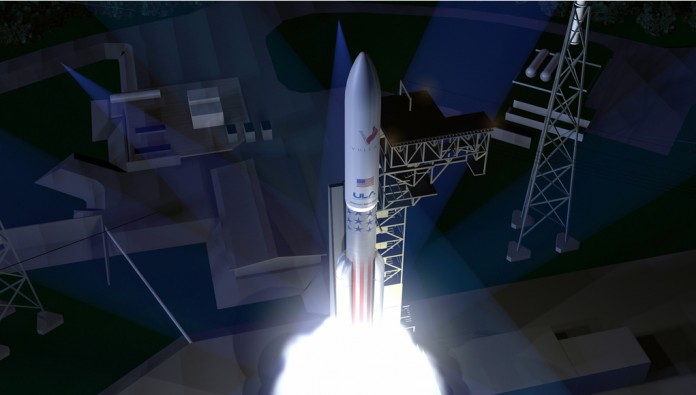
United Launch Alliance (ULA) and Blue Origin LLC, a privately-funded aerospace company owned by Amazon.com founder Jeff Bezos, entered into a public-private partnership with the U.S. Air Force to develop a new rocket propulsion system to power the Vulcan – ULA’s next-generation launch system.
The Department of Defense announced today it awarded United Launch Services LLC, a majority owned subsidiary of United Launch Alliance a $46 million for the development of the Vulcan BE-4 and Advanced Cryogenic Evolved Stage (ACES) rocket propulsion system prototypes for the Evolved Expendable Launch Vehicle program. The majority of the current contract funds the BE-4. A small fraction (1.7 percent) also covers investment in the ACES rocket, to be used in the upper stage segment.
This agreement implements Section 1604 of the fiscal year 2015 National Defense Authorization Act, which requires the development of a next-generation rocket propulsion system that will transition away from the use of the Russian supplied RD-180 engine to a domestic alternative for National Security Space launches. ULA has been investing in the development of the Vulcan rocket for more than a year. Development of the BE-4 engine is fully funded by Blue Origin, with investment by ULA, and offers the fastest path to a domestic alternative to the RD-180. Development is on schedule to achieve qualification for flight in 2017 to support the first Vulcan flight in 2019.
“While the RD-180 engine has been a remarkable success with more than 60 successful launches, we believe now is the right time for American investment in a domestic engine,” said Tory Bruno, president and chief executive officer of ULA. This agreement will enhance the company’s progress integrating the BE-4 engine with the Vulcan launch vehicle.
The BE-4 uses liquefied natural gas (LNG) as a propellant and liquid oxygen (LOx) as oxidizer, in a rocket engine that delivers 550,000-lbf of thrust at sea level. Two BE-4s would power each ULA Vulcan booster, providing 1,100,000-lbf thrust at liftoff. More than three years into development, the BE-4 will be qualified for flight in 2017, at least two years sooner than any alternatives, Blue Origin claims. The ACES rocket propulsion system provides the thrust for the upper stage engine.
Vulcan will launch from Space Launch Complex 41 at the Cape Canaveral Air Force Station in Florida and Space Launch Complex 3 at Vandenberg Air Force Base in California. ULA is teaming in the development of the BE-4 to enable availability for national security, civil, human and commercial missions. Development of the BE-4 engine has been underway for more than four years and testing of the BE-4 components is ongoing at Blue Origin’s test facilities in West Texas.
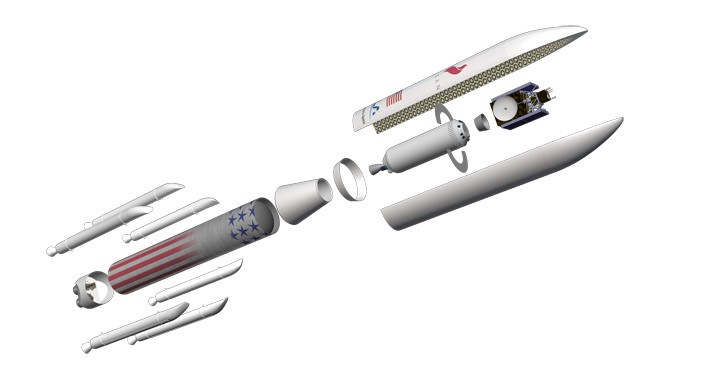
Vulcan Next Generation Launch System is developed as a modular, scalable launch system that uses a single core system to launch payloads to orbit from low Earth orbit (LEO) to Pluto..Image: ULA
The ‘Next Generation Launch System’ is evolved in two steps. In step one, with a planned initial launch capability in 2019, Vulcan will exceed the capability of Atlas V, serving the vast majority of our customers’ mission needs. Step one of the NGLS consists of single booster stage, the high-energy Centaur second stage and either a 4-meter or 5-meter-diameter payload fairing. Up to four solid rocket boosters (SRBs) augment the lift off power of the 4-meter configuration, while up to six SRBs can be added to the 5-meter.
In step two, the Centaur second stage will be replaced by the more powerful ACES in 2023. With the addition of ACES, Vulcan will achieve the current capability of the Delta IV Heavy, which carries the largest payloads for our most critical customers.
The Air Force also awarded a separate $115 million development contract to an Aerojet Rocketdyne-ULA team for the development of the AR1 rocket propulsion system prototype for the Evolved Expendable Launch Vehicle (EELV) program. The AR1 engine is a booster stage engine intended for the Vulcan.
“ULA continues to work with both Blue Origin and Aerojet Rocketdyne to pursue two options for a next-generation American engine and that is why we’re teaming with two of the world’s leading propulsion companies,” said Bruno.
Lockheed Martin Skunk Works® and XTEND have achieved a major milestone in JADC2 by integrating the XOS operating system with the MDCX™ autonomy platform. This technical breakthrough enables a single operator to simultaneously command multiple drone classes, eliminating the friction of mission handoffs. From "marsupial" drone deployments to operating in GPS-denied environments, explore how this collaboration is abbreviating the data-to-decision timeline and redefining autonomous mission execution.
As traditional defense primes face mounting competition from agile “neoprimes” such as Anduril, Palantir and Helsing, the balance of innovation is shifting toward software-defined warfare and scalable, dual-use technologies, while global industry consolidation—marked by Boeing’s integration of Spirit AeroSystems and other strategic mergers—signals an intensified race to secure control over the defense technology value chain. Our Defense-Tech weekly report highlights these trends.
In early October 2025, a coordinated wave of unmanned aerial system (UAS) incursions—widely attributed to Russia—targeted critical infrastructure across at least ten European nations. The unprecedented campaign exposed the fragility of Europe’s air defenses...
Executive Summary
The past week (September 18-25, 2025) represents an inflection point where strategic defense concepts have transitioned from doctrine to tangible reality. An analysis of global events reveals four primary, interconnected trends shaping an...
At the 2025 Air, Space & Cyber Conference, U.S. Air Force and Space Force leaders unveiled major updates on next-generation fighters, bombers, unmanned systems, and space initiatives, highlighting both rapid innovation and critical readiness challenges as the services race to outpace global competitors. A short version is available here, with a more detailed version for subscribers.
The Taipei Aerospace & Defense Technology Exhibition (TADTE) 2025 crystallized around four dominant strategic themes that collectively illustrate Taiwan's comprehensive approach to defense modernization amid escalating regional tensions. Based on a detailed report by Pleronix (available upon request). Includes a Podcast discussion on TADTE 2025's highlighting Taiwan's four strategic themes beyond the post's coverage.
Israel’s Iron Beam 450 high-power laser system has completed final testing, marking a major leap in air defense. Developed by Rafael, it offers precise, cost-effective interception of rockets, UAVs, and mortars, and is set for IDF deployment by 2025.