Monday, December 22, 2025
More
    Home Blog Page 73

    Libya: US Air Strike Probably Prevented IS Attack in Tunisia

    A US air strike on an Islamic State training compound in Libya probably averted a mass shooting or a similar attack in Tunisia, a Pentagon spokesman said Monday. The IS compound destroyed near the city of Sabratha on Friday was “very focused on training to conduct operations, the type of operations that we saw in Tunisia,” Pentagon spokesman Captain Jeff Davis said. “We are confident that what happened Friday with that strike prevented a larger tragedy with there being an external attack of some sort,” he added. “Both the type of training they were doing there and the proximity to the Tunisian border suggest that some larger plan was in the works.”

    The training facility hosted as many as 60 jihadists at any one time who were being schooled in carrying out “the types of attacks you’ve seen in Tunisia,” Davis said, adding: “This was a site that we had watched very closely for many weeks and never at any time did we see any indication that there were civilians present or being held there”.

    T-X: Raytheon Teams with Finmeccanica, Honeywell and CAE for USAF Trainer Competition

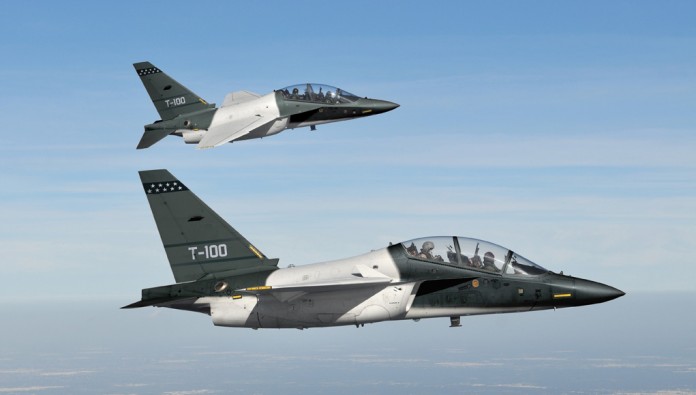
    A pair of T-100s fly tandem during a training mission. Integrated with the Embedded Tactical Training Simulation (ETTS) suite, the T-100 training system provides the most advanced Blended Live Virtual Constructive training environment available. Photo: Raytheon

    Raytheon is developing an integrated training system to prepare pilots for the increasingly sophisticated combat missions of tomorrow. The company is partnering with European aircraft manufacturer Finmeccanica to build the T-100 Integrated Air Training System to be its contender for the T-X, the U.S. Air Force’s highly competitive challenge to create an advanced new jet trainer. A decision on T-X is expected in the fourth quarter of 2017.

    Raytheon, as Lockheed Martin, chose an off-the-shelf platform for their T-X platform proposal, relying on proven, low-risk platform. The Air Force has set an initial operational capability (IOC) date for T-X of 2024, requiring 6-7 years for completing development, integration, testing and production of the entire package. Other competitors that are pursuing ‘clean sheet’ designs for the T-X trainers, (Boeing-Saab and Northrop Grumman) are optimizing their solutions for the customer’s requirements but also increase development risks.

    The T-100, a variant of the Alenia Aermacchi M-346 advanced jet trainer, currently in use by the Italian Air Force, Republic of Singapore Air Force, Israeli Air Force and Polish Air Force. If selected, the T-100 trainer will be manufactured by Raytheon in the United States. The company has not decided where to locate this manufacturing line, that could produce over 300 aircraft.

    “Next-generation combat programs require a next-generation training system,” said Brick “Bluto” Izzi, a 25-year veteran F-16 fighter pilot who now serves as chief engineer for business development at Raytheon’s Space and Airborne Systems business. “The T-38, the Air Force’s current jet training system, is simply not capable of presenting tomorrow’s pilots with the avionics and mission scenarios that will prepare them for next-generation aircraft.”

    “I’ve flown the F-16 as a USAF weapons school instructor for almost 20 years, and I’ve flown this trainer, and it provides two key advantages: thrust-to-weight that leaves no question about excess power, and truly amazing, embedded tactical training,” said Izzi. “It is a superior instructor platform.” Honeywell Aerospace will provide twin, F124 turbofan engines to power the T-100 via the International Turbine Engine Company (ITEC) joint venture.

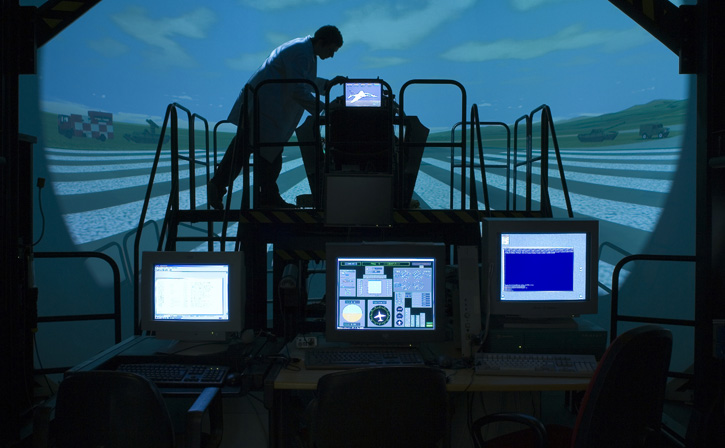
    The T-100 Ground Based Training System is designed to simulate advanced 4th and 5th generation fighter capabilities. Photo: Raytheon/CAE
    The T-100 Ground Based Training System is designed to simulate advanced 4th and 5th generation fighter capabilities. Photo: Raytheon/CAE

    Raytheon Company announced today it is offering an integrated, next-generation training solution for the U.S. Air Force’s Advanced Pilot Training competition (T-X). Raytheon is offering an “affordable, low risk, open systems solution [that] combines a proven aircraft with a suite of fully integrated training technologies.” said Rick Yuse, president of Raytheon’s Space and Airborne Systems. Raytheon is the prime contractor, with principal partners Finmeccanica, CAE USA and Honeywell Aerospace as team members. The solution offered by Raytheon combines the T-100, an advanced variant of the Aermacchi M-346, with a leading-edge Ground Based Training System. CAE USA designs and develops some of the world’s most sophisticated, simulation-based training systems for lead-in fighter trainer aircraft. “Our integrated simulation technologies will play an increasingly critical role in ensuring sophisticated, safe, cost-effective training for the United States Air Force.” Gene Colabatistto, group president – Defense & Security, CAE commented.

    “The M-346 is a proven, mature, eminently flyable aircraft, qualities that are critically important for any new trainer,” Yuse added. “Even more critical are the sophisticated electronics that will prepare trainees to fly in the information-rich environment of current and future technology.” he said. The T-100 is capable of conducting sustained high-g operations, aerial refueling, night vision imaging and data-link operations. In the T-100, pilots will be immersed in a realistic, complex training environment with cutting-edge avionics and pilot-vehicle interfaces, including the ability to simulate tactical scenarios, sensors, threats and weapons while in flight.

    The T-100 builds on Raytheon’s heritage as a developer of high-performance training solutions, having served as prime contractor on the T-6 Texan II and T-1 Jayhawk.

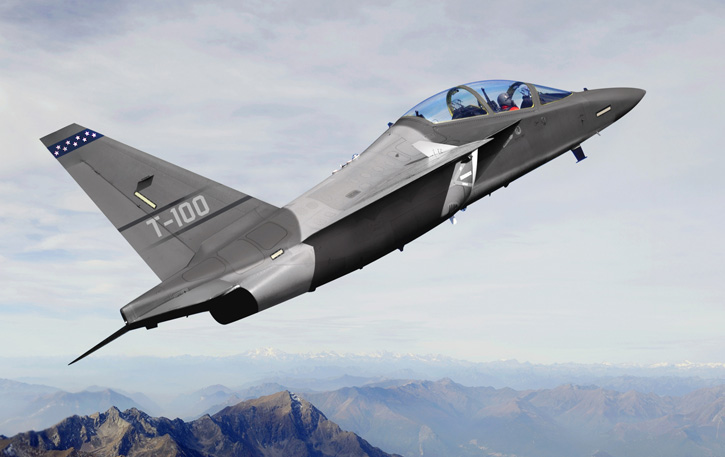
    In the T-100, pilots are immersed in a realistic and complex training environment with next-generation avionics, leading edge pilot vehicle interface and the in-flight capability to simulate tactical scenarios, sensors and weapons. Photo: Raytheon
    In the T-100, pilots are immersed in a realistic and complex training environment with next-generation avionics, leading edge pilot vehicle interface and the in-flight capability to simulate tactical scenarios, sensors and weapons. Photo: Raytheon

    Rheinmetall Conducts Sea Trials of a Naval Laser Gun

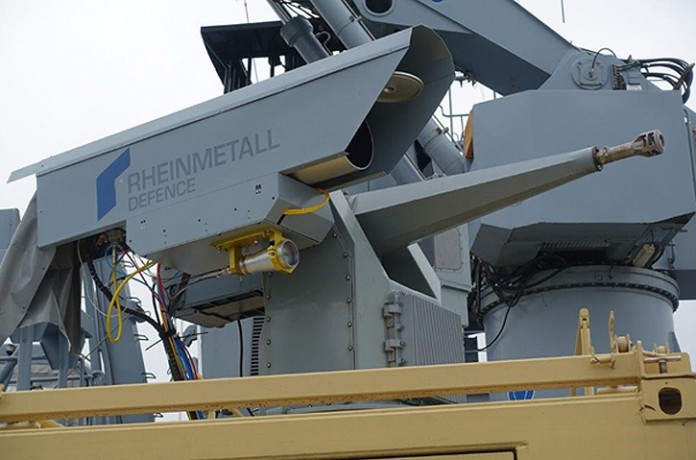
    Tor the test the 10-kilowatt high-energy laser (HEL) effector was mounted on a MLG 27 light naval gun.. Photo: Rheinmetall

    Rheinmetall and the German Bundeswehr have successfully tested a high-energy laser effector installed on a German warship operating on the high seas.
    For the test Rheinmetall mounted a 10-kilowatt high-energy laser (HEL) effector on a MLG 27 light naval gun mounted on the ship. The tests included tracking of potential targets such as unmanned aerial vehicles (UAVs) and very small surface craft. While these engagements were passive and laser was not fired at sea, the HEL effector was tested separately, against stationary targets on land. Demonstrating the feasibility of integration of Rheinmetall’s HEL effector on MLG27 in maritime operations, the test program provided significant insights for future development of marine HEL systems.

    Chinese HQ-9 Surface-to-Air Missiles Spotted in the Spratly Islands

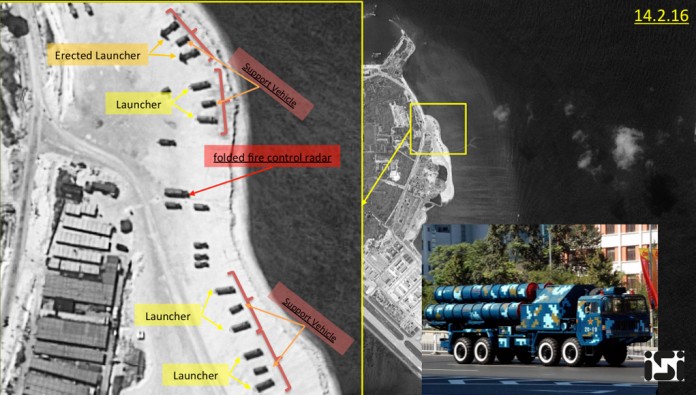
    A clean view of the 14/2/2016 image. Photo: ISI (Imagesat)

    Updated satellite images taken by Imagesat Eros B intelligence satellite acquired by ISI on 14/2/16 reveal a deployment of Chinese HQ-9 (the Chinese S-300 equivalent) Surface to Air Missile (SAM) system now positioned in ‘Woody Island’, previous images obtained by the same source on February 3, 2016 did not show presence of such weapons on the island.

    This deployment is likely the first Chinese deployment of heavy SAM system in the spratly (paracel) archipelago in the South China Sea – an area of many island and atolls claimed by China, Taiwan, Vietnam, Philippines, Malaysia and Indonesia. The Woody Island claimed by Vietnam, was seized by China in 1974.

    Using it’s very high resolution satellite, ISI Analysis team has identified the SAM systems with high confidence as the HQ-9 system. With an operational range of 200 km at high altitude, the HQ-9 pose a threat to military and civilian air traffic.
    The high resolution image and shadows casted by the tall erected launchers clearly show four ready to launch missile tubes and six additional missile carriers. However, the radar system providing target acquisition for the unit was still folded, ISI analysts noticed.

    The linear deployment along the beach seems to be temporary, either a s part of a drill or prior to more permanent preparation of launch pads, paved roads and bunkers protecting these strategic assets. Further deployment or these assets on the island, or redeployment of the SAM battalion back to the mainland will determine the Chinese intentions.

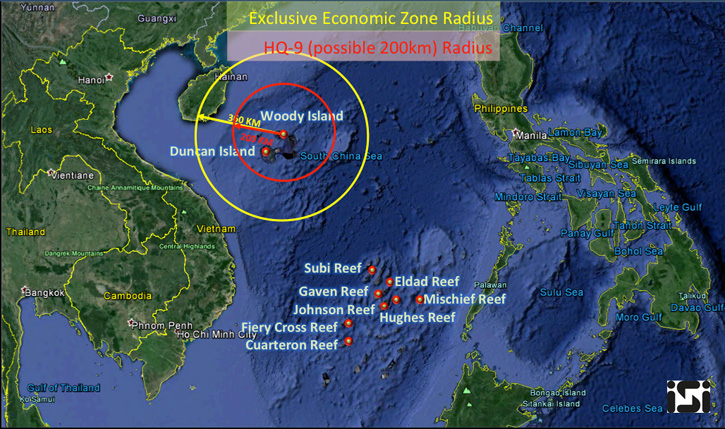
    The missiles cover a significant part of the Economic Exclusion Zone (EEZ) around the island, and enforcing the claimed Air Defense Identification Zone (ADIZ) which was another disputed issue among the nations.

    Both US and Taiwanese sources confirmed the information.

    The 200 mile Economic Exclusion Zone claimed by China around Woody Island, and the overlapping 108 nm range of the HQ-9 SAM system. Image via ISI.
    The 200 mile Economic Exclusion Zone claimed by China around Woody Island, and the overlapping 108 nm range of the HQ-9 SAM system. Image via ISI.

    First USMC F-35B unit to Deploy to Japan in 2017

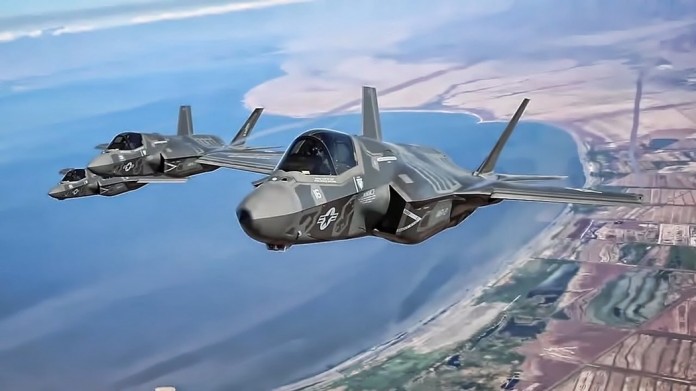
    The US Marine Corps is planning to deploy the first F-35B unit to Marine Corps Air Station Iwakuni, Japan within a year. “We are operating the airplane, training in the airplane, making us ready to deploy to the Pacific,” Lieutenant General Jon M. Davis, deputy commandant for aviation Said. The US Air Force is planning to deploy its first units to RAF Lakenheath In the UK by 2020.

    The Marine Aviation unit scheduled to transition to Japan is VFMA-121 “Green Knights,” currently operating from Yuma AZ. An initial deployment of pilots alongside 10 aircraft will be relocated to Japan starting January 2017, with another six scheduled for July of that year. The unit with 10 F-35B fighter jets has been declared ‘operationally capable’ since August 2015, becoming the first F-35 unit to be ready for combat. By the time the Green Knight’s move to Japan the Corps is expected to have three F-35 squadrons available in the USA. 

    Marine F-35 squadrons will routinely deploy to Japan on six month rotations as part of the service’s unit deployment program.

    In addition to land basing overseas the F-35B will also be ready for future deployments aboard the US Navy’s fleet of amphibious carriers.

    The F-35 is expected to make its international public debut in July at the International Air Tatoo and Farmborough Airshows in the UK, where the aircraft will be shown in flight and on static display for the first time, out of the USA.

    Spain To fly Predator B Reaper Drones

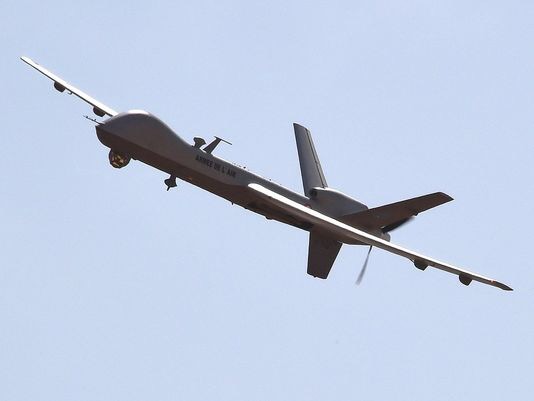
    The government of Spain has selected General Atomics Aeronautical Systems, Inc. (GA‑ASI) to deliver Predator B/MQ-9 Reaper Remotely Piloted Aircraft (RPA) systems to the Spanish Air Force. The aircraft will support the nation’s airborne surveillance and reconnaissance requirements.The Spanish Ministry of Defense has awarded GA-ASI the delivery of one Predator B RPA system for the Spanish Armed Forces to include four aircraft equipped with MTS-B Electro-optical/ Infrared (EO/IR) sensors and GA-ASI’s Block 20A Lynx Multi-mode Radar, two Block 30 Ground Control Stations (GCS), and Satellite Communications (SATCOM) and Line-of-Sight (LOS) data link capabilities by means of a Spanish-U.S. Foreign Military Sales (FMS) agreement.

    The Spanish MoD allocated EUR25 million euros (US$27 million) for the program in 2016 and is expected spend EUR171 million (US$188 million) for the full procurement through 2020. Spain favored the Reaper over the Heron TP proposed by a IAI and Airbus.

    GA-ASI Has teamed with the Spanish group SENER as technological teammate. “We look forward to working with teammate SENER,” said Linden Blue, GA-ASI CEO, he added that the company is developing collaborative partnerships with other Spanish companies to help ensure the long-term success of the program.

    GA-ASI’s multi-mission Predator B is a long-endurance, medium-high-altitude RPA that features an extensive payload capacity (850 lb/386 kg internally, 3,750 lb/1,700 kg externally), with a maximum altitude of 50,000 feet/15240 meters, and can stay aloft for up to 27 hours. Complementing this capability, SENER and Spanish industry will leverage their proven engineering and manufacturing experience to optimize sustainment and capability of the Predator B system in support of the Spanish Armed Forces.

    Predator B is currently operationalwith the U.S. Air Force, Royal Air Force, French Air Force and the Italian Air Force.Some 245 Predator B aircraft have amassed more than one million flight hours since first flight in 2001.

    Amphibious Capabilities at the Singapore Airshow

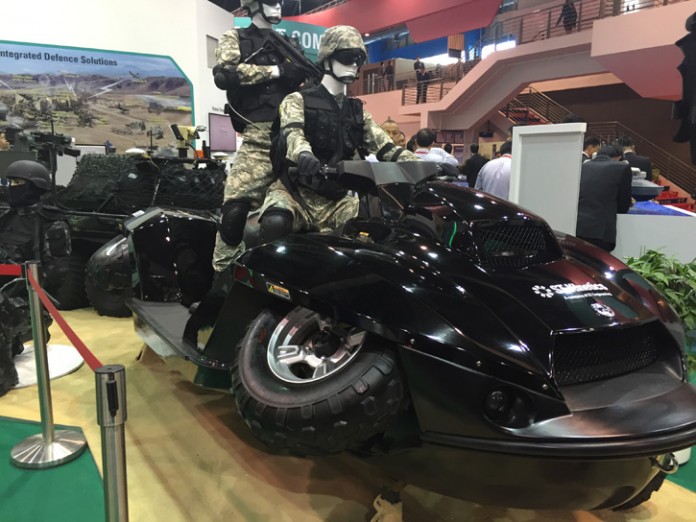
    The Quadski is an amphibious vehicle that is equally agile on land and water. In a simple touch of a switch retracts the wheels after entering water and deploys when approaching land. The vehicle is capable of reaching speeds of 45 mph on both land and water. Quadski uses a BMW Motorroad K1300 engine coupled to revolutionary retractable suspensions and patented water jet drive that allows seamless transition from land to water. Photo: Tamir Eshel, Defense-Update

    While the Singapore Airshow is primarily an aerospace event, amphibious capabilities are receiving high attention here, addressing growing interest in Singapore and other nations in the region to enabling their military and first responders to go anywhere, moving in water, through channels, swamps, or mud.

    Singapore plans to replace most of the current utility platforms armored carriers in service today with amphibious capable platforms. ST Kinetics' Bronco NG is one of the strong candidates for this program. Photo: Tamir Eshel, Defense-Update
    Singapore plans to replace most of the current utility platforms armored carriers in service today with amphibious capable platforms. ST Kinetics’ Bronco New Gen (NG) is one of the strong candidates for this program. With a lower curb weight than the WARTHOG, the BRONCO NG can take on higher add-on protection and payloads. Its V-shaped hull effectively deflects under belly blasts while contributing to a stiffer chassis for better all-round protection. Being lighter, it is capable of swimming and traversing water obstacles at higher STANAG level protection. The chassis has the largest capacity in the BRONCO family, Photo: Tamir Eshel, Defense-Update
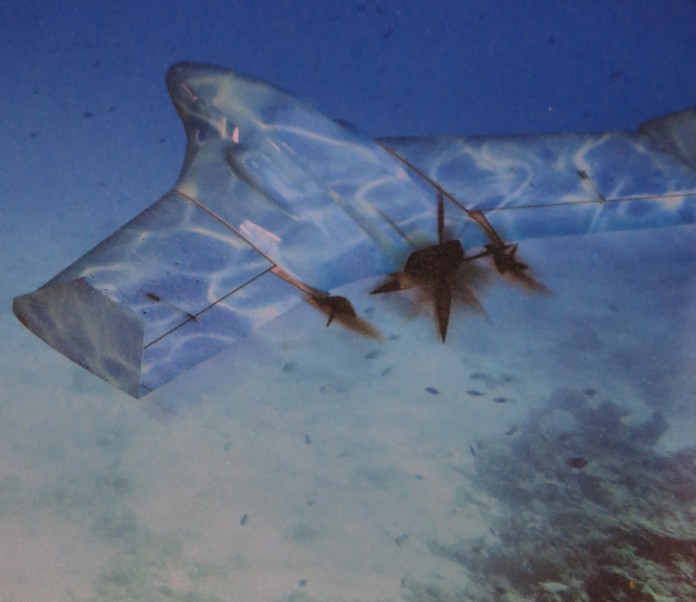
    The hybrid drone can carry sonars for underwater surveillance missions. Photo: Tamir Eshel, Defense-Update
    A proof of concept of an Unmanned Hybrid Vehicle (UHV) undergoing at Singapore technologies Aerospace will provide users the capability to deploy rapidly to sea areas by flyin to the site. Upon landing on the surface the UHV submerges and begins the extended underwater mission phase. The Unmanned hybrid Vehicle (UHV) drone can carry sonars for underwater surveillance missions. Upon mission completion the UHV surface and await pickup. Photo: Tamir Eshel, Defense-Update
    bullray_725
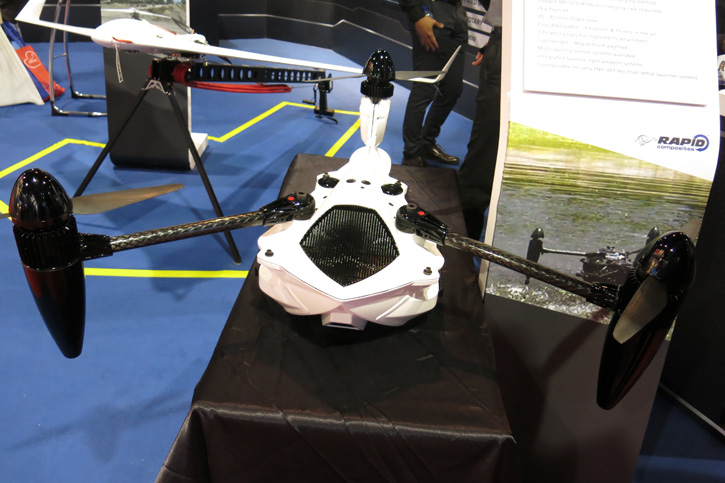
    Bullray amphibious UAV from Rapid Composites is a waterproof UAV designed to take off and land on water. The 15kg tri-rotor drone does not require assembly, it is carried with rotor arms folded, and, when extracted, in less than 15 seconds, the Bullray is ready to fly. The drone has a waterproof fuselage designed for all weather operation. Photo: Tamir Eshel, Defense-Update
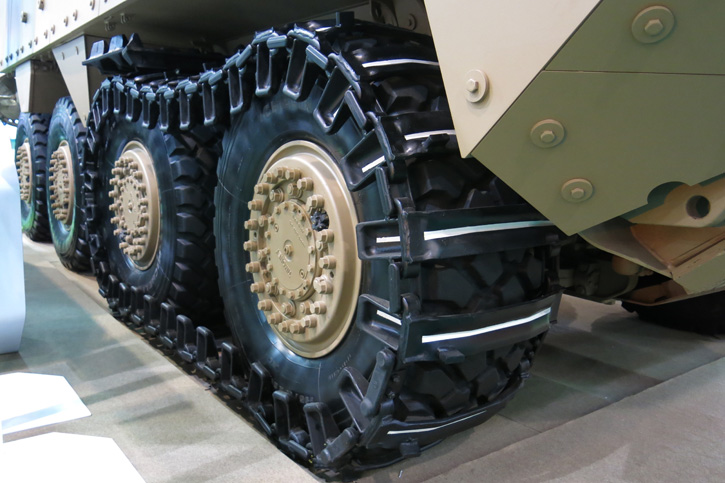
    ST Kinetics’ TERREX Armored Personnel Carrier (APC) is equipped to move in water, the new ‘Track Over Wheel’ concept uses a rubber track that wraps over the frontal two wheels of the 8x8 vehicle, to give better traction and lower ground pressure mobility over soft and difficult terrain. Photo: Tamir Eshel, Defense-Update
    ST Kinetics’ TERREX Armored Personnel Carrier (APC) is equipped to move in water, the new ‘Track Over Wheel’ concept uses a rubber track that wraps over the frontal two wheels of the 8×8 vehicle, to give better traction and lower ground pressure mobility over soft and difficult terrain. Photo: Tamir Eshel, Defense-Update
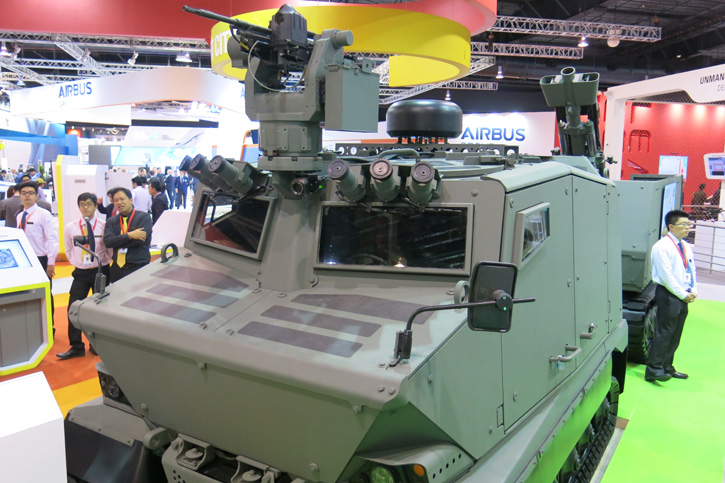
    The Jaeger UGV - based on the Israeli amphibious Amstaf will be configured as a base platform fitted with mission specific modules. Photo: Tamir Eshel, Defense-Update
    The Jaeger UGV – based on the Israeli amphibious Amstaf will be configured as a base platform fitted with mission specific modules. Photo: Tamir Eshel, Defense-Update

    Singapore Technologies’ Hybrid Mini UAV Can Fly and Dive

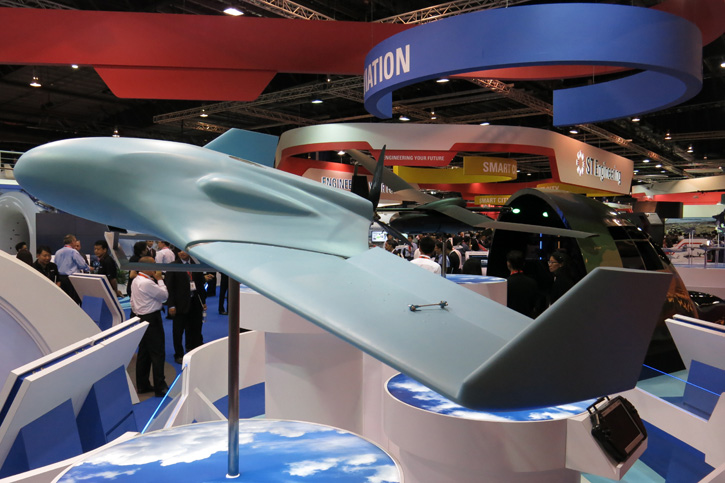
    The new hybrid drone can fly in the air at a speed of 45 knots and move underwater, at a speed of three knots for up to three hours. Photo: Singapore Technologies Engineering

    Singapore Technologies Aerospace company unveiled a unique unmanned system at the Singapore Airshow today, this yet unnamed system can launch from a deck of a ship or from land, fly for about 15 minutes, dive underwater and loiter for three hours on a submerged mission. The developers claim this concept of operation is faster and more efficient for quick reaction surveillance missions, as the hybrid drone can deploy faster than conventional boats or unmanned surface vessels. Typical missions for the new hybrid drone are mine detection and clearance, as well as underwater inspection, search and rescue.

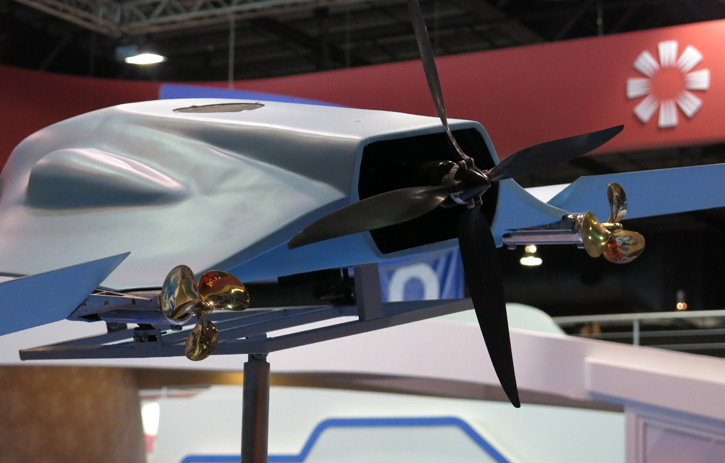
    Powered by three electrically driven propellers, the new hybrid drone can fly for 15 minutes and move underwater at a speed of three knots for up to three hours. Photo: Tamir Eshel, Defense-Update
    Powered by three electrically driven propellers, the new hybrid drone can fly for 15 minutes and move underwater at a speed of three knots for up to three hours. Photo: Tamir Eshel, Defense-Update
    Apart from speed, another benefit is its ability to maneuver quickly underwater and unhindered to the point of interest. The electrically powered drone can carry various payloads weighing up to three kilograms, including various sonars and inspection equipment for underwater surveillance.

    The hybrid drone can carry sonars for underwater surveillance missions. Photo: Tamir Eshel, Defense-Update
    The hybrid drone can carry sonars for underwater surveillance missions. The payload bays can be seen above the fuselage. Photo: Tamir Eshel, Defense-Update

    IAI’s ROTEM – Tactical Multirotor Killer Drone

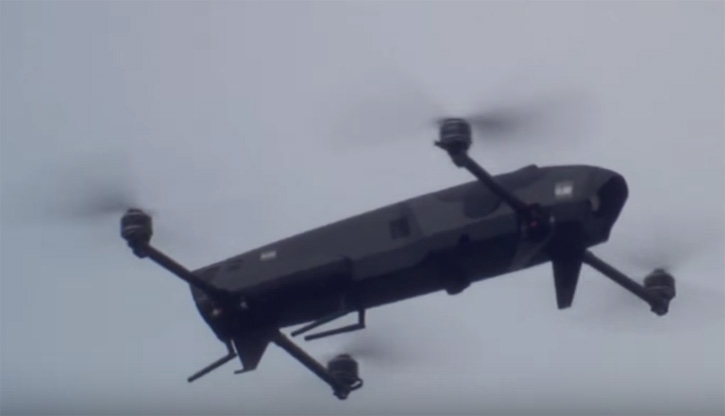
    The lightweight UAV weighs only 4.5 kg, packing an impressive array of sensors, including day or night (IR) cameras, used for piloting and reconnaissance, additional, multiple acoustic transducer enabling obstacle avoidance and flight through inner spaces of buildings, entering through windows, narrow urban streets or dense vegetation. Photo: IAI
    The ROTEM-L quadrotor can be assembled as a loitering weapon carrying a warhead weighing one pound, or reconnaissance sensor, supporting mission endurance up to 45 minutes.
    The ROTEM-L quadrotor can be assembled as a loitering weapon carrying a warhead weighing one pound, or reconnaissance sensor, supporting mission endurance up to 45 minutes.

    IAI recently released details on a new member of its mysterious family of multi-rotor unmanned aerial vehicles (UAVs), the new version dubbed ROTEM L (abbreviation of its Hebrew designation: ‘hovering reconnaissance and attack platform – Light’). Designed as a small, quad-rotor based loitering weapon, ROTEM is uniquely built for operation in urban warfare, offering combatants effective, indirect observation and engagement of targets from an elevated position. IAI is displaying a number of loitering weapons at the Singapore Airshow this week, as well as the HoverMast hovering surveillance system.

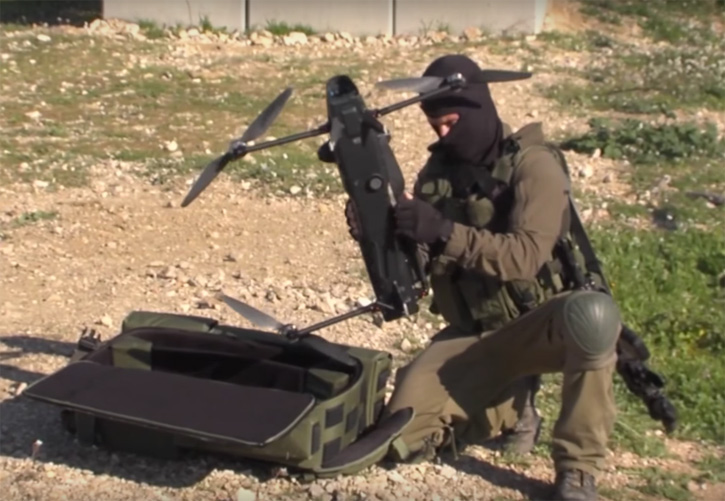
    The lightweight UAV weighs only 4.5 kg, packing an impressive array of sensors, including day or night (IR) cameras, used for piloting and reconnaissance, additional, multiple acoustic transducer enabling obstacle avoidance and flight through inner spaces of buildings, entering through windows, narrow urban streets or dense vegetation. The battery-powered drone can loiter for nearly 30 minutes, with one pound (0.450 kg) of explosive payload, or trade-off this deadly payload for a camera and more batteries, sustaining up to 40-45 minute in the air. The warhead comprises two blast-fragmentation grenades configured with a dual safe and arm mechanism. The ROTEM is packed folded in a carried in a canister or backpack and is assembled in seconds by a single soldier.

    Packed folded in a backpack, ROTEM-L is assembled in seconds and operated by a single soldier. Photo: IAI
    Packed folded in a backpack, ROTEM-L is assembled in seconds and operated by a single soldier. Photo: IAI

    ROTEM is operated by a single soldier using simple point and click commands on a tablet controller. The vehicle takes off vertically, and ascends toward the area of interest, where the operator can scan and observe the area using its forward looking slanted camera. From a distance of few hundreds of meters ROTEM is practically inaudible and can loiter silently for the entire mission. When a target is located and verified the operator can switch to attack mode, the drone responds and quickly accelerates to a high speed dive, closing in on its prey, with the target maintained in view throughout the flight, enabling the manned operator to monitor the attack and abort anytime if necessary. Using on-board sensors, ROTEM effectively avoids obstacles, enter windows at low or high levels, or maneuver around fences. The operator directs the ROTEM to its target – horizontally, vertically or slanted as necessary. ROTEM and Green Dragon both shares a common, modern tablet controller, allowing for simplified cross training and operation.

    Unlike other loitering weapons, ROTEM is not necessarily expendable once launched. If the operator does not have the opportunity to engage or aborts the mission and decides to retrieve the drone, ROTEM is instructed to land at a safe location, it’s safe status clearly visible with warhead disarmed.

    EO/IR Surveillance Improving Aviation Safety in Airports

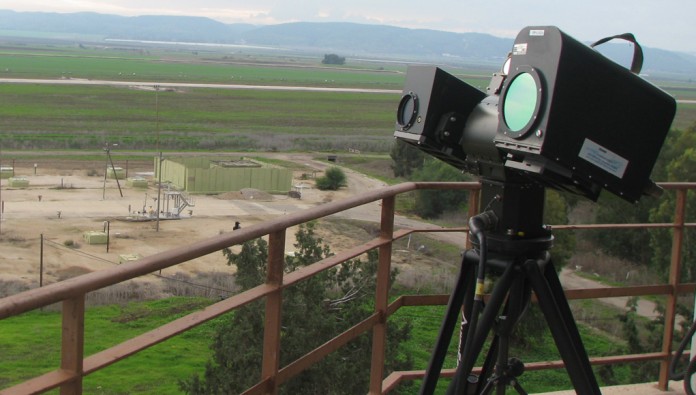
    The Interceptor provides automated scanning and real-time warnings without the need for user interaction. Photo: Controp
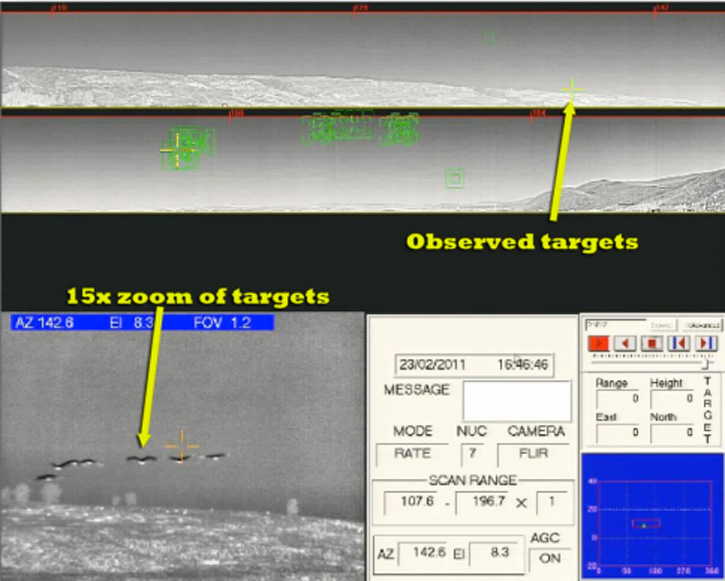
    INTERCEPTOR infrared observation mode. Bird numbers, location, behavior, and species identification are easily discernable even at a long distance. Photo: Pharovision
    INTERCEPTOR infrared observation mode. Bird numbers, location, behavior, and species identification are easily discernable even at a long distance. Photo: Pharovision

    Birds pose known flight safety hazard that is rarely addressed by flight operations due to the lack of real-time data on bird activity. Although radars have been used to track avian activity, their ability to detect birds at low level is limited. To improve the capability to detect and track bird activity near airports the US Federal Aviation Administration (FAA) has recently tested a new infrared scanning sensor called ‘Interceptor’ at Laguardia (LGA) Airport, and is currently evaluating the system at Whidbey Island in Washington state.

    This automated bird detection system was developed by Controp Precision Technology from Israel and US based Pharovision. “In tests at LGA, our system has shown that it outperforms both human observation and traditional radars, being able to pick up and identify small and very low or very high flying objects such as birds – with accurate detection of single birds at distances of up to 5 kilometers (3 miles).” says Johnny Carni, Controp’s VP for Marketing & Sales.

    The Interceptor’s display can be integrated into the Air Traffic Control (ATC), providing automatic alerts on bird activity along the airport exit and approach flight routes. Unlike the radar that displays ‘blips’ representing targets, Interceptor displays the true visual images of the targets themselves, enabling operators to easily assess the type of alert, number of birds, their location and altitude, without the need for extensive training, enabling the airfield to increase operational tempo.

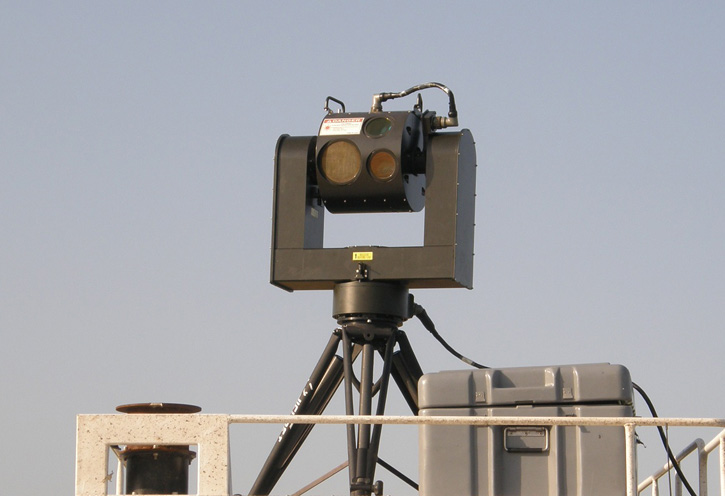
    The sensor is based on the Spider – persistent surveillance system developed by Controp Precision Technologies for military and homeland security applications. Used as bird detection sensor, Interceptor implements special bird detection algorithms to detect and tracks average birds in day and at night, from a distance of 4-5 km. The system can also spot bird flock activity on the ground at longer distance.

    Looking beyond birds and wildlife, Controp and Pharovision use a derivative of the system to detect unmanned aerial vehicles (UAVs) in the airport vicinity. Further development of the system will also be able to detect foreign objects and debris (FOD) along the runways.

    The Sentinel FOD detection system provides continuous scanning of runway, taxiway and other tarmac surfaces to detect the presence of FOD. Photo: Controp.
    The Sentinel FOD detection system provides continuous scanning of runway, taxiway and other tarmac surfaces to detect the presence of FOD. Photo: Controp.

    The Sentinel FOD detection system provides continuous scanning of runway, taxiway and other tarmac surfaces to alert the presence of FOD. The integrated and comprehensive system is capable of simultaneously scanning for debris on all tarmac surfaces with the vicinity and between aircraft movements. The system is capable of automatically scanning for other types of targets as well.

    Adapted from Controp’s globally deployed and proven automatic intruder detection systems, the Interceptor and Sentinel systems integrate a Thermal Imaging (TI) camera with advanced Electro-Optics (EO), a Day Camera and a Laser Range Finder (LRF). The combination of the continuous zoom lens of the IR camera and the full-color live video cameras, allows the Interceptor and Sentinel to automatically perform wide area surveillance, providing highly accurate real-time day and night detection and tracking. This application also proves essential for rapid situational assessment, in civilian or military airfields, following enemy attacks or natural disasters.

    “There is breakthrough potential in Controp’s advanced solutions to differentiate between birds and other objects in and around commercial, civilian and military airports,” said Yuval Milo of Pharovision. “We have now expanded their role to the task of FOD and Unmanned Aircraft System (UAS) detection, making them truly multi-mission systems that will bring enormous savings to airport authorities.”

    Compact INMARSAT SATCOM Extends Tactical UAVs Range, Performance

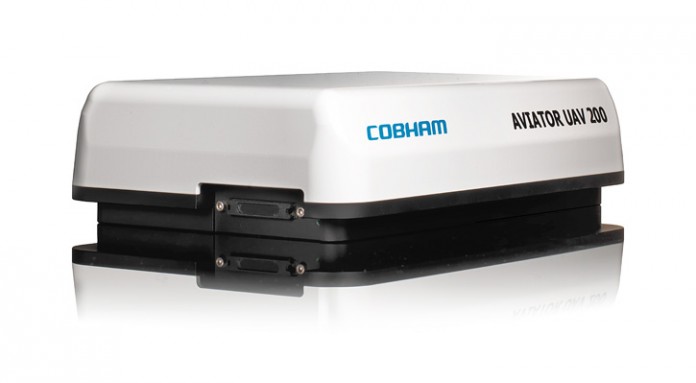
    the Aviator UAV 200 is designed as a compact and lightweight unit that delivers Inmarsat Class 4 SwiftBroadband services in a low-SWAP package. Photo: Cobham

    Cobham SATCOM has developed what is claimed to be the smallest and lightest Inmarsat UAV satcom solution. Weighing only 1.45kg, the Aviator UAV 200 is designed as a compact and lightweight unit that delivers Inmarsat Class 4 SwiftBroadband services in a low-SWAP package which is 76 per cent lighter than existing comparable products on the market. Mounted within the airframe and measuring 24cm x 16cm x 6cm, the Cobham AVIATOR UAV 200 delivers up to 200 kbps data and full, real-time control of data channels.

    The system aims to enhance the performance of tactical unmanned aerial vehicle, providing higher speed and improved connectivity in mountainous areas and over long distances. “Until now, the size, weight and power requirements of Inmarsat satcom hardware were too restrictive for smaller UAVs” Kim Gram, vice president of Cobham SATCOM’s aeronautical business unit said, “AVIATOR UAV 200 matches the connectivity and performance of larger, class-leading satcom systems, but in a far smaller, lighter and less power-demanding package.”

    With improved satcom technology, UAV operators can benefit from improved aircraft control and situational awareness, with the ability to make real-time route adjustments while simultaneously tracking the airframe. Operators also have a constant overview of on-board systems and structural integrity with real-time health monitoring. Better connectivity allows access to Beyond Line Of Sight (BLOS) situational data and live streaming of imagery and video which expands the role of real-time scene surveillance UAVs.

    “The ability to extend their operational range significantly and provide access to real time situational data and video, it is a truly compelling package.” Andy Start, President, Inmarsat Global Government, added.

    ST Kinetics Pursueing Combat Robotics, with Foreign UGV Developers

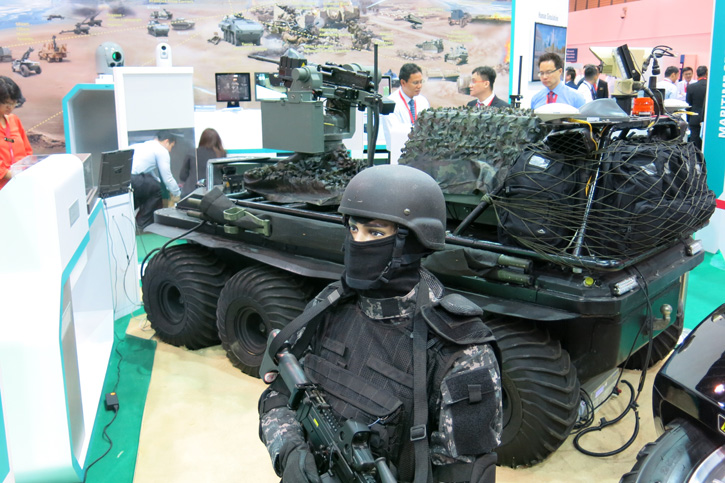
    The Israeli Amstaff robotic vehicle from Automotive Robotic Industries is making its debut at the Singapore Airshow , carrying ST Kinetics’ remotely controlled weapon system. Photo: Noam Eshel, defense-Update.

    Singapore Technologies Kinetics (STK) is highlighting at the Singapore Airshow two unmanned ground vehicle systems (UGV) demonstrating robotics applications of combat systems. The two platforms selected by STK are the Amstaf Israeli wheeled UGV from Automotive Robotic Industries and the TheMIS tracked UGV from Milrem of Estonia, Both debut a Singapore Airshow carrying ST Kinetics’ remotely controlled weapon systems.

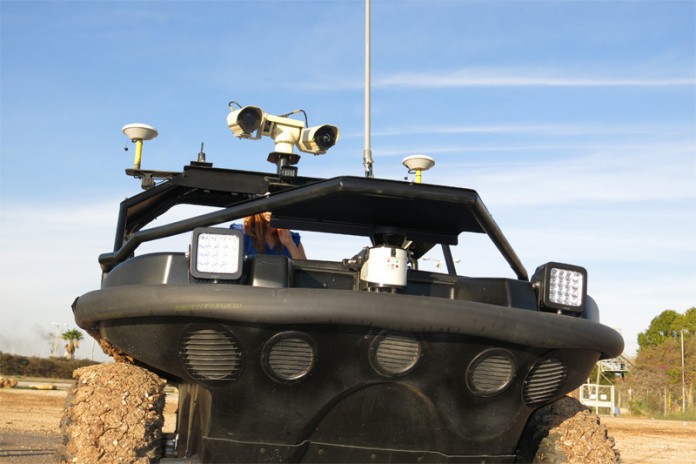
    Amstaf has already proved its operational use, guarding villages, military facilities and infrastructure site sin operational use and field evaluations in Israel, South Korea, Poland and Canada and other locations worldwide. The configuration used by Singapore Technologies include both 6×6 and 8×8 electrically powered vehicles dubbed ‘Jaeger UGV’. It is equipped with diesel engine and charger alternator that keeps battery full at all time, supporting up to 48 hours of autonomy. When silent operation is mandatory the vehicle can endure over 6 hours on battery power only, quick charging enables the robot to top-up its battery from the on-board charger in 3 hours.

    An example of the combat support payload is the remotely operated 7.62 weapon station seen on the Jaeger UGV at the Singapore Airshow 2016. Photo: Tamir Eshel, Defense-Update
    An example of the weaponized combat support payload is the remotely operated 7.62 weapon station seen on the Jaeger UGV at the Singapore Airshow 2016. Photo: Tamir Eshel, Defense-Update
    The Jaeger UGV - based on the Israeli Amstaf will be configured as a base platform fitted with mission specific modules. Photo: Tamir Eshel, Defense-Update
    The Jaeger UGV – based on the Israeli Amstaf will be configured as a base platform fitted with mission specific modules including a weaponized robot carrying a remote weapon stations, non-line of sight (Spike) missile launchers, patrol vehicle, communications relay,load carrier and more. Photo: Tamir Eshel, Defense-Update
    themis_adder_725-1
    TheMIS ADDER at the Singapore Airshow 2016. Photo: Tamir Eshel, Defense-Update

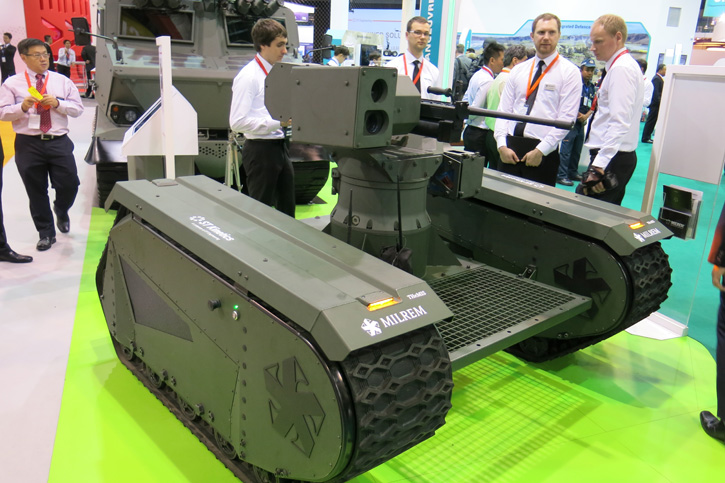
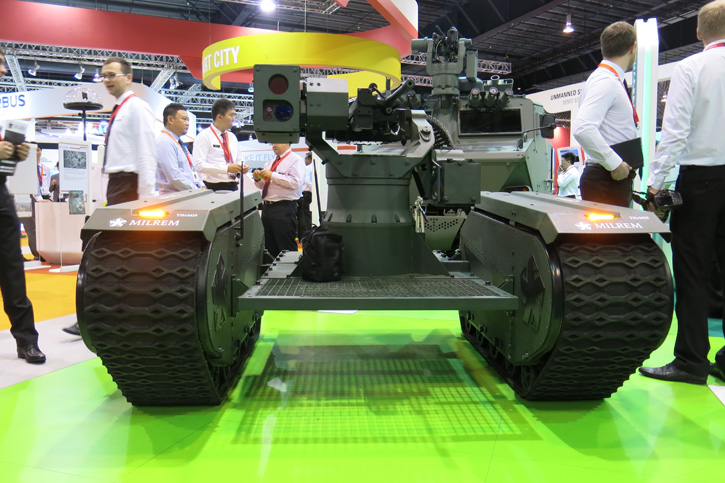
    The second platform on display is the Tracked Hybrid Modular Infantry System (THeMIS) from Milrem UGV. TheMIS ADDER (a variant where UGV THeMIS and RWS ADDER are integrated) is a weaponized unmanned ground vehicle equipped with a remote weapon station. The vehicle has independent, electrically powered propulsion units embedded in each track. The TheMIS development has been funded by the Estonian Ministry of Defence. The prototype of the UGV was unveiled at DSEI 2015 in London, UK last autumn.

    TheMIS ADDER - forward view. The platform can be expanded, in width and length, to fit specific payloads and mission systems. Photo: Tamir Eshel, Defense-Update.
    TheMIS ADDER – forward view. The platform can be expanded, in width and length, to fit specific payloads and mission systems. Photo: Tamir Eshel, Defense-Update.

    Its kerb weight is 750-850 kg and maximum speed is 25-35 km/h. The platform can carry its own weight (750kg) as payload, bringing the total gross weight to more than 1.5 tons; yet the wide tracks maintain the ground pressure as low as 0.069 kg/cm2, maintaining high off-road maneuverable and amphibious capability with high mobility in mud, sand, water and snow. The vehicle can be remotely controlled by an operator, or follow the operator from a safe distance, while maneuvering to avoid obstacles. In addition to the use as a mobile, remotely operated weapon or anti-tank missile carrier, TheMIS can also assume other missions such as combat casualties evacuation, firefighting, demining, CBRN reconnaissance, combat support supply ‘mule’.

    IAI Introduces New Loitering Weapons for Anti-Radiation, Precision strike

    Harpy NG (New Generation) is designed to counter the newer types of air defense radar threats that have evolved since the introduction into service of its former version, in the early 1990s. Photo: IAI

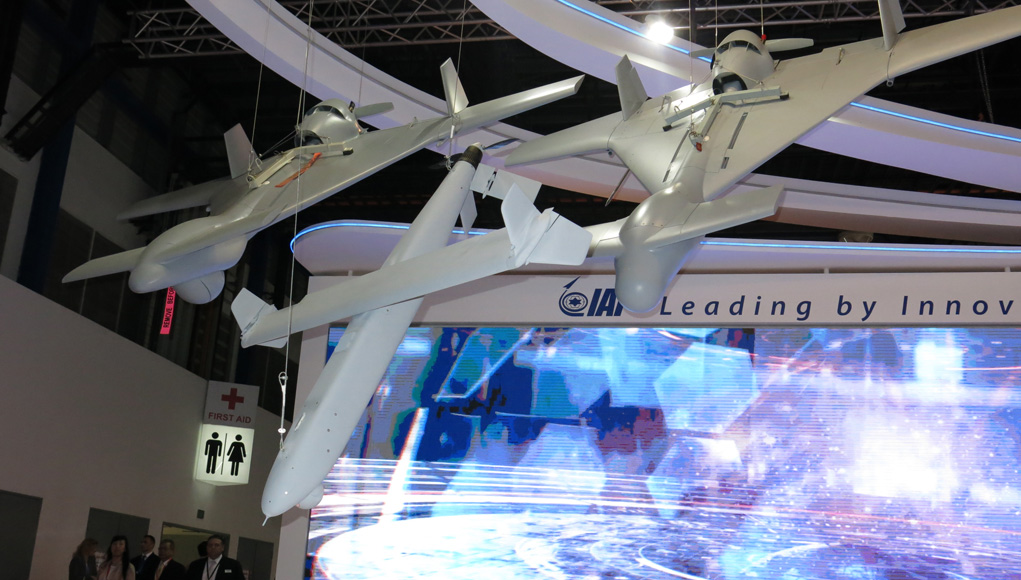
    Israel Aerospace Industries (IAI) is unveiling two new variants of its Harpy/Harop loitering weapon family at the Singapore Airshow this week. The first is the Harpy New Generation (NG) — an autonomous, anti-radiation loitering weapon designed to Suppress and Destroy Enemy Air Defense (SEAD/DEAD) operations. The second is the Green Dragon, a compact, lightweight variant of the HAROP, which uses Electro-Optical/Infra-Red (EO/IR)-guidance to provide ‘man-in-the-loop’ capability. HAROP and Green Dragon are designed to locate, track and destroy high-quality static and mobile targets.

    IAI_loitereres1021
    The expanded family of IAI’s loitering munitions displayed at the Singapore Airshow 2016. Photo: Tamir Eshel, Defense-Update

    Harpy NG was developed to counter the newer types of air defense radar threats that have evolved since the introduction into service of its first-generation predecessor, in the early 1990s. It automatically engages emitters and radar-dependent threats in an area of responsibility assigned to it. The NG retains its predecessor’s original 15 kg. warhead, but has a new and improved RF seeker which covers a wider frequency range, to match the ‘migration’ of modern target-acquisition and fire-control radars to the lower frequency bands.

    Utilizing the HAROP airframe, the Harpy NG also offers a longer loitering time of about six hours, extended range and a higher altitude ceiling. The common platform enables commonality in maintenance and training across several families of loitering vehicles operated by some of its customers. In addition to its service with the Israel Defense Forces, Harpy also serves as a loitering counter-air-defense weapon with a number of international customers, including India, South Korea, Chile, Turkey and China. Harop is operational with India and Azerbaijan.

    Boaz Levi, IAI Corporate Vice-President and General Manager of the Systems, Missiles & Space Group, said: “IAI is introducing these new Loitering Munitions, intended to refresh, update and complement our already successful family of LMs. The new tactical products serve to bolster the abilities of small, tactical, infantry units and Special Ops, with a special emphasis on solving operational problems in urban areas.”

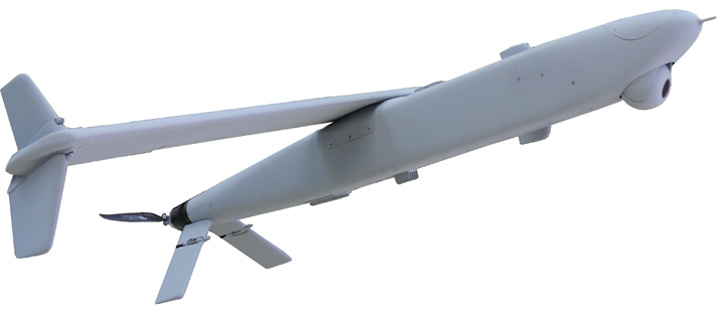
    The Green Dragon weighs 15 kg and uses an electro-optical 'micropop' EO/IR payload for surveillance, targeting and terminal homing. Its warhead weighs almost 3 kg. Photo: IAI

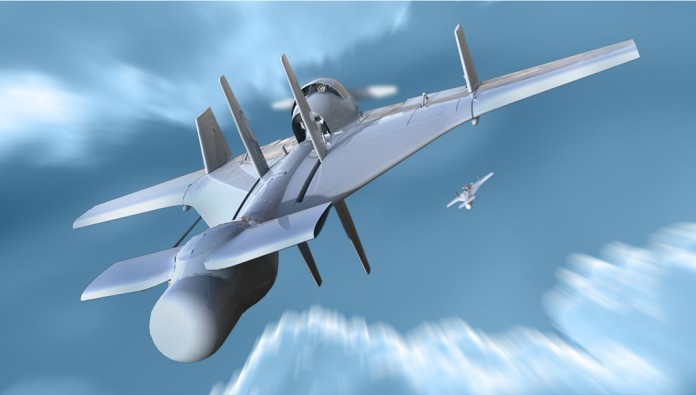
    The other new member of IAI’s family of LM’s is the Green Dragon – a tactical, affordable weapon which addresses the growing demand from military users for organic, persistent, situational- awareness diagnosis and rapid kinetic response. It is also suitable for small ground units and special operations forces, operating as an organic loitering weapon which enables both ISR and attack capabilities in short-response time. As an all-electric LM, Green Dragon operates silently for up to two hours, during which its operator can collect visual intelligence of surrounding areas up to a range of 40 km.

    Green Dragon can locate and acquire targets and, upon a command from its operator, can dive on designated targets to impact and explode with an accuracy better than 1 meter (CEP). The operator can abort the attack any time before impact, through a built-in “abort and circle” capability, designed to prevent unnecessary collateral damage or mistaken targeting.

    The Green Dragon weighs 15 kg. and uses an electro-optical ‘micropop’ EO/IR payload for surveillance, targeting and terminal homing. Its warhead weighs almost 3 kg. The Green Dragon is carried and launched from a sealed 1.7-meter-long canister that can be carried by a soldier in a backpack or stacked on a small vehicle in groups of 12-16 launchers. Upon launch, the weapon expands to a cruciform 1.7-meter-wide shape optimized for loitering and terminal dive. It is controlled from a tablet-sized control panel, through a tactical, low-power datalink.

    Arab Coalition Join Saudi Hosted Multinational Exercise Amidst Sprawling Regional Conflict

    The Kingdom of Saudi Arabia is witnessing, during the next few hours, the arrival of troops participating in the largest and most important military maneuver in the history of the region called Northern Thunder (Ra’ad Al-Shamal).

    Military forces from 20 Arab nations are gathering at King Khalid Military City in Hafr Al-Batin, near the Kuwaiti border to participate in the exercise, one of the largest of its kind in terms of the number of countries with the participation of 20 Arab, Islamic and friendly countries, including: the Kingdom of Saudi Arabia, United Arab Emirates, Jordan, Bahrain, Senegal, Sudan, Kuwait, Maldives, Morocco, Pakistan, Chad, Tunisia, Comoros, Djibouti, Oman, Qatar, Malaysia, Egypt, Mauritania, Mauritius, in addition to the Peninsula shield forces.

    Northern Thunder is the largest military exercise of its kind in terms of the number of participating countries and qualitative military equipment of diverse sophisticated weapons and military equipment, including fighter jets from different models reflecting the large quantitative and qualitative spectrum being enjoyed by these forces, as well as the participation of a wide range of artillery, tanks, infantry, air defense systems and naval forces, in a simulation of the highest level of maximum alert of the armies of the 20 participating countries.

    The exercise represents broad support from Arab nations to the Kingdom of Saudi Arabia, that has been involved in recent months in a number of conflicts, namely Yemen and Syria, as well as an open challenge to Iran.

    Saudi Arabia is sending planes to the İncirlik Air Base in the southern Turkish province of Adana, where jets from the U.S.-led anti-ISIL coalition are already based, Turkish Foreign Minister Mevlüt Çavuşoğlu has stated, amid reports on Feb. 14 that the jets have already arrived.
    Saudi Arabia has deployed F-15E strike fighters to the Turkish airbase at Incirlik, a forward base hosting US lead coalition air forces operating against Daesh in Northern Syria.

    According to Turkish sources the Saudi planes are expected there within 2-3 weeks. The Saudi deployment is part of a larger plan that could involve operations against Daesh that will require cross-border ground maneuvers into Syria.

    Saudi Foreign Minister Adel al-Jubeir also told reporters on Feb. 14 that his country was ready to send special forces to Syria to take part in ground operations against ISIL, without giving further details.

    Turkey and Saudi Arabia have long advocated in favor of a ground operation in Syria but no concrete decision has been taken for such an operation.

    Riyadh and Ankara are both opposed to Syrian President Bashar al-Assad, whose foreign minister last week warned that any ground intervention would “amount to aggression that must be resisted.”

    Al-Assiri said the decision to deploy an unspecified number of jets to Turkey followed a meeting in Brussels of U.S.-led anti-ISIL coalition members, who decided step up their fight against jihadists in Syria and Iraq. He stressed that Saudi Arabia made its decision in coordination with the coalition and a ground operation was being planned.

    “There is a consensus among coalition forces on the need for ground operations and the Kingdom is committed to that,” al-Assiri said.
    “Military experts will meet in the coming days to finalize the details, the task force and the role to be played by each country,” he added.


    Skunk Works and XTEND Simplify Multi-Drone Command

    0
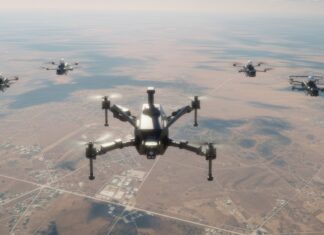
    Lockheed Martin Skunk Works® and XTEND have achieved a major milestone in JADC2 by integrating the XOS operating system with the MDCX™ autonomy platform. This technical breakthrough enables a single operator to simultaneously command multiple drone classes, eliminating the friction of mission handoffs. From "marsupial" drone deployments to operating in GPS-denied environments, explore how this collaboration is abbreviating the data-to-decision timeline and redefining autonomous mission execution.
    From Ukraine to Taiwan: The Global Race to Dominate the New Defense Tech Frontier

    0
    As traditional defense primes face mounting competition from agile “neoprimes” such as Anduril, Palantir and Helsing, the balance of innovation is shifting toward software-defined warfare and scalable, dual-use technologies, while global industry consolidation—marked by Boeing’s integration of Spirit AeroSystems and other strategic mergers—signals an intensified race to secure control over the defense technology value chain. Our Defense-Tech weekly report highlights these trends.

    Europe’s “Drone Wall”

    0
    In early October 2025, a coordinated wave of unmanned aerial system (UAS) incursions—widely attributed to Russia—targeted critical infrastructure across at least ten European nations. The unprecedented campaign exposed the fragility of Europe’s air defenses...

    Weekly Defense Update & Global Security Assessment

    0
    Executive Summary The past week (September 18-25, 2025) represents an inflection point where strategic defense concepts have transitioned from doctrine to tangible reality. An analysis of global events reveals four primary, interconnected trends shaping an...

    U.S. Air and Space Forces Push Next-Gen Programs at the AS&C 2025 Conference and...

    0
    At the 2025 Air, Space & Cyber Conference, U.S. Air Force and Space Force leaders unveiled major updates on next-generation fighters, bombers, unmanned systems, and space initiatives, highlighting both rapid innovation and critical readiness challenges as the services race to outpace global competitors. A short version is available here, with a more detailed version for subscribers.

    TADTE 2025: Reflecting Taiwan’s Strategic Themes

    0
    The Taipei Aerospace & Defense Technology Exhibition (TADTE) 2025 crystallized around four dominant strategic themes that collectively illustrate Taiwan's comprehensive approach to defense modernization amid escalating regional tensions. Based on a detailed report by Pleronix (available upon request). Includes a Podcast discussion on TADTE 2025's highlighting Taiwan's four strategic themes beyond the post's coverage.

    Iron Beam 450 Completes Testing, Soon to Join With Operational Air Defense Units

    0
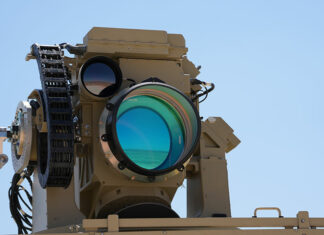
    Israel’s Iron Beam 450 high-power laser system has completed final testing, marking a major leap in air defense. Developed by Rafael, it offers precise, cost-effective interception of rockets, UAVs, and mortars, and is set for IDF deployment by 2025.