Israel Aerospace Industries (IAI) and Formula Systems, an Israel based software holding company today announced that they have entered into a definitive agreement for the purchase of TSG – a subsidiary and the military arm of Ness Technologies, engaged in the fields of command and control systems for all echelons, maritime security, intelligence, air and missile defense, homeland security and Cyber security.
The total purchase price in the transaction will be $50 million in cash (subject to certain adjustments), with each of IAI and Formula acquiring 50% of TSG for US$25 million (subject to certain adjustments). The consummation of the transaction is subject to, among other things, obtaining certain regulatory approvals.
TSG is a leading provider of core command and control systems to Israel’s defense organization, including the Israeli Defense Forces and the Israeli Police, and its activity is well suited for both parties. The acquisition represents the parties’ strategic decisions to expand their scope of activities, and to preserve leading positions in the markets where they operate, through M&A activity.
The parties will focus on turning TSG into a leader in its field in Israel, by maximizing the synergies between TSG, IAI and Formula and pursuing its expansion, among other ways, through mergers and acquisitions of companies that operate in complementary areas.
“The acquisition deepens our hold in the areas of command and control, intelligence and homeland defense, both in Israel and among foreign customers” Joseph Weiss, IAI’s CEO and President said. For the Formula group, the acquisition adds a significant fourth leg to its portfolio, extending their reach to the defense and growing cyber security industries. Not less significant is their partnership with Israel’s largest aerospace and defense company – IAI. “We can think of no better partner in this acquisition than Israel Aerospace Industries and look forward to our close collaboration.” Guy Bernstein, Formula’s CEO, commented.
Ness has recently completed the delivery and deployment of a real-time maritime intelligence solution with a Southeast Asian customer. The new system system provides situational awareness of maritime environments to support Counter-Piracy, Exclusive Economic Zone (EEZ) Protection, and Coastal Surveillance missions.
Following the acquisition of Ness Technologies by Citi Venture Capital International (CVCI) in 2011 CVCI have sold its Ness’ Israeli assets, except TSG.
In the recent months the company negotiated the sale of TSG with Israel’s largest defense contractor, Elbit Systems, and IAI. TSG and IAI often cooperated in the past, on domestic and export projects, where TSG performed as a leading subcontractor for major IAI projects.
As a government owned company.The partnership with Formula enables IAI to acquire other companies without full ownership. Another government owned company – RAFAEL has followed the same path in the acquisition of Controp Precision Technologies, jointly with Aeronautics.
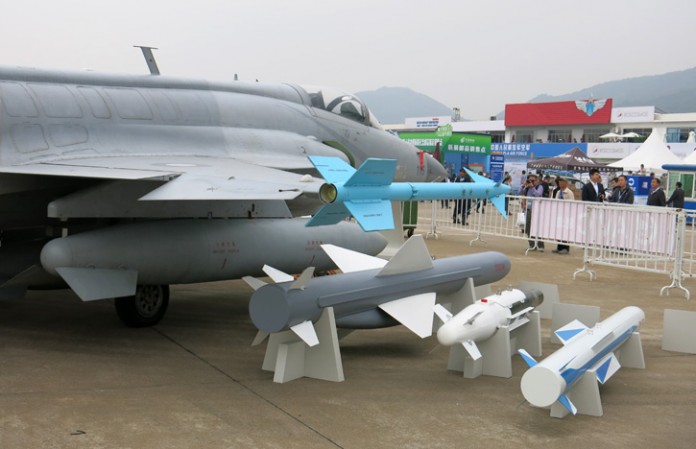
The JF-17 was on display at the recent China Airshow in Zhuhai, China where it was shown with a wide range of Chinese made weapons. Photo: Tamir Eshel, Defense-Update
Pakistani media sources have recently reported international interest in the Pakistani made, Chinese-designed JF-17s, specifically mentioned were to Sri-Lanka, Azerbaijan and Malaysia. The sale to Sri-Lanka was reported following Pakistan’s Prime Minister Nawaz Sharif’s recent visit to Colombo. However, following stiff opposition from India, Colombo is likely to drop its plan to follow with the deal, that would have cost $400 million. the Pakistani plane was considered as a replacement for the Sri Lankan Air Force (SLAF) ageing fleet of Israeli Kfirs and MiG-27s. Pakistan had been pushing for the sale of 10 to 12 JF-17s, each priced about $35 million.
The JF-17 Thunder was designed and developed by the Chinese AVIC company to meet the Pakistani requirement for lightweight and affordable supersonic fighter jet. Is currently produced by Pakistan Aeronautical Complex for the Pakistani Air Force. The complex produced 16 JF-17 Block-II Thunder aircraft in 2015.
Myanmar was the first international buyer for the aircraft, placing an order for 16 Thunders in 2015. Pakistan’s President Mamnoon Hussain said recently that Azerbaijan and Nigeria are both interested in buying the Pakistani jet. Pakistan has also discussed potential sales with Egypt and Malaysia, but Malaysia’s Defence Minister Datuk Seri Hishammuddin Tun Hussein has denied his country was interested.
The new tactical drone developed by Korean Air has a length of 3.4 meters and a wingspan of 4.2 meters. It is designed for short, automatic takeoff and landing, deploying from a short runway of 30 meters, and landing on wheels, skids, or parachute. Photo: Korean Air
Korean Air Lines Co. announced it has signed a 400 billion-won (US$333.5 million) deal with the the Korean military procurement agency to mass-produce reconnaissance unmanned aerial vehicles (UAVs) as part of the government’s plan to build up its aerial mission capability.
Under the contract with the Defense Acquisition Program Administration (DAPA) signed last year, Korean Air will mass-produce the reconnaissance drones from 2016 to 2020, the company said. The new order followed a successful completion of the test and evaluation program in 2014. The order covers procurements over five years with first deliveries expected in 2018. The company considers central asia and latin america as a potential export market for the new system.
The tactical drone has a length of 3.4 meters and a wingspan of 4.2 meters. It is designed for short, automatic, short takeoff and landing with steep descent, characteristic of operations in mountainous areas, where it can deploy from a 30 meter runways, landing on wheels, skids, or parachute (emergency recovery).
The new drone is capable of operating for 24 hour missions. the main payload is an electro-optical sensor payload enabling observation range of 10 km, equipped with automatic target tracking capability. Other drones already developed by the company since 2007 include the KUS-7 close-range UAV and a small tactical UAV known as KUS-9, designed with blended wing-body configuration. While previous Korean developed drones are increasing the use of domestically produced subsystems, the new drone is based almost entirely on indigenously systems, only 5 percent of its content are imported, the company said.
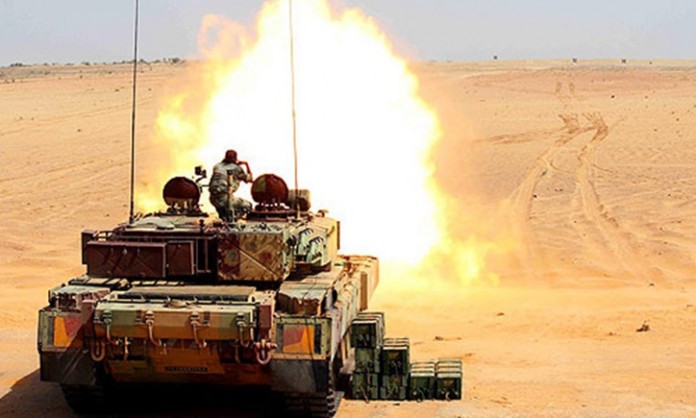
India’s Defence Research and Development Organisation (DRDO) successfully conducted test firing of new penetration-blast and Thermobaric (TB) Ammunition for 120mm tank guns used on the indigenous Arjun Tank at the Chandipur test range in Odisha, India. The new round that employs a fuel-air explosive (thermobaric) chemical compound is designed to penetrate and defeat ballistic armor or fortification (such as concrete bunkers) and explode inside the target, devastating it from the inside with the thermobaric enhanced-blast effect. The PCB (Penetration-Cum Blast) round was developed at the DRDO Armament Research and Development Establishment (ARDE) High Energy Materials Research Laboratory (HEMRL) in Pune, which is engaged in the development of fuel-air and thermobaric explosives for application in guided missiles and bombs.
The MOD announcement said the trials were conducted jointly with Army and were aimed to demonstrate the effectiveness of the ammunition on derelict (T55) tanks fitted with instrumentation to measure the shocks, blast pressure and temperature at various locations and on advanced imaging systems.
The ‘AirMule’ Vertical TakeOff and Landing (VTOL) Unmanned Air Vehicle (UAV) successfully completed its first untethered flight at the Megiddo airfield in northern Israel on December 30th, the developer Tactical Robotics Ltd announced. On this first flight the AirMule performed a vertical takeoff and landing, followed by stability checks and forward flights at low speed.
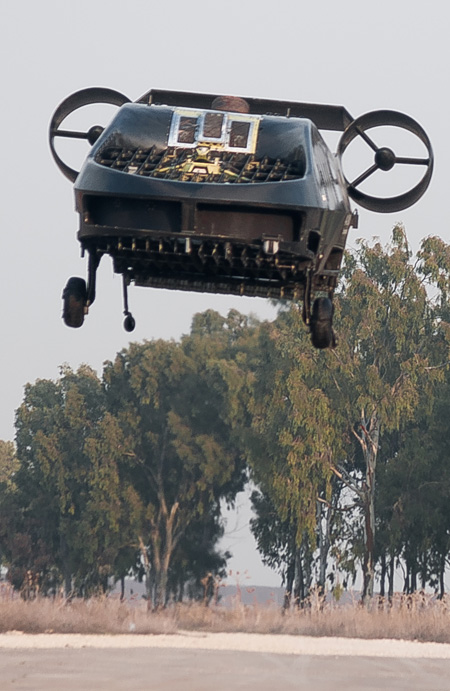
AirMule can hover in place with high precision and operate in harsh weather and winds of up to 50 knots, a significant improvement over existing helicopters. The addition of externally mounted utility equipment can enhance the vehicle’s robotic functionality. Photo: Tactical Robotics
The Airmule and its export variant ‘Cormorant’ are developed by Tactical Robotics, a subsidiary of the ‘Fancraft’ technology pioneer Urban Aeronautics.
According to Rafi Yoeli, Urban Aeronautics’ CEO, the test schedule includes plans for a demonstration of AirMule’s autonomous cargo delivery capability to designated points beyond line of sight, flight along a path running through a forested area near Megiddo. “All in all, we expect that in 2016 we will finally be able to demonstrate some of AirMule’s unique capabilities.”
Unlike conventional helicopters with exposed rotors, the internal lift rotors used by the AirMule enable the drone to fly inside obstructed terrain. It will also be able to deploy from naval vessels that are too small for a standard unmanned helicopter.
“With close to 200 flights on the AirMule prototype we are confident that this capability can be fielded in just a few years” Yoeli added. When fielded, AirMule could provide breakthrough capabilities to any military force or civil agency that needs to robotically deliver systems, supplies and other provisions in and out of otherwise inaccessible environments.
According to Yoeli, the AirMule’s export variant Cormorant has achieved ‘category 2’ certification under the international Missile Technology Control Regime (MCTR), “This is an important element in the eventual marketing of the aircraft.”
The AirMule and ‘Cormorant’ are both compact, unmanned, single-engine, VTOL aircraft. In the current version the one-ton aircraft is powered by a single 730 shp Turbomeca Arriel 1D1 turboshaft. Production aircraft will use the more powerful ARRIEL 2 variant, capable of providing 985 shp at takeoff.
When operated as tactical support missions a single AirMule is capable of ferrying 500 Kilograms of useful cargo per each 50 Kilometer radius sortie, thereby delivering approximately 6,000 Kilograms over 24 hours. Therefore, a 10-12 AirMule ‘Mobile Supply Unit’ can deliver supplies, day after day, to sustain 3,000 combatants, while at the same time ferrying back their wounded and casualties. Internal lift rotors enable the aircraft to fly inside obstructed terrain where helicopters are unable to operate. It will also be a maritime force multiplier on vessels that are too small for a standard unmanned helicopter.
To comply with MTCR limitations the ‘Cormorant’ variant will carry a 440 Kg useful load to a distance of 300 Kilometers. However, on closer ranges higher useful loads are possible. The maximum speed of Cormorant and AirMule will be 100 Knots and it will be able to operate at altitudes of up to 18,000 feet.
“Looking back at a decade of internal rotor VTOL aircraft development at Urban Aeronautics Ltd”, said Yoeli, “it gives me great satisfaction to see that we are able to transform a dream into a safe and reliable aircraft that is designed to meet manned helicopters safety criteria and absolutely stands up to existing airworthiness standards.”
Urban Aeronautics is also promoting compact, car-sized, manned VTOL aircraft variants for civilian use under its second subsidiary – Metro Skyways. “Metro Skyways is at an early stage of exploring business opportunities that will develop Urban’s ‘Fancraft’ technologies into a family of safe, FAA certifiable personal and commercial, manned VTOL aircraft for the civil market”.
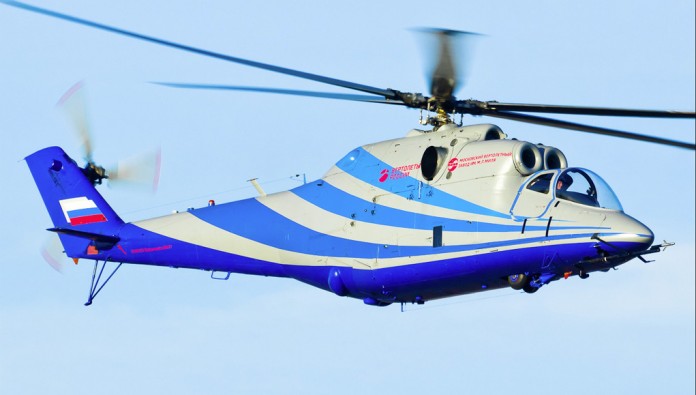
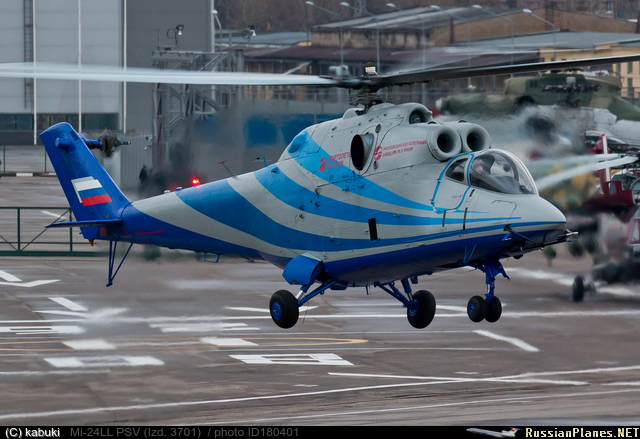
Mi-24K PSV Helicopter Testbed on its maiden flight, December 23, 2015
Russian Helicopters’ MIL division has begun flight testing of a experimental version of a Mi-24K helicopter that could increase the helicopter’s cruising speed by up to 30 percent. The blue painted helicopter testbed made its maiden flight from MIL’s test center in Tomilino, on 23 December 2015.
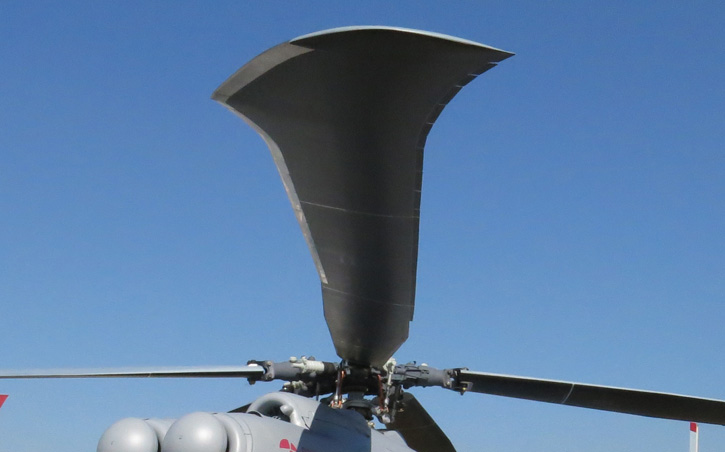
The helicopter testbed is fitted with new rotor blades designed with curved tips that improve the helicopter speed and stability at high speed. The helicopter testbed will also test an advanced, modular and integrated avionics architecture developed by the electronics company KERT.
MIL’s designers expect the helicopter to achieve a maximum level speed of 216 kt; compared to the current 180 knots maximum speed of the Mi-24/35. Cruising speed is expected to increase to 183-194 kt, compared to the current 143 kt. The helicopter will also improve maximum climb rate at sea level to 60 feet/second (compared to the current 41 f/s).
The helicopter is powered by a pair of Klimov VK-2500-01 turboshaft engines that power the modern Ka-50/52 and Mil Mi-28. Each engine develops 2,400 shp at takeoff and 1,900 shp at maximum continuous mode are powering the helicopter. The VK-2500 is a modern high-hot variant of the Klimov’s TV3-117, which has been the standard powerplant for Mi-24/35 helicopters.
The helicopter testbed is fitted with new rotor feather like blades designed with curved tips that improve the helicopter speed and stability at high speed. Photo: Tamir Eshel, defense-Update
The single-seat test-bed called “Demonstrator PSV,” (a Russian acronym for “Prospective Speedy Helicopter”) has a maximum takeoff weight of 11.5 tons.
Equipping the Mi-35 with these rotors will be able to increase its cruising speed by up to 30 percent. If proven effective, these blades will be able to increase the maximum and cruising speed of the Mi-28MH by 10 and 13 percent proportionally. Transition of the new rotor blade technology to production aircraft could start in 2018, if tests are proven successful.
Russian helicopters, which now operates the two main helicopter producers in Russia – Kamov and Mil, is also exploring a more ambitious upgrade program that would require major engine replacement (beyond the current change) for the entire fleet. This plan, explored by Russian Helicopters’ Kamov division, will enable higher velocities of up to 270 knots, but will likely require completely new airframes. It could be implemented by mid 2020s.
A Syrian MiG-21 firing unguided rockets at rebel position. During the four year civil war the Syrian Air Force was used extensively against civilian targets. Using mainly unguided ordnance, aircraft often operate at low altitude and suffer heavy losses.
Air power has been a key factor in the recent civil wars in Syria and Iraq. Air attacks were directed against the self-proclaimed Islamic State (IS) or known as ‘Daesh’ that seized significant areas in these countries. Its rapid growth and victories over the weakened Iraqi and Syrian regimes drew international response in both theaters.
However, unlike the direct involvement of the Superpowers in the 20th century, military interventions in the 21st century are so far limited to the assistance of local forces, by training, equipping and air support. This strategy was first tested in Libya and is now employed in Iraq and Syria, by US forces in Africa and by the Russians in Ukraine and Syria. It has not been the case in Yemen and Central Africa where Saudi-led Arab coalition is fighting in Yemen, and French forces are directly involved in the fighting in Mali.
An international coalition led by the USA and Arab nations supports the Iraqi government in its fight against Daesh; while in Syria. The same coalition is active against this group as well as the Khorasan, an extremist jihadi Islamic group. The massive Russian intervention that began in October 2015 has changed this ‘Daesh focus’, as the Russians are primarily supporting the Syrian government in its fight against all rebel forces.
While 65 countries are supporting this war effort, only 8 are directly committing air power to the campaign. Since the interests of the regional powers like Turkey, Saudi Arabia, Iran and the Gulf States are different from those of NATO and Russia which are carry the weight of the air campaign. Therefore, while the air forces are cooperating with each other, the governments are not always ready to shoulder, particularly where access to their air bases and overflight permissions are concerned.
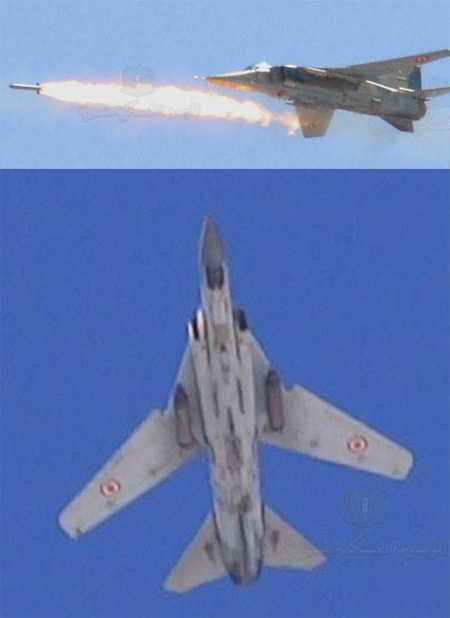
Syrian MiG-23 / 27 Flogger E are used by the Syrian Air Force for ground attack, carrying bombs and unguided rockets.
The Syrian theater is of particular concern, as the entire theatre is considered ‘contested airspace’. Despite four years of extensive conflict, the Syrian military still possesses substantial air defense and air force, and electronic warfare capabilities. Therefore, operations of combat support elements, such as refueling aircraft, command & control and electronic attack is limited. Due to the size of the country and distance from operating bases used by the coalition, the endurance of strike packages over their targets is quite limited and therefore they tend to attack known targets rather than prosecute targets of opportunity by short ‘sensor-to-shooter’ cycles often employed over Iraq and Afghanistan.
Considering those risks, the US Air Force employed its F-22 Raptor fighters to launch the opening strikes of Operation Inherent Resolve (OIR) in September 2014. It was the first combat missions for the Raptors. These 5th generation stealth fighters were used to to safely probe the Syrian airspace and set the operating rules, without the need to consult and coordinate the attack with the Syrian and air force. Based in Al Dafra airbase in the UAE, F-22s are also used on other operations on demand.
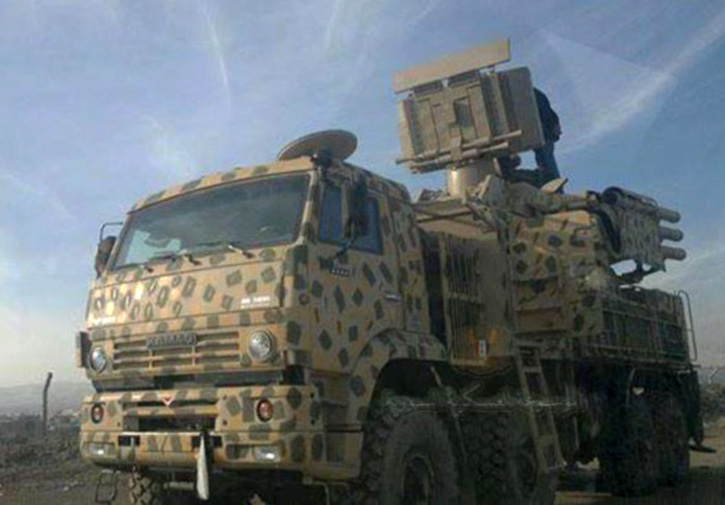
The Syrian army has recently received the SA-22 Pantsir S1 from Russia. The missile is also deployed by the Russian forces positioned in the country.
Apart from the air defense assets operated by the Syrians, some of the rebel groups, have obtained Man Portable Air Defense missile systems (MANPADS) looted from military facilities abandoned by the Syrian Army or obtained from the Libyan theater. Small and medium caliber anti-aircraft weapons, primarily Russian 23mm cannons also fell into rebel hands. Both weapon types pose significant risk to low flying aircraft, particularly attack helicopters (AH-64 operated by coalition forces, and Mi-28N operated by the Iraqi Army). Close air support aircraft such as the A-10C and Su-25 are also at risk, when flying rocket and gun strafing runs at low altitude.
The target areas in Syria and Iraq are far from each other. Those in Northern Syria stretch along ‘Daesh land’ along the Euphrates valley in the East, with the main concentrations at Dir Ez Zor and Ar Raqqa. Along the coastal area hot spots are located in the North West, where Turkish supported rebels are fighting other Islamist groups. Homs and Palmyra in the center are other Daesh concentrations, while others are located in Damascus area, in the South West and along the Jordanian and Iraqi borders in South.
To best serve those targets, multiple forward operating bases are employed. Flight ranges from operating bases in the region to targets in Iraq and Syria vary from few dozens of miles from air bases in South Turkey to the north of the Syria, and few hundreds of miles from RAF Akrotiri in Cyprus to targets in Western Syria. However, the shortest paths must pass through SAM protected areas in Syria, recently bolstered by Russian SAMs. Key locations in Syria are protected by Pantsir S1 (SA-22) and SA-17 Buk 2M SAMs, which are especially lethal against aircraft flying in low or medium altitudes. THere are also older SA-8 Gecko mobile air defense systems, some reportedly fell into rebel hands.
Coalition forces have lost several drones over Syria, an F-16 of the Royal Jordanian Air Force was also lost, its pilot captured and killed by Daesh. Two years ago an F-16 of the US Air National Guard crashed in Jordan, but official sources did not attribute this loss to combat actions.
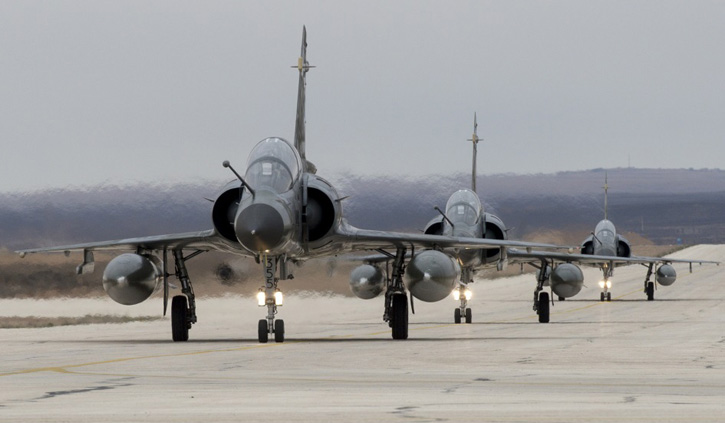
Seven French Mirage 2000D/N are operating from the Royal Jordanian Air Base at Azraq. Photo: French Air Force
Azraq Royal Jordanian Air Base is also located about a hundred miles from some of the targets in the South East Syria is best positioned for those operations, and was occupied by French, Dutch and US combat elements, besides the Jordanian Air Force F-16s based here.
Other bases located throughout the Arabian Gulf – in Kuwait, Qatar and the UAE stretch the flight over 500 miles or more to the nearest target, and, therefore serve mainly forces assigned to the Iraqi theater. However, the relatively permissive airspace over Iraq enables the deployment of aerial refueling. Air power, deployed from aircraft carriers in the Red Sea and Eastern Mediterranean also launch strikes at targets in Syria and Iraq. Those carriers based in the Arabian Gulf are also tasked with missions over Iraq.
Currently positioned at a striking range from Syria and Iraq are the French aircraft carrier Charles De Gaulle stationed in the Red Sea and US 5th fleet carrier Harry S. Truman, that has entered the Persian Gulf in December. The Truman will remain in the area until June 2016. Previous missions involved the carriers USS George H.W. Bush, Carl Vinson and Theodor Roosevelt.
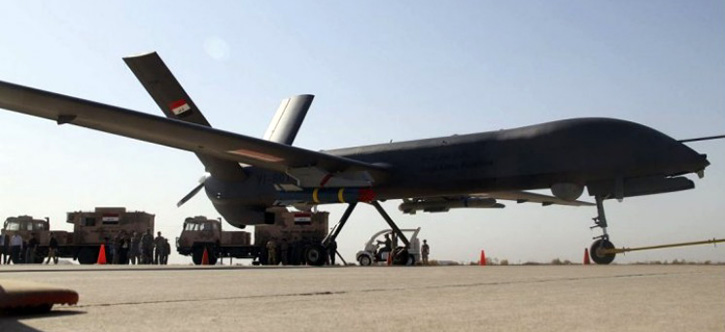
While the number and status of Syrian air force and air defense forces is not clear, Iraq is just beginning to rebuild its air force, devastated during the 1991 and 2003 wars. Today the Iraqi Air Force is gradually developing an air combat muster, although these capabilities are slow do evolve. In July the first of 36 F-16s fighter jets supplied by the US began to arrive in Iraq, stationed at Ballad airbase north of Baghdad. Prior to the delivery of the American jets 2014 Iraq also received By September these jets performed the first strikes. The Iraqis have also obtained seven Su-25 from Iran and Mi-28NE attack helicopters from Russia, operated from the Imam Ali airbase in Southern Iraq. The nearby Kut Al-Hayy airbase provides the operating base for the new Iraqi drone unit, equipped with Chinese CH-4B armed drones.
Chinese CH-4B unmanned aerial vehicle delivered to Iraq in 2015. The drone can carry up to six weapons under its wings, at a maximum total weight of 350 kg.
Stay tuned for the next parts: “Coalition Air Power”, “The Russian Air Campaign” and “Targeting ISIS Economic Assets”
Ten years from now, about 30 percent of the Russian combat power will consist of remotely-controlled and robotic platforms – this is the goal of an ambitious research and development program pursued by the military and approved by the Russian Military Industrial Committee (MIC).
The field of unmanned aerial vehicles and combat robotics has taken off dramatically in the past two years, as the Russians recognized they were way behind the West and China in this field. During this period, Russian military industries have introduced a number of military robots, some of which are already undergoing evaluation at the Military Robotics Laboratory.
The new robotic lab was established in 2014. Although some of its projects are futuristic and theoretical at this stage, others are closer to maturity and those addressing specific functions, such as guarding ‘sterile areas’ around ballistic missile bases or mine clearing and combat engineering support, could become operational soon. Specialized units formed within the strategic missile forces will operate some of these robots. The first robotic guards unit are likely to become operational in 2017-2018.
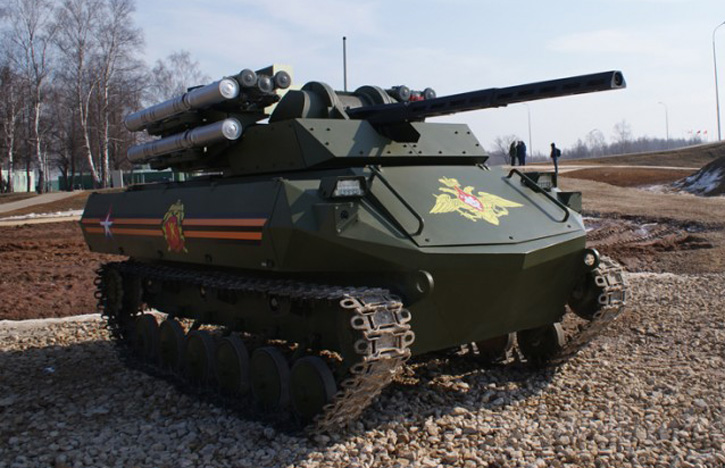
Uran-9 utilizes a specially developed platform and weapon complex.
An important element in the maturation of robotic systems is setting the standards for robotics in military applications. Threshold requirements set by the MIC robotics group this year include basic combat skills, including movement, navigation, and target definition that enable robots to operate with soldiers. The Russian Army will receive a limited number of combat robots for field evaluation in 2016.
Russian developers are working on a variety of robotic platforms. There are small wheeled and tracked mini-robots, carrying reconnaissance payloads with or without machine guns and/or missiles. Others are full-size armored personnel carriers converted into unmanned ground combat vehicles (UGCV), fitted with standard remotely-controlled gun-missile turrets, that clear the way for manned vehicles following at a safe distance behind. One such platform is the robotic BMP-3, equipped with an Epoch turret (mounting a 2A42 30mm. automatic cannon and four Kornet-EM missiles).
Other robots utilize dedicated platforms and weapon systems tailored especially for them. These robots often operate in pairs, controlled from a protected command and control vehicle. They can assume a variety of different combat support roles – mine clearing and obstacle breeching, fire support, reconnaissance, and counter IED.
The Uran-6 counter-mine robot, a Russian version of the Croatian MV-4 Dok-Ing mine-clearing robot, can detect, identify and destroy mines containing up to 60kg. of TNT. Its companion, the Uran-14, is an obstacle-breeching and fire-fighting robot. Both can be controlled by a dismounted operator or from a vehicle located 1500 meters to the rear. Uran-6 and -14 are slated to enter operational service with active Russian Army units in 2016.
The latest, and what appears to be most matured robot, is the Uran-9 model, a tracked combat robot equipped with multiple weapon systems. This vehicle uses a specially-designed turret that mounts a 2A72 automatic cannon and a coaxial 7.62mm. machine gun with associated sights. Ten missiles are also mounted on a separate, collapsible carriage – four 9S120 Ataka guided anti-tank missiles and two 9S846 Strelets triple-missile MANPADS mounts, each carrying three 9K33 Igla.
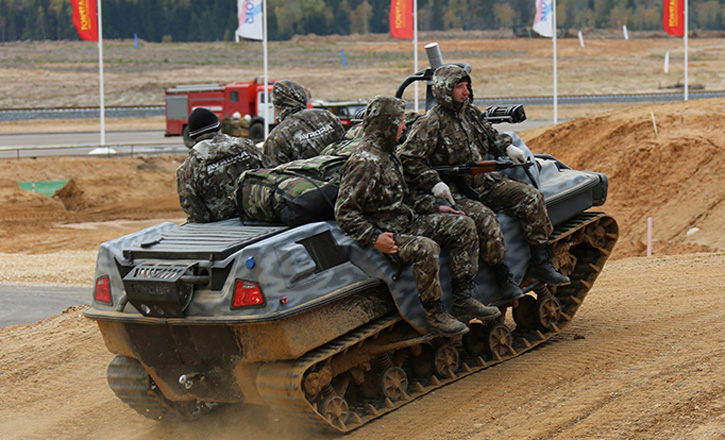
A different robot is the Mobile Autonomous Robotic System (MARS) – an infantry support platform able to carry six fully equipped soldiers or 500kg of combat load for a squad. Powered by a 65hp diesel engine that can also provide battery charging for the squad. The robot can travel up to 200km at a speed of 32 km/h using internal fuel, or 500km with external fuel tank. It is equipped with autonomous navigation system comprising laser scanners, radar and inertial measurement.
In development since 2010, the A800 model of MARS can be configured to follow a soldier wearing an active beacon. The control system is compatible with ‘Ratnik’, the Russian soldier system. The robot would follow the soldier while keeping a safe distance as it scans the terrain for obstacles and movement path, and plots its course of action. The robot can also move autonomously, on a specific track to a designated point or follow a preplanned path, to ‘revisit’ specific points of interest, on patrol, performing observation and target acquisition.
The A800 Mobile Autonomous Robotic System (MARS) is an infantry support robot developed by Avrora Robotics. It can carry the load of an infantry squad or carry four squad members with their equipment.
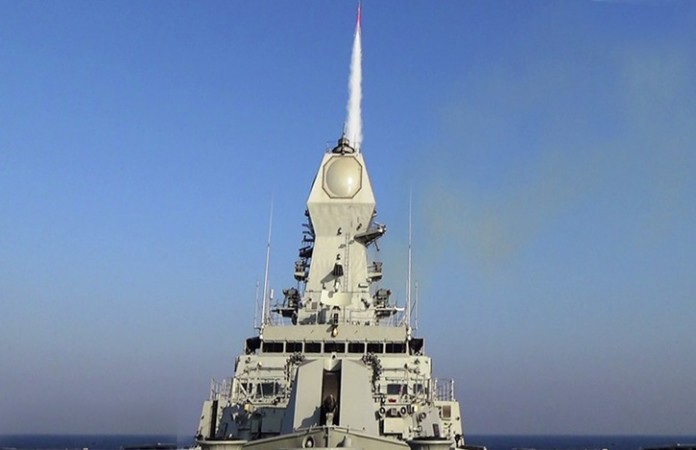
Two Barak 8 LRSAM interceptors were launched earlier today on a successful intercept test, conducted on board the Indian Navy P15A destroyer, INS Kolkata. Photo: Indian Navy
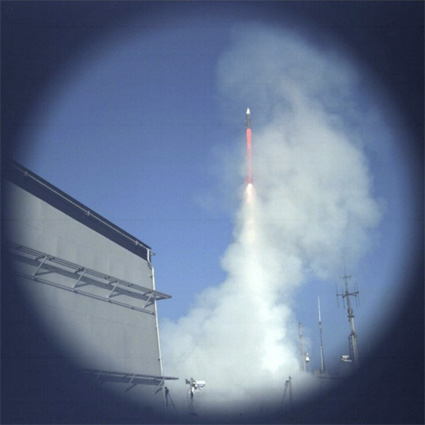
Barak 8 launched from the deck of Indian Navy P15A destroyer, INS Kolkata on its second flight test. Photo: Indian Navy.
The Indian Navy carried out two successful tests of the LRSAM, the new, long-range surface-to-air missile system, Barak-8. The test took place at dawn (local time), from the Indian P15A destroyer, INS Kolkata. The vessel “successfully test fires long range surface to air missiles from INS Kolkata. Aerial targets destroyed at extended ranges,” the Indian defence ministry stated. “There has been a quantum leap in air defence capability of Indian Navy.” Following the full integration of the system on the Kolkata and Kochi, LRSAMs is being being fitted progressively in other capital warships of the Indian Navy, the ministry announced.
The Barak-8 missile is being developed in joint collaboration by India and Israel. The first two have been successfully conducted in Israel, from a land-based test site and onboard an Israeli corvette. In the current event two missiles were fired. it provided the first opportunity to test the system onboard an Indian vessel, demonstrating the system’s maturity.
The Barak-8 has been designed to defend against a variety of short-to-long-range airborne threats, including fixed-wing aircraft, helicopters, drones and projectiles. It incorporates a state-of-the-art phased array multi- mission radar, two-way data link, and a flexible command and control system that enables it to simultaneously engage multiple targets day and night and in all-weather conditions. Due to the comprehensive simulation and preliminary subsystem testing, only three flight tests are sufficient to clear the system for operational induction. Additional tests will follow the initial phase to further explore the system’s performance and capability enhancements.
The Barak 8 / LRSAM missile system is being jointly developed by IAI, DRDO, Israel’s Administration for the Development of Weapons and Technological Infrastructure, Elta Systems, Rafael and other companies.
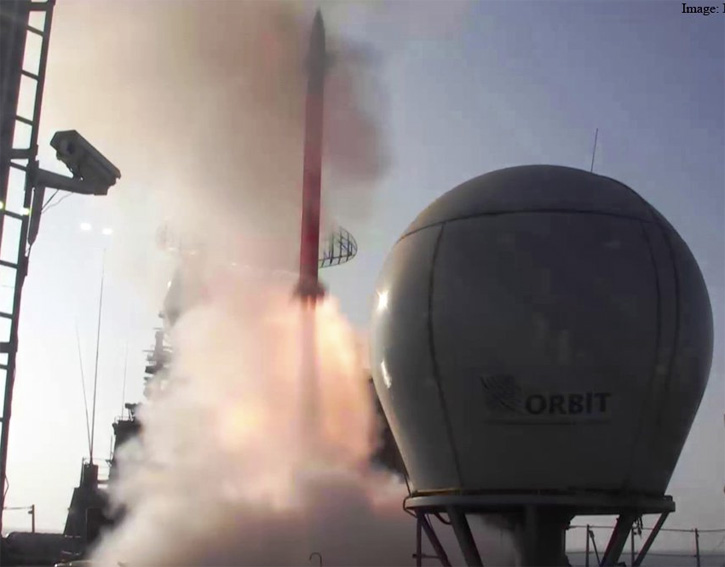
Barak 8 launched from the aft deck launcher of Indian Navy P15A destroyer, INS Kolkata. Photo: Indian Navy
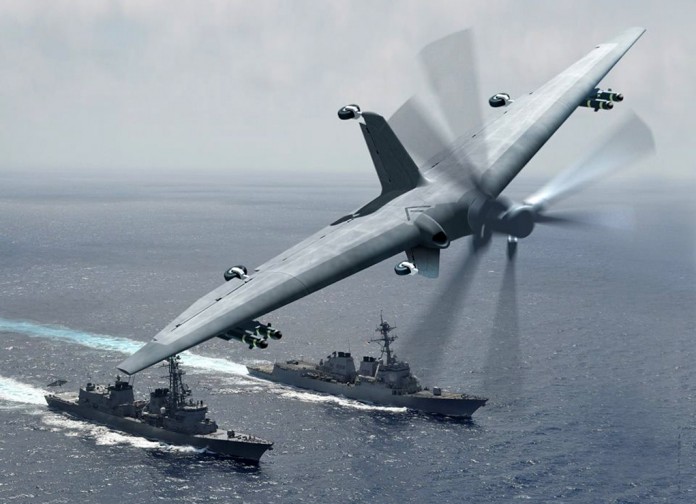
The Tern drone is shaped like a flying wing, with a span of about nine meters. Four control surfaces on the trailing edge, and four non retractable landing gears. The objective platform will be able to carry a payload of payload of up to 270 kg (600 lb.) over a distance of 1,670 km (900 nm). The Tern demonstrator will be able to about 500 lbs of weight over 600 nm. Photo: DARPA
DARPA awarded Northrop Grumman US$93 million for under the 3rd phase of the Tern program. The company will develop and demonstrate an innovative tail-sitting, flying-wing aircraft with twin counter-rotating, nose-mounted propellers that will be able to deploy from the flight decks of frigates. The propellers would lift the aircraft from a ship deck, orient it for horizontal flight and provide propulsion to complete a mission. They would then reorient the craft upon its return and lower it to the ship deck. The system would fit securely inside the ship when not in use.
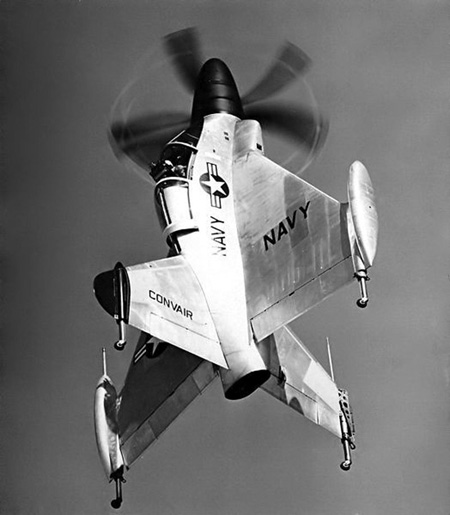
The Tern demonstrator will bear some resemblance to the Convair XFY-1 Pogo, an experimental ship-based VTOL fighter designed by the Navy in the 1950s to provide air support for fleets.
Tern is a joint program between DARPA and the U.S. Navy’s Office of Naval Research (ONR), that seeks to develop an unmanned aerial system that deploys from frigates and destroyer size vessels, to perform medium altitude, long endurance (MALE) missions. DARPA has awarded Phase 3 of Tern to a team led by the Northrop Grumman Corporation.
Under this contract Northrop Grumman will build a full-scale demonstrator drone of this type to be used in ground-based testing. If successful, the program will proceed to demonstrate the drone’s capability to deploy at sea, performing takeoff, transition to and from horizontal flight, and landing—all from a test platform with a deck size similar to that of a destroyer or other small surface-combat vessel.
Ideally, Tern would enable on-demand, ship-based unmanned aircraft systems (UAS) operations without extensive, time-consuming and irreversible ship modifications. It would provide small ships with a “mission truck” that could transport ISR and strike payloads to very long distances from the host vessel. The solution would support field-interchangeable mission packages for both overland and maritime missions. It would operate from multiple ship types and in elevated sea states.
This is an abstract of 860 word article available for Defense-Update members.
The Israeli David’s Sling air and missile defense Weapon System (DSWS) today successfully completed its fourth and final series of tests (DST-4), the final milestone before the IDF declares it an operational system. The announcement is expected early next year.
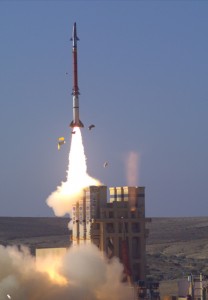
A sequence of frames from the high speed camera tracking one of the intercepts, showing the Stunner intercepting a missile target. Photo: IMOD
The tests examined the capabilities and performance of the entire DSWS. The series included intercepts of multiple threat representative targets by Stunner interceptor missiles in realistic, real-time engagements. During each test, the Multi-Mission Radar (MMR) detected the target after launch and transferred flight information to the Battle Management Center (BMC), which calculated the defense plan. The Stunner interceptor was successfully launched, performed all flight phases, and engaged the target as planned. Preliminary analysis indicates that test objectives were successfully achieved.
The interceptor used with the new David’s Sling Weapon System is the Stunner missile, developed by Israel’s RAFAEL Advanced Defense Systems and the US Raytheon company. Photo: IMOD
Data gathered during the test series is being analyzed by program engineers and will be used for ongoing development and fielding of the DSWS. The test results provide confidence in future Israeli capabilities of defending against large-caliber rockets and other developing threats.
Today’s test was conducted by the system’s developer, Rafael, at a test range in southern Israel, with the participation of the Israel Missile Defense Organization (IMDO), the Directorate of Defense Research and Development (DDR&D), and the U.S. Missile Defense Agency (MDA).
The prime contractor for the DSWS is Rafael, with Raytheon Missile Systems as a sub-contractor. The MMR was developed by Elta, a subsidiary of Israel Aerospace Industries. The BMC, known as the Golden Almond, was developed by Elisra, an Elbit subsidiary.
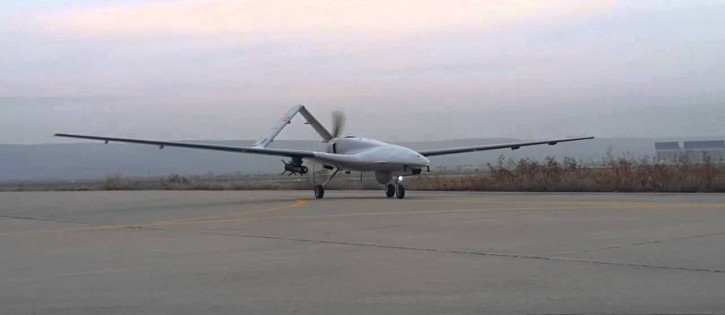
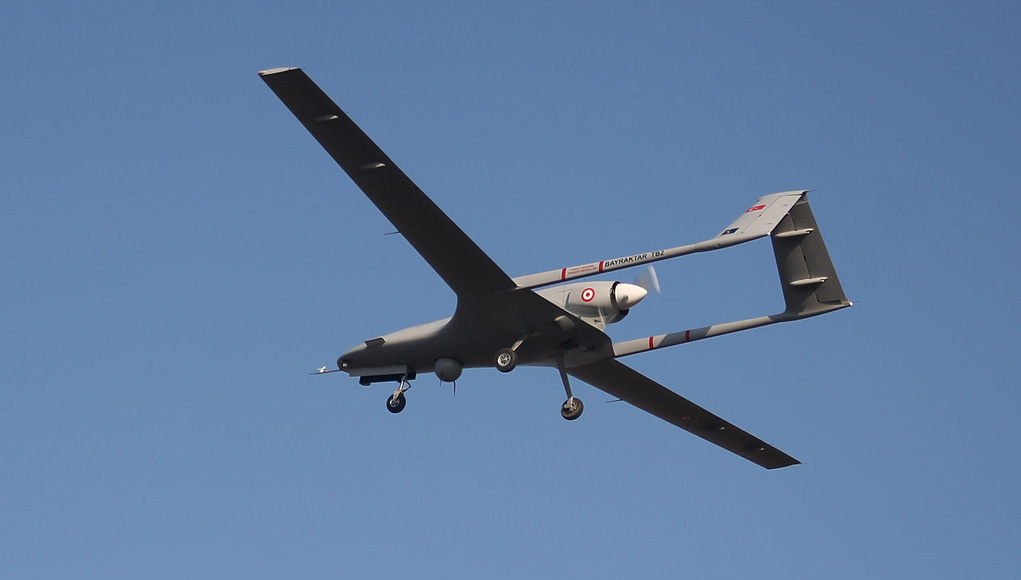
A Turkish drone has successfully completed firing tests of UMTAS anti-tank missile. The drone named “Bayraktar TB2” is developed by the Kale-Baykar joint venture between the Kale Group and Baykar Technologies. The weaponized variant was demonstrated with the UMTAS long-range anti-tank missile originally developed for the Turkish T-129 attack helicopter. On the recent test the drone carried two missiles load of 75 kg. (exceeding the drone’s payload capacity). The missile was dropped from an altitude of 16,000 ft. to hit a 2×2 meter laser-designated target self designated from the drone, from a distance of 8,000 meters.
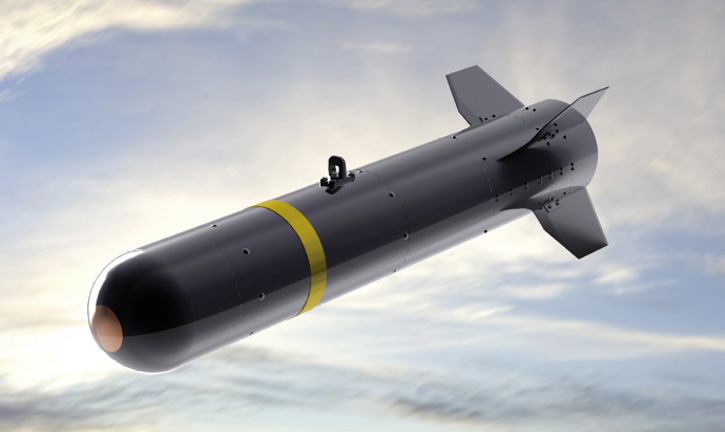
Roketsan is developing this Smart Micro Munition, at a weight of 22.5 kg it will be suitable for operation on a range of tactical drones. Photo: Roketsan
The TB2 platform has a blended wing body design which provides additional lift and space for fuel and avionics. It has a maximum takeoff weight of 650 kg MTOW and 12 meters wingspan, Bayraktar can fly up to 22,500 feet and loiter for more than 24 hours powered by a single 100 HP Rotax 912 internal combustion engine. With maximum fuel the drone can carry a payload of 50 kg. Therefore, to accommodate two missiles and an EO payload, the operators would trade off a significant fuel load.
Roketsan is developing a smaller munition – the ‘Smart Micro Munition’ especially designed for drones. This unpowered weapon weighs only 50 lbs (22.6kg) but has an effective range of up to eight kilometers, depending on the launch altitude.
The drone successfully accomplished the acceptance tests with in November last year. So-far the Turkish forces have received six such drones. A larger drone named Anka B is also developed in Turkey, by Turkish Aerospace Industries. While Anka is a heavier platform capable of carrying more payloads, the current version (Anka A) has not performed weapons tests, except a single firing of Roketsan 70mm CIRIT laser guided rocket. No publicly released records were presented from that test but according to Turkish sources, a larger and heavier version – Anka B is being developed to accommodate heavier loads and weaponized configurations. Another tactical drone named Karayel was launched this year, for Turkish military evaluation.
Bayraktar TB2 returns with a single UMTAS missile, after the successful drop of the test missile, which engaged the target at high precision, from maximum range.The Turkish Bayraktar TB2 tactical drone.
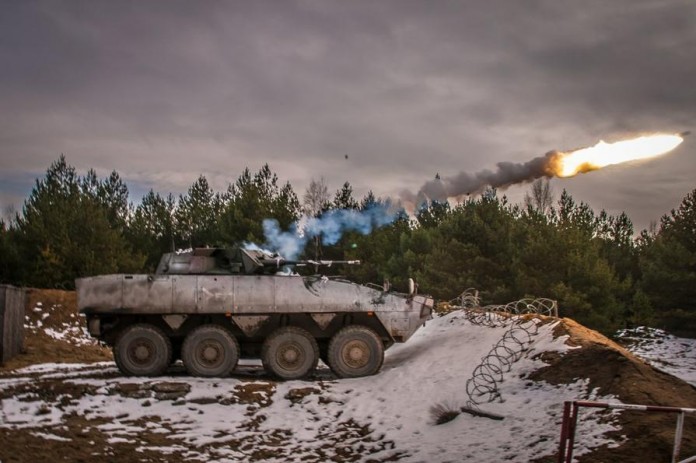
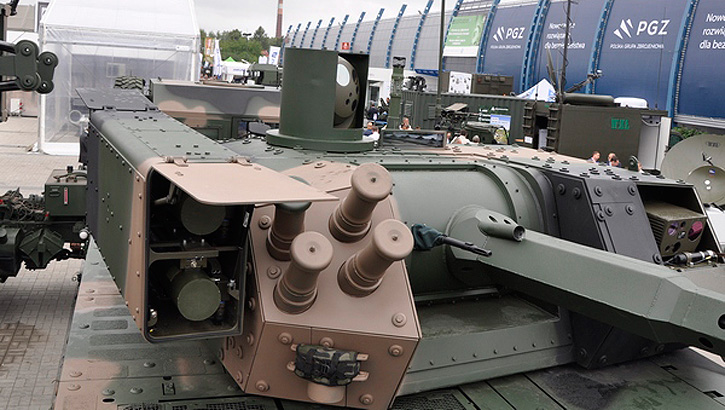
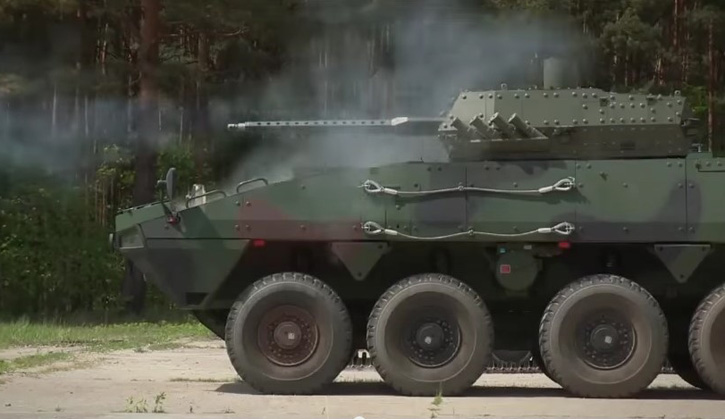
The latest variant of the Rosomak will receive a new turret mounting two Spike-LR missiles. These launchers will be loaded with with low-signature, low-smoke propulsion, minimizing the exposure of the vehicle or missile trajectory in flight.
The Polish Armament Inspectorate awarded Mesko a production contract worth over $150 million, for the delivery of 1,000 Spike anti tank guided missiles to equip the Polish Army’s Rosomak infantry fighting vehicles. (Rosomak is the locally produced variant of Patria AMV). Defense24 reported.
Rosomak APCs currently equipped with Hitfist-30P turrets will be refitted with missile launching assemblies, fitted with standard
ZSSW-30 remotely operated turret for the Rosomak Mk2.
Spike LR canisters, which also conform with the dismounted operations already used by Polish infantry units.
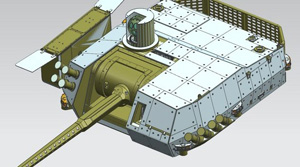
During the recent MSPO exhibition in Poland the Huta Stalowa Wola (HSW) company unveiled a second prototype of the unmanned ZSSW-30 turret designed for the Rosomak M2 IFV. The unmanned turret fits the same turret ring carrying the manned Hitfist-30P used on the current Rosomak version. The new weapon station mounts the Mk44 30mm chain gun along with two RAFAEL Spike-LR ATGM. Selex ES will provide the optronic systems for the commander independent optronics and gunner sight.
The ZSSW-30 turret mounts the ATK Mk44 30mm chain gun, 7.62 mm coaxial machinegun and two Spike LR missiles. Selex-ES is providing the ball-shaped commander’s independent sight and gunner’s sight. Firing tests of an early version of the ZSSW-30 turret.
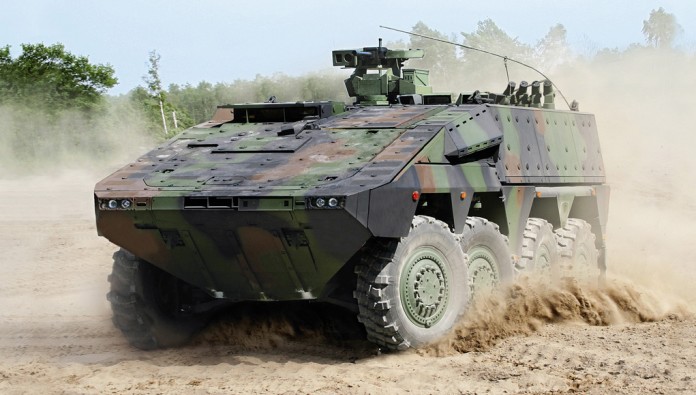
Munich, Germany: The Artec company has signed a contract with OCCAR, the European cooperative defence equipment organization, for the production of a second batch of 131 Boxer armored personnel carriers for the German Army. The total order is worth EUR 476 million.
All 131 vehicles will be in a new configuration of the Boxer. According to OCCAR, the new vehicles and related logistic will be delivered to the German Army beginning in 2017 through 2021. This second batch increases the number of Boxers ordered to 256. Germany plans to buy a total of 403 BOXERs, with the Netherlands acquiring 200.
All vehicles are based on the identical Boxer Drive Module. The Bundeswehr has already contracted for 272 Boxer vehicles in four models. While the Netherlands opted for five configurations. Production of the new batch will be carried out by Artec’s two parent companies: 95 vehicles will be manufactured by Krauss-Maffei Wegmann (KMW) and 36 by Rheinmetall.
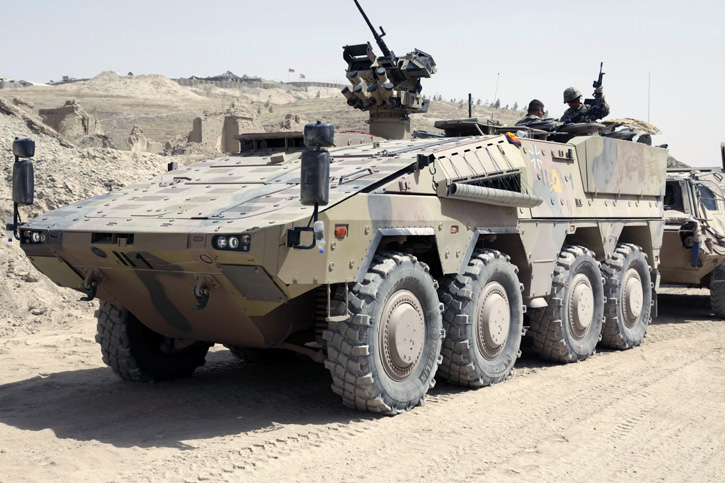
The Boxer APC was recently used in Afghanistan, supporting the German contingent with ISAF. Photo: KMW
Last week (December 11) the Boxer vehicle has been declared preferred bidder by the Lithuanian State Defence Council for the Lithuanian Infantry Fighting Vehicle Programme. Lithuania plans to acquire 88 vehicles. The majority of these vehicles (84) will be equipped with Elbit Systems’ UT-30 MK2 remotely operated turrets mounting a 30mm cannon and Spike LR anti-tank missiles. The vehicles will be delivered from 2017 to 2020. The contract will be negotiated between Lithuanian government and OCCAR.
Practical experience in Afghanistan has shown that the Boxer makes a significant contribution to the endurance and mobility of infantry troops, and positive experience with the GTK Boxer was one of the decisive factors for awarding the present projects.
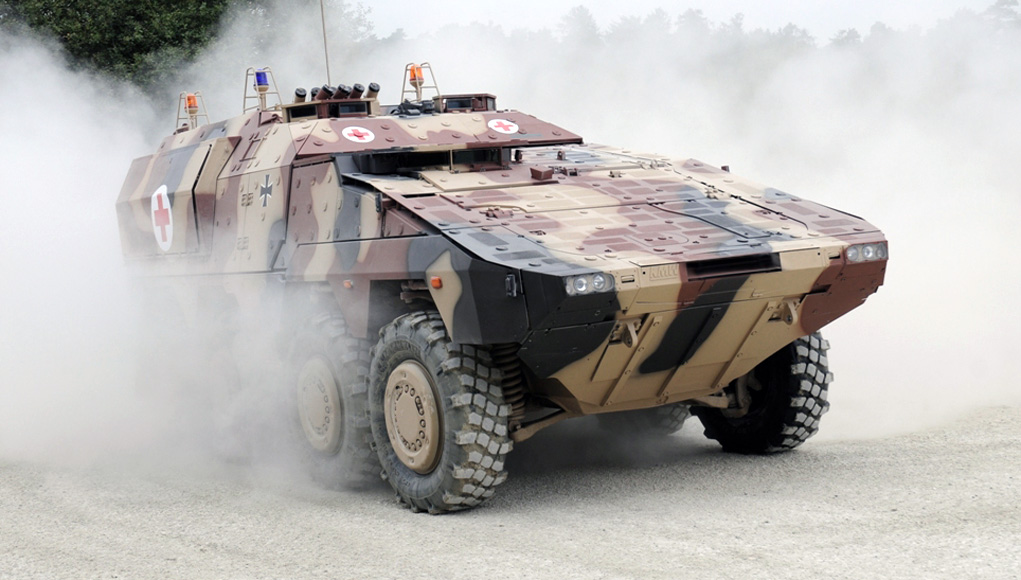
Boxer ambulance variant. The vehicle uses a common chassis and a modular payload design that accept mission modules to match specific user requirements. Photo: KMW
Lockheed Martin Skunk Works® and XTEND have achieved a major milestone in JADC2 by integrating the XOS operating system with the MDCX™ autonomy platform. This technical breakthrough enables a single operator to simultaneously command multiple drone classes, eliminating the friction of mission handoffs. From "marsupial" drone deployments to operating in GPS-denied environments, explore how this collaboration is abbreviating the data-to-decision timeline and redefining autonomous mission execution.
As traditional defense primes face mounting competition from agile “neoprimes” such as Anduril, Palantir and Helsing, the balance of innovation is shifting toward software-defined warfare and scalable, dual-use technologies, while global industry consolidation—marked by Boeing’s integration of Spirit AeroSystems and other strategic mergers—signals an intensified race to secure control over the defense technology value chain. Our Defense-Tech weekly report highlights these trends.
In early October 2025, a coordinated wave of unmanned aerial system (UAS) incursions—widely attributed to Russia—targeted critical infrastructure across at least ten European nations. The unprecedented campaign exposed the fragility of Europe’s air defenses...
Executive Summary
The past week (September 18-25, 2025) represents an inflection point where strategic defense concepts have transitioned from doctrine to tangible reality. An analysis of global events reveals four primary, interconnected trends shaping an...
At the 2025 Air, Space & Cyber Conference, U.S. Air Force and Space Force leaders unveiled major updates on next-generation fighters, bombers, unmanned systems, and space initiatives, highlighting both rapid innovation and critical readiness challenges as the services race to outpace global competitors. A short version is available here, with a more detailed version for subscribers.
The Taipei Aerospace & Defense Technology Exhibition (TADTE) 2025 crystallized around four dominant strategic themes that collectively illustrate Taiwan's comprehensive approach to defense modernization amid escalating regional tensions. Based on a detailed report by Pleronix (available upon request). Includes a Podcast discussion on TADTE 2025's highlighting Taiwan's four strategic themes beyond the post's coverage.
Israel’s Iron Beam 450 high-power laser system has completed final testing, marking a major leap in air defense. Developed by Rafael, it offers precise, cost-effective interception of rockets, UAVs, and mortars, and is set for IDF deployment by 2025.