Tuesday, December 23, 2025
More
    Home Blog Page 89

    GDLS, Thales team to offer new wheeled armored vehicles to Australia,

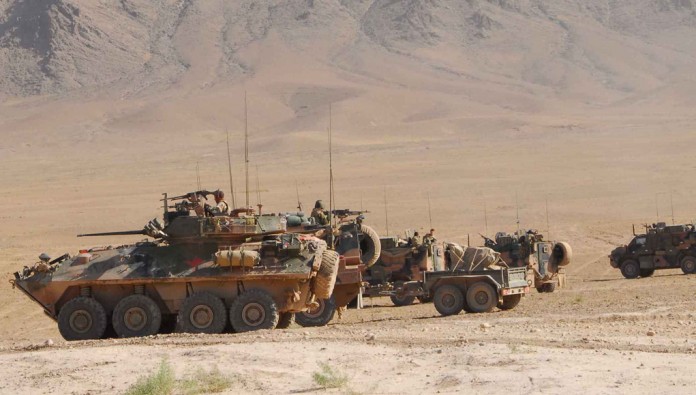
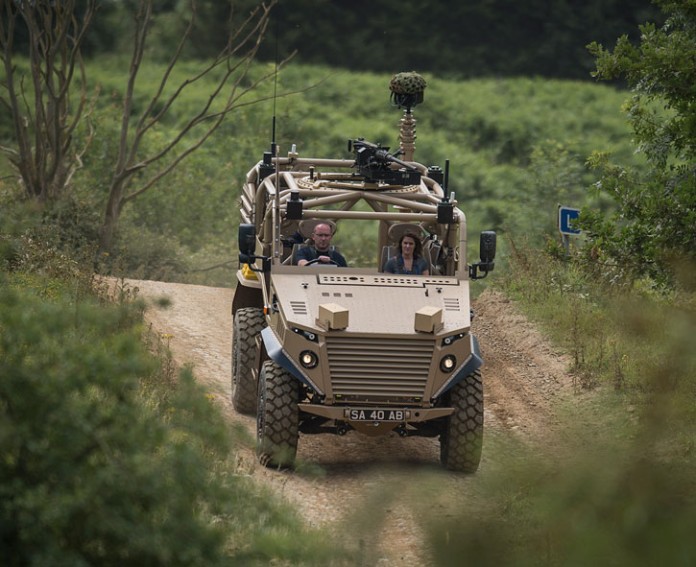
    General Dynamics Land Systems and Thales Australia are teaming to bid to the Australian Defence Land 400 Phase 2 – Mounted Combat Reconnaissance Capability (MCRC) Request For Tender. The Combat Reconnaissance Vehicle (CRV) fleet will support seven mission roles identified within the LAND 400 Operational Concept Document (OCD). The Australian tender seek a military-off-the-shelf (MOTS) based capability, and maximise Australian industry content. Through-Life Support for the MCRC is being acquired under a collateral contract. First delivery of the CRV is expected in 2020 with first unit achieving initial operational capability (IOC) three years later.

    The new vehicle will replace the current fleet of 257 Australian Light Armoured Vehicle (ASLAV) – based on General Dynamics’ Piranha III. New 8×8 vehicle designs allow for significantly increased weight, supporting much improved protection protection, and electronic system architecture supporting advanced applications, a necessary step toward fully digitized Land Combat Vehicles that will be fielded as part of the follow-on Phase 3 – “Mounted Close Combat Capability”, fielding a replacement for 431 Australian M113s.

    The two companies have collaborated in the past on a number of international military vehicles programs including Canada’s LAV III Upgrade, the UK Foxhound and Scout SV Programs, Switzerland’s Piranha CBRN Program, and in Australia the ASLAV Program for Crew Procedural Trainer and electro-optics.

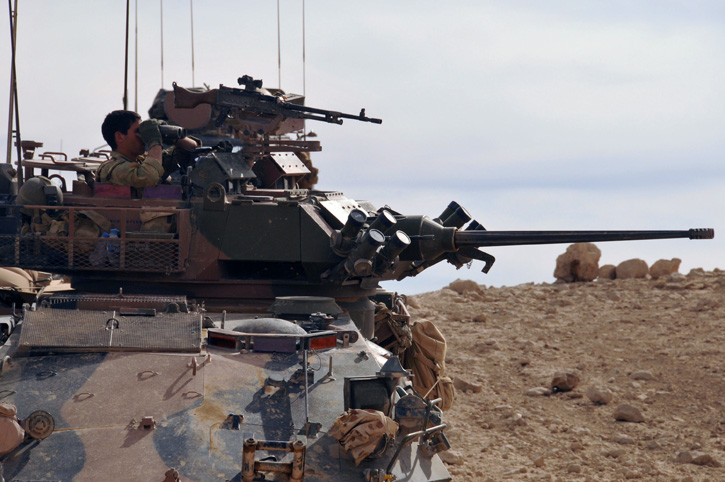
    The current ASLAV has been upgraded to maintain  its combat capabilities but lacks the weight, power and  electronic infrastructure necessary for further modernization. Photo: Australian MOD
    The current ASLAV has been upgraded to maintain its combat capabilities but lacks the weight, power and electronic infrastructure necessary for further modernization. Photo: Australian MOD

    General Dynamics Land Systems is the manufacturer of combat-proven 8×8 and tracked Military Off The Shelf (MOTS) Combat Reconnaissance Vehicle (CRV), Infantry Fighting Vehicle (IFV) and Manoeuvre Support Vehicle (MSV) products, and has proven performance in delivering international programs in a timely and cost-effective manner.  Thales Australia has an established in-country industrial base of vehicle design, manufacture and through-life support and expertise in electronics, electro-optics, simulation and platform systems integration. The General Dynamics Land Systems / Thales team will offer Australia a compelling value-for-money solution comprising the complete suite of LAND 400 capabilities as required by the Australian Army.

    General Dynamics Land Systems – Australia was established in 2000 to support the delivery of the ASLAV wheeled armoured fighting vehicles and has manufactured approximately 400, LAV-25 turrets, mostly for export.  General Dynamics Land Systems – Australia currently provides comprehensive support to the fielded fleets of M1A1 Abrams tanks and the ASLAVs.

    “Our arrangement will maximise domestic and international opportunities for our Australian industry and builds on the success of our current platforms in protecting Australian soldiers.” Ian Cook, managing director of General Dynamics Land Systems – Australia, noted saying the companies’ proposal will be based on existing 8×8 platforms from GDLS, to be manufactured in Australia, with Thales providing integration, upgrade and through-life support, based on its experience with the Bushmaster mine protected armored vehicle.”


    Ditching Rafale? – a high risk alternative for IAF modernization

    What seems to be the final stage of negotiation between India and France over the procurement of 126 Rafale fighter jets is turning into a circus: New Delhi is walking on a tightrope, between approving the deal with a dramatic cost increase compared to the original budget, or ditching the plan, risking further delays in modernizing the Indian Air Force (IAF).

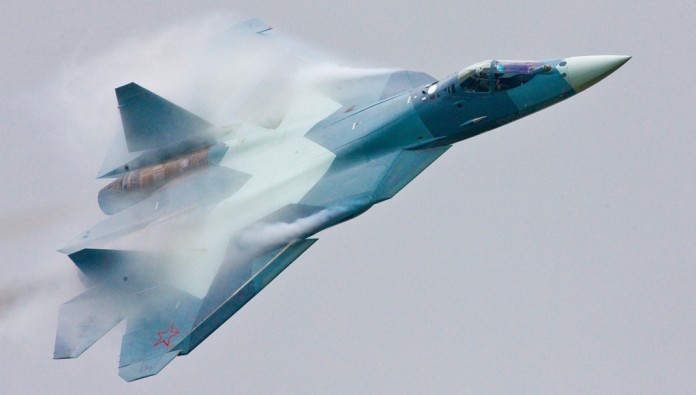
    The current chapter in the three-year-long saga opens with orchestrated media reports auguring an accelerated induction of Russian SU-50E – an export version of the  – the Indian variant of the Russian T-50 PAK-FA – which would mean a ‘generation leap’ over the current IAF first line fighter jets as well as over the GEN-4.5 Rafale.

    While delivery of 18 fighters from France can be expected in time, the orderly delivery of the follow-on 108 locally produced aircraft is more questionable. It was Dassault’s concern about the Indian competency to produce these aircraft at a reasonable quality which brought the negotiations with India to a standstill. Sukhoi sees this as an opportunity, since they have already paved the way with the SU-30 MKI currently produced in India. Sukhoi hopes the production of SU-50E and SU-55 (the two-seat Fifth Generation Fighter Aircraft – FGFA) could continue where the production of SU-30 ends, providing a more manageable quality control process.

    Subscribe to read the full analysis

    If this deal goes forward, the SU-50E is expected to be delivered from 2017 onwards with the IAF expected to induct over 300 aircraft in the following two decades at a cost of US$25 billion. This is an extremely ambitious schedule, as the Russians themselves do not expect to receive their first SU-50 before the end of 2016. Currently undergoing flight testing as T-50 prototypes, the Russian Air Force expects forming 2-3 squadrons of fifth generation SU-50 by 2020.

    The Indian export variants of the SU-50/55 are the biggest-ever bilateral Indo-Russian defence cooperation project. The preliminary design agreement on SU-50ES (FGFA), signed in 2010 between HAL and Russian Sukhoi Design Bureau, was to build the jet for use by both countries, with India investing 50 per cent of the cost of the multi-billion dollar programme.

    German army to equip combat vehicles with smart IED Jammers

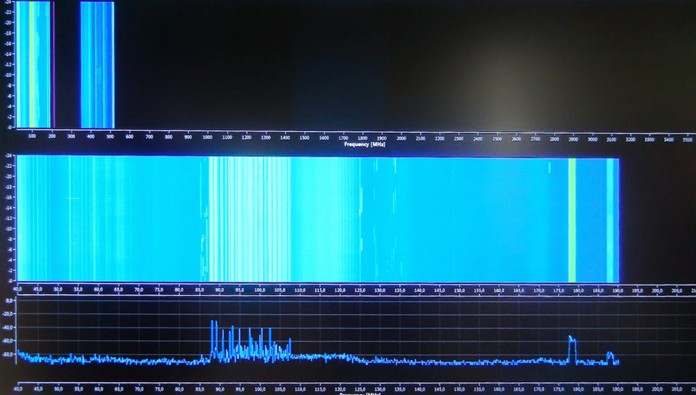
    A spectral view of the Airbus Defense & Space VPJ selective smart jammer, engaging threats on specific frequencies, leaving the rest of the spectrum intact. Photo: Military Technology

    The German procurement authority (BAAINBw) has awarded the Airbus Defense & Space a contract worth several million euros to supply 36 C-IED vehicular mounted jammers. The systems are of the type VPJ-R6 (VPJ = Vehicle Protection Jammer). The systems are intended to be integrated into protected vehicles of the German Armed Forces.

    The VPJ systems use ultra-fast ‘SMART’ Responsive Jamming Technology developed by Airbus Defence and Space to substantially enhance protection compared to conventional systems. It detects and identifies radio signals intended to detonate roadside bombs. After detection and classification, it transmits real-time jamming signals, which precisely match the hostile frequency band, thus interrupting the connection between assassin and bomb.

    Utilizing a modern digital receiver and powerful signal processing technologies, the system achieves reaction times of well below a millisecond. The system can engage up to 750,000 threat signals per second through all common frequency bands. Each threat can be detected and jammed each second. The jamming power is focused on the detonation signal’s specific frequency rather than being distributed over the whole frequency range, thus becoming power efficient and more effective. Selective jamming also means radio communications with friendly forces can be maintained throughout the mission, without compromising force protection of command and control.

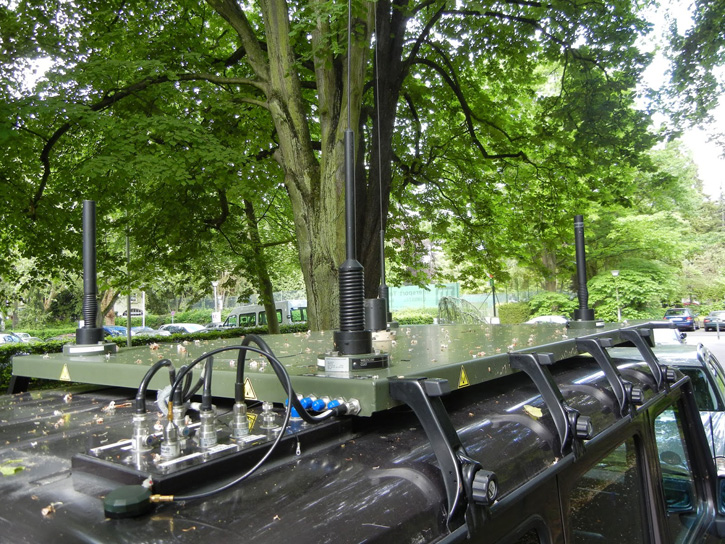
    This antenna array on top of the vehicle equipped with the VPJ jammer covers the entire spectrum of relevant threat frequency bands. Photo: Military technology
    This antenna array on top of the vehicle equipped with the VPJ jammer covers the entire spectrum of relevant threat frequency bands. Photo: Military technology

    Korean defense favors its own missile defense, over US THAAD

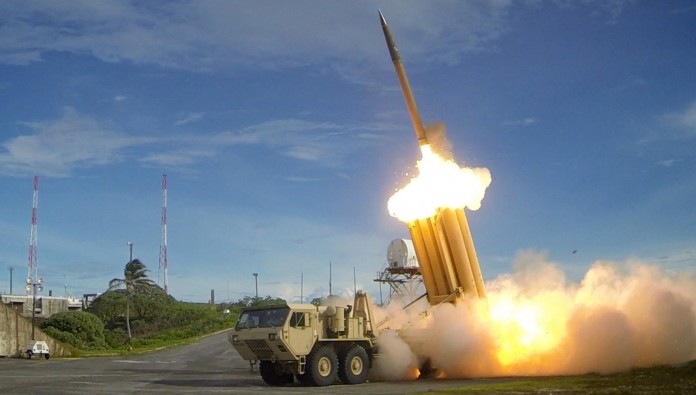
    A THAAD missile fired during an operational test flight conducted in Hawaii in 2013, demonstrating the missile's ability to cooperate with AEGIS missile-defense ships at sea. Photo: MDA

    South Korea defense ministry reaffirmed today its long-held stance of not purchasing an advanced missile-defense battery from the United States amid growing calls from its ruling party lawmakers to introduce it to better guard against North Korea’s missiles. According to Yonhap news agency in Seoul.

    “The defense ministry has no plan to purchase a THAAD system,” ministry spokesman Kim Min-seok told a regular briefing. “Basically, the system would do good to better defend the country from missiles from North Korea, but we will make a judgment by putting the national interest as our top priority.”

    The U.S. considered a deployment of a Terminal High-Altitude Area Defense (THAAD) battery on Korean soil, home to about 28,500 American troops, to better cope with the growing threats of Pyongyang’s nuclear and missile capabilities. The US move is seen as part of Washington’s move to deploy a missile defense ‘ring’ around the Pacific Ocean, countering what seems to be a growing intercontinental and medium-range ballistic missile threat from China and North Korea.

    The US proposal has won some support from lawmakers from the ruling party but the ministry of defense objects to it. Korean officials, including defense minister Han Min-koo, have said THAAD deployment would be helpful for the security of the Korean Peninsula, they said Seoul is not considering buying the system. Officially, South Korea has deferred the missile defense decision “after the U.S. sets its position and asks for cooperation or any consultation.”

    Subscribe to get more insight into this story

    Iran’s cruise missile could strike targets beyond 2000 km

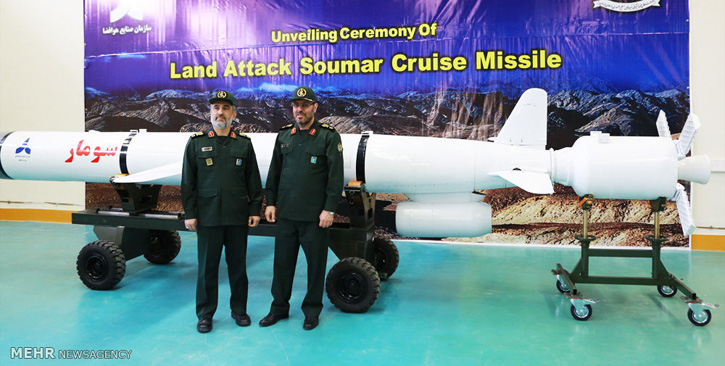
    Iran unveiled yesterday a new, long range surface-launched land attack cruise missile. The new missile called ‘Soumar’ was presented yesterday to the Iranian Defense Minister, Brigadier general Hossein Dehqan. Unveiling the missile developed by Iranian scientists Dehqan said the new weapon ‘will increase Iran’s deterrence might’.

    Radug Kh555 cruise missile loaded onto a Tu-95 bomber.
    Radug Kh555 cruise missile loaded onto a Tu-95 bomber.

    No details about the weapon’s specifications, performance or payload were provided but according to the Iranian media, Tehran plans to introduce an enhanced model of the missile this year, that will increase the range, accuracy and warhead capability of the current version.

    The missile seems to be one of the variants of the ‘Meshkat’ cruise missile, announced by the director of the Iranian Defense Ministry’s Aerospace Organization, Brigadier General Mehdi Farahi three years ago. “Meshkat cruise missile, which God willing will be unveiled soon, has a range of more than 2,000 kilometers.” Farahi told the Iranian media in 2012, “it will be the upper hand of the Armed Forces of the Islamic Republic of Iran.”

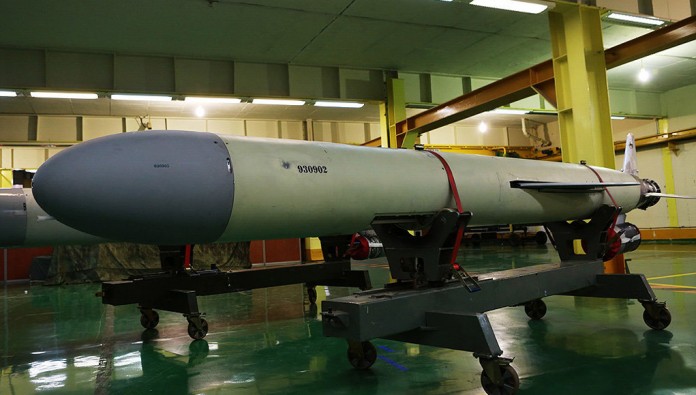
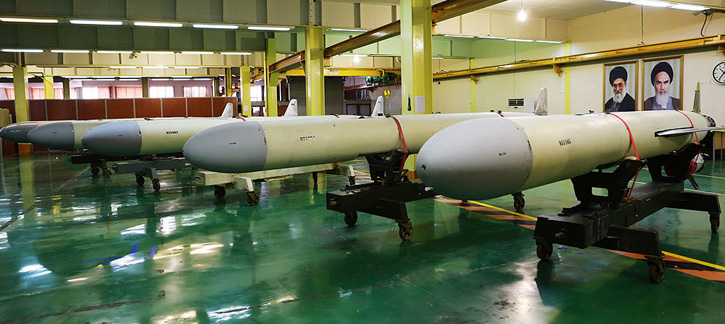
    A line of completed Soumar cruise missiles displayed to Defense Minister Brig. General  yesterday at the
    A line of completed Soumar cruise missiles displayed to Defense Minister Brig. General Hossein Dehqan yesterday by Iran’s Aerospace Industries Organization (AIO). Photo: Mehr News Agency

    As mentioned above, most of the Iranian coastal and naval attack missiles are based on Chinese C-series (C-701, 704, and 802). Unlike these, Soumar do not resemble any Chinese weapon, but bears close similarity to the Russian Kh55SM cruise missile. Iran acquired 6 such missiles from the Ukraine in 2001. These missiles were also sold to China in 2000 and more were delivered to an undisclosed customer, assumably North Korea.

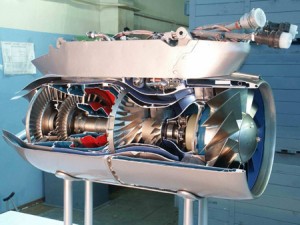
    The Saturn TRDD-50 miniature turbofan engine was designed specifically for cruise missiles.
    The Saturn TRDD-50 miniature turbofan engine was designed specifically for cruise missiles.

    One of the factors determining the missile’s range is likely to be the miniature turbofan. The original weapon delivered to Iran was powered by the Russian designed, Ukraine made R95-300 mini-turbofan, but in the mid 2000s, as Russia transferred the production of critical systems to its industry, equipping its new production missiles Kh55 with TRDD-50 turbofans made by the Russian Saturn company. According to expert assessments, if the Iranians had access to the Russian engine or the original R95-300 produced in the Ukraine, the missile could reach an operational range of 2,000 km, carrying a warhead of 410kg weight. The strategic version used by Russian Air Force carries 200-250 Kt nuclear warhead.

    This small, fuel efficient turbofan delivers the thrust and size class required to power cruise missiles, standoff missiles and UAVs. The cited thrust rating is 400 to 500 kp (880 to 1,000 lbf), with a dry mass of 95 kg (210 lb), a Specific Fuel Consumption of 0.65, a length of 0.85 m (33.5 in) and diameter of 0.33 m (13 in).

    Russia is not likely to allow the export of such engines to equip foreign weapons programs, since it will be considered a violation of the MTCR regime. But Moscow agreed to supply such engines to power the Indian target drone ‘Lakshya’. However, the mini turbofans are believed to have also powered the Indian cruise missile Nirbhay on its maiden flight in October 2014.

    soumar_with_general_Dehqan725
    Iranian Defense Minister, Brigadier general Hossein Dehqan (right) with IRGC’s aerospace commander, Brigadier General Amir Ali Hajizadeh at the new missile. “It will be the upper hand of the Armed Forces of the Islamic Republic of Iran”
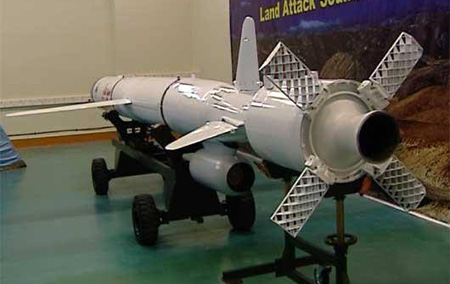
    Launched from land-based or naval surface based platform, Soumar uses a booster to accelerate for cruising speed. The folded lattice tail controls are used to stabilize it as it accelerates from zero to the cruising speed, when the missile gain enough speed to enable efficient use of conventional control surfaces.
    Launched from land-based or naval surface based platforms, Soumar uses a booster for the initial acceleration. The folded lattice tail controls are used to stabilize it as it accelerates from zero to cruising speed, when the missile gain enough speed to enable efficient use of conventional control surfaces.

    As a variant of the Kh55, the Iranians could also pursue the course the Russian designers paved, turning their cruise missile into a versatile strike weapon launched from submarines, surface ships and ground based launchers. Unlike the fixed engine configuration of the Kh55, the 3R-54 ‘Club’ uses a ‘drop down’ engine, thus packing the cylindrical missile more efficiently in storage canisters, ensuring unobstructed launch procedure, particularly from the confined space of submarine launchers.

    An interesting capability introduced by the missile manufacturer ‘AGAT’ is the containerized version – Club K, enabling the launching of cruise missiles from ‘innocent looking’ cargo ships, rail cars or trucks, a practice the Iranians, Syrians and their Hezbollah proxy have practiced many times in the past.

    Dassault, HAL likely to become joint primes for MMRCA

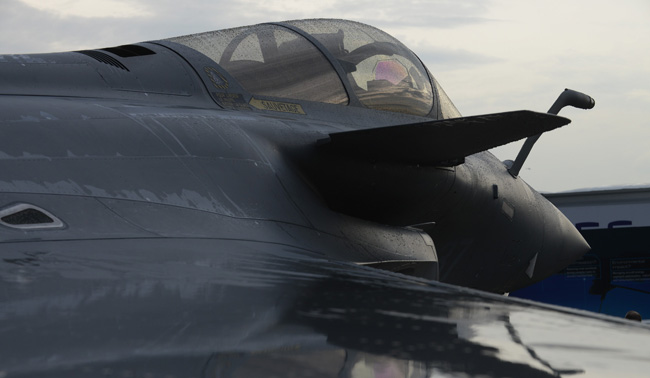
    Rafale awaiting visitors during the thunderstorm yesterday at the Paris Airshow at Le Bourget. Dassault is also awaiting resolution of the contract negotiations with India, about the work content and responsibility over teh $20 billion program to sell 126 Rafale fighters to India. Photo: Sébastien Rande, Dassault.

    Dassault Aviation and Hindustan Aeronautics Limited (HAL) will be ‘joint prime contractors’ to manufacture 118 Rafale fighters in India clearing the way as to who will assume responsibility for timely delivery and quality of the aircraft, according to defenseworld.com.

    The decision on naming both companies’ as ‘joint prime contractors’ was described by Dassault chief executive Eric Trappier as a ‘new development’ implying that it may have been arrived at during the last few days or weeks.

    Dassault as well as the Indian MoD are keen to decide on the Medium MultiRole Combat Aircraft (MMRCA) deal before the visit of Indian Prime Minister Narendra Modi to France in April, where the contract, that has been negotiated between the two sides for the past three years, is likely to be signed, if agreement is reached. Trappier, who had accompanied French President François Hollande on a visit to Dassault’s factory in Bordeaux yesterday was quoted as saying in French media reports that he expects a second Rafale contract this year in addition to the one signed with Egypt.

    High-energy laser weapon burns through a running engine from a mile away

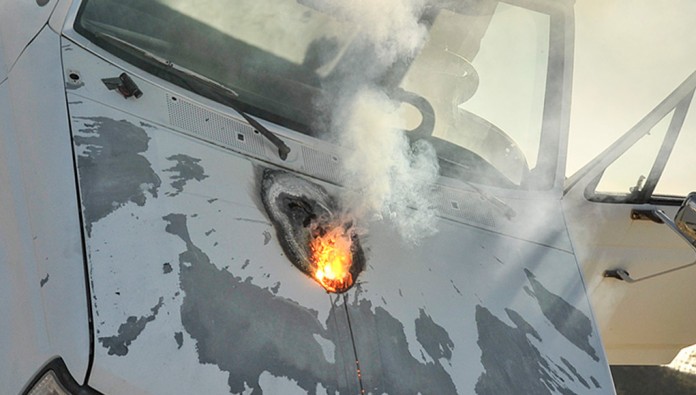
    Lockheed Martin ATHENA laser weapon system defeats a truck target by disabling the engine, demonstrating its military effectiveness against enemy ground vehicles. Photo: Lockheed Martin.

    A 30-kilowatt electric fiber laser weapon system successfully disabled the engine of a pickup truck during a recent field test, demonstrating how such weapon grade lasers could be used to protect military forces and critical infrastructure.

    Known as ATHENA, for Advanced Test High Energy Asset, the ground-based prototype system burned through the engine manifold in a matter of seconds, from more than a mile away. The truck was mounted on a test platform with its engine and drive train running to simulate an operationally-relevant test scenario.

    The demonstration marked the first field testing of an integrated 30-kilowatt, single-mode fiber laser weapon system prototype developed by Lockheed Martin. The system employs a technique called spectral beam combining, to run multiple fiber laser modules form a single, powerful, high-quality beam thus provides greater efficiency and lethality than multiple individual 10-kilowatt lasers used in equivalent systems, while using approximately 50 percent less electricity than alternative solid-state laser technologies.

    ATHENA is based on the Area Defense Anti-Munitions (ADAM) laser weapon system developed by Lockheed Martin in Sunnyvale, California, which has been proven in demonstrations against small airborne and sea-based targets. It incorporates the 30-kilowatt Accelerated Laser Demonstration Initiative (ALADIN) fiber laser developed by the company in Bothell, Washington.

    “Fiber-optic lasers are revolutionizing directed energy systems,” said Keoki Jackson, Lockheed Martin chief technology officer. “We are investing in every component of the system – from the optics and beam control to the laser itself – to drive size, weight and power efficiencies. This test represents the next step to providing lightweight and rugged laser weapon systems for military aircraft, helicopters, ships and trucks.”

    Life at the boneyard

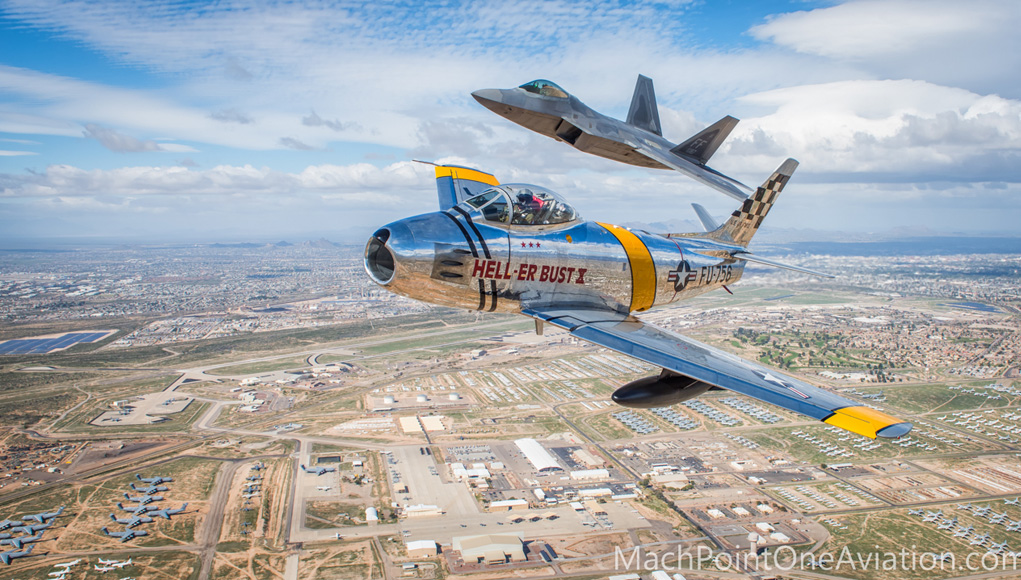
    An aerial shot taken by Glenn Watson of Mach Point One Aviation Photography during the Heritage Flight Certification Course over Davis Monthan . Photo: Glenn Watson

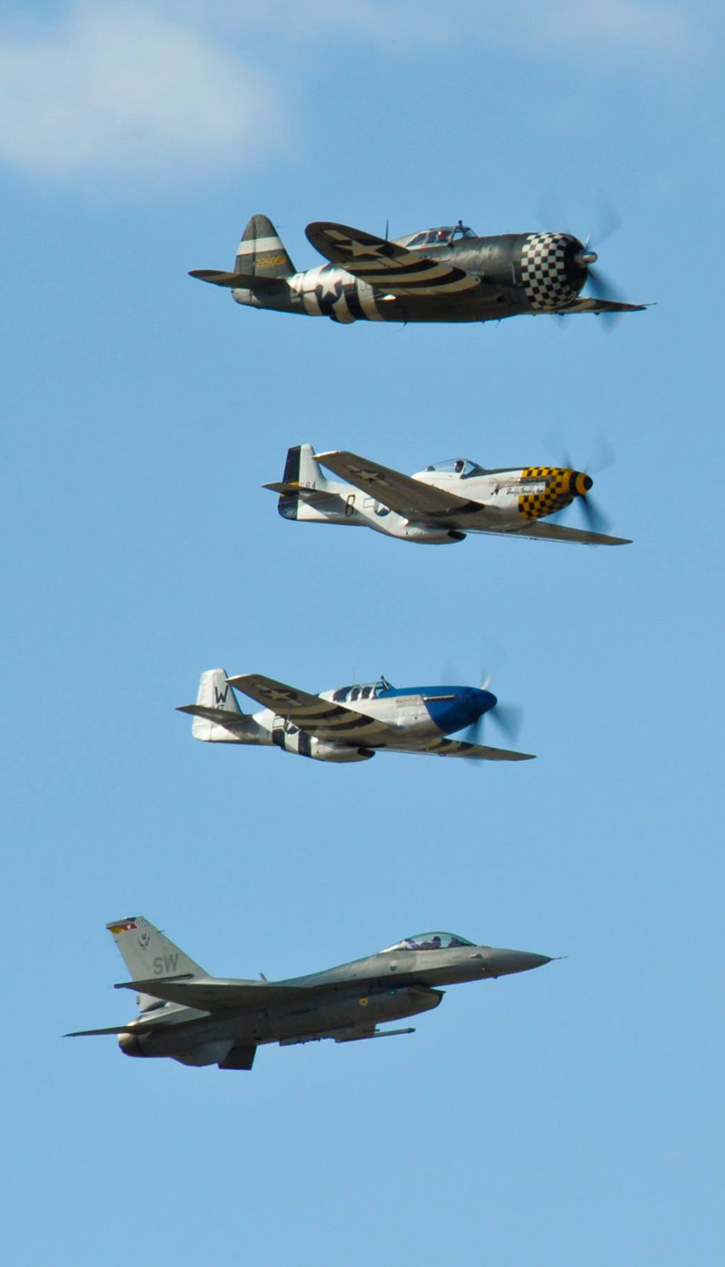
    A P-47 Thunderbolt, two P-51 Mustangs and F-16 Fighting Falcon fly in formation during the 2015 Heritage Flight Training and Certification Course at Davis-Monthan Air Force Base, Ariz., Feb. 28, 2015. USAF photo by Chris Massey
    A P-47 Thunderbolt, two P-51 Mustangs and F-16 Fighting Falcon fly in formation during the 2015 Heritage Flight Training and Certification Course at Davis-Monthan Air Force Base, Ariz., Feb. 28, 2015. USAF photo by Chris Massey

    Davis-Monthan Air Force Base (D-M) is known mainly for its role as the boneyard for combat and civil aircraft that reach the end of their service life. New arrivals expected here soon are 18 A-10 Thunderbolt II close air support aircraft, to be removed from active units and placed here in ‘Backup-Aircraft Inventory’ (BAI) status with the possibility to convert another 18 at a later date in fiscal year 2015. The A-10s will join thousands of other aircraft parked here, slowly disintegrating into scrap under the desert sun.

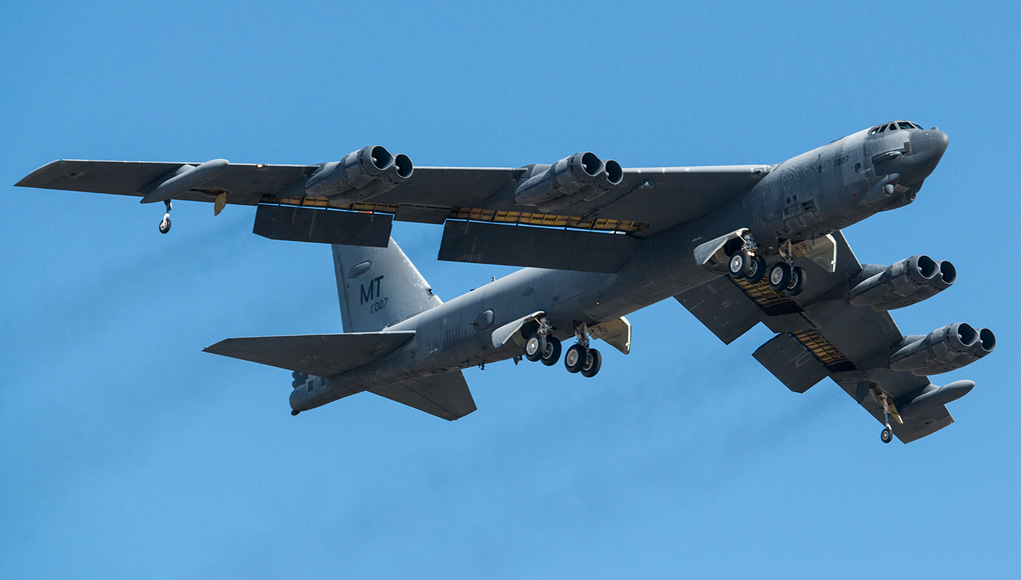
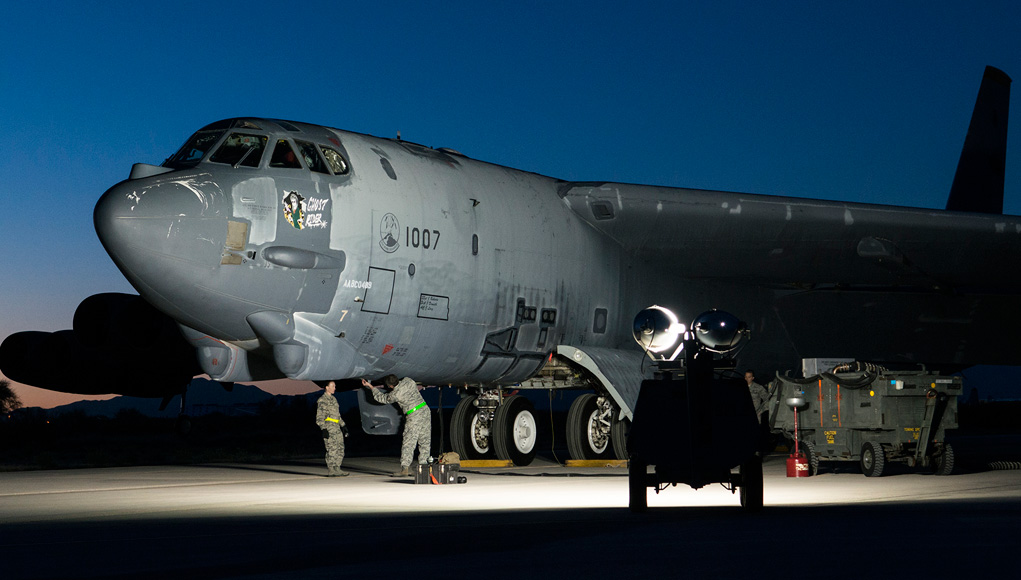
    But for some there is resurrection. One of the lucky ones was B-52 Stratofortress called ‘Ghost Rider’ took to the sky after spending seven years in the boneyard. Tail number 61-1007′ Ghost Rider’ was not the average ‘guest’ at D-M. It was maintained at 1000-type storage, which is the most preserved level of aircraft storage. In late 2014, seven years after arriving at D-M, this bomber was chosen to rejoin the Air Force Global Strike Command (AFGSC).

    “It was chosen after thorough inspections and extensive engineering analysis,” said Capt. Chuck McLeod, the B-52 System Project Office team lead. Although well preserved, the blazing hot Arizona sun took its toll on the dormant aircraft bleaching sections of its exposed aluminum skin almost white, and causing the tires and major fuel lines to dry rot.

    ghost_riderb52_fly1021
    A B-52H Stratofortress takes off after being taken out of long term storage Feb. 13, 2015, at Davis-Monthan Air Force Base, Ariz. The aircraft was decommissioned in 2008 and has spent the last seven years sitting in the “Boneyard,” but was selected to be returned to active status and will eventually rejoin the B-52 fleet. The B-52 was flown by the 309th Aerospace Maintenance and Regeneration Group. (USAF photo by Master Sgt. Greg Steele)

    Through the return to flight process technicians at the 309th Aerospace Maintenance and Regeneration Group replaced fuel bladders and lines were replaced, and by the end of January the crew successfully ran of all eight engines.

    “I’ve been flying the B-52s since the 80s and it surprised me that after almost seven years… she cranked up just fine and we had no issues with the flight control systems.”said the pilot Col. Keith Schultz, 307th Operations Group commander and the most experienced B-52 pilot still flying in the Air Force.

    The "Ghost Rider" is prepared for an early morning taxi test on Feb. 12, 2015, Davis-Monthan Air Force Base, Ariz. The B-52H Stratofortress was decommissioned in 2008 and has been sitting in the 309th Aerospace Maintenance and Regeneration Group's "Boneyard,” but is being restored to join the active fleet of B-52s. (USAF photo by Master Sgt. Greg Steele)
    The “Ghost Rider” is prepared for an early morning taxi test on Feb. 12, 2015, Davis-Monthan Air Force Base, Ariz. The B-52H Stratofortress was decommissioned in 2008 and has been sitting in the 309th Aerospace Maintenance and Regeneration Group’s “Boneyard,” but is being restored to join the active fleet of B-52s. (USAF photo by Master Sgt. Greg Steele)
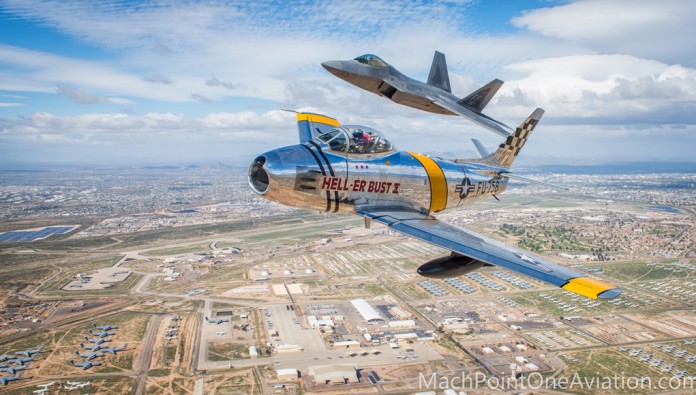
    An aerial shot taken by Glenn Watson of Mach Point One Aviation Photography during the Heritage Flight Certification Course over Davis Monthan . Photo: Glenn Watson
    An aerial shot taken by Glenn Watson of Mach Point One Aviation Photography during the Heritage Flight Certification Course over Davis Monthan Photo: Glenn Watson
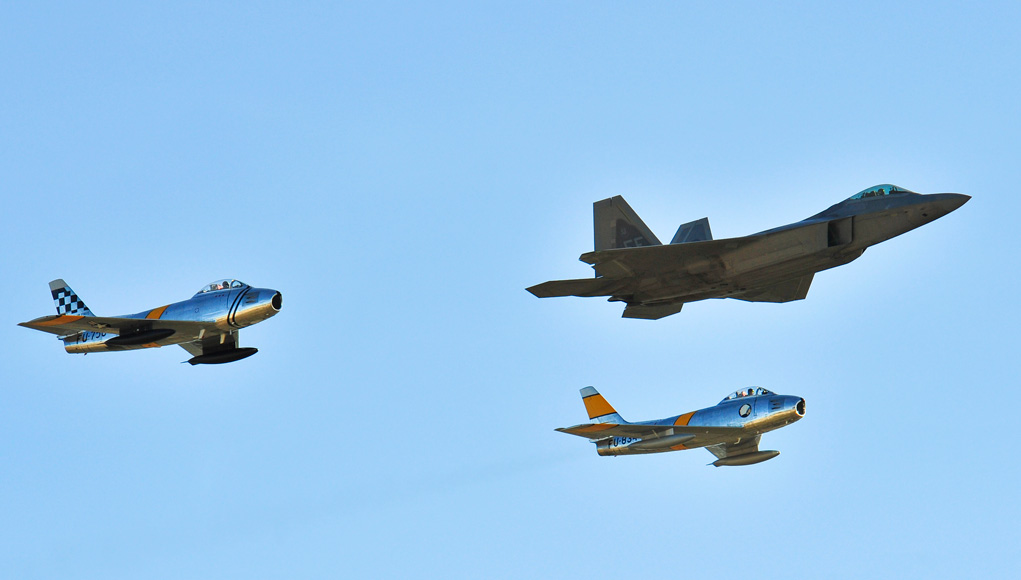
    Two F-86 Sabres and an F-22 Raptor fly in formation during the 2015 Heritage Flight Training and Certification Course at Davis-Monthan Air Force Base, Ariz., Feb. 27, 2015. (USAF photo by Chris Massey)
    Two F-86 Sabres and an F-22 Raptor fly in formation during the 2015 Heritage Flight Training and Certification Course at Davis-Monthan Air Force Base, Ariz., Feb. 27, 2015. (USAF photo by Chris Massey)

    Another recent celebration at D-M was the Heritage Flight Training Certification Course (HFTCC), held Feb. 27 – March 1. HFTCC provided an opportunity to see WWII, Korea and Vietnam veteran planes flying with the latest air force jets. This annual aerial demonstration training event has been held at D-M since 2001, providing civilian and military pilots the opportunity to practice flying in formation for the upcoming air show season.

    The aircraft that participated in this year’s HFTCC were the historic P-51 Mustang, P-40 Warhawk, P-38 Lightning, P-47 Thunderbolt and the F-86 Sabre. Air Combat Command aircraft included the F-22 Raptor and the F-16 Fighting Falcon. Established in 1997, the HFTCC features aerial demonstrations from historical and modern fighter aircraft which will fly in formation together during air shows across the country.

    Check more excellent photos and live reports on D-M facebook page.

    hertels_p47_725
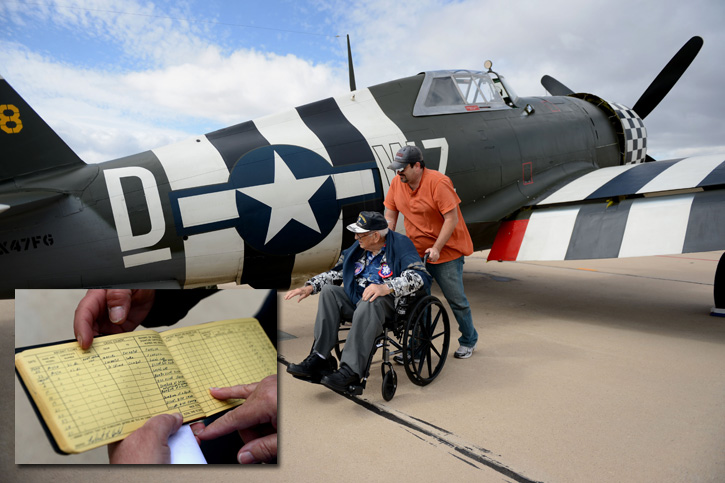
    Sitting in a wheelchair with images of airplanes on his shirt and a U.S. Army Air Corps hat on his head, 92-year-old retired Air National Guard Chief Warrant Officer 2 Robert Hertel was reunited with the P-47 Thunderbolt during the Heritage Flight Training and Certification Course here Feb. 28. Hertel flew the legendary Thunderbolt while stationed on Iwo Jima, Japan, during World War II. He had not seen the aircraft since retiring from the military in the 1960’s. The log book presented to him showed Hertel’s flights over Iwo Jima, during World War II. The P-47 pilots ended WWII with 3,752 air-to-air kills while flying more than 423,000 sorties. (Photo: USAF by Senior Airman Jensen Stidham)


    General Atomics teams with SENER to market reaper UAS in Spain

    General Atomics Aeronautical Systems, Inc. (GA‑ASI) signed today a teaming agreement with thSpanish engineering company  SENER, to promotes the GA-ASI Predator B  Remotrly Piloted Aircraft (RPA) to support Spain’s airborne surveillance and reconnaissance requirements.

    The joint partnership of GA-ASI and SENER will optimize and synergize Predator B data collection in support of the Spanish customer.

    “GA-ASI is fully committed to working with Spanish industry as we believe this program’s success requires local industry partnerships that provide collaborative innovation in enhancing the capabilities of Predator B for the Spanish Government.”  said Frank W. Pace, president, Aircraft Systems, GA-ASI added.

    “It is a source of satisfaction to make available for the Spanish Ministry of Defense our experience and technological capabilities in this challenging project to implement the first system of this kind that will be operating in Spain.”  Andrés Sendagorta, vice president of SENER Commented.

    Ricardo establishes a specialized US Based defense unit

    Ricardo is establishing a specialized defense unit – Ricardo Defense Systems (RDS) – to be located at its existing Detroit Technology Campus in Van Buren Township, Michigan. Completing the extensive approval process required for a Special Security Agreement with the USA, enabling the company to expand its role in the US defence market. The company said it is backing the move with the necessary investments in people, processes, and facilities.

    The dedicated RDS facility and full-time core team of the new subsidiary organization will enable greater focus on the needs of the defence market, while leveraging the resources that Ricardo has available through its affiliated global technical consultancy and specialist niche manufacturing operations.

    “We are excited to have created an organization that brings to bear all of Ricardo’s existing expertise in wheeled and tracked vehicles, powertrain, electronics, and software engineering to better serve our military customers and servicemen and women,” said Paul Luskin, president of Ricardo Defense Systems. “At the same time, we will be expanding our skills and pursuing previously unavailable opportunities.”

    The formation of RDS reinforces Ricardo’s role as a leading provider of and innovation, focused on the needs of this exceptionally demanding market sector. Ricardo has a proven track record of successfully addressing a wide range of critical challenges such as the development of innovative vehicle designs, hybrid-electric powertrains, improving vehicle stability, reducing vehicle weight, decreasing development timelines, and improving modeling and simulation for its defence customers.

    Italian Air Force to acquire six HammerHead MALE UAVs

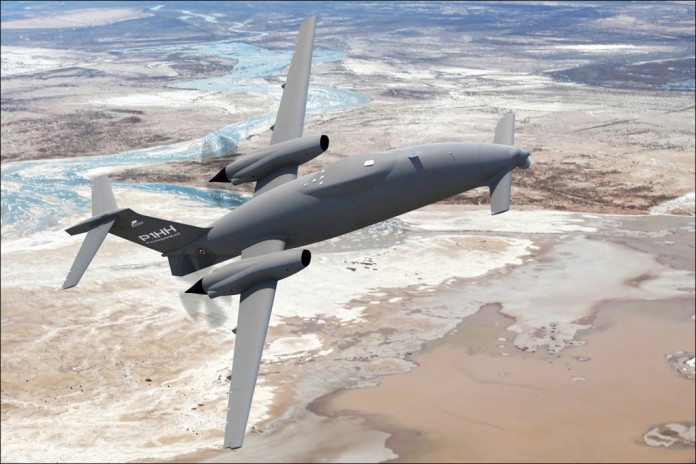
    The aerodynamic configuration of the P.1HH Hammerhead unmanned aircraft has a new, extended span main wing, an autonomous flight control and modular mission payloads, adapted for specific mission profiles. Photo: Piaggio.

    The Italian Air Force will be the launch customer of the P.1HH HammerHead Medium-Altitude Long-Endurance (MALE) Unmanned Aerial System (UAS). The manufacturer, Piaggio Aerospace will deliver three UAS systems – 6 air vehicles and 3 ground control stations – complete with intelligence, surveillance and reconnaissance (ISR) configuration to the Italian Air Force in early 2016.

    “We are truly delighted about this decision. It confirms the strong partnership we have with the Italian Air Force and showcases the P.1HH as one of the most advanced systems to enter the market.” Carlo Logli, CEO of Piaggio Aerospace said. “We have very concrete reasons to believe that P.1HH will become the first European state-of-the-art MALE UAS, uniquely suited to perform a wide range of surveillance and security missions at the highest technological level”, Logli added. Piaggio Aerospace announced today at the IDEX defense expo in Abu Dhabi, in the presence of the Italian Air Force Chief, Lt. Gen. Pasuquale Preziosa.

    The P.1HH Hammerhead is a derivative of the Piaggio Aerospace P.180 twin turboprop aircraft, designed with a variety of operational capabilities that can be tailored to specific customer requirements, enabling the UAS to perform a wide range of ISR missions. The P.180 has a proven service record of over 20 years and more than 800,000 flight hours, providing a proven, reliable platform for the new UAV derivative.

    Developed in partnership with Finmeccanica-Selex ES, the P.1HH HammerHead UAS is currently going through a comprehensive development and certification flight test campaign, conducted at the Trapani Birgi Italian Air Force base. The maiden flight was completed last December at Trapani Birgi.

    Project Pilot Sergio Paloni, who led the flight crew said, “We are very pleased with the result of the maiden flight. The aerial vehicle was seamlessly operated remotely with no experienced flaws. We were also able to gather significant data which will enable us to forge ahead with our ambitious development roadmap”.

    This achievement came after the completion of the P.1HH UAS demo program and represents the starting point of a comprehensive development and certification flight test campaign. It will enable Piaggio Aerospace to soon deliver to the market one of the most advanced MALE UAS.

    The Prototype 001 is representative of the final aerodynamic configuration of the aircraft including the new, extended span main wing and the control systems on board. During the first flight, the Prototype 001 performed a shakedown flight over the Mediterranean Sea at a significant range of speed and altitude. The main flight objective was to conduct a first check of all the essential functions of the Air Vehicle and Ground Segment. The aerial vehicle management and control system, data link and ground control station are developed in partnership with Finmeccanica – Selex ES.

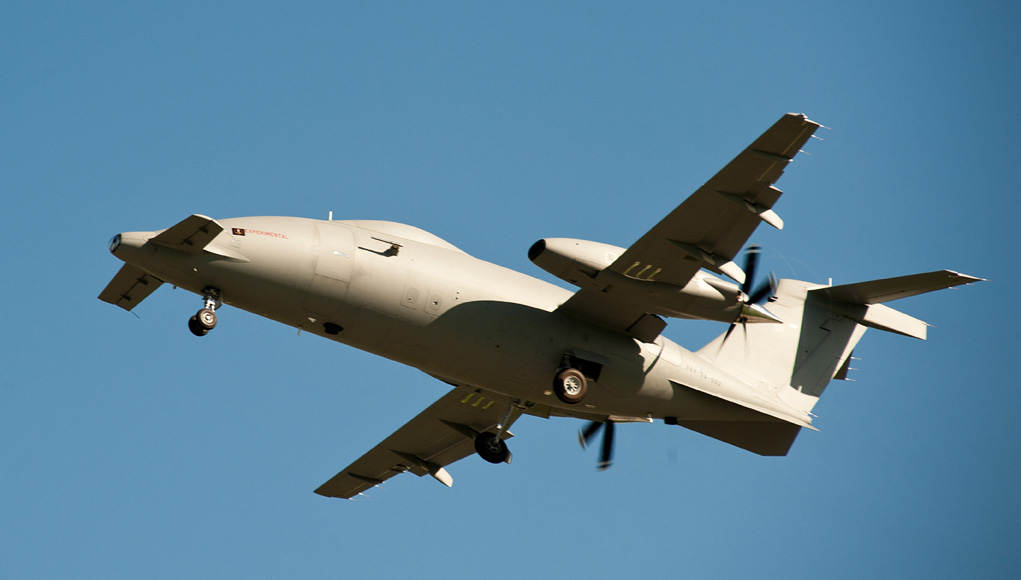
    The Prototype 001 is representative of the final aerodynamic configuration of the aircraft including the new, extended span main wing and the control systems on board. During the first flight, the Prototype 001 performed a shakedown flight over the Mediterranean Sea at a significant range of speed and altitude. Photo: Piaggio
    The Prototype 001 is representative of the final aerodynamic configuration of the aircraft including the new, extended span main wing and the control systems on board. During the first flight, the Prototype 001 performed a shakedown flight over the Mediterranean Sea at a significant range of speed and altitude. Photo: Piaggio

    Rafael Unveils an Upgraded I-DERBY Missile at Aero-India 2015

    iderby_725
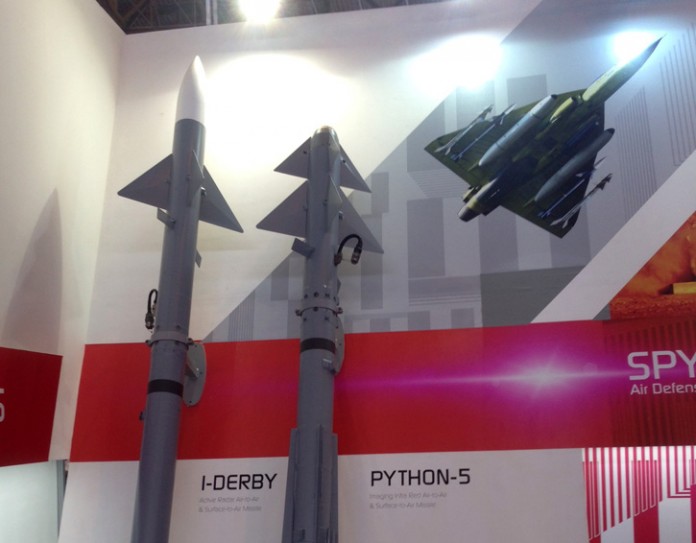
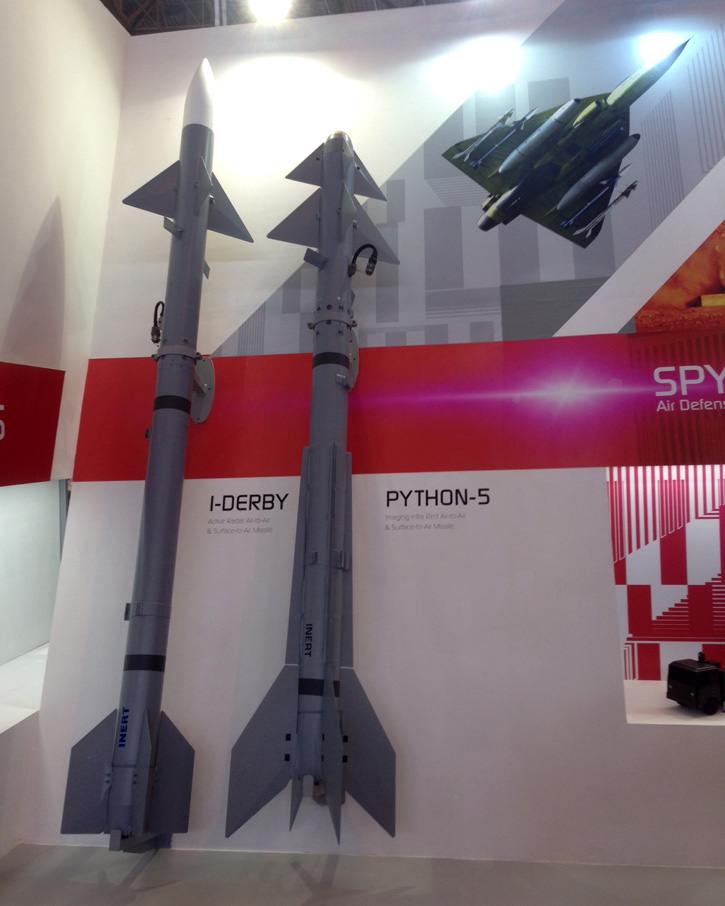
    For the I-Derby RAFAEL utilized a new, Software Defined Active Radar seeker, based on combat-proven seeker developed by RAFAEL. Derby (left) and Python V (right) are fielded by a number of air forces, equipping combat aircraft and surface-to-air missile systems – the Spyder. Photo: Noam Eshel, Defense-Update

    RAFAEL is unveiling at Aero India 2015 a new version of the Derby missile. Designated I-Derby, the new missile is equipped with a new seeker, employing an advanced Software Defined Radar (SDR) based on combat proven technology derived from the Tamir interceptor, the interceptor used in RAFAEL’s Iron Dome system.

    RAFAEL is unveiling at Aero India 2015 a new version of the Derby missile, a first step in a major revamp of the Israeli medium range BVR missile that has been in service since the mid 1990s.

    India is already operating hundreds of Derby missiles with its Spyder Quick Reaction Surface to Air Missiles (QRSAM) and Sea Harrier fleet. Given their improved capabilities advanced versions of the Derby are also likely to be considered to equip the Indian Air Force Tejas LCA and improved Su-30MKI.

    Rafael developed the Derby missile in the late 1980s as ‘Beyond Visual Range’ missile. Initially developed as an air/air missile, Derby proved as a highly capable weapon for medium and short range engagements as well, offering an alternative guidance technique to traditional heat seeking or imaging infra-red. In the mid 2000s Derby become part of the Spyder Short Range Air Defense System (SHORAD). The missiles have been fielded by a number of air forces, including India, Brazil, Singapore and Chile.

    The Derby is equipped with an active radar seeker to provide the missile a ‘fire and forget’ engagement capability, beyond visual range and under all weather conditions. The new version modernizes one of the weapon’s key elements – the active radar seeker – which represents 1990s technology. For the I-Derby RAFAEL utilized a new, Software Defined Active Radar seeker, based on combat-proven seeker developed by RAFAEL for the Tamir missile, used with the company’s Iron Dome counter Rocket, Artillery and Missile (C-RAM) system.

    Using an active radar for target seeking, the missiles enables multi-shot engagement from surface or air-launched platforms. With this sensor and its signal processing algorithms the missile enables look-down/shoot-down capability, and advanced operating modes, adding to the ‘fire and forget’. Further improvements are enabled for the missile’s ECCM capability, tailoring the weapon’s behaviour to the customer’s operational requirements.

    The new version retains the same dimensions and maintains the kinematic performance of the original missile, while offering improved capabilities and flexibility to implement new operating modes, rendered by the new seeker.

    RAFAEL: Ready to MAKE it in India

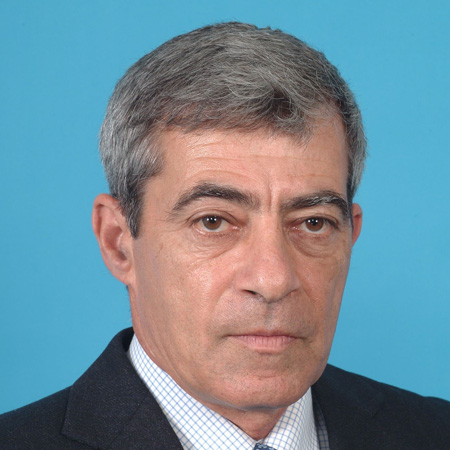
    V. Adm(Ret) Yedidia ‘Didi’ Yaari, President and CEO of RAFAEL

    Israel’s defense technology group RAFAEL, known for the development of the Iron Dome Counter Rocket and Missile and Trophy active protection systems is back at Aero India with new surprises – this time, its about C-DOME, a compact yet highly capable naval air defense system, superior versions of the Litening targeting pods and Reccelite reconnaissance systems, as well as advanced communications, command and control that have recently selected for the Indian Air Force future information system.

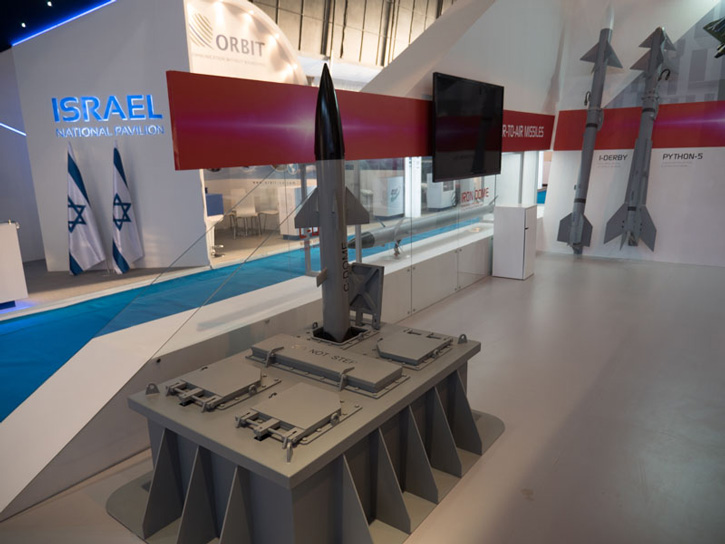
    RAFAEL unveiled at Aero-India 2015 the C-DOME, a naval air defense system integrating a modified version of Iron Dome's  Tamir interceptor with vertical launchers fitting Barak 1 canisters. Photo: Noam Eshel, Defense-Update
    RAFAEL unveiled at Aero-India 2015 the C-DOME, a naval air defense system integrating a modified version of Iron Dome’s Tamir interceptor with vertical launchers fitting Barak 1 canisters. Photo: Noam Eshel, Defense-Update

    Through 2014 Rafael Advanced Defense Systems completed a major structural reorganization that established three divisions – Land and Naval Systems Division, Air and C4ISR Systems Division and Air Dominance Division. “The new formation reflects RAFAEL’s new business focus to best respond to opportunities and needs of its customers and partners.” Yedidia ‘Didi’ Yaari, President and CEO of RAFAEL told Defense-Update, “I expect these changes to continue our growth in the traditional areas of operation as well as in the new cyber domain.”

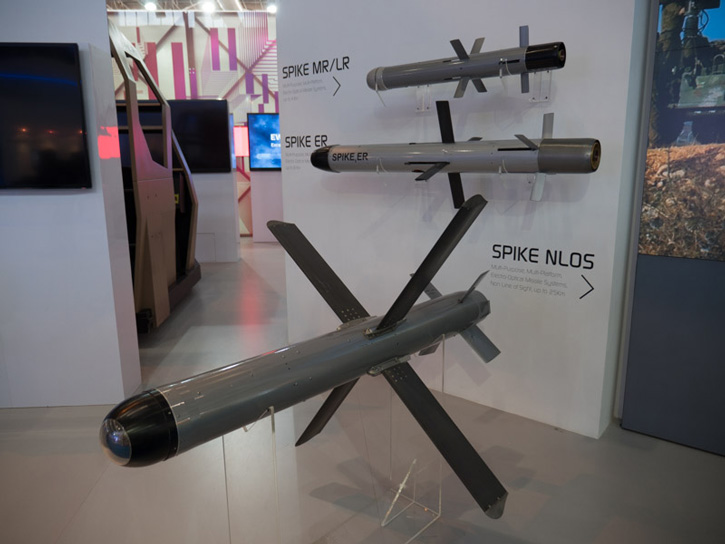
    RAFAEL has recently won a major order to supply thousands of SPIKE missiles to the Indian Army. Photo: Noam Eshel, Defense-Update
    RAFAEL has recently won a major order to supply thousands of SPIKE missiles to the Indian Army. Photo: Noam Eshel, Defense-Update

    “India remains a strategic partner for our operation and a major target for our marketing activities, we are offering here many of our top capabilities.” Yaari stated, “The Indian move from buying military hardware abroad (BUY) to producing such systems in country (MAKE) is an important development for RAFAEL, as it enables us to exploit one of our major advantages as a developer – our ability to cooperate, transfer know how and support local production.“ Yaari explained.

    Yesterday RAFAEL and the Indian Kalyani Group announced the formation of a Joint Venture Company in India based on the new ownership model (51:49). “We see Kalyani Group as an ideal partner for expanding our business opportunities in India. We have supported and will continue to support the Indian Ministry of Defense in gaining technological superiority to technological excellence.” Yaari commented.

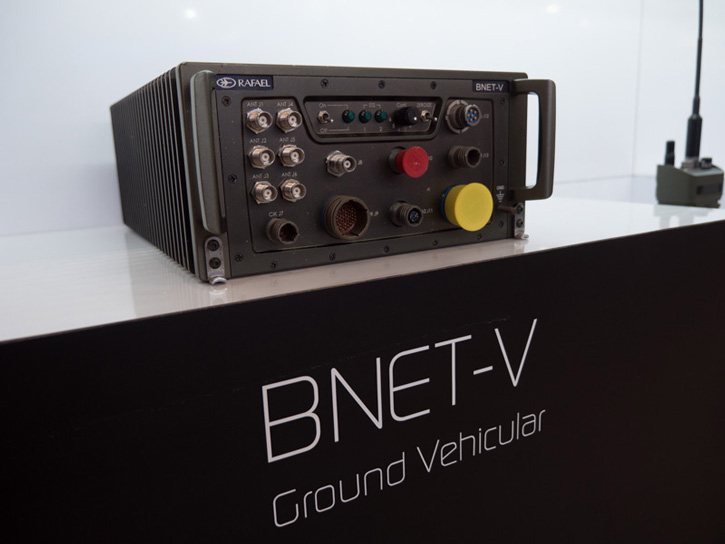
    RAFAEL's BNET was selected as the future airborne radio for the Indian Air Force. Photo: Noam Eshel, Defense-Update
    RAFAEL’s BNET was selected as the future airborne radio for the Indian Air Force. Photo: Noam Eshel, Defense-Update

    Inherent in RAFAEL’s corporate cultural, these attributes have helped us to establish over 100 successful partnerships in Israel and with foreign governments and defense companies around the globe. “These partnerships leverage RAFAEL’s unique technological edge and proven systems, into defense solutions used successfully around the world.” Yaari added.

    “One of our strengths in becoming an attractive partner, is our ability to meet technology transfer, local production and offset requirements” said Yaari. “Although we have yet to finalized the Spike contract, this important win for RAFAEL is a testament of our ability to meet those requirements and we are excited and honored by the Indian decision to equip its military with our missiles.” These missiles are currently produced in a number of countries and, according to Yaari, RAFAEL is currently establishing the infrastructure for industrial cooperation that will enable technology transfer to locally produce the Spike missiles in India. “We consider the Indian industry as a true partner in this field, as in areas related to other RAFAEL activities in India, and are confident that this partnership will be introduce an important added value, particularly to the customer and end user.” Yaari added.

    Why Make It In India?

    Shri Narendra Modi, Prime Minister of India

    “Over the last eight months we have worked hard to create that environment for you” India’s Prime Minister, Shri Narendra Modi said at the inauguration ceremony of Aero India 2015.

    The new policy is not about saving on imports, but increasing the domestic market capability to support defense – by boosting investment, expanding manufacturing, support enterprise, raise the technology level and increase economic growth in India.

    “In India, the defense industry in the government sector alone employs nearly 200,000 workers and thousands of engineers and scientists.” Modi said, adding that they produce an output of nearly 7 billion dollars annually. It also supports a very large pool of small and medium enterprises. “We speak in terms of national capacity, not public sector or private sector” he added.

    Nevertheless, India’s defense industry in private sector is still small, it already employs thousands of people; the role of the private sector in defense is expanding, even for major platforms, but the majority of defense procurements (60%) are imported. “We are spending tens of billions of dollars on acquisitions from abroad.” Modi noted.

    “We speak in terms of national capacity, not public sector or private sector”

    “There are studies that show that even a 20 to 25% reduction in imports could directly create an additional 100,000 to 120,000 highly skilled jobs in India.” Modi argued, “If we could raise the percentage of domestic procurement from 40% to 70% in the next five years, we would double the output in our defense industry.” He added, “Imagine the impact in terms of jobs created directly and in the related manufacturing and services sector!”

    Part of the new policy is easing the rules of foreign investments and joint ventures. “We have permitted investments up to 24% by Foreign Institutional Investments. And, there is no longer a need to have a single Indian investor with at least a 51% stake. Industrial licensing requirements have been eliminated for a number of items. Where it is needed, the process has been simplified.”

    The Indian Kalyani Group and Rafael Advanced Defense Systems Ltd of Israel announced today the formation of a Joint Venture Company in India based on the new ownership model (51:49).

    “We are in step with ‘Make in India’ campaign.” said Amit Kalyani, Executive Director, “The Government had recently increased the FDI cap in defense to 49%, and we hope that our proposed partnership with Rafael will be among the first few ventures under the new FDI limits.”

    The initiative will enable the development and production of high-end technology systems within the country. This will include a wide range of technologies and systems, like Missile Technology, Remote Weapon Systems and Advanced Armor Solutions.

    “Kalyani Group has been at the forefront in initializing the ‘Make in India’ campaign.” Baba Kalyani, Chairman & MD, said, “As part of this campaign we aim to develop and produce high end technology systems and expand the Defense Industry Base in our country. We believe in the vision of ‘Make in India’ and our proposed Joint Venture with Rafael is a step in this direction.”

    “We see Kalyani Group as an ideal partner for expanding our business opportunities in India. We have supported and will continue to support the Indian Ministry of Defense in gaining technological superiority to technological excellence.” Vice Admiral (Retd), Yadida Yaari, CEO, Rafael said.

    Another aspect of the Indian policy is the offsets system. According to Modi, “Offsets are a crucial instrument to develop and upgrade our defense industry. We have introduced significant reforms in our offsets policy. I am acutely aware that it still needs a lot of improvements. We will pursue them in consultation with domestic industry and our foreign partners.” Modi noted.

    Modi emphasized offsets policy not as a means to export low-end products, but to acquire state-of-the art technology and skills in core areas of priority. New business awarded by the Boeing Company is examples of this new trend.

    The company has recently awarded Bharat Forge contracts for titanium forging, for the supply of wing components for Next-Generation 737 and 737 MAX production lines. These multi-year contracts are part of the company’s strategy to expand global forging capacity to improve cost and reduce waste.

    Bharat Forge will produce the parts at its facilities in Pune and Baramati delivering first examples in the first quarter of 2016. The titanium parts will be heat-treated, shaped in a forging press, and machined by Bharat Forge before being shipped to Boeing Portland for finish machining into components.

    The contract reinforces the Boeing supply chain strategy to expand our forging supply base through partnering with high performance companies like Bharat Forge. Boeing currently has forging contracts with suppliers in Asia, Europe, Russia, and North America and will continue to add new sources of forgings around the world.

    “In a competitive world where our customers are increasingly demanding more for less, this delivery is a milestone that demonstrates the capability we are scaling-up with our supply-chain partners, right here in India,” said Prat Kumar president for Boeing India.

    Under a second contract with Boeing, Dynamatic Technologies has delivered the first set of aft pylon and cargo ramp assemblies for Boeing’s CH-47F Chinook helicopter.

    “Our defense industry will succeed more if we can transform the manufacturing sector in India”

    “We set up a new assembly line with Dynamatic Technologies soon after the Prime Minister formally launched the ‘Make in India’ program in September 2014. Going forward, our participation will continue to accelerate with support from government and our industry partners,” Kumar added.

    Dynamatic’s relationship with Boeing began in 2010 with the award of a contract to supply mission and power equipment cabinets for the P-8I maritime reconnaissance and anti-submarine warfare aircraft. In 2013, Boeing placed its first H-47 Chinook helicopter contract in India with Dynamatic for aft-pylon and cargo ramp assemblies.

    A third contract announced this week highlights how defense import can help increasing employment in India. It is a five-year contract worth US$28.5 million awarded by Hindustan Aeronautics Limited (HAL) to BAE Systems, for Ground Support Equipment, Spares, Support and Training for the Hawk Mk132 advanced jet trainer. The Hawk Mk132 is produced under license in India, by and the support package will enable HAL to establish a Repair & Overhaul facility for the aircraft in advance of a major servicing milestone anticipated in 2016, securing employment stability at HAL’s facilities in Bangalore.

    Government’s support for research and development is essential for defense sector. And, it should also be accompanied by a degree of assurance on purchase.

    Another focal point in the new policy is the support for innovation, research and development. “We are introducing a scheme to provide up to 80% of funding from the Government for development of a prototype in India. And, we are also launching a Technology Development Fund.” Modi announced. “We must develop a financing system suited to the special needs of this industry. It is a market where buyers are mainly governments, the capital investments are large and the risks are high” he added. “Our defense industry will succeed more if we can transform the manufacturing sector in India.” Modi concluded.


    Skunk Works and XTEND Simplify Multi-Drone Command

    0
    Lockheed Martin Skunk Works® and XTEND have achieved a major milestone in JADC2 by integrating the XOS operating system with the MDCX™ autonomy platform. This technical breakthrough enables a single operator to simultaneously command multiple drone classes, eliminating the friction of mission handoffs. From "marsupial" drone deployments to operating in GPS-denied environments, explore how this collaboration is abbreviating the data-to-decision timeline and redefining autonomous mission execution.
    From Ukraine to Taiwan: The Global Race to Dominate the New Defense Tech Frontier

    0
    As traditional defense primes face mounting competition from agile “neoprimes” such as Anduril, Palantir and Helsing, the balance of innovation is shifting toward software-defined warfare and scalable, dual-use technologies, while global industry consolidation—marked by Boeing’s integration of Spirit AeroSystems and other strategic mergers—signals an intensified race to secure control over the defense technology value chain. Our Defense-Tech weekly report highlights these trends.

    Europe’s “Drone Wall”

    0
    In early October 2025, a coordinated wave of unmanned aerial system (UAS) incursions—widely attributed to Russia—targeted critical infrastructure across at least ten European nations. The unprecedented campaign exposed the fragility of Europe’s air defenses...

    Weekly Defense Update & Global Security Assessment

    0
    Executive Summary The past week (September 18-25, 2025) represents an inflection point where strategic defense concepts have transitioned from doctrine to tangible reality. An analysis of global events reveals four primary, interconnected trends shaping an...

    U.S. Air and Space Forces Push Next-Gen Programs at the AS&C 2025 Conference and...

    0
    At the 2025 Air, Space & Cyber Conference, U.S. Air Force and Space Force leaders unveiled major updates on next-generation fighters, bombers, unmanned systems, and space initiatives, highlighting both rapid innovation and critical readiness challenges as the services race to outpace global competitors. A short version is available here, with a more detailed version for subscribers.

    TADTE 2025: Reflecting Taiwan’s Strategic Themes

    0
    The Taipei Aerospace & Defense Technology Exhibition (TADTE) 2025 crystallized around four dominant strategic themes that collectively illustrate Taiwan's comprehensive approach to defense modernization amid escalating regional tensions. Based on a detailed report by Pleronix (available upon request). Includes a Podcast discussion on TADTE 2025's highlighting Taiwan's four strategic themes beyond the post's coverage.

    Iron Beam 450 Completes Testing, Soon to Join With Operational Air Defense Units

    0
    Israel’s Iron Beam 450 high-power laser system has completed final testing, marking a major leap in air defense. Developed by Rafael, it offers precise, cost-effective interception of rockets, UAVs, and mortars, and is set for IDF deployment by 2025.