The biennial defense and security expo LAAD 2015 held in Rio De Janeiro this week highlights Brazil’s growing importance in the global security and defense market. With more than 650 exhibitors from 43 countries participating in this 10th edition, LAAD has outgrown its local focus as a Brazilian fair, becoming an international exhibition with regional focus.
LAAD covers a diverse range of topics, from military and aerospace, naval and electronics, to logistics, security systems cyber. Special focus is given to military aircraft, surface naval vessels, armored vehicles, unmanned systems, border sand maritime security, command and control, due to ongoing procurement programs in Brazil.
While international participation at LAAD is lighter this year, compared to 2013, ongoing programs and new ones are expected, given the clearing political situation, particularly in the military, and naval sectors, which were held back in recent years, as investments in homeland security were considered at higher priority.
Embraer, Brazil’s leading aerospace and defense company is one of the largest exhibitors at LAAD. Its military operations are conducted under Embraer Defense & Security, established by Embraer in 2013. Beyond the development of the KC-390 tactical military transport aircraft Embraer Defense & Security was selected to lead some of the most important projects in Brazil, such as the Integrated Border Monitoring System (SISFRON) and the Brazilian Defense and Strategic Communications Geostationary Satellite (SGDC).
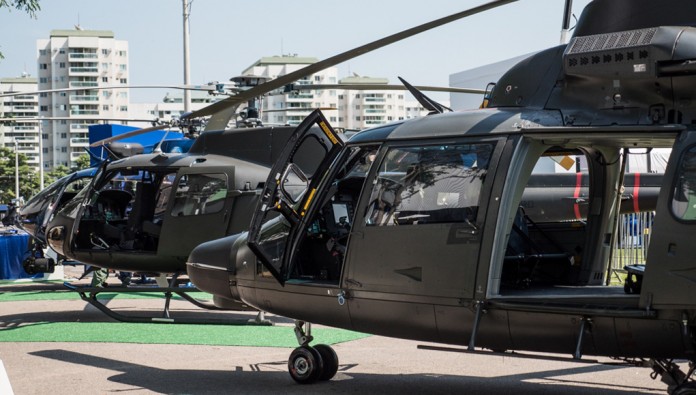
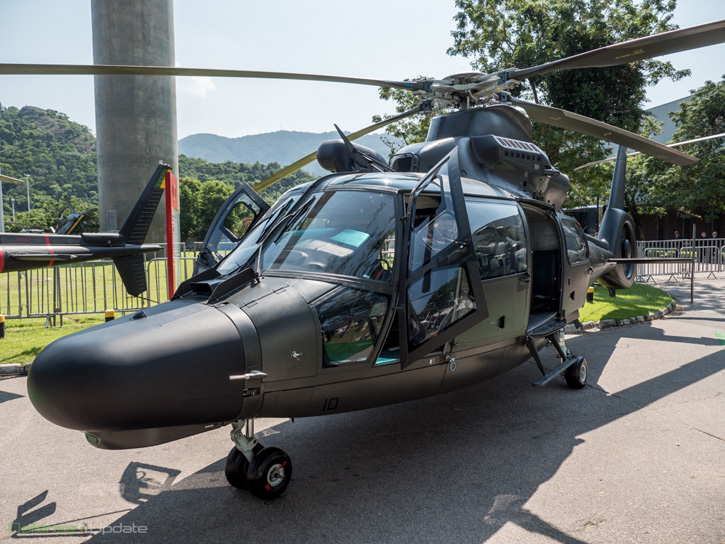
Besides the modernization of combat jets and transport aircraft, the Brazilian military has requirements for new helicopters. Ongoing procurement programs include the delivery of 50 EC725 Cougar helicopters, manufactured in Brazil by Helibras, a local company established by Airbus helicopters to conduct local manufacturing of helicopters in country. Helibras is also upgrading part of the 34 AS565 Panther operated by the Brazilian Army. Despite the significant weight of Airbus Helicopters in Brazil, the country’s strong appetite for helicopters has drawn more manufacturers to LAAD 2015.
34 Panther SA565 helicopter operated by the Brazilian Army are undergoing a modernization program undertaken by Avibras. Photo: Noam Eshel, Defense-Update
AgustaWestland, part of the Finmeccanica Group. Is displaying here the AW119Kx, a single engine light helicopter, the AW109 LUH light twin, and the T129 combat helicopter. The AW139 intermediate twin, the AW149 medium multirole aircraft and the AW101 three-engine medium heavy platforms are also displayed, these are often used for services supporting offshore activities. Another exhibitor, Bell Helicopters, is displaying the Bell 407GX and V-22 Osprey tilt rotor aircraft. The AH-1Z Viper attack helicopters and UH-1Y Venom, currently operated by the US Marines, are promoted to attract potential procurement for the Brazilian marines.
The Russian Helicopters group is promoting a number of helicopters, including the Mi-29NE attack helicopter and Mi-171A2, the latest edition of the Mi-8/17 proven through years of operational service with a number of countries in Latin America. The Mi-171A1 operated by Brazilian air-taxi company Atlas Taxi Aereo carrying freight to and from Brazilian national oil company Petrobras sites located in remote areas of the Amazon jungle. Reliable and economical Mi-171A1 were highly commended by the Brazilian operator. Mi-171A2 has started flight testing in November 2014. Russian Helicopters has recently delivered 12 Mi-35M combat helicopters to Brazil.
Its Mi-17V-5 and MI-171SH military transport helicopters are used by other air force in the region, a recent shipment of 12 Mi-17SH was sent to Peru. To promote the sales prospects of those helicopters in Brazil, Russian Helicopters’ holding company Rostec has been negotiating a possible joint production of helicopters in Brazilian. Rostec has been discussing this option with the Brazilian conglomerate Odebrecht Defense and technology and its subsidiary Mectron, “For now it’s a memorandum of cooperation on technology,” he said. “Perhaps it could lead to an assembly line with machines produced in Brazil and, afterwards, you could expand production and transfer certain technologies.” Sergei Goreslavsky, deputy head of Rostec unit Rosoboronexport told Reuters.
A number of Israeli companies displayed new systems for Intelligence, Surveillance and Reconnaissance, as well as command, control, communications and computing (C4) tailored for current Brazilian requirements.
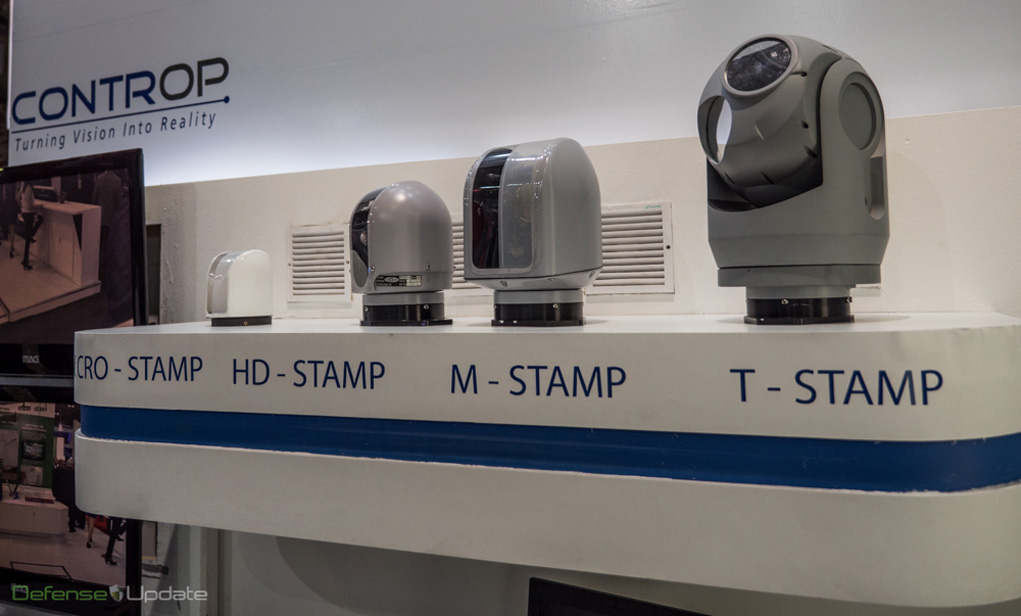
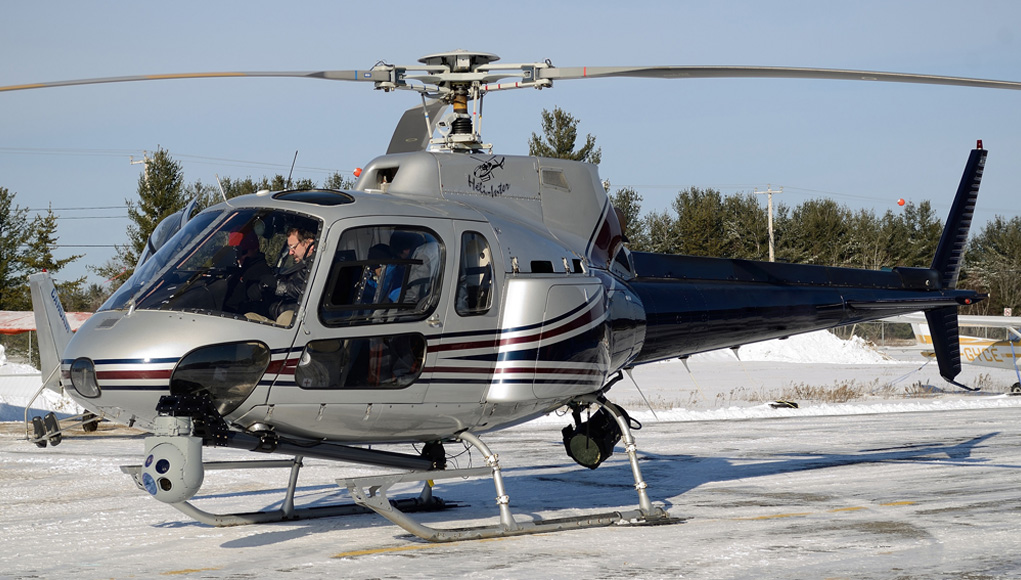
This range of small and miniature EO payloads from Controp is designed for mini and tactical UAVs. Larger payloads are integrated with the new A-SMS kit for helicopters. Photo: Noam Eshel, Defense Update
Controp, an EO payload specialist from Israel, is introducing the Airborne Surveillance Mission System (A-SMS), a generic Intelligence, Surveillance and Reconnaissance (ISR) kit designed for light helicopters. The system has already been certified by the Brazilian Civilian Aviation Authority (ANAC) for the AS350/355, widely used by police and government agencies in Brazil. The kit enables an efficient conversion of helicopters used for law enforcement into advanced EO/IR surveillance mission configuration. The includes a choice of gyro-stabilized payloads, including high performance, Full HD TV and FLIRs, an on-board display, digital video recorder and control unit employing a moving map and augmented reality display. A special feature of A-SMS is the inclusion of a searchlight that can be ‘slaved’ to the payload’s line of sight, automatically illuminating the scene being observed. The system was developed and certified in Brazil by TAM Aviaco Executiva and Taxi Aero and will be supported in country by TAM Aviacao.
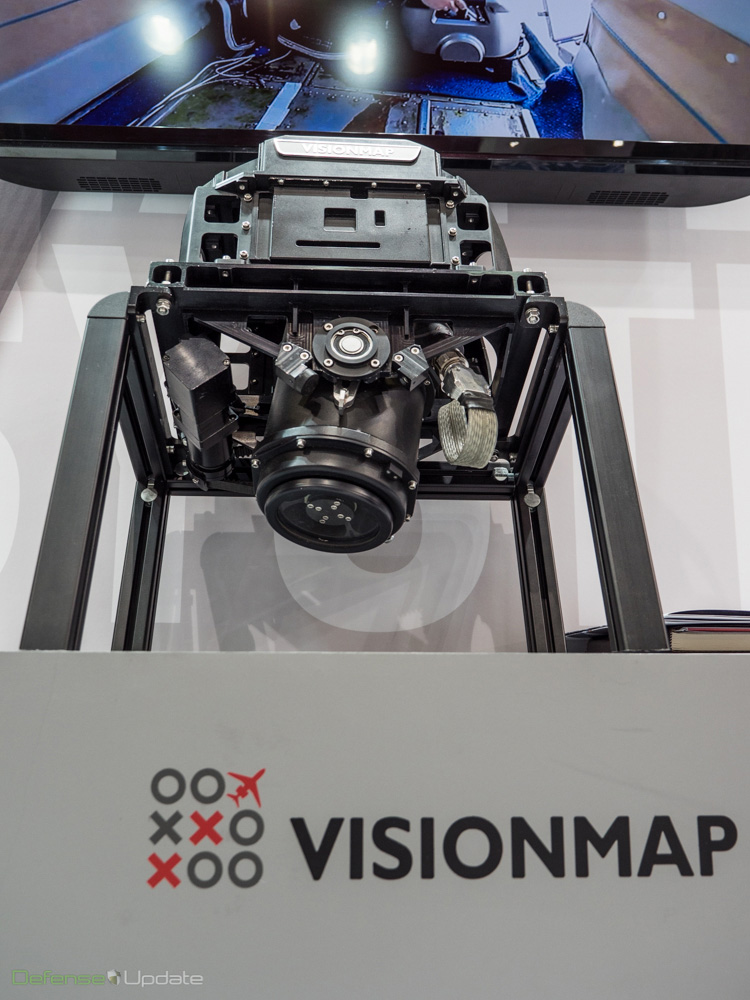
Controp, an EO payload specialist from Israel, is introducing the Airborne Surveillance Mission System (A-SMS), a generic Intelligence, Surveillance and Reconnaissance (ISR) kit designed for light helicopters.MIST aerial recce payload from VisionMap. Photo: Noam Eshel, Defense-Update
Another system supporting aerial surveillance is A3 Edge and MIST, from VisionMap. VisionMap – Combining vast area coverage with extremely high-resolution, MIST identifies the smallest objects of interest. Thanks to its compact size (11kg) and autonomous operation, MIST is ideal for use on manned as well as unmanned aircraft, providing safe access to required information. MIST imagery is processed in a fully automatic manner, producing high quality, accurate data for various applications. The MIST system is comprised of two models, color and thermal, delivering a complete picture of the target area.
At LAAD 2015 VisionMap is introducing the new 3D Edge enabling the automatic creation of three-dimensional models from the imagery collected by MIST or A3 edge. “This capability has immense importance for our customers” said Marcelo Rubin, VisionMap’s VP Marketing & Sales, “significantly improving the planning of various types of ground missions, calculating line of sight, measuring openings such as doors and windows as well as heights of buildings or walls, etc. In addition, the system can be used in the preparation of Safe City Projects when performing an analysis of which areas are covered by cameras and which are not.”
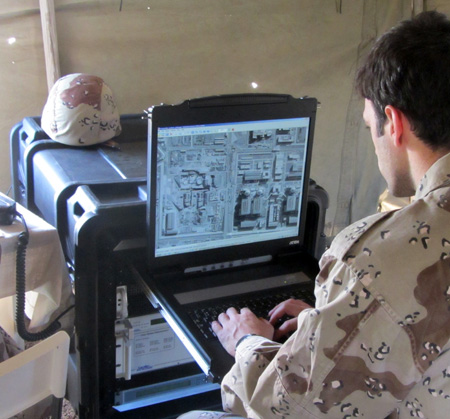
The MiniTer provides real-time imagery from ErosB supporting forces in the field. Photo: Imagesat
ImageSat International is unveiling at LAAD the a portable terminal providing access to 70 cm resolution imagery obtained by the EROS B satellite operated by the company. The terminal is coupled to a portable Mini-Terminal (MiniTer) supporting real-time downloading of data from the satellite. According to Rani Hellerman, Vice President for Business Development, the EROS B MiniTer solution is unveiled at LAAD for the first time. Fully deployed within one hour it allows direct downloads from the satellite to any location. It combines a 1.5m or 2.4m X-band antenna system designed by ORBIT Communication Systems with a processing unit developed by ImageSat. Specially designed to meet the needs of EROS B customers. The lightweight MiniTer receives X-band signals when the EROS-B satellite passes within a 2000-km radius footprint of the MiniTer’s location.
India is doubling the number of Rafale jet fighters it intends to buy from France, increasing the quantity of aircraft built in France from 18 to 36. Indian prime minister Narendra Modi and French president Francois Hollande have reached the agreement during their summit meeting today in Paris. The procurement will be part of a government-to-government (G2G) deal worth $7.5 billion, rather than the commercial sale by the manufacturer Dassault Aviation, that would have cost over $20 billion which has been dragged along for three years.
This decision represents the second win for Rafale this year, following the Egyptian order for 24 aircraft that could be built within two years. Qatar and UAE have expressed interest in buying the French fighter (UAE is in for 60 jets, Qatar has a requirement for 36). Dassault is currently producing about one aircraft per month (the minimum rate designed to fulfill the deliveries for the French military by 2018). The company said it can increase production rate to 2.5 aircraft per month, which could deliver the Egyptian, Indian and remaining French orders by mid 2017. However, according to Indian defense minister Manohar Parrikar, the jets are not expected in India before the end of 2017. “Fly-away means not tomorrow, it has to be designed as per India’s need, plus there is a requirement of working out the price.” Parrikar said.
Higher Cost, Faster Delivery
The original deal was for 126 fighter aircraft under the Medium Multi-Role Combat Aircraft (MMRCA) contest. Dassault Aviation Rafale was shortlisted in 2012 after rigorous evaluation but negotiations have been stuck over pricing and delivery guarantees for the aircraft manufactured by Hindustan Aeronautics Ltd. (HAL) in India. Dassault’s bid price was 10 billion, but the program cost soon escalated to over $20 billion, due to the investments of technology transfer and infrastructure involved with life-cycle support cost. However, while average cost per aircraft would cost $158 million under the original plan, the current buy represents per aircraft cost of 208 million.
It is anticipated that a direct purchase would better control the cost and risk, as it will not involve technology transfer. Since the first deal will pay for much of the initial infrastructure and support costs necessary to maintain the aircraft in India, it is expected that future orders could cost less. A direct sell will also buy time for further discussions enabling the two sides to agree on future options that would include local production.
Analysts also expect the G2G deal involve more Indian private sector companies, as it will not be bound to go through HAL, but rather involve the Reliance group – the local partner Dassault has selected for the MMRCA project.
Buy in France or Make in India?
While the Rafale was an important part of Modi’s ‘Make in India’ campaign, the urgency and need for replacement of IAF MiG-21 and MiG-27 units left little room for alternatives. Nevertheless, the agreement over Rafale was part a comprehensive pact included 17 different agreements, pertaining to in urban development, railways, defence and the nuclear sectors. France also intends to invest two billion euros in Indian technology ventures, responding to Modi’s invitation to French businesses to invest in his ‘Make in India’ initiative.
French companies are in discussion with India for the construction of six power-generating nuclear reactors with a total power generation capacity of about 10,000 MW. The program known as Jaitapur project follows a partnership agreement between India’s Larsen and Toubro and France’s Areva that will lead the project.
While the Rafale was an important part of Modi’s ‘Make in India’ campaign, the urgency and need for replacement of IAF MiG-21 and MiG-27 units left little room for alternatives. Nevertheless, the agreement over Rafale was part a comprehensive pact included 17 different agreements, pertaining to in urban development, railways, defence and the nuclear sectors. France also intends to invest two billion euros in Indian technology ventures, responding to Modi’s invitation to French businesses to invest in his ‘Make in India’ initiative. The G2G sale of the rafale is likely to cost $7.5 billion and, according to Indian offset policy, would require a ‘buyback’ of about $2.3 billion – about the same amount that France has committed to invest in Indian technology initiatives. Indian sources explain this leaves the net worth of the current deal at about four billion Euros.
French companies are in discussion with India for the construction of six power-generating nuclear reactors with a total power generation capacity of about 10,000 MW. The program known as Jaitapur project follows a partnership agreement between India’s Larsen and Toubro and France’s Areva that will lead the project.
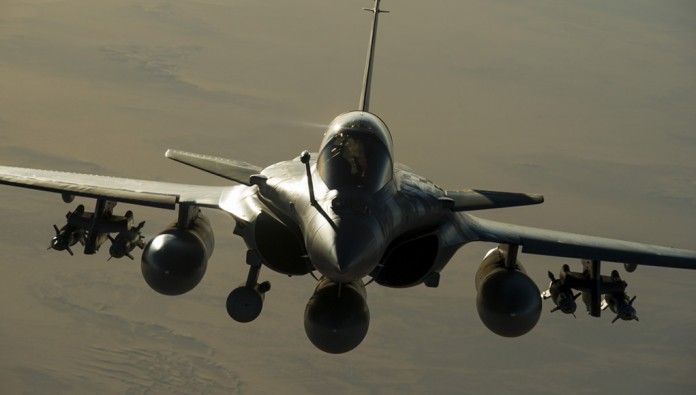
The Rafale jet fighters will soon replace MiG-21s and -27s soon to be withdrawn from service with the Indian Air Force. Photo: Dassault Aviation
Maj. General (Ret) Udi Adam, Chairman of IMI. Photo: IMI
The oldest military industry in Israel is up for sale – Israel Military Industries (IMI), the government owned company established in 1933 is undergoing privatization, which includes the sale of its business activity to a private investor.
Israel’s Government Companies Authority (GCA), headed by Ori Yogev, is managing the bid offering. Through the process the GCA and MOD have determined the appropriate security authorizations granting potential bidders the permission to purchase a defense company in Israel. Based on valuation assessments, buyers are expected to pay $550-$700 million for IMI. GCA is expecting up to eight bidders to compete, four Israeli and four foreign groups from the USA.
Potential bidders will be pre-selected to be allowed to place bids. Several private investor groups have already indicated their interest in IMI, including Elbit Systems’, Israel’s leading privately owned and publicly traded defense company, and the Katzav Group which already owns several defense companies, one of them is IWI which was one of IMI’s divisions sold to private investors. Katsav is likely to team with businessmen Eldad Avraham and Meir Shamir. A third group representing other investors has also come forward but the names of the investors has not been released.
Update: May 28, 2015: Upon closing the registration process 12 parties have entered the first phase of the bidding process today. As expected, these include Elbit Systems, SK Group and Armaz – three Israeli based companies already involved in the domestic and international defense sector. Five Israeli investments companies have also registered – including, Mivtach Shamir, PIMI, Invictus Holdings, Tara Horizon and S.B.M. Among the foreign groups planning to bid are Kanders IMI, the Renco Group and Coleridge Capital. It is likely that some of the Israeli and US investment groups represent the interests of major foreign companies that opted not to disclose their interest at this early stage. For example, the Renco Group is already involved in defense acquisitions, and, according to the company’s website, has a stake in the US military vehicle manufacturer AM General. (the producer of the HMMWV and one of the finalists in the future U.S. JLTV program).
Three US companies have also expressed interest in the process; but have yet to apply to participate in the process. All potential bidders will be subject to security clearance by the Director of Security of the Defense establishment (“Malmab”). The GCA will also look at their financial capabilities.
Customer Driven Focus
As part of the privatization process IMI will be split to three entities – IMI Systems will maintain all the company’s operational assets, as well as a backlog worth $2.2 billion. Certain assets that cannot be transferred to private owners will be maintained at a newly established company that will remain under government ownership.
IMI is leaner today, following the retirement of 1,200 employees, some on early retirement, other became redundant as the company changed it’s business focus from hardware manufacturing to system engineering. Supporting this trend, IMI recruited 300 new employees in the recent years, most of them engineers.
As part of this transformation IMI established a number of customer focused business groups, each lead by experienced service members from the Israel’s Defense Forces and security agencies. Brig. General (ret) Eli Reiter is heading the new Precision Fires business unit, the Infantry Systems group is headed by Brig. General (ret) Alon Friedman and the HLS unit is headed by Nir Regev. (Continue reading)
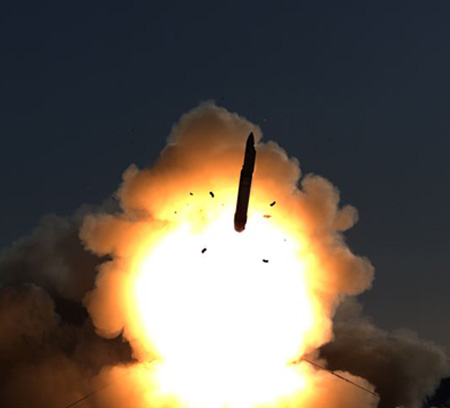
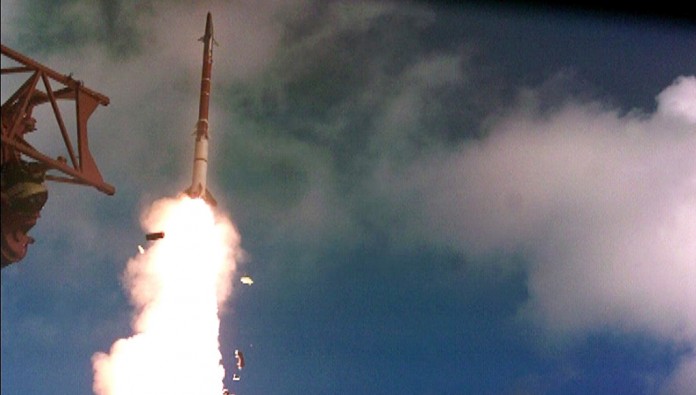
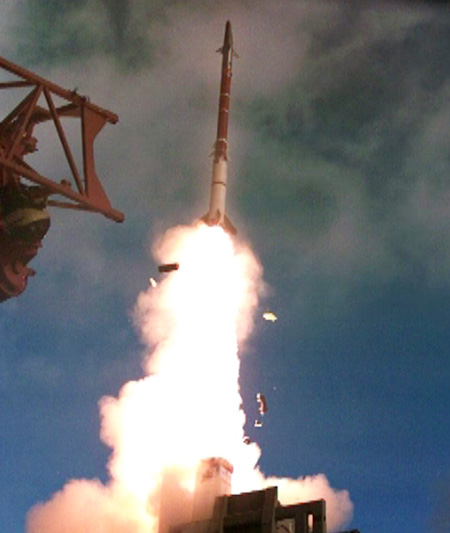
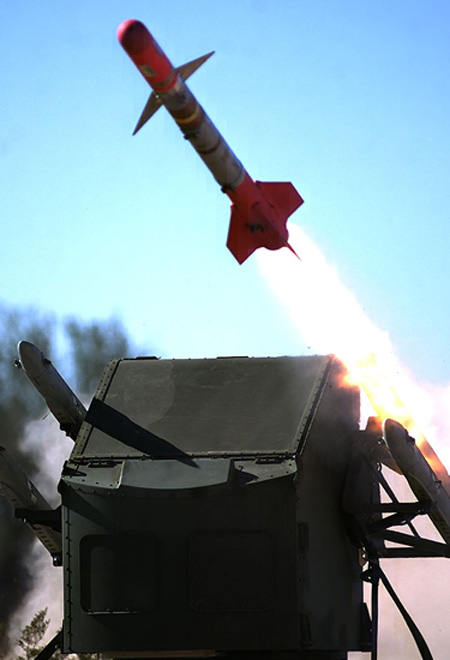
A Stunner missile launched from the David’s Sling Weapon Systems’ launcher, on one of its recent intercept flights. The third test series demonstrated successful intercepts of several representative threats.
Israel’s David’s Sling Weapon System (DSWS) Air- and Missile-Defense system has completed a major test series this week, demonstrating successful intercepts of targets simulating representing threats. The series was part of the third test phase of the system (DST-3), developed under the supervision of Israel’s Missile Defense Organization (IMDO), the Directorate of Defense Research and Development (DDR&D) and the U.S. Missile Defense Agency (MDA).
As part of this test series, representative threat targets were successfully intercepted by the DSWS achieving all test objectives. These included targets of different sizes, fired from medium and long ranges, at low, medium and high altitudes.
DST-3 is the third series of tests of the Stunner interceptor for the DSWS. The information collected is being analyzed by program engineers and will be used for ongoing development and deployment of the system.
The prime contractor for the David’s Sling Weapon System Program is Rafael and Raytheon is a sub-contractor. The Multi-Mission Radar (MMR) is provided by Elta Systems, a subsidiary of Israel Aerospace Industries (IAI). The Battle Management Center, known as the Golden Almond, is being developed by Elbit systems/Elisra. Concieved in 2006 as the Short Range Ballistic Missile defense system, DSWS is developed under Israeli-US cooperation and joint funding. Israel has requested US funding of $150 million for the procurement phase, which will include two systems controlling multiple fire units and covering the entire area of Israel.
The David’s Sling Air- and Missile defense System is designed as the middle tier of defense against missiles and rockets, and will improve the active defense architecture of the State of Israel against ballistic missile threats. The systems’ interceptor – the Stunner missile – is also considered by Raytheon to be the future interceptor of the Patriot air defense system, enabling existing fire units to launch the new system, thus extending their range and engagement capabilities beyond the current levels (PAC-2/GEM/PAC-3) while improving battle economy against overwhelming threats. Raytheon and RAFAEL have already proposed the Stunner-Patriot option to potential international customers.
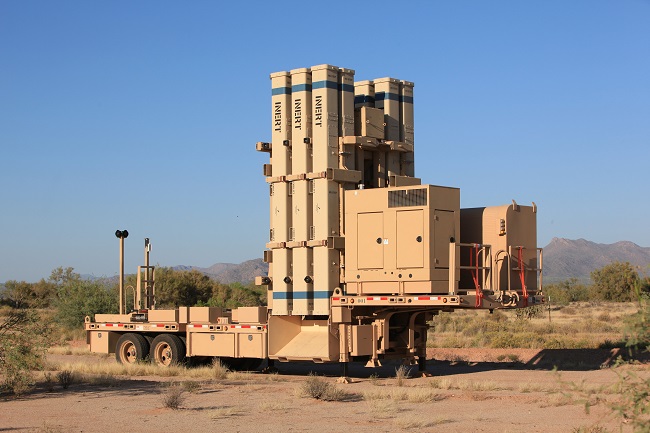
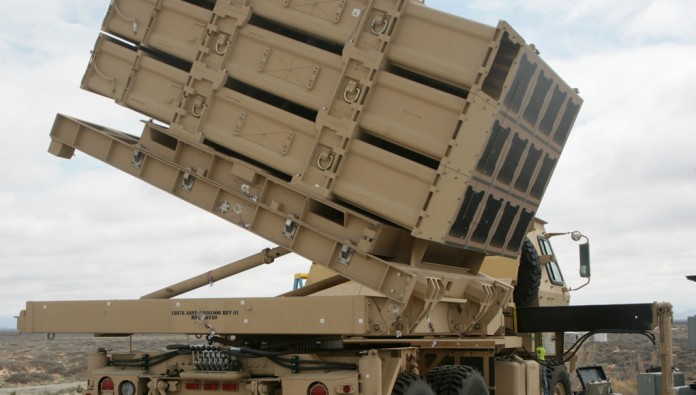
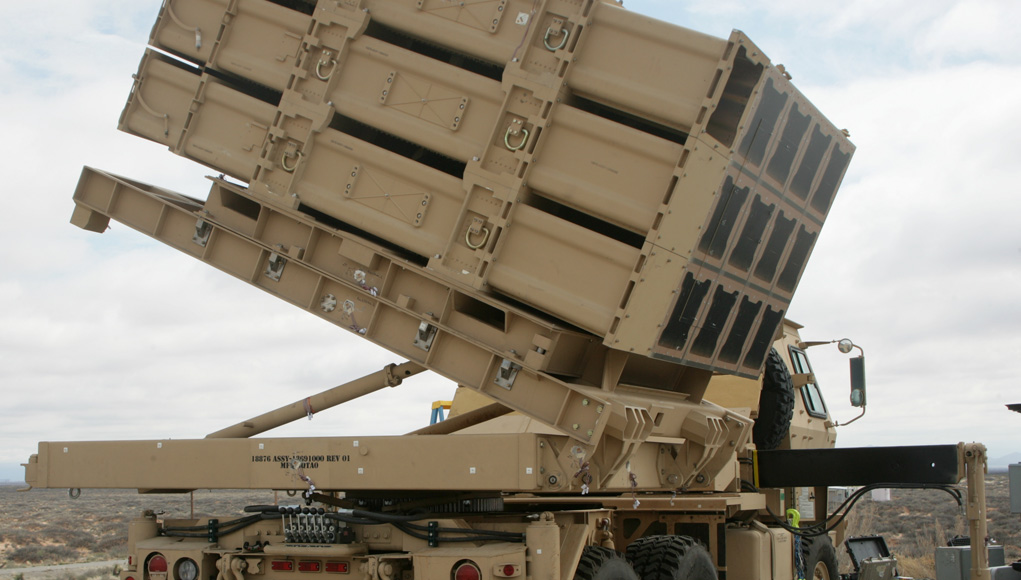
Raytheon is the developer of the mobile transporter-erector-launcher (TEL) system of David’s Sling. Carrying 12 ready-to-launch missiles in sealed canisters, the launcher is equipped with an integral power supply, as well as communications and command and control modules, enabling the system to deploy in either autonomous or distributed but centralized controlled configurations. The system is designed to enable rapid and efficient missile reloading of stacks of six missiles at a time. Photo: Raytheon
The U.S. Army successfully fired three missiles to verify tube integrity and missile stack integration of the Multi-Mission Launcher using a Launch Demonstration Unit. Photo: US Army
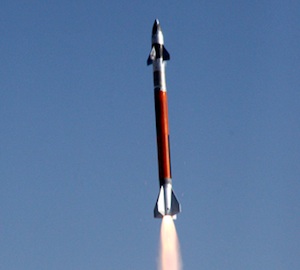
At less than 1 meter long, less than 50 millimeters in diameter and less than 3 kilograms mass at launch, the MHTK is extremely compact and very agile in flight. Photo: Lockheed martin
The US Army is seeking to field a new air defense system comprising two types of missiles, capable to protecting military forces against cruise missiles, unmanned aerial vehicles (UAV), Rockets, Artillery and Mortars. The development of the truck mounted system is part of the ‘Indirect Fire Protection Capability Increment 2 Intercept (IFPC Inc. 2-I) Program of Record, designed to improve force protection for rapid deployment forces on contingencies beyond 2020.
Last month the Army successfully tested the Multi-Mission Launcher (MML), launching three different missiles from the MML Demonstration Unit at the White Sands missile range in NM. The MML is designed to carry 16 missiles in sealed, ready-to-launch canisters. As a modular open system, MML will be able to use different interceptors to provide the necessary protection, depending on the threat level encountered by the troops.
The U.S. Army successfully fired three missiles to verify tube integrity and missile stack integration of the Multi-Mission Launcher using a Launch Demonstration Unit. Photo: US Army
Multi-Mission Launcher
The Army has already implemented the multi-mission launcher approach in the High Mobility Artillery Rocket System (HIMARS) and Avenger mobile air defense system. Once deployed, the new MML is expected complement the Avenger in the air defense units.
The recent test, conducted under IFPC Inc. 2-I, launched three different missiles – an AIM-9X Sidewinder air-to-air missile, another missile carrying a ‘Low Cost Active Seeker’ developed by the US Army, and the Miniature Hit-to-Kill vehicle carrying semi-active seeker, developed by Lockheed martin under the Extended Area Protection and Survivability (EAPS) program. The AIM-9X missile was employed against a UAV flying in a pattern, the other two missiles launched from the MML flew ballistic trajectories.
The test verified the MML tube integrity and the systems’ missile stack integration. The full capability of the system, demonstrating the concept’s network performance is scheduled for 2016, using two MMLs against UAVs and cruise missiles. The Army plans to field the system in 2019.
Developed under the Army Aviation and Missile Research, Development, and Engineering Command (ARMDEC), the MML program is underway to deliver the two prototypes for integration into the IFPC Inc 2-I system during the forthcoming technology maturation and risk reduction phase of the development. “The IFPC system will close critical capability gaps for the Navy and the Air Force. Seeing the launcher come together is very rewarding.” Lt. Col. Mark Talbot, IFPC Inc. 2 Project Manager commented.
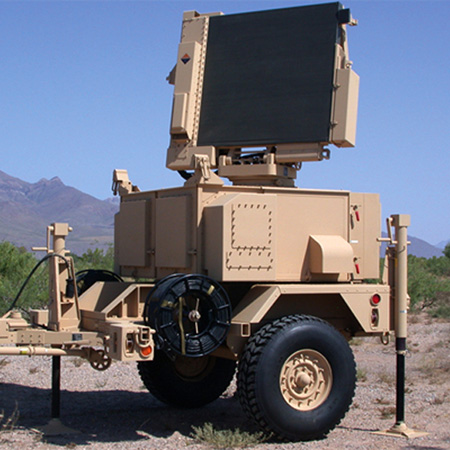
Sentinel is a mobile, tactical air defense and weapon coordination X-band radar that detects helicopters, high-speed attack aircraft, cruise missiles and UAVs. Photo: ThalesRaytheonSystems
Sensors, Command and Control
MML is built on open architecture and will have the capacity to launch a variety of interceptors to provide 360-degree protection against simultaneous threats from rockets, artillery, mortars, precision guided ordnance, cruise missiles and unmanned aircraft systems. IFPS will become part of the Army Integrated Air and Missile Defense (IMAD) Battle Command System (BCS) which also follows open-system architecture. IMAD will be able to allocate target data through the Engagement Operations Cell which links to Sentinel target acquisition radars, acting as the integral fire control sensor for IFPS.
The Improved Sentinel (AN/MPQ-64F1) is a 3D phased array tactical air defense radar developed by ThalesRaytheon Systems. It automatically detects, tracks, identifies, classifies and reports airborne threats. It detects helicopters, high-speed attack aircraft and cruise missiles over 360°. IFPC Inc. 2-I will fund the software upgrades to support the current Sentinel’s counter UAS and CM mission.
More than 200 systems have been ordered worldwide, with more than 100 delivered or in production. Future enhancements currently in development include an 80 percent increase in the radar’s detection range.
Raytheon’s AI3 uses a remanufactured Sidewinder body fitted with semi-active RF seeker. An improved version of this seeker was recently used to demonstrate an interception of a cruise-missile. Photo: Raytheon
Testing the Interceptors
For the C-RAM interceptor the Army evaluated two different approaches – a brand new Miniature ‘Hit To Kill’ (MHTK) interceptor, developed by Lockheed Martin and a weapon based on remanufactured Sidewinder missiles developed by Raytheon under the Accelerated Improved Interceptor Initiative (AI3). According to Lockheed Martin, The MHTK guided missile is about 675mm (27 inches) long, 40mm (1.6 inches) in diameter and weighs just 2.26kg (5 pounds). It is expected to cost below $16K. Raytheon did not publish cost estimates for its weapon. Both weapons were tested in 2012-2014 demonstrating their C-RAM capability against representative targets.
In the Summer of 2014 the AI-3 weapon conducted an intercept of a cruise missile, during the annual ‘Black Dart 2014 demonstration’. The missile used a new semi-active seeker and radar to acquire and intercept the target flying low over the sea in a high clutter marine environment.
Few months later the Army found that the latest AIM-9X with its passive imaging-infra-red seeker would best address the unmanned aerial systems (UAS) and cruise missile threats. This has lead to the use of the Sidewinder in the current test. “The AIM-9X is primarily an air-to-air missile, but it has potential latent capability, and we’re using it here in a surface-to-air capacity. Additionally, this is the first time we’ve ever tried to launch it out of a tube,” said Lt. Cmdr. Robert Betts, US Navy AIM-9X Block II Integrated Product Team lead at PMA-259 China Lake that supported the test. “The Army needed to prove that the tube is reusable and that it could withstand the missile fly-out; making sure the missile didn’t act as a blowtorch, cutting the tube in half on the way out.”
New Active RF Seeker
For the C-RAM application the Army is planning to use a new, fully active RF seeker developed by AMRDEC. “We have gone from a semi-active seeker configuration to an active seeker configuration to eliminate the need for a ground-based illuminator,” Loretta Painter, AMRDEC EAPS program manager said. Testing of interceptors equipped with the fully active RF seeker is expected next year (2016).
The active RF seeker self illuminates the target, thus enabling any ground-based or airborne sensor capable of tracking rockets, artillery, or mortar to queue the interceptor. Once launched, and based on this queuing, the missile flies autonomously to engage and defeat the threat.
While more expensive than the semi-active seeker, the fully active seeker provides greater precision needed for other potential target sets. “Being able to hit a vulnerable part of the target as opposed to just hitting the target is a big advantage,” Painter said. “The active seeker will allow us to have aim point selection, to be able to select the place on the target that we want to hit to maximize lethality.”
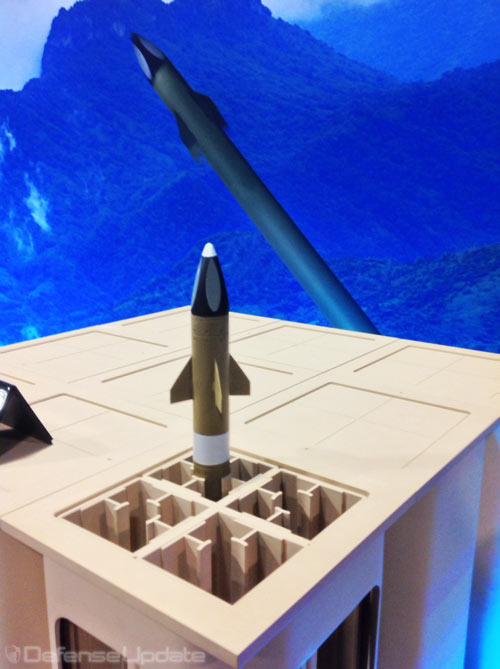
As a miniature weapon, MHTK can quadruple the loadout, enabling each MML to load 60 interceptors. Photo: Defense-Update
In January 2015 the Army awarded Lockheed Martin a $46.5 million contract to conduct an integrated demonstration of its miniature missile, as part of the Army EAPS, demonstrating its C-RAM capability and cruise missiles and unmanned aerial vehicles (UAVs) interception.
The main advantage of MHTK, besides its low cost, is the larger Load out it offers for each MML. With four MHTK missiles integrated into each tube, the system can hold 15 tubes – or 60 interceptors – a critical capability in combating saturation attacks, with multiple simultaneous engagements, characteristic of RAM threats. It also allows stacking few larger missiles with dozens of miniature interceptors.
Following the planned demonstration the Army expects to unfold EAPS into the IFPC Inc. 2-I program, meeting the systems’ Block-2 phase fielding credible C-RAM, in addition to Block I Counter Cruise Missile and UAV capability, to be fielded in two active duty and seven National Guard battalions beginning in 2019.
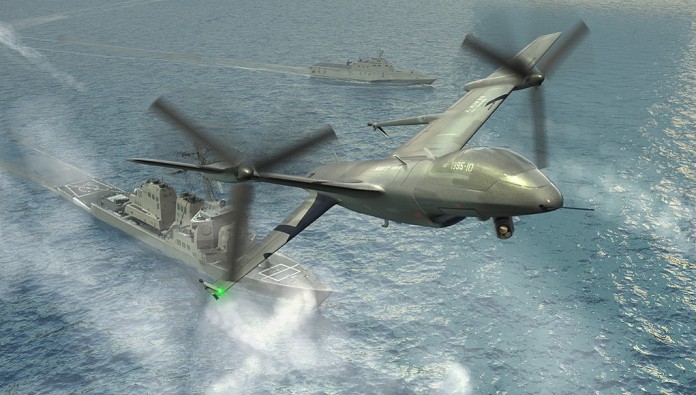
DARPA is expecting to complete risk reduction studies in September, and select one of two competing designs for medium-altitude, long-endurance unmanned aerial systems (MALE UAS), that will be capable to operate from small and medium naval vessels. As part of Phase 2 of the Tactically Exploited Reconnaissance Node (TERN) research and development program the agency is funding risk reduction studies performed by Northrop Grumman Corp. and Aerovironment Inc., based on preliminary designs proposed by the two companies in the earlier Phase I. The program is jointly managed between DARPA and the U.S. Navy’s Office of Naval Research (ONR).
“To offer the equivalent of land-based UAS capabilities from small-deck ships, our Phase 2 performers are each designing a new unmanned air system intended to enable two previously unavailable capabilities: one, the ability for a UAS to take off and land from very confined spaces in elevated sea states and two, the ability for such a UAS to transition to efficient long-duration cruise missions,” said Dan Patt, DARPA TERN program manager. “Tern’s goal is to develop breakthrough technologies that the Navy could realistically integrate into the future fleet and make it much easier, quicker and less expensive for the Defense Department to deploy persistent ISR and strike capabilities almost anywhere in the world.”
The Tern program envisions using smaller ships of the Littoral Combat Ship (LCS) or DDG-51 Arleigh Burke-class destroyers as mobile launch and recovery sites for medium-altitude, long-endurance unmanned aerial systems (UAS), to provide long-range ISR and other capabilities from the decks of forward-deployed small ships. By 2017 DARPA aims to conduct full-scale, at-sea demonstration of the selected TERN prototype UAS from a vessel with the same deck size as an Arleigh Burke-class destroyer.
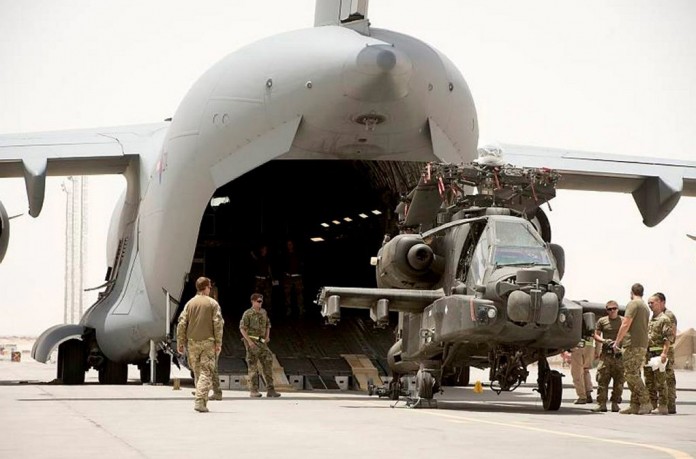
An AH64 Apache helicopter in Afghanistan is dwarfed by the huge airframe of a RAF C17 as Joint Movement Unit (JMU) and Army Air Corps (AAC) personnel prepare to load it onto the transport for its return to the UK in July 2014. Photo: MOD, Crown Copyright by Cpl Daniel Wiepen .
The UK has mothballed a quarter of its AgustaWestland Boeing WAH-64 Apache Longbow AH.1 attack helicopters following the end of combat operations in Afghanistan. According to IHS Jane’s, 16 of the Army’s 66 Apaches were placed into storage, leaving a force of 50 helicopters.
The Army currently operates four squadrons at Wattisham Airfield in Suffolk, home for the 3rd and 4th Air regiments and 653 Operational Conversion Unit (OCU). The Army has not announced yet, whether the reduction will draw the stand down of some operational units or implemented proportionally across the fleet. In its Strategic Defense & Security Review of 2010 and 2012 planning round the Ministry of Defense identified the need to reduce the number of Apache helicopters after completing the drawdown in Afghanistan, an action that has been implemented since January 2015.
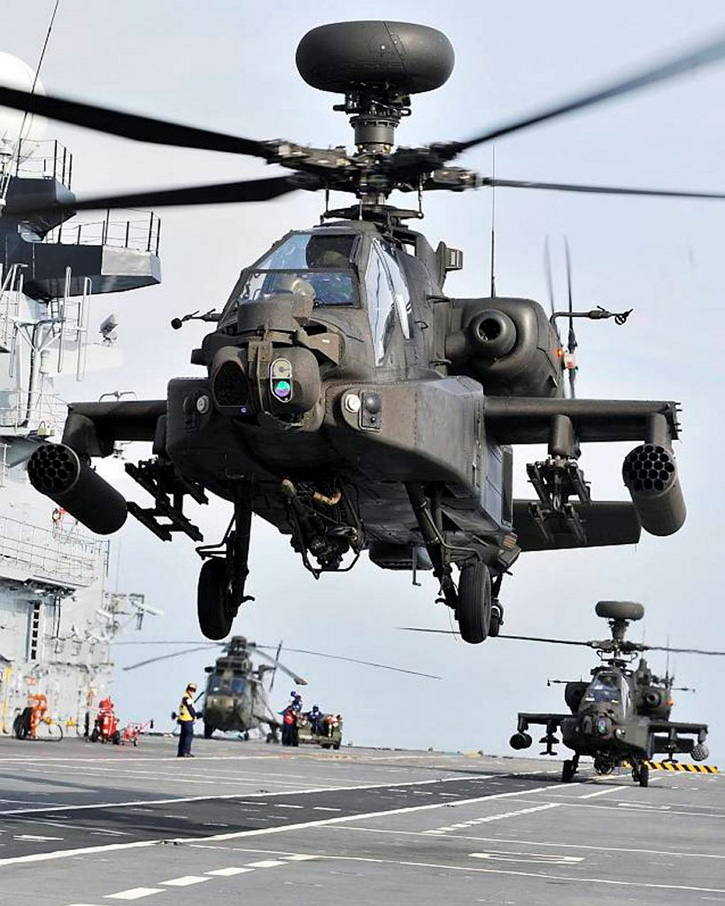
Portrait of an Apache pilot, standing in front of his Apache attack helicopter, prior to a mission in Helmand, Afghanistan in 2013. Training operations have been curtailed by the high costs, and the Army is looking for alternative solutions, including the use of cheaper surrogate helicopters and mission simulation by synthetic means to lower training cost without hampering operational readiness. Photo: MOD, Crown Copyright by Cpl. Si Longworth.Two Apache helicopters from 664 Squadron, Army Air Corps, perform landing practice onboard HMS Illustrious. Photo: MOD, Crown Copyright, by Dean Nixon
After their intensive operations in Afghanistan, Army WAH-64 Apache helicopters are often operated by the Army are often supporting naval operations attached to the Royal Navy helicopter carrier and assault ship HMS Ocean. Training operations have been curtailed by the high costs, and the Army is looking for alternative solutions, including the use of cheaper surrogate helicopters and mission simulation by synthetic means to lower training cost without hampering operational readiness.
While parts of the 16 helicopters are being used for the maintenance and support of the remaining 50 helicopters, the Army plans for further upgrades or ‘remanufacturing’ of those helicopters into the new AH-64E ‘Guardian’ model (formerly known as AH-64D Block III). The Army plans to maintain the Apache through the 2040s. The MOD plans to take a decision within a year.
The Apache attack helicopter is equipped to operate in all weather conditions, day or night. With the sensors it carries, Apache can and detect, classify and prioritise up to 256 potential targets in a matter of seconds. The most distinctive sensor is the Longbow radar, located above the rotor blades. The aircraft is also equipped with a day TV system, thermal imaging sight and direct view optics. It carries a mix of weapons including Hellfire missiles, guided and rockets, and a 30mm chain gun. The Apache is partly armored and is equipped with fully integrated defensive aid suite protecting it from small arms fire, missiles and Man Portable Air-Defense Missiles (MANPADS).
The latest ‘Guardian’ variant is fitted with modern avionics and communications systems, enabling full integration with associated unmanned systems. The enhanced Longbow radar used in this model is better fitted for maritime operation. Composite main rotor blades, new transmission and improved General Electric T700-GE-701D engines have produced a more powerful Apache improving overall performance and payload carrying capability. Unlike an upgrading, remanufacturing refers to a more comprehensive build of the aircraft. It is estimated that about 12 percent of AH-64E components are remanufactured in the process. The British conversion could be streamlined with the US Army plan to remanufacture 634 AH-64Ds into AH-64E standard by 2020.
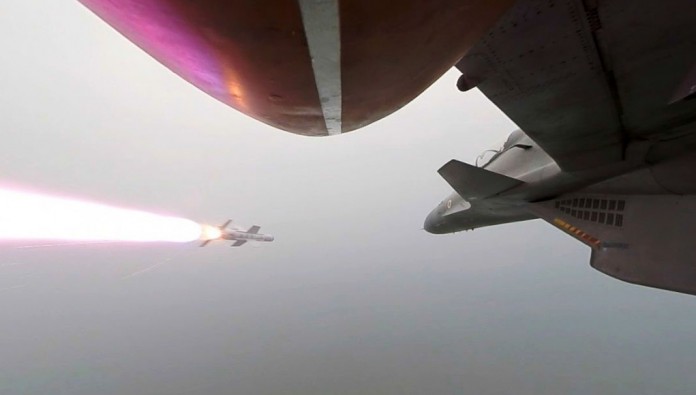
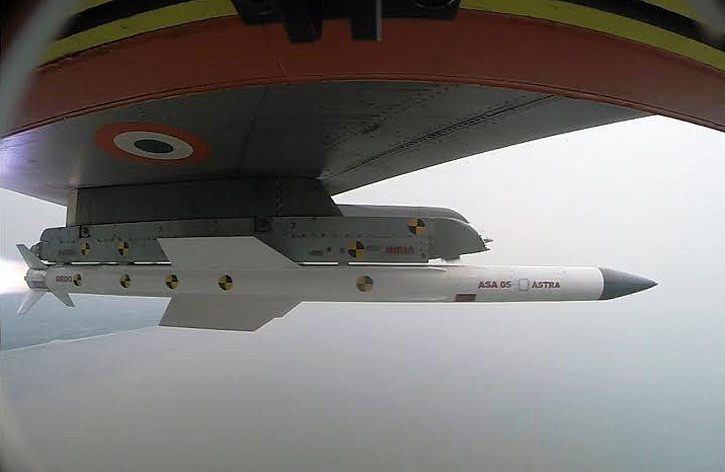
India’s Beyond Visual Range (BVR) air-to-air missile ASTRA completed a successful test flight on thursday. Developed by the Indian Defense Research and Development Organization (DRDO), the unarmed missile was launched from a Sukhoi Su-30MKI against a Lakshya target over the Integrated Test Range in Balasore, off the coast of Odisha. Telemetry and Electro-optical tracking stations confirmed the successful engagement. Operational ASTRA missiles will carry a 15kg high-explosive fragmentation warhead.
It was the fifth air launch of the Indian BVR missile. The first live launch was carried out on May 4, 2014. A previous test earlier this week has failed, as the missile failed to launch. More tests are scheduled to follow, as part of the weapon’s validation and integration program, with SU-30MKI and LCA, activities currently undertaken by Hindustan Aircraft Ltd. The recent test confirmed the missile’s high turn rate (30g). Astra is designed to intercept targets beyond visual range, head on at a range of 80km, or 20 km-range in tail-chase mode.
Prior to the live launch, rigorous Captive Flight Tests (CFTs) were carried out by IAF with the support from HAL during the 2012-2014 period. The CFT trials were carried out in three phases to assess the aero-structural and mechanical integrity for carriage, validation of Weapon Control System and its electrical and avionic interfaces with missile and performance of missile system in transmission and reception mode of missile seeker respectively.
The US Department of Defense (DoD) has released today details on major defense acquisition program cost, schedule, and performance changes since the December 2013 reporting period. In aggregate, the current SAR reflects a cost decrease of more than $9 billion (-0.6 percent) for the 79 Selected Acquisition Reports (SARs) totaling $1.6 trillion, submitted to the Congress for the December 2014 reporting period.
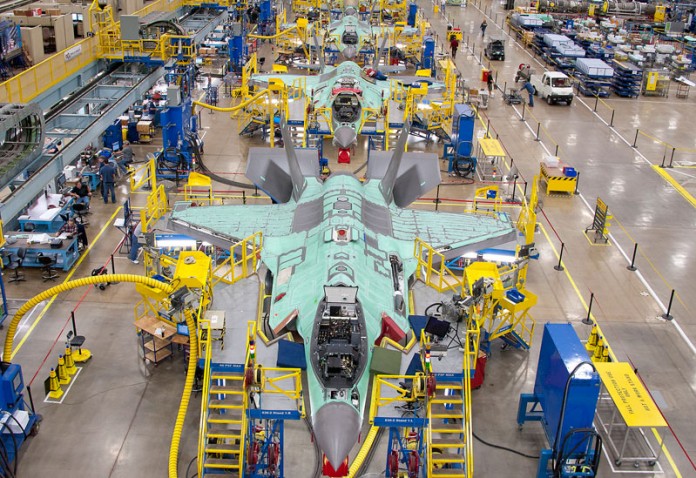
The biggest saving reported in 2014 was in the F-35 Joint Strike Fighter (JSF) and F-135 engine program, that decreased $7.4 billion in the cost of Research, Development, Test & Evaluation (RDT&E), procurement and infrastructure spending over the 32 production years (from $398.5 bn to $391.1 bn). According to Lockheed Martin, the actual contract negotiated cost of aircraft and engine with fee (LRIP 8) continues to come down, and remains well below the SAR lot yearly URF estimates. The current average F-35A price is $108 million (with engine) and is $4 million lower than lot 7 prices.
The cost of Operations and Sustainment (O&S) for the 65 year lifetime of the F-35 program is expected to be three times the procurement cost, and is estimated by the Director, Cost Assessment and Program Evaluation at $1016.5 bn. CAPE, which also authors the SAR, does not update program O&S cost numbers until a major program milestone is reached. However, the F-35 Joint Program Office (JPO) estimates the revised overall O&S cost at $859 bn.
A $9.1 billion saving was achieved by revising accounting estimates, incorporating the latest labor rates for all variants of the F-35, as agreed with prime contractor Lockheed Martin and its subcontractors, along with revised escalation indices. Further savings were achieved in the cost of initial spares requirements, due to maturation of the technical baseline and definition of customer requirements and bed down/fielding plans. These decreases were partially offset by increases for revised airframe estimates based on actual costs from early low rate initial production lots (+$4.6 billion).
SARs summarize the latest estimates of cost, schedule, and performance status. The recent release include 79 program SARs. The total program cost estimates provided in the SARs include research and development, procurement, military construction, and acquisition-related operations and maintenance. Total program costs reflect actual costs to date as well as future anticipated costs. All estimates are shown in fully inflated then-year dollars.
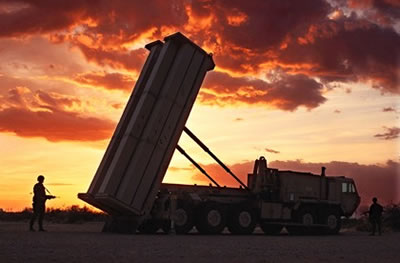
The Missile defense Agency is strengthening the 1st and 2nd THAAD batteries to the full six-launcher configuration. Photo: Lockheed Martin
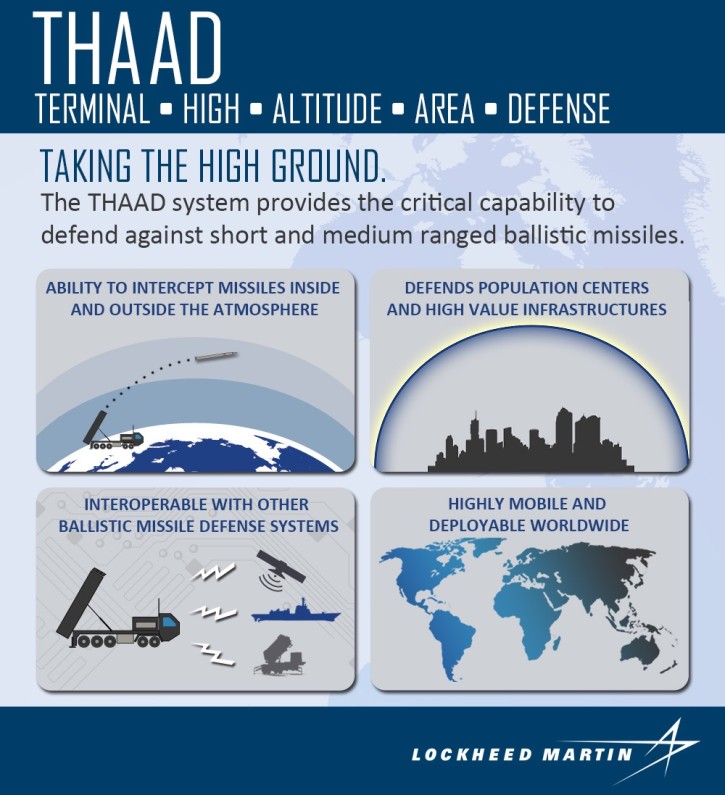
The US Army has allocated its Continental-US (CONUS) Based THAAD to deploy to South Korea on emergency situations, a South Korean military source confirmed Sunday. Subscribe to read the full version
THAAD systems are able to deploy from their base at Ft. Bliss, Texas, US within hours, using C-17 Globemaster III military transport planes.
The first to deploy overseas was Alpha battery, that demonstrated its rapid deployment capability in 2013, as it deployed to Guan in response to a possible North Korean BM-25 Musudan Intermediate Range Ballistic Missiles capability to target the island.
South Korea, where 28,500 US troops are stationed is much closer to North Korea and the THAAD systems are more likely to be needed there. However, South Korea is objecting to permanent deployment of these missiles on its soil, fearing escalation with China. The Korean ambiguity on this matter, and the temporary deployment of the THAAD will not enable full integration with Seoul’s own missile defense system, KAMD.
South Korea also opposes the permanent deployment of US AN/TPY-2, an early missile warning radar system that detects missiles up to 2,000 kilometers away, which would include China’s military facilities. “Our military has our own missile warning system, the Green Pine, which has a range of 600 km, so we don’t need AN/TPY-2,” a source within the South Korean government said.
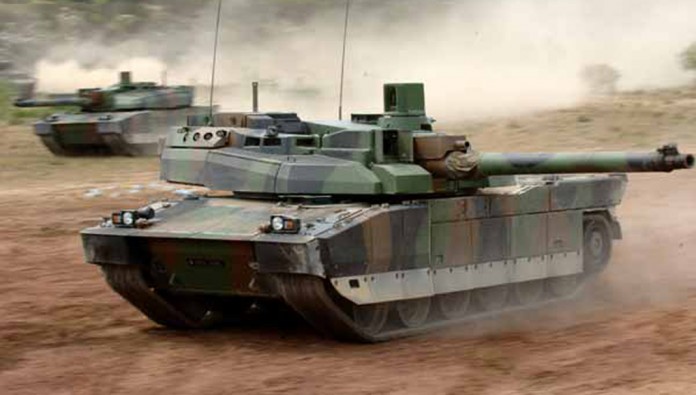
The French Defence Procurement Agency (DGA) notified Nexter Systems of the Leclerc tank
renovation contract. This order constitutes the third operation launched by the French
Ministry of Defence under the SCORPION programme intended to modernise the French
Army’s contact forces.
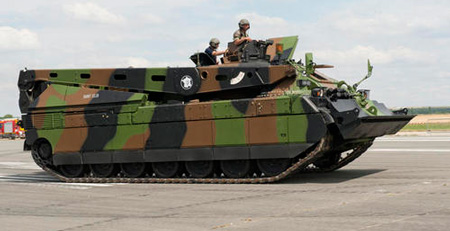
The €330 million upgrade contract will include modernization of 18 DCL armored recovery vehicles in addition to 200 Leclerc tanks. Photo: French Army
Valued at approximately €330 million, the contract provides for the delivery of 200 “Renovated Leclerc” tanks, representing half of the current inventory, and 18 “Renovated DCL” recovery vehicles. Deliveries of the upgraded Leclerc are expected to begin in 2020.
The planned renovation work will enable the Leclerc to make the best use of its fire power and mobility within future “SCORPION” joint tactical groups (GTIA). Thanks to the development of specific interfaces for the new CONTACT tactical radio system and the
SCORPION information and command system (), it will be able to effectively network
with all components of future “SCORPION” GTIAs. Moreover, the upgrade of its protection
through the development of specific armour kits will enable the Leclerc tank to deal more
effectively with new threats, such as improvised explosive devices.
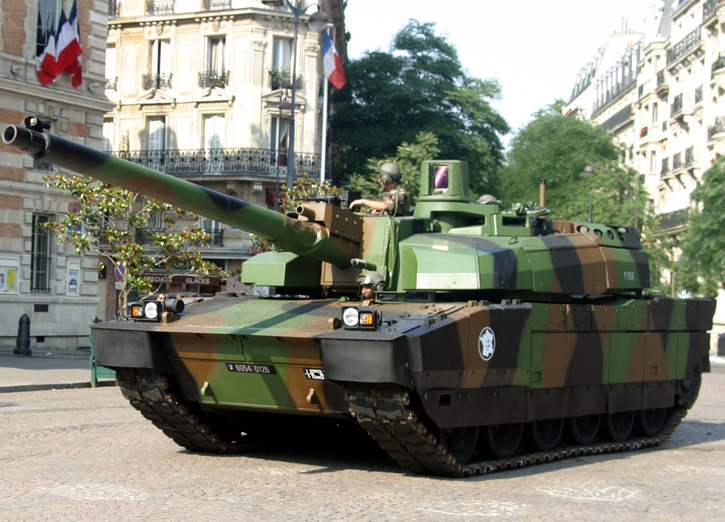
A 3rd generation tank with a high degree of automation and diagnostic assistance, the Leclerc
tank currently gives the French land forces “first entry” capability as part of an international
coalition. The renovation operation launched aims to maintain this capacity beyond 2040.
Leclerc tank from the 2nd Armored brigade participating in the military parade on Republic Day in Paris.
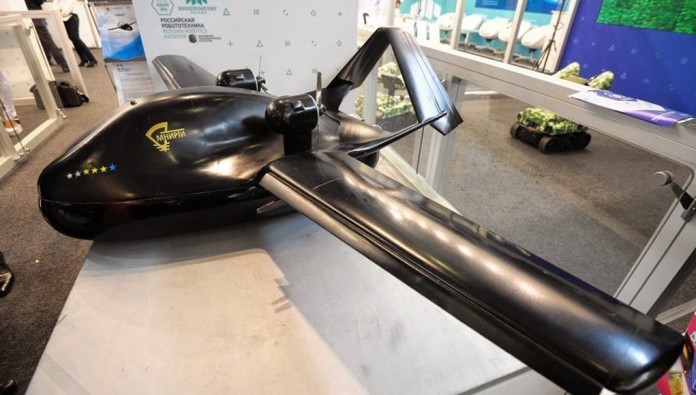
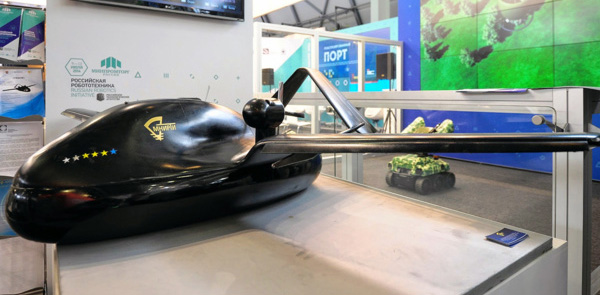
An elevated view of Chirok, showing the two engines and V tail. Photo: Rostec
United Instrument Corporation (UIC), a branch of the Russian state-owned Rostec corporation is designing an amphibian unmanned aerial vehicle (UAV) that uses an air cushion developed by the Moscow Radio Engineering Research Institute, enabling the drone to operate from rough surfaces. The drone called ‘Chirok’ (Teal) will be able to operate from uneven surfaces, scattered with stones and obstacles (20cm high), as well as soft sand, grass, snow-covered or wetland terrain, as well as water surfaces.
A lower view of Chiroc, showing the unique air cushion system developed by the Moscow Radio Engineering Research Institute. Photo: Rostec
The Chirok will carry payloads up to 300 kg, including guided weapons, intelligence, surveillance and reconnaissance (ISR) payloads or other useful cargo. The drone will have a wingspan of 10 meters, with podded engines mounted overwing. The air cushion skirt is applied at the bottom of the vehicle, generating the lift for takeoff and soft touchdown on landing. The Chirok weighs 750 kg. Flying at a ceiling of up to 18,000 ft Chirok will have a range of 2,500 km. According to its designers the drone can be built with thermal and radar absorbing skin and internal weapons carriage, to reduce its signature.
The company plans to embark on a construction of a prototype following the flight testing of Chirok slated for this summer. Chirok will be displayed at the MAKS, Russian Aviasalon in August. A larger version weighing two tons is currently at the concept phase.
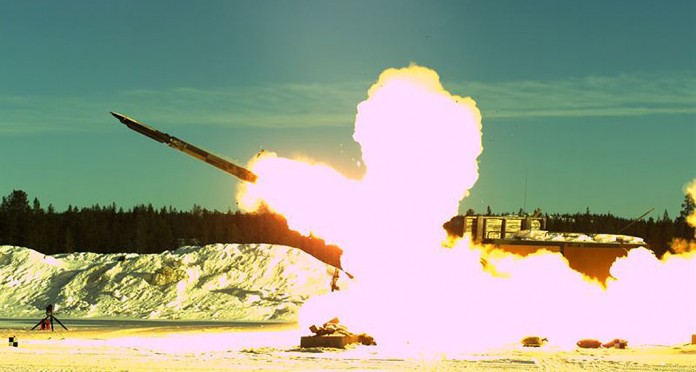
Ground Launched Small Diameter Bomb (GLSDB), strapped to an M26 rocket, was recently tested in Sweden, under a joint Boeing-SAAB initiative to provide M26 MLRS with extended range, precision strike capability. Photo: SAAB
Boeing and the Saab Group have conducted a feasibility test launching a Small Diameter Bomb (SDB I) GPS guided aerial bomb coupled to an M-26 roocket launched from an MLRS rocket launcher. The Ground Launched Small Diameter Bomb (GL-SDB) allows the artillery system to reach targets from significantly longer distances, and engage hard-to-reach targets, while maintaining the Small Diameter Bomb’s flight maneuverability and accuracy. Last month’s test in Sweden showed that the bomb can withstand a rocket artillery launch without its performance being compromised. The rocket motor in the test was provided by Nammo.
Ground Launched Small Diameter Bomb (GLSDB), strapped to an M26 rocket, was recently tested in Sweden, under a joint Boeing-SAAB initiative to provide M26 MLRS with extended range, precision strike capability. Photo: SAAB
“GLSDB combines two highly successful, combat-proven systems, the SDB and M26 rocket, into an effective ground forces offensive capability,” said Beth Kluba, vice president, Boeing Weapons and Missile Systems. “Boeing and Saab bring together deep knowledge of precision weapon systems and can quickly and cost-effectively deliver GLSDB domestically and around the world.”
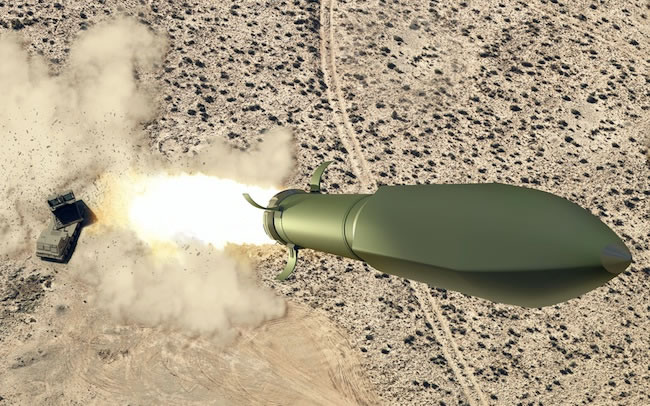
Saab and Boeing signed a teaming agreement for the marketing of GL-SDB to current and future rocket artillery users. The goal is to enable customers to reuse the M26 rockets, currently loaded with cluster munitions that will be phased out by 2018, enforced by the international treaty banning the use of cluster munitions. The cluster munition packed warhead will be removed, reusing the rocket itself as a booster for the SDB, enabling the weapon to reach targets at ranges of 70-150 km with pinpoint strike.
“Saab and Boeing have a history of successful cooperation that now extends into yet another technology area – precision weapons systems,” said Görgen Johansson, President of the Dynamics Business Area within Saab AB. “Together, we now offer a new and game-changing capability for the U.S. as well as the global market.”
The conceptual Ground Launched Small Diameter Bomb (GL-SDB) will utilize the MLRS rocket to boost the SDB to a trajectory from where it will be able to continue gliding to its target like it was dropped from a manned aircraft. Photo: Boeing
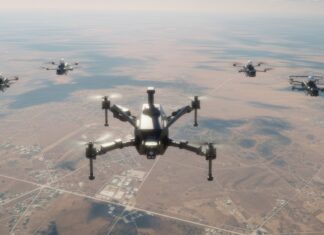
Lockheed Martin Skunk Works® and XTEND have achieved a major milestone in JADC2 by integrating the XOS operating system with the MDCX™ autonomy platform. This technical breakthrough enables a single operator to simultaneously command multiple drone classes, eliminating the friction of mission handoffs. From "marsupial" drone deployments to operating in GPS-denied environments, explore how this collaboration is abbreviating the data-to-decision timeline and redefining autonomous mission execution.
As traditional defense primes face mounting competition from agile “neoprimes” such as Anduril, Palantir and Helsing, the balance of innovation is shifting toward software-defined warfare and scalable, dual-use technologies, while global industry consolidation—marked by Boeing’s integration of Spirit AeroSystems and other strategic mergers—signals an intensified race to secure control over the defense technology value chain. Our Defense-Tech weekly report highlights these trends.
In early October 2025, a coordinated wave of unmanned aerial system (UAS) incursions—widely attributed to Russia—targeted critical infrastructure across at least ten European nations. The unprecedented campaign exposed the fragility of Europe’s air defenses...
Executive Summary
The past week (September 18-25, 2025) represents an inflection point where strategic defense concepts have transitioned from doctrine to tangible reality. An analysis of global events reveals four primary, interconnected trends shaping an...
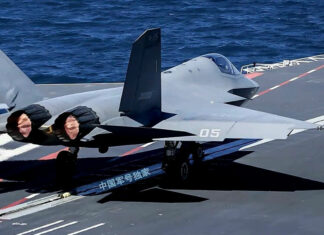
At the 2025 Air, Space & Cyber Conference, U.S. Air Force and Space Force leaders unveiled major updates on next-generation fighters, bombers, unmanned systems, and space initiatives, highlighting both rapid innovation and critical readiness challenges as the services race to outpace global competitors. A short version is available here, with a more detailed version for subscribers.
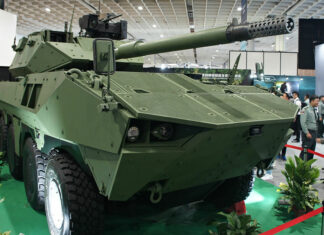
The Taipei Aerospace & Defense Technology Exhibition (TADTE) 2025 crystallized around four dominant strategic themes that collectively illustrate Taiwan's comprehensive approach to defense modernization amid escalating regional tensions. Based on a detailed report by Pleronix (available upon request). Includes a Podcast discussion on TADTE 2025's highlighting Taiwan's four strategic themes beyond the post's coverage.
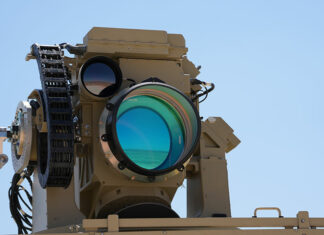
Israel’s Iron Beam 450 high-power laser system has completed final testing, marking a major leap in air defense. Developed by Rafael, it offers precise, cost-effective interception of rockets, UAVs, and mortars, and is set for IDF deployment by 2025.






 South Korea also opposes the permanent deployment of US AN/TPY-2, an early missile warning radar system that detects missiles up to 2,000 kilometers away, which would include China’s military facilities. “Our military has our own missile warning system, the Green Pine, which has a range of 600 km, so we don’t need AN/TPY-2,” a source within the South Korean government said.