


Tuesday, December 23, 2025
More
    Home Blog Page 90

    Smart solutions addressing operational challenges

    Bezhalel 'Butzi' Machlis, President & CEO, Elbit Systems
    Bezhalel ‘Butzi’ Machlis, President & CEO, Elbit Systems

    Israel’s leading defense company, Elbit Systems’ is witnessing the rebound in demand for advanced systems from defense and homeland security throughout Asia, particularly in India, a trend that would benefit the company in the long term.

    In the short term, the company has to overcome quite a few obstacles, among them, is penetrating the Indian unmanned systems market. While the company’s Hermes 900 has won eight sales worldwide since its introduction in 2009, it hasn’t been successful selling UAVs to India.

    cooperation is part of Elbit Systems’ DNA

    “India has an increasing demand for unmanned systems.” Bezhalel ‘Butzi’ Machlis, President and CEO of Elbit Systems told Defense-Update. “We expect this market to open for more competition and are positioning here the Hermes 900 and Hermes 450, as well as mini and small UAS of the Skylark family. The versatility of those systems is highly suitable for a wide range of applications, carrying EO, SAR, maritime surveillance, electronic intelligence payloads and more.” Machlis noted, “Our unique position is in providing a full solution, integrating the platform, sensors and ground-based functions into a robust, highly integrated solution.”
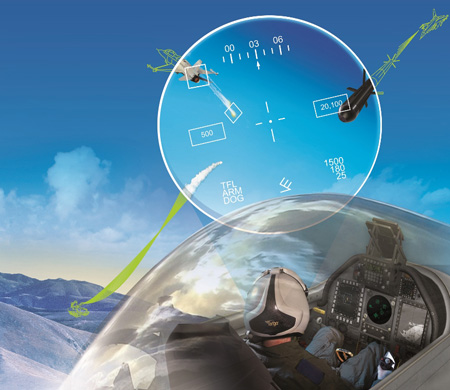
    Enhanced virtual training can be performed on a real training mission or in a simulator, using Elbit Systems' EVA Enhanced Virtual Avionics (EVA) and TARCO helmet moutred display sight. Photo: Elbit Systems
    Enhanced training can be performed on a real training mission or in a simulator, using Elbit Systems’ EVA Embedded Virtual Avionics (EVA) and TARGO helmet mounted display sight. Photo: Elbit Systems

    Another growth area for Elbit in India is training and simulation. “We identified pilot and aircrew training as one of the growth areas for the company.” Through the years Elbit Systems developed a wide range of training systems, including range-less air-combat instrumentation (ACMI), virtual avionics, and flight and mission simulators for aircrews of manned aircraft and helicopters, as well as operators of unmanned systems” Said Machlis. The company also established and is maintaining comprehensive training centers for the Israel Air Force, and is currently offering similar facilities in India, under HALBIT – a joint venture company established with HAL.

    “We expect the Indian UAV market to open for more competition”

    At Aero India Elbit Systems is highlighting the SkyBreaker, a networked multi-cockpit, Mission Training Center (MTC) that supports different aircraft types, by presenting aircrews with high-fidelity, simulator-based training. providing realistic, simulated battlefield training using all aircraft systems and mission scenarios to enhance all levels of pilot training. Other solutions offered by Elbit Systems include Embedded Virtual Avionics, providing on-board system functionality simulation on trainer aircraft and EHUD ACMI system, as part of its offering for the Indian air force, navy and army aviation.
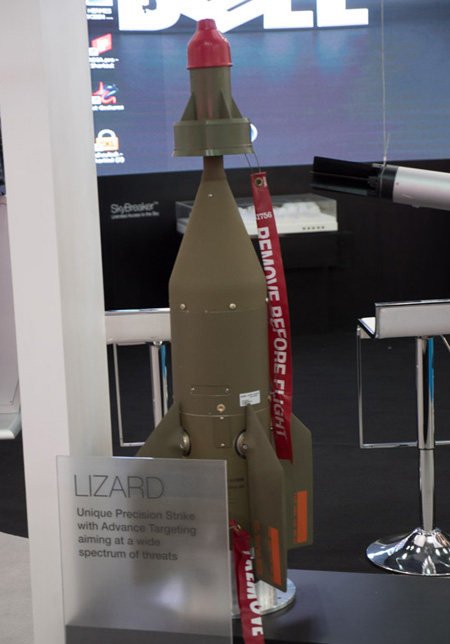
     

    Elbit is offering a range of  guided weapons, from the SPAR kit for 80mm laser guided rockets to the Lizard laser/GPS guidance kit for aerial bombs. Photo: Noam Eshel, Defense-Update
    Elbit is offering a range of guided weapons, from the STAR kit for 80mm laser guided rockets to the Lizard laser/GPS guidance kit for aerial bombs. Photo: Noam Eshel, Defense-Update

    Responding to the customers’ call of ‘doing more with less’, Elbit Systems is growing its activity in the outsourcing of non-critical services. As defense forces are ‘privatising’ logistical, training and support activities to industry partners providing such services in a more affordable, Elbit Systems has developed efficient ways to introduce its services this area. “We have recently won major contracts with the Israel Defense Forces (IDF), for the maintenance of F-16 avionics, and electro-optic systems; we provide full service support for the Israel Air Force flight training fleet, supporting the fleet of training helicopters, T-6B, M346 and Grob 120, aircraft which we actually own, offering flying hours on those trainers to the IAF.” Machlis noted. Under a similar program Elbit Systems also manages and operates the Israeli firefighting squadron, providing a lifesaving emergency response service covering the entire country.

    The company is also won an IAF contract to establish and operate a ‘SkyBreaker’ based simulation center providing realistic training for IAF fighter pilots. “Few companies in the world are capable of integrating such expertise and offer it under one roof to the customer” Machlis claims.

    Addressing the growing challenges of insurgency and terrorism, Elbit Systems is expanding its offering of homeland security, counter terror and law enforcement applications. These systems range from the MUSIC Directional Infra-Red CounterMeasures (DIRCM), addressing the growing threat of Man Portable Anti-Aircraft Missiles (MANPADS). MUSIC has been supplied to customers worldwide, including installations on VIP helicopters (AW101) and military platforms such as the Italian Air Force C-130J, C-27J, and AW101 CSAR helicopters and German A400 and Brazilian C390.
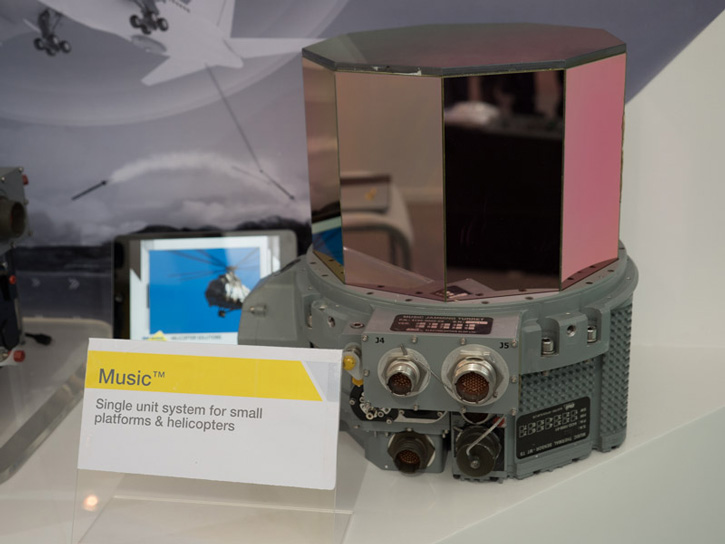
    MUSIC - directional IR countermeasure system has been integrated in a number of fixed wing and rotary wing aircraft. Photo: Noam Eshel, Defense-Update
    MUSIC – directional IR countermeasure system has been integrated in a number of fixed wing and rotary wing aircraft. Photo: Noam Eshel, Defense-Update

    Further enhancing aircraft self-protection from advanced threats, the company also offers the compact, highly integrated ECM systems as well as the ‘IR-CENTRIC’ defensive EO/IR suite protecting system for combat aircraft and helicopters from enemy fire and missile attack. “Our Wise Intelligence Technology (WIT) is another solution, providing all source intelligence system, it has been expanded to provide solutions for military and counter terror, homeland security and law enforcement applications.” Machlis added.

    Elbit Systems continues to lead in providing solutions to operational challenges, in defense, homeland security and cyber domains. In the past year Elbit Systems had quite a few achievements in this area. Among the most recent achievements were major orders for observation towers guarding the US border with Mexico and an order for a comprehensive HLS system from a country in Latin America.

    “The Indian customers are very demanding, but they know what they want and appreciate technology” Machlis concluded. “We have partnerships with a number of companies, including Hindustan Aircraft, Bharat Electronics and Bharat Forge. The Indian market is growing and opening for cooperation – cooperation is part of Elbit Systems’ DNA. We understand this market and appreciate the changes. We expect the new policies to help expand those partnerships”.
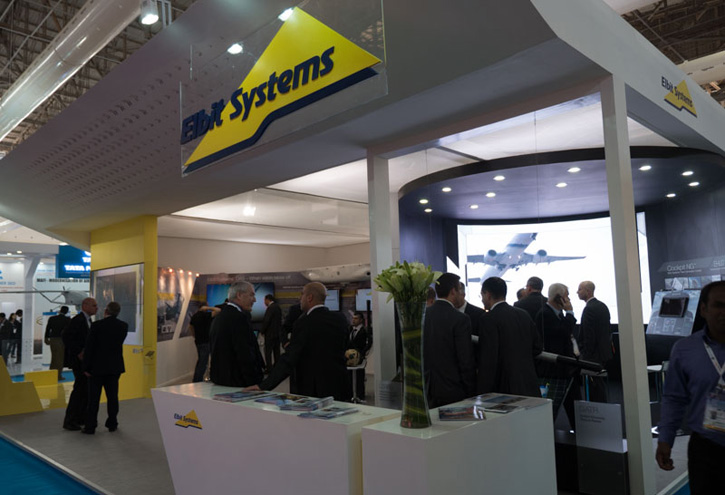
    elbitP1450085725
    Elbit Systems’ booth at Aero India 2015.


    Aero-India 2015 Photo Report – Unmanned Systems

    birdeyesP1450407725
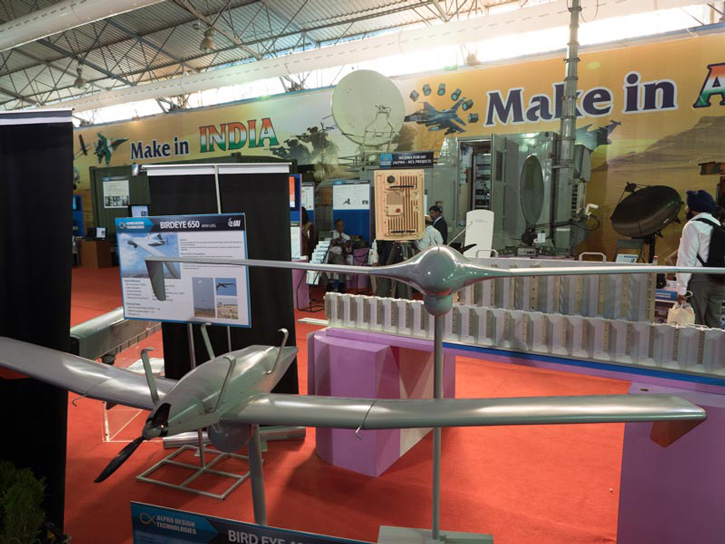
    IAI and Alpha Design & Technology are establishing an Indian production line for IAI’s BirdEye mini UAVs. Seen in this photo are the Birdeye 400 mini UAV and Birdeye 650 small UAV, both are electrically powered and designed for operation by tactical units. Photo: Noam Eshel, Defense-Update
    furyP1450458725
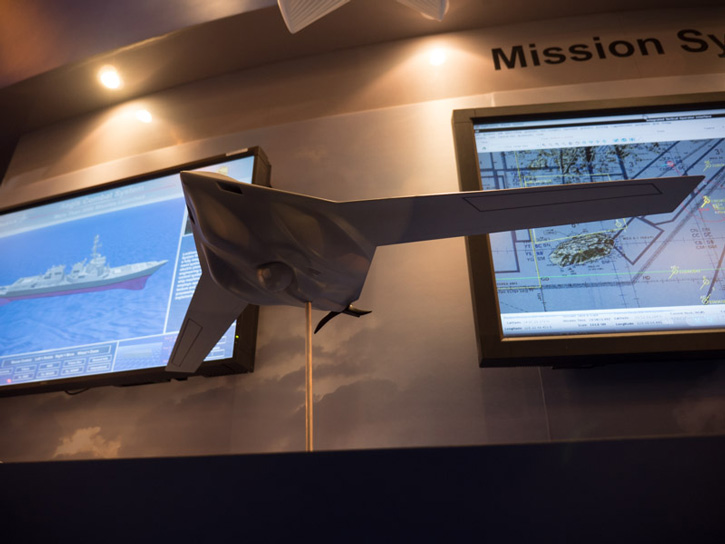
    Lockheed Martin displayed the Fury unmanned system, designed for long endurance, extended range missions. One of the Fury’s unique attributes is its powerful on-board electrical generation capability, supporting payloads with high power consumption. Photo: Noam Eshel, Defense-Update
    tatauavP1450091725
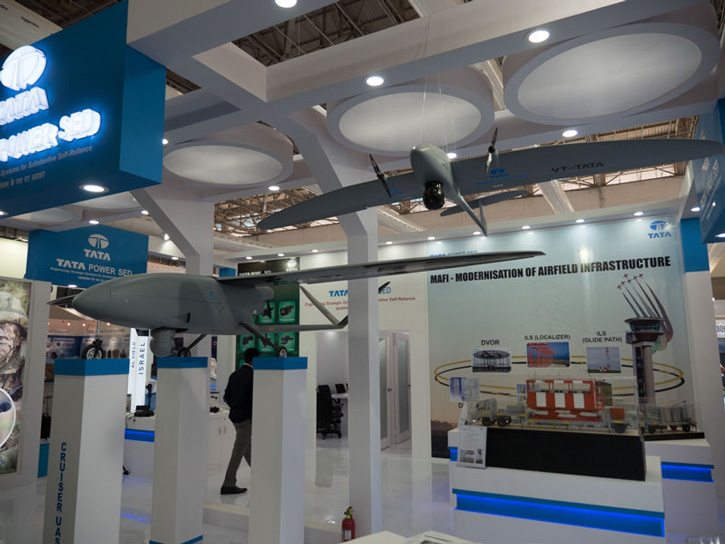
    Two tactical UAVs developed by TATA POWER. Photo: Noam Eshel, Defense-Update
    oisquadP1450331725
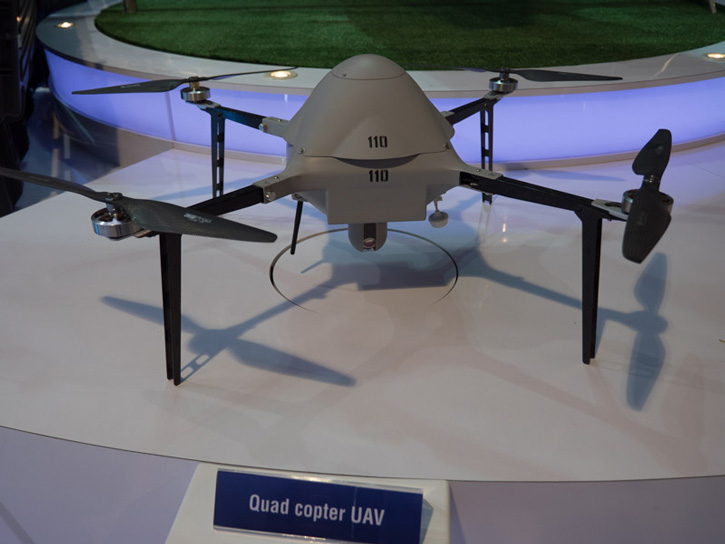
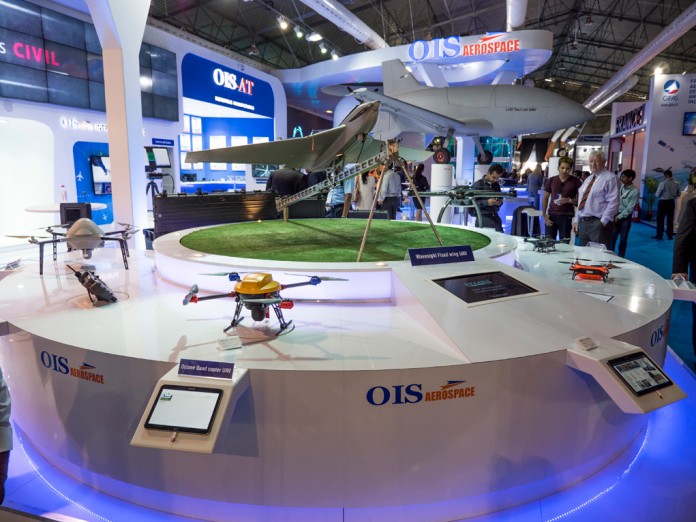
    One of a series of Quadcopter UAVs unveiled at Aero India by OIS. Photo: Noam Eshel, Defense-Update
    oisminiw101P1450332725
    W101 lightweight UAS displayed by OIS at Aero India. The compact drone uses a highly efficient aerodynamic design with wingtip winglets and a distinctive V-tail. The drone is propelled by an electrical motor placed above the fuselage, its payload would be placed in the nose, leaving a large space for additional payload attachment in the belly. Photo: Noam Eshel, Defense-Update.
    halmuavP1450466725
    HAL is also expand its mini UAV line, presenting this Mini-UAV design. Photo: Noam Eshel, Defense-Update
    superheronm19hdP1450364725
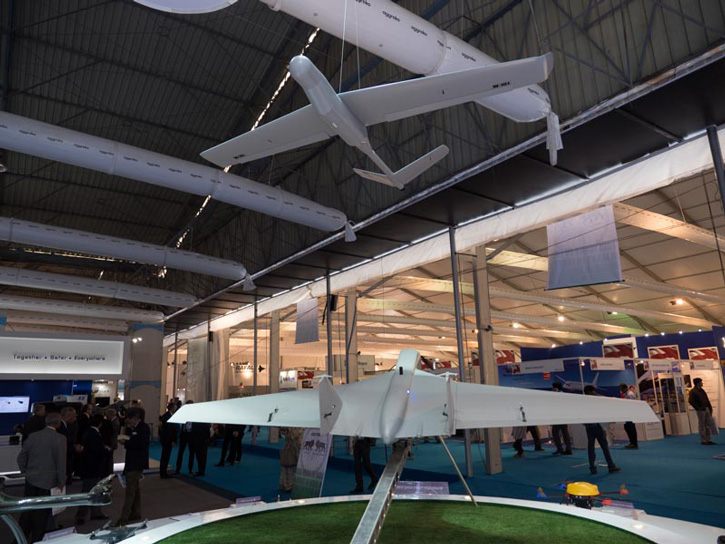
    A full scale model of IAI’s Super Heron is displayed at Aero-India 2015, along with comprehensive payloads, including a maritime search radar and the brand new M19HD stand-off reconnaissance pod. Photo: Noam Eshel, Defense-Update
    rostum2P1450465725
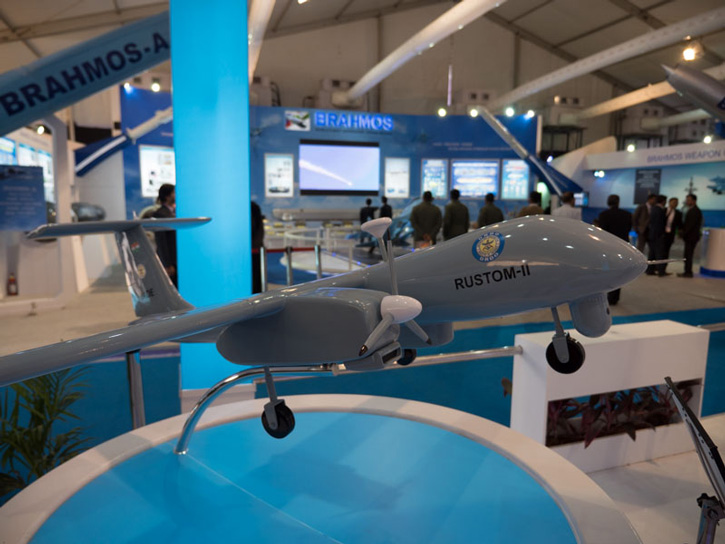
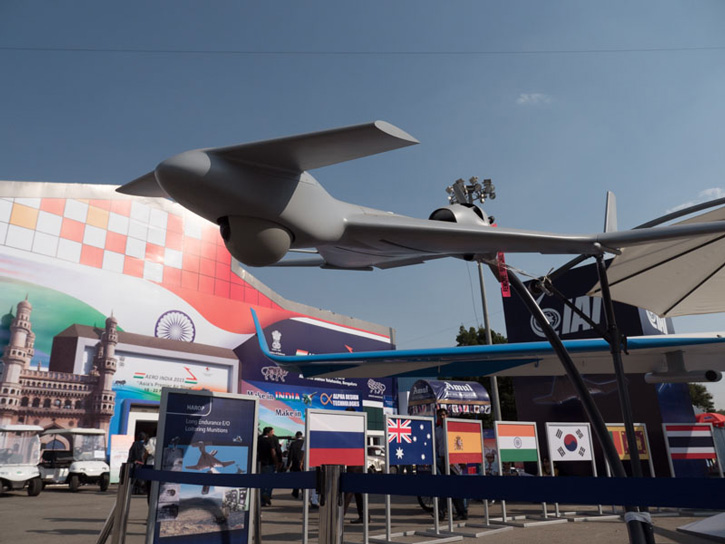
    A model of the Rustom II developed by DRDO’s ADE is on display at Aero India. This unique twin-engine drone is developed in India at the DRDO. As an indigenous system it will enable India to master the use of weaponized unmanned aerial platform without the limitations of the MTCR regime. Photo: Noam Eshel, Defense-Update
    oisuavP1450333725
    OIS also unveiled this twin tail Wavesight fixed wing UAV. It is launched from a catapult and retrieved using a parachute and airbags. Photo: Noam Eshel, Defense-Update
    oissuavsP1450334725
    Two of the fixed wing UAVs displayed at Aero India by OIS. Photo: Noam Eshel, Defense-Update

    , Super Heron

    Aero-India 2015 Photo Report – Missile Systems

    Following is a collection of photos taken at Aero India 2015, depicting advanced missile systems relevant to ongoing Indian procurement programs.

    P1450025725
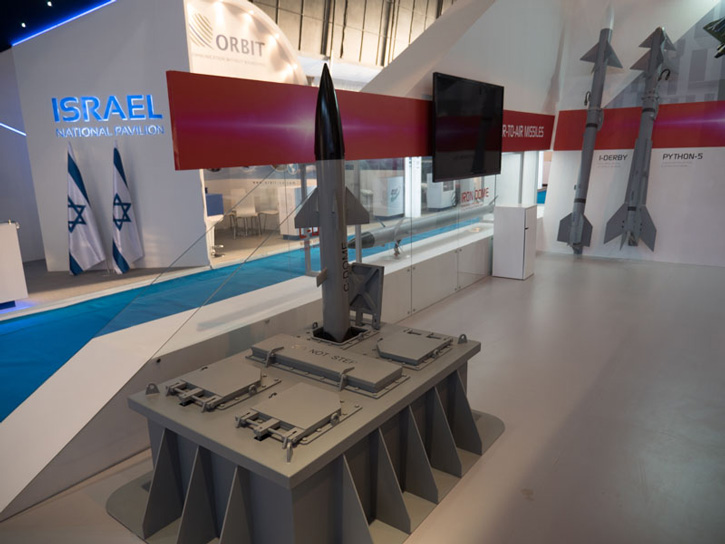
    RAFAEL C-DOME – navalized Iron Dome air and missile defense system for surface vessels. (Photo: Noam Eshel, Defense-Update)
    spikeFamilyP1450084725
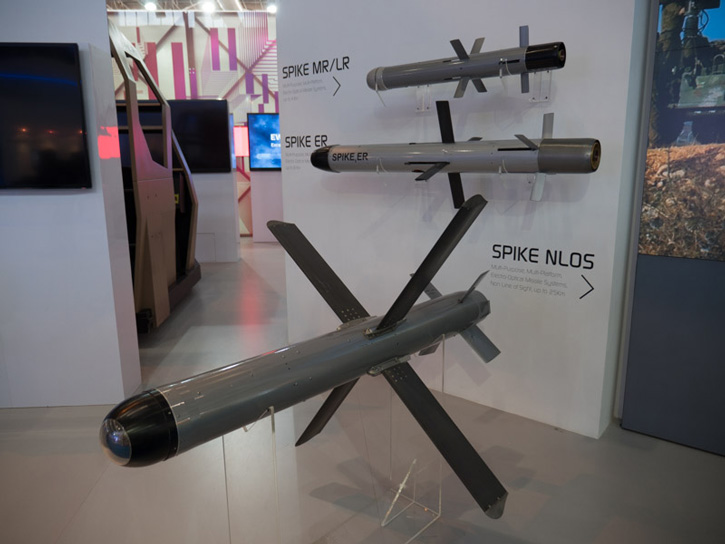
    RAFAEL’s Spike missile family. (Photo: Noam Eshel, Defense-Update)
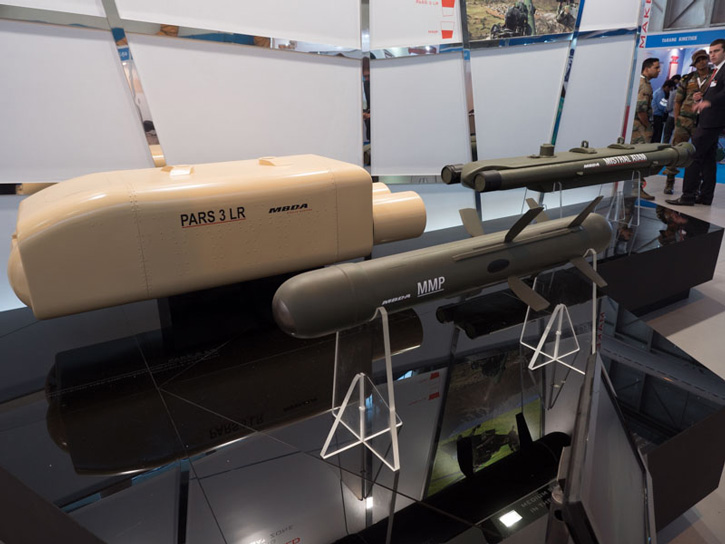
    MBDA displayed at Aero India the PARS 3LR and MMP, both are considered competitors of the Israeli Spike, the two missiles compete head to head in several Indian procurement programs for helicopter armament. (Photo: Noam Eshel, Defense-Update)
    MBDA displayed at Aero India the PARS 3LR and MMP, both are considered competitors of the Israeli Spike, the two missiles compete head to head in several Indian procurement programs for helicopter armament. (Photo: Noam Eshel, Defense-Update)
    thalesfllmmP1450338725
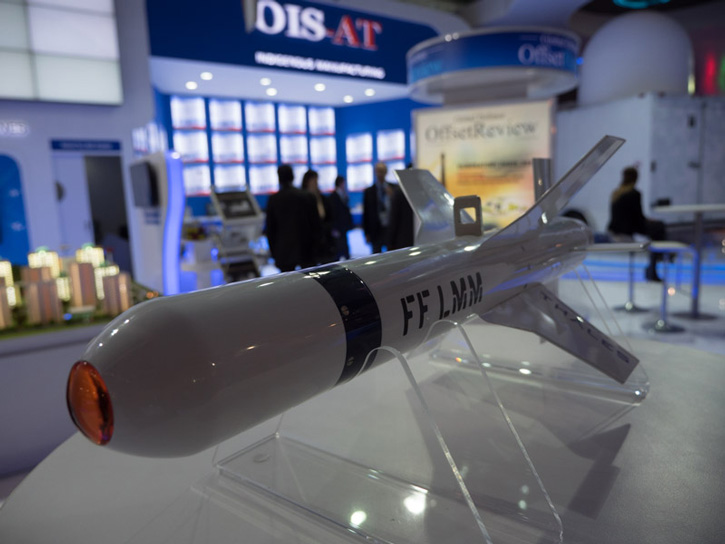
    The FL-LMM miniature guided weapon was shown at Aero India 2015 at Thales and Textron Systems. (Photo: Noam Eshel, Defense-Update)
    textronwpnsP1450456725
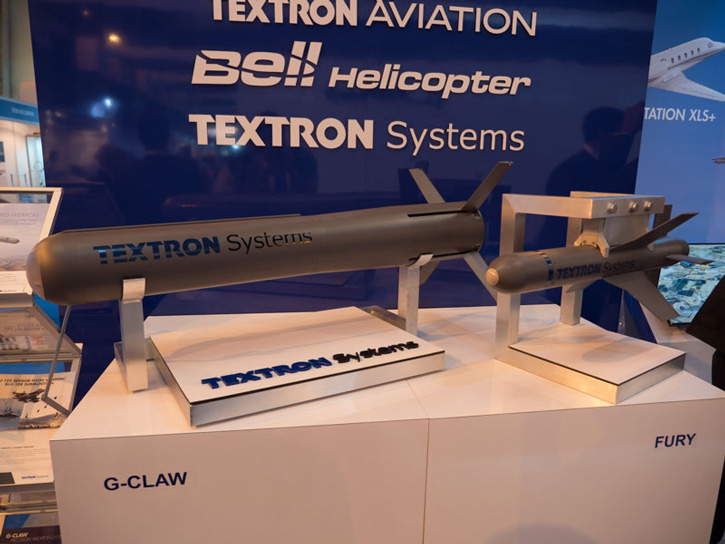
    The ‘Fury’ miniature guided weapon (right) and G-CLAW were shown at Aero India 2015 by Textron Systems. (Photo: Noam Eshel, Defense-Update)


    starstreakP1450342725
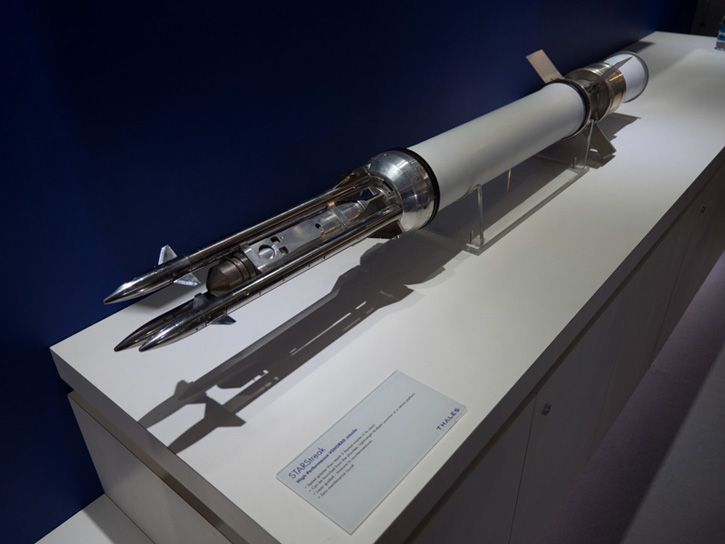
    Thales Starstreak MANPADS. (Photo: Noam Eshel, Defense-Update)
    haropP1450362725
    IAI’s HAROP loitering weapon is already operational with the Indian forces. The version displayed at Aero India 2015 features redesigned fuselage and a new payload. (Photo: Noam Eshel, Defense-Update)
    brahmosP1450444725
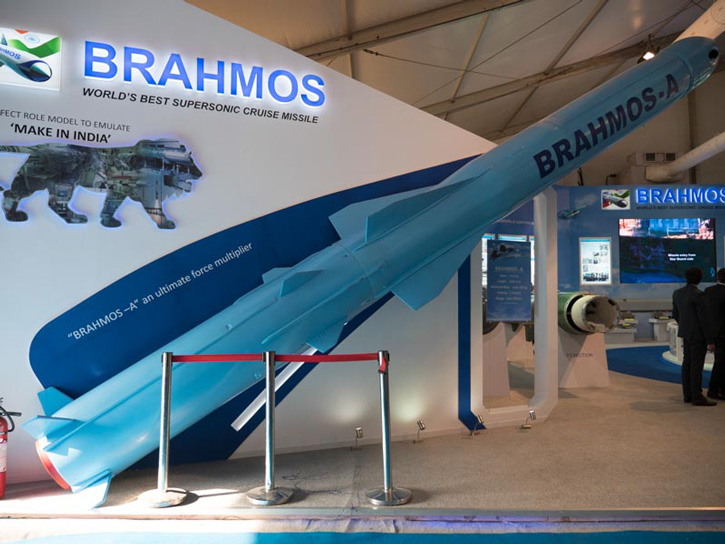
    The airborne, supersonic anti-ship Brahmos A missile is designed for carriage by the modernized Su-30MKI of the Indian Air Force. The future advanced Medium Combat Aircraft (AMCA) will become a reality, it will also be able to carry the Brahmos A.The first flight of the missile is scheduled for next month, March 2015. (Photo: Noam Eshel, Defense-Update)
    brahmosngP1450448725
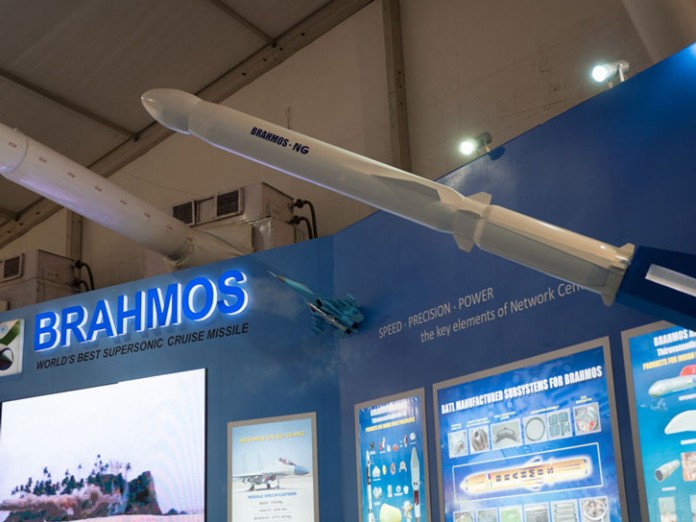
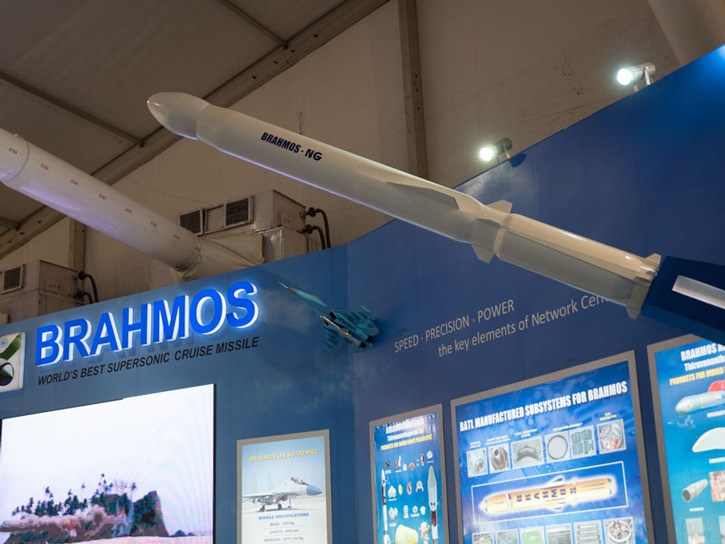
    The next generation Brahmos NG will be smaller and lighter, enabling the Su-30MKI to carry a full load of five missiles. (Photo: Noam Eshel, Defense-Update)


    Aero-India 2015 blazes the Bangalore skies this week

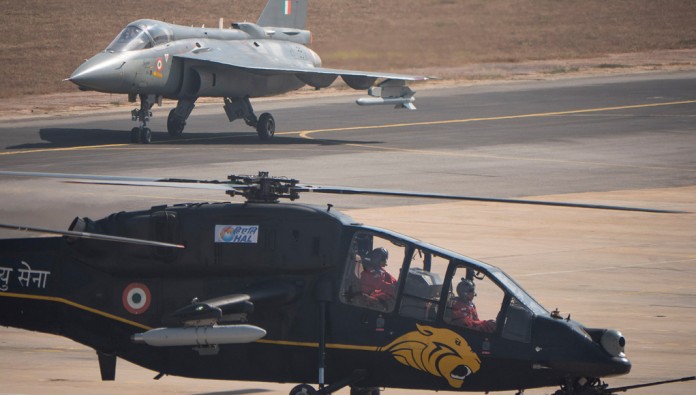
    72 aircraft on display here at Aero India 2015 are demonstrating the scope and size this airshow has achieved in its 10th edition. Quite a few of these aircraft are made in India, among them the Indian Tejas (Light Combat Aircraft – LCA), Light Combat Helicopter (LCH Dhruv) – all were developed and manufactured in India by Hindustan Aeronautics (HAL). Other military jets participating in the flying display include the Su-30MKI, now produced in India and the French Rafale. If Dassault and the Indian Government will be able to finalize the contract for the procurement of 126 of the French fighters, the future Aero India airshows will be able to show Indian made Rafales as well.

    Airshow is also fun. Six aerobatic teams displaying here are responsible for the fun side of the show – these include the Indian Air Force Sarang, (flying Dhruvs), the Scandinavian Air Show team, Aero Superbatics and Airborne Services from the UK, the Flying Bulls from the Czech Republic and the US Special Forces’ Open Sky Jump Team. The IAF’s fixed-wing aerobatics team, the Surya Kirans, will not perform this year, as it is transitioning from the old HAL Kiran Mark II aircraft to the BAE Hawk advanced jet trainers.

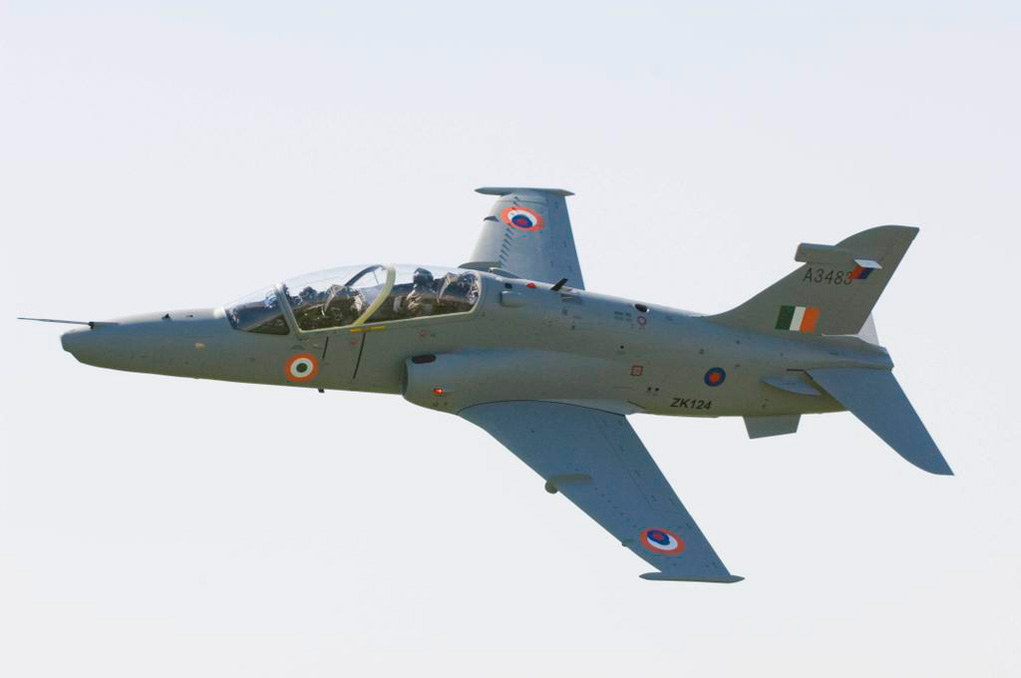
    bae_systems_hawk100_ind1021
    India is the largest operator of the Hawk advanced jet trainer with 123 aircraft ordered to date, of which over 90 have been delivered to the Indian Air Force and the Indian Navy. The Indian Hawks in service have clocked up over 75,000 flying hours. BAE Systems has commenced contract negotiations with Hindustan Aeronautics Limited (HAL) on a potential order to supply products and services for the manufacture of a further 20 Hawk aircraft. The aircraft, to be built by HAL in Bengaluru, will fulfill the Indian Air Force’s requirement for its prestigious aerobatic team. Photo: BAE Systems

    Among the aircraft participating in the static display will be the new airborne early warning variant – Embraer EMB-145I – equipped with a new Indian made airborne radar system developed by the DRDO.

    Nearly 600 exhibitors are participating in the 10th Aero India airshow, among them 328 foreign companies and 295 domestic exhibitors – up 50 and 70 percent, compared to 2013. The airshow therefore provides the business arena for foreign executives to gain first impression of potential Indian suppliers and manufacturers from the private sector, an opportunity that is particularly important for their offset requirements. So far, the private sector had managed to gain only a small share of foreign orders as foreign prime contractors sourced local manufacturing opportunities mainly with India’s major Defense Public Sector Units (DPSU) and the largest industrial groups that had the resources and infrastructure to meet foreign standards.

    With its 1.5-million strong armed forces grappling with aging equipment, India is set to spend some $120 billion on arms procurement over the next 10 years, thus expected to become the world’s largest defense market outside the USA. India’s need for hundreds of jet fighters, transport and special mission aircraft, over a thousand of military helicopters and unmanned aircraft are attracting the world’s largest defense primes to India.

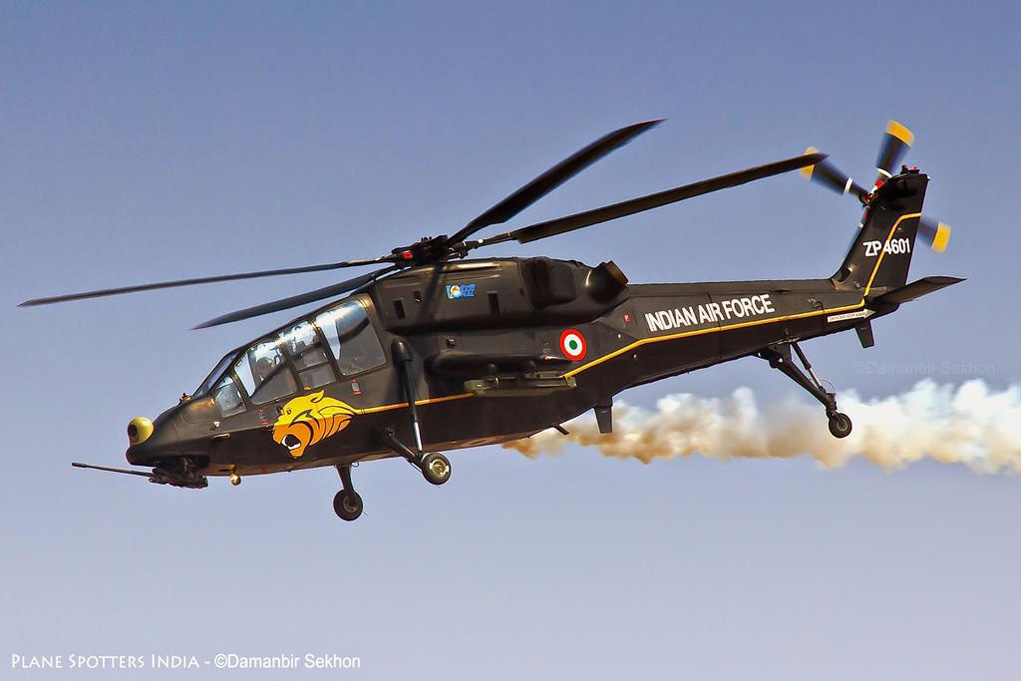
    The Light Combat Helicopter gunship is one of few indigenous Indian programs highlighted by the Indian industry groups like HAL and research center DRDO. These programs could benefit in the future from influx of advanced manufacturing technology and knowhow.
    The Light Combat Helicopter gunship is one of few indigenous Indian programs highlighted by the Indian industry groups like HAL and research center DRDO. These programs could benefit in the future from influx of advanced manufacturing technology and knowhow.

    Organizers are expecting record attendance at this year’s event. Besides 54 ministerial and other high level delegations from 33 countries. Around 300 CEOs from foreign and Indian companies and senior military delegations will attend the show, making this event an excellent business-to-business event. Under the helm of the new defense minister Prime Minister Narendra Modi Aero India has adopted MAKE IN INDIA as its new mantra. Under the new ‘Make’ procedure the Government will invest up to 80 percent of the development cost of new programs, with industry covering 20 percent, for the right to produce those systems in the future. Small and Medium Enterprises (SME) could expect full funding of Research and Development of defense programs under this path. When teaming up with foreign companies and relying on technology transfer, such prospects are likely to becoming increasingly attractive, particularly when compared to past regulations that did not allow foreign enterprises to own more than 25 percent in Indian Joint Ventures (JV).

    Changes are also planned in the selection process that sofar favored the lowest bidder as top priority. Future considerations should weigh technology transfer, at least those adding strategic and ‘transformative’ value will also get priority.

    Although this mantra signifies a change of wind for the Indian establishment, it is unlikely that the bureaucracy limiting those deals will be resolved at Aero India 2015. However it certainly provides the background for a better future for India’s aerospace and defense industry.

    The ‘open for business’ spirit is evident here, with the government nod about the participation of companies that have been blacklisted from doing business in India in the past. One such company is Finmeccanica that is participating in Aero India 2015. Last year its subsidiary AgustaWestland was barred from participating at Defexpo 2014, along with its group companies like Selex, Alenia Aermacchi, Oto Melara and WASS.

    Three Indian states – Karnataka, Gujarat and Andhra Pardesh are also exhibiting here, as they are particularly interested in attracting new business for their developing defense-related industrial zones.

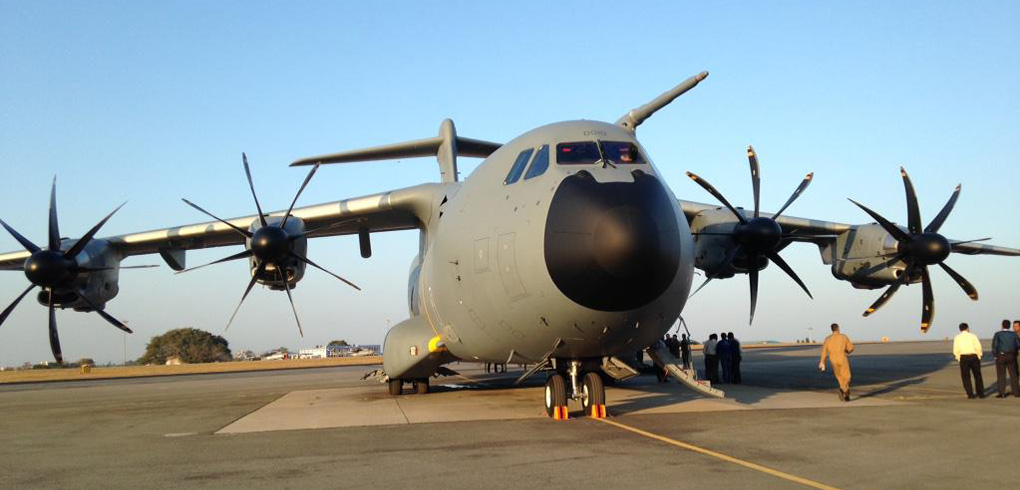
    Airbus is showing its A400M medium transport aircraft, along with a range of civilian aircraft here at Aero India. The A400M is slightly larger, compared to the C-130J currently operational with the Indian Air Force.
    Airbus is showing its A400M medium transport aircraft, along with a range of civilian aircraft here at Aero India. The A400M is slightly larger, compared to the C-130J currently operational with the Indian Air Force.

    Indian Market Becoming Competitive and Cooperative for Israel’s Defense Exports

    phalcon
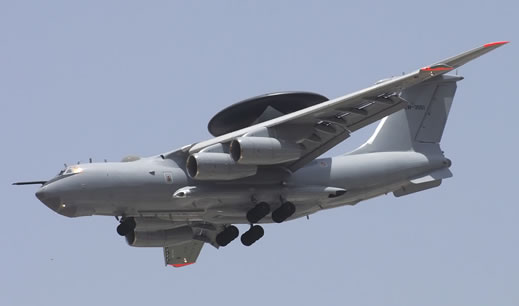
    Another Mega Deal on the way – India is set to order two additional PHALCON AEW&C aircraft from IAI, along with four aerostat-borne radars, as part of a $1.5 billion buy. Photo: Rami Mizrachi

    Shadowed by the huge growth in defense acquisitions from the US, Israel remains one of the fastest growing defense suppliers in India, a position that is particularly impressive given the fact that Israel is not selling India the main platforms, but the systems and subsystems that are critical for their operational success.

    While India is relying on the US for its transport planes, helicopters and maritime surveillance, and Russia providing the combat aircraft, armored vehicles and naval vessels and submarines, Israel has been providing systems that empower those platforms. Among the systems Israel has provided India since 2004 were advanced airborne early warning and control (AEW&C) systems integrated into Russian hmodified IL-76MD transport planes. India is interested in acquiring two additional Phalcon AEW&C and four EL/M-2083 aerostat borne radars, in a deal worth almost $1.5 billion.

    This deal is one of the topics discussed during the visit of Israel’s defense minister Lt. General (ret) Moshe Yaalon in India this week. Past Indian procurements in Israel also included air defense systems and electronic warfare systems installed on Russian and Indian naval ships, targeting pods carried by most of the Indian front line fighter jets, avionics and weaponry adapted to existing fighter jets, extending the operational capabilities of the country’s aging fleets of Sea Harrier and Jaguar and Mi-24 attack helicopters, as well as modern electronic systems upgrading hundreds of Indian T-72 Main Battle Tanks. Other systems provided by Israel were not easily available elsewhere – including aerial refueling systems, anti-ballistic-missile radars and aerostats, designed to provide ad-hoc aerial surveillance of specific areas.

    image
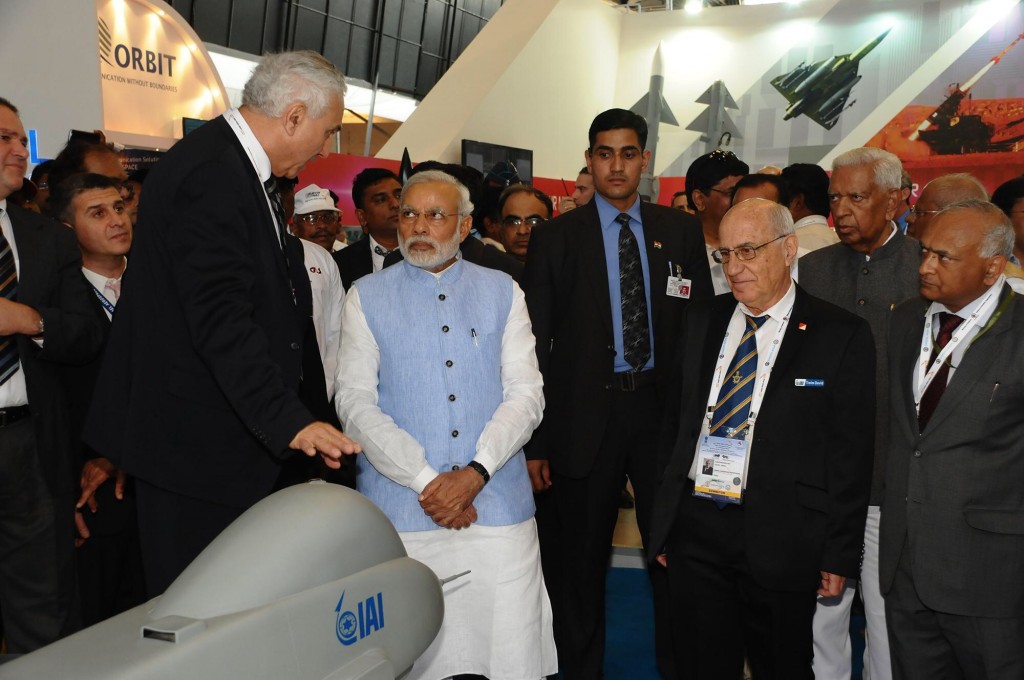
    Narendra Modi, Prime Minister of India visiting IAI booth at the Israeli National Pavilion at Aero India 2015. Photo: IAI

    “In the military field, Israel and India share common threats. The technological cooperation between the two countries significantly benefits both countries,” Brig. Gen. (Ret.) Mishel Ben Baruch, Director of Israel’s defense export directorate ‘SIBAT’ said, “this cooperation enables us to better counter these threats – with Israel ready to share its experience and operationally-proven, cutting-edge technologies with India”.

    Although India recognized Israel in 1950, it remained politically ‘non-aligned’, until the early 1990s, when the two countries forged closer defense relations. It was only in the late ‘90s when the Indian-Israeli relations reached their full scope. In the 2000s India became the largest customer for Israel’s defense exports. Although the pace of new business slowed down in recent years, the volume of deals, and ongoing cooperation programs maintained the Israeli momentum in India.

    Initially ‘testing the friendship’, India has acquired limed numbers of systems, such as ground surveillance radars, with Israel’s defense leaders IAI, Elbit Systems and IMI paving the roads into the Indian market. The turning point was the Kargil War of 1999, a conflict that broke out between India and Pakistan, both were already nuclear powers at the time. During the conflict that lasted about two months Israel supported India sending ammunition, and unmanned aerial systems (UAVs). The Indians appreciated the Israeli effort and have expanded defense relations with the Jewish state ever since, despite criticism from left wing and Muslim opposition.

    Last year Indo-Israeli relations boosted even further, with the election of the right wing Bharatiya Janata Party (BJP), lead by Narendra Modi as prime minister. Members of the new government, especially Modi, have expressed their support for Israel in the past and in the short term since their election have opened several ‘bottlenecks’ that plagued defense business with Israel for years. These included two contracts worth over $600 million, the order of 262 Barak I naval air defense missiles long required for the Indian Navy. With delivery scheduled for December 2015, 14 ships that presently lack missile systems will be outfitted with the Barak-1. The procurement of those missiles was delayed for years by an investigation of corruption that was proven groundless by the Central Bureau of Investigation (CBI). However, it took the Indians almost a year to clear the Barak deal.

    The second major announcement was the Indian decision to acquire more than 8,000 Spike multi-purpose missiles, to be used as a replacement for the aging Milan. Although the Spike was selected as the only missile fulfilling the Indian requirements, final decision had been stuck since 2010, as the US proposed the Javelin under the Foreign Military Sales (FMS) Government-to-Government. This effort delayed the Indian decision for four years, but the Indian stand did not change. The Indians favored the Israeli missile over the US Javelin, primarily due to the potential of local production and technology transfer, a factor that was a major focus for Indian decision makers in their acquisition decisions from the western world.

    Israel and India are enhancing their cooperation on counterterrorism. The Mumbai attack, and growing threats of jihadist terrorist movements and radical movements originating in the Middle East are spreading to Asia and India, with its large Moslem population could benefit from such intelligence cooperation. Part of this effort has been ongoing for years, equipping Indian special-forces and counter terrorism units with Israeli weapons such as Tavor Assault Rifles, Negev and B-300 rocket launchers.

    Cybersecurity has recently become a major field of cooperation, as the two countries are tightening their cooperation in this field. These activities are aimed primarily at government establishments and corporations, Israel has already implemented such defensive measures and a linkage between the two countries could benefit India, providing early warning and higher security levels. Israel could benefit from deployment of security measures on a larger scale, contributing to better coverage of potential threats.

    Israel is attentive and open to India’s priority on technology transfer. In fact, this attitude was reflected with Israel’s Prime Minister Benjamin Netanyahu that expressed Israel’s readiness and willingness “to discuss transfer and development of technologies with India.” He further added that, “Israeli industries, including the defense industries, could ‘make in India,’ and thereby reduce costs of manufacturing products and systems developed by Israel.”

    Israeli companies were also invited to provide and help integrate weapons, avionics and sensors for a number of jet fighters, helicopters, armored fighting vehicles, naval vessels and submarines. Among the systems included were are air/air missiles, helmet mounted sights, radars, precision guided weapons and targeting pods, digital displays and avionic modules for modernized ‘Glass Cockpits’, advanced electronic warfare systems, communications and more. A number of Israeli developed ammunition types were also ordered, some specially developed for the Indian market, supporting the Russian made tank guns and artillery rockets.

    The Indian Navy has also taken the Barak I missile defense system, electronic support measures (ESM) and electronic warfare (EW) for naval vessels, and satellite communications terminals supporting Indian naval vessels.

    IAI’s Growth Engines Revving Up with Indian Partners

    Joseph Weiss, President & CEO, IAI
    Joseph Weiss, President & CEO, IAI

    As Israel’s largest aerospace and defense enterprise, Israel Aerospace Industries (IAI) is positioned as a leading player in the global defense, security, and commercial aerospace market. “The fusion between our military and commercial activities is one of the things that sets us apart from the competition, and I believe that the balance between these two fields will become more efficient in the future”. Joseph Weiss, President and CEO of IAI told Defense-Update.

    “The Israeli market provides an excellent testing ground for the complex, cutting edge applications IAI develops” Weiss said. “Our customers and partners know that these operational solutions, developed for our own forces are critical for our national security; many of them are combat proven by the IDF. This gives us a clear advantage.” IAI unveiled its latest special mission maritime patrol aircraft (MPA) based on Bombardier Global 5000 just before Aero-India 2015. “Our new business-jet based MPA, in concert with UAS and shore-based systems will provide unmatched maritime domain superiority.”

    In 5-6 years 20% of IAI sales will come from land-and maritime-related activities

    “We are investing significant resources in research and development, particularly in areas we see as the company’s future growth engines. We place a strong emphasis on unmanned aerial systems, missile defense systems and intelligence systems as well as cyber security, robotics, and air-defense.” According to Weiss, IAI is constantly expanding its infrastructure and modes of operation to match the growing competition in global markets, strengthening its position in non-aerospace markets. In 5-6 years IAI expects to establish land-and maritime-related activities and represent around 20 percent of the company’s total sales.
    In recent years the Asia-Pacific Aerospace & Defense market has experienced a period of strong growth. On the backdrop of declining defense budgets in Europe and North America, Asia-Pacific is becoming the world’s largest growth market for aerospace and defense systems.

    As Israel’s largest defense exporter, IAI has been growing its business in Asia and particularly in India and is expected to continue expanding its activities here. Among the systems recently transferred or currently underway to India are Barak 8 that was co-developed with India, as part of the LRSAM naval air defense and MRSAM land-based air defense systems; the PHALCON Airborne Early Warning aircraft is now operational, as a large numbers of Heron unmanned aircraft systems and various types of radars.

    IAI considers some of these local activities as ‘growth engines’ for the future, in particular, the unmanned systems, special mission aircraft and air defense. In addition, IAI is ready and prepared for broad industrial collaborations and cooperation in response to new Indian requirements. “I believe that partnering with defense companies abroad is a good way to maximize business potential, to enter new markets and to increase our operations in existing ones.” Weiss stated.

    IAI already has various collaborations with different partners and organizations in India, mainly, in the air-defense and radar systems. The company is acting to expand its collaborations with government and private owned companies in India. Just before Aero India 2015 IAI and Alpha Design Technologies have signed a teaming agreement for the local production of IAI’s mini-UAVs in India. The purpose of this JV is to better position IAI’s mini-UAVs to potential customers in India, including security agencies, coast guards, defense organizations and border security forces.

    “Technology transfer allows IAI to get acquainted and team up with new foreign companies”

    “Mergers and acquisitions are important to us because, in the current climate, countries want to retain work in their domestic market, and therefore we should be able to function locally in the target market. IAI also sees offset as an enabler for success in international markets. Not only are offset obligations expected to reduce arms acquisition costs, they are also expected to stimulate economic development and employment within purchasing countries” Weiss said.

    Technology transfer has also been an issue with previous Indian procurement deals. According to Weiss, IAI transfers technology within the boundaries of the appropriate licenses, as part of these offset programs. “Technology transfer allows IAI to get acquainted and team up with new foreign companies as partners on some occasions and as sub-contractors in others. Some of those new relationships grow into sustainable relationships independent of the original offset program”.

    “The rules of operation in India are very clear, unique and organized, and place an emphasis on offset commitments. IAI respects these rules and operates by them. We do hope that some of the restrictions will be eased for the benefit of the entire industries and customers. “

    “India’s technological and operational requirements are highly advanced. India has always marked cutting edge technologies as its main goal. In addition, India has unique, operational needs and we are committed to harness our best minds and technologies towards achieving the challenges set by India.” Weiss concluded.

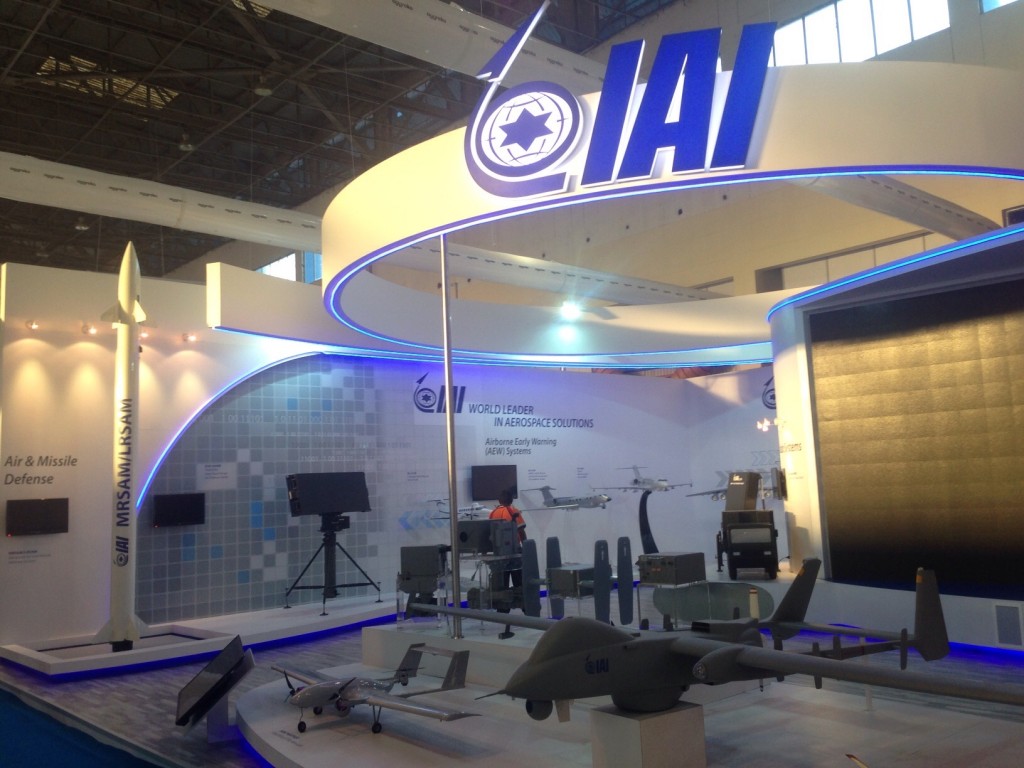
    IAI display at Aero India 2015 highlights the company's broad product line of UAVs, Radars and Missiles. Photo: Noam Eshel, Defense-Update.
    IAI display at Aero India 2015 highlights the company’s broad product line of UAVs, Radars and Missiles. Photo: Noam Eshel, Defense-Update.

    Su-30MKI are made in India

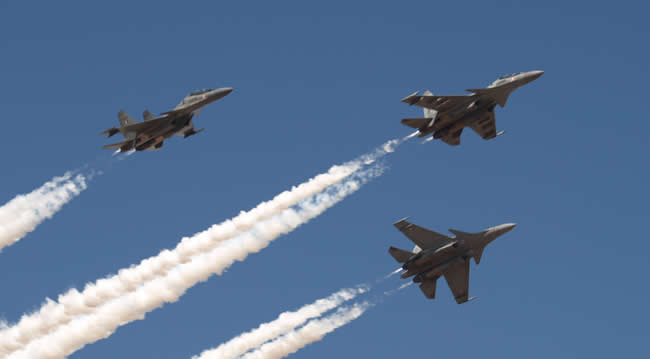
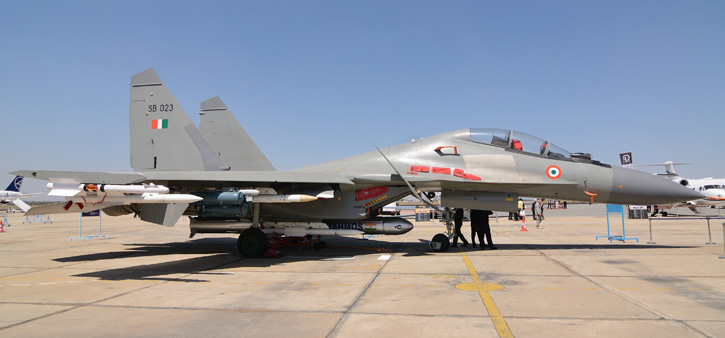
    The Indian Air Force is planning to field over 270 Su-30MKI fighters in 14 squadrons. Photo: Tamir Eshel, Defense-Update
    The Indian Air Force is planning to field over 270 Su-30MKI fighters in 14 squadrons. Photo: Tamir Eshel, Defense-Update

    IRKUT Corporation of Russia will complete deliveries of Su-30MKI aircraft kits to Hindustan Aeronautics Limited (HAL) this year. By that time, IRKUT Corporation will have successfully delivered 222 aircraft kits for assembly at (HAL) Nashik plant, Irkut announced today.

    Currently HAL is manufacturing parts from the raw material stage with complete transfer of technology from IRKUT Corporation under Phase IV of the assembly. HAL has also mastered the overhaul of Su-30MKI program and delivered the first overhauled aircraft to the Indian Air Force (IAF) at the end of 2014.

    IRKUT supplied the overhaul equipment and assisted in their installation at HAL. The Russians also shared their experience in such work. IRKUT Corporation is happy to state that HAL and several Indian companies involved in the Su-30MKI program have mastered the technology of manufacturing many complex parts and assemblies of this front-line fighter aircraft.

    Going forward, Irkut and HAL are planning to embark on an upgrading program of India’s Su-30MKI aircraft, with the integration of the Brahmos supersonic cruise missile. This upgrade will be undertaken by HAL in India. Forecast International analysts estimate the cost to integrate the BrahMos on India’s Su-30MKIs at around $50 million, which includes reducing the munition’s weight and performing some additional structural modifications to the aircraft itself.

    India is also looking to improve the Su-30MKI’s avionics and is likely to install an AESA sensor system, which is rapidly becoming standard on modern fighter aircraft. Details remain sparse, though the Phazotron Zhuk-AE is a solid candidate.

    In addition to the Indian MKI kits, Irkut delivered over 20 completed Su-30SM fighters in 2014. Additional aircraft delivered were 20 Yak-130 trainers completing deliveries for first training unit for the Russian Air Force. Part of these aircraft were delivered to the second air training Base.

    In fact, 2014 has become a Year of records in the Corporation’s history. In 2015 IRKUT is planning to increase the production of both Su-30 and Yak-130, which will be delivered to Belarus this year. This expansion is taking place in parallel to the assembly of the first prototype of Irkut’s MC-21 civil aviation airliner, expected to be completed by year’s end.

    The Indian Air Force first signed the first deal with the Russian government to purchase eight air defense Su-30K and 32 multi-role Su-30 MK aircraft in 1996. IAF bought an additional 10 Su-30 MKs in December 1998. Today, the Sukhoi-30 MKI is India’s most advanced fighter and forms the backbone of its air force.

    Sukhoi Su-30 MKI
    Sukhoi Su-30 MKI

    SDB II comlpetes development phase by engaging moving targets with live warheads

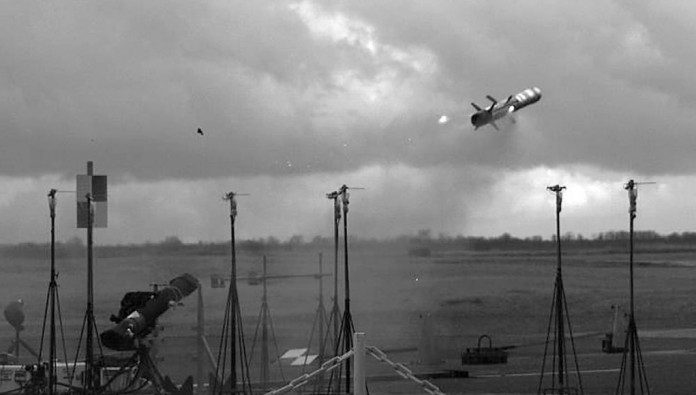
    Raytheon Company and the U.S. Air Force completed two successful Small Diameter Bomb II (SDB II) all-up round live fire test flights that demonstrated the weapon’s ability to detect, track and destroy moving targets. The flight tests that took place at the White Sands Missile Test Range, were the final flight events required prior to Milestone C and the start of Low Rate Initial Production (LRIP).

    In September ’14 the weapons scored three direct hits against stationary and moving targets, using SDB II’s Guided Test Vehicle (GTV). In the recent flights live warheads replaced the GTV  telemetry payloads, proving the weapon’s end-to-end tactical configuration that will be delivered to the U.S. Air Force and Navy. Raytheon is planning to continue to execute GTV and live fire flight tests in the coming months, as the program enters LRIP.

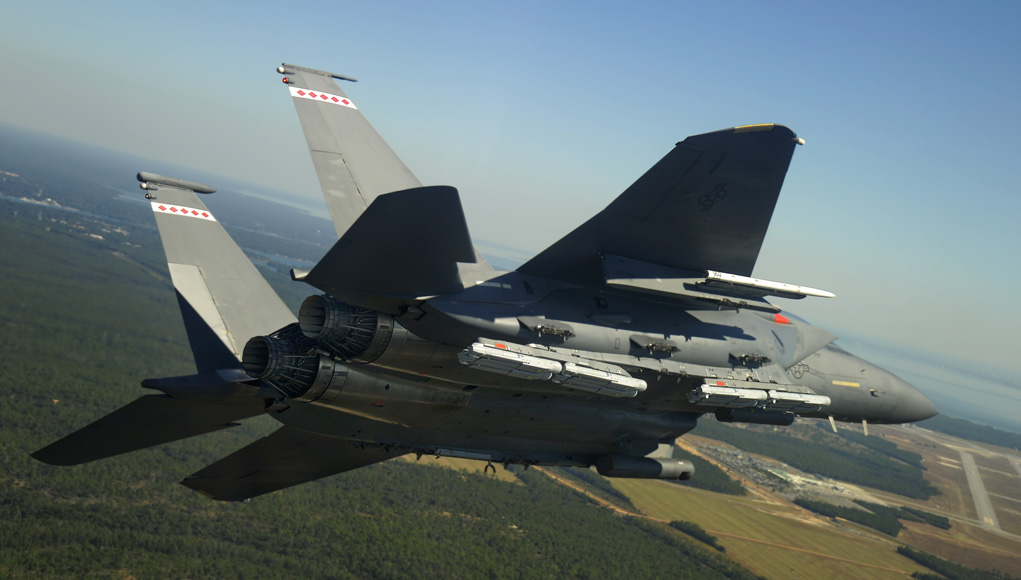
    An all-weather weapon that continues to provide precision even in limited visibility scenarios, SDB II can fly over 45 miles to meet its target, allowing the warfighter to maintain a secure distance from the threat. Photo: Raytheon
    An all-weather weapon that continues to provide precision even in limited visibility scenarios, SDB II can fly over 45 miles to meet its target, allowing the warfighter to maintain a secure distance from the threat. An F-15E as seen in this photo can carry up to 28  SDB IIs, individually guided to hit pinpoint targets at ranges up to 45 nautical miles. Photo: Raytheon

    “These tests showcased the weapon’s new multi-effects warhead that provides SDB II with the capability to destroy targets while reducing collateral damage,” said John O’Brien, Raytheon SDB II program director. “Working closely with our U.S. Air Force customer, Raytheon is delivering this game-changing solution that fills a critical capability gap for U.S. warfighters.”

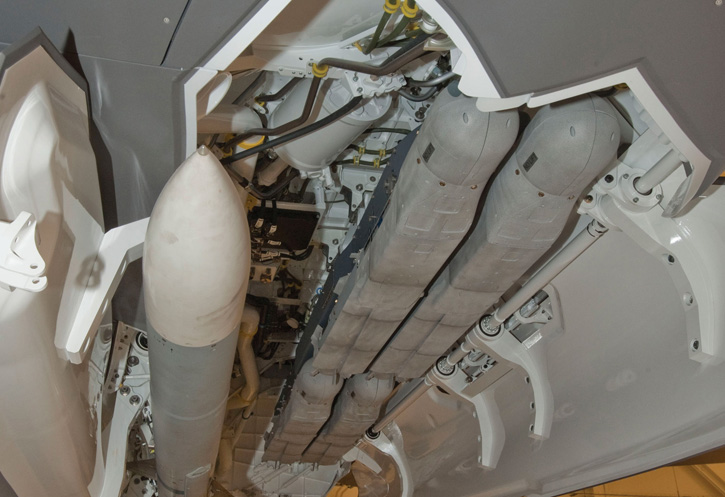
    The F35 can carry two SDB II racks in each of its two weapons bays, for a total of 16 SDB II load, in addition to two AMRAAM air/air missiles.
    The F35 can carry two SDB II racks in each of its two weapons bays, for a total of 16 SDB II load, in addition to two AMRAAM air/air missiles.

    SDB II (also designated GBU-53) employs an advanced tri-mode seeker comprising an uncooled, imaging infrared (IIR), semi-active laser and Millimeter wave Radar. These three modes enable the weapon to seek and destroy stationary or moving targets, even in adverse weather conditions from standoff ranges. The highly accurate SDB II offers warfighters the flexibility to change targets after release through a secure datalink that passes in-flight updates to the weapon.

    The weapon can strike targets from a range of 45 nautical miles, with a dynamic warhead that can destroy both soft and armored targets, while keeping collateral damage to a minimum through a small explosive footprint.

    The Department of Defense has validated SDB II as a weapon that meets a critical warfighter need and has invested more than $700 million in the SDB II program. The U.S. Navy and U.S. Air Force have begun SDB II integration activities on the F-35, F/A-18E/F and F-16 aircrafts.

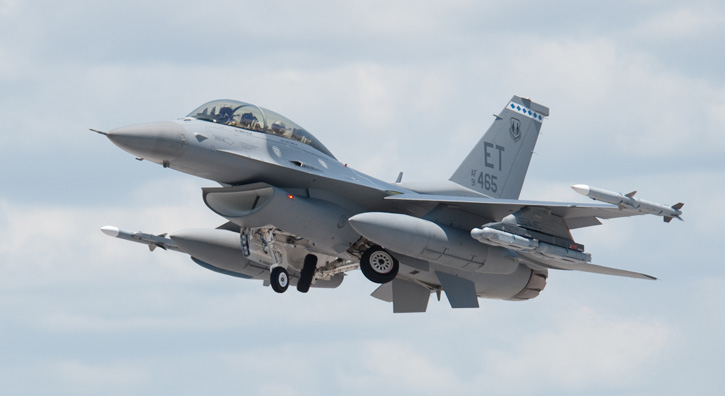
    Raytheon, the U.S. Navy and U.S. Air Force have begun Small Diameter Bomb II integration activities on the F-35, F/A-18E/F and F-16 aircrafts.
    Raytheon, the U.S. Navy and U.S. Air Force have begun Small Diameter Bomb II integration activities on the F-35, F/A-18E/F and F-16 aircrafts. Photo: Raytheon


    Test firing validates MMP’s direct, indirect firing capability

    the Multi Purpose Combat Vehicle - MPCV modified to carry MMP missiles and Mistrals
    the Multi Purpose Combat Vehicle – MPCV modified to carry MMP missiles and Mistrals

    MBDA continued the firing test campaign of the new MMP (Missile Moyenne Portée – Medium range missile). Last week the company conducted two successful flights against steel plate targets located at intermediate range of more than four kilometers from the firing post.

    The first test engaged a target using ‘lock on after launch’ mode, engaging a target that was hidden from view at launch. The second test held on 12th February, 2015 engaged the target at a similar range, using ‘fire and forget’ mode (lock on before launch) using the missile seeker’s colour TV channel channel.

    Both tests took place at the French Procurement Agency (DGA) Techniques Terrestres site in Bourges central France. “All aspects of the test, covering launch, flight trajectory and target impact, took place optimally and fully conformed to the simulations of MBDA’s project teams.” MBDA’s communique said.

    With this firing, another element in the analysis of MMP’s deployment envelope has been accomplished, the major part of which has already been completed. The main features that have been demonstrated in flight to date involve firing at long and intermediate ranges and using two types of missile trajectory (high and intermediate), seeker guidance via both the visible TV and un-cooled infrared channels, target lock on before and after launch, the latter thanks to the fibre-optic data-link.

    The MMP is designed to replace the Milan missiles in service with the French Army. MBDA is set to supply 400 launchers and 2,850 MMP missiles to the army as part of a contract awarded by the DGA in December 2013. First deliveries are expected in 2017.

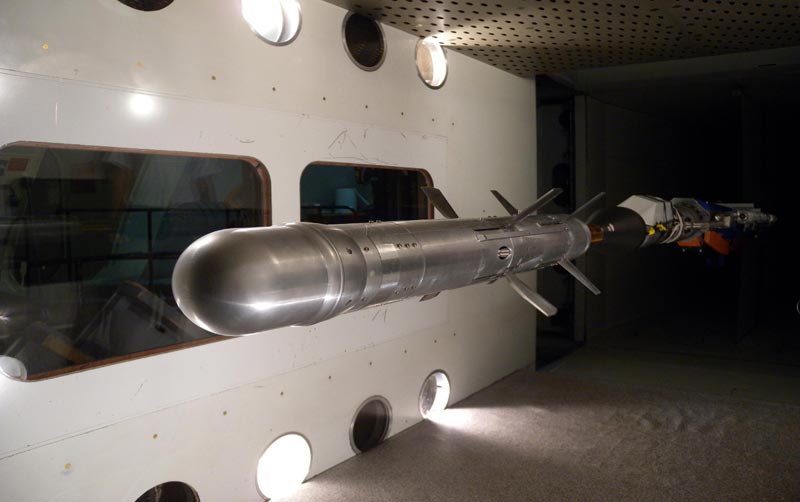
    MMP undergoing wind tunnel testing during the missile's development
    MMP undergoing wind tunnel testing during the missile’s development

    Airborne Sense & Avoid Validated on Predator B RPA

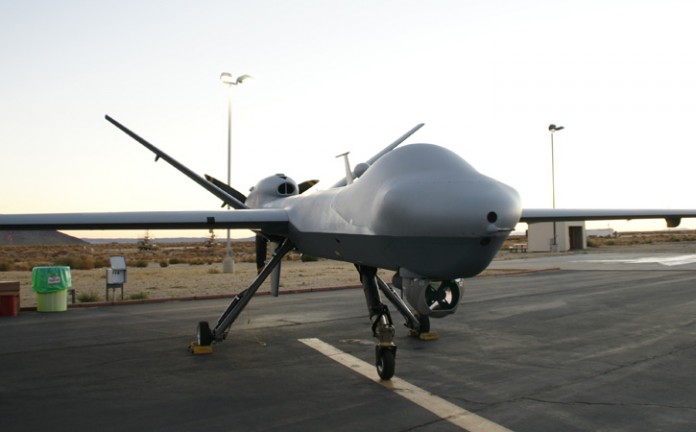
    GA-ASI is integrating a prototype Due Regard Radar in the Predator B to evaluate the system's performance for 'sense and avoid' application. Photo: GA-ASI

    General Atomics Aeronautical Systems, Inc. (GA ASI) successfully flight tested a pre-production Due Regard Radar (DRR) in February 2015, marking the first fully functional air-to-air radar on a Remotely Piloted Aircraft (RPA) that meets the requirements for “Due Regard” operations in international airspace.

    “DRR will allow users to operate Predator B independently in international airspace without the need for land-based, sea-based, or off-board airborne airspace surveillance, offering our customers greater freedom of movement around the globe.” said Frank Pace, president, Aircraft Systems, GA-ASI.
    The test verified the functionality of the radar onboard the RPA and its integration with the Traffic alert and Collision Avoidance System (TCAS) II with Resolution Advisories, which is the collision avoidance system used on many commercial aircraft today. According to GA-ASI announcement the collision avoidance maneuvers were automatically and successfully executed onboard Predator B to verify system functionality and validate hardware-in-the-loop simulations.

    “This latest flight test aboard an RPA is a significant milestone in the continued maturation of our DRR air-to-air radar program that began in 2011,” said Claudio Pereida, executive vice president, Mission Systems, GA-ASI.

    The test flights took place at GA-ASI’s Gray Butte Flight Operations Facility and Edwards Air Force Base in Palmdale, Calif., where Predator B was flown in scripted encounters against multiple small- and medium-sized manned aircraft while the pre-production DRR simultaneously tracked multiple targets and continued to search a wide Field-of-Regard (FoR).

    GA-ASI’s Due Regard capability, which includes the pre-production DRR and other components, is now at Technology Readiness Level (TRL) 7 and is ready for a customer to take into an operational environment to conduct an Operational Test and Evaluation (OT&E). The company’s Sense and Avoid (SAA) system, which integrates the DRR and TCAS II capabilities, is currently at TRL 6 and will mature once it incorporates all of the requirements being developed by Radio Technical Commission for Aeronautics (RTCA) Special Committee 228. The integrated SAA system will continue to fly aboard NASA’s Ikhana (Predator B) in 2015 in support of a series of NASA flight tests that will measure the performance of the entire system in a variety of situations.

    France confirms sale of Rafale fighter jets to Egypt

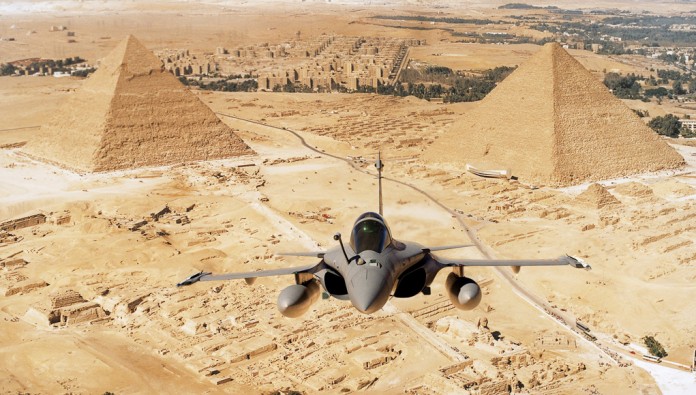
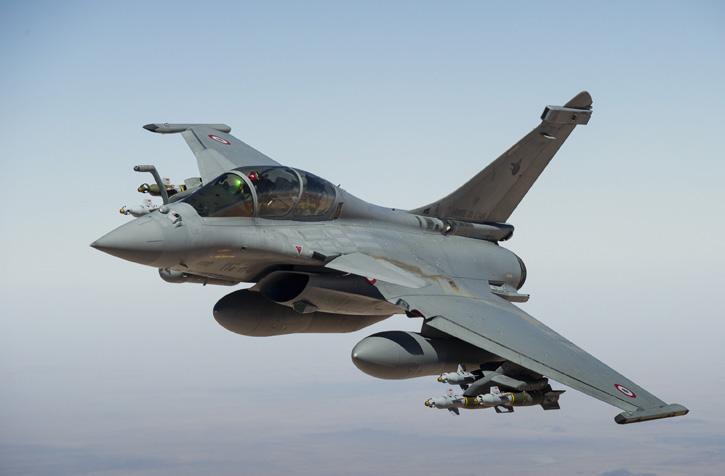
    Rafale over the Pyramides - Egypt is buying 24 Rafale jet fighters from France, as part of a 3.6-4 billion Euro arms package. Photo: Dassault Aviation

    Dassault Aviation confirmed today the Arab Republic of Egypt’s decision to equip its air force with the Rafale fighter jet. “This decision is a continuation of our cooperation that dates back to the 1970s, and has seen the Mirage 5, the Alpha Jet and the Mirage 2000 fly in the colors of Egypt.” Dassault commented. The Egyptian decision marks the second international selection of the French fighter, following the Indian selection of Rafale in 2012.

    The Egyptian order will cover 24 aircraft, part of which will be delivered this year. The order worth about 3.6-4 billion Euros is expected to be signed on February 16, the Elysee Palace said in a statement.

    The Rafale is the first completely omnirole fighter capable of accomplishing all the missions assigned to combat aircraft (air-air, air-ground, air-sea). It first came into active service with the French Navy and the French Air Force in 2004-2006, gradually replacing seven types of aircraft belonging to the preceding generations. It was deployed in Afghanistan (2007-2012), Libya (2011), in the Sahel-Saharan strip(since 2013) and in Iraq (since September 2014). It was chosen for the Indian Army’s request for proposal for 126 aircraft. Negotiations surrounding the Rafale are currently underway with several governments.

    20130203_Tchad725
    Rafale fighter jets have been operating in combat missions continuously since their first missions in Afghanistan in 2009. In recent years French Rafales took part in combat sorties in Libya, Chad, Mali, Syria and Iraq. Photo: Dassault Aviation


    Predator XP drone embarks on 40+ hour long-endurance flight

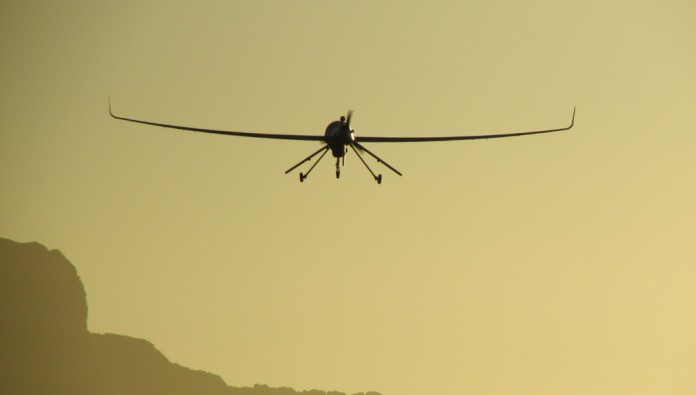
    General Atomics (GA-ASI) Predator XP flying from Yuma Proving Grounds in 2014. On February 6-8 2015 this drone performed its longest flight completing a mission lasting over 40 hours. Photo: GA-ASI

    General Atomics Aeronautical Systems, Inc. (GA‑ASI), has recently completed the longest mission of a Predator Remotely Piloted Aircraft (RPA). The flight performed by a company built launched on February 6 and landed on February 8, 2015 during a 40-plus hour flight conducted at GA-ASI’s Castle Dome Flight Operations Facility located at Yuma Proving Grounds, Ariz.

    “This flight truly demonstrated the long- endurance capability of our latest RPA”

    During the flight, the Predator XP RPA validated its long-endurance capability by flying at 10,000 feet for greater than 40 hours. The RPA that flew the mission is a production representation aircraft designed and built on Internal Research and Development (IRAD) funds. Predator XP is currently in production, with the first production aircraft to be delivered in 2016. The UAE, considered to be one of the lead customers for this model is planning to buy 10 such aircraft.

    “This flight was a landmark event for Predator XP in that it truly demonstrated the long- endurance capability of our latest RPA,” said Frank W. Pace, president, Aircraft Systems, GA-ASI. “In addition, it was a new company record for our aircraft.” Predator XP, an advanced derivative of the mission-proven MQ-1 Predator RPA that has accumulated over two million flight hours since 1994.

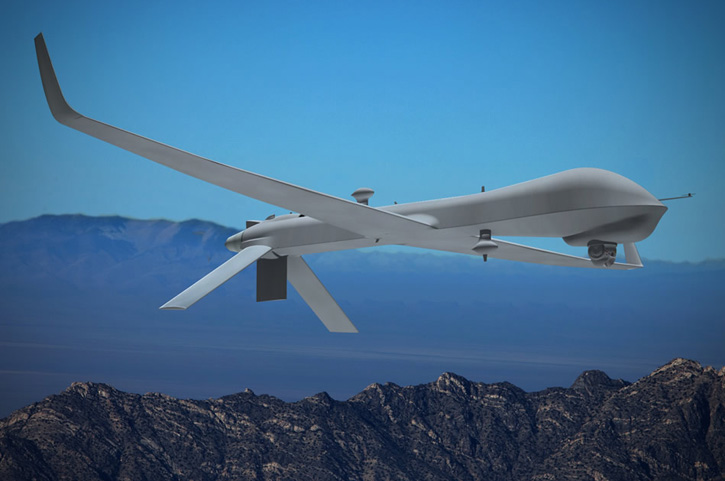
    The visible differences between Predator and Predator XP are the extended wings, fitted with winglets added to the wing tips, and the forward EO payload assembly mounted under the nose.
    The visible differences between Predator and Predator XP are the extended wings, fitted with winglets added to the wing tips, and the forward EO payload assembly mounted under the nose.

    Predator XP is an updated version of the company’s flagship Predator RPA that has been licensed by the U.S. Government for sale to a broader customer base to include countries in the Middle East, North Africa, South America, and Asia. In October 2014  the U.S. Government has granted GA-ASI a ‘DSP-5’ export license allowing the company to offer Predator XP to the Government of India. The company is also discussing the potential sale with local industry.

    Beyond its long endurance, the aircraft’s distinctive features include wingtip winglets and enhanced payload assembly under the nose. Advanced capabilities include a Satellite Communications (SATCOM) data link; Automatic Takeoff and Landing System (ATLS); a full-motion video camera (optical and infrared); GA-ASI’s Lynx   Multi-mode Radar with ground imaging (Synthetic Aperture Radar/ SAR), maritime surface search, and Ground Moving Target Indicator (GMTI) modes; an Automatic Identification System (AIS) for maritime patrol; and triple-redundant avionics. Following the export restrictions imposed by the US government, unlike the Predator models used by the CIA and Air Force, or Gray Eagle used by the U.S. Army, Predator XP is not designed to carry weapons.

    A family of drones from General Atomics - forward: Predator C 'Avenger', far left - MQ-1 Predator I and far right: MQ-9 Reaper.
    A family of drones from General Atomics – forward: Predator C ‘Avenger’, far left – MQ-1 Predator I and far right: MQ-9 Reaper.

    New IRST pod to enhance the Eagle’s air/air targeting

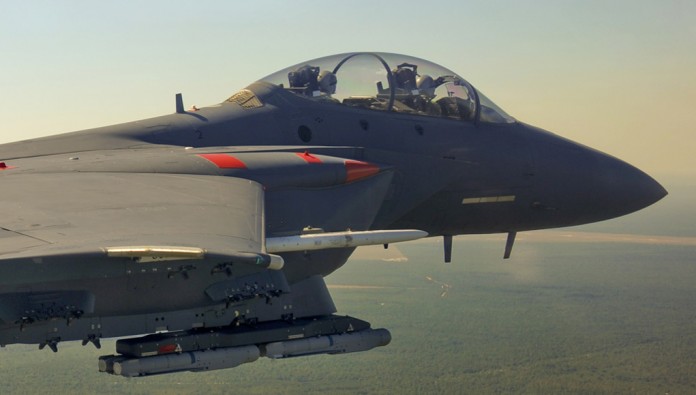
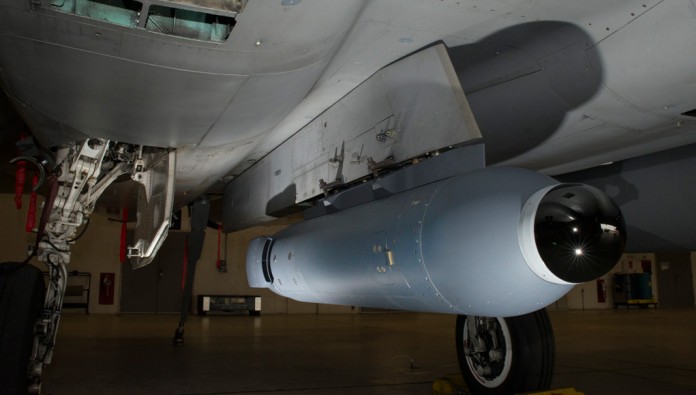
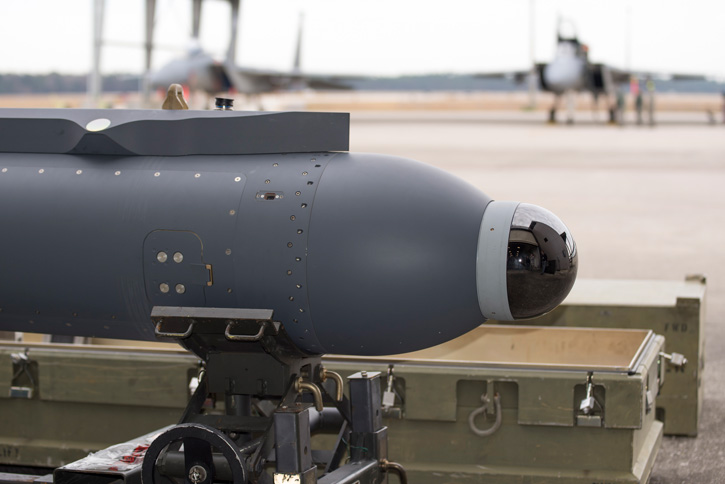
    Using Lockheed Martin’s IRST21 sensor, networking and advanced processing technology, Legion Pod provides high-fidelity detection and tracking of air-to-air targets. Photo: Lockheed Martin

    Lockheed Martin introduced today the Legion Pod, a podded version of the IRST21 Infrared Search & Track sensor providing fighter aircraft with high-fidelity detection and tracking of airborne targets. Legion Pod is available to support the current F-15C infrared search and track program of record, which requires long-range detection and tracking in a wide field of view. In addition to detecting airborne threats, IRST significantly enhances multiple target resolution compared to radar, providing greater discrimination of threat formations at longer ranges. Data from the IR sensor is fused with other on-board sensor data to provide maximum situational awareness to the warfighter.

    The system can simultaneously track multiple targets and provide a highly effective air-to-air targeting capability, even when encountering advanced threats equipped with radar-jamming technology. Because IRST is passive, unlike radar systems, it does not give off radiation and is harder to detect.

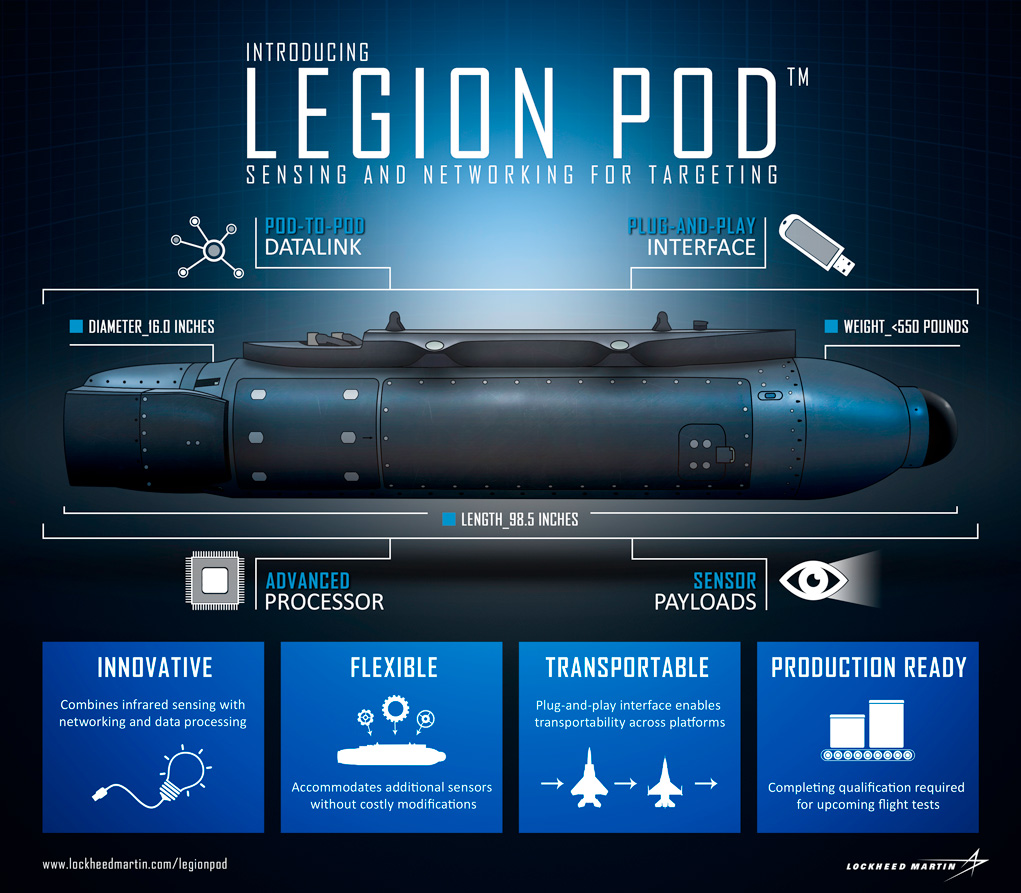
    Legion Pod infographic - Source: Lockheed Martin
    Legion Pod infographic – Source: Lockheed Martin

    Combining Lockheed Martin’s IRST21 infrared sensor with advanced networking and data processing technology, Legion Pod accommodates additional sensors within its current structure to address diverse mission requirements across a variety of platforms. “Legion Pod fills a critical need for today’s warfighters, providing unique detection and tracking data for joint targeting operations,” said Ken Fuhr, director of fixed wing programs at Lockheed Martin Missiles and Fire Control.

    Lockheed Martin developed Legion Pod through internal investment, and pod components have completed limited qualification. Initial flight tests will occur this year, with additional flight tests planned for 2016. IRST21 is the next generation of Lockheed Martin’s legacy IRST sensor system, which accumulated over 300,000 flight hours on F-14 and international F-15 platforms. As a passive, long-range sensor system, IRST21 uses infrared search and track technology to detect and track airborne threats with weapon-quality accuracy, increasing pilot reaction time and improving survivability.

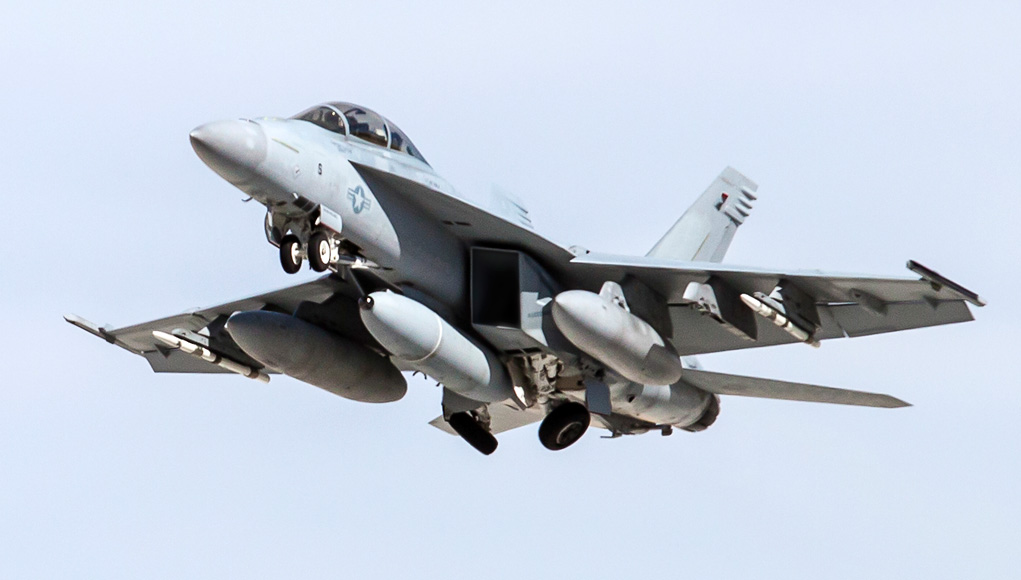
    The IRST21 flew for the first time on an F/A-18F in April 2014.
    The IRST21 flew for the first time on the Super Hornet at Edwards AFB in April 2014.

    A compact design enables IRST21 to be integrated in a variety of ways. On the F/A-18E/F, IRST21 is mounted on the nose section of the centerline fuel tank. Integrated into a standard 16 inch diameter pod structure, Legion Pod’s baseline configuration includes an advanced processor and datalink capability in addition to its infrared search and track technology. The pod enables transportability of the IRST21 sensor across a wide range of platforms including the F-15C and F-16. “This ‘see first, strike first’ capability can be used in a variety of threat environments and is a game changer for our warfighters as we combat future adversaries,” said U.S. Navy F/A-18 program manager Capt. Frank Morley.

    “Lockheed Martin and Boeing have proven the maturity of the IRST21 sensor and the IRST system and are poised to get this advanced capability out to the fleet to support Navy carrier strike group objectives,” Fuhr confirmed. IRST is expected to deploy on the F/A-18 Super Hornet in 2017. According to company sources, Legion Pod also supports the emerging Multi-Domain Adaptable Processing System and offers advanced capability for a variety of platforms, including non-fighter aircraft. “As a flexible, production-ready system, Legion Pod can be quickly procured and integrated to meet current and emerging customer requirements” Fuhr added.

    Legion Pod is a multi-function sensor system that supports collaborative targeting operations in radar-denied environments. Flexible by design and production-ready, Legion Pod is set to serve as the next sensor system of choice for fixed-wing aircraft.
    Legion Pod is a multi-function sensor system that supports collaborative targeting operations in radar-denied environments. Flexible by design and production-ready, Legion Pod is set to serve as the next sensor system of choice for fixed-wing aircraft.

    Israel’s IAI teams with Alpha Design Technologies to produce mini-UAVs in India

    IAI's Birdeye 400 micro drone will provide live video feed from its Micro-POP payload. Photo: Noam Eshel, Defense-Update

    Israel Aerospace Industries (IAI) and India’s Alpha Design Technologies have signed a teaming agreement for the production and marketing of mini-Unmanned Aerial Systems (UAS) in India to accommodate the operational needs of Indian customers. Potential customers in India include security agencies and all defense organizations including police forces, coastguard and Border Security Forces (BSF).

    According to Shaul Shahar, IAI VP and General Manager of the Military Aircraft Group, the agreement with Alpha follows India’s policy for ‘Buy and make India’. “The important vision of ‘Make in India’ is being made fully effective by this joint effort. Alpha will meet the huge market in India and will examine further, later exports by Alpha, through IAI to various countries”. Col. H. S. Shankar, Chairman & Managing Director, Alpha Design Technologies Private Limited, added.
    The agreement covers local production of IAI’s Bird-Eye 400 and Bird-Eye 650 mini UAS as well as other mini-unmanned aerial systems. Production of the systems will take place in India, while the marketing will be a joint effort of the two companies. Alpha Alpha will also provide integration of the systems in India, with IAI’s support.

    Skunk Works and XTEND Simplify Multi-Drone Command

    0
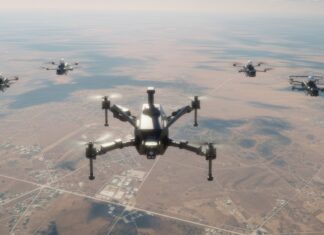
    Lockheed Martin Skunk Works® and XTEND have achieved a major milestone in JADC2 by integrating the XOS operating system with the MDCX™ autonomy platform. This technical breakthrough enables a single operator to simultaneously command multiple drone classes, eliminating the friction of mission handoffs. From "marsupial" drone deployments to operating in GPS-denied environments, explore how this collaboration is abbreviating the data-to-decision timeline and redefining autonomous mission execution.

    From Ukraine to Taiwan: The Global Race to Dominate the New Defense Tech Frontier

    0
    As traditional defense primes face mounting competition from agile “neoprimes” such as Anduril, Palantir and Helsing, the balance of innovation is shifting toward software-defined warfare and scalable, dual-use technologies, while global industry consolidation—marked by Boeing’s integration of Spirit AeroSystems and other strategic mergers—signals an intensified race to secure control over the defense technology value chain. Our Defense-Tech weekly report highlights these trends.

    Europe’s “Drone Wall”

    0
    In early October 2025, a coordinated wave of unmanned aerial system (UAS) incursions—widely attributed to Russia—targeted critical infrastructure across at least ten European nations. The unprecedented campaign exposed the fragility of Europe’s air defenses...

    Weekly Defense Update & Global Security Assessment

    0
    Executive Summary The past week (September 18-25, 2025) represents an inflection point where strategic defense concepts have transitioned from doctrine to tangible reality. An analysis of global events reveals four primary, interconnected trends shaping an...

    U.S. Air and Space Forces Push Next-Gen Programs at the AS&C 2025 Conference and...

    0
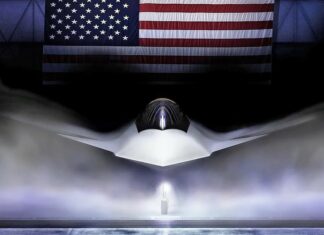
    At the 2025 Air, Space & Cyber Conference, U.S. Air Force and Space Force leaders unveiled major updates on next-generation fighters, bombers, unmanned systems, and space initiatives, highlighting both rapid innovation and critical readiness challenges as the services race to outpace global competitors. A short version is available here, with a more detailed version for subscribers.

    TADTE 2025: Reflecting Taiwan’s Strategic Themes

    0
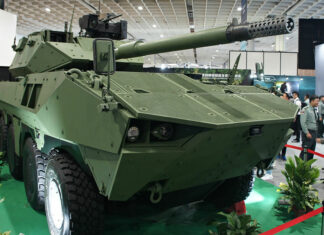
    The Taipei Aerospace & Defense Technology Exhibition (TADTE) 2025 crystallized around four dominant strategic themes that collectively illustrate Taiwan's comprehensive approach to defense modernization amid escalating regional tensions. Based on a detailed report by Pleronix (available upon request). Includes a Podcast discussion on TADTE 2025's highlighting Taiwan's four strategic themes beyond the post's coverage.

    Iron Beam 450 Completes Testing, Soon to Join With Operational Air Defense Units

    0
    Israel’s Iron Beam 450 high-power laser system has completed final testing, marking a major leap in air defense. Developed by Rafael, it offers precise, cost-effective interception of rockets, UAVs, and mortars, and is set for IDF deployment by 2025.