
Other European Defense Updates:
Austria | Belgium | Bulgaria | Czech Republic | Denmark | Estonia | Finland | France | Germany | Hungary | Ireland | Italy | Kroatia | Latvia | Lithuania | Netherlands | NATO | Norway | Poland | Portugal | Romania | Serbia | Slovenia | Sweden | Switzerland.
For an insight into each of the countries, click on the country name for a detailed report listing the 10 recent news items for that specific country.
- Threat Simulation Turns into Battlefield Deception Jan 20, 2026
 Visiting the UMEX & SimTEX 2026 exhibition taking place at the ADNEC Centre in Abu Dhabi this week, a new system caught our attention. Slovenian company Carboteh has introduced an unconventional approach to protecting ground forces from low-flying aircraft and helicopters. The Battlefield Anti-Aircraft Non-Kinetic (BANS) system represents a departure from traditional very short-range air defense (VSHORAD) tactics, employing electronic warfare deception principles to create tactical dilemmas for hostile pilots without firing a single missile. The operational concept behind BANS derives from threat simulators used in helicopter and aircraft crew training. These simulators replicate air defense threats during training missions, allowing pilots to practice responding to missile launches in controlled environments. Carboteh has adapted this training technology into a handheld, field-deployable weapon system designed to exploit the automated defensive responses built into modern military aircraft and to support pilot self-protection threat-evasion procedures. At its core, BANS is a deception system that simulates the ultraviolet signature of a surface-to-air missile launch. The device emits UV light in the solar-blind spectrum (up to 300 nm) that replicates the distinctive pattern of an anti-aircraft missile’s flight path. This signature is specifically calibrated to trigger both NATO-standard missile warning systems and Russian systems such as the Vitebsk L370-2 and various MAK-series units. When an aircraft’s Missile Warning System (MWS) detects what it interprets as an incoming missile, it automatically responds according to its programming, dispensing infrared flares and alerting the pilot, who typically initiates evasive maneuvers. This response is precisely what BANS is designed to provoke. Operational Concept The system operates in a three-phase engagement sequence: Phase 1 – Digital Stimulation: The BANS device emits a specialized UV signal that mimics a SAM launch signature, triggering the target aircraft’s missile-warning and detection systems. Phase 2 – Forced Countermeasure Dispensing: The aircraft automatically dispenses defensive flares in response to the perceived threat, ...
 - From Venezuela, to India, and the Rise of the Laser Era – a Weekly Defense Update Jan 9, 2026
 The opening week of 2026 has been defined by a singular, paradigmatic shift in modern warfare: the “catastrophic failure” of Venezuela’s integrated air defense network during a U.S. special operation. The operation succeeded not through brute force, but by rendering Venezuela’s Russian S-300VM and Chinese “anti-stealth” radars effectively blind, validating the supremacy of advanced electronic warfare over legacy kinetic defenses. This failure has sent shockwaves through the global defense market, underscoring why nations like Spain and Germany are rushing to modernize their air defense architectures with Western alternatives, while massive procurement programs exceeding $301 billion signal an accelerated transformation toward unmanned systems, directed energy weapons, and indigenous production capabilities.
 - Beyond Drones: Key Facts Defining Turkey’s Rise as a Global Arms Giant Jan 8, 2026
 Turkey’s defense industry transformation extends far beyond its celebrated drones. Now ranking 11th globally in defense exports, Turkey is executing a comprehensive strategy to become a top-tier arms supplier. With 75% of exports flowing to Western markets and five firms in Defense News’ Top 100, Turkey is methodically building a complete defense ecosystem through combat-proven systems, integrated defense diplomacy, strategic self-reliance, and real-world R&D in active conflict zones.
 - Skunk Works and XTEND Simplify Multi-Drone Command Dec 18, 2025
 Lockheed Martin Skunk Works® and XTEND have achieved a major milestone in JADC2 by integrating the XOS operating system with the MDCX™ autonomy platform. This technical breakthrough enables a single operator to simultaneously command multiple drone classes, eliminating the friction of mission handoffs. From “marsupial” drone deployments to operating in GPS-denied environments, explore how this collaboration is abbreviating the data-to-decision timeline and redefining autonomous mission execution.
 - From Ukraine to Taiwan: The Global Race to Dominate the New Defense Tech Frontier Oct 17, 2025
 As traditional defense primes face mounting competition from agile “neoprimes” such as Anduril, Palantir and Helsing, the balance of innovation is shifting toward software-defined warfare and scalable, dual-use technologies, while global industry consolidation—marked by Boeing’s integration of Spirit AeroSystems and other strategic mergers—signals an intensified race to secure control over the defense technology value chain. Our Defense-Tech weekly report highlights these trends.
 - Europe’s “Drone Wall” Oct 12, 2025
 In early October 2025, a coordinated wave of unmanned aerial system (UAS) incursions—widely attributed to Russia—targeted critical infrastructure across at least ten European nations. The unprecedented campaign exposed the fragility of Europe’s air defenses and triggered a continent-wide response now known as the “Drone Wall” initiative. The new report, Drone Wall: Europe’s Response to the October 2025 Drone Incursions, offers a detailed account of these events and their far-reaching implications for defense strategy, procurement, and industry dynamics. The report traces the evolution from initial attacks to the rapid formation of a unified European effort to counter the growing drone threat. A Strategic Wake-Up Call The October attacks underscored a new reality of hybrid warfare: adversaries can achieve strategic effects using low-cost drones that overwhelm traditional defenses. Expensive missile systems and fighter aircraft were forced into reactive roles—unsustainable against swarms of expendable aerial threats. The Drone Wall initiative emerged as a direct response. Backed by the European Commission, NATO, and several EU member states, the program aims to establish a multi-layered, networked defense grid across the continent, integrating detection, electronic warfare, and kinetic interception capabilities. Inside the Report The Drone Wall study examines: The chronology and scope of the European drone incursion campaign. The tactics, systems, and motivations behind the attacks. The operational and psychological impact on European states. Identified defense gaps and the architecture of the “Drone Wall” response. The complex procurement framework involves the EU, member states, and NATO. Market opportunities for counter-UAS (C-UAS) systems, radars, and C2 integration. Industry Implications The creation of the Drone Wall represents the most significant market opportunity for C-UAS technology in a generation. Demand is rising for integrated, affordable, and scalable systems capable of delivering the full kill chain—from detection to interception—within networked command-and-control frameworks. Firms that can offer cost-effective, multi-layered, and interoperable solutions, or partner with local European manufacturers, stand to benefit most. The report highlights the ...
 - Weekly Defense Update & Global Security Assessment Sep 25, 2025
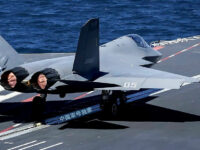 Executive Summary The past week (September 18-25, 2025) represents an inflection point where strategic defense concepts have transitioned from doctrine to tangible reality. An analysis of global events reveals four primary, interconnected trends shaping an increasingly contested international order. #1 – European defense postures are materially hardening, with a strategic shift from deterrence by reinforcement to deterrence by denial, led by Germany’s military expansion and a firmer NATO stance on airspace violations. #2 – the character of future warfare is rapidly maturing, driven by the industrial-scale development of collaborative combat aircraft (CCAs), the democratization of long-range precision strike capabilities, and a doctrinal revolution in armored warfare inspired by the conflict in Ukraine. #3 – The Middle East is undergoing a profound realignment of security partnerships, catalyzed by Israeli technological breakthroughs in laser defense and a crisis of confidence in the U.S. security umbrella, culminating in a historic mutual defense pact between Saudi Arabia and Pakistan. #4 – The Indo-Pacific theater is characterized by a sharpening of strategic competition, with the U.S. and its allies operationalizing new trilateral security structures while China intensifies its multifaceted campaign of coercion against Taiwan. Underpinning these shifts is a renewed global focus on the industrial and organizational foundations of military power, signaling that nations are now making the hard investments and difficult choices required to posture for a more dangerous and uncertain future. You are invited to listen to the overview of this week’s report in the podcast. .
 - U.S. Air and Space Forces Push Next-Gen Programs at the AS&C 2025 Conference and AFA Exhibition Sep 24, 2025
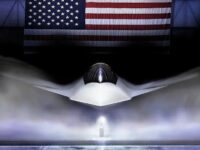 At the 2025 Air, Space & Cyber Conference, U.S. Air Force and Space Force leaders unveiled major updates on next-generation fighters, bombers, unmanned systems, and space initiatives, highlighting both rapid innovation and critical readiness challenges as the services race to outpace global competitors. A short version is available here, with a more detailed version for subscribers.
 - TADTE 2025: Reflecting Taiwan’s Strategic Themes Sep 22, 2025
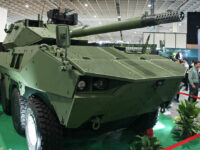 The Taipei Aerospace & Defense Technology Exhibition (TADTE) 2025 crystallized around four dominant strategic themes that collectively illustrate Taiwan’s comprehensive approach to defense modernization amid escalating regional tensions. Based on a detailed report by Pleronix (available upon request). Includes a Podcast discussion on TADTE 2025’s highlighting Taiwan’s four strategic themes beyond the post’s coverage.
 - Iron Beam 450 Completes Testing, Soon to Join With Operational Air Defense Units Sep 17, 2025
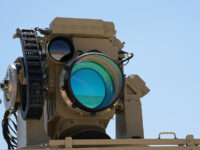 Israel’s Iron Beam 450 high-power laser system has completed final testing, marking a major leap in air defense. Developed by Rafael, it offers precise, cost-effective interception of rockets, UAVs, and mortars, and is set for IDF deployment by 2025.