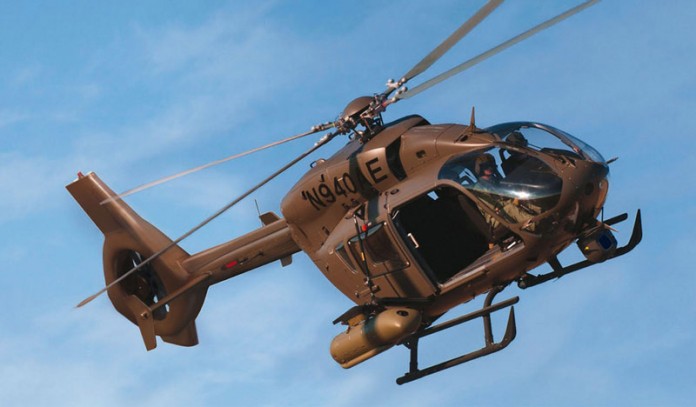
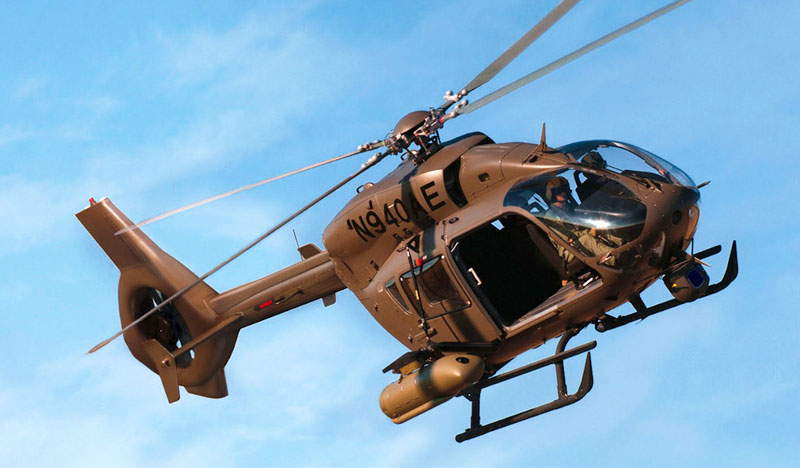
The EC645 T-2 is the most powerful model in the EC145 series. Photo: Airbus Helicopters
The EC645 T-2 is the most powerful model in the EC145 series. Photo: Airbus Helicopters
Airbus Helicopters (formerly Eurocopter) is displaying its newest newest military helicopter at Eurosatory, the twin-engine EC645 T2, which has been ordered by Germany for Special Forces Command (Kommando Spezialkräfte). Airbus is scheduled to deliver the first helicopters under this order next year. The US Army is operating the UH-72A Lakota version of this model. More than 250 have already been delivered, demonstrating an availability rate of more than 90 percent. Designed for multi-role capability, the EC645 T2 has enough power to carry out missions with maximum speed and agility carrying full payload. For special ops, the helicopter’s small footprint allows safe and easy access to confined areas, for fast roping, rappelling and direct air assault. Typical special operations configuration accommodates door mounted or podded machine guns, leaving maximum internal cabin volume for a fully-equipped combat team-ready to operate by day or night.
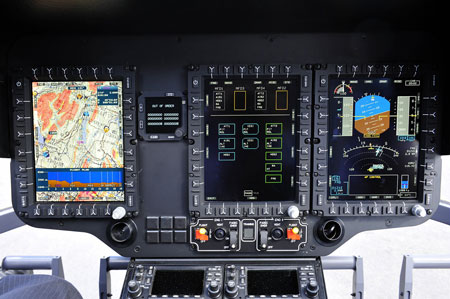
The cockpit of the EC645 T2 the helicopter is equipped with a modern digital cockpit with the Helionix avionics suite, full night vision capabilities, as well as a 4-axis autopilot. Photo: Airbus HelicoptersPowered by two Turbomeca Arriel 2E engines with dual-channel full authority digital engine control (FADEC), the T2 is the most powerful model in the EC145 series. Enhancements to the EC645 T2 include an upgraded transmission system and incorporation of Eurocopter’s Fenestron tail rotor for improved anti-torque control. It is equipped with a modern digital cockpit with the Helionix avionics suite, full night vision capabilities, as well as a 4-axis autopilot.
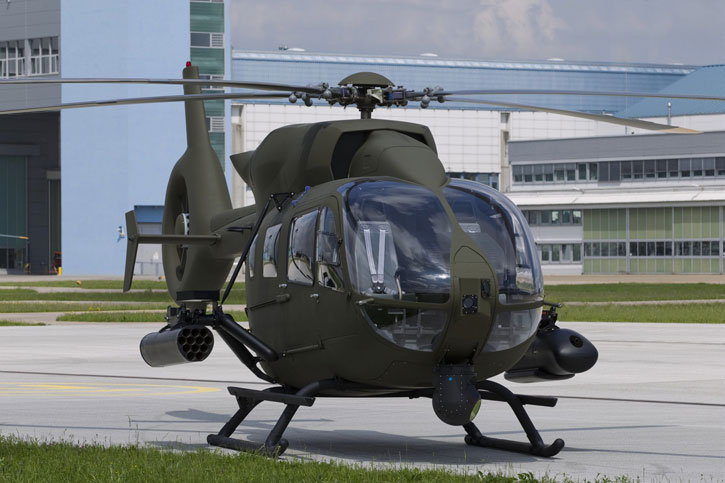
The helicopter has a spacious unobstructed cabin, which is accessible through the side and rear doors, and can be fitted with a wide selection of armament – ranging from ballistic to guided ammunition, providing outstanding flexibility for all force operations from light utility to light attack.
A mockup of the EC645 T2 milirtary / special mission helicopter. Photo: Airbus Helicopters
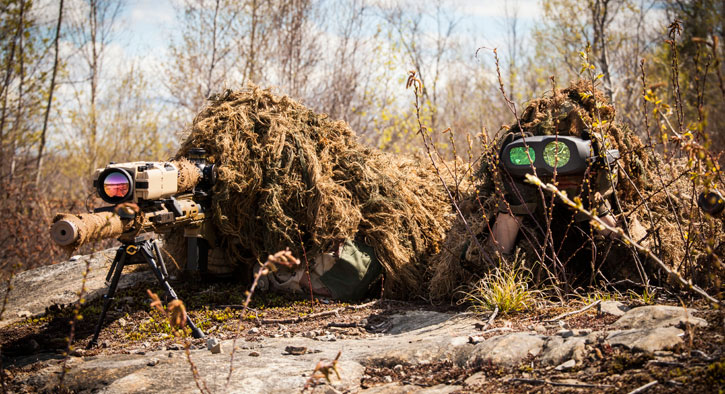
Both HISS-XLR clip-on sniper sight (left) and RECON V thermal binocular (right) employ cooled, 640×480 MWIR detectors, displaying their images on miniature HD displays to deliver a crisp, detailed target view from miles away. Photo: FLIR Systems
Last month at the SOFIC exhibition FLIR Systems unveiled two new products designed for tactical use. Unlike previous systems that use primarily I2 or uncooled thermal imagers, often limited by range, the two new systems utilise miniature, cooled thermal imagers, delivering detailed, high definition images from ranges of several kilometres.
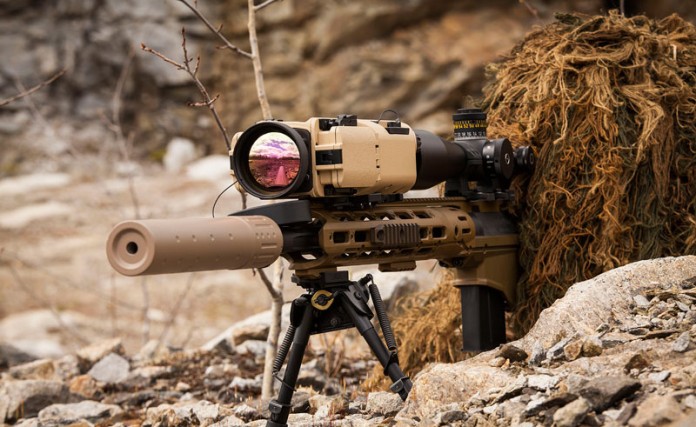
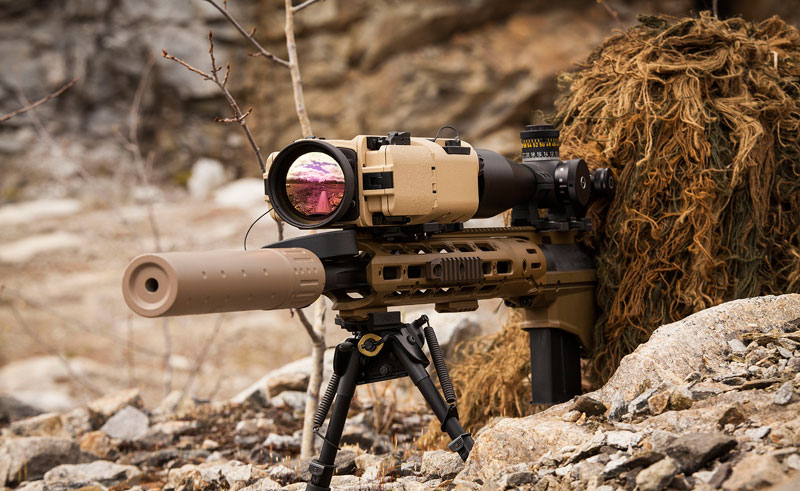
The HISS-XLR mid-wave thermal weapon sight is one of the FLIR’s new tactical sight range. This clip-on thermal weapon sight allows snipers to detect and recognize man- size targets in excess of 2,000 meters, a significant increase in engagement range of more than 25% compared to previous models.
It uses a miniature cooled 640×480 InSb FLIR, couples with 240mm long range optics packed into a compact assembly fully tested on weapons up to and including .50 caliber. Using an MWIR sensor enables the shooter to see the target in total darkness, through smoke, fog and most battlefield obscurants. The sight has a fixed f2.29° h x 1.72° v field of view.
The sight features a built-in ballistics mode that can give an instantaneous target solution when integrated with laser rangefinder and ballistics computer. The HISS-XLR also includes an integrated digital magnetic compass for azimuth information. The high definition display provides cleaner text and symbology while allowing the use of day scopes of up to 25× without image distortion. The sight view can be record on an integral SD card for post-mission debriefing. For real-time monitoring video output can be fed to a monitor or to a remote users via radio.
The HISS-XLR is a clip-on thermal sight designed to operate with long-range weapon day sights, enabling the sniper to engage targets from a distance of 1,500-2,000 meter in total darkness, through for and smoke. Photo: FLIR SystemsAt a weight of 8.75 lbs, the RECON V is designed for hand held operation. The optical assembly uses a x10 zoom that can move from 2 ̊ to 20 ̊ in less than 2 seconds. Photo: FLIR Systems
The sight can be remotely operated from a stock-mountable control pendant. The sight consumes 6 watts of power, delivered by two battery packs which support more than four hours on operation. These packs are ‘hot swapped’, meaning that the unit can operate on a single pack, while the other pack is replaced with fresh batteries.
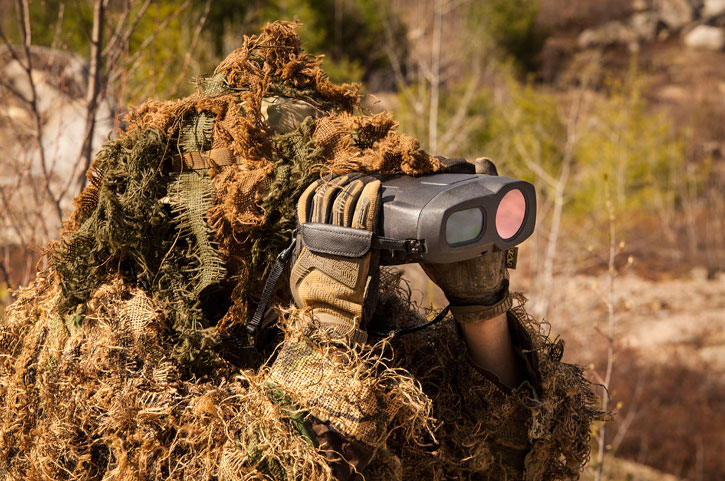
Another system recently unveiled by FLIR is the Recon V, a compact, rugged, ultra light weight multi-sensor thermal binocular. The primary sensor is a cooled FLIR system integrates a high resolution InSB 640×480 mid-wave IR (MWIR) sensor. The image delivered by the detector is further sharpened by the STACE technology that digitally sharpens, tunes and enhances contrast to maximise the image details definition. The optical assembly uses a x10 zoom, that can move from 2 ̊ to 20 ̊ in less than 2 seconds. The system also integrates an eye safe laser rangefinder operating in the 1.54 μm range. It can also accommodate an additional laser pointer, operating at the 852 nm band, for target marking.
To deliver a sharp and stable image with the hand held device the Recon V uses electronic image stabilization, that result in no image latency.
An integral 3-axis MEMS gyro, GPS navigation and digital magnetic compass, the system can determine location and heading with high accuracy. The systems’ laser rangefinder can operate at ranges up to 10,000 meters, provide accurate range to target, while target geo location is determined by the system’s computer.
The system uses a high definition (HD) color video display, the simple user interface does away with multiple buttons and complicated multi-layer menus, making the Recon V easier to use. As with the HISS-XLR, images can be recorded on an SD card, storing at least 1,000 images at high definition. The system can operate continuously for six hours on four Lithium AA batteries.
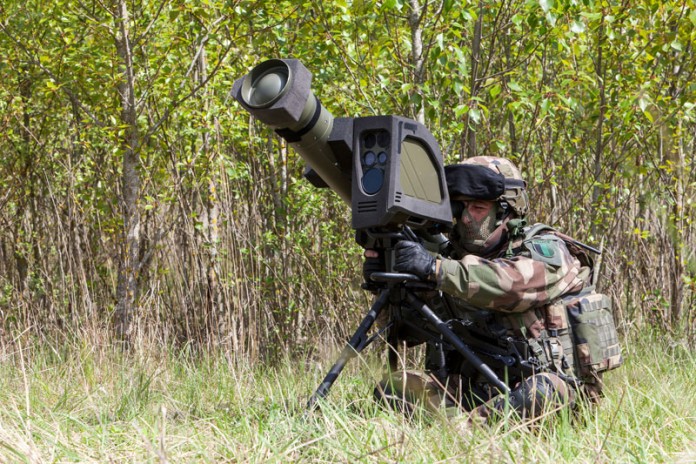
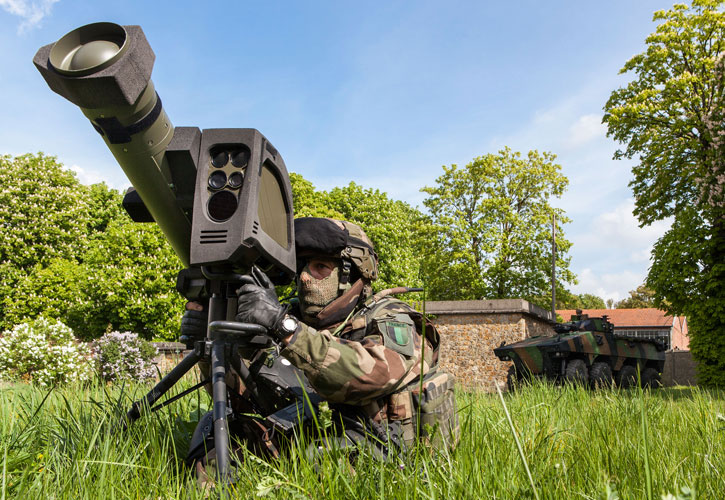
Initially intended for dismounted troops, MMP will replace the Milan and Javelin anti-tank missiles in service with the French Army and special forces from 2017. Photo: MBDA
The European missile developer MBDA is bringing its latest tactical missile to the Eurosatory 2014, showcasing its MMP (Missile Moyenne Portée) in the latest configuration, currently shaping at its labs, following the award of the French Defense procurement agency DGA (Direction Générale de l’Armement) for full scale development and future procurement batches of 2,850 production missiles and 400 MMP firing posts. The award was FSD award was announced in December 2013.
At Eurosatory, MBDA will be demonstrating the man portable dismounted MMP as well as two vehicular configurations of the weapon, deployed on a model of Nexter’s 40mm canon turret and on the MPCV
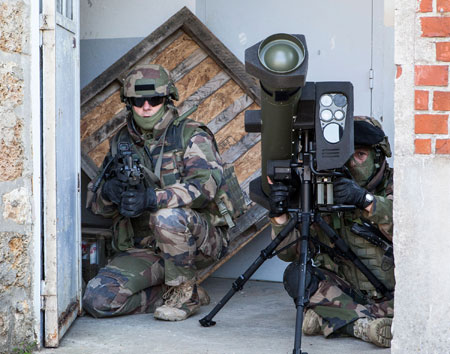
Responding to requirements expressed by the French Army, MMP features new properties, such as the ability to safely fire the weapon from confined spaces, engaging targets in a ‘fire-and-forget’ manner while retaining the ability to supervise the engagement buy maintaining the ‘man-in-the-loop’ as an option. Photo: MBDA
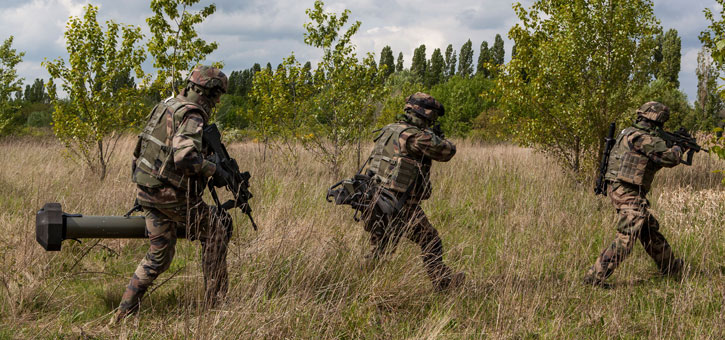
Initially intended for dismounted troops, MMP will replace the Milan and Javelin anti-tank missiles in service with the French Army and special forces from 2017. Over the last four decades, Milan, considered MBDA’s ‘best seller’, has achieved sales of 360,000 units in over 40 countries. MMP represents a totally new weapon system based on lessons learned gained from recent conflicts in Iraq, Afghanistan and Africa, where the French Army has been engaged. Responding to requirements expressed by the French Army, MMP features new properties, such as the ability to safely fire the weapon from confined spaces, engaging targets in a ‘fire-and-forget’ manner while retaining the ability to supervise the engagement buy maintaining the ‘man-in-the-loop’ as an option.
The MMP weapon weighs 15kg and can be operated as a man portable weapon using a man portable firing post weighs 11kg. The missile can also be launched from vehicles, with launchers mounted on remote weapon stations. Designed as a multi-purpose weapon, the missiles’ warhead is designed as a tandem warhead optimized to take out armored and fortified targets including pillboxes, bunkers or combat vehicles equipped with the latest generation explosive reactive armour.
The seeker at the missile’s tip comprises a dual-band (visible/uncooled IR) seeker capable of acquiring hot and cold targets throughout the weapon’s effective range. Once locking the seeker on an object, the MMP will head towards its target autonomously. For engagements requiring man-in-the loop intervention, a fibre-optic link relays the seeker image back to the firing post. This capability also enables the use of the missile in engagement of targets hidden from the firing position.
At Eurosatory, MBDA will be demonstrating the man portable dismounted MMP as well as two vehicular configurations of the weapon, deployed on a model of Nexter’s 40mm canon turret and on the MPCV (Multi-Purpose Combat Vehicle). An MMP firing post simulator is also being demonstrated on the French Ministry of Defence’s stand.
The MMP weapon weighs 15kg and can be operated as a man portable weapon using a man portable firing post weighs 11kg. Photo: MBDA
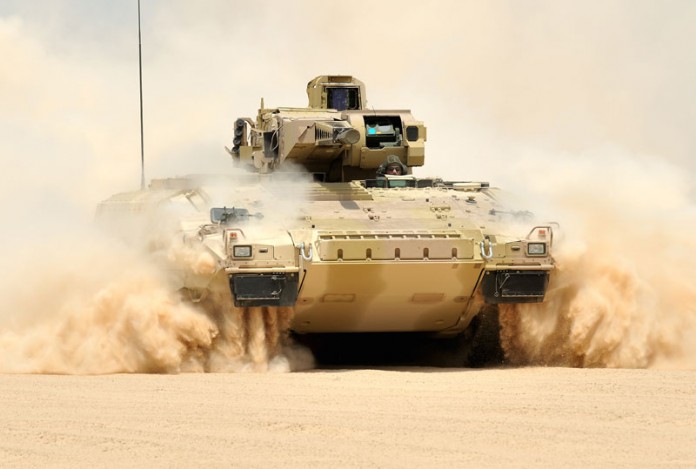
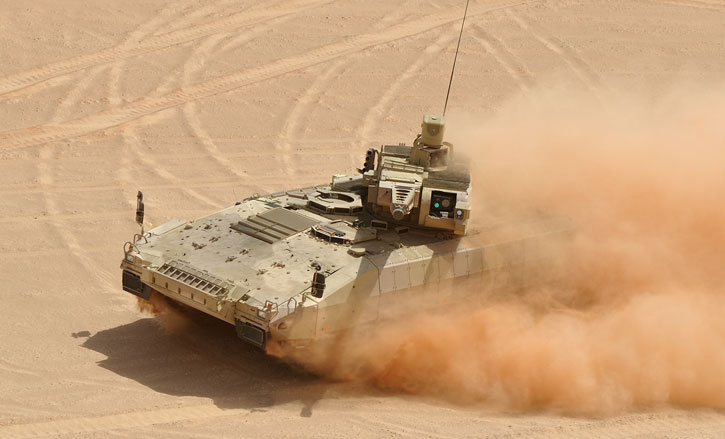
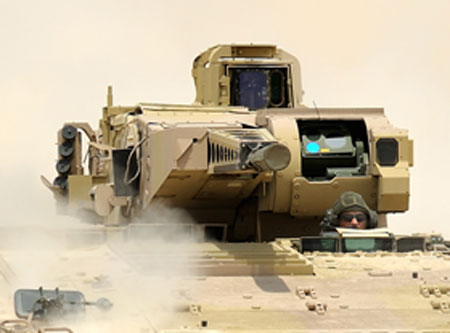
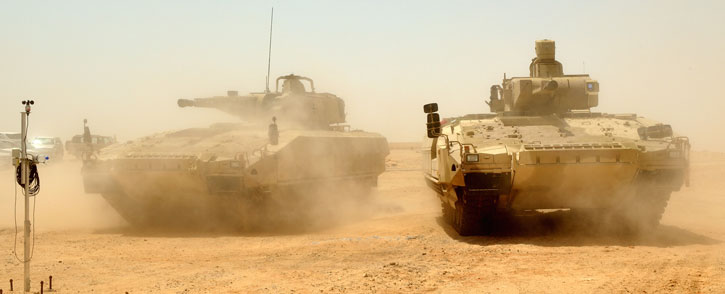
Last year Germany’s new armoured infantry fighting vehicle – Puma went through extensive hot, dry desert testing in the UAE, as part of the vehicle’s extensive climatic performance qualification. Photo: PSMAmong the vehicle’s unique attributes are its effective modular protection concept, a remote-control, stabilized turret armed with an ABM capable 30mm automatic cannon, and decoupled running gear with hydro-pneumatic shock absorber elements. Photo: PSM
The German PSM group, the manufacturer of the Puma armoured infantry fighting vehicle is displaying this armored vehicle at the Eurosatory exhibition following a successful series of tests demonstrating the vehicle’s performance under extreme climatic conditions. Last year the Puma has undergone hot, dry testing in the UAE 2013), which followed the cold weather testing in Norway in 2012.
The vehicle’s combat performance were also evaluated during live-fire trials conducted in cooperation with experts from the Federal Office of Bundeswehr Equipment (BAAINBw) and the German Army. Germany’s new armoured infantry fighting vehicle combines high tactical and strategic mobility with maximum crew protection and massive firepower provided by the 30mm cannon, backed by extensive optronic, target acquisition and fire control systems.
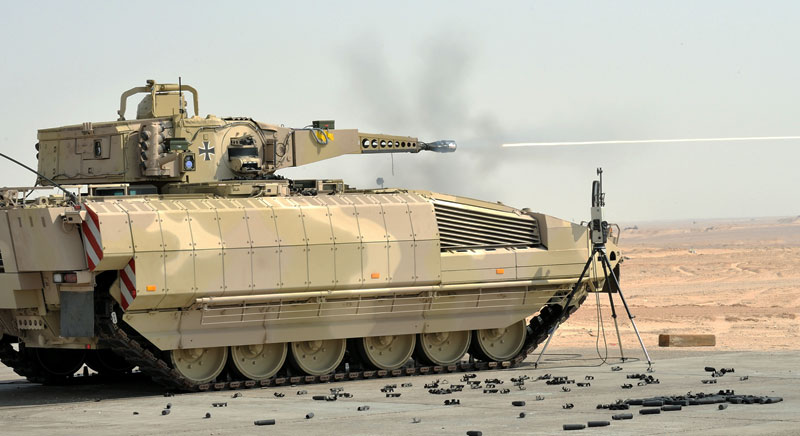
On the desert trials testers from the German Defence Technology Detachment (WTD) 91 evaluated the firing accuracy of the Puma’s main and secondary armament was tested. Both MK30-2/ABM automatic cannon and the MG4 machine gun were put to the test. Live firing was conducted in stationary mode as well as on the move, both day and night. Temperatures at the modern firing range in the northwest UAE ranged between 35 and 50° C in the shade. In addition to the firing test the air-conditioning system were also evaluated. Operating at high temperatures for weeks on end, the trials provided an effective test series for extensive, daily operation of the system. The participants also gave high marks to the IFV’s Multifunctional Self-Protection System (MUSS).
The Puma IFV demonstrated its mobility at two other proving grounds in the north and northeast of the UAE. Experts from WTD 41 were in charge of the mobility trials. Displaying excellent staying power with no breakdowns, the Puma proved that it could handle a great variety of different terrain types, including sand dunes, steep loose-surface tracks and a rocky desert streambed. Successful completion of the summer trials represents another important milestone on the path to getting the Puma to the troops later this year.
The Puma undergoing firing trials in the UAE, summer 2013. Photo: Rheinmetall Defence
Among the vehicle’s unique attributes are its effective modular protection concept, a remote-control, stabilized turret armed with an ABM capable 30mm automatic cannon, and decoupled running gear with hydro-pneumatic shock absorber elements. The vehicle is powered by the newly developed MTU diesel engine developing 800 kW of power. The vehicle delivered to the Bundeswehr are fitted as ‘network-enabled warfare capabable’, provided with battle management systems and supporting ‘future soldier systems’ and digital communications equipment. In addition to their combat capabilities, the vehicles can also be operated in ‘training mode’, providing an autonomous training platform, functioning as a realistic combat simulator for crew and unit training. Multiple vehicles can also be networked, makes it
possible to connect up to four vehicles in a training formation.
Its fighting compartment offers nine cubic metres of armor protected space, enabling enough room for integration of specific mission equipment kits. These can include mobile tactical operations centres, field ambulances, armoured recovery systems or scouts.
PSM Projekt System & Management GmbH is a 50:50 partnership established by the two German leaders in combat vehicles – Krauss-Maffei Wegmann and Rheinmetall. The group was founded specifically to manage the German Puma procurement project on the contractor side.
The German PSM group, the manufacturer of the Puma armoured infantry fighting vehicle is displaying this armored vehicle at the Eurosatory exhibition following a successful series of tests demonstrating the vehicle’s performance under extreme climatic conditions. Photo: PSM
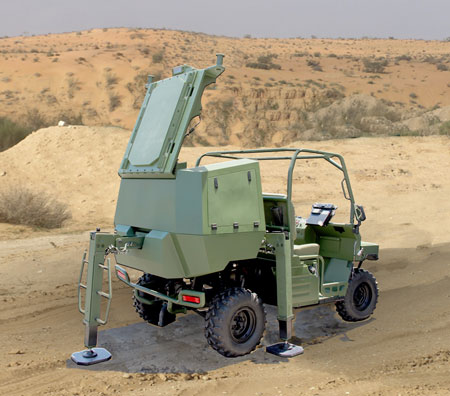
This configuration of the Green Rock is employing two radar modules on a single structure carried on the flatbed of tactical vehicles such as the HMMWV. Photo: IAI
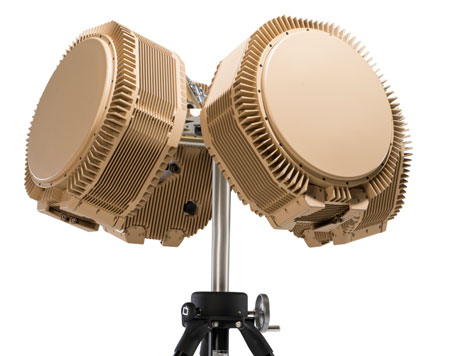
The ATC configured Green Rock uses a single module stacking several phased array covering 90×90 degrees. Photo: IAI
IAI is unveiling the latest configuration of ‘Green Rock’, a tactical radar force protection system at the upcoming Eurosatory exhibition. According to IAI, the successful evaluation clears the system for formal delivery to the IDF. The need for tactical C-RAM radars for force protection is recognized by many armies, and this operational requirement is accelerating the demand for such products worldwide.
Unlike the Multi-Mission Radar (MMR) designed to detect rockets flying over long distances the new system is focused on short range threats that are relevant to the tactical forces, that are often threatened by 81, 120mm mortars, 107mm rockets and Qassam improvised rockets, fired at distances below 8-10 km.
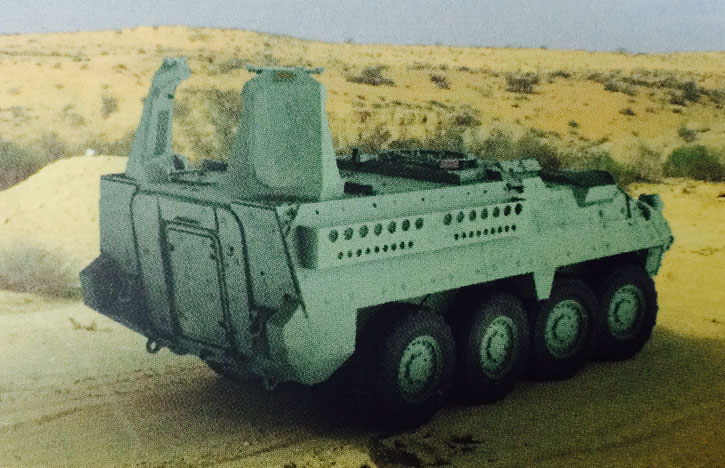
Another configuration of the Green Rock employing two separated radar modules can be installed on armored vehicles such as the Stryker. A different layout integrating the two panels in a single structure can be mounted on the flatbed of tactical vehicles such as the HMMWV. Photo: IAI
The system, developed by ELTA systems is available in several configurations, tailored for a compact, single or twin module mounted on an all-terrain-vehicle, a unified module or separate layout weighing about 800 kg, designed for tactical and armored vehicles. The system employs a mature, field proven system that does not require active cooling. The system is designed for fast deployment and autonomous operation.
Green Rock is part of a family of tactical integrated sensor systems developed by IAI Elta Systems to support tactical formations, at combat brigades, battalions and below, improving intelligence, surveillance and reconnaissance, providing force protection, enabling precision strike and networking services down to the lowest echelon. The following videoreport produced by Defense-Update outlines this new strategy.
The RPS-42 selected by the US Navy is based on RADA's MHR radar AESA platform. Photo: RADA
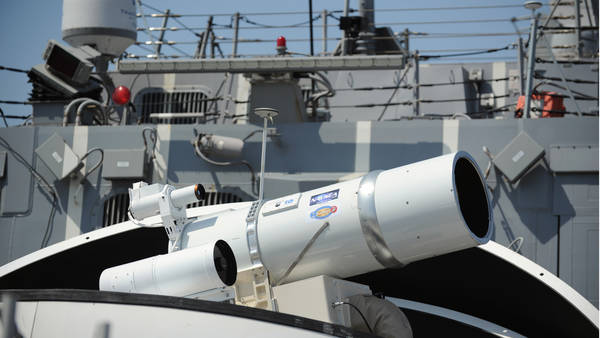
The Laser Weapon System (LaWS) tested on aboard the guided-missile destroyer USS Dewey (DDG 105) in 2010 was based on commercial fiber solid state lasers, utilizing combination methods developed at the Naval Research Laboratory. LaWS can be directed onto targets from the radar track obtained from the MK 15 Phalanx Close-In Weapon system or other targeting source. The system will be deployed for the first time this summer, on USS Ponce, on an operational mission to the persian Gulf. US Navy photo.
As the Navy prepares to deploy its first laser weapon on a ship later this summer, Office of Naval Research (ONR) officials announced this week that they have finished awarding contracts to develop a similar weapon to be used on ground vehicles.
ONR is working with Naval Surface Warfare Center Dahlgren Division and industry partners on the development of GBAD’s components and subsystems, including the laser itself, beam director, batteries, radar, advanced cooling, and communications and command and control.
“We’re confident we can bring together all of these pieces in a package that’s small enough to be carried on light tactical vehicles and powerful enough to counter these threats,” says Brig. Gen. Kevin Killea, vice chief of naval research and commanding general, the Marine Corps Warfighting Laboratory.
We’re confident we can bring together all of these pieces in a package that’s small enough to be carried on light tactical vehicles and powerful enough to counter these threats
“We can expect that our adversaries will increasingly use UAVs and our expeditionary forces must deal with that rising threat,” says Col. William Zamagni, acting head of ONR’s Expeditionary Maneuver Warfare and Combating Terrorism Department. “GBAD gives the Marine Corps a capability to counter the UAV threat efficiently, sustainably and organically with austere expeditionary forces. GBAD employed in a counter UAV role is just the beginning of its use and opens myriad other possibilities for future expeditionary forces.”
The technologies being developed under the GBAD program are a direct response to the Marine Corps Science and Technology Strategic Plan, which calls for a mobile directed-energy weapon capable of destroying threats such as UAVs.
Some of the system’s components already have been used in tests to detect and track UAVs of all sizes. Later in the year, researchers will test the entire system against targets using a 10kW laser as a stepping stone to a 30kW laser. The 30kW system is expected to be ready for field testing in 2016, when the program will begin more complex trials to ensure a seamless process from detection and tracking to firing, all from mobile tactical vehicles.
The US Navy plans to integrate RADA’s RPS-42 radar system as part of the counter-UAS capability demonstration enabling mobile, ground based laser weapons to defeat small and micro unmanned aerial vehicles. This selection is the second win for RADA’s new radar platform, another system was selected by Boeing to support the High Energy Laser Technology Demonstrator (HEL TD) evaluations, where it has proved highly successful in recent laser intercept tests. Delivery of the system to the US Navy is planned for July 2014.
The Navy’s laser weapon has progressed far enough that when it’s deployed and tested on the USS Ponce this summer the system will be controlled by a single sailor. The solid-state Laser Weapons System would allow the navy to effectively neutralize threats such as airborne UAS and swarm boats.
The program will demonstrate a 50kW class laser weapon, mounted on a tactical vehicle can defeat UAS Low Observable/Low Radar Cross Section (LO/LRCS) threats while on-the-move
The The Ground-Based Air Defense (GBAD) Directed Energy (DE) On-The-Move (OTM) demonstration is part of the Office of Naval Research (ONR) pursuit of future enhancements for the US Marine Corps’ existing low-altitude air-defense capability which currently lacks reliable CounterUAS (C-UAS) and Counter Rocket, Artillery and Mortar (CRAM) capabilities. The Navy currently tests lasers derived from commercial systems, but for the GBAD-DE wants to create lasers which weigh less than 907 kg (2,000 pounds) and can fit entirely into a HMMWV’s or JLTV cargo hold. The laser should pump out a minimum 25 kilowatt beam for a duration for 120 seconds, and recharge to 80% power after only 20 minutes.
The GBAD-DE-OTM program will demonstrate how a 30kW class laser weapon, integrated on a tactical vehicle can defeat such targets on-the-move. The system is designed to defeat Low Observable/Low Radar Cross Section (LO/LRCS) threats such as small UAS. The system designed to provide continuous low altitude air defense will comprise of command and control, sensor, communications and a high energy laser (HEL) weapon. According to the Navy program documents, the radar sensor associated with the system is responsible for air surveillance, target detection and tracking. The identification and threat evaluation are likely to be performed by EO/IR sensors. Once an engagement decision is made, the system performs weapons assignment triggering alert, the laser weapon will then activate briefly to terminate the target. The engagement cycle is completed with kill assessment.
We can expect that our adversaries will increasingly use UAVs and our expeditionary forces must deal with that rising threat
The RPS-42 selected by the US Navy is based on RADA’s MHR radar AESA platform. Photo: RADA
RADA’s RPS-42 Tactical Volume Surveillance Radar System, a member of the company’s Multi-Mission Hemispheric Radar (MHR), was the radar selected to provide those pre-engagement functions. According to the manufacturer, the radar detects, tracks and classifies micro and mini UAS (Groups 1&2) at ranges of up to 10km, accurately tracking the threats up to very high elevation angles.
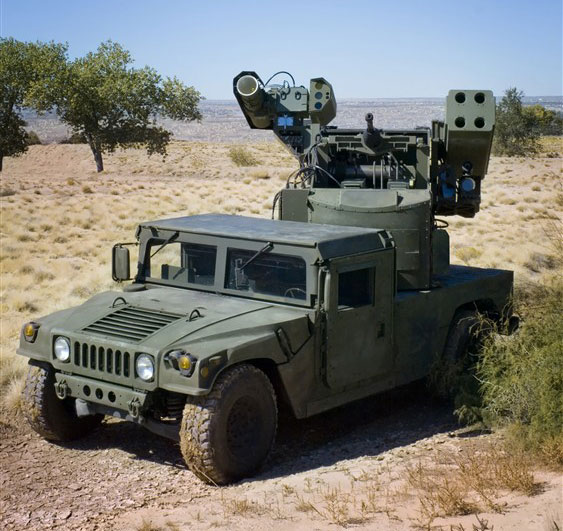
Boeing has already tested a version of its Avenger mobile ground based air defense system, fitted with a reconfigured Avenger turret, comprising a medium-power laser weapon, automatic cannon and Stinger missiles. Photo: Boeing
The MHR is an S Band, Software-Defined, Pulse-Doppler, Active Electronically Scanned Array (AESA) radar, a GaN based digital radar platform using beam forming capabilities and advanced signal processing. The system can be programmed to support multiple missions on each radar platform, for example, combining C-UAS and C-RAM operational missions on the same radar, thus delivering organic, tactical surveillance solutions for force protection systems.
In addition, the system can also monitor low-level traffic air throughout the local airspace, by tracking other aerial targets, including fighter jets and transport aircraft, helicopters, etc. These functions help coordinating low-level air operations supporting the land forces.
The ability to detect and track exceptionally small, low and slow-flying UAS – categorized as significant tactical threats to manoeuvre forces – is challenging conventional radar systems. Advanced VSHORAD systems, especially those based on directed energy, require compact tactical radars that are able to detect these and other threats, operate on-the-move, and provide vital real-time threat information to the fire control system. “All these critical capabilities were designed into the RPS-42 system – delivering volume surveillance and detection of multiple threat types, including the smallest threats.” Zvi Alon, RADA’s CEO explained.
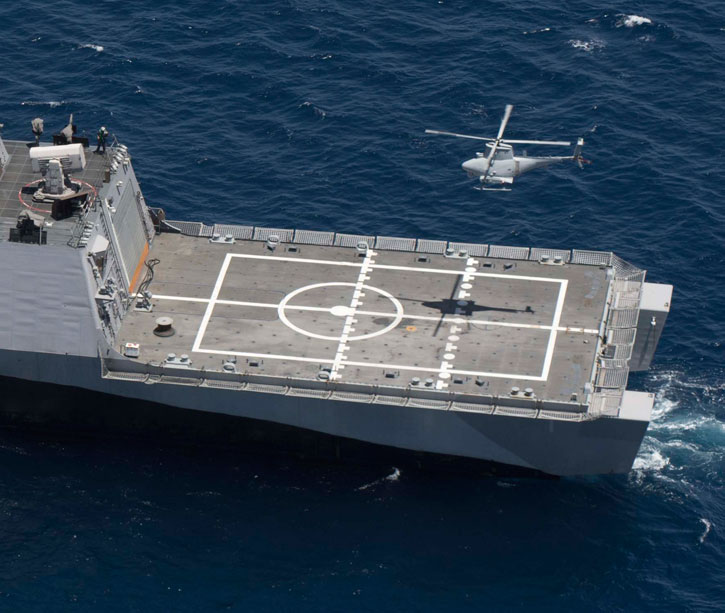
MQ-8B Fire Scout unmanned helicopter prepares to land on the littoral combat ship USS Freedom (LCS 1) off the coast of Southern California. The training marked the first time a littoral combat ship, an MQ-8B Fire Scout unmanned helicopter and an SH-60R Sea Hawk helicopter conducted integrated training. Photo: US Navy
During recent tests of USS Freedom, the firs vessel of the US Navy’s Littoral Combat Ships (LCS) the Navy successfully flew the unmanned MQ-8B Fire Scout simultaneously with the MH-60R Sea Hawk helicopter for the first time. The capability demonstrated how a mix of aircraft can increase a ship commander’s intelligence-gathering capabilities aboard the Littoral Combat Ship. The Freedom LCS can operate an MH-60R and a firescout unmanned helicopter, or several firescouts, stored at a covered hangar adjacent to the rear landing deck. The Independence Class LCS has a larger deck and hangar, enabling it to carry two MH-60R and at least one firescout.
The flight tests took place May 12, aboard the USS Freedom (LCS 1) off the coast of San Diego. The Fire Scout complements the Sea Hawk because it can fly for longer periods of time, thus maintain constant surveillance on a target or area of interest. The MQ-8B Fire Scout was on its eighth at-sea deployment supporting a variety of surveillance and security missions onboard Navy frigates. The system also completed a two-year mission providing ground commanders intelligence-gathering capabilities in Afghanistan.
“Utilizing the Fire Scout in operational maritime scenarios with manned aircraft will prove to be a unique asset to our fleet,” said Capt. Patrick Smith, Fire Scout program manager. “The sensors of the Fire Scout are providing complimentary situational awareness and precision targeting support for the MH-60R Sea Hawk and Littoral Combat Ships.”
The MQ-8B Fire Scout developed and built by Northrop Grumman is designed to take off autonomously and land from any aviation-capable warship. It has the endurance to fly for five hours and has logged more than 12,500 flight hours from land and sea.
”Fire Scout is giving our warfighters enhanced persistent situational awareness,” said George Vardoulakis, vice president, medium range tactical systems, Northrop Grumman Aerospace Systems. “Fire Scout systems are providing critical information to the pilots of the MH-60R Sea Hawk and the sailors of the Littoral Combat Ship to ensure that they are protected from maritime threats.”
The MQ-8B has been operating from air-capable ships with initial deployment on a Guided Missile Frigate (FFG), followed by final integration and test aboard the Littoral Combat Ship (LCS). The larger MQ-8C air vehicle upgrade will provide longer endurance, range and greater payload capability than the MQ-8B (see comparison table). It will conduct initial testing on guided-missile destroyers (DDG)-class ship.
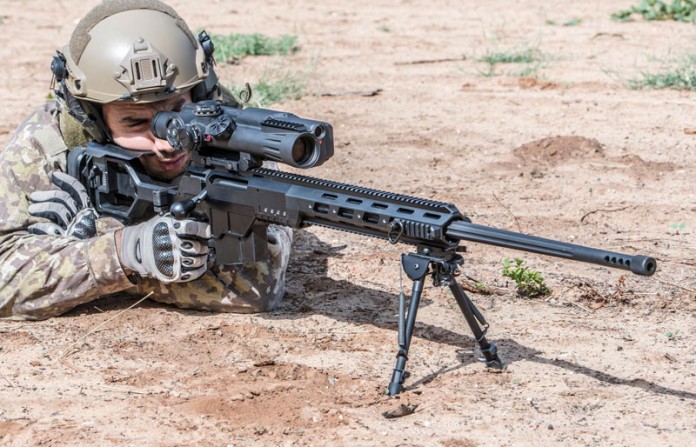
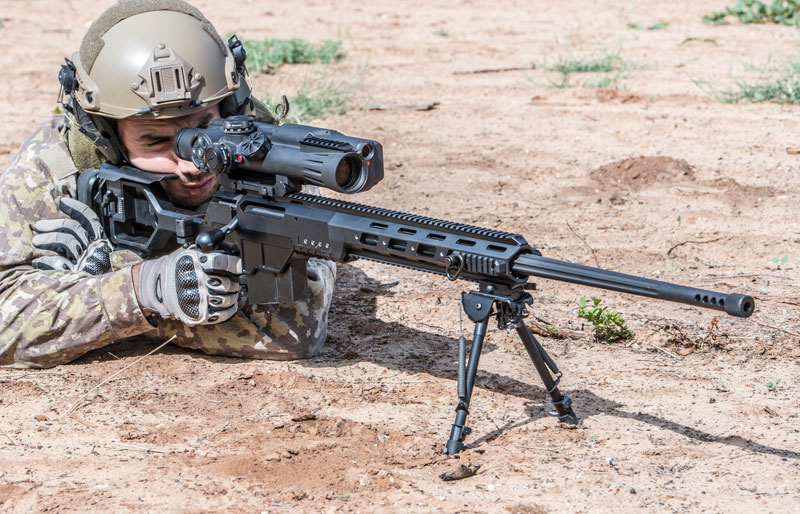
The DAN .338 fitted with Meprolight's Sniper’s Fire-Controlled Riflescope, a 10 x 40 optical sight with an Integrated Laser Rangefinder. Photo: IWI
The DAN .338 fitted with Meprolight’s Sniper’s Fire-Controlled Riflescope, a 10 x 40 optical sight with an Integrated Laser Rangefinder. Photo: IWI
A new rifle launched by Israel’s firearms manufacturer IWI at the Eurosatory 2014 exhibition represents a first of IWI’s new family of bolt action sniper rifles. IWI said it developed the DAN .338 bolt action sniper rifle in cooperation with the IDF special operations units. Bolt action rifles are preferred by snipers for their high precision at long range. Designed for military and law enforcement applications, the rifle uses the powerful LAPUA MAG .338 ammunition delivering high accuracy (sub MOA) at distances up to 1,200 meters (1,312 yards).
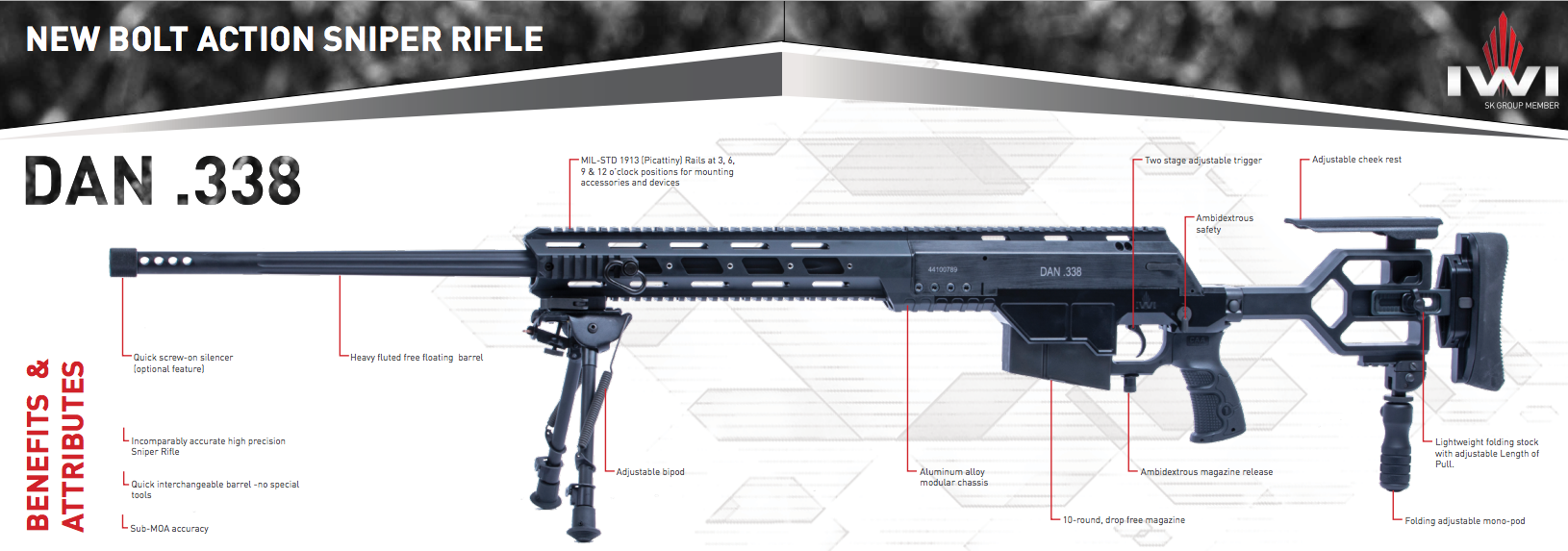
The rifle is designed for light weight and compact carry. The chassis is made of aluminum alloy, the heavy fluted free floating barrel is 737 mm (29″) long. The new rifle weigh 6.9 Kg (15.2 pounds) without magazine, ammo, telescope and mount. Design features include an adjustable, folding stock with adjustable length of pull, adjustable cheek rest and folding adjustable mono-pod and two-stage trigger.
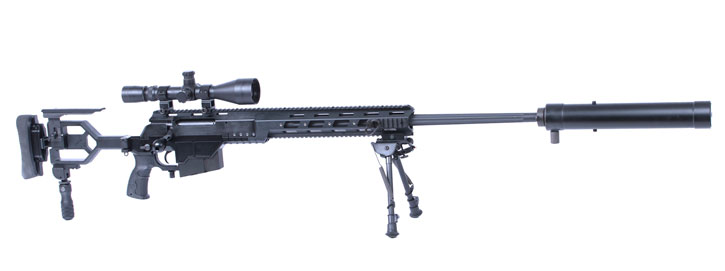
The rifle incorporates four Picattiny rails (3, 6, 9 and 12 o’clock positions) for mounting of telescopes, night vision equipment and accessories. In addition, a clip-on sight and a silencer are available as optional features.
Click to subscribe, to view the larger, readable image.
DAN .338 Weapon Specifications
Model: DAN .338 Bolt Action Sniper Rifle
Ammunition: .338 LAPUA Magnum
Firing mode: Bolt action
Feeding: 10 round magazine
Barrel rifling: 1:10” twist
Trigger pull Force (Kg): 1-2
Weight (w/o magazine, telescope and mount): 6.9kg
Barrel length: 737 mm (29”) – 787 mm (31”) with muzzle brake)
Overall length, stock extended: 1,280 mm (50″)
Overall length, stock folded: 1,030 mm (40.5″)
Muzzle velocity (approx.) 881 m/sec
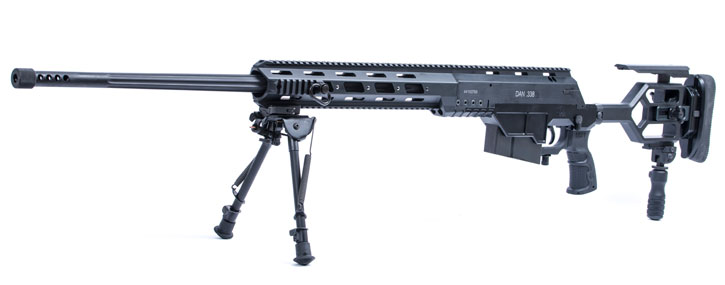
DAN .338 is provided with four Picattiny rails for the mounting of sights and accessories. Photo: IWIa clip-on sight and a silencer are available as optional features. Photo: IWI
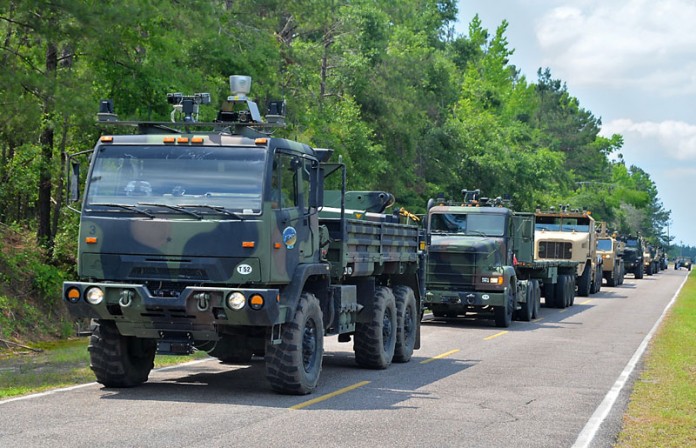
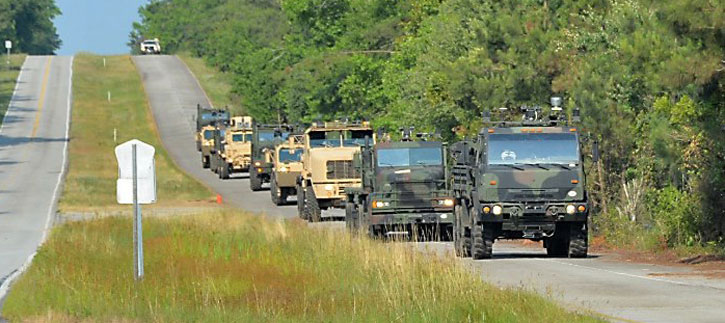
the next milestone this summer will be a six-week Operational Demonstration where Soldiers and Marines will assess the system benefits in realistic convoy operations. Photo: via Lockheed Martin
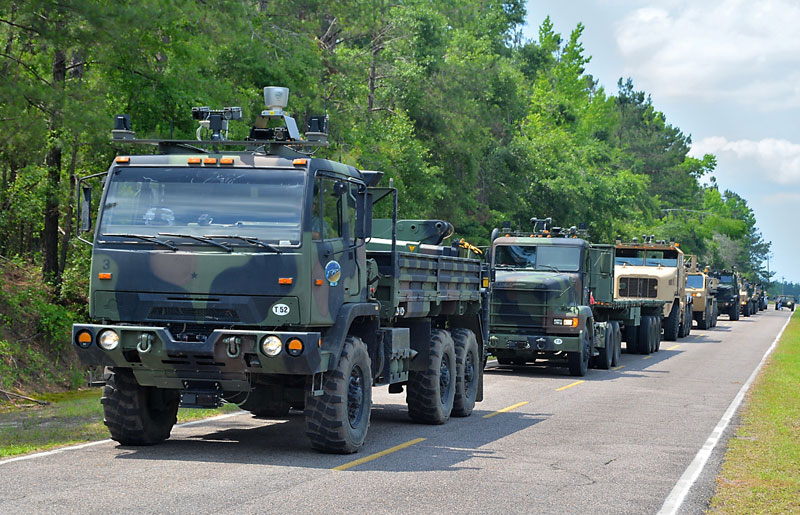
Vehicles used in the CAD-2 demonstration included one Family of Medium Tactical Vehicles (FMTV) truck, one Medium Tactical Vehicle Replacement (MTVR) vehicle, two Palletized Load System trucks, two M915 Line-Haul Tractors and one Heavy Equipment Transport. Photo: TARDEC
Robotic convoy operations gather momentum with another successful experiment, where a convoy formed of seven driverless trucks roamed the highway at the Department of Energy’s Savannah River Site in South Carolina at 40mph. The test, conducted by the U.S. Army Tank Automotive Research, Development and Engineering Center (TARDEC) and Lockheed Martin May 29th, 2014, successfully demonstrated additional capabilities of the Autonomous Mobility Appliqué System (AMAS) Joint Capability Technology Demonstrator (JCTD).
Autonomy-enabled vehicles will reduce accidents while augmenting the warfighter and increasing capabilities by creating greater stand-off distance from danger
The recent AMAS 2nd Capabilities Advanced Demonstration (CAD II) was built upon the capabilities that were demonstrated at Ft. Hood, Texas, in January 2014, where three unmanned military trucks negotiated oncoming traffic, followed rules of the road, recognized pedestrians and avoided various obstacles at speeds up to 25 mph in an urban environment.
“I would describe these tests as a successful demonstration of the maturing capabilities of AMAS technology,” said David Simon, AMAS program manager for Lockheed Martin Missiles and Fire Control. “We will conduct further safety testing within the next month, and the program will execute a six-week Operational Demonstration in the July-August timeframe, during which time Soldiers and Marines will assess the system benefits in realistic convoy operations.”
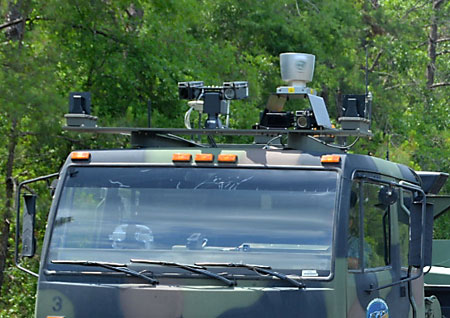
The AMAS common appliqué kit consists of the bi-wire active safety kit and the autonomy kit. It uses Global Positioning System (GPS), Light Detecting Radar (LIDAR) systems, Automotive Radio Detection and Ranging (RADAR) and commercially available automotive sensors in order to make the system affordable. The driver was placed in the cabin for safety only. Photo: Lockheed martin
The AMAS hardware and software are designed to automate the driving task on current tactical vehicles. The Unmanned Mission Module part of AMAS, which includes a high-performance LIDAR sensor, and additional algorithms, is installed as a kit and can be used on virtually any military vehicle. The goal of the program is to standardize these kits across the Army and Marine Corps, providing the warfighter the ability to transform ordinary vehicles into optionally-manned vehicles by 2020.
Autonomy-enabled vehicles will reduce accidents while augmenting the warfighter and increasing capabilities by creating greater stand-off distance from danger. The Army considers the operation of driverless trucks would make supply distribution safer and more efficient, providing the flexibility to adapt to ever-changing and evolving threats.
Vehicles used in the CAD-2 demonstration included one Family of Medium Tactical Vehicles (FMTV) truck, one Medium Tactical Vehicle Replacement (MTVR) vehicle, two Palletized Load System trucks, two M915 Line-Haul Tractors and on
the next milestone this summer will be a six-week Operational Demonstration where Soldiers and Marines will assess the system benefits in realistic convoy operations. Photo: via Lockheed Martin
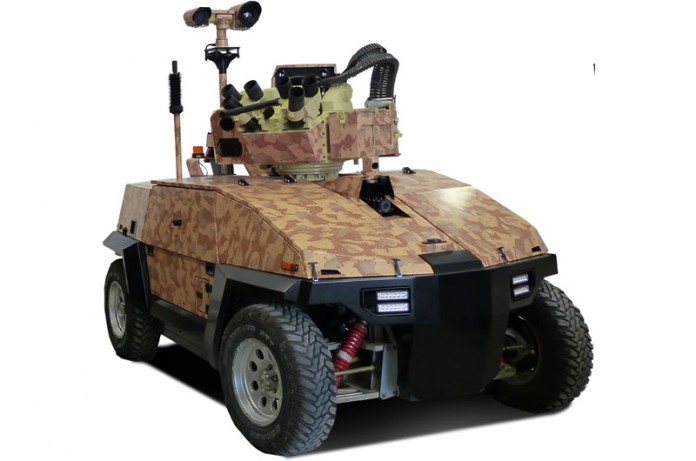
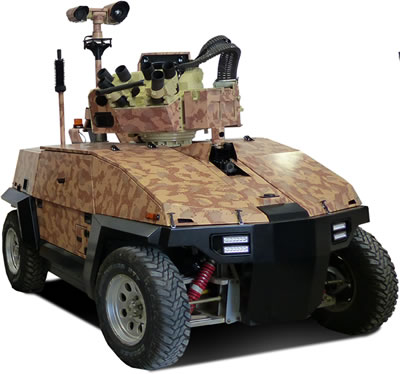
The new Hybrid Multipurpose Vehicle (HMV) from G-NIUS will be available in two variants – an all electric and hybrid electric, both will be able to carry payloads up to 1.2 tons. The vehicle on display at Eurosatory carries a remote weapon station produced by Elbit Systems. Photo: G-NIUS
The Israeli ground robotics expert G-NIUS is unveiling its latest unmanned ground vehicle (UGV) at the Eurosatory 2014 exhibition in Paris. The new Hybrid Multipurpose Vehicle (HMV) is optimized for surveillance and intelligence collection missions, homeland security missions and special operations. The HMV will be available in two variants – an all electric or hybrid electric. Both will use an electric drive, featuring high level of manoeuvrability with low acoustic signature, improving survivability and stealthiness. The hybrid variant will also include an integral diesel motor, allowing the vehicle to travel long distances while charging the vehicles’ battery.
The platform architecture enabled G-NIUS designers to focus on the vehicle as a robotic platform, rather than adapt a manned vehicle into a robot, having to deal with redundant elements such as cabin, drivetrain etc. The HMV utilises a low-profile electric vehicle, offering high off-road mobility and low profile. The various sensors are embedded into the vehicle’s envelope, while robotic controls are directly interfacing to the automotive system eliminating typical the applique kit used for the ‘robotization’ of existing vehicles.
Both propulsion options enable the vehicle to carry loads of up to 1.2 tons. The system on display carries a stabilized weapon station from Elbit Systems
“The solutions we are introducing here are offering capabilities based on operational experience accumulated in more than seven years, equivalent to 60,000 man-hours” G-NIUS CEO, Yoav Hirsh commented.
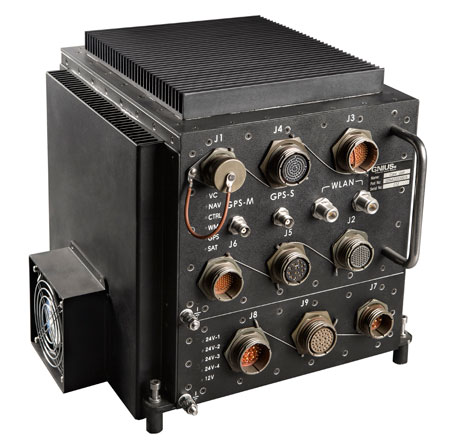
While G-Nius’ HMV is positioned to meet specific applications, bigger prospects are seen in the conversion of part of the military vehicle fleet into optionally robotic vehicles, a trend that could become huge potential market for robotic pioneering company like G-NIUS. This opportunity has guided the company in the development of its robotic control suite, that has been implemented in the HMV and the latest version of the robotic border security vehicle. The Core Unit of this robotic suite is packed into a compact module, that can be installed in any vehicle, converting a manned controlled platform into an unmanned one. The kit allows any ground transportation platform to become an unmanned vehicle – protecting forces while savings in manpower.
Unmanned systems that re-utilize otherwise obsolete platforms, would be more affordable, require significantly less manpower to operate and support while performing at least as reliably as manned platforms
The robotic suite includes a mission computer, navigation unit, power distribution system, video and audio management functions grouped into a single, integrated ‘core unit’, that is coupled with external sensors and a communication systems. Photo: G-NIUS.
The system is designed for easy installation, withstand harsh operating conditions and extreme temperature range, enabling operators to convert part of their vehicle fleets to assume unmanned missions.
“The Hybrid Multipurpose Vehicle and the Robotic Suite introduce force multipliers to any UGV platform; we are witnessing interest in these solutions by various organizations around the world”. Hirsh added.
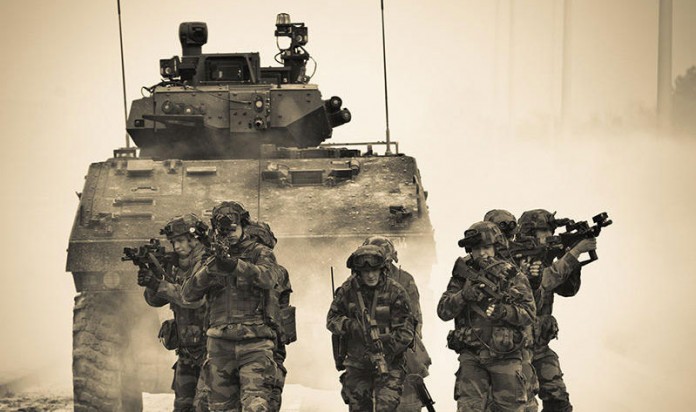
Robotic vehicles help save soldiers lives by minimizing exposure of manned operators to mines, IEDs and enemy fire. With safer driving, they would also help avoid non-combat accidents. On such missions, obsolete wheeled and tracked vehicles such as the HMMWV and M-113 can be converted into unmanned, robotic platforms. These robotized vehicles would assume specific missions that would otherwise require new vehicles, through-life support and significant manpower for operations and sustainment. According to expert assessment, unmanned systems that re-utilize otherwise obsolete platforms, would be more affordable, require significantly less manpower to operate and support while performing at least as reliably as manned platforms.
The robotic control core suite has already been integrated in the new border patrol unit, utilizing the Ford F350 (seen in the video below), which will soon replace the Guardium Mk I and II operating with the IDF border patrol missions around the Gaza border. Recently the Guardium was sent to patrol the Lebanese border as well.
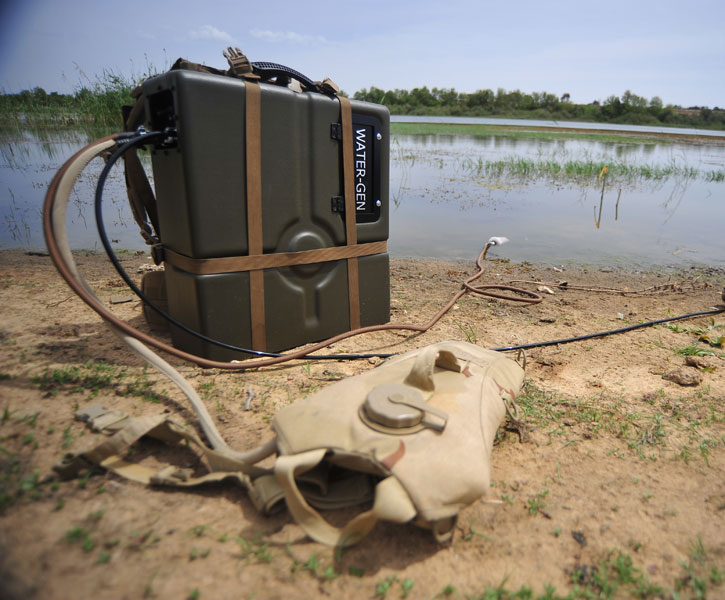
GEN-40V produces 30-75 liters/day (7-20 gallons/day) depending on environmental conditions. The system utilizes minimum space in the vehicle, and, as it replaces stowed weight, it does not add weight to the vehicle. Photo: WaterGen
Infantry squads operating in hot conditions must carry hundreds of litters of water per mission to support the troops. An atmospheric water generation system developed by the Israeli company WaterGen can deliver these volumes of water at a fraction of the space and weight of water containers. The French Army plans to equip its new VBCI armoured infantry fighting vehicles with such systems.
Cofely-INEO, a member of the French GDF SUEZ conglomerate was selected as the prime contractor, with WaterGen, the original system developer and manufacturer, selected as the sole supplier for its water supply solutions. The company will provide two systems for the French Army – the GEN40V atmospheric water generator systems and Water Treatment Units. The systems differ in the source used to generate water- either the air or the vehicle’s air conditioning system
According to many global military standards, a soldier must be provided with an average per-day water supply of 10 liters. In addition, three days of logistic independence is required for all new combat infantry carrier vehicles, which carry an average of 10 soldiers. Therefore, in order to comply with these standards, vehicles are required to carry a 300-liter supply of water – a volume that requires excessive space using common water containers.
The GEN-40V produces 30-75 liters/day (7-20 gallons/day) depending on environmental conditions. The system utilizes minimum space in the vehicle, and, as it replaces stowed weight, it does not add weight to the vehicle. Each of the VBCIs will receive either the GEN40V or the WTU, according to the French Army’s requirements.
The vehicle-mounted GEN40V atmospheric Water Generator extracts water from air and supplies cold, fresh and pure drinking water for the vehicle’s crew. Units are scaled to fit military tactical vehicles, serving cold water from a tap within the system or inside the cabin. Water production is automatically maximized as ambient climatic conditions change.
According to current military standards, the squad in a combat vehicles require three days of logistic independence, which includes a 300-liter supply of water – a quantity that these vehicles are unable to carry using regular means of storage
The Water Treatment Unit (WTU) harvests the water produced by A/C systems and purifies it to achieve high quality drinking water. The WTU can also be connected to the A/C controller in order to increase and optimize the water production capabilities of the system without disrupting its main function – moderating air temperature.
WaterGen is already supplying similar solutions to the IDF Merkava Mk4 and Namer armoured infantry vehicles. More recently the company was also selected to supply the IDF and Israel’s Home Front Command with the SPRING backpack purification systems. This battery-operated system uses a specially designed multi-barrier filtration method to purify severe chemical and microbiological contaminations, including pesticides, cyanide, and the entire range of bacteria and viruses.
Weighing only 12 kg, the battery operated SPRING is suitable for a platoon or squad, the unit pumps, filters, and dispenses fresh, pure water from any unauthorized water source, including tap water from a captured building, water tanks on roofs, wells, etc. The system can filter up to 180 liters (47 gallons) using a single standard radio battery. Photo: WaterGen
The robotic RWS developed by Duke Airborne Systems is attached onto a belly mounted docking plate, enabling the pilots or crew chief to operate the electrically operated Bushmaster gun using a tablet touch screen. Photo: Duke Airborne Systems
Helicopters supporting ground combat missions are highly vulnerable to enemy fire, particularly gun fire by small arms, machine guns and RPGs. While armor protection is available to protect the crew and mission critical systems, helicopters would often abort landing in a ‘hot drop zone’, to avoid these risks. Air assault missions often rely on a strike package comprised of scouts and gunships, suppressing the enemy fire while the assault helicopters approach low and fast to discharge the troops or pickup critically wounded soldiers on casualties evacuation (CASEVAC) missions. Under these missions, it would be difficult to continue and suppress the enemy throughout the mission, and then, assault helicopters would rely on their own gunners, manning ramp and door mounted light and medium machine guns to shoot back at the enemy.
The robotic arms are used to rxtract the remotely controlled Bushmaster from the cabin to the belly-mounted docking plate, where ammunition, power and control are delivered.
Most armies do not have a substantial fleet of gunships and scouts to support every CASEAVAC and assault drop. Therefore, some CASEVAC missions could be compromised by lack of support while others would be aborted, both options would put soldier’s lives at risk.
Sagiv Aharon, an experienced mechanical engineer and ex-paratrooper has come up with an idea to equip assault helicopters with a remotely operated weapons station that would deliver effective suppressive fire by the helicopter itself, an effect that would be as effective as that delivered by helicopter gunships. A working model of the system currently in development will be displayed at the Israeli national pavilion at the Eurosatory 2014 exhibition in Paris next week.
This small-footprint, fully-robotic Remote Weapon Station (RWS) is developed for use on UH-60/S-70 type helicopters; according to Aharon, other assault helicopters such as NH90, EC-725, Super Puma or AW149/159 would require minor modifications to work with the system. The system would be useful for UH-60s on CASEVAC, assault and special operation missions. As the systems do not require modifications of the helicopters, RWS could be mounted on any UH-60/S-70 helicopter or moved between helicopters according to operational needs.
A prototype has recently demonstrated the RWS’ ‘delta-robot’ motion platform and remote control
As part of the risk reduction process Duke has recently completed testing of a prototype demonstrating the ‘delta robot’ motion platform and remote control, “Now that we have accomplished a major milestone in the development of the technology, the company is seeking partnerships with helicopter and weapon manufacturers to bring the system to the market.” Sagiv Aharon, Founder and CEO of Duke Airborne Systems told Defense-Update.
The robotic RWS developed by Duke Airborne Systems is attached onto a belly mounted docking plate, enabling the pilots or crew chief to operate the electrically operated Bushmaster gun using a tablet touch screen. Photo: Duke Airborne Systems
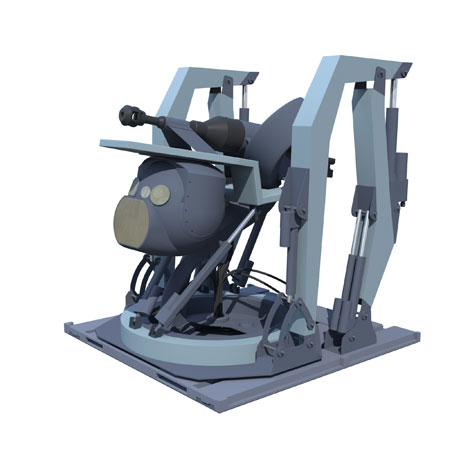
The compact, electrically powered system comprise a robotic pedestal using seven degrees of freedom. During flight the system is stowed inside the cabin. Upon operator command the RWS is extracted by two robotic arms, and attach to a docking plate mounted at the belly, harnessed onto the cargo hook assembly. Secured in place within seconds, the system is ready to fire at short notice. The EO payload and gun are controlled form a tablet computer that can be operated by one of the pilots or a third crew member.
The RWS’ six-axis motion platform enables the EO payload and Bushmaster gun to track targets on the move, and lock the line of fire on target
Fitted with a multi-spectral EO payload used for fire control and coupled to optional hostile fire detectors (if available on the helicopter or mounted on the pedestal), the RWS mounts the ATK 25mm lightweight bushmaster gun, with 400 – 2,000 rounds of ammo, the gun can traverse +/-210 and elevate: +5 to -85, engaging any target in sight regardless of helicopters’ manoeuvres. Unlike vehicle-based RWS that use electrical motors for elevation and traverse, in the helicopter application requires more degrees of freedom, provided by the”delta-robot” motion platform’s six-axis motion platform, enabling the EO payload and gun to track targets on the move, and lock the line of fire on target, as viewed by the EO sight, while cancelling platform induced vibrations.
The entire system weighs about 500 kg (1,102 pounds) is packed into a 1.2×1.2 meter floor area, 1.3 meter high box that can be rolled on and off the helicopter within minutes. The belly attachment as well as entire system can be ejected by the pilot and crew, in case of emergency. Power, ammo feed and controls are all fed through the cargo hatch in the floor, attaching the assembly without any modification to the helicopter’s airframe.
According to Aharon, the weapon occupies only a third of the cargo space near the door and is designed to meet balance requirements and weight limitations of the UH-60/S-70 type. The RWS will be provided with a set of ballast weights to enable instant adjustments to balance any helicopter configuration.
In an emergency, the capsule and tracks can be easily jettisoned by the pilot, who has full control over the cargo hooks. With its, the system is designed for extreme stability while in flight, handling most interference while maintaining target-locking.
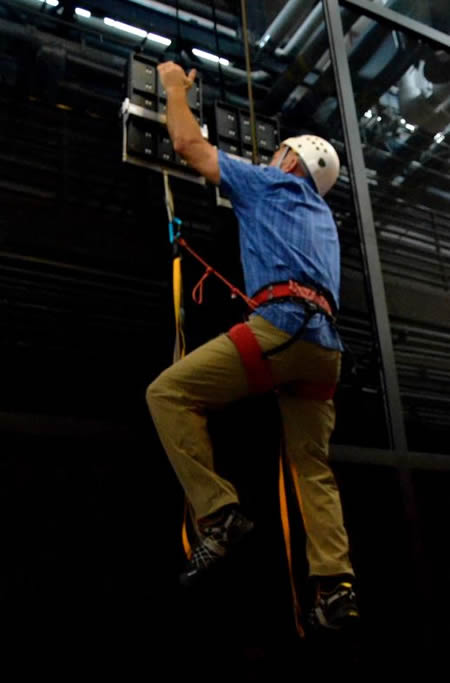
Draper lab gecko inspired paddles assist this ‘Gecko-man’ on his historic vertical ascent over glass wall, as part of a DARPA Z-MAN program. The 2012 test was the first known demonstration of human climbing of a glass wall using climbing devices inspired by geckos. According to DARPA, since that first demonstration, tests of the novel system have continued. Photo: DARPA
The technology assisting the climber was based on a novel polymer microstructure developed by the Draper Lab. The historic ascent involved a 99 kg climber (218 pound) ascending and descending a glass wall 7.6 meter tall (25 feet) ,while carrying an additional load of 22.6 kg (50 pound) in one trial.
On this trial the climber did not use any climbing equipment other than a pair of hand-held, ‘geckoskin’ paddles. These paddles are applied with novel polymer microstructure technology developed by the Draper Laboratory of Cambridge, Mass.
Continued testing under the Z-MAN program will evaluate movement and performance over different surfaces, including concrete, dusty brick and other materials.
The gecko is one of the champion climbers in the animal kingdom, so it was natural for DARPA to look to it for inspiration in overcoming some of the maneuver challenges that U.S. forces face in urban environments
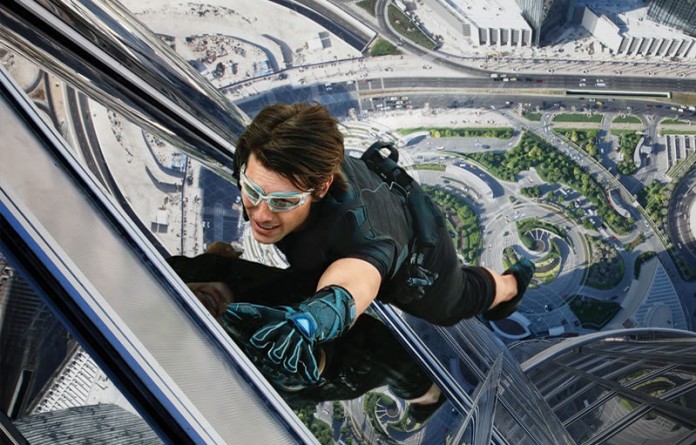
As taken from a sci-fi movie, these novel tools will enable climbers to move on vertical surface, a movement that currently requires a complex setup of ropes, ladders or lifting devices. On urban assaults or evacuation missions from high rise buildings, using conventional tools is often limited to sequential movement, where the first climber often takes the highest risk.
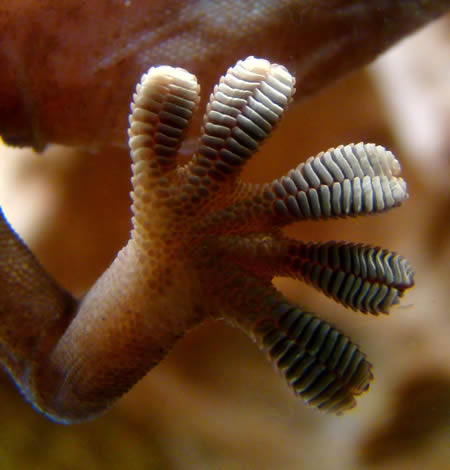
The gecko foot has millions of flexible stalks adhere instantly and reversibly to surfaces, yet can reliably hold 15-30 pounds per square inch — meaning a gecko can hang by one foot while reaching for a far-off twig or nabbing some dinner.
DARPA’s Z-Man program aims to overcome these limitations by delivering a safe, flexible and reliable climbing tool providing warfighters carrying full combat load the manoeuvrability, stealth and rapid response, to fight in ‘urban canyons’. The program is implementing biologically inspired climbing aids that can be adapted to match vertical walls constructed from typical building materials. To meet the challenge researchers turned to imitate the mechanism used by the gecko, nature’s champion climber.
“The gecko is one of the champion climbers in the Animal Kingdom, so it was natural for DARPA to look to it for inspiration in overcoming some of the maneuver challenges that U.S. forces face in urban environments,” said Dr. Matt Goodman, the DARPA program manager for Z-Man. “The challenge to our performer team was to understand the biology and physics in play when geckos climb and then reverse-engineer those dynamics into an artificial system for use by humans.”
Geckos can climb on a wide variety of surfaces, including smooth surfaces like glass, with adhesive pressures of 15-30 pounds per square inch for each limb, meaning that a gecko can hang its entire body by one toe. The anatomy of a gecko toe consists of a microscopic hierarchical structure composed of stalk-like setae (100 microns in length, 2 microns in radius). From individual setae, a bundle of hundreds of terminal tips called spatulae (approximately 200 nanometers in diameter at their widest) branch out and contact the climbing surface.
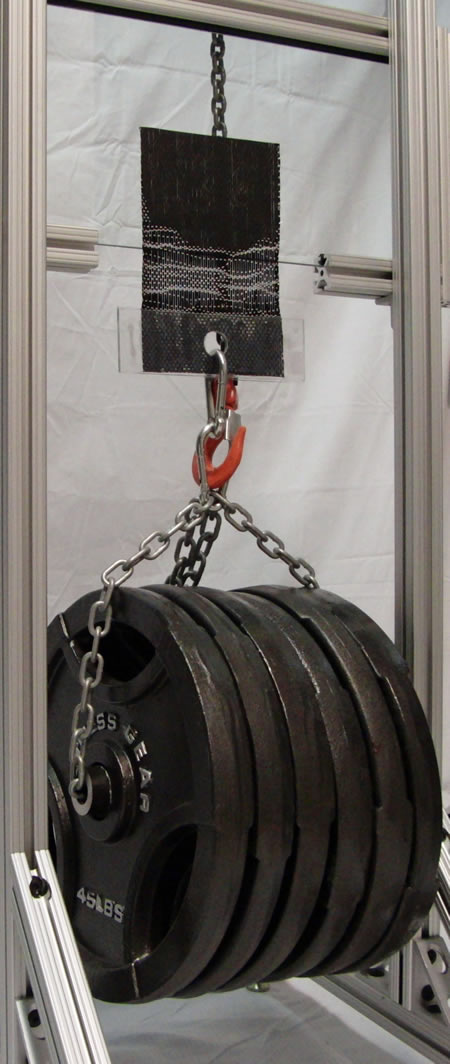
As part of the program a synthetically-fabricated reversible adhesive ‘Geckoskin’. During static tests this material demonstrated supporting a static load of up to 300 kg (660 pounds) over a vertical glass wall, using a single 0.01 m2 (16-square-inch) sheet of Geckoskin. Photo: DARPA
A gecko is able to climb on glass by using physical bond interactions — specifically van der Waals intermolecular forces — between the spatulae and a surface to adhere reversibly, resulting in easy attachment and removal of the gecko’s toes from the surface. The van der Waals mechanism implied that it is the size and shape of the spatulae tips that affect adhesive performance, not specific surface chemistry. This suggested that there were design principles and physical models derived from nature that might enable scientists to fabricate an adhesive inspired by gecko toes.
Humans, of course, have much more weight to carry than a gecko. One of the initial challenges in developing a device to support human climbing was the issue of scaling: a typical Tokay gecko weighs 200 grams, while an average human male weighs 75 kilograms.
As part of the program a synthetically-fabricated reversible adhesive ‘Geckoskin’. During static tests this material demonstrated supporting a static load of up to 300 kg (660 pounds) over a vertical glass wall, using a single 0.01 m2 (16-square-inch) sheet of Geckoskin.
To enable dynamic climbing like a gecko at this larger scale required that the engineers create climbing paddles capable of balancing sufficient adhesive forces in both the shear (parallel to the vertical surface) and normal (perpendicular to the vertical surface) directions. That feature is necessary for a climber to remain adhered on a surface without falling off while in the act of attaching and detaching the paddles with each movement.
The Draper Laboratory team was also challenged to create novel micro- and nanofabrication technologies to produce the high-aspect-ratio microstructures found in the gecko toe.
In the process of achieving that capability, the Z-Man performers transformed the fundamental design and development of reversible adhesives for potential biomedical, industrial, and consumer applications.
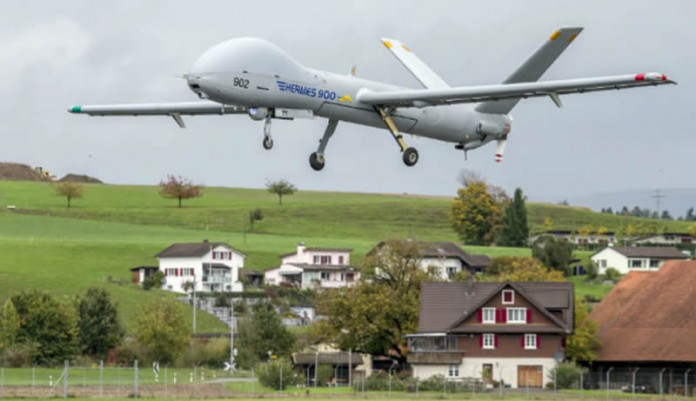
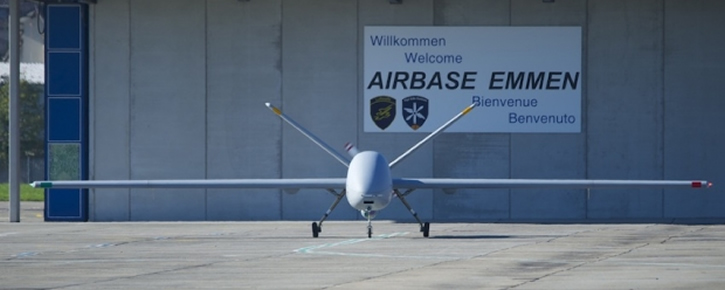
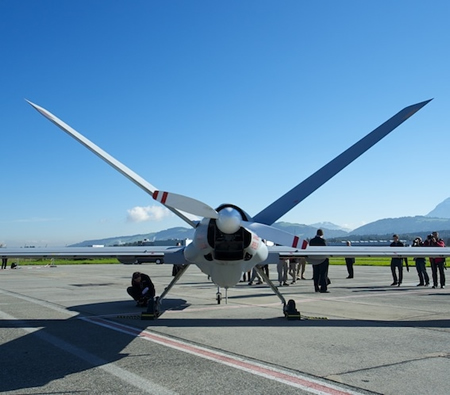
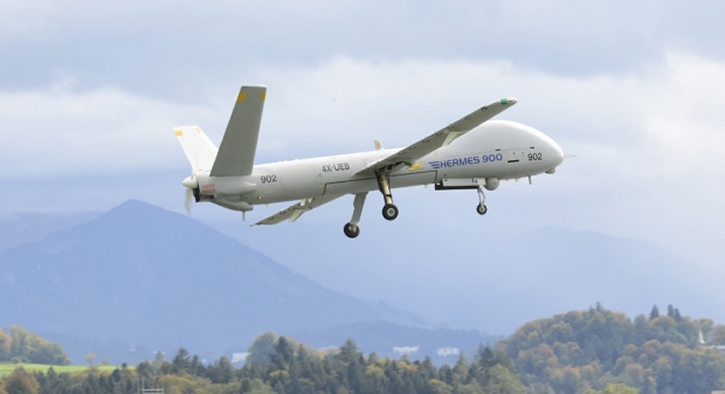
In 2012 the Hermes 900 drone deployed to Emmen, participated in a ‘flyoff’ against the Heron I, as part of the Swiss Air Force evaluation of the two systems. Photo: Avia News.Elbit Systems have sent the Hermes 900 UAV to Emmen, for evaluations. Following its selection for the Swiss program, the first Hermes 900s are expected in Switzerland by 2017. Photo: Avia News.
Switzerland has selected the Israeli Hermes 900 Medium Altitude Long Endurance (MALE) unmanned aerial vehicles (UAVs) made by Elbit Systems, as the successor for IAI/Ruag Ranger UAV (ADS 95 system) that has been in service with the Swiss Air Force since 2001. The selection was announced yesterday (June 5) by Armasuisse, Switzerland’s defense procurement agency.
The Swiss evaluation focused on two Israeli drones – the Hermes 900 and IAI’s Heron I. The final evaluations carried out in Switzerland in late 2012 included test flights by both systems. In the pre-evaluation, these two UAV systems were the best in meeting the requirements.
The Swiss evaluation preferred the hermes 900 over its competitor the Super Heron built by Israel Aerospace Industries. Armaswiss said the Hermes 900 HFE has been favoured because it delivered the better overall result in all assessed criteria.
The Super Heron was officially unveiled in February 2014, was positioned between the combat proven Heron I MALE drone and the much larger Heron TP. Switzerland has evaluated the heron I with the standard Rotax 914 engine, and was also offered the slightly larger ‘Super Heron’ variant that can be powered with a Heavy Fuel Engine (HFE).
Engine and payload choices
The Swiss selection opted for the hitherto unannounced Hermes 900HFE – a designation hinting on a model powered by HFE engine. Elbit Systems has used HFE engines in the past, in the Hermes 90, a version of the Hermes 450 powered by an HFE has also been displayed. Aviation certified HFEs are providing more robust propulsion for UAS, albeit heavier and more expensive. It also alleviate a major concern for operators having to support drones from forward operations bases or at sea, where the delivery and storage of highly flammable gasoline would be risky and more complex than handling of military standard JP8 diesel fuel, commonly used for automotive propulsion.
The Hermes 900 HFE system will enable the Swiss military to perform reconnaissance and intelligence gathering missions under all-weather conditions, day and night. Its operation is more flexible, it has longer endurance in the air and a wider operational range than the Ranger system currently in use.
On their evaluation flights in October 2012 the Swiss evaluation team tested the Hermes 900 with a full set of sensors, including the COMPASS EO/IR gimballed sensor, Synthetic Aperture Radar (SAR), the Large Area Scanning System Operation (LASSO) wide area EO scanner, Electronic Intelligence (ELINT) and Communications Intelligence (COMINT).
The drone’s integral satellite communications system enables unobstructed control of the system beyond line of sight, particularly when deployed across mountainous areas. the Hermes 900 is designed with a 2.5 meters long bay that can accommodate internal payloads, additional sensors or fuel. This payload bay can carry up to 250 kg, allowing quick installation and replacement of payloads.
Delivery schedule
The swiss drone will be used for reconnaissance missions and will be unarmed. Armaswiss confirmed that there are no plans or future options to arm UAVs in Switzerland. Valued about US$ 280 million (CHF250 million) the Swiss UAV procurement program will span over five years until 2020, when the Rangers will be phased out of service.
The proposed system acquisition, designated ‘ADS 15’ is likely to be included in the 2015 armaments programme submitted to the approval of the Swiss parliament. The first Hermes 900 drones are expected in Switzerland by 2017. Since its introduction in 2009 the Hermes 900 UAS has won Elbit Systems eight orders – from Israel, Chile, Brazil, Mexico and Colombia.
The Hermes 900 will enable the Swiss Air Force to launch recce missions under all weather conditions. The drone is equipped with deicing systems, enabling it to fly through clouds in icing conditions that would hinder the use of unprotected aerial vehicles. Photo: Avia News
Lockheed Martin Skunk Works® and XTEND have achieved a major milestone in JADC2 by integrating the XOS operating system with the MDCX™ autonomy platform. This technical breakthrough enables a single operator to simultaneously command multiple drone classes, eliminating the friction of mission handoffs. From "marsupial" drone deployments to operating in GPS-denied environments, explore how this collaboration is abbreviating the data-to-decision timeline and redefining autonomous mission execution.
As traditional defense primes face mounting competition from agile “neoprimes” such as Anduril, Palantir and Helsing, the balance of innovation is shifting toward software-defined warfare and scalable, dual-use technologies, while global industry consolidation—marked by Boeing’s integration of Spirit AeroSystems and other strategic mergers—signals an intensified race to secure control over the defense technology value chain. Our Defense-Tech weekly report highlights these trends.
In early October 2025, a coordinated wave of unmanned aerial system (UAS) incursions—widely attributed to Russia—targeted critical infrastructure across at least ten European nations. The unprecedented campaign exposed the fragility of Europe’s air defenses...
Executive Summary
The past week (September 18-25, 2025) represents an inflection point where strategic defense concepts have transitioned from doctrine to tangible reality. An analysis of global events reveals four primary, interconnected trends shaping an...
At the 2025 Air, Space & Cyber Conference, U.S. Air Force and Space Force leaders unveiled major updates on next-generation fighters, bombers, unmanned systems, and space initiatives, highlighting both rapid innovation and critical readiness challenges as the services race to outpace global competitors. A short version is available here, with a more detailed version for subscribers.
The Taipei Aerospace & Defense Technology Exhibition (TADTE) 2025 crystallized around four dominant strategic themes that collectively illustrate Taiwan's comprehensive approach to defense modernization amid escalating regional tensions. Based on a detailed report by Pleronix (available upon request). Includes a Podcast discussion on TADTE 2025's highlighting Taiwan's four strategic themes beyond the post's coverage.
Israel’s Iron Beam 450 high-power laser system has completed final testing, marking a major leap in air defense. Developed by Rafael, it offers precise, cost-effective interception of rockets, UAVs, and mortars, and is set for IDF deployment by 2025.