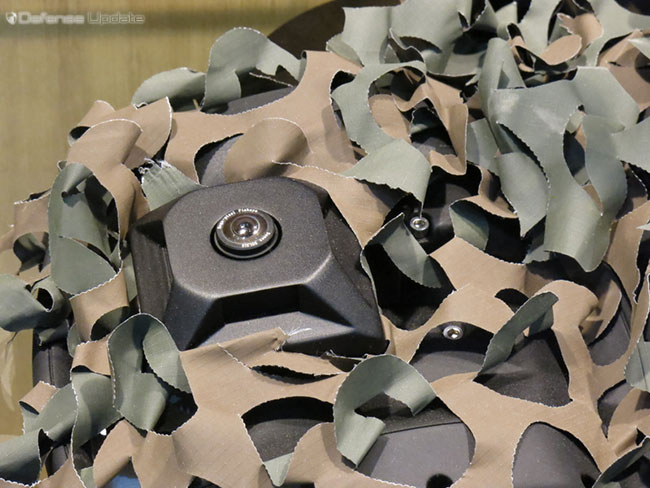
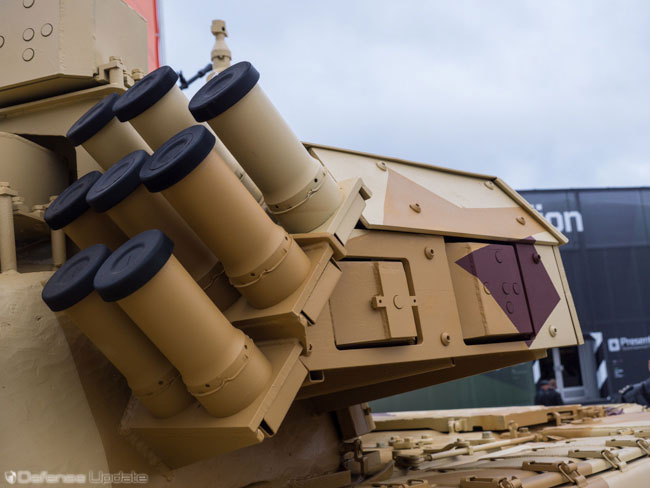
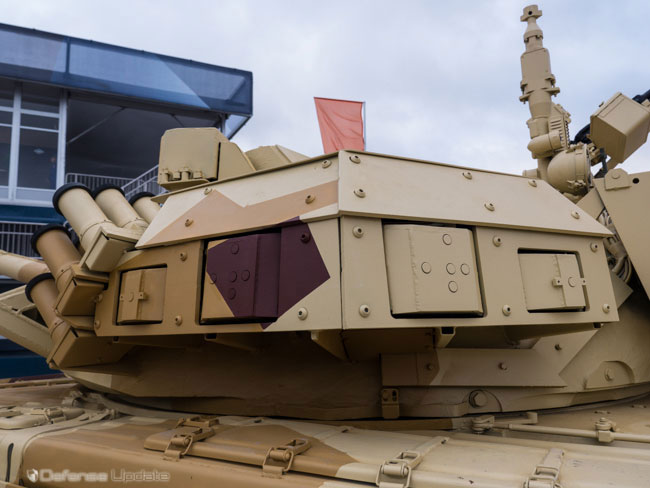
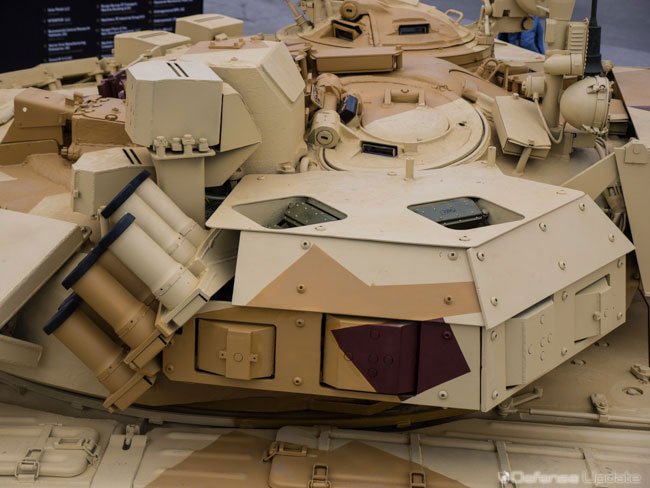
Arena-3 covers 360 degrees in four quadrants with four modules, each comprising two sensor modules (possibly bi-static transmit and receive modules) photo: Noam Eshel, Defense-Update
A new active protection system from Russia appeared today at RAE-2013, as part of the display of a series of upgrades offered to The T-72 main battle tanks. The new system, dubbed Arena-3 covers 360 degrees in four quadrants with four modules, which seems to comprise two sensors two effectors. According to the manufacturer, two targets can be intercepted at each direction, at 0.3 second intervals. The system is effective at elevation of +20 degrees and -6 degrees. It is designed to intercept projectiles and missiles at a distance of 50 meters from the protected tank. The previous configuration included multiple effectors and a high profile radar that has not received well among tank crews. According to the tank manufacturer Uralvagonzavod, the system is effective at target velocity of 70-1000 meter/second (pertaining to RPGs, anti-tank missiles and HEAT tank rounds). The upgraded T-72 with Arena-3 weighs 46.5 tons.
According to the manufacturer, two targets can be intercepted at each direction, at 0.3 second intervals. The system is effective at elevation of +20 degrees and -6 degrees. Photo: Noam Eshel, Defense-Update
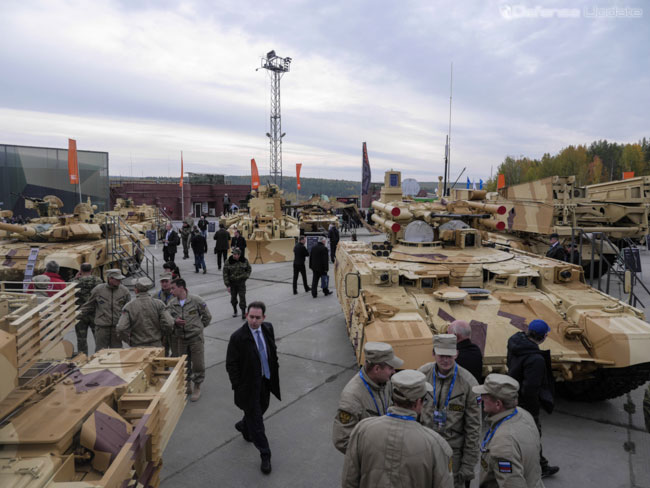
Russian Arms Expo 2013 opened today at Nizhny Tagil. This remote site, while far away from Moscow, provides the perfect setting for an excellent show of land power, by far the best live demonstration we have ever seen. While the expo is the ninth such event taking place at the Nizhny Tagil military proving grounds, it is the first organized under the RAE brand, with the ambition to position this event at par with the world’s leading military expos, like Eurosatory, IDEX and DSEI.
Challenging as it may be, given the remote location here at Tagil, the facility has been improved dramatically compared to past years, with three large exhibit halls, two outdoor static displays, with adjacent large tribunes overlooking the proving grounds, enabling thousands of guests to view the display. effective services, internet access, amenities for guests and visitors.
The heart of RAE is the live demonstration, which offers a unique opportunity to get a true impression of the hardware seen on the static display area. Every afternoon, the tanks, APCs, ARVs and trucks shown on the static area are deployed on a grueling test crossing an obstacle course and demonstrating a live firing program showcasing their true ability as effective and operational weapon systems.
This proving ground is perfect for this task, as this relatively empty area Sverdlovsk region in Ural, serving as the gateway to Siberia, was traditionally the heart of the Russian weapons manufacturing. At its center, Tagil offers one of the largest test areas for combat vehicles an artillery.
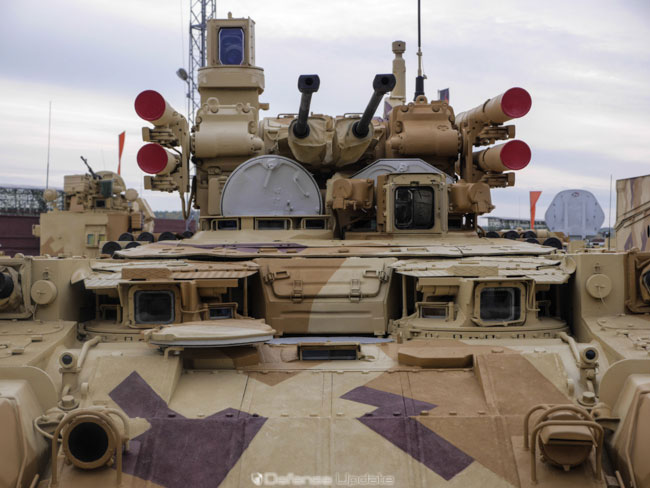
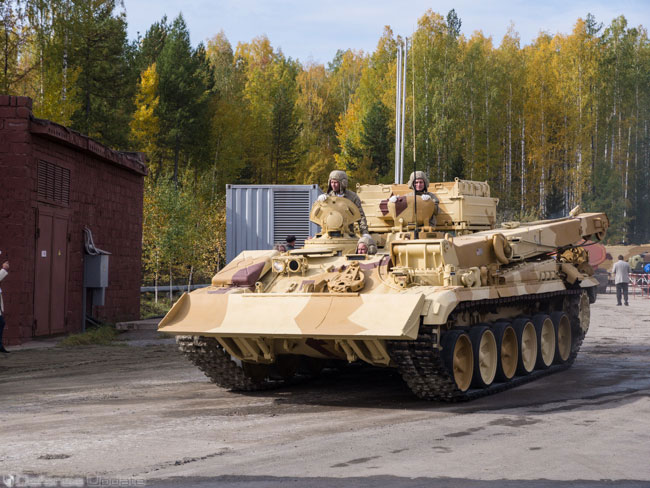
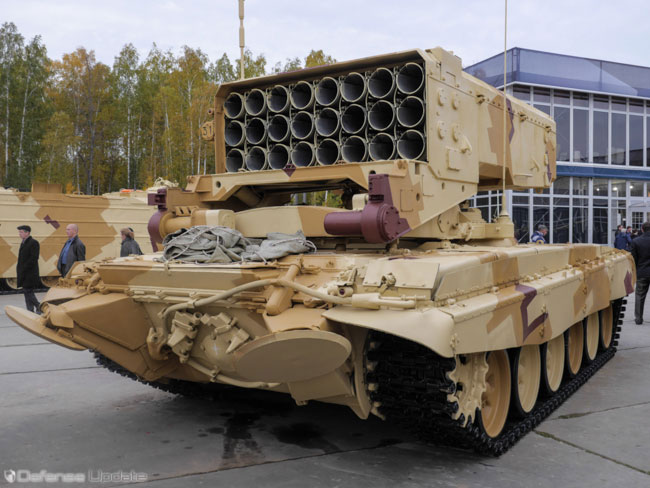
T-72 family of vehicles on display at the RA e 2013 Outdoor display area. Photo: Noam Eshel, Defense-UpdateTerminator (BMPT) tank support vehicle. The manufacturer is planning to unveil an improved model, based on the T-72 tomorrow. Photo: Noam Eshel, Defense-UpdateArmored engineering vehicle based on the T-55 platform, the Russian T-72 manufacturer Uralvagonzavod is now offering an entire family of vehicles based on the T-72 platform, replacing the obsolete T-55s. Photo: Noam Eshel, Defense-Update.Part of the fire support elements displayed at RAE-2013 is the TOS-1A, the vehicle, dubbed ‘heavy flamethrower’ actually fires 220mm rockets packing fuel-air (thermobaric) warheads. Photo: Noam Eshel, Defense-UpdateThe Eleron 3SV micro-UAV was launched prior to the live display and landed over two hours later, demonstrating effective mission endurance supporting tactical operations. Photo: Noam Eshel, Defense-UpdateThis tracked UGV made its debut he ear RAE-2013, demonstrating the growing Russian interest in robotic vehicles for military, homeland security and emergency response. Photo: Noam Eshel, Defense-Update.
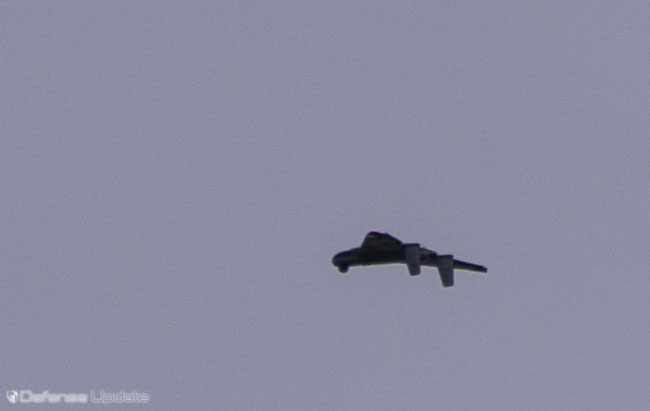
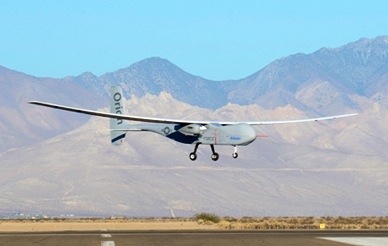
Aurora Flight Sciences Orion UAS has made its first flight last month, on August 24, 2013 the Orion took off from an unnamed airfield in the western test range, on a flight that lasted three hours and thirty-one minutes. The drone reached an altitude of 8,000 feet above mean sea level on that flight.
This mission was the first step towards demonstrating a 120-hr. flight at 20,000 ft. carrying a 1,000-lb. multi-sensor payload. Such extended endurance would allow the new drone to provide continuous surveillance carrying a Predator-class payload with fewer takeoffs and landings than current medium-altitude, long-endurance UAS flying 24-hr. missions, significantly reducing the manpower burden and operating cost.
Powered by a pair of fuel-efficient Austro Engine AE300 turbo-diesels, the aircraft flew for 3.5 hr., reaching an altitude of 8,000 ft. and airspeed of around 60 kt., says Tom Clancy, vice president of Aurora’s UAS business sector. Within the Defense Department, ownership of the Orion program has changed hands several times.
Aurora declined to identify its current customer, but Aviation Week understands it is the U.S. Air Force’s Big Safari program office, which manages the acquisition and modification of special-mission platforms. Using the composite wing and tail of the original HALL design, the Orion was rolled out at Aurora’s Golden Triangle, Miss., plant in November 2010, when it was expected to fly in August 2011.
In spite of program delays the basic objectives set at the beginning remain: a 120 hr. autonomous UAS carrying 1,000 lb. to 20,000 ft. There was no mission system on board for the Orion’s first flight, but there will be a payload on the aircraft for the 120 hr. demonstration flight, expected to be conducted by mid-2014. A number of different multi-intelligence payloads are potentially part of the program.
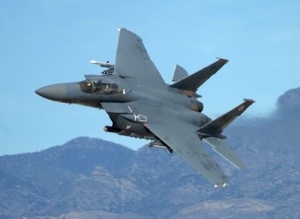
South Korea has backed off from selecting the Boeing F-15SE for its next fighter jet, a decision that would wave been seen as a ‘sure win’ for Boeing. Apparently, Seoul’s concerns about the Silent Eagle’s yet unproven stealth capabilities have tipped the scale against Boeing. “The DAPA will promptly restart the project to minimize the security vacuum by consulting related organizations to revise the total budget and requirements.” Defense Acquisition Program Administration (DAPA) spokesman Baek Yoon-hyung said in a briefing.
According to the South Korean Yonhap news agency, the decision came in a meeting of the DAPA presided over by Defense Minister Kim Kwan-jin, who prompted the government to restart the procurement program from the beginning. The decision is likely to further delay the replacement of the aging fleet of F-4s and F-5s. Seoul had initially required a potential contractor to deliver 60 jets for five years from 2017. After about fifty bidding rounds, the F-15SE was the only aircraft to come in below the budget threshold of won (W) 8.3 trillion ($7.73 billion) set by DAPA.
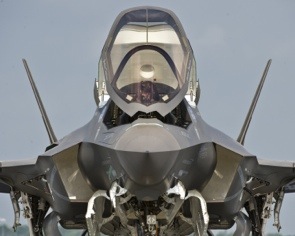
The Silent Eagle was close to win the bid against Lockheed Martin’s F-35 and EADS’ Eurofighter, over cost, technology transfer and work share offering. But the F-15E finished in second place behind the F-35 stealth jet in operational assessment, leaving questions over its combat capabilities against advanced threats ad when challenged by advanced air defense. Boeing tried to highlight its conformal weapons bay as one of the key radar-evading features, but it failed to quell questions over its capability against F-35, which is originally designed as a stealth jet.
According to military officials, the procurement agency insisted on proceeding with the project in accordance with its policy, while the defense ministry opposed the selection process that gave top priority to cost over combat capabilities. A team of officials from the defense ministry, Air Force and acquisition agency will consider various alternatives, including changing the number of jets, extending the funding and combining different types of aircraft, defense ministry spokesman Kim Min-seok said, adding that the process could take about one year to select the next fighter jet.
“A majority of the committee members agreed to reject (F-15 SE) and restart the project, taking into consideration the recent security situation including North Korea’s third nuclear test and latest aerospace technology development,” Kim said. “They agreed that South Korean Air Force needs fifth-generation combat jets to keep pace with the latest trend and to deter provocations by North Korea.” Their rejection on the verge of the final selection illustrates pressure felt by the military and the government to buy 60 jets from the F-15 family with improved features, as experts and former Air Force chiefs have expressed concern over the jet’s stealth capabilities.
Industry sources have said that DAPA loosened the stealth requirement of F-X III to allow fairer competition between the three aircraft. Placing too much emphasis on stealth in a new competition, however, could be seen as undermining a fair process.
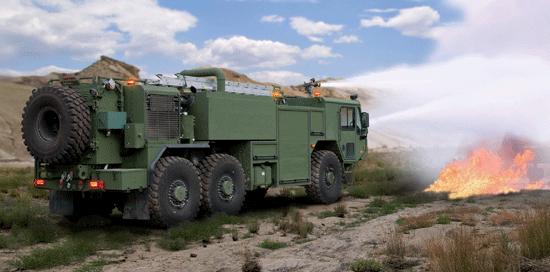
The Oshkosh P-19R does have state-of-the-art technology to meet requirements of the latest version of the NFPA 414 standard (which sets the design, performance, and acceptance criteria for ARFF vehicles) Photo Oshkosh
In May 2013 the U.S. Marine Corps awarded the Oshkosh Defense corporation a contract to replace the P-19 firefighting vehicle. At the upcoming Modern Marine exhibition in Quantico, VA Oshkosh is displaying the new vehicle, which is currently completing internal testing. According to Oshkosh, the P-19R is on schedule to deliver three prototypes to the Marine Corps in the coming months for rigorous testing, which will take place next year. The total estimated contract value is $192 million. Work will be performed by Oshkosh beginning in June 2013 and is expected to be completed by May 2018.
The P-19R will be the Marines’ first-response vehicle in aircraft fire emergencies at military bases and expeditionary airfields. This next-generation vehicle will provide more advanced on-road and off-road firefighting capabilities to Marines and replace their current fleet of Oshkosh P-19 ARFF vehicles as the vehicles reach the end of their service lives.
The next-generation Oshkosh P-19R is based on the proven Oshkosh Logistics Vehicle System Replacement (LVSR) platform including the Oshkosh TAK-4 independent suspension system to deliver more advanced on-road and off-road firefighting capabilities to the Marine Corps. The vehicle’s Command Zone integrated diagnostics and automation system helps the crew carry out firefighting missions with increased situational awareness. Oshkosh Defense leveraged the expertise of the Oshkosh Airport Products Group, the industry-leading ARFF vehicle producer, to equip the Oshkosh P-19R with the advanced Striker firefighting systems.
Oshkosh began manufacturing the MB-5 ARFF vehicle for the U.S. Navy in the 1960s as well as the military’s P-19 in the 1980s. Today, the Oshkosh Striker ARFF vehicle is used by the U.S. military and at airports around the world. Oshkosh developed its Striker ARFF models with input and feedback from firefighters to provide the wide range of safety, reliability and performance capabilities they need.
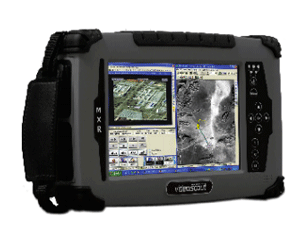
L-3 Unmanned Systems announced today the release of VideoScout-GO (VS-GO), a ruggedized, fully integrated handheld video terminal capable of receiving and recording full-motion video (FMV) intelligence for collection and dissemination in support of a variety of end users and mission profiles. The new system was unveiled at the US Modern Marine expo in Quantico, VA.
VS-GO enables end users to remotely downlink live surveillance images and geospatial data directly from airborne, mobile and ground fixed sensors, via analog and digital waveforms. VS-GO is designed around a 4.3-inch sunlight-readable screen, allowing end users to view video streams in real time.
According to James Gear, vice president of strategic business development at L-3 Unmanned Systems, the combination of a small form factor viewer and robust DVR and exploitation software provide dismounted warfighters enhanced situational awareness on the move. The integrated digital video recorder (DVR). This capability provides snapshots, clips, forward/rewind and pause of the video stream.
VS-GO is powered by L-3’s Insyte collection, processing, exploitation and dissemination software. Insyte was conceived as an intuitive user interface, providing end users with the ability to operate and collect data with minimal training. Insyte provides DVR controls as well as the ability to stream captured video and associated metadata on connected networks.
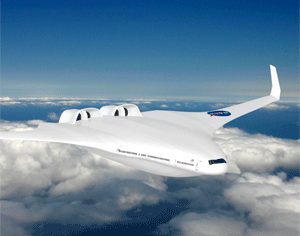
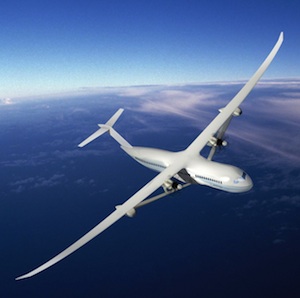
The Hybrid Wing Body H-Series future aircraft design concept comes from the research team led by the Massachusetts Institute of Technology. The H Series is among the designs presented in April 2010 to the NASA Aeronautics Research Mission Directorate for its NASA Research Announcement-funded studies into advanced aircraft that could enter service in the 2030-2035 timeframe. Photo via NASA
A concept drawing of a high efficiency hybrid powered ‘SUGAR Volt’. The design features long wings made of lightweight composites, that increase lift and decrease drag. The wings of SUGAR Volt would enable it to take off in a shorter distance and generate less noise. The wings would be hinged so they could be folded on the ground to save space.Photo via NASA
NASA has selected six US aerospace primes to participate in a government-and-industry partnership to advance composite materials research and certification. In a statement announcing the selection NASA said the six firms were chosen for their technical expertise, willingness and ability to share in costs, certification experience with government agencies, focused technology areas and partnership histories. The companies selected are:
Bell Helicopter Textron Inc. of Fort Worth, Texas
GE Aviation of Cincinnati
Lockheed Martin Aeronautics Company of Palmdale, Calif.
Northrop Grumman Aerospace Systems of Redondo Beach, Calif.
Boeing Research & Technology of St. Louis
United Technologies Corporation and subsidiary Pratt & Whitney of Hartford, Conn.
The Hybrid Wing Body H-Series future aircraft design concept comes from the research team led by the Massachusetts Institute of Technology. The H Series is among the designs presented in April 2010 to the NASA Aeronautics Research Mission Directorate for its NASA Research Announcement-funded studies into advanced aircraft that could enter service in the 2030-2035 timeframe. Photo via NASA
These companies were selected from 20 proposals submitted by teams from industry and academia in response to a call from the Advanced Composites Project, which is part of NASA’s Aeronautics Research Mission Directorate’s Integrated Systems Research Program. The project sought proposals to reduce the time for development, verification and regulatory acceptance of new composite materials and structures.
The first task for the partners is to develop articles of collaboration and establish how the alliance will work and how companies may be added in the future.
The US Navy’s latest UAS, the at Northrop Grumman Fire Scout MQ-8C unmanned helicopter began manufacturers’ ground testing at the Naval Base Ventura County Point Mugu, Calif., Sept. 20. Conducting initial engine runs of the aircraft allows engineers to collect data to ensure that all the aircraft’s systems are functioning and communicating properly prior to its first flight. This latest aircraft upgrade to the Fire Scout system provides the Navy with more than twice the endurance and three times the payload carrying capacity, enabling an unprecedented level of persistent surveillance, intelligence and reconnaissance capability. The MQ-8C aircraft is scheduled to be ready for deployment beginning in 2014.
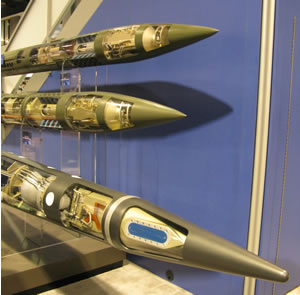
Lockheed Martin's air and missile defense systems - Patriot PAC-3 (upper), enhanced version (MSE) and the THAAD (lower), shown on a missile display at Lockheed Martin's display.
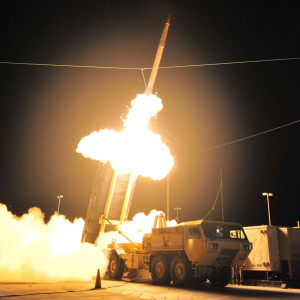
The U.S. Army Terminal High Altitude Area Defense (THAAD) missile system performed a successful intercept October 5, 2011, scoring simultaneous kills of two targets. Photo: Lockheed MartinLockheed martin received was awarded a production contract on Friday totaling $3.9 billion, to produce elements of the Terminal High Altitude Area Defense (THAAD) Weapons System for the U.S. Missile Defense Agency (MDA) and the United Arab Emirates. The contract includes the manufacture and delivery of a maximum of 110 interceptors for the U.S. Army, including the fiscal 2014 option. These Lot 4, 5 and 6 interceptors will be fielded to the U.S. Army at Ft. Bliss, Texas. The contract also includes interceptors and other ground hardware for the UAE. The company is currently under contract for five THAAD batteries for the U.S. Army. Deliveries on Batteries 3 and 4 are underway, with final completion expected in December 2013. Battery 5 was awarded in late 2012.
THAAD interceptors are produced at Lockheed Martin’s Pike County facility in Troy, Ala. The launchers and fire control units are produced at the company’s Camden, Ark., facility.
A key element of the nation’s Ballistic Missile Defense System (BMDS), THAAD is a Missile Defense Agency program, with the program office located in Huntsville, Ala. The agency is developing the BMDS to defend the United States, its deployed forces, friends and allies against ballistic missiles of all ranges and in all phases of flight.
Since 2005, the THAAD development program has completed 13 flight tests, with 11 successful intercepts in 11 attempts. THAAD is the only missile defense system with the operational flexibility to intercept in both the endo- and exo-atmospheres to provide versatile capability to the warfighter.
Earlier this month the MDA conducted a joint intercept testing the integration of the THAAD Weapon System and the Aegis Ballistic Missile Defense System (BMDS). Operating in Forward Based Mode (FBM), the Army-Navy/Transportable Radar Surveillance and Control (AN/TPY-2) radar detected the target and relayed track information to the Command Control Battle Management and Communications (C2BMC) system to cue the missile interceptors. Those interceptors were SM-3 Block1A missiles, fired from the Aegis BMD destroyer USS Decatur which detected and tracked the missile with its onboard AN/SPY-1 radar.
The FBM radar acquired the target and sent tracking information to the C2BMC system. The THAAD system, using a second AN/TPY-2 radar, tracked the target. THAAD developed a fire control solution, launched a THAAD interceptor missile and successfully intercepted the medium-range ballistic missile. THAAD was operated by soldiers from the Alpha Battery, 2nd Air Defense Artillery Regiment.The test designated Flight Test Operational-01 took place on September 11, 2013 at the at U.S. Army Kwajalein Atoll/Reagan Test Site and surrounding areas in the western Pacific. This test demonstrated how multiple missile defense assets can be integrated into layered regional missile defense capability. The two systems collaborated to successfully intercept two medium-range ballistic missile targets in an operationally realistic environment simulating a raid attack by two near-simultaneous medium-range ballistic missile.
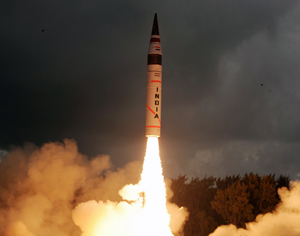
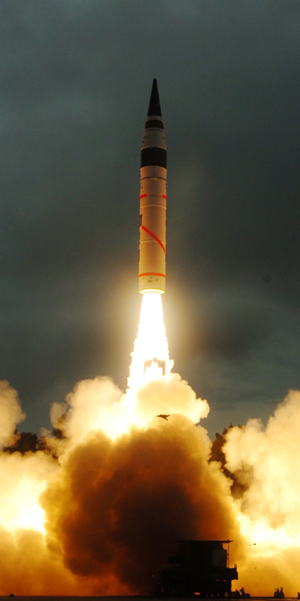
AGNI-V fired on the second test launch, September 15, 2013. At least three more tests are scheduled before the Intermediate Range Ballistic Missile (IRBM) is declared operational.
India performed today the second test flight of its largest ballistic missile – ‘Agni V’. This intermediate range ballistic missile (IRBM) has a strike range of more than 5,000 km. The three stage, solid propellant missile was test-fired on 08:50 AM from a mobile launcher from the launch complex-4 of the Integrated Test Range (ITR) at Wheeler Island off Odisha coast. The surface-to-surface missile can carry a nuclear warhead of more than one tonne.
Today’s launch was the second developmental trial of the long range missile while the first successful test was conducted on 19 April, 2012. The DRDO is expected to conduct at least three more tests before declaring the ballistic missile operational and ready for induction into the military. According to Indian sources, Initial Operational Capability (IOC) is expected in 2-3 years.
The missile measures about 17 meter (56 foot) long and 2 metres (6.5 foot) in diameter. Its launch weight is around 50 tonnes. Once Agni-V is fielded, India will possess a strike capability reaching from Europe to China. The Indian Agni series includes a number of nuclear capable missiles such as Agni-1 with 700 km range, Agni-2 with 2,000 km range, Agni-3 and Agni-4 with 2,500 km to more than 3,500 range.
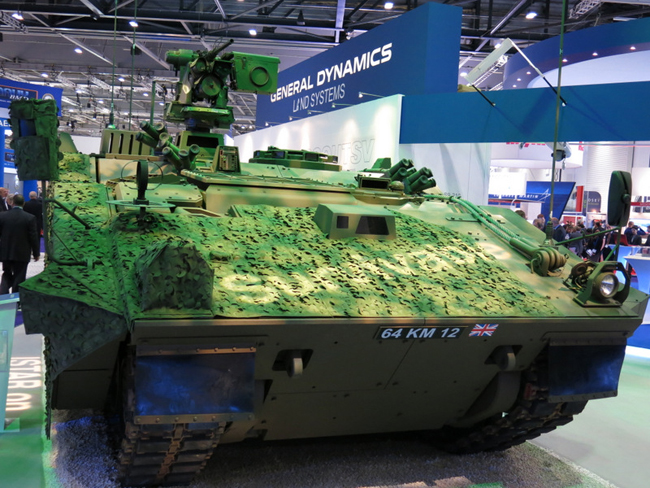
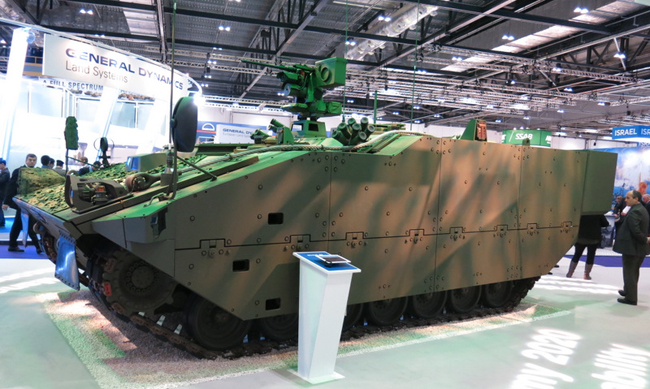
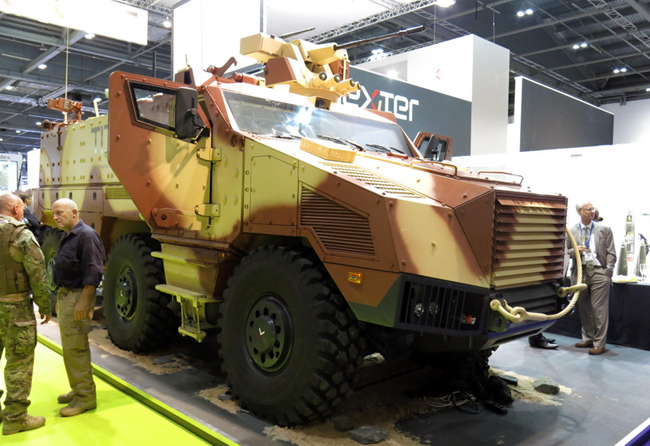
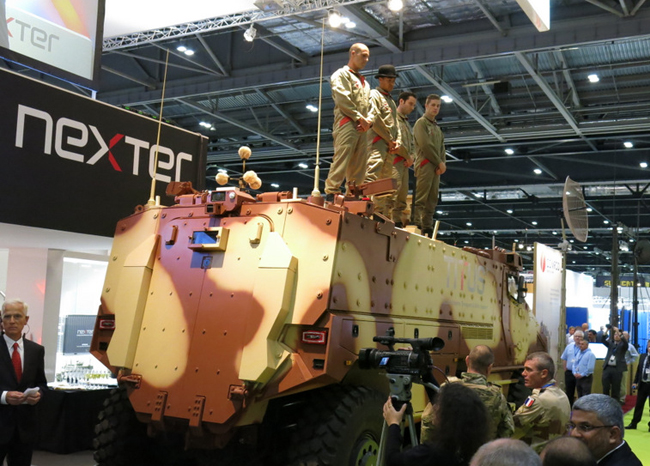
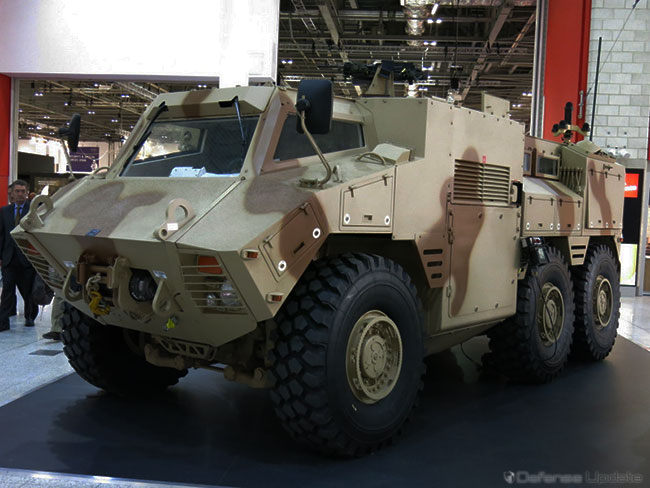
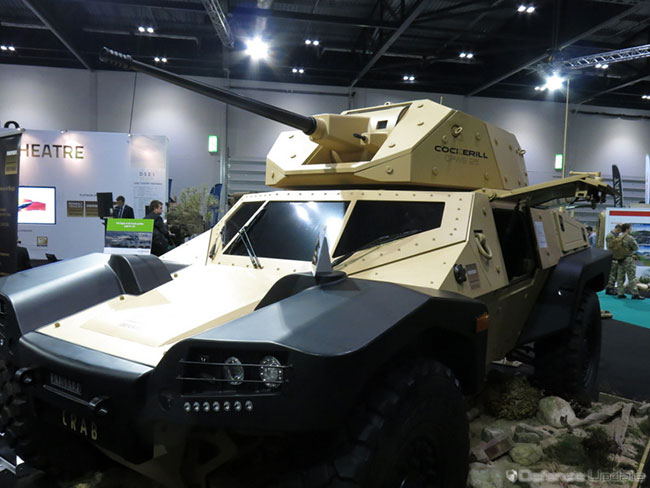
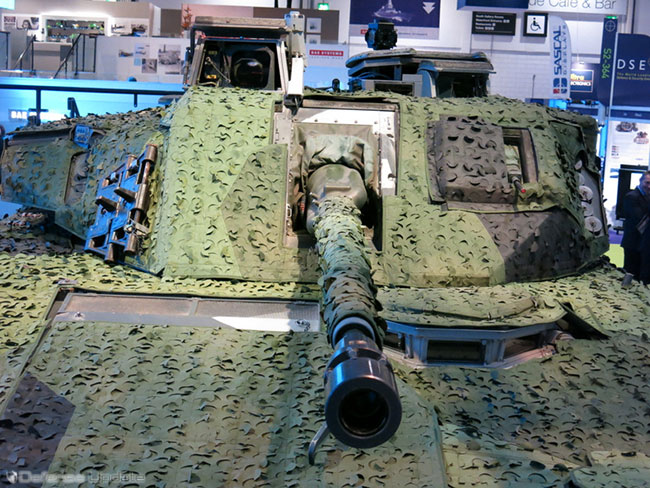
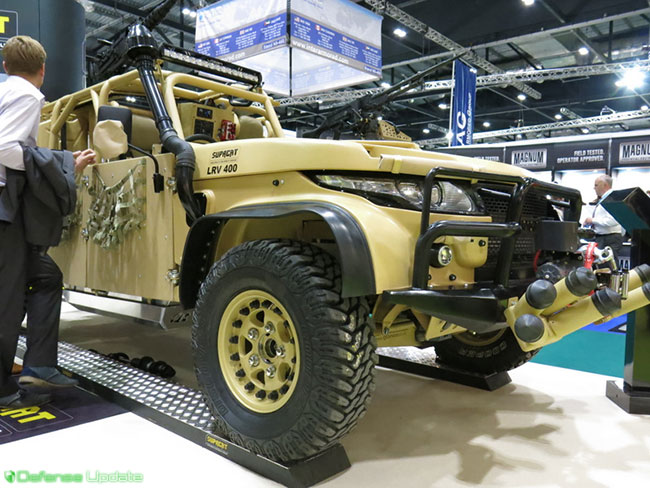
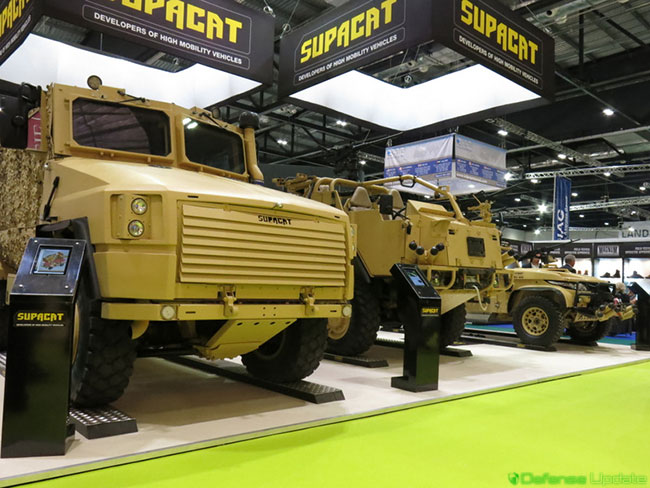
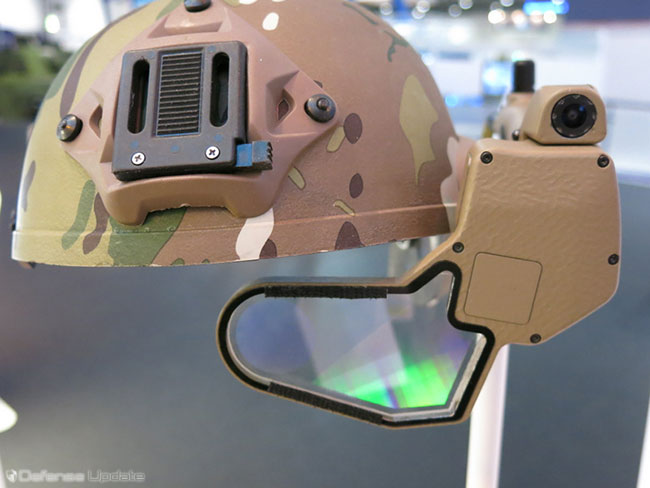
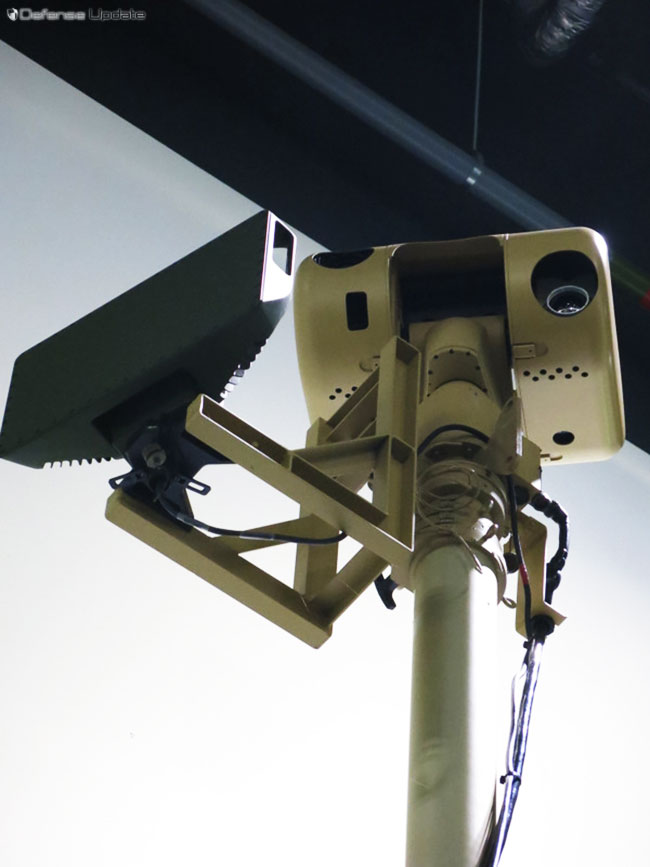
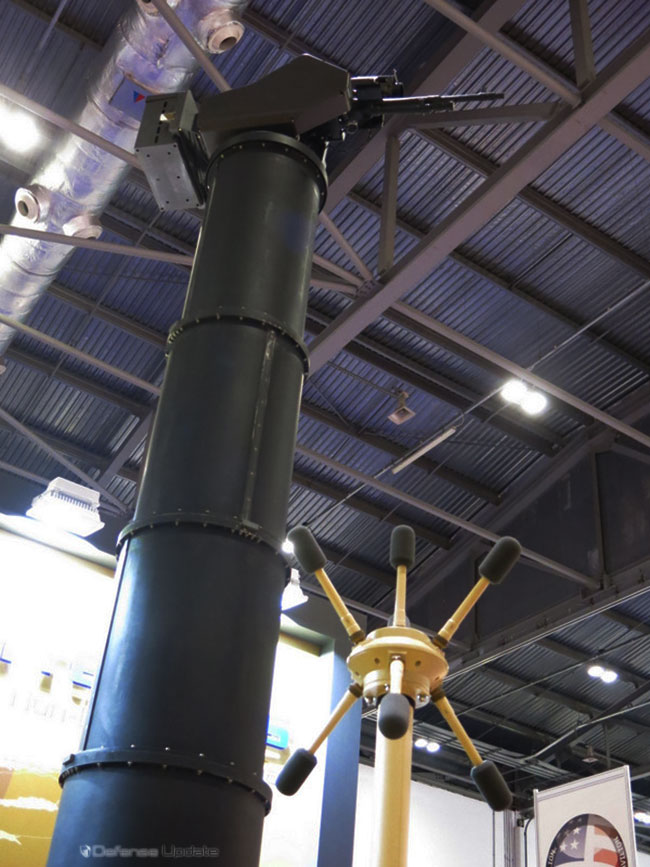
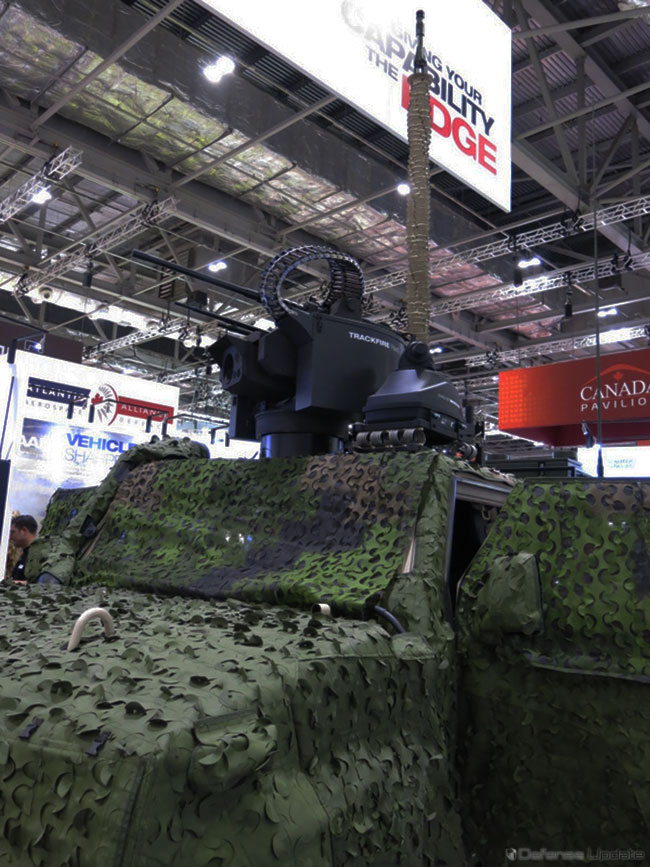
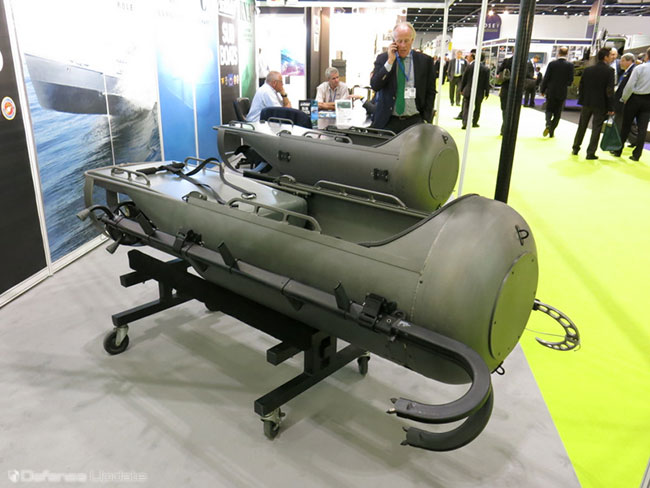
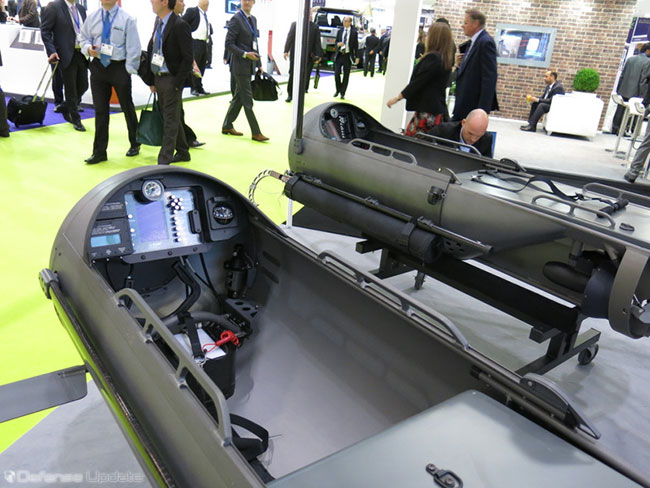
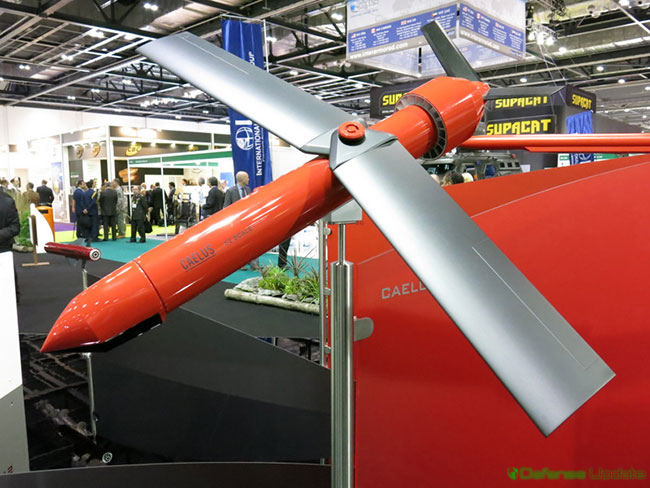
General Dynamics unveiled the FRES SV vehicle at DSEI 2013. One side was coated with a multispectral camouflage, the other remained bare.FRES SV was shown by General Dynamics at the DSEI 2013 eventNexter Titus 6×6 vehicle employs advanced design architecture to offer many advantages for infantry mobilityNexter unveils the new 6×6 Titus armored combat personnel carrierBAE Systems RG35The CRAB from Panhard is shown at DSEI 2013 mounting the Cockeril turretBAE Systems displayed the CV90 with the new multispectral camouflageSupacat LRV-400A line of combat vehicles from Supacat on display at DSEI 2013This helmet mounted display was developed by BAE Systems for dismounted command and control applicationsMast-mounted area surveillance system provided by Chess DynamicsRemotely controlled weapon stations from Precision Remote were demonstrated at DSEI 2013. This one is mounted on a telescopic tower, can be elevated on emergency to cover areas where enemy activity is suspected to occur. The weapon can be triggered by a gunshot detection system (shown below) to execute rapid response.Among the payloads developed for the NERVA robot is an unmanned ground sensor (UGS) that can move into position autonomously and remain on station for long duration.Lemur Remotely controlled weapon station form SAAB mounted on a fully camouflaged LMV modelled for CBRN recce missions.STIDD Swimmer Delivery Vehicles (SDV)A range of STIDD Swimmer Delivery Vehicles (SDV) displayed at DSEI 2013A range of STIDD Swimmer Delivery Vehicles (SDV) displayed at DSEI 2013The CAELUS loitering guided precision weapon is one of several families of future ‘concept weapons’ pursued by MBDA
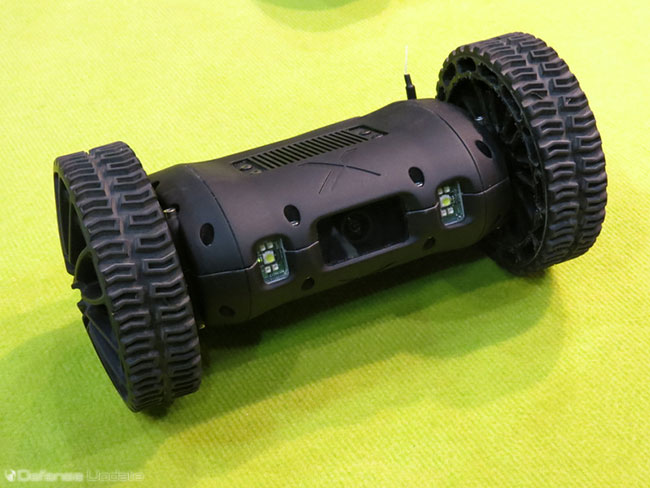
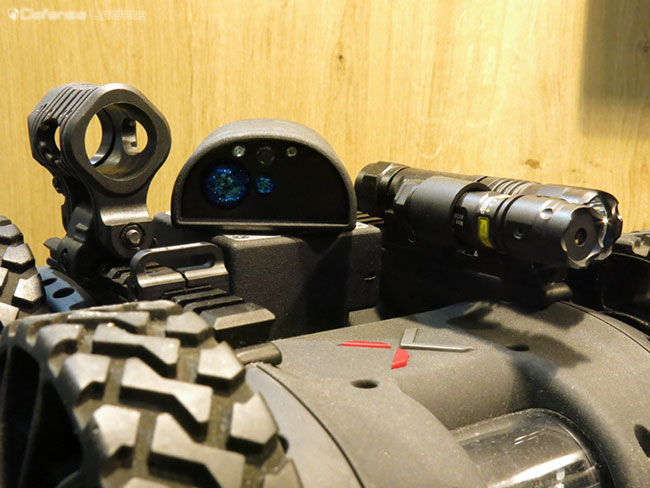
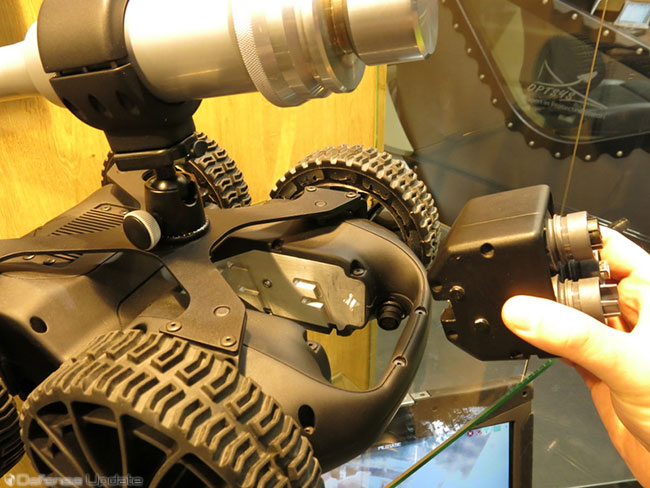
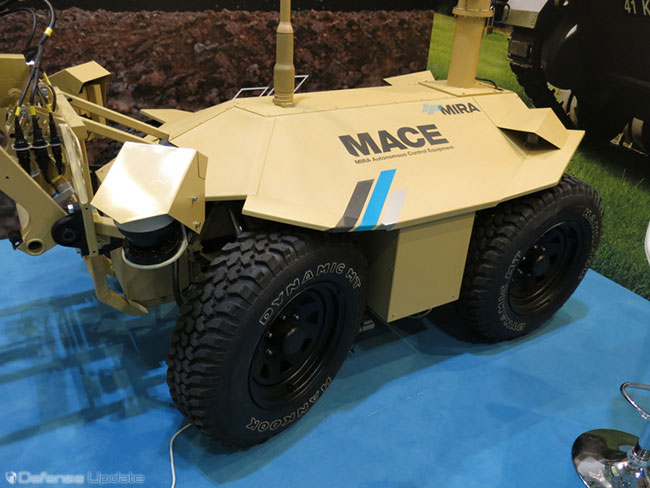
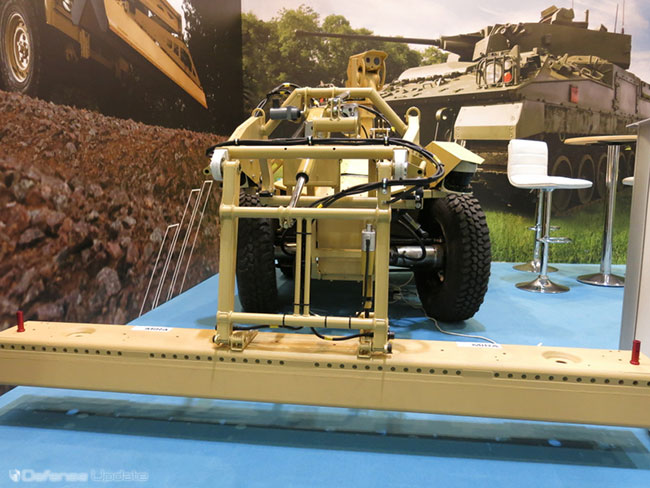
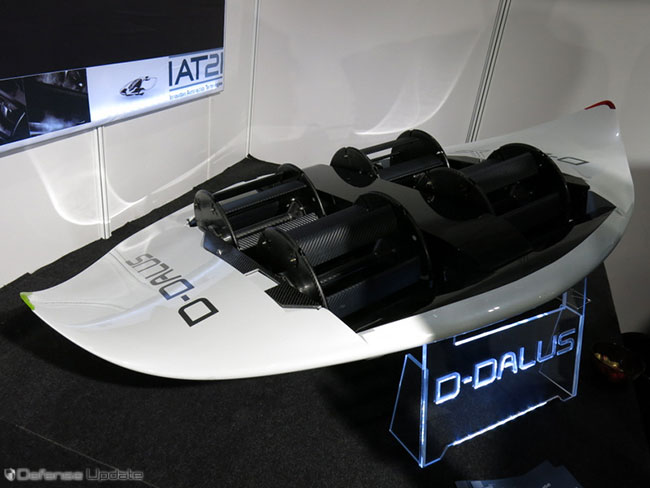
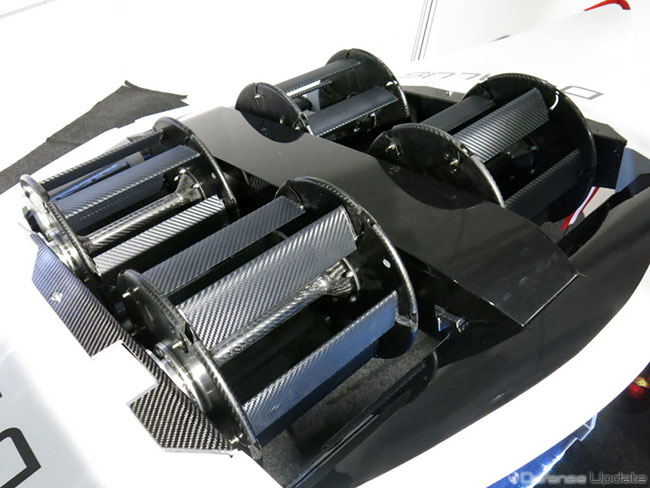
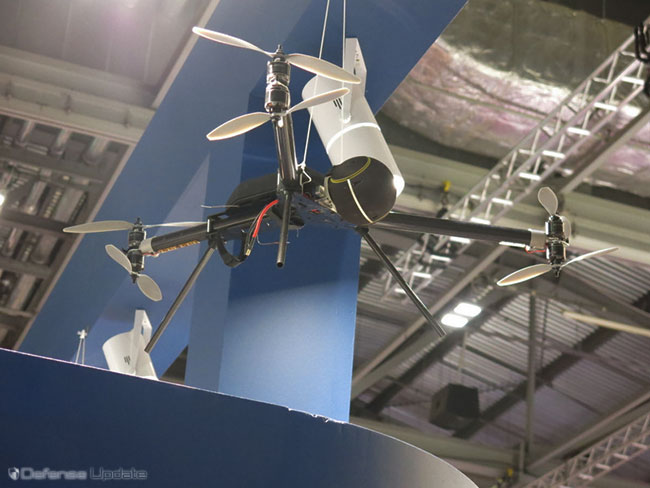
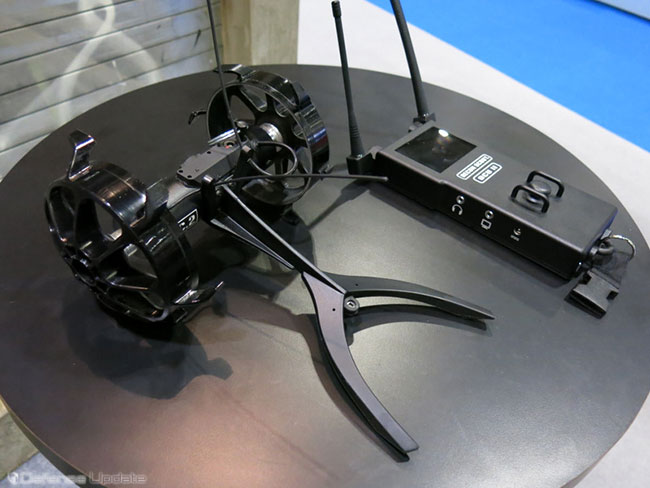
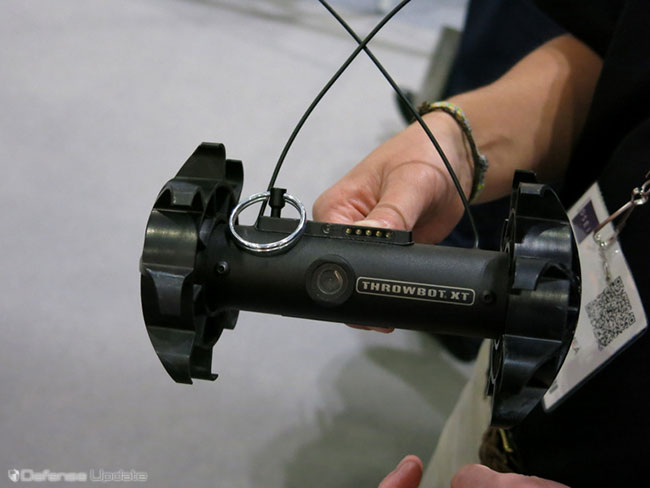
NERVA from Nexter, mounting a EO/laser sight and different illuminators mounted on Picatiny railsNERVA is designed with a universal attachment that easily enable attachment of different payloads using a common interfaceThe newest NERVA unveiled at DSEI 2013 is this two-wheel model, provided with a fixed camera, illuminators (white light and IR) and a tail that, when deployed, can elevate the camera’s line of sightThe MACE from MIRA robotic vehicles was designed to carry the Ground Penetrating radar on route clearing missionsMIRA has a hybrid-electric propulsion that optimally supports the Ground penetrating Radar on the slow movement required for the route clearing missionsD-DALUS from IAT21 is designed with an innovative propulsion mechanism supporting the vehicle in ground effect on its flightThis propulsion mechanism developed for D-DALUS can carry payloads up to 10 kg in weight. IAT21 works on the development of other platforms carrying heavier payloads as wellSlyph uses a three-arm design, each arm mounts a counter rotating tandem motor providing stabilization and forward lateral maneuverabilityRecon Robotics displayed this Throwbot, equipped with larger wheels to cope with higher obstaclesThrowbot is smaller and lighter, it is also much cheaper than most other robots
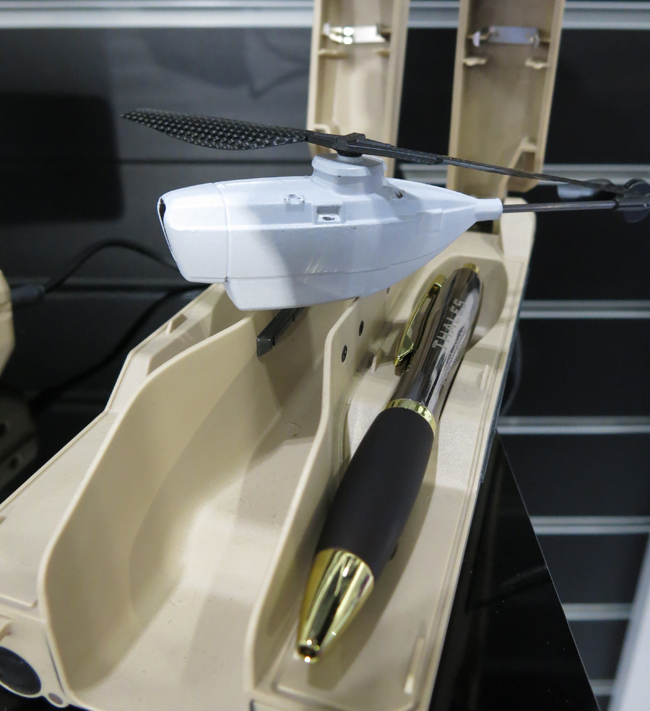
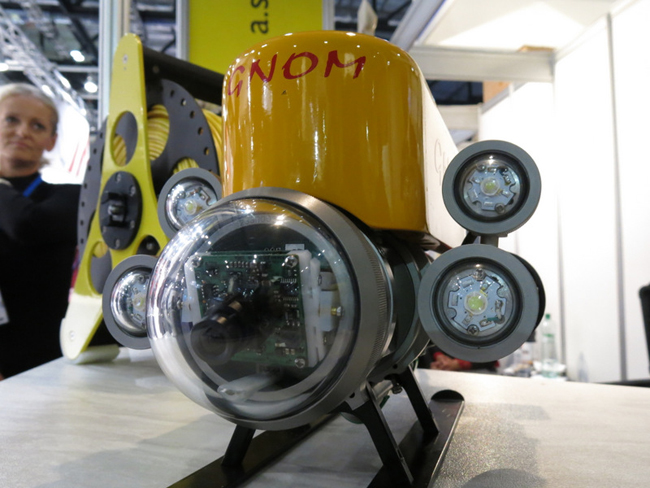
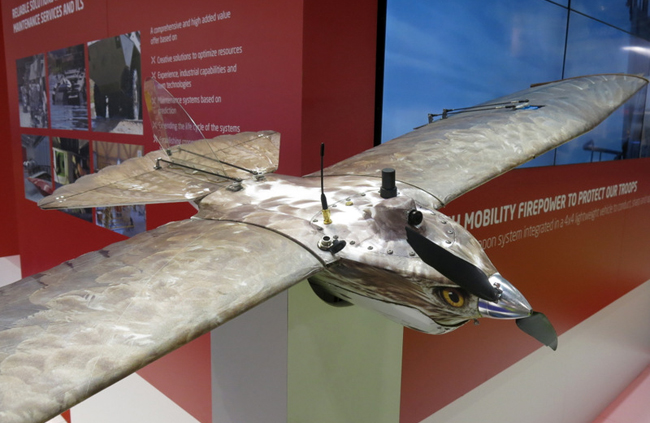
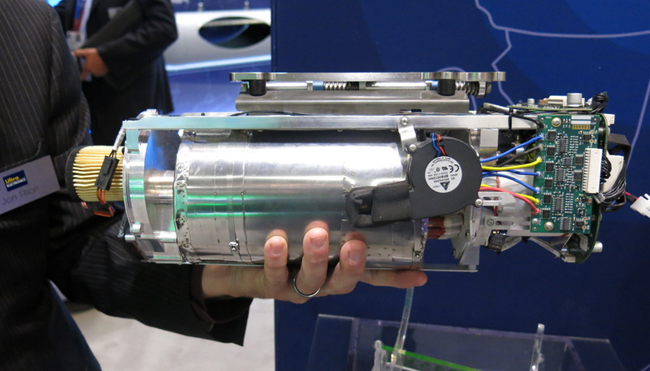
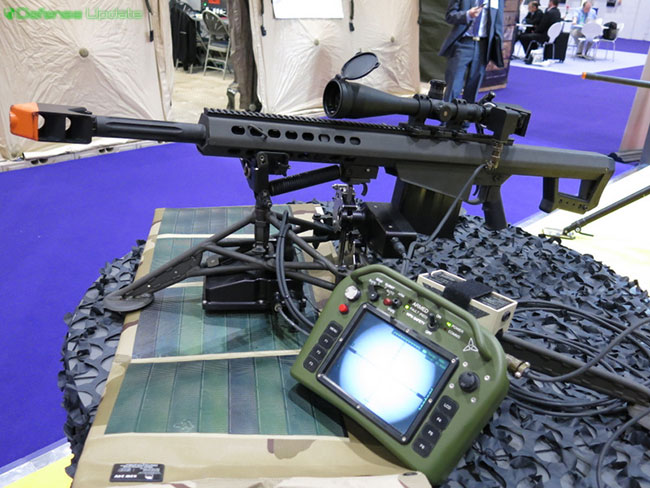
Hundreds of miniature Black Hornet systems are currently operating by the British military, demonstrating surprisingly long life. Each micro-copter has three cameras, linked to a single video channel, switched between the cameras of interest.The Gnome from Slovakia is designed to dive under operator control (linked via cable) and search underwater at a distance 50 meter away.A bird-like mini-UAV displayed by EXPAL, mimics a hawk to blend in natural environment.A new fuel cell from Ultra Electronics generates electrical energy from propane, at an efficiency of 30%. The fuel cell weighs 2.5 kilograms and requires only 100 grams of propane to run a UAV for one hour. A typical pressurized container will run an electrically powered mini-UAV for eight to 12 hours. An equal weight of Lithium-ion battery pack would be able to fly a similar drone for 2-3 hours.This Precision Remote control kit for a long range sniper rifle controls the weapon’s mount via cable, using battery pack recharged by solar panel, the unit sustained an unlimited mission cycle, supporting snipers on extended missions, enabling the sniper team to monitor their weapons and observation gear from a remote, safe position.
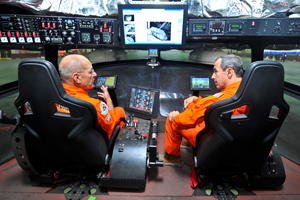
Chief test pilot of the Aeroscraft is 40-year airship veteran Corky Belanger. The co-pilot is retired four-star General Raymond Johns, former head of the Air Force Mobility Command. Photo: Aeros Corp.
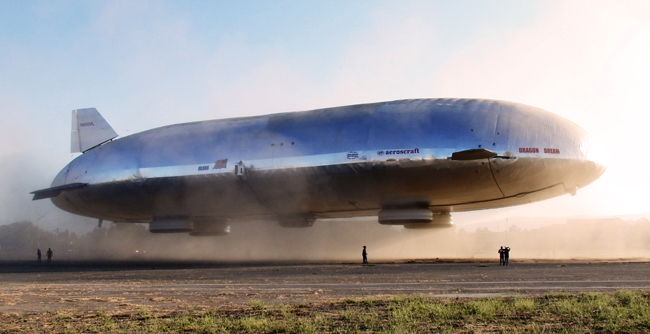
Two days after receiving experimental airworthiness certification from the Federal Aviation Administration Aeros Corp. began flight-testing the Aeroscraft airship. For safety, the current flights are tethered, and, according to John Kiehle, communications director at Aeros, untethered flights are expected to follow within few weeks. Francis Govers of Gizmag reports.
The Aeroscraft half scale prototype is 266 ft (79 m) long and 97 ft (29.5m) wide. The final design is expected to be more than 400 feet (121m) long and be able to lift a cargo weight of 66 tons. The prototype is powered by three swiveling engines – two on the sides and one in the back – that provide both lift and thrust to lift the airship into the air and propel it forward. The rear engine gives control at low airspeeds by pushing the tail around, side to side or up and down. Two sets of wing-like control surfaces are mounted fore and aft, and two large rudders push up vertically from the tail end. These aerodynamic surfaces will be used at higher speeds (above 20 mph / 30 kph).
The Aeroscraft is a fully rigid airship, of the type that has not been seen in the air since 1940. A rigid airship has a stiff outer frame that maintains its aerodynamic shape regardless of the amount of helium inside the ship. The Aeroscraft maintains a given capacity of helium in pressurized containers. When loaded with cargo, helium will be expanded into buoyancy containers, like air is used to float submarines. The company calls this system COSH, an acronym for “Control of Static Heaviness.”
The rationale for bringing back this type of airship relates to its ability to deliver heavy, outsized cargo to remote locations without needing an airport to land at. Communities in locations like Alaska, the north of Canada, Africa, and the Australian outback are rich in minerals but lacking in infrastructure. It is the vision of Pasternak and his crew that the Aeroscraft will transform the delivery of cargo to mines, wind farms and oil fields in remote areas like these.
The Aeroscraft has been under development since 2006, and the US Government has contributed some $35M for research, along with expertise in aerodynamics and control systems from NASA.
The large bag structures under airship are landing pads, a type of inflated hovercraft skirt that allow the airship to rest on the ground – or water, or ice – without wheels. Photo: Aeros Corp.
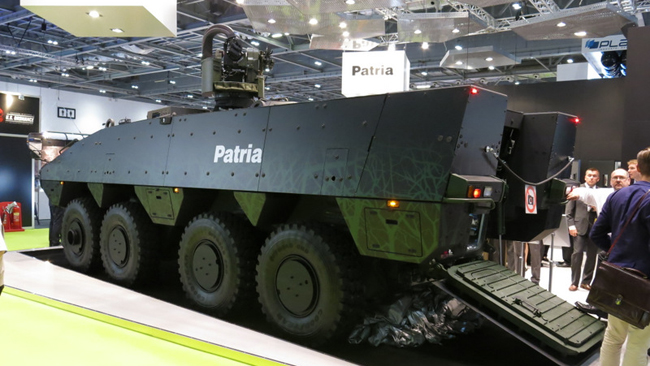
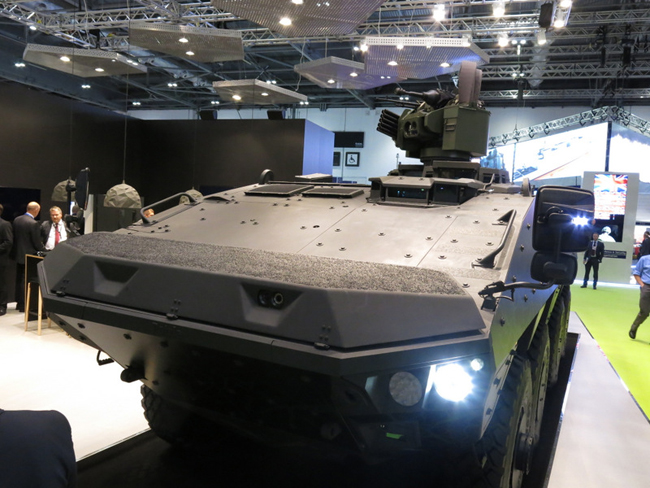
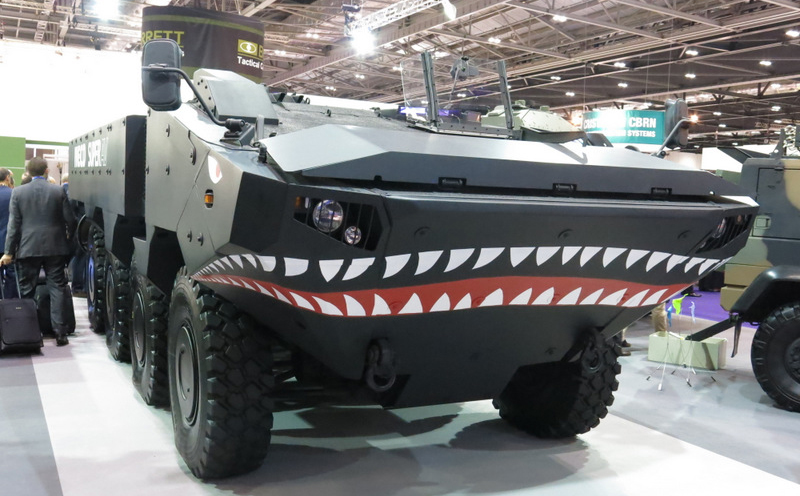
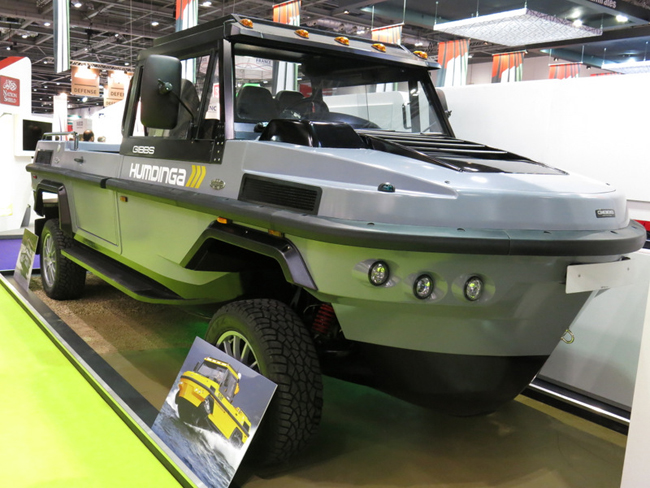
Patria unveiled the wheeled vehicle concept vehicle, offering 10% increase in payload capacity and many improvements over current AMVs.A front view of the Patria Wheeled Vehicle ConceptThis SuperAV 8×8 from IVECO is currently being offered for the US Marine Corps MPC program. The vehicle is developed to meet the requirement for a vehicle to support littoral operations and is fitted for amphibious operation.Gibbs has made its ‘amphitruck’ international debut with ST Kinetics, with which Gibbs is negotiating a co-production contract, which will see STK producing the 20 foot ‘Humdinga’ amphibious truck in Singapore. A 30 foot model will follow soon after the first will enter production.
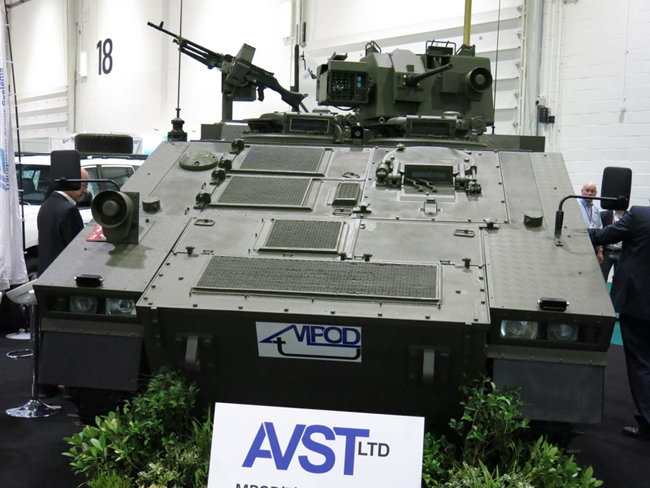
AVST debuts the Multi-role POD (tracked) (mPODt) at DSEI 2013, utilizing a CVR(T) chassis upgraded and modified to carry the mPOD mission module. This module can be a C4ISR, troop carrier, weaponized POD (carrying remotely controlled or manned turret) etc.Inside the modified and upgraded CVR(T) the seating configuration has been improved, with driver and commander seated side by side, with the troops seatec on blast protected seats to the rear.Elbit Systems unveiled the TITYUS low-profile active protection designed to protect armored vehicles from a wide range of threats, when operating at urban areas.Rapidranger from Thales employs a multi-mission weapon station mounting four weapon launchers. These can deploy Starstreak missiles, LMM or Brimstones.KMW displayed a CBRN Recce variant of the MUNGO specialist vehicle
Lockheed Martin Skunk Works® and XTEND have achieved a major milestone in JADC2 by integrating the XOS operating system with the MDCX™ autonomy platform. This technical breakthrough enables a single operator to simultaneously command multiple drone classes, eliminating the friction of mission handoffs. From "marsupial" drone deployments to operating in GPS-denied environments, explore how this collaboration is abbreviating the data-to-decision timeline and redefining autonomous mission execution.
As traditional defense primes face mounting competition from agile “neoprimes” such as Anduril, Palantir and Helsing, the balance of innovation is shifting toward software-defined warfare and scalable, dual-use technologies, while global industry consolidation—marked by Boeing’s integration of Spirit AeroSystems and other strategic mergers—signals an intensified race to secure control over the defense technology value chain. Our Defense-Tech weekly report highlights these trends.
In early October 2025, a coordinated wave of unmanned aerial system (UAS) incursions—widely attributed to Russia—targeted critical infrastructure across at least ten European nations. The unprecedented campaign exposed the fragility of Europe’s air defenses...
Executive Summary
The past week (September 18-25, 2025) represents an inflection point where strategic defense concepts have transitioned from doctrine to tangible reality. An analysis of global events reveals four primary, interconnected trends shaping an...
At the 2025 Air, Space & Cyber Conference, U.S. Air Force and Space Force leaders unveiled major updates on next-generation fighters, bombers, unmanned systems, and space initiatives, highlighting both rapid innovation and critical readiness challenges as the services race to outpace global competitors. A short version is available here, with a more detailed version for subscribers.
The Taipei Aerospace & Defense Technology Exhibition (TADTE) 2025 crystallized around four dominant strategic themes that collectively illustrate Taiwan's comprehensive approach to defense modernization amid escalating regional tensions. Based on a detailed report by Pleronix (available upon request). Includes a Podcast discussion on TADTE 2025's highlighting Taiwan's four strategic themes beyond the post's coverage.
Israel’s Iron Beam 450 high-power laser system has completed final testing, marking a major leap in air defense. Developed by Rafael, it offers precise, cost-effective interception of rockets, UAVs, and mortars, and is set for IDF deployment by 2025.


 South Korea has backed off from selecting the Boeing F-15SE for its next fighter jet, a decision that would wave been seen as a ‘sure win’ for Boeing. Apparently, Seoul’s concerns about the Silent Eagle’s yet unproven stealth capabilities have tipped the scale against Boeing. “The DAPA will promptly restart the project to minimize the security vacuum by consulting related organizations to revise the total budget and requirements.” Defense Acquisition Program Administration (DAPA) spokesman Baek Yoon-hyung said in a briefing.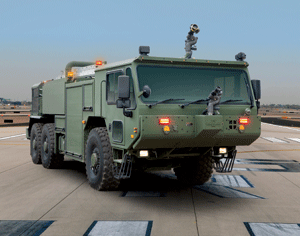
 NASA Composite Structures & Materials
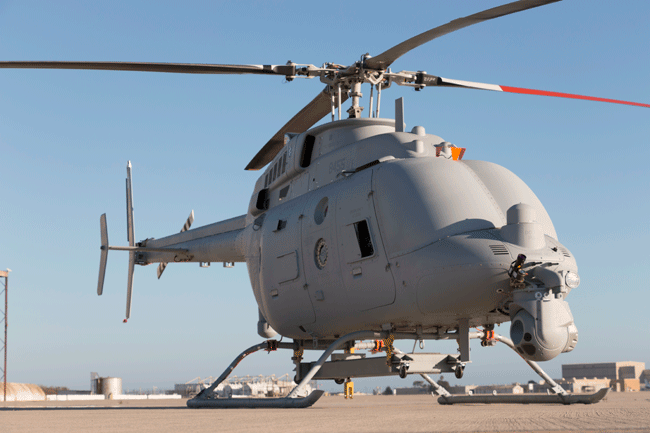 The US Navy’s latest UAS, the at Northrop Grumman Fire Scout MQ-8C unmanned helicopter began manufacturers’ ground testing at the Naval Base Ventura County Point Mugu, Calif., Sept. 20. Conducting initial engine runs of the aircraft allows engineers to collect data to ensure that all the aircraft’s systems are functioning and communicating properly prior to its first flight. This latest aircraft upgrade to the Fire Scout system provides the Navy with more than twice the endurance and three times the payload carrying capacity, enabling an unprecedented level of persistent surveillance, intelligence and reconnaissance capability. The MQ-8C aircraft is scheduled to be ready for deployment beginning in 2014.