Monday, December 29, 2025
More
    Home Blog Page 167

    The IDF Wants More Hermes 900 Drones

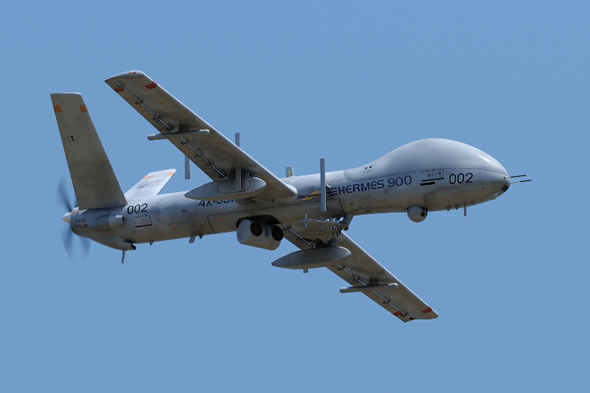
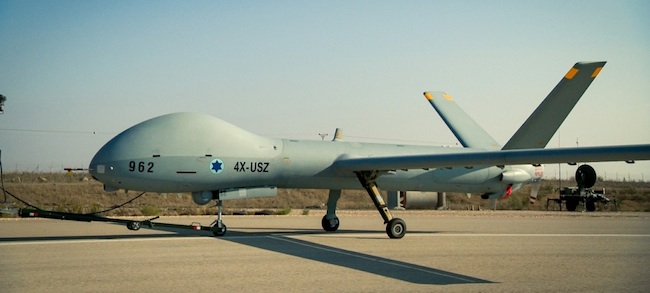
    The Israel Air Force has placed a second order with  Elbit Systems' for the Hermes 900 Medium-Altitude Long Endurance Unmanned Aerial System
    Hermes 900 Medium-Altitude Long Endurance Unmanned Aerial System. The first Hermes-900 is currently undergoing final evaluation prior to official induction with the IDF Hermes unit. Photo: Elbit Systems.

    Elbit Systems Closes 2013 with a domestic $315 million order for  Avionics, Drones, Electronic Warfare, Electro-Optic Systems, Avionics and Land Systems

    The Israel Ministry of Defense has placed a second order for a number Hermes 900 Unmanned Aerial Systems (UAS). The announcement by Elbit Systems did not specify the quantity of UAVs to be delivered under this contract but said the drones will be delivered over a period of three years. This order follows a first order for these drones, part of procurement order a $50 million, announced in May 2010. That order, placed six months after the aircraft’s maiden flight included the delivery of Hermes 450 and Hermes 900 over a period of three years. The current order is worth $90 million, and includes only Hermes 900 drones, and support systems and services, to be delivered over a period of eight years.

    The Hermes-900 is positioned between a tactical and strategic UAV, as it extends the performance of the Hermes 450 tactical UAS in almost every aspect – including operating ceiling, mission endurance, payload carrying capacity rand range.

    Like its predecessors, it has a universal command & control ground station (UGCS), which enables advanced mission management, automatic taxiing, autonomous flight and automatic takeoff and landing systems common to all the UAVs in the Hermes family. The new system also uses a built-in satellite communication channel for missions beyond line of sight.

    New Orders Worth $315 Million for Israel’s Army, Air Force

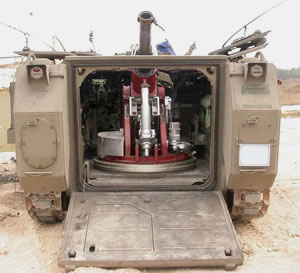
    Keshet 120mm self-propelled mortar utilizes the M-106 (M-113) chassis configured with the Cardom mortar system from Elbit Systems (formerly Soltam).
    Keshet 120mm self-propelled mortar utilizes the M-106 (M-113) chassis configured with the Cardom mortar system from Elbit Systems (formerly Soltam).

    The Israel Ministry of Defense has recently awarded Elbit Systems several contracts for the delivery and support of various systems totaling about US$315 million. Among these contracts are the delivery of battle management system (BMS) and avionics for helicopters, and virtual training systems for fighter aircraft. The company continues to support aircraft operations at the IAF Flight Academy. The total value of these programs is approximately $75 million, covering deliveries over a six-year period. Two weeks ago the company was also awarded an avionic upgrading program for the IAF C-130 fleet. The Israel Air Force F-16 and F-15s and the Navy’s combat surface vessels will also receive Electronic Warfare (EW) systems upgrades worth $90 million, as part of a comprehensive modernization plan spanning over four years.

    The land forces will also receive new systems, including long-range target acquisition systems and high precision mobile mortar systems. That target acquisition systems have recently being fielded by the Ground Forces Command and these additional systems being ordered will be delivered over a period of three years. Additional Cardom 120mm self-propelled mortar systems will be delivered over a period of six years, equip additional mortar companies being fielded under the IDF infantry and mechanized battalion modernization plan, The new mortar is integrated into ‘Keshet’ Self Propelled mortar system based on an enhanced configuration of the standard M-106. The fielding of Keshet SP mortars is implemented under a comprehensive modernization of the combat and support elements of the IDF brigades and battalions, enabling self-reliance of the tactical echelon, enabling tactical units to be self supported in combat.

    Space News Roundup – December 2012

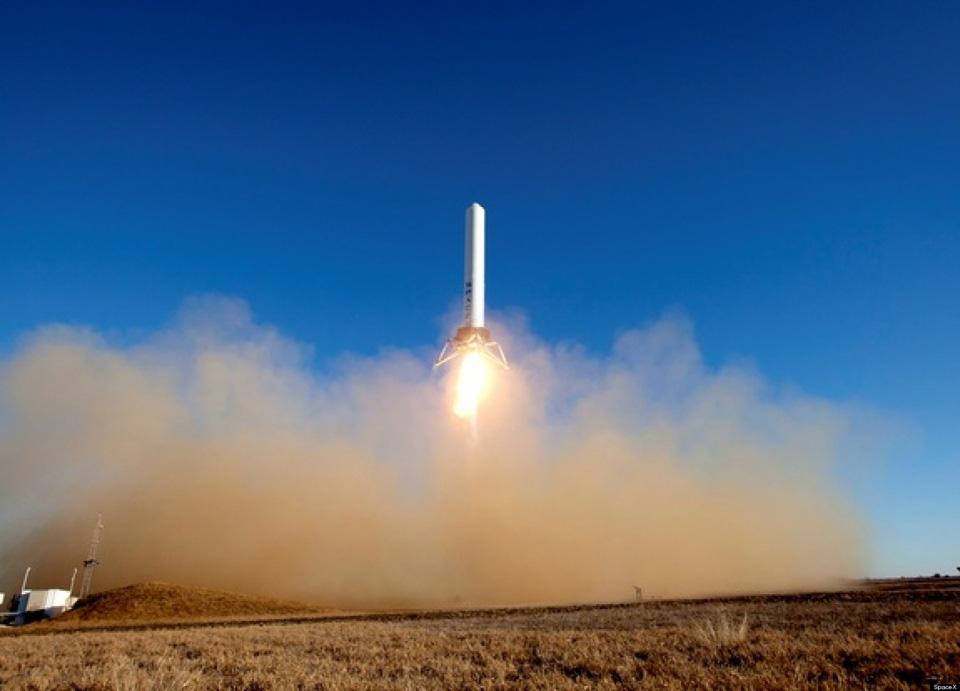
    SpaceX's Grasshopper Rocket Takes Off

    Lockheed wins $1.9 billion contract for two U.S. satellites

    Lockheed Martin has won a contract valued at $1.9 billion to build two additional advanced military communications satellites for the U.S. Air Force, the Pentagon said on Friday, December 28, 2012. The contract, which runs for ten years, through January 2022, covers production of the fifth and sixth satellites in the Advanced Extremely High Frequency (AEHF) satellite program.

    Two AEHF satellites are already in orbit, and are designed to ensure that military communications continue among top military commanders and the White House in the event of a nuclear war. The satellites also provide transmission of more routine communications such as targeting data and video data feeds, and serve international partners including Canada, the Netherlands and the United Kingdom.

    SpaceX Launches Reusable Space Rocket (Video)

    The private US space engineering firm SpaceX released a video showing its Grasshopper rocket making a short  journey that could take space exploration to new heights: reusable rockets that can lift off and land back on Earth vertically, to reduce the cost of commercial space travel.

    SpaceX's Grasshopper Rocket Takes Off
    SpaceX’s Grasshopper Rocket Takes Off

    “The Grasshopper program is a critical step toward achieving SpaceX’s goal of developing fully and rapidly reusable rockets,” the company said on its website. “With Grasshopper, SpaceX engineers are testing the technology that would allow a launched rocket to land intact, rather than burning up upon reentry to Earth’s atmosphere.” The video shows what happened during the December 17 test flight from the SpaceX launch facility in McGregor, Texas.

    As the engines fired up, the 10-story tall Grasshopper rocket lifted 12 stories – 131 feet (40 meters) – in the air, hovered in place, and then gently returned to earth, settling safely on the landing pad.

    It was the third test launch for the Grasshopper, each one higher than the one before.

    The first fight in September lifted six feet (1.8 meters) in the air. The second one in November rose 17.7 feet (5.4 meters).

    Reported on space-travel.com

    Iran to Launch 2 New Home-Made Satellites Soon

    Head of the Iranian Space Agency (ISA) announced on Saturday (December 24, 2012) that the country is preparing to put two new home-made satellites, called AUT SAT and Sharif SAT, into orbit in the near future. “The AUT SAT will be put into the 55-degree orbit after some changes (in the satellite) and will be launched by Simorq (Phoenix) carrier,” Fazeli told reporters in Tehran. “We try to launch the AUT SAT before the end of this (Iranian) year (March 20),” he added. Fazeli referred to another home-made satellite named Sharif SAT being built by the researchers at Iran’s Sharif University of Technology, and said, “Sharif SAT will also be launched this year.”

    Iran which first put a satellite into orbit in 2009, has managed to build several satellites in spite of sanctions and pressures of the US and certain European countries, dissatisfied with its progress and advancements. The country has already sent small animals into space – a rat, turtles and worms – aboard a capsule carried by its Kavoshgar-3 rocket in 2010. Reported on space-travel.com

    China Unveils Photos of New Y-20 Heavy Transport

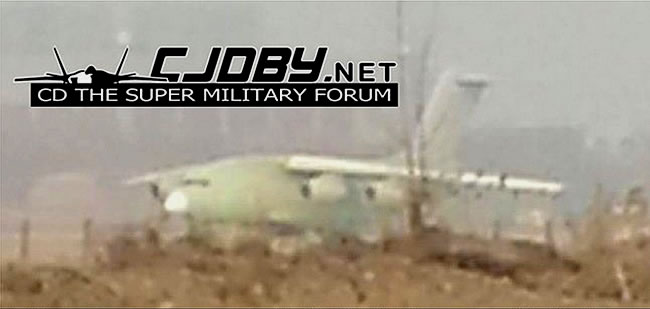
    In a subdued Christmas Eve presentation, Beijing has once again unveiled the presence of a new military aircraft.  Chinese websites posted indistinct photographs of what is being promoted as being the first domestically-produced heavy-lift military transport.

    The new aircraft, designated the Xi’an Aircraft Corporation’s Y-20, is the latest in a long series of new military aircraft China has introduced to the world recently.  In a theme that is quickly becoming a Chinese tradition, the Y-20 was featured on Chinese websites in advance of a formal government announcement.  Shortly after the photographs appeared, Beijing quickly confirmed that the Ministry of Defense is developing a new heavy transport, supposedly the Y-20, as part of its military modernization campaign and for service in humanitarian and disaster-relief efforts.

    y20cdjby
    The first prototype of the Chinese four-engine Y-20 transport aircraft undergoing taxi tests at Xi’an Aircraft’s Yanliang airfield in China’s Shaanxi Province located in east-central China. Photo via cjdby.net forum

    The photographs were purportedly taken from long range at Xi’an Aircraft’s Yanliang airfield in China’s Shaanxi Province located in east-central China.  Although the websites used to display these photographs profess to be administered by Chinese aviation enthusiasts, most experts claim such presentations are actually the work of the Chinese government as a means of highlighting China’s technological prowess.

    Some features of the new aircraft can be identified despite the poor quality of the images presented.  The aircraft bears a striking resemblance to the US Air Force C-17 Boeing-built transport, but appears to be of a size that might fit somewhere between the C-17 and the Airbus A400M. The new Chinese tactical transport aircraft will also challenge the Brazilian C-390 scheduled to fly in 2014.

    The aircraft is powered by four jet engines that appear to be Russian Soloviev D-30KU engines.  The Soloviev D-30KU is a twin-shaft, low-bypass turbofan engine currently in service on Russian Ilyushin Il-62M and Tupolev TU-154M airliners and Ilyushin Il-76MD cargo transports.  The Chinese People’s Liberation Army Air Force (PLAAF) currently operates a small fleet of Russian-manufactured Il-76 transports powered by the D-30KU engine.

    Chinese prototype and test aircraft have frequently been fitted with older engines and parts from other aircraft prior to entering production.  Some sources are speculating that a production-model of the Y-20, should it actually go into production, would likely be powered by Chinese-built, high-bypass WS-20 powerplants in lieu of the D-30KUs.

    The Y-20 also features a high-wing configuration and T-tail and is estimated to weigh-in at 200 tons or so.  The aircraft’s nose also shares a similarity with the Ukrainian-built Antonov An-70 medium-range transport.

    Although not confirmed, several analysts believe design of the Y-20 likely began in 2005.  Rumors have swirled throughout the defense community for years speculating that China was pursuing development of a heavy cargo transport.  Currently, the PLAAF has a small, but growing fleet of transports that includes 20 Ilyushin Il-76 transports.

    In the aftermath of a massive 2008 earthquake in Sichuan province, the PLAAF was able to deploy only a small number of transports to ferry relief supplies to the stricken area while the USAF managed to fly several fully-loaded C-17s into the area.  The Chinese government considered this testimony to American air superiority to be a humiliating indictment of China’s failure to care for its own.  This event likely energized Y-20 design efforts.

    A model of the Y-20 was featured in a Chinese trade show in 2009, but the speed with which a full-scale model has appeared has come as a minor surprise.  China is known to have pumped billions of dollars into military modernization and it is suspected that large sums have been earmarked for development of a domestically-produced turbofan engine capable of powering a heavy-lift transport.

    Theoretically, the Y-20 would give China a global airborne military capability to challenge the monopoly long enjoyed by the United States.  Chinese political and military leaders are painfully aware that a long-range, heavy-lift transport is necessary for China to be considered a serious force of global reach.

    As can be said of many prototype aircraft that have appeared throughout aviation history, the appearance of a full-scale model doesn’t always translate into production of a model capable of delivering a level of performance equaling that demonstrated by existing aircraft currently in operation.  This is especially true of the Y-20 since Chinese designers have struggled for years to develop a domestic engine capable of powering an aircraft of this size.

    Although many defense analysts continue to downplay advances in Chinese technology, it is true that Beijing has made remarkable progress in its space program, in developing advanced military hardware, and in conducting intricate military operations mastered by only a small number of nations.

    As with all new advances unveiled by Beijing, questions will continue to fuel speculation that the Y-20, and a majority of China’s recently publicized military aircraft, is based on stolen technology.  A Chinese-born engineer working for Boeing was found guilty of delivering classified information related to American rocket technology to Chinese agents in 2010 and was sentenced to 15 years in prison.  This same individual was accused of attempting to deliver classified data related to the C-17, but this charge was subsequently dropped.

    While the technology featured in the Y-20 may eventually be discovered to be copied from other aircraft, such knowledge will have minimal impact on future development of Chinese aircraft.

    Of greater importance is recognition of the expanded capabilities a truly functional Y-20 would give China.  A fleet of Y-20s would enable China to transport significant military forces far beyond its own borders.  In order to challenge US capabilities, many analysts estimate China would require a fleet of at least 300 heavy-lift aircraft, an estimate that may not be outside the realm of possibility.

    Is The RQ-4 Global Hawk Somewhere In South Korea’s Future?

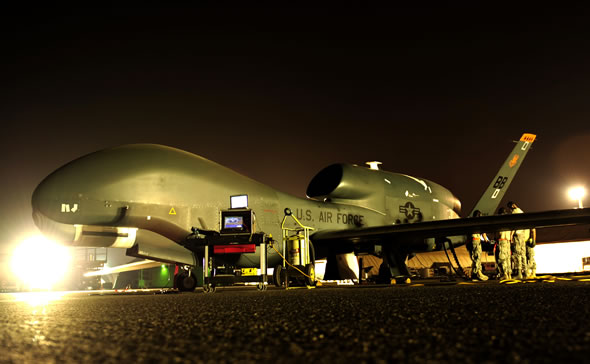
    On 21 December, the Defense Security Cooperation Agency (DSCA) notified Congress of a possible sale of four Northrop Grumman RQ-4 Block 30(I) Global Hawk UAVs to the Republic of Korea (ROK) for an estimated sale price of $1.2 billion. The proposed sale would include provisions for related equipment, training, and necessary logistical support.

    Since the proposed sale would be administered through the Foreign Military Sales (FMS) program, Congressional notification is required by law. Notification does not constitute a completed sale. While this sale requires Congressional approval to finalize, such approval is not likely to encounter any serious opposition.

    The Global Hawks being considered would be equipped with the Raytheon Enhanced Integrated Sensor Suite (EISS) that combines infrared/electro-optical capabilities with synthetic aperture radar imagery, intelligence imagery, and moving ground target tracking. The Global Hawks will be delivered with all the ancillary equipment required for operational deployment to include test equipment, launch and recovery systems, ground and flight test support equipment, communications gear, repair parts and spares, as well as technical documentation, training, and logistical support.

    Although the notification specifies the RQ-4 Block 30(I) as the aircraft under consideration, the EISS was featured as standard equipment on the earlier Block 20 version of the aircraft.

    A proposed Global Hawk purchase was postponed by South Korea in late 2011 due to concerns related to pricing and aircraft performance. Officials in Seoul also expressed frustration with continuous delays in getting Washington’s approval for the purchase.

    Washington’s foot-dragging on the deal has been a major disappointment for South Korean leaders and military commanders. The United States has moved slowly in recognition that the RQ-4 Global Hawk might violate Missile Technology Control Regime (MTCR) export guidelines.
    The MTCR, a voluntary body representing 34 nations, was created in 1987 as a means of limiting the proliferation of ballistic missiles and other unmanned systems that could be used to deliver nuclear, biological, or chemical munitions. Member nations agreed to restrict the export of unmanned delivery systems designed to travel at least 300 kilometers with a payload of 500 kilograms or more. The Global Hawks technically fit this definition, but the DSCA notification did not include a request, as required, for an export waiver.

    Earlier in 2012, President Obama’s administration gave Seoul approval to increase the range of its ballistic missiles to 800 kilometers provided the payload capacity remained limited to 500 kilograms. This approval also authorized Seoul to deploy UAVs, with a range in excess of 300 kilometers, to carry a weapon’s package of 2,500 kilograms or less. Unmanned drones capable of reaching a range of 300 kilometers or less can be deployed without limitation to payload.

    Now, in the aftermath of North Korea’s December 2012 satellite launch, Washington recognizes South Korea’s need for an operational remotely-piloted craft with the Global Hawk’s capabilities. The shrinking export market for such high-value systems enhances the attractiveness of finalizing the proposed sale.

    South Korea is scheduled to assume operational command of all ROK forces on the Korean Peninsula in 2015. Presently, the United States exercises operational command of all allied forces on the Peninsula through the Combined Forces Command, a command arrangement that can be traced back to the days of the Korean Conflict of 1950-1953. With this change in operational command comes the responsibility for intelligence gathering. South Korea does not currently have the hardware or experience to replace US forces as the primary source of intelligence, reconnaissance, and surveillance.

    South Korea’s limited aerial reconnaissance capability is cited in DSCA’s notification to Congress as justification for the Global Hawk sale. US Forces Korea (USFK) currently has access to significant assets capable of performing reconnaissance and surveillance missions in Korea including the venerable U-2 spy plane, Global Hawks, and other operational systems.

    On 26 December, South Korea’s Yonhap News Agency filed a report quoting an unnamed official indicating that Seoul may be considering the acquisition of other unmanned aircraft to include the Boeing Phantom Eye and AeroVironment’s Global Observer.

    South Korea’s Defense Acquisition Program Administration (DAPA) has also been quoted as stating that a decision regarding the purchase of the Global Hawks will be deferred until later in 2013 following a thorough study of the terms being offered. DAPA representatives have indicated that Seoul is not yet committed to the Global Hawk and considers the price tag specified in the DSCA notification to be excessive. South Korean officials have said they are looking for a system package that could be purchased for $745 million or less.

    The Global Hawk Block 30s have been subjected to criticism with several sources claiming the aircraft doesn’t live up to its hype. Many critics have slammed the performance of the Block 30 and also consider it to be overpriced in comparison to competing UAVs of comparable capabilities.

    On 26 January 2012, the US Air Force (USAF) announced plans to discontinue the Global Hawk Block 30 program and increase procurement of the Block 40 model. The USAF concluded that the Block 30s were more expensive to operate and maintain than the long-serving U-2 manned aircraft and its sensor array was not equal to that employed by the U-2.

    The US Department of Defense (DoD) Fiscal Year 2013 budget request submitted to Congress confirmed USAF plans to mothball the Block 30s in service and to discontinue all future buys to free-up additional money to fund the purchase of more Block 40 models. The USAF and the US Navy (USN) plan to continue operating other RQ-4 and MQ-4 models fitted-out with alternate sensor packages.

    Contrary to administration desires, the FY 2013 National Defense Authorization Act (NDAA), passed by both houses of Congress and forwarded to President Obama for signature, rejected USAF plans to retire the Block 30 Global Hawks.

    Global Hawks, in various configurations, are currently serving with the USAF, NASA, and Germany’s Luftwaffe. Other nations have expressed sincere interest in acquiring the RQ-4 including Japan, Canada, New Zealand, Singapore, and the Indian Navy has been looking at procuring as many as eight copies of the MQ-4C Triton Maritime Surveillance aircraft to serve in a Broad Area Maritime Surveillance (BAMS) role.

    Despite USAF claims that the Block 30 model does not match the performance of the U-2, it does offer operators a much needed advance in surveillance and reconnaissance capabilities. In the vast expanse of the Pacific, now embroiled in potentially volatile disputes with China, a UAV of the Global Hawk’s capabilities roaming the skies would certainly help many national leaders in the region sleep much easier at night.


    Unattended Ground Sensor Combines Radar & Imaging Camera into Persistent Ground Sensor

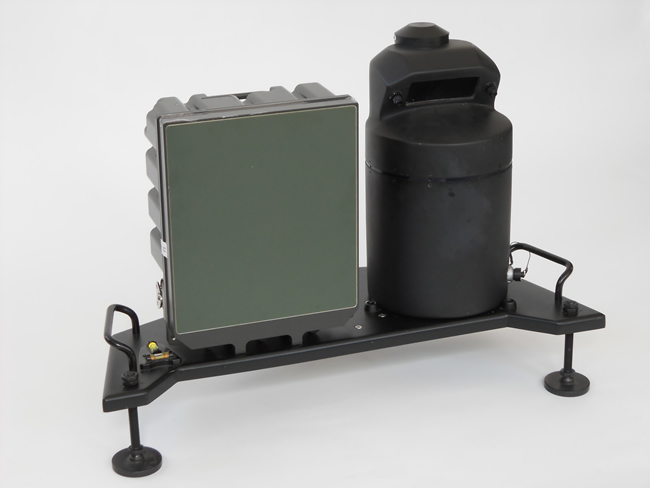
    Seraphim has integrated the Elta EL/M-2112 radar with its Mini Unattended Ground Imager (MUGI) to deliver what it calls the 'Ultimate Gap Filler' (UGF) designed to plug uncovered areas in a highly protected perimeter. Photo: Seraphim
    Seraphim has integrated the Elta EL/M-2112 radar with its Mini Unattended Ground Imager (MUGI) to deliver what it calls the 'Ultimate Gap Filler' (UGF) designed to plug uncovered areas in a highly protected perimeter. Photo: Seraphim
    MUGI - man-portable, persistent unattended ground sensor. Photo: Seraphim
    MUGI – man-portable, persistent unattended ground sensor. Photo: Seraphim

    The Israeli Unattended Ground Sensor (UGS) specialist Seraphim Optronics recently unveiled two unattended sensors – the Mini Unattended Ground Imager (MUGI) and enhanced version of the Chameleon 2 – Urban Persistent Covert Surveillance System. According to the Israel’s new website i-HLS, the two systems are designed to provide the Ultimate Gap Filler (UGF) for border protection and persistent surveillance of targets of interest in complex terrain.

    Seraphim has integrated the Elta EL/M-2112 radar with its Mini Unattended Ground Imager (MUGI) to deliver what it calls the 'Ultimate Gap Filler' (UGF) designed to plug uncovered areas in a highly protected perimeter. Photo: Seraphim
    Seraphim has integrated the Elta EL/M-2112 radar with its Mini Unattended Ground Imager (MUGI) to deliver what it calls the ‘Ultimate Gap Filler’ (UGF) designed to plug uncovered areas in a highly protected perimeter. Photo: Seraphim

    The UGF comprises a miniature tactical radar (Elta Systems EL/M-2112) integrated with the MUGI, enabling persistent, long endurance coverage of gaps in a perimeter or border line covered by other means of surveillance. The radar continuously scans a sector of 90⁰, delivering persistent surveillance, with an automatic detection range of up to 2 km. The MUGI system can be triggered by the radar, or by unattended ground sensors (acoustic, seismic, etc.) The system is controlled remotely via radio link, with multiple systems operated simultaneously by a single observer.

    (Read more about UGF at i-HLS.COM)

    Parallel to the Acquisition of C-130J, the IAF is Upgrading Part of its C-130H

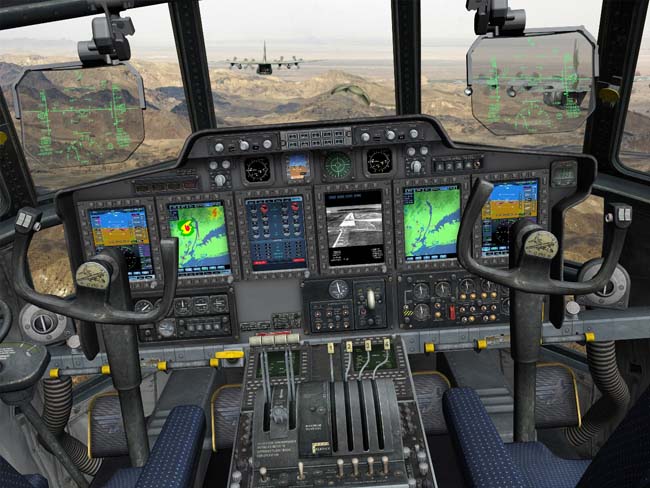
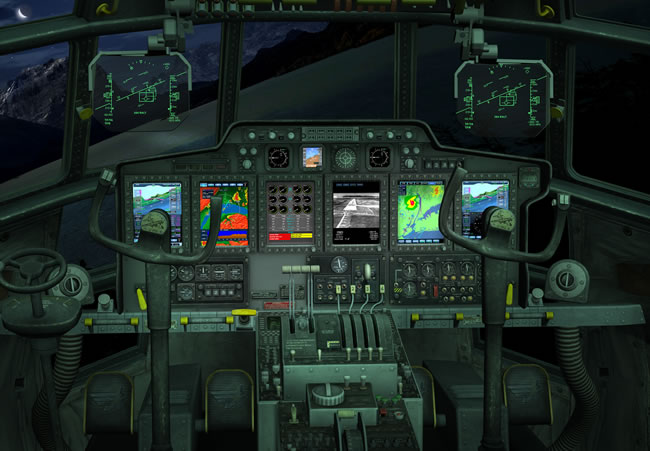
    Part of the IAF C-130H upgrade will include the integration of an advanced glass cockpit which has already been implemented in other transport aircraft. Photo: Elbit Systems
    Part of the IAF C-130H upgrade will include the integration of an advanced glass cockpit which has already been implemented in other transport aircraft. Photo: Elbit Systems
    Elbit Systems and Northrop Grumman Collaborate in Developing Terrain Following and Terrain Avoidance (TF/TA) System to Improve Tactical Low-Level Flight Safety for Military Transport Planes. Photo: Elbit Systems
    Elbit Systems and Northrop Grumman Collaborate in Developing Terrain Following and Terrain Avoidance (TF/TA) System to Improve Tactical Low-Level Flight Safety for Military Transport Planes. This new capability could be integrated into the IAF upgrade. Photo: Elbit Systems

    The Israel Air Force has committed to buying at least three new C-130Js; the first will be delivered in 2013. In parallel, extending the life span of the remaining C-130H is becoming critical due to the rapid aging of these aircraft, due to the exhaustive flight profile they endure.

    The C-130 is cleared for 45,000 flight hours. Before that limit, the aircraft must go through a comprehensive life extension program replacing the central wing box (CWB), renovating structural elements and renewing wiring. When the budget is available, such work also includes avionic modernization, which could comprise the installation of a modern glass cockpit.

    The US Air Force specified a 40,000 threshold Equivalent Baseline flight Hours (EBH) service life, beyond which CWB replacement becomes mandatory Ð an expensive endeavor performed by only a handful of qualified Maintenance, Repair and Overall (MRO) centers around the world. Some operators decide to phase out their older Hercules, sell them on the surplus market or cannibalize them to maintain the remaining, younger fleet.

    For most air forces, 40,000 hours are measured in decades. But some would meet this threshold much sooner than others. For air forces that operate their C-130s in combat conditions each flight, hour is multiplied by the EBH factor, determined by the typical mission profile this C-130H flies. Therefore, those airplanes flying more demanding profiles, with the US Air Force Special Operations Command (AFSOC), US Marine Corps or the Israel Air Force, for example, will burn EBH much faster than others, reaching their threshold earlier than the 40,000 goal.

    Only a handful of MRO centers have qualified to perform this service worldwide, in the US, Canada, UK, Israel, and Singapore, in anticipation to more air forces reaching the ‘point of no return.’ This extensive and costly process has already been performed on 50 aircraft at Warner Robins Air Logistics Center. Few air forces outside the US have also undertaken the process, among them five in Australia and New Zealand.

    With EBH factor twice the US Air Force average, the Israel Air Force is reaching the CWB replacement much earlier than most other air forces. In its current multi-year plan the Israel MOD has allocated budget for the procurement of three C-130Js, setting aside an additional budget for the sustainment and modernization of part of the remaining fleet. The modernization includes the life extension work (airframe, wiring and central wing box replacement) to be performed at IAI and comprehensive avionic modernization provided by Elbit Systems.

    Avionics Modernization

    Elbit Systems Ltd. announced it had been awarded a contract by the Israel Ministry of Defense (IMOD) to upgrade the Israeli Air Force’s (IAF) C-130H Hercules transport aircraft. The modernization project will extend the operational life of the aircraft and significantly improve its operational capability, particularly in precision flying, low-level night flight and operations in adverse weather. The modernization will contribute to improved flight safety and reduce operating costs, by introducing cutting-edge digital systems to replace obsolete analog systems that have become unreliable and costly to maintain after four decades of intensive service with the IAF.

    Part of the IAF C-130H upgrade will include the integration of an advanced glass cockpit which has already been implemented in other transport aircraft. Photo: Elbit Systems
    Part of the IAF C-130H upgrade will include the integration of an advanced glass cockpit which has already been implemented in other transport aircraft. Photo: Elbit Systems

    According to Elbit Systems’ Aerospace Division Co-General Manager, Yoram Shmuely, the proposed upgrade utilizes systems, subsystems, and applications being deployed on the most advanced platforms and military and civil upgrade programs to meet current operational needs and enable integration of future operational and technology capabilities.

    Key elements of the upgrade are the integration of all-digital avionic architecture, providing the pilot and co-pilot the ability to fly ‘heads up’ or ‘head down,’ in day or night, using EL-OP Head-Up Displays (HUD). The HUDs presents flight data as well as images from the thermal camera, enabling the pilots to fly safely ‘heads up’ at low altitude, in a day, night and under adverse weather conditions. Another improvement is the introduction of Northrop Grumman AN/APN-241 weather/navigation radar replacing the current weather/navigation radar. The AN/APN-241 is the same model used on new C-130J. In addition to its basic functions, it also supports terrain-following flight modes pursued by Elbit Systems and Northrop Grumman under a separate program. Other improvements include the introduction of a new autopilot, providing more reliable and improved automated functions, Engine Indicating and Crew Alerting System (EICAS) and smart panels for the pilots, navigator and flight engineer. Elbit Systems and Northrop Grumman are cooperating on the development of terrain avoidance/terrain following system for the C-130, which is likely to be considered by the IAF once proven in flight demonstrations.

    Developed as a modular and integrated flight-deck avionics and mission equipment package (MEP) for transport aircraft, Elbit Systems’ C-Suite architecture integrates all avionics on board. The suite includes a mission computer, head-up displays, enhanced vision system, flight management systems, weather and mapping radar, communications, EO payload, self-protection systems, helmet mounted displays, etc. Integrating this complex array into clearly defined mission situational pictures, relevant to each phase of the mission or task at hand. Delivered as an affordable solution, C-Suite MEP maintains essential flight information visible at all time, enabling the crew to operate the systems intuitively, using six ‘smart panel’ modules.

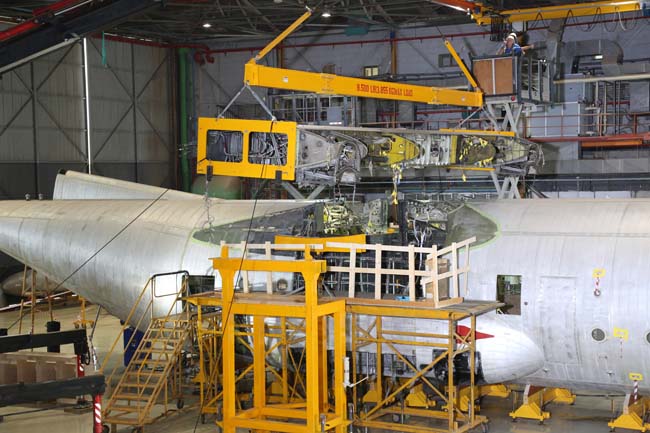
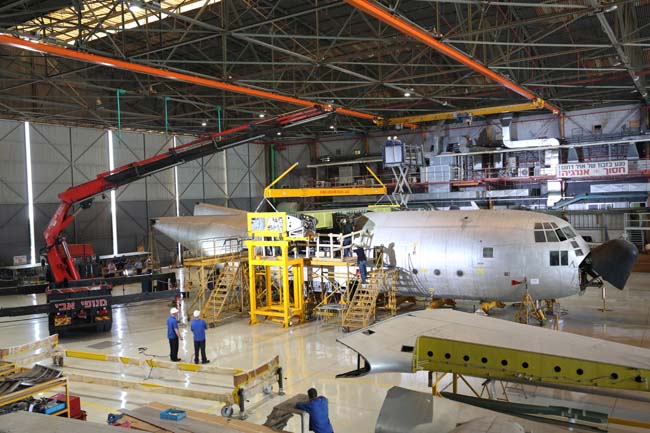
    The first IAF C-130H undergoing wing replacement work at IAI Bedek facility in Israel. Photo: IAI
    Technicians an IAI Bedek are replacing the Central Wing Box (CBW) on the first C-130H for the IAF. Under the IAF C-130H modernization plan Elbit will provide the avionic modernization while IAI provides the airframe overhaul and life extension, preparing the Hercules for many more years of operational service. Photo: IAI

    On January 15, 2014, Elbit Systems announced it received a follow-on order from the IMOD worth US$15 million. These upgrades are also compliant with CNS/ATM (Communications Navigation and Surveillance/Air Traffic Management) requirements, enabling military transport planes to fly in international air traffic routes.

    Life Extension Program

    Airframe and Wing Earlier this year the IAF has allocated the first Hercules to go through the process at IAI. By the summer of 2012, the wing was removed, and a new wing box delivered by Lockheed Martin installed. In parallel, the IAF embarked on a long delayed upgrading and modernization of the remaining fleet of its C-130H. The RFP was distributed to several local companies, including IAI teamed with Astronautics as the avionic provider and Elbit Systems offering its own avionic systems, as part of the modernization. The CWB is expected to become part of this modernization process but not necessarily performed by the same vendor. The IAF provided the first aircraft to IAI to develop the process, and the final decision will be made based on the outcome of the project.

    IAI Bedek is offering the CWB replacement as part of a comprehensive upgrade, which also includes Programmed Depot Maintenance (PDM), rewiring and avionic upgrade. The new wing box is cleared for 30,000 hours, extending the life expectancy of the upgraded aircraft for decades.

    The avionic upgrade includes a modern glass cockpit with six multifunction panel displays, supporting flight operations and tactical displays, advanced navigation (EGI) and ECAS. According to IAI Bedek, a typical upgrading program including all phases would cost about a third, or even quarter of the cost of a new C-130J, and provide for a transport plane that can remain in useful service for 30,000 hours. The upgraded C-130 is not offered as substitutes for the new C-130Js, but as a complementary solution, sustaining a mixed fleet over a longer transition phase that would meet the air forces budget and operational requirements.

    The first IAF C-130H undergoing wing replacement work at IAI Bedek facility in Israel.
    The first IAF C-130H is undergoing central wing replacement work at IAI Bedek facility in Israel. Photo: IAI

    50kW High Energy Laser Successfully Demonstrated in Switzerland

    Rheinmetall's 30kw Laser Weapon
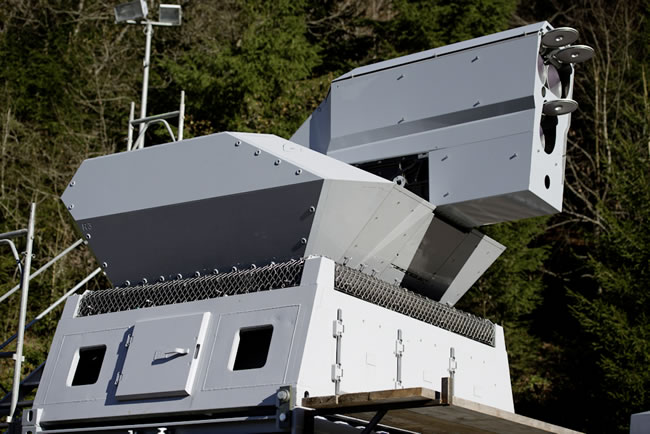
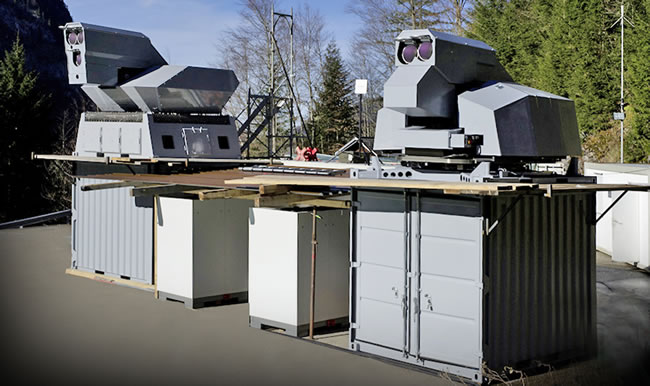
    The 30kw Laser Weapon mounted on a Skyguard Revolver gun air defense turret. photo: Rheinmetall
    The 30kw Laser Weapon used for the HEL C-RAM Demonstration. Photo: Rheinmetall
    The 30kw Laser Weapon used for the HEL C-RAM Demonstration. Photo: Rheinmetall

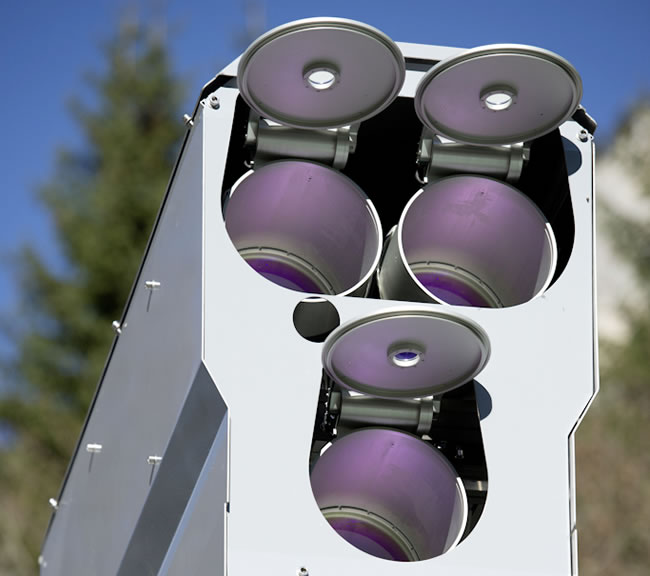
    Rheinmetall has successfully tested a new 50kW high-energy weapon technology demonstrator. Defense-Update reports. The test was conducted at the end of November 2012, at the company’s Ochsenboden Proving Ground (EZO) in Switzerland. The test comprised three types of targets representing hardened targets, Unmanned Aerial Vehicles (UAV) and ballistic threats. and successful A steel ball representing a mortar round target, travelling at approximately 50 m/sec was also intercepted.

    The test witnessed by independent experts was designed to demonstrate the increase in efficiency of the 50kW HEL weapon, compared with the 10kW version demonstrated last year. The five-fold increase in laser power was demonstrated how such high-energy weapon can effectively perform Air Defense (AD), Counter Rocket, Artillery, Mortar (C-RAM), and Asymmetric Warfare operations.

    The tests proved how multiple HEL weapon stations can irradiate a single target in a superimposed, cumulative manner. This modular technology approach makes it possible to maintain the very good beam quality of the individual laser modules, while increasing overall performance several times over. Thus, from the technical standpoint, nothing stands in the way of a future HEL weapon system with a 100kW output – considered the optimal power level for C-RAM weapon.

    For this test Rheinmetall used its using HEL emitters employing the company’s Beam Superimposing Technology (BST). The 50kW HEL weapon technology demonstrator consisted of two functional models. One system comprised a 30kW weapon station integrated into an Oerlikon Revolver Gun air defense turret for static and dynamic tests, coupled with an Oerlikon Skyguard fire control unit. The second system used a 20kW weapon station integrated into a Revolver Gun turret of the first-generation, patched in for static tests. External power supply modules supported both systems.

    The two separated lasers, a 30kW and 20kW emitters employed Beam Superimposing Technology to deliver the combined 50kW effect to defeat the targets.According to Rheinmetall, the same technique can be used to ramp up power to 100kW level.
    The two separated lasers, a 30kW and 20kW emitters employed Beam Superimposing Technology to deliver the combined 50kW effect to defeat the targets.According to Rheinmetall, the same technique can be used to ramp up power to 100kW level. Photo: rheinmetall

    In the first test the 50kW laser was fired from a distance of 1,000 meters, cutting through a massive, 15mm-thick steel girder.

    In the second test series the system engaged drones simulating UAVs. The Skyguard radar detected the incoming UAV at a distance of three kilometers. This data was handed over to the 30kW weapon, providing rough tracking using mechanical slew. At this stage, the optical tracking system in the Beam Forming Units (BFU’s) in each of the individual leaser weapon modules performed fine tracking of the nose-diving UAVs. After reaching the programmed fire sector the laser weapon modules engaged the UAV’s immediately and destroyed them within a few seconds, at a range of two kilometers.

    The third test simulated the detection, pursuit and successful engagement of an extremely small ballistic target addressing potential Counter Rocket, Artillery and Mortar (C-RAM) application. A steel ball measuring 82 mm in diameter and travelling at approximately 50 m/sec replicated a mortar round type target. The Skyguard fire control unit immediately detected the target, followed by mechanical tracking with the 30kW laser weapon station. At this point, the BFU of the laser weapon module took over, optically tracking the target, which was then engaged and destroyed in flight.

    According to the test data, Rheinmetall experts claim that by using BST, the time necessary for engaging mortar rounds at long ranges can be substantially reduced. Today, the required engagement time is already low enough to be in the region needed for C-RAM applications – even when adverse weather conditions make targets difficult to detect.

    “These tests have silenced the skeptics, proving that Rheinmetall’s HEL weapon technology demonstrators can neutralize targets even under the most difficult weather conditions, including snow, dazzling sunlight, ice and rain.” Rheinmetall sources noted. The tests also proved the company have mastered the energy and cooling requirements of a future HEL weapon system in weight, size and power (SAWP) applicable to operational scenario requirements. Compared to last year, Rheinmetall has significantly increased the power density (kW/m3) of the technology demonstrator, enabling it produce twice the laser output within the same volume.

    To further enhance this capability Rheinmetall plans to introduce a 60kW technology demonstrator in 2013, providing even greater laser output. Besides laser weapon stations, the plan calls for integrating 35mm Ahead Revolver Guns into the system adding close-in defense, thus establishing ‘multi-layer C-RAM’ system. This will enable Rheinmetall engineers to identify and study possible synergies between laser weapons and automatic cannon. Lower-power applications are also studied, as part of a mobile HEL weapon. This concept was successfully implemented with 1kW functional model mounted on a special TM170 vehicle. Next year the company plans to experiment with such systems on other platforms, exploring the operational parameters for integrating an HEL weapon on vehicles operating in an open battlefield.

    Source: Defense-Update

    Rheinmetall's 30kw Laser Weapon
    The 30kw Laser Weapon mounted on a Skyguard Revolver gun air defense turret. photo: Rheinmetall

    Israel Launches a new Website Covering HLS

    Arie Egozi, Editor iHLS
    Visit i-hls.com new HLS Portal

    Defense Update has partnered with the new Israeli venture iHLS in launching a new website focusing on the HLS market. The website is providing a professional source for news and technology covering the Israeli and global HLS market. Arie Egozi, a highly appreciated reporter specializing in defense and HLS is the editor of iHLS. Egozi has also joined Defense Update team to offer insight and updates on defense matters from Israel. We welcome Egozi to Defense Update team and wish all the best to iHLS new venture. Following is Egozi’s first editorial, launching the new publication.

    You can subscribe to iHLS free news service to receive news updates from iHLS regularly

    Homeland security (HLS) is a common term that describes all the efforts made by countries to prevent non military threats, often related to terrorist activity. The term became known after the Sep 11 attacks in the u.s in 2001. Since then a term that was in a way born in the u.s became international.

    Arie Egozi, Editor iHLS

    Israel was exposed to the new ‘Homeland Security’ term as all the other countries, after 9/11 but in fact, preparedness against terror attacks has been part of Israel for almost all its history. That’s exactly why Israel and its defense industries are currently considered in many ways the “Light house” of people who deal with HLS in one way or the other. The largest Israeli defense industries, in many cases had only to adapt technologies that were developed for defense, and make them applicable to the use in HLS. But many small enterprises and startup companies have also entered the area, introducing new and exciting solutions that address a borad range of requirements, many of which evolved in the community of Israel’s security establishments. i-HLS will take you to the inner circles of the Israeli HLS world. Adhering to security restrictions that govern publications of this kind, our experienced team will be able to share with you an insight into the technologies, techniques, trends and the concepts shared by those in charge at all levels. We can do it, because we know how to get to the inner circles and what to ask the people in charge. As an online publication, i-HLS launched today will provide you wealth of information, news and analysis. I invite you to follow us daily, to get the best picture of the HLS world in Israel and abroad – a view that, in many ways, determines the way things are done all over the world. We want to hear from loyal customers like you. Follow us on Twitter and let us know what you think about our products and around-the-clock support. Your feedback makes us better.

    Thank you for your support,
    — Arie Egozi Editor in Chief – iHLS

    The following companies endorsed iHLS launching today:

    In Surprise Move, North Korea Launches Long-Range Rocket

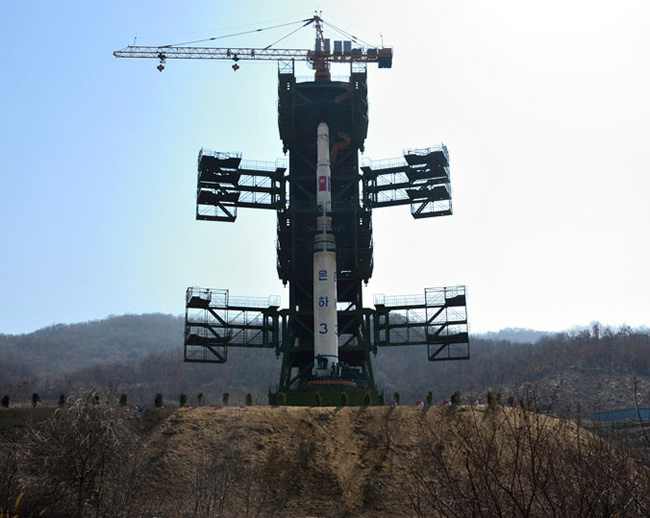
    Unha-3 satellite launcher positioned on the launch pad at the North Korean space test site. Photo: Getty Images

    At a time when most of the world was led to believe that the Democratic People’s Republic of Korea (DPRK) was experiencing unknown technical problems with a three-stage Uhna-3 rocket scheduled to be launched between 10 and 29 December, Pyongyang fired the rocket at 9:49 AM Japan Standard Time (JST) on 12 December.

    South Korean, Japanese, and international news sources reported that the rocket lifted-off from North Korea’s Sohae Space Center on the northwest coast and followed the flight path previously announced by the North.

    Japan’s recently upgraded public warning system transmitted electronic cellphone messages announcing the launch at 9:58 AM JST. Japanese and South Korean Ministries of Defense have both confirmed the launch was executed.
    According to statements made by South Korean Defense Ministry representative Kim Min-seok, the first warning of the launch came from a South Korean Aegis-equipped guided-missile destroyer stationed in the Yellow Sea. The destroyer’s radar was first to identify the rocket launch and this discovery came as quite a surprise.
    Initial statements from South Korea’s Ministry of Defense expressed the possibility that this launch was successful in placing a satellite into Earth orbit. The US State Department issued a statement confirming the launch and announced that the situation would continue to be closely monitored.

    Preliminary evidence indicates this rocket followed the anticipated flight path and traveled further than any of the North’s previous four launch efforts. Japanese government sources have been quoted as saying the rocket did pass over the Okinawan island of Ishigaki, but it is not known if any debris impacted Japanese soil.
    North Korea’s Korean Central News Agency (KCNA), the official news outlet under Pyongyang’s control, announced that the Uhna-3 rocket was successfully launched from the Sohae launch site, and claimed that the Kwangmyongsong weather satellite entered Earth orbit as planned. Pyongyang has repeatedly claimed that this launch was designed to place the Kwangmyongsong satellite into a pole-to-pole Earth orbit to monitor weather trends and conditions.

    Japan’s NHK television network broadcast a report stating that the first stage of the Uhna-3 rocket landed in waters west of the Korean Peninsula and the second stage crashed in the East China Sea only minutes after passing over the Okinawan island of Ishigaki. Additional rocket debris is reported as having landed in the sea approximately 185 miles east of the Philippines. Some news outlets are reporting that the rocket may have traveled as far as 1,600 to 1,800 miles from the launch site.

    Despite Pyongyang’s claims that the launch was successful, there has been no independent confirmation that the third stage actually lifted the satellite into orbit.

    Japanese, South Korean, and US forces in the area were placed in an alert status about a week before the launch, but no attempts were made to shoot-down the rocket.

    South Korean and Japanese political leaders convened emergency high-level security meetings to analyze the preliminary data now available and to lay the foundation for an appropriate response to this launch.

    North Korean announcements on 10 December that technicians had identified “deficiencies” in the rocket’s first stage that would delay the launch received widespread notice and convinced most analysts that a launch could not be undertaken for at least one more week at the earliest. Technical analysis of satellite imagery and reports from intelligence agents appeared to confirm that Pyongyang was disassembling the rocket further reinforcing the belief that the launch would be delayed for a significant period of time.

    It’s now obvious that the North was very successful in duping the best and brightest subject experts and was also able to continue launch preparations without being detected by some of the finest satellite resources in operation. The launch was, to put it mildly, a shock to most devout observers intent on monitoring Pyongyang’s activities. This alone is quite a coup for the North.

    The reclusive North is under a UN ban that prohibits the nation from engaging in missile and nuclear tests. UN sanctions were imposed on Pyongyang in 2006 and 2009 in response to the North’s continued efforts, and two failed tests, to develop a nuclear capability.

    North Korea has tried for many years to succeed in launching a multi-stage rocket into space. This launch was the fifth such attempt since 1998. The previous four attempts were abject failures, the most recent on 13 April of this year.

    Some reputable analysts believe that Kim Jong-un’s hold on power is not as firm as he and the Party’s leadership would like. This launch is seen by many as an attempt to bolster support for Kim in an effort to solidify his hold on the nation.

    A successful launch this time would go far in polishing Kim’s image and in quelling any dissent that might have been brewing under the surface. A failure this time could prove to be a disaster for Kim and might disrupt his efforts at unifying the North’s leadership under his control.

    Regardless of the success or failure of this launch, Pyongyang can expect the United Nations to make a concerted effort to impose additional sanctions on the regime at a time when the North is desperately in need of international assistance with food supplies, medical assistance, and humanitarian support for a humble population of starving peasant farmers and struggling workers.

    North Korea Likely To Postpone Rocket Launch

    An unnamed representative of North Korea’s Committee of Space Technology has released a statement announcing the possibility that the North’s rocket launch scheduled to take place sometime between 10 and 22 December is likely to be postponed.

    The statement was carried on Pyongyang’s official Korean Central News Agency (KCNA) cited no specifics behind the possible launch delay. The Space Technology spokesman did state that the launch team was in the final stages of launch preparation, but offered no additional details.

    Satellite imagery has provided photos that indicate that inclement weather and heavy snow may be the underlying cause for the delay. Many reputable analysts are speculating that the delay may be a combination of foul weather and technical malfunctions. Some experts also believe that the delay may be the result of intense international condemnation and the threat of impending UN sanctions.

    This latest in a string of rocket launches was initially scheduled to occur between 10 and 22 December, in all probability to mark the first anniversary of the death of the North’s former leader, Kim Jong-il, on 17 December. The timing of the launch also coincides with elections scheduled for 13 December in Japan and 16 December in South Korea, a coincidence that some analysts have called suspicious.

    Satellite images have confirmed that the three-stage rocket is fully assembled on the launch pad, but is not known if the rocket has been fueled for the launch yet. Should the launch proceed as announced, the rocket will lift off from the Sohae Space Center located in Cholsan County, North Phyongan Province and follow a flight path traversing open waters between the Korean Peninsula and the Chinese mainland before dropping the second stage off the coast of the Philippines and then entering Earth orbit.

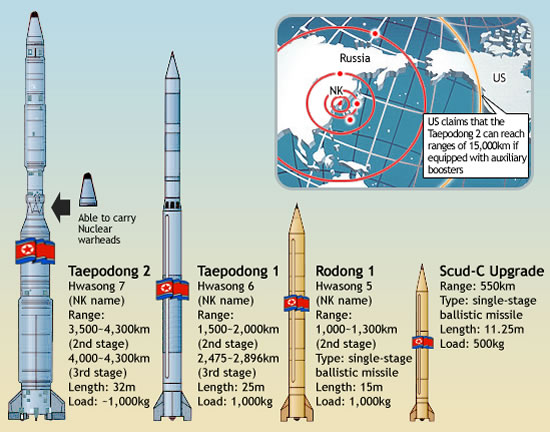
    North Korean Ballistic Missiles Comparison

    A previous launch from the Sohae Space Center on 13 April of this year heightened tensions in the region before failing dramatically. In four attempts to launch a three-stage rocket since 1998, Pyongyang has consistently failed to put a satellite into orbit.

    The United States and Japan, in preparation for the launch, have completed deployment of at least five Aegis-capable guided-missile destroyers to strategic locations that will enable a shoot-down of the rocket or debris should they appear to endanger life or property along the flight path. Japan’s Prime Minister, Yoshihiko Noda, gave the Japanese Self-Defense Force (JSDF) a shoot-down order on 6 December.

    Japan has also positioned Patriot Advanced Capability-3 (PAC-3) missile batteries on the Okinawan islands of Miyako and Ishigaki located in the East China Sea, on the principal island of Okinawa, and near Japan’s Ministry of Defense’s headquarters in Tokyo.

    Japanese Defense Minister, Satoshi Morimoto, announced that JSDF forces already deployed will remain on alert for at least the next two weeks.

    Japan’s Meteorological Agency is forecasting that weather conditions in and around the Sohae Center is expected to be generally fine through most of the coming week and winds are expected to be relatively moderate. A cloud cover is expected to gradually intensify in the area as the week progresses. Frigid temperatures and heavy snowfall have inundated the region during the past few days.

    While it is possible to launch a rocket during a moderate snowfall, freezing temperatures, strong winds, or severely reduced visibility could prove severe enough to postpone a launch.

    Most experts are of the viewpoint that this launch has been rushed and the North has had insufficient time, only eight months since the launch failure in April, to identify and correct the deficiencies that caused the previous failure. Although most everyone anticipates another failure, a successful launch would create considerable discomfort within the international community as it would represent a significant leap forward in the North’s rocket technology. Such an advance could then be fine-tuned to develop an operational intercontinental ballistic missile (ICBM), a potentiality the United States and her Pacific allies are not likely to accept without opposition.

    China’s Air Force Kicks It In High Gear

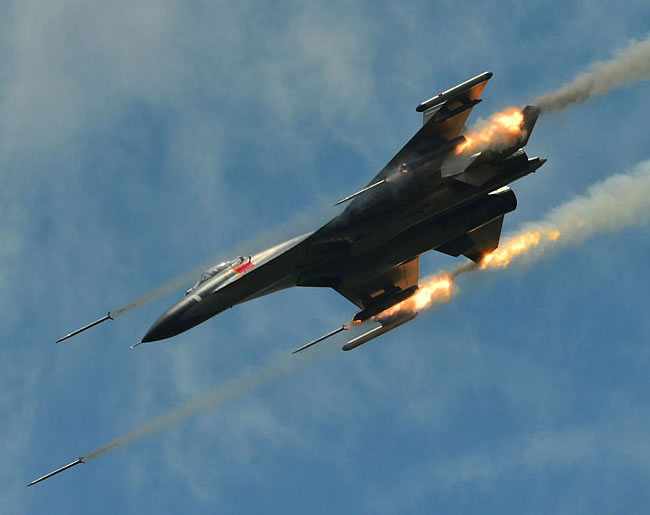
    PLAAF J-11 fires rockets on an air-ground mission.
    PLAAF J-11 fires rockets on an air-ground mission.
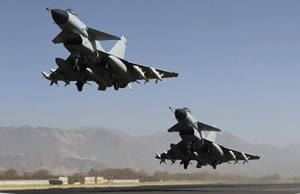
    A pair of J-10 fighters take off.

    China’s People’s Liberation Army Air Force (PLAAF) successfully completed one of the largest air-combat exercises ever undertaken by Chinese military forces on 30 November. More than 100 elite aircrews engaged in an intense air-combat readiness assessment representing crews from 14 PLAAF aviation brigades and regiments.

    Chinese official media sources reported that the event included some of China’s newest combat aircraft as well as older models in a challenging test designed to simulate the intense ferocity of close-in aerial combat. This event, according to information posted on the Communist Party’s People’s Daily newspaper website, was one of the largest and most comprehensive airborne confrontational drills ever undertaken by the PLAAF.

    The air exercise, held in the skies above the desert regions of northwest China, included evaluations designed to measure the PLAAF’s capabilities to conduct electromagnetic interference suppression, succeed in air-to-air dogfights, and to engage in close-in aerial combat focusing on the use of gunfire to bring down an adversary.

    Aircraft involved in the exercise included some of the newest multirole J-10 and J-11 fighters, two-seater Russian-built Sukhoi SU-30 aircraft, and older aviation assets still in operational use.

    Engagement parameters for the event were modified to emphasize real-life combat scenarios and to measure the combat flying skills of pilots tasked with engaging an adversary with minimal support from ground control resources. The exercises also employed the service of significant numbers of ground-based experts schooled in the use of radar, airborne weapons, and electronic countermeasures.

    Of course, an objective analysis of the success of this event by outside sources is not possible; leaving the international community limited verifiable data to assess the “true” results of this exercise. Despite the lack of definitive confirmation by a neutral party, an exercise of this nature demonstrates that China has made surprising advances in its military capabilities. This is especially true when we consider the fact that, while this exercise was underway, the People’s Liberation Army Navy (PLAN) successfully landed and launched new J-15 jet fighters aboard China’s sole operational aircraft carrier.

    These two events, proving many reputable defense analysts have vastly underestimated China’s technological capabilities, demonstrate that Beijing is quickly developing a military force of greater combat capability and respectable firepower than ever before imagined. Although China cannot yet muster a force capable of challenging the force-projection abilities and massive combat superiority long enjoyed by the United States, they are making unprecedented progress in their efforts to become an international force to be reckoned with.

    Subscribe To view the full gallery

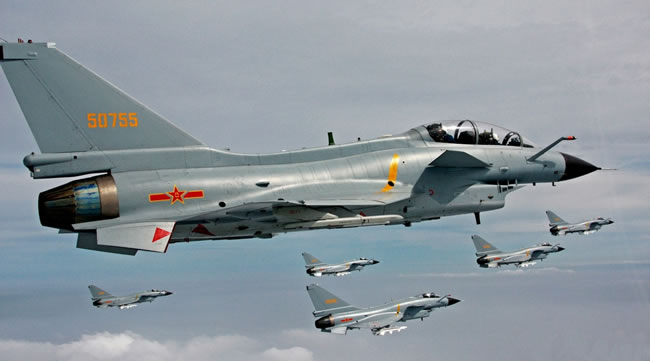
    J-10 fighters in flight

    Pacific Allie Prepare for North Korean Rocket Launch

    Arleigh Burke GGD-51 class) Aegis destroyer USS Fitzgerald in the Pacific Ocean. Photo: US Navy

    Much as they did in April of this year, the United States Navy and the Japanese Self-Defense Force (SDF) have deployed missile batteries and Aegis-equipped warships in advance of North Korea’s next rocket launch scheduled for some time between 10 and 22 December.

    Two Aegis-equipped Arleigh Burke-class destroyers, the USS Benfold and USS Fitzgerald, have been deployed to the region to track the North Korean rocket and to serve as a ballistic-missile defense force should such a defense prove necessary to protect property and life.

    Several news outlets are reporting that the US Navy has also deployed its Sea-Based X-Band Radar (SBX-1) seaborne radar platform to monitor the North’s launch.  The SBX-1 is the US Navy’s most advanced early-warning radar system capable of detecting, identifying, and classifying airborne threats from hundreds of miles away.  Mounted on a fifth-generation oil-drilling rig of Norwegian design and Russian construction, the SBX-1 is self-propelled and is designed to operate in rough seas.

    The X-band radar, likely the most sophisticated phased-array radar in the world today, sits atop a floating rig that measures 280 feet from the top of the radar dome to the rig’s keel and displaces some 50,000 tons.  The rig is manned by a crew of approximately 86 personnel, most of them civilian technicians.  The SBX-1 was deployed in 2009 and again in April 2012 to monitor the North’s most recent rocket launches.

    US Department of Defense (DoD) officials have indicated that additional naval assets may be deployed to the region as appropriate.

    The Japanese Maritime Self-Defense Force (JMSDF) also deployed three Aegis destroyers to the East China Sea and the Sea of Japan in preparation of the North’s rocket launch.  The JDS Kongo, JDS Myoko, and JDS Chokai departed the southern JMSDF naval base at Sasebo, Nagasaki Prefecture on 6 December.

    The three destroyers are equipped with RIM-161 Standard Missile-3 (SM-3) interceptors, a short- to intermediate-range missile that is part of the Aegis Ballistic Missile System.  Japan has also deployed Patriot Advanced Capability-3 (PAC-3) missile batteries in the Okinawan islands of Miyako and Ishigaki located in the East China Sea, on the principal island of Okinawa, and near Japan’s Ministry of Defense’s headquarters in Tokyo.

    Japanese Prime Minister Yoshihiko Noda and Defense Minister Satoshi Morimoto, following high-level cabinet meetings, issued an advance order to shoot down the rocket or any debris to protect Japanese property and life on 6 December.  A similar order was issued in April 2012 when Pyongyang last attempted a rocket launch.

    The Aegis destroyers are tasked with tracking and monitoring the rocket and may be authorized to fire their SM-3 missiles on the rocket should it appear to represent a danger to Japanese territory.  They are being positioned in strategic locations where they will have the best chance of bringing down the rocket while it is still outside the Earth’s atmosphere.

    Unconfirmed reports indicate that Prime Minister Noda prefers to rely on the PAC-3 batteries to bring down the rocket as it reenters Earth’s atmosphere if necessary.  This may be an attempt to avoid antagonizing Pyongyang anymore than necessary.

    Although Pyongyang continues to insist that its rocket launches should be of no concern to the international community since they represent the North’s sovereign right to engage in peaceful space exploration.  Pyongyang is adamant in the claim that this launch, like the four previous failed launches between 1998 and 2012, is only another attempt to place a satellite into Earth orbit.

    The United States and her Pacific allies have been vocal in expressing their belief that these launches are, in reality, ballistic-missile tests in violation of UN Security Council resolutions enacted in 2006 and 2009 banning North Korean ballistic missile tests.

    South Korea’s Yonhap News Agency is reporting that Pyongyang has already assembled all three sections of the three-stage rocket on the Sohae launch pad and has started filling fuel storage tanks at the site in preparation for the final fueling of the rocket.

    Satellite imagery is showing a significant snow cover around the launch site and appear to indicate that preparatory activities have been slowed by the weather.  The latest imagery failed to discern any tracks in the snow indicating that preparations have likely been temporarily halted due to the adverse weather conditions.  Japanese analysts are speculating that the launch will take place on 17 December in honor of the one-year anniversary of Kim Jong-un’s death.

    South Korea, Japan, and the United States have already announced their intentions to petition the UN Security Council for additional, more stringent sanctions against Pyongyang if the launch goes ahead as scheduled.  Of course, such sanctions would require Chinese and Russian concurrence before they could be imposed.  What further sanctions that might gain Chinese and Russian approval are unknown.

    US Army Gets a Second Chance to Assess Hybrid Electric Propulsion Through GCV TD Phase

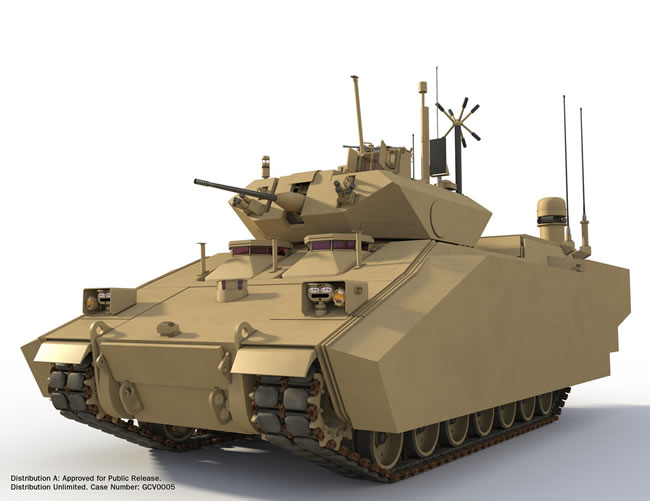
    Two Ground Combat Vehicles (GCV) models, developed by BAE Systems / Northrop and GDLS / Lockheed Martin teams will be evaluated for the future Army procurement of vehicles replacing M-113s and Bradley IFVs.
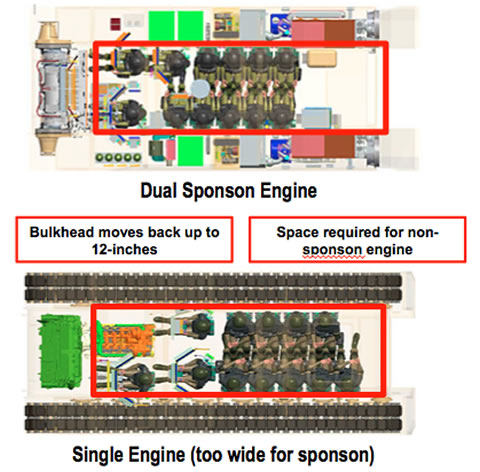
    A dual sponson engine design clears more space in the fighting compartment, while minimizing the volume under armor, thus saving weight of about three tons. It also enables a two-seat crew compartment, for driver and commander seated side-by side.
    A dual sponson engine design clears more space in the fighting compartment, while minimizing the volume under armor, thus saving weight of about three tons. It also enables a two-seat crew compartment, for driver and commander seated side-by side.

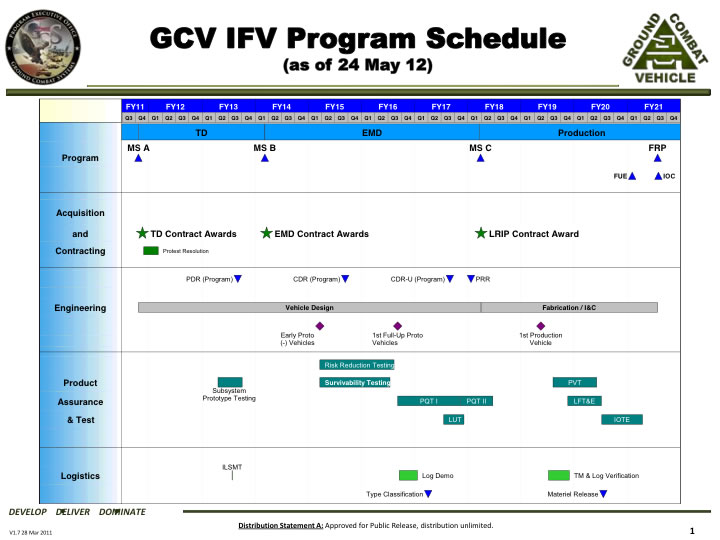
    The most ambitious land combat system development program currently underway is the US Army’s next generation Infantry Fighting Vehicle – known as the Ground Combat Vehicle (GCV). Two industry teams are developing vehicle prototypes for the Army evaluation under the program’s $900 million 24 month technology demonstration (TD) phase. Through this phase the Army will have the opportunity to compare how a new generation combat system fare against current systems and platforms. One of these technologies is Hybrid Electric Propulsion.

    Although the Army hasn’t committed to Hybrid-Electric Drive (HED) propulsion, this technology is already shaping the future requirement in a new way. The first opportunity for the US Army to truly evaluate this trend is the upcoming selection of Ground Combat Vehicle (GCV) expected in four years time. The Army will have to choose between two alternatives – a conventionally propulsion (diesel, proposed by GDLS) and HED-driven one (proposed by BAE-Northrop Grumman). QinetiQ developed the Ex-Drive based HED utilized in this vehicle and the lithium-ion (Li-ion) battery bank is supplied by Saft.

    BAE Systems claims a combat vehicle powered by HED will be 10-20 percent more efficient than diesel powered alternative, it will also offer faster acceleration and maneuvering, and higher degree of fault tolerance, through system redundancy and reduction in moving parts.

    “HED is a system solution for the constant demand for increasing electrical power,“ said Mark Signorelli, Vice President and General Manager Vehicle Systems at BAE Systems, this is not merely a mobility solution, as it responds to requirements for more available power, more power generation and higher voltages independent of the HED application. According to Signorelli HED is already a mature system, proved for years as highly reliable propulsion for locomotives, bulldozers and heavy mining machines.

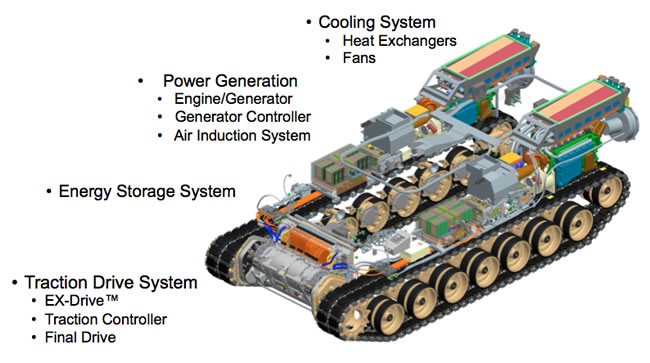
    A layout depicting the placement of different HED related components inside the GCV
    A layout depicting the placement of different HED related components inside the GCV

    For the military, HED offers packaging flexibility, allowing for the design of more spacious, mission adaptable platforms. In addition, electric drive also offers high torque at any ground speed, improved fuel efficiency and silent mobility and increased silent watch endurance. Increased power availability also results in more available power for new capabilities, such as thermal and signature management (cooling, ECS, stealth), new armament (electric guns, lasers) and exportable power generation. Design flexibility enables the creation of space efficient steel core hull, further protected by tailorable armor packages resulting in a protective suite matching or exceeding MRAP type vehicles.

    While the HED is positioned as a lightweight and compact alternative to existing transmissions, the entire HED GCV application would weigh 140,000 pounds (70 tons). Adding the full protection suite, the Army considers the weight scale up to 14 ton heavier, setting the weight limit of the GCV TD at 84 tons. The Army and BAE Systems engineers are confident this weight could be reduced with further optimization, BAE Systems executive said, stressing the advantages the system could offer.

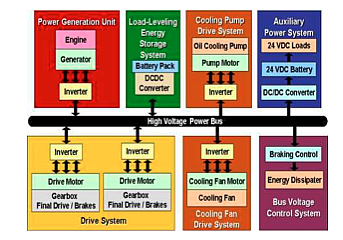
    GCV HED architecture

    Signorelli said the HED benefits to the GCV would contribute reduction of 40 percent in moving parts, corresponding to significant improvement in reliability. Ex-Drive gear system built by QinetiQ The absence of reverse gear will also contribute to higher reliability and improved performance. This system offers a compact and lightweight solution for electric drive tracked vehicles based on an optimal combination of electrical and mechanical components. This is achieved through efficient packaging, mechanical transfer of steer power, range-shift mechanisms and permanent magnet motor technology.

    The Ex Drive gear system will require only three-speed system, versus the current six speed mechanical gear, eliminating three sets of planetary gears. The clutch pack and torque converter will also be eliminated as well as high-pressure hydraulic controls for those systems. In fact, according to QinetiQ, the Ex-Drive developer, a mere 15 percent increase in transmission mass has delivered an increase of 85 percent of the torque available to move the GCV. This means more power on demand for faster acceleration and smoother low-speed movement, supporting operation with dismounted troops. The traction drive system will be half the weight of equivalent mechanical systems. The HED consists of two diesel generators, providing redundant capability in case one engine is hit. According to BAE Systems assessment, the dual engine architecture could reduce system abort failures from 1,106 failures experienced in traditional (diesel) systems to only 272 in HED, a potential 75 percent increase in reliability.

    To assess the benefits of HED for the GCV, BAE Systems is building a ‘Hot Buck’ test set representing the vehicle’s HED system, t. This system will include the dual diesel generator sets, transmissions and brakes, cooling, exhaust, energy storage systems, controls and software. These systems will be integrated into a chassis—like test fixture and tested against dynamometers to gain an understanding of the systems’ performance, reliability, verifying the system’s maturity for TRL 6 at GCV design weight.
    Saft, the designer of ultra-high-power cells for the vehicle’s hybrid electric drive system, says it has already completed the demonstrator Energy Storage System (EES) including hardware and software. The system is charged by an MTU diesel engine, which directly runs the propulsion system when operating in full power. Overall, the GCV HED system will be able to deliver 1,500 horsepower and provide up to 1,100 kilowatt of electrical power to drive on board and external electrical systems. The EES utilizes ultra-high-power, high-voltage VL 5U cells, supporting the vehicles’ electric drive system when the vehicle is not running on gasoline, such as during silent watch missions.

    The Army has also evaluated a number of existing platform, to asses the potential benefits a new platform could bring. In 2012 the Army evaluated a range of modern combat vehicles from domestic and foreign makers, including BAE Systems (M2A3, Turretless Bradley and CV-9035), GDLS (Stryker DVH) and Israel Defense Forces (Namer). The Army already determined the protection suite to be used with its future vehicle would result in a heavy platform (70-84 tons), that most likely will require a tracked vehicle. The weight variance is attributable to the propulsion system used. The vehicle proposed by the GDLS uses the latest version of the proven MTU 883 diesel engine and an Allison transmission (both are also proposed for the M-1A2 SEPV2 ECP), resulting in a gross vehicle weight (GVW) of 64-70 tons. Future commonality with the M1A2 tank powerpack will also contribute to lower sustainment costs over the lifespan of the two vehicles. BAE lead team offers heavier, yet more efficient hybrid-electric propulsion that weighs 70-84 tons (depending on the armor configuration). The alternative vehicles weigh less, but do not provide the protection level required for the GCV. The Israeli Namer, the closest peer weighs around 70 tons.
    Please note all tons mentioned in this article are US (short) tons, converted to 0.892 Long Ton (UK).

    Two Ground Combat Vehicles (GCV) models, developed by BAE Systems / Northrop and GDLS / Lockheed Martin teams will be evaluated for the future Army procurement of vehicles replacing M-113s and Bradley IFVs.

    New Trends in Force Protection & Border Protection

    HPM Remote Weapon System from BAE Systems.
    HPM Remote Weapon System from BAE Systems. Photo: Tamir Eshel, Defense-Update
    The SpotterRF miniature radar packs impressive ground surveillance capabilities into a man-portable unit weighing less than four pounds.
    The SpotterRF miniature radar packs impressive ground surveillance capabilities into a man-portable unit weighing less than four pounds.

    Defense Update reports from AUSA 2012: Force Protection is another field of activity that is expecting to offer sustainable demand over the upcoming years. Despite the draw down of forces from Afghanistan, it can be assumed that the forces remaining in country, as training, support and special operations elements, will require extensive protection means to maintain low signature and avoid casualties or visible damage. (Rumors say the Pentagon plans to leave at least 10,000 troops there)

    Among the systems shown at AUSA 2012 were various Counter-IED systems, from the new robotic flail to a giant route-clearing monster displayed by Pearson. A range of robotic C-IED systems were displayed here, supporting unmanned mobility, combatting IEDs etc. Another growing category of force protection sensors are the compact tactical surveillance radars, that have evolved from artillery locating or ground surveillance sensors. As integrated, multi-mission threat warning radars, they provide early warning about all types of hostile attacks – from rocket or mortar firing, locating missiles or gunfire. Additionally, they can detect vehicles or personnel movement at distances from several hundreds of meters to 10 or 20 km. Such radars were displayed by a number of manufacturers, including SRC, Telephonics, Northrop Grumman, Lockheed Martin, IAI Elta, Rada and Spotter RF.

    QinetiQ SMC Module and Q-Net 2, both attached with Magnetic Switch Connector
    QinetiQ SMC Module and Q-Net 2, both attached with Magnetic Switch Connector. Photo: Tamir Eshel, Defense-Update

    While improvements of automotive and support are important to the performance and sustainability of combat vehicles, it is the armor and weapon systems that makes these vehicles win the fight. In past years, armor protection technologies attracted much attention at defense exhibitions like AUSA, but this year, armor improvements were less visible. Even blast protection, which captured much interest in recent years was downplayed in 2012, presumably, due to reducing future orders. `one exception was QinetiQ North America, that unveiled two new protection systems – the second generation of G-NET and a new composition of armor, called Scalable Matrix Composite (SMC) armor. The company also introduced new add-on armor application system, using ‘magnetic switch’, enabling the application of SMC or Q-NET on metallic surfaces. This technique enables a quick and efficient use of threat-specific armor without special preparation of the vehicle.

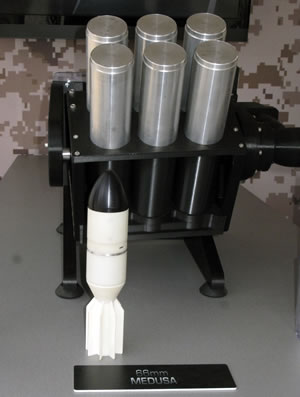
    Medusa 66mm Non Lethal Weapon System is designed to enable teams to employ scalable response from long distances
    Medusa 66mm Non Lethal Weapon System is designed to enable teams to employ scalable response from long distances. Photo: Tamir Eshel, Defense-Update

    The Army and Marine Corps are also interested in non-lethal weapons, enabling units to employ scalable response, in various situations, thus avoiding the use of lethal force unless it is absolutely unavoidable. Among the solutions displayed at the Modern Day Marine expo were two new capabilities – the Medusa from General Dynamics Ordnance and tactical Systems (GD OTS) and non-lethal ‘ray gun’, employing high-power microwave, developed by BAE for naval crafts.Medusa – is a 66mm weapon delivery platform firing non-lethal human incapacitation grenades. It is effective at ranges up to 150 meters. Mounted on vehicles or stationary posts, MEDUSA uses an articulated launcher and programmable grenade with thermobaric payload technology that provides non-lethal ocular, audio and concussive incapacitation.

    The system can be mounted on vehicles or checkpoints, it can be used to repel crowd attempting to assault the protected site in situations where firing at the crowd is not likely or not feasible.

    HPM Remote Weapon System from BAE Systems.
    HPM Remote Weapon System from BAE Systems. Photo: Tamir Eshel, Defense-Update

    The HPM would be used as a non-lethal ship self-defense capability, engaging multiple surface and air threats from a distance. The HPM has the potential to disrupt the operation of electronic circuits controlling boat motors, aircraft or UAV avionics, using powerful and directional electromagnetic pulses. The HPM naval weapon system would address a wide range of targets including small boats, anti-radiation missiles and UAVs. It would also be able to disrupt enemy fire control radars.

    Source: Defense-Update

    Skunk Works and XTEND Simplify Multi-Drone Command

    0
    Lockheed Martin Skunk Works® and XTEND have achieved a major milestone in JADC2 by integrating the XOS operating system with the MDCX™ autonomy platform. This technical breakthrough enables a single operator to simultaneously command multiple drone classes, eliminating the friction of mission handoffs. From "marsupial" drone deployments to operating in GPS-denied environments, explore how this collaboration is abbreviating the data-to-decision timeline and redefining autonomous mission execution.

    From Ukraine to Taiwan: The Global Race to Dominate the New Defense Tech Frontier

    0
    As traditional defense primes face mounting competition from agile “neoprimes” such as Anduril, Palantir and Helsing, the balance of innovation is shifting toward software-defined warfare and scalable, dual-use technologies, while global industry consolidation—marked by Boeing’s integration of Spirit AeroSystems and other strategic mergers—signals an intensified race to secure control over the defense technology value chain. Our Defense-Tech weekly report highlights these trends.

    Europe’s “Drone Wall”

    0
    In early October 2025, a coordinated wave of unmanned aerial system (UAS) incursions—widely attributed to Russia—targeted critical infrastructure across at least ten European nations. The unprecedented campaign exposed the fragility of Europe’s air defenses...

    Weekly Defense Update & Global Security Assessment

    0
    Executive Summary The past week (September 18-25, 2025) represents an inflection point where strategic defense concepts have transitioned from doctrine to tangible reality. An analysis of global events reveals four primary, interconnected trends shaping an...

    U.S. Air and Space Forces Push Next-Gen Programs at the AS&C 2025 Conference and...

    0
    At the 2025 Air, Space & Cyber Conference, U.S. Air Force and Space Force leaders unveiled major updates on next-generation fighters, bombers, unmanned systems, and space initiatives, highlighting both rapid innovation and critical readiness challenges as the services race to outpace global competitors. A short version is available here, with a more detailed version for subscribers.

    TADTE 2025: Reflecting Taiwan’s Strategic Themes

    0
    The Taipei Aerospace & Defense Technology Exhibition (TADTE) 2025 crystallized around four dominant strategic themes that collectively illustrate Taiwan's comprehensive approach to defense modernization amid escalating regional tensions. Based on a detailed report by Pleronix (available upon request). Includes a Podcast discussion on TADTE 2025's highlighting Taiwan's four strategic themes beyond the post's coverage.

    Iron Beam 450 Completes Testing, Soon to Join With Operational Air Defense Units

    0
    Israel’s Iron Beam 450 high-power laser system has completed final testing, marking a major leap in air defense. Developed by Rafael, it offers precise, cost-effective interception of rockets, UAVs, and mortars, and is set for IDF deployment by 2025.