
Tuesday, December 30, 2025
More
    Home Blog Page 175

    Lockheed Martin Awarded $206 Million to Prepare the F35A for the Israeli Avionics

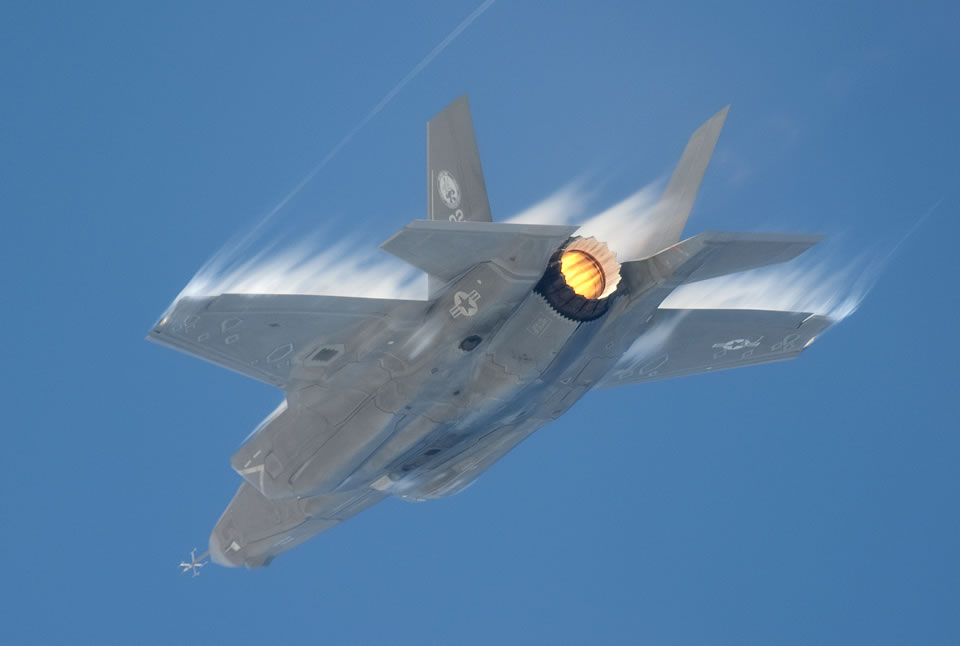
    A flight test of the Lockheed Martin F-35B with visible transonic flow, on April 19, 2012 at Naval Air Station Patuxent River, Md. Photo: Lockheed Martin
    A flight test of the Lockheed Martin F-35B with visible transonic flow, on April 19, 2012 at Naval Air Station Patuxent River, Md. Photo: Lockheed Martin

    The Pentagon has reached an agreement with Lockheed Martin Corp on a $450 million program to enhance Electronic Warfare (EW) equipment on the F-35 fighter jet, and integrate Israeli-unique systems beginning in 2016, according to sources familiar with the negotiations, Reuters reported yesterday.

    The first increment of that development worth $206 million was award to Lockheed martin by the US Navy Naval Air Systems Command, late August 2012. This contract modification covered the development process preparing for the integration of Israeli systems, from the initial requirements development to the Preliminary Design Review (PDR). Subsequent investments will cover post PDR hardware development, to continue through finalized requirements, layouts, and build to prints, including production planning data. This developmental phase is expected to be completed in May 2016. All the work will be performed in the USA, mainly at Fort Worth, Texas as well as in Los Angeles and San Diego, Calif. and Nashua, N.H.

    This agreement will pave the way toward finalizing the contract details under negotiations between Israel and the US, since special adaptation of the aircraft were a key element in Israel’s agreement to buy 19 F-35 jets for $2.75 billion. Israel has signed the agreement in October 2010 but delayed the negotiation on further changes and adaptations. The original agreement announced in 2008 included options for up to 75 aircraft, representing up a total business of up to $15.2 billion, if all options are exercised.


    Israel’s MOD and IDF are considering promoting the acquisition of a second squadron to the next multi-year program; Since most of the US military aid funding for these years is already committed to other programs (primarily F-35 and Namer AIFVs), committing to the second F-35 squadron means reducing the acquisition of Namer AIFVs from General Dynamics, a step that would cause significant financial impact on Israel’s own funding resources, since Israel is already committed to a multi-year buy of these vehicles, to be paid for from the annual US military aid funding – which will not cover termination or cancellation fees.

    The agreement on Israeli version of the F-35 will allow Israel to install its own radio and datalink systems, as well as other equipment, on the F-35I models it is buying. Originally, stealth datalinks were an integral part of the F-35 mission system, restricting data communications within F-35s or specialized communication gateway systems. The need to better coordinate stealth and non-stealth operations and task the F-35 in future close support missions, particularly for the Marine Corps, required the introduction of conventional datalinks (LINK-16). In recent months the F-35 has tested Link-16 data-link, and will soon test the variable message format link, required for close air support missions. This enhancement has also opened the opportunity for the Israelis to equipped the stealth fighter with their own datalink communication. The current F-35 LINK-16 application is believed to be reserved for non-stealth missions only, thus retaining the fighter’s low-observable capabilities when operating in full stealth mode.

    AAs an integral part of the F-35 Mission System, the MADL system developped by Harris includes six phased Array Antenna Assemblies (AAAs) and three Antenna Interface Units (AIUs).

    Harris Multi-Function Advanced Data-Link (MADL) developed specifically for the F-35 provides a low-observable datalink enabling communications within F-35 formations and command and control elements. MADL uses six antennas providing spherical coverage around the aircraft. The MADL uses a Ku-band narrowband waveform employed in a “daisy chain” scheme – the first aircraft sends the directional signal to a second aircraft, then to a third aircraft, and so on. This waveform offers low-probability of intercept/low-probability of detection to evade detection by enemy SIGINT/EW systems. Originally, this waveform was exclusive to the F-35, but in the coming years this waveform is being integrated into other stealth platforms operated by the US military, to include the F-22A Raptor and B-2A bomber fleet. Since MADL is part of the F-35 Communications/Navigation/Identification (CNI System) mission system, Israel is expected to receive MADL, which will offer the IAF a datalink commonality with foreign air forces for the first time.

    Israel has traditionally insisted on adding specific systems into platforms they procured from foreign sources, primarily the US. These enhancements were focused on the insertion of indiginous electronic warfare (EW) systems, command, control and communications (C3) and datalinks, as well as the integration of Israeli developed weapons. These systems also won significant export orders, as some were integrated into the baseline aircraft (F-16, F-15) and selected by foreign customers or the US military.

    Israel has not been a founding member of the F-35 program but based on the order and options it has committed to, Israel is expecting to share about one billion US$ worth of buyback related to the F-35 program. The system integration deal currently in the making will allow an increased participation of Israeli industries in the F-35 Joint Strike Fighter program. Among the companies likely to join the work state-owned Israel Aerospace Industries (IAI), which will start building wings for the aircraft, and Elbit Systems’ subsidiary Elisra – the leading EW provider for the IAF. Elbit, in a joint venture with Rockwell Collins, makes the advanced helmet used by pilots on the single-seat F-35.
    Australia Buying Growler Modification from the United States

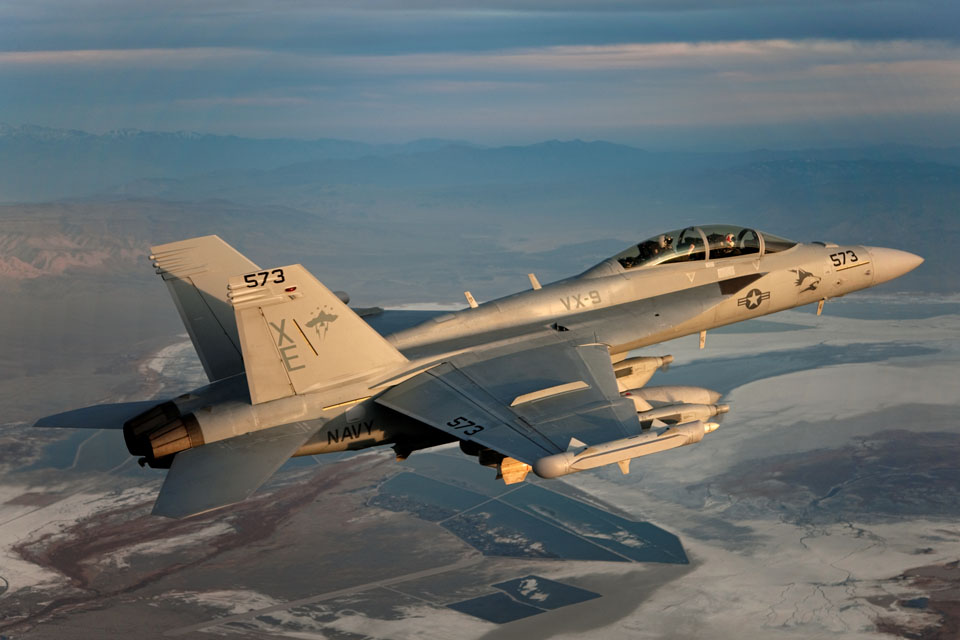
    A EA-18G Growler, XE 573 166857 of the VX-9 "Vampires" cruises over the desert during a mission. Photo: Boeing
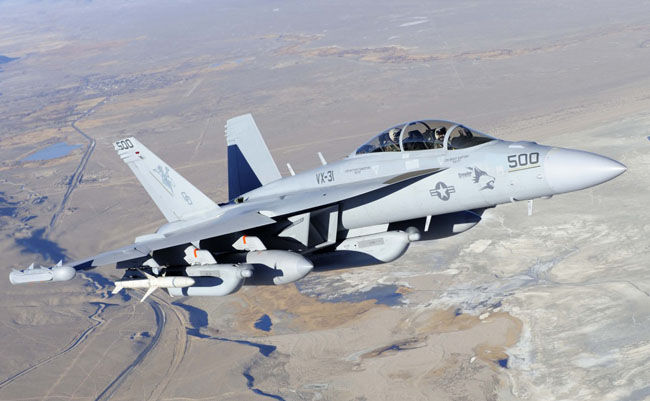
    An F/A18G Growler flying with the US Navy Air test & Evaluation Squadron VX31. Photo: US Navy

    Australian Defense Minister Stephen Smith, accompanied by Minister of Defense for Materiel Jason Clare, made a joint statement on 23 August announcing that the Royal Australian Air Force (RAAF) would be modifying twelve of the service’s Boeing F/A-18F Block II Super Hornets into EA-18G Growler Electronic Warfare Attack aircraft.
    The RAAF currently operates a fleet of twenty-four Super Hornets half of which are prewired for modification to the Growler configuration. The cost of the deal is estimated to be $1.57 billion. This agreement will include conversion kits, spare parts, training, and support equipment. The purchase is being managed through the United States’ Foreign Military Sales (FMS) program.

    With this acquisition, Australia will become only the second nation in the world to operate the Growler. The only other force in the world to have the Growler is the United States Navy. The modified aircraft are scheduled to be available for operational use beginning in 2018.

    The Growler is a specialized version of the Super Hornet capable of electronic jamming effective against opposing aircraft, land-based radar, and a wide-array of communication’s networks. It has also proven effective in an intelligence, surveillance, and reconnaissance (ISR) role.

    This agreement represents an unusual move for the United States as it is extremely rare for the US to share technology military leaders consider to be sensitive and critical to the maintenance of America’s warfighting superiority. Such a move is an indication of the value the United States places on its relationship with Australia and the strategic importance of Australia’s role in the Pentagon’s renewed focus on the Pacific.

    Modern airborne warfighting tactics recognize the growing importance of electronic threats and the need for effective countermeasures. The Growler configuration gives the RAAF the ability to field an aircraft capable of delivering the level of electronic-threat suppression the modern battlefield requires.

    The Growler also gives the RAAF a platform for the conduct of ISR operations, a capability that has been somewhat less effective in the past.

    Concerns regarding the availability of the Growler’s ALQ-99 mid-band jammer pods, no longer in production, were laid to rest with an announcement that the United States Navy would draw the necessary equipment from its own inventory to ensure that Australia’s needs are met. The low-band ALQ-99 transmitters are currently still in production and availability is not an issue.

    The US Naval Air Systems Command (NAVAIR) released a statement saying that they would be working with Cobham of Lansdale, Pennsylvania “to deliver the low-band transmitters to the RAAF” and will ensure the “remainder of the transmitters and ancillary equipment–radomes, hardbacks, ram air turbines and universal exciters–will be provided as refurbished out of USN/USMC (US Navy and US Marine Corps] excess inventory.”

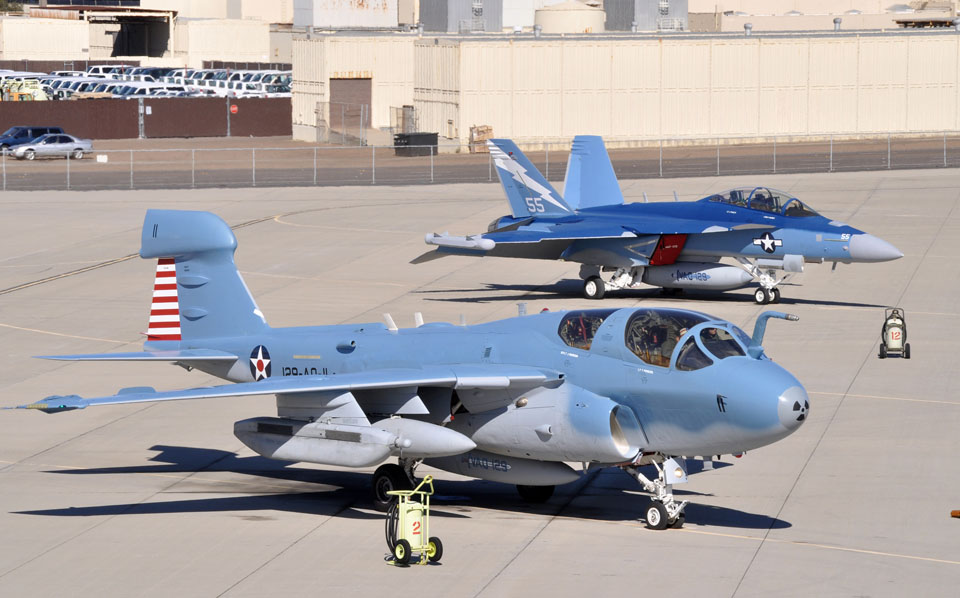
    An E/A-6B Prowler assigned to the Vikings of Electronic Attack Squadron (VAQ) 129 arrives at Naval Air Station North Island and is positioned next to an E/A-18G Growler, also assigned to the Vikings. The aircraft were painted in a throwback tactical paint scheme (circa 1942), honoring U.S. combat aircraft that fought in the Battle of the Coral Sea during World War II. (U.S. Navy photo by Mass Communication Specialist 2nd Class Joseph Moon)

    Work is continuing on development of the Next Generation Jammer that the US Navy expects to have in operational use within a few years. NAVAIR’s statement also said that with the “Next Generation Jammer IOC [initial operational capability] scheduled for 2018, we expect that the RAAF, USN and USMC will be using the ALQ-99 pods for one to two years until the USMC retires its ICAP [Improved Capability] III EA-6Bs in 2019.” At that time, the RAAF and the US Navy will be the only operational users of the ALQ-99 suite until the system is retired in favor of the Next Generation Jammer.

    Australia is also in line to purchase as many as 100 Lockheed Martin F-35A Lightning II Joint Strike Fighters (JSF). Tom Burbage, the head of Lockheed Martin’s F-35 Program Integration Team, told reporters that the EA-18G Growler upgrade was not a threat to the total number of F-35As Australia would be purchasing because the Growler and the JSF are two different aircraft with quite dissimilar missions and overall capabilities.

    The move to acquire the Growler modifications gives the RAAF a much needed airborne electronic warfare aircraft now. Should the US Navy’s Next Generation Jammer prove to be successful, Australia would likely be considered a prime candidate to upgrade its ALQ-99 systems to the new jammer. If the new jammer is not a suitable fit for the RAAFs Growlers when it becomes available, Australia might be able to acquire additional ALQ-99 pods at a hefty discount.

    Deciding to go ahead with the Growler modifications indicates that Australia intends to keep some of its Super Hornets flying alongside the F-35As when they are deployed. Australian officials have scheduled an F-35A progress assessment for later this year to review the number of F-35As that will likely be purchased.

    A EA-18G Growler, XE 573 166857 of the VX-9 “Vampires” cruises over the desert during a mission. Photo: Boeing

    Brazilian Army Selects a Local Supplier for 16,000 km Border Monitoring Program

    The Brazilian Army has selected the Tepro consortium as a single provider for Sisfron, the Integrated Border Monitoring System (Sistema Integrado de Monitoramento de Fronteiras – Sisfron). The system will establish a network of sensors and effectors controlled from the Sisfron central facility in the capital Brazilia. The 10 year project started in 2009 and is expected to complete in 2019, at a cost of US$6 billion. The current selection is related to the initial implementation phase to span over two years,  to follow by additional two-year phases addressing other border areas.

    By 2019 Brazil’s SISFRON integrated border monitoring will control over 16,000 kilometers of borderlines. Photo: Brazilian Army

    The consortium now expects to enter the next step in the process, conducting the contract negotiation for the first phase of the program, establishing border monitoring of land borders in an area under the responsibility of the Brazilian Western Military Command. In all, Sisfron will include the surveillance and protection of the country’s land borders along a stretch of 16,886 kilometers that separate Brazil from 11 neighboring countries, and extend along ten States, encompassing 27% of the Nation’s territory. The Sisfron monitoring and communications network will support the military, federal police, environmental agencies, local authorities and civil defense.

    Tepro was formed by Savis Tecnologia e Sistemas S/A and OrbiSat Indústria e Aerolevantamento S/A, two companies controlled by Embraer Defense and Security Group. Savis was created to work on integrated management of border, strategic infrastructures and natural resources surveillance and control projects, in alignment with the guidelines of Brazil´s National Defense Strategy. OrbiSat specializes in remote sensing and aerial and terrestrial surveillance radars. The company has developed several types of radars and is providing remote sensing services for security and environmental monitoring applications over the Amazom basin.

    JLTV Program Enters the Final Round

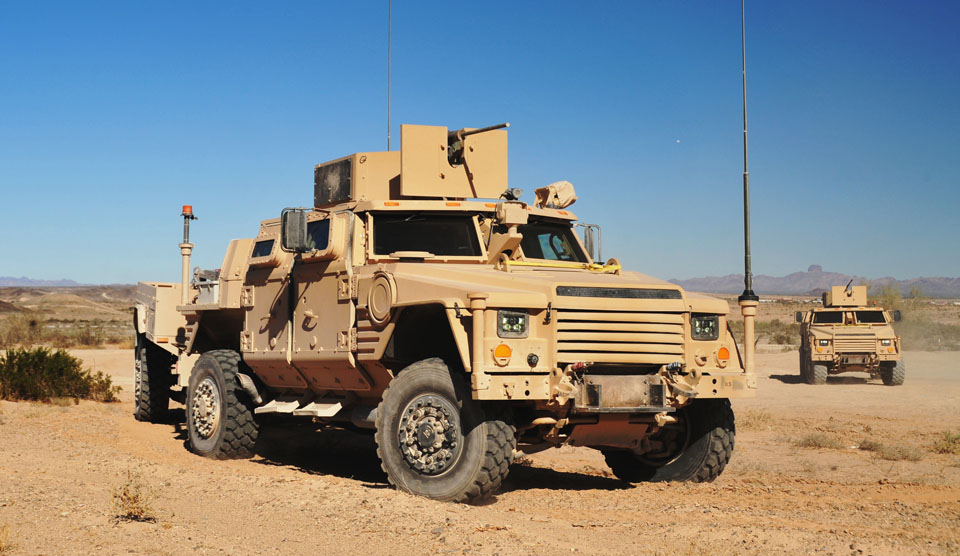
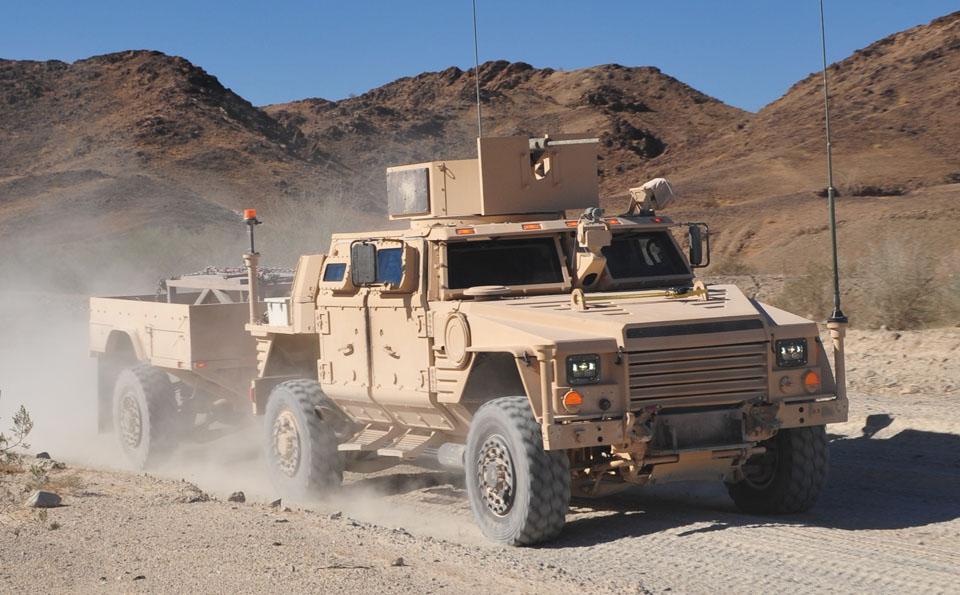
    One of several JLTV prototype built by the industry team lead by Lockheed Martin. Photo: Lockheed martin

    The Joint Light Tactical Vehicle (JLTV) program entered a new phase yesterday, with the award of $187 million in three contracts for the 27 months Engineering and Manufacturing Development (EMD) phase of the program. Two independent contractors, Oshkosh Defense ($56 million) and AM general ($64 million) along with an industry team lead by Lockheed martin ($66 million) were selected to proceed to the EMD phase. Each of the winning companies will deliver 22 prototype vehicles within 12-14 months, to be used for testing by the services. Primary variants with companion trailers include the utility carrier and shelter (JLTV-UTL), a two-seat prime mover with an open bed; and the general-purpose vehicle (JLTV-GP), which is a four-seater that will carry troops, ammunition and small supplies. Following the EMD phase the government will select a single contractor to produce at least 50,000 JLTV vehicles for the Army and 5,500 for the Marine Corps, at an estimated cost of more than US$6 billion. The JLTV program is closely followed by Australia, the U.K., Israel and Canada, although except of Australia, no foreign country has committed funding to the program.

    Two of the three teams participating in the Technology demonstration phase did not make it – the General Dynamics – AM General (GTV team) failed to get its Eagle selected, so did the BAE – Northrop Grumman team, offering the Valanx, the vehicle originally developed in cooperation with Navistar Defense. Navistar was the only one of the three losing defense contractors that  briefly protested the awards, but withdrew its protest few days later.

    What brought the teams to collapse before the EMD phase was the realization that the vehicle cost, weight and performance could not meet the new requirements. In January 2012 the Army stated cost targets of $230,000 – $270,000 for the vehicles, almost half the cost of the original vehicle and about the same cost that would involve upgrading the current HMMWVs. This ‘diet’ presented an advantage for traditional producers of tactical vehicles like Oshkosh, AM General and Navistar, that provide ‘vertically integrated’ supply chain under one roof, thus being more flexible in the allocation of manufacturing resources and cost margin of main subsystems (engine, suspension etc).

    [wzslider autoplay=”true” info=”true”]

    While the strategy of a single bidder worked for Oshkosh and AM General, it did not help Navistar get a piece of the action. Its strategic move leaving the team with BAE did not help either. While BAE is still part of the Lockheed Martin team, Navistar that went its own way to offer its newly developed ‘Saratoga’ design, lost on all fronts.

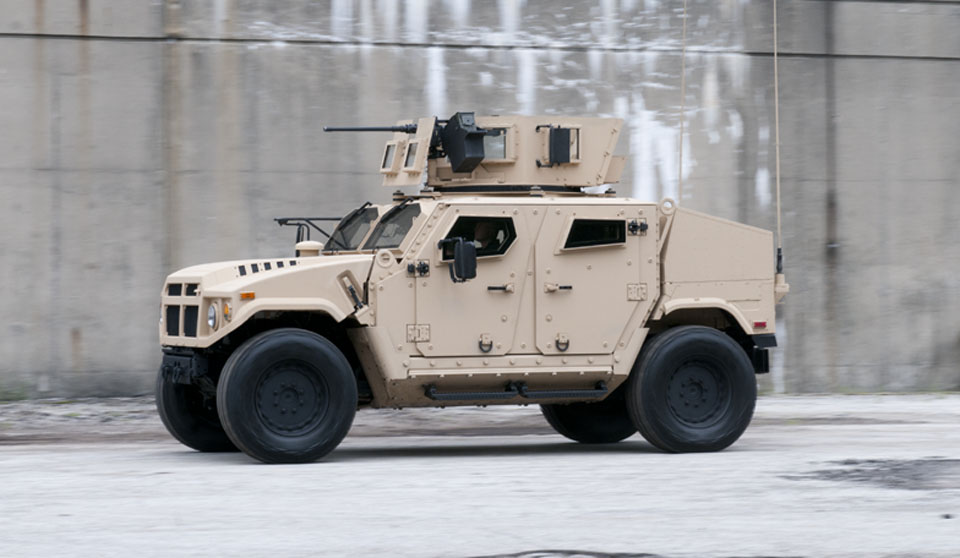
    The BRV-O vehicle proposed by AM General. Photo: AM General

    AM-General played the same strategy, and won. Both AM General and Oshkosh won with independent designs, developed outside of the government funded (technology development) track at the company’s private funding.

    Wining one of the three EMD contracts is a major win for AM General, which fought hard to keep its share of the Pentagon’s vehicle procurement budget in the post HMMWV era. Sofar AM General was a single product company, based entirely on the HMMWV line produced primarily for the US Government. Throughout the evolution of the program AM General maintained its alliance with General Dynamics Land Systems, developing the Eagle technology demonstrator. At the last moment, on March 28 this year, the company sidestepped submitting an independent bid with its own BRV-O, while maintaining the team with GDLS. “As the most experienced tactical wheeled vehicle in the United States, AM general is uniquely focused on meeting the needs of the U.S. armed forces” Charles M. Hall, president and CEO of AM General said, “our team is prepared to move forward – shoulder-to-shoulder with our customer – on this critical national initiative.” AM general’s Blast-Resistant Vehicle – Off Road (BRV-O) prototype uses a crew capsule and modular armor already proven effective in government-supervised blast testing. It also features a lightweight, fuel efficient, high performance engine; a self-leveling suspension system; a C4ISR backbone with open-standard networked architecture and clustered super-computing power, and other advanced components. Its mobility technology, matured to meet Warfighter demands, accumulated more than 300,000 operational test miles and demonstrated high reliability and maintainability.

    The Light All terrain Vehicle (L-ATV) proposed by Oshkosh Defense was one of three designs to win the latest EMD phase. Photo: Oshkosh Defense.

    Oshkosh also demonstrated an impressive rebound into the JLTV program. Since 2006 Oshkosh has invested significant amounts in developing platforms and technologies to meet JLTV requirements. Originally teamed with Northrop Grumman and Plasan, Oshkosh lost the first (TD) phase back in 2008, but kept on improving the developmental Light Tactical All-Terrain Vehicle (L-ATV) on its own funding. “As a result, the Oshkosh JLTV delivers the latest automotive technologies, including the TAK-4i independent suspension system, along with advanced crew protection system, while meeting the JLTV performance at an affordable price” John Bryant, vice president and general manager of Joint and Marine Corps Programs for Oshkosh Defense said. He added that the intelligent independent-suspension system to provide significantly faster speeds when operating off-road, which can be critical to troops’ safety. Based on its modular armor design, the vehicle can accept multiple armor configurations, which allows the vehicle to adapt easily to changing operational requirements.

    Market analysts consider the main competition will be between AM General and Oshkosh, but Lockheed Martin, the Pentagon’s largest contractor, isn’t ready to give up. The team established by the company in 2005 was the only team to survive through all the program phases and now they are playing to win. “We’ve had a consistent team since day one, and this win highlights the merits of a stable, proven design,” said Scott Greene, vice president of ground vehicles at Lockheed Martin’s Missiles and Fire Control business. ” The team includes BAE Systems tactical wheeled vehicles operations in Sealy, Texas, Other members include Allison Transmission, Cummins Engine, L3 Combat Propulsion Systems, Meritor Defense, Robert Bosch LLC and Vehma International of America. According to Scott, these production-ready JLTV EMD vehicles are more affordable than their predecessors, built with lower-cost materials, offering higher fuel efficiency and lower logistical support costs.

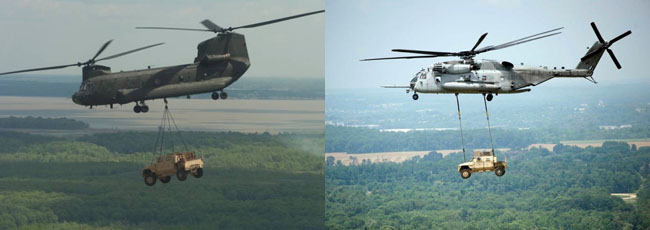
    As part of the air-mobility testing these JLTV variants built by Lockheed martin were sling loaded under a US Army CH-47D Chinook (left) and US Marine Corps CH-53E. Photos: Lockheed martin

    “Two JLTVs have been produced on an active manufacturing line, so we are already well prepared for rapid production and testing” Scott added. The team’s JLTVs offer enhanced crew safety based upon government tests that show the design meets the high blast-protection standards, with margin, of many existing mine-resistant vehicles serving in combat today. This diet has reflected in significant weight loss, “The Lockheed Martin team shaved hundreds of pounds off the TD design, which was already proven in helicopter lift tests.” Greene added.

    Utility vehicle developed by Lockheed Martin for the JLTV program shown here towing a trailer on one of the tests. Photo: Lockheed Martin.

    US Report Recommending Hosting of US Carrier Force Rejected by Australia

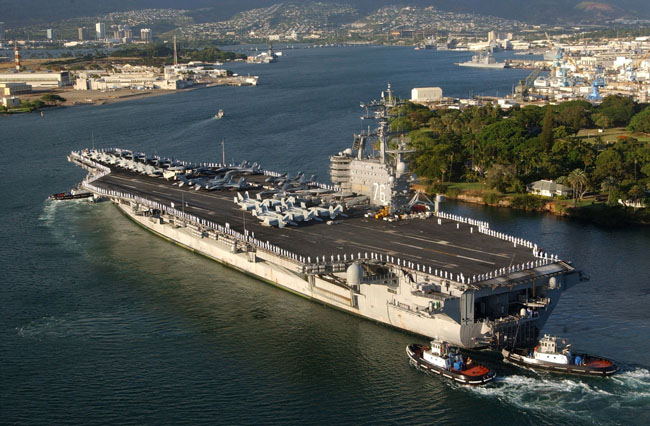
    The aircraft carrier USS Ronald Reagan (CVN 76) is aided by harbor tugs as it enters Pearl Harbor, Hawaii, for a port visit. Reagan and embarked Carrier Air Wing 14 are on a regularly scheduled deployment conducting maritime security operations. DoD photo by Airman Kathleen Gorby, U.S. Navy.
    The aircraft carrier USS Ronald Reagan (CVN 76) is aided by harbor tugs as it enters Pearl Harbor, Hawaii, for a port visit. Reagan and embarked Carrier Air Wing 14 are on a regularly scheduled deployment conducting maritime security operations. DoD photo by Airman Kathleen Gorby, U.S. Navy.

    The Center for Strategic and International Studies (CSIS) included the Australian-basing concept as only one option the US might pursue in support of the Obama administration’s plan to emphasize the strategic importance of the Pacific. The report proposes moving a strike group based on the US east coast to Australia’s west coast as a means of bolstering the American military presence in the Asia-Pacific region.

    The CSIS report, prepared for the US Department of Defense (DoD), also noted that the Perth naval base, HMAS Stirling, is not presently equipped to support an aircraft carrier strike group. For HMAS Stirling to accommodate a force that would routinely include an aircraft carrier, aircraft, support ships, and guided-missile destroyers and cruisers would likely cost billions of dollars.

    Australian Defense Minister Stephen Smith told news sources that that the United States does not currently have a permanent base in Australia and declared that situation was not going to change anytime in the near future. He made it clear that the US may be authorized increased naval access to HMAS Stirling in the long-run, but that would not include the basing of a carrier group there.

    Minister Smith said that the government did not see a need for permanent US-basing in Australia. He said that Canberra and Washington were discussing ways to “increase U.S. navy access to HMAS Stirling” and emphasized that “either increased aerial access or naval access is precisely that — greater access to our facilities. It would never become a U.S. military base.”

    For many years, the United States maintained three military intelligence communication facilities in Australia. All but one eventually closed due to protests organized by anti-American activists. The Joint Defense Space Research Facility, a top secret site, located in central Australian is the only facility remaining in operation.

    Late last year, the US and Australia announced that they had reached an agreement to allow for the rotation of as many as 2,500 US Marines through a joint training facility near Darwin and authorized increased US Air Force access to Australian airfields and bombing ranges as part of a growing military cooperative effort between the two long-term allies.

    The People’s Republic of China (PRC) has long protested the flourishing friendship between Washington and Canberra and is anxious to keep the US out of the Pacific whenever and wherever possible. As Australia’s largest trading partner, China does wield significant influence with the Canberra administration.

    Also included in the CSIS report is a discussion of alternative options the US might wish to pursue to strengthen its military presence in the Pacific region. One option mentioned the staging of a fully-staffed Marine Air Ground Task Force (MAGTF) in Australia’s Northern Territories, another idea that is not likely to receive favorable consideration in Canberra.

    Bob Carr, Australia’s Foreign Minister, supported Minister Smith’s sentiments when he rejected the possibility of establishing a permanent US military presence in Australia. Minister Carr said that the US was not in a position to build a permanent base in Australia in light of impending budget cuts and because such a move would be out of character with the manner the US prefers to “project power.” Mr. Carr also pointed out that a permanent US presence would not be in Australia’s best interest.

    Minister Carr went on to say that Canberra was quite aware of China’s growing military and economic strength and was resigned to accept that fact as a reality Australia could not alter. He continued by saying that the Chinese “must accept that we are a small population holding a large continent and will, as we have done historically, look to an alliance with the United States” to protect Australian interests. He further stated that Australia completely rejects “any notion of containing China. We look to engage with China.”

    Cirrus Aircraft to Join French Air Force Trainer Fleet

    The aircraft is equipped with the modern Cirrus Perspective avionic suite comprising two 12″ color multifunction displays and flight management software developed by Garmin. Photo: Cirrus Aircraft

    Cirrus Aircraft won a tender set by EADS for the supply of a fleet of training aircraft supporting pilot training for the French Air Force and Navy. The new Cirrus SR20s and SR22s will join a mixed fleet of 53 trainers supplied by Daher-Socata and Grob currently operated by Cassidian Aviation Training Services (CATS) in this role.

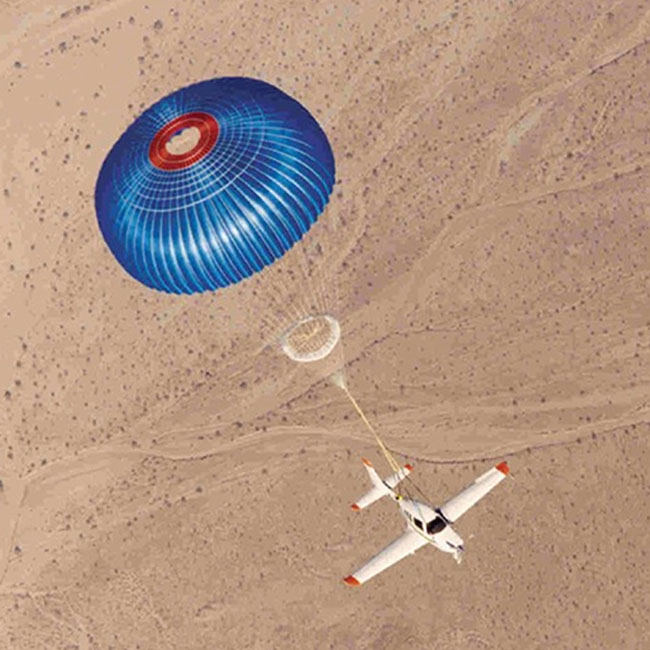
    The new SR20s and 22s trainers will be equipped with specialized safety systems including the Cirrus Airframe parachute System (CAPS) and airbag assisted seat belts. Photo: Cirrus Aircraft

    The company will employ a fleet of 13 SR20s aircraft to be based at the French Air Force base of Salon de Provence; three additional aircraft of this type will support the pilot training for the French Navy Air Arm, operating from the Naval Air Station of Lanveoc Poulmic. Additionally, a separate fleet of seven SR22s aircraft will be used for the training of navigator and weapon systems operators. The aircraft will also will be used by the French Air Force aerobatic team. These aircraft will be equipped with advance safety measures including Cirrus Airframe Parachute System (CAPS), airbag seatbelts, and the Garmin designed ‘Cirrus Perspective’ avionic suite. Deliveries of all aircraft will be completed this year. CATS will be in charge of maintenance and airworthiness of all fleets. The aircraft will join a mixed fleet of 35 TB30 Epsilon and 18 Grob 120 trainers operated by CATS under an outsourcing agreement supporting the Flight and Transport Flight Schools of the French Air Force.

    Cirrus Aircraft is wholly owned by China Aviation Industry General Aircraft Co., Ltd. (CAIGA). Cirrus aircraft are made in the USA and the transaction was handled by Cirrus France.

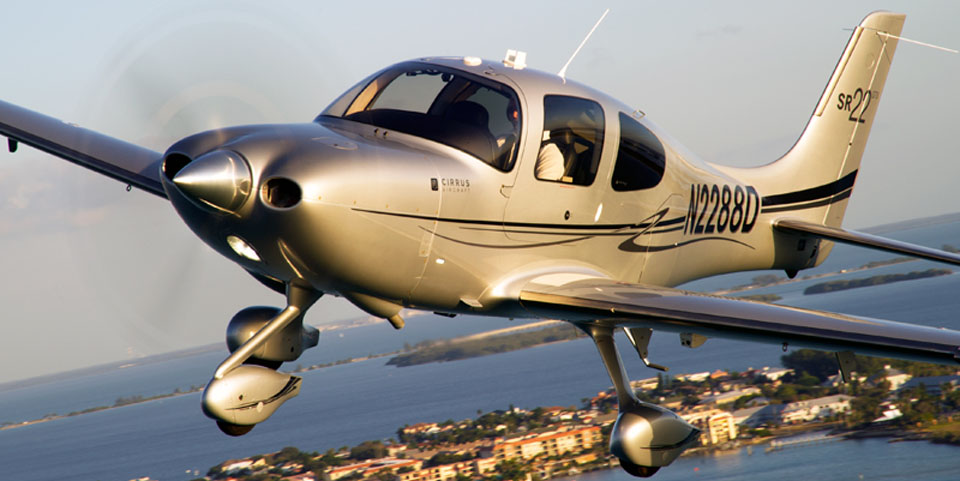
    Cirrus Aircraft SR22s. Photo: Cirrus Aircraft

    Saudi Arabia to Augment its RE-3 Airborne SIGINT Planes with Tactical Special Mission Aircraft

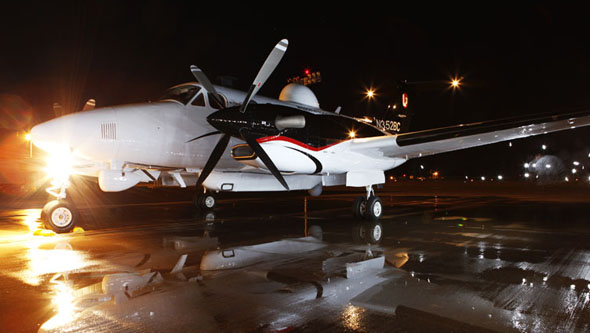
    The new 350ER special mission planes will augment the Saudi ER-3As SIGINT planes, as they are undergoing maintenance and upgrading. Flickr Photo

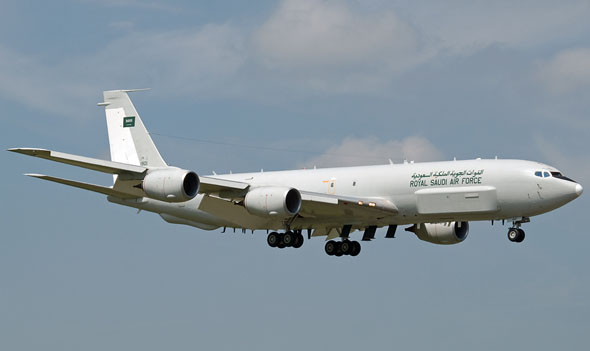
    Saudi Arabia has requested to buy eight Hawker Beechcraft King Air 350ER special mission aircraft, packed with airborne Intelligence, Surveillance, and Reconnaissance (ISR). The cost of the procurement package is estimated at about quarter billion US$, including four 350ER aircraft, with associated ISR systems and communications plus options for four additional planes with the same package. In recent years the Royal Saudi Air Force has been operating two Boeing RE-3 Sigint aircraft (broadly equivalent to the RC-135 Rivet Joint). According to the US Defense Security Cooperation Agency (DSCA) that announced the Saudi request last week, The Saudis have already used the RE-3 aircraft in this role, but this fleet is currently undergoing depot maintenance and will not be available until after 2015. In this interim phase, the King Air 350ER-ISR aircraft will carry out part of the the missions performed by the RE-3.

    The Royal Saudi-Arabian Air Force (RSAF) plans to utilize these aircraft for various internal security missions, supporting counter-terrorism, smuggling interdiction, as well as coastal protection and search and rescue. By providing real-time surveillance of high priority facilities and infrastructure sites, traffic routes and border areas.

    The SAR radar with part of the SIGINT systems will be installed in the underbelly gondola shaped pod. The EO payload will be installed in an extended nose section for optimal coverage. The datalink is located in the large dorsal radome. Photo: L3-Com.

    The payload installed on these twin-prop planes will be different from the SIGINt-dedicated ER-3. Its sensor package will comprise a multi-sensor Electro-Optical payload, Synthetic Aperture Radar (SAR) and a modern Signals Intelligence (SIGINT) System. This system will be compatible with and will continue to supplement the capabilities of the RSAF RE-3 aircraft. For self protection from surface-to-air threats the aircraft will be equipped with the AN/AAR-60 Infrared Missile Warning and AN/ALE-47 Countermeasures System. Typically these systems are coupled with chaff-flare dispensing systems. In addition to the high-rate data-link, the aircraft will also be equipped with AN/ARC-210 VHF/UHF/Satellite Communication Transceiver Radios with Have Quick II and encryption and AN/APX-114/119 Identification Friend or Foe Transponder.

    If Riyadh decides to proceed with the program L-3 Communications is likely to be the prime contractor, the group’s Mission Integration Division in Greenville, Texas, which also lead the modification of 37 ‘Project liberty’ MA-12W aircraft for the US Air Force. L3-COM will also be responsible for the mission systems integration, C4I Integration, aircraft modifications, as well as ongoing support.Other contractors include the platform manufacturer Hawker Beechcraft in Wichita, Kansas. Other subcontractors include Raytheon, Rockwell Collins, Harris, ATK, BAE Systems and VIASAT. L3-COM has also teamed with a number of international system providers to offer a similar configuration of the 350ER known as Spydr, complying with International Traffic in Arms Regulations (ITAR) regulation which could limit the export of the version and sensors used by the US military. nevertheless, Riyadh, a close ally of Washington, is expected to receive a configuration similar to the one used by the US, just as their ER-3 resembled the highly classified USAF Rivet Joint, sofar exported only to the UK and Saudi Arabia.

    The new aircraft closely resemble the USAF’s ‘Project Liberty’ MC-12W, which entered operational service in January 2009, and which has already proved highly successful in operations over Iraq and Afghanistan. The RSAF has already received two Hawker Beechcraft King Air 350i aircraft currently operating with 19 Squadron at Al Kharj air base. L-3 Com will also provide a new mission control center supporting the new will included ground stations, training aids etc.

    Top Photo: The Royal Saudi AF Boeing RE-3A SIGINT aircraft was converted from a Boeing/RSAF KE-3 tanker. The RE-3A is seen here arriving at RAF Mildenhall in 2010.

    L3 Com is promoting the Hawker Beechcraft 350ER based special-mission platform to potential Middle East customers. the aircraft is currently used in Iraq and is likely to be fielded by Saudi Arabia. Photo: L3 Com

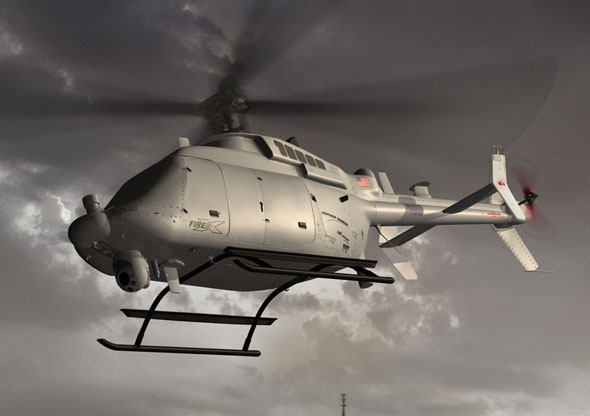
    New Datalink for the New MQ-8C Firescout

    Northrop Grumman awarded Cubic a $3.7 million development contract for a new multi-band digital datalink for the MQ-8C unmanned helicopter UAS. Photo: Northrop grumman

    Cubic Defense Applications is developing a new multiband digital data link system for the MQ-8CFire Scout unmanned helicopter.Cubic is developing the new datalink under a $3.7 million contract awarded by the MQ-8C prime contractor Northrop Grumman. The data link supports both Ku band and C band transmissions using dual data streams. The datalink is based on open standard waveforms to transfer data and stream video at high transfer rate.


    “The MQ-8C multiband capability will enable warfighters to conduct simultaneous missions.” explains David S. Miller, Fire Scout program director for Cubic Defense Applications. The modular system architecture includes simple open-standard interfaces and a software-defined transceiver, providing a data link with a smaller size and weight and reduced power consumption than the system currently used on the MQ-8B variant which was also designed by Cubic and is used by the U.S. Central Command to provide full-motion video surveillance to ground forces in northern Afghanistan.

    An integral component of the new system is Cubic’s Multiband Miniature Transceiver, or MMT. The MMT enables simultaneous Ku band and C band transmissions using dual data streams. The MMTs included in the Dual Channel Modem subassembly are small enough for Soldiers and Marines to carry in the webbing of their tactical vests.

    Cubic Defense Applications is the defense systems business of Cubic Corporation.

    Northrop Grumman awarded Cubic a $3.7 million development contract for a new multi-band digital datalink for the MQ-8C unmanned helicopter UAS. Photo: Northrop grumman

    US Army to Field Fifth THAAD Battery by 2015

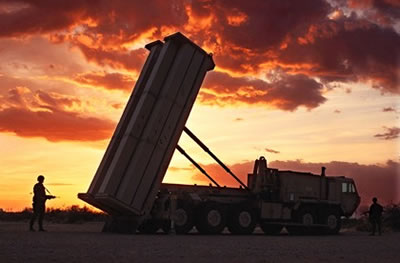
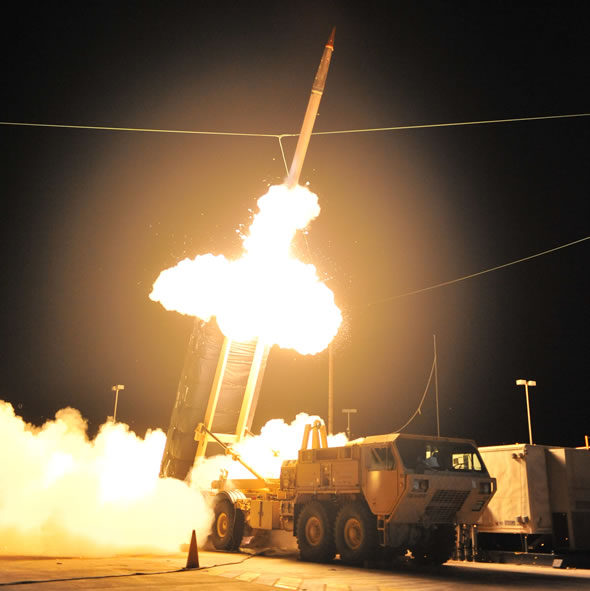
    The Missile defense Agency is strengthening the 1st and 2nd THAAD batteries to the full six-launcher configuration. Photo: Lockheed Martin
    THAAD performed a successful intercept October 5, 2011, scoring simultaneous kills of two targets. Photo: Lockheed Martin

    The Missile Defense Agency (MDA) is funding the procurement of six Terminal High Altitude Area Defense (THAAD) launchers for a new battery, to be fielded by 2015. In addition, the agency has funded the procurement of six additional launchers, strengthening the first and second operational batteries to the standard six launcher configuration. A production contract for the first two Batteries was awarded to Lockheed Martin in late 2006. Contracts for Batteries 3 and 4 were awarded in 2011. The US$150 million contract awarded to THAAD prime contractor Lockheed martin covers all 12 launchers, as well as two fire control and associated communications and support equipment for the fifth battery.


    Since 2005, the THAAD program has successfully completed 12 flight tests, with nine-for-nine intercepts. The latest mission was an operational test conducted at the Pacific Missile Range Facility in Kauai, Hawaii, by THAAD soldiers from Alpha-4 (A-4), 11th Air Defense Artillery Imperial Brigade of the 32nd Army Air and Missile Defense Command. During that mission, two THAAD interceptors destroyed two different targets. THAAD units are currently deployed at Ft. Bliss and Hawaii.

    The Missile defense Agency is strengthening the 1st and 2nd THAAD batteries to the full six-launcher configuration. Photo: Lockheed Martin

    The United Arab Emirates signed a deal to purchase the missile defense system on December 25, 2011. The 4th Air Defense Artillery Regiment, 11th Air Defense Artillery Brigade, activated at Ft. Bliss TX in 2008 is part of the 32nd Army Air & Missile Defense Command. It currently has 24 THAAD interceptors, three launchers based on the M1120 HEMTT Load Handling System, a Fire Control and an AN/TPY-2 radar. The second unit, Alpha Battery, 2nd Air Defense Artillery Regiment was activated at the base a year later.

    US Army Invests $64 Million to Keep JAGM Technology Alive

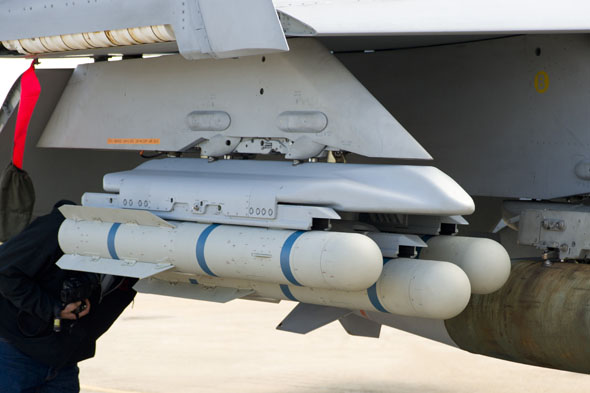
    JAGM missiles loaded on a triple ejector rack carried by an F/A-18 Hornet for a captive test flight. Photo: Lockheed martin.
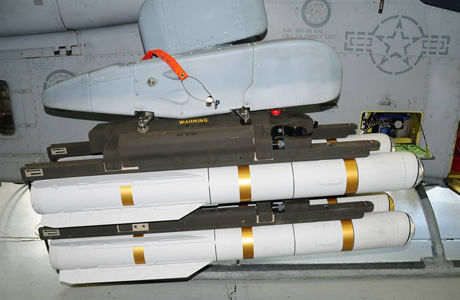
    JAGM missiles was developed as a replacement for the current Hellfire, Longbow and maverick guided missiles. JAGM models are seen here on an AH-1W wing mount. Photo: Lockheed Martin

    Back in 2011 the US Army and Navy opted to terminate Joint Air-to-Ground Missile system, avoiding the expensive funding commitment required for moving to the weapon into production. A small budget was set aside to keep the program alive. Today, Lockheed Martin announced it received a $64 million contract from the U.S. Army to extend the JAGM technology development.

    The new award will fund continued development, design, test and demonstration of the JAGM guidance section over a period of 27 months. The JAGM guidance section includes the seeker, dome and housing. The JAGM 4 generation Tri-Mode Seeker combines three individual seekers operating simultaneously on a common gimbal. The three seekers include semi-active laser (employed with the Hellfire) and adds the precision I2R aimpoint capability derived from the Javelin, utilizing a higher definition cooled thermal imager, and all-weather fire-and-forget millimeter wave seeker used with the Longbow.

    The missile has demonstrated the capability to hit moving targets at high precision from long distances, in adverse weather, battlefield obscurants and enemy countermeasures.

    JAGM missiles loaded on a triple ejector rack carried by an F/A-18 Hornet for a captive test flight. Photo: Lockheed martin.

    Operational F-22 Raptor Drops GBU-39 Small Diameter Bombs for First Time

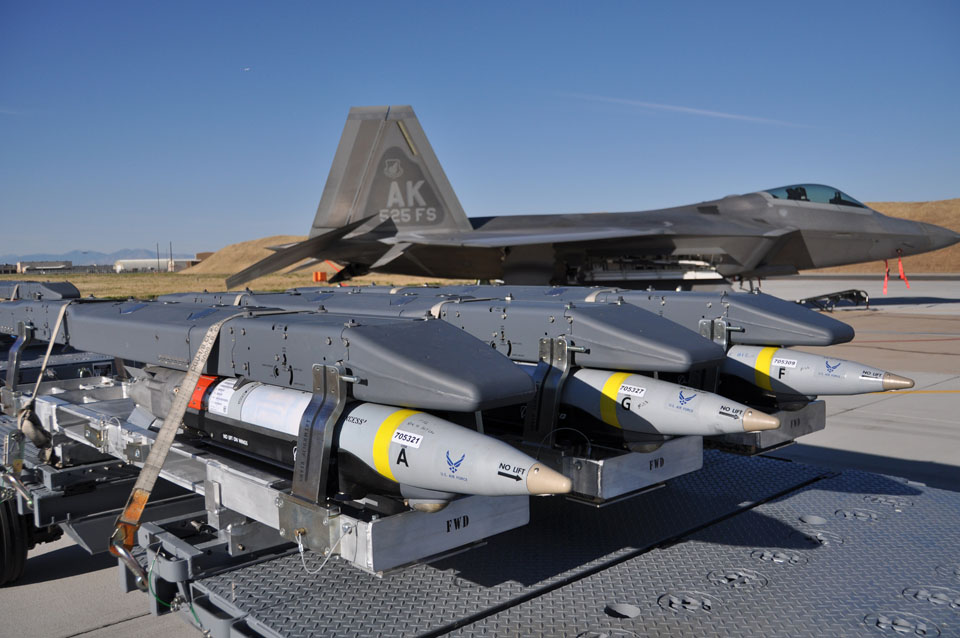
    During a Combat Hammer exercise Alaska F-22 Raptors became the first operational F-22 unit to drop GBU-39 small diameter bombs. Combat Hammer is a weapons system evaluation program sponsored by the 86th Fighter Weapons Squadron, provided an opportunity for an operational unit to employ them in a realistic tactical training environment. (U.S. Air Force Photo by Tech. Sgt. Dana Rosso)
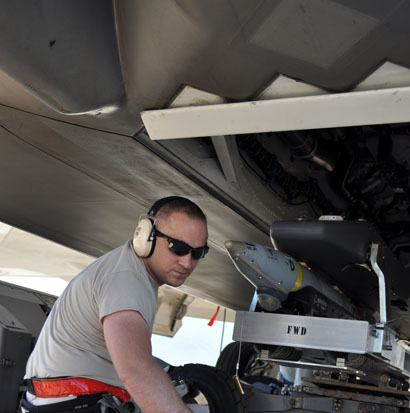
    Staff Sgt. Brandon Vice, 477th Aircraft Maintenance Squadron weapons load crew member, guides a GBU-39 small diameter bomb into the main weapons bay of an F-22 during Combat Hammer. Photo: USA By Sgt. Dana Rosso

    US Air Force F-22 Raptors performed the first operational deployment of GBU-39 air/ground weapon dropping Small Diameter Bombs (SDB) during  exercise Combat Hammer. The mission was flown by test pilots, as part of the weapons system evaluation program sponsored by the 86th Fighter Weapons Squadron. The test provided an opportunity for an operational unit to employ them in a realistic tactical training environment. The 3rd Wing F-22s that have the upgraded increment 3.1 software were able to drop the GBU-39 SDB. The GBU-39 SDB is a 250 pound precision-guided glide bomb that is intended to provide aircraft with the ability to carry a higher number of bombs and to employ with greater stand-off. “The successful deployment experience and delivery of air-to-ground weapons is a major milestone for the Hawaiian Raptor operations and maintenance team towards declaration of Initial Operational Capability,” said Lt. Col. Robert Jackson, 19th FS commander.

    “The Utah Test and Training Range is the only location in the United States where the F-22s can employ SDBs at speeds and altitudes unique to the Raptor,” said Maj. Wade Bridges, a Reserve F-22 pilot assigned to the 302nd Fighter Squadron. “The employment of the GBU-39s was very successful,” said Bridges. “The ammo and weapons personnel that built and loaded the weapons did so with amazing professionalism and technical expertise. They were evaluated during the entire process and received nothing but praise for their work. The pilots who employed the weapons did an excellent job delivering the weapons in a tactical environment. The entire process from building to employing the weapons was a tremendous success resulting in 100% of the SDBs being released successfully.”

    This training event allowed for Total Force Integration across the F-22 fleet. The 302nd Fighter Squadron led a Total Force team from Joint Base Elmendorf Richardson. Pilots from both the 302nd and the 525th Fighter Squadrons and maintainers from the 3rd Maintenance Group and the 477th Fighter Group filled the deployment roster making it a true total force effort from Alaska.

    In addition to the Alaska based effort, pilots from the 199th and 19th Fighter Squadrons and their associated maintainers participated in this Combat Hammer. This was the first time operations and maintenance personnel from the 199th and 19th Fighter Squadrons stationed in Hawaii have deployed.

    During a Combat Hammer exercise Alaska F-22 Raptors became the first operational F-22 unit to drop GBU-39 small diameter bombs. Combat Hammer is a weapons system evaluation program sponsored by the 86th Fighter Weapons Squadron, provided an opportunity for an operational unit to employ them in a realistic tactical training environment. (U.S. Air Force Photo by Tech. Sgt. Dana Rosso)

    Poland Plans to Phase Out its Su-22M in Favor of Armed UAVs

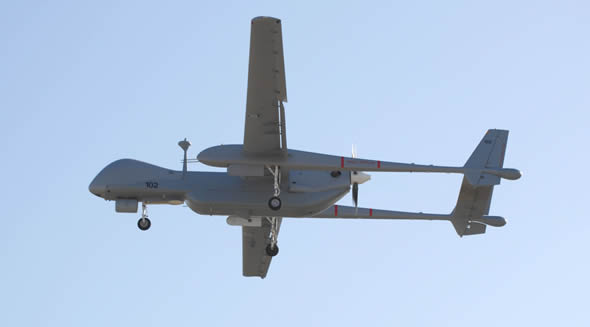
    India has cleared the purchase of 10 Heron TP drones from Israel.
    Poland is considering replacing its Su-22 strike fighters with armed UAVs.

    Poland is looking to replace its aging strike force, currently flying Russian built Sukhoi Su-22M with armed unmanned aerial vehicles. According to Waldemar Skrzypczak Poland’s Deputy Minister of Defense for military procurement, a future procurement of some 30 armed drone equipping three squadrons is being considered.

    The arguments raised in favor for such decision are that the unmanned drones would be more affordable, particularly considering the logistical burden of maintaining the aging Russian fighters and lack of spares for such platforms. Drones could also operate on longer missions and the training of operators and support personnel will be cheaper, the Polish MOD argues.


    Moreover, the deployment of unmanned aircraft, in support of NATO operations overseas or in support of other peacekeeping operations, would become more affordable and require smaller footprint and logistics, compared to similar missions performed by manned aircraft. However, the unmanned platform would require fielding large numbers of advanced, precision guided munitions which will also require adequate field support, technical training for the maintainers and operators.

    Poland is likely to evaluate the Heron TP for its future armed UAV requirement. IAI is currently producing the Heron TP MALE UAS to equip a third Israel Air Force UAV squadron. Photo: IAI

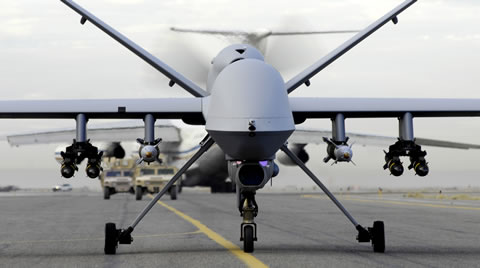
    By the year 2018 most of the Polish Air Force Su-22s will exceed their designed lifespan and require major investment  just to keep flying(1). Given an operational capability of the new drones by that time, and eying the versatile operability of the current Su-22s, the options are narrowed to 3-4 platforms – General Atomics MQ-9 Reaper, IAI/Malat Heron TP and Elbit Systems Hermes 900. The Turkish TAI Anka could also be considered, although its payload is limited, compared to the other alternatives.

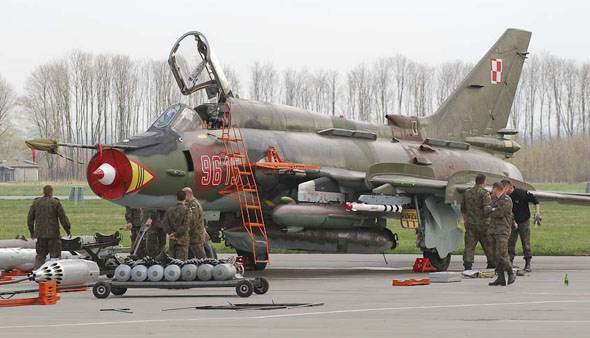
    Operating armed drones will likely be more affordable, compared to manned aircraft. Shown here, a Polish Air Force ground crew arms a SU-22 at Swidwin. Photo: Bartosz Niewiadomski

    The Polish acquisition could also be streamlined with other NATO procurement plans – France, Germany, Italy and the UK are currently considering the fielding of armed drones, and are evaluating both the MQ-9 and Heron TP for this role. Both are operated in ‘armed scout’ missions , carrying multiple weapons in different configurations. (although Israel never confirmed its UAVs are operating in such roles, foreign sources have widely reported on Israeli drones carrying and firing missiles.) Theoretically, Warsaw could ask for the MQ-9C Avenger but it is unlikely that Washington would clear the stealthy drone for export before it is inducted into US Air Force service in considerable numbers.

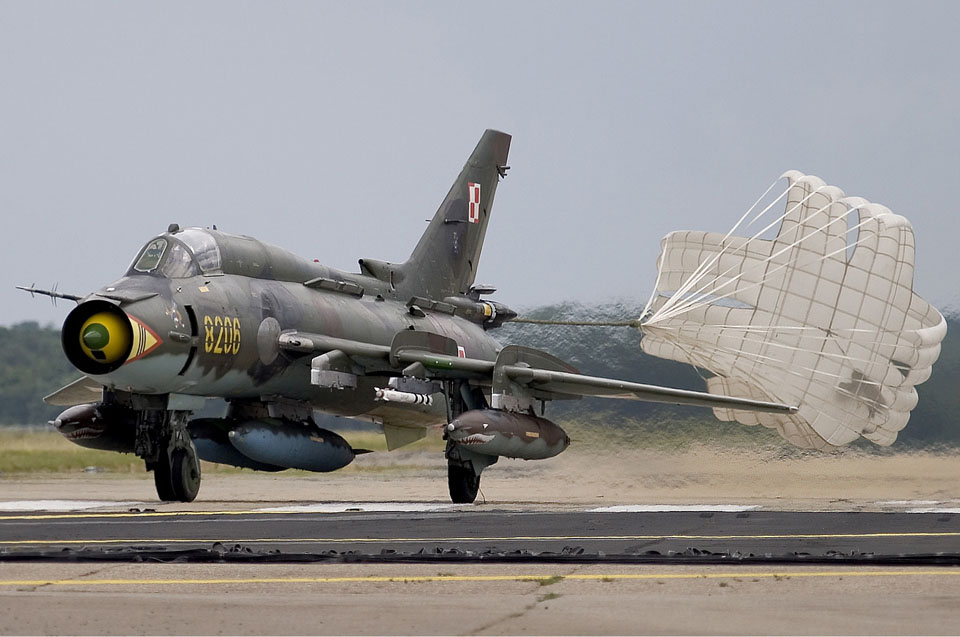
    The Su-22 has been in service since 1984. Of the total 110 fighters delivered from Russia only 45 are still operational – 38 Su-22M-4K and seven Su-22UM-3k two seaters. Three squadrons currently operating the Fitters are 8th Tactical Squadron at Miroslawiec and the 40th and 7th Tactical Squadrons at Swidwin.

    Poland currently has 45 Su-22 Fitter strike fightes, out of a total 110 transferred from Russia since 1984. By 2018 most of these strike fighters will be out of service. Photo: Chris Lofting

    Improved Kilo Class Submarines Fulfill Russian Domestic, International Demand for Conventional Subs

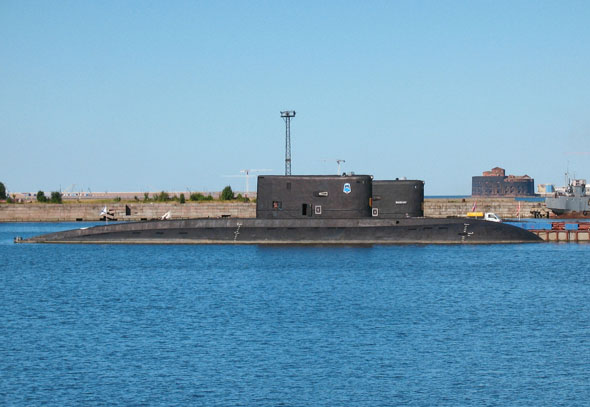
    Kilo Class submarines with the Russian Baltic Fleet based at Kronstadt
    Kilo Class submarines with the Russian Baltic Fleet based at Kronstadt

    The third Varshavyanka class submarine was laid down today at the Admiralty Shipyard in St. Petersburg. Upon completion the ‘Stary Oskol’ submarine will join the Russia’s Black Sea Fleet by 2016. The initial ordered for six Project 636.3 ‘Varshavyanka’ class submarines is currently underway with three vessels in construction. By 2020 the Russian Navy plans to have eight to ten ‘Varshavyanka’ class submarines.

    The six submarines on order are mainly intended for anti-shipping and anti-submarine missions in relatively shallow waters. The first sub, named ‘Novorossiisk’, was laid down in August 2010, and is scheduled for delivery to the Russian Navy next year. It was followed by Rostov-on-Don, launched in November 2011 at the Admirality Shipyard. Both Stray Oskol and Rostov-on-Don are scheduled to enter service with the Black Sea fleet – the first in 2014 and the second in 2016.


    Originally, the Russian Navy wanted the Project 677 Lada class sub, the lead submarine, St. Petersburg was laid in 1997 and went to sea in 2004.  After eight years of trials, the Navy decided to terminate the project and opt for an updated version of the proven 636 design, which dated back to the 1990s to modernize its 17 ship fleet of Project 877 ‘Kilo’ class diesel-electric submarines. An export version of the Lada named ‘Amur-1650’ is currently on offer to India, for their 75i submarine project.

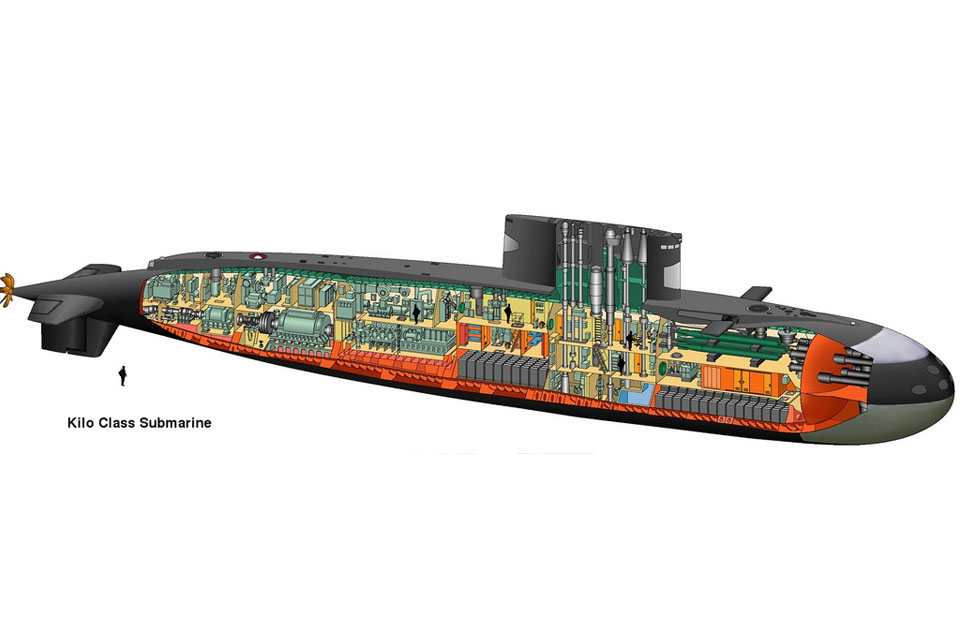
    A cutaway view of the Kilo Class submarine

    Project 636.3 submarines are designed by the Rubin Central Design Bureau for Marine Engineering. Unlike the Lada, which could take an Air Independent propulsion (AIP) cell. Rubin’s designers did not include AIP in the ‘Varshavyanka’ class subs – like the Kilo class they will succeed, will be powered by diesel-electric power-plant. Proven integration of AIP was one of the main advantages  of French and German submarines marketing in recent years.

    Unlike nuclear propulsion that cannot be shut down at will, diesel electric and AIP powered submarines produce low acoustic signature and, therefore, are most suitable for littoral warfare where their presence can be easily masked against the shallow sea bed. Russia was long a pioneer in AIP design but in the last decade Western European nations have taken the lead. Russia expects to have its own AIP in production within three years. The Russians are developing a new submarine propulsion engine that would enable extending submerged endurance capability by 1.4. Once it matures, Rubin’s designers are hopeful their Project 636 could theoretically be upgraded to make use of this technology. However, according to Andrew Dyachkov, a director at Rubin, it is likely that better electrical batteries employing  lithium-ion technology will deliver better endurance, at a lower risk and lower cost.

    Although absent of AIP, the ‘Varshavyanka’ offers an improved version of the proven Kilo class, featuring advanced acoustic ‘stealth’ technology derived from the Kilo and Lada designs. The submarine uses anechoic tiles  to absorb sound waves emitted by active sonar, thus reducing probability of detection by surface vessels, anti-submarine aircraft or enemy submarines. These tiles help attenuate sounds emitted from inside the submarine, adding its ability to shut-down the diesel engines when submerged, it reduces the range by which the sub may be detected by passive sonar.

    The vessels, crewed by 52 submariners, have an underwater speed of 20 knots, a cruising range of 400 miles (electric propulsion) with the ability to patrol for 45 days. They are armed with 18 torpedoes and eight surface-to-air missiles. The Improved Kilo submarine is armed with six 533-mm torpedo tubes (the vessel carries 18 torpedoes or 24 mines) it is also capable to launch the SS-N-27 Club-S land attack cruise missiles. For self defense the submarine is equipped with Strela-3M or Igla-1 man-portable Air Defense missiles (MANPADS).

    The Russian Kilo class submarine has been a success story in both domestic and international markets. 4 such subs were completed since 1982. 17 such submarines are in operation with the Russian Navy, 12 with China’s People’s Liberation Army navy (PLAN) and ten with the Indian Navy. Other operators include Algeria (4) and Iran (3), Romania (1) and Poland (1). The Admirality Shipyard is currently building six Project 636M subs for Vietnam. The first will be launched August 28, 2012. Delivery is expected this year, following a series of trials at sea. In 2008 Vietnam signed a US$2 billion deal to buy the six Project 636M Kilo class submarines from Russia. All subs are scheduled for delivery by 2016. Thanhnien

    Marine Corps MPC Finally Moving Forward

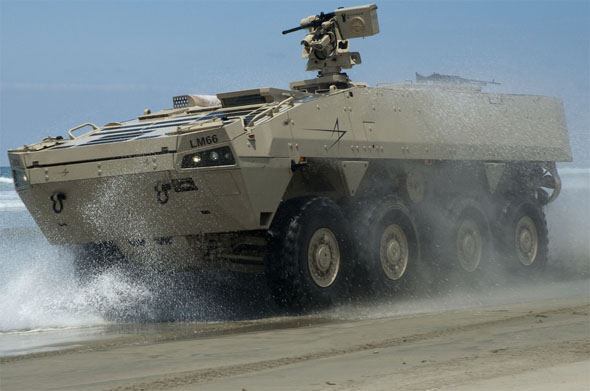
    In the next 8 months the Marine Corps will evaluate the Patria AMV (also known as Havoc) to assess its suitability for their Marine Personnel Carrier (MPC) vehicle requirement. Photo: Lockheed Martin
    The Marine Corps requires the MPC to ‘swim’, enabling water obstacle crossing. Photo: Lockheed Martin

    Lockheed Martin has won a USMC contract funding the evaluation of the Patria AMV 8×8 vehicle, as part of the marine Corps Marine Personal Carrier (MPC) program. The $3.5 million contract funds the test and evaluation of the vehicle, dubbed ‘Havoc’. The eight months testing will take place at the Amphibious Vehicle Test Branch at Camp Pendleton, Calif., where the corps will evaluate the vehicle’s human factors and amphibious capabilities. A parallel evaluation of the vehicle’s protection will occur at the Nevada Automotive Test Center in Carson City, Nev. The MPC program is scheduled for seven years with production of nearly 100 units.

    BAE Systems has also received a similar award, to deliver an 8×8 APC (supposedly a variant of the SuperAV 8×8 APC produced by its team-mate Iveco).


    Following a comprehensive study and testing of a technology demonstrator vehicle, the Marine Corps prepared an Analysis of Alternatives (AoA) summarizing the requirements for the new vehicle.

    The MPC was not designed to replace an existing capability but rather complement the capabilities of existing protected transport provided by the AAV in the Assault Amphibian Battalion. Originally, the Marine Corps were looking at vehicles complementing the Expeditionary Fighting Vehicle (EFV) which was terminated later.

    The full version of this article (1200 words)  is open for our Premium Members

    In the next 8 months the Marine Corps will evaluate the Patria AMV (also known as Havoc) to assess its suitability for their Marine Personnel Carrier (MPC) vehicle requirement. Photo: Lockheed Martin

    Skunk Works and XTEND Simplify Multi-Drone Command

    0
    Lockheed Martin Skunk Works® and XTEND have achieved a major milestone in JADC2 by integrating the XOS operating system with the MDCX™ autonomy platform. This technical breakthrough enables a single operator to simultaneously command multiple drone classes, eliminating the friction of mission handoffs. From "marsupial" drone deployments to operating in GPS-denied environments, explore how this collaboration is abbreviating the data-to-decision timeline and redefining autonomous mission execution.

    From Ukraine to Taiwan: The Global Race to Dominate the New Defense Tech Frontier

    0
    As traditional defense primes face mounting competition from agile “neoprimes” such as Anduril, Palantir and Helsing, the balance of innovation is shifting toward software-defined warfare and scalable, dual-use technologies, while global industry consolidation—marked by Boeing’s integration of Spirit AeroSystems and other strategic mergers—signals an intensified race to secure control over the defense technology value chain. Our Defense-Tech weekly report highlights these trends.

    Europe’s “Drone Wall”

    0
    In early October 2025, a coordinated wave of unmanned aerial system (UAS) incursions—widely attributed to Russia—targeted critical infrastructure across at least ten European nations. The unprecedented campaign exposed the fragility of Europe’s air defenses...

    Weekly Defense Update & Global Security Assessment

    0
    Executive Summary The past week (September 18-25, 2025) represents an inflection point where strategic defense concepts have transitioned from doctrine to tangible reality. An analysis of global events reveals four primary, interconnected trends shaping an...

    U.S. Air and Space Forces Push Next-Gen Programs at the AS&C 2025 Conference and...

    0
    At the 2025 Air, Space & Cyber Conference, U.S. Air Force and Space Force leaders unveiled major updates on next-generation fighters, bombers, unmanned systems, and space initiatives, highlighting both rapid innovation and critical readiness challenges as the services race to outpace global competitors. A short version is available here, with a more detailed version for subscribers.

    TADTE 2025: Reflecting Taiwan’s Strategic Themes

    0
    The Taipei Aerospace & Defense Technology Exhibition (TADTE) 2025 crystallized around four dominant strategic themes that collectively illustrate Taiwan's comprehensive approach to defense modernization amid escalating regional tensions. Based on a detailed report by Pleronix (available upon request). Includes a Podcast discussion on TADTE 2025's highlighting Taiwan's four strategic themes beyond the post's coverage.

    Iron Beam 450 Completes Testing, Soon to Join With Operational Air Defense Units

    0
    Israel’s Iron Beam 450 high-power laser system has completed final testing, marking a major leap in air defense. Developed by Rafael, it offers precise, cost-effective interception of rockets, UAVs, and mortars, and is set for IDF deployment by 2025.