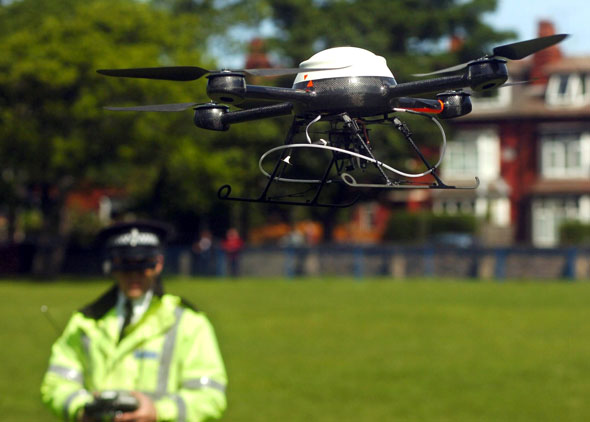
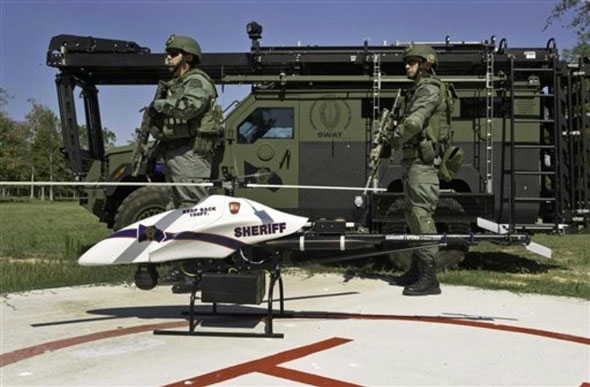
New guidelines published by the International Association of Chiefs of Police (IACP) formalize the conduct of unmanned aerial systems by law enforcement agencies. Photo: AP
The increasing use of UVS by police and law enforcement agencies requires the implementations of adequate guidelines to safeguard privacy while maintaining public and national security.
The International Association of Chiefs of Police (IACP) has adopted guidelines for the use of unmanned aircraft systems (UAS) in law enforcement applications. The guidelines provide law enforcement agencies an outline of how to use UAS safely and responsibly, and with respect to individuals’ privacy. The adoption of the IACP guidelines follows the recent adoption of AUVSI’s “Code of Conduct” for those who design, test and operate UAS.
“Unmanned aircraft could help law enforcement agencies with missions such as search and rescue or crime scene photography, often at a lower cost than manned aircraft.” Said Michael Toscano, president and CEO of the Association of Unmanned Vehicle Systems International (AUVSI). The more the law enforcement community, privacy advocates, government and other stakeholders work together to address issues such as privacy, the faster we can unlock the incredible potential of unmanned aircraft to help save time, save money and most importantly, save lives.” Toscano added.
The IACP guidelines cover community engagement, system requirements, operational procedures and image retention. They direct law enforcement agencies to engage with the community, specifically their governing body and civil liberties advocates, about how UAS will be used and protections put in place to uphold citizens’ rights. The guidelines also encourage notifying those living and working in the vicinity of aircraft operations, when possible. The guidelines call for a transparent implementation process for agencies desiring UAS, including a period of public comment.
The guidelines include specific steps law enforcement should take to respect the privacy of individuals:
Where there are specific and articulable grounds to believe that the (unmanned aircraft) will collect evidence of criminal wrongdoing and if the (unmanned aircraft) will intrude upon reasonable expectations of privacy, the agency will secure a search warrant prior to conducting the flight.
Unless required as evidence of a crime, as part of an on-going investigation, for training, or required by law, images captured by a UAS should not be retained by the agency.
Unless exempt by law, retained images should be open for public inspection.
A poll conducted earlier this year by Monmouth University found strong public support for law enforcement’s use of UAS in search and rescue missions, tracking runaway criminals, protecting U.S. borders and controlling illegal immigration. Currently, however, fewer than 3% of law enforcement units have aviation assets because of the high operating costs of manned aircraft. UAS provide a cost-effective alternative. The Sheriff’s Office in Mesa County, Colo., operates an unmanned aircraft at the cost of $3.36 per hour, compared to $250 to $600 per hour for a manned aircraft. The purchase price of a UAS is also significantly less than a manned aircraft, costing about the price of a patrol car with standard police gear. The vast majority of UAS currently flying in the U.S. are small models that weigh less than 25 lbs and can fit in the trunk of a car.
AUVSI has also published a recent ‘code of conduct‘ for those who design, test and operate UAS.
New guidelines published by the International Association of Chiefs of Police (IACP) formalize the conduct of unmanned aerial systems by law enforcement agencies. Photo: AP
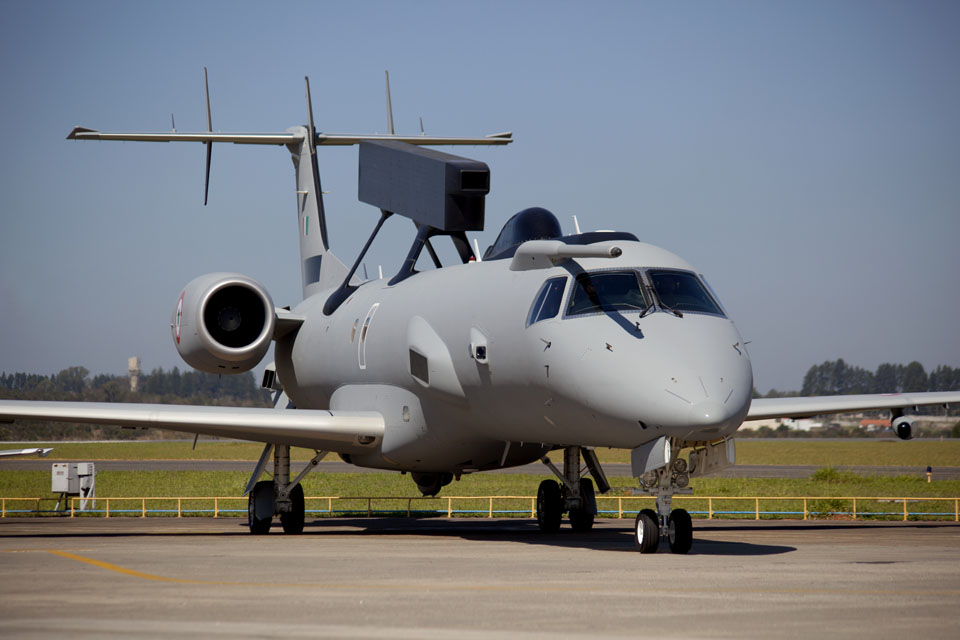
Embraer delivered today the first EMB-145AEW aircraft to the Indian Government. Photo: Embraer
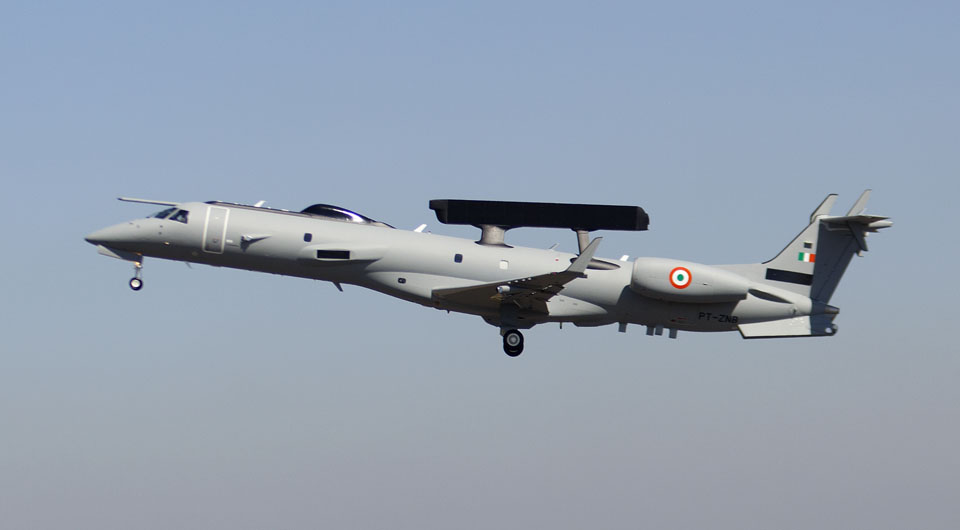
The first Embraer EMB145AEW aircraft delivered today to the Indian Government takes to the air. The aircraft is equipped with an Airborne early warning radar developed by India’s DRDO’s Centre for Airborne Systems (CABS). Photo: Embraer
Embraer Defense and Security today delivered the first EMB 145 Airborne Early Warning and Control (AEW&C) class of aircraft to the Government of India. The delivery follows successful completion of ground and flight tests of the aircraft which met operational targets established by both Embraer and Centre for Airborne Systems (CABS) of Defence Research & Development Organisation (DRDO). Later on the aircraft will be delivered to the Indian Air Force after integration of missions systems of DRDO by CABS in India.
“The collaboration with DRDO in such a complex program strengthens the ties between Brazil and India”, said Luiz Carlos Aguiar, President & CEO of Embraer Defense and Security at the delivery ceremony held at Embraer’s headquarters in São José dos Campos, Brazil.“We are very proud to meet the expectations of our clients in providing CABS, DRDO with this platform.”
According to Dr. Elangovan, Chief Controller R&D (Avionics & Aero) of DRDO, this specialized EMB 145 AEW&C features significant increase in electric and cooling capacity, a set of structural changes to allow the installation of the advanced mission systems that have been developed by India’s CABS (Centre for Air Borne Systems) along with its work centers of DRDO. The aircraft was also fitted with in-flight refueling system. The airborne Active Electronically Scanned Array (AESA) designed and developed by CABS, is now flying on the aircraft and more mission systems are scheduled for installation once the aircraft arrives in India. Remaining AEW&C aircraft are due to be delivered to the Indian Air Force as part of a contract signed in 2008.
The EMB 145 AEW&C (Airborne Early Warning & Control) aircraft is a member of Embraer’s Intelligence, Surveillance and Reconnaissance (ISR) family of aircraft and systems. Its primary missions include airspace management, fighter positioning and intercept control, signals intelligence, and support for maritime, borders, and Exclusive Economic Zones surveillance and security.
Embraer delivered today the first EMB-145AEW aircraft to the Indian Government. Photo: Embraer
Pakistani troops guard the entrance to the Minhas Pakistan Air Force Base, about 85 kilometers northwest of Islamabad, following the Taliban attack before dawn, yesterday. Photo: AP
Pakistani troops guard the entrance to the Minhas Pakistan Air Force Base, about 85 kilometers northwest of Islamabad, following the Taliban attack before dawn, yesterday. Photo: AP
Heavily armed militants stormed the Pakistani air force base Minhas before dawn on Thursday (Aug. 16, 2012), sparking clashes that left 10 people dead and raised concerns about the safety of the country’s nuclear arsenal. In the ensuing gun battle, Taliban fighters positioned outside the base’s main gates launched rocket-propelled grenades at security forces as they attempted to stop the would-be suicide bombers from reaching the military aircraft. In the end, Pakistani forces were able to repel the Taliban assault, but only after calling for reinforcements from Pakistani commando units and police forces stationed nearby, according to news reports. Eight Taliban fighters and one Pakistani soldier were killed in the battle. The attack demonstrated the Taliban’s ability to penetrate a sensitive military sites in Pakistan, five years into an insurgency.
Despite rumors that nuclear weapons were stored at the base, US officials said that the country’s nuclear stockpile were never in danger of falling into Taliban hands. Pakistani military officials also confirmed there were no nuclear weapons being housed at Minhas. The base is located within the country’s Kamra Aeronautical Complex, the air force research and development facility.
“The Pentagon continues to work closely and on regular basis with Pakistani counterparts towards the safety of their nuclear program.” Pentagon Press Secretary George Little said the DOD leaders remain convinced that Islamabad’s vast nuclear arsenal is safe. “It is our sense that the Pakistani government maintains good security around their nuclear arsenal,” he said.
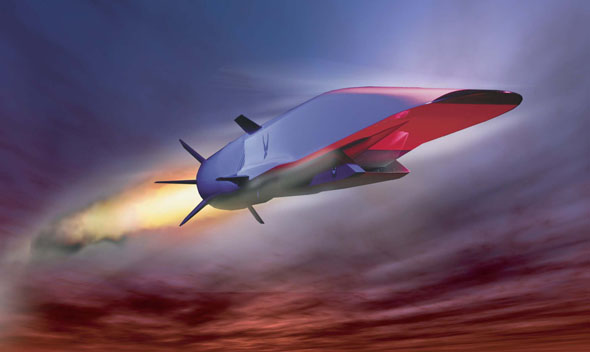
The X-51A Waverider was set to demonstrate hypersonic flight. Powered by a Pratt Whitney Rocketdyne SJY61 scramjet engine, it is designed to ride on its own shockwavem and accelerate to about Mach 6. (U.S. Air Force graphic)
A highly-publicized test flight of a United States Air Force (USAF) experimental aircraft ended in failure on 14 August. The unmanned aircraft, designated the X-51A “Waverider,” broke apart in midair and crashed into the Pacific Ocean only 31 seconds into its test flight.
In the late morning hours of 14 August, a USAF B-52 bomber launched the Waverider successfully while flying over the Point Mugu Naval Warfare Center in California. Once released by the B-52, the Waverider is designed to be powered into flight by a rocket booster to gain sufficient thrust to allow the aircraft’s Scramjet engine to fire-up and drive the aircraft forward into hypersonic speed.
The X-51A was built to reach a hypersonic speed of Mach 6 (3,600 miles-per-hour) or greater, fast enough to travel from New York City to London in less than an hour’s flying time. Most experts classify hypersonic flight as beginning at Mach 5 or five times the speed of sound.
The USAF considers the aircraft to be “irretrievable” since it would crash at the end of its flight even if the flight is successful. The USAF has been using the aircraft as a test bed in a program to develop a new generation of conventionally-armed missiles capable of destroying targets located anywhere in the world within one hour of being launched.
“Waverider” is the name given to the X-51A because the design allows the aircraft to remain airborne by using the lift and thrust created by shock waves emanating from the vehicles own forward motion. The Waverider’s Scramjet engine was built by Pratt & Whitney Rocketdyne and was designed to operate using the vehicle’s forward trajectory to draw compressed air into the engine to facilitate fuel combustion. Boeing’s Phantom Works Division has been responsible for the design and construction of the aircraft itself.
Project engineers had hoped to keep the Waverider aloft for five minutes of powered flight, but the test failed because of a defective control fin according to USAF representatives. Just sixteen seconds after the vehicle’s rocket booster was engaged, sensors warned of a malfunction in a control fin that would prevent test crews from maintaining control of the aircraft.
When the X-51A successfully separated from its rocket booster fifteen seconds later, control of the aircraft was lost and she broke apart and fell into the sea. Failure of the control fin also prevented testers from engaging the Scramjet engine.
A statement released by Charlie Brink, X-51A Program Manager for the US Air Force Research Laboratory (AFRL), announced that failure of the defective fin, a subsystem that had proven reliable in previous tests, prevented testers from engaging the Scramjet. A USAF statement said that “this particular control subsystem had proven reliable in the previous two flights of the X-51A including the historic May 2010 flight when the Waverider flew for more than three minutes at Mach 4.88 under Scramjet power – nearly five times the speed of sound.”
Four Waveriders have been built, but only one remains available for testing. Since this third test flight was the last with funding in the current budget allocations, it is unknown when the fourth vehicle will be scheduled for flight testing.
Program costs are unknown and are not likely to be disclosed since the project is classified.
Pentagon planners have had a long-term interest in the practical use of airborne vehicles capable of achieving hypersonic speeds. US military leaders have expressed their desire to field a hypersonic ballistic missile able to hit a designated target from very long range in a matter of minutes. A missile flying at hypersonic speed would be traveling so fast that existing surface-to-air defense systems would be incapable of stopping it. Thought has been given to development of a hypersonic reconnaissance vehicle that could overfly a mission sight invisible to radar as well.
What lies ahead for the hypersonic project remains to be seen, but it is likely that the United States will continue its development efforts since possession of a successful weapon of this capability would give the US a strategic military advantage unmatched by any potential adversary. Of course, Air Force and national pride will come into play as well.
The X-51A Waverider was set to demonstrate hypersonic flight. Powered by a Pratt Whitney Rocketdyne SJY61 scramjet engine, it is designed to ride on its own shockwavem and accelerate to about Mach 6. (U.S. Air Force graphic)
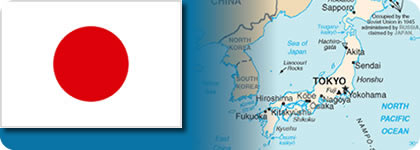
Tensions between Japan and South Korea have escalated in recent days to a level that threatens the always fragile relations between the two key US allies in the Pacific. Much of the latest situation results from a disagreement between Seoul and Tokyo regarding the long-term dispute over territorial claims to Takeshima Island, as it is known in Japan, or if you prefer Dokdo Island, as it’s referred to in South Korea.
The “island” is little more than two desolate chunks of rock surrounded by some ninety smaller rocky outcroppings far away in an isolated little corner of the Sea of Japan. Also known as the Liancourt Rocks, this insignificant collection of largely barren clumps of stone have caused quite a stir among Pacific neighbor, not because of any intrinsic value attributed to such minute specks of land in a vast expanse of water, but because of what is believed to lie beneath the surface of the adjacent waters – rich deposits of highly-prized natural resources.
This collection of islets is located approximately midway between Japan and South Korea comprising a total landmass of barely 0.2 square kilometers. Disputes centered on sovereignty over the area stretch back to the 15th century. South Korea has effective control of the islets and maintains a force of approximately forty government personnel on Dokdo itself that includes coast guard personnel, police, lighthouse keepers, and personnel from the Fishery Ministry.
In an unexpected move, South Korea’s President Lee Myung-bak made a surprise visit to Dokdo on 9 August where he posed for photographs with coast guard personnel that included a South Korean flag flying prominently in the background.
During his visit to Dokdo/Takeshima, Lee criticized Japan for failing to accept responsibility for the cruel injustices inflicted upon Koreans during Japan’s colonial stewardship of the peninsula from 1910 to 1945. Lee encouraged Japan to “sincerely apologize” for its conduct during World War II and to exhibit a willingness to address the long-term grievances many elderly South Koreans harbor from the days of Japanese colonial rule.
President Lee said that his visit to the disputed territory was an effort to force Japan to recognize the importance of making amends for the travesties the nation inflicted upon innocent Korean citizens during the colonial period. Lee is quoted as saying that as a nation of power “Japan can resolve such issues if it decides to do so, but it has shown passive attitudes due to domestic political reasons. So I felt the need to show (Korean grievances) through action.”
In response, Tokyo recalled its ambassador to Seoul and Japanese Prime Minister Yoshihiko Noda told reporters that Lee’s visit to the disputed area was “completely unacceptable” and “deeply regrettable.” South Korea’s diplomatic representatives in Tokyo were also summoned to the Foreign Ministry to be given notice of Japan’s strong protest.
Shortly after Lee’s visit, local Japanese news sources reported that Tokyo was giving serious consideration to cancelling a leadership summit scheduled for later this year. Prime Minister Noda was scheduled to travel to South Korea for meetings with high-ranking Korean representatives. President Lee traveled to Tokyo last December for a summit as part of what has come to be called “shuttle diplomacy” between the two nations.
Adding to the tense environment surrounding the two nations was a public demonstration at the London Olympics that also drew a strong protest from Tokyo. Shortly after the South Korean men’s soccer team defeated the Japanese team to capture the bronze medal, Korean midfielder Park Jong-woo scampered around the field in celebration holding aloft a banner printed with the message, “Dokdo is our land.” The banner was given to Park by a member of the audience and it is entirely possible he was unaware what message was printed on the banner. As punishment, Park was prohibited from attending the awards ceremony.
In response to the ongoing dispute with South Korea, Japan’s official responsible for overseeing Korean Peninsula issues said that a sideline bilateral meeting between Prime Minister Noda and President Lee during the Asia-Pacific Economic Cooperation (APEC) summit to be held in Vladivostok next month could not be confirmed. It is customary for Japanese leaders to hold sideline meetings with key participants during the APEC summit to discuss issues of mutual concern. Now, it appears rather unlikely that Japan or South Korea are inclined to engage in any meaningful sideline discussions this year.
Japan’s Foreign Minister, Koichiro Gemba, stirred the pot somewhat with an announcement on 10 August that Japan was considering asking the International Court of Justice (ICJ) to make a ruling on the Dokdo/Takeshima disagreement. South Korea has rejected the ICJ proposal repeatedly dating back to 1954 and it is extremely unlikely the issue will ever be presented to the court as both parties involved must agree to arbitration to validate any ruling the court might hand down.
Earlier this year, President Lee called upon Japan to take steps to arrive at a final resolution of South Korean grievances stemming from Japan’s wartime policy of forcing foreign women into sex slavery. Some of these “sex slaves,” many of them purportedly kidnapped from their homes in Korea, have survived to this day and have worked tirelessly to keep the issue in the public’s eye. Often called “Comfort Women,” the survivors continue in their demands that Japan should compensate them for the atrocities committed against them. Citizens throughout both North and South Korea have been infuriated by Japan’s failure to respond to the demands of these elderly ladies.
Last year, South Korean activists erected a statue of a girl symbolizing the victims of Japan’s wartime sex-slave policy in front of Japan’s embassy in Seoul to protest Tokyo’s refusal to discuss compensation for the surviving Korean “Comfort Women.” This move was widely approved by the South Korean public and forced Japanese officials to deliver an apology, but Tokyo held firm to their stance that the peace treaties signed at the end of World War II absolved the Japanese from paying any additional wartime compensation to aggrieved parties.
An historic agreement approving the sharing of sensitive information between the two nations scheduled for signing in June was called off at the last minute by Seoul in response to widespread public protests in South Korea. This accord would have marked the first time the two nations had agreed to join together in a military-related cooperative effort since the end of Japan’s colonial rule.
Adding even more fuel to the dispute, on 14 August President Lee publicly announced that Japan’s Emperor Akihito would have to make a sincere apology to the Korean people for Japan’s cruel wartime behavior should he ever wish to visit the South. During a meeting with school teachers Lee is quoted as saying, that should the Emperor wish “to visit South Korea, I wish he would visit and sincerely apologize for those who passed away while fighting for independence.”
Lee went on to say that the Emperor need not come to the South “if he is coming just to offer his ‘deepest regret,’” an apparent reference to the Emperor’s 1990 statement during a Tokyo banquet honoring former South Korean President Roh Tae Woo that he often thought of “the sufferings your people underwent during this unfortunate period, which was brought about by my country, and cannot but feel the deepest regret.”
Lee also insisted that he must be allowed to address the Japanese Diet as a condition of his making a formal state visit to Tokyo. A condition that is not likely to be honored. Lee said he would be pleased to visit Tokyo “if they allow me to speak my mind” in the Diet.
Although the two nations enjoy close economic ties and a long-term relationship with the United States, history has always been a source of irritation and intense rivalry played out on a global stage by the two Pacific neighbors. Rarely have the two nations engaged in a verbal altercation as vehement as this latest round of threats and public demands.
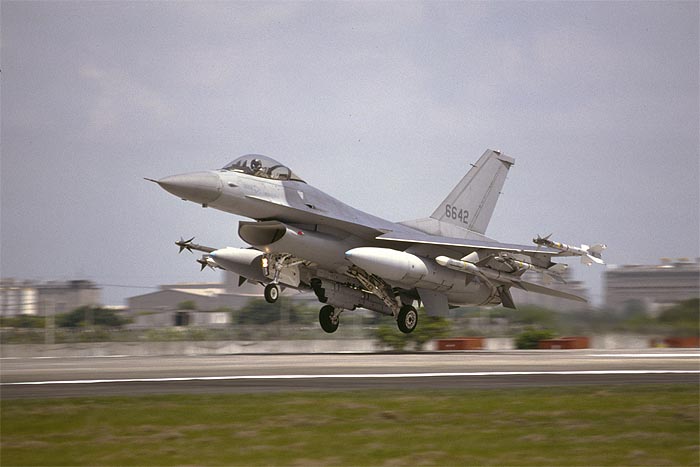
Media reports appearing in the Chinese-language editions of the China Times and Liberty Times claiming that Taiwan has agreed to reduce the number of F-16C/D fighters it is requesting from the United States are now being refuted by the Taiwanese Ministry of National defense.
Both news outlets quoted an unnamed “authoritative military source” as being the primary source behind their reports published on 13 August. According to the unnamed source, Taiwan’s Deputy Minister of National Defense, Andrew Yang, and the Deputy Secretary-General of Taiwan’s National Security Council, Lu Hsiao-jung, proposed that Taipei would be willing to reduce its request for F-16C/D aircraft from an initial 66 to a single squadron of 24 during joint talks with representatives of the United States.
The US-Taiwan discussions are an annual meeting, commonly known as the “Monterey Talks,” designed to facilitate a bilateral defense dialog between the two allies that also includes negotiations regarding arm’s sales.
The Ministry of Defense was quick to refute the claims carried in the two publications. Shortly after the Ministry of Defense dismissed the media reports, the National Security Council added its own statement also denying the reports in saying that procurement decisions fell to the Air Force and the Ministry of Defense. During a press conference, Major General David Lo, speaking on behalf of the Ministry of Defense, called the media reports false, and stated that no such proposal was ever submitted by Taipei’s representatives during the talks. The Air Force also stated that the media reports were without merit.
Despite Taiwan’s repeated requests for new F-16C/D fighters, the United States has denied the requests. Many defense analysts speculate that the US refusal to sell Taiwan new aircraft is an attempt to avoid an unsavory dispute with China.
In September, the US and Taipei agreed to an offer valued at $5.2 billion that would upgrade Taiwan’s existing fleet of 146 F-16A/B Block 20 Fighting Falcons with work to begin in 2016 and delivery of the first upgraded aircraft scheduled for 2021.
On 13 July, Taiwan signed a Letter of Offer and Acceptance (LOA) to begin the first installment of the upgrade project. This initial LOA is valued at $3.7 billion. Current projections are to have 24 F-16A/Bs pulled from active service at a time to undergo upgrade work until necessary work is completed on the entire fleet.
It may simply be coincidental that the number of 24 aircraft is what defense experts say is the absolute minimum needed to cover anticipated fighter shortages resulting from upgrade work and the scheduled retirement of older aircraft. Some media reports have announced that Taipei will retire as many as 56 Mirage 2000 and 45 worn out F-5 fighters in the near future. Should these aircraft be retired as claimed, Taiwan’s air fleet would be reduced to 146 F-16A/Bs and 126 F-CK-1 Indigenous Defense Fighters (IDF) with the F-CK-1s currently undergoing upgrade work.
China’s military expansion and modernization program, coupled with Beijing’s increasingly bold moves in the South China Sea, have been a worrisome concern for Taiwan. Taipei’s concerns have risen significantly in recent months as China has adopted a more aggressive posture in laying claim to territories in the South and West China Sea areas. Fear of Chinese aggression is a consideration that invariably colors Taiwan’s policy-making process and is a concern that is usually uppermost in the minds of the Taiwanese citizenry.
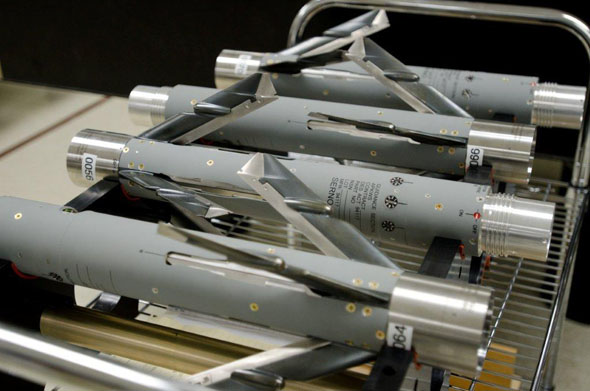
The conversion of the Hydra 70 unguided rocket into a laser-guided rocket is done through the addition of a mid-body guidance unit (WGU-59/B) developed by BAE Systems. Photo: BAE Systems
BAE plans to deliver the 925th APKWS assembly next month. Photo: BAE Systems
The U.S. Navy has authorized full-rate production of the Advanced Precision Kill Weapon System (APKWS), BAE Systems’ affordable and versatile laser-guided rocket system.
Under the contract, the company will make deliveries to support the U.S. Marine Corps, which is already effectively utilizing APKWS in theater.
The guided rocket was shot for the first time in combat in March 2012, from AH-1W and UH-1Y helicopters supporting Marine Corps ground forces during combat operations in Afghanistan, demonstrating its capability to engage and penetrate complex targets.
The full version of this article is available
as part of our Premium Content.
“Full-rate production of this capability is important because it means more APKWS units will be available to U.S. military forces and select countries,” said Navy Capt. Brian Corey, APKWS program manager. “This highly effective weapon allows aviators to complete their missions while minimizing the risk of harm to allies and non-combatants.” BAE Systems is the government’s prime contractor for APKWS. The company will deliver its 925th initial production system to the Navy in September. APKWS is also available to the U.S. allied forces through foreign military sales.
After many months of sitting on the sidelines, President Obama’s administration issued a statement on 3 August warning China not to contribute to an escalation of tensions in the South China Sea. The statement from the US State Department cautioned China that recent Chinese moves to establish a military presence and install barriers on disputed islands in the South China Sea were detrimental to diplomatic efforts focused on resolving territorial disputes in the region and only serve to increase tensions with neighboring Pacific nations.
The statement, attributed to State Department spokesman Patrick Ventrell, also included a warning regarding China’s recent establishment of an administrative center in the small city of Sansha located in the Paracel Islands and Beijing’s announcement of plans to activate a military garrison in the city. Ventrell is quoted as saying that the “upgrading of the administrative level of Sansha city and establishment of a new military garrison there covering disputed areas of the South China Sea run counter to collaborative diplomatic efforts to resolve differences and risk further escalating tensions in the region.”
The State Department statement went on to say that the United States had grave misgivings about China’s recent activities in the Pacific and was “concerned by the increase in tensions in the South China Sea” and warned that the US would be “monitoring the situation closely.”
Ventrell’s statement also commented on the United States’ concern about an increased level of “confrontational rhetoric” emanating from Pacific nations and urged “all parties to take steps to lower tensions” and establish a diplomatic framework to peacefully resolve the territorial disputes in the South China Sea.
In response to the US rebuke, China’s Foreign Ministry summoned a senior US diplomat to register a protest to the State Department’s remarks. In a statement released on 4 August, China’s Assistant Foreign Minister, Zhang Kunsheng, reportedly called the US Embassy’s Deputy Chief of Mission, Robert Wang, to the Ministry to express China’s displeasure with Washington’s comments.
The Chinese release quotes Minister Zhang as saying that Chinese leaders were disappointed that the US statement “disregarded the facts, confused right with wrong, sent a seriously wrong signal and did not help with efforts by relevant parties to maintain peace and stability in the South China Sea or the Asia Pacific.”
Zhang’s statement went on to say that China wished to express “its strong dissatisfaction and resolute opposition” to Washington’s remarks and urged “the US side to immediately mend the error of its ways, earnestly respect China’s sovereignty and territorial integrity and do more to genuinely benefit stability and prosperity in the Asia Pacific.”
A companion statement attributed to Ministry spokesman Qin Gang reiterated Beijing’s stance that China unequivocally asserts its right of sovereignty over virtually the entire expanse of the South China Sea and the islands scattered throughout the region. Qin stated that China was well within its rights to establish an administrative center in Sansha City and it was only prudent to station a military garrison in the same location to protect Chinese interests given the unfriendly counter-claims announced by other nations.
Qin’s statement posed some questions for the United States with regards to ongoing events in the disputed region by asking, “Why does the US turn a blind eye to the facts that certain countries opened a number of oil and gas blocks, and issued domestic laws illegally appropriating Chinese islands and waters?” His statement also asked why the United States continued to avoid discussions addressing “threats of military vessels to Chinese fishermen by certain countries and their unjustified claims of sovereignty rights over Chinese islands.”
Washington and Beijing have been at odds with each other for many years as disagreements regarding Taiwan, Tibet, trade issues, and China’s continued support of North Korea continue to fester with no satisfactory resolution to any of these issues within sight in the foreseeable future. Now, the South China Sea disputes between China and her neighbors have gained renewed interest and promise to be a test of wills between the six nations now claiming territorial sovereignty over the small islands in the region.
The Philippines, Taiwan, Vietnam, Brunei, Malaysia, and China all have rival claims to areas in the South China Sea. The claims are complex and will be difficult, even in the best of circumstances, to resolve. Until now, the United States has adopted a public stance of relative neutrality in the disputes.
The South China Sea represents a rich source of resources all six nations are anxious to gain control of. Fishing has flourished in the area for many years and now it appears that oil, natural gas, and potential rare earth deposits are also abundantly present in the area.
The latest Association of Southeast Asian Nations (ASEAN) regional summit failed to make any headway in finding an equitable resolution to the issue. Offers of independent arbitration to decide the issues in question have been repeatedly rejected.
With the Obama administration’s recent announcement that the United States would refocus its attention on the Pacific, the usually docile Philippines has demonstrated stronger and more vocal opposition to Chinese incursions into those areas the Philippines considers to be Filipino territory. Vietnam has also adopted a policy of open and stern opposition to Chinese ambitions in the South China Sea.
A resolution adopted by the United States Senate encouraging all nations in the region to exercise restraint and avoid any actions that might be viewed as provocative, especially any efforts undertaken to take physical control of the disputed areas also drew a hostile response from Beijing. China continues to insist that she is entitled to the sovereign rights over the expanse as a consequence of centuries of contact and exploration in the area.
The United States has made it abundantly clear that protection of the sea lanes, freedom of navigation, and safeguarding maritime trade through the South China Sea represent issues of paramount importance to Washington. This latest statement, on the surface, appears to single out China for criticism while advocating support for the claims of the other five nations.
While this statement from Washington is a strongly worded deviation from earlier pronouncements, it falls in line quite nicely with the US pivot to the Pacific and serves as a caution to all Pacific nations that the United States is serious about developing a stronger presence in the region. It seems that the Obama administration’s policy of appeasing China with concessions, a policy that has never proven to be overly successful in the past, has come to an end.
On the other hand, this announcement should not be accorded more significance than it rates since the message was released through a relatively junior representative of the administration and did not come from a high-level government official. This fact is an indication that the US does not desire to be drawn into a situation that can never be resolved to everyone’s satisfaction. A cautious recrimination seems to be the best course of action at this time.
RBS15 Mk3 is the main surface offensive weapon carried on the new German K130 missile corvette.
RBS15 Mk3 is the main surface offensive weapon carried on the new German K130 missile corvette.
The Swedish Defence and security company Saab has received an order from its German partner Diehl BGT for the Surface-to-Surface Missile RBS15 Mk3. The order value is SEK 168 million, ($25 million, €20 million) and includes options with a total value of SEK 83 million ($12.5 million, €10 million). Deliveries will take place during the period 2014 to 2016. The missile system has previously been sold to Germany, Poland and Sweden.
The RBS15 Mk3 is a heavy weight Surface-to-Surface Missile system with a range of more than 200 km and the added capability to combat land targets.
“The order for RBS15 Mk3 is important for us in the long-term cooperation with our partner Diehl and for the continued development of the system,” says Tomas Samuelsson, Senior Vice President and Head of Business Area Dynamics
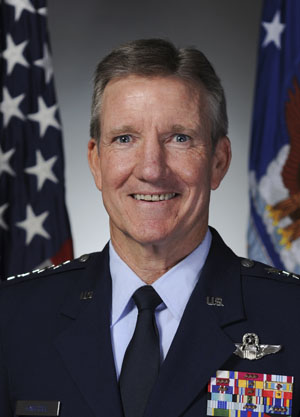
General Herbert J. “Hawk” Carlisle formally accepted command of the United States’ Pacific Air Forces (PACAF) on 3 August in a ceremony presided over by US Navy Admiral Samuel Locklear III, commander of the US Pacific Command, and US Air Force Chief of Staff General Norton Schwartz. General Carlisle comes to the PACAF with an impressive resume including several assignments in positions of high-visibility within the upper echelons of the USAF hierarchy. Many of his previous assignments brought him into close contact with Congressional leaders, senior air commanders, and political leaders.
The full version of this article is available
as part of our Premium Content.Selection of General Carlisle to command the PACAF is a clear indication that the Obama administration considers assignment of a senior-level commander with strong ties to the F-35 Joint Strike Fighter (JSF) program to be a prudent move that will further strengthen US efforts to convince Asia-Pacific national leaders to select the F-35 as their next-generation fighter.
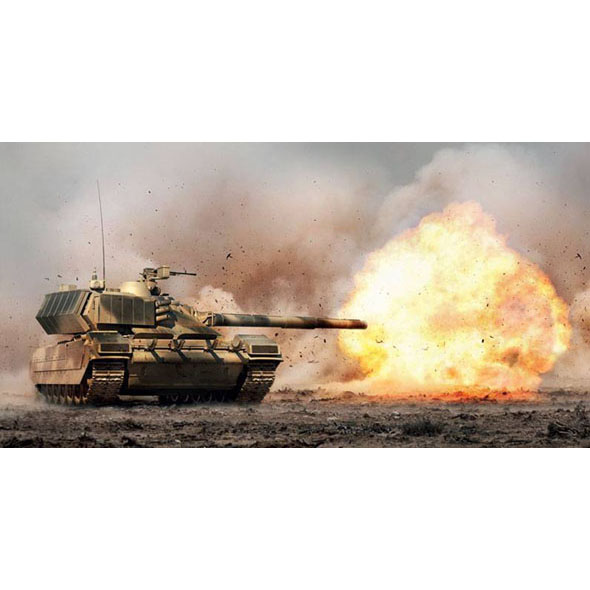
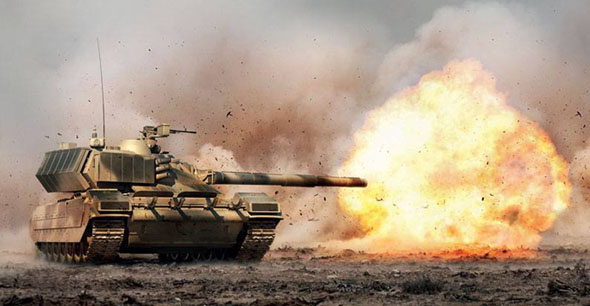
The Russian Army is planning to begin modernize its armored and mechanized forces beginning in 2015, fielding a new family of vehicles comprising a new main battle tank, armored infantry fighting vehicles, and various support platforms. The new tank was expected to be unveiled exclusively to Russian leadership at the Arms Expo exhibition at Nizhny Tagil in September, 2013. Along with a new tracked vehicle and new family of wheeled vehicles. Eventually, the new tank was unveiled quietly to Top VIP, inside the ‘presentation pavilion’ reserved for the Terminator-2 BMPT72. This pavilion was oversized for that type of vehicle, and was opened to the press only on the first day of the event. The new tank was hidden from the public eye and is likely to remain secret util it’s planned fielding in 2015
The MBT will be based on the new Armata, the prototype is scheduled to enter field trials in 2013, about 10 months ahead of schedule. First Deputy Defense Minister Alexander Sukhorukov said. The new tank is under development at Uralvagonzavod in Omsk. The first deliveries of the tank to the Russian Armed Forces are scheduled for 2015. A total of 2,300 MBTs are expected to be supplied by 2020.
It should be remembered that the Russians are building their fighting forces not only against NATO, but more importantly, to protect their long southern borders with radical Islamic countries that may be gathering military power, and the growing dominance of China in the east. Armored and mechanized forces are key to maintaining military superiority or parity against such threats. The level of sophistication in meeting such threats is not as demanding as meeting the advanced technology fielded by US and NATO forces.
The full version of this article is available
as part of our Premium Content.
According to preliminary reports, the new tank designated T-99 will be less radical and ambitious than the failed ‘Object 195’ or T-95, it will weigh less, therefore, become more agile and will be more affordable, compared to its more ambitious predecessors.
The Russian industry is also developing the Boomerang family of 8×8 wheeled armored vehicles which will gradually replace the current BTR-90. Additionally, the Kurganets-25 tracked armored vehicle provides high degree of commonality with the new Armata tank. The Kurganets-25 will evolve into various models, gradually replacing BMP and BMD and MT-LB and other types of tracked armored platforms.
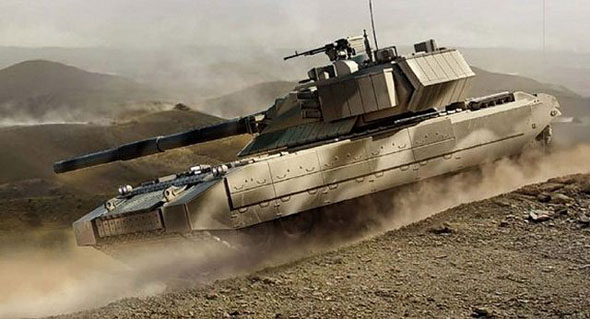
An artist concept view of the T99. Despite Russian occupation with ever higher caliber guns for their new tanks, the T-99 will be equipped with an improved version of the current 125mm cannon.
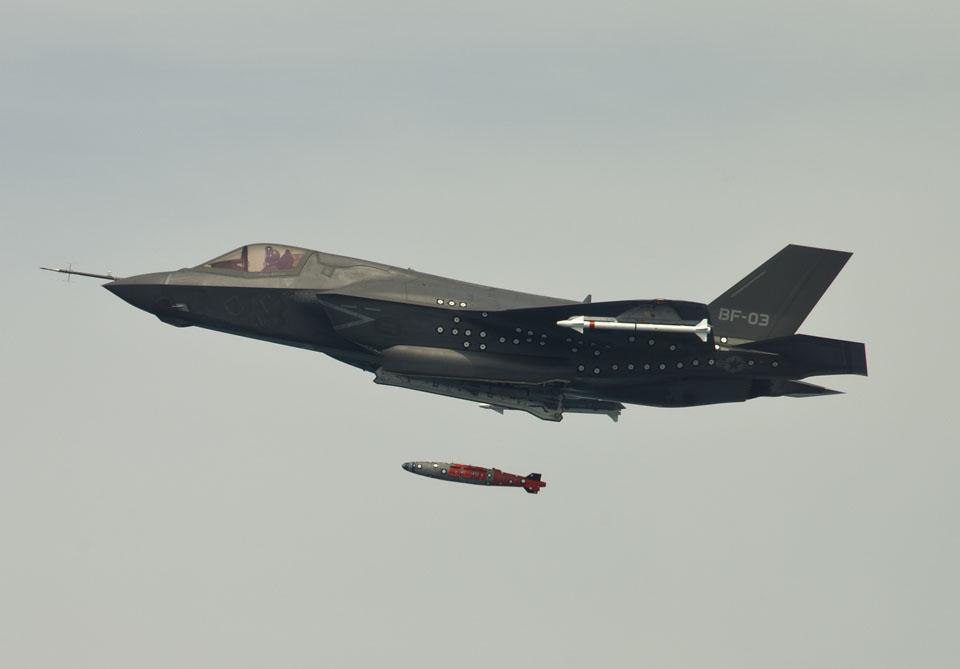
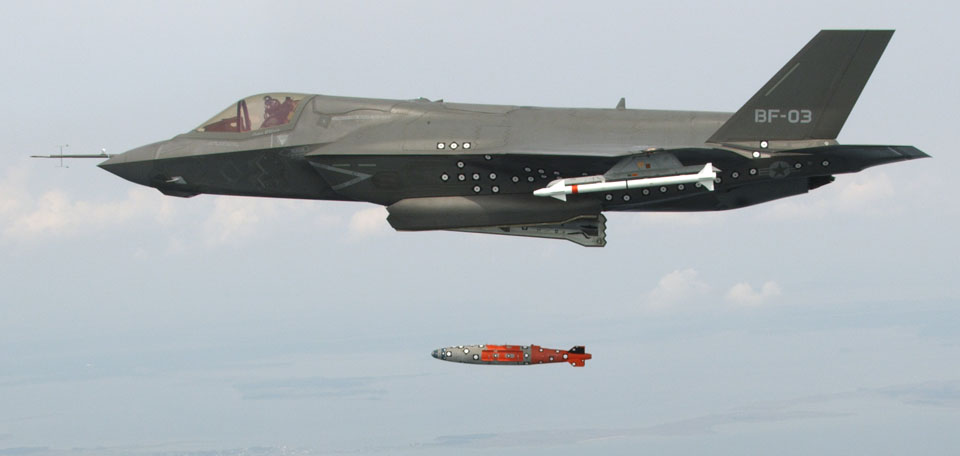
F-35B test aircraft BF-3, flown by Lockheed Martin test pilot Dan Levin, completed the first aerial weapons release for any variant of the aircraft. BF-3 dropped an inert 1,000-pound GBU-32 Joint Direct Attack Munition over an Atlantic Ocean test range from an internal weapons bay. Photo: Lockheed Martin, by Andy Wolfe.
F-35B test aircraft BF-3, flown by Lockheed Martin test pilot Dan Levin, completed the first aerial weapons release for any variant of the aircraft on Aug. 8, 2012. Photo: Lockheed Martin/Andy Wolfe
The F-35 Lightning II accomplished the first weapon separation test yesterday (August 8, 2012) on a test flight over the Atlantic test range. The release was the first time for any version of the F-35 to conduct an airborne weapon separation, and the first time a full separation test was performed with a weapon dropped from the internal weapon bay.
The milestone marks the start of validating the F-35’s capability to employ precision weapons and allow pilots to engage the enemy on the ground and in the air.
The test was performed by BF-3, a short take-off and vertical landing F-35 variant, dropping an inert 1,000-pound GBU-32 Joint Direct Attack Munition (JDAM) separation weapon over water in an Atlantic test range while traveling at 400 knots at an altitude of 4,200 feet. Aircraft and land-based test monitoring systems collected data from the successful separation, which is in review at the F-35 integrated test force at Naval Air Station Patuxent River.
“While this weapons separation test is just one event in a series of hundreds of flights and thousands of test points that we are executing this year, it does represent a significant entry into a new phase of testing for the F-35 program,” said Navy Capt. Erik Etz, director of test for F-35 naval variants.
An aerial weapons separation test checks for proper release of the weapon from its carriage system and trajectory away from the aircraft. It is the culmination of a significant number of prerequisite tests, including ground fit checks, ground pit drops and aerial captive carriage and environment flights to ensure the system is working properly before expanding the test envelope in the air.
F-35B test aircraft BF-3, flown by Lockheed Martin test pilot Dan Levin, completed the first aerial weapons release for any variant of the aircraft. BF-3 dropped an inert 1,000-pound GBU-32 Joint Direct Attack Munition over an Atlantic Ocean test range from an internal weapons bay. Photo: Lockheed Martin, by Andy Wolfe.
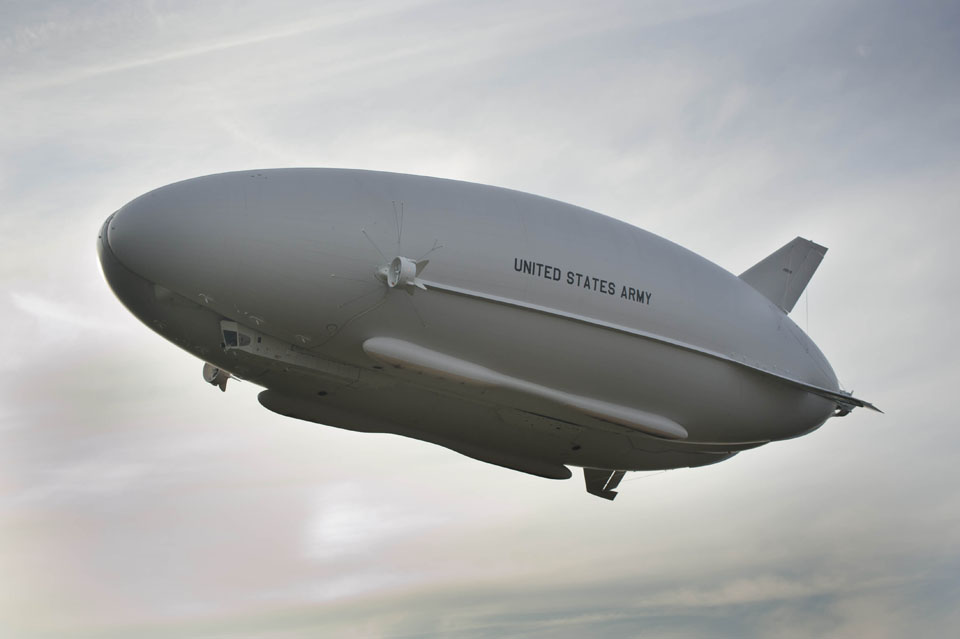
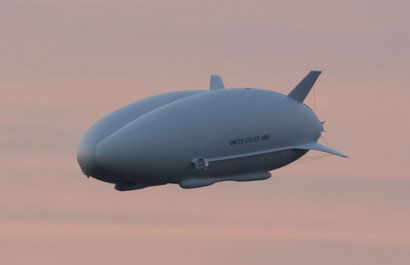
LEMV Hybrid Airship configured for persistent wider area surveillance missions could remain on station for days. This angle clearly shows the complex design combining buoyancy and aerodynamic surfaces combining the whole airship, long strakes, rudders and fins and vectored ducted-fans. Image: US ArmyLEMV on its first flight over Lakehurst, New Jersey August 7, 2012. Photo: US Army
The Long Endurance Multi-Intelligence (LEMV) Hybrid Airship built by Hybrid Air vehicles and Northrop Grumman went on its first flight yesterday (August 7,2012) from the military base at Lakehurst, New Jersey on a 90 minute flight. The airship that measures 300 feet (91 meters) from tip to tip combines aerodynamic lift and buoyancy to keep position and fly.
The Army planned to have used LEMV for
persistent wide area surveillance missions in Afghanistan by now, but due to program delays the hybrid airship could reach initial operational status only next year at the earliest. At its first flight LEMV was piloted with a crew on board, but on operational missions the vehicle would be used unmanned. According to the manufacturer, a fleet of 18 LEMVs patrolling the Afghan skies could be maintained by few dozens of support personnel stationed in the country.
LEMV is the only survivor of several mega airship programs experimented by the US military in recent years. Another airship – the HALE-D developed by Lockheed martin deflated and crashed on a test flight while the Blue Devil 2, developed by MAV-6 was terminated before completion of the mega airship.
The top video is an official clip released by Northrop Grumman few days after the flight. Below is the video of the LEMV published immediately after the flight on Youtube, by the a witness.
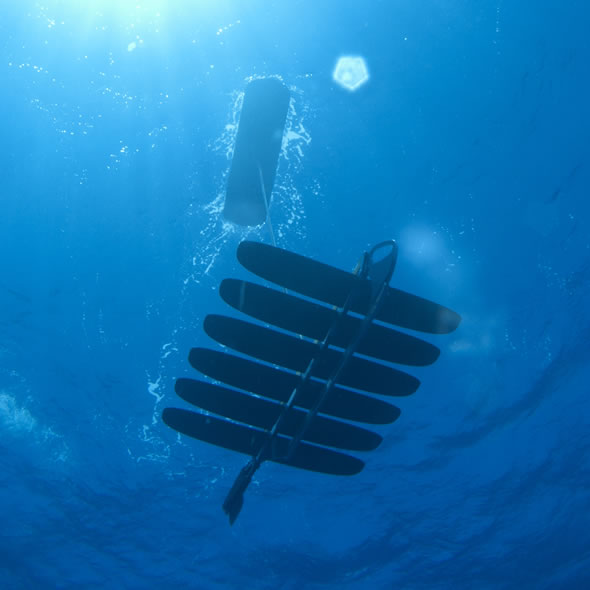
The Wave Glider comprises two separate platforms, floating and submerged, coupled by an umbilical cable. The photo shows the submerged element with keel and wave-propulsive wings. Photo: Liquid Robotics
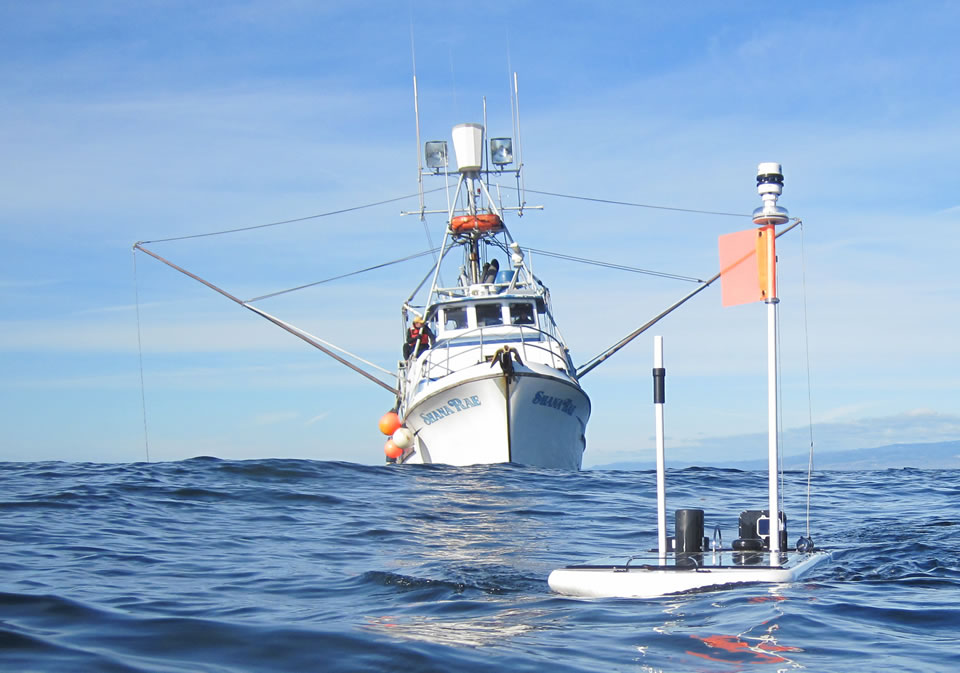
Over 130 Wave Gliders are already deployed at sea, powered by wave energy and solar power. Photo: Liquid Robotics
Liquid Robotics, developer of the Wave Glider autonomous robotic surface platform for ocean surveying is broadening its activity to offer government and military solutions by establishing the new Federal Business unit. The new unit is expected to double the number of employees over the next months, in anticipation to the growing potential and interest from Government agencies. The new unit will also oversee sales to foreign governments, commencing in 2013. The export of the Wave Glider vehicle is not restricted by International Traffic in Arms Regulations (ITAR), although specific sensors may be limited by the regulation.
Based on positive results from over 130 Wave Gliders already deployed in the oceans, and backed by $22 investment raised in 2011, Liquid Robotics is anticipating a steady growth in the demand for Wave Gliders from the commercial, scientific, military and government sectors. “We are expecting to have a thousand Wave Gliders at sea soon” Grant Palnier, Senior VP at the company’s new Federal Business Unit told Defense Update. The military is part of this vision. Naval applications could utilize constellations of Wave Glider based sensors that could deploy into an area of operation on their own power, by motherships or submarines. Future versions could also be air-dropped from aircraft for quick reaction. Typical missions could range from anti-submarine and counter-mine operations, to persistent surveillance of strategic hotspots in littoral areas.
Wave Glider autonomous sensor platforms can deploy in constellations, moving on on their own power to their assigned area of operation or delivered by motherships. Photo: Liquid Robotics
The military variant will be based on the same propulsion principle of the Wave Glider, with specific customization for the military. Liquid Robotics is designing a modular version dubbed ‘Integrator’ which will be customized for such uses. An application currently under evaluation is the replacement or augmentation of smart buoys dropped by surveillance aircraft or vessels. The new robot offers a cost effective alternative to high end sonobuoys dropped by aircraft, or survey ships that cost tens of thousands a day to operate*. Communications gateway is another likely application, with the floating robot providing a covert link to and from submerged submarines, employing the Wave Glider’s integral acoustic/satellite relay.
“The system already has very low radar reflection, and can be designed to further reduce its reflective and electromagnetic signature, or even be submerged for short periods to mask its presence” said Grant Palnier, Other applications could be customized for littoral and homeland security missions, providing persistent surveillance at sea, supporting port, coastal or offshore installation security, as well as anti-mine and anti-torpedo defense. On such missions Wave Glider robots could carry radar, RF, visual and acoustic sensing integrated with Automatic Identification Systems (AIS) to perform target detection, identification and tracking. According to Palnier, these ‘Picket Fencing’ Wave Gliders are already tasked with such missions, operating as an integral part of the San Diego harbor security.
Wave Glider is an autonomous robotic surface platform propelled by wave power and powered by solar energy. “The robot can operate on extended, continuous missions at sea lasting for years, it has demonstrated station keeping over 21 day period, maintaining position within 40 meters of the designated point at sea” said Graham Hine, VP Product management at Liquid Robotics. The robot comprises two parts interconnected through an umbilical cable. The upper floating board is the surface segment, providing connectivity, and navigation (GPS) support. The submerged glider is tethered about seven meters below the platform. Its keel structure carries a rudder and a set of wings, converting the vertical movement generated by the waves into forward thrust.
The Wave Glider comprises two separate platforms, floating and submerged, coupled by an umbilical cable. The photo shows the submerged element with keel and wave-propulsive wings. Photo: Liquid Robotics
Sensors and payloads can be mounted on both sections, below and above water. According to Hine, the system has 100 lbs of reserve buoyancy for additional payloads, which can use the 5-10 watts/day available to sensors (depending on the geographical location, season and weather conditions). The floating board is covered by two redundant solar powers recharging a battery storing 660 watts, sustaining power sustaining the vehicle for up to 10 days of continuous operations under degraded lighting conditions (such as heavy storms).
Hine said the platform can be scaled up or down to support different applications beyond the current dimensions. Wave Glider has also demonstrated it can withstand high storms or flat sea, maintaining position as planned. In fact, by autumn 2012 it is expected to deploy in the Atlantic Ocean and the Caribbean, monitoring hurricanes at sea.
The platform carries an array of surface, underwater sensors and communications systems. The upper side mounts the solar panels, weather sensor mast and camera, wave sensor, GPS receiver, Automatic Identification System (AIS) and Iridium satellite communications link. Other sensors are mounted underneath the platform, including an Acoustic Doppler Current Profiler (ADCP) sonar, acoustic modem and video camera. Sensors mounted on the submerged keel measure conductivity (water salinity), temperature and fluorescence. A towed hydrophone is also connected to the keel, picking signals remotely from the vessel to minimize parasitic noise.
The Wave Glider idea was launched in 2005 as a sensor designed to listen and record the songs of humpback wales off the Hawaiian coast. In 2009 the system was first tested in marine mammals tracking, using towed High Frequency Acoustic Recording Package (HARP). A year later, Wave Gliders were first used by the Navy Research Laboratory (NRL) monitoring environmental compliance in and around coastal test ranges along Hawaii and the California coastline. Naval evaluations have also determined the performance of the Wave Glider’s HARP were comparable to fixed bottom sensors used for similar applications. Few months later Wave Glider was recruited again, this time by oil giant BP, to monitor the recovery of ocean wildlife and around its oil rigs in the Gulf of Mexico following the disastrous oil spill there. In 2011 the company received an investment of $22 million and, as part of its expansion into strategic markets, the company joined with Schlumberger, a major technology supplier to the oil & gas market and an early investor in Liquid Robotics, to form a Joint Venture company to focus on offshore oil & gas applications it already offers BP in the Gulf of Mexico.
One of the pioneers of Wave Glider users is the National Oceanographic and Atmospheric Administration (NOAA) Pacific Marine Environmental Lab (PMEL). The lab became the first government customer for the new robot, recognizing the cost efficiency derived by the robot, as an alternative to survey ships deploying buoys. For its oceanographic survey missions PMEL was required to spend up to $40,000 per day for research vessels, the new robot offered an attractive alternative for an investment of less than $250,000 per unit, for practically an unlimited operational use, independent on season or sea condition. Further deployments are expected soon in Europe and Australia, as part of the company’s international expansion. Four robots are currently crossing the Pacific Ocean on a year-long voyage from San Francisco to Japan. (http://liquidr.com/pacx/).
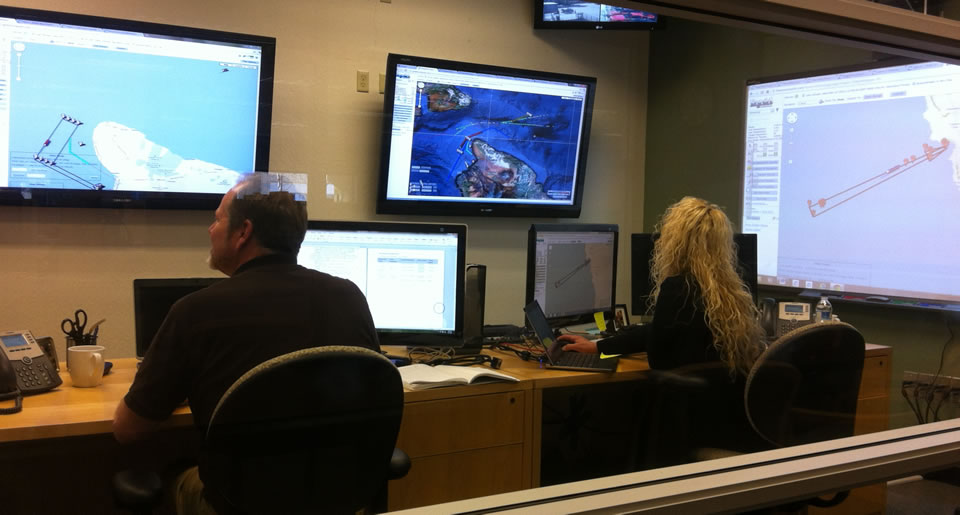
Hundreds of Wave Gliders are operated autonomously at sea, with sensors and systems controlled via satellite link from shore based command and control stations such as this one, monitoring wave gliders at sea. Photo: Liquid Robotics
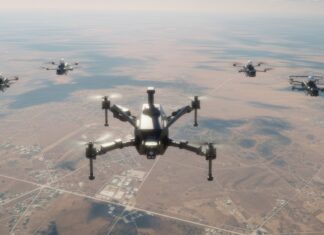
Lockheed Martin Skunk Works® and XTEND have achieved a major milestone in JADC2 by integrating the XOS operating system with the MDCX™ autonomy platform. This technical breakthrough enables a single operator to simultaneously command multiple drone classes, eliminating the friction of mission handoffs. From "marsupial" drone deployments to operating in GPS-denied environments, explore how this collaboration is abbreviating the data-to-decision timeline and redefining autonomous mission execution.
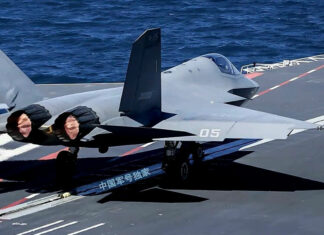
As traditional defense primes face mounting competition from agile “neoprimes” such as Anduril, Palantir and Helsing, the balance of innovation is shifting toward software-defined warfare and scalable, dual-use technologies, while global industry consolidation—marked by Boeing’s integration of Spirit AeroSystems and other strategic mergers—signals an intensified race to secure control over the defense technology value chain. Our Defense-Tech weekly report highlights these trends.
In early October 2025, a coordinated wave of unmanned aerial system (UAS) incursions—widely attributed to Russia—targeted critical infrastructure across at least ten European nations. The unprecedented campaign exposed the fragility of Europe’s air defenses...
Executive Summary
The past week (September 18-25, 2025) represents an inflection point where strategic defense concepts have transitioned from doctrine to tangible reality. An analysis of global events reveals four primary, interconnected trends shaping an...
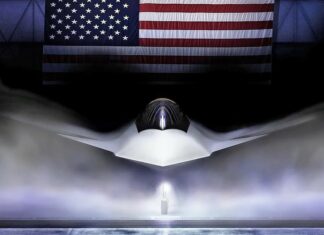
At the 2025 Air, Space & Cyber Conference, U.S. Air Force and Space Force leaders unveiled major updates on next-generation fighters, bombers, unmanned systems, and space initiatives, highlighting both rapid innovation and critical readiness challenges as the services race to outpace global competitors. A short version is available here, with a more detailed version for subscribers.
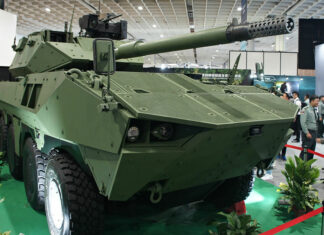
The Taipei Aerospace & Defense Technology Exhibition (TADTE) 2025 crystallized around four dominant strategic themes that collectively illustrate Taiwan's comprehensive approach to defense modernization amid escalating regional tensions. Based on a detailed report by Pleronix (available upon request). Includes a Podcast discussion on TADTE 2025's highlighting Taiwan's four strategic themes beyond the post's coverage.
Israel’s Iron Beam 450 high-power laser system has completed final testing, marking a major leap in air defense. Developed by Rafael, it offers precise, cost-effective interception of rockets, UAVs, and mortars, and is set for IDF deployment by 2025.