
Monday, December 29, 2025
More
    Home Blog Page 223

    Supacat’s Introduces a Military Version of the Wildcat Race Car

    Supacat have added a new, lightweight, super agile military variant of the Rally Raid proven Wildcat into its military, special purpose vehicle family. The new Wildcat offers a high performance, off road vehicle for special forces, border patrol, reconnaissance, rapid intervention and strike roles.

    “Compared to other ‘Modified Off The Shelf’ vehicles, the Wildcat is on a different level in terms of performance and durability” said Jamie Clarke, Sales and Marketing Manager, Supacat. ”It has the race results to prove it can perform in the desert and other environments, it is light and agile yet big enough to carry the sub-systems required on operations. As military vehicles have become heavier and more expensive due to increased protection requirements, we perceive that there is a gap in the market for a platform like the Wildcat.
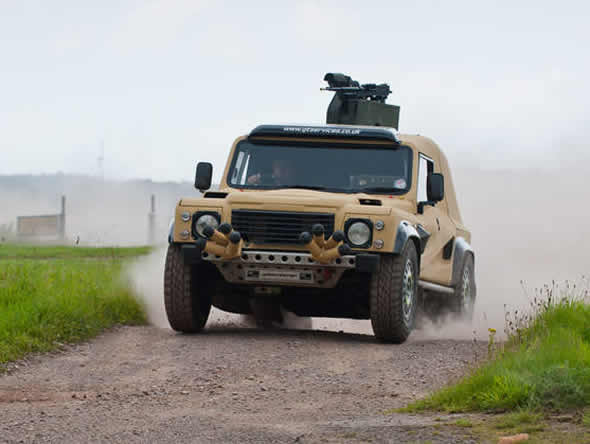
    Supacat has transformed the Wildcat Rally Racer into a special purpose military vehicle optimized for special operations and quick reaction operations. The prototype displayed by the company also carried the new Thales / Kongsberg Super Light remotely operated weapon station. Photo: Supacatvehicle

    According to Supacat, the new vehicle is filling a significant gap that currently exists between lightweight and less expensive high mobility platforms such as quad bikes and the heavier, more specialist and well renowned Jackal. The company teamed with Wildcat Design Authority, QT Services, the developer of the vehicle to transform the race car into an affordable, off-road military variant of the Wildcat 500 DKR which was proved highly effective in off-road races such as the Paris-Dakar race. Beyond the prototype phase, Supacat will be responsible for militarizing the vehicle, including systems integration and volume production. As other Supacat specialized vehicles such as the Jackal and SPV400, the Wildcat will be offered with lightweight armor protection, weapons and communications systems, to meet specific requirements.
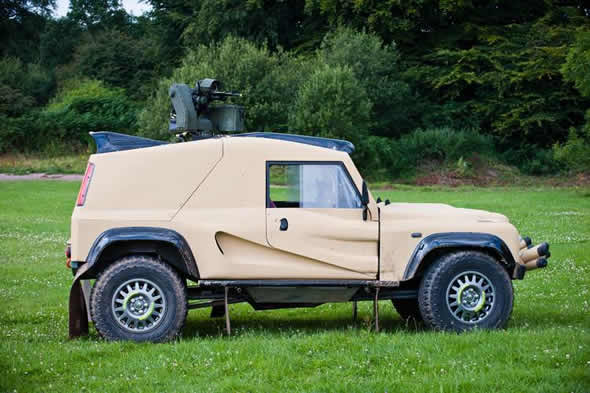
    The military Wildcat prototype was displayed armed with Thales supplied version of the Kongsberg Super Light remotely operated weapon station, fitted with 600 rounds in the ready round bin. The weapon is controlled by a joystick or 'thumb controller' with the target viewed by daylight or night camera on the display inside the vehicle. Photo: Supacat

    According to Clarke, Supacat has a history of successfully using the motorsport industry to enhance its vehicles, for example, the Jackal has over 14 motorsport companies in its supply chain. However, the Wildcat represents a new level of integration of motorsport solutions for military use as it is the first time an entire platform is adapted into a military vehicle.

    The Wildcat has a tubular space-frame chassis and state of the art suspension with an outstanding reputation for rugged reliability. With a Gross Vehicle Weight of 2580kg and size (3800mm x 1755mm) it is easily air portable. Maximum speed is 106 mph (170km/h) and range is 2000km. The Wildcat is available with specially developed air conditioning to greatly reduce crew fatigue. It also shares some parts with Land Rover so the logistic footprint is reduced for any military customer who already has Land Rovers in service. Supacat will be displaying a militarized variant of Wildcat at DSEi in September.
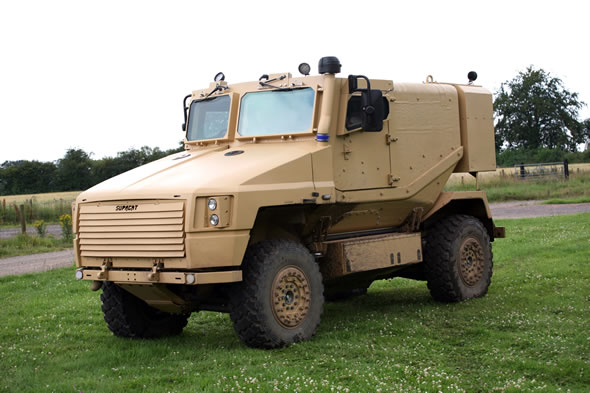
    Supacat Matures a Production Version of SPV400 to Addres International Demand for Light Protected Vehicles

    “The new production standard SPV400 is a significantly improved vehicle from the early prototypes". Photo: Supacat

    Supacat is unveiling the production standard Supacat Protected Vehicle 400 (SPV400) at the DSEi 2011 exhibition in London. According to Supacat, the production standard level attributes to the vehicle’s level of reliability, improved ride and handling performance, achieved through the past 12 months development program.

    “The new production standard SPV400 is a significantly improved vehicle from the early prototypes". Photo: Supacat
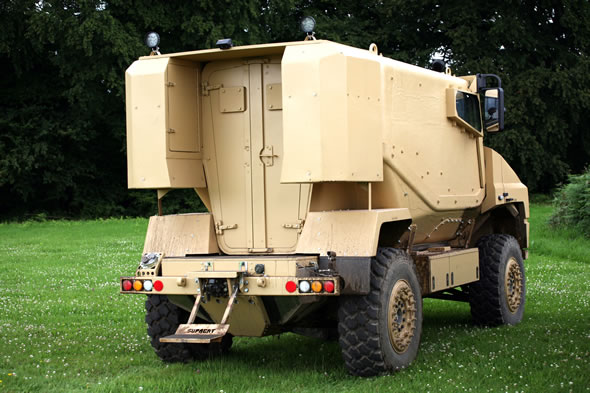
    A rear view of the production version of the SPV400. Photo: Supacat

    The first prototypes of the SPV400 were used for the evaluation and assessment of the new vehicle for the UK MoD’s MoD’s Light Protected Patrol Vehicle (LPPV) requirement. The vehicle was one of the two finalists for this program, eventually won by Force Protection Europe’s Ocelot. Despite the LPPV setback Supacat continued to develop the SPV400 light protected patrol vehicle to meet international demand for this new class of vehicle in military and non-military markets. “The new production standard SPV400 is a significantly improved vehicle from the early prototypes. We have achieved new levels of reliability, handling and overall usability in the automotive design that surpass those required by LPPV”, said Nick Ames, Managing Director, Supacat. “This is a vastly different vehicle from the one we had twelve months ago and we’re proud of the progress we’ve made”.

    Through these tests the vehicles were subjected to over 10,000 km of reliability testing with over 70% conducted off-road, more than doubling the total trials distances undertaken during the LPPV assessment. The 7th production vehicle displayed here also features improved maintainability, a revised driver interface and new front end styling.

    Extended Zephyr Multi-Role Vehicle Debuts at DSEi 2011

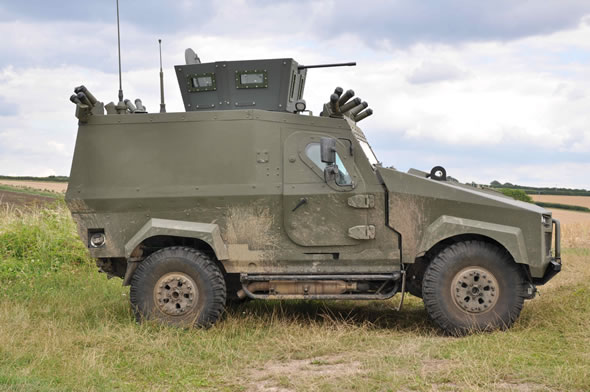
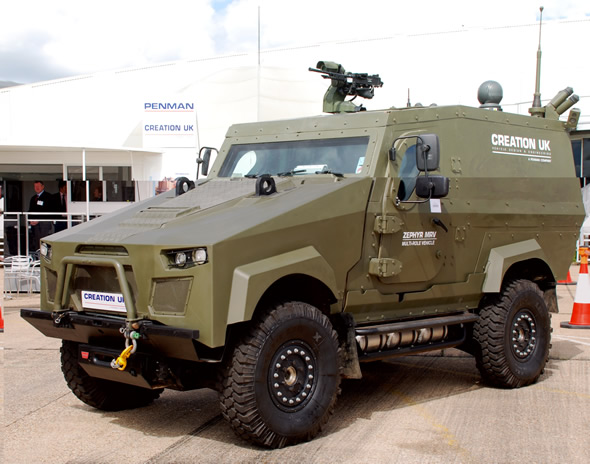
    Zephyr Multi-Role Vehicle (MRV) from Creation UK. The platform has been configured to provide a wide range of missions, both combat, combat support, logistics etc. Photo: Creation UK

    Zephyr protected vehicle designed by Creation is displayed at DSEi 2011 in a new configuration, reflecting the latest upgrade variant. The vehicle is now available in two- and three-axle configurations. Zephyr’s protection architecture features a composite ‘occupant survival cell’ employing a V-form belly plate and an integral blast mitigation system. The vehicle offers basic protection specified for minimum STANAG 4569 level 2 mine protection and level 2-3 KE protection. Fragment protection is taken to level 4.  ‘LifeSeat One’ blast protecting seats were also installed, isolating the passenger from extreme body shock and skeletal injury potential resulting from IED and mine blasts.

    Zephyr Multi-Role Vehicle (MRV) from Creation UK. The platform has been configured to provide a wide range of missions, both combat, combat support, logistics etc. Photo: Creation UK

    Zephyr design concept envisaged a fully functional rolling Mine Resistant Underframe (MRU), configured with protected, soft-skin or demountable top cabs, citadels or other structures. Production ready units have sofar focused around protected patrol vehicle requirements, whilst concurrent design and pre-production studies have addressed other applications including specialist vehicles, pick-up utility vehicles, light logistics cargo carriers, and demountable shelters. Combat support configurations also include troop carriers, command and control, weapons mounted installation kit (WMIK), reconnaissance and battlefield ambulance. The vehicle has seating layouts accommodating from two to twelve occupants, with more space allocated mission systems and weapons fit.

    As part of the recent upgrade Zephyr was equipped with extreme-duty nitrogen-based suspension, replacing airbag systems which were considered more vulnerable in combat. The MRU can accommodate a range of powertrain options, dependent on end user preference and specification. The power train elements including the cooling pack, engine, automatic transmission and transfer box are mounted on a quick change ‘cassette’ offering rapid access and removal. This permits main powertrain components to be removed for major repair of maintenance in about one hour. The high pressure sealed nitrogen strut unit features an integral damper and internal bump stop offering an intrinsically safe – and retained mobility failure mode. Additional features include fully integrated health and usage monitoring systems (HUMS) and the capability to support exportable power requirements. The new system, carries no additional weight penalty.The vehicle is sized to enable air transportability within C130 and above – or underslung below CH47. Depending on configuration and protection level, the three-axle variant is designed to meet and exceed improved medium mobility (IMM) criteria with a 4 tonne payload.

    Zephyr Multi-Role Vehicle is offered in 4x4 and 6x6 armored, blast protected configurations. Photo: Creation UK

    Universal Advanced Systems and Creation Unveil a new Blast Protecting Seat at DSEi 2011

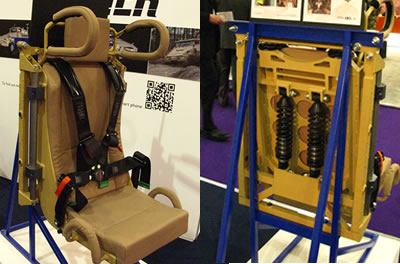
    The new LifeSeat One from Universal Advanced Systems employs advanced, dynamic energy absorbing technologies (part of which is visible in the back seats' twin coil and shock absorbing mechanism providing a stroke length of up to 90 mm. The seat is designed to reduce blast loads of over 100g down to 20g. Photo: Tamir Eshel, Defense-Update

    Universal Advanced Systems and Creation is displaying the ‘LifeSeat One’ blast protecting seats at DSEi 2011. The new seats are isolate the passenger from extreme body shock and skeletal injury potential resulting from IED and mine blasts. According to the developer, the latest iteration of the seat shown at DSEi, installed in the two-axle Zephyr MRV have performed exceptionally well in trials. The unit is now entering volume production and has been downselected for a number of major UK and European programs. The Life Seat One is already fitted to Universal’s Ranger 002 and 003 armor protected vehicles.

    The new LifeSeat One from Universal Advanced Systems employs advanced, dynamic energy absorbing technologies (part of which is visible in the back seats' twin coil and shock absorbing mechanism providing a stroke length of up to 90 mm. The seat is designed to reduce blast loads of over 100g down to 20g. Photo: Tamir Eshel, Defense-Update

    The seat bucket has hydraulically damped and upwardly limited vertical free movement on its mounting frame. The frame – not the seat bucket itself – is mounted to the side of the vehicle and there is no fastening or rigid fixture between the floor of the vehicle and the underside of the seat. In the event of a blast therefore, the seat will rise in a controlled ascent, mitigating any severe shock being transmitted to the spine through the seat structure.

    At the heart of the design are two captive vertical tubes to which the seat bucket is attached by linear bearings. Two high performance telescopic hydraulic dampers with concentric coil springs and a progressive elastomer buffer are installed between the mounting frame and the lower section of the seat bucket. The seat bucket itself is fabricated in two parts, to allow a soldier in full battle dress to sit firmly with a 4-point Securon harness for restraint.

    Tests with a fully instrumented dummy and a 95 percentile weighted mannequin have demonstrated that body travel is strictly controlled and progressive – significantly reducing skeletal shock and potential organ damage.

    In 2010, both the blast-mitigating seat package and the two-axle Zephyr variant were utilized for a range of specialist scientific and fully instrumented blast tests. The work was part of two major multi-stakeholder collaborative programs for the UK MoD – Blast Event Vehicle Integrity System (BEVIS) and Military Accident Data Recorder (MADR). The programs were led by leading motorsport technology group, Cosworth, with the involvement of a number of specialist scientific and research organizations, as well as Creation.

    The tests, verified to undisclosed international standards, have proved not only the blast mitigating capability of the Zephyr vehicle and the special seat design – the occupant survived injury free – but have led to the successful development of a groundbreaking and advanced engineering data, vehicle integrity and incident analysis program, which will significantly impact on future design and survivability of protected vehicle platforms.

    Advanced Recovery Systems Introduced to Support New Light Protected Patrol Vehicles

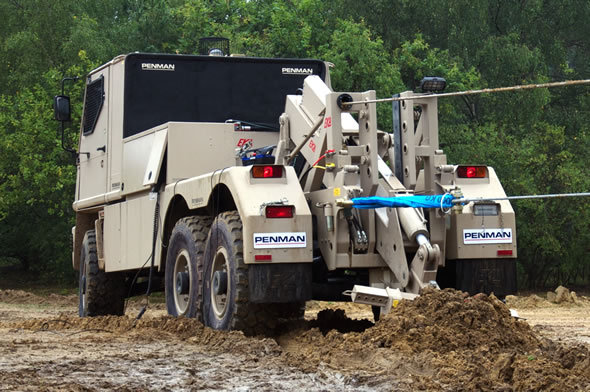
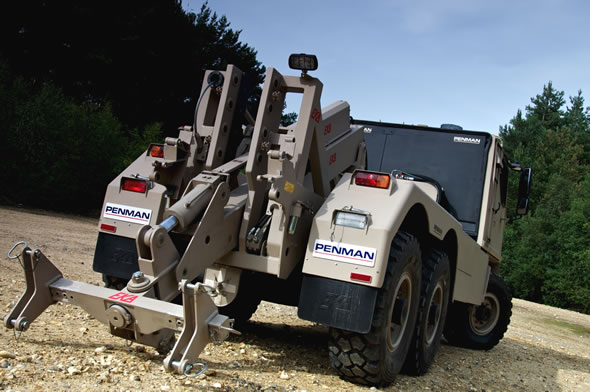
    The first LRV vehicle to be built is based on the DURO 3 6x6 re-roled logistics chassis from General Dynamics Europe, forming a compact, 2.16 metre width LRV. Photo: Penman

    The new family of light protected patrol vehicles soon to be inducted in service will require new support systems, particularly recovery systems enhancing the mobility and self recovery of such vehicles, and recovery vehicles capable of moving and operating in confined urban spaces where the LPPV will typically operate. Two british companies addressing these requirements debut such systems at DSEi 2011.

    The Lightweight Recovery Vehicle (LRV) making its international market debut at DSEi 2011 was developed by Penman-EKA, a newly formed joint venture between recovery vehicle specialist EKA, and Penman.

    The EKA recovery equipment is integrated onto a specialist ‘skid’ built by Penman, which closely matches the operational requirements for both recovery and automotive performance. In operation, the new unit is effectively similar to a downscaled version of the larger SuperCompact equipment. Photo: Penman

    The new vehicle was designed as a powerful yet manoeuvrable recovery platform designed to support the new class of protected lightweight vehicles. These small, protected vehicles may require rescue from narrow and confined locations such as village streets – where heavier, full-width recovery vehicles cannot penetrate. The first LRV vehicle to be built is based on the DURO 3 6×6 re-roled logistics chassis from General Dynamics Europe, forming a compact, 2.16 metre width LRV. It incorporates key elements from the EKA SuperCompact system incorporated with the fleet of Support Vehicle (Recovery), currently in service with the UK MoD, thereby reducing and simplifying logistics support. According to the developers, the concept has been designed for application and integration with other suitable vehicle platforms.

    The EKA recovery equipment is integrated onto a specialist ‘skid’ built by Penman, which closely matches the operational requirements for both recovery and automotive performance. In operation, the new unit is effectively similar to a downscaled version of the larger SuperCompact equipment.

    The recovery boom assembly comprises a telescopic rectangular section, the inner box of which carries the recovery bar assembly. The boom provides a maximum lift rating of 6 tonnes and a maximum casualty vehicle weight capability of 15 tonnes. An 8 tonne constant-pull capstan winch is fitted and, in order to anchor the vehicle when winching to the rear, two 8 tonne rated anchor spades are provided to enable two-part pulls to be carried out.

    Safe stand-off remote operation of the recovery system is controlled from a chest pack with a 10 metre umbilical, connected to a frame mounted control box on the vehicle. The chest pack features graduable paddle joysticks (suitable for gloved operation) for boom in/out, boom up/down and recovery bar levelling.

    Apart from the specialist ‘skid’ onto which the recovery system is integrated, Penman has upgraded and modified the vehicle platform to meet anticipated operational requirements. An additional cab seat is provided within the fully armoured tilt cab – as are riot grilles and a cab escape facility. Up-rated heavy duty springs, shock absorbers and off-road tyres have been added to further enhance the vehicle’s all-terrain performance. Other features include full fitment for current in-service ECM and EECM, including power provision and cooling.

    The first LRV vehicle to be built is based on the DURO 3 6x6 re-roled logistics chassis from General Dynamics Europe, forming a compact, 2.16 metre width LRV. Photo: Penman

    Multimount winch system offers self-recovery solution for new or legacy fleet

    The Oldbury Multimount winch system includes front and rear winch carriers, supporting flexible installations. Photo: Oldbury UK

    Enhancing the mobility of military vehicles can also utilise self-recovery capability, employing powered winch systems. A typical system developed by Oldbury UK uses a patented Multimount system developed for the next generation of protected and soft-skin vehicles. The system comprises front and rear winch ‘carriers’, integrated onto the platform, utilising the vehicle’s existing lifting / recovery eyes and standard towing pintle and jaw. The winch itself can be mounted quickly and simply fitted or released, without using special tools. The system accommodates commonly available winches. The use of a single winch covering both front and rear self-recovery requirements reduces both payload and on-board inventory. The unit can be lifted and installed by two persons.

    REX, a Robotic Mule from IAI

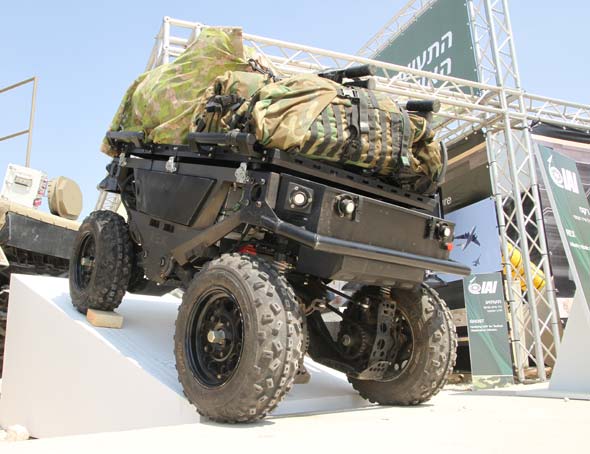
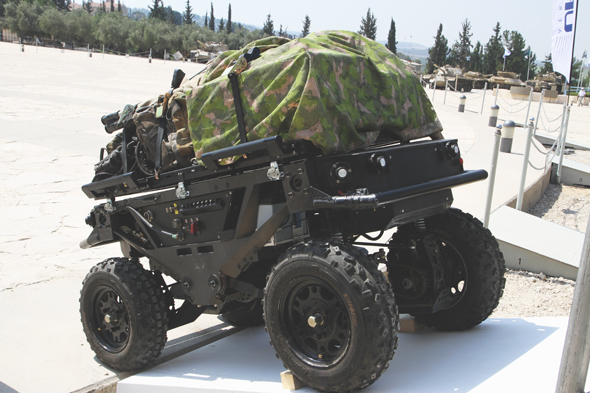
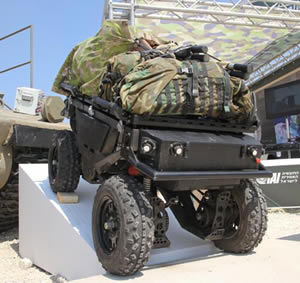
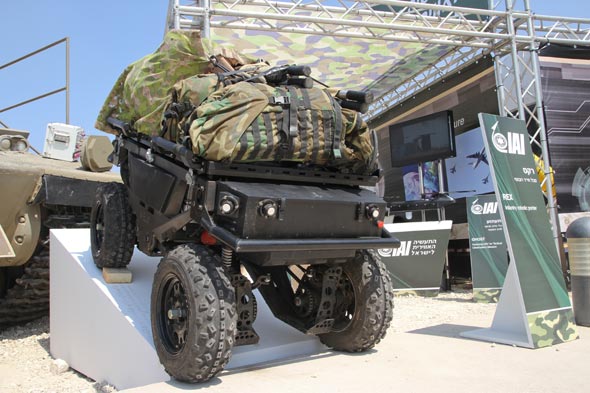
    IAI is introducing a small robotic platform called REX, designed to support infantry teams in dismounted operations. The robotic platform employs a simplified, specially developed method to recognize the path of its leading soldier, following the team’s path with high accuracy using ‘virtual bread crumbs’ the leading soldier leaves behind him. REX’s dimensions and shape were determined to enable the robot efficient integration with common infantry tasks, such as entry into a building (narrow enough to move through doors) or jump from helicopters (the REX fits nicely inside a Blackhawk). Currently in final integration phases at IAI’s robotics department, part of the LAHAV division, REX has already been presented to potential customers and have raised considerable interest. Offloaded from its cargo, REX can be quickly reconfigured to evacuate a wounded soldier on a stretcher. The vehicle’s flatbed already has the attachments to secure the stretcher in place for such mission.
    REX, a Robotic K9 from IAI is designed to offload the warfighter from excessive loads carried on dismounted missions. It is trained to follow simple commands, like a trained dog and follow the team's advanced tracking 'virtual bread crumbs' left behind by the advancing force. Photo: Noam Eshel
    SInce the first introduction of REX in Korea, in 2009 the vehicle evolved, and shrinked in size to enable operations in enclosed spaces and urban terrain. It is narrow enough to pass through doors and fits comfortably inside a Blackhawk helicopter on air mobile operations, flying along with the squad. Photo: Noam Eshel, Defense Update

    According to program manager Uri Paz-Meidan, the small and compact robot was designed to support dismounted infantrymen by carrying various combat loads and supplies, offloading the warfighter from excess, non-combat loads currently carried on a mission. Such load generally includes food and water for extended mission, additional ammunition and many spare batteries of various types, to last the entire mission, as well as relatively heavy mission equipment such as man portable rockets and missiles, observation systems etc. In fact, the small robot is designed to support the modern infantry system, which adds much functionality to the warfighter’s mission but also increases the load weight. To sustain long operations REX will also be configured with battery storage bay and on-board charger feeding on the vehicle’s generated power to maintain a supply of fully charged batteries, reducing man-portable and consumption of spare batteries.

    REX is designed as an all terrain 4×4 vehicle powered by a piston engine. The platform weighing about 150 kg can carry 250 kg load, enough to support an infantry squad on a 72 our mission. REX carries enough fuel to move over 100 km. Part of its load can include extra fuel to further extend operational endurance.

    Designed as an affordable robotic platform, REX is positioned to be fielded as an organic asset supporting the infantry squad. Photo: Noam Eshel, defense update

    The compact robot follows simple commands similar to those used in dog training. The operator can instruct the robot to stay or move behind the force at a certain distance, or close in. He can also transfer control to another team member at a press of a button. The vehicle uses ultrasonic sensors to move forward, keeping clearing off obstacles along its way. Its movement path is determined by electronic ‘breadcrumbs’ automatically placed by the advancing infantry along the way. Multiple sensors are used to determine the vehicle’s position relative to the supported team, both in open area, urban terrain or in GPS denied conditions. REX was designed as a simple and reliable vehicle, responding to five basic commands. The robot is instructed to keep a short or long distance from the team it supports, ordered to ‘stay’ in its place or dash forward to link with the force Alternatively, in situations where a vehicle should move on a different path, it can be driven by tele-operated by remote control unit.

    IAI unveiled the REX concept two years ago in 2009, introducing a larger model, configured as a 6×6 platform. Since then the concept evolved into the 4×4 version unveiled at the Latrun Land Warfare conference in 2011. The international debut is planned next month, at the AUSA exhibition in Washington DC.

    Latrun 2011 Conference – Photo Review

    Israel’s primary land conference and exhibition opened today at Latrun, featuring the country’s leading defense industries showing a wide range of weapon systems, command and control and logistics support hardware.

    The theme of this year’s event is War’s Changing Environment, with day one focusing on the logistics aspect of warfare and preparedness. Addressing these chalenges, Maj. General Dan Biton, Head of Israel Defense Forces (IDF) logistics branch outlined the changes implemented by the IDF following the 2006 war, which revealed major flaws in the IDF preparedness and logistics support capabilities. MG Biton referred to the challenges Israel’s military is facing, which are inherently different from those faced by armies conducting expeditionary operations far beyond their borders. Since Israel relies on domestic commercial resources to supply its armed forces, in routine and at war, the primary responsibility of the IDF logistics is to supply life sustaining logistics (food, water, electricity, fuels) to the combat units. Stocking ammunition and spare parts is a major responsibility of the military. Maintaining the necessary stocks to sustain combat operations is a major aspect of the logistics operation, and a matter of concern for the corps, addressing the growing ballistic threat of missiles and rockets capable of attacking targets anywhere in Israel with considerable precision.

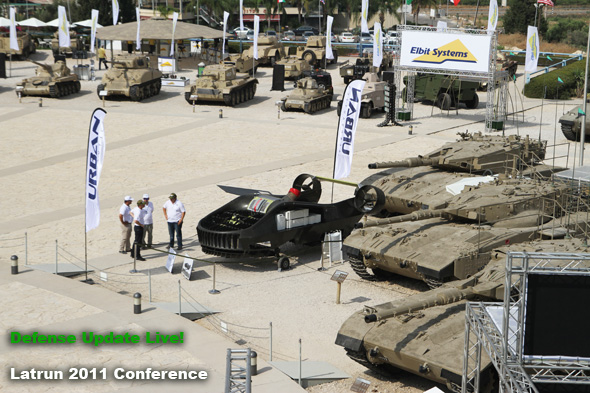
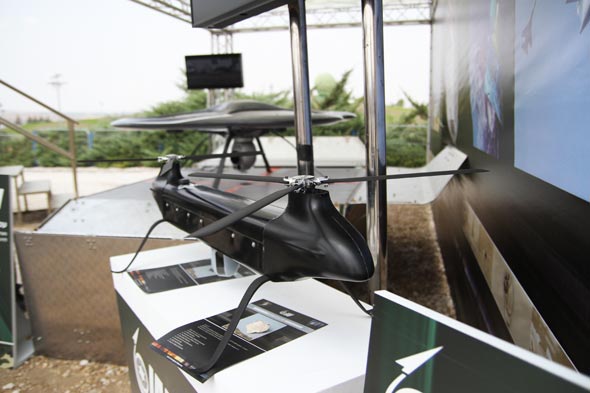
    Urban Aeronautics "Air Mule" unmanned aerial vehicle, displayed at the Latrun outdoor display area, at the Israel Armored Corps Memorial Site and Museum. Photo: Noam Eshel, Defense-Update

    According to Biton, the IDF Logistics Corps has already taken steps to protect these critical stocks, distributing them through many logistics sites around the country, further protecting vulnerable stocks placed at underground caches. A new organizational formation implemented since 2009 also improved the capability of the division to support combat units. During wartime, battalions will continue to pull supplies from higher echelons, as they do in peacetime, but the logistics array managed in peacetime at the GHQ will be enhanced with the deployment of divisional assets, providing medical, repair and maintenance services in addition to pushing supplies to support the division’s combat units. According to Biton, the re-introduction of divisional logistics units, deactivated in 2002, will enable the division to maintain continuous combat fighting capability over long period, relying on its own assets, backed by GHQ support.

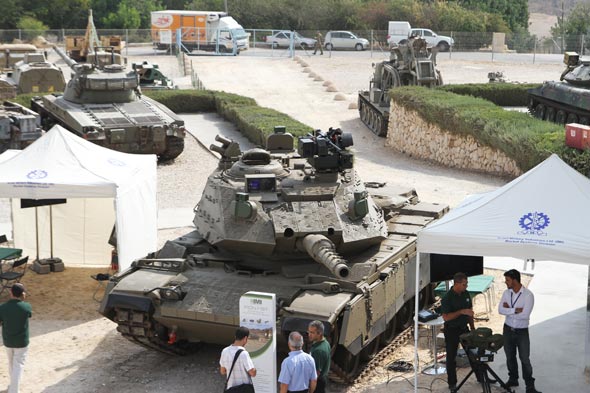
    An Upgraded Magach Tank, equipped with IMI's Iron Fist Active Defense System (showing newly developed RPS-10 radar and EO threat detection system). Another new enhancement is the WAVE Remote Controlled Weapon System, both developed by IMI. Photo: Noam Eshel, Defense-Update


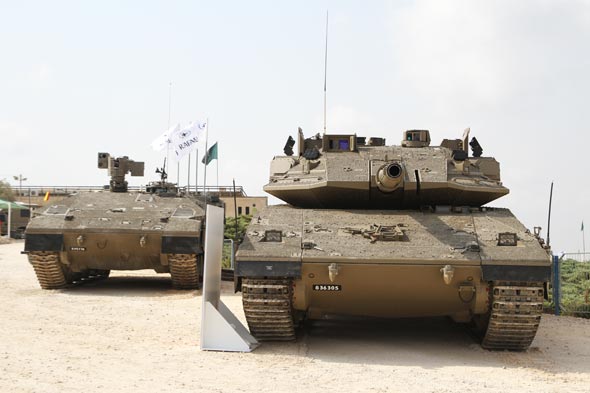
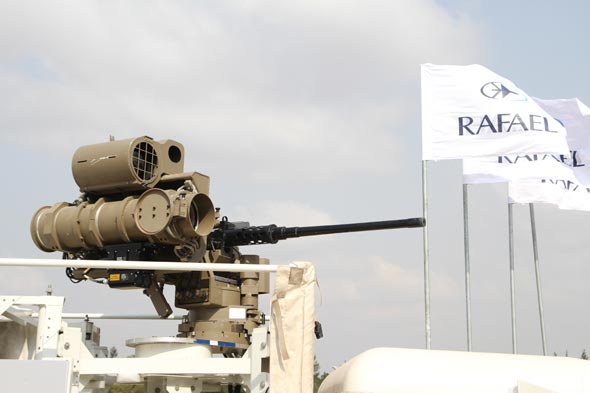
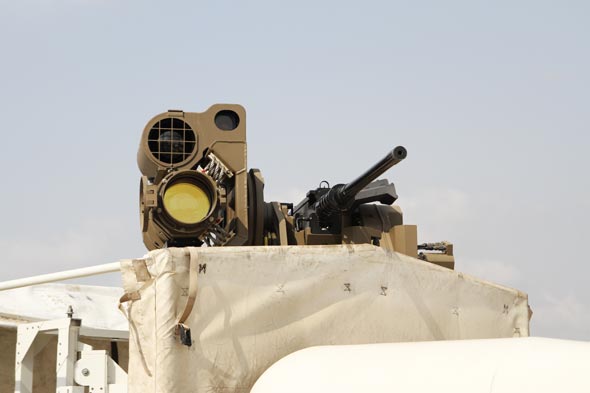
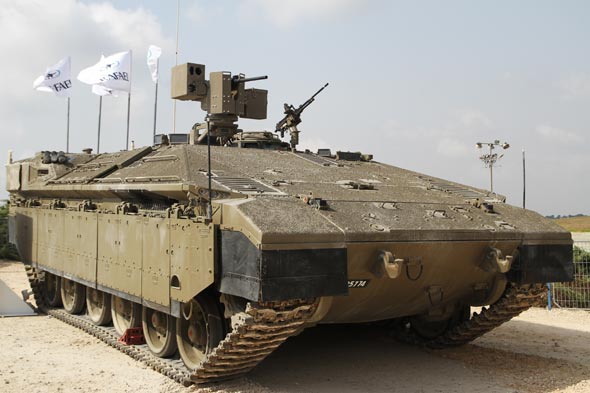
    The Merkava Mk.4, equipped with Trophy Active Protection System and The Namer AFV equipped with a new, armor protected version of Rafael's Samson Remote Control Weapon Station (RCWS) modelled specifically for the Namer. Photo: Noam Eshel, Defense-Update
     

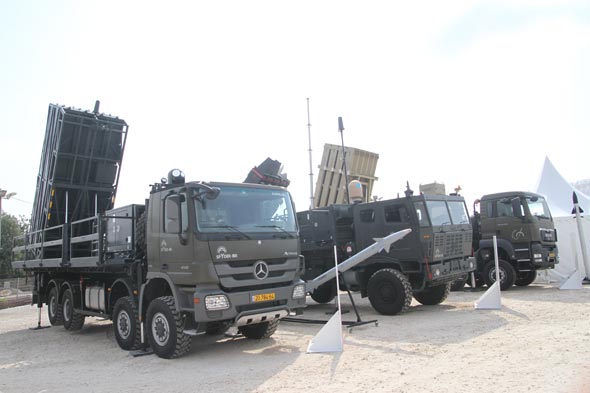
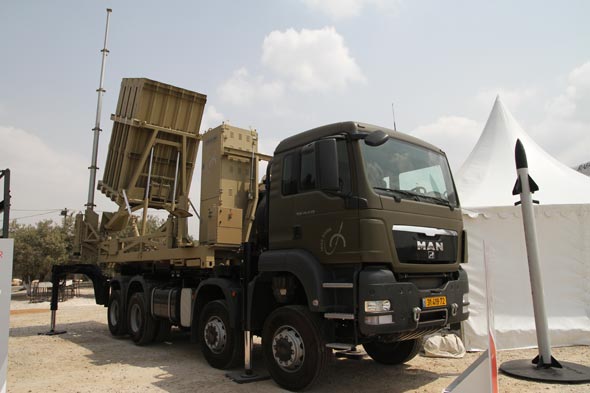
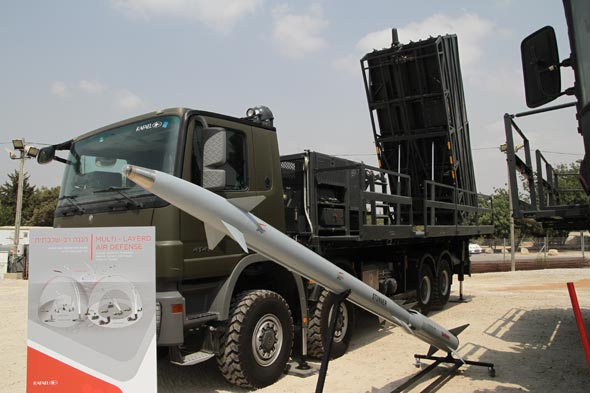
    A line of Air Defense Systems from Rafael. From left to right: Spider MR, Stunner missile interceptor, Spider SR and Iron Dome. Photo: Noam Eshel, Defense-Update

     

    IAI displayed for the first time the new EL-I/3302 Intelligence, Surveillance and Reconnaissance Vehicle (ISRV) also known as Granit. The vehicle packs an ISR kit consisting of EL/M-2112 V5 medium range persistent ground surveillance radar and POP300 EO payload fitted with laser designation capability. The Granit package is mounted on a Sandcat vehicle from Plasan. Photo: Noam Eshel, Defense-Update


    Rafael unveiled the Mini THOR, laser based counter-IED system mounted on a Landrover Defender light vehicle. The system employs a high power laser that 'cooks' the suspected explosive charge, causing it to deflagrate, burning the energetic material without causing explosion. An AFV mounted with Thor system have been used by the Israeli army and foreign military for several years. The laser C-IED system offers rapid engagement of multiple IEDs, enabling sappers rapid deactivation of 'IED arenas'. In the current light version the system will also be used in support of homeland security, peacekeeping operations (such as demining). Another application of the Mini Thor is rapid EOD cleaning of operational areas in airfield under attack. Photo: Noam Eshel, Defense-Update


    Another view of the Mini Thor system. Photo: Noam Eshel, Defense-Update


    The Namer AFV. Photo: Noam Eshel, Defense-Update


    The latest mobile version of the Rafael Iron Dome. Photo: Noam Eshel, Defense-Update


    The Stunner Missile alongside the Spyder MR mobile launcher, both representing current and future generations of Rafael's air defense systems . Photo: Noam Eshel, Defense-Update


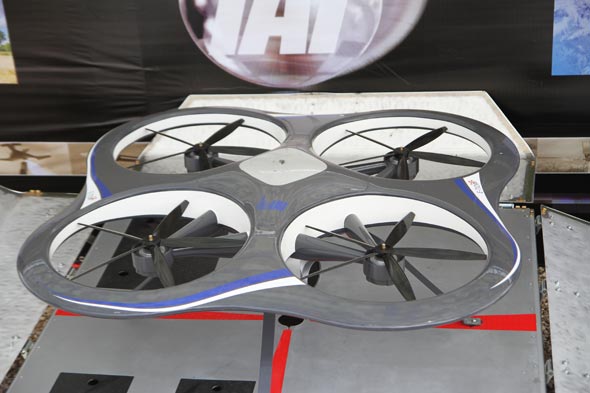
    IAI's latest micro UAV - GHOST. Photo: Noam Eshel, Defense-Update


    E-TOP from IAI, provides tethered, persistent surveillance for stationary, mobile and maritime surface units. Photo: Noam Eshel, Defense-Update


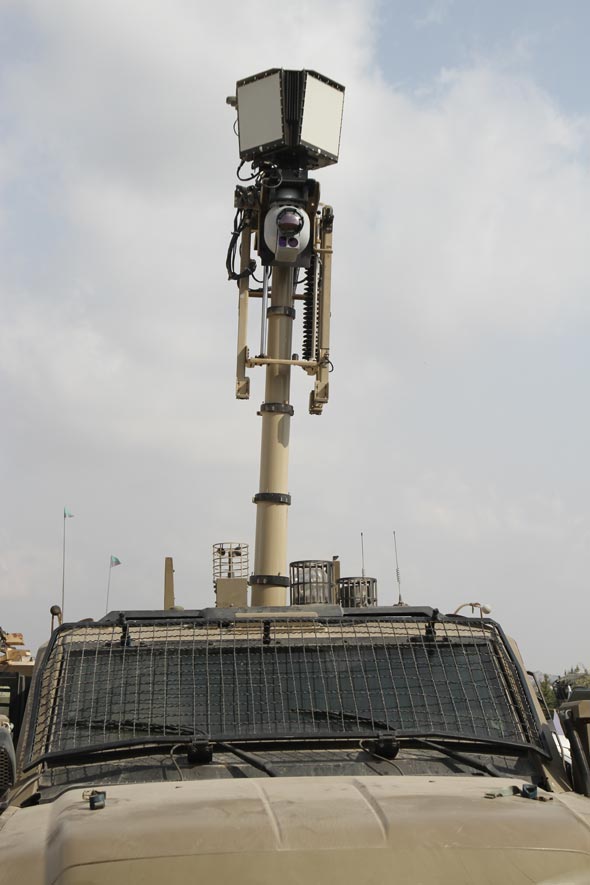
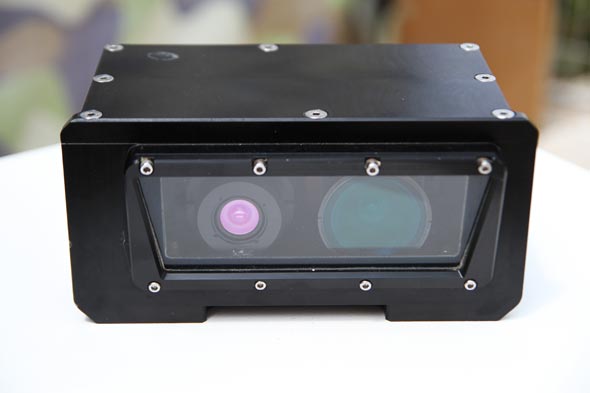
    The new Othello EO hostile fire location system employs a bi-spectral sensor automatically detecting hostile fire sources (such as gunshot, rocket or missile launch). Othello comes as a stand-alone system, integrated with processing unit and communications. Four units are positioned around the vehicle covering 360 degrees. The system can be used to triggers other systems, such as the Windbreaker radar sensor (used with the Trophy APS), as well as remotely controlled weapon stations, automatically engaging the hostile target. Photo: Noam Eshel, Defense-Update


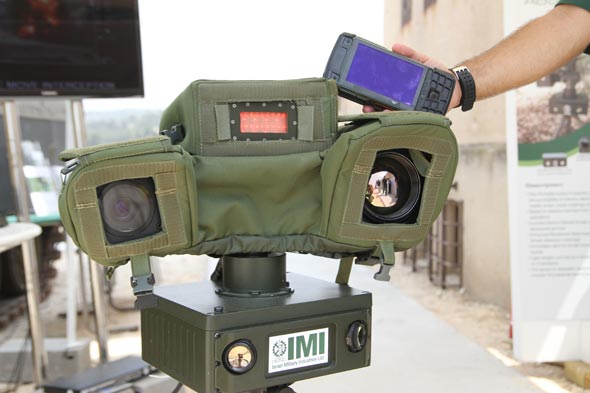
    The new version of IMI's Shock Absorber is combined with day and night (CCD/IR) observation system, offering dismounted units the means for observation and self protection. The system employs observation systems provided by the customer, a tripod, pan-tilt-zoom (PTZ) assembly, processing and control system controlling the combined system. Specific 'Shock Absorber' elements included in the system comprise two staring thermal imagers and an EO countermeasure device mounted on top. The EO sensors are staring continuously over an 180 arc, triggering an alert when a missile/RPG launch is detected, enabling the soldiers to take cover, while engaging the threat by effective counterfire or automatically employing the countermeasure device when appropriate (by the type of missile engaged). Photo: Noam Eshel, Defense-Update


    The REX autonomous operated vehicle developed by IAI, as a future load carrier supporting dismounted forces. Photo: Noam Eshel, Defense-Update

    Israeli, German UAVs Network to Form an Integrated Reconnaissance and Strike Asset

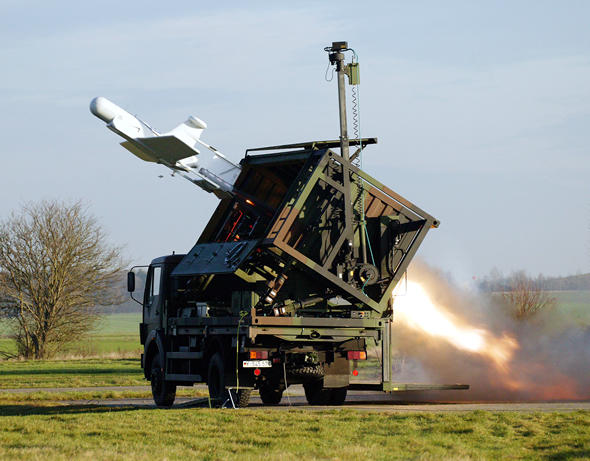
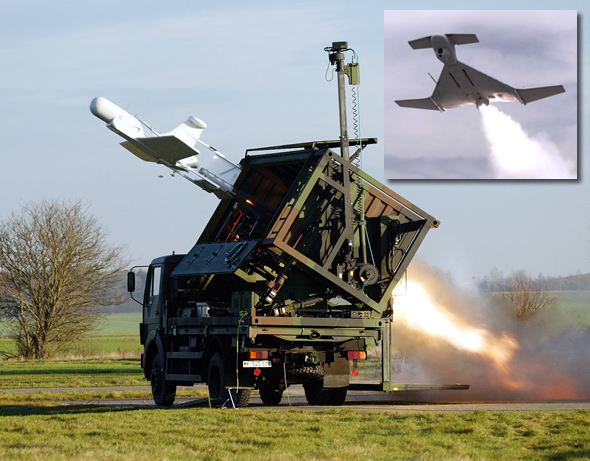
    KZO is a ground launched, tactical UAV equipped with high-performance sensors used for target acquisition. Harop, a loitering attack drone developed by IAI offers the actionable segment of the WABEP system, through precision engagement. Photo: Rheinmetall defence

    A combined, unmanned reconnaissance and attack system developed under a collaborative program between Germany and israel has recently passed an important milestone, demonstrating the integration of two unmanned aerial systems – the Rheinmetall Defense KZO aerial reconnaissance drone and IAI’s loitering weapon – the Harop. The highlight of the test was to demonstrate the WABEP ‘system of systems’ approach – the interoperability of two unmanned aerial systems as a combined reconnaissance and strike asset, slated to become the Bundeswehr’s next unmanned air vehicle system.

    KZO is a ground launched, tactical UAV equipped with high-performance sensors used for target acquisition. Harop, a loitering attack drone developed by IAI offers the actionable segment of the WABEP system, through precision engagement. Photo: Rheinmetall Defence

    This milestone, contractor trials mandated by the German ministry of defense as a critical phase of the program, demonstrated the transfer of tactical data, target information and sensor imagery between the two ground control stations of the two systems. In addition, live video was transferred from the Harop, employing data relay installed on board the KZO and a manned Opale (DA-42) aircraft. As part of the test the ‘networked’ KZO recce drone was used to map an area of responsibility, detect and identify landmarks and infrastructure installations, stationary and moving targets.

    Relevant target data was transmitted to the Harop segment using a dedicated battle management network designated WABEP. In line with future operational protocols, final authorization for engagement of the target followed a target verification procedure conducted at both the ground control stations. The demonstration concluded the current phase of the testing, a follow on phase is planned with participation of the German military.

    WABEP (which stands for “Wirksystem zur abstandsfähigen Bekämpfung von Einzel- und Punktzielen” or “Weapons system for standoff engagement of individual and point targets”) is a networked system of systems integrating tactical reconnaissance UAV and loitering munitions, offering persistent strike capability controlling a wide area. The Bundeswehr considers such a system could provides a low risk and effective solution for closing, at short notice, the capability gaps for precise and rapid action at stand-off ranges. Rheinmetall is the prime contractor of the system. KZO is a ground launched, tactical UAV equipped with high-performance sensors used for target acquisition. Harop, a loitering attack drone developed by IAI offers the actionable segment of the WABEP system, through precision engagement.

    The Harop has an extended loitering capability and can be used to engage high value targets – reacting quickly, with extreme precision and situational flexibility. When linked with the KZO, moreover, it is possible to abort an attack mission just before impact.

    BAE Systems to Unveil Adaptive Camouflage Cloak for Combat Vehicles at DSEi

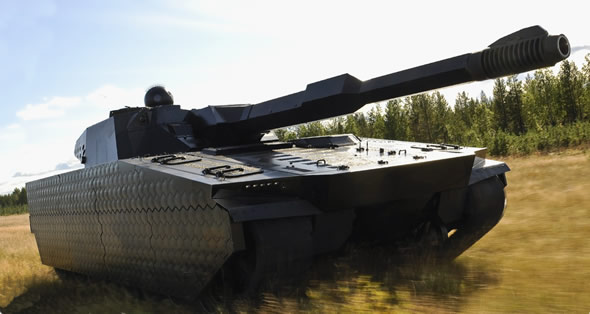
    ADAPTIV can instantly blend a combat vehicle into the background, reducing detection range below 500 meters. Photo: BAE Systems,

    BAE Systems has recently tested an ‘invisibility cloak’ that allows a vehicle to blend into its surroundings, effectively becoming invisible to thermal imaging systems. The company will debut its new technology at the DSEi defense and security expo in London next week.

    The system called ‘ADAPTIV’ was developed and patented in Sweden, it operates over infra-red and other frequencies. ADAPTIV can instantly blend the vehicle into the background, reducing detection range below 500 meters. Furthermore, the new technology can also mimic natural objects and other vehicles, and offer cooperative Interrogator Friend/Foe (IFF) capability by displaying distinctive patterns visible only at certain spectral range or in response to an interrogation signal (for example, illumination by coded laser designation).

    ADAPTIV can instantly blend a combat vehicle into the background, reducing detection range below 500 meters. Photo: BAE Systems,

    The system combines sheets of lightweight, hexagonal metallic ‘pixels’ designed to change temperature very rapidly presenting a thermal pattern that optimally blends with its surrounding. Each electrically powered pixel is individually heated or cooled using commercially available semi-conducting technology.

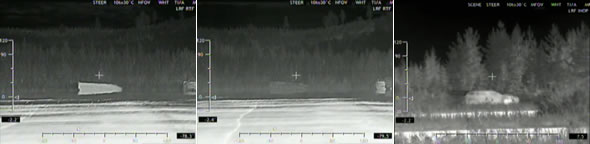
    The system combines sheets of lightweight, hexagonal metallic 'pixels' designed to change temperature very rapidly presenting a thermal pattern that optimally blends with its surrounding. Alternatively, it can mimic another vehicle or display identification tags, reducing the risk of fratricide. Photos: BAE Systems

    The pattern is determined by an on-board computer feeding from on-board cameras that pick up the background scenery. The system allows even a moving tank to match its surroundings. Alternatively, it can mimic another vehicle or display identification tags, reducing the risk of fratricide.

    Project manager, Peder Sjölund explains: “Earlier attempts at similar cloaking devices have hit problems because of cost, excessive power requirements or because they were insufficiently robust. Our panels can be made so strong that they provide useful armor protection and consume relatively low levels of electricity, especially when the vehicle is at rest in ‘stealth reconnaissance’ mode and generator output is low.”

    Trials by BAE Systems in mid-July showed that one side of a CV90 could be made effectively invisible or appear to be other objects, including a 4×4 vehicle, when viewed in the infra-red spectrum.”We can resize the pixels to achieve stealth for different ranges.” Sjölund added, “A warship or building, for instance, might not need close-up stealth, so could be fitted with larger panels.” Earlier this year the British media reported about another adaptive camouflage program pursued by BAE Systems, utilizing a kind of electronic ink, to ‘paint’ the background image on the vehicle’s surface.

    Current work focuses mainly on the infra-red spectrum, as this is most important to the Swedish Defence Materiel Administration (FMV), which funds part of the work. However, BAE Systems engineers have combined the pixels with other technologies, which provide camouflage in other parts of the electro-magnetic spectrum at the same time to provide all-round stealth, which will be developed further over the next few years.

    Combat vehicle protection technologies have evolved dramatically in recent years, moving far beyond traditional ballistic and blast protection, spanning into ‘hit avoidance’ through the use of countermeasures and active protection and signature management, eliminating part of the risk by avoiding detection or target acquisition by enemy weapon systems. Part of the trend of signature management is the use of advanced camouflage, hiding the protected vehicle from visible observation (by advanced camouflage materials) and imaging systems, particularly thermal imagers, which provide the core for most of the modern automated engagement systems (including target acquisition systems and missile seekers).

    A similar system is also under development in israel – ‘Invisible Reactive Armor Protection (IRAP)’ utilizing the ‘Blax Fox’ thermal camouflage system from Eltics and IMI’s hybrid armor technology. In the U.S., DARPA and the U.S. Army research and development center have pursued similar capabilities for future spirals of the ‘Manned Ground Vehicle’ – the core maneuver element of the now terminated Future Combat System.

    U.S. & Canada Defense Update – September 2, 2011

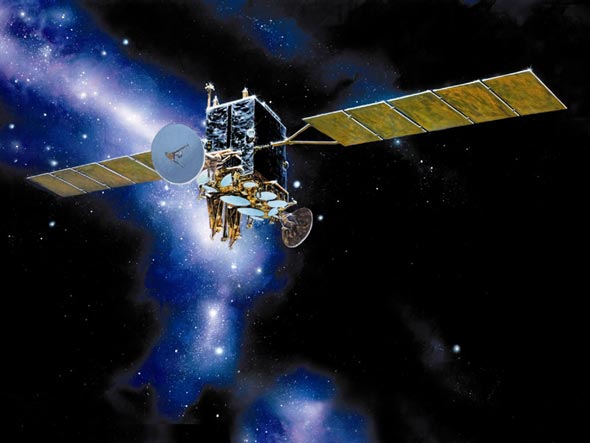
    The AEHF communications payload delivers the new XDR (Extreme Data Rate) communications services, supporting up to 8.192 Mbps per user, in addition to low and medium data rate Milstar protocols. Photo: Northtrop Grumman

    Defense Update News Report Sept. 2, 2011

    The AEHF communications payload delivers the new XDR (Extreme Data Rate) communications services, supporting up to 8.192 Mbps per user, in addition to low and medium data rate Milstar protocols. Photo: Northtrop Grumman

    EMS Technology to Provide Anti-Jam Antenna for the Fourth AEHF Satellite

    The Defense & Space (D&S) division of EMS Technologies, Inc. will provide Northrop grumman an anti-jam beam-forming network for the fourth Advanced Extremely High Frequency (AEHF) spacecraft. The nulling system will help in safeguarding the AEHF constellation’s Milsatcom architecture, as it is designed to protect the spacecraft’s tactical network from jamming and piracy. Northrop Grumman builds and integrates the AEHF payload that consists of processors, antennas, radio frequency subsystems and crosslinks. The contract is valued at $11.5 million.

    Boeing Awarded Over a Billion US$ Toward the Procurement of Three Wideband Global SATCOM Satellites

    Boeing Satellite Systems, Inc. of El Segundo, CA. has been awarded over one billion US$ contract modification funding the production of Wideband Global SATCOM (WGS) Block II Satellite Vehicle 7, advance procurement for Satellite Vehicle 8 and option to produce, process, launch and activate on-orbit Satellite Vehicles 9. The WGS satellite constellation that began deployment in 2007 provides wideband defense communications capabilities supporting U.S. department of defense and the Australian Defense department. The U.S. Air Force awarded Boeing the first WGS contract in 2001. The first of three Block I satellites was launched in 2007 with two follow-on satellites launched in 2009. Three additional satellites are currently being completed, slated for launch between December 2011 and february 2012. The three Block II satellites added to the program will be launched from FY15. The contract modification expands the WGS constellation to eight satellites, as mandated by Fiscal Years 2010-2015 Program Decision Memorandum (PDM) III.

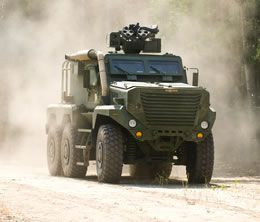
    Force Protection is offering a 6x6 version of the Cougar called 'Timberwolf' for the Canadian TAPV program. Photo: Force protection

    Force protection’s Timberwolf Pursue Canadian TAPV Program

    The Tactical Armored Patrol vehicle (TAPV) program of the Canadian  Army is picking steam as the deadline for proposals nears. Force protection announced yesterday its offer submission for the program. The company is offering the ‘Timberwolf’, a 6×6 variant of the battle proven Cougar. A contract award to the final selected bidder for the TAPV requirement is currently expected by the second quarter of 2012.

    Night Optics Acquisition to Expands Bushnell’s Reach Into Security, Military Markets

    September 1, 2011: Sports optics, premium eyewear and outdoor accessories company Bushnell Outdoor Products has acquired Night Optics USA Inc. of Huntington Beach, Calif. Night Optics USA is a provider night vision and thermal imaging for commercial, law enforcement and military applications. Part of the acquisition was funded by t private equity fund MidOceanPartners. the terms of the acquisition were not announced. MidOcean Partners acquired Bushnell four years ago and has added several complementary brands to its portfolio since, including acquisitions of Millett and Simmons in 2008. According to Blake Lipham, Bushnell President and CEO, the acquisition enhances Bushnell’s access to law enforcement, military and security markets.

    European Defense Update

    Turkey Agrees to Host European BMD Radar

    Turkey has agreed to host an early warning radar as part of NATO’s missile defense system aimed at countering ballistic missile threats from neighboring Iran, the Turkish Foreign Ministry said Friday. While NATO leaders agreed in 2010 to implement an anti-missile system over Europe, to protect against Iranian ballistic missiles, Turkey remained a stumbling block, due to its insistence not to name Iran as a threat. The proposed system will include the radar station in South-East Turkey and interceptor sites in Romania and Poland. All assets would be linked to the missile defense system to be operated and owned collectively by the alliance.

    SM-3 Block 1B Fails First Intercept Test

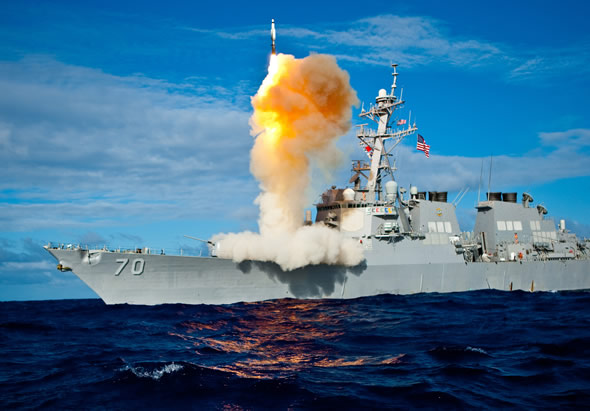
    AEGIS BMD Cruiser Lake Eire (CG-70) fires an SM-3 Block 1A in a previous missile intercept test. Photo: U.S. Navy via MDA

    The advanced Standaard missile 3 (SM-3) Block 1B failed its first intercept test yesterday in a ballistic missile intercept test conducted by the U.S. Missile Defense Agency (MDA). The test was conducted yesterday over the Pacific Ocean, exercising the sea-based element of the Ballistic Missile Defense System (BMDS).

    Early indications from the test suggest that the Aegis 4.0.1 processor worked flawlessly, as did the telemetry, tracking, and surveillance data. MDA will proceed with further investigation will to determine the cause of the failure to intercept.

    A Standard Missile - 3 (SM-3) fired on the 19th successful at-sea test intercept. the missile was launched from the USS Hopper (DDG 70) in the latest Missile Defense Agency (MDA) test in conjunction with the U.S. Navy. The missile intercepted a short-range ballistic missile target launched a few minutes earlier from the Pacific Missile Range Facility, Barking Sands, Kauai, Hawaii. Photo: U.S. Navy via MDA

    The target, a short range ballistic missile  was launched from the U.S. Navy Pacific Missile Range Facility (PMRF) in Kauai, Hawaii. The target was detected and acquired by the BMD ready cruiser, USS Lake Erie (CG-70). 90 seconds later the cruiser launched an SM-3 Block 1B missile at the target, but the interceptor failed to hit the target.

    “As the sophistication of the threat missiles from Iran and North Korea continues to advance and be demonstrated, so must our nation’s missile defense ability to counter and stay ahead of those threats” commented Riki Ellison,
    Chairman & Founder of the Missile Defense Advocacy Alliance. “Risk is inherent in keeping ahead of the threat. The failure of this new missile in its first intercept test within a highly successful and proven Aegis Ballistic Missile Defense System should be acknowledged as a risk acceptance when expanding capability to be more robust than the missile it is replacing” he added.

    Since the beginning of flight testing of sea-based BMD in 2002 all missile intercepts under the naval BMD program were conducted with SM-3 Block 1A interceptors, achieving 22 hits out of 27 launches. The missile was also used in the intercept and destruction of a malfunctioning U.S. satellite in February 2008.

    In February 2011 Raytheon and Aerojet completed integration testing of the SM-3 Block 1B kinetic interceptor. Photo: Aerojet

    The new block currently being tested incorporates an upgraded two-color seeker and advanced signal processor, enabling longer range target acquisition and increased threat discrimination, to better discriminate between targets and decoys, improving infra-red target acquisition. This seeker will be also employed with the Block II high velocity variant. The enhanced Block 1B interceptor has also upgraded from solid to solid-Throttleable Divert Attitude Control System (TDACS). The U.S. and Japan are also co-developing another version of the missile, known as Block IIA. Raytheon, the missile manufacturer has won a $321 million MDA award earlier this year, funding the manufacturing of 24 Block IB missiles by over the next 27 months by mid 2013.

    Apart from the sea-based BMD, the SM-3 is being prepared for land-based positioning in Europe toward 2015. A new test facility for the Aegis Ashore Missile Defense Test Complex (AAMDTC) was recently inaugurated in Hawaii, to support President Obama ‘Phased Adaptive Approach’ (PAA) for missile defense in support of  Europe, South Korea and protecting U.S. forces deployed in theater. The test complex at PMRF is critical to the development of the Aegis Ashore capability. It is essential for verifying requirements and validating design capability prior to deployment at the first of two planned sites in Europe in 2015.

    Force Protection’s Timberwolf Pursue Canadian TAPV Program

    The Tactical Armored Patrol vehicle (TAPV) program of the Canadian Army is picking steam as the deadline for proposals nears. Force protection announced yesterday its offer submission for the program. The company is offering the ‘Timberwolf’, a 6×6 variant of the battle proven Cougar. A contract award to the final selected bidder for the TAPV requirement is currently expected by the second quarter of 2012.

    Force Protection is offering a 6x6 version of the Cougar called 'Timberwolf' for the Canadian TAPV program. Photo: Force protection

    Force Protection will be the design authority and have overall responsibility for the vehicle design, configuration, production and delivery. Lead team member CAE of Canada will provide the in-service support (ISS) and integrated logistics support (ILS) services, including ongoing engineering support environment, training and fleet management services. CAE will also be responsible for assembling a pan-Canadian team to support the program. Two members that already have joined are Elbit Systems, providing a dual remote weapons system (DRWS) and Lockheed Martin Canada as the provider of C4ISR suite.

    U.S. Army Buys Switchblade Small Loitering Weapons

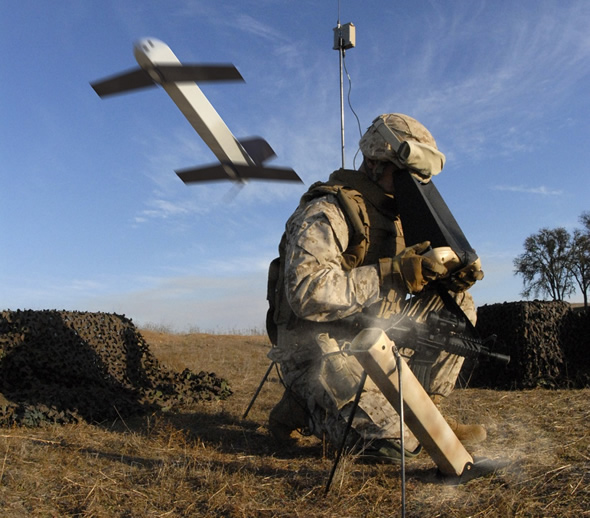
    designed as a tube launched weapon, the Switchblade system comprises a miniature air vehicle that launches from a small tube that can be carried in a backpack and operated by a single soldier. Flying quietly at high speed the Switchblade delivers its onboard explosive payload with precision while minimizing collateral damage. Photo: Aerovironment

    The U.S. Army has awarded AeroVironment a contract worth almost $5 million for the first deliveries of Switchblade agile munition, the company announced today. The contract was awarded two month ago, on June 29, 2011, culminating a selection process for a loitering light weight munition.

    The procurement is part of the Army’s rapid fielding initiative. The U.S. Army Close Combat Weapons Systems (CCWS), Program Executive Office Missiles and Space (PEO MS) is the awarding office. The prototype Switchblade system previously received Safety Confirmation and underwent Military Utility Assessment with the U.S. Army in the fall of 2010.

    designed as a tube launched weapon, the Switchblade system comprises a miniature air vehicle that launches from a small tube that can be carried in a backpack and operated by a single soldier. Flying quietly at high speed the Switchblade delivers its onboard explosive payload with precision while minimizing collateral damage. Photo: Aerovironment

    The Switchblade air vehicle launches from a small tube that can be carried in a backpack and transmits live color video wirelessly for display on AeroVironment’s standard small unmanned aircraft system (UAS) ground control unit. Upon confirming the target using the live video feed, the operator then sends a command to the air vehicle to arm it and lock its trajectory onto the target. Flying quietly at high speed the Switchblade delivers its onboard explosive payload with precision while minimizing collateral damage. With the ability to call off a strike even after the air vehicle is armed, Switchblade provides a level of control not available in other weapon systems.

    “The unique capabilities provided by the Switchblade agile munition for standoff engagement, accuracy and controlled effects make it an ideal weapon for today’s fight and for U.S. military forces of the future,” said Bill Nichols, deputy product director at the Army’s Close Combat Weapons Systems project office.

    Instead of requiring support from weapon systems controlled by other operating units, operators will be able to use the ground launched Switchblade variant to respond to enemy combatants with precision fire from a significant standoff distance, when and where required.

    Skunk Works and XTEND Simplify Multi-Drone Command

    0
    Lockheed Martin Skunk Works® and XTEND have achieved a major milestone in JADC2 by integrating the XOS operating system with the MDCX™ autonomy platform. This technical breakthrough enables a single operator to simultaneously command multiple drone classes, eliminating the friction of mission handoffs. From "marsupial" drone deployments to operating in GPS-denied environments, explore how this collaboration is abbreviating the data-to-decision timeline and redefining autonomous mission execution.

    From Ukraine to Taiwan: The Global Race to Dominate the New Defense Tech Frontier

    0
    As traditional defense primes face mounting competition from agile “neoprimes” such as Anduril, Palantir and Helsing, the balance of innovation is shifting toward software-defined warfare and scalable, dual-use technologies, while global industry consolidation—marked by Boeing’s integration of Spirit AeroSystems and other strategic mergers—signals an intensified race to secure control over the defense technology value chain. Our Defense-Tech weekly report highlights these trends.

    Europe’s “Drone Wall”

    0
    In early October 2025, a coordinated wave of unmanned aerial system (UAS) incursions—widely attributed to Russia—targeted critical infrastructure across at least ten European nations. The unprecedented campaign exposed the fragility of Europe’s air defenses...

    Weekly Defense Update & Global Security Assessment

    0
    Executive Summary The past week (September 18-25, 2025) represents an inflection point where strategic defense concepts have transitioned from doctrine to tangible reality. An analysis of global events reveals four primary, interconnected trends shaping an...

    U.S. Air and Space Forces Push Next-Gen Programs at the AS&C 2025 Conference and...

    0
    At the 2025 Air, Space & Cyber Conference, U.S. Air Force and Space Force leaders unveiled major updates on next-generation fighters, bombers, unmanned systems, and space initiatives, highlighting both rapid innovation and critical readiness challenges as the services race to outpace global competitors. A short version is available here, with a more detailed version for subscribers.

    TADTE 2025: Reflecting Taiwan’s Strategic Themes

    0
    The Taipei Aerospace & Defense Technology Exhibition (TADTE) 2025 crystallized around four dominant strategic themes that collectively illustrate Taiwan's comprehensive approach to defense modernization amid escalating regional tensions. Based on a detailed report by Pleronix (available upon request). Includes a Podcast discussion on TADTE 2025's highlighting Taiwan's four strategic themes beyond the post's coverage.

    Iron Beam 450 Completes Testing, Soon to Join With Operational Air Defense Units

    0
    Israel’s Iron Beam 450 high-power laser system has completed final testing, marking a major leap in air defense. Developed by Rafael, it offers precise, cost-effective interception of rockets, UAVs, and mortars, and is set for IDF deployment by 2025.