
Monday, December 29, 2025
More
    Home Blog Page 228

    PARS 3 LR Competes for Two Indian Attack Helicopter Programs

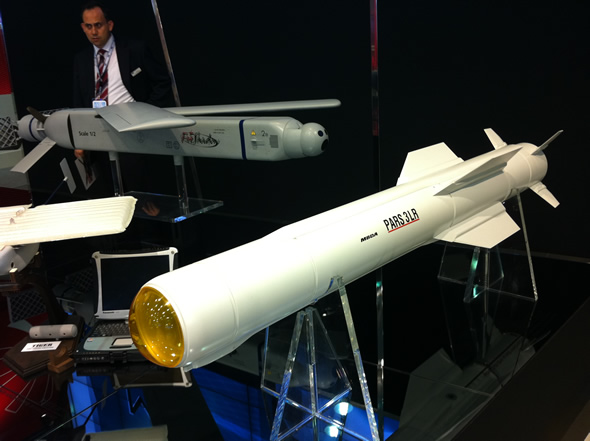
    The PARS 3LR weapon was developed under a three-nation cooperation (TRIGAT), which fell apart upon the withdrawal of British support. Later, the French MOD decided to discontinue its support leaving Germany to back the program. A possible Indian order could bring the missile back to the limelight. Photo: Tamir Eshel, defense Update

    MBDA confirmed today that its PARS 3 Long Range (LR) guided missile system has been short listed for the Indian Army helicopter future air-to-ground requirement. MBDA Deutschland is also cooperating with Russian helicopter manufacturers Kamov and Mil, integrating the Ka-52 and Mi-28 with PARS 3 LR air/ground and Mistral Air/Air missiles.

    MBDA submitted a proposals for its PARS 3 LR multi-target, long range weapon system for HAL’s Advanced Light Helicopter (ALH DHRUV) and for two attack helicopters, the KAMOV KA-52 and the MIL MI-28, proposed for a parallel Indian Air Force replacement of Mi-25 gunships. The Tiger from Eurocopter hasn’t been shortlisted, the only competitor remaining is the Boeing Apache Longbow Block III. On the weapon’s side MBDA is competing with RAFAEL for the Indian Army program. The Longbow can use Hellfire laser guided missiles or Longbow MMW guided missiles. MBDA is expecting a final selection in India by year’s end or early 2012. The Indian Air Force program may take longer.

    PARS 3LR anti-tank missile launched from a German Army Tiger attack helicopter during a recent test conducted at the test range in Vidsel, Sweden. Photo: MBDA

    According to Peter Meuthen, MBDA anti-tank programs sales manager, the recent firing trials held at the Vidsel test range in Sweden in April 2011 were performed in support of the Indian program qualification. All three missiles were equipped with live warheads and all three struck their intended targets at the optimal hit points. Two firings were carried out within one minute of each other, the first against a static target at a range of 7,000 m and the second against a moving target at a range of 700 m. The third firing was carried out with the helicopter in fast forward flight against a static target at a range of 7,000 m.

    PARS 3 LR is a ‘Fire and Forger’ /long-range third generation missile. At present, the missile was selected only for the Tiger helicopter ordered by the German Army. Equipped with a powerful tandem warhead, PARS 3 is capable of engaging mobile and stationary targets at long range (in the recent tests the missile demonstrated engagement at ranges of 7,000 m’. Another capability highlighted by the weapon is the rapid firing capability, in a recent test conducted for the German Bundeswehr four missiles were launched in 10 seconds, each engaging a separate target.

    MBDA Deutschland is currently preparing for serial production of PARS 3 LR missiles delivering 680 missiles to equip German Army Tiger helicopters by 2014. Production is scheduled to begin in 2012 following a final firing campaign scheduled for September 2011, where missiles will be fired at tactical representative targets rain (urban, moving targets etc). According to Patrick de la Reveliere, MBDA India the each of the two programs in Indian is several times larger than the German procurement, offering substantial gain and significant offset opportunities to India. MBDA Deutchland is setting a production line capable of producing 50 missiles per month, more than twice that required to fulfil the German order (up to 20 /month).

    The contract for industrialisation and series production of the PARS 3 LR missiles will be managed by PARSYS, a joint venture between LFK-Lenkflugkörpersysteme GmbH (50%), now MBDA Deutschland, and Diehl BGT Defence (50%). Development of the overall PARS 3 LR system was formally completed in mid-2004. However, MBDA Deutschland has been manufacturing key components (electronics, launchers) of the PARS 3 LR system which have then been integrated by Eurocopter into the platform since the series production contract for the 80 Tiger helicopters was signed in 1998.


    The PARS 3LR weapon was developed under a three-nation cooperation (TRIGAT), which fell apart upon the withdrawal of British support. Later, the French MOD decided to discontinue its support leaving Germany to back the program. A possible Indian order could bring the missile back to the limelight. Photo: Tamir Eshel, defense Update
    Looking at Elbit System’s Crystal Ball

    Yossi Ackerman, President & CEO, Elbit Systems

    Going through a generation shift, Elbit Systems focuses its activities on the ‘growth engines’ that will take it through the next levels, in the 2020’s.

    “The products that form our backlog today are the results of our past investments. We usually talk about ‘growth engines’ when discussng where we want to be in the future, where we want to grow in ten years time” Joseph Ackerman, Elbit President & CEO told Defense Update. “To sustain such foresight you need accurate forecasting and understanding of future market needs and trends. we see C4ISR, particularly applications of wide area dominance or persistent surveillance and intelligence.

    Through life support, including training services, logistics and support for complex systems could form another growth engine for us while various aspects oh homeland security should necome another growth trend.” Elbit Systems has been offering advanced capabilities through all these areas in the past, but in the future the company intend to grow and widen its offerings in these fields.

    In recent years Elbit Systems has grown dramatically, leveraging mergers and acquistions (M&A) to sustain rapid growth. “I regard M&A as equal to organic growth, in fact, based on our past experience of merging some 40 acquisitions, growth through M&A nears less risk than Research and Development (R&D) and could get you to your target faster, and often at a lower cost.” Ackerman added. The company’s business philosophy has also changed. “We started as a ‘built to print’ company, evolved into ‘built to spec’ and now, we are positioned as a ‘built for need’ scheme. Today, many customers prefer to define their requirements in broad terms, leveraging more responsibility to the supplier to come up with the most recommended, lowest risk solution.”

    Outsourcing services fall under Elbit Systems training and support programs, offered to air forces and military forces worldwide. “As military organizations are called to trim fat and reduce budgets, old school concepts are scrutinized and non-core plans are outsourced to benefit from what the competitive commercial market can offer” Ackerman said. “Customers requirements for 90% availability can be obtained only through commercial outsourcing” Ackerman said.

    Joseph Ackerman, President & CEO, Elbit Systems

    In recent years his company has won outsourcing and Private Financing Initiatives (PFI) projects maintaining basic trainers, training helicopters, intermediate and advanced trainers for the IAF and recently announced winning similar activities in Mccedonia. “Simulators are another part of the training which we are covering, not every task has to be done by actual flying, in fact, smoe aspects of training and flight proficiency development should be done on the ground, in realistic simulation. Elbit maintains such facilities under PFI or ‘per use’ basis, reducing operational expenses for training while gaining higher proficiency prior to live training, as crews are better prepared for these final phases.

    As for the commercial field, Elbit Systems has recently acquired the US MRO provider M7 which specializes in supporting government and commercial aircraft fleets. “Our synergy with M7 was clear, as they had mastered the MRO activities but did not have electronics systems support which we offer. Together we can offer more comprehensive solutions. “The interest in advanced avionics tailored for the commercial aircraft market is also growing” said Ackerman, acknowledging the company has already sold hundreds of Enhanced Vision Systems, (EVS), civil Head Up Displays (HUD) and avionics to civil fixed wing aircraft and helicopters. “At the early stage, such avionic systems were limited to high end business jets, but today, affordable solutions are available to any operator that requires operating from less developed airfields.”

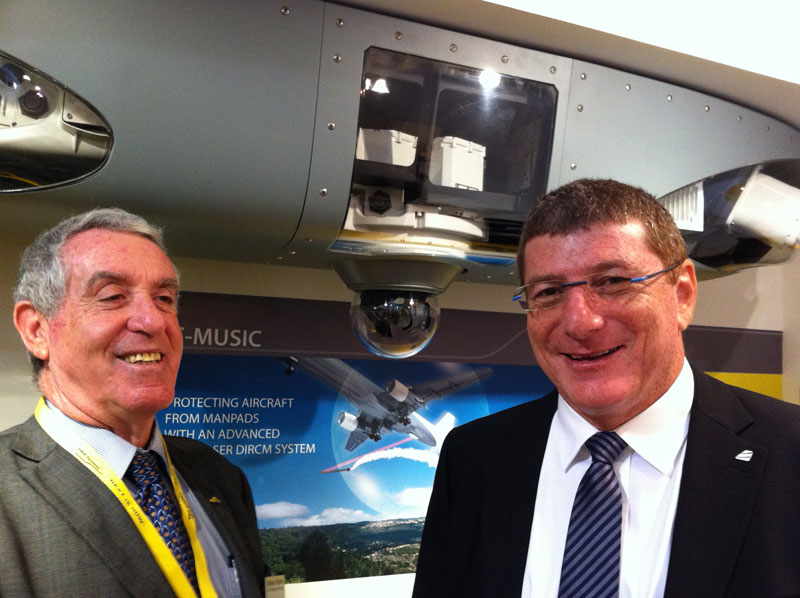
    EL AL President & CEO Elyezer Shkedy, former IAF Commander in Chief, and Gideon Sheffer, Executive VP Strategic Planning & Business Development, Elbit Systems, briefing Shkedy on the new Commercial C-MUSIC missile countermeasures developed by Elbit. The systems are being acquired by Israel's Ministry of Transportation for use on EL-AL passenger planes. Photo: Tamir Eshel, Defense-Update

    The latest civilian spin-off is the Commercial MUSIC (C-MUSIC) – a directional EO countermeasure suite designed to protect aircraft and helicopters from man-portableanti-aircraft air defense missile systems (MANPADS). “C-Music in addressing such threats, becoming more acute. Its latest configuration is unveiled here at the Paris Airshow. The system was selected for deployment on all the aircraft operated by Israeli airlines, and have also gained initial international orders.

    Globe-i Zooming in to a “Window of Interest”

    BlueBird Aero Systems is displaying its latest electrically-powered mini-UAVs, including the sub-kilogram MicroB, the combat proven Skylite mini-UAV and the flying-wing shaped Boomerang small-UAV, which has demonstrated mission endurance of 10 hours, powered by fuel cells, a record unmatched by other small-UAS of its class.

    The Globe-I lightweight multi-sensor payload installed in the nose of the MicroB micro UAV. Photo: Bluebird Aero Systems

    Beside these innovative US systems BlueBird has pioneered a number of UAV related technologies, related to power sources and sensors. In 2008 the company has patented an innovative multi-sensor payload, called Globe-i. A daylight EO payload designed to enable micro-UAVs to cover a large area. Globe-i enables this feature without using moving parts, resulting in lighter, more reliable and affordable payloads.

    Common gimbaled cameras are usually stabilized, integrated with expensive electronics and accurate mechanics and thus expensive and impact sensitive due to their high complexity. For micro-mini UAVs, cameras are typically implemented with fix mounts, to accommodate size, weight and power restrictions. The Globe-i concept implements multiple fixed CMOS sensors, each mounted to a different direction. The cameras are fixed-mounted in such a way that each camera overlaps the camera beside it, to enable image continuation. The Window of Interest (WOI) can be moved continuously between the sensors to enable the ‘gimbals’ effect. Only the WOI is transmitted to the ground via the video datalink. An integrated DSP reads the images from the sensors and enables scrolling the window of interest by changing the window size and zoom factor. The system’s processor supports image processing capabilities such as stabilization and tracking. In addition, Globe-i can store real-time video and high resolution images in its internal memory.

    Globe-i combines the best of both worlds, the ability to provide continuous video image with controlled line of sight, but without using moving parts (line of sight stabilizing gimbals, zoom motors etc). These capabilities enable users of Micro-UAVs to gain operational capabilities similar to larger UAVs, with better operational reliability and significantly lower cost. Potential applications for Globe-i are endless, as the payload is positioned as simple and affordable to military, law enforcement, emergency and commercial applications, from remote monitoring of meters, electrical power line surveillance, and landscape monitoring to traffic management and reporting, border security or even wide area ISTAR missions employing micro-UAV swarms.

    IAI MAPSAT – Compact Man Portable Satellite Communication Terminal

    The MAPSAT (ELK 1895) - a tactical Man Portable Satellite Communication (SATCOM) Terminal. Photo: IAI

    ELTA Systems Ltd., an Israel Aerospace Industries’ group and subsidiary, presents the MAPSAT (ELK 1895)- a tactical Man Portable Satellite Communication (SATCOM) Terminal. The system, weighting only 8.5 kg,. is carried by a single soldier operating in special missions. The terminal can be rapidly deployed and connected to predefined available commercial Ku-Band communication satellites.

    The MAPSAT (ELK 1895) - a tactical Man Portable Satellite Communication (SATCOM) Terminal. Photo: IAI

    The operational, field- proven ELK-1895 is communicates voice and high data rate within a network including many subscribers such as Special Forces fighters and their commanding post. All subscribers, within the communication satellite footprint, communicate, via a communication link, without revealing their geo-location.

    The need for tactical SATCOM for Ground Forces is growing due to net-centric operations that require long range, OTH (Over-The-Horizon), all- weather communication between fighting forces and their Head Quarters.

    IAI/ELTA SATCOM products include both narrow-band and wide-band system. Helicopter SATCOM includes special algorithms that enable uninterrupted SATCOM even through helicopter blades.

    Missile or UAV? UVision Introduces the WASP

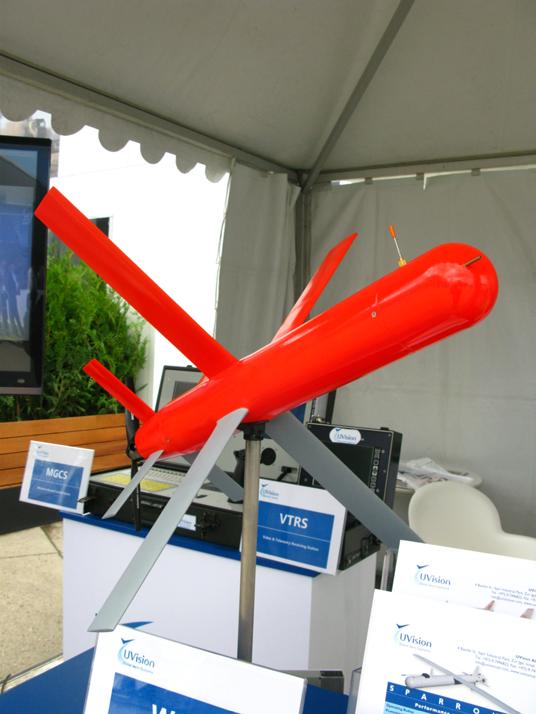
    The WASP mini-UAV displayed by UVision at the Paris Air Show 2011. Photo: Tamir Eshel, defense-Update

    A new face at the Paris Air Show 2011 is UVision, a small company from Israel, specializing in special purpose UAVs. The highlights of the company’s display is the WASP personal, mini UAV that has performance characteristics of a missile, with the versatility, user control and reusability of a UAV.

    The WASP mini-UAV displayed by UVision at the Paris Air Show 2011. Photo: Tamir Eshel, defense-Update

    UVision has built the WASP as a back-packable, canister-launched system, weighing about three kilograms, including the UAV, payload and launch tube. The mini UAV has a 80 mm diameter cylindrical shape with two foldable, cruciform wing sets, developing ‘extreme manueverability’ to overcome weather and terrain constraints. The manufacturer mentions the WASP is launched pneumatically from the canister using custom designed mini launcher, but does not mention a retrieval mechanism, alluding to the mini-drone’s “reusable, yet priced to be expendable” characteristics.
    The aerodynamic design also provides for high agility and precision flight not often associated with UAV designed. The UAV has unique operating modes, from very high dash speed over 100 knots, to low speed below 60 knots.

    The WASP is equipped with specially developed EO sensor comprising a two-axis stabilized CCD color sensor or uncooled thermal sensor and automatic tracker. It also has a dual dataling, with separate chanels for control uplink and sensor downlink. The mission radius is up to five kilometers.

    WASP has a payload capacity of up to 1 kg, but the designers delivered an EO payload that weighs only 115 grams (180 gr. for the thermal payload), leaving enough volume and weight for additional storage. Employing low cost avionics and payload, and powered by primary batteries, WASP was designed from baseline to be a low cost and expendable system.

    WASP is designed as a compact system, the fuselage length is 700 mm; it is attached to folding wings, opening to a 670mm span, this mini UAV is easily carried and operated by the warfighter.

    RAFAEL President outlines his view of the company way forward

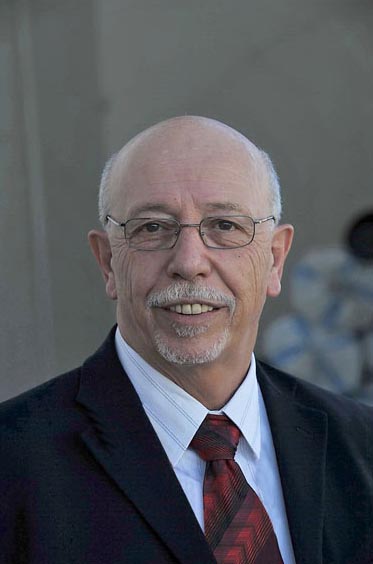
    VADM (Ret.) Yedidia Yaari, President and CEO of Rafael
    VADM (Ret.) Yedidia Yaari, President and CEO of Rafael

    RAFAEL offers a wide range of leading edge solutions, from defensive measures for submarines and surface vessels, through land systems to airborne and space-based systems. Since it transformed from an MOD operated unit into a commercial company RAFAEL has grown its domestic and export, reporting $1.852 million in sales in 2010, representing15 percent growth over 2009. Furthermore, at 4.3 percent RAFAEL’s operating profit and $301,000 in sales per employee, RAFAEL demonstrated the highest performance among Israel’s government owned defense companies.

    Defense Update asked VADM (Ret.) Yedidia Yaari, President and CEO of Rafael, what makes RAFAEL successful?

    Yaari: “Maintaining its original role as Israel’s leading defense technology development center RAFAEL is also a growing and profitable company, active in the global market. This unique position enables us to offer our customers with full solutions, addressing urgent requirements in a short time.”

    Defense Update: How do you see RAFAEL’s way forward in international markets?

    Yaari: “We invest significant resources and marketing effort in developing our international activity to increase the share of export, establishing new partnerships, acquisition of foreign companies and opening new markets.

    One of RAFAEL’s strengths is its proven ability to cooperate, transfer knowhow and technology and meet foreign offset requirements. We do it in many countries, in different programs – one such example is the local production of Spike missiles overseas, in countries such as Spain and Poland. Through such cooperative programs RAFAEL leverages its technological knowhow and superior weapon system to gain new markets.

    Considering itself as ‘team player’, RAFAEL implements cooperation in many areas, with tens of partners from many countries, enabling us to achieve significant achievements in the international market. RAFAEL pursue the strategy of establishing joint ventures and local partnerships for many years and the trend is growing as our foreign markets transform from BUY to MAKE, where relying on local enterprises enables you to transfer technology, know how and local production. “In the upcoming months we expect to see new developments in this area, both domestically and overseas.”

    Defense Update: What about mergers in your domestic market, IMI for example?

    Yaari: “We have always said that the most logical and efficient way forward is to integrate IMI with RAFAEL, to benefit of the synergy of the two companies and utilize existing infrastructures. Nevertheless, since RAFAEL moved a long way since being an MOD unit and the last thing we want is an acquisition or merger that will risk RAFAEL’s financial stability.” I hope those responsible for this process will enable RAFAEL to perform a fair due diligence to enable both sides to take the right decision that will serve both sides.

    RAFAEL seems to have less issues with being a government owned company. Why?

    Yaari: Since RAFEAL began its way as an MOD unit, our current status as a government owned company offers us much flexibility and operational freedom than before. We went a long way with the government officials in establishing speedy processes enabling us to pursue our business plans.

    Defense Update: Two of RAFAEL’s combat systems were successfully tested in battle this year, Could you describe how these development processes evolved?

    Yaari: “RAFAEL invests significant resources in research and development, at levels unmatched by other business corporations. This investment, the close relations wit our strategic customers, being the national defense development lab and highly skilled workforce enables RAFAEL to pioneer many fields. Our developments follow the five-year plans we have set and re-examine periodically, addressing multi-year plans of our customers, setting the requirements for the systems we develop.

    This year, two of our weapon systems were proven successful in combat, marking a world breakthrough in active defense – the Trophy active protection system for armored vehicles and Iron Dome, countering ballistic rockets. Both were developed by some of our best tears and both are on display here at the Paris Air-Show.

    MIC4AD – Going Beyond the Air Defense Weapons

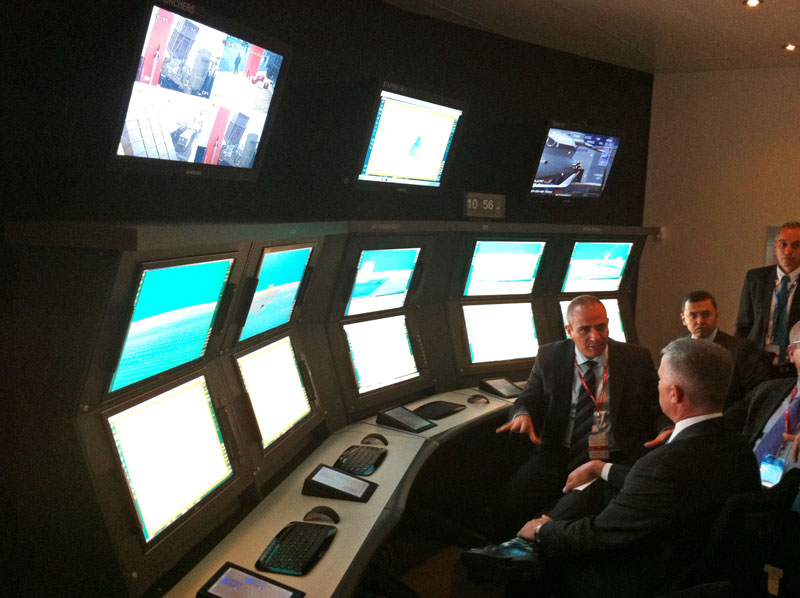
    the Modular Integrated C4 Air Defense system from Rafael. Photo: Tamir Eshel, Defense-Update

    Rafael is demonstrating a new concept of Multi-level Integrated Command, Control and Communications Air Defense (MIC4AD) at the Paris Airshow 2011. “With this system we go beyond the weapon system, introducing a system of systems that manages, optimizes and controls networked, air defense capabilities” Yossi Horowitz, RAFAEL air defense business development executive told Defense-Update. Unlike current solutions that interface existing air defense assets within the air forces’ operational air picture, leaving the actual management and target allocations to the individual units of the AD corps, MIC4AD enables much deeper integration, facilitating ‘coexistence’ of air defense weapon systems within crowded and active air space. “The contemporary approach could be sufficient for existing anti-aircraft defenses, but becomes obsolete in the missile defense world, where response time is much shorter and engagement ranges far longer.” Horowitz explains. “Operating in an airspace crowded with activity, manned and unmanned requires the use of automated coordination systems to manage intercept trajectories to avoid fratricide” Horowitz added.

    the Modular Integrated C4 Air Defense system from Rafael. Photo: Tamir Eshel, Defense-Update
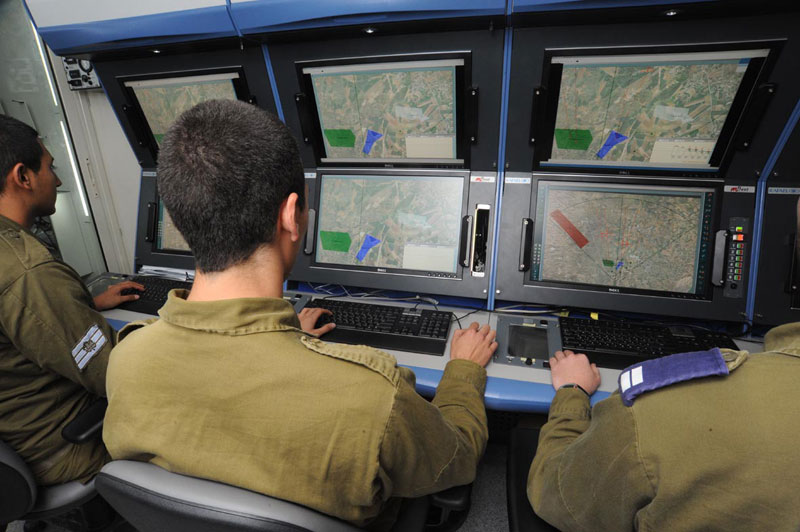
    MIC4AD can be used to enhance regional threat evaluation and optimize weapon allocation maximizing defensive capability. Photo: Rafael

    Designed to coordinate and manage aerial picture shared by different air defense systems, from the command level down to regional sectors and battalions MIC4AD integrates multiple layers of situational picture, from civil air traffic, manned and unmanned military air operations, low level traffic (helicopters, UAVs etc), air defense (providing tracks of enemy activity), hostile and friendly missile trajectories (both ballistic missiles and missile interceptors). By fusing these pictures into a comprehensive situational understanding, MIC4AD allows missile defense assets to operate in an open airspace, ‘coexisting’ with civil and military activity. To avoid such conflicts current air defense systems are operating in protected airspaces, where air traffic is limited. MIC4AD can be used to enhance regional threat evaluation and optimize weapon allocation maximizing defensive capability. “Every nation that want to deploy air defense assets in areas open for civil or military air traffic will need such systems.” said Horowitz.

    RAFAEL Highlights Flexible Response in Air & Missile Defense

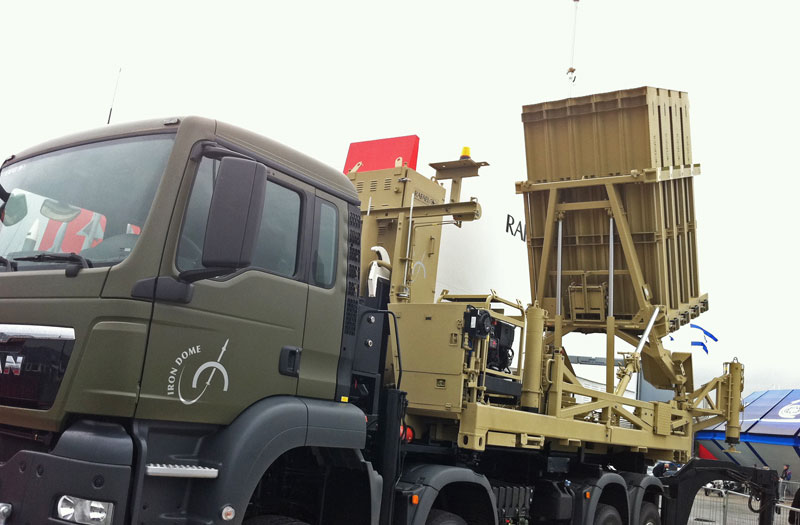
    Iron dome is shown for the first time in its new mobile configuration. Photo: Tamir Eshel, DEfense-Update

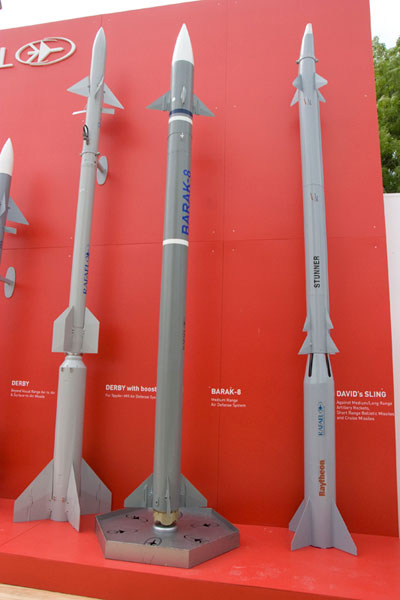
    Missile technology is one of the highlights of RAFAEl’s display at this year’s Paris Airshow. The company displays here a range of air defense missiles – including Stunner, heading for full system-testing this year, the Iron Dome Counter-rocket missile system, recently combat- proven in Southern Israel and the Medium Range Spyder, shown here as a complete mobile system. Airborne ordnance on display includes precision guided air/ground weapons (the Spice family), multi-purpose guided missiles (Spike family) and air/air missiles (Python and Derby missiles).

    Iron dome is shown for the first time in its new mobile configuration. Photo: Tamir Eshel, DEfense-Update
    Rafael's Missiles Family. Photo: Noam Eshel, Defense-Update

    “Our system philosophy provides users with maximum flexibility to employ their assets achieving mission success, even under changing conditions” said VP Lova Drori, “our solutions are employing several levels of flexibility, maximizing effectiveness and reducing ‘cost per effective kill’. This concept enables users to gain maximum utility from such systems, without compromising on effectiveness and level of protection.” For example, the Spyder system automatically selects the least costly interceptor for each target, by launching a Python missile as a priority available, reserving the more expensive Derby missiles for more challenging intercepts. The ratio between Python and Derby missiles contained in the system can also be changed dynamically, to reflect changing operational needs. A different approach is employed in the Iron Dome system, which automatically prioritizes intercept strategies and decisions, based on projected impact points, ignoring targets that pose no risk (projected to hit empty areas). David Sling employs other optimization techniques, such as assigning targets across distributed fire units, as part of a multi-layered defense system.

    Lova Drori, Rafael's Executive VP Marketing. Credit: Rafael

    “The development of the Iron Dome has demonstrated the unique capability of Rafael to expedite new solutions, meeting urgent operational requirements in record time. While offering breakthrough capability of intercepting rockets in flight, Iron Dome does not represent a technological breakthrough. We could not develop new technologies on such a short program, therefore, we have used technologies and methods that were already available in-house. Through the development of Iron Dome these elements were matured, tested and integrated into the system. To deal with high risks, we examined different solutions in parallel processes, enabling designers some flexibility to meet the tight schedule. This unmatched scientific base enables Rafael to provide unique solutions at relatively low risk and short time. The operational success of Iron Dome and Trophy clearly demonstrates that Rafael is well positioned to take-on such challenges. Overall, we invested about US$ 60 million in the development, in order to meet the tight development and production schedule” Drori stressed.

    “Iron Dome offers a unique solution to an uncommon problem, yet we see a potential to export these systems to countries seeking protection of strategic and critical facilities, especially along coastal sites and offshore.” Drori said, “They can also protect forward, temporary bases, primarily peacekeeping and forward deployments in unstable areas. For these applications, Rafael will expand its system solutions with complementary capabilities addressing short range threats.”

    ChandlerMay, AME Unveil the Fury 1500 UAV at the Paris Air Show

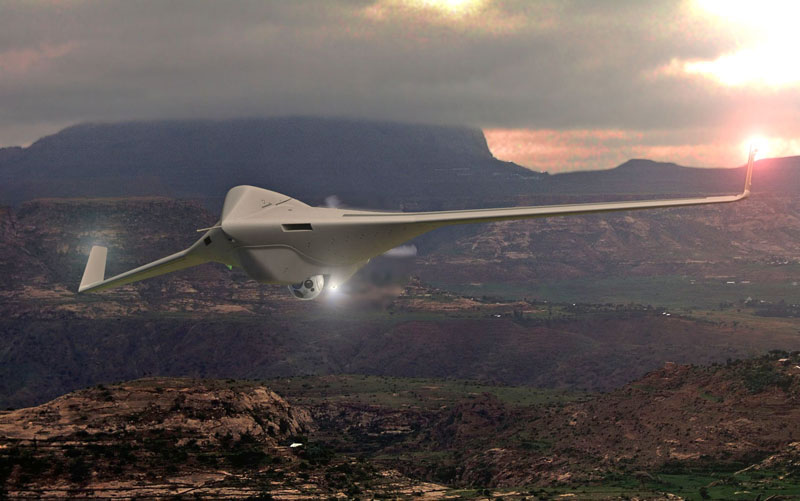
    The Fury 1500 UAV. Photo: Chandler/May

    AME Unmanned Air Systems (AME UAS) is displaying the Fury 1500 Small Tactical Unmanned Aerial System (STUAS) for the first time at the Paris Air Show 2011. The UAV has recently demonstrated flying powered by a heavy fuel engine. The use of JP8 significantly increases the capability of the system, decreasing the logistical footprint of the system while increasing its endurance substantially.

    The new Fury 1500 UAV from AME. With an empty weight of 25 kg, th enew Fury 1500 can carr 75 – 125 lb of payload on a 16 hour mission. The ’1500 is AME’s largest platform fielded to date. It is designed to carry multiple payloads (the mockup on display shows a nominal EO/IR payload but AME is ready to offer the FLIR Systems Cobalt if the U.S. Government will allow it to export the Fury), it carries two datalinks, plus satellite communications (a control communications channel utilizing an Iridium satlink). The company also plans to integrate a miniature satellite dataling to support sensor feed download via satellite. Currently the system uses two CDL links, enabling the Fury to serve as a radio relay for other platforms.) Photo: Tamir Eshel, Defense-Update

    The Fury 1500 is tailored to address multiple warfighter requirements. Designed for a broad range of missions and long endurance, Fury 1500’s large payload volume and power capacity can support several payloads simultaneously and provide for a flexible, multi-mission capability not currently available with other UAS platforms. The Fury 1500 is a long-endurance, survivable, and runway-independent Multi-INT UAS, providing the large (multi-payload) capacity needed to satisfy critical requirements for the Warfighter.

    “The new heavy-fuel high-endurance version of the Fury 1500 will allow for long-duration ISR and EW special missions, ensuring significantly more “on-target” dwell time for special mission operations,” said John Purvis, President and CEO of AME UAS.

    This photo shows the Fury 1500 in an optional configuration adding two aerodynamic payload fairings covering ‘expensive payloads’ as Jay McConville, Chairman of the board at AME UAS said. The company is also the developer of the U.S. Air Force ‘Sand Dragon’ program, designed to fight Improvised explosive Devices (IEDs) from the air.

    The Fury design was developed in response to specific U.S. military requirements. The first model, Fury 1200 made the first flight in 2008; today the company focuses on the Fury 1500 which has similar dimensions and logistical ground footprint but can carry more than twice the payload, and have five times more power on board. Since 2010 AME has been developing the Fury platform for the ‘Sand Dragon’, a lightweight unmanned aircraft carrying miniature dual-band radar and an EO/IR sensor. The U.S. Air Force awarded AME 13.3 million last year, to produce four Sand Dragon systems. The project is an extension of AFRL’s Gotcha program designed to collect volumetric synthetic-aperture radar data from an aircraft circling and staring at an urban area and process it into real-time target tracks. The specific model of the ‘Fury’ platform selected for Sand Dragon identified as ‘Fury B’, has enough payload volume and weight to carry a multi-sensor payload on missions extending more than 24. The heavy-fuel engine was critical to enable operation of the UAV from austere forward sites.

    The Fury 1500 can be launched from a rail launcher; the company has recently tested the vehicle with a Robonic premium UAV Launcher System supplied by Robonic Ltd.

    Fury is a long-endurance (more than 16 hours), long range (supporting missions at ranges up to 1500 nm (ferry range), Fury 1500 has a cruising speed of 65-95 kt and operating ceiling of 16,000 feet And dash speed of 116 kt. Based on an advanced and efficient 14.3 ft. (3.7 m’) span ‘flying wing’ design the Fury 1500 has a payload carrying capability of 75-125 pounds (over three times its empty weight), the Fury can be configured with different payload bays above or below the forward section or underwing. In addition to the large payload capacity volume, the aircraft has ample on-board power (up to 2,000 watts of continuous power) to drive power hungry payloads such as EW jammers. To protect on board avionics from the strong RF emissions the Fury 1500 offers ‘shielded avionics’ which will also protects the drone in case it is being jammed by the enemy.

    According to the manufacturer, the UAV maintain a low acoustic signature while cruising or loitering, therefore maintaining the element of surprise through covert action. To support the Fury 1500 over a long range, three independent datalinks can be employed, offering line-of-sight, beyond line of sight Common Data Link (CDL) compatible communications and an IRIDIUM satellite low-data-rate control link. The company is currently working on the integration of a miniature satellite communications terminal to offer high data rate for video download.

    The Fury 1500 has a maximum take-off weight of more than 300 lbs, of which the empty weight is only 65 lbs. (29.5 kg). The maximum payload is 75-125 lbs, plus 27 lbs (12.2 kg) of fuel. The system is designed to be launched and recovered from austere locations including both maritime and littoral environments. The small logistical footprint includes a pneumatic launcher, portable GCS, and collapsible recovery system (water and land). This system employs a field deployable arresting net and a ‘trampoline’ eliminating landing impact, protecting the belly mounted payloads Sealed wire-harnesses and components as well as water proof connectors allow for various types of waterborne recovery.

    Updated: C-MUSIC to Protect Israeli Airlines from Missile Attacks

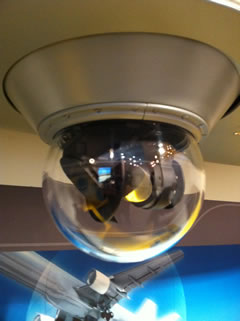
    C-MUSIC employs a fiber-laser based DIRCM element designed to defeat a wide range of MANPADS threats. This close-up photo shows the beam aiming mirror assembly directing the laser beam toward the target. Photo: Tamir Eeshel, defense Update

    Offers Part of the development of active protection systems for platforms, Elbit systems is offering effective protection for military and commercial aircraft and helicopters, employing an affordable, highly effective fiber-laser based Directional Infra-Red Counter Measures (DIRCM). While DIRCM systems for large aircraft have been available on the market for several years, Elbit Systems’ Multi-Spectral Infrared Countermeasure (MUSIC) system is the first to the market offering compact, low-power affordable solution suitable for medium aircraft such as C-27J and Boeing 737 and 767 and helicopters of the UH-60, EH-101 and Mi-17 class. The Italian Air Force has already adapted a DIRCM solution from Elettronica, based on ELOP’s fiber laser. The commercial derivative of the system is also the first system to be certified and offered to commercial and government users, operating without restrictions from every airfield.

    Elbit Systems’ Multi-Spectral Infrared Countermeasure (MUSIC) system. Credit: Assaf Shilo

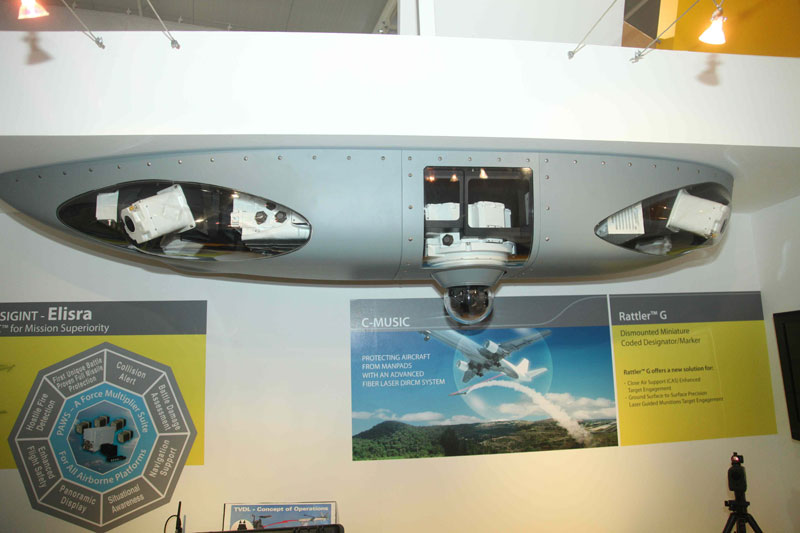
    The development of Commercial MUSIC (C-MUSIC) has reached an advanced stage at Elbit Systems’ ELOP, the company is highlighting the new system in a full-scale model, demonstrating the latest phase of the modular configuration, adapted for a wide range of commercial aircraft including Boeing 747, 777, and 737. “When C-MUSIC flys soon it will be the first active defense system certified for civil aviation. It will be relevant to commercial airliners, VIP aircraft and military transports, tankers and special mission aircraft flying from civilian airfields.” Adi Dar, General Manager, ELOP. “We intend to keep our competitive advantage and develop systems further, to meet customer operational requirements securing aircraft against evolving threats.” C-MUSIC has been selected by Israeli Ministry of Transportation to protect the entire Israeli commercial fleet. It includes certification to FAR-25 requirements by the Civil Aviation Authority of Israel (CAAI). Elbit Systems is now expanding its offering to the international market in a mission to assist in protecting large jet aircraft worldwide.

    EL AL President & CEO Elyezer Shkedy, former IAF Commander in Chief, and Gideon Sheffer, Executive VP Strategic Planning & Business Development, Elbit Systems, briefing Shkedy on the new Commercial C-MUSIC missile countermeasures developed by Elbit. The systems are being acquired by Israel’s Ministry of Transportation for use on EL-AL passenger planes. Photo: Tamir Eshel, Defense-Update
    C-MUSIC employs a fiber-laser based DIRCM element designed to defeat a wide range of MANPADS threats. This close-up photo shows the beam aiming mirror assembly directing the laser beam toward the target. Photo: Tamir Eeshel, defense Update

    Unlike the MUSIC system, introduced into a military aircraft as an integrated system, C-MUSIC is self-contained in a pod, with the missile warning, signal processing, laser emitter, beam conductor, beam director, and cooling. The compact pod measures 2.7m in length, and is designed to snap on to the carrying aircraft belly. The pod operates as a stand-alone unit, with Infrared Passive Approach Warning System (PAWS) sensors developed by Elbit Systems’ Elisra subsidiary monitoring the surrounding area in search of potential threats. When missile warning is issued, PAWS tracks the threats and directs the DIRCM, employing a unique Fiber Laser emitter conducting the laser beam through a mirror turret, to illuminate and disrupt the threat’s guidance, altering its flight course off the protected aircraft.

    Elbit Systems announced today the signature of supply order for the system’s first international customer – the Italian Air Force. The company has been awarded a contract valued in excess of $15 million by Elettronica S.p.A to supply MUSIC based elements for Elettronica’s ELT/572 DIRCM system destined for various platforms of the Italian Air Force, including the C130J, C27J and AW101. The contract will be performed over the next three years. The ELT/572 is based on MUSIC, its development was jointly funded by Elettronica and Elop under a cooperation agreements.

    C-MUSIC is designed to protect large jet aircraft against man-portable heat-seeking surface-to-air missiles known as MANPADS. Based on MUSIC systems currently in use on helicopters and medium turbo prop fixed wing aircraft, C-MUSIC’s fiber-laser directed IR countermeasure (DIRCM) technology creates a laser beam that is directed towards the tracked missile, effectively defeating the incoming threat. Modified specifically for the stringent demands of commercial aviation, C-MUSIC can be tailored to jet aircraft of all sizes and its fully automatic operation has no impact the flight crew workload. An airline can prepare all its aircraft to carry the system and rotate C-MUSIC through specific aircraft according to relevant threat assessment.

    Airbus Military and Elta Systems Introduce C295 AEW&C

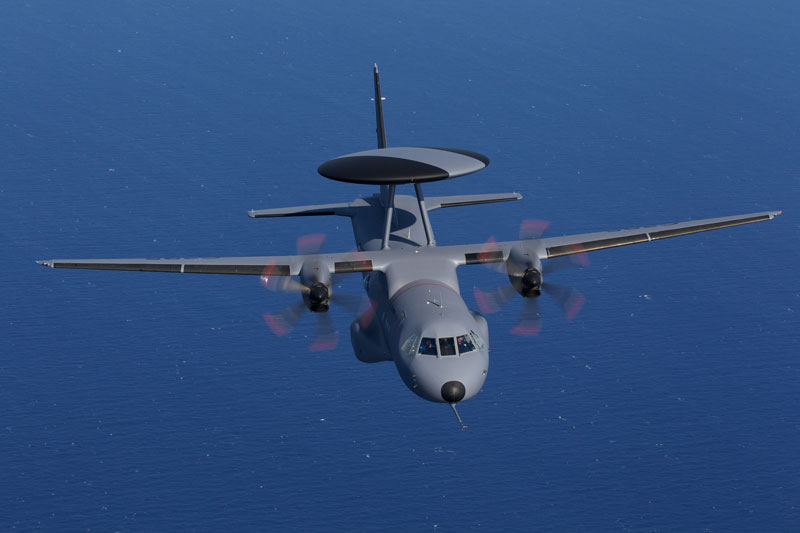
    The CN-295 AEW&C. Photo: IAI

    Today, Airbus Military and IAI/Elta Systems introduced their joint development of an Airborne Early Warning and Control (AEW&C) system based on the Airbus Military/Casa C295 medium transport. The companies announced the cooperation during a signature of a Memorandum of Understanding (MOU) at the 2011 Paris Air Show. Each party is investing tens of millions Euros in the program, expected to position both companies in an attractive position addressing the special mission AEW&C market. The aircraft, currently being fitted with a rotodome, will be equipped with a rotating 4th generation Active Electronically Scanned Array (AESA), combining effective flexibility of modern AESA with the low weight offered by the single rotating panel.

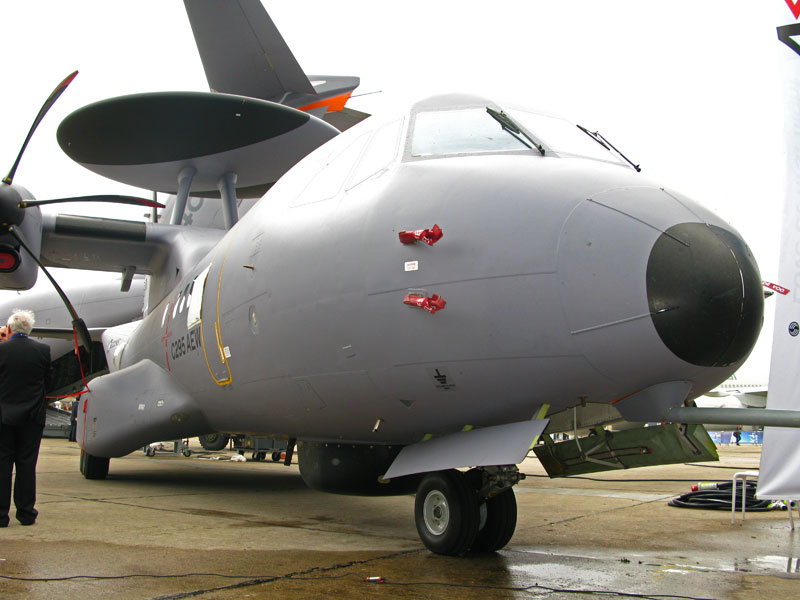
    CN295 AEW&C was unveiled today at the Paris Airshow. Israel’s radar expert Elta Systems is developing the radar for the aircraft, positioned as an affordable solution for aerial surveillance for military, homeland security and maritime EEZ control. Photo: Tamir Eshel, Defense-Update
    The CN-295 AEW&C. Photo: IAI

    The C295 fitted with a rotodome demonstrator is already conducting flight trials from Airbus’ Seville facility since June 8th. The initial tests have shown that the aircraft is aerodynamically an excellent platform for this purpose. Elta Systems and Aibus Military are now conducting engineering studies to integrate the mission suite, including the AESA radar, maritime search radar, IFF, ESM and other sensors, into the aircraft.

    The new system will expand IAI”s position in the AEW market, particularly with the small and economically efficient turbo-prop powered platforms, which have an established market worldwide.

    The new CN295 AEW&C will carry three radars – an AESA aerial surveillance radar mounted in the rotating dome, a maritime and surface search radar mounted in th bell and an IFF. Photo: Tamir Eshel, Defense-Update
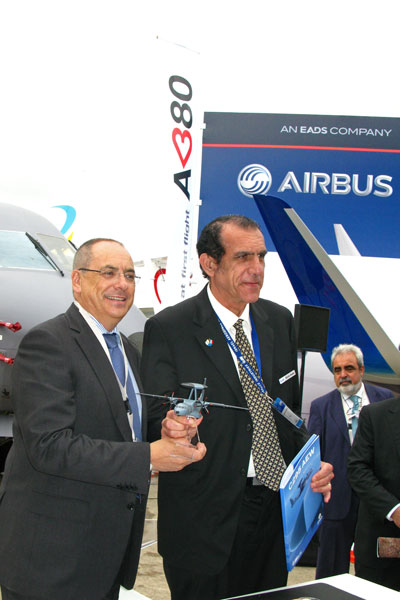
    Domingo Urena-Raso, Airbus Military CEO and Nissim Hadas, IAI Vice President, and president, Elta Systems at The signature ceremony. Photo: Tamir Eshel, Defense-Update.

    The C295 AEW&C has been designed to provide high quality 360 degree surveillance, creating in real-time an integrated air and maritime situation picture and electronic order of battle. The AEW&C situation picture is shared with friendly forces via network-centric datalinks. The aircraft positions Airbus Military and Elta Systems in direct competition with the Swedish Saab Erieye system, considered sofar as the lowest cost option for AEW&C. According to Elta, the 4th generation system developed for the C295 AEW&C has about four times more emitters, is more powerful, more flexible and offers overall better performance, enabling positioning the antennae to provide best coverage of a given sector (120 degree) or 360 degree hemisphere. In addition to the aerial surveillance and tracking capability, the system also includes a surface and maritime radar, providing naval search, Synthetic Aperture Radar (SAR) and Ground Moving Target Indicator (GMTI). In addition, the system includes Electronic Support Measures (ESM) establishing ‘a new eye in the sky’. The combination of the rotodome and AESA enables high scanning rate, enabling the system to initiate tracks of suspicious targets in few seconds, regardless of the target’s aspect.

    According to Domingo Urena-Raso, Airbus Military CEO: “last year at Farnborough we introduced the ASW version of the C295for Chile and this year we are opening a new market, offering affordable AEW&C. We are happy with the results from the trials we performed so far. Responding to the demand from military and HLS, for sophisticated, powerful and efficient yet affordable, lower life cycle cost we seem to be on the right track” he added.

    According to Nissim Hadas, IAI Vice President, and president, Elta Systems, the reaction received from the launch customer is encouraging, Hadas said he was confident that  the demand for the new aircraft will be substantial.


    Air Mules FanCrafts Could Be Operational in Four Years

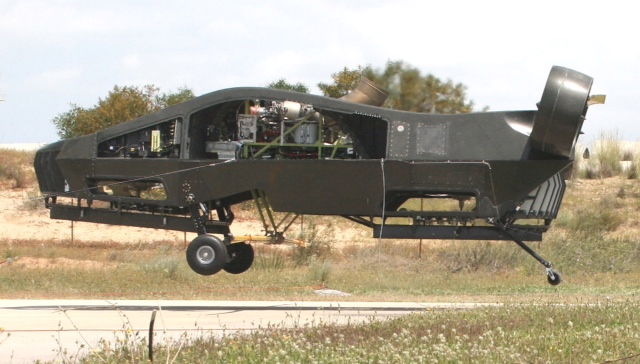
    Credit Urban Aeronautics, 2011

    After nine years of development, Rafi Yoeli, founder and CEO of Urban Aeronautics says he is confident the Air Mule can achieve operational level within four years. The new design is gaining much interest and support within Israel Defense Forces (IDF), bringing Yoeli closer to achieve his goal. “If funding for the Air Mule is secured, we could have Air Mule ready for fielding by 2015”. Yoeli tells Defense-Update.

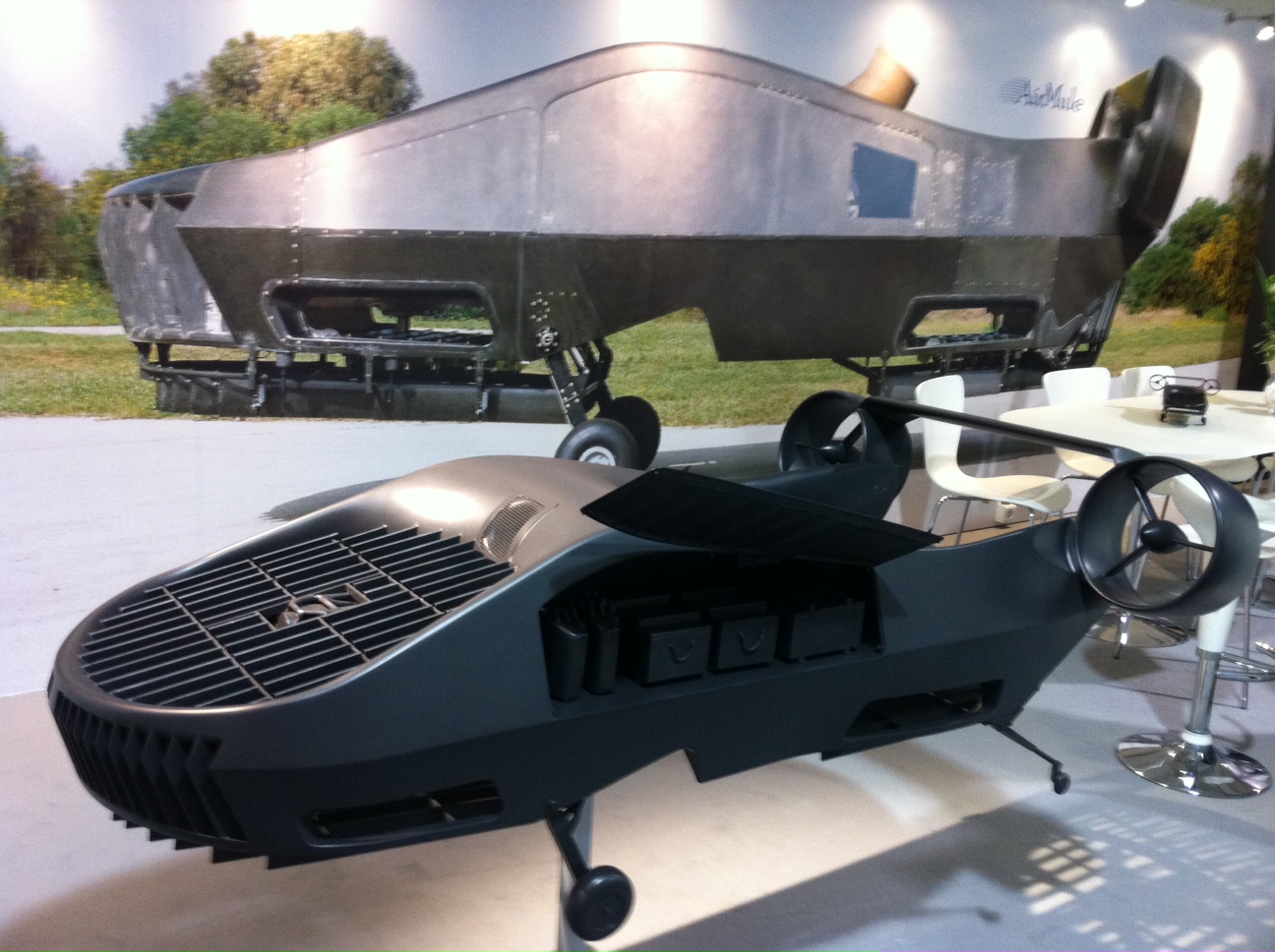
    Credit Urban Aeronautics, 2011

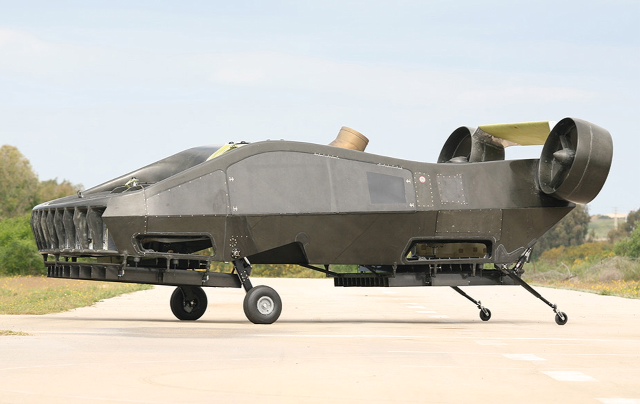
    Earlier in 2011 the ‘FanCraft’ innovator has resumed flight testing of AirMule the first FanCraft application designed as an unmanned vertical take-off and landing (VTOL) cargo carrier and casualty evacuation platform. The latest design change included the replacement of skids with landing wheels, creating some air ducts on the sides and integration of more sensors, improving the 1.4 ton aircraft response to side-wind gusts.
    In recent months Urban’s engineers integrated more sensors into the flight control system, which has become more complex and powerful. The original Global Positioning System/Inertial Navigation System (GPS/INS) was enhanced with more accurate Fiber Optical Gyro (FOG) and Differential GPS (DGPS) to offer higher navigation precision and improved flight control under more difficult flight conditions. The replacement of the skids with landing gears also proved a complex task, as extensive re-training of the flight-by-wire system was required, to train the algorithms to adapt to the wheel’s elasticity and interaction with the surface on landing and takeoff.

    Urban Aeronautics Air Mule at the Paris Airshow 2011. Photo: Tamir Eshel, Defense-Update

    In the upcoming weeks Urban Aerospace plans to replace the current Safran Turbomeca Arriel 1 engine with the more powerful Arriel 2, increasing the nominal power output from 730 shp to 940 shp. The new engine will bring the vehicle to the target half-ton useful payload weight class. “With the increased power Air Mule will be capable to take off at sea level with a maximum load of 650 kg, including fuel and useful cargo” Yoeli told Defense-Update. “We expect the vehicle to burn about 150 kg of fuel per hour, cruising at around 100 knots. Therefore, the Air Mule will be able to carry around 500 kg supporting forward units over a 50 km radius.” In fact, the Air Mule is designed to operate from forward bases, where ten vehicles could support 3,000 combat troops in the brigade area, over multiple missions, 24/7.

    Urban Aeronautics is investing extensively in the development of the Air Mule air vehicle, following Federal Aviation Administration (FAA) civil air worthiness standards (FAR 27), while the flight control system follows those developed for manned aviation. Yoeli is confident that these investments will pay off in the future, “when the time comes to certify this platform to carry wounded persons or transport passengers and troops, it will be ready.” Yoelli said.

    AirMule – photo: Urban Aeronautics, 2011

    “As the unmanned Air Mule is matured we expect to develop it into a piloted, troop carrier“ Yoeli told Defense-Update, ”It will be able to carry five passengers in addition to the pilot, maintaining the same single engine configuration.” The future manned configuration known as ‘Centaur’ will be utilized for special missions including law enforcement, rescue and evacuation etc. While carrying passengers in full capacity means it will have a limited range, Centaur will offer unique advantages unavailable by any other vehicle. Another manned/unmanned application could be assisting in emergency operations, vehicles regularly used for emergency operations could also be equipped for autonomous and remote operation, fitted with manipulator arms. Such capability could greatly assisted emergency response activities in Japan’s , such as in Japan’s nuclear reactors, Eventually, Urban Aeronautics plans to achieve its original goal, fielding the X-Hawk twin-engine troop carrier originally developed with Bell Helicopters. The twin-engine application will be mandatory for civil night operations over European cities.

    Paris Airshow 2011 Photo Report

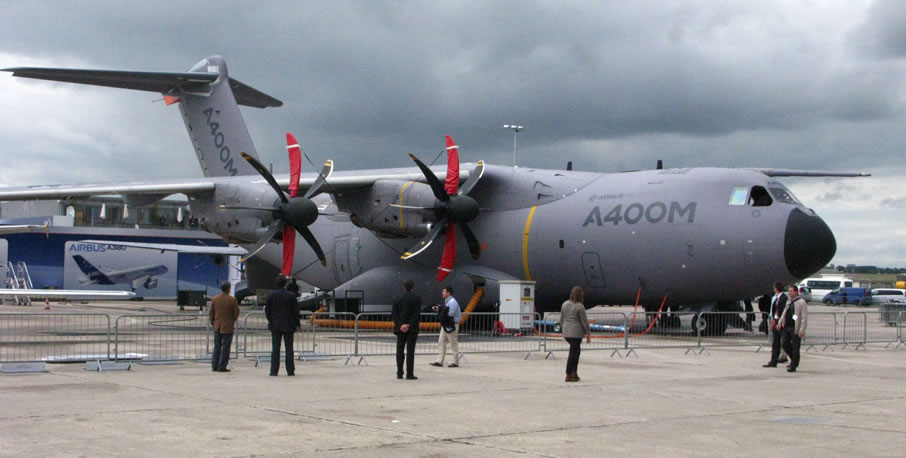
    Airbus Military A400M on display. The aircraft made one demonstration flight today, performing for the French President. Photo: Tamir Eshel, Defense-Update

    This is where Defense-Update will upload new photos during every day of the Airshow…

    The PARS 3LR weapon was developed under a three-nation cooperation (TRIGAT), which fell apart upon the withdrawal of British support. Later, the French MOD decided to discontinue its support leaving Germany to back the program. A possible Indian order could bring the missile back to the limelight. Photo: Tamir Eshel, defense Update
    The WASP mini-UAV displayed by UVision at the Paris Air Show 2011. Photo: Tamir Eshel, defense-Update
    Airbus Military A400M on display. The aircraft made one demonstration flight today, performing for the French President. Photo: Tamir Eshel, Defense-Update
    the Micro B micro UAV from BlueBird Aero Systems, carrying what Ronen Nadir, CEO calls 'the world's lightest thermal imaging payload'. Our camera caught the micro-payload on a rare expose. According to Nadir, the lightweight camera was developed by Bluebird, based on an uncooled thermal imaging sensor made by Semiconductor Devices (SCD). Photo: Tamir Eshel, Defense-Update

    The new Fury 1500 UAV from AME. With an empty weight of 25 kg, the new Fury 1500 can carry 75 – 100 kg of payload on a 15 hour mission. The ‘1500 is AME’s largest platform fielded to date. It is designed to carry multiple payloads, and carry two datalinks, plus satellite communications (a control communications channel utilizing an Iridium satlink. The company also plans to integrate a miniature satellite dataling to support sensor feed download via satellite. Currently the system uses two CDL links, enabling the Fury to serve as a radio relay for other platforms.)

    The Fury 1500 UAV. The Fury 1500 UAV. Photo: Tamir Eshel, Defense-Update

    This photo shows the Fury 1500 in an optional configuration adding two aerodynamic payload fairings covering ‘expensive payloads’ as Jay McConville, Chairman of the board at AME UAS said. The company is also the developer of the U.S. Air Force ‘Sand Dragon’ program, designed to fight Improvised explosive Devices (IEDs) from the air.

    The Fury 1500 UAV. Photo: Tamir Eshel, Defense-Update
    General Atomics family of UAVs displayed in models, showing the new, stealthy Avenger C in front, an armed Predator B Reaper in Royal Air Force colors, and the Customs and Border Protection maritime surveillance variant of the Predator B 'Guardian' which is displayed at the static area. Photo: Tamir Eshel, Defense-Update
    the Air Tractor on display at the Paris Airshow carries an impressive array of weapons. We expect to post more on this mighty plane tomorrow. Photo: Tamir Eshel, Defense-Update
    Iron dome is shown here for the first time in its new, mobile configuration. Photo: Tamir Eshel, Defense-Update
    The Chinese 'Wing Long' Predator size MALE UAV is displayed at the Paris Airshow 2011 in an armed configuration. Wing Long is designed for recce, ECM, and light ground attack missions. Maximum gross takeoff weight is 1,100kg with payload weight of 200 kg (350 kg with fuel). Photo: Tamir Eshel, Defense-Update
    RAFAEL unveiled the Modular Integrated C4 Air Defense (MIC4AD) system integrating multiple air defense assets into a total 'aerial picture', enabling air force jets, helicopters, transports and civilian air traffic to operate safely and efficiently in an air space, crowded with air defense and missile defense assets, artillery fire and enemy activity... A full description of the new system will follow. Photo: Tamir Eshel, Defense-Update
    The new CN295 AEW&C will carry three radars - an AESA aerial surveillance radar mounted in the rotating dome, a maritime and surface search radar mounted in th bell and an IFF. Photo: Tamir Eshel, Defense-Update
    C-MUSIC employs a fiber-laser based DIRCM element designed to defeat a wide range of MANPADS threats. This close-up photo shows the beam aiming mirror assembly directing the laser beam toward the target. Photo: Tamir Eeshel, defense Update

    Aeronautics Unveils Orbiter 3 at the Paris Airshow

    Aeronautics Orbiter 3. Photo: Aeronautics

    Aeronautics ltd., one of Israel’s leading unmanned aircraft systems (UAS) providers is unveiling its newest platform – Orbiter 3 Small UAS at the Paris Airshow. The UAS is already operational, with first system formally delivered three weeks ago to an undisclosed customer. “The Orbiter 3 STUAS brings to the unmanned systems market capabilities that did not exist previously” said Ran Carmeli, Head of the Aerial Division at Aeronautics. “A field deployed, 25 kg electric powered UAS, can now deliver the same Intelligence, Surveillance Targeting and Reconnaissance (ISTAR) output achieved up to now only by much larger tactical UAS of a 100 kg and more.”

    Aeronautics Orbiter 3. Photo: Aeronautics
    Aeronautics UAV’s Family. Top: the new Orbiter 3, center: D-42 Dominator, lower rigt: Aerostar and Orbiter I. Photo: Tamir Eshel, Defense-Update

    The Orbiter 3 SUAS is the largest variant of the Orbiterfamily of electric powered UAS. Its smaller variants, Orbiter 1 and 2 are deployed operationally worldwide by more than a dozen customers. The Orbiter 3, a member of Aeronautics’ Orbiter Mini-UAV family can stay in the air 7 hours, and reach ranges of more than a 100 km. It carries a wide range of payloads, including the latest multi-sensor stabilized payload TD-STAMP developed by Controp Precision Technologies. TD-STAMP comprises CCD camera, a high performance, cooled thermal imager (FLIR) and a laser designator, all packed into a compact, gyro stabilized mini payload.

    TD STAMP multi sensor laser-designating payload mounted in semi-recessed configuration on the new Orbiter 3. The payload weighing only five kilograms has simultaneous day, night (cooled mini-FLIR) and laser designation capabilities. Photo: Tamir Eshel. Defense-Update

    “I believe the Orbiter 3 STUAS will have great market success, moreover, it will dictate real changes in the UAS market.” said Aeronautics CEO Avi Leumi. “We receive constant demands for enhanced ISTAR capabilities, maintaining operational flexibility and small logistics – and that’s what the Orbiter 3 is all about.” Practically undetectable, Orbiters are used for a wide range of missions in land warfare including: ISTAR, artillery support, convoy protection and special ops. In the maritime arena, Orbiter serves as an independent ISTAR asset for naval vessels – launched and recovered from the ship’s deck.

    Skunk Works and XTEND Simplify Multi-Drone Command

    0
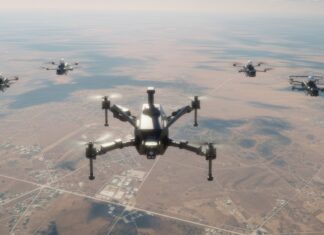
    Lockheed Martin Skunk Works® and XTEND have achieved a major milestone in JADC2 by integrating the XOS operating system with the MDCX™ autonomy platform. This technical breakthrough enables a single operator to simultaneously command multiple drone classes, eliminating the friction of mission handoffs. From "marsupial" drone deployments to operating in GPS-denied environments, explore how this collaboration is abbreviating the data-to-decision timeline and redefining autonomous mission execution.

    From Ukraine to Taiwan: The Global Race to Dominate the New Defense Tech Frontier

    0
    As traditional defense primes face mounting competition from agile “neoprimes” such as Anduril, Palantir and Helsing, the balance of innovation is shifting toward software-defined warfare and scalable, dual-use technologies, while global industry consolidation—marked by Boeing’s integration of Spirit AeroSystems and other strategic mergers—signals an intensified race to secure control over the defense technology value chain. Our Defense-Tech weekly report highlights these trends.

    Europe’s “Drone Wall”

    0
    In early October 2025, a coordinated wave of unmanned aerial system (UAS) incursions—widely attributed to Russia—targeted critical infrastructure across at least ten European nations. The unprecedented campaign exposed the fragility of Europe’s air defenses...

    Weekly Defense Update & Global Security Assessment

    0
    Executive Summary The past week (September 18-25, 2025) represents an inflection point where strategic defense concepts have transitioned from doctrine to tangible reality. An analysis of global events reveals four primary, interconnected trends shaping an...

    U.S. Air and Space Forces Push Next-Gen Programs at the AS&C 2025 Conference and...

    0
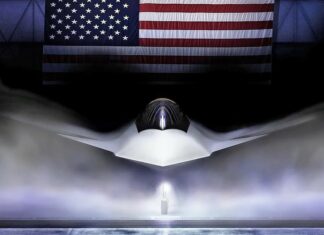
    At the 2025 Air, Space & Cyber Conference, U.S. Air Force and Space Force leaders unveiled major updates on next-generation fighters, bombers, unmanned systems, and space initiatives, highlighting both rapid innovation and critical readiness challenges as the services race to outpace global competitors. A short version is available here, with a more detailed version for subscribers.

    TADTE 2025: Reflecting Taiwan’s Strategic Themes

    0
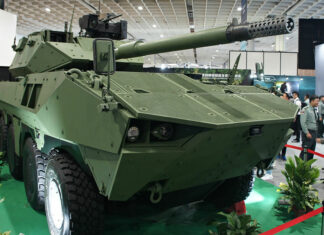
    The Taipei Aerospace & Defense Technology Exhibition (TADTE) 2025 crystallized around four dominant strategic themes that collectively illustrate Taiwan's comprehensive approach to defense modernization amid escalating regional tensions. Based on a detailed report by Pleronix (available upon request). Includes a Podcast discussion on TADTE 2025's highlighting Taiwan's four strategic themes beyond the post's coverage.

    Iron Beam 450 Completes Testing, Soon to Join With Operational Air Defense Units

    0
    Israel’s Iron Beam 450 high-power laser system has completed final testing, marking a major leap in air defense. Developed by Rafael, it offers precise, cost-effective interception of rockets, UAVs, and mortars, and is set for IDF deployment by 2025.