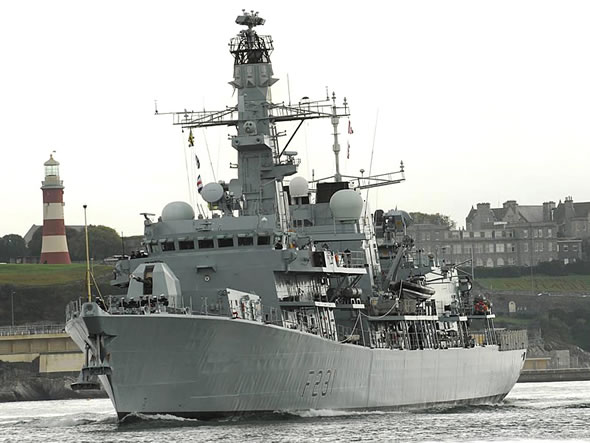
After a 13 months makeover in Rosyth, HMS Argyll, the Royal Navy’s oldest Type 23 Duke Class frigate is back in service following a £20m, year-long refit (The Argyll was commissioned in 1991). Through this major refit the frigate received the latest version of the Seawolf air defense missile system, a new command system, one new main gas turbine, two generators, and the MOD’s latest e-mail and internet system, DII(F). The vessel began to ‘crew up’ in earnest in May 2010 – four months before her refit was due to conclude. In the past months the crew went through extensive training, preparing them for the missions ahead.
HMS Argyll passing Plymouth Hoe, on 30 September 2010, as she returned from a £20m refit in Scotland. (Picture: James Crawford, Crown Copyright)
A large part of the training consisted of simulated battles on a daily basis, whether externally with enemy missiles, aircraft, ships and submarines, or internally with fires, floods and machinery breakdowns – most of which occurred simultaneously on Thursdays in the infamous ‘Thursday War’. The final phase of training was specific to the role that Argyll will perform for real towards the end of the year when she deploys east of Suez on maritime security patrols.
In the upcoming week we plan to unroll Defense-Update into the new scheme. During this period you may experience few service interruptions. We hope for your understanding and hope to serve you in the best possible way during this period and in the future
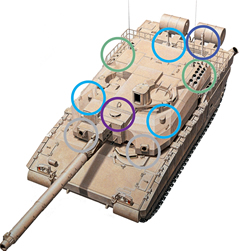
GIAT Industries is developing a modular countermeasure kit designed for mounting on modern armored fighting vehicles. The system was developed by the French Army. The system utilizes the DAL laser warning system and DDM missile launch detection system, smoke countermeasures and electro-optical IR jammer modulated to jam the missile operator’s deviation sight. The system is considered for mounting on Leclerc and AMX-30B2 tanks, AMX-10RC and VBCI APCs.
About 100 nations across the world have already come out in recognition of an independent Palestinian state, and more are expected to be coming onboard until September, when the United Nations General Assembly (UNGA) will vote for the creation of an independent Palestinian State within the 1967 borders.
Symbolism aside, if there is one thing the Palestinians have not learned in more than eighty years of conflict and four decades of fruitless peace talks, it is that if ever they hope to have a state of their own it will only be through realistic negotiations with Israel. A UNGA vote might give them a temporary field day in joyful manifestations, but when the curtain goes down reality will again erase all the hope for a workable solution.
Here are some of the reasons, why a unilateral move will create a non-starter situation, that cannot work: Even if the UNGA passes a resolution, calling for the creation of an independent Palestinian state within the 1967 borders of the West Bank, it will still remain a landlocked entity, fully dependent on Israel’s goodwill to provide access to Mediterranean ports – which Palestine will depend on for its import and export.Palestinian dependence on water supply also rests on Israeli sources which themselves suffer acute shortage and will more and more rely on seaside desalination plants – hardly accessible under the circumstances which will prevail if Palestine is unilaterally created. A simple look at the West Bank map will show that a non-negotiated unilateral Palestinian statehood, call it what you will, presents an impossible geo-political maze which cannot be ruled by central administration. Even if we discount the Jewish settlements, its remaining territory is partitioned, and subdivided into cantons, without directly controlled links between them, a situation that would scarcely be a state worthy of the name.
To be more specific the Palestinian West Bank is divided into two parts, the northern part (Samaria) with Ramallah, Nablus, Jenin, Tul-Karem and Qalquilya as Palestinian enclaves, and the southern section (Judea) with Bethlehem, Jericho, and Hebron. In between there is Jerusalem, that has now been expanded eastwards to such a degree that it encroaches upon the Judean Desert and cuts the Palestinian territory in half. The Jordan Valley, that should normally mark the natural boundary between the future Palestine and the Kingdom of Jordan, is practically a military zone, and Israel has already made it clear that it does not intend to demilitarize it. In other words, the future Palestine will be a land-locked State, surrounded completely by Israel or Israeli controlled territory.
An alternative using Jordan’s Aqaba port instead of Ashdod or Haifa, might be useless, as any transports would have to cross the Jordan River bridges, which Israel will continue to control – moreover it is highly doubtful if the current Hashemite Kingdom of Jordan will welcome such a move, fearing more Palestinian influence on the already large population of Palestinian origin, including Islamic radicals among them, causing instability in the Kingdom.
About half of the Palestinian population is concentrated in another enclave – the Gaza Strip, cut off from the West Bank and ruled by the Islamic radicals Hamas, which not only places at its aim the ultimate destruction of Israel, but opposes any Palestinian state ruled by its arch rival the Palestine Liberation Organization (PLO) headed by Abu Mazen. Moreover, Gaza’s ‘Hamastan’, created in a violent coup d’etat in 2007 is virtually at war with Israel, bombarding its territory constantly with rockets and mortar fire. Having already won the controversial 2006 elections and should they win the oncoming ballots once more- they would destabilize any newly created entity in the West Bank and resort to terror against Israel – which will inevitably lead to all-out war, resulting in catastrophic consequences and end final hope to any Palestinian liberty.
But should the UNGA vote assemble a huge majority supporting this unrealistic creation, Israel too will come under severe political and perhaps even economic sanctions. The real value of the vote will depend on which nations will give their “yes” to the proposal. The Arab and Muslim world nations are certain to adhere to their traditional anti-Israel stance, but whether Europe and especially the majority of the G20 countries will join will depend on the United States attitude and how much influence it will have on the proceedings. It will be up to Israel’s diplomatic effort during the next few months to gain as much support among its remaining friendly nations to prevent a political disaster from occurring. Based on Netanyahu’s controversial right-wing oriented coalitions, this will be difficult enough and under such stringent conditions, extremely problematic to sustain its case convincingly. With the revolutionary turmoil engulfing its neighbors and the waning influence of Washington’s Obama administration, Israel will feel more and more isolated in the coming months, with the specter of a massive support for a Palestinian statehood, backed by the United Nations placing the Jewish State in a highly precarious diplomatic situation.
“We are facing a diplomatic-political tsunami that the majority of the public is unaware of and that will peak in September,” said Ehud Barak, Israel’s defense minister, at a conference in Tel Aviv last month. “It is a very dangerous situation, one that requires action… Paralysis, rhetoric, inaction will deepen the isolation of Israel” Barak added.
And there is good reason for concern, even if the UNGA recognizes the ‘non-starter’ Palestinian statehood coming September. With this vote, which will have similarity with the November 1947 Lake Success vote for the establishment of the Jewish State, for the first time in 63 years the West Bank real estate will have legal ownership. Since Palestinians refused to accept the UNGA resolution of 1947, most the West Bank territory had no official owner since 1947 as it was seized by the Hashemite Kingdom of Jordan in 1948, and, since occupied by Israel in 1967, regarded ‘occupied under military administration’ since 1967. The last official ‘owners’ were the Turkish Ottoman Empire, the law of which still adheres to much of the legal proceedings here. Land settled by Jews will come ‘de jure’, if not ‘de facto’ under nominal jurisdiction of the UNGA created Palestinian entity. To add an even more sinister quote, Palestinian Chairman Mahmoud Abbas recently refused to allow any Jew to live in what would in future be a Palestinian state. In contrast, about 20% Arab Israelis are living in peace among the Jewish majority in Israel since 1948, with full political freedom (if not full satisfactory rights, as many Arabs and Israeli Jews claim).
Realistically seen, it might not make any difference, as it is highly doubtful that substantial changes will come into being as long as bi-lateral negotiations will fail to solve this never ending enigma. With the entire Arab Middle East in turmoil, even the leftist Palestinian ‘well-wishers’ in Israel can hardly envisage a forced mass evacuation of the Jewish settlers in the West Bank and cede it to an uncertain fate with what may well become a Islamic Hamas-ruled neighbor – its rockets daily targeting most of Israel’s coastal cities and strategic installations.
Israel’s surveillance specialist ESC Baz is displaying its range of perimeter surveillance, mast-mounted, mobile and man portable surveillance systems at Combat 2011. At the exhibition the company provides a peek into the new lines of products, including man portable surveillance systems utilizing standard multi-sensor binoculars already available with the user (ESC currently support a wide range of binoculars from Elbit Systems, ITL, Sagem, Thales, FLIR Systems and others). The system dubbed ‘AMI’ is configured as an ‘ambush kits’, employing the sensor mounted on remotely controlled pan-tilt tripod mounted unit, keeping the observers protected from enemy fire. The system is remotely controlled from a portable console over wire or wireless link. Another system on display is a compact telescopic mast, that can folded and tucked covertly inside vehicles. The mast is erected by remote operation, elevating surveillance equipment to a height of six meters.
The lightweight, tripod mounted man-portable pan-tilt mount developed by ESC Baz, coupled with remote control unit, to provide standard EO sensors or EO/IR binoculars to be used as remote controlled surveillance sensors without risking operator exposure. Photo: Tamir Eshel, Defense Update
Another product ESC Baz is showcasing here is the Hands-Free Radio (HFR) system, the kit provides security and undercover personnel riding motocycle with continuous, uninterrupted and covert communications, both with and without the helmet. The HFR kit comprises a miniature earphone, bluetooth helmet and Push to talk (PTT) wireles system controlling the radio from the handles. The system uses conduction connectors to switch seamlessly from mounted to dismounted operation in covert mode, without giving away suspicious signals. ESC Baz is also offering the HFR for horse mounted security and police forces.
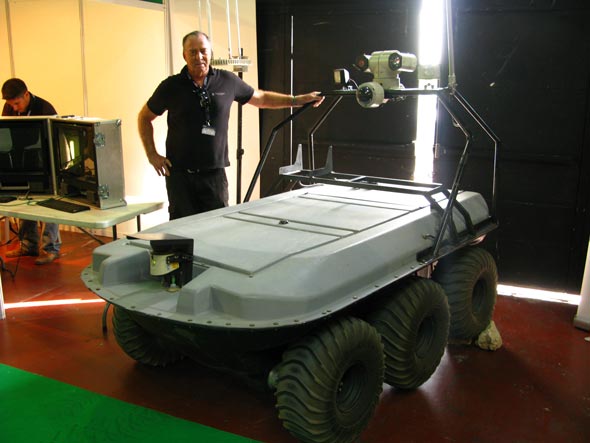
Automotive Robotic Industry CEO Amos Goren, Next to the AMSTAF UGV. Photo: Noam Eshel, Defense-Update
Automotive Robotic Industry is displaying here the AMSTAF robot, an unmanned patrol vehicle developed for security, border patrol, load carrying and casualty evacuation missions. The vehicle has already been selected for operation with the 5th Army of the Republic of Korea Defense Force, patrolling the Demilitarized Zone (DMZ) with North Korea.
the AMSTAF robot, an unmanned, electrically powered hybrid version of the ODG ARGO 6x6 platform. Photo: Noam Eshel, Defense-Update
According to Amos Goren, the company founder, AMSTAF is also being considered for ‘infantry mule’ military missions, carrying the loads of an infantry squad closely following the troops even through difficult terrain. Other applications considered for the vehicle include employment of non-lethal weapons in riot control operations and autonomous negotiation of emergency situations, including multiple ‘flocks’ of AMSTAFs handling suicide bombers with remotely controlled means such as TASER weapons, arresting nets and blast protecting blankets.
AMSTAF is an electrically powered hybrid version of the ODG ARGO 6×6 platform, sustaining missions up to 12 hours of continuous operation. It develops maximum speed of up to 42 km/h and 5 km/h in water and is uses differential low-level steering by differentially powering the left and right wheels. The vehicle uses two electrical motors each propelling the left and right forward wheel, using chain link to run the remaining wheels on each side. The low pressure tires have low ground pressure, enabling the AMSTAF to run over anti-personnel mines without activating them.
Based on Commercial Off the Shelf (COTS) elements, AMSTAF offers a cost effective solution for ‘dull and dirty’ robotic applications, capable of traversing difficult terrain including fully amphibious movement. The vehicle is fitted with capabilities for self-positioning, mapping, path finding and obstacle detection and avoidance. On security missions AMSTAF is designed to autonomously engage threats and operate as a single platform or as a ‘flock’. It can climb up to 37 degree slopes with 350 kg of payload.
Automotive Robotic Industry CEO Amos Goren, Next to the AMSTAF UGV. Photo: Noam Eshel, Defense-Update
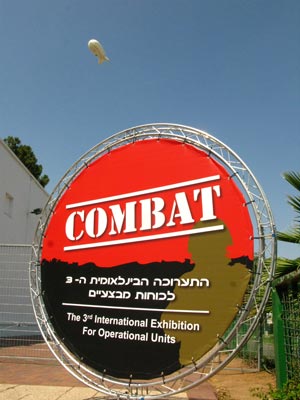
Security Israel 2011 and Combat 2011 – Israel’s military and security event se taking place in Tel Aviv for the 25th year (security) and 4th time (Combat) are providing a unique opportunity for Israeli companies to showcase innovative developments before they reach the world market.
Hydro-Noa, the Israeli cold entry specialist unveiled here a new tool designed to crack hasp locks. Photo: Tamir Eshel, defense UpdateShay Yermiyahu, marketing manager at Hydro Noa, demonstrates the use of hand held door breaking tool using manually driven hydraulic tool to tear the door off its hinges, bend it inside the room or pull it outside. Hydro Noa provides dedicated tools for speciifc uses or multi-purpose tools applicable for a wide range of applications. Photo: Tamir Eshel, defense UpdateMedi-T Mobile Clean Medical Unit. Photo: Noam Eshel, Defense-Update
Top-i Vision Tactical Aerostat System mounting with Lev 4 Stabilized Payload. Photo: Noam Eshel, Defense-UpdateTop-I Vision, aerostat, UAV and EO payload providers have shown here their newest stabilized, dual-sensor payload Lev-6 Z. The payload was demonstrated in operational use, suspended from the Top-I Vision aerostat, deployed outside the exhibit hall. Lev 6 Z is a lightweight system stabilized by two gimbals. The payload uses separate day and night channels, both fitted with continuous zoom. The company has already began working on the integration of a laser target marker into this EO payload. Photo: Tamir Eshel, defense UpdateTop-i Vision Tactical Aerostat System Ground Control Station. Photo: Noam Eshel, Defense-UpdateCol. (Ret) Avi Peer, CEO at Thermal Beacon, displays the company's new dual-band, covert thermal marker, facilitating effective identification, marking and signalling between forces employing I2, low-light TV and thermal imagers covering NIR, LWIR and MWIR (3-12 micron) wavebands. The system has recently entered operational service with military customers. Photo: Tamir Eshel Defense Update.Thermal Beacon also unveiled two new Venom I line of laser markers, infra-red pointer/illuminator mounted on light weapons. The Venom-I emits power levels of 200mw, while the larger IR pointer emits 1.2 watt. By opening beam divergence the the narrow focused beam of the pointer can be turned into an illuminating light source. The low power device is used at short range, typically indoors while the more powerful one is used over extended ranges of 200 - 1000 meters outdoors. The high power level of the outdoor device require users to follow strict safety rules to prevent eye damage, yet the operational benefits are clear, given independence of supporting units (for illumination), employment of covert means, stand-off operation, high intensity illumination over large area, etc. Photo: Tamir Eshel, defense UpdateMilitary DVR of the Goldtech Group displayed two versions of portable digital video recorders, one fitted with an integral display, the other, packing 64 gigabyte storage volume (enough for recording 32 hour of continuous high quality video) and batteries sustaining an eight hour mission. The system has an integral store and replay displaying the stored video on auxiliary peripheral device. Photo: Tamir EshelESC BAZ Night Vision And Thermal Electro Optics Devices. Photo: Noam Eshel, Defense-Update
The lightweight, tripod mounted man-portable pan-tilt mount developed by ESC Baz, coupled with remote control unit, to provide standard EO sensors or EO/IR binoculars to be used as remote controlled surveillance sensors without risking operator exposure. Photo: Tamir Eshel, Defense UpdateElios VMOS - Integrated Vehicle Mount Observation System. Photo: Noam Eshel, Defense-pdate
The Zibar MK.ii Here on Display. Photo: Noam Eshel, Defense-UpdateAutomotive Robotic Industry CEO Amos Goren, Next to the AMSTAF UGV. Photo: Noam Eshel, Defense-Update
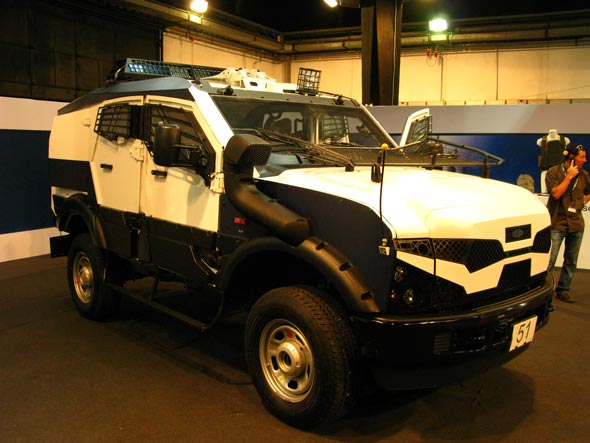
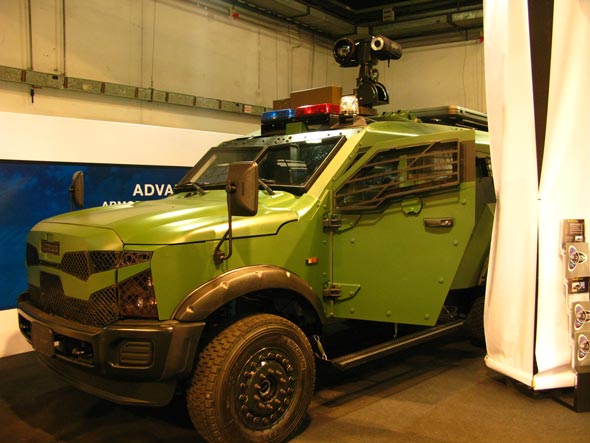
Plasan are showing two new models of the SandCat, designed for paramilitary and police missions. Plasan has already delivered a special version of the SandCat to the Israeli border security corps, as well as the Israel police special response units. Plasan has recently delivered 78 SandCats to Israeli homeland security and law enforcement agencies, including 51 to the Border Guards, 25 to the Police and two to the Prison Authority.
Plasan Sandcat Recce Version, Mounted with ELIOS Observation SystemPlasan Sandcat Police and Border Patrol Version. Photo: Noam Eshel, Defense-Update
Three versions of the SandCat are shown here, an open special-operations patrol vehicle, a highly protected patrol version for border security and a police special forces version. The reconnaissance and patrol vehicle is equipped with a new electro-optical observation system developed by Eldor Communications Technologies. The system, dubbed ELiOS V.M.O.S. comprises a thermal imager, utilizing Opgal R25 thermal cameras with fixed, dual FOV or continuous zoom, a day camera with up to 25-1100 mm telephoto lens, both mounted on a unique pan / tilt payload mounted on a folding, telescopic mast that can rapidly elevate to a height of 90 cm, 1.40 m or up to 3 meters, using electro-hydraulic lift. When the telescopic mast is maintained in the tilted position, the payloads can be operated on the move.
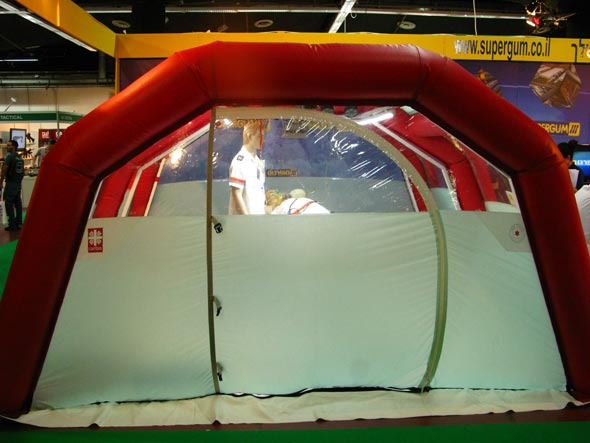
Medi-T Mobile Clean Medical Unit. Photo: Noam Eshel, Defense-Update
Supporting field deployments of for medical teams, in response to emergency operations, military operations or response to mass casualties emergencies, SYS Technologies is offering the new Medi-T inflatable ‘clean room’, providing rapid response clean space for surgical work, According to Dr. Shalom Zilbershmidt, who innovated the design, along with his partners at SYS Technologies, the Medi-T clean-air system can be erected in just ten seconds, capable of accepting emergency operations in minutes from arriving at the site. Two kits, which comes with support structure, blowers, filters and lighting systems can be transported in an ambulance or delivered by helicopter.
Medi-T Mobile Clean Medical Unit. Photo: Noam Eshel, Defense-Update
The structure weighs only 65 kg and is supported by air pressure, which also provides overpressure maintaining clean air at levels higher than hospital operating rooms. Built-in air filtration maintains 99.99% filtration efficiency for 0.3 micron particles and larger, meeting acceptance criteria for an airborne particulate cleanness level ISO 6.
The new system has already been deployed by Caritas Internationalis, the Vatican humanitarian support group.
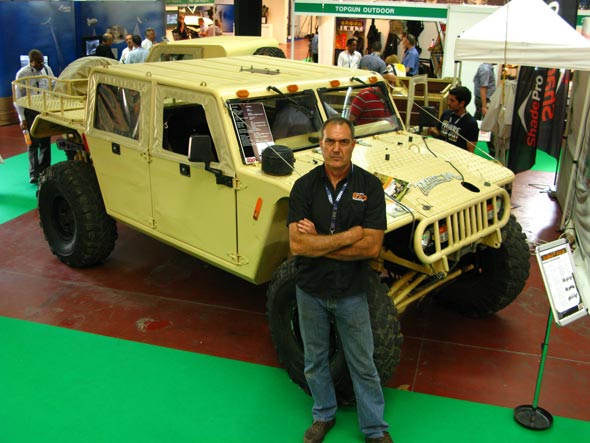
Ido Cohen, Founder of Ido Off-Road Center, Next to The Zibar-MK II. Photo: Noam Eshel, Defense-Update
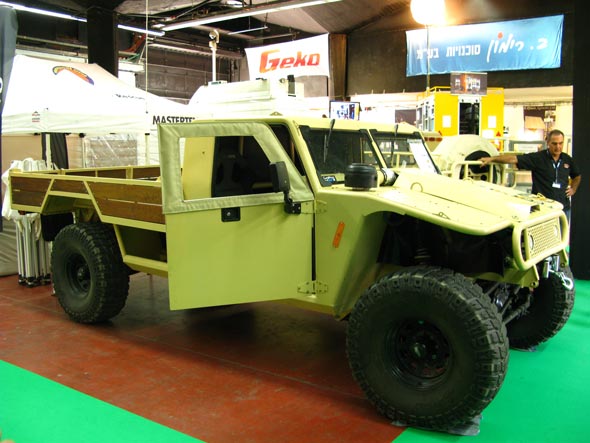
Ido Off-Road Center, developer of the Zibar is providing here a peek into the new model of Zibar Truck, a heavier, more powerful ‘pick up truck’ version of Zibar Mk II, designed for extreme duty off-road work. Zibar Truck offers almost the same performance and cross-country mobility, carrying loads of 2.8 tons on a large rear mounted flatbed cargo. The truck is powered by a GM Duramax 6.6L diesel engine developing 520 HP, and torque of 850 lb-ft – twice the torque level of the petrol engine used with Zibar Mk II. Both vehicles have a top speed of 180 km/h, approach angle of 90 degrees, and departure angle of 80 degrees, side slope handling of 60%, and longitudinal slope handling of 100%, 0.8 m’ ditch crossing and 0.75 m’ step climbing. The Zibar Truck can cross water obstacles 1 meter deep. The first shipment of Zibar Mk II has already been delivered to an international customer and the company is currently negotiating follow-on orders.
The New Zibar Truck Version, Debuting here at Combat 2011 Exhibition. Photo: Noam Eshel, Defense-UpdateIdo Cohen, Founder of Ido Off-Road Center, Next to The Zibar-MK II. Photo: Noam Eshel, Defense-Update
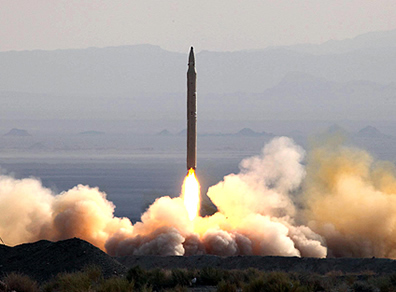
Qiam 1 missile launched during a test firing. Qiam 1 was inducted into IRGC service in May 2011. Photo: FARS News
Iran is planning to launch multiple ballistic missiles this week, as part of the annual, week-long ‘Great Prophet’ series of large scale exercises, incorporating the firing of various types of missiles.
Instead of stabilizing and guidance fins, Qiam 1 uses thrust vectoring offering lower drag, higher speed and reduced radar signature. The new steering mechanism is shown here in an official photo released by Mehr news agency. Photo: MEHR News
Among the missiles to be launched in the week-long exercise are long-range, mid-range, and short-range missiles, including Khalij-e Fars anti-ship missiles with range of 300 km, the new Qiyam finless-ballistic missile, Shahab 1 and Shahab 2, Sejil (2000 km) ballistic missile and Fateh 110 guided ballistic missile. Some of the Iranian ballistic missiles are operated from relocatable launchers, transported by trucks, while others are stored in hidden missile silos, remotely controlled from the missiles launch control center. The missiles stored in such silos are part of the IRGC quick response force. They are aimed at pre-determined targets, used as a retaliatory force.
Qiam 1 missile launched during a test firing. Qiam 1 was inducted into IRGC service in May 2011. Photo: FARS News
Retired Brigadier General Steve Anderson. Senior V.P., Relyant
In an effort to provide reasonable living conditions to over 100,000 troops in Afghanistan and Iraq, the Pentagon is spending over $20 billion a year on air conditioning. The amount reflects the gross investment in maintaining air conditioning at the front line, including the hardware, fuel, transportation, protection etc. “When you consider the cost to deliver the fuel to some of the most isolated places in the world — escorting, command and control, medevac support — when you throw all that infrastructure in, we’re talking over $20 billion,” retired brigadier general Steven Anderson, who served as Gen. David Patreaus’ chief logistician in Iraq, said on an interview on NPR.
To power an air conditioner at a remote outpost in land-locked Afghanistan, a gallon of fuel has to be shipped into Karachi, Pakistan, then driven 800 miles over 18 days to Afghanistan on roads that are sometimes little more than “improved goat trails,” Anderson says. “And you’ve got risks that are associated with moving the fuel almost every mile of the way.”
Anderson calculates more than 1,000 troops have died in fuel convoys, which remain prime targets for attack. Free-standing tents equipped with air conditioners in 125-degree heat require a lot of fuel. Anderson says by making those structures more efficient, the military could save lives and dollars.
Retired Brigadier General Steve Anderson. Senior V.P., Relyant
Anderson advocates for increased energy efficiency for military structures in order to cut down on the need for long, dangerous fuel-transport missions. A few months ago, Anderson heard from a company commander in Afghanistan. “He literally has to stop his combat operations for two days every two weeks so he can go back and get his fuel.” Anderson said in the NPR interview, “And when he’s gone, the enemy knows he’s gone, and they go right back to where they were before. He has to start his counter-insurgency operations right back at square one.”
Anderson says experiments with polyurethane foam insulation for tents in Iraq cut energy use by 92 percent and took 11,000 fuel trucks off the road. But he adds there’s a lack of enthusiasm for a greener military among top commanders, who did not see the green agenda as an important factor that should further burden operational decisions. But Anderson claims that guidance for this policy should come from the top, and trickle through the command chain, rather than be imposed on the troops. “A simple policy signed by the secretary of defense – a one- or two-page memo, saying we will no longer build anything other than energy-efficient structures in Iraq and Afghanistan – would have a profound impact” Anderson concluded.
In February 2011 Gen. Anderson has joined the Relyant corporation as Senior Vice President, in charge for the company’s presence in Washington, D.C., managing the organization’s strategic planning and military business development. Relyant is a global provider of construction and insulation projects, life support, demining, logistics/procurement, security, and IT communications. It should be noted though that these additional costs are spent regardless of the volume of supplies sent over supply lines, as the convoys do not carry only fuel, but also food, ammunition, batteries, spare parts, building supplies etc. nevertheless, a green approach could significantly reduce volume, and costs and risk of such operations.
Editor’s note: As of 2020, Mr. Anderson is not associated with RELYANT Global, its parent company, or any subsidiaries in any capacity, financial or otherwise.
Flypmode seen on its first test drive. Photo: Local Motors
After 14 weeks of work, rapid prototyping automotive manufacturer Local Motors has completed the manufacturing of the ‘Flypmode’, the winning design of Defense Advanced Research Projects Agency (DARPA)’s ‘Crowd-Driven Combat Support Vehicle’ XC2V.
DARPA’S XC2V Design Challenge asked individuals to co-create a vehicle body design for two different missions – Combat Reconnaissance and Combat Delivery & Evacuation. The FLYPMODE, designed by Victor Garcia won the first prize – $7,500 in cash and to be built into a prototype by Local Motors.
The Flypmode, designed by Victor Garcia, is designed as an agile, modular and missionized design, based on the Local Motors built chassis. Photo: Local Motors
This video shows part of the birth of the Flypmode, in a time-lapse video
The Flypmode is designed as an agile, modular and missionized design, based on the Local Motors built chassis. The side rails are maintained high to support high mobility over cross country terrain. Yet, some design elements are contributing to the safety and protection of the occupants, such as rapid egress, ingress and egress for the driver and co driver, and attachments for carriage of loads and personal gear around the vehicle, adding to the protection of the crew. The vehicle was designed to a maximum loaded weight of 2,721kg (6,000 lbs), therefore, the use of armor protection would be almost impossible, although designers were required to include potential location for ‘360 degree, horizon to horizon protection’.
A top view of the Flypmode shows the 360 degree visibility offered by the all-round windows. One of the mission requirement for the contest was the use of such vehicle in airbase protection and forward air control role. Photo: Local Motors.
The design offers all-round windows providing 360 degree visibility, suitable for the recce role and improving situational threat awareness. The vehicle has an overall length of 4.55 m’, width of 2.08 m’ and height of 1.98 m’. The internal space can accommodate a driver, commander and between one to three passengers. The rear ramp provides ample space for loads, personal gear or carriage of up to three wounded personnel on standard stretchers.
With winners selected using current methods – the program turns to an analysis of crowd-sourced selection. The next research question becomes, how could crowd-sourced selection contribute to the goals of Defense manufacturing? Fundamental questions remain regarding the role of diversity vice expertise in such design and selection tasks. In the coming weeks DARPA will include potential vehicle end users in alternative engagements. This follow-on study seeks more answers and may allow for a second vehicle to be built. Side-by-side evaluation between crowd-selected and end-user-selected vehicles will be conducted.
Flypmode seen on its first test drive. Photo: Local Motors
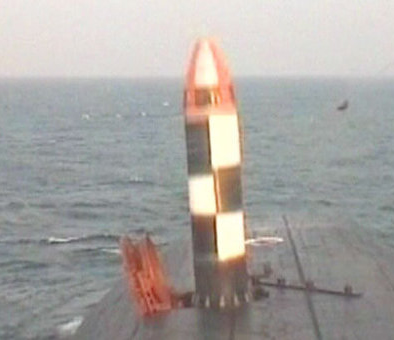
Bulava MSR-56 Submarine Launched `Ballistic Missile launched from the Russian missile submarine Dmitry Donskoy. The current launch is expected to be performed from the first Borey class submarine, Yuri Dolgoruky.
Russia is set to resume this week the flight testing of its (RSM-56) Bulava Submarine Launched Ballistic Missile (SLBM) system (NATO code name SS-NX-30). According to a Russian Defense Ministry source quoted by Novosti, the next launch is scheduled for June 28, two weeks after the original ‘window’ announced for the flight. The upcoming test was approved by the State Commission for Flight Testing on Saturday June 25. Previous launches were conducted from the Borey surrogate submarine Dmitry Donskoy, but according to the latest information, the launching platform for this test will be the first Borey Class, Bulava equipped submarine, Yuri Dolgoruky, which already deployed to the Barents Sea. This submarine has recently completed sea trials in the White Sea, and is expected to enter service with the Russian Navy in the near future, pending the outcome of the Bulava testing. The current test campaign is planned to include four launches this year, leading to deployment on the new Borey class strategic missile carrying submarine.
Russian Navy Submarine Yuri Dolgoruky, the first Borey class Nuclear powered, missile carrying submarine, has recently completed sea trials and awaiting completion of the RSM-56 Bulava Submarine Launched Ballistic Missile, to be equipped with its intended weapons and become operational as part of the Russian Navy strategic force. Photo via Dutchintell
Top brass of the Russian strategic forces have insisted that the program should be continued despite repeated launch failures, claiming the Bulava is the only successor for current missiles, and that the system should continue its tests through full and satisfactory completion of the program. In the last test in late October 2010, two Bulava missile were successfully test-fired from the Dmitry Donskoi in the White Sea, hitting a target on a test range in Russia’s Far East Kamchatka region some 6,000 kilometers to the east. Prior to this test, the program was plagued by repeated failures.
Proving the missile’s reliability is expected to be the last phase of the development program, before the Multiple Independently targetable Reentry Vehicle (MIRV) warheads are integrated with the missile. The production of these warheads has already been completed. When it will be announced operational the Bulava will be capable of attacking targets at ranges of 8,000 kilometers (5,000 miles) with up to 10 MIRV warheads. The Russian military expects the Bulava, along with Topol-M land-based ballistic missiles, to become the core of its nuclear triad.
Bulava MSR-56 Submarine Launched `Ballistic Missile launched from the Russian missile submarine Dmitry Donskoy. The current launch is expected to be performed from the first Borey class submarine, Yuri Dolgoruky.
According to Deputy Prime Minister Sergei Ivanov, a missile production plant in southern Siberia has produced enough Bulava ballistic missiles to complete its tests and arm the Yury Dolgoruky, the first Borey class strategic submarine. Three other Borey class nuclear submarines, the Alexander Nevsky, the Vladimir Monomakh, and Svyatitel Nikolai (St. Nicholas) are in different stages of completion. Russia is planning to build eight of these subs by 2015.
Earlier this year the Russian Prime Minister Vladimir Putin said that Russia plans to double the production of ballistic missiles after 2013. According to Ivanov, Russia will invest 77 billion rubles ($2.6 bln) in the production of ballistic missiles in the next ten years, through a ballistic missile production holding will be set up with the participation of Russia’s Federal Space Agency. The holding will include the Moscow Institute of Thermal Technology, which designed the Topol and Bulava missiles.
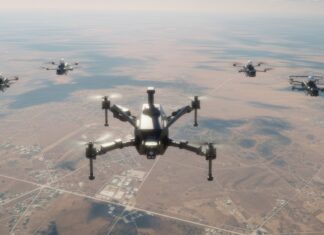
Lockheed Martin Skunk Works® and XTEND have achieved a major milestone in JADC2 by integrating the XOS operating system with the MDCX™ autonomy platform. This technical breakthrough enables a single operator to simultaneously command multiple drone classes, eliminating the friction of mission handoffs. From "marsupial" drone deployments to operating in GPS-denied environments, explore how this collaboration is abbreviating the data-to-decision timeline and redefining autonomous mission execution.
As traditional defense primes face mounting competition from agile “neoprimes” such as Anduril, Palantir and Helsing, the balance of innovation is shifting toward software-defined warfare and scalable, dual-use technologies, while global industry consolidation—marked by Boeing’s integration of Spirit AeroSystems and other strategic mergers—signals an intensified race to secure control over the defense technology value chain. Our Defense-Tech weekly report highlights these trends.
In early October 2025, a coordinated wave of unmanned aerial system (UAS) incursions—widely attributed to Russia—targeted critical infrastructure across at least ten European nations. The unprecedented campaign exposed the fragility of Europe’s air defenses...
Executive Summary
The past week (September 18-25, 2025) represents an inflection point where strategic defense concepts have transitioned from doctrine to tangible reality. An analysis of global events reveals four primary, interconnected trends shaping an...
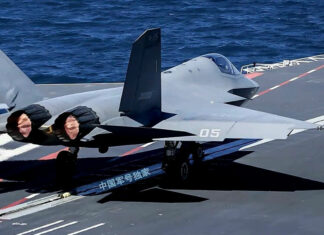
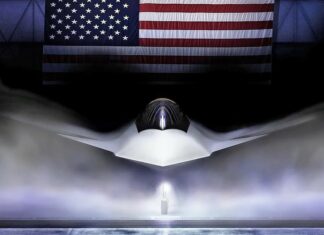
At the 2025 Air, Space & Cyber Conference, U.S. Air Force and Space Force leaders unveiled major updates on next-generation fighters, bombers, unmanned systems, and space initiatives, highlighting both rapid innovation and critical readiness challenges as the services race to outpace global competitors. A short version is available here, with a more detailed version for subscribers.
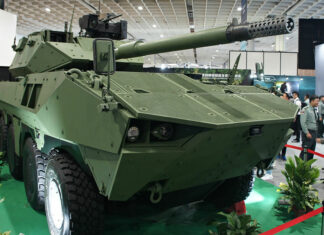
The Taipei Aerospace & Defense Technology Exhibition (TADTE) 2025 crystallized around four dominant strategic themes that collectively illustrate Taiwan's comprehensive approach to defense modernization amid escalating regional tensions. Based on a detailed report by Pleronix (available upon request). Includes a Podcast discussion on TADTE 2025's highlighting Taiwan's four strategic themes beyond the post's coverage.
Israel’s Iron Beam 450 high-power laser system has completed final testing, marking a major leap in air defense. Developed by Rafael, it offers precise, cost-effective interception of rockets, UAVs, and mortars, and is set for IDF deployment by 2025.