
Monday, December 29, 2025
More
    Home Blog Page 229

    Controp Expands Miniature EO Payload Line with Laser Designating Micro-Payloads

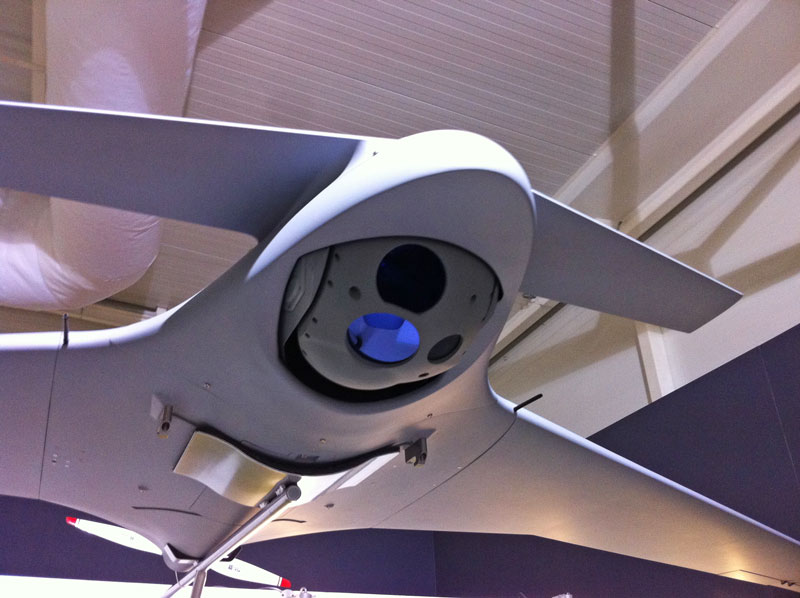
    TD STAMP multi sensor payload mounted on the new Orbiter 3. Photo: Tamir Eshel. Defense-Update

    Controp is unveiling at the Paris Air Show 2011 the TD STAMP, a new lightweight payload optimized for small UAVs. TD STAMP is displayed at the airshow on Aeronautics’s Orbiter 3 UAV, also making its international debut here. The new payload offers performance level comparable to much larger payloads, at a weight ranging from 2.8 kg for the dual-EO/IR version to five kg, for the dual EO/IR plus laser designation capability, making TD STAMP the lightest laser designating payload in tkhe market.


    TD STAMP multi sensor payload mounted on the new Orbiter 3. Photo: Tamir Eshel, Defense-Update

    As an EO technology driven company, Controp Precision Technologies is developing EO payloads for use in airborne, land-based and naval applications. One of the company’s forte are lightweight, gyro-stabilized EO payloads developed for Small Unmanned Aerial vehicles (SUAV). About five years ago, Controp came out with the STAMP – small gyro-stabilized miniature payloads specially designed for SUAVs, developed with funding from Israel’s Ministry of Defense. Selected as the standard payload for the Sky Rider SUAVs operated by the IDF Artillery corps, STAMP payloads have proved their capabilities in operations in Israel and abroad. The STAMP payloads can all be installed by nose, top or belly mount on the carrying vehicle. These three-gimbal gyro stabilized payloads are not limited to SUAVs – they are also ideal for installation on board VTOLs, small balloons/aerostats and a variety of other air and land vehicles.

    Through the years STAMP family was expanded to include a daylight (750 gr.), High Definition (STAMP-HD), and Uncooled IR models (U-STAMP), with and without zoom. To enable SUAV to rapidly cover large areas, D-STAMP day camera is now available with the new scanning mode operation. Supporting extended mission durations of modern SUAV, staying on missions for 5 or 6 hours, transitioning from daytime through twilight to nighttime on a single mission. The new M-STAMP includes a day camera, an uncooled dual FOV TI camera and a laser pointer all in a compact payload weighing less than 1.2kg. The M-STAMP model is currently being further miniaturized toward an objective weight of one kg. A larger EO payload is T-STAMP, a 2.8 kg payload mounting three sensors on a stabilized platform, offering high level of stabilization in three axes, cooled FLIR with continuous power zoom and CCD camera. The T-STAMP also comprises a line-of-sight stabilized inertial measurement unit enabling accurate geo-location of targets.

    Aeronautics Orbiter 3 mounted with Controp

    At the Paris Airshow Controp and Aeronautics are unveiling the latest version of T-STAMP, fitted with a laser designator designated ‘TD-STAMP’ weighing only five kilograms. This payload, the lightest of its class, is optimized for military VTOL operations providing a superior quality gyro-stabilized image. The new TD-STAMP fills what was previously a critical technological gap – now providing a lightweight payload with a Laser Designator for operational capabilities which are appropriate for small UAVs and VTOLs.

    U.S. Primes Cut Paris Air Show Spending to Avoid DOD Backlash

    Lockheed Martin CEO Bob Stevens

    Underlying much of the show will be a deep unease about the future course of American defense spending. Since the United States accounts for the great majority of the world’s defense spending, the serious prospect of cuts totaling hundreds of billions over the next decade, casts a pall over the show. The clouds began to gather at last year’s Farnborough Air Show when Lockheed Martin announced it would substantially reduce its presence at the show.

    Lockheed Martin CEO Bob Stevens

    According to Colin Clark column in AOL Defense, this year Lockheed took the same basic approach, with CEO Bob Stevens telling the press at their now annual pre-Paris breakfast that he would not attend the show again and his company would cut its spending on the show by one-third. That amounts to only a few million dollars but Lockheed, Boeing and Northrop Grumman are all wary of spending much money on such a high-profile event.

    The senior leaders at the Pentagon have made clear they are watching the defense companies closely and want them to keep costs under tight control. On the other hand. Raytheon is playing up its attendance and offerings at the show, clearly more confident that their business model will benefit. Raytheon is doing well with international sales, which make up about 25 percent of recent sales.
    Read Colin Clark’s article on AOL Defense


    Israel Set for the Paris Air Show

    Following successful battle experience Iron Dome counter-rocket missile system, along the Stunner interceptor, part of the future David’s Sling, Arrow II and III and Barak 8 are demonstrating Israel’s future multilayer missile defense systems at the Paris Airshow.
    Air and missile defense systems are at the center stage of Israel’s aerospace and defense display at the 49th Paris Airshow. Following the operational success of the Iron Dome counter-rocket system, an emphasis is given to active defense missile and air defense capabilities, including a new, mobile version of Iron Dome, and the Stunner interceptor under development of the next generation David’s Sling air and missile defense system.

    According to Maj. General (ret.) Udi Shani, Director General of the MOD, “despite the slowdown of the global economy, in 2010 Israel’s defnse export growth continued, as the industries demonstrated stability, growth and substantial contribution to the national economy, proving once again that our investment in defense provides substantial value for The country’s economy”. Shani added that “The display of Iron Dome, David’s Sling and Arrow, following the successful operational debut of Iron Dome provides a substantial opportunity for such systems becoming a growth engine for Israel’s defense export.”

    According to annual records published by Israel’s Ministry of Defense (MOD), the country’s defense exports in 2010 grew to $7.2 billion, up from $6.9 billion in 2009. The total orders backlog off the leading industries increased from $17.3 to $18.8 billion.

    Avi Hefetz, General Manager Israel Export and International Cooperation Institute (IEICI) added that the Israel’s aerospace and defense industries sold about one billion US$ in commercial and civil export, representing about 14 percent of the total annual aerospace and defense export. IEICI aims to more than double the share of civil aviation segment in Israel’s A&D export, by increasing the number of exporters, reaching 30 percent over the next three years. Hefetz acknowledged that the total volume of civil aerospace export is increasing year over year, as defense industries expand their portfolio to increase commercial and civil offerings.

    15 of Israel’s leading Aerospace and Defense (&D) industries are back at the Paris Airshow. This year marks the 25th time at the world’s premier aerospace event opening in Paris Le Bourget on June 20th. The Paris Airshow Provides the primary showcase for the world’s leading aerospace companies, manufacturers, subcontractors and service providers. As such, it also offers Israel’s aerospace and defense industries an attractive venue for business development. Organized by IEICI in cooperation with the Ministry of Defense, the Israel Pavilion is located at a special building alongside the outdoor static display and in an additional, new location in Hall 3.

    Continue reading…

    Updated: Paris Air Show 2011 On Site Report

    With aerospace buzz soaring during the week-long Paris Air Show, excited visitors at this premier aerospace event may feel somewhat disappointed by the absence of the most advanced military jets. The F-35, T-50 or J-20 are not coming to Paris, although they are bound to create a lot of interest and news in the halls and in the chalet rows. Instead, civilian aircraft, new transport planes, and experimental aviation, such as the solar-powered ‘Solar Impulse’ or X-3 hybrid helicopter are likely to steal the headlines, along with innovative modification of familiar platforms taking new missions – dust-croppers turned to firefighters, or killer drones transformed into maritime search platforms. Among the new helicopters on display is the CH-148 Cyclone from Sikorsky making its international debut. Sikorsky also displays the S-70i, the latest ‘international’ model of the Black Hawk, produced in Poland. The AW-149 from AgustaWestland will also be on display, along with its bigger brother, AW159. AgustaWestland plans to demonstrate the AW149 in flight.

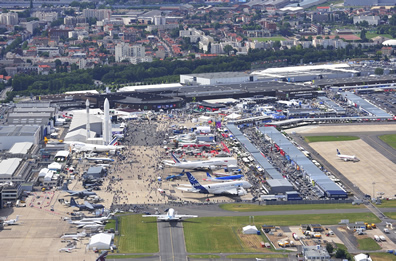
    A panoramic aerial view of Paris le-Bourget Airport, at the 2009 Paris Air Show. Photo: Alain Ernoult.

    Representing the fighter community are the traditional faces – Dassault Rafale F-3 and Eurofighter Typhoon, both particpating in the daily flying displays. The Pentagon is sending fewer aircraft than usual, this year, the Pentagon’s stable will include a Lockheed martin F-16C and C-130J, both participating in the aerial display, while the C-5 Galaxy will remain in the static display. The Boeing F-15E, C-17A and CH-47 will be presented at the static display only. U.S. department of Defense will also display two Bell Helicopters – UH-1Y Huey and AH-1Z Super Cobra, both U.S. Marine Corps aircraft.

    Among the trainers, the Paris Air Show will highlight few of the modern trainers, including the Italian Aermacchi M346, M311, Pilatus PC12, and PC21, and Hawker Beechcraft T-6C. The later will also be showing its capabilities as a light attack  / Counter Insurgency (COIN) aircraft in a special simulator built by Canadian simulator expert CAE. While the T-6 will show its simulated teeth, its bigger and stronger battle scarred competitor AT-802U from Air Tractor will be displayed here, alongside its firefighting sibling – AT-802F. The later was recently acquired by Israel, to form the first Israel Air Force firefighting squadron. Another firefighter on display is the BE200 shown by the Russian company Beriev. Both aircraft are offering advanved means for nations in combatting raging wildfires.

    Military transports are represented by AIRBUS Military A400M, and C-295, being modified with a raotodome for a future early warning and control mission. Lockheed Martin also showcases the C-130J Super Hercules, and Alenia Aeronautica showing the C-27J. All transports, except the C295 will also participate in the flight displays.


    Boeing is introducing here two of the latest versions of the half-century old ‘747 Jumbo Jet family, the 747- 8 passenger and Freighter. According to Boeing, the 747-8 freighter  aircraft flew from Seattle to Paris fueled by Biofuel, highlighting the industry’s new trend toward ‘green aviation’. AIRBUS A380-800 taking part in the daily flight display will undoubtedly be one of the biggest attractions of the show. Continuing their battle on who’s ‘Air Show order book’ is bigger, Boeing and Airbus are likely to announce new orders throughout the show, but what would really mean a lot for the industry is how those orders affect the supply chain – Tier I (engines, airframe etc.) and Tier I and III suppliers. While the new Boeing 747-8, the latest variant of the Jumbo Jet family will debut here, Boeing is also expected to announce new orders for its new 787 Dreamliner. Beside the wide body aircraft, narrow-body aircraft are also making the news. From small commuters to larger airliners provided exclusively by Airbus and Boeing.

    More activity is likely to take place at the exhibit halls, where companies will highlight new concepts and designs for future commuter and regional passenger aircraft. Among the new faces likely to join this category in upcoming years are the new ‘C series’ from Bombardier, the Russian Super Jet from Sukhoi and a future narrow-body aircraft planned from Embraer. Engine makers addressing this market are expected to announce new models to match this category that has the potential to outgrow wide body sales in coming years. At the flight line and static display area, visitors can view other regional and business planes, displayed by Bombardier, Sukhoi Superjet and and AN-148, developed by the Urkaine company Antonov.

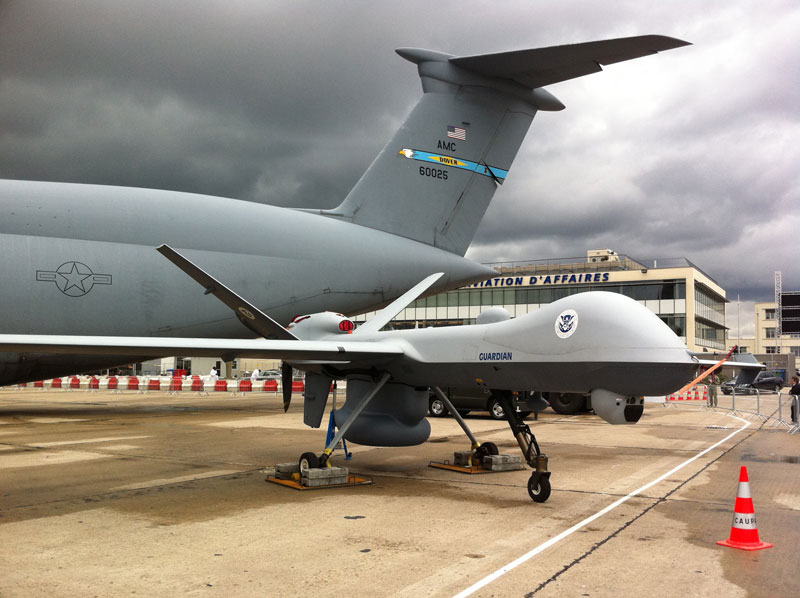
    If the presence of military aircraft diminishes year by year, Unmanned Aerial Systems (UAS) are becoming a major part of the display, at least in the static park. Among the new unmanned aircraft, the Predator B configured for naval surveillance, operated by the U.S. Customs and the Talarion from EADS shown here as a full-scale mockup. Israel’s Aeronautics is unveiling the newest member of the Orbiter UAV, an electrically powered air vehicle capable of performing 7 hour missions, carrying a new multi-sensor EO payload comprising a daylight and FLIR cameras and a laser designator. Israel Aerospace Industries (IAI) is displaying here two of the newest members of the Panther vertical take-off and landing UAVs, as well as the ETOP tethered hovering surveillance platform. The Heron from IAI is also on display at the static park.

    U.S. Government Sends the Guardian Predator B to Paris

    U.S. Customs and Border Protection (CBP) is displaying the Guardian, its maritime variant MQ-9 Predator B Unmanned Aircraft System (UAS), at the Paris Air Show 2011. The Guardian is flown from its home base at Cape Canaveral, Fla., to Le Bourget, France, onboard a U.S. Air Force C-17.

    CBP procured the remotely-piloted aircraft to enhance the agency’s long-range maritime surveillance, detection and targeting capabilities in the source and transit zones of the Eastern Pacific, Caribbean and Gulf of Mexico, as well as support anti-terror efforts along maritime smuggling routes.

    Guardian began operational testing and evaluation in Cape Canaveral Air Force Station in February 2010 and began conducting missions in April. As part of the modification for the CBP mission, a Raytheon SeaVue multi-mode radar was integrated on board along with the Raytheon MTS-B EO/IR and Automated Identification System (AIS) marine search radar was added to the aircraft. This past spring, the agency was honored with a the Aviation Week and Space Technology Laureate Award, for the successful integration of the radar payload.

    Currently, CBP has five Predator B aircraft and two Guardian aircraft operating from strategic locations around the United States. Two additional Predator B aircraft are scheduled for delivery by December and third Guardian is scheduled for delivery in early 2012.

    Photo General Atomics

    Since the inception of the CBP UAS program, the Office of Air and Marine has flown more than 10,000 hours, responding to requests for support from CBP ground agents and in support of CBP partners in disaster relief and emergency response, including various state governments and the Federal Emergency Management Agency (FEMA).

    IAI President Itzhak Nissan: "IAI is Prepared to Go Public"

    Itzhak Nissan, IAI President and Chief Executive Officer. Photo: IAI

    “IAI is ready for privatization, a move that will position it to better pursue a larger share of the global Aerospace and Defense (A&D) market, toward our goal in becoming a $10 billion company by the end of the decade.” Itzhak Nissan, President and CEO IAI tells Defense Update.

    In 2010 IAI reported sales of $3.15 billion, out of an order backlog of $8.9 Billion, placing it at the the leader among Israel’s aerospace and defense industries. However, with net profit of $94 million its profitability is relatively low compared to its local and international competitors. In the first quarter of 2011 the quarterly net profit increased to 46 million, while the backlog slightly drop to $8.6 billion, of which 84 percent are attributed for export.

    Itzhak Nissan, IAI President and Chief Executive Officer. Photo: IAI

    IAI’s high export ratio is high compared to European or American piers, averaging compared to an average of 30-40 percent of export, but they also exceed export levels of other Israeli companies such as Elbit Systems, Rafael or IMI, which usually maintain lower shares of export in their businesses. The majority of IAI’s business stems from large government-to-government (G2G) programs IAI has won in recent years. IAI also had relatively smaller share of the domestic land forces market. The establishment of a new business area is addressing this opportunity. Regardless of the cause, the high dependency in export exposes IAI to currency fluctuations, while its ability to expand operations overseas is limited by its current structure. The adverse effect of the devaluation of the US$ against the Shekel, the local Israeli currency.

    IAI covers a broad spectrum of the most advanced technologies, from remote sensing from space, satellite launchers, special mission aircraft, sophisticated sensors, missile interceptors and advanced air defense systems, advanced naval systems, unmanned systems and robotics. “To sustain this portfolio we must invest in a broad technology base, and diversify our R&D investments over a wide range of technologies, especially in areas we want to be positioned as world leaders” Nissan explained.

    “At the Paris Air Show 2011 we are showing part of the capabilities that have already evolved into mature products. This is only a small part of the unclassified part of IAI portfolio, we definitely have much more than we can show, and the company continues to invest in new technologies and new concepts, either its own money or as R&D investments as part of ongoing programs.” Nissan added.

    Continue reading…

    Accenture: A&D Should Improve Customer Service to Achieve Better Performance

    Damien Lasou, Accenture Aerospace and Defense division. Photo: Accentur

    Although improvements in customer service rank among the highest priorities for aerospace and defense executives, the lack of collaboration between multiple team partners across different companies and business alliances, limited integration of customer service with sales service operations are preventing these improvements from materializing. A survey published by Accenture highlights a significant gap between the awareness of the importance of customer service and the actions taken to deliver that service.

    Damien Lasou, global managing director of Accenture’s Aerospace and Defense Group.

    “There appear to be major flaws in the way some aerospace and defense customer services are designed and implemented with limited integration considerations for other key functions such as sales, supply chain, and engineering,” said Damien Lasou, global managing director of Accenture’s Aerospace and Defense Group. “A wide gap exists between actions and intentions. On a conceptual level, the criticality of customer services to drive high performance is well understood, yet the steps to drive theory into practice are less well defined. The shift to better customer services in this industry on multiple levels is a massive trend, and companies need to invest more in this arena to become high performers.”

    The survey performed by Accenture has polled industry executives in 12 countries, and found that more than half (56 percent) said that developing a customer service mindset among employees will be the number one challenge to achieving their company’s customer service goals in the next three years. However, three-out-of-four companies (75 percent) do not currently use collaboration such as alliances, partnerships or other third party providers to operate their customer service, and 72 percent do not expect to increase them in the next two-to-three years. Consistent with this, only slightly more than a third (38 percent) of the executives indicated they had integrated the company’s sales service operations. To retain control, nearly three-fourths (73 percent) keep customer service “in-house.”

    Although 75 percent of the respondents rate the importance of providing competitive service in the next three years as critical, only 53 percent said their companies have a clearly defined customer service strategy in place. And 85 percent acknowledge they are required to achieve at least some progress in their customer-specific improvement plans.

    Rather than seeing customer service as providing new revenue opportunities, respondents cite more defensive reasons for focusing on customer service. In descending order, they ranked staying competitive (59 percent), differentiation from competitors (53 percent), and customer retention (41 percent) as the top three reasons. Only about one-fifth cited other reasons for investing in customer service, including expanding into new geographies (22 percent), driving incremental margin (22 percent) and acquiring new customers (19 percent).

    CH-148 Cyclone Maritime Helicopter Debut at the Paris Air Show 2011

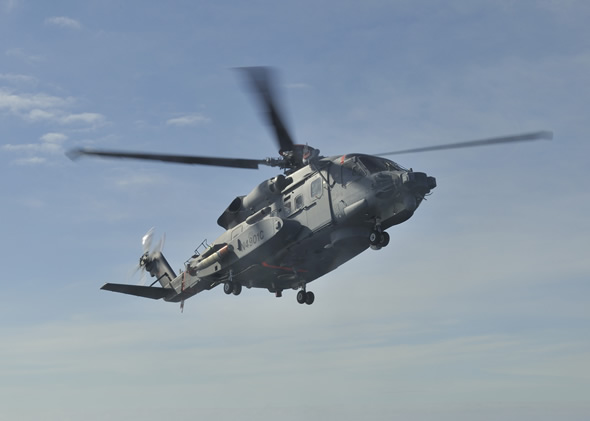
    CH-148 is a multi-mission helicopters addressing the full range of maritime missions including anti-submarine warfare (ASW), anti-surface warfare (ASuW), search and rescue (SAR), and utility missions. Photo: Sikorsky Aircraft

    Sikorsky Aircraft is unveiling its latest maritime helicopter version, the CH-148 Cyclone. The new helicopter will make its international debut next week at the Paris Airshow 2011.

    Cyclone is under development for the 28 helicopter Canadian Maritime Helicopter Project (CMHP), for the planned replacement of the fleet of Sea King helicopters that have been in operation for almost 50 years. “We believe the Cyclone helicopter represents the ‘aircraft of the future’ for maritime forces around the globe,” said Carey Bond, president of Sikorsky Global Helicopters.

    The CH148 recently completed another phase of Ship Helicopter Operating Limits Testing, (also known as sea trials), verifying that flight and deck operations can be executed through a growing envelope and demonstrating how maintenance can be performed efficiently on board. Canadian Forces technicians are now undergoing ground-based training, to be followed by aircrew flight training. The CH148 is derived from Sikorsky S-92 search and rescue helicopter now in use with the U.K. Maritime and Coastguard Agency, the Saudi Ministry of Interior, offshore oil operators and other users throughout the world. In addition to the Canadian program, Sikorsky has proposed helicopters based upon the CH148 design, to the German Navy.

    CH-148 is a multi-mission helicopters addressing the full range of maritime missions including anti-submarine warfare (ASW), anti-surface warfare (ASuW), search and rescue (SAR), and utility missions. It is designed for full spectrum shipboard operations with a deck haul down and handling system, CT7-8 marinized engines, hover refueling and designed-in features for shipboard maintainability.

    The aircraft has a full glass cockpit with a fully digital fly-by-wire flight control system, automatic blade and tail fold, 360-degree Inverse Synthetic Aperture Radar (ISAR), self protection suite, passive and active acoustics, Forward Looking Infrared (FLIR), electronic surveillance systems, digital data link and an extensive navigation and communications suite.

    CH-148 is a multi-mission helicopters addressing the full range of maritime missions including anti-submarine warfare (ASW), anti-surface warfare (ASuW), search and rescue (SAR), and utility missions. Photo: Sikorsky Aircraft

    Phantom-Eye Prepares for First Flight by this Summer

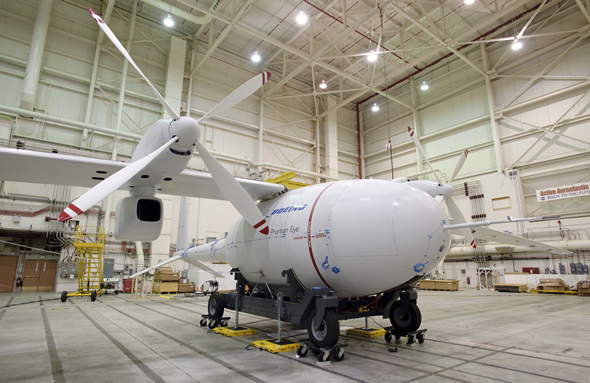
    Phantom Eye is undergoing flight testing at NASA Dreyden, prior to the first flight, scheduled for later this summer. Photo: Boeing

    The Boeing Company Phantom Eye High Altitude Long Endurance (HALE) unmanned airborne system completed 12 days of ground vibration and structural mode interaction tests this month at NASA’s Dryden Flight Research Center at Edwards Air Force Base, Calif. The aircraft is being prepared for its first flight, scheduled for later this summer.

    Phantom Eye’s two hydrogen fuel tanks also were successfully filled with nitrogen to test fueling procedures and the aircraft’s full-fuel weight configuration.

    Phantom Eye has a 150-foot (45.7 m’) wingspan and is powered by two 2.3-liter, four-cylinder hydrogen engines that each provide 150 horsepower. It is designed to fly at 65,000 feet for up to four days; perform intelligence, surveillance and reconnaissance missions; and serve as a communications relay.

    Phantom Eye is undergoing flight testing at NASA Dreyden, prior to the first flight, scheduled for later this summer. Photo: Boeing

    Electrically Powered Catapult Launches First T-45C, C-2A Aircraft

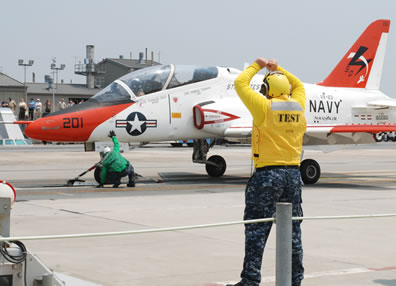
    EMALS, a complete launch system designed for Gerald R. Ford (CVN 78) and all future Ford-class aircraft carriers, will replace the steam catapult system that has been in use for more than 50 years. (U.S. Navy photo)

    The Electromagnetic Aircraft Launch System (EMALS) successfully completed the first launch of a T-45C Goshawk from the NAVAIR Lakehurst, N.J. test site on June 1, As part of these ongoing compatibility testing, twelve successful launches were made June 1 and 2. Few days later, on June 8, the system performed the first launch of a C-2A Greyhound as part of the system’s ground testing. The Greyhound was launched 18 times over a wide range of aircraft weights June 8 and 9 as part of ongoing aircraft compatibility testing.

    The Electromagnetic Aircraft Launch System successfully completed the first launch of a C-2A Greyhound belonging to Air Test and Evaluation Squadron (VX) 20 from the NAVAIR Lakehurst, N.J., test site June 8. The Greyhound was launched 18 times over a wide range of aircraft weights June 8 and 9 as part of ongoing aircraft compatibility testing. EMALS, a complete launch system designed for Gerald R. Ford (CVN 78) and future Ford-class aircraft carriers will replace the steam catapult system which has been in use for more than 50 years. Photo: U.S. Navy

    EMALS built by General Atomics is a complete launch system designed for Gerald R. Ford (CVN 78) and all future Ford-class aircraft carriers will replace the steam catapult system which has been in use for more than 50 years. EMALS is lighter, requires less maintenance, and provides increased efficiency and more accurate end-speed control.

    Engineers at Naval Air Engineering Station Lakehurst, N.J., work on the EMALS trough at the System Functional Display site. U.S. Navy Photo.

    EMALS technology was fundamentally proven by the U.S. Navy in 2004 using a full-scale, half-length prototype, where more than 1,500 launches and armature maneuvers were conducted. Since 2008, component testing on the shipboard design has been underway, including full scale/full power tests of all components. A full scale test site was established at Naval Air Engineering Station Lakehurst, N.J., in 2010.

    EMALS, a complete launch system designed for Gerald R. Ford (CVN 78) and all future Ford-class aircraft carriers, will replace the steam catapult system that has been in use for more than 50 years. (U.S. Navy photo)

    MH-60R Wins First International Sale with Australian Order for 24 Helicopters

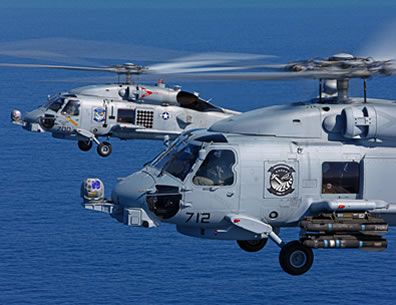
    The Australian Navy intends to buy 24 MH-60R SeaHawk multi-role naval combat helicopters to equip its new surface ships. The value of the order is estimated at AU$3 billion ($3.15 billion). The order will be processed through U.S. Government’s Foreign Military Sales (FMS) channel, and will be managed by the U.S. Navy. The U.S. Navy was supported in its winning proposal by Team Romeo, consisting of MH-60R airframe manufacturer Sikorsky Aircraft, a subsidiary of United Technologies Corp. [NYSE: UTX], mission systems integrator Lockheed Martin [NYSE: LMT], engine manufacturer GE [NYSE: GE], sensor supplier Raytheon Corp. [NYSE: RTN], and training supplier CAE [TSX: CAE].

    Lockheed Martin expects to deliver the first two completed MH-60R aircraft of an eventual 24 to the Australian Navy in the first quarter of 2014. Photo: Lockheed Martin


    The Commonwealth of Australia signed yesterday the Letter of Acceptance, a formal agreement with the U.S. Navy. The Royal Australian Navy is expected to take delivery of the first two MH-60R helicopters in 2014. The Romeo aircraft will fulfill Australia’s AIR 9000 Phase 8 requirement that seeks a replacement capability for the Royal Australian Navy’s 16 existing S-70B-2 SeaHawk helicopters, which entered service in the late 1980s. In 2008 Australia terminated a local development of the SeaSprite helicopter, proposed as a successor for the SH-60B. The current selection also considered the NFH, a version of the NH-90, which offered commonality with the MRH90 battlefield transport helicopters selected for the Australian army.

    “The MH-60R Romeo helicopter will fill a critical maritime warfare capability for the Royal Australian Navy,” said Rear Adm. Steven R. Eastburg, Program Executive Officer, Air, ASW, Assault and Special Mission programs. “U.S. naval forces have found the Romeo platform to be an operationally effective and reliable first responder for all missions and contingencies encountered at sea around the world.” Besides performing its primary mission roles of anti-submarine and anti-surface warfare, the multi-role aircraft also can perform search and rescue, troop transport, medical evacuation, ship-to-ship replenishment and humanitarian relief operations. The U.S. Navy began operating MH-60R aircraft in early 2006 and, since then, it has completed highly successful extended deployments. Sikorsky and Lockheed Martin will deliver the 100th Romeo aircraft to the U.S. Navy in late June. The U.S. Navy is expected to purchase 300 Romeo aircraft by 2018. In addition to delivering Romeo helicopters, the team plans to bring long-term jobs and work opportunities to Australian industry valued at $1.5 billion over 10 years. “We look forward to collaborating with the Royal Australian Navy and local industry across Australia as we build and integrate these proven SeaHawk aircraft.” Mick Maurer, president of Sikorsky Military Systems commented. The Australian selection marks a significant milestone for Team Romeo, as it is the first purchase of the U.S. Navy’s MH-60R helicopter outside the United States. Related posts:

    Skylark 1LE + Dominator Offer New Benefits for Special Ops

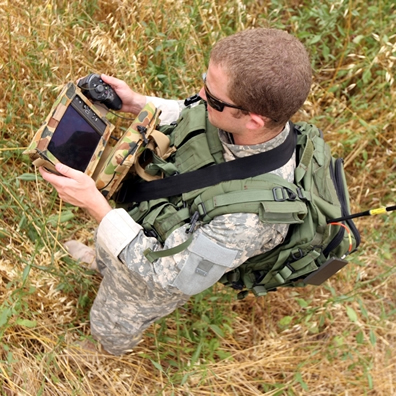
    The Forward Ground Control System (FGCS) comprises the Dominator's wearable computer, hand held display, operating stick and additional Rambo video datalink. Photo: Elbit Systems

    Elbit Systems demonstrated how the Skylark 1LE, a small, silent, tactical mini-unmanned aircraft systems (Mini-UAS) can be operated with standard ‘Dominator’ wearable command and control, significantly reducing the warfighter carried load, relieving forward units from the need to deploy, control and retrieve UAS and empower special operations teams with persistent, ‘semi-organic’ ISR support.

    Elbit Systems has demonstrated the use of Skylark ILE mini-UAV from a Dominator wearable command and control kit, optimized use by special operations forces and small dismounted infantry teams. The kit reduces 15 kg from the weight load of current Skylark ILE systems, enabling dynamic 'hand off' of the UAVs between dispatching units and supported teams. Photo: Elbit Systemses

    The evaluation involved the Skylark I LE mini/man-pack UAS using the standard hardware developed for the Dominator wearable command and control (‘soldier system’) to control and operate the UAS. The Skylark was operated by the Forward Ground Control Station (FGCS) application, utilizing the Dominator organic hardware solution. This new concept offers interoperability and Size Weight and Power (SWAP), enabling dismounted and special operations infantry teams to carry out complex missions by flexibly tailoring common tools and systems for each mission (the ‘swiss knife’ approach).

    The Forward Ground Control System (FGCS) comprises the Dominator's wearable computer, hand held display, operating stick and additional Rambo video datalink. Photo: Elbit Systems

    Beyond adding flexibility, the FGCS reduces more than 15kg of the load of contemporary Skylark system weight. The FGCS comprises four main components aside from the UAS, all of which are geared on the soldier’s vest: FGCS computer (using a standard Dominator PDU), tactical hand-held display, operator stick and an active Skylark ‘Rambo’ transducer that fits as an additional radio into the soldier’s vest, replacing the datalink unit used with the Skylark system. For covert and “on-the-move” operations, an eyepiece can be used instead of the hand-held display, further reducing hardware weight and power consumption.

    Using standard PDUs with the FGCS ‘app’ minimizes the load carried by dismounted soldiers. Furthermore, the UAS can be launched by Dispatcher Units at a distance from the supported force, transferring control of the operation to the forward units, when the UAS reaches their range.

    IAI to Unveil a New Air Defense & Air Surveillance Radar

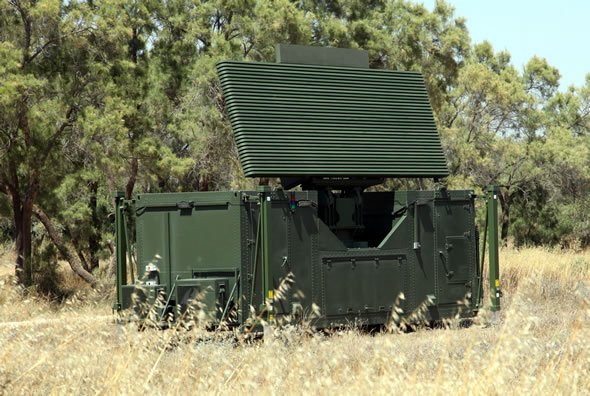
    IAI Elta is unveiling the AD STAR radar at the upcoming Paris Airshow 2001. The radar is designed for Air Defense, Air Surveillance and Air Traffic Control. Photo: IAI

    IAI Elta is introducing a new air defense, surveillance, threat alert and air traffic control radar (AD STAR) offering an affordable, mission specific solution for customers worldwide. In recent years IAI Elta has witnessed a growing demand for air surveillance radars, with customers planning to phase out legacy air defense radar system. At the time, Elta’s existing solutions, although offering highly advanced capabilities, were aiming ‘too high’, therefore were less affordable to the average customers. The new system positions the company with highly capable yet affordable and competitive solution for these requirements.

    Based on the the latest technology developed for Elta’s  family of modular, multi-mission radars (MMR), AD STAR featuring fully digital beam forming in elevation (transmitting and receiving, to provide high 3D accurate data on detected targets, initiating automatic tracking. A Secondary Surveillance Radar (identify friend/ foe- IFF) can be integrated to perform synchronized detection, interrogation, decoding and tracking. Similar to Elta’s other advanced, solid-state designs, The new design ensures high redundancy, graceful degradation, high reliability and high availability.

    The new model, designated ELM- 2288, follows Elta’s operationally proven family of air defense/multi-mission radar systems that include the ELM-2080 “Green Pine”, the Anti-Ballistic ARROW Defense System Search, Acquisition and Fire Control Radar and the ELM-2084 Multi-Mission-Radar family. more traditional, rotating system. Utilizing solid state S-band transmitters, the radar provides 3D long-range surveillance. Designed for rapid deployment, the new radar can be transported by air, sea or ground by folding its antenna on its shelter roof.

    IAI Elta is unveiling the AD STAR radar at the upcoming Paris Airshow 2011. The radar is designed for Air Defense, Air Surveillance and Air Traffic Control. Photo: IAI

    IAI to Unveil a Medium Range Guided Weapon at the Paris Airshow

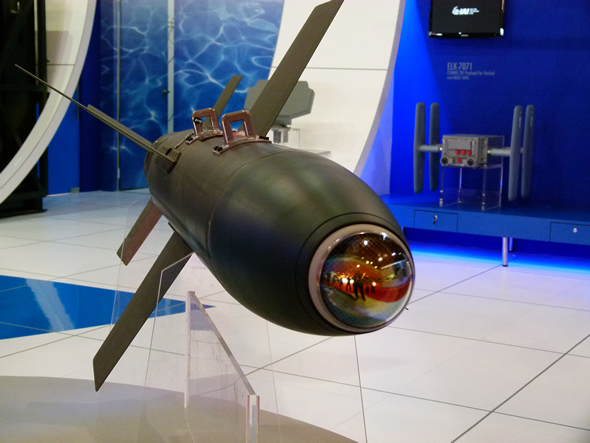
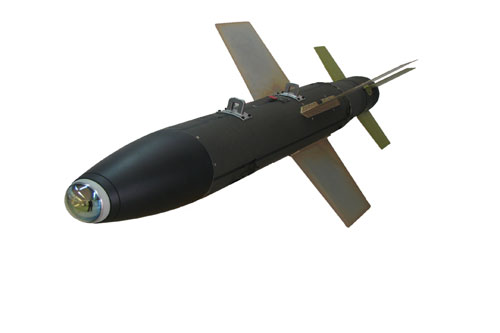
    IAI's new MLGB is a unified GPS/INS+Laser guided weapon designed with carriage and release envelope compatible with fighters and light combat aircraft. The weapon boasts optimal navigation and guidance capabilities, achieving hit accuracies of better than 1m CEP in SAL (Semi Active Laser) mode, and GPS accuracies in GPS mode. The relatively light warhead is optimized for such missions where minimum collateral damage is of high importance. Photo: IAI

    Israel Aerospace Industries is unveiling the Medium range Laser Guided Bomb (MLGB), a 250 pound class (115 kg) laser guided weapon designed for operation from fighter and light attack aircraft carried by standard 14″ lugs.

    IAI will unveil its newest laser guided weapon MLGB at the paris Airshow 2011. Photo: IAI

    The bomb provided as a unified weapon (unlike other laser guidance kits) comes with GPS/INS and laser guidance, and a three-mode fuse, offering airburst, impact or delayed detonation of the warhead effectively defeating soft, surface or semi-protected targets such as buildings or vehicles. The integration of GPS/INS and laser guidance enables the MLGB to attack both stationary or moving targets. The 170cm long weapon uses 82 cm span dual cruciform wing, GPS/INS based guidance and control system keeping the weapon on course to achieve the required precision. Terminal homing on a laser designation spot enables pinpoint accuracy when required.

    Prior to release, the MLGB is powered up and mission parameters are loaded.  Upon release, a midcourse navigation trajectory is executed with transition to terminal  homing taking place in the final flight stage, using a combination of GPS and semi- active  laser (SAL) guidance. With high precision and relatively lightweight warhead MLGB provides an option for an offensive effect while minimizing collateral damage and risk of fratricide.

    IAI will unveil the MLGB at its ‘weapons farm’ a collective display of air defense missiles, missile interceptors, guided weapons and guided ballistic missiles and rockets, presented next week at the Paris Air Show.

    IAI’s new MLGB is a unified GPS/INS+Laser guided weapon designed with carriage and release envelope compatible with fighters and light combat aircraft. The weapon boasts optimal navigation and guidance capabilities, achieving hit accuracies of better than 1m CEP in SAL (Semi Active Laser) mode, and GPS accuracies in GPS mode. The relatively light warhead is optimized for such missions where minimum collateral damage is of high importance. Photo: IAI

    Skunk Works and XTEND Simplify Multi-Drone Command

    0
    Lockheed Martin Skunk Works® and XTEND have achieved a major milestone in JADC2 by integrating the XOS operating system with the MDCX™ autonomy platform. This technical breakthrough enables a single operator to simultaneously command multiple drone classes, eliminating the friction of mission handoffs. From "marsupial" drone deployments to operating in GPS-denied environments, explore how this collaboration is abbreviating the data-to-decision timeline and redefining autonomous mission execution.

    From Ukraine to Taiwan: The Global Race to Dominate the New Defense Tech Frontier

    0
    As traditional defense primes face mounting competition from agile “neoprimes” such as Anduril, Palantir and Helsing, the balance of innovation is shifting toward software-defined warfare and scalable, dual-use technologies, while global industry consolidation—marked by Boeing’s integration of Spirit AeroSystems and other strategic mergers—signals an intensified race to secure control over the defense technology value chain. Our Defense-Tech weekly report highlights these trends.

    Europe’s “Drone Wall”

    0
    In early October 2025, a coordinated wave of unmanned aerial system (UAS) incursions—widely attributed to Russia—targeted critical infrastructure across at least ten European nations. The unprecedented campaign exposed the fragility of Europe’s air defenses...

    Weekly Defense Update & Global Security Assessment

    0
    Executive Summary The past week (September 18-25, 2025) represents an inflection point where strategic defense concepts have transitioned from doctrine to tangible reality. An analysis of global events reveals four primary, interconnected trends shaping an...

    U.S. Air and Space Forces Push Next-Gen Programs at the AS&C 2025 Conference and...

    0
    At the 2025 Air, Space & Cyber Conference, U.S. Air Force and Space Force leaders unveiled major updates on next-generation fighters, bombers, unmanned systems, and space initiatives, highlighting both rapid innovation and critical readiness challenges as the services race to outpace global competitors. A short version is available here, with a more detailed version for subscribers.

    TADTE 2025: Reflecting Taiwan’s Strategic Themes

    0
    The Taipei Aerospace & Defense Technology Exhibition (TADTE) 2025 crystallized around four dominant strategic themes that collectively illustrate Taiwan's comprehensive approach to defense modernization amid escalating regional tensions. Based on a detailed report by Pleronix (available upon request). Includes a Podcast discussion on TADTE 2025's highlighting Taiwan's four strategic themes beyond the post's coverage.

    Iron Beam 450 Completes Testing, Soon to Join With Operational Air Defense Units

    0
    Israel’s Iron Beam 450 high-power laser system has completed final testing, marking a major leap in air defense. Developed by Rafael, it offers precise, cost-effective interception of rockets, UAVs, and mortars, and is set for IDF deployment by 2025.