
Sunday, December 28, 2025
More
    Home Blog Page 243

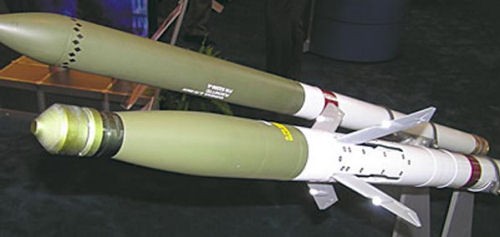
    Laser Guided APKWS II Rockets for USMC Harrier, Air Combat Command’s Warthog

    The Navy and BAE Systems are entering a two-year Joint Capability Technology Demonstration (JCTD) program to integrate and demonstrate the Advanced Precision Kill Weapon System II (APKWS II) on the U.S. Marine Corps’ AV-8B and U.S. Air Force’s A-10 aircraft platforms. The need for such light, precision guided weapon evolved from operational requirements in theater, where precision laser-guided munitions with low collateral damage could offer operational capability currently not available to legacy fixed-wing aircraft. APKWS II currently is on track to reach Initial Operating Capability in 2011 to deliver capability to the AH-1W and UH-1Y platforms with Fleet Marine Forces currently supporting operations in Afghanistan.

    “This is an important capability for the Marine Corps and Air Force crews supporting the troops in harm’s way,” said Capt. Brian Corey, program manager for Direct and Time-Sensitive Strike Weapons. “The team is looking forward to showing that we can fill the capability gap that exists today.”

    If the APKWS II can be successfully demonstrated on these legacy aircraft, it will increase safety by allowing greater standoff range and target engagement closer to friendly troops, during close air support operations in open, mountainous, as well as urban terrain.

    “This demonstration is important for these fixed wing aircraft to improve their ability to support our troops on the ground,” said Corey. “Both services are very excited about this demonstration and what it could mean in future operations. If we can show this can work, we’ll take those lessons learned and provide some potential cost savings back to the taxpayer.”

    Related news:
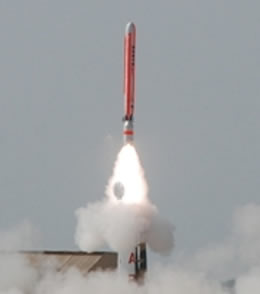
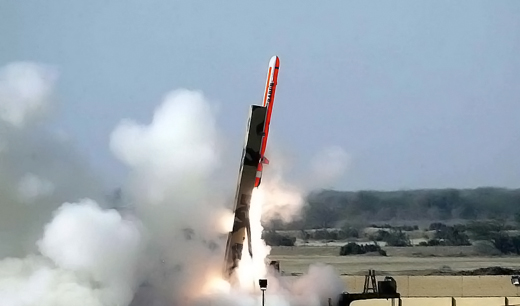
    Pakistan Test Fires Nuclear-Capable Hatf-VII Cruise Missile

    In the recent test launch Hatf VII was fired from a new canister, representing a more mature development stage, as the system nears fielding on ground or naval platforms. Pakistani scientists are already working on a long-range version capable of ranges up to 1,000 km. Photo: Pakistan Military Review

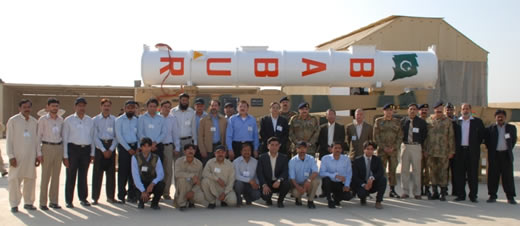
    Pakistan successfully tested Hatf-VII nuclear-capable cruise missile which flew up to of a range of 600 km. The missile, also called Babur (after the 16th-century Muslim ruler, founder of the Mughal Empire) is designed to reach up to 750 km, fired from ground launchers, surface ships and, potentially, submarines.

    According to Pakistan’s chairman of the Joint Chiefs of Staff, General Khalid Shamim Wynne, the new missile would help in consolidating Pakistan’s strategic deterrence capability. “Babur can carry strategic and conventional warheads” said Major General Athar Abbas, a military spokesman. Abbas described the missile’s main attributes as low-level flight (terrain-following), stealth and radar avoidance features, high manoeuvrability and pinpoint accuracy. The missile uses passive guidance employing Terrain Contour Matching (TERCOM) and Digital Scene Matching && Area Correlation (DSMAC) to achieve an accuracy of 3 meter Circular Error Point (CEP), used in surgical strikes.

    Work on Hatf-VII Babur cruise missile began in mid 1990. In 1998 Pakistan obtained at least two U.S. Navy RGM/UGM-109 Tomahawk cruise missiles fired against targets in Afghanistan; These missiles are believed to have helped Pakistani scientists operating under the National Engineering and Scientific Commission (NESCOM) to gain insight into the cruise missile design. It took the Pakistanis seven years to complete the design and achieve a successful first flight in 2005, reaching a range of 500 km. The current missile was fired at a range of 600 km, and according to Pakistani sources, the current design has a maximum range of 750km. Scientists are already working to extend the range to 1,000 km.

    Pakistan has been developing an arsenal of missiles and has tested in December the medium-range nuclear-capable ballistic missile Hatf V which has a range of 1,300 km. Strategic missiles launched by Pakistan and India represent milestones in the strategic arms race raging by the two countries. In December 2010 India tested its two nuclear-capable, short-range Prithvi-II ballistic missiles with a range of 350 km in December from an eastern military base. It also tested its nuclear-capable Agni-I short-range ballistic missile in November. The Agni-I, named after the Hindu god of fire, can carry payloads of 1 tonne up to 700 km. The launch of another, longer range Agni II+ ballistic missile failed in November.

    Raytheon Conducts Free-Flight Demonstration of JSOW-C From F-16IN

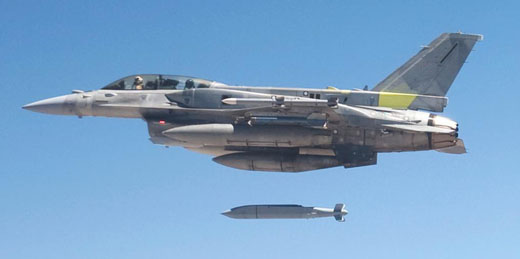
    F-16IN JSOW Firing Test. Photo Raytheon

    Raytheon Company completed a series of free-flight demonstrations of the Joint Standoff Weapon(JSOW) AGM-154-C from an F-16IN fighter aircraft. The tests were part of the Indian Air Force’s Medium Multi-Role Combat Aircraft (MMRCA) competition.

    Lockheed Martin F-16IN Releases a Raytheon AGM-154C Joint Stand-Off Weapon on a recent launch test. Photo: Raytheon


    JSOW is a family of low-cost, air-to-ground weapons that employs an integrated GPS- inertial navigation system and terminal infrared seeker that guide the weapon to the target. The system has a maximum range of 130 kilometers (80.5 statute miles) from high altitude and can penetrate more than 1.5 meters (approximately 5 feet) of reinforced concrete.

    Photo: Raytheon

    “We conducted the demonstration to show that JSOW-C, which is currently integrated on various F-16 international aircraft, could be easily, affordably and rapidly integrated on the F-16IN,” said Phyllis McEnroe, Raytheon’s JSOW program director. “JSOW is already integrated on the F/A-18 Super Hornet and has been employed from that platform numerous times, so this test proves that JSOW can now be employed from both U.S. MMRCA offerings.”

    note the asymmetric load configuration on the test aircraft, representing a combat load, is including two AIM-9 sidewinder and two AIM-7 AMRAAM air/air missiles and a Sniper targeting pod. The AGM-145C JSOW is carried along with a 370 Gal. external fuel tank under the port wing. A second 300 gal. tank is carried on the centerline station. Photo: Raytheon

    Final KC-X Tanker Proposals Submitted by Boeing, EADS

    EADS KC-45 Tanker, Based On The Airbus A330 MRTT. Photo: Aurbus

    On Thursday, Feb 10, 2011 Boeing and EADS submitted their final proposal for the U.S. Air Force’s KC-X tanker competition. Both proposals address the Air Forces’ mission in two different approaches with different platforms. The stakes are high, as the two companies are competing to win an initial contract for the production of 179 aircraft for $35 billion. The winner will be required to deliver the first aircraft in 2013.

    Boeing NewGen Tanker. Photo: Boeing

    Boeing is proposing to replace the current fleet of Air Force KC-135 tankers, based on the obsolete Boeing 707 with a fleet of multi-mission Boeing 767-based NewGen Tankers. According to the company, the 767 burns 24 percent less fuel than the competing A330 platform which provides the basis for the KC45 – proposed by the European Aeronautic Defence and Space (EADS) Company. “If selected, the Boeing tanker will save taxpayers tens of billions of dollars in fuel costs over the next 40 years” Boeing promises. On the other side, EADS promises its larger and more economical KC-45 will save the Air Force between 15 to 44 per cent, measured on the basis of cost per gallon of fuel consumed, based on the actual operational scenarios the Air Force is flying. “Demonstrated cost efficiency is one reason that in four straight competitions, U.S. allies have chosen the A330-based tanker that EADS North America is offering the Air Force over the older Boeing 767 tanker.” Said Ralph D. Crosby Jr., EADS North America Chairman.

    EADS KC-45 Tanker, Based On The Airbus A330 MRTT. Photo: Aurbus

    Except for the big financial reward for the winner, this is also a strategic battle for Boeing, fighting its archival foe – the European Airbus group on its own land. “This decision is critical to America’s national security and its manufacturing base,” said Boeing Chairman, President and CEO Jim McNerney. “Our best-of-Boeing team has offered the most capable and fuel-efficient tanker that will enable the U.S. Air Force to continue serving as the world’s finest air refueling provider without breaking future defense budgets.” McNemey added, saying the air force program will support 50,000 American jobs with more than 800 suppliers in more than 40 states.

    “Our NewGen Tankers will be built using a proven low-risk, in-line manufacturing approach similar to the highly successful 737-based Navy P-8A, by an already trained and highly experienced U.S. work force at existing Boeing facilities that have delivered more than 2,000 tankers and 1,000 commercial 767s,” said Jim Albaugh, president and CEO of Boeing Commercial Airplanes.

    While Boeing is fighting a defensive battle to win the KC-X, for EADS, winning the program will be a strategic victory, with the U.S. military establishing the European ‘beachhead’  in the Continental USA. The European consortium plans to produce the KC-45 tanker by the EADS North America division, along with commercial freighter aircraft at a new aircraft production center in Mobile, Alabama, using a supplier base of hundreds of U.S. companies in more than 40 states. The company said it will employ 48,000 American workers to build these tankers.

    Related News:

    Aero India 2011 Photo Review

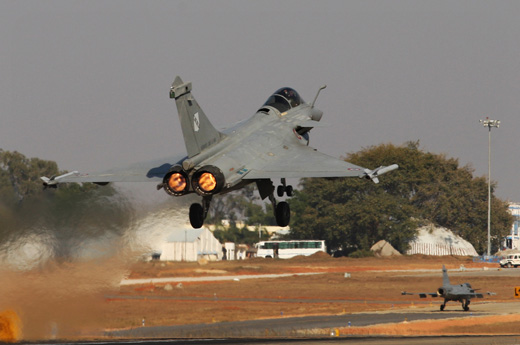
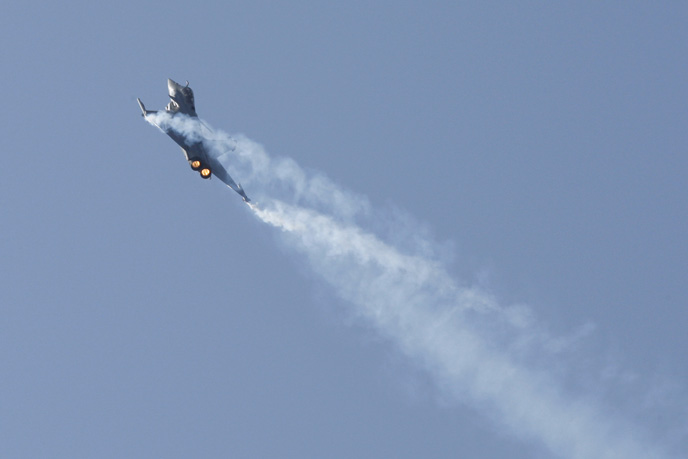
    The French Rafale makes a fiery take off

    Aero India 2011 Photo Gallery, All Photos Credit: Indian MoD

    The French Rafale makes a fiery take off
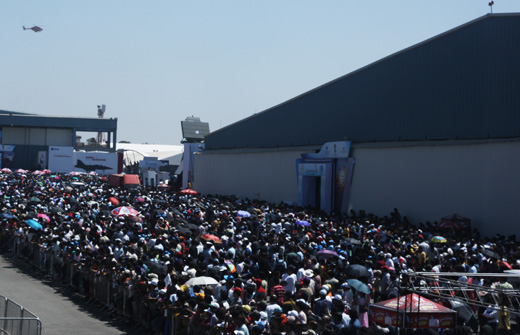
    Massive Crowds Gathering the 4th day of Aero India 2011
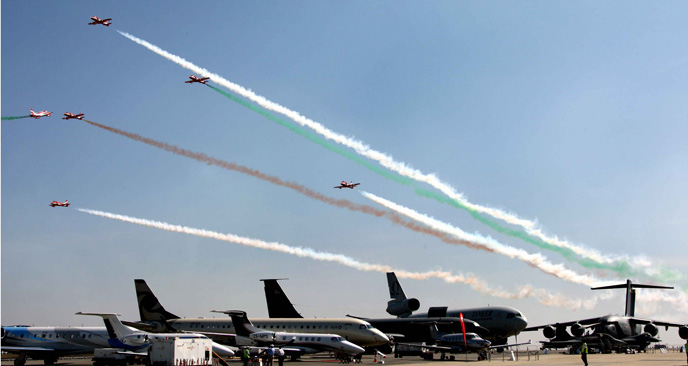
    Surya Kiran team of IAF received thundering applause as they painted the sky with the United Colours of India.
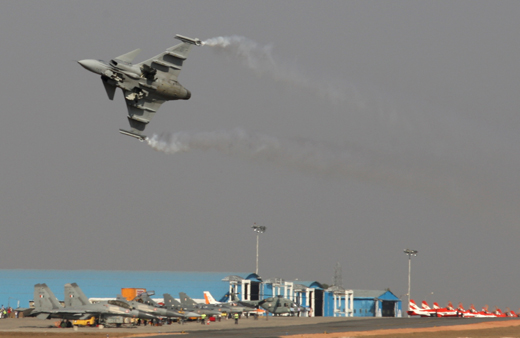
    The JAS 39 Gripen of Sweden makes a dramatic take off
    Photo: Indian MOD
    The 8th edition of Aero-India ended today ( 13 Feb 2011) with record breaking crowd thronging the Yelahanka airbase station to have a glimpse of the breath taking aerobatics by metal birds from many parts of the world.
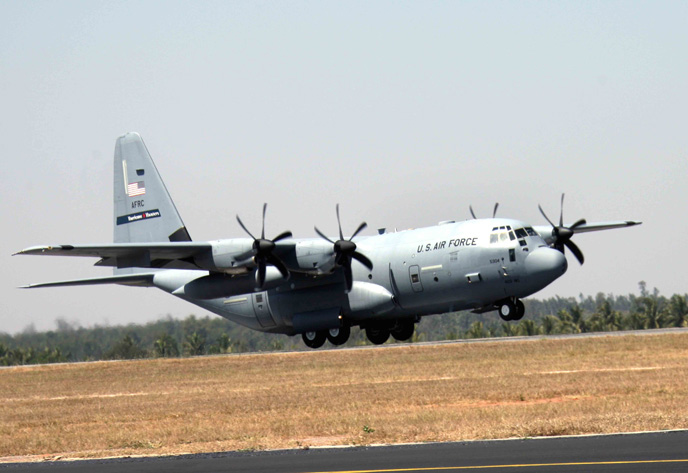
    A C-130J TAKING OFF DURING AEROINDIA ON SATURDAY, FEB.13, 2011.
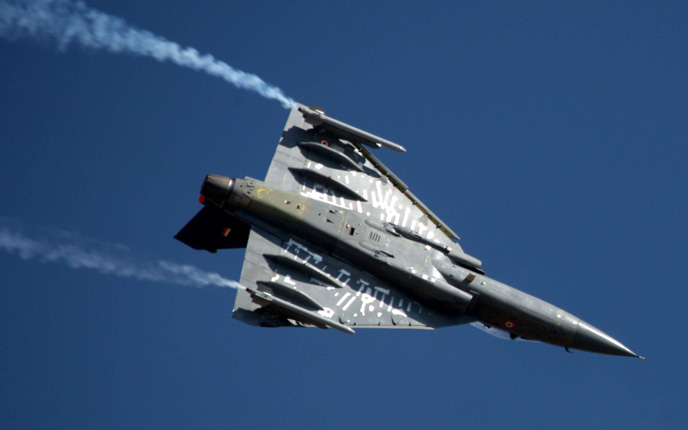
    AN LCA TEJAS PERFORMING AT AEROINDIA ON SATURDAY, FEB.13, 2011.
    IAF SURYA KIRANS PERFORMING AT AEROINDIA ON SATURDAY, FEB.13, 2011.
    A DASSAULT RAFAEL PERFORMING AT AEROINDIA ON SATURDAY, FEB.13, 2011.
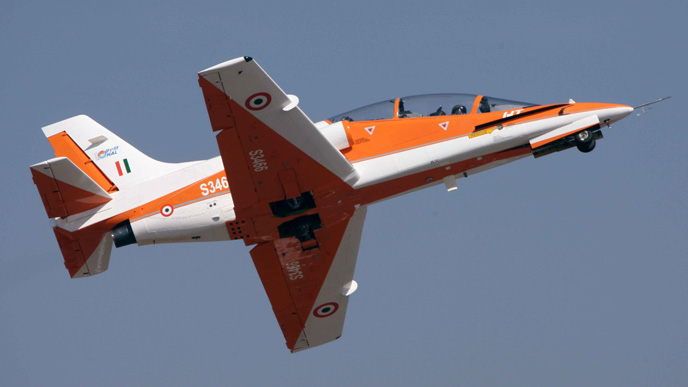
    THE IJT PERFORMING AT AEROINDIA ON SATURDAY, FEB.13, 2011.
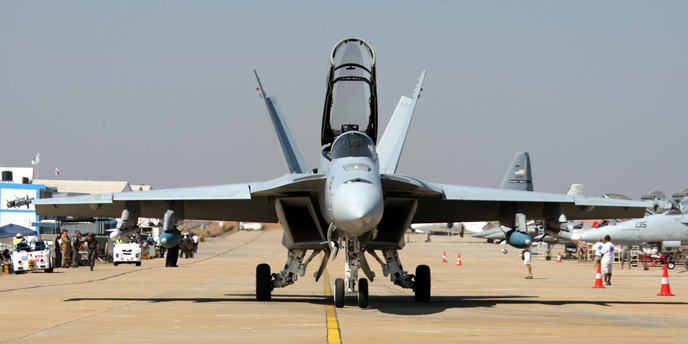
    AN F-18 PARKED ON THE TARMAC DURING AEROINDIA ON SATURDAY, FEB.13, 2011.
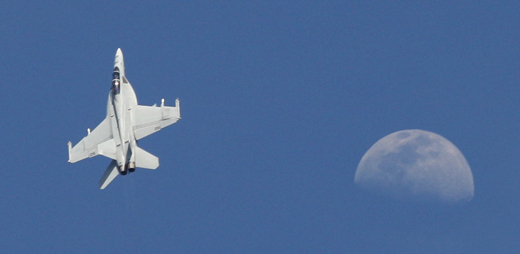
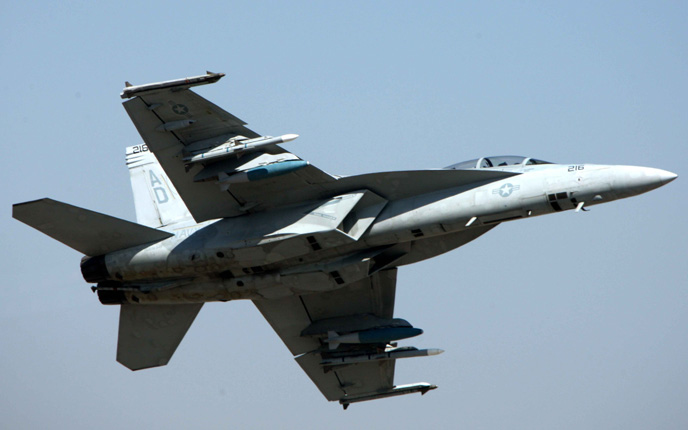
    AN F-18 PERFORMING AT AEROINDIA ON SATURDAY, FEB.13, 2011.
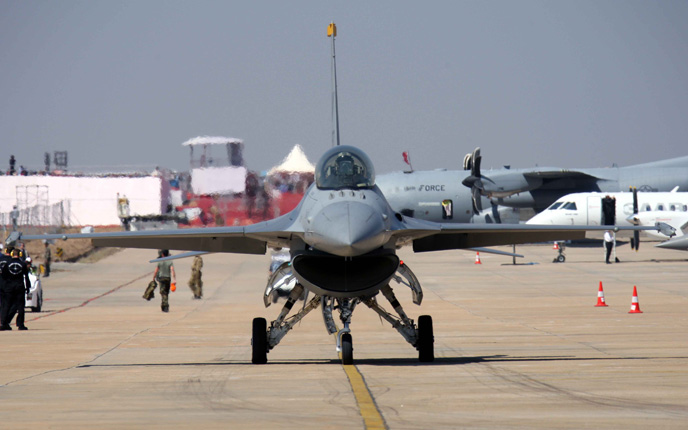
    AN F-16 RARING TO GO DURING AEROINDIA ON SATURDAY, FEB.13, 2011.
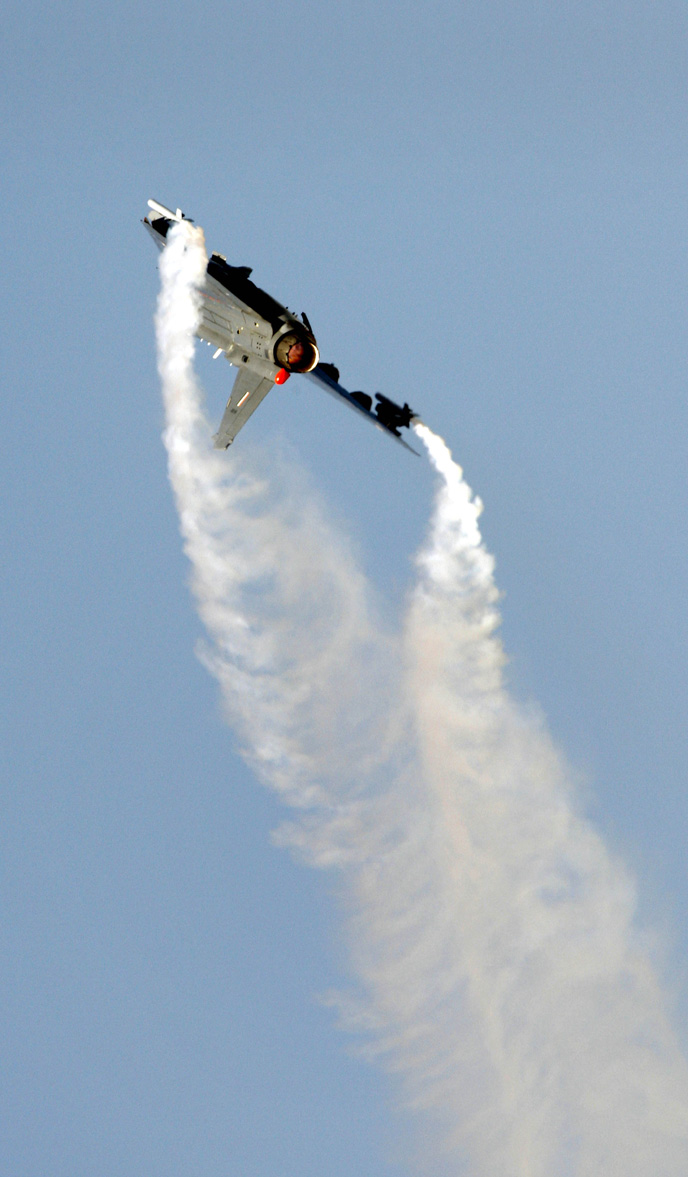
    A FIGHTER JET PERFORMING AEROBATICS DURING THE AERO INDIA ON SATURDAY, FEBRUARY 12, 2011.
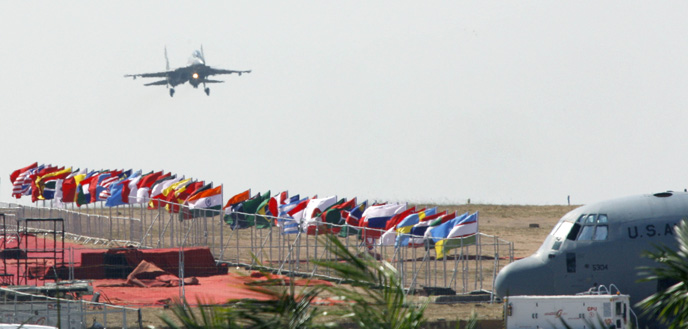
    AN IAF SUKHOI SU-30 PREPARING TO LAND AT THE AERO INDIA ON SATURDAY, FEBRUARY 12, 2011.
    A FIGHTER JET PERFORMING AEROBATICS DURING THE AERO INDIA ON SATURDAY, FEBRUARY 12, 2011.
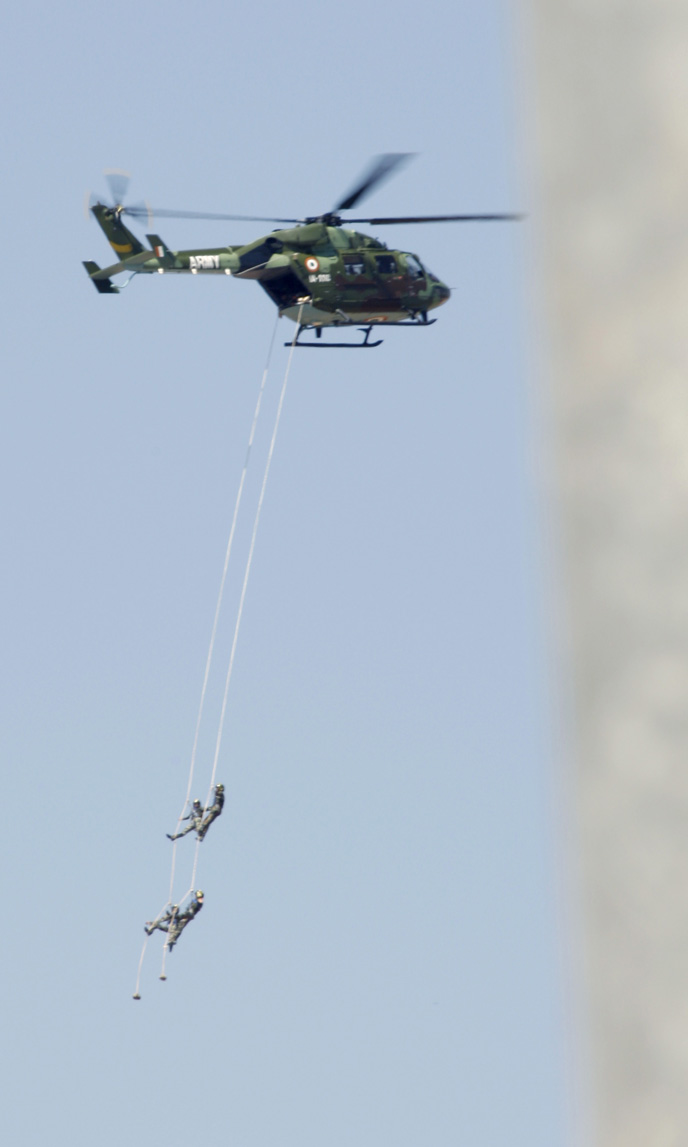
    ARMY SOLDIERS SLITHERING FROM AN INDIAN ARMY ALH DHRUV HELICOPTER DURING THE AERO INDIA ON SATURDAY, FEBRUARY 12, 2011.

    Elta Introduces Modular, Affordable Radars for Multiple Applications

    Elta Systems ELM-2105 Radar. Photo: IAI
    Our sponsor: IAI

    Elta is offering a broad line of radars to address specific Indian interest in air defense, weapon systems and ground surveillance solution. Most of Elta’s modern radars are already utilizing active electronic scanning arrays, which have been further enhanced in recent years with the introduction of Transmit/Receive modules based on Gallium Nitride (Ga/Ni) technology offering more efficient operation, compared to Gallium Arsenide (Ga/As) technology. The main benefits of the new technology are lower power consumption, and smaller, denser arrays capable of operating at extended ranges and at higher resolution. Flexible, modular approach enabled Elta to extend its product line offering affordable radars for air-defense, weapon location and fire control as well as naval radars, designed to meet more specific requirements.

    Elta Systems ELM-2105 Radar. Photo: IAI

    Helicopter Pilots to Join Air Combat Training

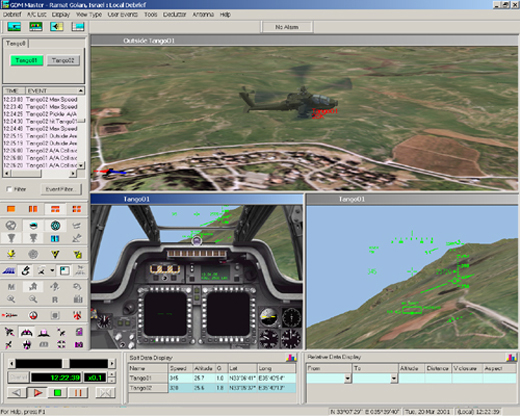
    A Screenshot from the "Ehud" Air Combat Maneuvering System (ACMI)

    IAI is extending the functionality of its Ehud Air Combat Maneuvering System (ACMI) with the introduction of new training pods designed for combat and assault helicopters. The new pod designated THRUST is modeled like a Hellfire missile, and is carried on AH-64 Apache gunships on standard weapon stations. A strap-down configuration is used for UH-60 or Mi-17 installation. Interfacing with the helicopter’s avionics, THRUST injects threats and simulates effects during flight; it also establishes a training network common to all the training participants – other helicopters, fighters, air defense systems and ground controllers, enabling realistic aerial training and debriefing for combined combat forces.

    A Screenshot from the "Ehud" Air Combat Maneuvering System (ACMI)

    Demand for Aerostats Increases Demand for SPEED-A Payloads

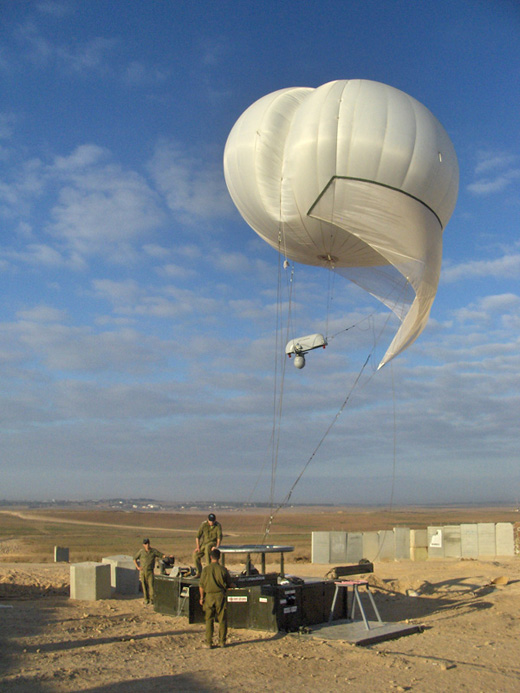
    SkyStar 300 from Aeronautics. Photo: Aeronautics
    Our Sponsor: Rada

    Two years ago Controp unveiled its new, aerostat-optimized EO multi-sensor payload system. Since its introduction, SPEED-A has been operational in combat by several military forces, used for border and force protection, providing unsurpassed persistent surveillance performance. The lightweight (23kg) system has already been deployed on the Skystar 300 tactical aerostat system, deployed at an altitude of about 1,000 ft. The Skystar system was developed by Aeronautics Defense Systems. At Aero-India 2011 Controp debut the new 24kg Speed V stabilized EO/IR observation and panoramic scanner, developed specifically for vehicular applications.

    The SkyStar 300 from Aeronautics. Photo: Aeronautics

    Indian Air Force at Odds over Ministry’s Lagging MMMRCA Decision

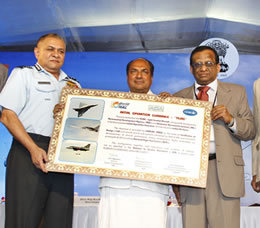
    While Air Force Chief Marshal P.V. Naik (left) would like to get his MMRCA fighters as soon as possible, Defense Minister A.K. Antony (center) intent to delay the process means the vendors are in India's fighter bazar for at least another year. Hopefully, it will not take as long as the LCA program, which ceremonially received the official 'Service Document' for the Tejas last month at Bangalore. Photo: Indian MOD
    While Air Force Chief Marshal P.V. Naik (left) would like to get his MMRCA fighters as soon as possible, Defense Minister A.K. Antony (center) intent to delay the process means the vendors are in India's fighter bazar for at least another year. Hopefully, it will not take as long as the LCA program, which ceremonially received the official 'Service Document' for the Tejas last month at Bangalore. Photo: Indian MOD

    Indian defense officials have given conflicting statements about the country’s long-awaited fighter selection, Aviation Week reporting. At Aero-India, Defense Minister A.K. Antony indicated the final choice on the winning offer will be pushed to March 2012, while Air Force Chief Marshal P.V. Naik saying the selection will be announced as planned in October this year. “This could be the Chief’s way of putting pressure on the government to speed the process as the military is concerned about its reduced squadron strength,” Aviation Week quoted an unnamed Indian official commenting about the apparent dissonance between the Air Force and Defense ministry.

    According to one vendor, the last stage for submissions, which includes a review of offset obligations, has yet to occur. While Air Chief Naik indicated price negotiations are likely to begin in a week, vendors are reluctant to enter such negotiations before the defense ministry clarify the transfer of technology clause in an amendment to India’s new defense procurement policy (DPP) expected soon. India’s latest DPP released January 5 did not address these concerns.

    By including manufacturing work associated with civil aviation and homeland security toward fulfilling offset obligations, India bowed to pressure from foreign defense vendors, claiming that Indian defense manufacturing base could not cope with the tsunami of offset deals generated by the country’s military imports.

    More CROWS II Weapon Stations for the U.S. Army

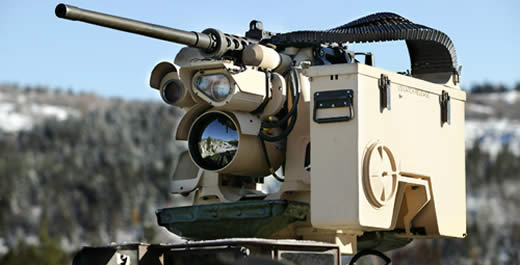
    CROWS II. Kongsberg Group

    The U.S. Army is increasing the number of Common Remotely Operated Weapon Stations (CROWS II) bought from Norwegian arms manufacturer Kongsberg Defence. The Army awarded the company additional $120 million on February 9, 2011, effectively increasing the maximum quantity of from 10,349 units to 11,690 units, to be delivered by August 2012, five years after the Norwegian company was selected to supply CROWS II systems under a five-year framework agreement.

    The U.S. Army initially selected Kongsberg for the CROWS II program in 2007, to provide a common solution for its light and medium armored vehicles. Photo: Kongsberg Group

    According to Kongsberg, the total value of the increase will be agreed upon later this year. Total value of the increase will depend on the US Army’s future demand and annual allocations. The company has received a purchase order for CROWS II systems valued at about $59 million (345 MNOK) as part of the increased scope of the framework agreement.

    Rafael in India – Courtship Continues

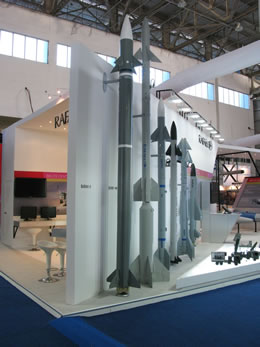
    A broad family of missiles from Rafael, including Barak I, Python 5 and Derby, currently operational in India, the Iron Dome, Barak 8 and booster-augmented Derby, are proposed/in development for India. Photo: Tamir Eshel, Defense-Update.
    Our Sponsor: RAFAEL

    Since its establishment as a commercial company, Rafael maintained continuous growth, generating annual revenue above one billion US$ in 2009. India provides a major growth opportunity for Rafael – the company has invested much in preparing its presence in the Indian market through joint ventures and establishment of local operations complying with Indian military import regulations.

    “We are fully aware of the new Defence Procurement Procedure (DPP) and are studying it.” Major General (Ret.) Ilan Biran, Rafael’s Chairman of the board of directors told Defense-Update, “We hope it will pave the way to open more opportunities and expand partnerships, offering better quality of cooperation in the future.” On the agenda is Rafael’s planned establishment of partnership with a major Indian public company. Both TATA and Bharat Electronic Ltd (BEL) were negotiating with the Israeli company for JVs producing components and subsystems of air defense systems. However, formal establishment of the JVs are yet to be announced. “We made our position clear, that foreign ownership of 26% limits such potential cooperation, yet, we oblige to India’s directives and will meet them to the full extent.” Said Biran.

    Ilan Biran, Rafael’s Chairman of the board of directors. Photo: Sivan Faraj / Rafael
    A broad family of missiles from Rafael, including Barak I, Python 5 and Derby, currently operational in India, the Iron Dome, Barak 8 and booster-augmented Derby, are proposed/in development for India. Photo: Tamir Eshel, Defense-Update.

    Local partnerships and cooperation is not strange to Rafael. “We follow this strategy in each of our strategic markets.” Biran said, “In the USA we partnered with several leading defense contractors such as Northrop Grumman (producing electro-optical pods), General Dynamics (armor protection), and Raytheon (missiles). In Europe we are working with Rheinmetall Defence and Diehl, on the local production of tactical missiles. We expect establishing similar partnerships with leading companies in India, to seek mutually beneficial solutions in answer to India’s specific requirements.”

    He expects some of these programs to evolve through Rafael’s cooperation with India’s Defence Research & Development Organization (DRDO) and the military services. “DRDO is the leading authority for defense technology in India and, together with Rafael as its Israeli pier, we can both benefit from such cooperation.” Biran added noting that such cooperation could also provide the basis for technology transfer, required by the current DPP.

    Biran acknowledge the significant role India pose for Rafael; “we respect India as a prime customer for every major program, and consider India, along with the U.S.A and Europe among the markets ready to absorb our highest, most advanced solutions.” He said. In the past, Israel enjoyed a ‘premium’ on India’s limited access to advanced military systems, but this factor has diminished with the warming U.S.-India relations. “Competition is growing but we are not intimidated by it,” Biran added, “competition opens more opportunities, from which India can choose from, We promise our best products at top quality – and unlike other countries – with no political margin, since our mutual cooperation is managed at low key.”

    IAI Looking for ‘More Big Deals’ in India

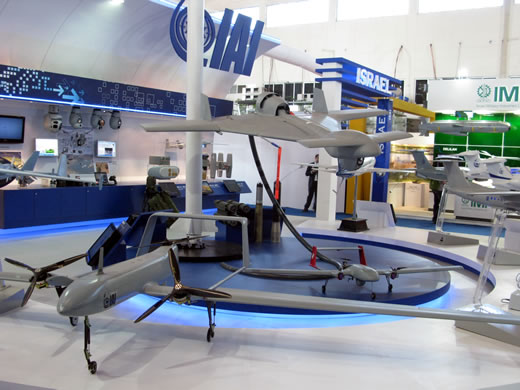
    IAI was the largest display at the Israeli Pavilion at Aero-India 2011. On display were models of special mission aircraft, and full scale models of UAVs, EO payloads, electronic intelligence and COMINT payloads, ground control stations for UAVs, missiles, loitering weapons, and more. An Elta multi-mission radar was also displayed in the outdoor area. Photo: Tamir Eshel, Defense-Update.

    In the past two years Israel Aerospace Industries (IAI) has demonstrated its continued growth momentum. IAI is opening 2011 with a swing- its 2010 reported backlog exceeding $9 billion. India, as one of IAI’s strategic markets, is deriving a substantial part of this growth.

    IAI was the largest display at the Israeli Pavilion at Aero-India 2011. On display were models of special mission aircraft, and full scale models of UAVs, EO payloads, electronic intelligence and COMINT payloads, ground control stations for UAVs, missiles, loitering weapons, and more. An Elta multi-mission radar was also displayed in the outdoor area. Photo: Tamir Eshel, Defense-Update.
    Itzhak Nissan – President and CEO of IAI

    According to Izhak Nissan, IAI CEO, in maintaining this momentum IAI must win more large-scale programs in all its major strategic markets, being the USA, Europe and India. “The future growth of IAI will come from such programs, similar to those we have recently won.”Nissan stated, “Large-scale programs bring together all IAI’s unique attributes – state-of-the-art technology, extensive operational experience, system integration methodology, flexibility to understand the user requirements, backed by performance track record and the long tradition of partnership, are key to our success” said Nissan.

    Our sponsor: IAI

    Large programs are indeed the main driver for IAI’s growth. Among the company’s recent gains are, a major sale of the latest Land-Based Barak 8 Air Defense System, sales of the latest versions of Multi-Mission Radars, signal intelligence and electronic warfare systems from Elta Systems and continued sales and development of IAI’s military and commercial satellites. Another success story for IAI in India are UAVs – last month the Indian Navy deployed a second squadron operating Heron and Searcher UAVs, tasked with coastal security and maritime patrol missions. India is the largest operator of IAI UAVs.

    IAI is seeking to further strengthen its position in India, through winning new customers, more partnerships, extending its proposals through the civil, government and defense sectors. IAI has two ongoing partnerships with Tata and Nova, which are progressing well, the company would like to expand on this successful concept with more initiatives. The rapid growth of IAI’s operations on the Indian market, despite the growing competition, can be attributed to the close and direct relations established, through the successful cooperation with the users, industry and partners, timely delivery of systems, allocating significant work share and fulfilling offset obligations.

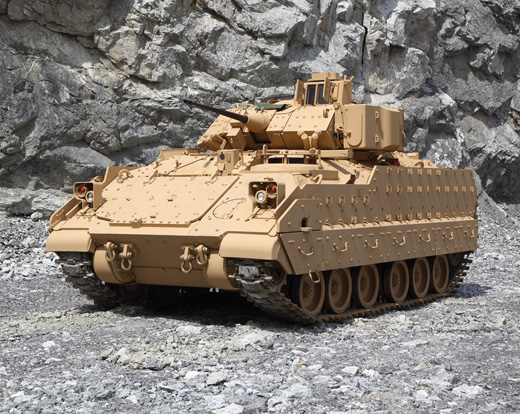
    BAE Systems to Modernize Bradley Vehicles through $47 Million Contract

    BAE Systems to Modernize Bradley Vehicles through $47 Million Contract. Photo: BAE Systems

    BAE Systems recently received a $47 million contract modification to modernize 95 M2/M3 Bradley armored vehicles, through the reset process – replacing old and damaged components with updated equipment and technology. “As the mission and combat environments for our soldiers are changing, we are working to provide a modernized Bradley Fighting Vehicle that continues to perform at an optimal level, providing increased survivability and enhanced situational awareness components,” said Joe McCarthy, vice president and general manager of the Heavy Brigade Combat Team Systems for BAE Systems.

    BAE Systems to Modernize Bradley Vehicles through $47 Million Contract. Photo: BAE Systems

    Under this contract, the Bradley vehicles will be reset and converted from the Bradley Operation Desert Storm (ODS) model to the Bradley Operation Desert Storm Situational Awareness (ODS SA) configuration.  The modernization process includes replacing obsolete equipment with updated components, restoring the vehicle to pre-combat condition. In addition, the new package features modern C4 systems, providing optimal situational awareness, network connectivity and communication within the Heavy Brigade Combat Team.

    The award represents half of the $94 million framework Bradley upgrades contract recently awarded to BAE Systems by awarded by the U.S. Army TACOM Life Cycle Management.  Work will be performed by the company’s existing workforce at its facilities in Fayette and York, Pennsylvania, as well as the Red River Army Depot in Texarkana, Texas.  Vehicle deliveries will begin in March 2012 and will end in June 2012. Additional orders for the balance of the contract value may be awarded in the future.

    Marine Corps Proceed with Common, Aviation C2 System Demonstration

    ThalesRaytheonSystems, a joint venture between U.S. based Raytheon and the European Thales group has been selected by the U.S. Marine Corps to demonstrate a Common Aviation Command and Control System (CAC2S) under the program’s phase II, $5 million segment. According to Kim Kerry, chief executive officer, ThalesRaytheonSystems, U.S. Operations, the system to be demonstrated to the Corps will be a low-risk, scalable and affordable. The company will deliver the proposed CAC2S system in approximately eight months to be evaluated by the Marines at Camp Pendleton, Calif.

    Skunk Works and XTEND Simplify Multi-Drone Command

    0
    Lockheed Martin Skunk Works® and XTEND have achieved a major milestone in JADC2 by integrating the XOS operating system with the MDCX™ autonomy platform. This technical breakthrough enables a single operator to simultaneously command multiple drone classes, eliminating the friction of mission handoffs. From "marsupial" drone deployments to operating in GPS-denied environments, explore how this collaboration is abbreviating the data-to-decision timeline and redefining autonomous mission execution.

    From Ukraine to Taiwan: The Global Race to Dominate the New Defense Tech Frontier

    0
    As traditional defense primes face mounting competition from agile “neoprimes” such as Anduril, Palantir and Helsing, the balance of innovation is shifting toward software-defined warfare and scalable, dual-use technologies, while global industry consolidation—marked by Boeing’s integration of Spirit AeroSystems and other strategic mergers—signals an intensified race to secure control over the defense technology value chain. Our Defense-Tech weekly report highlights these trends.

    Europe’s “Drone Wall”

    0
    In early October 2025, a coordinated wave of unmanned aerial system (UAS) incursions—widely attributed to Russia—targeted critical infrastructure across at least ten European nations. The unprecedented campaign exposed the fragility of Europe’s air defenses...

    Weekly Defense Update & Global Security Assessment

    0
    Executive Summary The past week (September 18-25, 2025) represents an inflection point where strategic defense concepts have transitioned from doctrine to tangible reality. An analysis of global events reveals four primary, interconnected trends shaping an...

    U.S. Air and Space Forces Push Next-Gen Programs at the AS&C 2025 Conference and...

    0
    At the 2025 Air, Space & Cyber Conference, U.S. Air Force and Space Force leaders unveiled major updates on next-generation fighters, bombers, unmanned systems, and space initiatives, highlighting both rapid innovation and critical readiness challenges as the services race to outpace global competitors. A short version is available here, with a more detailed version for subscribers.

    TADTE 2025: Reflecting Taiwan’s Strategic Themes

    0
    The Taipei Aerospace & Defense Technology Exhibition (TADTE) 2025 crystallized around four dominant strategic themes that collectively illustrate Taiwan's comprehensive approach to defense modernization amid escalating regional tensions. Based on a detailed report by Pleronix (available upon request). Includes a Podcast discussion on TADTE 2025's highlighting Taiwan's four strategic themes beyond the post's coverage.

    Iron Beam 450 Completes Testing, Soon to Join With Operational Air Defense Units

    0
    Israel’s Iron Beam 450 high-power laser system has completed final testing, marking a major leap in air defense. Developed by Rafael, it offers precise, cost-effective interception of rockets, UAVs, and mortars, and is set for IDF deployment by 2025.