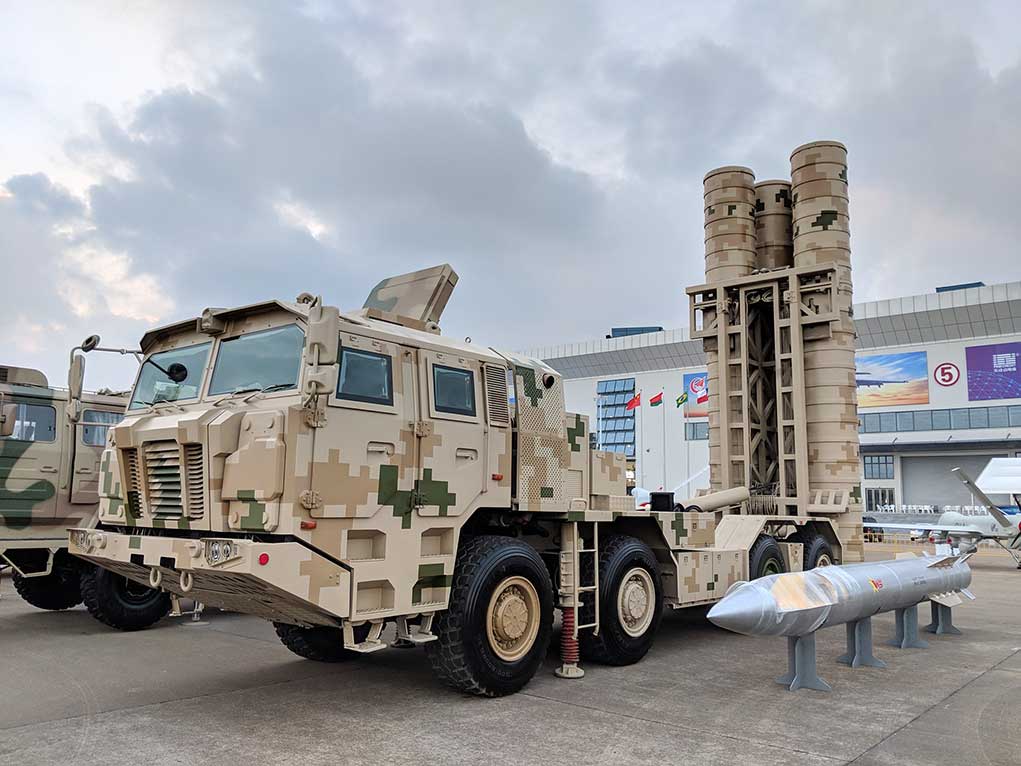
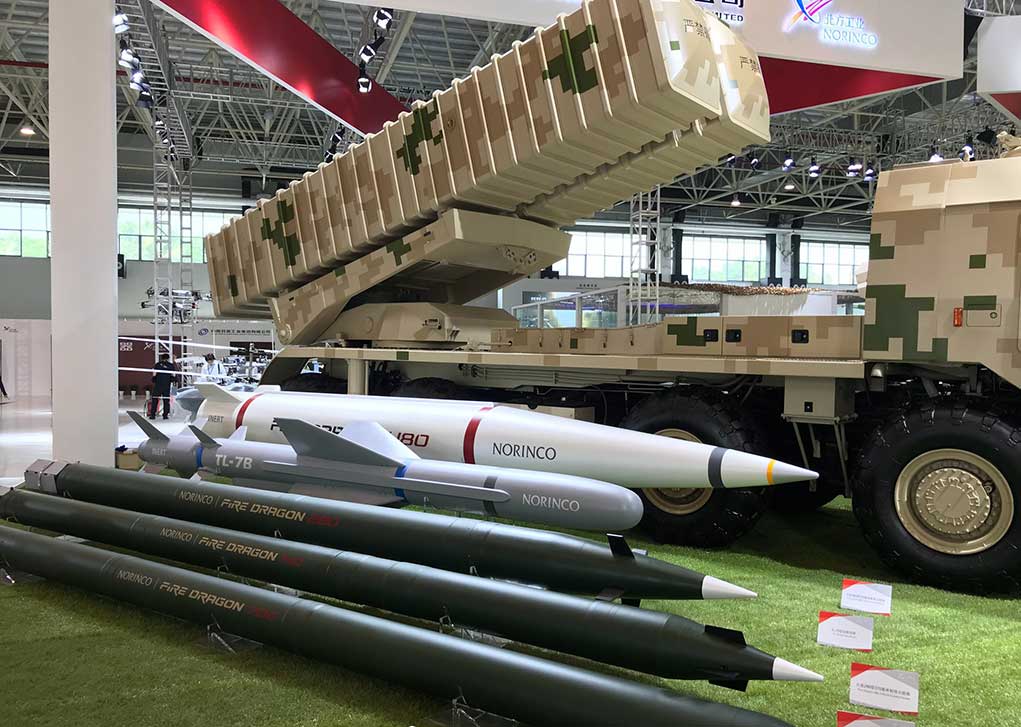
Chinese HQ-8 air defense system shown at AirshowChina 2018 with its large scale WS-600L missile interceptor designed to engage large aerial targets (such as an AEW aircraft) from a range of 400 km. Photo: Huanqui.
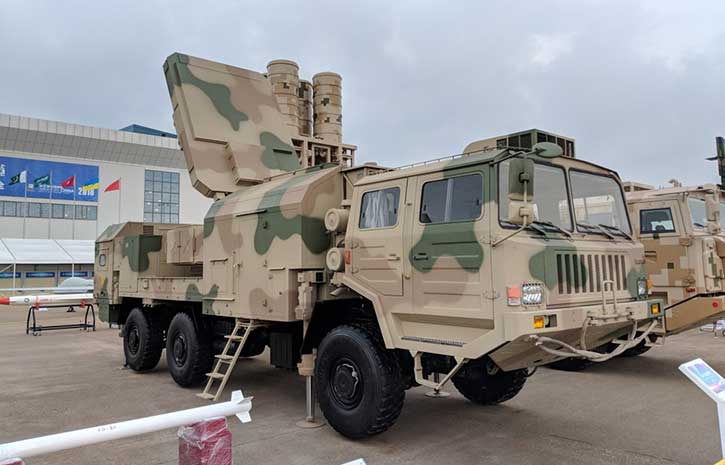
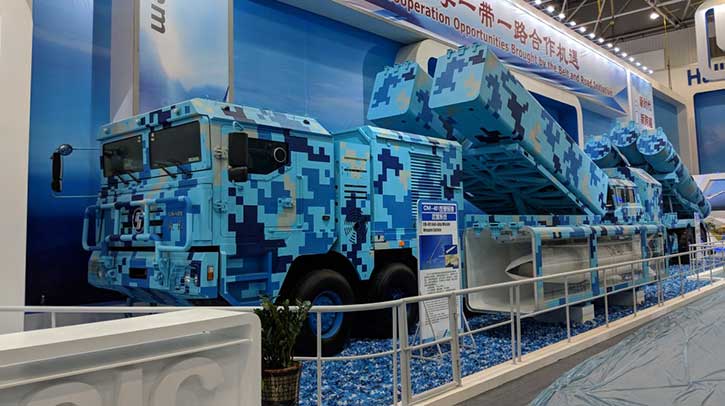
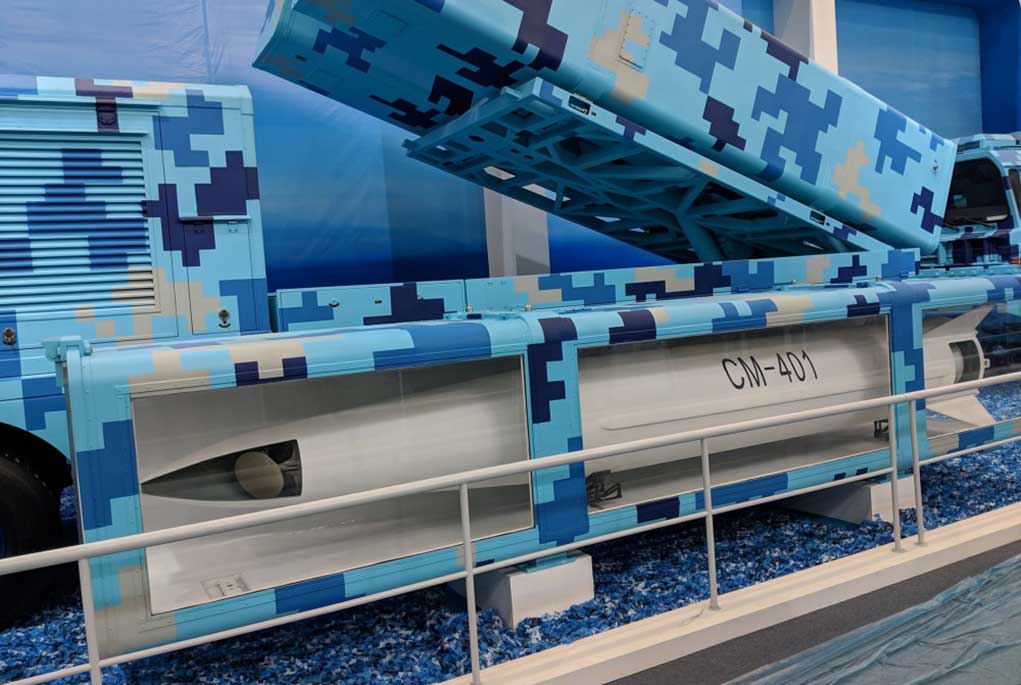
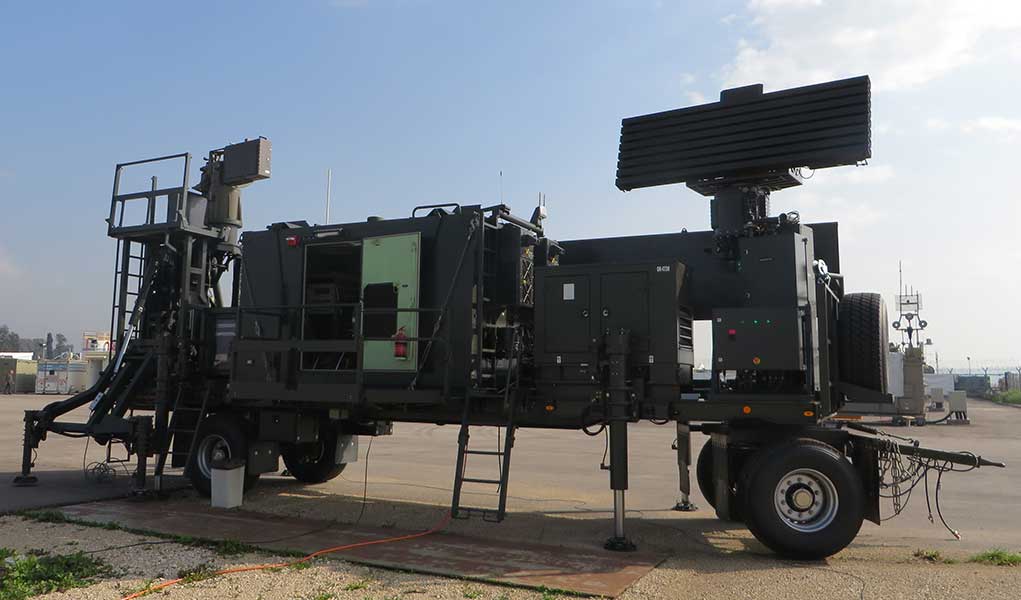
A8-TG680 transportable air defense radar system associated. Photo: HuanquiA truck-mounted launcher container that carries two CM-401 ballistic anti-ship missiles on display at Airshow China 2018.
The land-based launch vehicle for the CM-401 hypersonic anti-ship missile system. The CM-401 is thought to be a modified anti-ship version based on the BP-12A tactical ballistic missile. The missile achieves high supersonic speed and its ship killing accuracy is derived by the integral active radar used in the terminal phase of the flight. This missile is used mainly to attack medium-to-large-sized ships, including aircraft carriers.
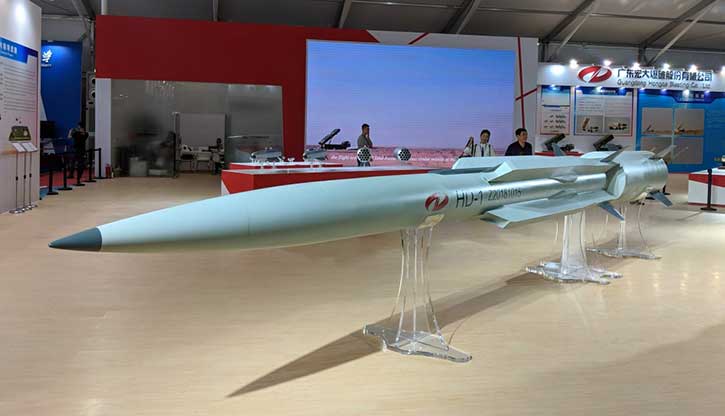
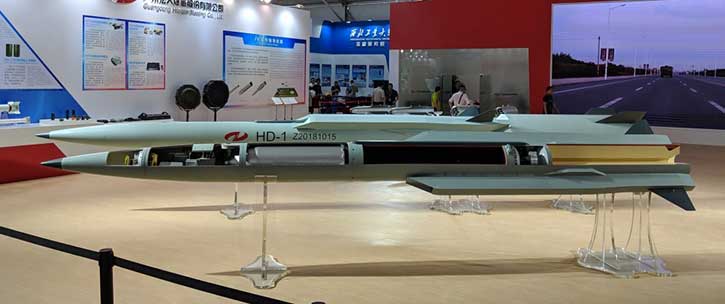
the Fire Dragon family of guided rockets from Norinco includes different rocket sizes, from 220 mm to 750mmThe HD-1 anti-ship missile is also an airborne ship killer, capable of flight at a high supersonic speed, developed by the powerfull booster and rocket motor and sustained by the ramjet fed by a separate liquid fuel supply.
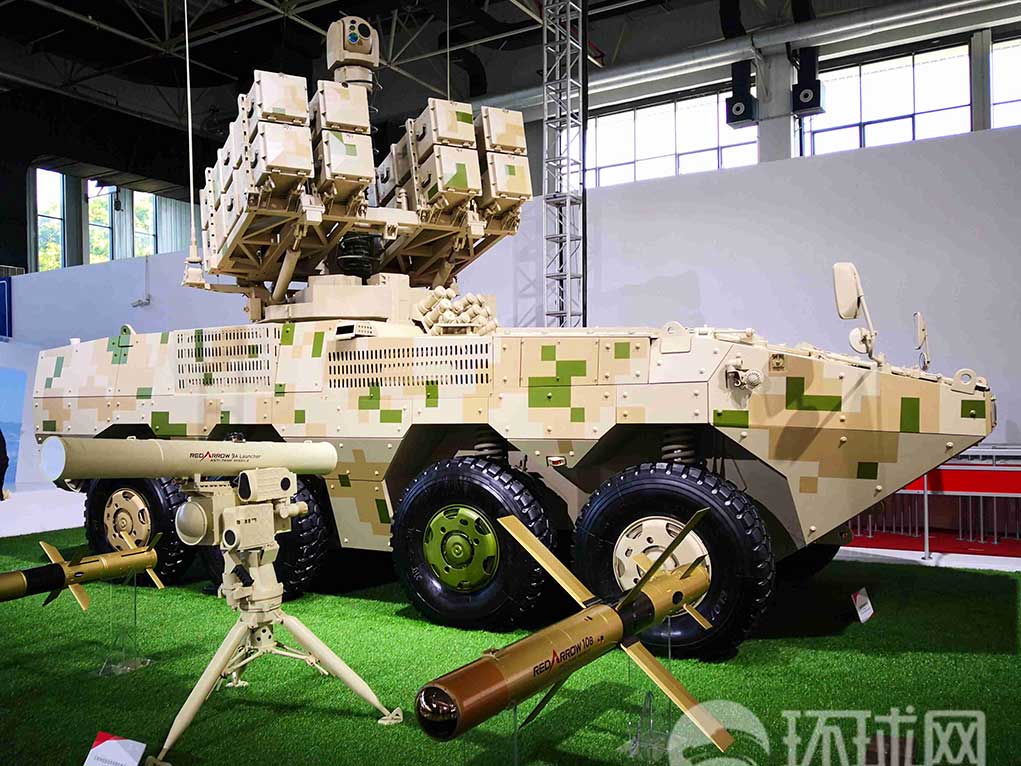
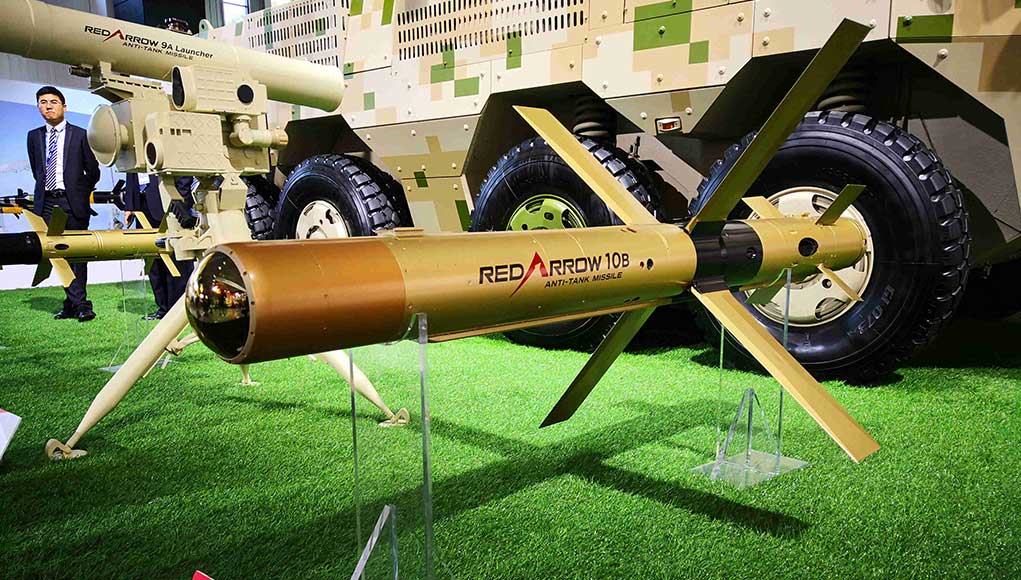
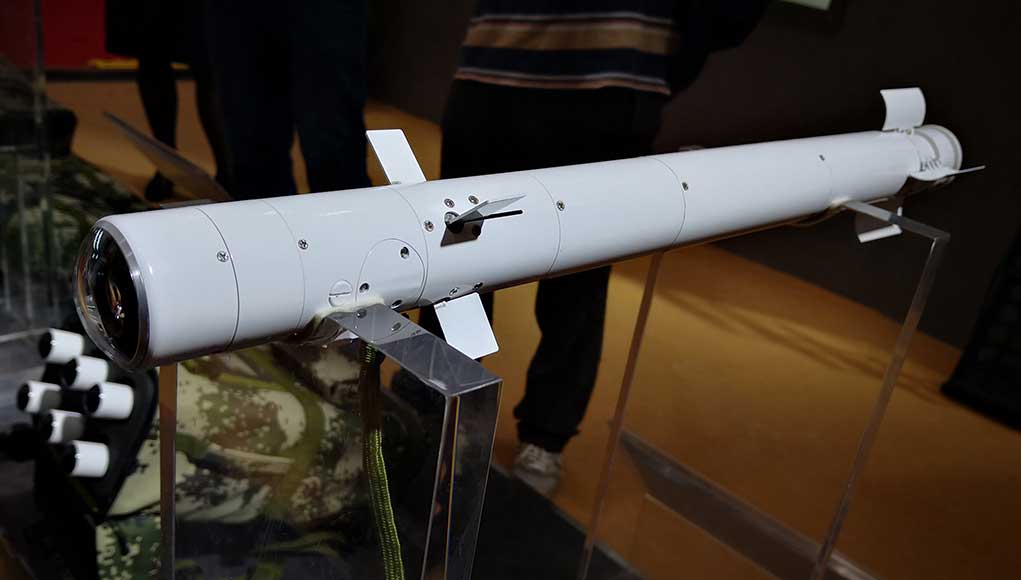
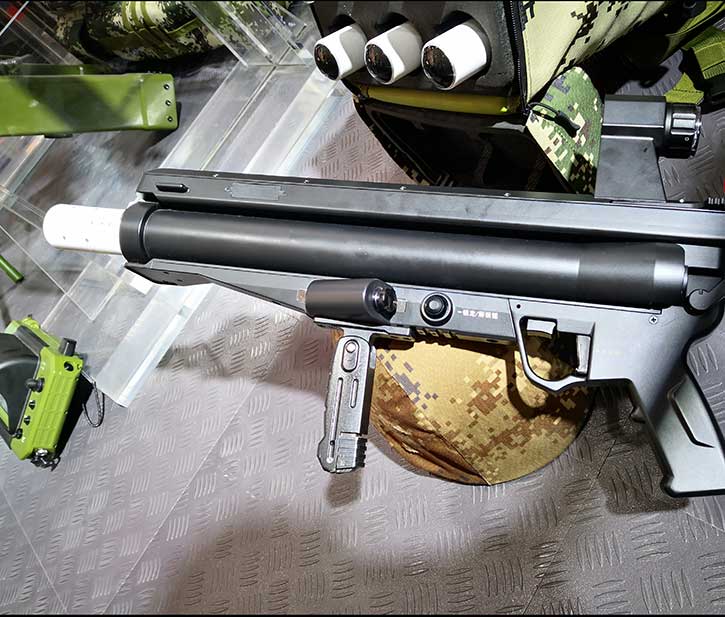
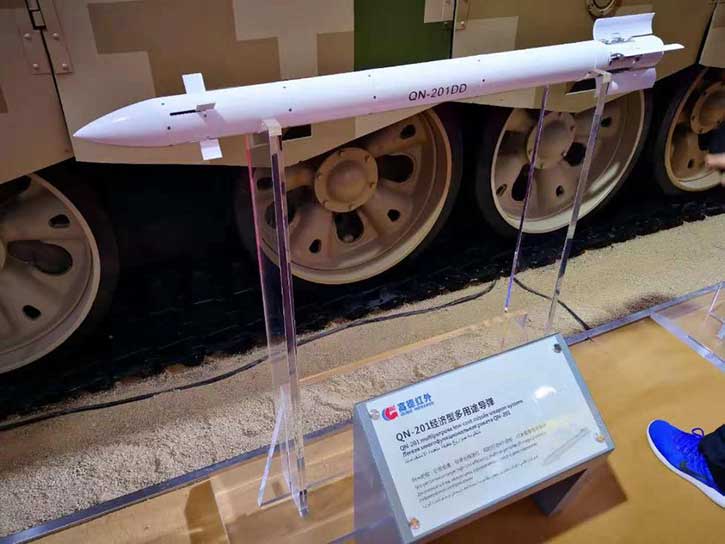
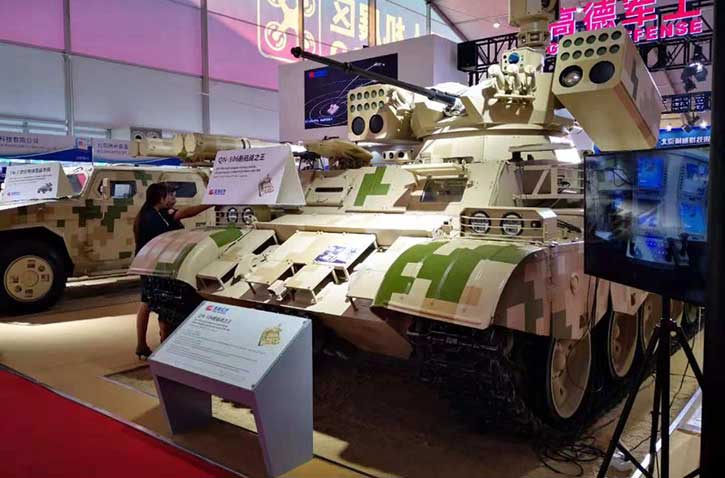
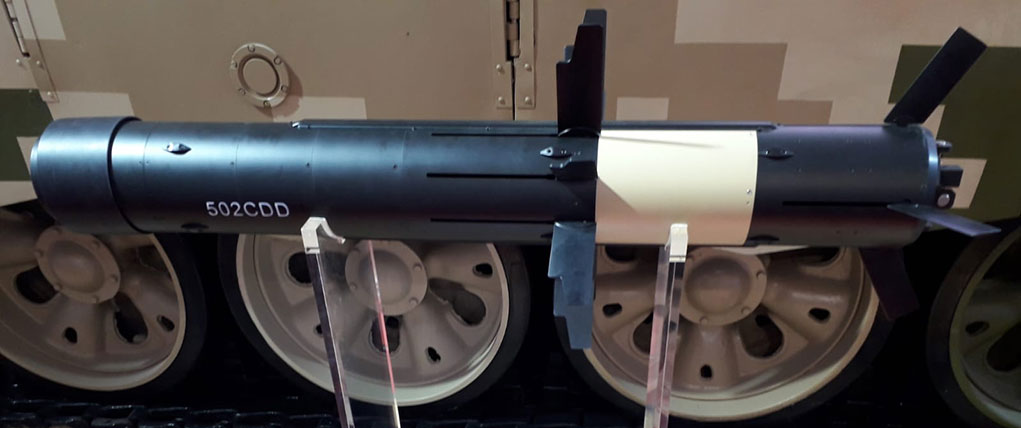
Eight Red Arrow 10B EO guided non-line of sight anti-tank missiles are carried on this ZBL-09 8×8 vehicle, designed as a tank destroyer and precision weapon carrier.The Red Arrow 10B missile weighs 43kg. Its maximum effective range is 10 kilometers.QN-202 missiles weigh only 1.2 kg and are operated by a single soldier. They can engage light armor or soft targets at ranges up to 2,000 meters. The missile can be employed from a battery of six missiles, or hand launcher, both are operated by a single soldier. Four missiles were also shown mounted on a UGV.The QN-202 missile can be launched from a reusable hand launcher, equipped with a simple sight and controller used to designate the target as it is seen by the missile’s seeker.QN-201 miniature guided missile is employed on Type 59 based fire support vehicle. Up to 20 of those ‘fire and forget’ missiles are carried, capable of engaging targets at ranges up to 2,000 meters.QN-506 Multi-purpose support tank
QN-506 is based on a turretless Type 59 tank (Chinese version of the obsolete T-54). In the QN-506 the manned turret was replaced with an unmanned rotating structure that mounts a 30mm cannon, 7.62mm coaxial machine gun, launchers carrying 20 lightweight QN-201 multi-role missiles and four launchers for QN502 EO guided missiles or loitering weapons. The vehicle can also exchange some of the loitering weapons for drones, to extend the observation range to 10 km.
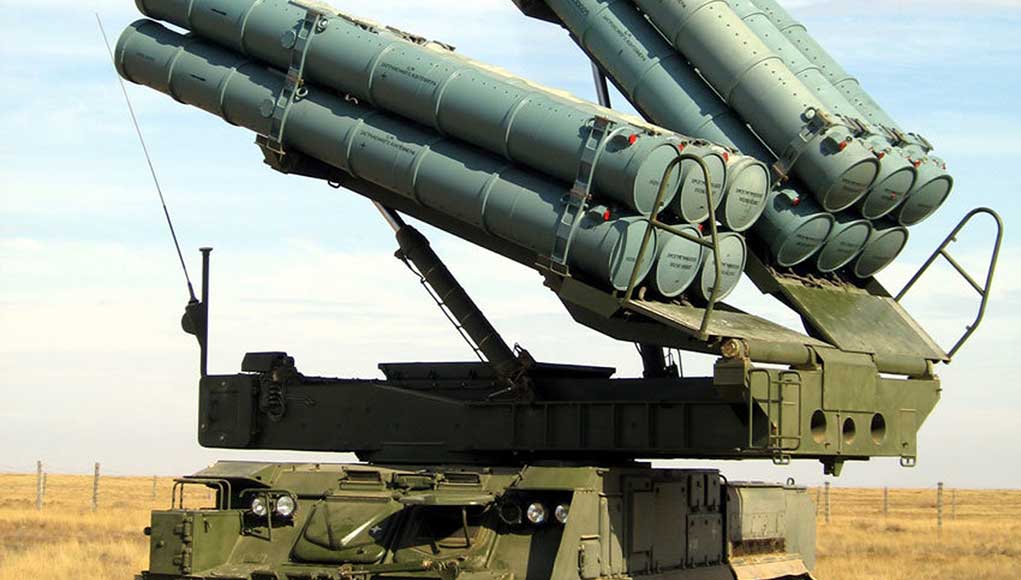
Russia is offering an export variant of the Buk-M3 air defense system called ‘Viking’ to China. The Buk-M3 surface-to-air missile system was recently accepted for service in the Russian Army. The weapon system is a follow-up of medium-range air defense missile systems (known as Buk-M2E – SA-17) is designed to protect troops and infrastructure facilities against modern and future air attack weapons amid jamming and counter-fire.
Compared to the Buk-M2E predecessor, the Viking’s firing range has increased by almost 1.5 times to 65 km. The system can engage six targets simultaneously (meaning half of the missiles carried on the Transporter Erector Launcher (TEL) can seek a different target simultaneously)relying on its active guidance. Using the more compact 9K317M interceptor and TEL configuration the missile capacity of a firing unit comprised of two launch vehicles – one carries the radar and six missiles in sealed canister-launchers. The second carry 12 missiles in two pods that can be directed to their targets from the other vehicle’s radar. That makes a total of 18 ready to launch missiles. According to the manufacturer, the system effectively engages aerial targets of all types, including aircraft, precision-guided weapons, cruise missiles, and tactical ballistic missiles, over the ground and sea.
The system uses radio-electronic and thermal guidance (operable in weather, day and night), the can be guided independently or under command guidance from the launcher, or operate the two methods simultaneously.
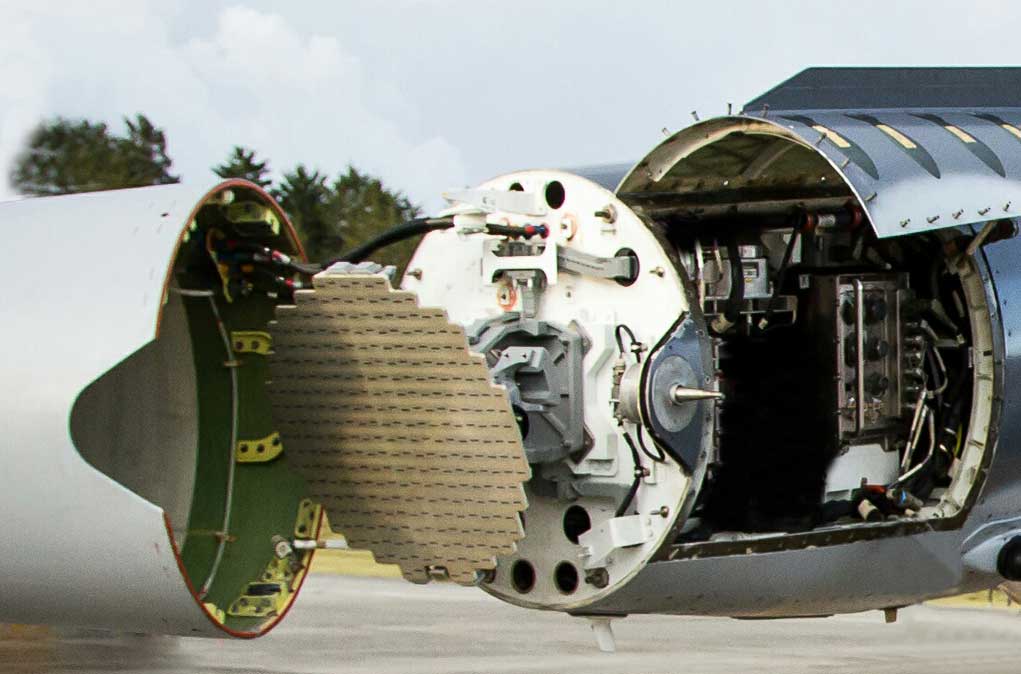
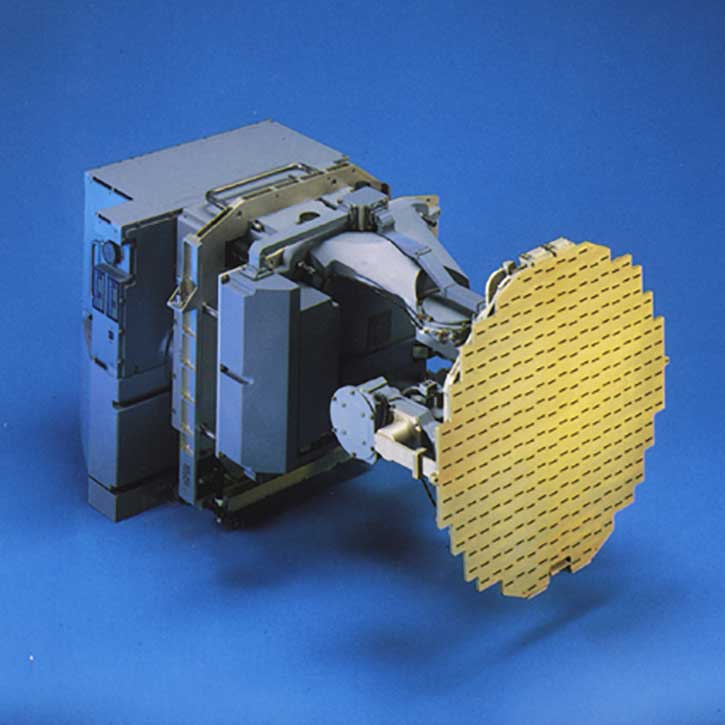
LKF601E, an airborne FCS AESA radar from the Chinese Aviation Industry Cooperation (AVIC) was unveiled at the AirshowChina event. The new radar uses high-efficiency air-cooling systems to support new and upgraded platforms such as the JF-17 and FTC-2000G ‘export fighters’ that do not facilitate water-cooling systems necessary for other AESA radars.
The radar uses a 3GHz bandwidth at the X-band, provides detection of fighter-sized targets at 170 km, tracks up to 15 targets simultaneously and engages four with air/air missiles. The radar also supports air/ground modes, with one-meter SAR resolution and terrain mapping at 300 km. Searching targets at sea, the radar can detect large targets from 200 km. The planar AESA array measures 60×60 cm and weighs 69 kg. The processor and power module weigh another less than 35 kg. The array consumes 3,200 VA of power.
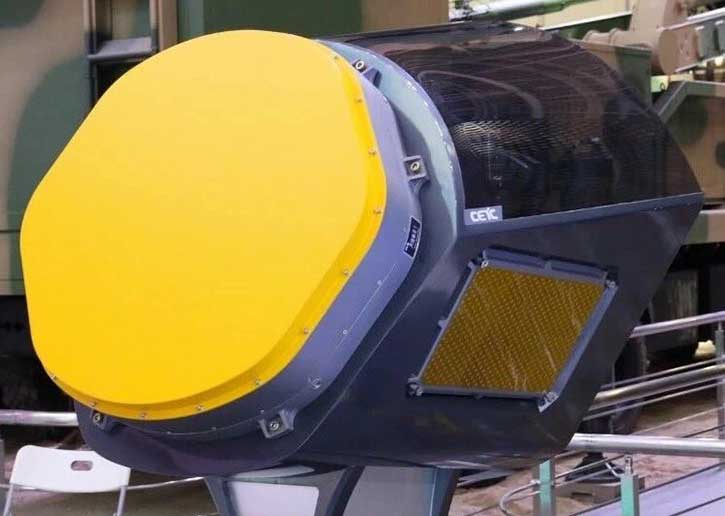
Another airborne AESA radar displayed at AirshowChina depicts side panels that extend radar coverage to the sides and rear. The main array covers 120 degrees and is positioned in a slanted plane, with supporting side planes on each side. Other arrays complete the radar overage all around the plane. The radar’s range is 170 km.
Extended coverage is provided by complimentary arrays mounted on the sides of this CETIC AESA main radar.
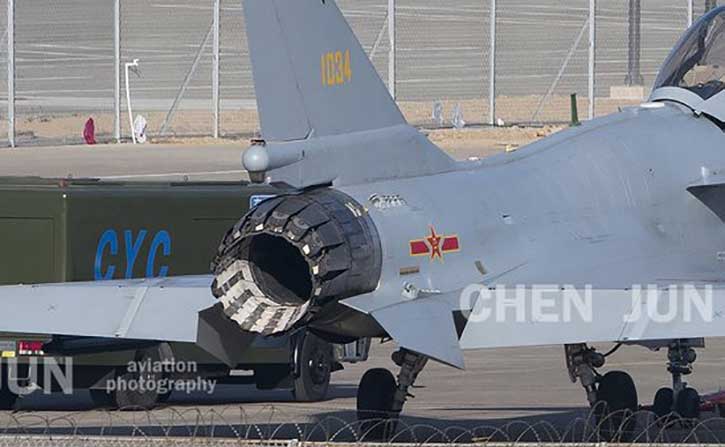
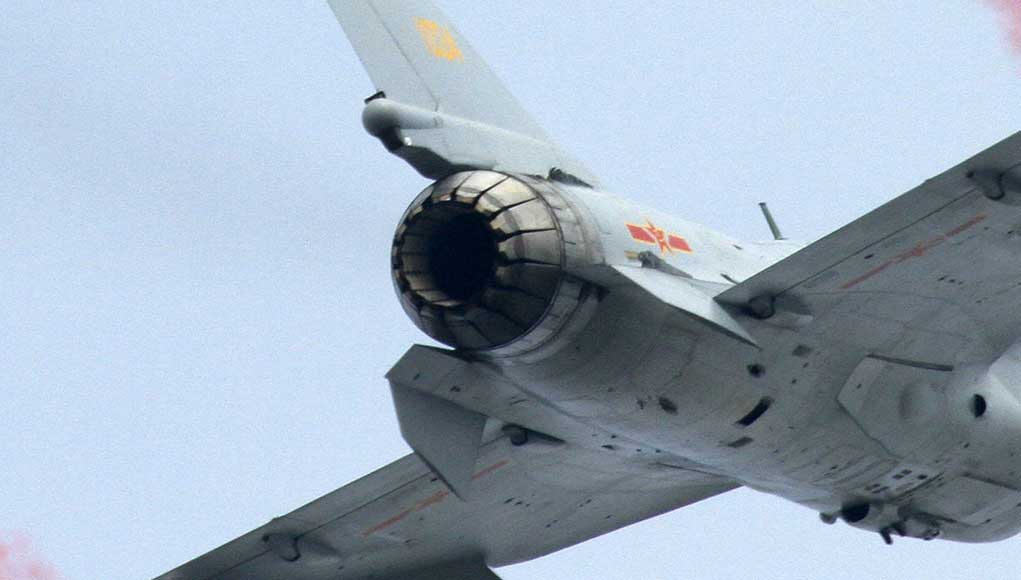
The thrust vectoring nozzle installed in the J-10B TVC testbed directs the engine’s exhaust in three dimensions, thus enabling extreme maneuverability with a single engine. Photo: Chen Jun
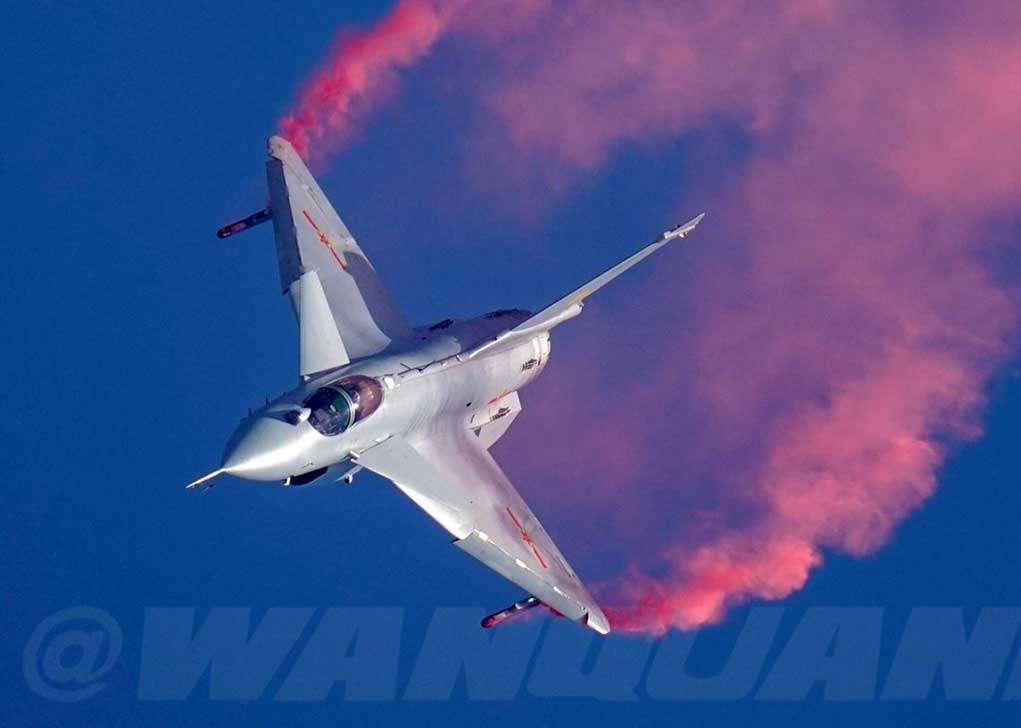
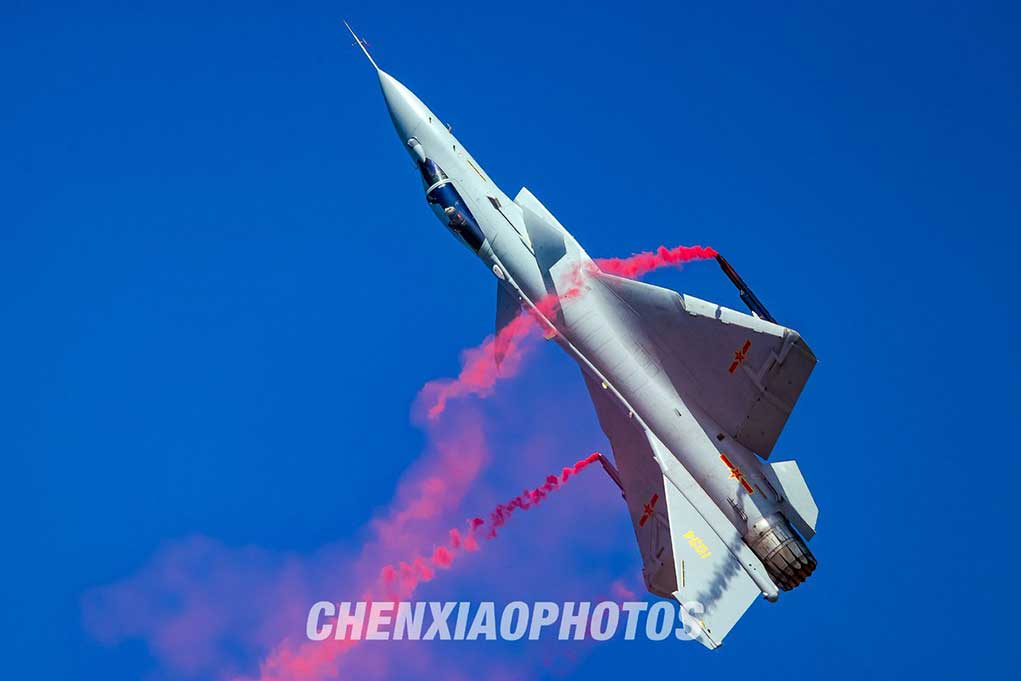
Among the new systems displayed at AirshowChina this year was the J-10B TVC testbed (tail #1034) that astounded the crowd with outstanding maneuvers enabled by its thrust vector controlled nozzle (TVC) system. This new nozzle elevates the Chinese fighter from an average 4GEN fighter to a level of ‘super maneuverable’ jet seen only with much more powerful and advanced Su-27/30 class aircraft.
This performance is derived from the combination of the J-10’s canards and new TVC enabled the pilot to perform extreme maneuvers on the flight demonstration over Zhuhai. The maneuvers included tight vertical loops, a slow high angle-of-attack roll, a cobra maneuver, and the falling leaf, the ‘cobra’ and flat turns almost instantly point the nose in 270 and 180 degrees.
Unlike the twin-engine TVC equipped fighters such as Su-27, Su-30, and MiG-29, that uses 2D nozzle control, the J-10B TVC nozzles’ has a 3D control that enables the fighter’s maneuvers even with a single engine. To be meaningful in combat such maneuvers must be supported by a powerful engine – the J-10B TVC testbed is likely powered by an advanced version of the indigenous Shenyang WS-10 engine equipped with a hinged nozzle.
The maneuvers included tight vertical loops, a slow high angle-of-attack roll, a cobra maneuver, and the falling leaf, the ‘cobra’ and flat turns almost instantly point the nose in 270 and 180 degrees. Photo: Chen XiaoThe new nozzle elevates the Chinese fighter from an average 4GEN fighter to a level of ‘super maneuverable’ jet seen only with much more powerful and advanced Su-27/30 class aircraft. Photo: Alert5
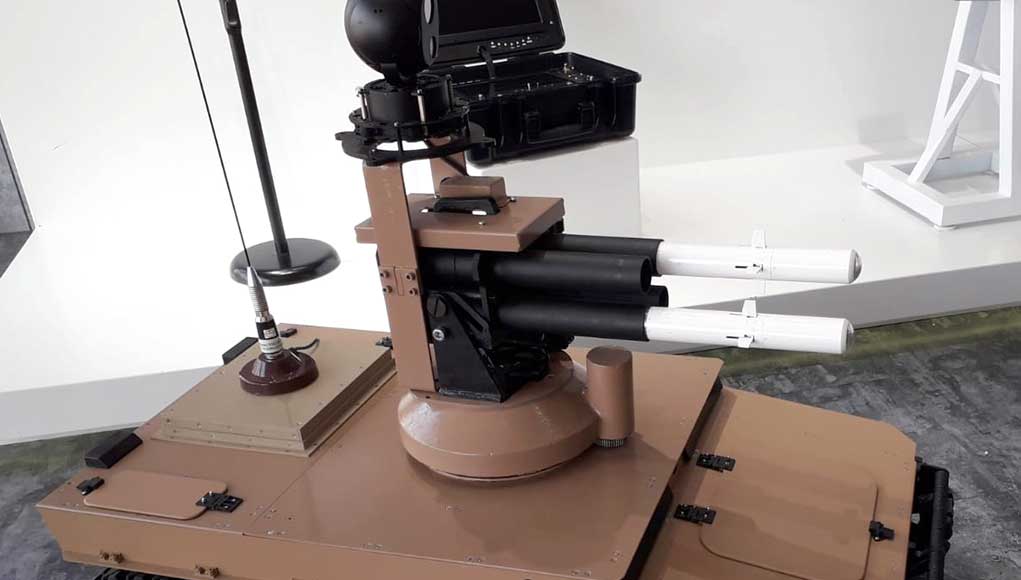
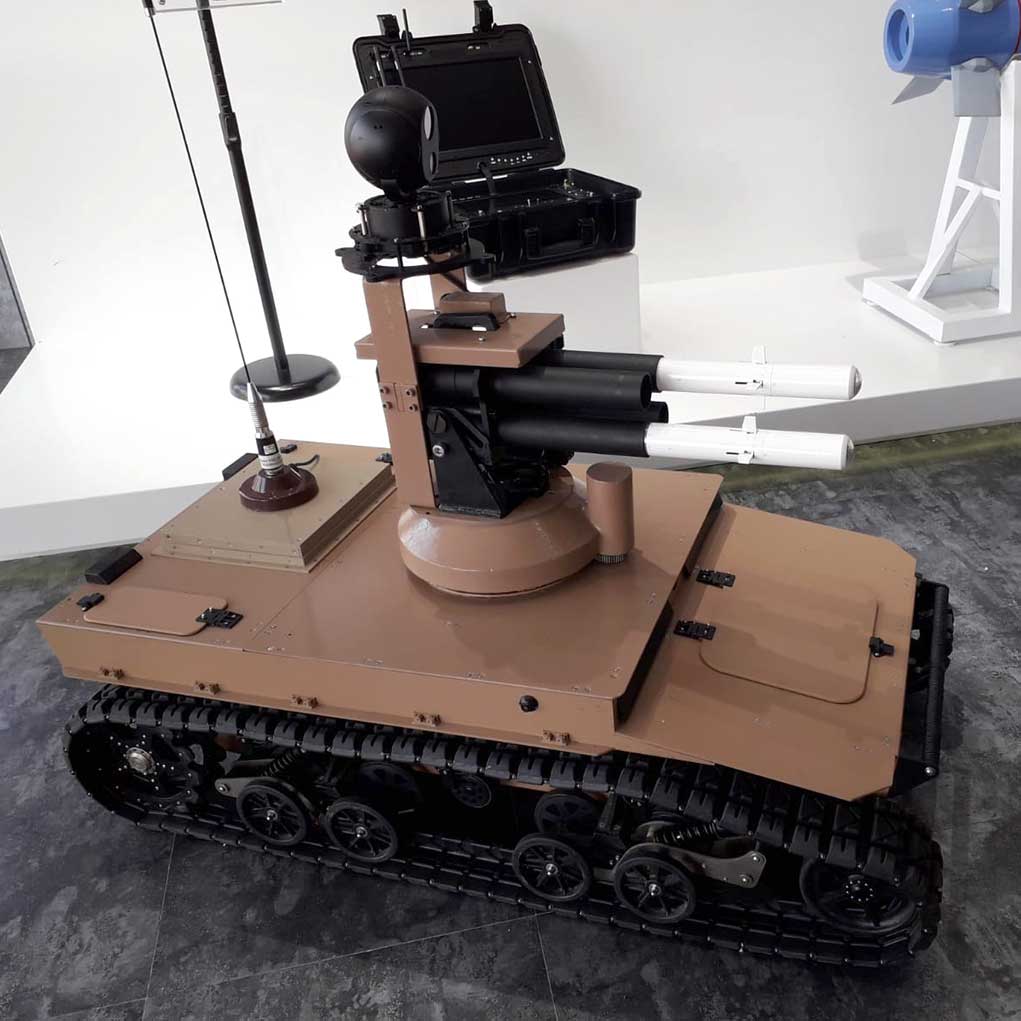
This light robotic vehicle carries four micro Intelligent Missiles, capable of hitting armored targets two kilometers away. Photo: Defense-Update
This light robotic vehicle carries four ‘Micro Intelligent Missiles’, capable of hitting armored targets two kilometers away. Photo: Defense-Update
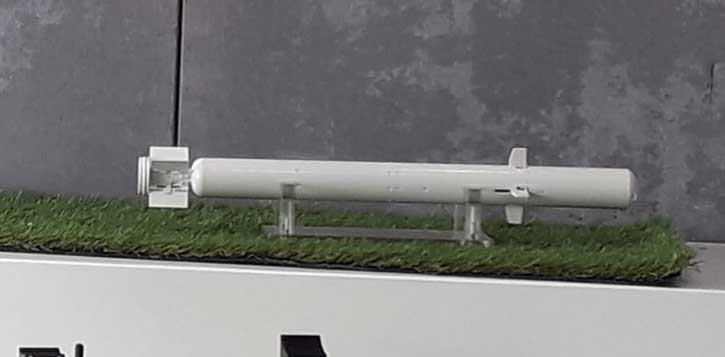
A new robotic vehicle displayed at ‘Airshow China’ defense expo in Zhuhai this week is equipped with a missile called by its developers a ‘micro-intelligent missile’. The tube-launched weapon weighs only one kilogram but is equipped with energetic rocket propulsion powerful enough to carry it on a flight up to 2,000 meters, and a warhead, (likely shaped charge) designed to defeat light armor. The missile that measures 40mm in diameter and 500mm in length looks similar in size and shape to Raytheon’s Pike missile designed that is also launched from 40mm grenade launchers. The weapon uses electro-optical guidance to deliver an accuracy of 0.5 meters with a lethality radius of 12 meters (against human targets). The term ‘intelligent’ probably refers to the missile’s ‘fire and forget’ capability, with targets acquired by the controller through the vehicle’s electro-optical unit and transferred to the missile’s seeker before launch.
This micro intelligent missile weighs only one kilogram and can be launched by a robot against light armored vehicles at a range of 2000 meters. Photo: Defense-Update
Boeing has agreed to spend billions of dollars in Israel over the coming decade if it wins major defense contracts, Israel’s Economy Ministry said on Tuesday. The “reciprocal procurement” agreement calls for Boeing to collaborate with Israeli industries for at least 35 percent of the value of any transaction it signs with the Israeli government. Reuters reports. The Israeli selection of new fighter, and heavy helicopter is expected before the year’s end.
Boeing is competing in Israel for a number of key Defence Ministry contracts, including the purchase of a squadron of the latest model of F-15 fighter aircraft, KC-46 aerial refueling planes, and CH-47F Chinook heavy transport helicopters, offered as a replacement for CH-53 aircraft bought from Lockheed Martin/Sikorsky over the past 40 years. As the total procurement package is estimated to cost about $10 billion, over the next decade, the agreement could be worth $3.5 billion in new business in Israel, the ministry said in a statement.
Until recently most of Israel’s foreign defense buying was allocated to Lockheed Martin, for the procurement of 50 F-35A 5th Generation stealth aircraft currently being delivered. These deals were financed by the US military aid to Israel, and have also earned several US$ billions in local contracts, both for the F-35 program and other business. Lockheed Martin has already subcontracted about $1.2 billion in Israel, associated with the current F-35 buy (50 aircraft) and has committed to reciprocal procurements worth up to $4.3 billion, if Israel increases its F35 fleet to 75.
In the past, Boeing and Lockheed Martin awarded significant orders to Israeli contractors, associated with F-15, and F-16 procurements. Israeli subcontractors have become favorable suppliers to US primes. While reciprocal procurement related to the F-16 was set at $1.2 5 billion, the total worth of Lockheed Martin buying in Israel, related to this multi-year project reached $2 billion.
“A reciprocal procurement agreement of this magnitude is a significant achievement that will lead to the growth of many companies in the economy, increase their activity and also their success in international markets,” said Economy Minister Eli Cohen.
The commitment Boeing has made is important for Israel, not only for its financial value but also helping local defense industries maintaining their deal flow over the next decade. In the past decade, many Israeli companies have earned government contracts paid by US military assistance. This agreement was changed recently, as Washington agreed to increase the annual military aid to Israel, but limited the spending to US company. If the recent agreement will fulfill its potential it could cover about 40 percent of the US Military aid spent locally in the past 10 years.
IAI's Sky Capture fire air defense control system is an integrated system comprising the ELM-2106 ATAR (radar) seen on the right, and the ELM-2106BF fire control unit seen on the left. The entire system is mounted on a trailer and includes the sensors, command unit, communications power generation and environmental control systems. Photo: IAI
Israel Aerospace Industries (IAI) will supply the “Sky Capture” command and control systems for land-based air defense worth $550 million under a contract recently signed with a customer in Asia. The customer is likely the Indian Army. Developed by IAI’s Systems, Missile & Space Group, the system optimizes the performance of air defense artillery against a broad range of airborne threats, protecting headquarters, military bases and strategic assets. IAI is expected to deliver the first systems within a few months, and complete delivery in three years.
Sky Capture is a command and control system for anti-aircraft artillery and Very Short Range Air Defense (VSHORAD) systems that transforms legacy air defense systems into modern, accurate and effective weapons by applying modern sensors, communications and computing capabilities.
The system integrates several sensors, including target acquisition and fire control radar systems, including the ELM-2106 Advanced Tactical Air-Defense Radar (ATAR). This 4th Generation 3D is optimized to detect targets with low radar cross-section, such as low-velocity UAVs and ultralights that can be detected from 40-60 km. The ATAR radar can detect helicopters at 40 km, and classify such targets by type, according to the radar signature returned from the rotor blade returns. A solid-state L-Band medium-range radar. This radar combines rotation in azimuth with electronic scanning in elevation.
The system also combines an electro-optical (EO) payload for passive track and target identification. System. For the Sky Capture solution ATAR is associated with a separate fire control radar providing effective target engagement with continuous search and tracking of multiple targets. The solution provides accurate target data for the weapons associated with the system and manages to fire parameters to ensure the highest probability of target kill, according to the target type. Typical weapons controlled by the system are the Bofors L-70 cannons and ZSU-23/2 automatic guns.
IAI won this contract following an international tender published by the customer. The selection followed extensive testing that successfully demonstrated the system’s performance in different scenarios and against various targets.
Boaz Levi, IAI&’s Executive Vice President and General Manager of Systems, Missiles and Space Group IAI has won this international tender with a system that has been developed to support the future generation of very short-range air defense systems. “Sky capture combines several aerial interception methodologies, reflecting the extensive capabilities of IAI’s air defense know how.” Levi said, “The system sold under this contract uses air defense cannons and is also designed, if needed, to manage short-range missiles and laser interception systems.”
The Indian Army planned to replace about a thousand legacy AAA bought from Sweden in the 1960s, and have set about $3 billion for the project, but this plan was shelved before a tender was launched. Instead, the Army opted to upgrade the L-70 guns, ZSU-23/2, as well as the mobile ZSU-23/4 Schilka and Tungushka mobile AAA, adding short-range air defense missiles to the guns. Assumably, Sky Capture adds fire control to those upgraded guns to coordinate multiple guns on target and optimize their performance.
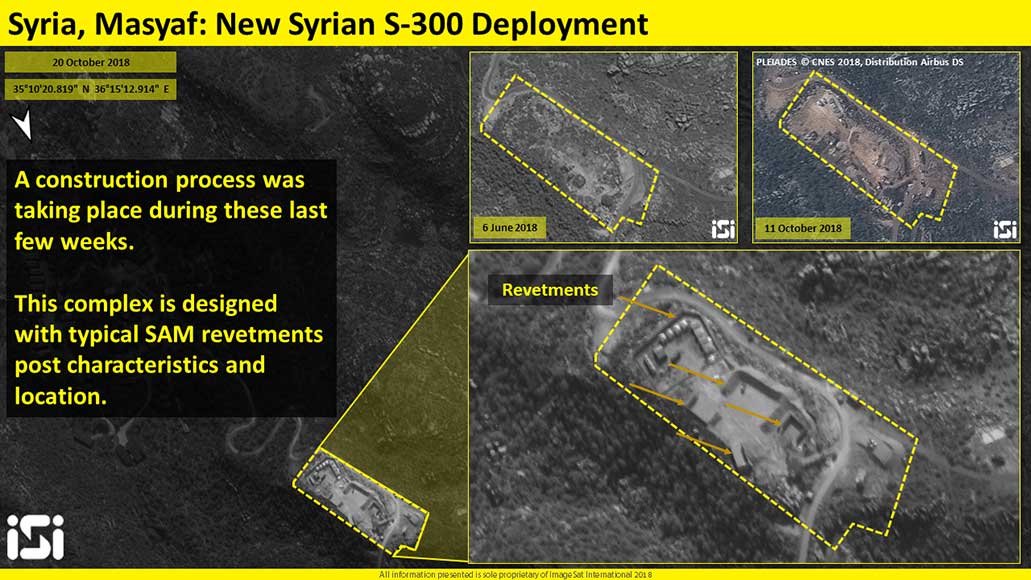
Satellite images taken in the recent days show work in progress at what looks like the new S-300 missile base located north-west of Masyaf. The seequence shows revetments built at the site to protect the system's control systems and launchers. Photo: Satellite Imagesat International (ISI)
Israel closely watches the whereabouts of the new S-300 surface to air missile system, delivered by Russia to Syria last month, Defense-Update reports.
An Israeli spy satellite has spotted their location northwest of the town of Masyaf in the mountain region, about 30 km from the Mediterranean sea. From its current location, the Syrian missiles dominate a radius of up to 250 kilometers, covering the entire Lebanese airspace, the eastern part of the island of Cyprus, parts of southern Turkey and northern Israel, down to the Sea of Galilee.
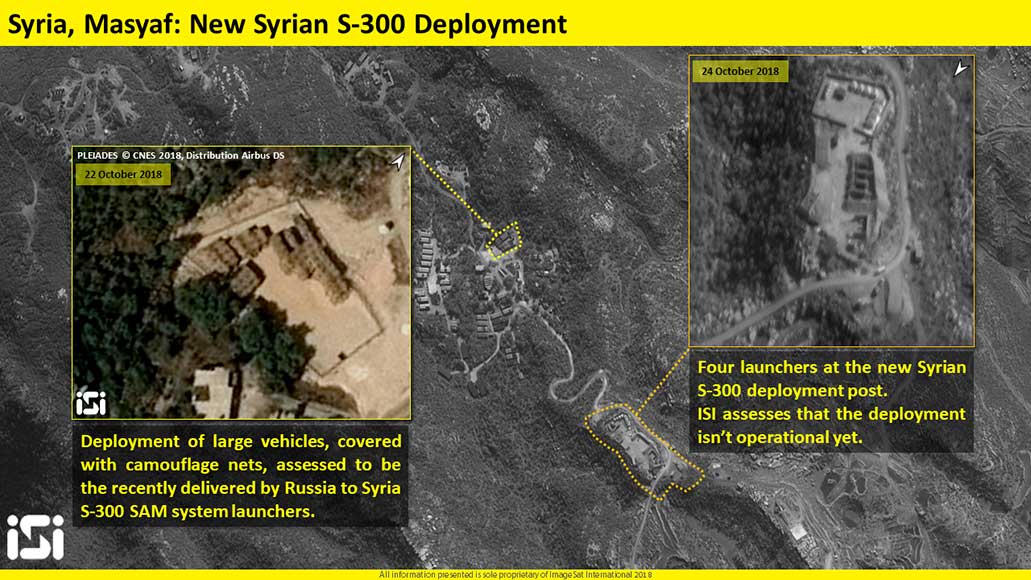
The Israeli satellite images acquired earlier today indicate four S-300 launchers are currently deployed in the newly constructed post, while additional elements are still missing. According to an intelligence analysis report provided Imagesat International, the Syrian S-300 is not currently operational. The newly arrived unit is deployed within 1.3 km distance of the Russian S-400 surface to air missile site at Maysaf. Currently, it is not clear whether the new site is controlled by Syria or Russia.
A satellite image taken two days ago shows groups of large vehicles, covered by camouflage nets at a new site north-west of Masyaf, assessed to be the recently delivered S-300 PMU-2 SAM unit recently removed from Russian Army active service. Another satellite image that was taken by Imagesat earlier today shows the deployment of four launchers, protected inside earthwork berms.Photo: Satellite Imagesat International (ISI)
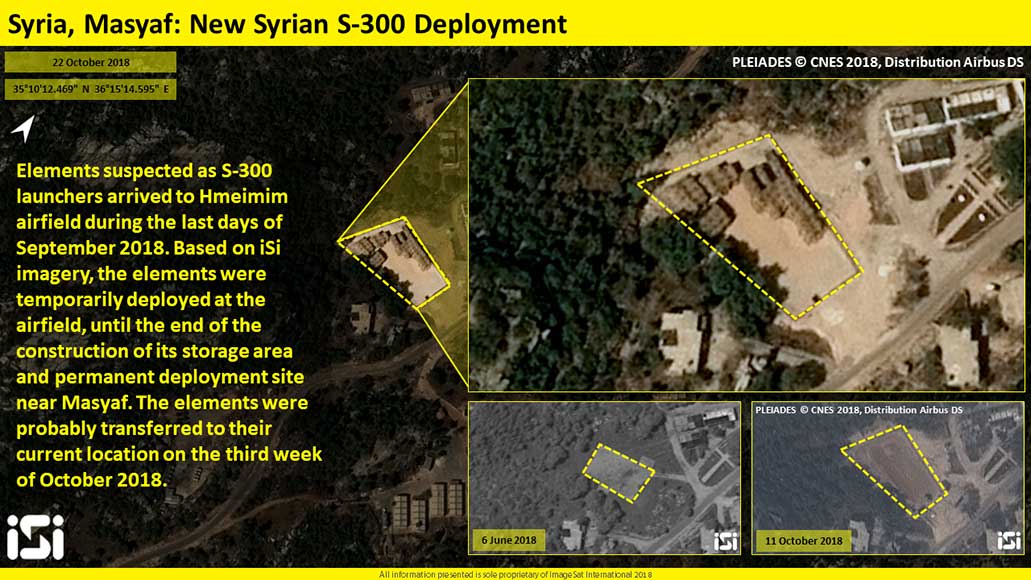
Elements of the S-300 unit, mainly launchers, arrived at Hmeimim airfield by the end of last month. Satellite imagery provided by Imagesat show these elements deployed at a temporary site near the airfield, while construction was underway at the permanent site. This location is designed with earthwork revetments typical of surface-to-air missile posts. These elements were likely moved to the recently spotted Maysaf location by the third week of October.
Elements that seem to be parts of the S-300 delivered to Syria were grouped last week at a temporary site, According to an intelligence report produced by Imagesat International.
According to Russian sources the S-300 will be controlled by Russian operators until the Syrian crews are trained, a process the Israelis estimate could take until March 2019. These operators possibly share the existing facilities of the Russian S-400 unit located nearby. Even after the Syrians are fully trained, it is likely that Russian controllers will continue embedding with the Syrian crews.
Israel’s ELTA Systems, a division, and a subsidiary of Israel Aerospace Industries (IAI) have been awarded a $55-million contract for the delivery of an undisclosed number of ELM-2032 Multimode Airborne Fire Control Radars to be installed in a new combat aircraft of an Asian origin. The contract is a repeat order providing radars for new orders. The customer for those radars was not identified by the company. In 2012 IAI secured a $150 million contract to supply the same radars to a customer in Asia.
“The Multimode ELM-2032 Airborne Fire Control Radar is a versatile radar that addresses several mission types in a single product.” Yoav Turgeman, IAI VP and CEO of ELTA, explained, its field of regard, long detection range, and accurate tracking provides the pilots with full situation awareness, and its accurate information is used by the aircraft’s systems.”
The ELM-2032 is an advanced pulse Doppler, multimode planar array fire-control radar intended for multi-role fighter aircraft originated from the Lavi project. It is suitable for air-to-air and air-to-surface modes. The ELM-2032 offers a broad range of operational modes, including high-resolution mapping in SAR mode, detection, tracking, and imaging of aircraft, moving ground and sea targets.
This radar has been integrated with several Indian platforms, as part of modernization programs of Indian Sea Harrier, A-4, F-4, F-5, F-16, Kfir C-10, Mirage, and MiG-21 fighters. It was also selected for new fighters, including the Indian Tejas Light Combat Aircraft (LCA), and the Korean T-50 and FA-50.
Korean Aerospace Industries has delivered several variants of the T-50 to local and international customers. The FA-50 was delivered to the Korean Air Force, FA-50PH to the Philippines and T-50TH to Thailand. Although these aircraft are designated as advanced trainers they are similar to the FA-50 as they fully combat capable, being fitted with fire control radar (expected to be Elta’s EL/M-2032), a weapon data-bus and provisions for Link 16 data link.
The FA-50 is capable of carrying 4,500kg (9,910lb) of weapons, has a 20mm cannon and can carry air-to-air missiles. All T-50 variants are powered by the General Electric F404 engine. The first T-50TH aircraft were delivered to Thailand in April with eight more to be supplied in 2019-2020.
Harris Corporation (NYSE:HRS) and L3 Technologies, Inc. (NYSE:LLL) have agreed to combine in an all-stock merger of equals to create a global defense technology leader, focused on developing differentiated and mission-critical solutions for customers around the world. The merger is expected to close in the mid-calendar year 2019, subject to satisfaction of customary closing conditions, including receipt of regulatory approvals and approval by the shareholders of each company.
On October 14 the companies announced they have agreed to a ‘transformational merger of equals’ in the largest merger in defense history. The combined company called ‘L3 Harris Technologies’ will be the 6th largest U.S. defense contractor, with approximately $16 Billion in annual revenues and 48,000 employees worldwide. The company would be ranked about 180 on the latest Fortune 500 list. For the calendar year 2018, the combined company is expected to generate net revenue of approximately $16 billion, EBIT of $2.4 billion and free cash flow of $1.9 billion. The combined company to be named “L3 Harris Technologies” and headquartered in Melbourne, Florida.
“This merger creates greater benefits and growth opportunities than either company could have achieved alone.” L3 Chairman, President, and Chief Executive Officer, Christopher E. Kubasik said. “The companies were on similar growth trajectories and this combination accelerates the journey to becoming a more agile, integrated and innovative non-traditional 6th Prime focused on investing in important, next-generation technologies. L3 Harris Technologies will possess a wealth of technologies and a talented and engaged workforce. By unleashing this potential, we will strengthen our core franchises, expand into new and adjacent markets and enhance our global presence.”
The merger is expected to create significant value with a broader portfolio of technology capabilities and increased scale to address evolving customer needs. It brings together complementary portfolios and a shared focus on R&D to accelerate innovation and speed to market while strengthening capabilities across multiple domains.
“This transaction extends our position as a premier global defense technology company that unlocks additional growth opportunities and generates value for our customers, employees, and shareholders. Integration planning is already underway, and from our extensive experience with integration, we are confident in our ability to realize $500 million of annual gross cost synergies and $3 billion of free cash flow by year 3.”
Under the terms of the merger agreement, which was unanimously approved by the boards of directors of both companies, L3 shareholders will receive a fixed exchange ratio of 1.30 shares of Harris common stock for each share of L3 common stock, consistent with the 60-trading day average exchange ratio of the two companies. Upon completion of the merger, Harris shareholders will own approximately 54 percent and L3 shareholders will own approximately 46 percent of the combined company on a fully diluted basis.
The combined company, L3 Harris Technologies, Inc., will be the 6th largest defense company in the U.S. and a top 10 defense company globally, with approximately 48,000 employees and customers in over 100 countries.
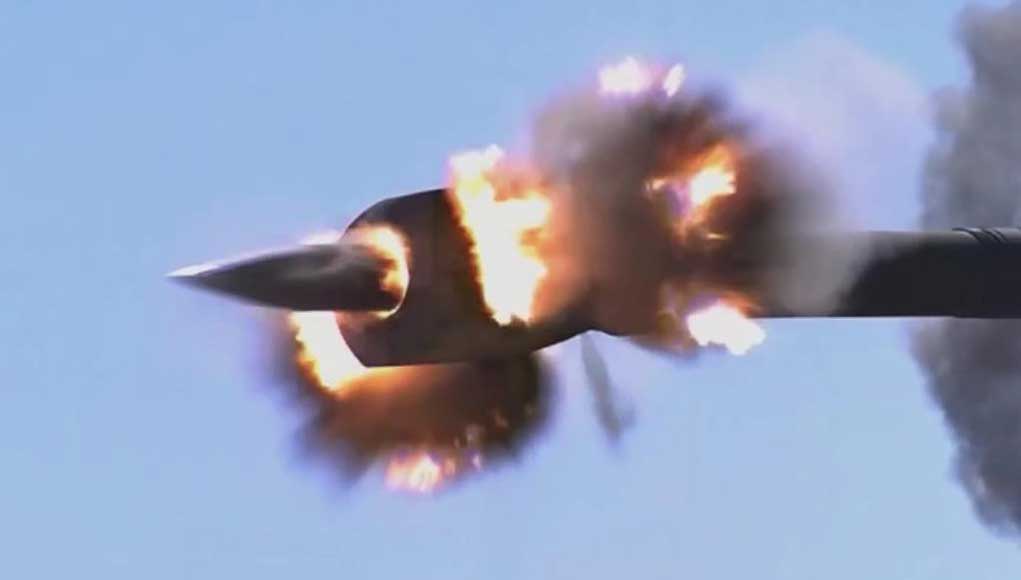
Fired from the XM-907 155mm 58 Caliber gun, the XM-1113 Rocket Assist Projectile (RAP) can hit 20 meters within a designated targets at a range of 70 km. Photo: US Army
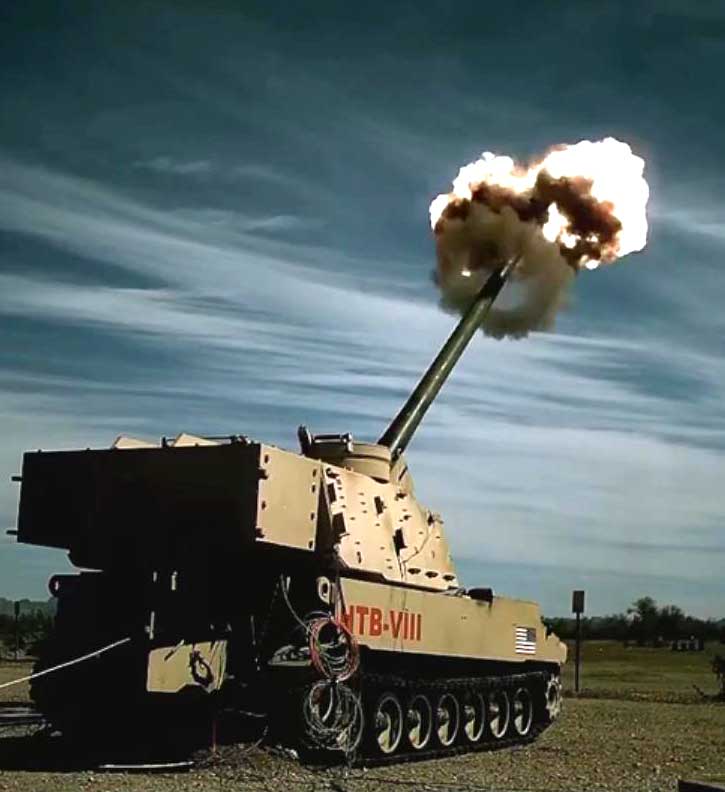
ERCA firing tests. Photo: US Army
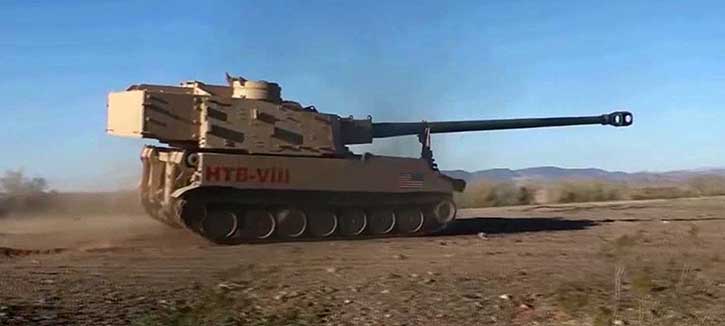
The US Army has developed a self-propelled variant of the XM-907 155mm 58 Caliber cannon. This M-109A8 variant based on this enhanced design is expected to be fielded by 2023 and provide the US Army with cannon artillery firepower that could reach targets 70 km with high precision. Eventually, the Army hopes that with enhanced ammunition those guns could reach targets at 100 km. This is not the final goal, the Army also plans to test a strategic cannon that will be able to fire projectiles as far as a thousand kilometers away. Such a strategic weapon will become part of the Army’s answer to the Russian and Chinese advanced air defense networks, (known as Anti-Access Area Denial systems – A2AD).
The Army argues that in a multi-domain battle, land forces will be able to deliver precision hypersonic missiles against critical command and control nodes, while strategic gunfire could engage softer targets, including missile launchers and anti-aircraft assets dispersed over a wide area, penetrating access routes for airstrikes and cruise missile fires.
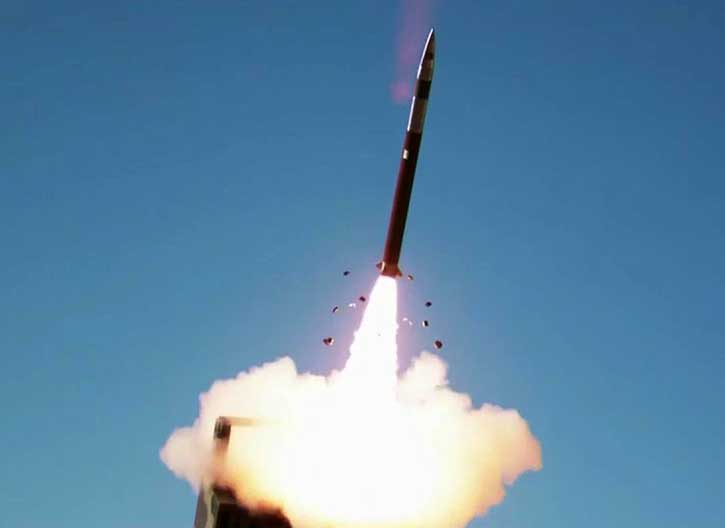
In March 2018 the GMLRS was tested with new tail controls. Photo: US Army
Future PrSM weapons could be enhanced with ramjet propulsion extending their range beyond the 500 km limit of the IMF treaty. Photo: US Army
The Army’s Guided MLRS (GMLRS) is also capable to reach 70 km range but is less flexible in the types of warheads used. The rocket has recently been tested with new tail controls, which are likely to be used in the future PrSM. These platforms firing rockets from pods would be enhanced with introduction Precision Strike Missile (PrSM) a replacement for the ATACMS missile that will have a range of 499 km, just within the limit of Intermediate Range Missile treaty. If the INS treaty fails, PrSM could be enhanced with more advanced propulsion, such as ramjets, to extend its range to much longer ranges.
The Army’s longest range artillery round is the Excalibur GPS guided projectile, that has demonstrated hits within 2 meters of its intended target, fired from a range of 62 km. The enhancement of the M-109A8 and its ammunition are part of the work spent by the Army’s Cross Functional Team (CFT) focused on Long Range Precision Fires.
The Extended Range Cannon Artillery (ERCA) that began firing trials in March uses a longer barrel, redesigned chamber, and breech, to withstand the higher pressure generated during the firing that accelerates the rounds that long range. The M-109A8 will use new types of ammunition to match those pressures and the firing rate of 6-10 rounds per minute. To achieve this rate the gun will require semi- or fully-automated ammunition handling. The system is expected to get an autoloader, a new fire control system and be able to use the XM-654 supercharge and new XM-1113 rocket-assisted projectile (RAP) that provides 20 percent more impulse, compared to current RAP (M549A1), both designed to fire projectiles over twice the current range they reach now. Both were developed and tested with the towed variant of the XM-907 cannon (M-777ER). The XM-1113 has already demonstrated 30 percent range extension (40 km) at a mean miss distance (CEP) of 20 meters fired current M-109A7 Paladin 155mm guns.
With longer range, high mobility and lower cost per shot ERCA will become the US Army’s ‘tactical weapon’ against enemy anti-access and area denial (A2AD) systems, providing the ground forces with a capability to defeat enemy air defenses and command and control elements farther away from enemy artillery. Unlike the current artillery which is too close and vulnerable to enemy attack, this concept of operations is intended to support mechanized forces and infantry from stand-off range. Longer range precision fire can hit enemy troop concentrations, supply lines, and equipment essential to a coordinated attack while allowing forces to stay farther back from the incoming enemy fire.
The ECRA (M-109A8) received a larger turret, redesigned chamber, and breech, to handle the higher firing pressures. Photo: US Army
Human-swarm teaming incorporate novel presentation and sensing technologies. including augmented reality, haptic, gestures and speach. Illustration via DARPA
Unmanned systems are widely used by the military in numerous missions, assisting soldiers and operators in tedious and dangerous tasks. But in the near future, robotic systems will assume collaborative missions without human control, helping other robots performing complete missions autonomously.
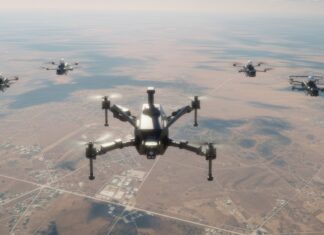
The tools and methods required to conduct such missions are currently being evaluated by the US Defense Advanced Research Projects Agency (DARPA), under the ‘OFFensive Swarm-Enabled Tactics’ (OFFSET) program. The aim of this project is to develop the tools to operate and control swarms of 250 collaborative autonomous systems. Such a swarm will be able to provide soldiers fighting in an urban area the critical insights of the terrain. These flying bots will enter high rises, subterranean and indoor spaces to improve situational awareness, communications, and mobility. Currently, at its third phase, DARPA’s OFFSET Sprint focuses on the aspects of human-swarm teaming and tactics.
Timothy Chung, program manager in DARPA’s Tactical Technology Office (TTO) encouraged researchers and innovators from existing participants and new ones to join third OFFSET sprint. “What makes autonomous swarm research challenging and compelling is the rapid pace at which swarm technologies and associated capabilities are advancing,” Chung said. “OFFSET is designed around the idea of incorporating core swarm sprints at regular intervals.” OFFSET is structured to demonstrate its technologies through frequent live experiments with various unmanned air and ground platforms. Roughly every six months,
The first of two topic areas covered in the third sprint is human-swarm teaming, which refers to the design, development, and demonstration of novel frameworks to enhance how humans interact with autonomous swarms. This topic area recognizes and seeks to address the complexity of the swarm systems themselves, as well as the cognitive, physical, and contextual needs of human teammates or tacticians when conducting urban operations.
The program will seek to evolve a library of intuitive and operationally relevant swarm tactics. Ssoldiers will be able to select tactics from the menu, to direct a group of robots or the entire swarm to perform a mission. Illustration: DARPA
The third swarm sprint seeks to increase the collection of swarm tactics available for the user. At this third sprint, participants will be required to employ heterogeneous swarms of aerial and ground robots, performing autonomous and collaborative maneuvers on a specific mission. For example, they will be tasked to conduct an urban raid, within four square city blocks, over a mission duration of one-to-two hours.
Among the concepts being evaluated are immersive and intuitive interactive technologies, augmented and virtual reality, with voice-, gesture-, and touch-based) interactions. This will create a novel command interface with immersive situational awareness and decision presentation capabilities. The interface would also incorporate a swarm interaction grammar, enabling “freestyle” design of swarm tactics that allow dynamic action and reaction based on real-time conditions in the field. These tactics will be executed in a virtual simulation representing a swarm tactics game. Different tactics will be evaluated to explore and evolve the most effective and promising ones. Users could submit swarm tactics and track their performance from test rounds, or join with other concepts loaded to the program’s swarm tactics exchange, to design swarm tactics by composing collective behaviors, swarm algorithms, and tactics.
The program envisions five Sprints, each focuses on one or more topics including swarm tactics, swarm autonomy, human-swarm teaming, virtual environment, and physical testbed. Each topic emphasizes slightly different perspectives but ultimately aims to enable breakthroughs in swarm capabilities.
The second Sprint embraced some of the innovative technologies and new ideas evaluated in the first OFFSET Sprint. As part of the second Sprint DARPA has recently awarded contracts to the following organizations:
The first sprint included teams lead by technology giants Raytheon, Northrop Grumman, and Lockheed Martin. Each company teamed with an academic research center. The second sprint focused primarily on research institutes, including Carnegie Mellon and Cornell universities, Michigan Technological University, and the Universities of Boulder, Colorado, and Charlotte, North Carolina. Corenova Technologies, Heron Systems, and Siemens Corporation were also awarded research contracts as part of the Second OFFSET Sprint.
“This cohort of sprinters for the second swarm will leverage existing technologies or develop new ones leading to enhancements in swarm autonomy, highlighting enriched foundations in swarm primitives and/or swarm algorithms,” Chung said, “These contributions to the overarching OFFSET swarm systems architectures will offer additional building blocks for novel capabilities that spotlight the potentially disruptive advantages of autonomous swarms for complex urban operations.”
The opening week of 2026 has been defined by a singular, paradigmatic shift in modern warfare: the "catastrophic failure" of Venezuela's integrated air defense network during a U.S. special operation. The operation succeeded not through brute force, but by rendering Venezuela's Russian S-300VM and Chinese "anti-stealth" radars effectively blind, validating the supremacy of advanced electronic warfare over legacy kinetic defenses. This failure has sent shockwaves through the global defense market, underscoring why nations like Spain and Germany are rushing to modernize their air defense architectures with Western alternatives, while massive procurement programs exceeding $301 billion signal an accelerated transformation toward unmanned systems, directed energy weapons, and indigenous production capabilities.
Turkey's defense industry transformation extends far beyond its celebrated drones. Now ranking 11th globally in defense exports, Turkey is executing a comprehensive strategy to become a top-tier arms supplier. With 75% of exports flowing to Western markets and five firms in Defense News' Top 100, Turkey is methodically building a complete defense ecosystem through combat-proven systems, integrated defense diplomacy, strategic self-reliance, and real-world R&D in active conflict zones.
Lockheed Martin Skunk Works® and XTEND have achieved a major milestone in JADC2 by integrating the XOS operating system with the MDCX™ autonomy platform. This technical breakthrough enables a single operator to simultaneously command multiple drone classes, eliminating the friction of mission handoffs. From "marsupial" drone deployments to operating in GPS-denied environments, explore how this collaboration is abbreviating the data-to-decision timeline and redefining autonomous mission execution.
As traditional defense primes face mounting competition from agile “neoprimes” such as Anduril, Palantir and Helsing, the balance of innovation is shifting toward software-defined warfare and scalable, dual-use technologies, while global industry consolidation—marked by Boeing’s integration of Spirit AeroSystems and other strategic mergers—signals an intensified race to secure control over the defense technology value chain. Our Defense-Tech weekly report highlights these trends.
In early October 2025, a coordinated wave of unmanned aerial system (UAS) incursions—widely attributed to Russia—targeted critical infrastructure across at least ten European nations. The unprecedented campaign exposed the fragility of Europe’s air defenses...
Executive Summary
The past week (September 18-25, 2025) represents an inflection point where strategic defense concepts have transitioned from doctrine to tangible reality. An analysis of global events reveals four primary, interconnected trends shaping an...
At the 2025 Air, Space & Cyber Conference, U.S. Air Force and Space Force leaders unveiled major updates on next-generation fighters, bombers, unmanned systems, and space initiatives, highlighting both rapid innovation and critical readiness challenges as the services race to outpace global competitors. A short version is available here, with a more detailed version for subscribers.