Friday, December 19, 2025
More
    Home Blog Page 36

    Active Protection Technology Featured at the Future Armoured Vehicles Survivability Event

    SMi’s 4th Annual Future Armoured Vehicles Survivability Conference, Exhibition and Focus Day returns to London between the 13th and 15th of November 2018.

    As the only event purely dedicated to the area of vehicle protection, this event will deliver a strong focus on the relationship between current requirements, emerging technologies and how these might be leveraged to enhance force protection.

    Building on 2017’s focus day, SMi will host an exclusive pre-conference Active Protection Systems focus day on the 13 November, dedicated to this important capability. Mr. Tom Newbery, Active Protection Research Technical Authority, Platform Survivability Group, DSTL, UK MoD will chair this meeting.

    Defense Update is a media sponsor of this exciting event
    More information about the event is available here

    The focus day will aim to deliberate national efforts to integrate APS into existing fleets, the architectures necessary to support integration, efforts to ensure system safety, STANAG 4686 standardization and much more. Importantly, the meeting will guarantee the support of technical experts from the leading solution providers, covering the latest hard/soft kill systems, sensors, data processing, munitions, and countermeasures.

    Key themes for the focus day include a discussion of future challenges, the UK National Updates, research and procurement of Active Integrated Protection Systems for British Armoured Vehicles, US Army Armoured Vehicle Protection Suite (VPS) and Modular APS, and APS developments in Germany and Turkey.

    On 14th-15th November, the two-day conference will aim to further cover the core areas of survivability in detail, exploring the latest platforms, vehicle architectures, active/passive protection, mobility, counter-IED, un-manned/autonomous solutions, signature management, and stealth.

    Leonardo is the event’s Gold Sponsors, accompanied by other sponsors including Dynamit Nobel, Frazer Nash Consultancy, Intracom Defense Electronic Systems, Lockheed Martin, Rafael, Raytheon, Rheinmetall Active Protection GMBH, Soucy Group, and UTC Aerospace Systems.

    The Active Protection Systems focus day presentations will be delivered by the following speakers:

    • Mr. Tom Newbery, Active Protection Research Technical Authority, Platform Survivability Group, DSTL, UK MoD
    • Lieutenant Colonel Kerim Serkan Simais, Specialist-Land Platforms, SSM, Turkish MoD
    • Lieutenant Colonel Daniel Ramos, Product Manager Vehicle Protection Systems, PEO Ground Combat Systems, Stryker Brigade Combat Team, US Army
    • Major Luke Wilson, Requirements Manager, Royal Engineers, DE&S, UK MoD
    • Major Aharon, APS Technical Integrator, Israeli MoD
    • Mr. Wayne Beutler, Associate Director Ground Vehicle Survivability and Protection, TARDEC, US Army
    • Mr. Ulrich Faxel, Technical Director, Deputy Programme Manager PUMA, BAAINBw, German MoD
    • Dr. Arild Skjold, Senior Scientist, FFI
    • Dr. Ronald Meixner, Pre-Sales Engineer, Rheinmetall Active Protection GMBH (RAP)
    • Mr. Guy Davies, Capability Manager – Vehicle Systems, Leonardo
    • Mr. David Smith, Principal Consultant, Frazer-Nash Consultancy Ltd.
    • Senior Representative, Raytheon
    • Senior Representative, UTC Aerospace Systems

    More information about the upcoming event is available here

    To sponsor or exhibit, email Sadia Malick at [email protected]
    or call +44 (0)207 827 6748

    For delegate inquiries, email James Hitchen at [email protected]
    or call +44 (0)207 827 6054

    IDF Evaluates Active Protection for Light Vehicles

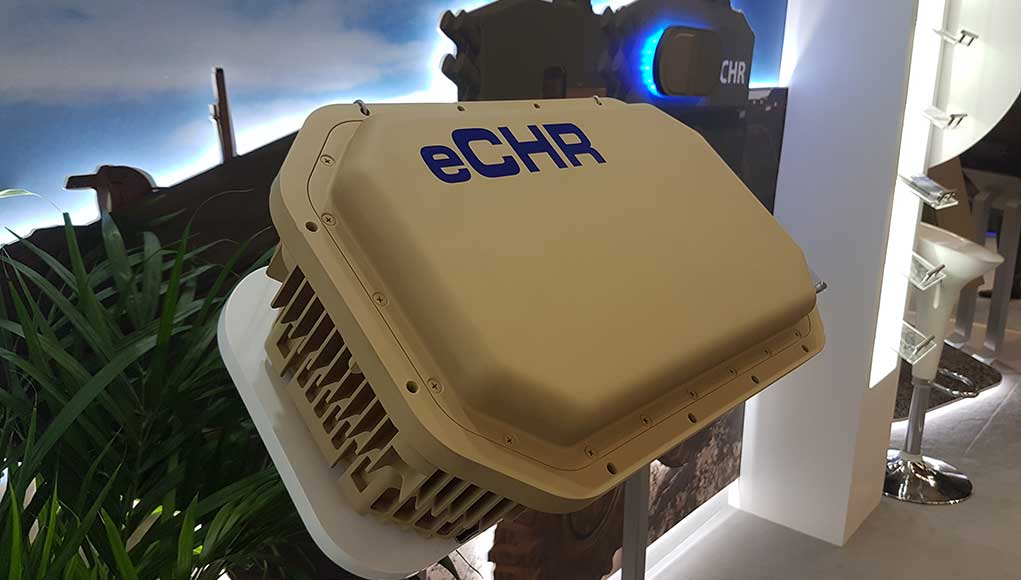
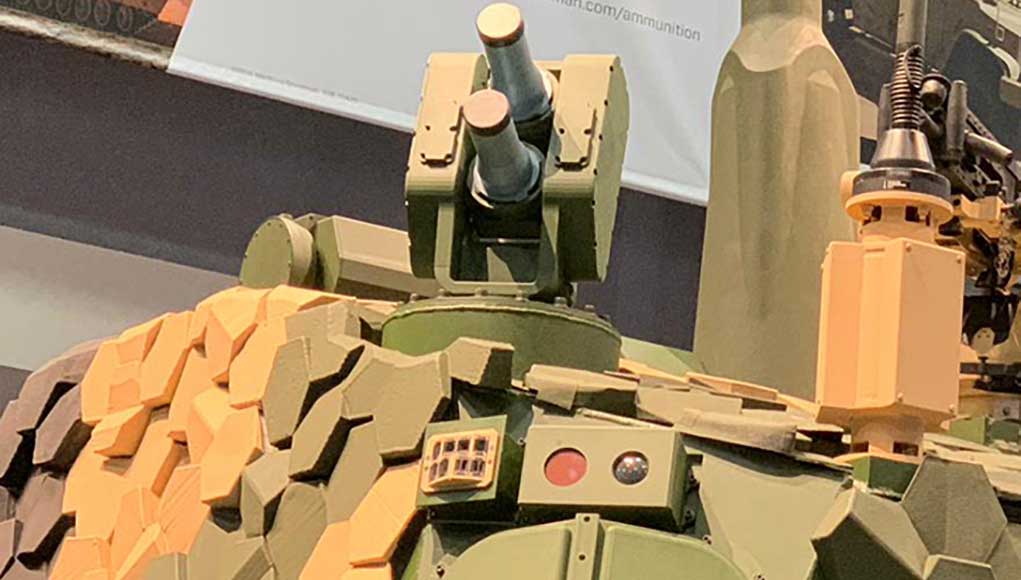
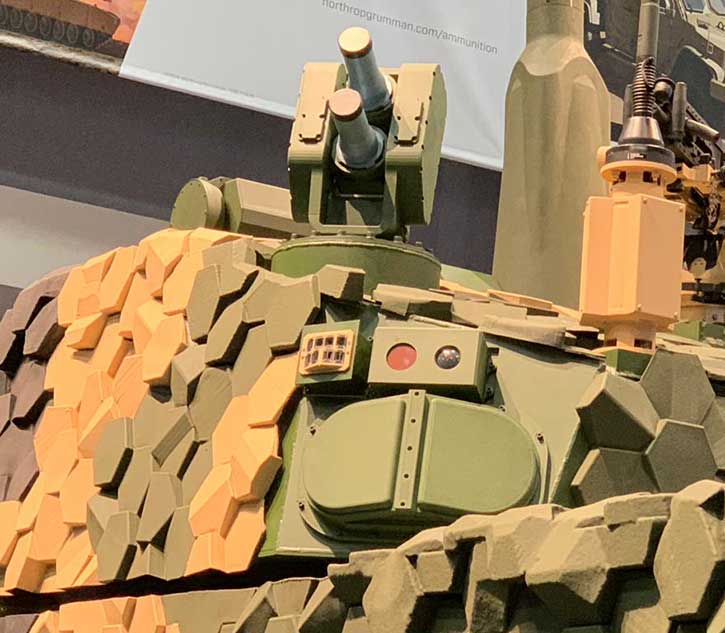
    IF-LD is installed in different places on the Griffin III. The countermeasure launcher pedestal is mounted on the turret top, covering each side. The Rada CHR radar and EO-IR sensors are mounted on four positions to provide 360 coverage regardless of the turret’s position.

    The IDF is evaluating a new configuration of the Iron-Fist lightweight active protection systems (APS) for the protection of medium wheeled vehicles such as the 8×8 Eitan Armored Personnel Carrier and tactical trucks. The system is also considered for the protection of heavy bulldozers.


    The IDF is the world’s leading user of APS. Since 2011 Israel’s Ministry of Defense has committed hundreds of million dollars for the acquisition and fielding of up to 1,000 Trophy APS equipped Merkava Mk3, Mk4 and Namer combat vehicles produced by Rafael.

    Following the 2006 Second Lebanon War with increased demand for APS, Trophy, and Iron-Fist were both evaluated to provide a new level of protection to the IDF Merkava Main Battle Tanks. The two systems employed different kill-mechanisms. Trophy’s countermeasures fires explosively formed projectiles against the threat, destroying the incoming projectile at a distance with a direct hit. This method requires the sensors to deliver faster, and more accurate target parameters to position the countermeasure to kill the threat.

    Iron Fist harness the shockwave caused by the countermeasure’s blast to smash the target. The launcher sets the fuze and selects the elevation to deliver the projectile in a trajectory to proximity of the threat, to a position where it delivers the maximum effect. This method provides the vehicle with hemispheric protection. Given the massive blast, a successful intercept can be computed with less accurate input.

    Following a detailed evaluation and testing the IDF preferred Rafael’s Trophy, assessing the system’s higher level of maturity. Indeed, Trophy was proven in combat and, since its first deployment in 2011 Trophy defeated over 40 attacks of various types of anti-tank rocket grenades and anti-tank guided missiles.

    IMI did not keep its system idle either. The system raised much interest among armored vehicles manufacturers and military forces abroad, exposing IMI to wider requirements, beyond the immediate needs raised by the IDF.

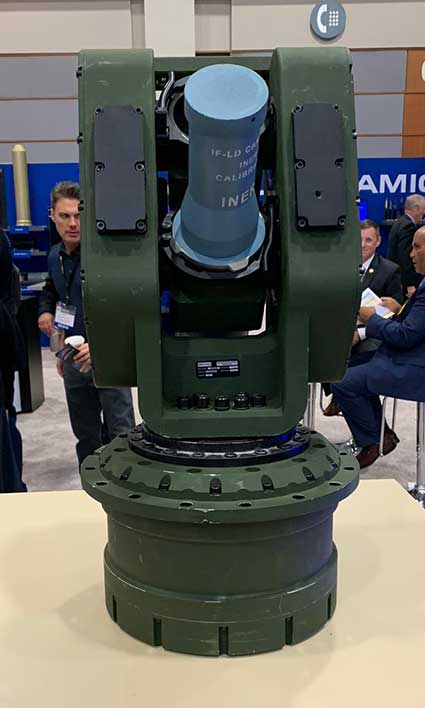
    The Iron-Fist Light-Decoupled (IF-LD) pedestal shown at the GD-OTS booth at AUSA 2018.

    A major point of concern for foreign users was the collateral damage risk posed by the APS hard kill systems, its weight, and complexity of integration. To address these aspects IMI redesigned the Iron Fist, introducing a distributed system providing more flexibility to address the different platforms and customers that wanted to test the Iron Fist. The result was a broader capability range, integrating soft and hard kill, and adaptation of the system to light, medium and heavy platforms.

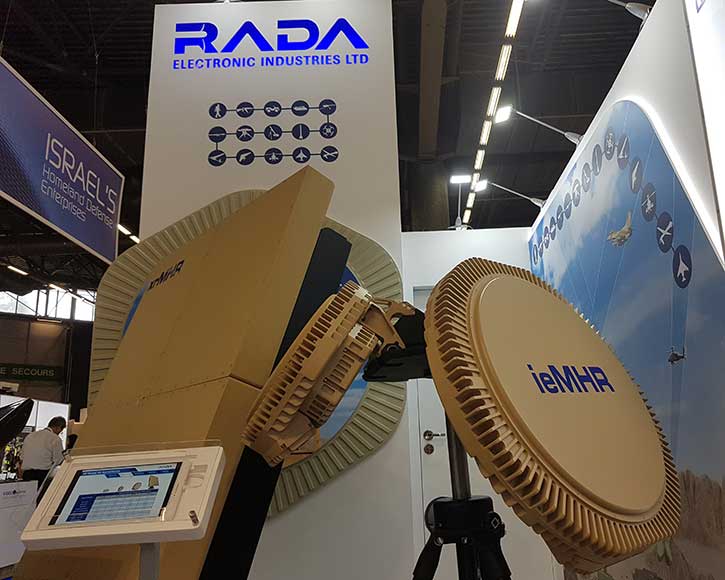
    The result was the introduction of the lightweight and decoupled variant that enables flexible positioning of the system’s sensors, comprised of three or four radars from RADA, attached with two infrared sensors providing threat detection, classification, and tracking. The system also employs two countermeasure turrets and the control unit installed inside the vehicle. Known as the Iron Fist Light-Decoupled (IF-LD), these systems are being evaluated for installation the M-1280 and JLTV, M-2 Bradley, soon to be tested by the US Army. The system was also displayed at the AUSA 2018 exhibition on General Dynamics Land Systems’ Griffin III, a ‘concept vehicle’ GDLS is proposing for the US Army Next-Generation Combat Vehicle.

    Another lightweight variant of Iron Fist Lightweight Configuration – IF-LC, is an ‘all in one’ system where radars, EO sensors, processor and countermeasures launcher are all mounted on a single pedestal protecting the vehicle over 360 degrees. This variant is being integrated with BAE Systems’ CV90.

    Both IF-LD and the IF-LC are installed on top of the existing armor and do not require removal of protection modules or penetration of vehicle’s armor.

    Combat Vehicles will soon be Flying Drones

    Until now small UAVs were designed for dismounted operations, by infantry or special units dedicated for the operation of drones. Recent advancements in commercial drones and their use by the military bring vehicle and drone manufacturers closer offering integrating drones with manned or unmanned combat vehicles.


    AeroVironment is working with General Dynamics Land Systems to tighten the integration of its unmanned aerial systems (UAS) with GDLS’ combat vehicles. “By integrating the UAS and loitering missile systems with the leading armored combat vehicles, our team will deliver a new level of battlefield lethality, survivability and combat effectiveness,” said Kirk Flittie, vice president and general manager of AeroVironment’s UAS business. This integration will enable mounted forces to employ small drones and loitering weapons on demand and on the move. “Increased automation and decreased workload will enable the deployment of small drones and loitering missile systems by fewer operators from inside the vehicle.”

    “This will be done without adding a significant burden to the soldier or vehicle commander’s cognitive or physical workload.” Don Kotchman, U.S. vice president and general manager of General Dynamics Land Systems added. Such capabilities would be particularly useful in complex terrains, such as urban areas, forests or mountains, where an elevated view of the scene provides a significant advantage.

    The collaboration between the two companies eyes two major combat vehicle programs – the U.S. Army Next-Generation Combat Vehicle (NGCV) and U.S. Marines Armored Reconnaissance Vehicle (ARV).

    The NGCV program will dramatically benefit from automated drone scout and precision loitering missile engagement technology tightly coupled into the GD armored vehicle electronic architecture to rapidly geolocate and, if necessary, finish targets. The ARV project has evolved well beyond a straightforward replacement for the Light Armored Vehicle (LAV) into a networked family of manned vehicles, ground robots, and drones, collectively capable of not only reconnaissance but also electronic warfare and long-range precision strikes. The vehicle is designed to launch a drone, scout deep, and then deploy precision fire and electronic warfare. It also will have an open architecture design that is upgraded with new technologies as they become available.

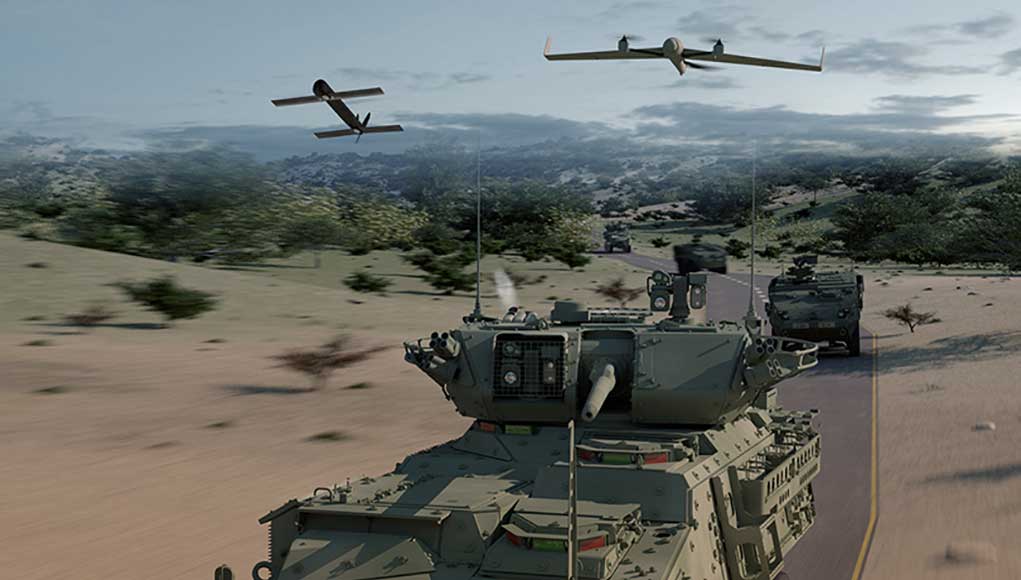
    Aerovironment’s Shrike 2 hybrid tricopter was displayed at AUSA 2018 mounted on a launch pad installed on top of the Striker A1 30mm turret. This turret also accommodates a 9-pack battery of Switchblade loitering weapons. Shrike 2 takes off and lands vertically, on the halt or on the move. Illustration: GDLS

    Two applications of this collaboration are on display in Washington DC this week at the US Army Association meeting.

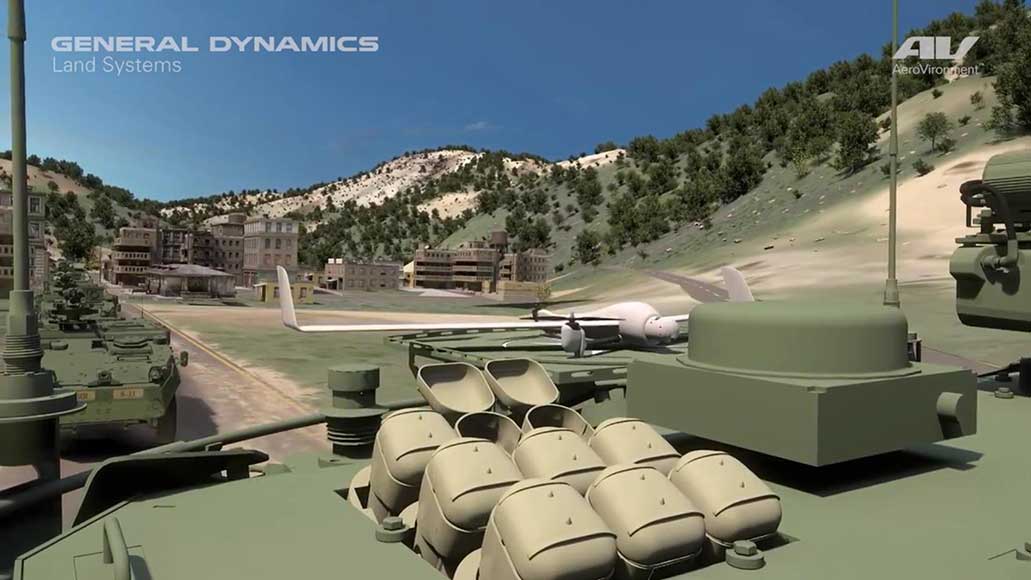
    Aerovironment’s Shrike 2 hybrid tricopter was displayed at AUSA 2018 mounted on a launch pad installed on top of the Striker A1 30mm turret. This turret also accommodates a 9-pack battery of Switchblade loitering weapons. Shrike 2 takes off and lands vertically, on the halt or on the move. It is available in two configurations – a lightweight tricopter designed short duration a short range, or a larger drone with a larger wing, tilting rotors and 60-minute mission endurance. Both versions have interchangeable payloads. A patch antenna supports operating ranges of more than 20 km. The Shrike 2 will be launched from the vehicle to perform surveillance missions and provide target acquisition for direct fire or indirect attack using the loitering weapons on board.

    The Griffin III platform representing GDLS’ concept for NGCV carries a battery of nine all-up Switchblade loitering weapons. The 9-pack battery stores ready to launch Switchblade weapons and is rapidly reloadable. The vehicle is also fitted with the communications datalink controlling the loitering weapon. The Switchblade has 15-minute endurance. Upon detection of a target, the weapon dives to attack. If necessary, the controller can abort the strike, wave off and go around waiting to reattack. Unlike standard loitering weapons that do not provide positive post attack Battle Damage Assessment (BDA), the Shrike 2 that loiters above can provide BDA to confirm the kill.

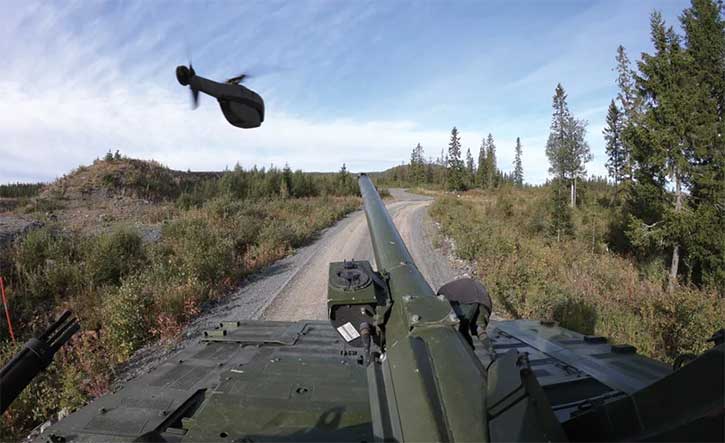
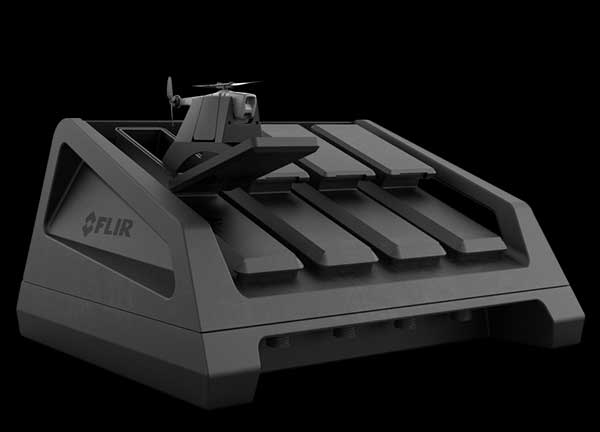
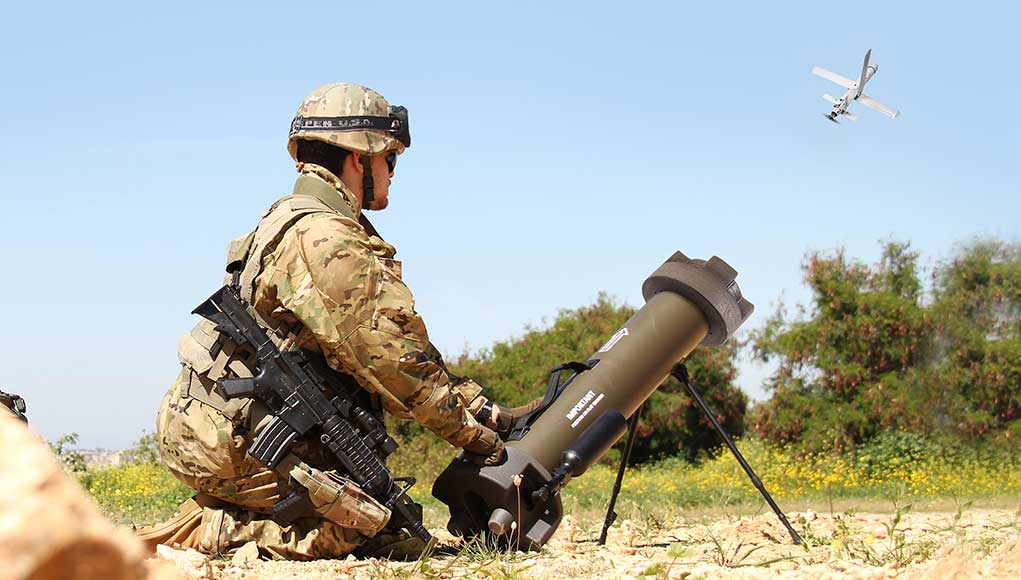
    The VRS system has four Black Knight nano-UAVs ready to launch. The vehicle also mounts a communications gear to control the drone while airborne. Photo: FLIR Systems

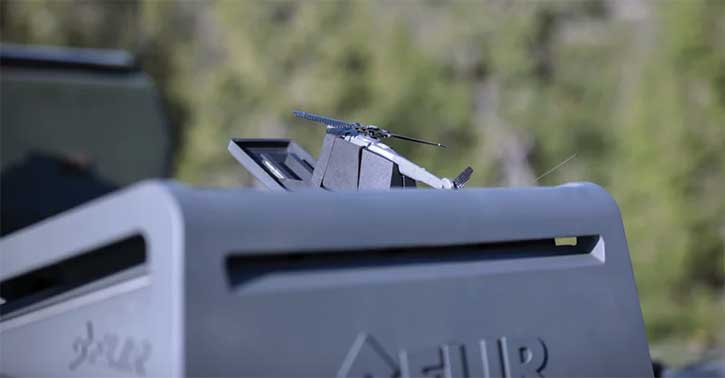
    FLIR Systems has also unveiled a vehicular drone system introducing the Black Hornet Vehicle Reconnaissance System (VRS). The system features the Black Hornet 3 nano-unmanned aerial vehicle (UAV) launched and operated from a vehicular multi-launcher pack.

    Black Hornet VRS enables the warfighter to maintain situational awareness, threat detection, and surveillance for battle damage assessment, pre-deployment and route, and point reconnaissance and targeting information without the need for warfighters to exit a vehicle.

    The VRS is shown mounting a Black Hornet nano-drone ready to fly. Photo: FLIR Systems.

    The Black Hornet VRS includes a launch unit that holds multiple Black Hornet 3 UAVs and mounts to the exterior of any military vehicle. Once the drone is airborne operators inside the vehicle communicate with it through the vehicle’s battle management system, or directly from its own display. The complete system is easily integrated with modern battlefield management systems but can also operate independently of the vehicle platform.

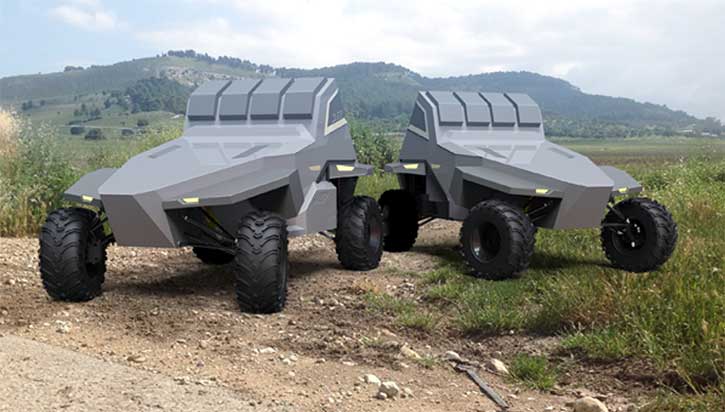
    the Israeli company Uvision is developing a robotic drone carrier that carries four Hero class loitering missiles, launch them autonomously and, when the weapon is airborne, hand off control to a human operator.
    Uvision introduced at AUS 2018 a redesigned canister optimizsed for dismounted operations. Photo: Uvision

    Lighter Trophy APS for Medium Armored Vehicles

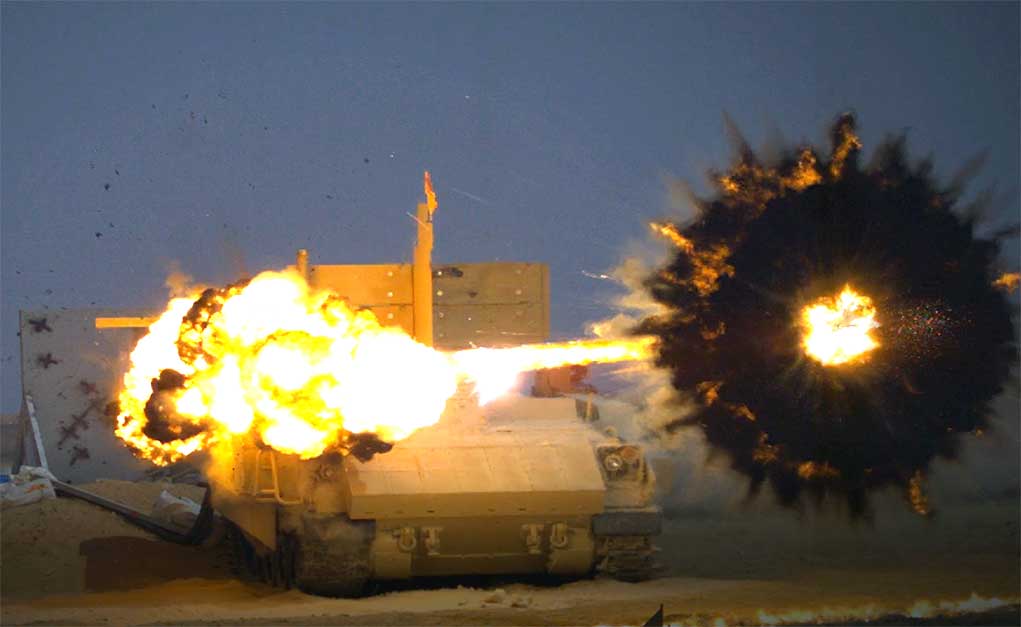
    Lightweight Trophy APS mounted on a Bradley chassis defeats an attack by an Anti-Tank Guided Missile. Photo: Rafael

    Rafael completed recently a successful test series of a Trophy Active Protection System (APS) redesigned to shed some 40 percent of the weight of the original system designed for heavy armored vehicles and main battle tanks. Through more than 300 test firings Trophy succeeded to neutralize more than 280 of the shots that included various types of anti-tank rockets (RPG) and guided missiles (ATGM).

    Prior to these tests, the system went through an aggressive weight reduction process, shedding about 40 percent of the weight of the original system, originally designed only for main battle tanks. This effort was necessary to enable the use of the system on combat vehicles lighter than tanks, such as the IDF new 8×8 armored vehicle Eitan, and Bradley armored infantry fighting vehicle. Weight reduction was achieved through remanufacturing of the launcher, and electronic units.

    The test series was conducted in Southern Israel on a turretless US Army Bradley chassis specially prepared for the program. 120 foreign officials from the US Army, NATO members, and allied countries attended the final event and witnessed the live tests.

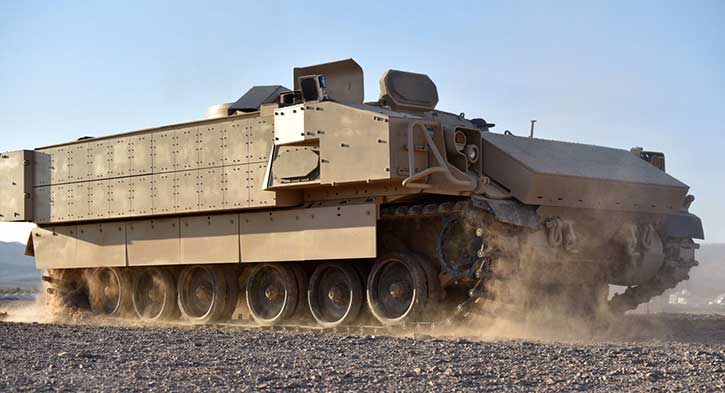
    The tests utilized a Bradley AIFV chassis fitted with Trophy APS. This configuration shows a Trophy module including the countermeasure launcher, reloader, and radar, attached to the vehicle’s side, replacing several modules of Bradley’s add-on reactive armor, which were also delivered by Rafael. Another forward-looking radar (the Windguard from IAI Elta) is also visible. Rafael is designing a similar module for the Stryker, to be tested on the M1126 next year. Photo: Rafael

    Several hundreds of Trophy equipped vehicles are already operational with the Israel Defense Forces since 2011. Rafael is on contract to deliver more systems, bringing the APS protected vehicles in the IDF to 1,000. In addition, the US Army has ordered Trophy systems to protect 198 M-1A2 Abrams tanks stationed in Europe.

    IMI Iron Fist Lightweight, Decoupled (IF-LD) active protection system displayed by Oshkosh and IMI at the AUSA 2018 exhibition. Photo: IMI

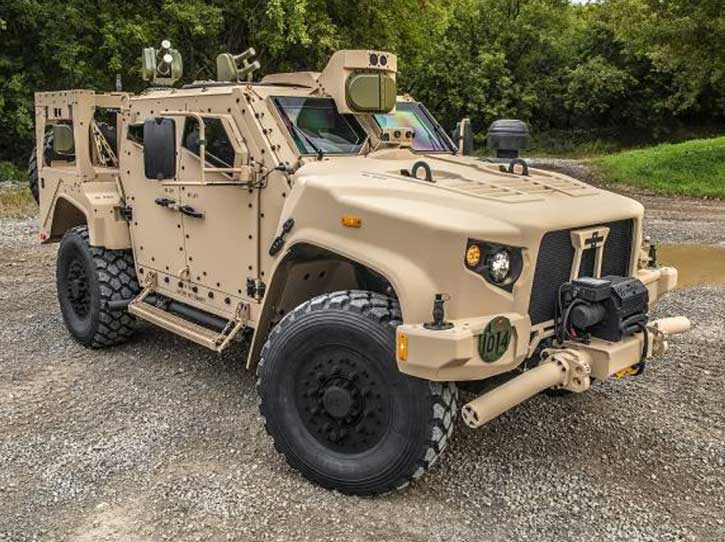
    For the Bradley AIFV, the US Army evaluates another Israeli APS – the Iron Fist from IMI, marketed in the USA by General Dynamics Ordnance Tactical Systems (OTS). To meet space constraints on the Bradley turret IMI distributed the system’s components to different locations around the vehicle. At the recent AUSA exhibition, the company displayed a derivative of this Iron Fist Lightweight and Decoupled (IF-LD) system on the M-1280 JLTV from Oshkosh and on the Griffin III, a future combat vehicle GD Land Systems is proposing for the US Army Next-Generation Combat Vehicle.

    Rafael offers its lightweight Trophy variant to meet those applications as well. Since version to be used on the M-1A2 tank and the light Trophy share common software and components, the Army could benefit using Trophy on the other platforms. The US Army has invited Rafael to integrate and test Trophy on M-1126 Striker wheeled armored vehicle in early 2019. Meanwhile, DRS and Rafael are continuing a parallel effort to bring about TROPHY’s compliance with the US Modular APS standard.

    New Countermeasures Employs Hard Kill to Protect Helicopters From Unfamiliar Threats

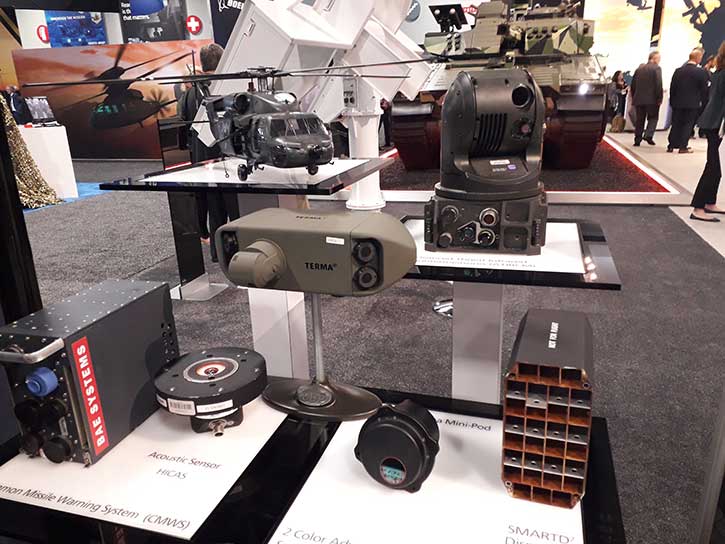
    BAE Systems' Smart D2 countermeasure system. Illustration: BAE Systems

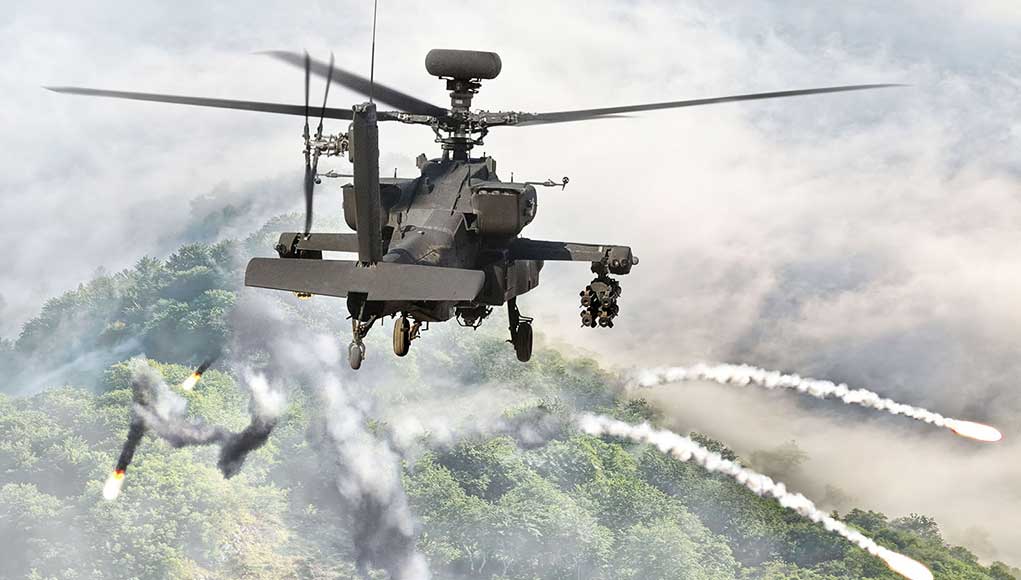
    BAE Systems unveiled today a new countermeasures suite designed to protect helicopters and aircraft from current and future anti-aircraft threats. By better managing the deployment of traditional countermeasures such as flares, decoys, and hard-kill projectiles, ‘Smart D2’ acts as a layered defensive system protecting aircraft and aircrews from existing and emerging threats.

    Traditional threat warning and countermeasure systems are designed to identify and defeat known threats. Infrared seeking missiles and RF guided threats are confused by flares, chaff and RF decoys dispensed by the protected platform, to distract the missile seeker and disrupt its ability to track the target.

    Legacy countermeasure systems lack the communications, inventory management, and customized response necessary to defeat evolving and future threats. Moreover, such systems often release countermeasures in preset sequences thus wasting scarce resources that may not be suitable to defeat specific threat behavior.

    The system builds on the proven ALE-47 Airborne Countermeasures Dispenser System, widely used by US services and foreign air forces. Smart D2 integrates with existing warning systems as well as future systems, including BAE’s two-color Advanced Warning System (2C-AWS). Other sensors include a passive missile warning sensor and a radar warning receiver. Additional sensors track and interrogate threats to enable rapid response. The system also addresses the cyber threat that put connected combat platforms at risk.

    Apart from sensors and countermeasures the system also integrates a cyber receiver that monitors the platform’s databus to identify anomalies that could be caused by an adversary. Once detected, such activities are mitigated and neutralized.

    The modular countermeasures dispenser contains 29 cells storing different types of decoys. One cell type is designed to contain infrared flares in a single size. The other, optimized for RF decoys, firing flares, chaff, RF decoys and kinetic interceptors. Photo: Defense-Update.

    The system employs multiple dispensers containing a mix of standard and multi-shot and hard kill countermeasure cartridges, or chaff, RF decoys, and hard kill countermeasures. For known threats, Smart D2 tailors the most suitable countermeasure mix, while unidentified threats are engaged with the hard-kill interceptors that receive cueing from the system’s sensors. Combined, the different countermeasures provide the platform with a layered defense.

    The system continuously monitors the countermeasures’ inventory using two-way communication between the dispenser and aircraft using the ‘Smart Stores Communication Interface’ (SSCI), a NATO-standard that providing the crews critical inventory information and the ability to program expendables and active decoys in real time to improve survivability against advanced threats.

    The system monitors the quantity, location, age, and carriage life of each expendable cartridge on the aircraft and can deploy a tailored mix of smart countermeasures to efficiently defeat specific and advanced threats. This automatic inventory management removes human error from the equation, ensuring there will never be expired expendables on the aircraft – empowering the pilot to confidently take on any mission.

    Griffin III ‘Concept Tank’ is GDLS’ Fresh View of the Next Generation Combat Vehicle

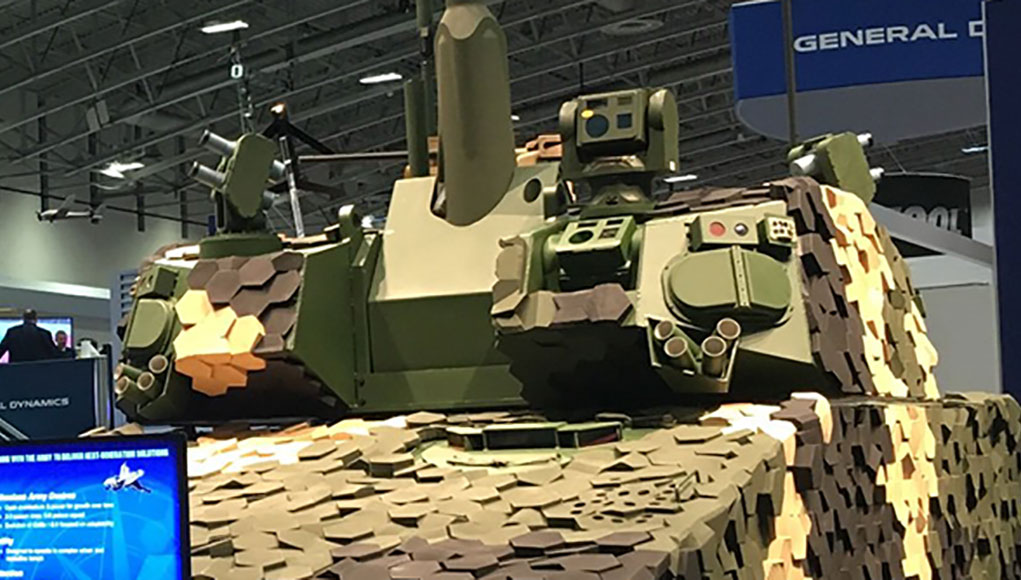
    The modular turret of the Griffin III is based on modular design and open architecture that enable the use of different weapons, sensors and defensive systems. Visible in the picture are 50mm cannon, coaxial machine gun and Switchblade LMAMS. Sensors include the Iron Fist radar system, providing situational awareness and automatic active defense, laser and day and night cameras, adding to the vehicle's peripheral situational awareness. The vehicle is covered with an outer layer providing ballistic and signature reduction over a wide spectral range.
    The modular design and open architecture enable the user to configure the vehicle different squad carrying and crew seating configurations. One of those weapons is the 50mm automatic cannon, that can elevate up to 85 degrees, to best engage drones and targets in built-up areas. Photo: GDLS

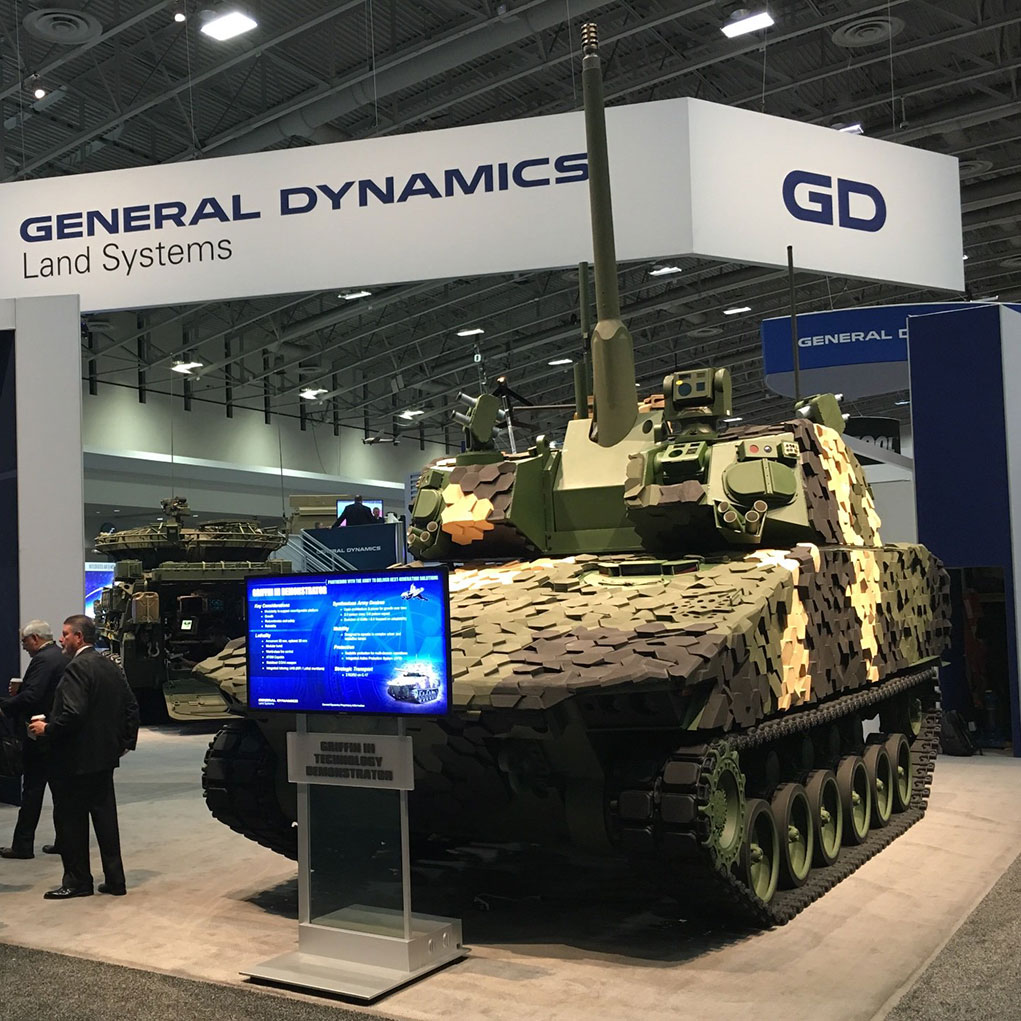
    General Dynamics Land Systems unveiled today the latest configuration of its Griffin armored fighting vehicle (AFV) addressing the U.S. Army’s latest requirements for combat maneuverability and firepower as reflected in the services’ ‘Next Generation Combat Vehicle’ (NGCV), a versatile family of vehicles that, if matured, could replace the current fleet of Bradley and AMPV. The Griffin III was unveiled today at the annual meeting of the Association of U.S. Army (AUSA) in Washington DC.

    GDLS’ Griffin III displays concepts designed for the next generation of warfighting in complex urban and restrictive terrain. Based on the lightweight chassis used for the previous vehicle proposed for the Mobile Gun System (MGS) Griffin III displayed several new elements, including the 50mm automatic cannon from Northrop Grumman (ATK), and the Israeli Iron Fist Light, Decoupled (IF-LD) active protection system from IMI, a system already being integrated on the US Army BAE Systems’ M-2 Bradley for testing. Other unique capabilities include LMAMS (represented by AeroVironment Switchblade) and a matrix-shaped providing multi-spectral protection.

    The modular design and open architecture enable the user to configure the vehicle different squad carrying and crew seating configurations. Implementing scalable protection, chassis and turret configuration with different weapons and mission systems, the Griffin III is optimized to perform in multi-domain operations.

    IAI Completed a New Route Clearing Robot for Operational Testing

    IAI's counter obstacle SAHAR robot. Photo: IAI

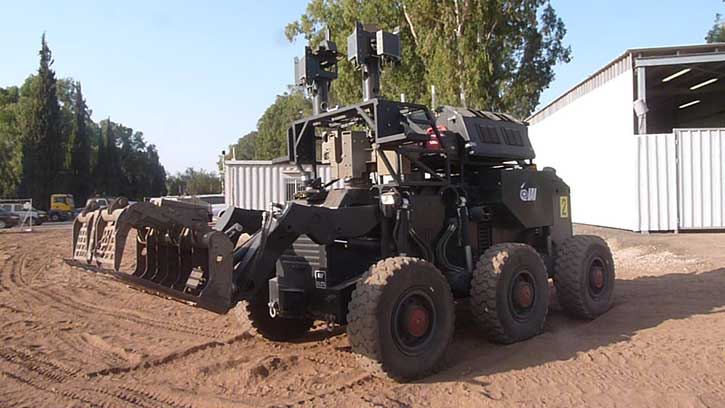
    Israel Aerospace Industries (IAI) has completed the development of an Autonomous IEDs Detection and Neutralization System. The robot will soon be transferred to a customer for operational trials, testing, and evaluation.

    The new robotic engineering scout is a member of IAI’s Sahar family of route clearing and counter-IED robots. The original Sahar (shown in the video below) was based on a Bobcat commercial off the shelf (COTS) vehicle and implemented various sensors and tools to operate autonomously on most tasks. The new version utilizes IAI’s 6×6 Robattle platform, a rugged platform specially designed for robotic missions.

    “The SAHAR system integrates advanced sensors and autonomous navigation techniques to offer an end to end solution for clearing threatened routes, operations that were done heretofore by troops, with significant danger to their lives”. Meir Shabtai, General Manager, Robotic Systems Division said. The robot integrates multiple sensors for the detection and neutralization of mines and Improvised Explosive Devices (IEDs). The system combines a number of payloads of different types for detection of explosive devices on and under the surface and engineering capabilities for neutralizing them. These sensors enable the Sahar to detect IEDs placed and hidden in complex areas, engage and remove them as necessary using the blade installed on the vehicle. The system operation, maneuver, and detection are done autonomously, thus minimizing risk to human soldiers.

    Each system in the Sahar family utilizes IAI’s robotic kit and adapted to meet the customer needs. It includes the robotic platform, detection payloads, and control systems. Utilization of the robotic kit enables faster integration, efficient learning curve, and mission execution. The system may operate in any terrain and has a precision operation system that generates a real image of the arena.

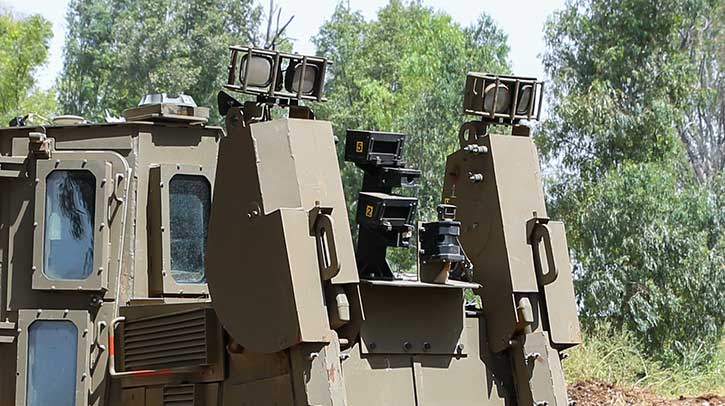
    The autonomous kit installed on IAI’s robotized Caterpillar D9 includes various imaging and electro-optical and electro-mechanical imaging and sensing devices designed to provide autonomy both in movement and earthworks. Photo: IAI
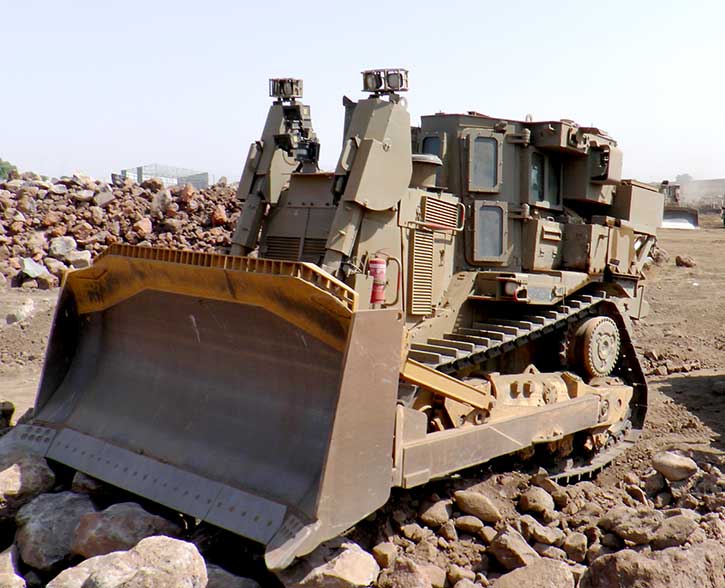
    IAI robotized version of Caterpillar D9 dozer. Photo: IAI

    Under a separate program, IAI will convert Caterpillar Dozers into autonomous dozers that will be commissioned for complex engineering tasks in threatened areas. The contract was awarded after years of evaluation by the Israel Defense Forces (IDF) and maturation of the robotic dozer concept.

    The new autonomous system integrated with the dozer provides the vehicle various degrees of autonomy including movement and earthworks for a range of applications, including construction, obstacle breaching, demolition and preparation and construction of defensive positions. The system is fitted with object detection and avoidance capabilities and is designed to work under all weather and visibility conditions.

    Saab, Raytheon to Demonstrate a Guided Munition for Carl Gustaf M4 Recoilless Rifle

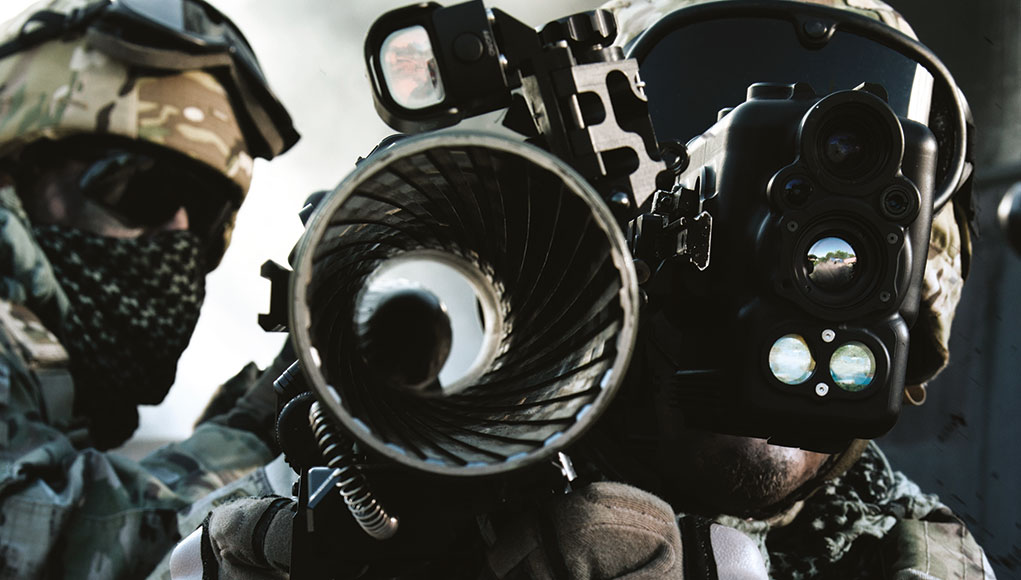
    Carl-Gustaf M4 multi-purpose man-portable recoilless weapon system. Photo: Saab by Hans Berggren

    The Raytheon Company and Swedish aerospace and defense firm Saab are developing a guided munition for the Carl-Gustaf man-portable, shoulder-launched weapon system under a U.S. Army contract. This new munition answers a U.S. Special Operations Command requirement to increase the capability of the multirole Carl-Gustaf weapon system built by Saab.

    The munition’s advanced warhead is designed to penetrate light armor, bunkers and concrete structures while decreasing collateral damage. With increased range, the new munition will offer greater protection for ground troops by enabling them to fire at targets from inside structures or buildings. Photo: Saab

    Under the contract, the team will provide all-up-rounds for three test firings against threat-representative targets. Test firing of the guided Carl-Gustaf munition is planned for 2020 in Sweden. In 2017, Raytheon announced its partnership with Saab to develop new weapons for infantry forces.

    “The Carl-Gustaf system paired with this new guided munition gives U.S. and coalition dismounted forces a tremendous advantage on the battlefield,” said Kim Ernzen, Raytheon Land Warfare Systems vice president. “The munition is intended to enable ground troops to engage multiple targets precisely at distances up to 2,000 meters, including moving targets.” The munition’s advanced warhead penetrates light armor, bunkers, and concrete structures while minimizing collateral damage. With increased range, the new munition offers greater protection for ground troops by enabling them to fire at targets from inside structures.

    The recent contract continues work on “Massive Overmatch Assault Round” (MOAR) awarded to Saab Dynamics in 2016. “Focused on the Carl-Gustaf and AT4 shoulder-fired weapons, which are already fielded and procured under U.S. Army Programs of Record allows the research to remain focused on the munition itself, rather than developing a completely new solution, we are seeking to apply improved capabilities to existing systems” Görgen Johansson, Head of Saab’s Dynamics business area said at the time of the MOAR award.

    Russian Ordnance Group Adapts Grenade Launchers to Arm Drones

    The Ukrainian 10-rotor commander can carry multiple grenade launchers, as seen on this picture dated 2017. Photo: Matrix

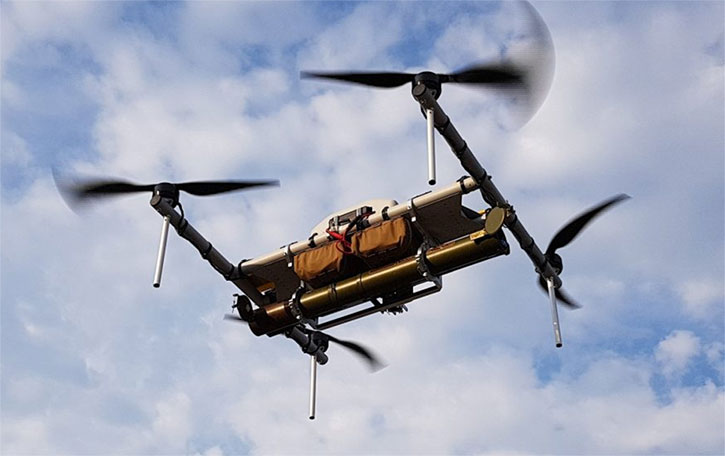
    The Russian weapon manufacturer Techmash plans to adapt its products for use on drones, Aleksandr Kochkin, Deputy CEO of Techmash said. As part of its ordnance portfolio, Techmash produces aerial bombs at weight classes of 50 to 2.5 kilograms that are optimized for use with fixed-wing drones. According to Kochkin, Techmash also evaluates the use of grenade launchers onboard unmanned platforms designed for vertical take-off and landing, such as the multirotor drones.

    Established under the Rostec group in 2011, Techmash operates 36 munitions manufacturing organizations.

    Bazalt, one of Techmash subsidiaries is manufacturing automatic grenade launchers and the 30mm anti-personnel grenades they fires. The launcher fires a single shot, short, or long bursts, of 5 or 10 rounds. The rounds are fitted with a point detonation fuze and pre-fragmented casing to ensure reliable operation on impact with any type of surface, including snow, sand, and water. Bazalt also manufactures several types of rocket-propelled grenades that were already tested with multi-rotor drones.

    Weaponization ideas using drone carried rocket grenade launchers appeared IED guidance literature distributed in 2017 by Daesh.

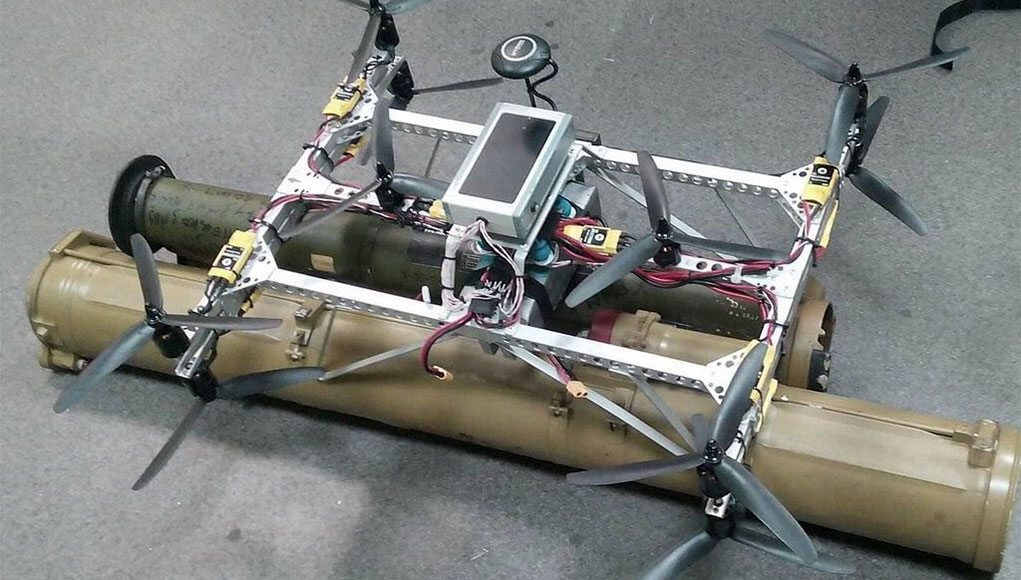
    The Ukrainian Demon is a quadrotor platform fitted to carry a rocket grenade payload. Photo: Matrix via Defense Blog

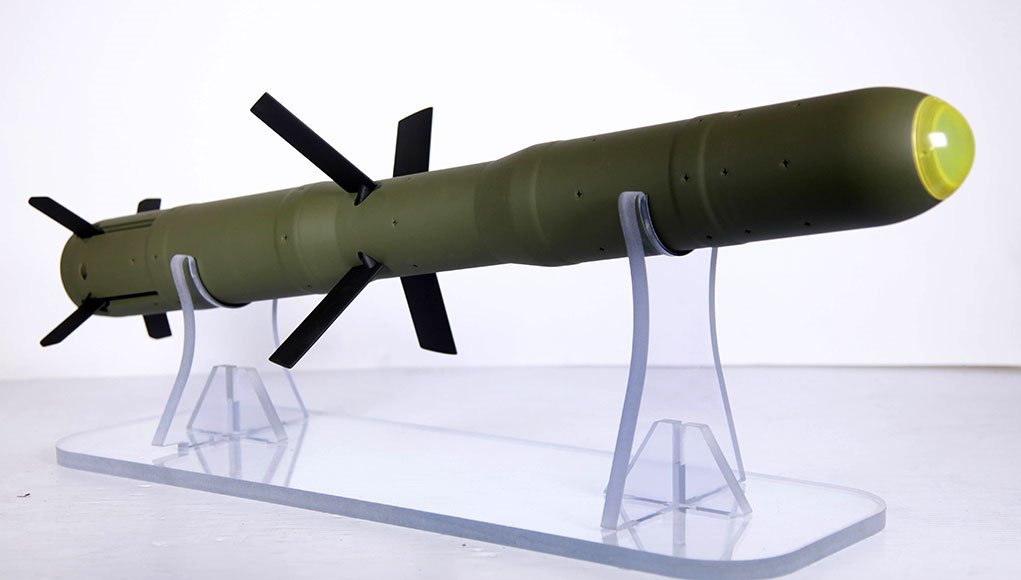
    Quadrotors carrying rocket-propelled grenades were already demonstrated two years ago in Russia, following the appearance of a drone hack introduction by Daesh (ISIS) in Syria. Earlier this year similar platforms were displayed in Belarus and Ukraine. The Ukrainian Demon developed by the Kyiv-based Matrix UAV company. The first prototype of the Demon was fitted with an RPG-26 disposable rocket launcher. It can also use an RPG-7 launcher or other small arms, at a weight up to five kilograms.

    When used on a ‘suicide’ mission (without retrieving the platform after a fire) Demon carries up to seven kilograms of ordnance to a distance of 20 kilometers, or up to 90 kilometers when using a hybrid propulsion system. The drone and weapon are controlled manually over a two-way video channel. Matrix is already developing a semi-automatic control for the system. When used over long distances the operator relies on another drone carrying a communications repeater.

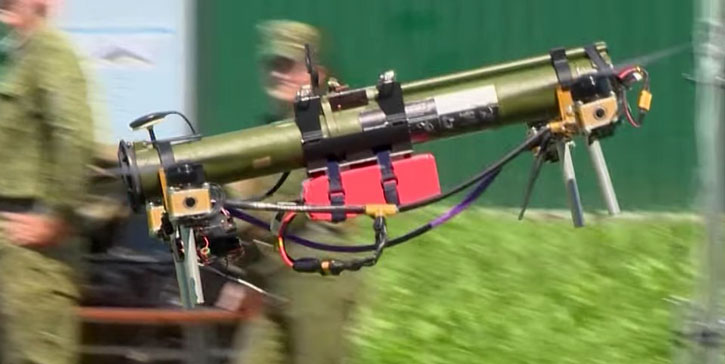
    A simple quadrotor designed to carry a single RPG-26 was demonstrated this year by the military in Belarus.

    S-300 Arrival in Syria

    Russia has delivered the first S-300 surface-to-air missile system to Syria on October 2nd. According to Russian sources, the unit will be controlled by Russian advisors, a precaution Moscow took to prevent a misfire that downed the Ilyushin20 Electronic Surveillance aircraft last month.

    Hear this post:

    Having Russian officers on site would limit the Syrian freedom of action, but also put Russians in danger, if offensive countermeasures are taken against those sites, as Israel did against Syrian SA-17, and mobile SA-22 Pansir sites that challenged Israeli warplanes on previous attacks.

    New Contract Brings F-35A Price Below US$90 Million

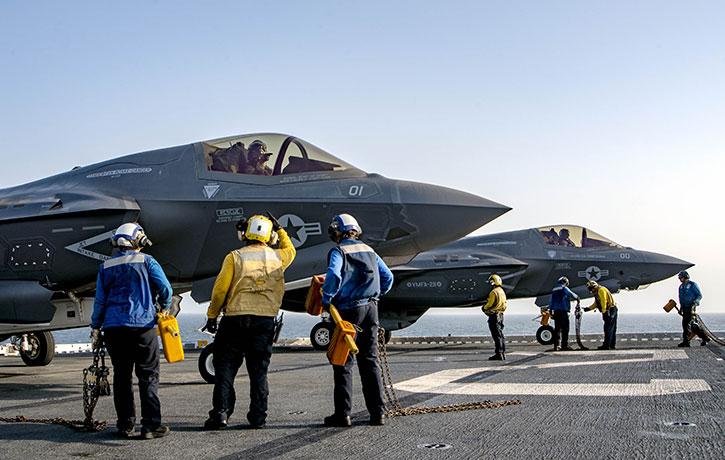
    Marines with Marine Fighter Attack Squadron 211, 13th Marine Expeditionary Unit (MEU), stage ordnance before loading it into an F-35B Lightning II aboard the Wasp-class amphibious assault ship USS Essex (LHD 2) in preparation for the F-35B's first combat strike, Sept. 27, 2018. Photo: U.S. Marine Corps photo by Cpl. A. J. Van Fredenberg

    The U.S. Department of Defense and Lockheed Martin have finalized an $11.5 billion contract for the production and delivery of 141 F-35 aircraft at the lowest per aircraft price in program history. The 11th Low Rate Initial Production (LRIP 11) agreement funds 91 aircraft for the U.S. Services, 28 for F-35 International Partners and 22 for F-35 Foreign Military Sales customers. Deliveries will begin in 2019.

    For the eleventh consecutive year, the cost of an F-35A was lowered. The LRIP 11 batch order sets the cost unit price of the F-35A, including aircraft, engine and fee at $89.2 million. This represents a 5.4 percent reduction from the $94.3 million it cost for an F-35A in LRIP 10.

    In LRIP 11, the F-35B unit cost was lowered to $115.5 million. This represents a 5.7 percent reduction from the $122.4 million it cost for the short-takeoff and landing variant in LRIP 10. The F-35C unit cost was lowered to $107.7 million, 11.1 percent down from $121.2 million it cost for the carrier variant in LRIP 10.

    “As production ramps up, and we implement additional cost savings initiatives, we are on track to reduce the cost of the F-35A to $80 million by 2020, which is equal to or less than legacy aircraft, while providing a major leap in capability,” said Greg Ulmer, F-35 Vice President and General Manager at Lockheed Martin. “This agreement for the next lot of F-35s represents a fair deal for the U.S. Government, our international partnership and industry. We remain focused on aggressively reducing F-35 cost and delivering best value.” Ulmer added.

    The latest contract is a demonstration of the program’s progress and maturity. “Driving down cost is critical to the success of this program,” said Vice Admiral Mat Winter, F-35 Program Executive Officer, “industry and the government now set their sights on future acquisition approaches for the next three production lots to further reduce costs.

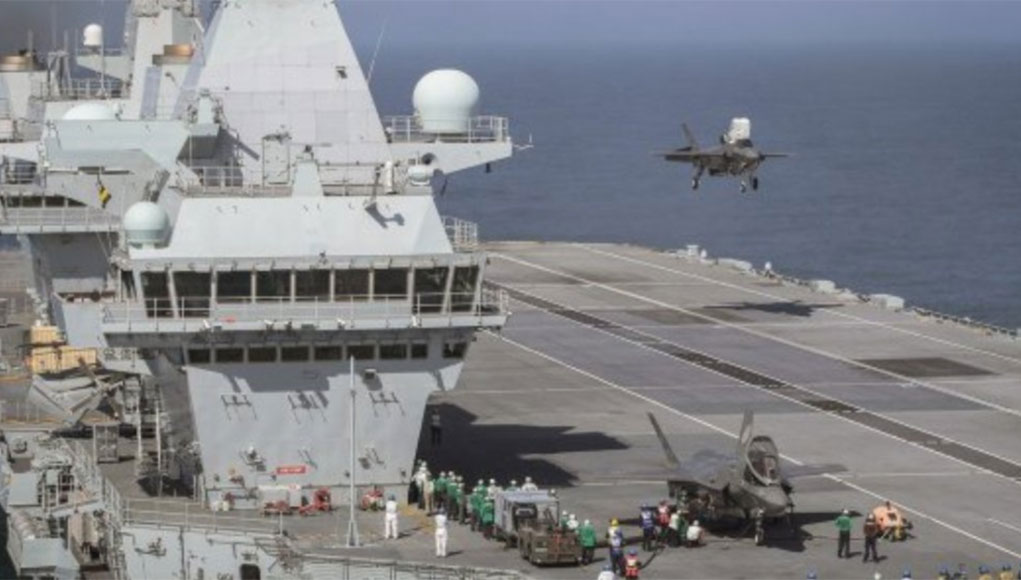
    US F-35B Lightning II jets have landed on Tuesday Sept. 25 on the deck of the Royal Navy’s new aircraft carrier, Queen Elizabeth II.

    Two other milestones marked recently were the first landing of F-35B on the Royal Navy Carrier, Queen Elizabeth II Tuesday, Sept 25 and the first combat mission conducted by the F-35B yesterday (Thursday, Sept 27).

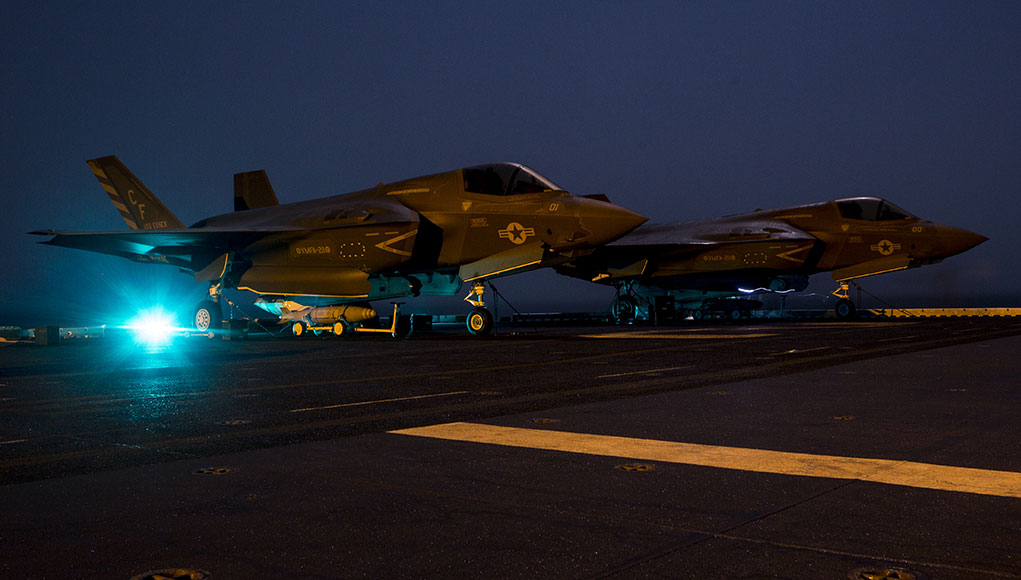
    U.S. Marines with Marine Fighter Attack Squadron 211, 13th Marine Expeditionary Unit (MEU) prepare two F-35B Lightning II for a mission aboard the Wasp-class amphibious assault ship USS Essex (LHD 2) in preparation for the F-35B’s first combat strike, Sept. 27, 2018. Photo: U.S. Marine Corps photo by Cpl. A. J. Van Fredenberg

    The Marine Corps F-35B, Lightning II, conducted its first combat strike yesterday ( Sept. 27, 2018), operating from USS Essex (LHD-2), in the U.S. Central Command area of responsibility in support of Operation Freedom’s Sentinel in Afghanistan. Part of the Marine Fighter Attack Squadron 211, the jets joined the 13th Marine Expeditionary Unit (MEU), as the first combat-deployed MEU to replace the AV-8B Harrier with the F-35B Lightning II. are currently embarked on the Wasp-class amphibious assault ship USS Essex (LHD 2) as part of Essex Amphibious Ready Group.

    “The F-35B is a significant enhancement in theater amphibious and air warfighting capability, operational flexibility, and tactical supremacy,” said Vice Adm. Scott Stearney, commander, U.S. Naval Forces Central Command. “As part of the Essex Amphibious Ready Group, this platform supports operations on the ground from international waters, all while enabling maritime superiority that enhances stability and security.”

    During this mission, the F-35B conducted an air strike in support of ground clearance operations, and the strike was deemed successful by the ground force commander. In May 2018 the commander of the Israel Air Force (IAF) said Israel’s F-35A have been engaged in combat missions but did not disclose the type of specific mission or area of operation.

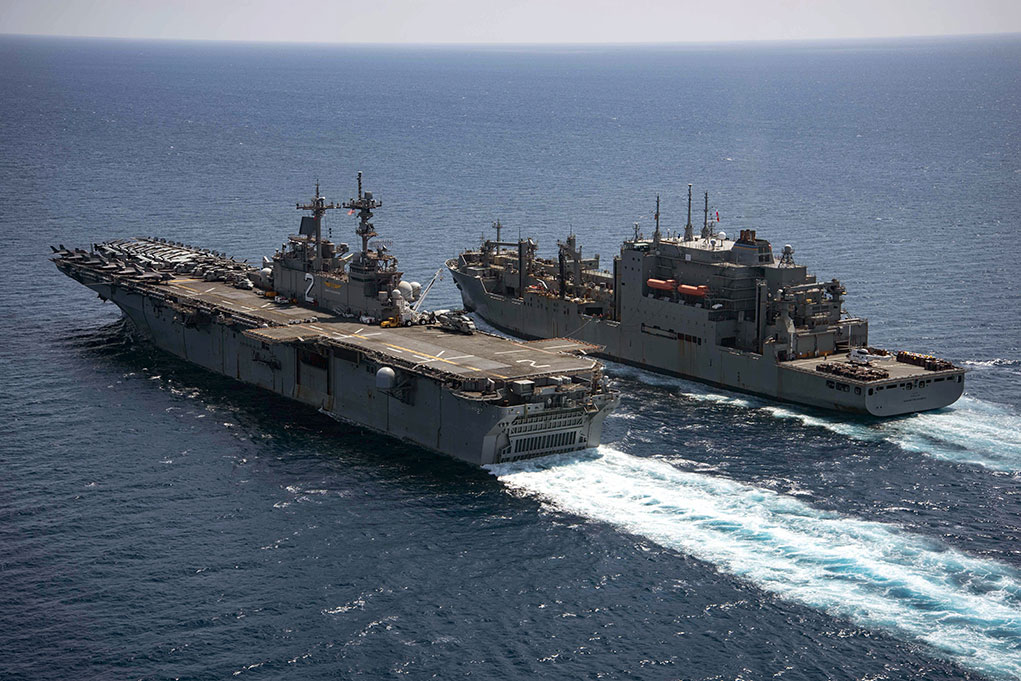
    The Wasp-class amphibious assault ship USS Essex (LHD 2) participates in a replenishment-at-sea with the Lewis and Clark-class dry cargo and ammunition ship USNS Washington Chambers (T-AKE 11) during Cooperation Afloat Readiness and Training (CARAT) 2018. The Essex is the flagship for the Essex Amphibious Ready Group and, with the embarked 13th MEU, is deployed to the U.S. 5th Fleet area of operations in support of naval operations to ensure maritime stability and security in the Central Region, connecting the Mediterranean and the Pacific through the western Indian Ocean and three strategic choke points. U.S. Navy photo by Mass Communication Specialist 3rd Class Jenna Dobson

    Boeing, Saab to Build the US Air Force’s Future Trainer

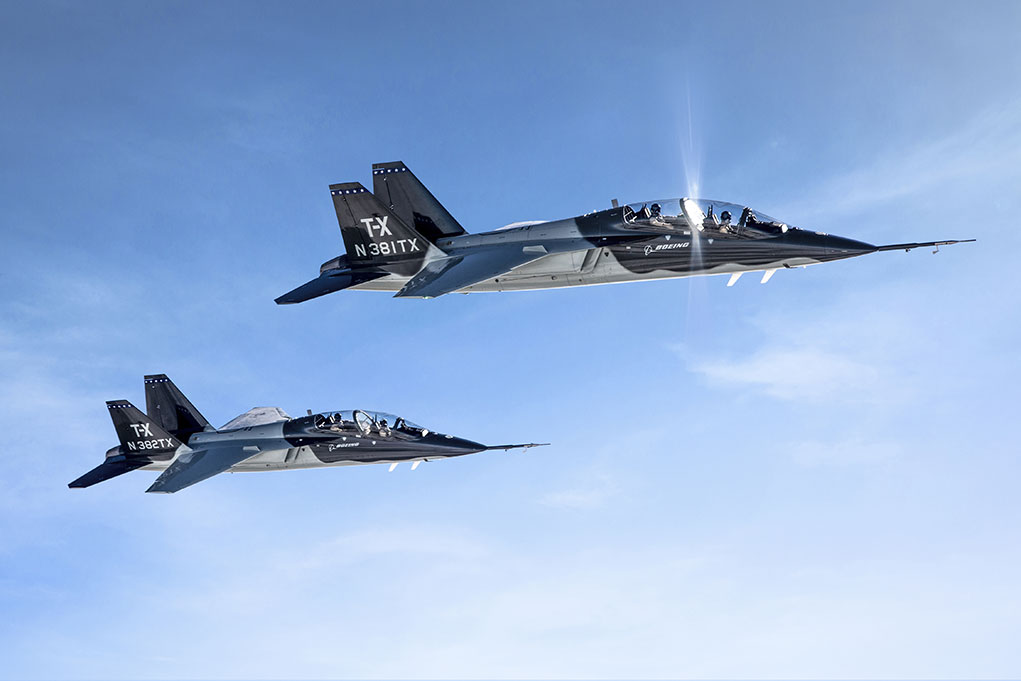
    Boeing wins the us air Forces' T-X contract, to supply up to 475 aircraft and 120 simulators. Photo: Boeing

    The U.S. Air Force plans to replace its pilot trainers, with an integrated system comprising modern trainer jet and flight simulators. The Air Force announced yesterday the awarded of a $9.2 billion contract to the Boeing Company, to develop and deliver 351 T-X aircraft, 46 simulators, and associated ground equipment to replace the Air Education and Training Command’s 57-year-old fleet of T-38C Talons.

    The original service cost estimate was $19.7 billion for 351 aircraft. The indefinite-delivery/indefinite-quantity contract allows the Air Force to purchase up to 475 aircraft and 120 simulators. “This new aircraft will provide the advanced training capabilities we need to increase the lethality and effectiveness of future Air Force pilots,” Secretary of the Air Force Heather A. Wilson said. “Through competition, we will save at least $10 billion on the T-X program.” An initial delivery order for $813 million provides for the engineering and manufacturing development of the first five aircraft and seven simulators.

    The contract supports the Air Force’s objective of an initial operational capability by 2024 and full operational capability by 2034. The first T-X aircraft and simulators are scheduled to arrive at Joint Base San Antonio-Randolph, Texas, in 2023. All undergraduate pilot training bases will eventually transition from the T-38 to the T-X. Those bases include Columbus Air Force Base, Mississippi; Laughlin AFB, Texas; Sheppard AFB, Texas and Vance AFB, Oklahoma.

    The T-X program is expected to provide student pilots in undergraduate- and graduate-level training courses with the skills and competencies required to transition to 4th- and 5th-generation fighter and bomber aircraft.

    Winning the T-X program Boeing and Saab have beaten Lockheed Marting and Leonardo, whose bids were based on existing designs. The T-X offered by Boeing is a new aircraft based on a design perfected for the Air Forces’ requirement. The fighter-like trainer aircraft, which was designed for ease of maintenance, is the cornerstone of an all-new pilot training system that also includes classroom training and simulators. It will help train future fighter and bomber pilots for generations to come.

    “Today’s announcement is the culmination of years of unwavering focus by the Boeing and Saab team,” said Leanne Caret, president and CEO, Boeing Defense, Space & Security. “It is a direct result of our joint investment in developing a system centered on the unique requirements of the U.S. Air Force. We expect T-X to be a franchise program for much of this century.”

    Boeing said it is now clear to begin placing orders with its suppliers, including Saab. More than 90 percent of Boeing’s offering will be made in America, supporting more than 17,000 jobs in 34 states.

    The announcement is good news for Saab, Boeing’s main partner in the F-X program.“ This selection allows our two companies to deliver on a commitment we jointly made nearly five years ago,” said Håkan Buskhe, president and CEO of Saab. “It is a major accomplishment for our partnership with Boeing and our joint team, and I look forward to delivering the first trainer aircraft to the Air Force.”

    This is the third win of a major program for Boeing, and the second involving major cooperation in a foreign partner. Last week the company won the Air Forces’ UH-1N replacement, offering the MH-139. The $2.4 billion contract covers the delivery of up to 84 helicopters, training devices, and associated support equipment. In August Boeing was selected to develop the MQ-25 Stingray, unmanned aerial refueling platform for the US Navy. The Navy plans to operate up to 72 such aircraft on board its aircraft carriers.

    Vuzix Develops Wearable Avionics for a Major Aviation Company

    Vuzix' smart glasses like this M100 are widely used in technical support, providing expert advice, video support, supervision and auditing for technicians. The new applications will likely utilize Vuzix' technologies with cutting-edge augmented reality, introducing wearable avionic devices to be used by the flight crew in the cockpit. Photo: Vuzix

    Vuzix Corporation, a supplier of Augmented Reality (AR) display technology for the enterprise applications will develop waveguide-based head-mounted display (HMD) for use in aircraft. Vuzix has signed an agreement with an unnamed ‘global Tier-1 Aerospace firm’ to customize this HMD into a commercial avionic application.

    Under the terms of this agreement, Vuzix and its customer have embarked on a multi-stage development program with agreed upon milestones and payments. The first stage of this program is for approximately $250,000 and is expected to be completed this fall. The program calls for the integration of a custom display engine utilizing and modifying the company’s existing waveguide-based wearable display technology.

    Subject to a final approval and acceptance from the customer of the first phase, Vuzix expects to receive follow-on orders from this customer, to finalize the product’s development and hard tooling necessary to ultimately deliver commercial volumes of the custom waveguide systems as early as the second of half of 2019 for this customer’s commercial avionics solution. Head-mounted pilot displays are currently available mostly for combat pilots.

    This is an excerpt of the 458 word article. Subscribe to read the full story.

    “We are excited to enter into this partnership and believe it represents a strong vote of confidence in our capabilities and recognition of our leading position within the waveguide optics technology space,” said Paul Travers, President, and Chief Executive Officer at Vuzix. “Additionally, the agreement demonstrates how Vuzix is able to leverage and partner our industry-leading optics technology with top-tier global partners across a variety of vertical markets including commercial avionics.”

    New Engine to Power the Next Generation Fighters

    The US Air Force is funding the development of a new class of 45,000 lb thrust-adaptive jet engine, designed to power the future sixth generation fighter in the 2030s. Two contracts were awarded, each to complete three prototype engines in four years.

    In June 2018 General Electric Aviation received 437 million dollars for this work; Pratt and Whitney followed last week with an award of a similar amount. The Air Force’s Research Laboratory (AFRL) is expected to invest $1.5 billion dollars in the Adaptive Engine Technology Development (AETD) program through 2022.

    The enhanced core is one of the central improvements of the future engine that enables operation at higher temperature and pressure levels. Technologies utilized to manufacture this core include parts made with additive manufacturing, that offer improved efficiency, better heat absorption, reduced weight, and overall increased performance.

    triple stream turbine architecture. Illustration: GE

    Another breaking technology for the adaptive engine is the triple stream turbine architecture. This architecture adapts well to different mission phases, offering more thrust; better fuel efficiency and longer mission endurance.


    The new engine is expected to deliver 25 percent reduction in fuel consumption and improve heat absorption by 60 percent, compared to current engines. Such improvements will increase the fighter range on typical missions by up to 35 percent, while loiter time is expected to extend by 50 percent. The third stream will also provide airflow to generate large amounts of electricity to power high-energy weapons and electronic systems on board.

    GE tested the industry’s first and only three-stream adaptive cycle engine in 2014 as part of its AETD program activity. These followed the highly successful Adaptive Versatile Engine Technology (ADVENT) program, where GE reached the highest combined compressor and turbine temperatures in the history of jet engine propulsion. Last year Pratt & Whitney successfully tested an adaptive three-stream fan integrated with an F135 core that validated some of these capabilities.

    Skunk Works and XTEND Simplify Multi-Drone Command

    0
    Lockheed Martin Skunk Works® and XTEND have achieved a major milestone in JADC2 by integrating the XOS operating system with the MDCX™ autonomy platform. This technical breakthrough enables a single operator to simultaneously command multiple drone classes, eliminating the friction of mission handoffs. From "marsupial" drone deployments to operating in GPS-denied environments, explore how this collaboration is abbreviating the data-to-decision timeline and redefining autonomous mission execution.

    From Ukraine to Taiwan: The Global Race to Dominate the New Defense Tech Frontier

    0
    As traditional defense primes face mounting competition from agile “neoprimes” such as Anduril, Palantir and Helsing, the balance of innovation is shifting toward software-defined warfare and scalable, dual-use technologies, while global industry consolidation—marked by Boeing’s integration of Spirit AeroSystems and other strategic mergers—signals an intensified race to secure control over the defense technology value chain. Our Defense-Tech weekly report highlights these trends.

    Europe’s “Drone Wall”

    0
    In early October 2025, a coordinated wave of unmanned aerial system (UAS) incursions—widely attributed to Russia—targeted critical infrastructure across at least ten European nations. The unprecedented campaign exposed the fragility of Europe’s air defenses...

    Weekly Defense Update & Global Security Assessment

    0
    Executive Summary The past week (September 18-25, 2025) represents an inflection point where strategic defense concepts have transitioned from doctrine to tangible reality. An analysis of global events reveals four primary, interconnected trends shaping an...

    U.S. Air and Space Forces Push Next-Gen Programs at the AS&C 2025 Conference and...

    0
    At the 2025 Air, Space & Cyber Conference, U.S. Air Force and Space Force leaders unveiled major updates on next-generation fighters, bombers, unmanned systems, and space initiatives, highlighting both rapid innovation and critical readiness challenges as the services race to outpace global competitors. A short version is available here, with a more detailed version for subscribers.

    TADTE 2025: Reflecting Taiwan’s Strategic Themes

    0
    The Taipei Aerospace & Defense Technology Exhibition (TADTE) 2025 crystallized around four dominant strategic themes that collectively illustrate Taiwan's comprehensive approach to defense modernization amid escalating regional tensions. Based on a detailed report by Pleronix (available upon request). Includes a Podcast discussion on TADTE 2025's highlighting Taiwan's four strategic themes beyond the post's coverage.

    Iron Beam 450 Completes Testing, Soon to Join With Operational Air Defense Units

    0
    Israel’s Iron Beam 450 high-power laser system has completed final testing, marking a major leap in air defense. Developed by Rafael, it offers precise, cost-effective interception of rockets, UAVs, and mortars, and is set for IDF deployment by 2025.