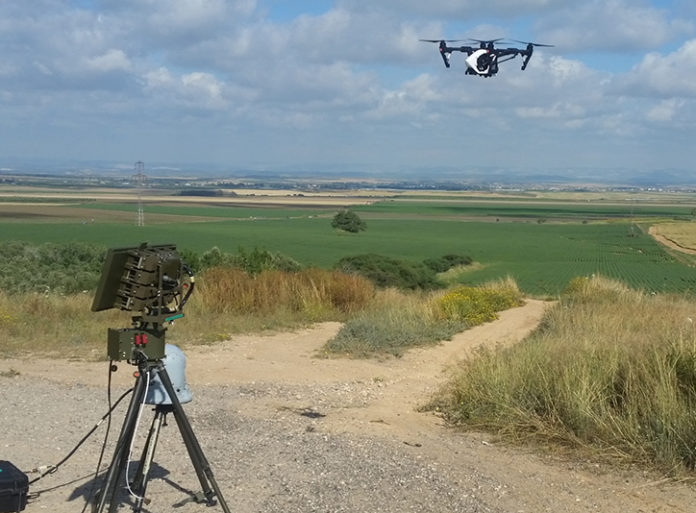
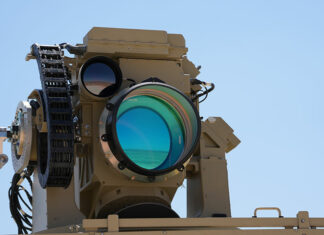
IAI Drone Guard Counter - UAS system comprises the ELM 3026 radar and electro-optical target recognition system, and an electronic jammer designed to disable the drone in flight., Photo: IAI
Israel Aerospace Industries (IAI) Elta Systems’ Drone Guard is an integrated system comprising a low-level air defense radar and electronic jammer. One of the first C-UAV system developed in Israel ‘Drone Guard’ went through an extensive test series proving its effectiveness against a variety of different drones in different scenarios, including simultaneous multiple drone penetrations or attacks. In February 2017 the US Department of Defense ordered 21 Man Portable Aerial Defense System kits believed to be Drone Guard systems. The systems acquired under the contract worth $15.5 million will be delivered in July of that year.
Drone Guard comprises a specially adapted 3-Dimensional (3D) active electronic scanning (AESA) radar and Electro-Optical (EO) sensor for target detection and identification, as well as dedicated Electronic Attack (EA) jamming systems for disrupting drone flight. The radar can detect targets at ranges of 10-20 km.
To detect low-signature, low-level and low-speed airborne targets, ELTA has adapted to this specific mission its 3D radars, which include the ELM-2026D, ELM-2026B and ELM-2026BF for short (10km), medium (15km) and long (20 km) ranges, respectively, with special drone detection and tracking algorithms, as well as adapting them with EO sensors for visual identification of the target.
In order to disrupt the hostile UAV, ELTA has developed advanced adaptive jamming systems which can be used in concert with its detection and identification sensors, or as a continuously operated stand-alone system. The jamming disrupts the drone’s flight and can either cause it to return to its point-of-origin (‘Return Home’ function) or to shut down and make a crash landing.
For more information: Dominating The New High Ground – Counter-UAS Technologies
Sarab-1 soft kill countermeasures mounted on a Syrian T-72
Since 2012 and through the recent fighting, particularly in Northern Syria, the Syrian forces have suffered significant losses to rebels anti-tank guided weapons. The ability of rebels to attack and destroy the Syrian tanks from long range devastated the Syrian troops’ morale.
Sarab countermeasure systems were rapidly fielded with large numbers of combat systems, to defeat long-range guided missile attacks. The system is seen here mounted on a 85mm gun.
In the recent months the Syrian Army, supported by Iranian-backed Hezbollah and Russian air and ground forces, regained a significant foothold in areas previously dominated by Syrian opposition and ISIS. The loss rate of its armor has also diminished, not because of a shortage of rebel weapons. The Syrians claim that the deployment of new countermeasures locally developed by the Syrian Scientific Research Center (SSRC) dramatically reduced the vulnerability of their armor to rebel guided missiles attacks. This article tracks the evolution of these systems and outlines the progress, based on combat experience gained by the Syrians.
IR countermeasure technologies are available from multiple sources, both in the East and West, but none were accessible to Syria. The SHTORA, an integrated defensive system designed for the T-90 could not easily adapt to the T-72, T-62 and T-55s. To address the threat the SSRC developed an Infrared jammer designed to disrupt the optical command line used by 2nd generation Semi-Active Command to Line Of Sight (SACLOS) guided missiles such as the Konkurs, Metis and Tow.
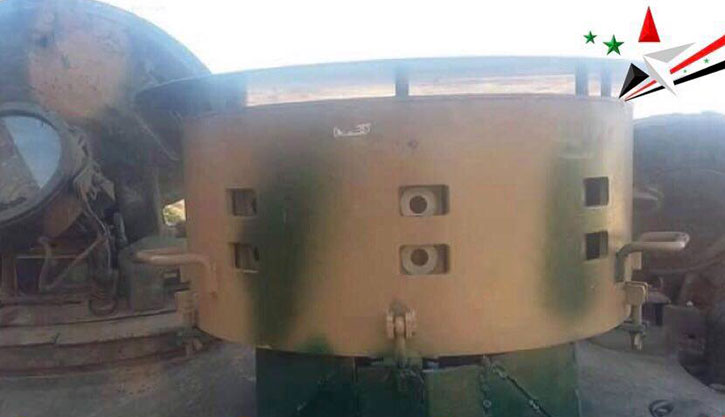
Sarab-2 seen here on a syrian T-72 was fielded toward the end of 2016 was a more advanced version of the Sarab-1 that was deployed in the first months of the year.
The system is a light source that mimics the signal emitted by the flare positioned at the missile’s tail, feeding false positional information to the command system’s sensor, thus causing the missile to miss its target. The Israeli army first introduced this principle in Lebanon in the 1990s. It was later and adopted by the Russian army with the SHTORA system developed for the T-90. However, lacking specific data on the threat missiles, the required more testing with real missiles to turn their technology demonstrator into a combat worthy protection system.
By the end of 2015, the Developed by the SSRC managed to acquire few of the TOWs delivered to the Syrian rebels. (Syrian intelligence agents simply bought 18 from the Free Syrian Army…) These missiles helped SSRC to modify and test the system, and deploy the first batch of operational systems designated Sarab-1 (Mirage) in early 2016. (These systems were spotted on T-62s and gun carrying pickup trucks near Latakia). These systems used powerful Infrared LED lights and magnifying lenses that demonstrated 80% effectiveness against various SACLOS missiles. The entire system included multiple emitters covering the frontal arc. Connected to the vehicle’s battery the system could maintain continuous operation for about six hours.
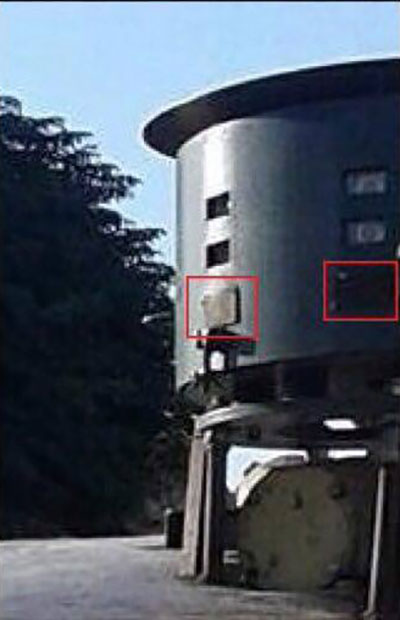
Sarab-3 provides a soft kill systemwith 360 degree coverage, stacked IR light sources and possibly laser diodes producing more advanced deception patterns.
A follow-on system designated Sarab-2 were completed and delivered to combat units towards the end of 2016. The Sarab-2 improved over the first generation by using multiple emitters that could mimic the vertical movement. A protected casing was added as well. As the first version, Sarab-2 covered only the frontal arc (about 180 degrees). Reduced power consumption and improved batteries enabled the system to maintain 10 hours of operation without charging. According to Syrian sources, the Sarab-2 was completed and successfully deployed in the battle of Aleppo, effectively defeating the Free Syrian Army (FSA) TOWs. In fact, the Syrian sources say that in the later stages of that battle TOWs were directed exclusively against infantry and other infrastructures since the targets protected by Sarab were immune to these threats.
Following the successful fielding of Sarab-2 the SSRC developed a new version of the system, utilizing additional emitters (possibly laser sources) to establish more efficient ‘soft kill’ active protection for tanks. Unlike Sarab-1 and 2, the Sarab-3 has a full 360-degree coverage.
While the wide publicity the system received could be motivated by the need to boost morale among the Syrian soldiers, defense analysts should be aware of the development and consider the proliferation of such technology, in defeating 2nd generation guided missiles with third world countries and insurgent groups.
A close-up view of the Sarab-2 system, using stacked IR light diodes and wearing a protective shroud.
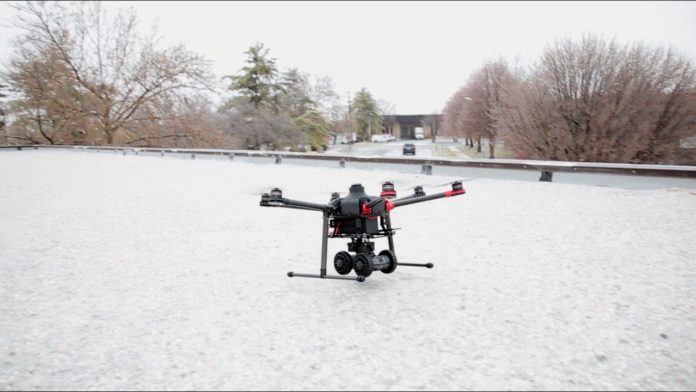
Military robotics expert Roboteam is developing a hybrid air/ground robot system called ROOSTER, that mimics the flying of a male chicken. Its capability to fly over a short distance enables the Rooster to get around obstacles and reach vantage positions, like moving from a street to a rooftop in a short time. This performance allows the robot to reach an observation position or suspected objects much faster than by using conventional ground movement.
The Rooster employs a compact, foldable hex-rotor drone that weighs 3.6 kg (8 pounds) and can lift a weight of 4.5 kg (10 lbs.) The drone has a mechanical docking system fitted for the 1.65 kg (3.6 lb.) Iris mini-robot. As a small robotic sensor, Iris is equipped with cameras, LED lights and microphones remotely controlled from a distance up to 200 m’ (700 ft). The two robots (Rooster and Iris) are controlled from a single handheld controller and are designed to mate automatically upon operator command.
The bi-annual IDEX defense Expo kicked off today in Abu Dhabi with an impressive show of domestic and international weapon systems and an impressive dynamic demonstration. The event demonstrated the rapid response of a well equipped military force battling a threat of irregular force. This scenario is not imaginary in this region. Many countries are grappling with this situation in recent years – Syria, Iraq, Yemen, Somalia and Libya. Others – like Turkey and Jordan, succeeded to push it back beyond their borders.
Held under the patronage of President His Highness Sheikh Khalifa Bin Zayed Al Nahyan, Supreme Commander of the UAE Armed Forces, IDEX 2017 is held at the Abu Dhabi National Exhibition Centre, where 1,235 companies show the latest defense hardware they can offer. Besides, 125 naval defense companies are participating in the NAVDEX maritime event co-located with IDEX. The biggest participation is from local companies, which show a 17 percent increase from 2015. The largest exhibitor is the Emirates Defence Industries Company, EDIC, a joint venture between Mubadala Development and Tawazun Holding.
Traditionally, the Gulf states often diversify military acquisition among many suppliers from various countries to maintain the widest international support base possible. As the largest defense exhibition in the Middle East and one of the leading global defense events, IDEX provides excellent opportunities for companies to showcase products and solutions tailored specifically for Middle Eastern applications. These include a wide range of land systems and maritime systems highlighted at the adjacent NAVDEX event.
Video courtesy of ArmyRecognition
At the epicenter of world’s conflicts, and with endless financial resources to support defense acquisition, the Gulf States and the Kingdom of Saudi Arabia are among the largest military spenders. While in past years the UAE was a ‘passive customer,’ whose weapon systems were used mainly for parades and exercises since 2011 things have changed as the UAE joined the coalition forces in Libya, and more recently in Yemen. In the recent years, the military forces of the UAE are gaining combat experience and induct modern equipment to replace older and less capable systems.
The growing military industrial capability in the UAE is part of the emirate’s strategic diversification from oil-dependent industry, by increasing self-sufficiency in military industry, growing the industrial base and developing a knowledge-based economy and skilled workforce.
The UAE forces are fighting alongside Saudi troops in Yemen. These military forces are becoming experienced in combat against the Houthis – a tough, well equipped Iranian proxy. This UAE-Saudi coalition suffered significant losses to Houthi missiles – in the air, on the ground, and at sea, and has increasingly fielded improved capabilities, from precision attack to missile defense and heavier armor – to defeat Houthi forces from strongholds they have captured in Yemen.
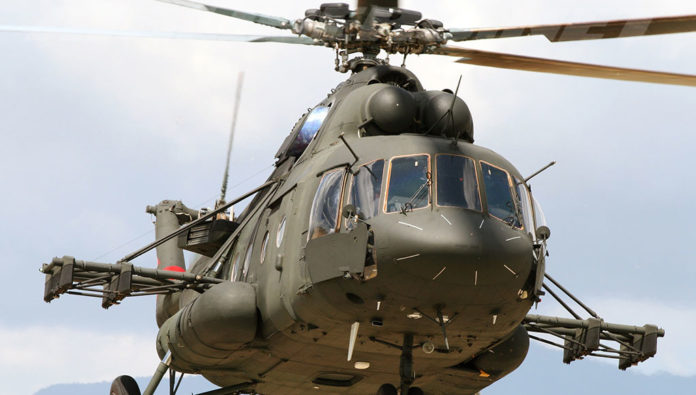
Elbit Systems has been awarded a contract worth about $110 million, for the upgrade and maintenance of a fleet of Russian made Mi-17 helicopters operating with an air force in the Asia Pacific region. The project will be performed over a five-year period. The work assumed by the company will include the conversion of the Russian-made utility and assault helicopters into multi-role platform, upgrading existing utility and attack platforms, followed by provision of maintenance and support package. The Mil Mi-17 also known as the Mi-8M (NATO reporting name: Hip) is a medium twin-turbine transport and assault helicopter produced by the Russian Helicopters company. It is powered by two Klimov TV3-117MT engines. Mi-8/17 operators in the Asia-Pacific region are China, North Korea, Vietnam, Bangladesh, Myanmar, SriLanka, and India.
As part of the upgrade, the helicopters will receive unique and innovative avionic solutions. “The aging helicopter market is growing rapidly and includes numerous Eastern platforms, we hope other customers will follow the selection of our modernization solutions,” Bezhalel (Butzi) Machlis, President and CEO of Elbit Systems, noted, adding that the company has the flexibility to serve as prime contractor, systems integrator, component supplier or service contractor in order to meet the needs of the specific customer. Elbit Systems has completed several Eastern helicopter upgrades and continues to perform numerous programs which improve operational capabilities and facilitate safer flight, night and day.
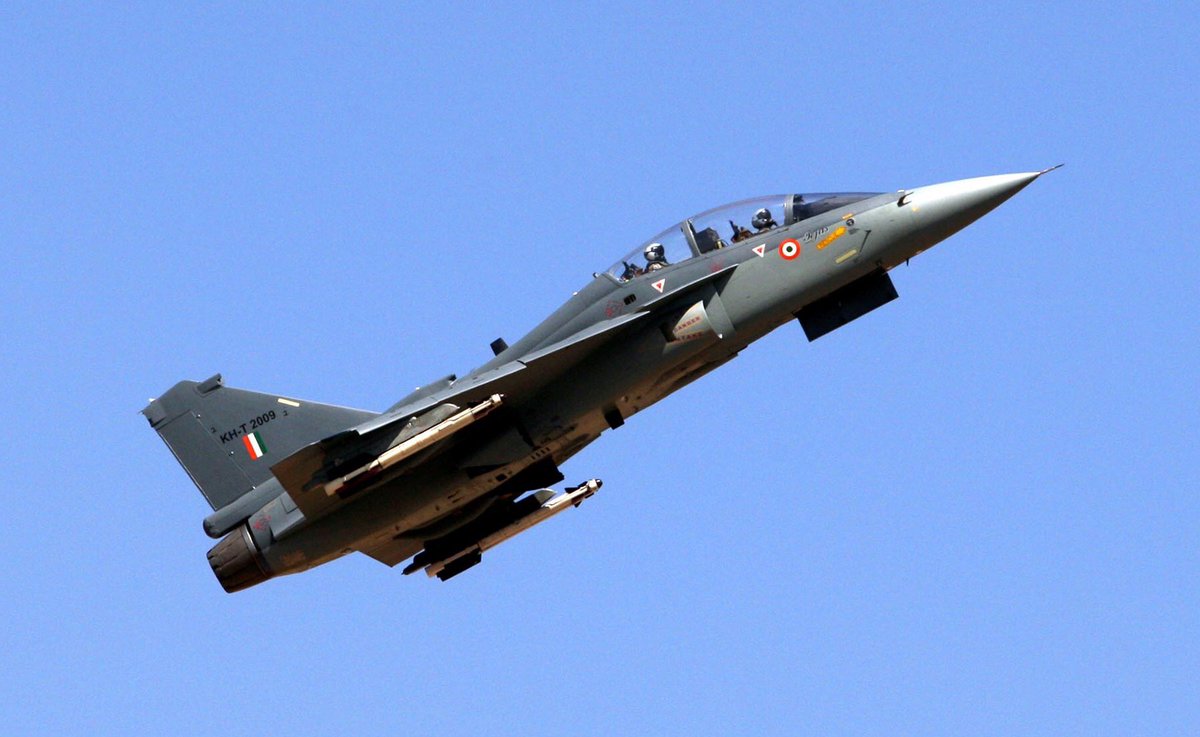
THe twin-seat Tejas LCA seen on a low, slow pass over . Photo via Livefist
The twin-seat Tejas LCA seen on a low, slow pass over . Photo via LivefistThe Aero India 2017 airshow opening today (February 14) at Indian Air Force (IAF) Station Yelahanka, Bengaluru marks the 11th Aero India airshow. Unlike past events dominated by competitors seeking to sell aircraft to India, this time the world’s largest aerospace industries are offering to deliver complete production lines that will roll out today’s fighter jets in India – to provide the Indian Air Force with hundreds of modern, yet affordable fighter jets. Following the selection, the lucky strategic partner will be responsible for establishing the production line in India, most likely by teaming with a local company. If it will be a private or public sector company, the move has the potential to change India’s aerospace landscape entirely, currently dominated by government-run public sector enterprises (PSU) like HAL and the Defense Research & Development Organization (DRDO).
83 Tejas Light Combat Aircraft (LCA) built by PSU Hindustan Aerospace Ltd. (HAL) on order cannot fulfill the IAF thirst for new fighter jets. Locally developed for more than 20 years and built by Hindustan Aeronautics Ltd (HAL), those aircraft are less capable, compared to fighter jets of similar class India could get in the international market. To fill gaps created by MiG-21 and 27 units that are phased out of service, India needs few hundreds of additional jet planes (likely 200 – 250) to stand up and replenish about 20 squadrons in the coming decade.
Two of the more likely suppliers that have proposed to set up production lines in India are Lockheed Martin and Saab. Lockheed is ready to move here the production of the F-16V, while the Swedish firm will set up a production line of the Gripen E if it wins. Current models of the F-16 and Gripen are performing here at Aero India this week. Both were among the five finalists that competed for the now canceled MMRCA program (won by Rafale). The two companies are expected to establish a production line in India, by teaming with a private industry,
Boeing has already moved to produce the fuselage of the AH-64 attack helicopter in India. In 2015 the IAF ordered 22 such helicopters; the first will be delivered next year. India is expected to order more Apaches in the future. To support new production orders Boeing has teamed with Tata Advanced Systems Ltd (TASL) to produce Apache fuselages at their new facility in Hyderabad. The facility will eventually be the sole producer of AH-64 fuselages globally, boosting India’s prospects in the aerospace and defense sector.
To further increase its local operations Boeing has established ‘Boeing Defense India,’ a local operating unit of its defense operations focused on local services, support, sales and marketing, sourcing, manufacturing, and engineering, allowing Boeing to “deepen its relationship with the Indian defense ministry.” Local sourcing of aerospace components and subsystems require a significant change in local industrial standards and capabilities, a change that foreign companies like Boeing, Airbus, and IAI are carefully watching and anticipating, as they align to take Indian suppliers into their supply chain.
Organized by the Defence Exhibition Organisation, which falls under the MoD’s purview, the Indian Air Force, state-owned Defence Research, and Development Organization, the Department of Space, and the Union Civil Aviation Ministry, the 11th International Aero India will see participation from 750 exhibitors along with delegations from 100 countries. One of the largest exhibits at Aero India is the Russian one. Rostec Corporation, the parent company of state-owned Russian arms supplier Rosoboronexport, showcases here over 300 different military and aviation products; some are in service with the Indian Air Force, others are promoted in various marketing levels. These include combat aircraft, missiles, air defense and radio-electronic combat systems. As many of the familiar weapon systems on display have been validated in the fighting – in Syria, Iraq, and Ukraine, many of Russian-made weapon systems are regaining momentum and respect.
Although Russian manufacturers have an established record of local manufacturing and assembly of aircraft and other combat systems, new partnerships are being discussed to meet MAKE IN INDIA guidelines. “In the framework of “MAKE IN INDIA, mounted” we have signed an agreement to establish a joint venture for the production of Kamov Ka-226T helicopters in October 2016 at the BRICS summit. Now there is active implementation of this project,” Rostec CEO Sergey Chemezov said.
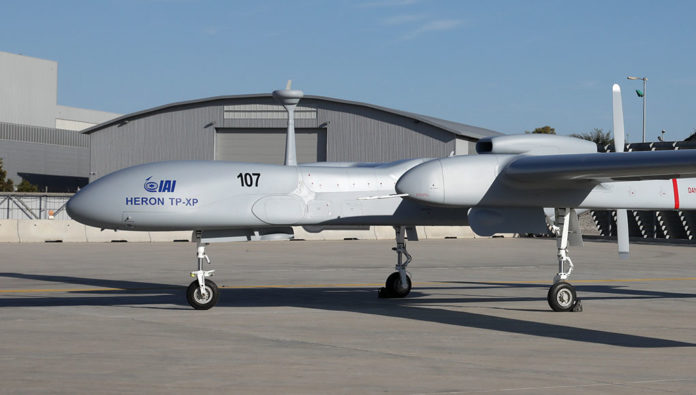
As a close ally and development partner in many defense programs, Israel is also a prominent exhibitor at Aero India. Eleven Israeli defense industries and start-up companies are displaying a wide array of advanced technologies in the Israeli national pavilion organized by SIBAT. As the Russian and US systems, Many of Israel’s weapon systems – guided missiles, drones, ISTAR, and self-protection systems, were validated in combat, by Israel’s Defense Forces as well as military forces of the leading nations – including the USA, Germany, France, Italy and the UK. Some of the items to be on display this year include a full-scale mockup or IAI’s Heron TP-XP – the new, exportable variant of Eitan, Israel’s Strategic UAV developed by Israel Aerospace Industries (IAI). An array of weapon systems displayed by RAFAEL are optimized for India’s future combat aircraft are also on display, as well as an array of avionics and helmet displays from Elbit Systems.
“The economic cooperation between India and Israel is strengthening,” said SIBAT Director, Brig. Gen. (res) Mishel Ben Baruch, “Israel is working to position itself as a leading partner for India in joint defense production, from a long-term vision that in the coming years all Indian defense procurement will be from local Indian companies. The Israeli national pavilion exposes Israeli-Indian cooperation and initiatives to enhance cooperation in the field of cyber security.”
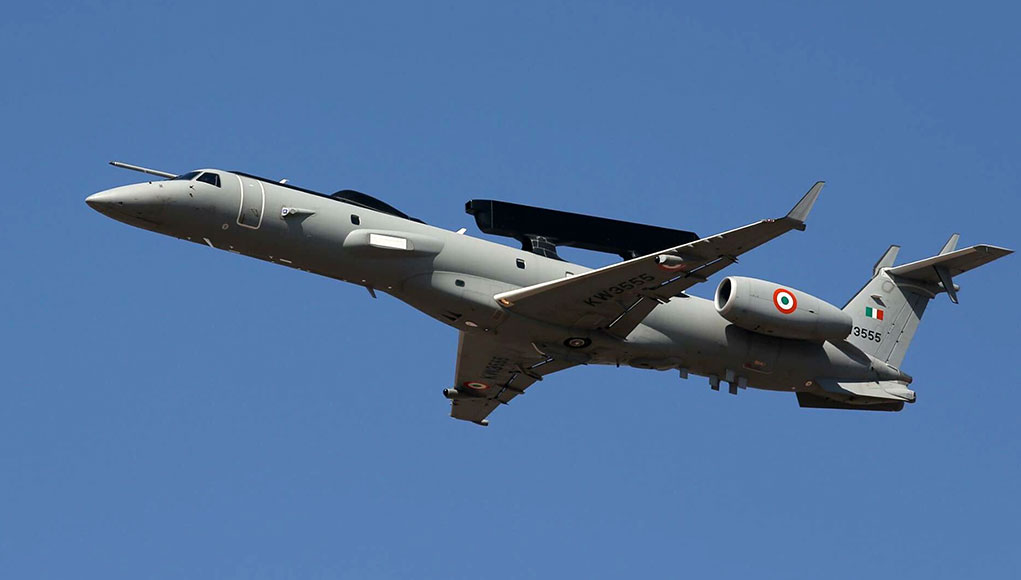
As in past years, indigenous programs are making the headlines – as the Indian Air Force plans to finally induct the medium all-weather airborne early warning and control (AEW&C) aircraft based on a heavily modified Embraer E-145 business jet. The induction of the new airborne sensor will provide the IAF an ‘eye in the sky’, able to spot incoming, low flying threats such as cruise missiles and attack aircraft. The first aircraft is expected to be formally inducted into service tomorrow, with a second one in few months. At present, India has three larger and more capable IL-76 based Phalcon airborne warning and control system (AWACS) delivered from Israel. India is planning to order three additional Phalcons.
The new EMB145 based systems are equipped with a dorsal mounted linear antennae with 240-degree coverage. The Phalcons have three radar installed in a static dome that covers 360-degrees over a 400-km range. The AEW&C system will detect, identify and classify threats in the surveillance area and act as a Command and Control Center to support Air Defense operations.
Also, the Indian government has indicated plans to develop a new AWACS platform based on the Airbus A-330 platform. Once these two aircraft are completed, sometime in the next decade, six additional planes could be ordered.
The Indian Air Force plans to finally induct the medium all-weather airborne early warning and control (AEW&C) aircraft based on a heavily modified Embraer E-145 business jet. The new EMB145 based systems are equipped with a dorsal mounted linear antennae with 240-degree coverage. Photo via Livefist
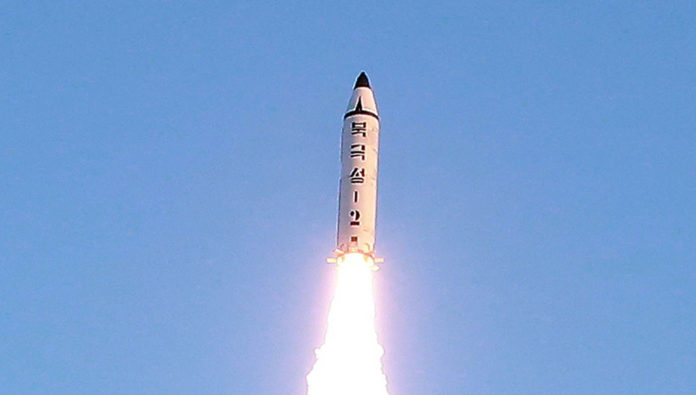
The missile reached a height of 550 kilometers after being fired at a high angle and flew about 500 km before splashing down into the East Sea.
North Korea appears to have employed technologies used in submarine-launched ballistic missiles (SLBMs) to develop a new type of intermediate-range ballistic missile tested Sunday. The SLBM launched in August carried the name Pukguksong-1, (Polaris – or ‘North Star’); the official announcement about the missile test called the new missile Pukguksong-2.
The remark came after the JCS initially identified the type of missile fired from Bangyon air base in the western province of North Pyongan Province at 7:55 a.m. as a medium-range Rodong or modified Rodong, and then changed their assessment to a modified Musudan intermediate-range ballistic missile (IRBM). The missile reached a height of 550 kilometers after being fired at a high angle and flew about 500 km before splashing down into the East Sea. As many recent North Korean missile test flights, the launch was conducted in a “lofted” style; it put the missile into a high trajectory rather than a lower one that would test its maximum range.
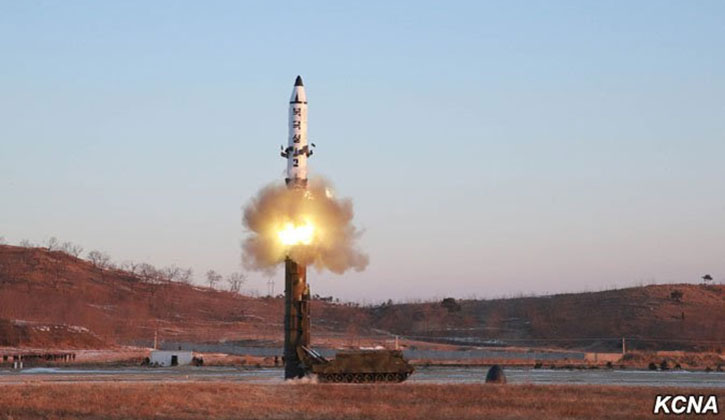
“North Korean leader Kim Jong-un likely ordered the task of developing a surface-to-surface Pukguksong-2 missile based on the successful SLBM test carried out in August. We have reached an assessment that the North is in the process of developing a ballistic missile with a significantly extended strike range,” an official from Seoul’s Joint Chiefs of Staff (JCS) said. Unlike the older R-27 Zyb which was liquid fueled, the Pukkuksong-1 and now the Pukkuksong-2 gives North Korea a low detection and higher maneuverability than current generations of DPRK liquid-fueled ballistic missile provide. The missile is carried by the tracked Transporter Erector Launcher (TEL) in a climate controlled canister that maintains the missile and the warhead mated to the missile for extended periods of time and provides rapid roll-out and launch capability, as missiles can quickly deploy from their depots to firing positions, without fueling.
With this new solid fuel propulsion the new intermediate missile, its range may be greater than an SLBM that can fly 2,000-2,500 km, but shorter than a Musudan’s 3,000-3,500 km range. Solid fuel-powered SLBM represents a step forward in the North’s nuclear missile programs. A solid fuel-powered engine requires much less fueling time than a conventional liquid-fueled one. In addition to its solid fuel, the missile was “cold-launched,” or expelled from its launch tube before igniting. These factors, coupled with the Pukkuksong-2’s road-mobility, make the missile highly mobile and capable of being launched on short notice.
“In my view this system is much more of a game changer for DPRK missile capability” said missile analyst Nathan Hunt, COO of Strategic Sentinel. Hunt said the new missile is more capable over what the DPRK had demonstrated with their Hwasong-10 Musudan missile which is liquid fueled and still is heavily based off the older soviet R-27 Zyb missile, requiring fueling prior to launch.
Under U.N. resolutions, North Korea is barred from any use of ballistic missile technology. Six sets of U.N. sanctions since Pyongyang’s first nuclear detonation in 2006 failed to stop the rogue regime’s nuclear ambitions. It conducted two nuclear tests and numerous missile launches in its pursuit of developing a nuclear weapons system capable of hitting the U.S. mainland. Following the missile test South Korea, the United States and Japan have asked the United Nations Security Council (UNSC) to convene an emergency meeting to discuss countermeasures against North Korea’s latest missile provocation. China, the North’s closest ally, also joined the criticism on Monday by saying that it is “clearly” opposed to the ballistic missile test while vowing to work together with other countries including the U.S. to resolve the issue in a “peaceful” and “stable” fashion.
In addition to its solid fuel propulsion, the Pukguksong-2 uses a ‘cold-launch’ system to expel from its launch tube before igniting. These factors, coupled with the launmcher’s road-mobility, make this missile highly mobile and capable of being launched on short notice. Photo: KCNA
Mr. Antoine Bouvier, Chief Executive Officer, MBDA (left) and Mr. A M Naik, the Group Executive Chairman of L&T formalize the new JV singed in Bangaluru.
Larsen & Toubro (L&T) and European weapon system specialist MBDA have announced the formation of an Indian based Joint Venture to pursue opportunities for the development and supply of missiles systems to meet the growing potential requirements of the Indian armed forces. To begin with, the JV will look to develop and supply fifth generation anti-tank guided missiles, anti-ship missiles for coastal defense and high-speed target drones.
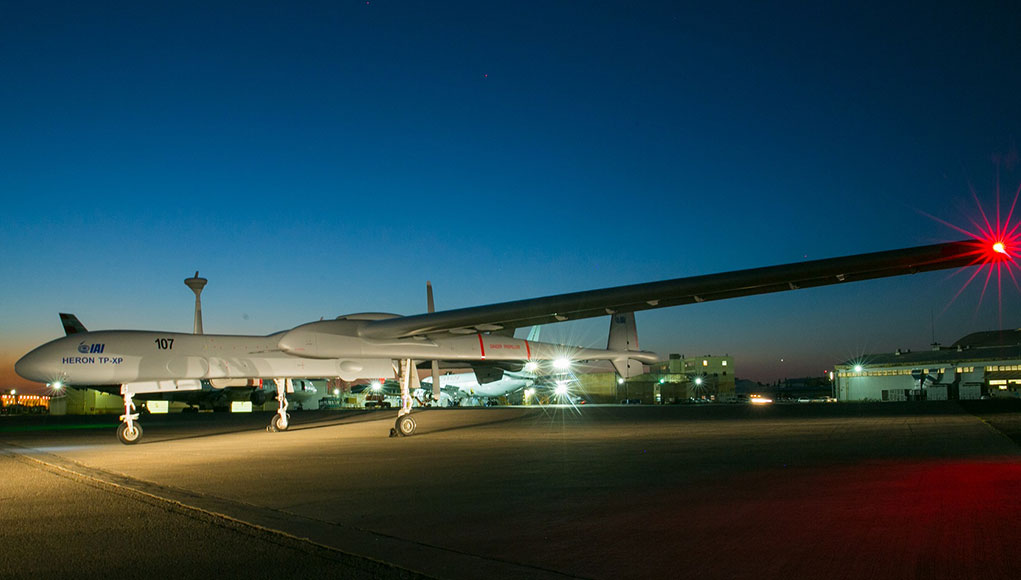
Israel Aerospace Industries (IAI) is introducing an export version of the Heron TP, the largest member of the Heron family of remotely piloted aircraft systems (RPAS). The new version retains the gross takeoff weight (5.4 ton) and strategic capabilities of the TP – operational ceiling of 45,000 ft, mission endurance of 30 hours, but halves the payload capability of the TP, limiting the maximum payload capacity to 450 kg. – the same as the payload of Heron I.
IAI is unveiling the new Heron TP-XP at the Aero India 2017 airshow in Bengaluru. The introduction of this strategic platform is India comes after a long delay in export approval of Heron TP to India since New Delhi has not approved the MTCR regime. The introduction of Heron TP-XP will enable IAI to expand its UAV offering to more customers. Following the MTCR approval by India last June, and the completion of the first flights of Rustom 2 – India’s indigenous MALE UAV – in November last year, the Indian market is more recipient to competitors, which the new version is positioned to meet.
“The Heron TP-XP introduces air supremacy at a higher level than currently exists in India,” Shaul Shahar, IAI Executive Vice President and General Manager of the Military Aircraft Group told Defense-Update. “With an emphasis on double flight speed, high altitude, and enhanced payload capability. This system is the latest derivative of the Heron TP, considered to be one of the world’s leading UAVs. The possibility of offering the Heron TP-XP opens up additional opportunities by allowing us to expand the range of solutions we can offer to our customers.”
Compared to other Heron family platforms, Heron TP-XP offers a more efficient multi-mission and multi-payload platform that is more suitable for strategic missions. It is designed to operate at very long range, using an integral satellite link and is and is capable of operating in extreme weather conditions. One of the main advantages of Heron TP-XP is its ability to cruise above the commercial traffic, at altitudes of up to 45,000 ft. This. As the TP version, Heron TP-XP uses triple redundant avionics, automatic take-off and landing and meets NATO and other accepted world standards and complies with STANAG 4671. These capabilities make Heron TP / TP-XP uniquely capable to ‘coexist’ in crowded, commercial airspace.
The main difference between Heron TP and TP-XP is the TP’s large internal cargo bay carrying up to one tonne of payload, which is the reason its export is limited as it exceeds the limitations imposed by the Missile Technology Control Regime (MTCR). To clear volume for these large payloads, the TP’s satellite terminal is placed in a dome above the fuselage. Heron TP-XP has a more slender design, with satellite antennae integrated inside the 14-meter long fuselage and a smaller internal payload bay. However, the large fuselage and huge wings (26 m’ span) provide more than adequate space for the installation of multiple payloads that may comprise electro-optical, radar and electronic surveillance missions. Since maximum fuel can be carried with full payload Heron TP-XP can perform all missions with maximum payloads at the maximum endurance.
Heron TP-XP has a more slender design, with satellite antennae integrated inside the 14-meter long fuselage and a smaller internal payload bay. Photo: IAI
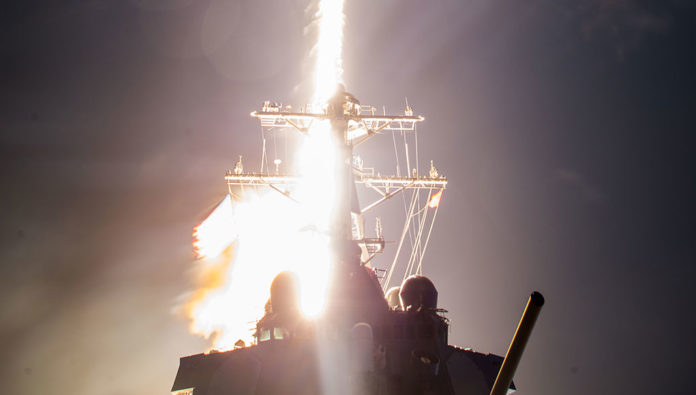
The U.S. Missile Defense Agency (MDA), the Japan Ministry of Defense (MoD), and U.S. Navy sailors aboard USS John Paul Jones (DDG 53) successfully conducted a flight test Feb. 3 (Hawaii Standard Time), resulting in the first intercept of a ballistic missile target using the Standard Missile-3 (SM-3) Block IIA off the west coast of Hawaii. Photo: MDA by Leah Garton
The U.S. Missile Defense Agency (MDA), the Japan Ministry of Defense (MoD), and U.S. Navy sailors aboard USS John Paul Jones (DDG 53) successfully conducted a flight test Feb. 3 (Hawaii Standard Time), resulting in the first intercept of a ballistic missile target using the Standard Missile-3 (SM-3) Block IIA off the west coast of Hawaii. Photo: MDA by Leah Garton
The first live intercept test of the Standard Missile-3 (SM-3) Block IIA interceptor missile was completed successfully on Friday dawn, off the west coast of Hawaii, proving the design maturity of the most advanced interceptor in the sea-based AEGIS Missile Defense system. The intercept was conducted by the US Navy AEGIS test ship – from the USS John Paul Jones (DDG 53) as part of a US-Japanese cooperative development.
“Today’s test demonstrates a critical milestone in the cooperative development of the SM-3 Block IIA missile,” said MDA Director Vice Adm. Jim Syring. “The missile, developed jointly by a Japanese and U.S. government and industry team, is vitally important to both our nations and will ultimately improve our ability to defend against increasing ballistic missile threats around the world.”
The flight test designated SM-3 Block IIA Cooperative Development (SCD) Project Flight Test, Standard Missile (SFTM)-01, was the third flight test of the SM-3 Block IIA guided missile, and the first intercept test. At approximately 10:30 p.m., Hawaii Standard Time, Feb. 3 (3:30 a.m. Eastern Daylight Time, Feb. 4) a medium-range ballistic missile target was launched from the Pacific Missile Range Facility at Kauai, Hawaii. John Paul Jones detected and tracked the target missile with its onboard AN/SPY-1D(V) radar using the Aegis Baseline 9.C2 weapon system. Upon acquiring and tracking the target, the ship launched an SM-3 Block IIA guided missile which intercepted the target. Based on preliminary data the test met its primary objective. Program officials will continue to evaluate system performance based upon telemetry and other data obtained during the test.
The test’s primary objective was a successful intercept. The mission was also designed to evaluate key missile system performance, including the kinetic warhead, divert and attitude control system functionality, nosecone performance, steering control section function, booster performance and separation and the second and third stage rocket motor performance and separation.
This test also marks the first time an SM-3IIA was launched from an Aegis ship and the first intercept engagement using the Aegis Baseline 9.C2 (BMD 5.1) weapon system. Future flight tests will continue to evaluate system performance, en-route to a 2018 deployment at sea and ashore, in support of the European Phased Adaptive Approach Phase 3.
The interceptor’s kinetic warhead has been enhanced to best address advanced and emerging threats, with improvements to the search, discrimination, acquisition and tracking functions. The kinetic warhead, along with larger rocket motors, allows SM-3 Block IIA to engage more sophisticated threats and protect larger regions from short- to intermediate-range ballistic missile threats, providing greater operational flexibility.
The SM-3 Block IIA interceptor is designed to defeat short- to intermediate-range ballistic missile threats. It operates as part of the Aegis Ballistic Missile Defense system and can be launched from Aegis-equipped ships or Aegis Ashore sites. Aegis Ballistic Missile Defense is the naval component of the U.S. Ballistic Missile Defense System. The MDA and the U.S. Navy cooperatively manage the Aegis BMD program. The Missile Defense Agency’s mission is to develop and deploy a layered Ballistic Missile Defense System to defend the United States, its deployed forces, allies, and friends from ballistic missile attacks of all ranges in all phases of flight.
The Arleigh Burke-class guided-missile destroyer USS Cole (DDG 67) flies the National Ensign and the 4th Marine Division (MARDIV) flag during the Cole Memorial wreath-laying ceremony that honored the 17 Sailors who lost their lives on October 12, 2000. Cole is deployed in the U.S. 5th Fleet area of operations in support of maritime security operations and theater security cooperation efforts and is currently securing the Bab El-Mandeb straits. (U.S. Navy photo by Brianna K. Green)
The U.S. is bolstering its naval force operating off the Yemen coast and in the Bab El Mandeb straits connecting the Red Sea and the Indian Ocean. The Navy announced the AEGIS destroyer USS Cole has joined the task force cruising off the coast of Yemen to defend access and ships transiting the Bab el-Mandeb strait.
The main concern is that the Houthis will try to block the narrow maritime lane with mines. “We’ve seen evidence that the Houthis are laying mines in the waters outside at least one of their ports. We officially have great concern for the freedom of navigation there” Navy Capt. Jeff Davis, a Pentagon spokesman, told Stars & Stripes.
Three U.S. warships are currently patrolling the area – the USS Makin Island, an amphibious assault ship that provided the floating launch base for a recent strike force that attacked an Al-Qaeda base, the USS Comstock, a dock landing ship is also deployed in the area. Further to the south, USS Cole is patrolling the straits.
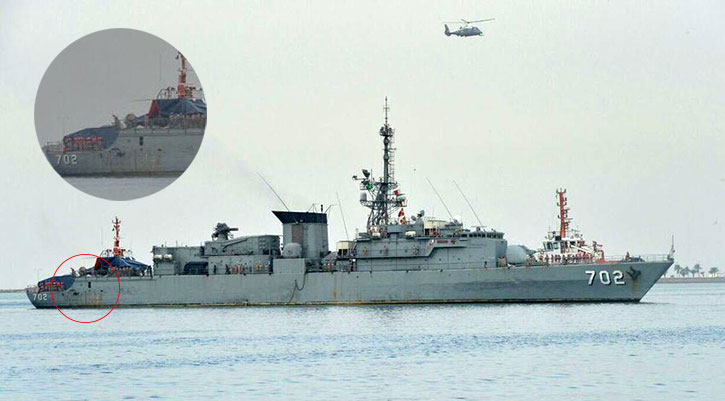
Davis added that the United States was prepared to defend access to waters off the coast of Yemen where a Saudi frigate was attacked earlier this week. The Saudi government said the frigate was attacked by three suicide boats. The Saudis said they were able to destroy two of the boats, but the third hit the frigate, which led to the death of two of the ship’s crew members. Iranian-backed Houthi rebels who control Yemen’s west coast claim they hit the frigate with a missile.
The deployment of USS Cole is part of an increased presence there aimed at protecting shipping from the Houthis. Last October the Iranian-backed Houthi rebels attacked a logistical vessel from the UAE and two U.S. warships in the same area that they hit the Saudi frigate. In response, the U.S. military launched cruise missile strikes to knock out three coastal radars located in areas of Yemen controlled by Houthi forces.
In 2000, the USS Cole was attacked when al Qaeda bombers steered a boat full of explosives into the side of the American warship while it refueled in the Yemeni port of Aden, killing 17 U.S. sailors and wounding about three dozen others.
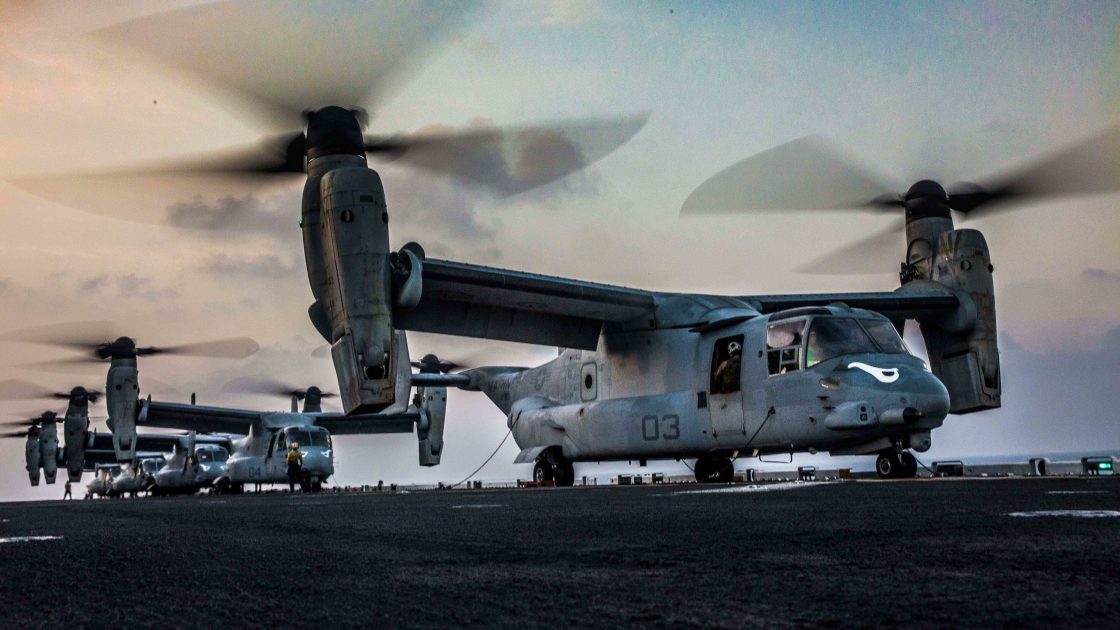
U.S. Marine MV-22 Ospreys, assigned to the Ridge Runners of Marine Medium Tiltrotor Squadron 163 (Reinforced), prepare to takeoff from the flight deck of the amphibious assault ship USS Makin Island (LHD 8) in support of a helo-borne raid during Exercise Alligator Dagger, in the Gulf of Aden, Dec. 21, 2016. Photo: US NavyRoyal Saudi Naval ship F-702 Al Madinah damaged in battle off the coast of Yemen arrives at King Faisal naval base in the red sea port of Jeddah. The frigate encountered a swarm attack by three speedboats, one managed to close in and damage the vessel’s aft at the port side. According to Saudi naval officials, suicide attacks launched by Houthi militias from the Yemeni port of Hodeidah held by Yemeni Shi’ite militias represents a clear threat to the safety of the international shipping lane in the Red Sea. Photo: Al Riyadh
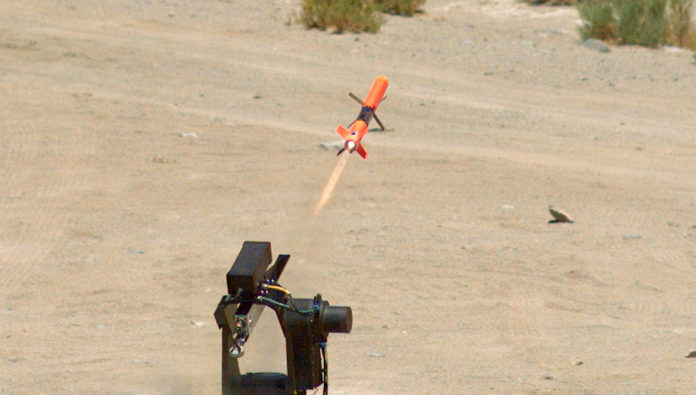
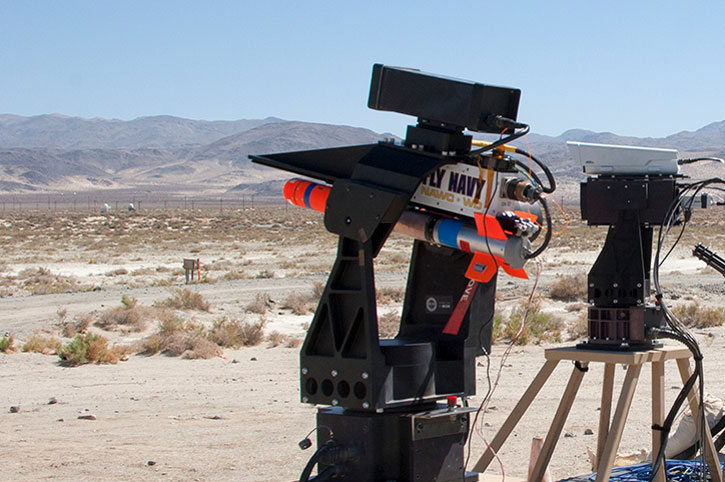
A forward-firing miniature munition - Spike, is launched at an Outlaw, a class-two representative unmanned aerial vehicle (UAV), during a recent and successful counter-UAV demonstration on the land range at Naval Air Warfare Center Weapons Division China Lake. (U.S. Navy photo)
A forward-firing miniature munition, known as Spike, is loaded on a rail launcher for a recent counter-unmanned aerial vehicle demonstration on the land range at Naval Air Warfare Center Weapons Division China Lake. (U.S. Navy photo)
Weapons specialists at the US Naval Air Warfare Center Weapons Division (NAWCWD) at China Lake, CA. have recently tested the capability of guided missile to defeat an unmanned aerial vehicle in flight. The Spike miniature, lightweight precision guided missile was used for the test performed in December 2016 at China Lake. Two of the small missiles demonstrated the capability of the Navy designed weapon to shoot down an Outlaw UAV with a single shot. In one engagement, the Spike performed with proximity fuse while the second verified contact activation with a direct hit.
To prepare for the demonstration the Spike launcher was mounted to a radar-queued gimbal, which maintained the target in the missile’s field of view while the Spike operator acquired, tracked and engaged the target.
Preparing for a counter-UAV live fire exercise in 2013 the Spike project team collaborated with the U.S. Army’s Armament Research, Development and Engineering Center. Following that 2013 demonstration, ARDEC requested the Spike team’s participation in a transport convoy protection line of defense using a similar gimbal system. The Army provided a proximity fuse for integration into the missile and the incorporation of that fuse enabled the Spike missile to explode on contact or near the target. In December, the Spike team demonstrated the effectiveness of both activation modes, destroying two Outlaw UAVs.
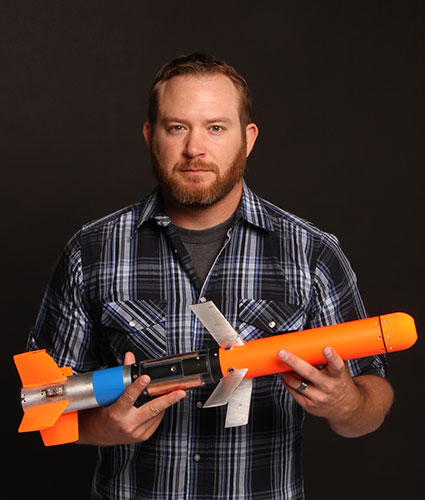
Jonathon Pooley, a technician at NAWCWD, displays a 25-inch, 5.5-pound forward-firing miniature munition known as Spike. (U.S. Navy photo)Project engineers continue to make improvements to their fire control suite, processes for safer assembly as well as algorithm updates for better endgame performance and replacement verification tests that are cheaper, faster and equally as effective as the previous ones.
Known as the forward-firing miniature munition, Spike is under development by a small team of engineers at China Lake, seeking to provide a cost-effective weapon that could counter emerging threats with capabilities that other weapons cannot. One such area is the increasing threat of small boat swarms often referred to as the fast attack craft (FAC) and fast inshore attack craft (FIAC) threat. One strategy the enemy employs is to use multiple FACs/FIACs to go after a target. The Spike could be a good gap-filler in a layered defense against this tactic. Spike has recorded direct hits against moving FIAC threats in separate test events on the NAWCWD Point Mugu sea range.
Footage taken aboard Naval Air Weapons Station China Lake shows the impact of a Spike missile on an Outlaw unmanned aerial vehicle during a Naval Air Warfare Center Weapons Division demonstration in December 2016. (U.S. Navy photo)
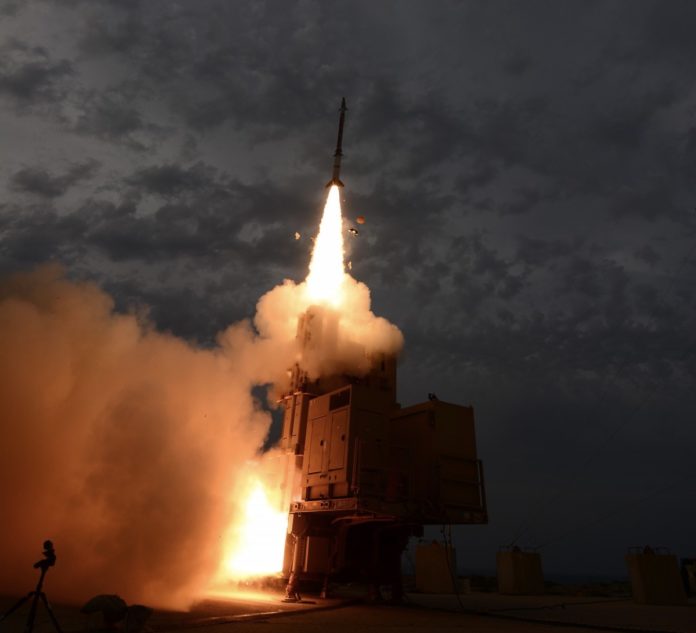
Israel’s Missile Defense Organization (IMDO) within the Israel Ministry of Defense and the U.S. Missile Defense Agency successfully completed a series of intercept tests of Rafael/Raytheon David’s Sling Weapon System (DSWS). The new system is being deployed with Israel’s multi-tiered antimissile array. This is a second milestone announced by the IMDO in recent days. Earlier this month the Israel Air Force took delivery of the first Arrow-3 exoatmospheric interceptor produced by IAI.
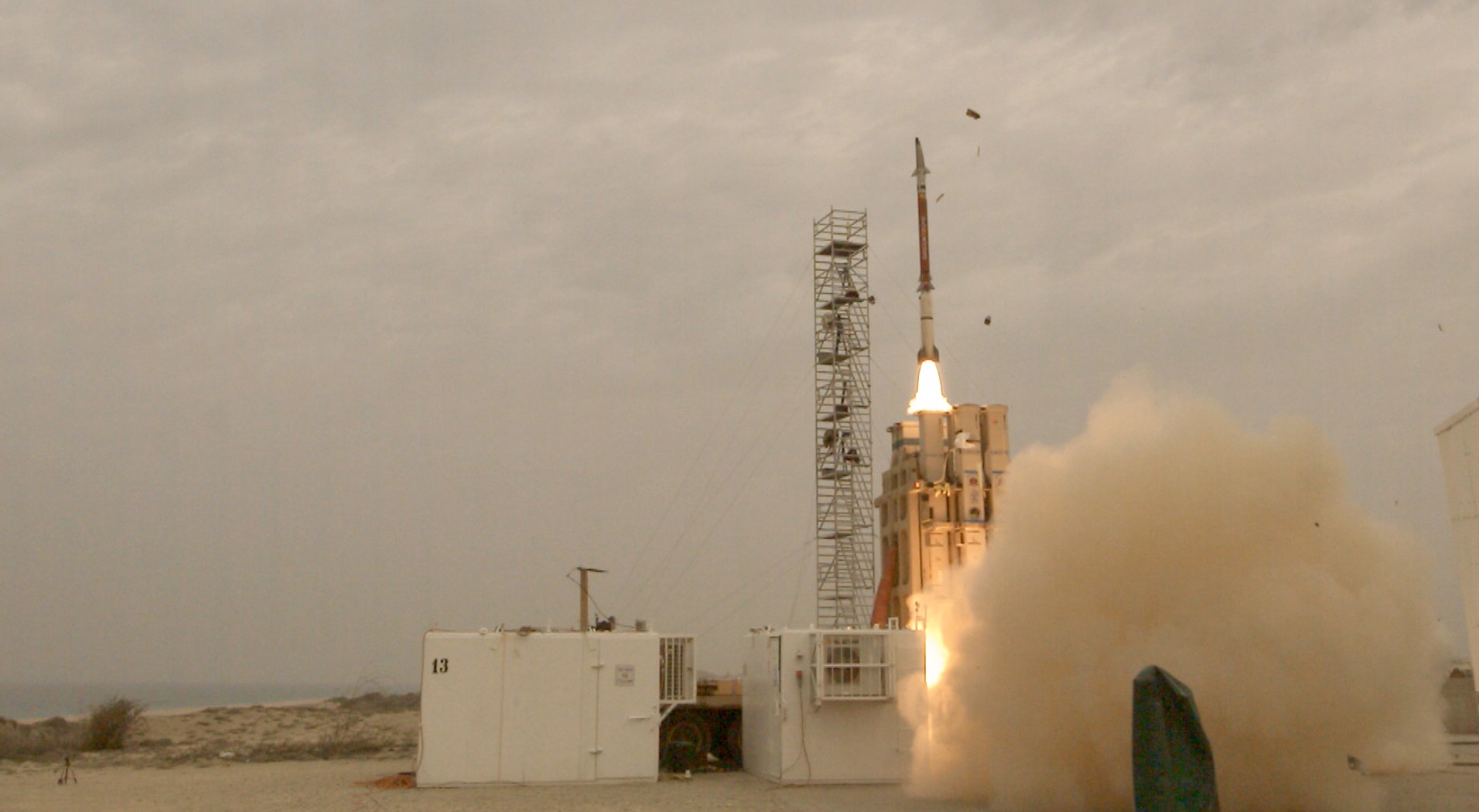
The test series designated David’s Sling Test-5 (DST-5) was conducted at ‘Yanat’ Sea Range, operated on the Mediterranean coast south of Tel-Aviv, out of Palmachim Air Base, Israel. It was the fifth series of tests of the David’s Sling Weapon System. The initial block of the system was delivered to the Israel Air Force in late 2015 and the system was undergoing induction and testing since; the IAF is expected to declare the system operational soon. The recent test was part of the system’s ongoing development and not required for the Initial Operational Capability (IOC).
The test examined capabilities and performance of the entire David’s Sling Weapon System. Through these tests, Stunner missiles intercepted threat-representative, highly maneuvering, long-range target at high-altitude. The system’s Multi-Mission Radar (MMR) detected the target after launch and transferred flight information to the Battle Management Center (BMC), which calculated the defense plan. The interceptors were successfully launched, performed all flight phases and engaged the targets as planned. Preliminary analysis indicates that all test objectives were successfully achieved. During the test other systems participated in ‘shadow mode’, testing the integration and mutual support between the systems (editor’s note: David’s Sling and Iron Dome systems share a common radar and are part of Israel’s multi-tiered missile defense system.)
The information collected during the test is being analyzed by program engineers and will be used for ongoing development and fielding of the David’s Sling Weapon System. This test series provides confidence in future Israeli capabilities to defend against large-caliber rockets and other developing threats.
The David’s Sling Weapon System project is a cooperative effort between the United States and Israel to develop a defense against large caliber rockets, short-range ballistic missiles and air breathing threats including cruise missiles. The system will soon be delivered to the IAF. DSWS is designed as an evolving system that will be able to enhance and take on additional threats in the future.
The prime contractor for the David’s Sling Weapon System Program is Rafael Advanced Defense Systems Ltd., with Raytheon Missile Systems as a sub-contractor. The MMR is developed by Elta, a subsidiary of Israel Aerospace Industries. The BMC, known as the Golden Almond, is developed by Elisra, an Elbit subsidiary.
A Stunner interceptor missile fired at a target during David’s Sling air and missile defense systems’ fifth test campaign held at the Palmahim test range in Israel, January 2017. Photo: IMOD
Panther FE hybrid-powered vertical take off and landing drone developed by IAI and the South Korean company Hankuk Carbon made its maiden flight in Korea recently. The FE-Panther uses three electrical motors for vertical lift and an internal combustion engine for horizontal flight.
The new variant weighs 67 kg. – only two kilograms more than IAI’s existing three-motor electrically powered Panther. Hankuk Carbon provides the fuselage assembly, made of lightweight composite materials, and some sub-systems. The new propulsion system extends the mission endurance of the Panther by 33%, maintaining the same payload capacity (6 kg.) as the original all-electric version.
The hybrid propulsion system enables users to employ two different power sources – the tilting electrical motors are optimal for vertical takeoff/landing and hovering, while the internal-combustion engine is employed for cruising.
IAI and Hankuk Carbon outlined their cooperation a year ago. Under a Memorandum of Understanding (MoU) signed between the two companies, the parties will pursue the feasibility study of the concept of a VTOL UAS for South Korean requirements.
Lockheed Martin Skunk Works® and XTEND have achieved a major milestone in JADC2 by integrating the XOS operating system with the MDCX™ autonomy platform. This technical breakthrough enables a single operator to simultaneously command multiple drone classes, eliminating the friction of mission handoffs. From "marsupial" drone deployments to operating in GPS-denied environments, explore how this collaboration is abbreviating the data-to-decision timeline and redefining autonomous mission execution.
As traditional defense primes face mounting competition from agile “neoprimes” such as Anduril, Palantir and Helsing, the balance of innovation is shifting toward software-defined warfare and scalable, dual-use technologies, while global industry consolidation—marked by Boeing’s integration of Spirit AeroSystems and other strategic mergers—signals an intensified race to secure control over the defense technology value chain. Our Defense-Tech weekly report highlights these trends.
In early October 2025, a coordinated wave of unmanned aerial system (UAS) incursions—widely attributed to Russia—targeted critical infrastructure across at least ten European nations. The unprecedented campaign exposed the fragility of Europe’s air defenses...
Executive Summary
The past week (September 18-25, 2025) represents an inflection point where strategic defense concepts have transitioned from doctrine to tangible reality. An analysis of global events reveals four primary, interconnected trends shaping an...
At the 2025 Air, Space & Cyber Conference, U.S. Air Force and Space Force leaders unveiled major updates on next-generation fighters, bombers, unmanned systems, and space initiatives, highlighting both rapid innovation and critical readiness challenges as the services race to outpace global competitors. A short version is available here, with a more detailed version for subscribers.
The Taipei Aerospace & Defense Technology Exhibition (TADTE) 2025 crystallized around four dominant strategic themes that collectively illustrate Taiwan's comprehensive approach to defense modernization amid escalating regional tensions. Based on a detailed report by Pleronix (available upon request). Includes a Podcast discussion on TADTE 2025's highlighting Taiwan's four strategic themes beyond the post's coverage.
Israel’s Iron Beam 450 high-power laser system has completed final testing, marking a major leap in air defense. Developed by Rafael, it offers precise, cost-effective interception of rockets, UAVs, and mortars, and is set for IDF deployment by 2025.