
Monday, December 22, 2025
More
    Home Blog Page 77

    Indo-Israeli Barak 8 Scores Direct Hit on 1st Sea Launch

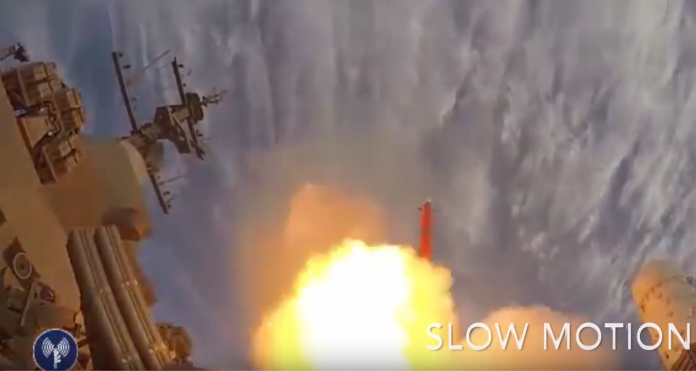
    Israel’s Ministry of Defense and Israel Aerospace Industries (IAI) conducted today the first full system flight and intercept test of the Barak 8 missile system developed jointly by Israel and India. Upon the completion of the system verification test series, Barak 8 is expected to achieve initial operational capability next year.

    The test was conducted from the Israel Navy SAAR 5 missile corvette INS Lahav, the first Israeli vessel to be equipped with the new air and missile defense system. The scenario began with the launch of a target, representing a reference threat. The MF-STAR on INS LAHAV detected the threat, tracked its course and passed it to the battle management center (BMC) inside the ship. The BMC calculated the optimal interception point, and assigned selected the missile interceptor for the launch. (The Barak-8 system can operate independently, or share assets across several platforms to provide effective area defense for larger battle groups).

    Upon receiving the launch command the launcher activated the gas generator pushing the missile upward from the vertical launch canister, once cleared off the vessel the missile employed the thrust vector and aerodynamic controls to turn into its operational trajectory. After a midcourse flight in which the missile received updates about the target’s course and expected position, the missile’s active seeker was activated. Acquiring the target from close range the missile homed in on the target, scoring a direct hit with the target. “This was the second time the missile scores a direct hit, a testament of the system’s capability to deal with highly maneuverable targets” said Boaz Levi, Executive Vice President and General Manager of IAI’s Systems, Missiles & Space Group. “All weapon system’s components successfully met the goals of the test.”

    According to the Israeli MOD, today’s test was a continuation of a comprehensive test held on land in late 2014, when the operational capabilities of both the Barak-8 naval system and MRSAM Medium Range land-based air defense systems were successfully proven.

    Barak-8, jointly developed by the Israel Ministry of Defense (IMOD) and the Defence Research and Development Organization (DRDO) of India, is a cutting edge air and missile defense capability providing land and naval assets the ultimate protection against a variety of aerial threats. The system includes an advanced Phased Array digital radar, command and control, vertical launchers and missiles carrying a highly advanced seeker.
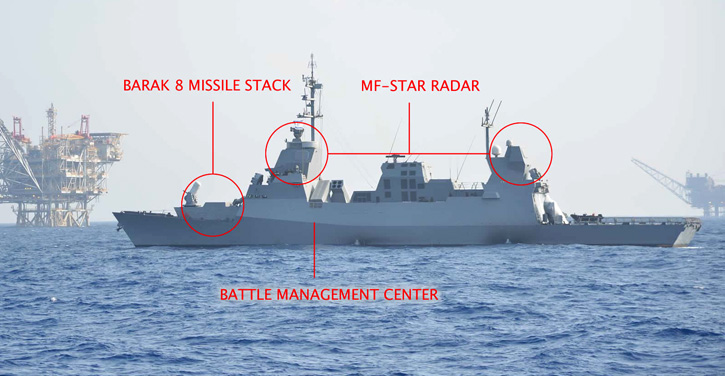
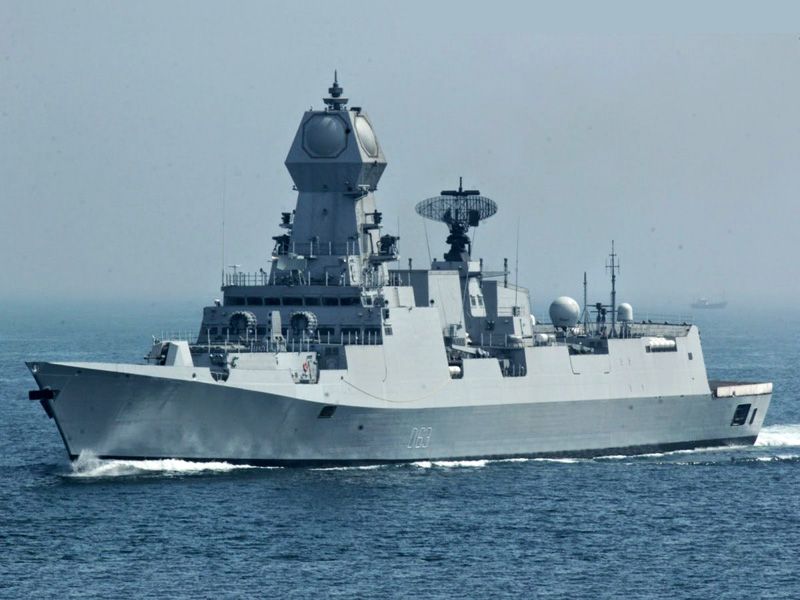
    INS LAHAV is the first of three SAAR 5 missile corvettes to upgrade from Barak I to Barak 8. Photo: IDF Spokesman
    INS LAHAV is the first of three SAAR 5 missile corvettes to upgrade from Barak I to Barak 8. Photo: IDF Spokesman

    IAI is the prime contractor, in collaboration with the IMOD’s Directorate of Defense Research and Development (DDR&D), ELTA Systems Ltd., IAI’s group and subsidiary, RAFAEL Advanced Defense Systems, and other defense industries. A number of Indian companies are sharing significant workshare of the program. Indian state owned missile manufacturer Bharat Dynamics Limited (BDL) produce the missiles destined for the Indian vessels.

    The Barak-8 naval version is intended for use by the Israeli and Indian Navies. The system has already been procured by additional customers. The first vessels to be equipped with the system are the three Israeli SAAR 5 missile corvettes (INS LAHAV, EILAT and HANIT) and three P-15A Kolkata class missile destroyers (KOLKATA, KOCHI and CHENNAI) of the Indian Navy. INS Lahav is the first vessel equipped with the missile on the Israeli side. INS Kolkata is already equipped with the systems is expected to begin the missile testing soon, tests are expected to be conducted at India’s missile test center off Odisha. Barak 8 Systems are undergoing integration on the two additional destroyers of this class.
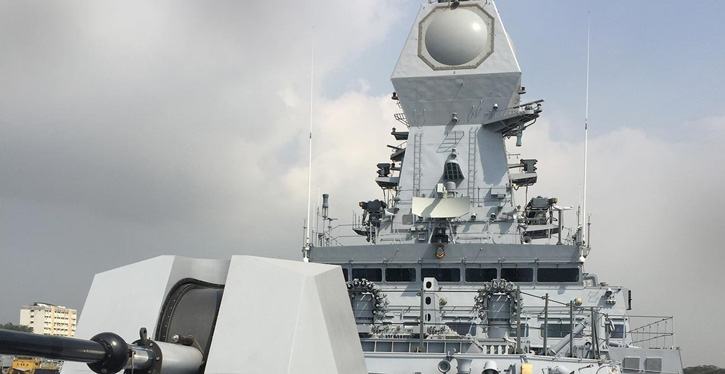
    The mammoth MF-STAR radar and Barak 8 launchers are already installed on the Kolkata class INS Kolkata and INS Kochi, awaiting the beginning of the systems' Indian test phase.
    The mammoth MF-STAR radar and Barak 8 launchers are already installed on the Kolkata class INS Kolkata and INS Kochi, awaiting the beginning of the systems’ Indian test phase.
    Another view of the INS Kolkata clearly showing the MF-STAR dome. Photo: Indian Navy
    Another view of the INS Kolkata clearly showing the MF-STAR dome. Photo: Indian Navy

    Milipol 2015 – First Impressions

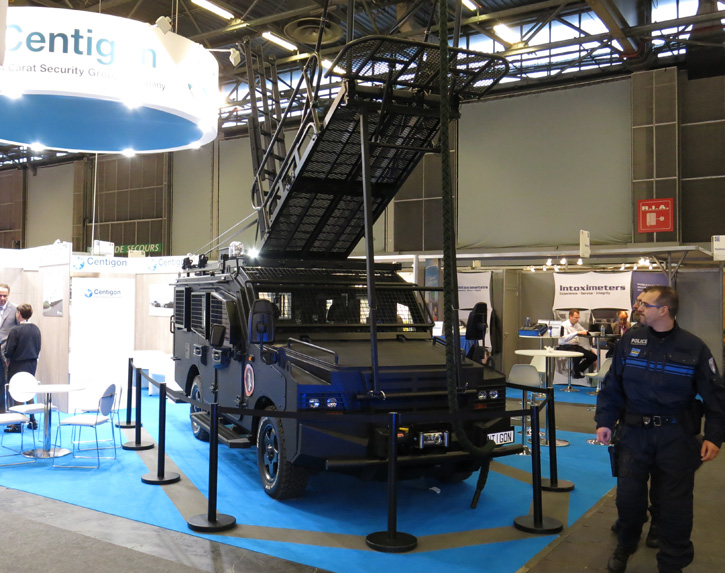
    carat_armored_swat_725
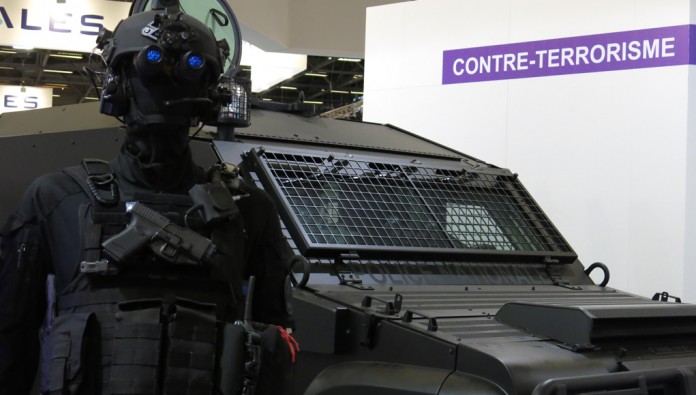
    Carat assault SWAT vehicle
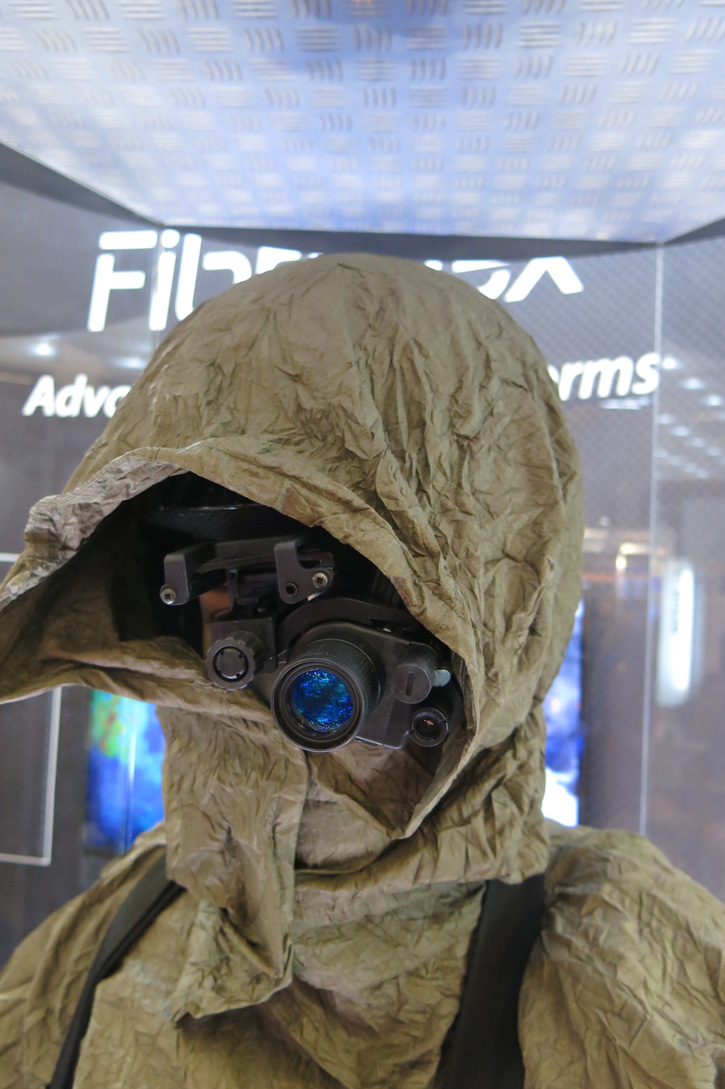
    fibrotex_thermal_camo725
    Nightwalker Camo
    Weighing only 550 grams with the enclosed package, Nighwalker is carried in a football sized when not in use.
    Nighwalker camo suite packed

    Please subscribe to view the larger versions of these photos and detailed descriptions.

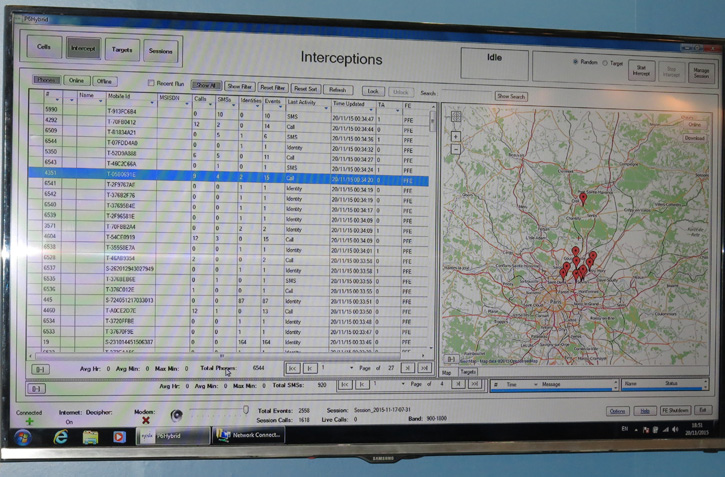
    picsix_725
    Picsix’ Cellint
    K9_jammer725
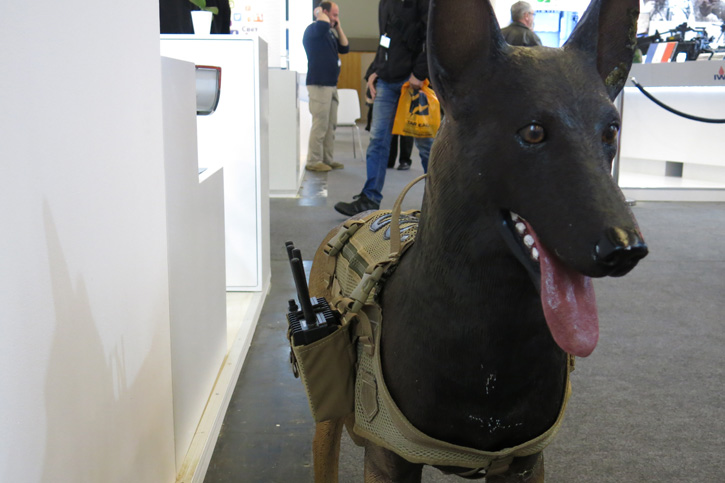
    Pluto jammer for working dogs
    standoff_detector_suicide_bombers725
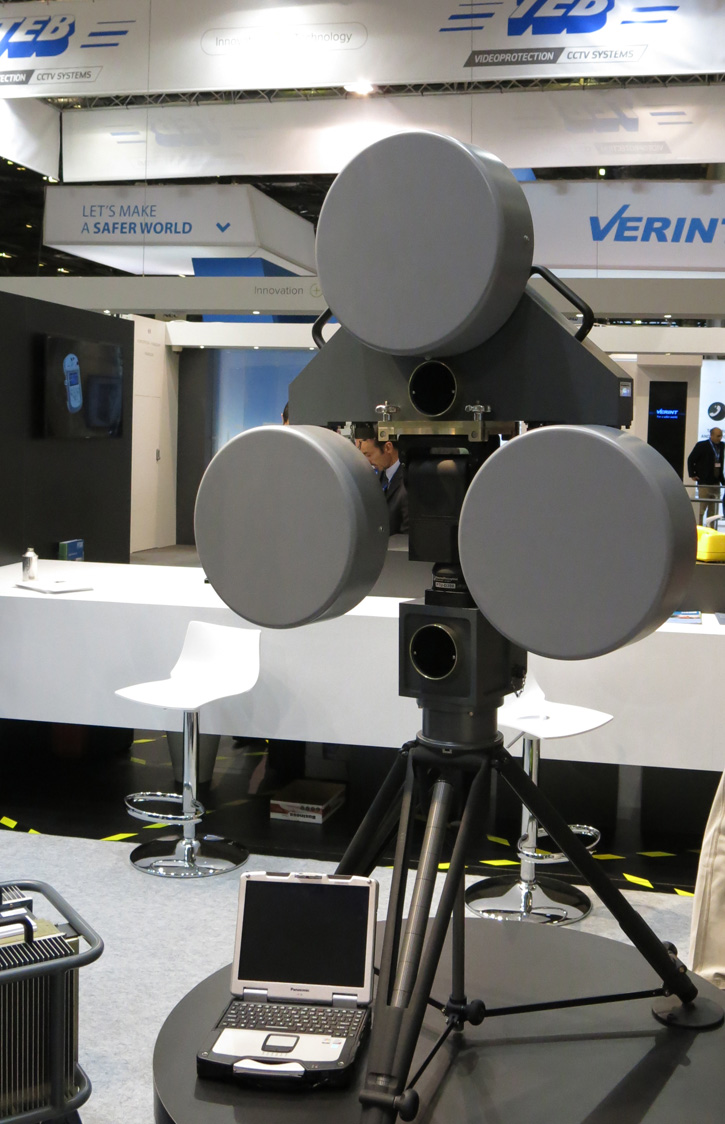
    Standoff bomber detection
    tracepro_smith_725
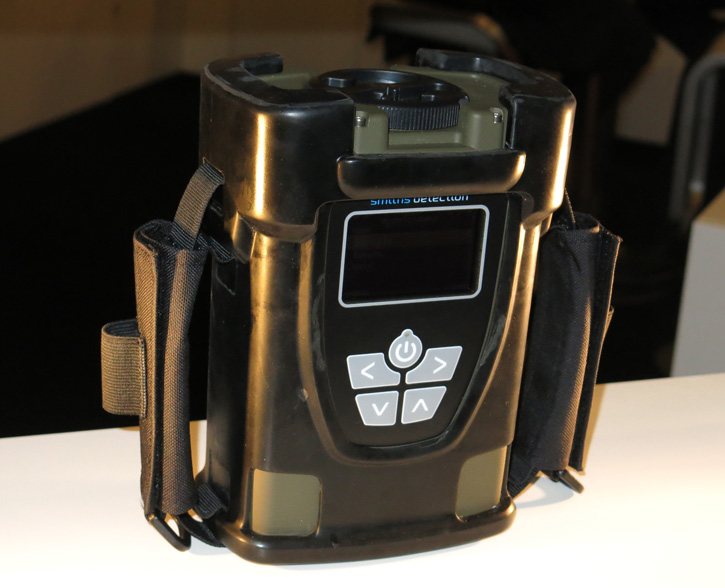
    Handheld trace detector
    ispra_anti_riot_725
    Thunderstorm NLW launcher
    ace_granade_safety725
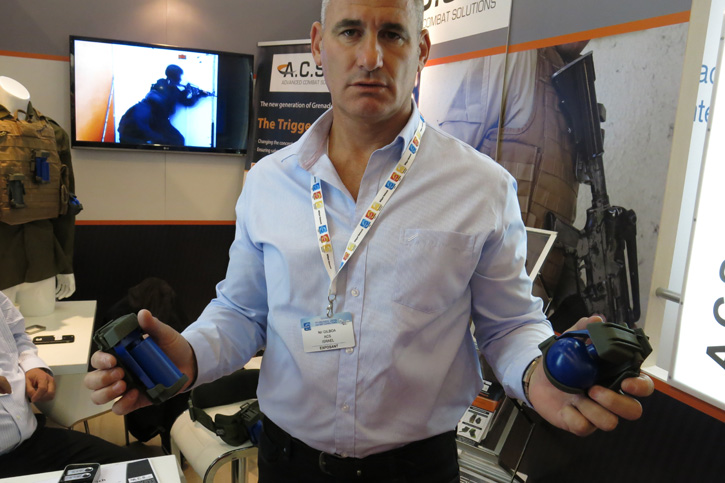
    Trigger pouch for hand grenades
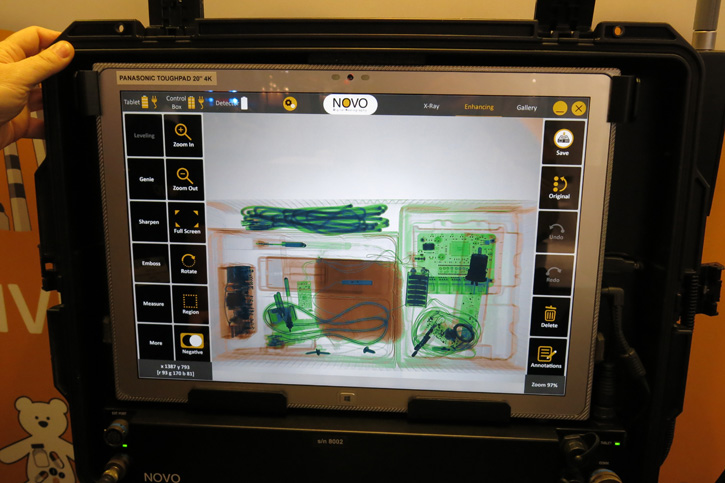
    novo_mobile_xray725
    X-Ray in a backpack
    novo_organic725
    NOVO’s Compact X-Ray
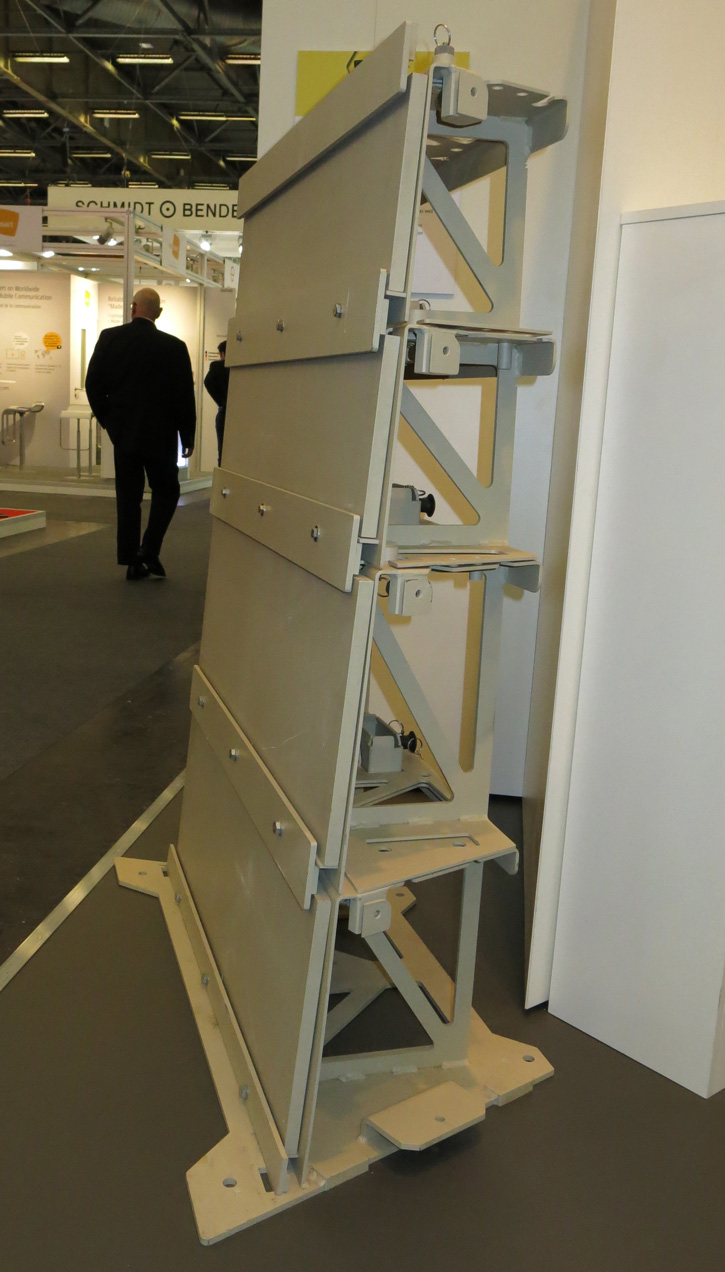
    modular_protection_rde725
    Modular protecting wall
    streit_specialized_solutions725
    Mobile armored post
    iag_armored_vehicles725
    IAG Armored Cars
    streit_military_725
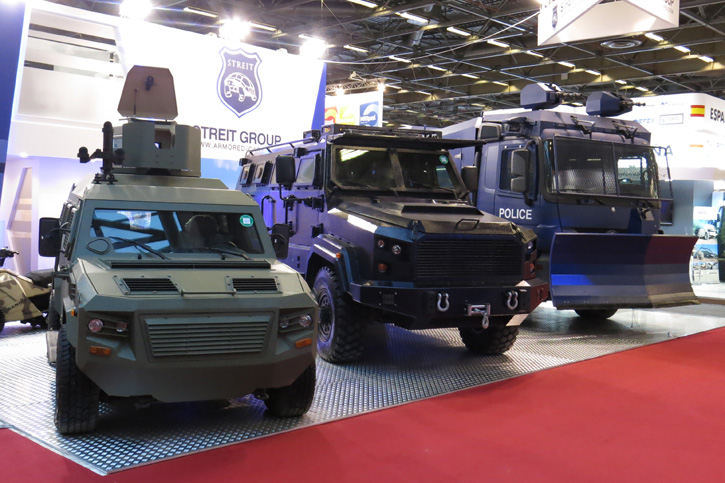
    MRAPs from Streit
    streit_hls_vehicles725
    Streit security vehicles
    sherpa_light_police725
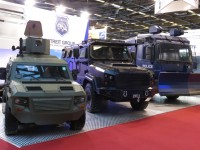
    Sherpa Light SWAT APC
    titus-milipol_1021
    Titus heavy SWAT Carrier

    carat_armored_swat_725
    This Wolverine from Carat Defense is configured with an assault platform enabling SWAT teams to access higher floors.

    fibrotex_thermal_camo725
    Weighing only 550 grams with the enclosed package, Nighwalker developed by Fibrotex provides static and dynamic a thermal concealment for the full body, effective at 3-5 and 8-12 micron wavebands MWIR/LWIR). The material can also be used to conceal observation posts, vehicles and large objects such as vessels. Photo: Tamir Eshel, Defense-Update

    Weighing only 550 grams with the enclosed package, Nighwalker is carried in a football sized when not in use.
    The Nightwalker personal concealment suite shown at Milipol is designed to be carried in a football sized when not in use. Photo: Tamir Eshel, Defense-Update.

    picsix_725
    The Cellular Intelligence (CELLINT) system developed by PicSix can locate, track and interrogate target cellphone users over a wide area, using active or passive surveillance. The targeted phones are interrogated for call data as well as content, providing law enforcement and intelligence agencies a real-time intelligence into terrorists plans and activities.

    K9_jammer725
    C-Guard ‘Pluto’ from Netline provides lifesaving protection for K9. Providing an essential sensor for bomb disposal and C-IED, K9s can be better protected with carry-forward jammer, instead of using high power jamming to flood the entire area in stand-off jamming. the kit comprises two separate units mounted on each side of the dog.

    standoff_detector_suicide_bombers725
    This radar based sensor from Counterbomber Technologies enables the detection of persons wearing concealed explosive vests from a distance of tens of meters away, It is operational with several US agencies protecting US interests at high threat destinations.

    tracepro_smith_725
    Trace Pro from Smith Detection detects traces of explosives, drugs or hazardous chemicals on hands, clothes or containers that carry or were in touch with such materials.

    ispra_anti_riot_725
    Thunderstorm is a multi-barrel 38mm launcher system can deliver a large quantity of less lethal ammunition in a very short time covering large area at distances of 50-210 meters. The Thunderstorm is loaded with ISPRA tear gas, stun, impact or smoke ammunition, simultaneously from multiple barrels or separately from each barrel.

    ace_granade_safety725
    The ACE grenade safety pouch is a carrying pouch that is also a triggering mechanism, activating the grenade only when the operator is ready to throw the grenade, thus preventing accidental activation of the weapon. The picture shows two examples, designed for M26 or stun grenades.

    novo_organic725
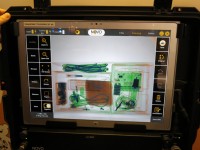
    Novo presented the latest tactical X-Ray inspection system designed to deliver ultra-sensitive and detailed imagery, that can be effectively interpreted by non-expert EOD operators.
    novo_mobile_xray725
    The tactical X-Ray inspection system from Novo is designed for portable, backpack or remote operation using small, tactical robotic platforms.

    modular_protection_rde725
    Rheinmetall Defense developed this Mobile, Modular Protection System (MMPS) as an alternative to sandbag protection. It offers protection from ballistic, fragmentation and hand grenades. Assembly time is about 30 minutes by two persons, It is composed of modular protection panels, each carried by two persons.
    streit_specialized_solutions725
    Streit Group displayed at Milipol a trailer-mounted protected checkpoint that can be used for rapid deployment.

    iag_armored_vehicles725
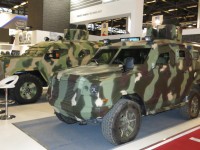
    IAG displayed several armored vehicles recently delivered to the Kurdish Peshmerga in Iraq.

    streit_military_725
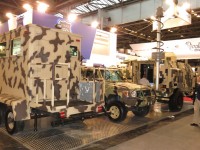
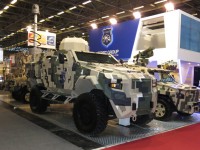
    The growing demand for protection against high threat levels brought Streit to offer the MRAP-class Spartan.

    sherpa_light_police725
    Renault Trucks Defense is also expanding its offering in the high-end law enforcement market with this Sherpa Light APC

    streit_hls_vehicles725
    Streit has grown its market share of armored vehicles providing light armored vehicles to countries armored the world

    titus-milipol_1021
    Aiming at the highest level of protection and tactical mobility, this Titus 6×6 MRAP-class armored assault vehicle is based on the Czech Tatra truck, offering military-level mobility and protection.

    Milipol 2015: Unmanned Vehicles for Homeland Security

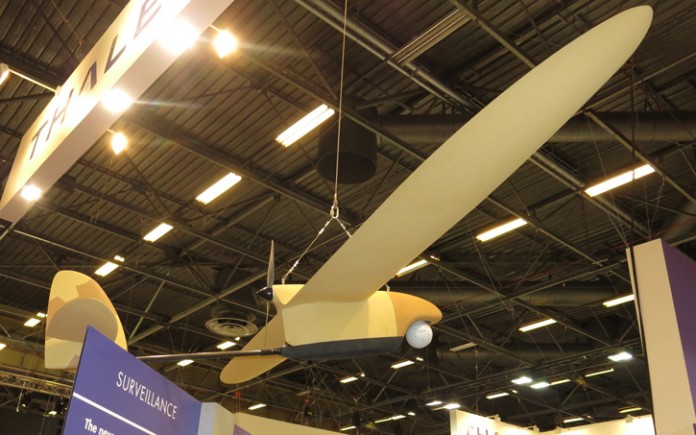
    thales_fixed_wing_surveillance_drone725
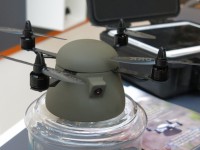
    Thales SpyRanger
    thales_drone_and_payload725
    SpyRanger payload
    thales_quad_security725
    Flysense X4 Secure
    thunderbee_725
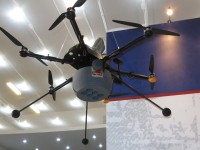
    Thunderbee
    thunderbee_tstamp_payload725
    T-STAMP payload
    skk_microdrone725
    Guardian Angel
    dronecatcher_725
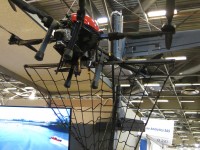
    Malou drone snatcher
    dronefighter725
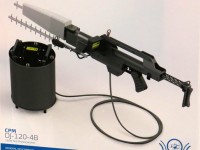
    CPM Drone Fighter
    nlw_payload_ispra725
    Cyclone anti-riot drone
    asn100_aerocougar_725
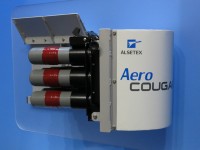
    Aero-Surveillance ASV-150
    aerocougar_725
    Anti-riot drone payload
    jammer_for_minidrones725
    Jammer mini-drone payload
    ezk9_725
    EZ-K9 concealled IED detector
    iris_with_disruptor725
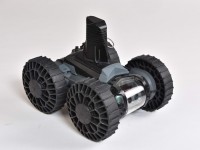
    Mini-robot with disruptor
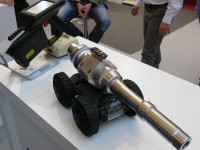
    RAFAEL's Rambot is also based on Roboteam's IRIS. The Rambot employs a grenade size fragmentation charge mounted on the robot. The robot is safely controlled from a distance, through the robotic operation system. Once reaching the target and verifying it, the unit is armed, triggering the fragmentation charge. If the target is not located or cannot be engaged satisfactorily, the Rambot can be retrieved and disarmed.
    Rambot Suicide robot.
    telemax_tracked725
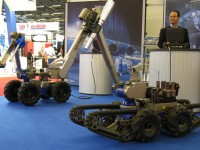
    Tracked TeleMax EOD robot
    telemax_wheeled725
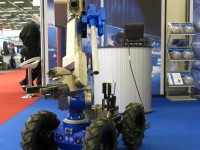
    Wheeled TeleMax

    Please subscribe to view the larger versions of these photos and detailed descriptions.

    Russian Su-24 ‘Fencer’ Shot Down Over Syrian-Turkish Border

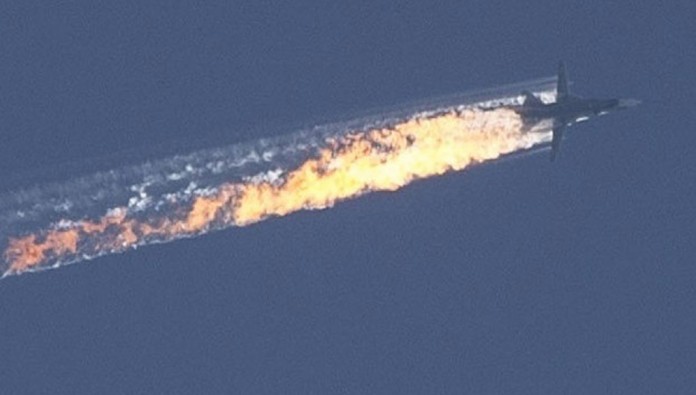
    A Russian Su-24 strike aircraft was shot down today by Turkish Air Force F-16s. The Turks claim the Russian plane was intercepted on the Turkish side of the Turkish-Syrian border. The Russians say it was a deliberate attack against a Russian jet flying south of the border. According to Turkish authorities, the intruder was engaged by an air-to-air missile fired by an F-16 after ignoring repeated, internationally-recognized signs to identify itself and turn back. Defense officials in Moscow have confirmed the loss of one of their jets operating in support of the Syrian regime. The aircraft was at an altitude of 6,000 meters when it was hitby the Turkish missile.

    Russian military sources confirmed that a two-jet formation was in the area, returning to their operating base at Hmeymin after a combat mission against ISIS. One of the jets turned back, while the other was shot down. Both crewmembers ejected from the burning plane. The pilot was shot by Syrian Turkmen rebels, the navigatir escaped and was rescued by a daring Combat Search and Rescue operation that lasted 12 hours. One of the SAR helicopters sent to rescue the pilots took fire from the ground and forced to perform an emergency landing. Once landed, the helicopter was hit again by a TOW guided mossile, killing one of the marines on board.

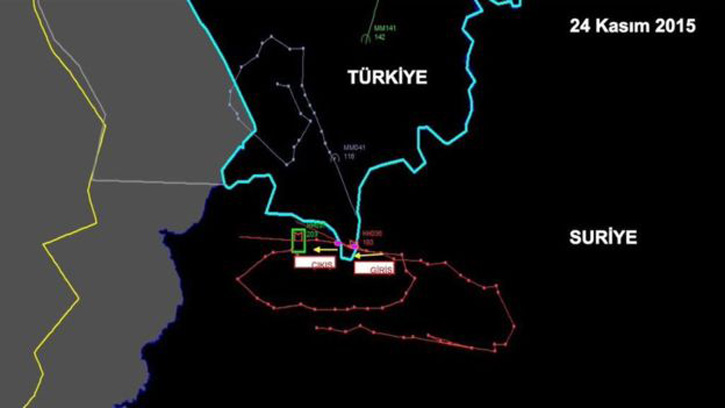
    Tracks of the Russian Su-24 over the Turkish-Syrian border, November 24, 2015. Source: Turkish MOD
    Tracks of the Russian Su-24 (red) and Turkish F-16 (white) over the Turkish-Syrian border, November 24, 2015. The missile launch point is just as the intruder crossed the border, while the location of hit and impact are already on Syrian soil. US sources assessed the Russian jet flew in Turkish airspace lasted only few seconds. The map shows the track of the Turkish jet’s flight until the missile was launched. The Russians say that Syrian air traffic control indicated the Turkish F-16 violated Syrian airspace as well on this engagement. Map source: Turkish MOD
    A Russian Su-24 was downed today by Turkish F-16 jets. Photo: Anadolu Agency/Getty Images[/caption]The Turkish military said the plane was warned 10 times in five minutes. Moscow insisted that the aircraft never left Syrian airspace during its mission – contesting Turkish claims that it was shot down after it crossed into Turkish territory.

    Russian President Vladimir Putin said the downed Su-24 was no threat to Turkey, as it was on a mission to bomb Islamic State targets. The Russian president warned that the attack on the Russian warplane would have “serious consequences” for Russian-Turkish relations, and said that Russia expects NATO to provide explanations about the incident.

    This is a 365 word abstract of 834 words article. Please join our sucbscribers for the full version

    MUSIC Demonstrates Laser DIRCM Capability

    The effect of MUSIC laser based Directed IR Countermeasure jammer protecting a C295 aircraft, demonstrated during NATO EMBOW exercise, October 2015. Photo via Elbit Systems

    The MUSIC family of Directed Infrared Countermeasure (DIRCM) systems was demonstrated recently at the annual, multinational EMBOW exercise held at the Bundeswehr WTD91 test site in Meppen, Germany last month. The annual exercise evaluates different capabilities to protect aircraft against Man Portable Air Defense missile threats (MANPADS).

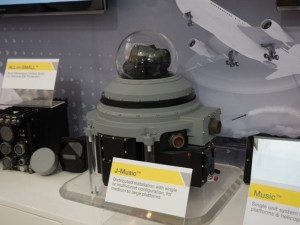
    Elbit Systems JMUSIC DIRCM and PAWS EW systems. Photo: Tamir Eshel, Defense-Update
    Elbit Systems JMUSIC DIRCM and PAWS EW systems. Photo: Tamir Eshel, Defense-Update
    The exercise is conducted under live and monitored and instrumented conditions, by the NATO 3rd NAFAG Air Capability Group SG/2, enabling pilots and engineers to evaluate the capability of aircraft and countermeasures to defeat infrared-guided surface-to-air missiles, from basic Manpads to more advanced surface to air short-range systems (SHORADS).

    As part of the 2015 exercise the Israeli MUSIC DIRCM system was tested, utilizing an operational system integrated on an Airbus C295 aircraft, along with the Passive Airborne Warning System (PAWS) IR-based missile warning system, both systems are made by Elbit Systems.

    During the tests, conducted by a multi-national NATO team, a C295 aircraft with an operationally installed EW self-protection suite successfully demonstrated the capability to detect, acquire, track and jam the trial test equipment on the ground, under extreme conditions. According to the system developers, the initial assessment of the results highlighted that the system has the capability to successfully jam MANPADS (infra- red, ground to air heat seeking Man-Portable Missiles) from the first, second and third generation, using generic NATO jam codes.

    The demonstration was a joint project of Elbit Systems and Airbus Defence & Space (Spain). It was widely supported by the Israeli MoD, the Spanish Air Force and NAFAG ACG3 SG/2 (NATO Air Forces Armaments Group, Air Capability Group 3, Sub Group 2), which is the NATO group responsible for the development and validation of air platform protection solutions.

    Elbit Systems’ MUSIC family of DIRCM systems integrate an advanced fiber laser technology together with a high rate thermal tracking camera and a small, highly dynamic mirror turret to provide effective, reliable and affordable protection to all types of aircraft and under all operational conditions.

    The PAWS family of combat proven missile warning systems uses IR to reliably and rapidly detect the most advanced threats in all flight conditions.

    Elbit Systems is currently under contract to supply more than 110 DIRCM systems to over ten customers, for installation on 20 different fixed and rotary-wing platform types.

    The MUSIC family of DIRCMs have been extensively and successfully tested by various countries and are in full scale production for several NATO customers, including Germany and Italy. In Brazil, Israel and other countries the MUSIC systems are integrated on military, VIP and commercial helicopters and other fixed-wing aircraft. The systems are also fully operational with Israel’s commercial aviation fleet, protecting commuter jet aircraft serving domestic and international destinations.

    UK’s New Rapid Deployment ‘Strike Brigades’ to Deal With Emerging Threats

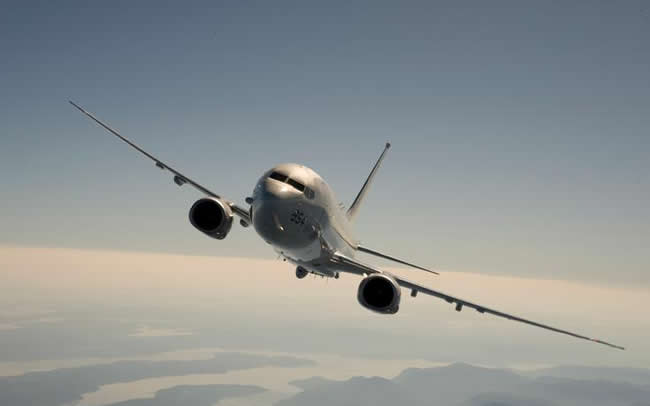
    P-8A Poseidon in flight. Photo: Boeing
    P-8A Poseidon in flight. Photo: Boeing

    The UK is planning a £178 billion investment in defence equipment and support over the next decade, as part of the Government’s five year National Security Strategy and Strategic Defence and Security Review (SDSR). The plan will be presented at the House of Commons later today. “The plan represent a £12 billion uplift in funding, focused on investments that will help to ensure the UK can respond to diverse threats in an increasingly dangerous and uncertain world.” the MOD announced.

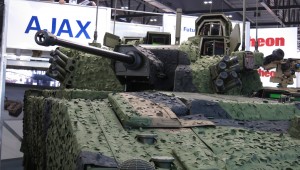
    The new brigades will be equipped with about 600 Ajax vehicles of six different variants.
    The new brigades will be equipped with about 600 Ajax vehicles of six different variants. Photo: Tamir Eshel, Defense-Update

    The last defence review in 2010 is largely remembered for massive spending cuts. The new review will contain a commitment to plug gaps in the UK’s capability, including 138 new F-35B aircraft to fly from the country’s two new Queen Elizabeth class aircraft carriers.

    The plan calls for the establishment of two new ‘Strike Brigades’ by 2025; these formations will be 5,000 manned with warfighters and equipped with some 600 Ajax family of tracked armored vehicles (previously known as Scout) which are already budgeted for procurement. These new formations are likely to be equipped with additional 8×8 wheeled armored vehicles, yet to be selected by the MOD.

    Prepared for rapid deployment, the Strike Brigades will be able to self-deploy over thousands of kilometres, relying on much lower logistic footprint than current formations.

    The increased spending is part of a broader strategic investment in defense and security pursued by the British Government as part of the nation’s alignment to face new threats. “We cannot choose between conventional defences against state-based threats and the need to counter threats that do not recognise national borders.” Prime Minister David Cameron said, “Today we face both and we must respond to both. So over the course of this Parliament our priorities are to deter state-based threats, tackle terrorism, remain a world leader in cyber security and ensure we have the capability to respond rapidly to crises as they emerge.

    Cameron has already said the review will include £2bn over the next five years to bolster Britain’s special forces for the fight against extremist groups such as Isis. It will also double its Reaper drone fleet by 2020.

    Other parts of the investment plan focus on the reactivation of the airborne maritime surveillance, anti-submarine and anti-surface ship warfare, with the acquisition of 9 new Boeing P8 maritime patrol aircraft. “These roles require an aircraft that can carry Torpedoes, as well as being fitted with a broad range of sensors, including radar and sonobuoys. These aircraft are also be equipped to provide search and rescue and surveillance capabilities overland. The UK decommissioned its maritime surveillance force in 2010, scrapping the fleet of Nimrod aircraft.

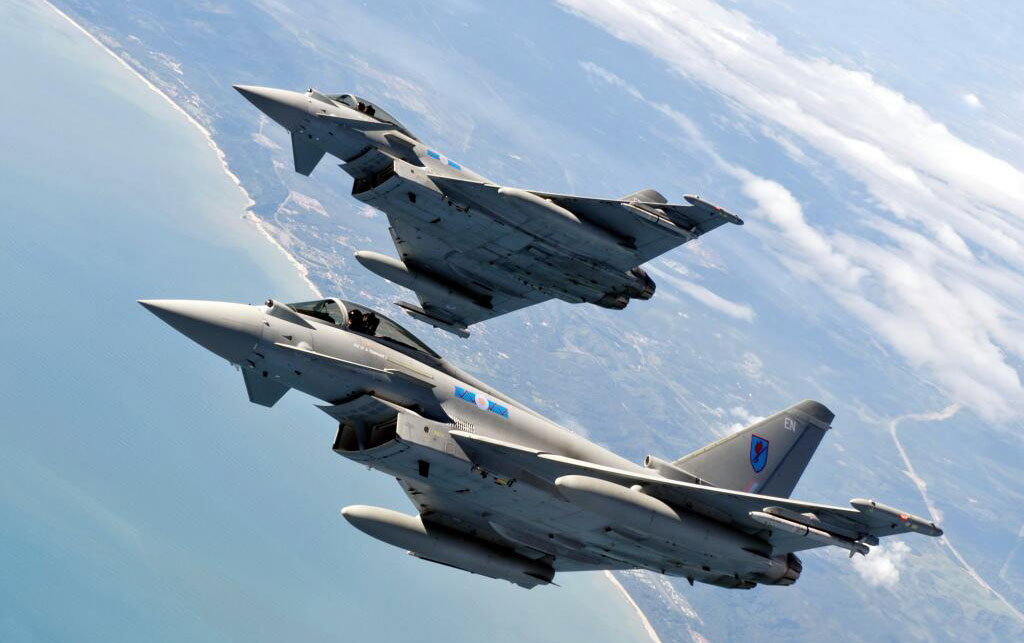
    The Royal Air Force (RAF) will receive life span extension for its current fleet of Typhoon fighters, extending the lifespan for 10 more years, maintaining the aircraft in service through 2040. This plan will enable the RAF to create two additional squadrons. The aircraft will receive full air-ground capabilities and Captor Active Electronically Scanned Array (AESA) radar enabling the planned seven Typhoon squadrons to assume both air/air and air/ground roles.

    No 6 squadron is one of two units stationed at RAF Leuchars as part of the UK quick alert force. Photo: RAF
    No 6 squadron is one of two units stationed at RAF Leuchars as part of the UK quick alert force. Photo: RAF

    Multi-Object Kill Vehicle (MOKV) Begins to Take Shape

    The U.S. Missile Defense Agency (MDA) and Raytheon have completed the first Program Planning Review on the future Multi-Object Kill Vehicle (MOKV) concept, a key step toward defining critical aspects of its design. This milestone ensures that the development plan is aligned with the MDA’s expectations, and on track for an upcoming Concept Review in December.

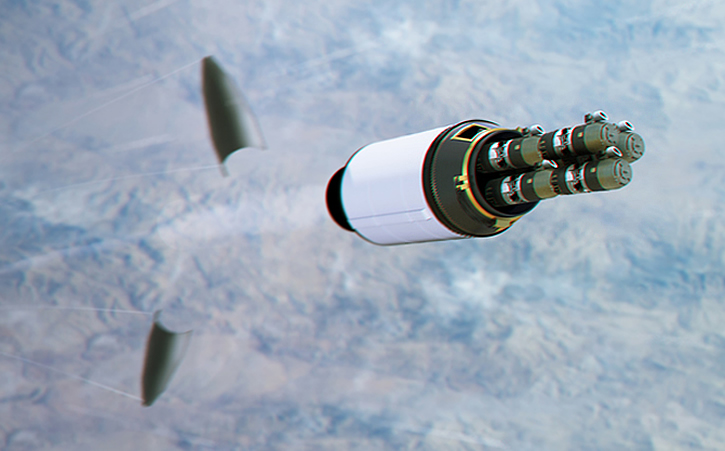
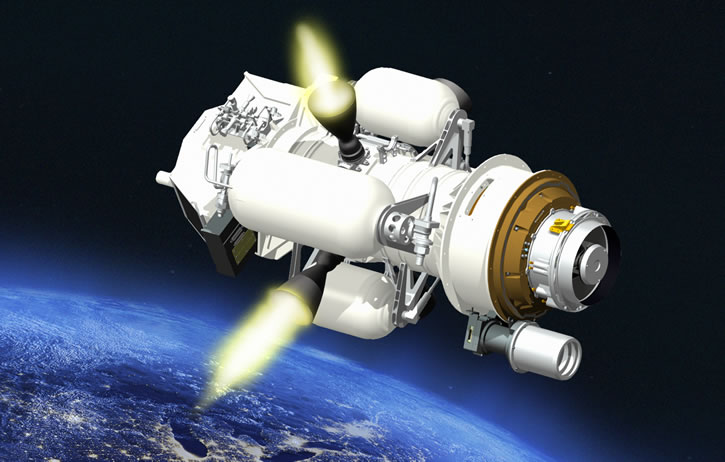
    Each MOKV will steer itself to a target and destroy it. Multiple MOKVs will be loaded on a launch missile such as the Ground-Based Interceptor (GBI). Each interceptor will be equipped with an advanced sensor, as well as divert, attitude-control and communications technologies, to enable each MOKV to home in on an individual target. Based on illustrations released by the company, each interceptor missile will carry a single bus mounting six MOKVs, each utilising its own sensor and diverting thrusters, thus enabling a single interceptor to engage multiple targets – whether real warheads or decoys – with a high probability of success.

    The Multi-Object Kill Vehicle (MOKV) will destroy several objects in space by steering itself to the target and destroying it. Illustration: Raytheon
    The Multi-Object Kill Vehicle (MOKV) will destroy several objects in space by steering itself to the target and destroying it. Illustration: Raytheon
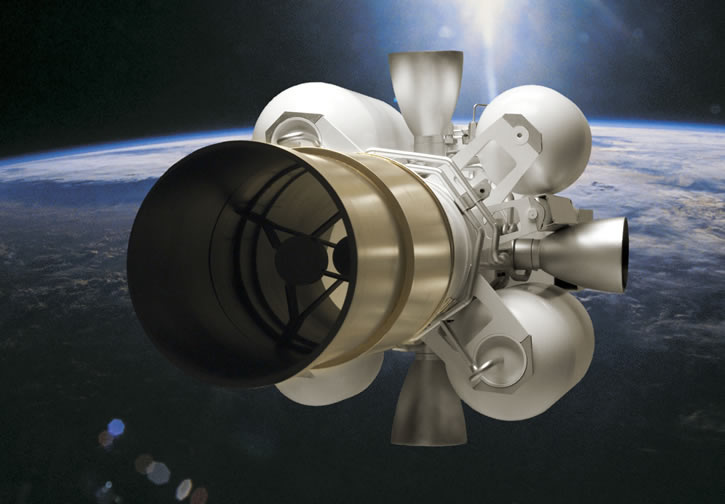
    Raytheon's Exoatomospheric Kill Vehicle (EKV) is the intercept component of the Ground Based Interceptor (GBI). Illustration: Raytheon
    Raytheon’s Exoatomospheric Kill Vehicle (EKV) is the intercept component of the Ground Based Interceptor (GBI). Illustration: Raytheon

    The design work on Raytheon’s MOKV concept is being conducted as part of Raytheon’s Advanced Missile Systems product line, which already has an impressive arsenal of missile-interception systems, some already operational and others, such as the MOKV, still in various stages of development.

    The Ground-Based Interceptor (GBI) missile, a three-stage GBI solid rocket booster, currently carries a single Exoatmospheric Kill Vehicle (EKV), capable of intercepting a single ballistic missile target. In case a threat missile is identified, the EKV can be launched into space. Once outside of the Earth’s atmosphere, operating at the edge of space at hypersonic speeds, the EKV’s job will begin.

    The EKV will seek out the target using multi-color sensors, a cutting-edge on-board computer, and a rocket motor used only for steering in space. It will hone in on its target with pinpoint precision and destroy it by the sheer kinetic forces resulting from the impact.

    The Redesigned Kill Vehicle (RKV) will feature increased reliability, ease of assembly, enhanced performance and decreased cost. (Image depicts notional design.) Illustration: Raytheon
    The Redesigned Kill Vehicle (RKV) will feature increased reliability, ease of assembly, enhanced performance and decreased cost. (Image depicts notional design.) Illustration: Raytheon

    This is the third generation of EKV that Raytheon is developing for the GBI. The first prototype was launched in 1998. The program evolved with several variants, undergoing 10 test flights that suffered quite a few failures until two successful flights, in 2013 and 2014, paved the way for further development and optimization. Currently being upgraded with the CE-II KEV variant, the fleet of GBIs is fully operational at Ft. Greely, Alaska.

    Since the original GBI and EKV vehicles suffered a large number of failures, the GBI/EKV system was considered unreliable. As a result, the Army has chosen to employ a ‘less-than-optimal shot doctrine,’ allocating more interceptors to each target missile, thus diminishing the number of attacking missiles it could intercept with the fleet of 44 GBIs planned to be on alert by 2017.

    The version currently under development is CE-II Block 1, designed to incorporate many improvements implementing lessons learned from past test failures. The first flight test of this missile is expected in 2016. If successful, it will be followed by operational deployment beginning the following year (installed on the next 10 GBI interceptors scheduled for delivery by the end of 2017).
    The reliability problems encountered with the EKV have lead the MDA to seek an alternative in the Redesigned Kill Vehicle (RKV – sometime referred to as EKV CE-III), a modified design that leverages mature, proven components to simplify design and improve reliability. The RKV will also have improved target acquisition and discrimination capabilities and will provide for on-demand communications between the RKV and the Ground-Based Midcourse Defense (GMD) fire control system. The development of this kill vehicle is slated to begin in 2016, and the MDA plans to award the RKV production contract by 2018, leading to initial deployment in 2020.

    Under the more ambitious Common Kill Vehicle (CKV) program, the MDA is seeking to develop new technologies that will improve its exoatmospheric intercept capabilities. The agency had planned to develop a Multi-Kill Vehicle (MKV) as early as 2004, but abandoned the program in 2009 in favor of ‘ascent-phase-intercept’ capabilities considered with forward deployed weapons such as the AEGIS-BMD.

    MOKV, considered as part of that CKV, will therefore revive this plan, with a delay of more than a decade. The definition phase of an operational MOKV concept was launched in August 2015. If successful, by 2030 it could be introduced as a follow-on for the current EKV, enabling a single interceptor to destroy several objects in space. Considered as part of a planned upgrade under the MDA’s CKV program, MOKV will be able to enhance US missile-defense architecture without increasing the number of deployed interceptors, or even reducing the interceptor inventory required to defeat an evolving and more capable threat.

    Raytheon has also developed a different ‘hit-to-kill’ vehicle for several Standard-Missile 3 interceptors. These missiles are part of the U.S. Navy defensive shield, designed to destroy short- to intermediate-range ballistic missile threats.

    The design work on Raytheon’s MOKV concept is being conducted as part of Raytheon’s Advanced Missile Systems product line, which is responsible for the production of the EKV and the Standard Missile 3, as well as the development of the RKV.

    The SM-3’s exoatmospheric vehicle collides with its target to obliterate the threat without the need for explosives. The resulting impact is the equivalent to a 10-ton truck traveling at 600 mph. Illustration: Raytheon
    The SM-3’s exoatmospheric vehicle collides with its target to obliterate the threat without the need for explosives. The resulting impact is the equivalent to a 10-ton truck traveling at 600 mph. Illustration: Raytheon

    Explosive Detection – Beyond the Gateway

    Terror attacks directed at air transport have forced airport authorities worldwide to implement extensive security inspection of passengers and cargo. These measures have required the installation of large, complex and expensive, ultra-sensitive explosive detection systems at airports. Whether fully automated or manually-assisted, these systems inspect cargo, hand baggage and personnel as they move into a ‘sterile zone’ likely to be clear of weapons or explosive threats. The goal of these measures is to eliminate even the slightest chance of terrorists smuggling explosive devices or weapons onto aircraft.

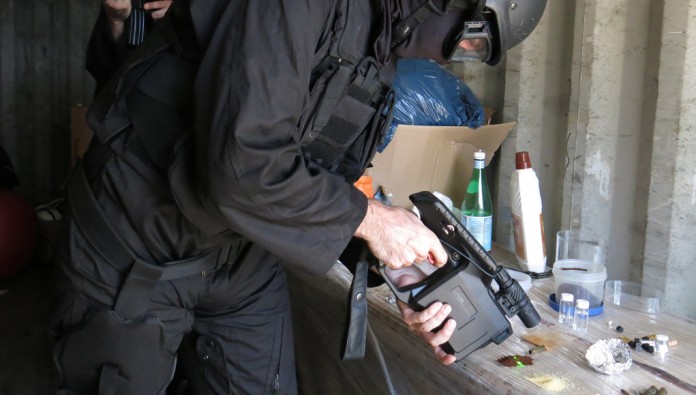
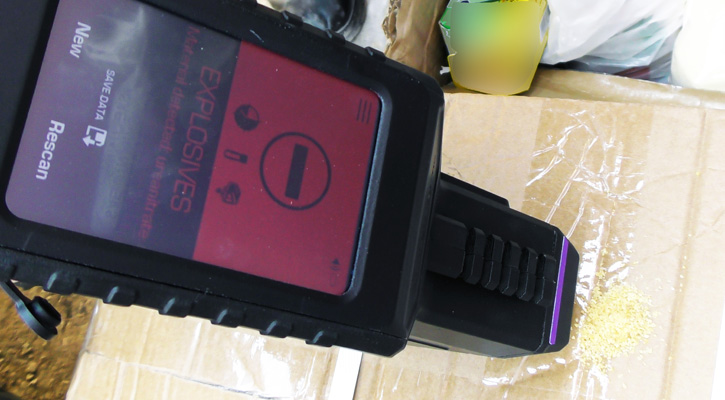
    G-SCAN uses laser Raman Spectroscopy to detect explosive substances or explosive precursor materials in liquid, bulk or powder form. Photo: Laser detect Systems
    G-SCAN uses laser Raman Spectroscopy to detect explosive substances or explosive precursor materials in liquid, bulk or powder form. Photo: Laser detect Systems

    But terrorists don’t sit by idly either; they expend huge efforts on finding new ways to outsmart or bypass the scanners. Several attempts that have fortunately been thwarted have included concealing hybrid explosives in liquid form, or cached within organic materials; other explosive materials have been concealed in shoes or body cavities — all in an attempt to exploit the known weaknesses of existing security inspection systems. Each new threat uncovered has required the adoption of new security measures to close the gap.

    While the installation of large, ever-more-sophisticated, inspection systems helps tighten overall security at airports, these expensive, bulky and complex systems cannot be placed everywhere. Particularly vulnerable are small airports, serving low-cost carrier destinations.

    With sensors becoming smaller, more sophisticated and more affordable, new explosive detection systems are being introduced as portable, hand-held devises. These devices are simple to use and can be operated by security agents as effective, powerful means of extending security measures from security gates into the ‘sterile zone,’ at the terminal area, throughout the operational area and in transit hubs.

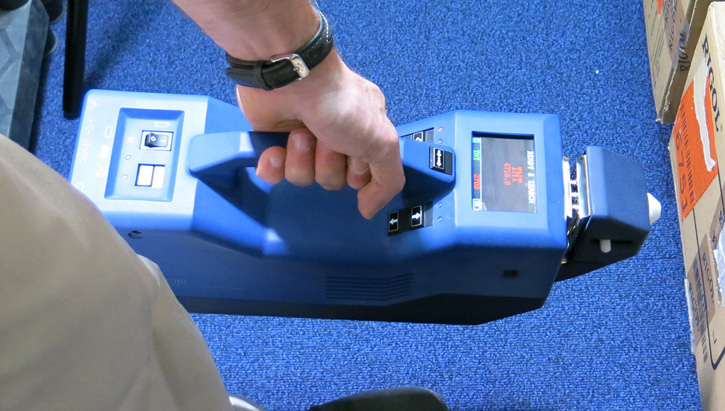
    I-SCAN_10_725
    The I-SCAN handheld trace detector can sense very small quantities of explosives’ particles and vapor, utilizing Ion Mobility Spectrometry methods. Photo: Laser Detect Systems.

    Another issue with which current security systems often fail to deal is the insider threat. Security gates or baggage inspection systems, however big and sophisticated, often fail to detect potential threats from employees or suppliers that have access to the operational area. Some of these people could be associated with or assisting in the perpetration of illegal activities – such as the smuggling of drugs, contraband etc.

    These criminals become weak links when they are linked to terrorists. Motivated by cultural, social, ideological or financial considerations, insider threats are hard to detect. Although background checks can indicate the evolution of potential dangers, routine, snap checks throughout airports can elevate security within the protected perimeter, potentially deterring and disrupting terrorist plans and preparations to carry out attacks. That’s where these new, portable, explosive and drug detectors can become critical.

    Sophisticated, ultra-sensitive sensors that have, until recently, been available only at specialized chemical labs, are now offered in lightweight, hand-held configurations, capable of performing ultra-sensitive tests within seconds. Based on different spectrometry methods, such cutting-edge sensors can be used, individually or in sync, to conduct random security checks on passengers, cargo and baggage anywhere, anytime. They can also be used for the routine inspection of airport employees, in operational areas, and within areas considered ‘sterile zones.’

    sphere_011_725
    Tracking the movements of explosive precursors enable security and intelligence agencies the ability to track the ‘evolution of bombs’, indicating anomalies in the transportation and stockpiling of sensitive materials. These SPHERE systems, supplied by Israel’s LDS, are used in snap roadblocks to detect and track such activities. Photo: Laser detect Systems.

    Sensors based on Laser Raman Spectroscopy enable the rapid, highly-sensitive detection of explosives; this technology ensure high probability of detection, with low false-negative/false-positive results; sensors such as those introduced by Israel’s explosive detection specialist Laser Detect Systems (LDS) can be used by security personnel with minimum training to provide clear and accurate identification of any known explosive substance or precursor.

    Such systems can also inspect aircraft cargo bays, prior to or after the loading of baggage or supplies. Different sensors, employing Ion Mobility Spectrometry (IMS), can be used to detect trace materials, as well as vapors, inside containers, to accelerate the testing of cargo or baggage before or after being loaded on board.

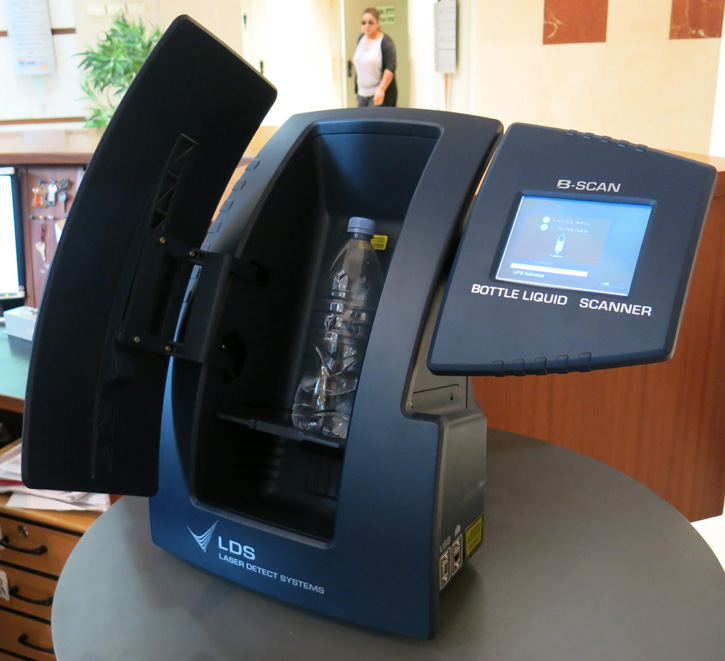
    Terrorists often use illusive compounds that are not detected by ordinary scanning processes. Widely used compounds, such as TATP and PETN, are transported in liquid form, undetectable by conventional X-ray systems. That’s why the carriage of liquids is forbidden on most flights. New sensors, using Laser Raman Spectroscopy configured as Bottled Liquid Explosive Detection Systems (BLS), are now available as stand-alone or in-line desktop systems, beefing up existing security inspection lines with detection capabilities formerly characteristic of only the largest, most expensive central systems.

    B-SCAN_07_725
    New sensors such as this B-SCAN from LDS, are using Laser Raman Spectroscopy, configured as Bottled Liquid Explosive Detection Systems (BLS). Photo: Laser-Detect Systems (LDS)

    These new sensors utilize cutting-edge sensing technologies that miniaturize complex chemical laboratory analysis systems into field-deployable devices. Relying on computerized processing, system automation and advanced man-machine interface, these devices enable ordinary policemen and soldiers to effectively and reliably detect explosive materials.

    Networked into larger security and intelligence systems, those hand-held explosive detectors, when widely distributed to field agents, can provide essential intelligence data indicating the movement of explosives and precursory materials, or identify traces of explosives on vehicles, containers or materials. The use of hand-held trace detection systems would also enable law-enforcement agents to detect people involved in the handling of explosives. Tracking the movements of such substances would enable intelligence agencies to track the ‘evolution of bombs,’ by indicating anomalies in the transportation and stockpiling of sensitive materials that could be turned into devastating explosive devices.

    Terra – Israel’s Strategic Multi-Radar System-of-Systems for Air- and Missile-Defense from IAI

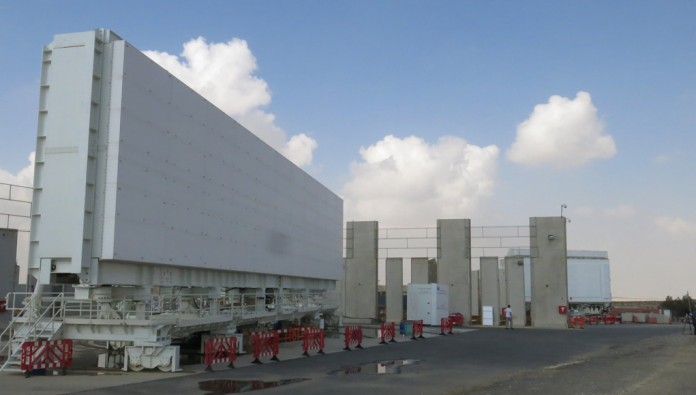
    Israel Aerospace Industries (IAI) today unveiled the ELM-2090S Spectra ‘mega radar,’ an ‘S band’ ‘companion’ to the Ultra UHF radar system introduced a few months ago at the Paris Air Show. The two radars are apparently part of a new, strategic, early-warning and defense system which has already become operational overseas. The dual-band, multi-radar, early- warning and missile-defense ‘system of systems,’ known as “Terra,” is designed to offer extended air- and missile-defense coverage against new and evolving ballistic missile threats that are becoming more capable, covering longer ranges at higher speeds, which require new capabilities for missile warning and defense.

    Comprising a Dual-band Radar Array (DRA), Terra is optimized for early-warning, detection and accurate tracking of very long range targets such as ballistic missiles, satellites and air-breathing vehicles. Combining the long-range capabilities of the UHF radar and the high resolution offered by the S-band radars, Terra offers very long range and large volume search, accurate tracking and target classification for all object types – ballistic missiles, satellites and air breathing targets, including low Radar-Cross-Section (RCS) class (stealth) targets. In addition to target detection and tracking, Terra also provides accurate prediction of impact and launch point estimation.

    “Ballistic and cruise missiles present a significant global threat to nations worldwide,” explained Mr. Nissim Hadas, IAI Executive VP & ELTA President. “The TERRA system provides outstanding performance for its users for very long range early warning, detection and highly accurate tracking. It is designed to confront the full range of modern threats, as the new SPECTRA radar is based on the most advanced modern technology and provides unique capabilities and excellent operational results, placing it among the best radars worldwide.”

    According to Moshe Dehokerker, Business Development dept. manager at Elta Systems, this early start positions IAI 3-5 years ahead of international competitors producing strategic air- and missile-defense radars of this type. The Spectra radar is also the first ultra-large-scale radar relying on Elta’s Gallium-Nitride transmit-receive modules, which offer great advantages in power and size optimization. According to Dehokerker, this early start positions IAI 3-5 years ahead of international competitors producing strategic air- and missile-defense radars of this type. The Spectra radar is also the first ultra-large-scale radar relying on Elta’s Gallium-Nitride transmit-receive modules, which offer great advantages in power and size optimization.

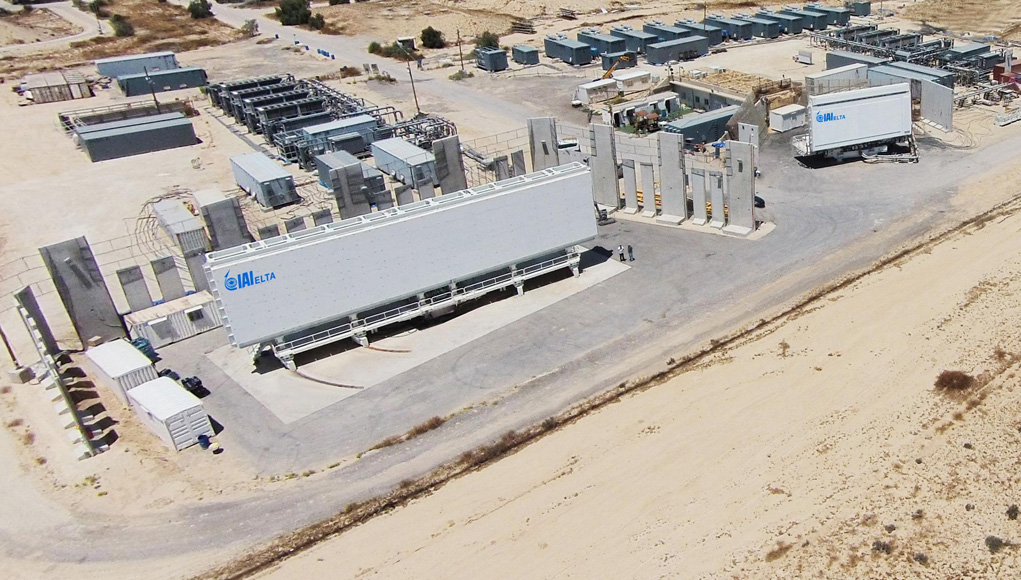
    An airborne view of the Terra test site, where integration testing of the IAI Elta TERRA dual-band multi-radar system is taking place. Photo: IAI
    An airborne view of the Terra test site, where integration testing of the IAI Elta TERRA dual-band multi-radar system is taking place. Photo: IAI

    This article includes 517 of 897 words of the original version. For the more detailed version of the Terra article, please subscribe.

    IAI Extends Panther’s Endurance, Positioning the VTUAV to Address South Korean Surveillance Needs

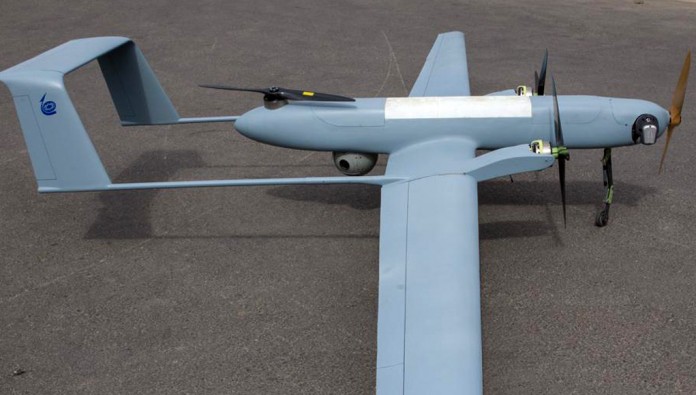
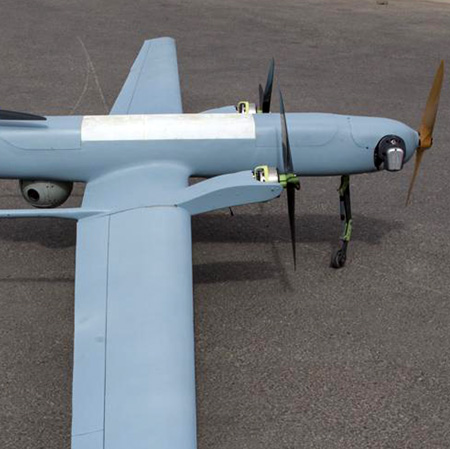
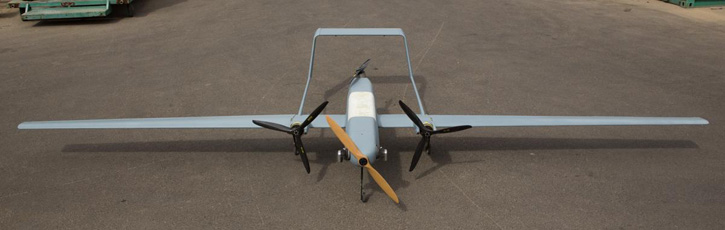
    Updated February 3, 2016: Israel Aerospace Industries (IAI) is unveiling a new variant of its Panther Vertical Take Off and Landing (VTOL) UAV, equipped with a hybrid propulsion system integrating electric and internal combustion engines. The drone, displayed by the Korean Hankuk Carbon company, is designated ‘Front Engine Panther’ (FE-Panther) and is the latest development of IAI’s Panther family.

    “Cooperation with Hankuk Carbon is a real opportunity to develop new capabilities and to pursue new business opportunities,” Ofer Haruvi, CTO of IAI’s Military Aircraft Group said. “This cooperation will be beneficial to the Republic of South Korea’s military and civilian authorities.”

    IAI and Hankuk Carbon are marketing the FE-Panther to South Korean governmental entities under a Memorandum of Understanding (MoU) signed between the two companies, pursuing the feasibility study of the concept of a VTOL UAS for South Korean requirements.

    According to Moon-Soo Cho, CEO of Hankuk Carbon, the new drone will be tailor-made to meet local requirements, which demand independence from runways in Korea’s mountainous region.

    tilt_rotors_minipop450
    FE-Panther uses a hybrid propulsion system integrating three electric motors (two tilting and the fixed tail motor) with a single internal combustion engine, enabling the drone to fly missions for up to eight hours carrying payloads weighing six kg. Photo: IAI

    The new variant weighs 67 kg. – only two kilograms more than the existing three-motor Panther. Hankuk Carbon provides the fuselage assembly, made of lightweight composite materials, and some sub-systems.

    The hybrid propulsion system enables users to employ two different power sources – the tilting electrical motors are optimal for vertical takeoff/landing and hovering, while the internal-combustion engine is employed for cruising.

    The new propulsion system extends the mission endurance of the Panther by 33%, maintaining the same payload capacity (6 kg.) as the all-electric version.

    “To develop and manufacture this VTOL UAV for Korean civil and military uses, and to meet the different needs of potential customers, both companies are also working on the joint development of another hybrid propulsion system,” Moon-Soo Cho added. “This strategic partnership will become a major manifestation of the Korean government’s policy of creative economy.”

    fe_panther_front_725
    At 67 kg of weight, FE Panther weighs only two kilograms more than the all-electric Panther launched by IAI in 2010. Photo: IAI

    Iran Unveils Underground Bases Supporting IRGC’s Ballistic Missiles

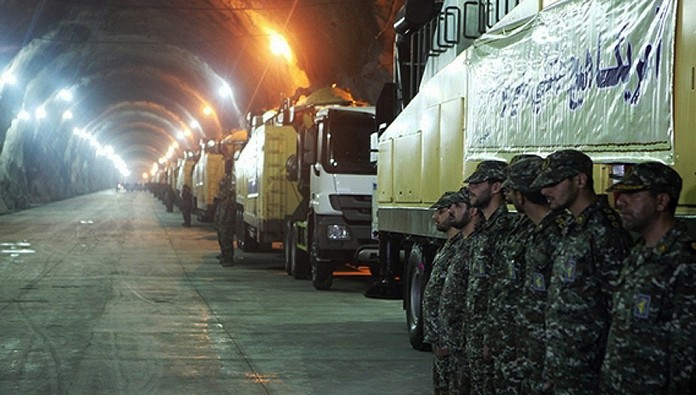
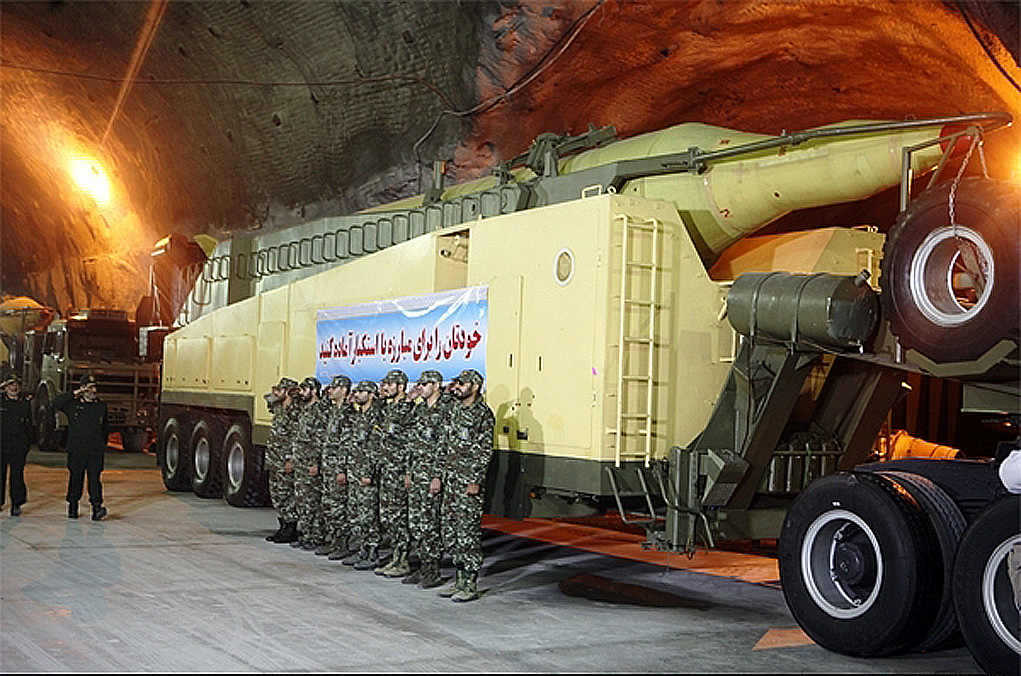
    Shahab 3 ballistic missiles stored in underground tunnels, where they are protected from enemy intelligence collection or attacks. Photo: FARS News
    Carved in soft chalk rocks, the tunnels are spacious and high enough to support simultaneous parked and moving missile carriers .
    Carved in soft chalk rocks, the tunnels are spacious and high enough to support simultaneous parked and moving these Shahab 3 missiles.

    Iran unveiled today one of several underground missile bases where the country’s Revolutionary Guards’ Corps (IRGC) ballistic missile units are based.

    Such facilities comprise a network of interconnected tunnels, fitted with concrete paved surfaces enabling rapid and efficient transportation of missiles from storage areas to launch points. The missiles are Launched from large underground launched pads supporting the erection, fuelling and launching of missiles.

    According to Iranian sources, ballistic missiles are stored in a number of these facilities, located in different regions throughout Iran, at depth up to 500 meters under the surface. Iran typically operates such missile bases in hilly or mountainous areas, each site is fed through multiple entry and exit points; launch pads are often located under roofed structures which may also ‘hide’ plain surfaces for deception. The whole endeavor aims to eliminate enemy intelligence collection and early warning by using earth observation assets such as satellites and unmanned aerial systems.

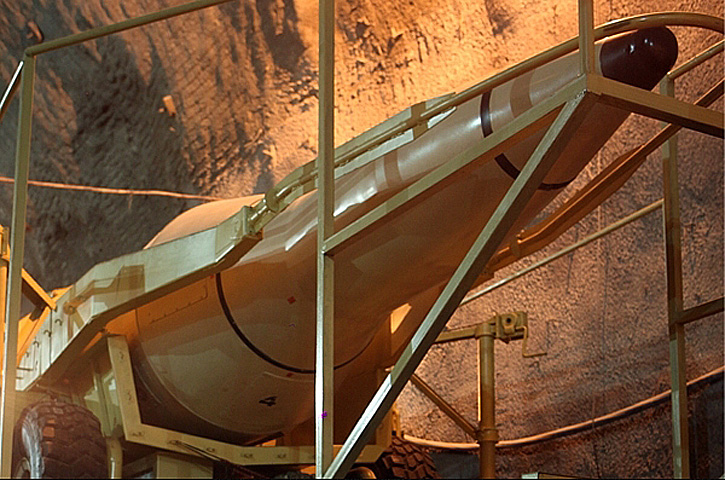
    A missile silo accommodating a ballistic missile (likely a Qiam missile) on a static, underground launch pad.
    A missile silo accommodating a ballistic missile (likely a Qiam missile) on a static, underground launch pad.

    Having multiple launch pads per base can support the fuelling of several liquid-propelled missiles – a relatively lengthy process that normally compromise those missiles to enemy preventive attack. By conducting such operation underground, the Iranian missile operators can prepare liquid-propelled missiles (such as Shahab 3 and Ghadr) without exposing their missiles to the enemy. Such deep underground also protect these strategic assets from enemy air attacks.

    The large tunnels provide ample storage areas for ready-to-launch missile transporters, moved to their launch pads by prime movers. The launch pads are quickly prepared for new missiles, as they provide merely the level surface for standard trailer-mounted erector-launchers. This process is more efficient than the launch silos, employed for non-transportable missiles, which require lengthy reloading after each launch.

    IRGC’s strategic missile force also relies on launch silos, the first was unveiled in 2011.

    Shahab 3 ballistic missiles stored in underground tunnels, where they are protected from enemy intelligence collection or attacks. Photo: FARS News
    Shahab 3 liquid-fueled ballistic missiles stored in underground tunnels, where they are protected from enemy intelligence collection or attacks. Photo: FARS News

    Americanized RPG-7 is Ready to Serve

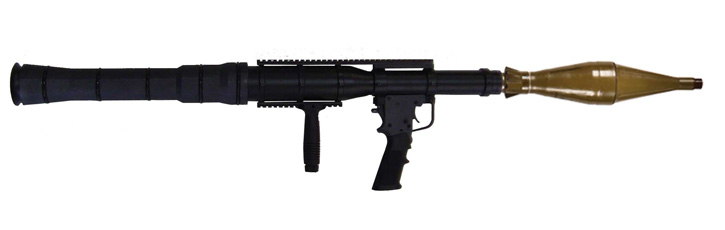
    The US weapon manufacturer AirTronic USA is offering its Precision, Shoulder-fired Rocket Launcher (PSRL), anticipating future requirements for simple and effective weapon systems for asymmetric warfare in complex terrain.

    AirTronic USA’s answer for these requirements is the ‘Americanized’ version of the Russian-designed Rocket Propelled Grenade launcher – the RPG — a low-cost, reusable, safe and reliable weapon system, of which over 9 million units are in use with military and insurgent forces worldwide.

    The US manufacturer is introducing two new models at the AUSA exhibition in Washington this week, along with a new range of ammunition that extends the weapon’s effective range to beyond 2,500 ft. (800 meters). At a weight of 14 lb. (6.35 kg.), PSRL-1 is slightly lighter than the basic RPG-7V2. However, the more advanced GS-777 model weighs only 7.77 lb. (3.5 kg.) – almost half the weight of the original RPG.

    CS-777 lightweight PSRL from AirTronics USA. Photo: AirTronics USA
    CS-777 lightweight PSRL from AirTronics USA. The bare weapon weighs only 3.5 kg (7.77 lbs) Photo: AirTronics USA

    The first new design that will enter production by the second quarter of 2016 is the PSRL-1, which emulates the company’s RPG-7-compatible system. It will be equipped with a new sighting system that combines an illuminated reticule for use in low light situations. The second model, PSRL-2, will be based on a new design that will improve durability and extend its life cycle (the current version can fire 1,000 rockets).

    Both weapons will use the Eotech optical red-dot sight and will be able to be fitted with magnifying optical sights for accurate, long-range firing. In order to make the PSRL more familiar with users accustomed to the M16/M4 rifles, AirTronic offers the PSRL-1 with M16/M4-style buttstock and grip. Picatinny rails are also used, mounting sights and accessories.

    The PSRL weighs 6.85 kg (14 lbs) without ammunition or sight. It has three picatinny rails to mount accessories and sights. Photo: AirTronics USA
    The PSRL weighs 6.85 kg (14 lbs) without ammunition or sight. It has three picatinny rails to mount accessories and sights. Photo: AirTronics USA

    Unlike cast parts used in RPG weapons, the PSRL tubing is machined of 4140/4150 ordnance-grade steel for extended life cycle and high durability. The new launcher integrates AirTronic’s custom-designed optical sight that enable users to hit targets at a distance of 2500 ft. (800 meters) with 90 percent probability of hit with the first round – more than twice the distance of other RPGs. Further improvements will introduce guided RPG rounds and other enhancements that could extend the weapon’s reach to 6,250 ft. (2,000 meters).

    This superior accuracy is the result of the improved weapon design, ammunition quality and sighting systems. AirTronic USA is also planning to offer a new line of 40 mm. HEAT rounds weighing 4.5 lb. (2 kg.) and thermobaric rounds weighing 10 lb. (4.53 kg). These new ammunition types, designed specifically for its launchers, are to be produced in the USA by Chemring Ordnance. This arrangement will enable the DOD to acquire the weapons and ammunition for Foreign Military Sales and Train and Equip programs. Chemring is already producing all types of 40 mm. Low- and High-Velocity grenades for the US Army.

    RPG-7 weapons are often included in military support programs financed and supported by the US Military and SOCOM, such as the training and equipping of the Afghan National Army (ANA), Iraqi security forces and Syrian rebels, to name only a few. Until now, the Pentagon procured these weapons from Eastern European producers, primarily in Poland and Bulgaria; ammunition had to be sourced from different suppliers worldwide, since US manufacturers did not produce ammo for the Russian weapon.

    Originally developed and produced by the Russian company Bazalt, the RPG-7 became so popular for its simplicity, durability and effectiveness. The original Russian-designed weapon was licensed to 11 foreign manufacturers, and copied by others, and is currently used by numerous military forces, insurgents, outlaws and terrorists worldwide.
    According to AirTronics, their approach was to take the basic geometry of the RPG-7, using different materials which enabled the company to make it lighter, safer and more effective.

    AUSA 2015: Combat Vehicles Integrate Advanced Automotive, Protection Technologies

    Oshkosh Introduces an M-ATV Squad Carrier

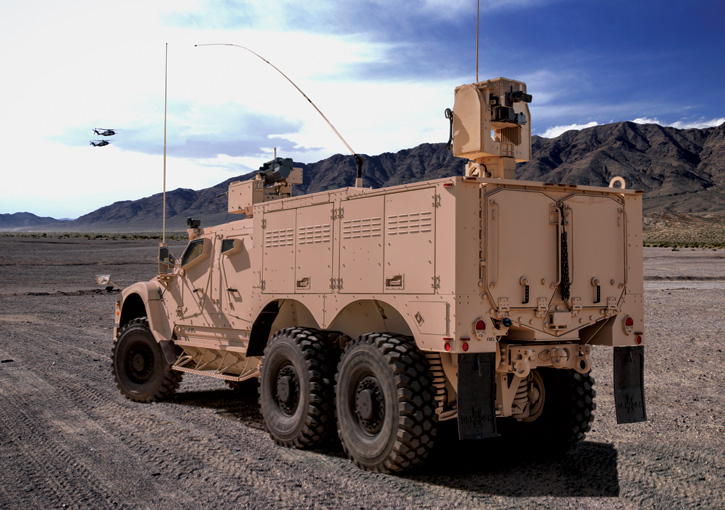
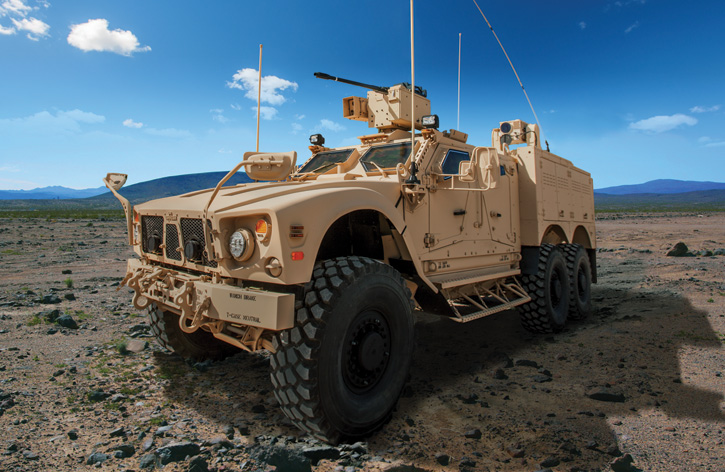
    Oshkosh unveiled the MRAP All-Terrain Vehicle (M-ATV) 6×6 Technology Demonstrator today, at AUSA 2015. The vehicle introduces an extended platform, based on the proven M-ATV, providing more interior volume for a full infantry squad – up to 15 soldiers, as well as greater payload capacity. Retaining the M-ATV superior off-road mobility and maneuverability, the 6×6 variant uses all-wheel steering for exceptional maneuverability. The vehicle also retains Oshkosh’s TAK-4 independent suspension for all wheels.
    M-ATV-6x6-Rear725
    The 6×6 M-ATV is designed to carry a full infantry squad and equipment. Photo: Oshkosh Defense

    The 6x6 M-ATV is designed to carry a full infantry squad and equipment. Photo: Oshkosh Defense
    The 6×6 M-ATV is designed to carry a full infantry squad and equipment. Photo: Oshkosh Defense

    The Oshkosh Corporation is also featuring the winning Joint Light Tactical Vehicle (JLTV) at the exhibition held in Washington DC this week. Oshkosh’s JLTV is the next-generation light military vehicle which will deliver an exceptional combination of troop protection, transportability, off-road mobility, speed, power and life-cycle value.

    “The JLTV program fills a critical capability gap for the U.S. Army and Marine Corps by replacing a large portion of the legacy HMMWV fleet with a light, tactical vehicle with far superior protection and off-road mobility,” said U.S. Army Major General (Retired) John M. Urias, executive vice-president of Oshkosh Corporation and president of Oshkosh Defense.

    JLTV offers a platform 1/3 smaller and lighter than M-ATV, yet offering the same ballistic and blast protection, with off-road mobility and speed 70 percent faster than M-ATV. The JLTV is transportable by air and sea, in C-130 tactical transport aircraft, as well as in CH-53 and CH-47 helicopters. JLTV is network ready and VICTORY compliant.

    For the new JLTV, Oshkosh Defense has developed the CORE 1080 crew protection system, a fully-integrated engineering process designed to deliver full and comprehensive crew protection. The system comprises the hull design, armor materials, a fire-extinguishing system, and energy-absorbing floors, seats and restraint systems for crew members and stowage. Core 1080 also incorporates ergonomic and vulnerability analysis for engineering optimization to determine the location of crew seats.

    40mm Missile Extends Grenade Launcher’s Range Beyond 2,000 Meters

    Pike will become smarter and smarter as we continue to develop its capabilities

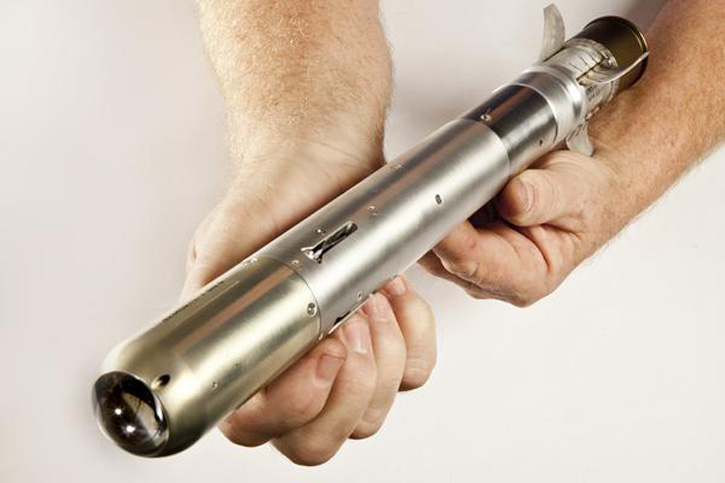
    Raytheon Company successfully fired two Pike 40 mm precision-guided munitions from a standard tube grenade launcher during flight tests at Mile High Resources in Texas. Both rounds landed within the targeted impact area after flying more than 2,300 yards. (2.1 km). Weighing less than two pounds and measuring just 16.8 inches (42.6 cm) in length, Pike can be fired from a conventional, single-shot grenade launcher such as the M320 or EGLM (Enhanced Grenade Launching Module). The maximum range of M320 grenade launcher is 437 Yards (350 meters).

    pike_40_725
    Pike uses a digital, semi-active laser seeker to engage both fixed and slow-moving, mid-range targets. The missile’s rocket motor ignites eight to 10 feet after launch and is nearly smokeless for reduced launch signature. Photo: Raytheon

    “Pike uses a digital, semi-active laser seeker to engage both fixed and slow-moving, mid-range targets,” said J. R. Smith, Raytheon’s Advanced Land Warfare Systems director. “This new guided munition can provide the warfighter with precision, extended-range capability never before seen in a hand-held weapon on the battlefield. Pike will become smarter and smarter as we continue to develop its capabilities,” said Smith. “In the current configuration, the warfighter will enter programmable laser codes prior to loading Pike into its launcher. Spiral development calls for multiple-round simultaneous programming and targeting with data link capabilities.”

    Pike’s rocket motor ignites eight to 10 feet after launch and is nearly smokeless for reduced launch signature.

    Additional Pike upgrades include the ability to fire it from platform-mounted launchers on small boats, all-terrain vehicles and small unmanned aircraft systems. The missile will extend the effective range of grenade launchers currently reaching 1,600 yards (1.5 km) using ballistic computing sights.

    Skunk Works and XTEND Simplify Multi-Drone Command

    0
    Lockheed Martin Skunk Works® and XTEND have achieved a major milestone in JADC2 by integrating the XOS operating system with the MDCX™ autonomy platform. This technical breakthrough enables a single operator to simultaneously command multiple drone classes, eliminating the friction of mission handoffs. From "marsupial" drone deployments to operating in GPS-denied environments, explore how this collaboration is abbreviating the data-to-decision timeline and redefining autonomous mission execution.

    From Ukraine to Taiwan: The Global Race to Dominate the New Defense Tech Frontier

    0
    As traditional defense primes face mounting competition from agile “neoprimes” such as Anduril, Palantir and Helsing, the balance of innovation is shifting toward software-defined warfare and scalable, dual-use technologies, while global industry consolidation—marked by Boeing’s integration of Spirit AeroSystems and other strategic mergers—signals an intensified race to secure control over the defense technology value chain. Our Defense-Tech weekly report highlights these trends.

    Europe’s “Drone Wall”

    0
    In early October 2025, a coordinated wave of unmanned aerial system (UAS) incursions—widely attributed to Russia—targeted critical infrastructure across at least ten European nations. The unprecedented campaign exposed the fragility of Europe’s air defenses...

    Weekly Defense Update & Global Security Assessment

    0
    Executive Summary The past week (September 18-25, 2025) represents an inflection point where strategic defense concepts have transitioned from doctrine to tangible reality. An analysis of global events reveals four primary, interconnected trends shaping an...

    U.S. Air and Space Forces Push Next-Gen Programs at the AS&C 2025 Conference and...

    0
    At the 2025 Air, Space & Cyber Conference, U.S. Air Force and Space Force leaders unveiled major updates on next-generation fighters, bombers, unmanned systems, and space initiatives, highlighting both rapid innovation and critical readiness challenges as the services race to outpace global competitors. A short version is available here, with a more detailed version for subscribers.

    TADTE 2025: Reflecting Taiwan’s Strategic Themes

    0
    The Taipei Aerospace & Defense Technology Exhibition (TADTE) 2025 crystallized around four dominant strategic themes that collectively illustrate Taiwan's comprehensive approach to defense modernization amid escalating regional tensions. Based on a detailed report by Pleronix (available upon request). Includes a Podcast discussion on TADTE 2025's highlighting Taiwan's four strategic themes beyond the post's coverage.

    Iron Beam 450 Completes Testing, Soon to Join With Operational Air Defense Units

    0
    Israel’s Iron Beam 450 high-power laser system has completed final testing, marking a major leap in air defense. Developed by Rafael, it offers precise, cost-effective interception of rockets, UAVs, and mortars, and is set for IDF deployment by 2025.