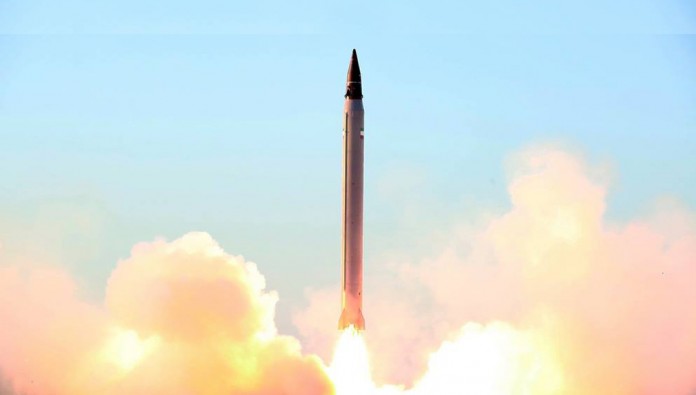
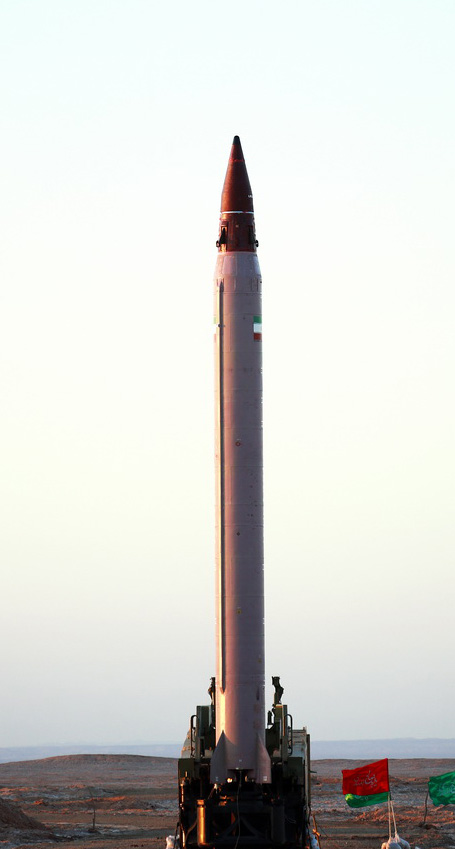
Iran’s EMAD ballistic missile carries a single Maneuverable Re-Entry Vehicle (MARV) loaded 750 high-explosive warhead. Photo: Iran’s MOD
Iran has successfully test fired a new, domestically-produced, medium-range ballistic missile, named Emad (pillar, in Farsi). “This is Iran’s first medium-range missile that can be guided and controlled until hitting the target,” Iran’s Defense Minister Hossein Dehghan was quoted as saying. According to analyst estimates the new missile could be ready for service next year.
The Islamic Republic of Iran already has surface-to-surface missiles with ranges of up to 2,000 kilometers that can hit Israel and US military bases in the region. The new missile seems to be a derivative of these liquid-propelled Ghadr and Shahab missiles. This Medium-Range Ballistic Missile (MRBM) is also powered by liquid-fuel and; according to unconfirmed sources, it has a range of up to 1,700 km., (1,060 miles) carrying a payload of 750 kg (1,650 pounds). Its accuracy is estimated at 500 meters (1,650 ft), compared of 2,000 meters (1.2 miles) accuracy achieved by the current Shahab 3 missile.
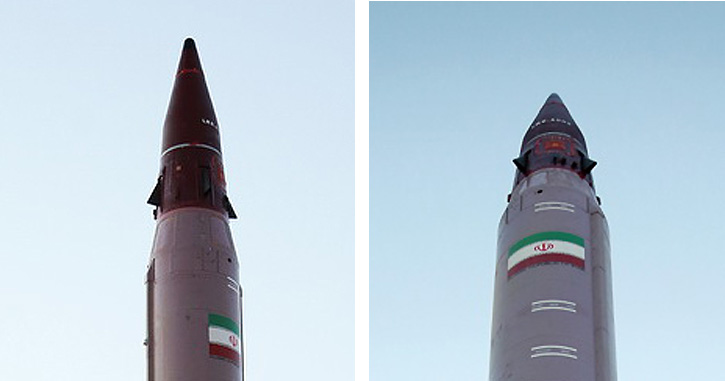
Unlike its predecessors, the new model is equipped with a re-entry vehicle which integrates a guidance system that controls four aerodynamic surfaces for endo-atmospheric flight, and thrusters which can adjust the vehicle’s exo-atmospheric trajectory, before it re-enters the earth’s atmosphere.
Two views of the new MARV employed on the EMAD ballistic missile. Photo: Iranian MOD
In order to gain higher precision, EMAD likely integrates inertial and satellite navigation systems with aerodynamic and propulsion control to guide the re-entry vehicle to its target. Potentially, with these capabilities also enable the reentry vehicle to dodge interceptors, posing a new challenge for missile defenses
Over the course of the ongoing wars in Iraq and Afghanistan, roadside Improvised Explosive Devices have become the scourge of the United States military’s ordinance disposal units. The IED is a staple weapon of asymmetric warfare tactics, providing an inexpensive, easy to build and difficult to detect weapon capable of inflicting painful losses on a technologically and numerically superior enemy. With the evolution and proliferation of drone technology, ordnance disposal units are now facing a new and worrisome threat, the Flying IED.
This situation was brought to the forefront when a small drone crashed into a tree on the South Lawn of the White House in January. A radar system designed to detect flying objects such as airplanes, missiles and larger military drones failed to pick up the small two foot diameter quadcopter drone as it entered the restricted area around the White House. The drone was operated by a government employee for recreational purposes and was not deemed a threat to the First Family but the event drew the attention of military planners and IED disposal specialists.
If the White House radar system could not detect this small device, it is unlikely military radar systems protecting military installations would detect a weaponized drone. Even though the White House incident was declared an accident and not a threatening situation, military officials are concerned by the possibility that civilian and military targets could be vulnerable to drone attacks. The U.S. Central Command announced recently that it had attacked a remotely piloted aircraft described as a model planes in the possession of operatives for the Islamic State as it was being loaded into the trunk of a car. How operatives planned to use this miniature aircraft is unknown but it is speculated that its use was either for surveillance or as a weapon.
“I personally believe that the unmanned platform is going to be one of the most important weapons of our age,” Navy Capt. Vincent Martinez, commander of the Navy Surface Warfare Center (NSWC) EOD Technology Division, said. “I’m going to have to start thinking about not only how to diffuse the payload but how I defuse the platform. When I walk up on that platform, is it watching me, is it sensing me, is it waiting for me?”
Martinez said even a small drone such as the quadcopter that landed near the White House poses a high potential threat level. “Imagine the media event if it lands on top of the White House and detonates, whether it kills anyone or not,” Martinez said. Martinez emphasized that the seemingly harmless light vehicles could carry a payload of up to six pounds of C4 plastic explosive or multiple fragmentation grenades, giving them the ability to do considerable damage for a small platform. Such an attack could provide a propaganda coup for a terrorist organization by instilling uneasiness in the civilian population even if it inflicted no human casualties.
There is significant concern within the defense community that forces unfriendly to the United States can easily acquire these types of flying vehicles. The small drones are readily available and it is highly probable that existing technology would allow unfriendly forces to retrofit them, giving the aircraft the ability to deliver weaponized explosives or hazardous materials.
Military leaders are working diligently to stay ahead of those who would use these devices for harmful purposes. The National Defense Industrial Association recently held its annual convention in Bethesda, Md., where the issue was discussed at length. Martinez spoke to the group and outlined possible areas of innovation in the detection of drone-borne IED weapons, such as underwater explosive sensors that can quickly detect attacking drones; social media web crawlers that track IED discussion trends; and voice activated systems that could help technicians defuse bombs more quickly and efficiently. Martinez also revealed that sensors which detect video recordings have been employed successfully in the past because terrorists tend to film the preparation of their bombs and delivery devices for training purposes. Martinez also expressed the need for continued innovation in methods to combat IED’s.
These sentiments were echoed by Jerry Leverich, a senior analyst with the U.S. Army’s Training and Doctrine Command futures directorate. Leverich declined to detail specific methods used by the Islamic State but multiple reports have suggested it is responsible for many car bomb and vehicle borne IED attacks. The New York Times recently reported that the Islamic State acquired large quantities of fertilizer, a primary ingredient in homemade bombs such as the device Timothy McVeigh used to destroy the Alfred Murrah Federal Building in Oklahoma City in 1996.
The United States relies on superior technology to protect itself from such attacks in recent years but Leverich cautions that this strategy may no longer be foolproof as a deterrent. “Right now,” Leverich explained, “we are in a period of tremendous uncertainty and trying to determine what the singular threat is going to be is a significant challenge.” He added that “a $100 device [such as a quadcopter or model airplane], currently being used for surveillance can be quickly adapted for lightweight explosives.”
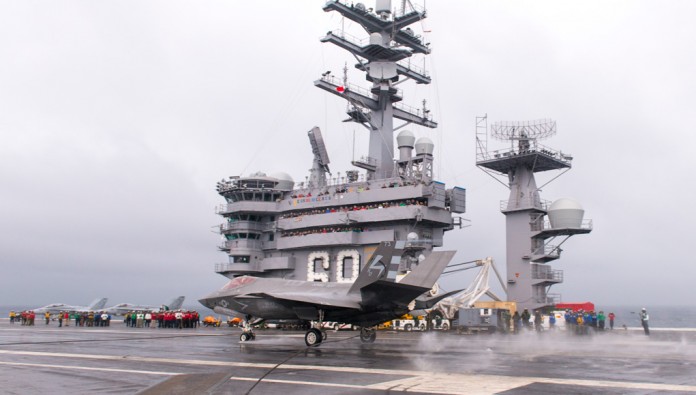
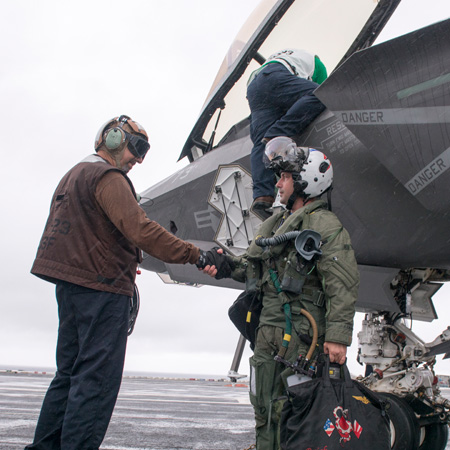
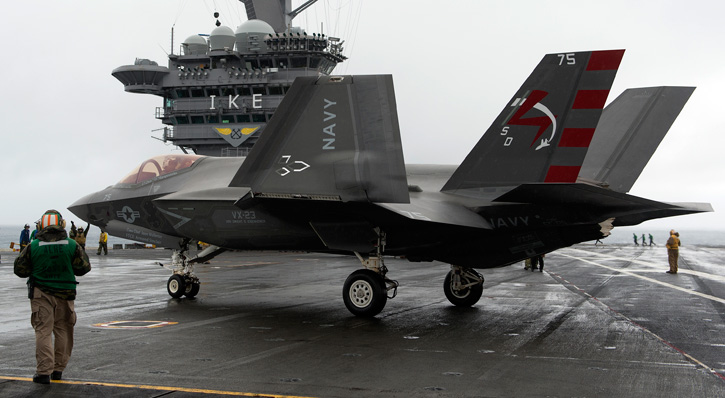
Two F-35C Lightning II carrier variants conducted their first arrested landings aboard USS Dwight D. Eisenhower (CVN 69) off the coast of the eastern United States yesterday. The operations are part of the second Developmental Testing (DT II) test phase, the second of three at-sea test phases planned for the F-35C. DT-I occurred Nov. 3-14, 2014 aboard USS Nimitz (CVN 68).
“These sea trials will further expand the F-35C’s flight envelope,” said Lt. Gen. Chris Bogdan, F-35 Program Executive Officer (PEO). “Over the next few weeks we’ll learn more about what it takes to integrate next generation fighters aboard aircraft carriers. The testing we’re doing today will prepare us for next year’s final at-sea developmental test and keep us on track to support the Navy’s 2018 initial operational capability date.”
Two F-35Cs from the Salty Dogs of Air Test and Evaluation Squadron (VX) 23 are conducting follow-on developmental test (DT-II) sea trials aboard the Eisenhower. Cmdr. Tony “Brick” Wilson flew aircraft 73/CF-03 (pictured above) and Lt. Chris “TJ” Karapostoles flew aircraft 75/CF-05. Photo: Andrew McMurtrie, Lockheed MartinThe F-35C will perform a variety of operational maneuvers during DT-II – including catapult takeoffs and arrested landings – while simulating maintenance operations and conducting general maintenance and fit tests for the aircraft and support equipment. Following the analysis of DT-II test data, the team will conduct a thorough assessment of the F-35C’s performance in the shipboard environment before advising the Navy on any adjustments necessary to ensure that the fifth-generation fighter is ready to meet its scheduled IOC in 2018.
Naval aircraft undergo DT-I, -II and -III test phases in order to ensure the development of aircraft that meet specifications and to identify mission critical issues sufficiently early in the test phase to deliver fully capable aircraft in time for their scheduled initial operating capability (IOC).
The F-35C is the Navy’s and Marine Corps’ carrier-suitable variant (CV) of the F-35. The aircraft introduces at-sea stealth capabilities the US Navy never had before. Other unique attributes of the new fighter offers are fused targeting and situational awareness sensors, enabling the stealth fighter to maintain ‘radar silence’ while engaging its targets. The F-35C is expected to reach Initial Operational Capability (IOC) in 2018.
One of two F-35C Lightning II carrier variant Joint Strike Fighters from the Pax River Integrated Test Force taking part in the Developmental Testing phase abroad the US Navy aircraft carrier USS Dwight D. Eisenhower (CVN 69). Photo: Andy Wolfe, Lockheed Martin
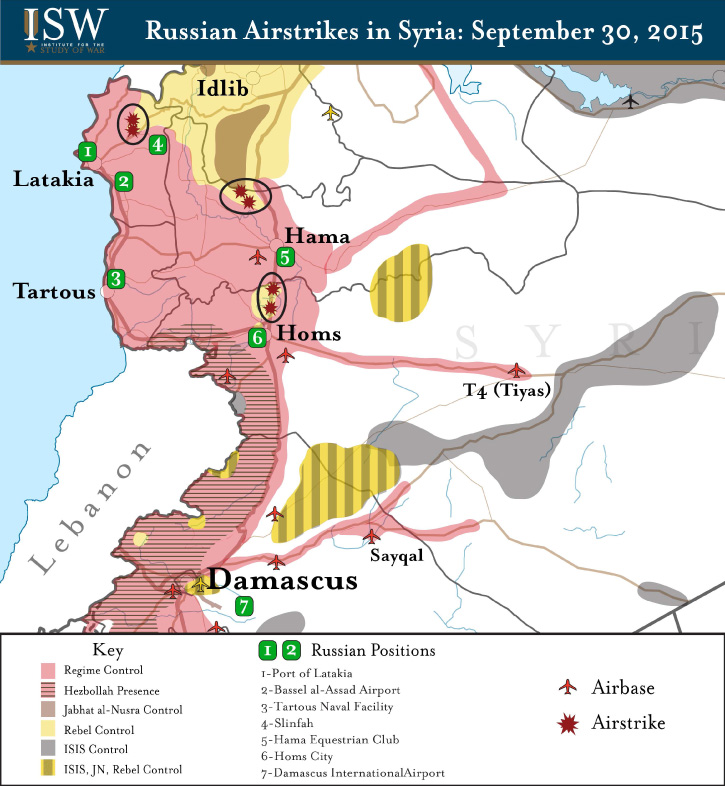
Claiming to target ISIS, Russia conducted its first airstrikes in Syria. According to the Russian Defense Ministry, warplanes targeted eight ISIS positions, including arms, transportation, communications and control positions. The Syrian state-run news agency SANA reported that Russian warplanes had targeted “ISIS dens” in al-Rastan, Talbiseh and Zafaraniya in Homs province; Al-Tilol al-Hmer, in Qunaitra province; Aydoun, a village on the outskirts of the town of Salamiya; Deer Foul, between Hama and Homs; and the outskirts of Salmiya. According to ISW analysis, Talbisah is home to Syrian al-Qaeda affiliate Jabhat al-Nusra, hardline Islamist Ahrar al-Sham, and a number of other local rebel groups, all of which are active in local governance efforts in the area.
Russian sources indicated the strikes were carried out by Su-25 (NATO Reporting Name Frogfoot) close support fighters, Su-24M (NATO Reporting name Fencer) and Su-34 (NATO Reporting name Fullback) strike fighters. While Su-24M and Su-25 were widely deployed in recent conflicts in Afghanistan, Iraq and Georgia, the attack provided the first opportunity for the relatively new Su-34, the Russian Air Force latest generation attack aircraft, to show its worth. Attacks carried out by Su-34 used precision guided bombs, specifically GLONASS (satellite navigation) guided weapons. On video the Su-34s were seen returning to Latakia with a single KA-500S-E weapon, and seven empty weapon stations. The KA-500S-E is a 1000 pound class weapon (similar to the GBU-32 JDAM). Its warhead contains about 200 kg of high explosives.
High yield weapons were used by the Russians in their attacks in Syria. Blast damage are clearly visible at ranges of several hundreds of meters from the point of impact. These effects indicate the possible use of fuel-air explosives weapons, widely used by Russian forces.
The Su-34s attacked their targets from an altitude of 15,000 ft. The effect shown in Battle Damage Assessment (BDA) aerial imagery taken by Russian UAVs indicate that some targets were indeed struck by precision guided weapons.
Although the Su-34 shown on video were armed with precision guided weapons, other strikes were not so accurate. Some attacks employed high yield weapons (likely 2000 pound fuel-air explosive bombs) that create significant collateral damage, primarily blast and incendiary effect. In fact, blast damage are clearly visible at ranges of several hundreds of meters from the point of impact. These effects indicate the possible use of fuel-air explosives weapons, widely used by Russian forces.
The ouvert use of such weapons by the Russians is likely done by choice, delivering a clear message of deterrence to all sides taking part in the fight – The Syrian regime, all rebels battling the regime and the coalition forces supporting them.
According to the London-based Syrian Observatory for Human Rights, 28 people were killed in the strikes, including women and children. The Syrian National Coalition reported that 36 people were killed, all civilians. “I want to be careful about confirming information, but it does appear that they (Russian airstrikes) were in areas where there probably were not ISIL forces,” US Secretary of Defense Ash Carter told reporters yesterday.
Although there are small ISIS “sympathetic” cells in the rebel-held pockets of northern Homs, the Russian decision to target terrain that is held by the Syrian opposition and not ISIS signals Russia’s intent to assist the Assad regime’s war effort at large, beyond anti-ISIS operations.
U.S. officials also expressed serious doubts about what the true intentions behind the move may be. “As we see the very capable air defense [systems] beginning to show up in Syria, we’re a little worried about another A2/AD bubble being created in the eastern Mediterranean,” said Gen. Philip Breedlove, commander, U.S. European Command (EUCOM).
Over 50 Russian aircraft and combat helicopters have been deployed at Syria’s Hmaimin airbase, located close to the port of Latakia. The base is guarded by a battalion of marines and is protected by a group of Russian warships from the sea.
Despite the Russian declared intention to assist fighting ISIS in Syria, NATO defense officials are concerned of the Russian military buildup in the country, according to the Washington Post. While the move’s stated goal in moving into Syria is to fight the Islamic State, NATO’s top commander believes Russia is building a strong air defense ‘bubble’ over north-western Syria, that would extend far beyond the Syrian territory, to deny the Western coalition air operations over Syria and, in fact, over the Eastern Mediterranean.
As of last week, Russia has more than two dozen aircraft at a newly renovated airfield in Latakia province, including ground-attack aircraft and helicopter gunships. In addition to the aircraft, there are at least 500 troops and number of tanks and armored personnel carriers.
The Israel Air Force which repeatedly operated over Syria and lebanon since the beginning of the Syrian Civil War in 2011 is also concerned about the Russian move, that could affect IAF operations over Lebanon as well as Syria. Moreover, the de-facto established Israeli freedom of action over Lebanon would be severely degraded, given Russian manned and equipped assets guarding the Lebanese airspace, covering Iranian-backed military buildup in Central and South Lebanon. Israel’s concern of such potential conflict drove Prime Minister Benjamin Netanyahu to meet Vladimir Putin in Moscow on Sept 21. In its effort to deconflict operations of Russian, Iranian, Iraqi and Coalition forces operating over Syria, Washington has opened direct communications lines with Moscow, while Russia deployed liaison officers to Iraq.
The upper chamber of the Russian parliament has unanimously given a formal consent to President Putin to use the nation’s military in Syria to fight terrorism at a request from the Syrian President Bashar Assad. Consent was necessary for deployment of troops for foreign combat missions under the Russian constitution.
Head of the presidential administration Sergey Ivanov stressed that no ground operations are planned in Syria. Russia would use its warplanes to hit terrorist targets when requested by the Syrian government. He stressed that unlike the US-led coalition of countries that bombs militant troops in Syria, Russia was invited to do so by the legal authorities of Syria and thus follows international law.
The development comes after Moscow has intensified involvement in Syria, establishing an Iraqi-based military communications center with Damascus, Baghdad and Tehran. It also happened just days after President Putin called for an international anti-terrorist effort in Syria that would include the government of President Assad at the UN General Assembly.
At the same time, the US may be scaling back its support to moderate rebel forces. The Pentagon said Tuesday that its program to train and equip moderate Syrian rebels to fight the Islamic State in Iraq and Syria has temporarily stopped receiving new recruits at its training sites.
“We continue to recruit and vet potential participants for the [train and equip] program. As we review the program, we have paused the actual movement of new recruits from Syria,” Pentagon press secretary Peter Cook said. That first class of 54 rebels disintegrated after deploying back into Syria, after being attacked by Al Nusra Front. 70 more had deployed back into Syria, but some have also turned over their equipment to Al Qaeda affiliated Al Nusra Front.
The administration announced the creation of the program last year, which aimed to build a ground force to take on ISIS and supersede the need to send in U.S. forces. Congress authorized the program in September and provided $500 million for the program in December.
NATO special forces have reached Kunduz to bolster Afghan troops after the Taliban seized the strategic northern city, the military coalition said Wednesday. “Coalition special forces are on the ground in Kunduz advising their Afghan counterparts,” a NATO spokesman said.
The forces are comprised of US, British and German troops, a Western military source told AFP on condition of anonymity, without specifying the number.
NATO said US forces had also carried out three airstrikes in total since Tuesday — two on the outskirts of Kunduz and one near the city’s airport, which is currently under attack by Taliban insurgents. The Taliban that took over the city managed to block Afghan security forces’ reinforcements attempting to reach the city.
Hundreds of lightly armed Taliban riding on motorbikes seized Kunduz city, capital of Kunduz Province, on September 28. Their capture marked the fall of the first major Afghan city to the insurgents in 14 years.
The fall of the provincial capital has dealt a major blow to Afghanistan’s NATO-trained security forces and highlighted the insurgency’s potential to expand beyond its rural strongholds. Despite the counter-strike Kunduz remained largely under Taliban control — the first major urban centre in their grip in 14 years.
The Taliban’s incursion into Kunduz, barely nine months after the NATO combat mission concluded, raises troubling questions over the capacity of Afghan forces as they battle militants largely on their own. The Taliban stepped up attacks during a summer offensive launched in late April against the Western-backed government in Kabul. Kunduz province, which borders Tajikistan and is a major transport hub for the north of the country, could offer the Taliban a critical new base of operations beyond their traditional southern strongholds.
Taliban gradually increased their presence in Kunduz in recent years and came close to overrunning the city of 300,000 in April. Most Central Asian fighters were pushed into Afghanistan last year by a major Pakistani offensive against their hideouts in North Waziristan, close to the country’s western border with Afghanistan.
Each Mistral vessel is capable of carrying 16 helicopters, up to 1000 troops and 50 armored vehicles.
Egypt, France and Russia have reached an agreement to sell Egypt the two Mistral Helicopter Carriers originally built in France for the Russian Navy. Saudi Arabia is likely to finance the acquisition, as it supported the other arms deals Egypt has struck with France.
Each Mistral vessel is capable of carrying 16 helicopters, up to 1000 troops and 50 armored vehicles.
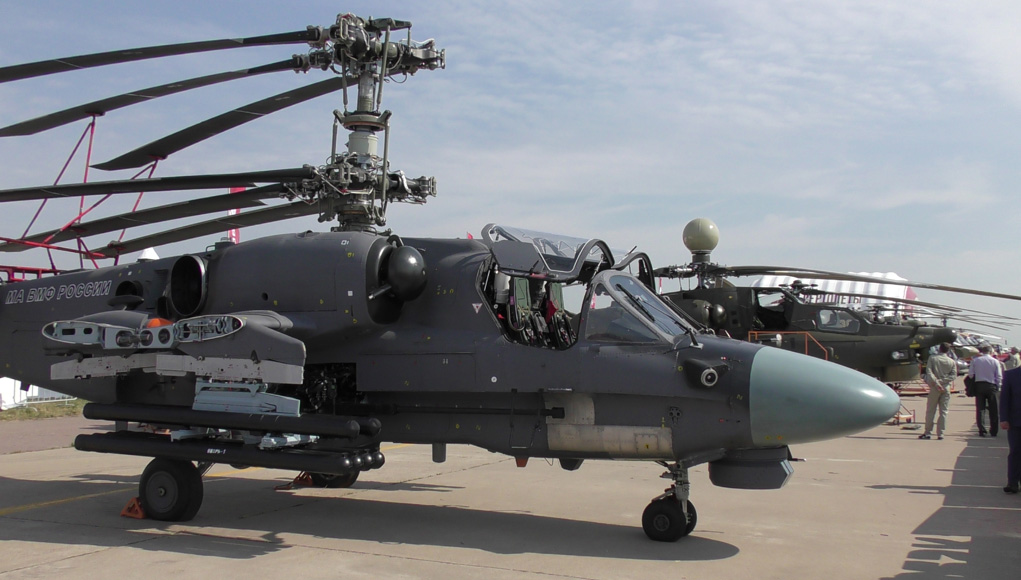
Egypt is also buying Russian Ka-52K helicopters from the Russian Helicopters Company, Russian news agency TASS reported. These helicopters were originally designed to operate from the vessel in Russian service. The Russian Navy is also expected to buy these helicopters, becoming operational in 2017-2018; Egypt is expected to receive its first helicopters at the same time.
The Egyptian Air Force is already operating 46 Boeing AH-64 Apache attack helicopters and the Russian made Alligators will provide the Naval air arm a potent strike capability that could be used against insurgents in Northern and Southern Sinai and along the Egypt-Libyan border in Egypt’s Western Desert. It is assumed that one of the Mistrals will serve in the Red Sea, and the other will be positioned in the Mediterranean. According to a source in France’s Ministry of Defense, the ships could be delivered to Egypt in March 2016, after the Egyptian navy crews go through training – the Russian Sputnik site reported.
Russia and France have reached a settlement over the termination of the contract in August 2015. France will refund 950 million euros already paid by Russia, as part of the 1.2 million Euro deal.
Egypt is likely to buy 50 Ka-52K navalized attack helicopters, to operate from the deck of the new Mistral helicopter carriers Egypt is purchasing from France. Photo: Tamir Eshel, Defense-Update
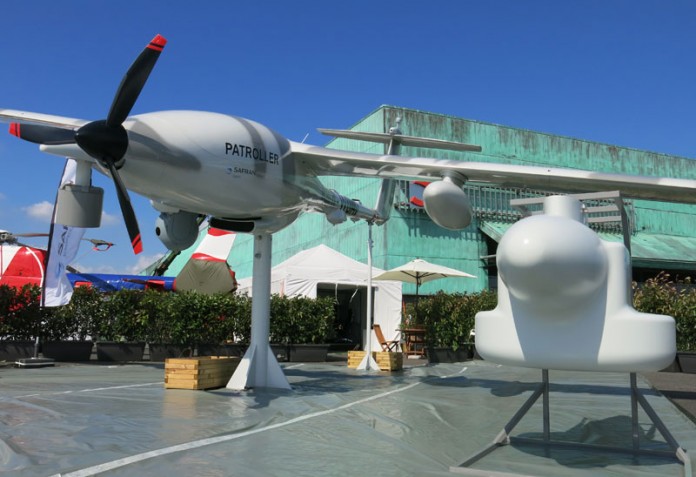
Following the sale of Rafale fighter jets, FREMM frigate and possibly, the Mistral helicopter carrier originally built for the Russian Navy, France is offering Egypt its latest UAV – the Patroller. The drone’s developer, French defense company Sagem (of the Safran group) has signed a partnership agreement with AOI-Aircraft Factory of Egypt, as part of an exclusive commercial and industrial collaboration agreement concerning the Patroller surveillance drone system, to address the requirements of the Egyptian Ministry of Defense.
According to the terms of this agreement announced today, AOI-Aircraft Factory will handle final assembly of Patroller drones in its Egyptian plants. The agreement also covers system support and commissioning. AOI-Aircraft Factory will also develop and establish training center in Egypt, to train operations and maintenance teams assigned to units equipped with Sagem’s drone systems.
Developed in France by Sagem, the Patroller is a versatile long-endurance tactical drone system. It features an open, modular design to handle a broad spectrum of military and security missions, while carrying a multi-sensor payload of up to 250 kg, fuselage or pod mounted. The Patroller offers endurance of more than 20 hours, and an operating ceiling of 20,000 feet. Sagem has already conducted a flight demonstration on Patroller showing the simultaneous operation of different sensors: optronic (electro-optical) pod, radar, electronic warfare (EW) system, distress beacon detector and automatic identification system (AIS) receiver.
With the growing demand for data connectivity and limitations of current airborne network solutions, the Aviation Full-Duplex Switched Ethernet (AFDX) protocol developed by Airbus has emerged as a networking method for safety-critical applications that use dedicated bandwidth and providing deterministic Quality of Service (QoS).
An advanced, distributed real-time IP networking platform known as ‘Orion’, developed in Israel by ORBIT Communications Systems, implements AFDX, IP and Ethernet protocols with proprietary, patented methods to establish a switchless, real-time, distributed airborne network. The patented dual IP ring topology used in this system provides inherent scalability and redundancy, offering unique safety features.
Orion was designed as a certifiable system for aviation standards and, therefore applicable to numerous aerospace applications. Previous generations of ORBIT’s Communications Management Systems are operating on more than 3,500 military, commercial and business aircraft and helicopters.
“The Orion has many possible applications for airborne platforms however at this stage we are focused on specific audio and video management applications that bring forward the systems’ advantages while leveraging ORBIT’s past experience and brand equity,” Eitan Shabbat, VP Airborne Communications Solutions at ORBIT said. For example, Orion Jet, Transport and Airliner designed to provide audio management in combat aircraft and trainers, helicopters, transport planes, and commercial planes. Orion Video is providing airborne video distribution and management, for special mission aircraft, Search and Rescue (SAR) helicopters and for cabin and cargo monitoring in commercial airliners.
The new,Cobra Plus lightweight helmet from Revision Military is also included in the kit, to provide increased blunt-impact protection. Face and mandible guards can be added for certain roles. The helmet's shape is designed to integrate with the armor and daysack so that weapons can be used comfortably even in prone positions. Photo: Revision Military
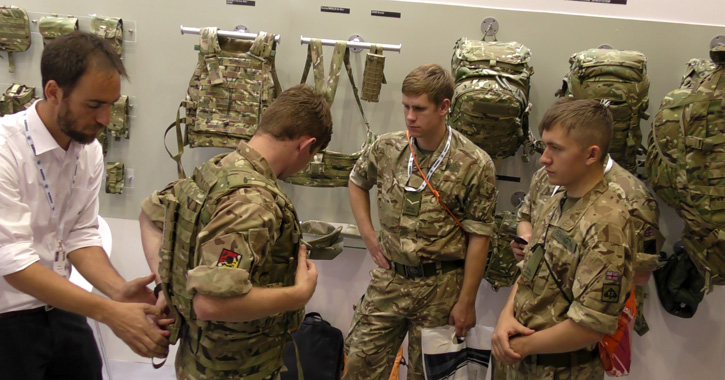
Source Tactical Gear this month began deliveries of the new Virtus ‘Scalable Tactical Vest’ (STV) to the UK Ministry of Defense (MOD), under a new multi-annual contract awarded earlier in 2015. Under the contract the Israeli company will deliver 14,000 Virtus soldier combat suite kits this year, to be followed by annual deliveries of about 10,000 kits through 2017. As the UK Ministry of Defense has a requirement for up to 82,000 kits, it has also secured options to continue purchasing them through 2026. Source is the prime contractor for the Virtus Kit, which includes more than 50 different items designed, developed and produced by the Israeli company and by subcontractors in the U.K., Canada, Israel and the U.S.
The Virtus Soldier System is a new, fully integrated personal protection and load carriage system developed by Source for the British Army. The system employs the Dynamic Weight Distribution (DWD) system, enhancing the operational effectiveness of the dismounted combatant. The Virtus system is the first combat suite to employ the DWD as part of a standard kit. Developed by Source over the past three years, the DWD was unveiled at the Shot Show in Las Vegas this year; it’s European debut was at IWA in Germany in March. The DWD was presented for the first time as part of a complete integrated soldier system at DSEI 2015 in London, following the delivery of first systems to the MOD.
Service members from all branches came to Source’s booth at DSEI to experience the new Virtus STV and gear, expected to land at the first units early in 2016. Photo: Tamir Eshel, Defense-Update
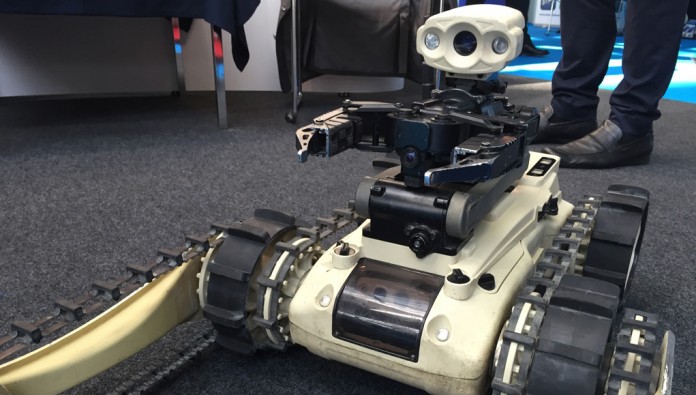
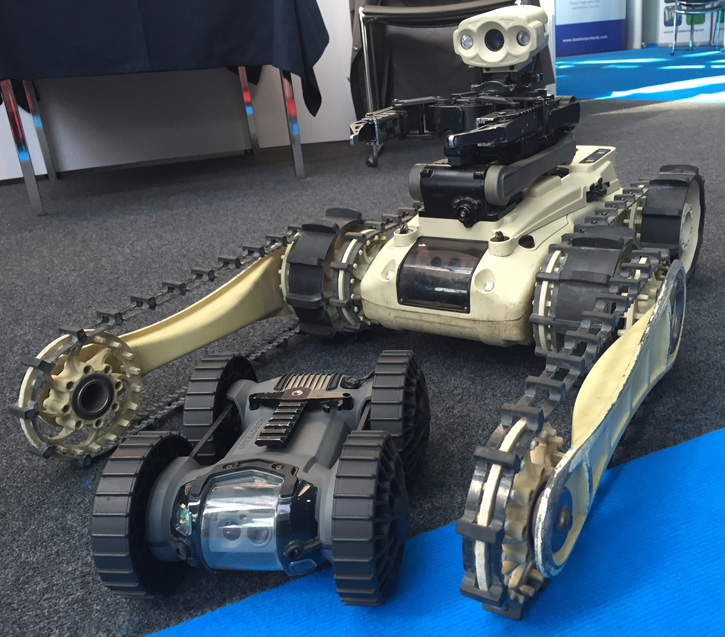
MTGR - selected for the Small EOD robot (man portable) for US Air Force EOD team service. Photo: Tamir Eshel, Defense-Update
The Israeli robot company Roboteam has won a prestigious contract award worth $25 million to deliver and support small, lightweight MTGR Explosive Ordnance Disposal (EOD) robots to the U.S. Air Force. The contract funds the delivery and support of the robots through 2022.
In its quest for a new, small EOD robot the Air Force was looking for an off the shelf system, that has at least three years of operational experience. Such back packable small robot weighing less than 30 pounds (13.6 kg) and be useful in situations where larger robots cannot access the scene. The Air Force required the system to be operated by a single person, being able able to respond to incidents involving unexploded ordnance (UXO) and improvised explosive devices (IED), as well as conducting intelligence, surveillance and reconnaissance (ISR) in hazardous environments.
The Micro-Tactical Ground robot (MTGR) from Roboteam has been in competition with several U.S.-Developed systems which have already been widely used by the U.S. military, such as iRobot SUGV and QinetiQ North America Dragon Runner. Lighter and more agile, particularly in complex environments such as culverts, indoor and underground settings, MTGR has repeatedly won new orders in recent months with the U.S. Special Forces, the Israel Defense Forces (IDF), in Poland and in the UK. Roboteam’s Maryland-based U.S. subsidiary will produce the MTGR robots for the U.S. customers and support them throughout the world.
The new MTGR from Roboteam is now equipped with a full EOD gear set, in addition to previously used reconnaissance kit. This grip with clip-on camera were displayed at the Counter-Terror Expo in London earlier this year. Photo: Tamir Eshel, Defense-Update
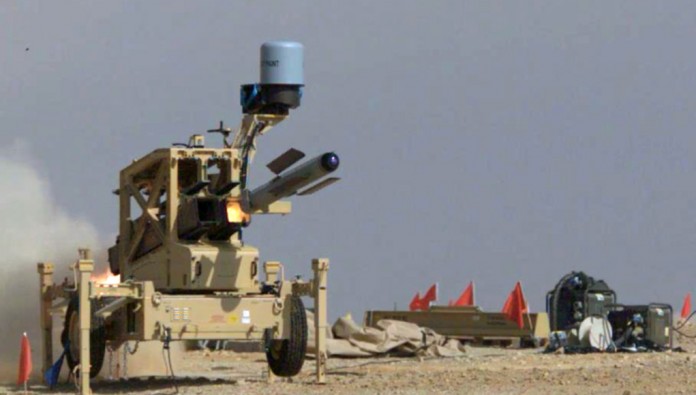
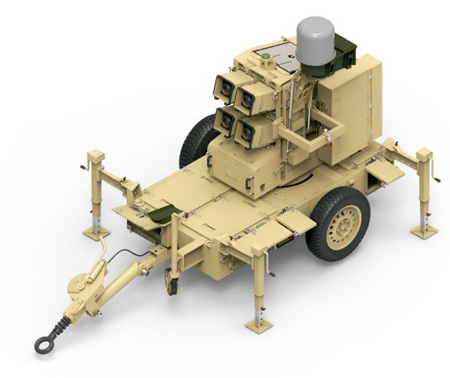
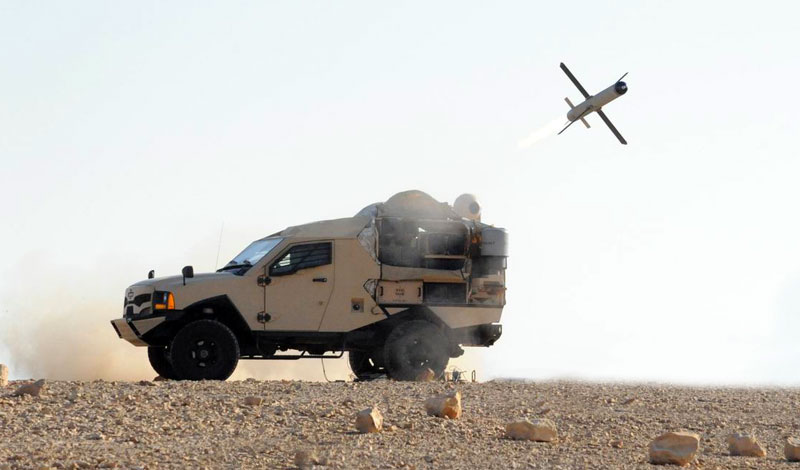
The new version doubles the missile load of the previous trailer-based version operated by a NATO customer, and improves some of the system’s target acquisition and support elements which were already integrated into the vehicle-mounted version of the system, developed for South Korea. Photo: RAFAEL
Rafael Advanced Defence Systems has unveiled a new trailer-mounted, remotely-controlled launch system for the Spike Non-Line-of-Sight (NLOS) multi-purpose tactical missile at DSEI 2015.
Dubbed SPARC, and developed over 30 years ago to engage heavy armor formations deep behind enemy lines, Israel has increasingly been using the Spike/NLOS in asymmetric warfare in recent years, employing the weapon’s long range and high precision to deliver measured responses or preemptive attacks against asymmetric and terrorist targets across the borders with Lebanon, Syria and Gaza.
Sparc is expected to enter production this year and to augment the launchers already operating with the customer. The trailer-based system was originally designed to operate at forward bases, independent of dedicated vehicles, as it can rapidly deploy with light troops, supported by various vehicles, primarily lightweight tactical utility vehicles.
This is a short version including 142 of 460 words of the original article. Subscribe to Defense Update to read the full story.
Spike NLOS is designed for launch from aerial, naval and land platforms. This specific configuration, based on Plasan’s Sandcat, was designed to meet the South Korean requirement. photo: RAFAEL
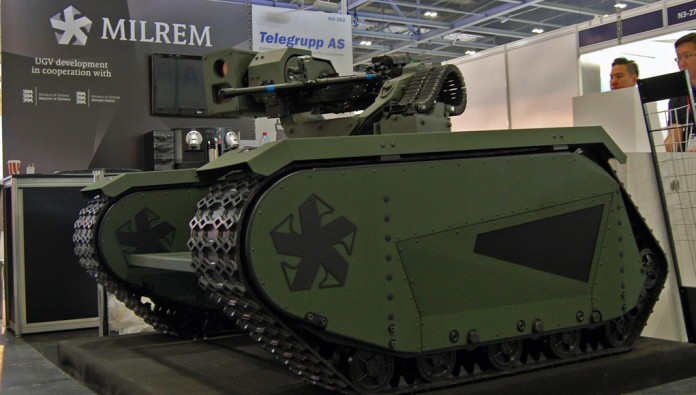
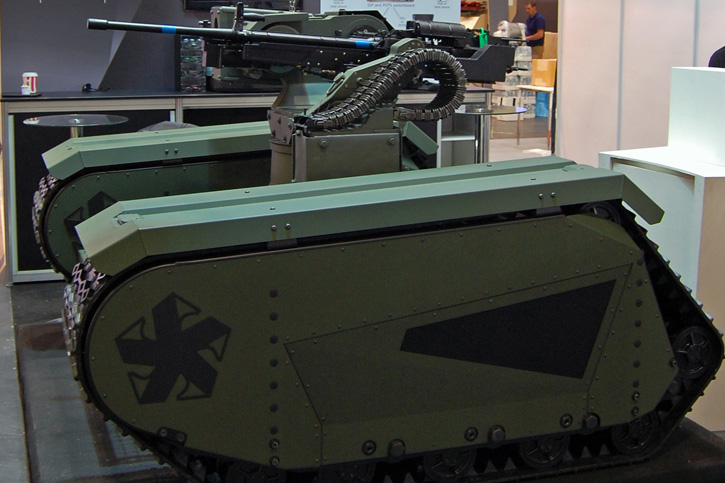
The first prototype of a new robot introduced by the Estonian company MILREM made its international debut at DSEI 2015. The multi-purpose Unmanned Ground Vehicle (UGV) functions as a universal platform, designed to support a wide range of military and first-response applications. It has a maximum speed of 65 km/h and a payload capacity of 700 kg. – which, together with its curb weight, brings the fully-loaded robot maximum gross weight to 1.4 – 1.5 tons.
Remotely operated or autonomously controlled, the UGV is powered by electric motors that sustain operations for up to eight hours, using a diesel generator to charge a new-generation ultra-capacitor bank, based on a technology developed by Skele+on – another Estonian company specializing in high-density power sources.
To optimize energy consumption, the vehicle uses a power-control unit that regulates the energy flow between the diesel generator, the electric motors and the ultra-capacitors, which serve as energy storage units. This system reduces overall energy consumption by 25–40%.
Using patented nanoporous carbide-derived carbon, or ‘curved graphene’, these ultracapacitors have achieved breakthroughs in ultracapacitor performance. Providing 10 Wh/kg the ultracapacitors ensure reliability by starting the vehicle in cold conditions, down to -65° C or after prolonged periods in storage. Rated to meet millions charge and discharge cycles, the lifetime of these ultracapacitors is up to 500 times longer than standard batteries. Photo: Skele+onThe chassis length is 2.5 meters with a 2 meter width, including the wide tracks that help reduce the ground pressure to 0.069 – 0.115 kg/cm2, depending on the vehicle’s payload.
At the DSEI exhibition the robot was displayed with a remotely-operated weapon station mounting a 12.7mm heavy machine gun and an electro-optical payload. Additional weapons conforming to the vehicle’s payload weight limitation include anti-tank/anti-material guided missiles, could include Other mission modules could include medical evacuation, mine-sweeping (carrying flails, for example), or firefighting. It can also support a dismounted squad as a load carrier.
The chassis length is 2.5 meters with 2 meter width, including the wide tracks that help reduce the ground pressure to 0.069 – 0.115 kg/cm2, depending on the vehicle’s payload. Photo: Milrem
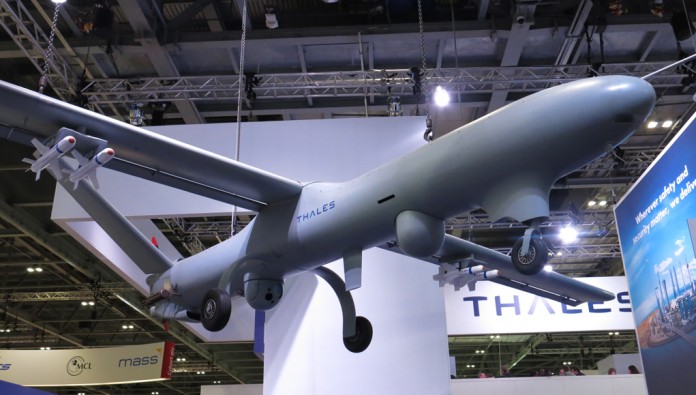
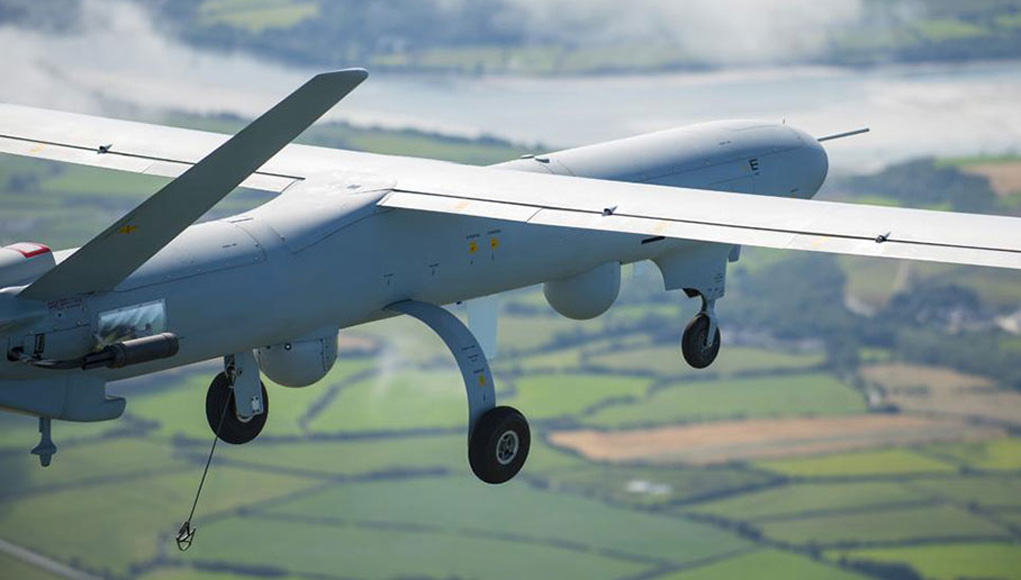
Watchkeeper-X displayed by Thales at DSEI is configured with two sensors, carrying four FFLMM miniature guided missiles. Photo: Tamir Eshel, Defense-Update
Thales is introducing an export variant of its Watchkeeper Unmanned Aerial Vehicle (UAV), originally developed for the UK. The first export contract being pursued by the company is Poland, seeking a UAV solution for its military forces. Watchkeeper is also one of two finalist tactical UAV systems being considered by the French Army as a successor for the Sperwer, originally produced by Sagem.
“Watchkeeper X is based on a ground-breaking, world-leading unmanned aircraft system that was designed specifically for the requirements of the British Army,” said Pierre Eric Pommellet, Thales Executive Vice-President, Defence Mission Systems. “We have now taken the knowledge and expertise that we have gained over the history of the program and looked at how we can make it more flexible, effective and readily available for our customers, to help them address the different operational contexts they may face.”
While Watchkeeper was designed primarily for Intelligence, Surveillance and Target-Acquisition Reconnaissance (ISTAR) applications, Thales is currently offering the ‘Watchkeeper X’ drone in a weaponized version, meeting the specific Polish interest in an armed UAV. Another unique advantage of WK-X is its ability to operate from rough, makeshift landing strips, enabling rapid deployment in theaters without paved airstrips.
Watchkeeper X (WK-X) is based on the company’s fully airworthy, certified to CS23/STANAG 4671 airworthiness standards, and cleared for operation in zero visibility, harsh weather conditions and extreme temperatures. Based on Elbit Systems’ Hermes 450 platform, Watchkeeper has an operational endurance exceeding 16 hours, operating at ranges in excess of 140 km., with a maximum transit speed of 95 knots. The ground-based mission control system can support several aircraft in the air, sustaining 24/7 surveillance missions.
The drone employs a dual-sensor payload configuration, conforming to a standard 15” gimbal and integral sensor cross-cuing functionality, supporting VIS/IR cameras, radar, communication intelligence (COMINT) and communications electronic support measures (ESM).
The platform is configured with underwing hard points, which can carry external fuel tanks, pods or lightweight weapons, such as Thales’ FFLMM. WK-X provides effective surveillance, identification and targeting with pin point accuracy. On board sensors are employed to acquire and designate targets, and, in cases of engagement of time-sensitive targets, operators can use on-board weapons to act on the intelligence obtained by the drone in real time.
Thales could find the Israeli company Elbit Systems, its partner in the Watchkeeper program through the U-TacS UK-based JV, on the other side of the fence, competing on the Polish tender, following the Polish company PGZ announcement it has teamed with Elbit Systems to offer the Hermes 450 for the Polish Gryf program. Photo: Thales Group
Lockheed Martin Skunk Works® and XTEND have achieved a major milestone in JADC2 by integrating the XOS operating system with the MDCX™ autonomy platform. This technical breakthrough enables a single operator to simultaneously command multiple drone classes, eliminating the friction of mission handoffs. From "marsupial" drone deployments to operating in GPS-denied environments, explore how this collaboration is abbreviating the data-to-decision timeline and redefining autonomous mission execution.
As traditional defense primes face mounting competition from agile “neoprimes” such as Anduril, Palantir and Helsing, the balance of innovation is shifting toward software-defined warfare and scalable, dual-use technologies, while global industry consolidation—marked by Boeing’s integration of Spirit AeroSystems and other strategic mergers—signals an intensified race to secure control over the defense technology value chain. Our Defense-Tech weekly report highlights these trends.
In early October 2025, a coordinated wave of unmanned aerial system (UAS) incursions—widely attributed to Russia—targeted critical infrastructure across at least ten European nations. The unprecedented campaign exposed the fragility of Europe’s air defenses...
Executive Summary
The past week (September 18-25, 2025) represents an inflection point where strategic defense concepts have transitioned from doctrine to tangible reality. An analysis of global events reveals four primary, interconnected trends shaping an...
At the 2025 Air, Space & Cyber Conference, U.S. Air Force and Space Force leaders unveiled major updates on next-generation fighters, bombers, unmanned systems, and space initiatives, highlighting both rapid innovation and critical readiness challenges as the services race to outpace global competitors. A short version is available here, with a more detailed version for subscribers.
The Taipei Aerospace & Defense Technology Exhibition (TADTE) 2025 crystallized around four dominant strategic themes that collectively illustrate Taiwan's comprehensive approach to defense modernization amid escalating regional tensions. Based on a detailed report by Pleronix (available upon request). Includes a Podcast discussion on TADTE 2025's highlighting Taiwan's four strategic themes beyond the post's coverage.
Israel’s Iron Beam 450 high-power laser system has completed final testing, marking a major leap in air defense. Developed by Rafael, it offers precise, cost-effective interception of rockets, UAVs, and mortars, and is set for IDF deployment by 2025.