Wednesday, December 24, 2025
More
    Home Blog Page 95

    Iraq to receive M-1A1, Armored HMMWVs worth $3 billion

    Washington plans to equip the Iraqi Army with 175 M-1A1 Main Battle Tanks and 15 M88A2 Hercules tank recovery vehicles to equip an armoured brigade. The new arms transfer package is worth US$2.4 billion. The Pentagon is also planning to provide the Iraqis with a thousand M1151A1 Up-Armored High Mobility Multi-Purpose Wheeled Vehicles (HMMWVs) for additional $579 million. The tanks and HMMWVs are likely to be withdrawn from US surplus. Under another contract worth $100 million awarded to General Dynamics Land Systems is upgrading Saudi M-1A1 tanks into the more advanced M1A2S configuration. This contract extends work started in 2008 to update M1A1 and M1A2 tanks to the M1A2S configuration. The project is expected to complete in July 2016.

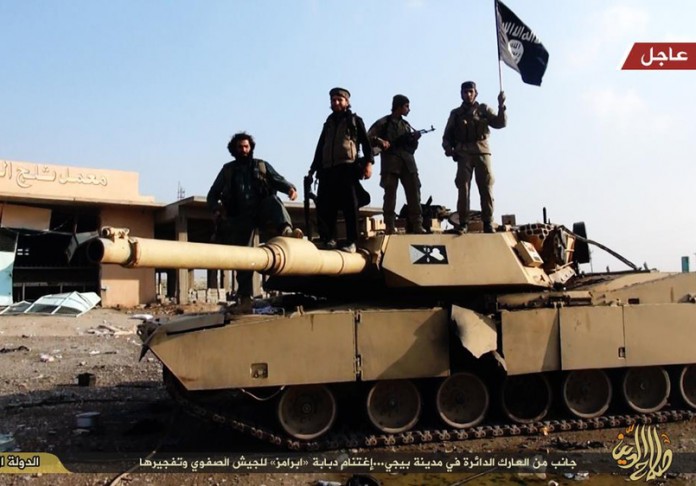
    The Iraqi Army has lost part of the hardware previously supplied by the USA in the recent fighting with the Islamic State. Among the assets that fell into the hands of Islamic insurgents were artillery pieces, MRAP vehicles and armoured HMMWVs. T-55 tanks and SCUD missiles were also seized by IS, from bases they ran over in Syria and Iraq. In the recent fighting around the town of Baji IS fighters managed to capture and destroy Iraqi M-1A1 tanks.

    South Korea set to restart F-16 Upgrade with OEM

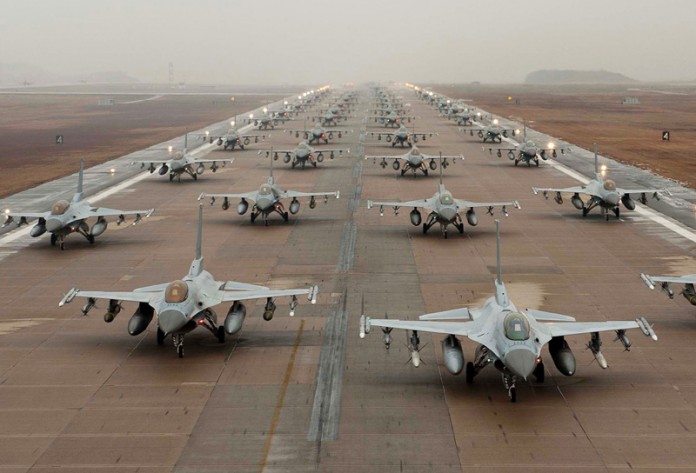
    South Korea began the official process of changing the contractor for its F-16 upgrading project, Seoul’s arms procurement agency said. “The final decision on the contractor change will be made after checking a letter of agreement from the U.S. expected to be delivered early next year,” The Defense Acquisition Program Administration (DAPA) official Baek Yoon-hyung said.

    DAPA said the planned switch from BAE Systems to Lockheed Martin – was presented at its monthly defense project committee meeting. Lockheed Martin, the F-16’s original equipment manufacturer (OEM), lost to BAE in its bid for the project.

    DAPA and the U.S. defense department agreed upgrade 134 KF-16 fighter jets as part of a US$1.62 billion (1.75 trillion won) investment. Originally awarded to BAE Systems, the contract included the integration of modern avionics, primarily a new mission computer developed by BAE Systems and AESA radar provided by Raytheon.

    Raytheon bags $2.4 billion to supply Qatar with Patriot air defense systems

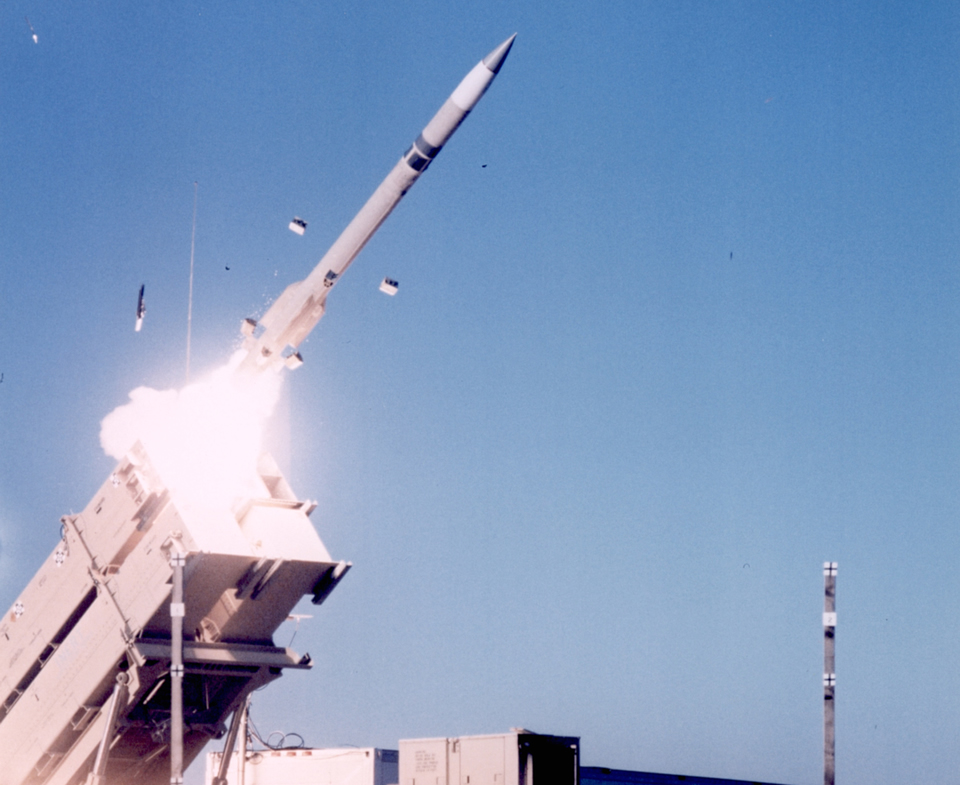
    Test launch of a PAC-3 missile. Photo: Lockheed Martin

    Raytheon Company has received a $2.4 billion Foreign Military Sales contract for fire units of the Patriot Air & Missile Defense System for the State of Qatar. This deal follows the arms transfer request announced by the U.S. in 2012, which included the sale of 11 GEM-T/PAC-3 fire units comprising 44 launchers, radars, command, control and communications modules. The GEM-T missiles are proceeded by Raytheon, while PAC-3 are made by Lockheed Martin.

    The package also included the delivery of more than a thousand missiles of both models. The total cost of the requested Qatari arms package was almost ten billion dollars back in 2012. According to Raytheon, the contract includes the latest Patriot fire units featuring increased computing power and radar processing efficiency, improved man-machine interface and reduced life-cycle costs.

    The acquisition is part of an Armed Services modernization and recapitalization effort announced by Qatar in March of this year. The US part – including the Boeing Apache helicopters, Patriot and Raytheon/Lockheed Martin Javelin missile were valued at $11 billion dollars.

    Other items included the Qatari shopping spree in 2014 included German Leopard 2A7 tanks and PzH2000 self propelled guns to be supplied by KMW, 17 patrol boats bought from ARES, Turkey, along with six locally built FBPs designed by Dutch ship designer Damen; the Local shipyards will also manufacture six Sigma corvettes also designed by Damen, which will be fielded with 22 NH-90 helicopters from NH Industries, (these are acquired in addition to 18 AgustaWestland AW-138 helicopters ordered from Italy in 2011); two Airbus A330 Multi-role tanker transport aircraft and 24 Swiss Platus PC-21 military trainers are also included. The replacement of Qatar’s fleet of Mirage 2000 jet fighters is still in the making, with the French Dassault Rafale being one of the likely choices.

    The new Patriot will become the cornerstone of Qatar’s advanced Integrated Air and Missile Defense (IAMD) capability. Qatar, will become the 13th global Patriot customer and fifth in the Gulf, following Saudi Arabia, Kuwait and the UAE. Bahrain is also planning to modernize its air defense force, replacing the old MIM-23 Hawk with the Patriot. Other air and missile defense assets to be fielded in the gulf include the THAAD United Arab Emirates, (U.A.E.) that has contracted to buy two THAAD batteries. The U.A.E. also has taken delivery of its Patriot PAC-3 batteries, which provide a lower-tier, point defense of critical national assets. Saudi Arabia is in the process of upgrading its existing Patriot PAC-2 batteries to the PAC-3 configuration. Kuwait is upgrading its existing batteries to PAC-3, and in December 2013 signed an offer for two additional PAC-3 batteries.

    The radar networks and early warning systems of the GCC members are connected through the ‘Cooperation Belt Project’ whose first phase is operational since 2002. However, under the current deployment the Patriot air defense systems are protecting each country individually; the US is encouraging the Gulf Cooperation Council (GCC) to integrate those assets into a regional defense system, defending the entire region against a possible Iranian air and missile missiles attacks.

    Earlier this month, Raytheon announced a U.S. Air Force contract to provide the state of Qatar with an Air and Missile Defense Operations Center (ADOC) which will integrate U.S. air defense systems including Patriot, the Early Warning Radar, and THAAD; with European air defense systems and radars and Qatar’s Air Operation Centre.

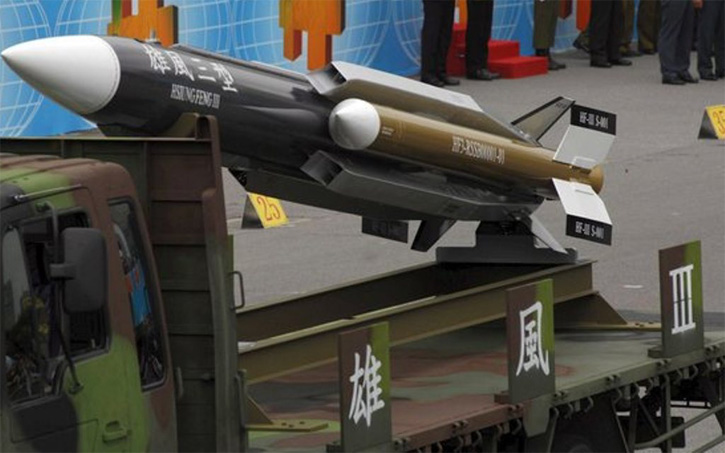
    Taiwan publicize Hsiung Feng III supersonic anti-ship missile tests

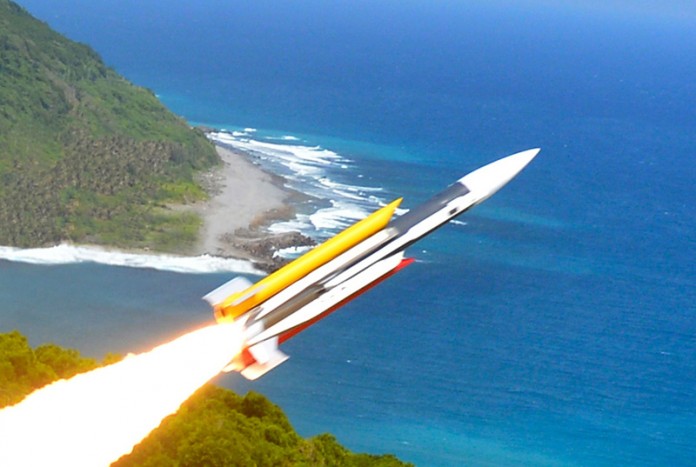
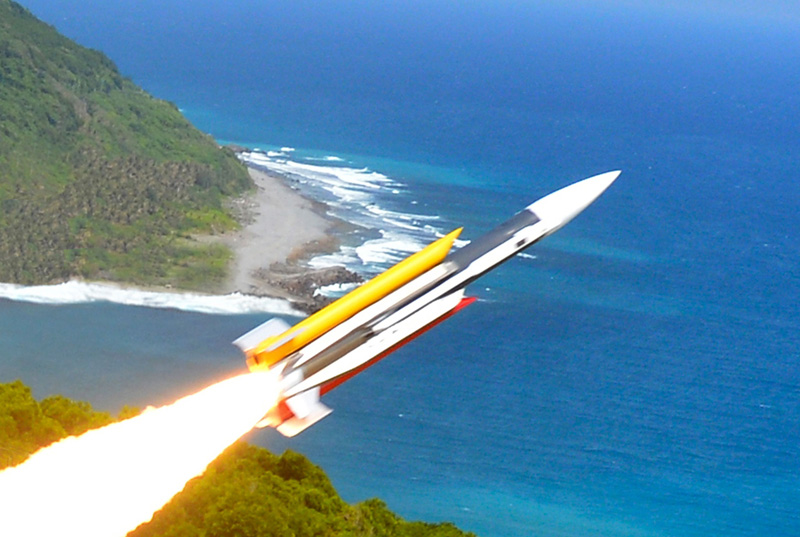
    A test launch of Taiwan's Hsiung Feng III supersonic anti-ship missile. The missile can be launched from in ship-launched canisters or coastal defense mobile launchers.
    Taiwan's Hsiung Feng III supersonic anti-ship missile is currently in production and deployed on some of the ROC Navy corvettes and frigates. The 20 foot long (about six meters) missile has body diameter of 18 inch (457 mm, excluding fins and boosters). Its launch weight is 3000 lbs (1,361kb). the warhead weight is about 500 pound (225 kg.)
    Taiwan’s Hsiung Feng III supersonic anti-ship missile is currently in production and deployed on some of the ROC Navy corvettes and frigates. The 20 foot long (about six meters) missile has body diameter of 18 inch (457 mm, excluding fins and boosters). Its launch weight is 3000 lbs (1,361kb). the warhead weight is about 500 pound (225 kg.)
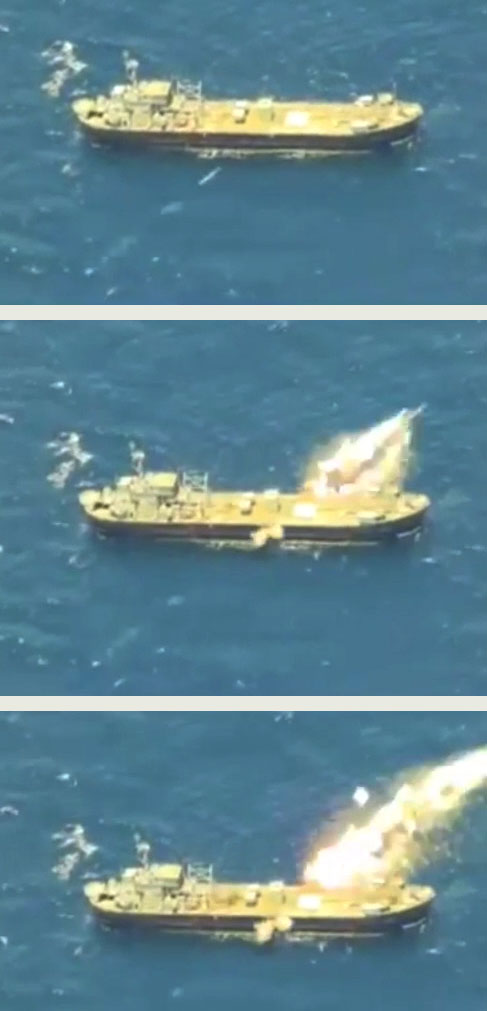
    Photo sequence from the video
    A sequence of pictures taken from a Hsiung Feng III test flight video shows the devastating effect of the weapon’s 225kg self forging fragmenting shaped charge warhead. (In these photos the missiles strikes from left to right).

    Taiwan has recently released photos and videos of the latest generation surface launched anti-ship and surface-to-air missiles. The two include the supersonic surface launched Hsiung Feng III anti-ship missile and Tien Kung III surface-to-air missiles. Both were developed at the National Chung-Shan Institute of Science and Technology.

    Hsiung Feng III missiles are already installed on Taiwan’s Chengkung-class frigates and Chinchiang-class corvettes. The 502-ton Tuo Chiang, Taiwan’s first locally designed stealth missile corvette, will also be equipped with the missiles in the future, according to military sources.

    The release of the images came as China also unveiled its new CX-1 supersonic anti-ship cruise missile at the recent Airshow China in Zhuhai, Guangdong Province, showing that both countries are placing emphasis on supersonic anti-ship missiles.

    Hsiung Feng III uses two solid rocket boosters and a liquid propelled ramjet, accelerating the missile to a cruising speed of Mach 2.5-3.0. Its range is about 80 nautical miles (150 km), with minimum attack range of 16 nm (30 km). In contrast, China’s CX-1 supersonic anti-ship missile – unveiled at Airshow China in November 2014 – is capable of striking surface targets at 22-150 nm (40-280 km.)

    More reading for subscribers…

    A test launch of Taiwan's Hsiung Feng III supersonic anti-ship missile. The missile can be launched from in ship-launched canisters or coastal defense mobile launchers.
    A test launch of Taiwan’s Hsiung Feng III supersonic anti-ship missile. The missile can be launched from in ship-launched canisters or coastal defense mobile launchers.

    Partners in Europe and Asia Pacific gear up to support the F35 fleet

    alis-hub725
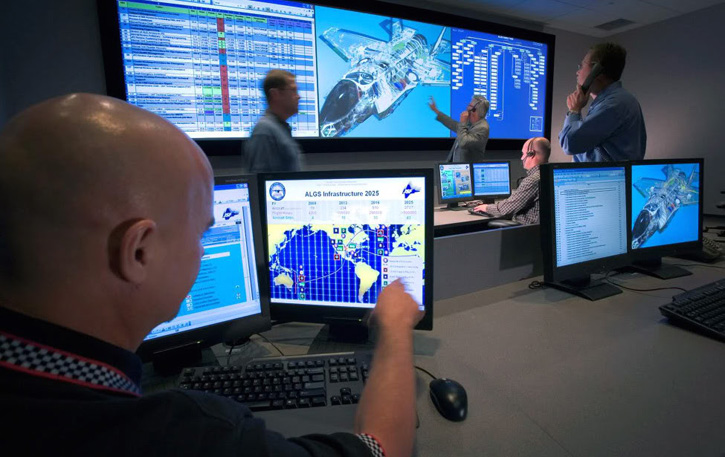
    ALIS provides the IT backbone and capabilities to support current and future Warfighters across the U.S. and allied military services. ALIS integrates a broad range of capabilities including operations, maintenance, prognostics, supply chain, customer support services, training and technical data. A single, secure information environment provides users with up-to-date information on any of these areas using web-enabled applications on a distributed network. Photo: Lockheed Martin

    The US Department of Defense has assigned F-35 Regional Maintenance, Repair, Overhaul and Upgrade (MRO&U) capability for airframes and engines for the European and Asia Pacific Regions. Participating nations were provided with requirements for Regional MRO&U, or “heavy maintenance” needs for both F-35 engines and airframes.

    As part of the life cycle support plan, each of the F35 participating nations and future operators was afforded the opportunity offer support other F-35 operators in the region, based on its domestic industrial base capabilities. Assignment decisions also considered forward basing of US F35s, aircraft phasing, and transportation.

    In the European region, F-35 initial airframe capability will be provided by Italy by 2018. Should additional airframe capability be required, the UK would be assigned to supplement the existing capability. Turkey will initially provide engine heavy maintenance beginning in 2018, with Norway and the Netherlands providing additional capability approximately 2-3 years later. Israel is expected to retain an independent MRO&U capability for both airframes and engines.

    f35computerbasedmaintenancetrainer450
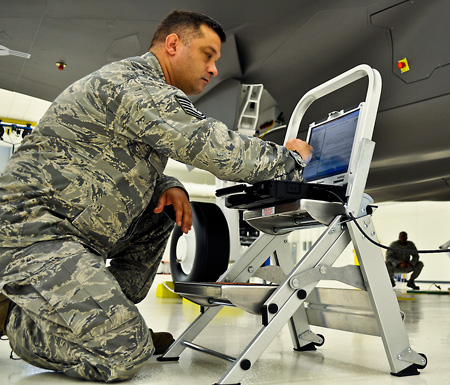
    Training the maintainers: Tech. Sgt. Brandon Sullivan, an aircraft armament systems technician with the 33rd Aircraft Maintenance Squadron, is using a portable maintenance device loaded with joint technical data and plugged into an F-35 life-sized trainer during a weapons familiarization course. Photo: US Air Force by Karen Romanov

    In the Pacific region, F-35 airframe capability will be provided by Japan for the Northern Pacific and Australia for the Southern Pacific, with both capabilities required not later than early 2018. For F-35 engine maintenance, the initial capability will be provided by Australia by early 2018, with Japan providing additional capability at least 3-5 years later. Japan’s mainenance facilities are likely to support both Japanese and US jets. In addition, South Korea is expected to join such agreements to support its planned F-35 fleet.

    South Korea announced it will not send its F-35 fleet to Japan for heavy airframe maintenance, and will rather send the 40 jets it plans to operate down under to to be maintained in Australia. The maintenance facilities will likely be based at RAAF Base Amberley and RAAF Base Williamtown.

    Israel and South Korea could also service those jets in country, but such a deal would require significant investments and specialized equipment for the treatment and testing of the jets’ stealth.

    These maintenance assignments do not preclude the option for other F-35 Partners and FMS customers, including those assigned initial airframe and engine capabilities, to participate and be assigned additional future sustainment work, to include component and system repairs, as the fleet grows and the F-35 global presence expands.

    The assignments were based on data compiled and analyzed by the F-35 Joint Program Office that was collected from European Partners and their industries. These initial MRO&U assignments will support near-term engine and airframe F-35 overseas operations and maintenance and will be reviewed and updated in approximately five years.

    alis-testing800
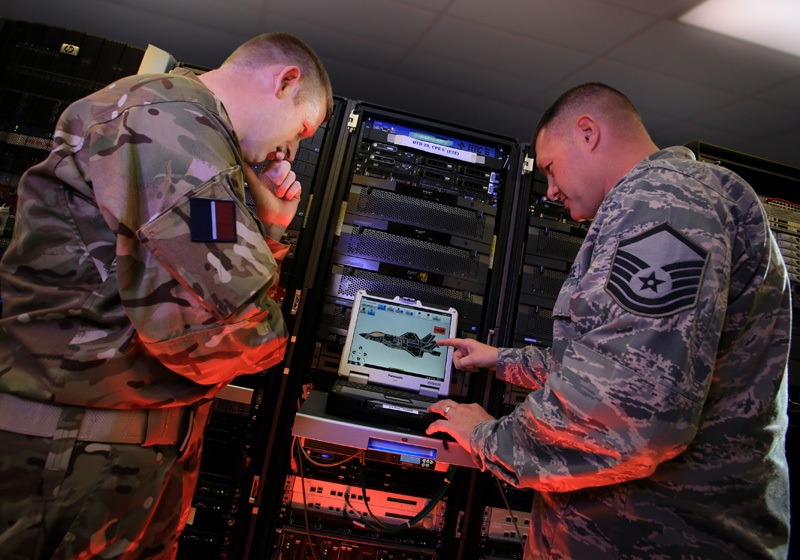
    United Kingdom and U.S. Air Force F-35 maintainers support ALIS testing at Lockheed Martin’s Orlando facility in August 2014. Photo: Lockheed Martin, by Mike Wilhelm.

    “This is another example of the continuing expansion of global sustainment opportunities for the international F-35 community,” said Lt. Gen. Chris Bogdan, F-35 Program Executive Officer.” The F-35 international users will remain a vital part of the support structure of the Program. Their continuing participation is critical to driving down costs and getting the best-value for the F-35 team, while improving the strength of the global sustainment base for many years to come.”

    “This is the first of many opportunities we will have to assign F-35 global sustainment solutions,” said F-35 Program Executive Officer, Lt. Gen. Chris Bogdan. “As international F-35 deliveries increase and global operations expand, support provided by our international F-35 users becomes increasingly more important. We are grateful for the opportunity to work alongside these nations on a daily basis; this close teamwork enables the US Defense Department to make well-informed, best-value decisions to shape the F-35 global sustainment posture for decades to come.”

    An important milestone for the F-35 support was the delivery of a new version of the Autonomic Logistics Information System (ALIS). F-35 operators are using ALIS to provide logistics and operational data analysis. As the F-35 fleet management tool, ALIS integrates preventative maintenance, flight scheduling and the mission planning system. Pilots plan and debrief missions, and maintenance professionals sustain the F-35 using ALIS.

    During flight test operations, the military will confirm new ALIS capabilities, including high-speed data download for increased aircraft availability. The release also provides each nation flying the F-35 with advanced reporting features for fleet management and trend analysis.

    Following validation at test sites, the software will be installed at all F-35 locations and deployed for military operations beginning in 2015.

    “The men and women who will take the F-35 into operations are charting a new course for fighter aircraft, from tactics development to fleet sustainment,” said Mary Ann Horter, vice-president of F-35 Sustainment Support at Lockheed Martin Mission Systems and Training. “ALIS provides them with a complete picture of the fleet’s status, so that they are equipped with the information needed to make proactive decisions and keep the jets flying.”

    The F-35 is the first tactical aviation system to have sustainment tools engineered in concert with the aircraft for efficiency and cost effectiveness. ALIS is currently operating at nine locations, supporting more than 12,000 sorties to date. Compared to previous aircraft, a higher fidelity of information about the F-35 fleet is tracked within ALIS to reduce operations and maintenance costs and increase aircraft availability.

    f35maintenancetraining725
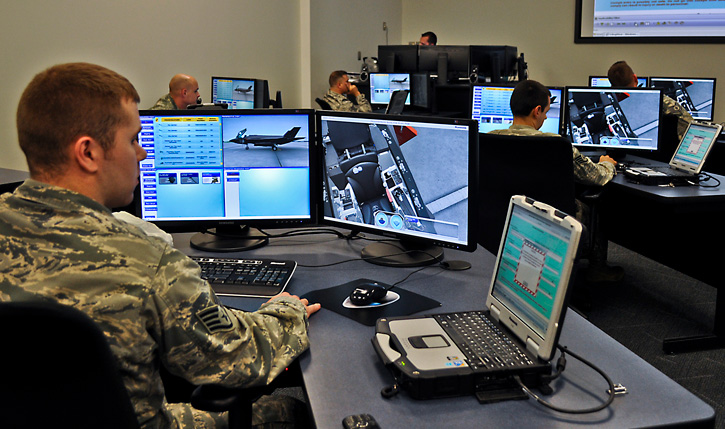
    F35 maintenance and support technicians are trained at the F35 Academic Training Centre (ATC) at Eglin AFB. The ATC is a first-of-its-kind facility for F-35 pilot and maintenance training and uses a cascading style of learning using computers and hands-on equipment to build upon skills . Photo: US Air Force, by Karen Roganov

    KMW upgrades former Dutch Leopard 2s for the German Army

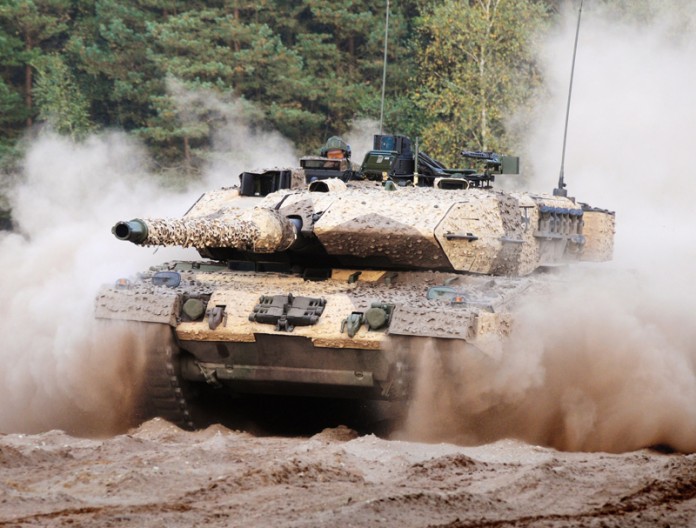
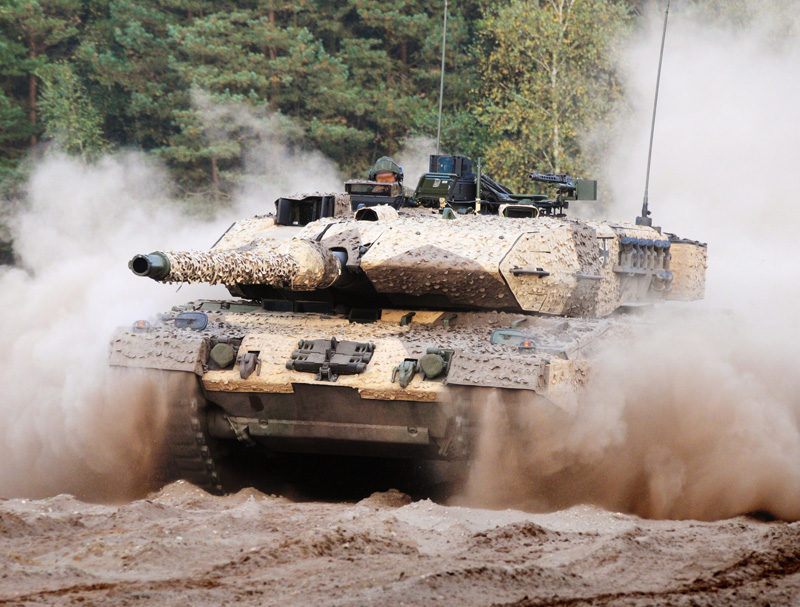
    The Leopard 2A7 received new optronics systems for the commander and driver, air conditioning system for the crew and auxiliary power unit augmenting the tank's endurance on silent watch. The choice of ammunition has also increased to include the DM12 multi-purpose high explosive cartridge. Photo: KMW
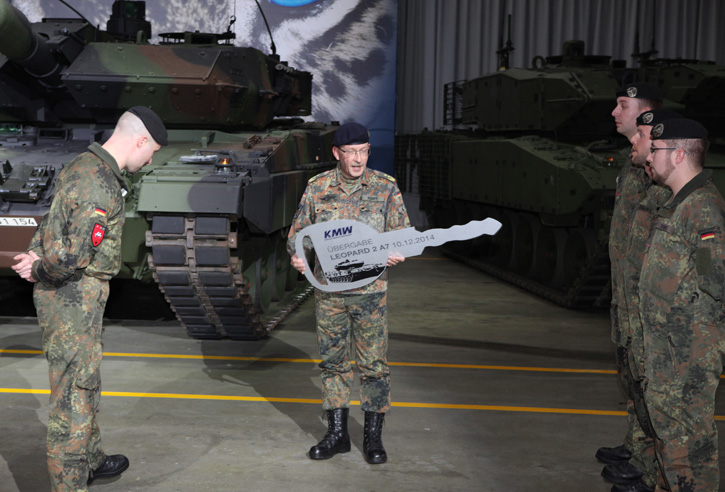
    Inspector general of the German Army, Lieutenant General Rainer Korff receives the 'key' for the first of 20 Leopard 2A7 main battle tanks upgraded by KMW to the latest A7 version. Photo: KMW
    Inspector general of the German Army, Lieutenant General Rainer Korff receives the ‘key’ for the first of 20 Leopard 2A7 main battle tanks upgraded by KMW to the latest A7 version. The tank on the right is an A7+, fitted with enhanced side armor improving protection against IEDs and RPGs. The German tanks are prepared to carry the side armor but are not yet equipped with these armor systems. for includes Photo: KMW

    The German Army (Bundeswehr) has received the first modernized Leopard 2A7 Main Battle Tank (MBT) upgraded by the original manufacturer Krauss-Maffei Wegmann. Delivered on December 10, 2014 , the tank was the first of a batch of 20 former Dutch MBTs to be upgraded for the German Army. In addition, KMW is gearing up to begin the production of 62 Leopard 2A7s for the armed forces of the Emirate of Qatar. These new tanks will be delivered next year.

    The 20 upgraded Leopard 2A7s are based on German-built 2A6 models bought by the Canadians from the Royal Dutch army and transferred back to Germany. This reciprocal action enabled the Canadians to retain the 20 tanks they loaned from Germany in 2007 for operations in Afghanistan. These tanks were modified specifically for the Canadian forces that operated for four years in the country.

    When it was time to return the vehicles, Canada opted to acquire surplus Dutch tanks that would be stripped of the Dutch specific modifications and rebuilt to the German standard model. However, the Bundeswehr decided, along with the Canadians, that it would be a good opportunity to remodel these tanks into the latest A7.

    These 20 modified MBTs will be the most advanced of the 225 Leopard 2 tanks of several models that remain with the German Army, from the original fleet of 2,125 Leopard 2 tanks produced for it since 1979.

    The Leopard 2A7 received new optronics systems for the commander and driver, air conditioning system for the crew and auxiliary power unit augmenting the tank's endurance on silent watch. The choice of ammunition has also increased to include the DM12 multi-purpose high explosive cartridge. Photo: KMW
    The Leopard 2A7 received enhanced belly and side protection against asymmetric threats (IEDs, RPGs and mines), new optronics systems for the commander and driver, air conditioning system for the crew and auxiliary power unit augmenting the tank’s endurance on silent watch. The choice of ammunition has also increased to include the DM12 multi-purpose high explosive cartridge. Photo: KMW
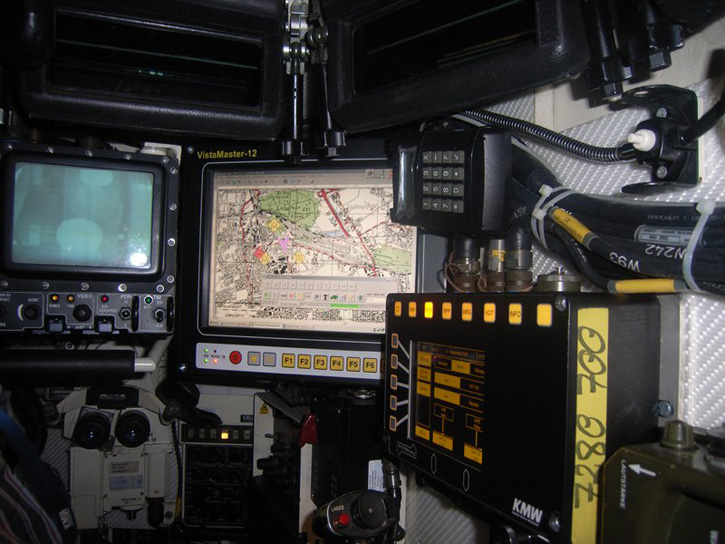
    The commander's position inside the Leopard 2A7 showing the different displays of the fire control computer, tactical picture and thermal/electro-optical (day/night) sight.
    The commander’s position inside the Leopard 2A7 showing the different displays of the fire control computer, tactical picture and thermal/electro-optical (day/night) sight.

    The Leopard 2 A7 features optimized protection against asymmetrical and conventional threats, particularly IEDs, mines and RPGs. It is also prepared to carry additional passive side armor if such a need should arise. The tank is equipped with accessories attachments, enabling the tank to be fitted with a mine plow, a mine roller or a dozer blade for clearing mines, booby traps or building debris blocking the way. The fighting compartment and turret are air conditioned, enabling the crew to operate inside on extended missions in hot or cold climates. To support the air conditioning and some of the electronic and electrical systems even when the main engine is shut down, the tank uses a 17kW auxiliary power unit (APU).

    The driver is equipped with an imaging device combining thermal and 3Gen night vision device, improving driving safety even low-visibility conditions, such as fog, dust, smoke and total darkness). The tank’s Improved, stabilized, panoramic commander sight also features combined thermal and daylight optronic sensors, along with a laser rangefinder, providing better situational awareness and observation at longer range.

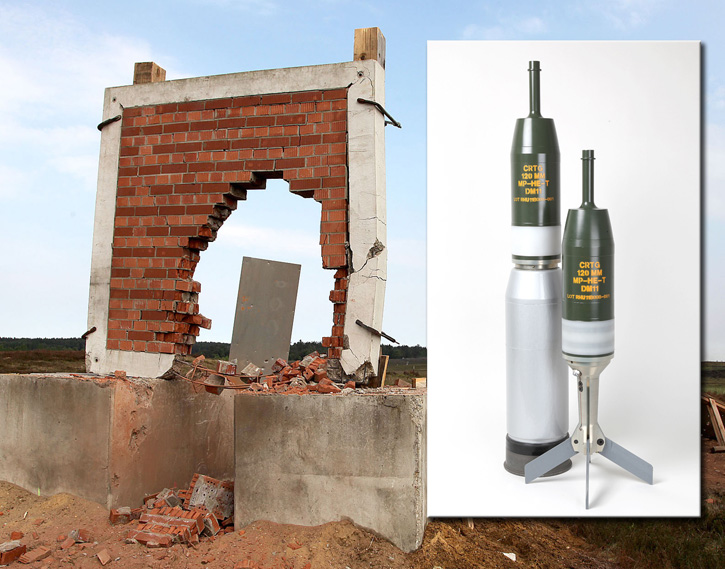
    combines a shaped charge and fragmentation effect, the DM 11, a 120mm HE-MP 120mm tank round utilises a programmable time-delay fuse,to enhance performance against 'soft' and 'hard' targets alike.  After loading, an electronic module programs the time-delay fuse to detonate at a specific point in the projectile's flight path: the round can be timed to explode for maximum effect either above, in front or inside of a target (e.g. after penetrating a wall as shown in this picture). Photo: Rheinmetall defence
    combines a shaped charge and fragmentation effect, the DM 11, a 120mm HE-MP 120mm tank round utilises a programmable time-delay fuse,to enhance performance against ‘soft’ and ‘hard’ targets alike. After loading, an electronic module programs the time-delay fuse to detonate at a specific point in the projectile’s flight path: the round can be timed to explode for maximum effect either above, in front or inside of a target (e.g. after penetrating a wall as shown in this picture). Photo: Rheinmetall defence

    The tank retains the L/55 120mm smooth-bore gun, but adds the Rheinmetall DM11 high explosive multi-purpose (HE-MP) round, fitted with a programmable fuse, which improves effectiveness in urban warfare, when firing at buildings, bunkers and fortified positions.

    Many of these upgrades are not new; nor are they exclusive to Germany. Some have already been implemented by a number of the Leopard 2 operators, including Canada, Greece, Singapore, Spain and Sweden, but Germany is only just now introducing them.
    “The obvious question is of course: ‘When can we convert the remaining 205 Leopard 2A6M +, A6 and A5 convert to the A7, so that not only 20 crews can use the most advanced and safest system?” commented Frank Haun, KMW Chief Executive Officer.

    Seoul is buying US and Israeli drones

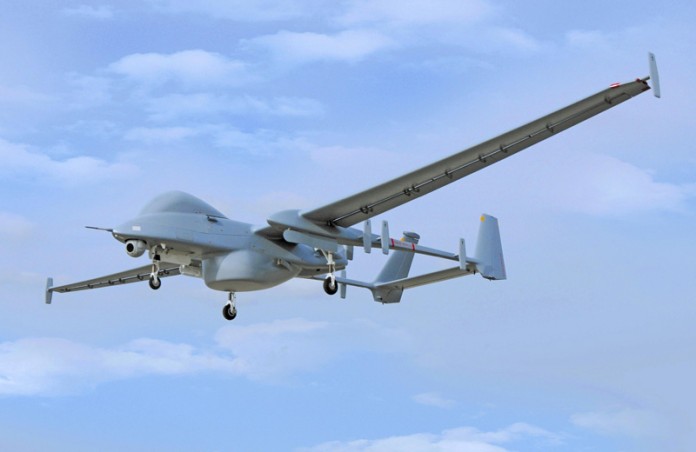
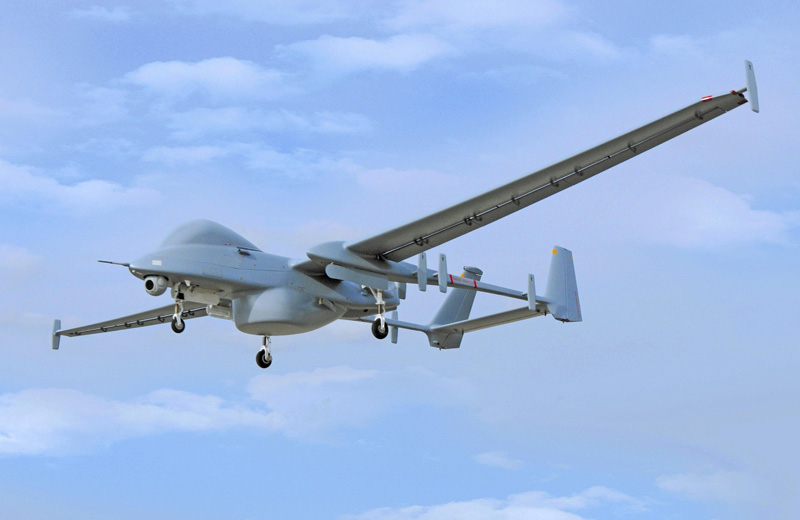
    IAI will supply three Heron I UAS to South Korea, as the first phase of a contract expected to be signed next year. Photo: IAI
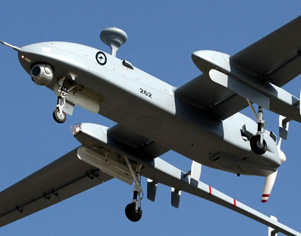
    Heron UAS are currently operated by several air forces in Asia Pacific, including Australia, India, Indonesia and Singapore and
    Heron UAS are currently operated by several air forces in Asia Pacific, including Australia, India, Indonesia and Singapore. Photo: Australian MOD

    The Defense Acquisition Program Administration (DAPA) of the Republic of Korea has selected the Heron Medium Altitude, Long Endurance (MALE) Unmanned Aerial System (UAS) from Israel Aerospace Industries (IAI) for its corps-level UAS upgrade project. At the same time, in the USA, Northrop Grumman moved forward with the manufacturing of four Global Hawk High Altitude, Long Endurance (HALE) drones for Seoul, under a foreign military sale contract awarded by the US Air Force.

    Seoul plans to spend 40 billion won (US$36.5 million) buying three Heron-I drones from Israel by the end of 2015. The drones will support the Korean Army corps deployed along the northwestern frontline, covering the demilitarized zone along the 38th parallel and the northwestern border islands at the yellow sea, as well as inland, near the Seoul metropolitan area. The Global Hawk drones are expected to replace the US Air Force drones currently conducting providing strategic, high altitude recce missions over the Korean peninsula.

    Northrop Grumman was awarded the $657 million contract yesterday, to build and deliver four RQ-4B Block 30 Global Hawk HALE unmanned aircraft for the Republic of Korea. Seoul expects to pay around 900 billion won ($820 million) for the four drones. The contract also covers four Enhanced Integrated Sensor Suites for the aircraft, two spare engines, and the applicable Ground Control Environment elements. Deliveries will begin in 2017 and end in 2019. This foreign military sales (FMS) contract is managed by the US Air Force on behalf of the Republic of Korea.

    Subscribe to read more…

    The IAI Heron-1 is a medium-altitude long-endurance unmanned aerial vehicle with a range of 250 kilometers. It is capable of flying for more than 24 hours, or six times longer than the drones the locally produced KUS-7 and KUS-9 stand-in UAVs supplied to the Korean military since 2007.

    IAI will supply three Heron I UAS to South Korea, as the first phase of a contract expected to be signed next year. Photo: IAI
    IAI will supply three Heron I UAS to South Korea, as the first phase of a contract expected to be signed next year. Photo: IAI

    Cyber Intelligence Report – December 15, 2014

    cyber_report

    ISRAEL

    Israel capital booming

    In the last year, 100 start-ups were established in Jerusalem alone, compared to that of 40 established in 2013 and 12 in 2012. The Jerusalem Hi-Tech scene is home already to newly established start-ups like Umoove, Orcam, ThetaRay, as well as international companies like IBM, Intel, and Cisco. Over the 100 start-ups established in 2014, 47 raised $172 million dollars.

    A new vulnerability to affect Israel financial companies

    A vulnerability was discovered a few months ago in the SSL v3 protocol allowing a MITM (Man in the Middle) attack. Currently, a new variation of the SSL vulnerability (dubbed POODLE attack) was discovered in TLS protocol (an encryption protocol like SSL). The attack allows hackers to intercept and crack encrypted information transferred between the end user and the website being accessed. Calcalist, an Israeli financial site, discovered that a large number of Israeli banks, insurance companies, and credit card companies are vulnerable to this kind of attack. While the severity of the attack is grave, security measures required to avoid the vulnerability are relatively easy. Moreover, ability of a hacker to exploit the vulnerability depends on his capability to install the malware on the user’s system. For this reason, safety behaviour and precaution by the user will minimize the abilities of the hacker to compromise his data.


    USA

    US Senate to hold hearing on increasing cyber-crime against financial sector

    According to Matthew Goldstein of the New York Times, the Senate Banking Committee intends to hold a hearing on ways to “protect the financial sector” from cyber-attacks. This development follows the cyber-attack on JPMorgan earlier this year. Official reports claim the same hackers also attempted to access the systems of at least twelve additional financial institutions. The focus will be on the joint international efforts carried out to handle cyber-attacks on banks and other financial institutions. The most serious cyber-attacks in the financial sector have occurred in retail organizations through companies like Neiman Marcus, Target, etc. Nevertheless, cyber-attacks on financial institutions are becoming more frequent, as regulators worry about criminals accessing sensitive financial information or looting accounts. This is an important milestone in bringing cyber-crime to the forefront among policy and decision makers in the US and in democratic states.

    A new cyber branch established by US Army

    A cyber branch is being established in the US Army in efforts to step up modernization and improvements in the field. The cyber program will be the first in its area within the Army. The Head of Cyber branch explained it must prepare for future circumstances. The new cyber branch will operate both as defense mechanisms and as an attacker. The new wing will run regular cyberspace checkpoints and conduct cyber operations against every enemy of the US. The branch was announced late September, and by October 2015, it should begin receiving personnel enlisted specially for the branch. By 2016, it will begin teaching courses and programs.

    China capable of launching cyber-attacks against US power grid

    Head of Cyber Command and the Director of the National Security Agency (NSA), Admiral Mike Rogers, spoke in front of the US Congress claiming China has the cyber capabilities to launch an attack on the US power grid system and other critical infrastructure. The Chinese government has denied all claims and has accused the US of creating a negative image of China. In order to illustrate that China is not a real cyber threat a Chinese article, “China Threat Theory,” measures US cyber capabilities claiming the US cyber units can hack China’s power-grid and cause critical damage. It should be noted that more than 80% of China’s economy and other critical systems are combined under the same control system, known to be vulnerable to attacks due to its reliability on foreign components, low security awareness, and constant connection to the Internet. With no talks between the two superpowers, the US needs to establish the difference between “low priority attack” and an act of war.


    RUSSIA

    Kaspersky Lab blocked more than 1 million cyber-attacks between 2013 and 2014

    According to the information posted on the web portal of the Russian cyber-security company “Kaspersky Lab,” from October 2013 to November 2014 the company was able to block 1,363,549 unique attacks on devices running Android. Compared to the same period of 2012-2013, the number of attacks on Android-powered devices had quadrupled. Every fifth user of Android has faced mobile threats at least once. In 53% of cases, the use of mobile Trojans was aimed at stealing users’ money.


    MIDDLE-EAST

    Iran officially a real player in global cyber war

    In a new report entitled “Operation Cleaver,” released by US cyber security firm Cylance, it is noted that Iran has been steadily developing its cyber warfare capabilities for a number of years and now poses a significant threat to government agencies and critical infrastructure companies around the world. “We believe that if the operation is left to continue unabated, it is only a matter of time before the team impacts the world’s physical safety,” Cylance published in an 87-page report on the hacking campaign. According to the report, “Operation Cleaver” hackers launched a massive attack on 50 organizations at 16 countries including the targeting of military, oil and gas, energy and utilities, transportation, airlines, airports, hospitals, and aerospace industries. Damage reports found that the attackers managed to gain information allowing them to access ICS and SCADA. With this information, the attackers succeeded hacking into airport security systems, gaining complete access to gates and security control systems, etc. The attacks have taken place in over 50 entities in 16 countries, with only 10 of the targeted companies located in the US. In light of how ambitious Iran’s hacking campaigns have become, the report makes a bold claim that Iran is the new China.Iran, for its part, has denied the allegations stating: “This is a baseless and unfounded allegation fabricated to tarnish the Iranian government image, particularly aimed at hampering current nuclear talks,” Hamid Babaei, an Iranian spokesperson, told Reuters. Iran is said to have heavily invested in its cyber capabilities since 2010, when the Stuxnet virus hit its nuclear program, as Iran has dedicated many sources into its defensive and offensive cyber program.

    The man behind ISIS’s “Twitter Jihadi” facing life imprisonment

    Mehdi Masroor Biswasaka aka @ShamiWitness, one of the most influential Twitter handles for the ISIS terror group, was recently arrested and could potentially face life imprisonment under India’s cyber terrorism law, under Section 66F of Information Technology Act, 2000. These charges deal with crimes where a person knowingly accesses a computer resource that “may be used to cause or likely to cause injury to the interests of the sovereignty and integrity of India, the security of the State, friendly relations with foreign States, public order, decency or morality, or in relation to contempt of court, defamation or incitement to an offence, or to the advantage of any foreign nation, group of individuals or otherwise.” The police investigation shows that a review of the tweets posted by Biswasaka clearly depicts his close ties and links with many ISIS fighters on the frontline.


    CHINA and APAC

    Australian government begins review of cyber security strategy

    At the much-anticipated opening of the Australian Cyber Security Centre (ACSC), Australian Prime Minister Tony Abbott announced a review into Australian cybersecurity. The review is intended to assess Australia’s current cybersecurity arrangements relating to the security of government information and communications in addition to the security of businesses and individuals. Abbott put network security on par with physical security, explaining it is a guarantor of economic security. Abbot stated the importance of staying ahead, as the last existing review occurred in 2008. A panel of experts and Department of the Prime Minister and Cabinet will conduct the review. The panel will include CEO of the Business Council of Australia, Jennifer Westcott; Cisco chief security and trust officer, John Stewart; Telstra CISO, Mike Burgess; and Tobias Feakin, director of the International Cyber Policy Centre at the Australian Strategic Policy Institute. The six-month review will look at how both the public and private sectors can collaborate and cooperate to enhance national security and the security of online systems. Abbott stated that the Australian Signals Directorate (an Intelligence Agency) in just the last year 940 cyber incidents involving government agencies occurred, which is a 37% increase from the previous year.


    AFRICA

    Kenya breaks ‘Chinese-run cybercrime network’

    Kenyan police say they have cracked a cybercrime centre run by 77 Chinese nationals from upmarket homes in the capital, Nairobi. Police believe they were involved in hacking and money laundering. China has promised to help with investigations.

    Nigeria: Cisco warns banks, others of increased cyber attacks

    The increasing threats of cybercrime menace may impact more on the activities of banks and other financial institutions, oil and gas, and other sectors of the economy, unless urgent measures are implemented. Speaking at the presentation of the 2014 Cisco Mobility Report in Lagos, Cisco’s Country Manager for Nigeria, Liberia, Sierra Leone, and Ghana, Dare Ogunlade, noted that cyber insecurity was posing great danger to individuals, businesses, and governments across the globe, growing at an average 14 per cent on a yearly basis.


    EUROPE

    Raytheon opening new cyber research center in UK

    The American defense company, Raytheon, is about to inaugurate its new cyber research center in the UK. The new “Cyber Innovation Centre” will be based in the South-West of England and will include about 100 cyber security specialists. These specialists will work in cooperation with the government and corporations. This new cyber research center will focus on the development and test new solutions to counter emerging cyber threats. Moreover, Raytheon explained that their new center is expecting to gain benefits from the UK by helping the country in developing a cyber-workforce with high skills, which will be beneficial to the UK as they are currently facing large-scale cyber-attacks, especially against their financial institutions. With Raytheon in the UK and Israel Aerospace Industry in Singapore, many companies have opened cyberresearch centers globally in order to increase international cooperation against cybersecurity threats.

    China would have signal intelligence center in France

    China intends to have a signal intelligence center in France, as the Chinese Embassy in Paris appears to be involved in signal intelligence activities. According to some sources, the Embassy installed three satellite antennas of 6 meters each on the roof of Embassy’s building located in a Paris suburb. According to a French specialist in communication interception, two of the satellites are supposed to intercept the electronic communications between Europe, Africa, and the Middle East, the latter of which will forward communications directly to China. These arenas have drawn the attention of the French security agencies. According to Ms. Li, who is the press secretary of the Chinese Embassy in Paris, stated these buildings are used for “logistics service, and the antennas for communication.” China is using signal intelligence and sophisticated systems to listen to encrypted communications. The people behind these spying operations are from either the Chinese PLA army or the Ministry of State Security, the Chinese intelligence agency, and may have used the Chinese Embassy to try to operate under a diplomatic cover. Indeed the French Police have no right to penetrate the Chinese Embassy, which gives them a certain freedom toward their activities inside the Embassy. Moreover, they probably chose France because the country is geographically comfortable between Europe and Africa. France needs to strengthen its signal detection systems in order to detect electromagnetic activities performed by foreign countries on its territory.

    Cyber space international building: EU and USA promoted cyber security dialog

    The European Union welcomed the highest representatives of cyber foreign policy in the EU-US Cyber Dialogue in Brussels with EU representatives, companies, and government promoting cyber security build-up capacity and partnerships across all the EU countries. The conference was supported by the Group of Governmental Experts on Developments in the Field of Information and Telecommunications in the Context of International Security. The main goal of the conference was to improve international dialog in the field of cyber security and ameliorate EU-USA cooperation in the following areas: international security in cyberspace, internet governance, US-EU cyber related work streams, cybercrime, and protection of the human rights and global capacity. Cyber law development was a hot topic, as well as how to respond to conflicts in cyberspace and building efficient measures.


    inss150About the Cyber Intelligence Report:

    This document was prepared by The Institute for National Security Studies (INSS) – Israel and The Cyber Security Forum Initiative (CSFI) – USA to create better cyber situational awareness (Cyber SA) of the nature and scope of threats and hazards to national security worldwide in the domains of cyberspace and open source intelligence. It is provided to Federal, State, Local, Tribal, Territorial and private sector officials to aid in the identification and development of appropriate actions, priorities, and follow-on measures. This product may contain U.S. person information that has been deemed necessary for the intended recipient to understand, assess, or act on the information provided. It should be handled in accordance with the recipient’s intelligence oversight and/or information handling procedures. Some content may be copyrighted. These materials, including copyrighted materials, are intended for “fair use” as permitted under Title 17, Section 107 of the United States Code (“The Copyright Law”). Use of copyrighted material for unauthorized purposes requires permission from the copyright owner. Any feedback regarding this report or requests for changes to the distribution list should be directed to the Open Source Enterprise via unclassified e-mail at: [email protected]. CSFI and the INSS would like to thank the Cyber Intelligence Analysts who worked on collecting and summarizing this report.


    Army, Marines invite proposals for a new light combat vehicle

    The RFP for the procurement of 17,000 JLTVs is the kickstart of the final phase of the race - the final line would be the source selection of a single supplier - expected in seven months.
    The RFP for the procurement of 17,000 JLTVs is the kickstart of the final phase of the race – the final line would be the source selection of a single supplier – expected in seven months.

    The Joint Tactical Light Vehicle (JLTV) program is moving forward on schedule – on Friday December 12, 2014, the US Army issued a final-version RFP for the procurement of 55,000 armored vehicles to three potential suppliers, clearing the way for AM General, Lockheed Martin, and Oshkosh Defense to submit their final proposals. Source selection is expected in July 2015 with a contract awarded to the winner next year as well.

    “The JLTV program remains on track to deliver an affordable, protected-mobility solution that fills today’s critical capability gap with substantial advances in the balance of payload, performance, and protection,” Army Col. John Cavedo, the JLTV project manager, said in a statement. He said the program is on-budget. Both services expect to field their first JLTVs by 2018. Production will total 49,500 JLTVs for the Army and 5,500 for the Marines, with the production cycle ending sometime in the 2030s. Deliveries to the Marine Corps are expected to complete by 2022.
    Balancing mobility, protection and payload, JLTV is meant to restore light tactical mobility

    Following the Milestone C decision expected within a year, the Army will award a firm-fixed-price contract to a single vendor. The award period will cover three years of low rate initial production and five years of full-rate production, for a total of 17,000 vehicles for the Army and Marine Corps. The kits for those 17,000 will be produced by the selected OEM but follow-on kits might use a different vendor, the Army said. At a target price of US$250,000 per vehicle this phase could be worth over $4 billion.

    jltv_candidates800
    The Army and Marines will select a single contractor to supply at least 17,000 JLTVs. The three candidates are (Left to right) AM General BRV-O, the LATV from Oshkosh Defense and the light tactical vehicle from Lockheed Martin.

    The new vehicle will fill a gap between the High-Mobility, Multi-purpose Wheeled Vehicles (HMMWV) that serve the Army, the Marine Corps and nations throughout the world as their standard military vehicle since 1984 and the heavy and slow MRAPs that were introduced in some theaters since 2007.

    More details are available for members

    Robotic spy fish conducts underwater surveillance

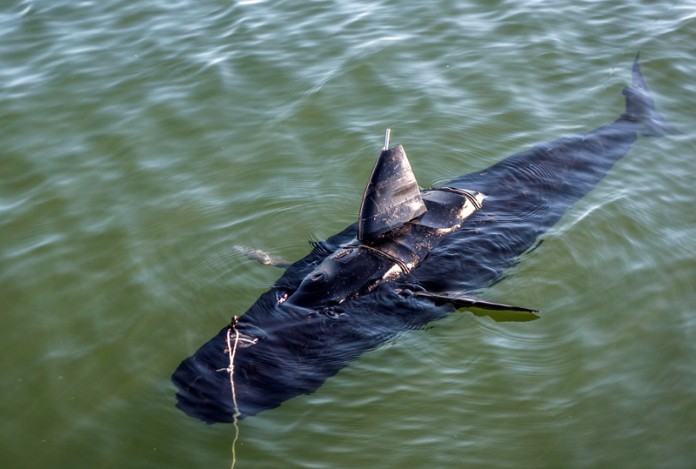
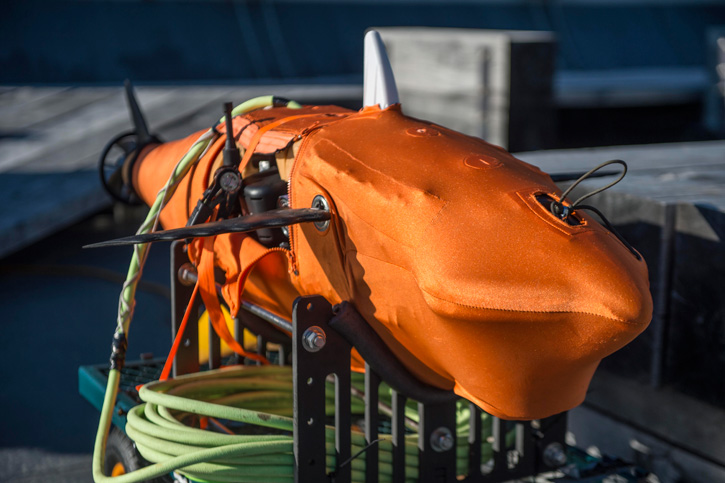
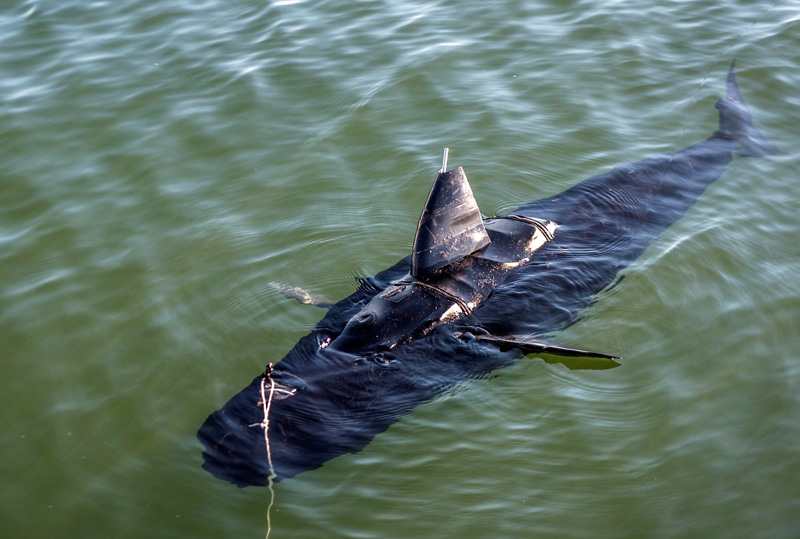
    The GhostSwimmer unmanned underwater vehicle (UUV), developed by the Chief of Naval Operations Rapid Innovation Cell project Silent NEMO, undergoes testing at Joint Expeditionary Base Little Creek - Fort Story. Photo: U.S. Navy by Edward Guttierrez III
    Bio-Swimmer450
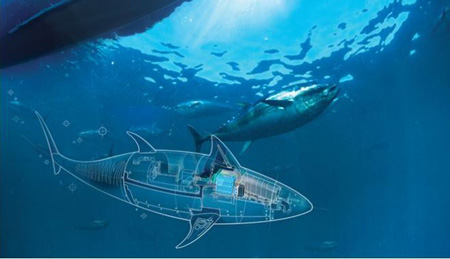
    GhostSwimmer, derived from the BIOSwimmer, is a robotic tuna fish unmanned underwater vehicle developed for underwater surveillance by Weltham MA. based by Boston Engineering.

    The U.S. Navy completed tests on the GhostSwimmer unmanned underwater vehicle (UUV) at Joint Expeditionary Base Little Creek-Fort Story (JEBLC-FS) this week. GhostSwimmer is the latest in a series of innovative projects developed under project ‘Silent NEMO’ Rapid Innovation Cell (CRIC).

    The GhostSwimmer was developed to resemble the shape and mimic the swimming style of a large fish. At a length of approximately 1.5 meters (5 feet) and a weight of nearly 45kg. (100 pounds), the GhostSwimmer vehicle can operate in water depths ranging from 0.25 to 90 meters (10 inches to 300 feet).

    Its bio-mimicry provides additional security during low-visibility intelligence, surveillance and reconnaissance (ISR) missions and friendly hull inspections, while quieter than propeller driven craft of the same size, according to Navy Warfare Development Command (NWDC).

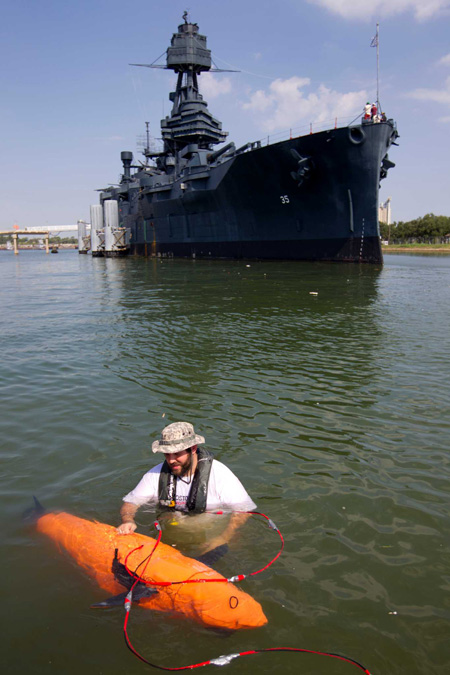
    An earlier 'fish', the BIOSwimmer was tested by DHS for the detection of drug smuggled in ship hulls. In 2013 it was tested on the battleship TEXAS. Photo: DHS
    An earlier ‘fish’, the BIOSwimmer was tested by DHS for the detection of drug smuggled in ship hulls. In 2013 it was tested on the battleship TEXAS. Photo: DHS

    “GhostSwimmer will allow the Navy to have success on more types of missions, while keeping divers and sailors safe,” said Michael Rufo, director of Boston Engineering’s Advanced Systems Group. Boston Engineering developed the tuna-sized UUV that has been gathering data at JEBLC-FS on tides, varied currents, wakes, and weather conditions for the development of future tasks. “It swims just like a fish does, by oscillating its tail fin back and forth,” said Rufo. “The unit is a combination of unmanned systems engineering and unique propulsion and control capabilities.”

    The fish-like GhostSwimmer’s bio-mimicry provides additional security during low-visibility ISR missions

    The robot is capable of operating autonomously for extended periods of time due to its long-lasting battery, but it can also be controlled via laptop with a 152 m’ (500-foot) tether. The tether is long enough to transmit information while inspecting a ship’s hull, for example, but, if operating independently (without a tether), the robot will have to periodically be brought to the surface periodically to download its data.

    A variant model of the GhostSwimmer UUV awaits testing during a demonstration at Joint Expeditionary Base Little Creek - Fort Story. Photo: U.S. Navy by Edward Guttierrez III
    A variant model of the GhostSwimmer UUV awaits testing during a demonstration at Joint Expeditionary Base Little Creek – Fort Story. Photo: U.S. Navy by Edward Guttierrez III

    Silent NEMO is an experiment that explores the possible uses for biomimetic, unmanned underwater vehicles developed under the Chief of Naval Operation Rapid Innovation Cell (CIRC). The CRIC was established in 2012 to provide junior leaders with an opportunity to identify and rapidly field emerging technologies that address the Navy’s most pressing challenges, and it aims to find ways to quickly employ them.

    A similar project undertaken by Boston Engineering is the ‘BIOSwimmer’, a six-foot-long robotic fish designed to detect contraband hidden on a ship’s hull. For this mission the ‘fish’ was equipped with a sophisticated sensor suite, demonstrated last year on the Battleship Texas berthed in Houston TX, as part of a collaborative exercise of the Texas Parks and Wildlife Department, and the Department of Homeland Security’s Science and Technology Directorate.

    The robotic fish was used to detect packages of mock contraband of varying sizes placed by testers in hard-to-reach spaces on the battleship’s hull. The development of the system was funded by DHS Science & Technology Small Business Innovation Research funding.

    The GhostSwimmer unmanned underwater vehicle (UUV), developed by the Chief of Naval Operations Rapid Innovation Cell project Silent NEMO, undergoes testing at Joint Expeditionary Base Little Creek - Fort Story. Photo: U.S. Navy by Edward Guttierrez III
    The GhostSwimmer unmanned underwater vehicle (UUV), developed by the Chief of Naval Operations Rapid Innovation Cell project Silent NEMO, undergoes testing at Joint Expeditionary Base Little Creek – Fort Story. Photo: U.S. Navy by Edward Guttierrez III

    Czech Republic extend Gripen lease through 2027

    The Czech Republic is extending the service of leased JAS39 C/D Gripen fighter jets in 12 years, maintaining the fleet of 14 Gripens through 2027. Swedish Defence and security company Saab announced this week it has received an order from the Swedish Defence Materiel Administration (FMV) for the extended lease. The order is valued at approx. US$76.5 million (SEK 576 million).

    Gripen has been in service with the Czech Republic since 2005. The two governments have reached an agreement on this extension in May 2014.

    The new agreement includes some hardware modification to be implemented within the next year, and software updates to begin immediately. The system upgrades are designed to increase the aircraft capabilities develop and adapt new mission software to meet Czech requirements.

    The US Navy wants better armed, more protected LCS based surface combat ships

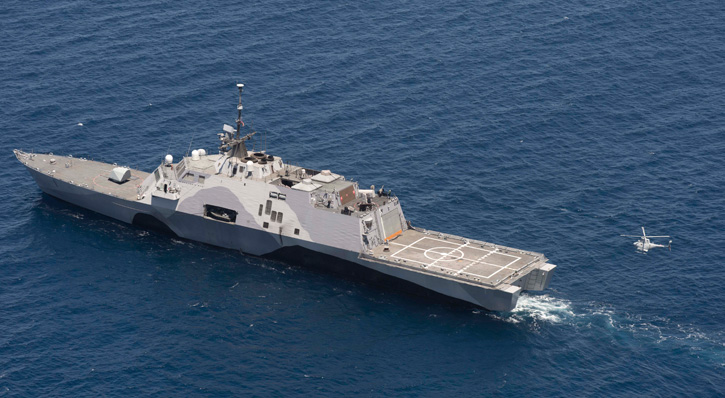
    The littoral combat ships USS Independence (LCS 2), back, and USS Coronado (LCS 4) are underway in the Pacific Ocean. Photo: U.S. Navy, by Keith DeVinney
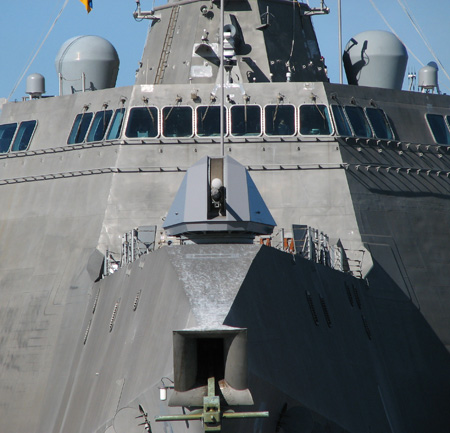
    USS Independence LCS at the US Naval Base at San Diego. Photo: US Navy, by Doug Sayers
    USS Independence LCS at the US Naval Base at San Diego. Photo: US Navy, by Doug Sayers

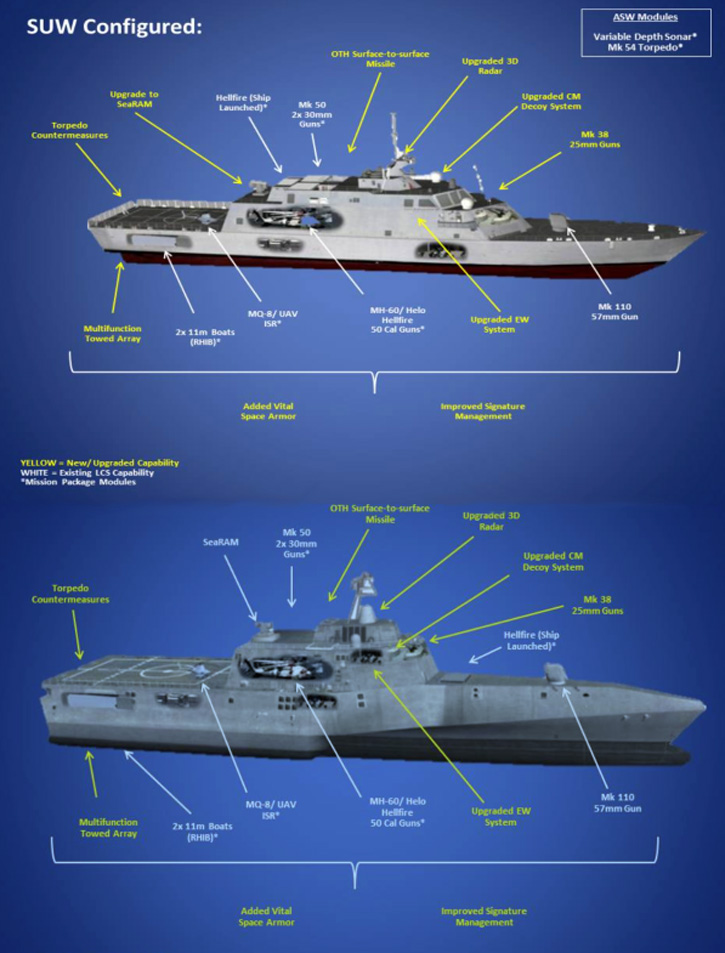
    The US Navy wants its Littoral Combat Ships to be better armed and survivable. Consistent with the Fleet’s views of the future small surface combatant (SSC), a future combat vessel to provide multi-mission anti-surface warfare (SUW) and anti-submarine warfare capabilities (ASW), as well as continuous and effective air, surface and underwater self-defense. The enhanced capabilities are required by the Navy to meet estimated theater threat environment for the 2025 time frame.

    Before leaving office, outgoing Secretary of Defense Chuck Hagel has directed the Navy “to move forward with a multi-mission SSC based on modified Littoral Combat Ship (LCS) hull designs.” The decision rules out other choices previously considered, that included several new frigate size designs. However, the decision does not say which of the two LCS classes should be selected for the SSC.

    Based on the Littoral Combat Ship (LCS), the small surface combatant (SSC) will be more lethal and survivable

    The planned enhancements will be provided to 20 vessels that will complement the baseline configured LCS currently in production. Some of the vessels currently in production will receive some of the improvements as well.

    The LCS vessels (available in Freedom and Independence classes) are currently armed with relatively light armament that consists of the 57mm gun and SeaRAM missile system. The 0+ baseline configurations, will be equipped with a weapon complement typically used on frigate size ships – over-the-horizon surface-to-surface missiles. The type is yet to be specified but is likely to enable both anti ship and land attack capabilities, thus significantly extending the current missile range of the LCS, limited by the Hellfire’s 8km. Air defense upgrades are also considered, but these will be limited to minor improvements to part of the vessels and enhancement of sensors and radar capability, which will also be augmented by more capable and advanced electronic warfare (EW) system; advanced decoys; a towed array system for submarine detection and torpedo defense. In addition, the ship will also get two 25mm Mk38 Mod2 remotely controlled turrets in addition to the 30mm guns currently installed. The armed MH-60 helicopter is also part of the weapons suite on board, capable of engaging targets with either Hellfire missiles or MK-54 torpedoes. The unmanned MQ-8B FireScout helicopter will be used for surveillance, reconnaissance, and targeting.

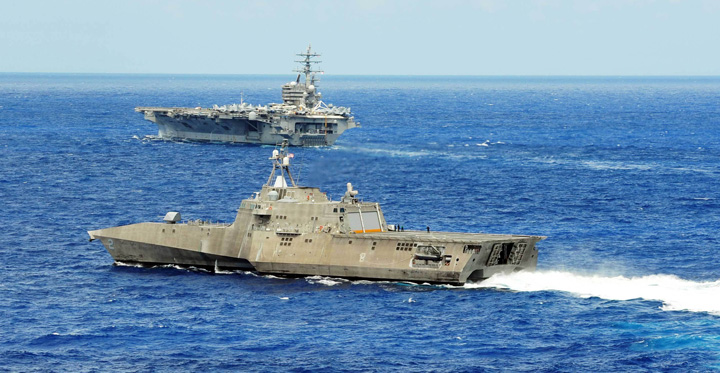
    The littoral combat ship USS Independence (LCS 2) conducts manoeuvres with the aircraft carrier USS Ronald Reagan (CVN 76) during Rim of the Pacific (RIMPAC) Exercise 2014. Photo: U.S. Navy, by Dustin Kelling
    The littoral combat ship USS Independence (LCS 2) conducts manoeuvres with the aircraft carrier USS Ronald Reagan (CVN 76) during Rim of the Pacific (RIMPAC) Exercise 2014. Photo: U.S. Navy, by Dustin Kelling
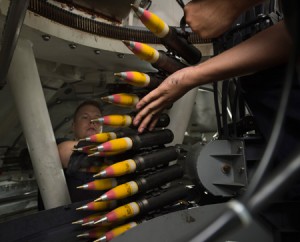
    Gunners load high-explosive incendiary tracer rounds into the ammunition feeder-can of a 30mm weapons system aboard the littoral combat ship USS Fort Worth (LCS 3). Photo: U.S. Navy, by Antonio Turretto
    Gunners load high-explosive incendiary tracer rounds into the ammunition feeder-can of a 30mm weapons system aboard the littoral combat ship USS Fort Worth (LCS 3). The Navy wants its future LCSs to have more firepower on board. Photo: U.S. Navy, by Antonio Turretto

    Modularity design features will also be retained to augment SUW and ASW capabilities as directed by the Fleet Commanders. Available mission modules include Longbow Surface to-Surface Missiles (Hellfire), two MK46 30mm guns, and two 11M RHIBs for Surface Warfare, or a variable depth sonar for submarine warfare which, when added to the ship’s organic multi-function towed array and embarked helicopter, make this an extremely effective anti-submarine warfare platform.

    Absent from the new concept is a significant air defense capability, since the Navy’s current vertical launch system is not suitable for these ships. However, Navy officials said the SSC would be able to operate independently, outside the coverage of other air-defense ships. The current LCS is protected by the short range Rolling Airframe Missile (SeaRAM).

    In addition to the improved weapon systems capabilities for this ship, which reduce its susceptibility to being hit by a threat weapon, the small surface combatant will also include improved passive measures – measures that will reduce the ship’s signature against mine threats, and measures that will harden certain vital spaces and systems against potential damage caused by weapon impact – to further enhance its overall survivability.

    An MQ-8B Fire Scout unmanned autonomous helicopter from the Magicians of Helicopter Maritime Strike Squadron (HSM) 35, Detachment 1, lifts off the flight deck of the littoral combat ship USS Fort Worth (LCS 3) during flight operations. HSM-35 is the Navy's first composite expeditionary helicopter squadron. Fort Worth departed its homeport of San Diego Nov. 17 for a 16-month rotational deployment to Singapore in support of the Navy's strategic rebalance to the Pacific. Photo: U.S. Navy by Antonio P. Turretto Ramos
    An MQ-8B Fire Scout unmanned autonomous helicopter from lifts off the flight deck of the littoral combat ship USS Fort Worth (LCS 3, a Freedom class LCS) during flight operations. Fort Worth departed its homeport of San Diego Nov. 17 for a 16-month rotational deployment to Singapore in support of the Navy’s strategic rebalance to the Pacific. Photo: U.S. Navy by Antonio P. Turretto Ramos

    From an operational perspective, the sum of these improvements will increase the ship’s capability and availability to participate in SUW Surface Action Groups, ASW Search and Attack Units; escort of High Value Units, and support of Carrier Strike Group (CSG) SUW and ASW operations.

    With increased lethality and survivability, the modified LCS will provide the flexibility to operate both independently and as a part of an aggregated force. This decision allows the Navy to add organic multi-mission capabilities to the small surface combatant force while leveraging the benefits and affordability of the LCS program.

    The Navy wants the current LCS class to be configured with more weapons, self protection. US Navy images
    The Navy wants the current LCS class to be configured with more weapons, self protection. US Navy images

    Lockheed Martin and Austal USA, builders of the current LCSs have already submitted SSC proposals to the Navy, both are based on more powerful versions of their current designs. Due to the commonality with existing designs the increased multi-mission capability could be achieved at less than 20% more cost than the current LCS, Navy sources noted.

    The modified LCS ships will complement the planned 32 LCS ships, resulting in a 52 ship Small Surface Combatant Fleet in keeping with the Navy’s Force Structure Analysis. The baseline 32 LCS ships will retain  their full modular capability, while the later 20 will be able to carry modules but will have more systems permanently installed on board. Both versions will allow the Navy to deploy assets to meet the Navy’s mine warfare, SUW, and ASW demands.

    An MQ-8B Fire Scout unmanned helicopter assigned to Helicopter Maritime Strike Squadron (HSM) 35 prepares to land on the littoral combat ship USS Freedom (LCS 1) during visit, board, search and seizure (VBSS) training off the coast of Southern California. Photo: U.S. Navy  by Tim D. Godbee
    An MQ-8B Fire Scout unmanned helicopter assigned to Helicopter Maritime Strike Squadron (HSM) 35 prepares to land on the littoral combat ship USS Freedom (LCS 1) during visit, board, search and seizure (VBSS) training off the coast of Southern California. Photo: U.S. Navy by Tim D. Godbee

    Naval laser zaps surface, aerial target during operational demonstration in the Arabian SeaUS Navy

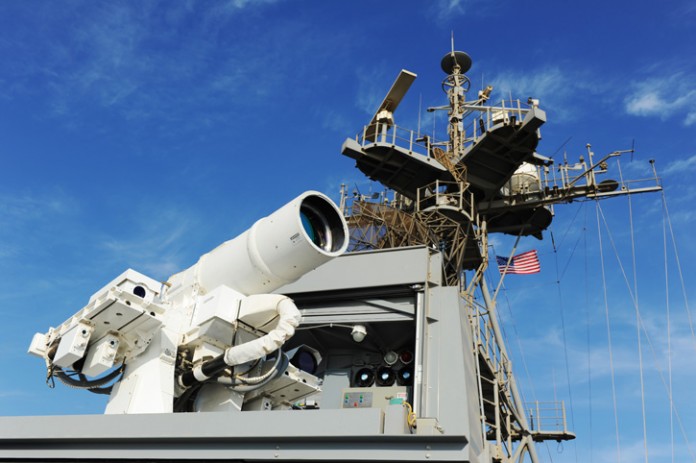
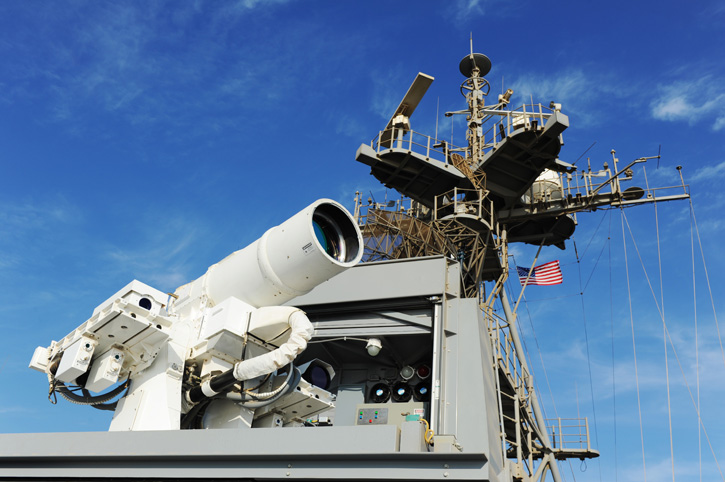
    The Afloat Forward Staging Base (Interim) USS Ponce (ASB(I) 15) conducts an operational demonstration of the Office of Naval Research (ONR)-sponsored Laser Weapon System (LaWS) while deployed to the Arabian Gulf. Photo: U.S. Navy, by John F. Williams
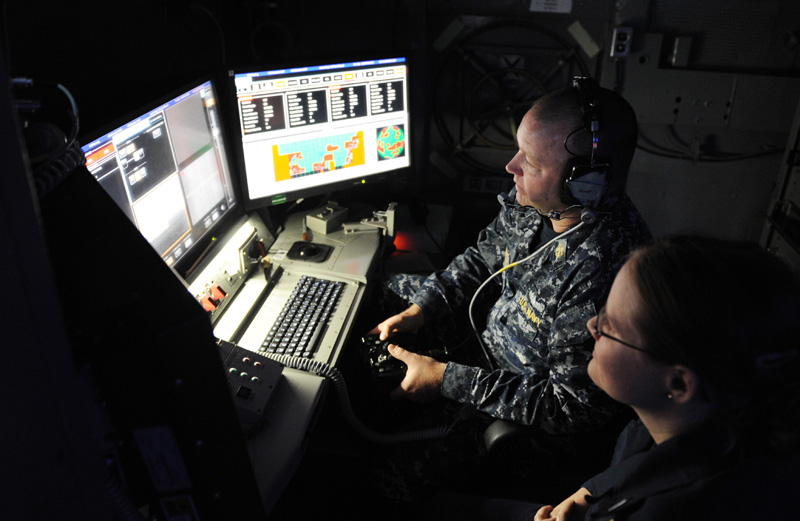
    Chief Fire Controlman Brett Richmond and Lt. j.g. Katie Woodard operate the Office of Naval Research (ONR)-sponsored Laser Weapon System (LaWS) installed aboard the Afloat Forward Staging Base (Interim) USS Ponce (ASB(I) 15) during an operational demonstration in the Arabian Gulf. Directed energy weapons can counter asymmetric threats, including unmanned and light aircraft and small attack boats. Photo: U.S. Navy photo by John F. Williams
    Chief Fire Controlman Brett Richmond and Lt. j.g. Katie Woodard operate the Office of Naval Research (ONR)-sponsored Laser Weapon System (LaWS) installed aboard the Afloat Forward Staging Base (Interim) USS Ponce (ASB(I) 15) during an operational demonstration in the Arabian Gulf. Directed energy weapons can counter asymmetric threats, including unmanned and light aircraft and small attack boats. Photo: U.S. Navy photo by John F. Williams

    Officials at the Office of Naval Research (ONR) announced the successfully deployment of the laser weapon system (LaWS) aboard a naval vessel in the Arabian Gulf. The operational demonstrations, which took place from September to November aboard USS Ponce (AFSB[I] 15), were historic not only because they showed a laser weapon working aboard a deployed U.S. Navy ship, but also because LaWS operated seamlessly with existing ship defense systems.

    The system is operated by a video-game like controller, and can address multiple threats using a range of escalating options, from non-lethal measures such as optical “dazzling” and disabling, to lethal destruction if necessary. It could prove to be a pivotal asset against what are termed “asymmetric threats,” which include small attack boats and UAVs.

    “Laser weapons are powerful, affordable and will play a vital role in the future of naval combat operations,” said Rear Adm. Matthew L. Klunder, chief of naval research. “We ran this particular weapon, a prototype, through some extremely tough paces, and it locked on and destroyed the targets we designated with near-instantaneous lethality.”

    During the tests, LaWS hit targets mounted aboard a speeding oncoming small boat, shot a Scan Eagle unmanned aerial vehicle (UAV) out of the sky, and destroyed other moving targets at sea. Through the mission that lasted few months sailors worked daily with LaWS. They reported the weapon performed flawlessly, including in adverse weather conditions of high winds, heat and humidity. They noted the system exceeded expectations for both reliability and maintainability.

    Researchers say the revolutionary technology breakthroughs demonstrated by LaWS will ultimately benefit not only U.S. Navy surface ships, but also airborne and ground-based weapon systems.

    Data regarding accuracy, lethality and other factors from the Ponce deployment will guide the development of weapons under ONR’s Solid-State Laser-Technology Maturation program. Under this program, industry teams have been selected to develop cost-effective, combat-ready laser prototypes that could be installed on vessels such as guided-missile destroyers and the Littoral Combat Ship in the early 2020s.

    While laser weapons offer new levels of precision and speed for naval warfighters, they also bring increased safety for ships and crews, as lasers are not dependent on the traditional propellant and gunpowder-based ordnance found on ships. Lasers run on electricity and can be fired as long as there is power. They also cost less to build, install and fire than traditional kinetic weapons — for example a multimillion-dollar missile.

    “At less than a dollar per shot, there’s no question about the value LaWS provides,” said Klunder. “With affordability a serious concern for our defense budgets, this will more effectively manage resources to ensure our Sailors and Marines are never in a fair fight.”

    LaWS is a collaborative effort between ONR, Naval Sea Systems Command, Naval Research Laboratory, Naval Surface Warfare Center Dahlgren Division and industry partners.

    The Afloat Forward Staging Base (Interim) USS Ponce (ASB(I) 15) conducts an operational demonstration of the Office of Naval Research (ONR)-sponsored Laser Weapon System (LaWS) while deployed to the Arabian Gulf. Photo: U.S. Navy, by John F. Williams
    The Afloat Forward Staging Base (Interim) USS Ponce (ASB(I) 15) conducts an operational demonstration of the Office of Naval Research (ONR)-sponsored Laser Weapon System (LaWS) while deployed to the Arabian Gulf. Photo: U.S. Navy, by John F. Williams

    Turkey and the Kurds – Practical coexistence with Turkey

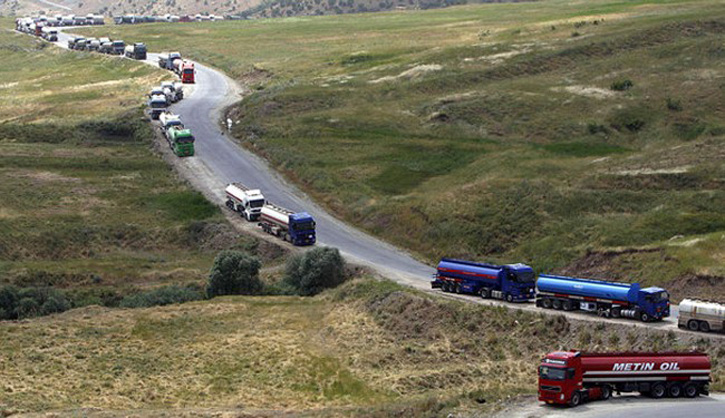
    Lacking pipeline infrastructure crude oil export from Kurdistan is conducted by trucks.
    The Kurdistan Regional Government (KRG) reportedly began to export crude oil in 2012, tapping oil wells located at the area it is controlling. The crude is transported by trucks and then loaded into a pipeline to the Turkish port city of Ceyhan. Baghdad threatened to take legal action against companies dealing with that oil, but the Kurds say they are entitled to market the resources of their own region.
    The Kurdistan Regional Government (KRG) reportedly began to export crude oil in 2012, tapping oil wells located at the area it is controlling. The crude is transported by trucks and then loaded into a pipeline to the Turkish port city of Ceyhan. Baghdad threatened to take legal action against companies dealing with that oil, but the Kurds say they are entitled to market the resources of their own region.

    Part 3 of 3 in a special series about the role of Kurds in the war with ISIS

    With the situation in Iraq and Syria changed, energy became key to the carefully improving relationship between Ankara and the semi-autonomous Iraqi Kurdistan. Turkey needs the oil produced there, pumping around 120,000 barrels a day through a 600-mile long pipeline from Kirkuk to the southern Turkish port of Ceyhan.

    Historically, Turkish governments regarded Iraqi Kurds with deep suspicion, often intervening militarily to stop what they viewed as support for the bloody Kurdish insurgency inside Turkey. However, the latest boom in the Kurdish economy — and the subsequent success of Turkish companies there — has transformed relations between the two former enemies to thriving coexistence. Today, according to Turkish officials, there are already some 1,200 Turkish companies operating in Kurdistan, bringing in as many as a hundred thousand Turkish workers.

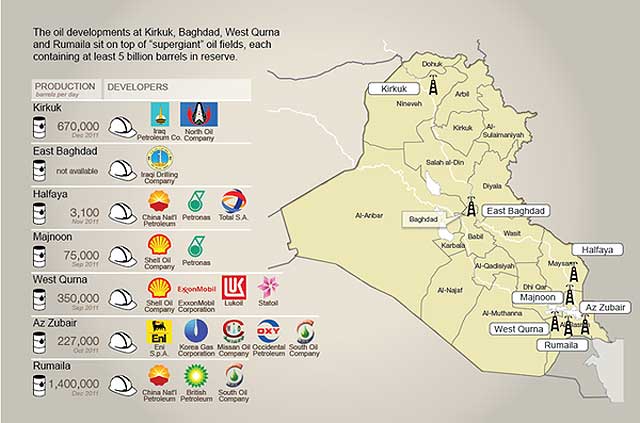
    For the Kurds, the key to independence lies in exploiting and exporting their oil reserves, a trend that is just beginning. Since 2003, Kurdish leaders have opened their oil fields to Western companies, to explore, drill, and produce. It turns out that the Kurds are sitting on as many as 55 billion barrels of oil — a quarter of Iraq’s total reserves. 29 companies, among them Exxon Mobil and Chevron, are working in Kurdistan; the region currently maintains a relatively modest production of about two hundred thousand barrels a day. If the Kurds are able to sell their own oil, it will have to flow through Turkey, their only neighbor with a pipeline leading into the Kurdish region.

    Under the growing threat of ISIS, the Kurds appear, for the first time, remarkably united in their eagerness for an independent state. Still, beneath the surface is a deep current of frustration with Masoud Barzani and Jalal Talabani, the leader of the other major party, the Patriotic Union of Kurdistan (P.U.K.). The historic quarrel between the Kursdish ruling families is well known and has derailed efforts for unification in the past, presenting a major roadblock for their independence.

    iraqi-oil-companies-develop-and-own-iraqi-oil-fields

    While oil could become a crucial driver for an eventual unification, water would provide the lifeline of such state. Water is a prime strategic element in the dry Middle East and strangely, the Kurds are sitting directly over the most important water resources in the eastern Mediterranean region. Euphrates and Tigris – the two famous rivers of the Ancient Mesopotamia have seen the rise of ancient civilizations. The control of regional water resources has been a continual source of tension between modern Turkey, Iraq and Syria, and may likely pose even greater problems in the near future.

    The Rivers Tigris and Euphrates flow downstream from Turkey into Syria and Iraq, where they provide the principal water source for individual and community livelihoods. Given the importance of these resources, there has been a history of disputes over the construction of dams and other water regulation projects along the rivers. These regional interstate hydro-political dynamics are bound to affect the Kurdish population extensively, as the Iraqi Kurdistan plays a pivotal role in controlling the majority of the Tigris river flow into Iraq. Moreover, the geo-politics of water in the Euphrates-Tigris basin are bound to remain highly contentious due to their direct link to issues of the Kurdish national independence and sovereignty. The Tigris-Euphrates basin, populated largely by the Kurds in all three riparian countries of Turkey, Syria and Iraq, has often been cited as the second most hydro-politically important region in the Middle East. The recognition of its significance for security of the region remains divided along the previously indicated lines of argument.

    In the meantime, however more urgent matters seem to determine the regional political scene and that is the creation of the new Islamic State by ISIS. Following their dramatic success taking Mosul and, having full control of Anbar and parts of Syria, ISIS’ fighters turned south, toward the city of Kirkuk. Situated only 160 miles north of Baghdad, Kirkuk has been an object of dispute between the Arab-dominated governments in Baghdad and the Kurdish population. Over the years, Kirkuk had been subjected to campaigns of ethnic cleansing, its Kurdish majority reduced by waves of expulsions and government encouraged Arab migration from the south. To many Kurds, Kirkuk is sacred ground, a vital component of an independent state. Kirkuk and the rest of the contested region contained as many as a million Kurds, as well as oil reserves thought to amount to at least ten billion barrels.

    Meanwhile, the still very hesitant Turkish support will probably continue as long as the aspirations to nation-building are strictly confined to Iraqi Kurdistan but this could change, as Barzani’s forces gain substantially in the war with ISIS. So far, the regional Kurdish government in the capital Irbil is playing its cards skilfully. It is all a matter of balancing those long-term political dreams against the practical diplomatic realities of the moment. For now, it feels as though Iraqi Kurdistan believes it can work on building a new nation-state as long as it keeps its real political aspirations carefully under the radar.

    Turkish soldiers stand guard as Syrian Kurds refugees cross the border  into Turkey near the southeastern town of Suruc in Sanliurfa province. Photo: Reuters
    Turkish soldiers stand guard as Syrian Kurds refugees cross the border into Turkey near the southeastern town of Suruc in Sanliurfa province. Photo: Reuters

    Strange as it may sound to western ears, from Turkey’s new perspective, these days, Kurdish autonomy does not look so half bad, as it was before the ISIS crisis. The portions of northern Iraq and Syria that are under Kurdish control are stable and peaceful — a perfect bulwark against threats, such as the Islamic State of Iraq and al-Sham (ISIS) on Turkey itself. And that is why Turkey has been on relative good relations with the Iraqi Kurds, and could expand into other Kurdish territories, if the war with ISIS develops favorably for Ankara’s regional aspirations.

    ISIS’ advances in Iraq — including a June 11 attack on the Turkish consulate in Mosul, during which the group took Turkish diplomats and security officials hostage — has added urgency to the drive to improve relations between Turkey and Iraqi Kurds. It now seems safe to say that if the Iraqi Kurdish regional government declared independence Ankara could perhaps become the first capital to recognize it. In today’s Middle East, in other words, ISIS is a bigger threat to the Turks than a Kurdish independence in Iraq.

    Whereas Turkey’s ties with the Iraqi Kurds have improved in recent years, Ankara’s relations with the Syrian Kurds have remained rather bitter. This is because, unlike in the Kurdish Regional Government (KRG) where Iraqi Kurdish groups hold more sway than the Turkish Workers Party (PKK), which has been for decades Turkey’s mortal enemy,

    the latter is very popular among the Syrian Kurds. With the emergence of ISIS, the Syrian Kurds’ calculations might be changing. The Democratic Union Party (PYD) and PKK have strong secular tendencies and oppose ISIS and its austere version of Islam. The PYD now controls three Kurdish exclaves in northern Syria, all of which are flanked by Turkey to the north and ISIS to the south. And unlike the Assad regime, ISIS has shown no inclination to trade favors with the Kurds. The Syrian Kurds’ future could now be in Turkey’s hands, and if matters will heat up, full Turkish military and security cooperation could be forthcoming.

    Turkey cannot grow closer to Iraqi and Syrian Kurds without making peace with its own Kurds, which virtually dominate eastern Turkey and much of its strategic assets there. After decades of battle, the PKK could still easily derail any rapprochement between Turkey and other Kurdish groups, especially the Syrian Kurds, by telling the PYD to reject Turkish offers. What is more, the PKK could launch attacks in Turkey if it feels that it is being left out of a potential deal between Ankara and the Iraqi Kurds.

    When ‘push comes to shove’ in this region eventually, Ankara’s only allies in the Middle East might just be the Kurds. Likewise, the Kurds’ main ally could soon be Ankara. Working together, they will try to halt or even defeat their common enemy – ISIS – from becoming a regional power. Turkey’s government is treading a delicate line – attempting to calm its core nationalist voters at home, while bowing to pressure from Washington to help the Kurds in Syria battle Islamic State. Under such stringent conditions, a Turkish controlled Kurdish autonomy seems not to look as half bad to the Ankara leaders.

    This article is first in a three-part series. Stay tuned for:

    Skunk Works and XTEND Simplify Multi-Drone Command

    0
    Lockheed Martin Skunk Works® and XTEND have achieved a major milestone in JADC2 by integrating the XOS operating system with the MDCX™ autonomy platform. This technical breakthrough enables a single operator to simultaneously command multiple drone classes, eliminating the friction of mission handoffs. From "marsupial" drone deployments to operating in GPS-denied environments, explore how this collaboration is abbreviating the data-to-decision timeline and redefining autonomous mission execution.

    From Ukraine to Taiwan: The Global Race to Dominate the New Defense Tech Frontier

    0
    As traditional defense primes face mounting competition from agile “neoprimes” such as Anduril, Palantir and Helsing, the balance of innovation is shifting toward software-defined warfare and scalable, dual-use technologies, while global industry consolidation—marked by Boeing’s integration of Spirit AeroSystems and other strategic mergers—signals an intensified race to secure control over the defense technology value chain. Our Defense-Tech weekly report highlights these trends.

    Europe’s “Drone Wall”

    0
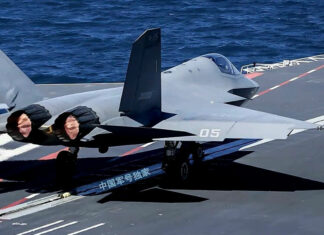
    In early October 2025, a coordinated wave of unmanned aerial system (UAS) incursions—widely attributed to Russia—targeted critical infrastructure across at least ten European nations. The unprecedented campaign exposed the fragility of Europe’s air defenses...

    Weekly Defense Update & Global Security Assessment

    0
    Executive Summary The past week (September 18-25, 2025) represents an inflection point where strategic defense concepts have transitioned from doctrine to tangible reality. An analysis of global events reveals four primary, interconnected trends shaping an...

    U.S. Air and Space Forces Push Next-Gen Programs at the AS&C 2025 Conference and...

    0
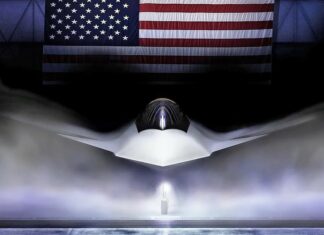
    At the 2025 Air, Space & Cyber Conference, U.S. Air Force and Space Force leaders unveiled major updates on next-generation fighters, bombers, unmanned systems, and space initiatives, highlighting both rapid innovation and critical readiness challenges as the services race to outpace global competitors. A short version is available here, with a more detailed version for subscribers.

    TADTE 2025: Reflecting Taiwan’s Strategic Themes

    0
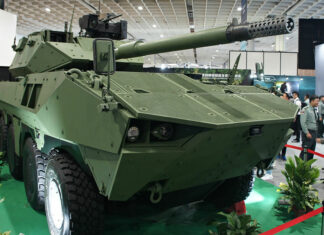
    The Taipei Aerospace & Defense Technology Exhibition (TADTE) 2025 crystallized around four dominant strategic themes that collectively illustrate Taiwan's comprehensive approach to defense modernization amid escalating regional tensions. Based on a detailed report by Pleronix (available upon request). Includes a Podcast discussion on TADTE 2025's highlighting Taiwan's four strategic themes beyond the post's coverage.

    Iron Beam 450 Completes Testing, Soon to Join With Operational Air Defense Units

    0
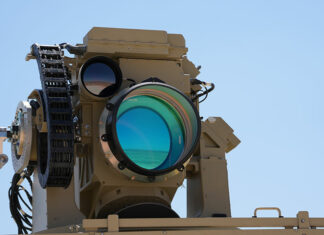
    Israel’s Iron Beam 450 high-power laser system has completed final testing, marking a major leap in air defense. Developed by Rafael, it offers precise, cost-effective interception of rockets, UAVs, and mortars, and is set for IDF deployment by 2025.