Wednesday, December 24, 2025
More
    Home Blog Page 96

    News analysis – ISIS and the Kurds – Changing winds in Mid-Eastern power play

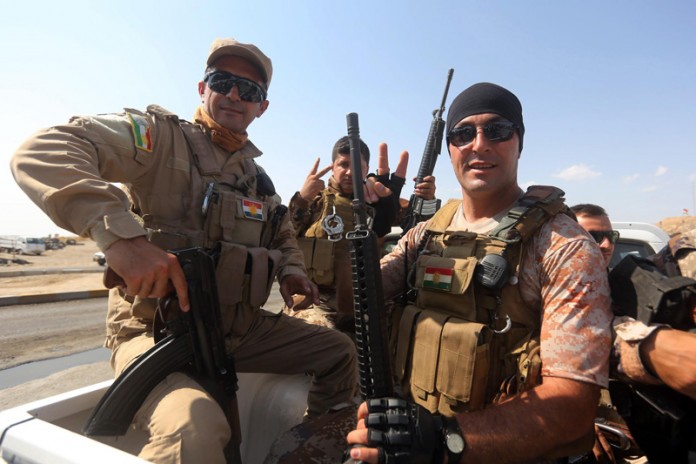
    Kurdish Peshergah militias have retaken the Mosul dam from ISIS forces after receiving air support from coalition airpower.
    Kurdish Peshergah militias have retaken the Mosul dam from ISIS forces after receiving air support from coalition airpower.
    Kurdish Peshergah militias have retaken the Mosul dam from ISIS forces after receiving air support from coalition airpower.

    Part 2 of 3 in a special series about the role of Kurds in the war with ISIS

    When looking on the enfolding military situation in the Middle East, particularly in Iraq and Syria, the Islamic State in Iraq and el-Sham (ISIS – aka Da’ish) that swept into northwestern Iraq in June 2014 is remarkably different from its Islamic predecessor, Al Qaeda in Iraq.

    The earlier organization operated mostly in secret cells, and its leaders were uninterested in acquiring territory, believing that a fixed location involved unacceptable risks. Its leaders, those operating in Iraq, kept very much in the dark, inspired by the central leadership in Afghanistan.

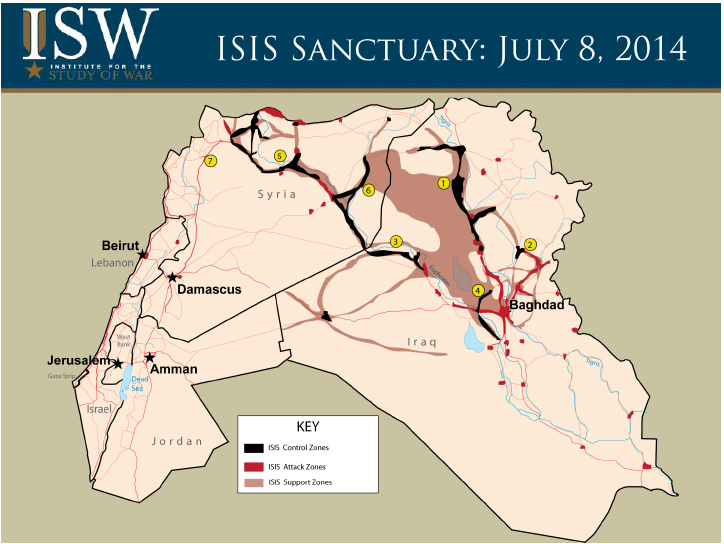
    ISIS is different. Led by Abu Bakr al-Baghdadi, who holds a Ph.D. in Islamic studies from Baghdad University has spent time in an American military prison in Iraq. At the age of 43 he is said to be a flamboyant figure, a self-styled successor to Osama bin Laden. Baghdadi’s goal is to re-create the era of the caliphate, when the ancient Islamic regime ruled from Constantinople to Morocco and the Arabian Peninsula. ISIS is run by a council of former Iraqi generals, according to Hisham Alhashimi, an adviser to the Iraqi government and an expert on ISIS. Many are members of Saddam Hussein’s secular Ba’ath Party who converted to radical Islam in American prisons. Baghdadi has divided his conquered Iraqi lands into seven “Vilayets,” the name given to provinces in the former caliphate.

    “The Kurds are currently the only serious military element fighting ISIS to prevent the establishment of its Islamic caliphate”

    ISIS sanctuary map in Iraq - July 2014 - Courtesy of the Institute for the Study of War (ISW)
    ISIS sanctuary map in Iraq – July 2014

    Baghdadi has about 22,000 men and women in arms under his command, 10,000 fighters in Iraq and 12,000 in Syria. ISIS is also backed by tens of thousands of active supporters in both countries. In Iraq, an elite force, called the “House of Islam”, is dominated by foreigners, including several hundred Europeans, Australians, and Americans. Many of them are potential suicide bombers, but some have gained military and technological expertise in their former home countries.

    Alhashimi claims that the group is increasingly well funded; he estimated that on every month ISIS takes in about $10 million from kidnapping, and more than a $150 million dollars from smuggling oil into Turkey and other neighboring countries, often selling it at the bargain price of about a dollar a gallon. As of early this year, ISIS had also had a cash pot estimated at nearly one billion dollar in cash, much of it seized in banks in cities taken over in Iraq and Syria.

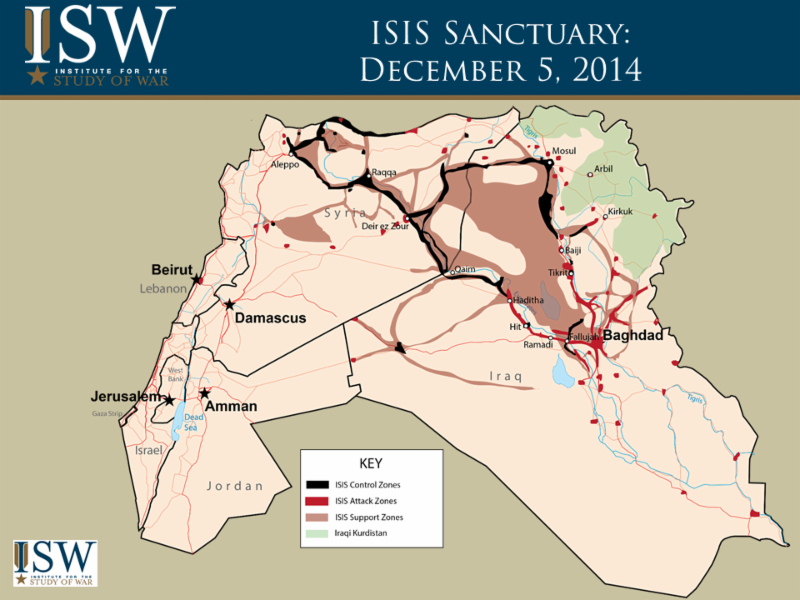
    ISIS Sanctuary map - December 5, 2014 - Courtesy of the Institute for the Study of War (ISW)
    ISIS Sanctuary map – December 5, 2014 – Courtesy of the Institute for the Study of War (ISW)

    Its military commanders have relied on a combination of conventional and guerrilla tactics—along with terrorism—to achieve their ends. ISIS opens with a sustained artillery bombardment, which can last for days, then sends in waves of suicide bombers. When the defenses start to crack, its fighters race in on trucks, guns firing rapid volleys. This was how ISIS conquered the Iraqi cities of Sinjar and Al Qaim, on the Euphrates.

    As ISIS closed in on Kirkuk, one of the largest cities in northern Iraq, the Iraqi Army around the city began to collapse. Six Iraqi divisions melted like the snow. Right then the Kurdish military leader Masoud Barzani gave the order: “Fill the vacuum.” The first of 30,000 Kurdish peshmerga militia fighters moved forward, taking over posts that the Iraqi Army had abandoned. By midnight, the Kurds had taken possession of Kirkuk, and Barazani soon made it clear that they would never give it back.

    Through the ISIS war, the Kurds as a nationality have now re-appeared on the world stage. They are currently the only serious military element fighting ISIS to prevent the establishment of its Islamic caliphate. On this changing political landscape it feels as though everyone is learning the rules of a new game.

    ISIS’ advances in Iraq — including a June 11 attack on the Turkish consulate in Mosul, during which the group took Turkish diplomats and security officials hostage — has added urgency to the drive to improve relations between Turkey and Iraqi Kurds. It now seems safe to say that if the Iraqi Kurdish regional government declared independence Ankara could perhaps become the first capital to recognize it. In today’s Middle East, in other words, ISIS is a bigger threat to the Turks than a Kurdish independence in Iraq.

    “If the Kurds will not immediately get substantial modern military support, it may soon be too late to save the region from becoming another Islamic Afghanistan”

    But in order to fight ISIS effectively the Peshmerga urgently needs modern weapons, which only the Americans can deliver. Others may help, but may not be enough to maintain a long term war fighting, which looks inevitable as western nations hesitate to get actively involved in this strange but highly dangerous conflict. If the Kurds will not immediately get substantial modern military support, while ISIS continues to arm itself from American weapon arsenals abandoned by the dwindling Iraqi army, it may soon be too late to save the region from becoming another Islamic Afghanistan, which might endanger not only this part of the world, but soon enfold into a global Islamic war against western civilization.

    This article is first in a three-part series. Stay tuned for:

    News Analysis: Fighting ISIS trigger new hope for Kurdish independence

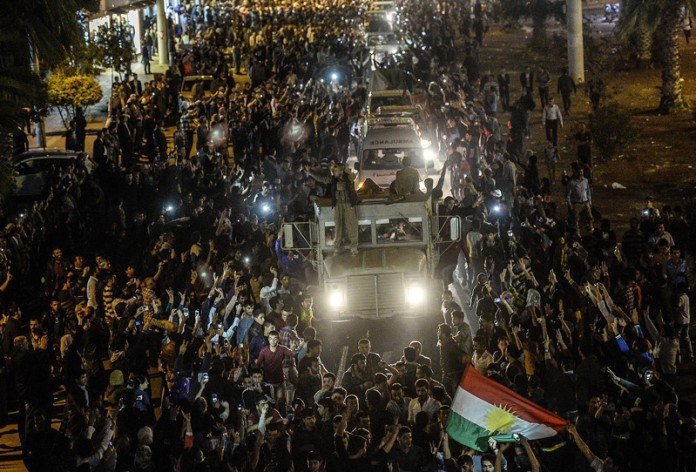
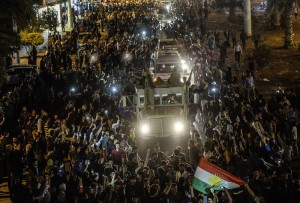
    Kurdish people in Turkey greet peshmerga convoys at Viransehir, in Sanliurfa. Photo: AFP

    Part 1 of 3 in a special series about the role of Kurds in the war with ISIS

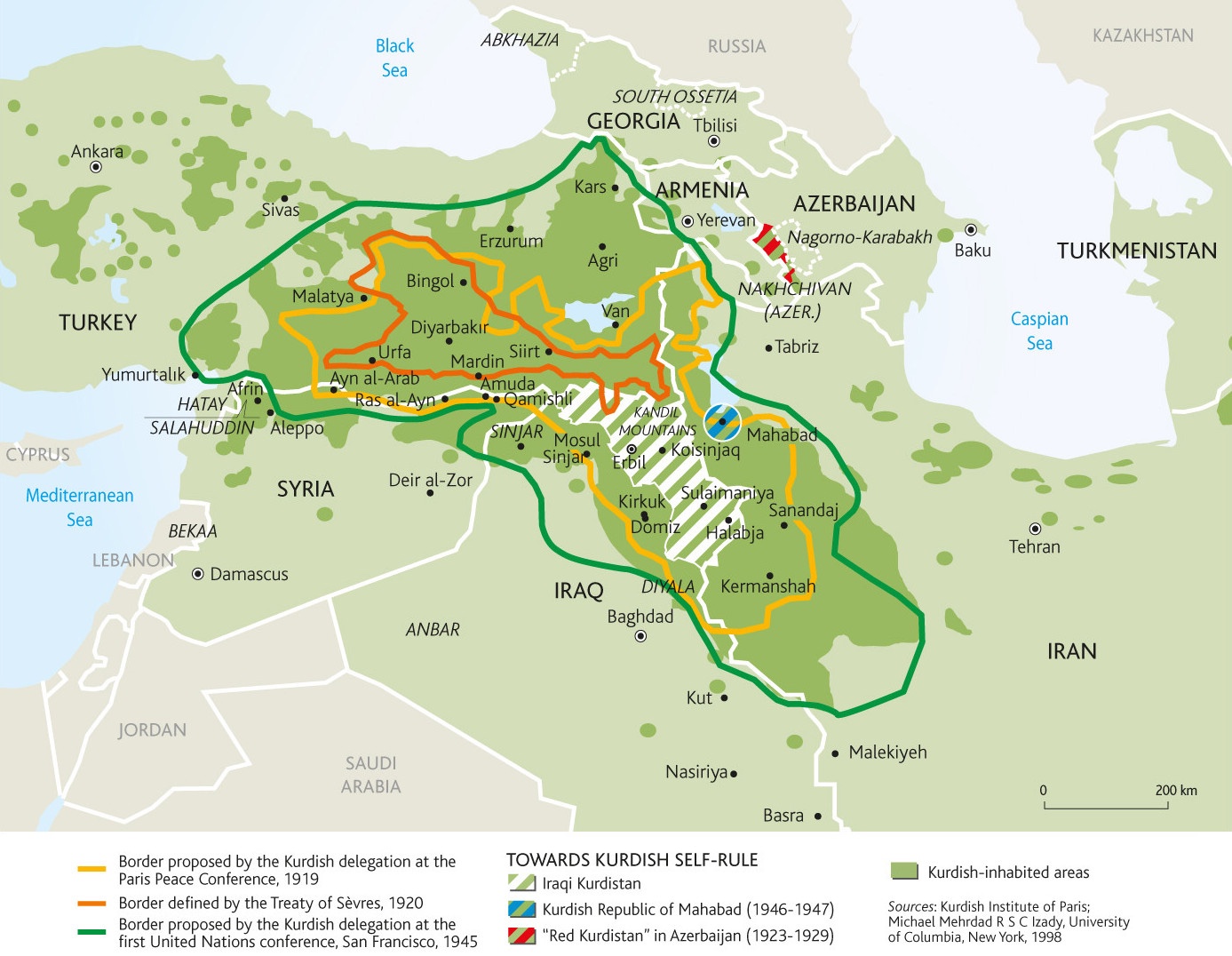
    kurdistan_map
    A map of Kurdish inhabited areas in the Middle east. Source: Kurdish Institute of Paris, University of Columbia, 1998.

    The fighting between ISIS and the Kurds stretches along a six-hundred-and-fifty-mile front in northeastern Iraq and Syria — a jagged line that roughly traces the border of Iraqi Kurdistan, the territory that the Kurds have been fighting for decades to establish as their independent state. With as many as 30 million people spread across the Middle East, the Kurds claim to be the world’s largest ethnic group without a country. Iraqi Kurdistan, which contains about a quarter of that population, is a landlocked region surrounded almost entirely by neighbours — Turkey, Iran, and the government in Baghdad — all opposing its bid for statehood.

    “one of ISIS’ main achievements so far, has been uniting the many, sometimes historically rival Kurdish factions on the battlefield”

    The recent incursion of the Islamic State in Iraq and el-Sham (ISIS – aka Da’ish) now presents the Kurds with both an opportunity but also great risk. In June, the Islamic State’s army swept out of the Syrian desert and into Mosul, Iraq’s second-largest city. As the Islamist forces took control, Iraqi Army soldiers fled, setting off a military collapse throughout the region.

    The Kurds, taking advantage of the chaos, seized huge tracts of territory that had long been claimed by Kurdistan, but held by the Iraqi government in Baghdad. With the newly acquired land, the political climate for Kurdish independence seemed promising. Moreover, one of ISIS’ main achievements so far, has been uniting the many, sometimes historically rival Kurdish factions on the battlefield, creating political partnerships where there had been enmity.

    This trend has also created considerable headache for Turkey – the foremost opponent of the Kurdish independence. Ankara is concerned that this new found “combat unity” could eventually become a trigger for future Kurdish independence demands, backed by western led anti-ISIS coalition elements.

    Kurdish forces have clashed with ISIS on Syria’s northern border city of Kobani for nearly 50 days in what has become one of the closest watched and longest lasting battles involving ISIS. Despite being outnumbered and outgunned, the Kurds’ united front against the Islamists has so far been quite effective, although, with much needed aerial support from a U.S.-led coalition becoming a crucial element in the fighting.

    Kurdish people in Turkey greet peshmerga convoys at Viransehir, in Sanliurfa. Photo: AFP
    Kurdish people in Turkey greet peshmerga convoys at Viransehir, in Sanliurfa. Photo: AFP

    Although Turkey allowed a limited number of Kurdish peshmerga fighters to cross into the Kobani combat sector, it does not want its homeland Kurdish groups to help Syria’s Kurdish Popular Protection Units (YPG) fighting ISIS there and only maintain a constant stnad-off vigil by placing tanks on the highline overlooking the town but without interfering in the battle.

    But the crucial conflict will enfold in Iraq itself, drawing anti-ISIS Sunni and Sh’ite elements into the fray. Sooner or later a bloody inter-religious show-down will occur, when Iran interferes, leaving Saudi Arabia in a serious dilemma how to react.

    Iraq was created in 1920, as a post-war British mandate, by the League of Nations, predecessor of the current United Nations (UN), within the new Middle East. From the start, it was an unstable amalgam of three former provinces of the Ottoman Empire: a predominantly Shi’ite one in the south, a Sunni-dominated one in the center, and a largely Kurdish population in the north. Though many national groups in Europe and the Middle East gained statehood, the Kurds were split among the new states of Iraq, Syria, and Turkey and the ancient one of Iran.

    Indeed Turkey’s stance towards the Kurds in Iraq is now very different. As the government of Sunni Turkey fell out with its Shia-led counterpart in Baghdad, the Kurds of northern Iraq became, still a highly suspicious neighbor, but now turning into a crucial ally, as the conflict between Shia and Sunni, especially ISIS, is turning the region into a religious war.

    Until recently, they were bitter enemies. Ankara had never been able to stomach the idea of Kurdish self-government – in Iraq or Syria or Turkey proper – and it had generally refused to give in to Turkish Kurds’ demands for cultural rights. Instead, it preferred to crack down on them.

    The Syrian civil war and developments in Iraq have started to change all that. In mid-2013, ISIS turned its sights on three Kurdish enclaves that bordered its territory in northern Syria. It launched repeated attacks that until mid-2014 were repelled by the Popular Protection Units (YPG) – the armed wing of the Syrian Kurdish Democratic Unity Party (PYD). The turning point was an offensive in Iraq in June that saw ISIS overrun the northern city of Mosul, routing Iraqi army divisions and seizing weaponry later moved to Syria.

    The Kurds as a nationality have now re-appeared on the world stage. As ISIS did along the Iraqi-Syrian border, they’re undoing Sykes-Picot for themselves. On this changing political landscape it feels as though everyone is learning the rules of a new game.

    In a careful long-shot view, if anything good should come out of the present Islamic turmoil in Iraq and Syria, it could perhaps improve the traditionally suspicious ties between Turkey and the region’s Kurds.

    This article is first in a three-part series. Stay tuned for:

    • Part II – ISIS and the Kurds – Changing winds in Mid-Eastern power play (scheduled: December 7, 2014)
    • Part III – Turkey and the Kurds – Practical coexistence with Turkey (scheduled: December 8, 2014)

    French Defense awards Scorpion development contracts worth €752 million

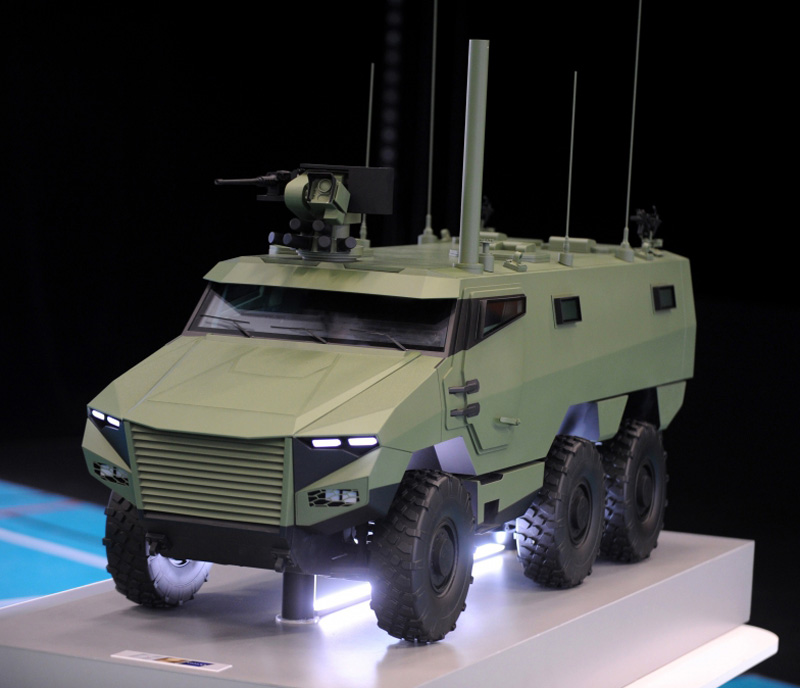
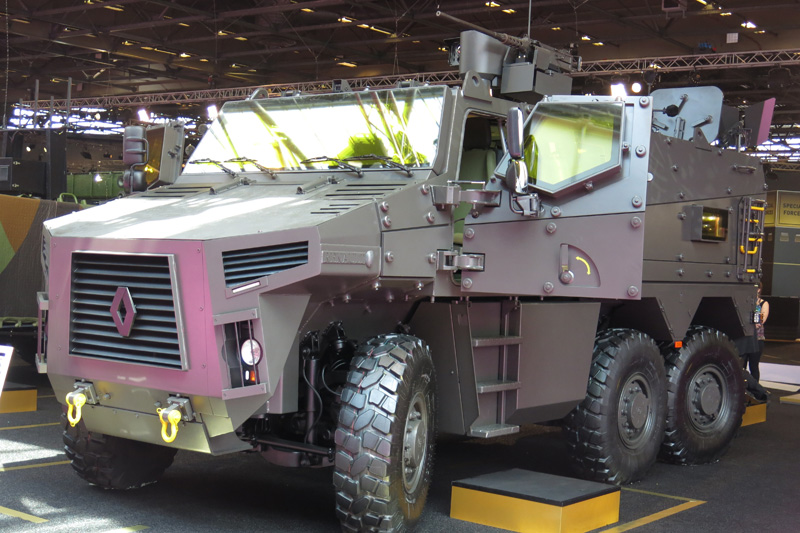
    The VBMR is a 24.5 ton mine protected armoured vehicle designed to carry and support an infantry squad in the battlefield.
    The VBMR is a 24.5 ton mine protected armoured vehicle designed to carry and support an infantry squad in the battlefield.
    1453840928_griffon_800
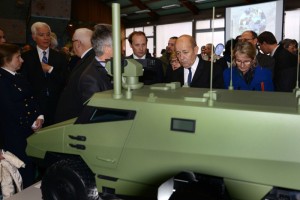
    French Minister of defence, Jean-Yves Le Drian, formally awarded the Scorpion contract to representatives of the GME consortium today at Varces barracks, during a visit to the 27th mountain infantry brigade and the 93rd Mountain Artillery Régiment. (Photo AFP)

    The French ministry of Defense has awarded a development and production contract for nearly 2,000 armoured vehicles of two new armoured vehicles to be built jointly by the GME consortium formed by Nexter, Renault Trucks Defense and Thales. The two vehicle types – called ‘Griffon’ and ‘Jaguar’ are both part of the French land forces modernisation program known as ‘Scorpion’. Almost 2,000 vehicles will be delivered to the French Army beginning in 2018, along with a new electronic and C4ISR architecture, weapon systems and associated logistical support equipment.

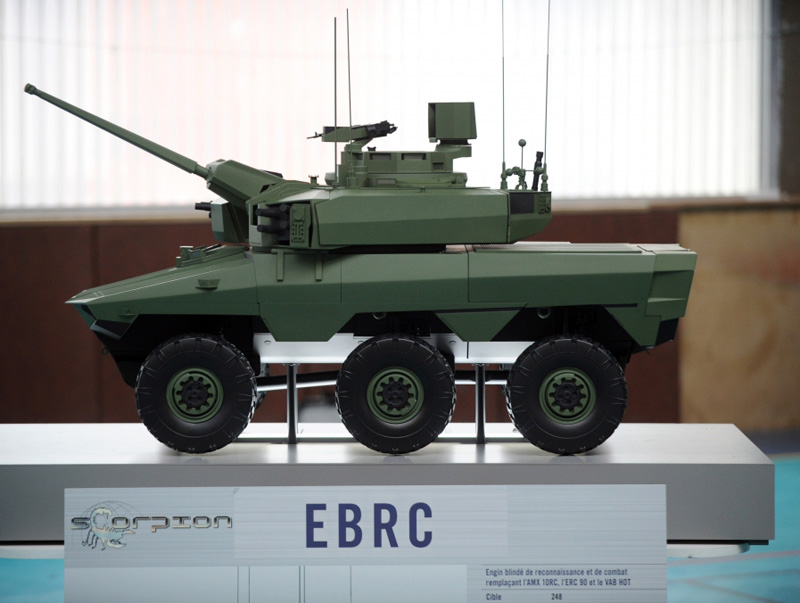
    The contract estimated to be worth about €5 billion for the three companies is split into development, manufacturing and life cycle support phases, the first contract worth €752 million covers development work on 6×6 and 4×4 véhicule blindé multirole (VBMR) troop carriers, now named Griffon, and the 6×6 engin blindé de reconnaissance et de combat (EBRC) combat vehicle called Jaguar.

    EBRC is the future combat vehicle to replace three types of wheeled combat/ reconnaissance vehicles currently in service - the AMX-10RC, ERC Sagie and the VAB HOT tank hunter.
    EBRC is the future combat vehicle to replace three types of wheeled combat/ reconnaissance vehicles currently in service – the AMX-10RC, ERC Sagie and the VAB HOT tank hunter.

    Upon delivery, Griffon will replace VAB, while Jaguar will replace several types of armoured combat vehicles such as the AMX10RC, ERC Sagaie and VAB Hot – all combat vehicles produced in the 1970s and 80s and used extensively by the French Army in all theatres of operation for thirty years.

    The program funds the total production of 1,970 vehicles – including 1,722 VBMR Griffons and 248 EBRC Jaguars.

    The Scorpion program will also provide a new command, control and networking system (designated SICS V1), to be shard by the future force. The program will also fund the S1 modernisation of 200 Leclerc tanks, to be fitted with new veronicas and embedded simulation for enhanced training experience. This task is planned to begin in the year 2020.

    The BMX01 Renault Trucks defense has built for the Scorpion under the risk reduction demonstration phase, as displayed during Eurosatory 2014. Photo: Noam Eshel, defense-Update
    The BMX01 Renault Trucks defense has built for the Scorpion under the risk reduction demonstration phase, as displayed during Eurosatory 2014. Photo: Noam Eshel, defense-Update

    In addition to Nexter, Thales and RTD, that have joined forces under the GME consortium, the program also involves Sagem Defense of the Safran Group, as the electro-optics system provider for the EBRC, CTA International a joint venture between Nexter and BAE Systems, providing the 40 mm gun and MBDA providing the medium range Missile (MMP) which will also be used on board. The program is expected to support about 1,000 new jobs in its development phase and 1,700 jobs in its production phase.

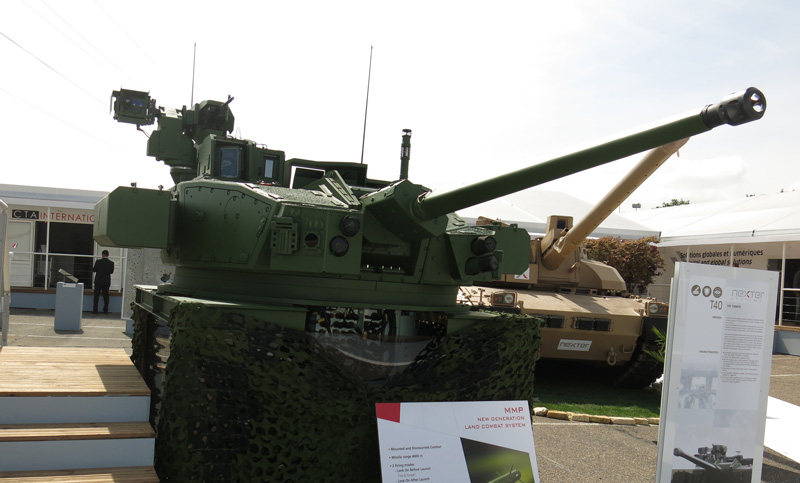
    The T40 turret Nexter is developing for the ERBC integrates the CTA 40 mm cannon, MMP missiles (carried in armoured containers on the turret sides) and remotely operated 7.62mm machine gun on the top. The turret also mounts multiple optronic systems supporting the different weapons. The T40 was shown by Nexter for the first time during Eurosatory 2014. Photo: Tamir Eshel, Defense-Update
    The T40 turret Nexter is developing for the ERBC integrates the CTA 40 mm cannon, MMP missiles (carried in armoured containers on the turret sides) and remotely operated 7.62mm machine gun on the top. The turret also mounts multiple optronic systems supporting the different weapons. The T40 was shown by Nexter for the first time during Eurosatory 2014. Photo: Tamir Eshel, Defense-Update

    ACTAS Sonar Systems for the Indian Navy

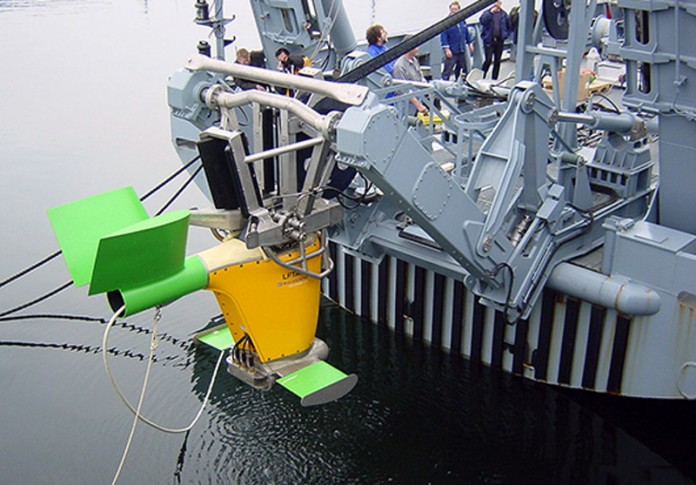
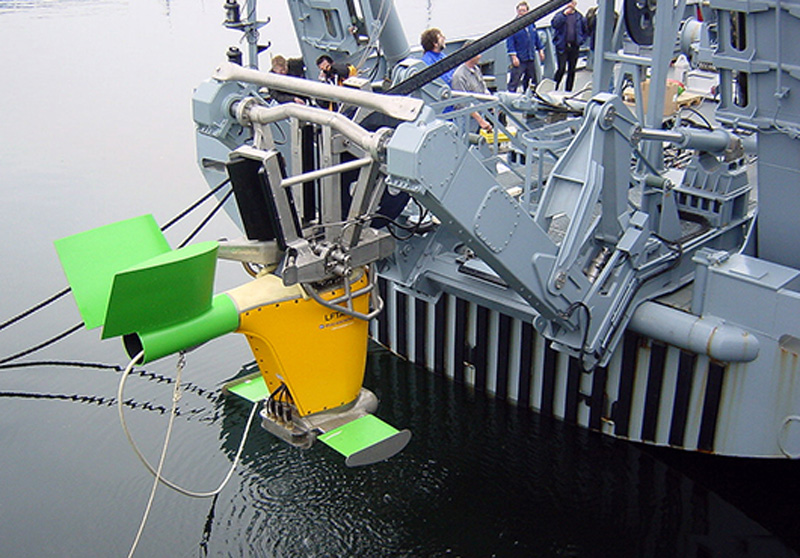
    Atlas Elektronik AVtive Towed Array Sonar (ACTAS) system is a sonar sensor towed behind the vessel, capable of detecting submarines at a distance of 60 km or more. Photo" Atlas Elektronik
    Atlas Elektronik AVtive Towed Array Sonar (ACTAS) system is a sonar sensor towed behind the vessel, capable of detecting submarines at a distance of 60 km or more. Photo" Atlas Elektronik
    Atlas Elektronik AVtive Towed Array Sonar (ACTAS) system is a sonar sensor towed behind the vessel, capable of detecting submarines at a distance in excess of 60 km. Photo: Atlas Elektronik

    Atlas Elektronik and the Indian Ministry of Defense have signed a contract for the delivery of six active towed array sonar systems (ACTAS) for the Indian Navy. The total contract volume is approximately 40 million Euros. Delivery of the first system is planned for 2016.

    The six systems would equip three Talwar-class frigates and three Delhi-class destroyers, providing them with the capability to detect enemy submarines. Both classes of vessels have been prepared in advance to accept the German system. Atlas was selected as the preferred contractor for the system in October 2013 with formal award negotiated since.

    Following the Indian selection in October last year the Thai Navy has also selected ACTAS, along with Atlas’ bow sonar (ASO) as the primary ASW sensors for a Korean built frigate to be delivered to the Royal Thai Navy in 2016.

    Originally the Indian MOD planned to source towed sonar work domestically, but after waiting for almost a decade for the DRDO subsidiary NPOL to deliver a locally developed low-frequency active towed-array sonar, the Navy awarded the contract to Atlas, to supply ultra low-frequency active/passive towed-array sonar systems. In the near term the sonars will eventually equip 30 surface vessels with the systems.

    Seoul increase 2015 defense budget by 4.9 percent

    South Korea has finalized its 2015 defense budget that calls for a 4.9 percent increase from 2014. “The increase will improve the welfare of servicemen and enhance combat capabilities” The Korean defense ministry said. The defense spending in 2015  has been set at 37.4 trillion won (US$33.6 billion), accounting for some 9.9 percent of the nation’s total budget of 375.4 trillion won passed Tuesday by the National Assembly. The ministry had originally sought a 5.2 percent rise.

    Two thirds of the budget (26.4 trillion won) has been set aside for personnel. The remaining third ( 11.1 trillion won) has been earmarked for efforts to boost defense capabilities, or a 4.8 percent increase from this year.  The focus of next year’s budget increase spending on personnel and service conditions is on improving barracks life, according to the ministry. Initiatives include  renovation of military barracks and Privatisation of maintenance and support functions, enabling combat units to focus on their primary military role .

    The military also plans to spend 1.2 billion won to deploy cellphones at units to help soldiers communicate more easily with their family and friends, according to the ministry.

    One of the main initiatives included in the 2015 budget is building an indigenous air defense system – the Korea Air and Missile Defense (KAMD).   “Although the approved 2015 budget was 151.8 billion won short of what the defense ministry asked for, none of the projects planned for next year will be affected by the curtailed budget,” an official of the Defense Acquisition Program Administration told Seoul’s Yonhap news agency.

    Alion’s HAWK to expedite SDR waveform development

    Alion’s Science and Technology was awarded a $4.5 million three year contract to develop an advanced framework for the development of  enabling rapid development of software-defined radio (SDR) waveforms.

    Also known as ‘Holistic Waveform Development Kit’ (HAWK), the new framework will provide developers a robust development ecosystem’ that will enable developers higher level of  flexibility in  developing SDR systems, so that disparate radio networks can interoperate.  “Alion’s agile development model will enable us to quickly deliver enhancements to key communications and RADAR-based systems,” said Chris Amos, Senior Vice President and Manager of the Alion Technology Solutions Group.

    As part of the project the FLEX Data Link will be improved. FLEX is an architecture that supports multiple high-speed data transmissions – from radar and electronic warfare to signals intelligence – simultaneously.

    Under the new contract Alion will design, develop, test and integrate services for the HAWK ), in support  for the Air Force Research Laboratory (AFRL).  “Research and development efforts under this contract will provide significant improvements in wireless communication data rates and also implement efficient and highly adaptive development processes that will provide cost benefits to AFRL for future improvements of communications and RADAR-based systems.” Amos added.

    Abu Dhabi police arrests “Niqabi” Killer suspect

    The Suspected person wearing traditional ‘niqabi’ vail has Killed an American Teacher and later targeted an American doctor with an improvised bomb. Analysts consider the brutal attack could be part of a ‘lone wolf’ campaign inspired by extremist Islamic terrorists, directed against countries participating in the coalition the Islamic State.

    Security and police forces in Abu Dhabi arrested a woman suspected to be the the “Niqabi killer”, who brutally murdered an American teacher earlier two days before the arrest. According to Lt. General HH Sheikh Saif bin Zayed Al Nahyan, Deputy Prime Minister and Minister of Interior, the suspect was identified in less than 24 hours, and arrested in less than 48 hours.

    According to police authorities, the day after the first murder the suspect also attempted to kill an Egyptian American doctor women at another location, using an improvised explosive device. The police forces were able to dismantle the bomb before it was detonated.

    “The two consecutive incidents involving the murder and the bomb led us to believe there was one suspect for both crimes due to the matching descriptions.” Colonel Dr. Rashid Borshid, Head of the Criminal Investigation Department (CID) at Abu Dhabi Police said.

    Authorities believe the suspect targeted her victims based on nationality alone, and had nothing to do with personal issues. This may hint on the crime being a ‘lone wolf’ terror attack similar to attacks in the US, Canada, Australia and Europe, inspired by ISIS or Al Qaeda.

    Sofar most of the Gulf’s emirates, including Abu Dhabi were spared from attacks by Islamic extremists, partly due to the generous contribution the emirates are providing Islamic aid organizations. Yet the increasing weight of the Islamic State (ISIS), particularly druve toward economic self sufficiency could indicate possible change of wind in the Emirate’s protected status.

    The Security Media Department displayed a video explaining the details of the crime which included images taken from CCTV. The video also highlighted the search and inspection procedures conducted by the police and security forces, which eventually led to the arrest of the suspect solving the mystery behind the crime.

    A niqab is a cloth and veil which covers the face of the women as a part of sartorial hijab. It is worn by some Muslim women in public areas and in front of non-mahram adult males. While being a fundamental cultural and religious symbol for certain Moslems, Niqab is also a major security concern in Moslem countries and abroad, as it prevents the identification, identity or gender of person wearing it. Niqab or similar Burka are worn by women in the Arabian Peninsula such as Saudi Arabia, Yemen, Oman, and the UAE.

    U.S. Army increases orders for SwitchBlade microUAV based guided weapons

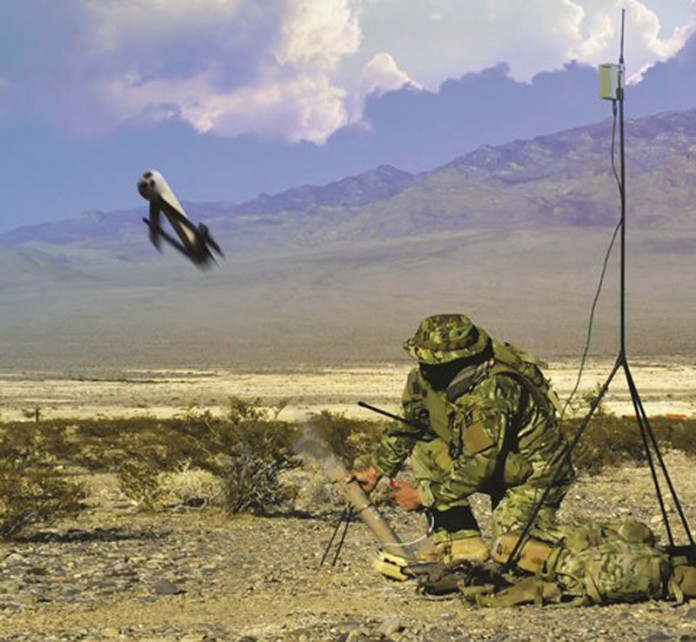
    United States Army awards support services contract and option to AeroVironment for Switchblade Tactical Missile System
    United States Army awards support services contract and option to AeroVironment for Switchblade Tactical Missile System
    United States Army awards support services contract and option to AeroVironment for Switchblade Tactical Missile System

    AeroVironment Inc (NASDAQ:AVAV) announced the receipt of a $4.3 million cost plus fixed fee award and $7.1 million option from the United States Army Close Combat Weapons Systems office. The award increased the funded value of an existing contract for Switchblade tactical missile systems to $63.8 million. In addition, options totalling $38.3M increased the total contract ceiling to $102.1 million.

    The award and option issued in September 2014 fund the continuation of supply and services to support American forces through training, refurbishments and project management support for the Switchblade tactical missile system.

    “Switchblade is a game changing capability that continues to protect American troops and give them major advantages on the battlefield,” said Roy Minson, AeroVironment senior vice president and general manager of its Unmanned Aircraft Systems business segment. “Switchblade enables our forces to work within the rules of engagement to neutralize lethal threats through its unique portability, precision, rapid deployment and collateral damage avoidance capabilities.”

    AeroVironment is the prime contractor for Switchblade with weapon manufacturer ATK participating as a leading subcontractor supporting the weapon system.

    US Navy receives the first of 19 MQ-8C unmanned helicopters

    mq-8bThe MQ-8C’s first ship-board flight tests aboard the USS Jason Dunham (DDG 109) will be conducted in the winter of 2015.

    Northrop Grumman Corporation (NYSE: NOC ) has delivered the first operational MQ-8C Fire Scout unmanned helicopter to the U.S. Navy. The rotary wing drone is currently based at Point Mugu, CA for evaluations. As part of its operational evaluation t he rotary wing drone will embark on its first ship-board flight tests campaign aboard the USS Jason Dunham (DDG 109) during the winter of 2015.  “The test program will run through the summer as we expect these aircraft to be ready for operations by year’s end,” said George Vardoulakis, vice president for medium range tactical systems with Northrop Grumman.

    Northrop Grumman is under contract to build 19 MQ-8C Fire Scouts, including two test aircraft. The Navy plans to purchase 70 aircraft total.  The system will be used by ship-based commanders to improve the Navy’s intelligence-gathering capabilities.

    The MQ-8C is an upgraded version of the existing MQ-8B Fire Scout using a larger airframe. It can fly nearly twice as long and carry three times more intelligence, surveillance and reconnaissance payloads. The MQ-8B has recently deployed on the LCS 3 Fort Worth on its first operational deployment with the 7th Fleet in the Pacific Ocean.

    Israel’s RADA to supply C-RAM tactical radars for national alert system

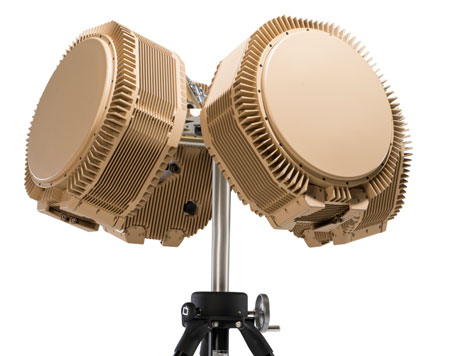
    The RPS-42 selected by the US Navy is based on RADA's MHR radar AESA platform. Photo: RADA

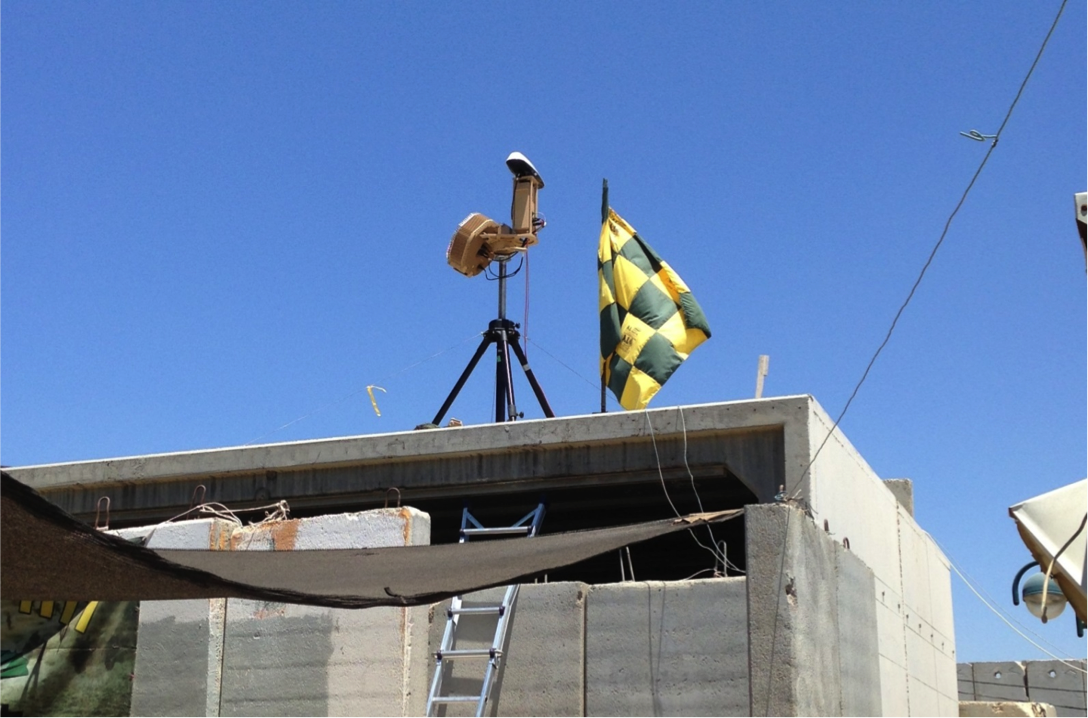
    RADA's new MHR radar was deployed operationally during Israel's recent conflict with Gaza, during Operation Protective Edge.
    RADA’s new MHR radar was deployed operationally during Israel’s recent conflict with Gaza, during Operation Protective Edge.
    Israel’s defense electronics company RADA was recently awarded an order to supply tactical radar systems for a national alert system. The name of the country awarding the order has not been released by the company. According to company sources the radars to be supplied are the ultimate-mission Hemispheric Radar, enabling volume surveillance and detection of multiple threat types, including UAVs, mortars, and rockets.

    According to Zvi Alon, RADA’s CEO, “We are extremely proud with this competitive selection of our technology. This is a major award of a radar program for RADA, which joins other strategic awards for radar programs during 2014. We believe that additional leading countries and integrators will follow this selection”.

    Subscribe to the premium account to read more…

    The MHR – an S-Band, Software-Defined, Pulse-Doppler, AESA radar – has sophisticated beam forming capabilities and advanced signal processing, provides multiple missions on each radar platform, and offers unprecedented performance-to-price ratio. It is compact and mobile, delivering ideal organic, tactical surveillance solutions for force and border protection applications such as C-UAS, C-RAM, GMTI, air surveillance, and more.

    A smart targeting platform use workflow, big-data to accelerate airstrikes

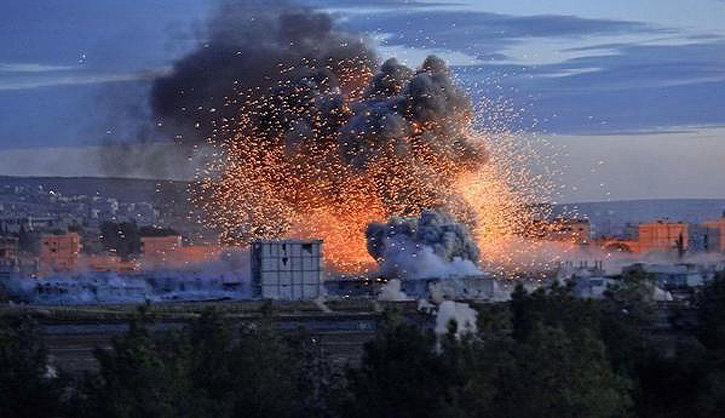
    Coalition air strikes in the Syrian town of Ein al Arab (Kobane) were clearly visible across the Turkish border.
    Coalition air strikes in the Syrian town of Ein al Arab (Kobane) were clearly visible across the Turkish border.

    The U.S. Air Force is developing an automated targeting workflow that would help planners accelerate the targeting cycle, while reducing operational risks of fratricide and collateral damage, by increasing processing automation and precision of targeting products supported by the new “CATALiST” targeting platform.

    “Today’s targeting enterprise lacks efficient workflow and data hand-offs, causing lost time, redundancy of effort, and lesser quality products and effects across air, space, & cyberspace.” An air force documents stated, asking industry to offer technological workflow solutions to expedite the process. Today, most of this process is operated manually, particularly the preliminary planning and sensitive phases of collateral damage and battle damage assessments. Lacking efficient analytical tools, these phases are prone to human errors and require extensive, lengthy processing.

    Today’s targeting enterprise lacks efficient workflow and data hand-offs, causing lost time and redundancy of effort

    Smart_250
    Modus Operandi is implementing the Modus Flow in CATALiST, an process automation system and knowledge management framework that has been utilised in previous government projects.

    Modus Operandi, a company that delivers Big Data analytics solutions for national security and commercial organizations, has been selected by the U.S. Air Force Research Laboratory (AFRL) to develop such workflow modules for CATALiST.

    Under terms of the two-year contract worth under a million US$, the company will develop a system that effectively automates, monitors, and improves the targeting process. The company said the system will be based on Modus Flow, a distributed, semantically-enhanced process automation and knowledge management framework.

    CATALiST enables planners and targeteers to prioritise, process and monitor the targeting workflow through a globally distributed, secure enterprise system, that would help targeteers to collect, visualise, assess and automatically retrieve and process data sets relevant to each mission. The process also support the intelligence assessment of the objective, enabling targeteers, planners and commanders to visualise the target area and ongoing operations in its vicinity, at different scales – from tactical to strategic levels.

    Aiding the planning process, decision support could be used to assess the damage inflicted to specific elements in each target set and to the objective as a whole. Unlike the present assessment narrowed to kinetic effect only, CATALiST’s assessment would combine the effects achieved by the application of kinetic and non-kinetic weapons – applying Multi-INT information fusion algorithms and cognitive workflow processes that will also support Battle Damage Assessment (BDA). This automated process would also recommend and assign automatic restrike, in case the targeting goals were not achieved.

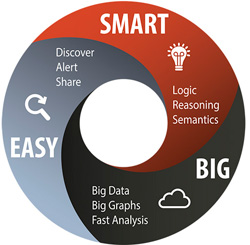
    CATALiST uses “smart” data to optimize the targeting processes, thus shortening the targeting cycle

    A unique aspect of the workflow approach implemented by Modus Operandi will be the ability to utilize semantically-enhanced or “smart” data to optimize the targeting processes, thus shortening the targeting cycles. As a result, the CATALiST platform will provides the Air Force Targeting Enterprise (AFTE) with the necessary tools to promote a continuous targeting process—supported by distributed process automation and auditing, with enterprise collaboration capabilities, culminating in the real-time dissemination and discovery of the targeting products through a multi-media Electronic Target Folder (ETF).

    Scientists hack a 25 year old chemical sensor into dual-use explosives detector

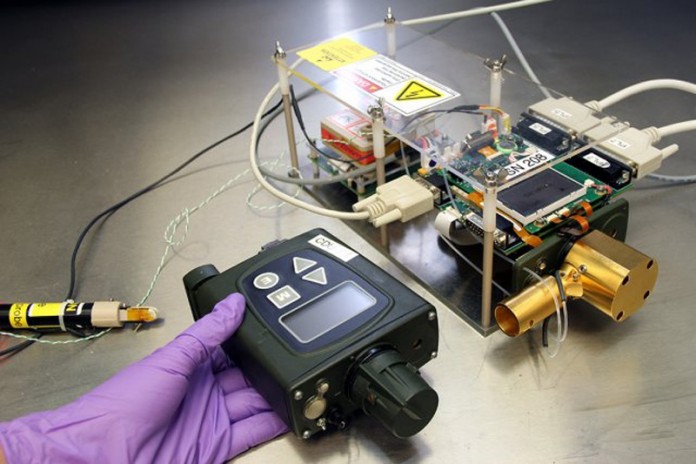
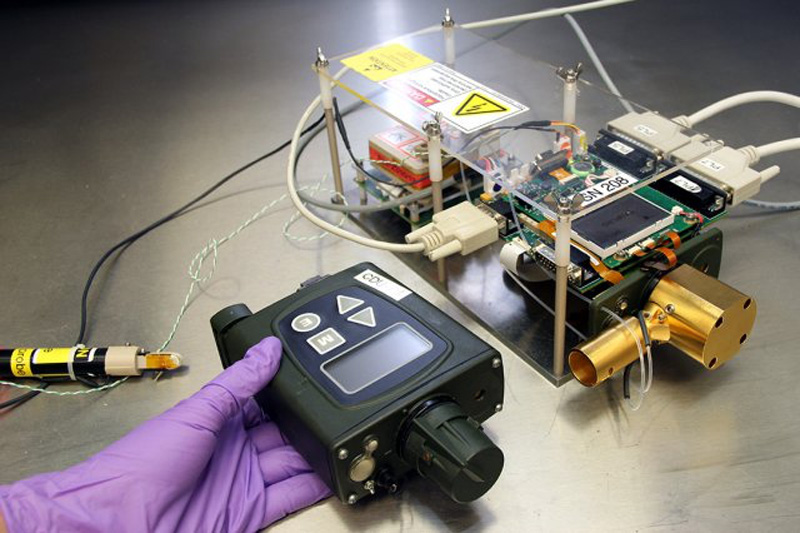
    Scientists at the U.S. Army Edgewood Chemical Biological Center at Aberdeen Proving Ground, Md., added the ability to detect explosive materials to the Joint Chemical Agent Detector. Photo: US Army
    Scientists at the U.S. Army Edgewood Chemical Biological Center at Aberdeen Proving Ground, Md., added the ability to detect explosive materials to the Joint Chemical Agent Detector. Photo: US Army
    Scientists at the U.S. Army Edgewood Chemical Biological Center at Aberdeen Proving Ground, Md., added the ability to detect explosive materials to the Joint Chemical Agent Detector. Photo: US Army

    Scientists at the U.S. Army Edgewood Chemical Biological Centre (ECBC) at Aberdeen Proving Ground assisted by the original equipment manufacturer (OEM) Smith Detection, demonstrated recently how a standard chemical agent detector can be hacked into an explosive material detection sensor.

    The modified device can already detect roughly a dozen compounds including TNT, RDX and EGN. Future efforts could increase the number of detectable compounds.

    In service with the US military for 25 years, Joint Chemical Agent Detector (JCAD) was originally designed as a portable, automatic chemical warfare agent detector. Currently there are approximately 56,000 chemical warfare agent detecting JCADs in service within the Department of Defense. Recent needs have required the Army to find ways to create a similar sensor capable to detect explosive materials which include various types of explosive ordnance, improvised explosive devices and improvised/homemade explosives.

    To convert an ordinary JCAD into a JCAD Chemical Explosive Detector, or JCAD CED, the existing rain cap is replaced with one with a new inlet. Once in place, scientists wipe any surface using the probe swab, which then retracts back into inlet. With a simple button push, the probe swab tip with the explosives sample heats up to a certain temperature, vaporizing the explosive residue. These additional features allow an ordinary JCAD to now have the role of a portable, automated explosives detector.

    Developed under an Army Technology Objective (ATO) since 2010, Army scientists have looked for ways to exploit the 56,000 JCADs deployed in the field to provide explosive detection in addition to their chemical agent detection role. The program starting in 2010, under the requirement to assess which existing detectors could also detect explosives, ECBC’s Point Detection Branch began to research different options.

    How its done?

    Towards this capability demonstration the developers had to overcome significant challenges – for example, the original JCAD is designed to detect vapours. However, explosive materials are usually low vapor pressure solids. ECBC scientists had to figure out how the JCAD could detect solid explosive materials, without changing the hardware or original intent of the detector. Given these parameters the scientists sought to determine how to modify this detector while essentially keeping it the same.

    “Many of the emerging chemical threats and explosives share the challenge of presenting little to no detectable vapor for sampling. By conducting research into the detection of solid explosive residues, we have learned valuable lessons that are equally important for detecting nonvolatile solid and liquid chemical agent residues as well,” said Dr. Augustus W. Fountain III, senior research scientist for chemistry.

    The add-on pieces are a new JCAD Rain Cap with a Probe Swab and an inlet. Within the JCAD itself, scientists added two on-demand vapor generators: a calibrant and a dopant. The dopant changes the chemistry of the detector so that it can detect explosives easier.

    “Within the Army, there is no other automatic, near real-time explosives detector at this time. There are many explosives detectors, but not ones that are dual-use and automatic,” said Charles Harden, Ph.D., a Leidos contractor with ECBC’s Point Detection Branch. “The best part is that the technology is already out in the field, and warfighters have been trained on this equipment,” Harden said. “All we’re doing is introducing small add-ons that will have a big impact.”

    “There are several advantages with the improved JCAD CED system. First, its dual-functionality accurately detects vapors as well as explosive residue. Second, scientists successfully modified the system with easy-to-use add-ons, and the upgrade is cost effective and reduces the need for yearly maintenance,” said Blethen.

    Scientists plan to determine the amount of explosives that can be detected and develop a concept of operations. Other goals include developing a methodology for detecting homemade explosives, and reaching a technology readiness level 6. JCAD CED will be demonstrated in a fiscal year 2015 military utility assessment.

    Cyber Intelligence Report – December 1, 2014

    cyber_report

    ISRAEL

    #OpSaveAlAqsa cyber-attack campaign against Israel still running

    #OpSaveAlAqsa, the cyber protest coordinated by hacktivist group, AnonGhost, succeeded in publishing the personal details of around 270 thousand Israeli students. The group hacked into “Snunit,” an educational site for children that is a project of Hebrew University. The leaked data included names, passwords, home address, phone numbers, emails, I.D. numbers, etc. Madsec, the Israeli cybersecurity company who discovered the hack, explained the hacked details might be used for hacking accounts, such as Facebook or bank accounts. “Snunit” iterated that the stolen data was from fifteen-year-old servers and that most of the information was currently out of date. The education site filed an official complaint with the Israeli police.


    USA

    Bots are great weapon for cyber terrorist

    In early 2014, the New York Times published an article referring to the existence of bots in social media sites (millions of lines of code that emulate humans on social media sites). Social media bots are most infamous for emulating fake followers on Twitter and Instagram. As a follow up, a new article was published illustrating the bots’ improvement. While advanced programmers develop their own Bot Management tools, such as Zeus (a program offering a simple dashboard to control an army of bots), a new program is in development in order to make bots more commonly accessible to “recruit” thousands of fake followers. Creating fake accounts used to be more difficult and required skillful programming capabilities. As it is not illegal to own or create a bot, certain web sites, such as Swenzy or Fiverr, sell “likes,” “followers,” “downloads,” and “comments” on social media networks. Reports have shown celebrities, politicians, and companies repeatedly purchase fake followers in order to enhance their online persona. While social networks have claimed to be handling the issue of removing bots from people’s accounts, the more worrisome issue is removing viruses and malware that have been reported as being attached to these bots. Importantly, these tools are also accessible to terrorist groups and rogue states. In Syria, certain bot-groups have intimidated anyone tweeting in opposition. Simply put, these bots are a demonstration of the effectiveness of psychological warfare used against the masses, and the propaganda of groups such as ISIS or Al-Qaeda in their respective cyber uses in order to influence public opinion and appear more powerful than they are.


    RUSSIA

    Russian telecom companies under cyber attack

    Russian large telecom companies are under cyber attack through a cyber snooping operation reminiscent of the Stuxnet worm. It has been billed as the world’s most sophisticated computer malware. Cyber security company, Symantec, stated the malware, referred as “Regin,” is likely coordinated by a western intelligence agency and in some respects is more advanced in engineering than Stuxnet, which was developed by US and Israel government hackers in 2010 to target the Iranian nuclear program. The discovery of “Regin” came from the Kaspersky Labs, the Russian company that uncovered Stuxnet.


    MIDDLE-EAST

    Syrian Electronic Army claims hack of different news site

    The Syrian Electronic Army (SEA) claimed responsibility of various news websites’ cyber attacks including CBC News and the Telegraph. The reason behind the attack, SEA expressed, was because Western media published false information about the Syrian Air Force killing civilians in air bombs. (The SEA claims the bombs were aimed towards ISIS forces, and the strikes were successful.) The attack featured a pop-up message to all visitors stating: “You’ve been hacked by the Syrian Electronic Army (SEA).” Despite the pop-up message, no personal data was accessed, and no foreign malware or virus was transmitted onto visitors’ computers or devices while readers accessed the websites during the incident. This attack was possible because the specific websites used a Gigya platform, a company offering customer identity management to businesses. The SEA did a variation of this hacking before when they attacked the Reuters website through a third base program. By being able to hack into Gigya, SEA was able to hack into different news websites using their services. According to the SEA Twitter account, the attacks were meant to coincide with the US Thanksgiving holiday.

    Egyptian Cyber Army is new hacker group in Middle East

    ISIS faced cyber attacks 24 hours after ISIS’s leader, Al-Baghdadi, survived a US attack and was heard in a new ISIS audio recording that had him calling for revenge and to attack and hurt all parties against ISIS’s agenda, including the US and El-Sisi’s Egypt. The audio recordings were replaced with a song and a message with a logo from a group referring to themselves as the “Egyptian Cyber Army” (ECA). Influenced by the makings of the Syrian Electronic Army, all the group members are Egyptian sympathisers of the Abdel Fattah el-Sisi led Egyptian government. ECA’s apparent main goal is to attack ISIS propaganda online. Another goal of the group is to defend al-Sisi’s government against opponents such as the Muslim Brotherhood. Even though the group’s actions suggest they are a pro-government cyber organization, it is unclear who is really behind the group and whether they are sanctioned by the Egyptian government, but they are believed to have people inside “Al-Furqan,” the media arm of ISIS. According to Khaled Abubakr, a representative of ECA: “We are an idea, not only a team,” analyzed to mean they live on the ideas of ruining ISIS and the Muslim Brotherhood’s actions.


    CHINA and APAC

    Executives in Asian luxury hotels fall prey to Darkhotel cyber-espionage

    The wireless networks of luxury hotels in Asia have been comprised. A recent study by the Kaspersky Lab highlights the importance of having up-to-date security software for laptops and mobile devices that are used when traveling abroad, specifically in Asia. The attack, referred to as Darkhotel, has already infiltrated thousands of devices, dating as far back as 2009. Many manufacturing operations executives from industries such as automotive, cosmetics, chemical, and others have been hit. Other victims of the attack came from investment capital, private equity, law-enforcement, and NGOs. The cyber attack was initiated by a request to download an update to legitimate software like Adobe Flash, Google Toolbar, or Microsoft Messenger. The attack would only occur after the sign-in, making further communication vulnerable. Kurt Baumgartner, principal security researcher at Kaspersky Lab, explained the malware had several irregular features. The key logger module is designed to remove itself if it detects the default language, Korean. In another unusual feature, after the initial breach the malware is able to go dormant for up to six months before it tries to contact a remote control server that enables Darkhotel to evade any examination by IT upon the victim’s return from a trip to Asia. 90% of victims have been from Japan, Taiwan, China, Russia, and South Korea. Business travellers to Asia from Germany, Hong Kong, Ireland, and the United States have also been comprised.


    AFRICA

    Kenya ranked 4th globally in list of countries hit worst by fraud
    Kenya is ranked the 4th globally (behind Nigeria, Egypt, and Namibia) among countries hit by fraud. According to the Third Global Fraud Survey by Ernest & Young (EY), most fraud incidents are perpetrated by middle-level managers. The report indicates that over 27% of Kenyan managers in the private sector admit their organizations have experienced significant fraud.

    South Africa Cyber response group to develop policy
    The South African government has established a Cyber Response Committee (CRC) to coordinate and monitor the development of policies and strategies aimed at combating cyber threats against state departments and institutions. The committee is chaired by the State Security Agency (SSA) and consists of representatives from various departments: justice and constitutional development, science and technology, telecommunications and postal services, defence, and the South African Police Service. Minister of police Nkosinathi Nhleko recently announced the details of the CRC during a briefing of developments within the Justice, Crime Prevention, and Security (JCPS) Cluster in Parliament.


    EUROPE

    UK companies would hire ex-hackers to counter cyber attacks

    The company KPMG has recently released a report explaining that UK companies would consider hiring ex-hackers in order to counter cyber threats and enable them to keep a step ahead of cyber criminals and hacktivist. According to a survey conducted by KPMG on 300 Information Technology and Human Resources specialists, 74% admitted that cyber threats they are currently facing require well skilled and trained cyber specialists. Moreover, in response to the question of “whether or not they will hire a hacker as their security administrator with cybercrimes on the rise?” 53% answered yes. Moreover, 52% declared they would even think about hiring someone with a cyber-criminal background. The real problem for cyber security specialists is the fact that they do not think enough about the human aspect in cybercrimes, which can be just as essential in processing the malware. Therefore, a hacker would have an appropriate comprehension of how to counter cyber attacks than a cyber security specialist would because they are more aware of how cyber criminals and hackers work. Hackers deciding to perform ethical hacking for private companies are considered as “white hat” in opposition to the “black hat.” It is not the first time that the UK is thinking about hiring ex-hackers. Indeed, in 2013, the UK Secretary of State for Defense Philip Hammond announced that hundreds of cyber security experts including ex-hackers would be recruited by the Ministry of Defense as cyber reservists and would be trained by the British intelligence communication agency GCHQ. In 2013, the cost of cybercrimes to the UK economy was $11.4 billion.

    UK guide to help cyber defense companies export products

    The UK government published a guide written by Senior UK IT specialists in cooperation with the Institute of Human Rights and Businesses to help cyber security companies detect and evaluate the risks of cyber security products exportations. The guide’s intent aims at helping UK cyber defense companies to export their solutions and promote the UK technologies around the world. Moreover, the guide is aiming to provide guidelines on political, legal frameworks and evaluating business risks. The UK government has been concerned about certain companies perpetrating human rights abuses while exporting their products. The UK has been one of the leading and advanced countries in cyber defense strategy; however, in terms of exportations, they are not yet at the top, so this new guide may help them to catch up. Being one of the top cyber security countries does not always mean that the cyber security exportations will be high, taking into account certain things, such as the political context, the cyber strategy adopted by the targeted country, and its need in terms of cyber.

    NATO and Cyber Defence Exercise in Estonia

    NATO Cooperative Cyber Defense Centre of Excellence organized the first cyber defense training, “Cyber Coalition 2014,” which took place in Tartu, Estonia. The objective of the exercise was to examine the preparedness of NATO‘s critical infrastructure in the field of cyber threats with the simulation of real cyber attacks. The training and defense exercises were created for the purpose to fend off cyber attacks and improve NATO cyber defense capabilities. Moreover, this exercise will allow others to be prepared to deal with real attacks in advance and take additional measures. “This exercise will test our systems to make sure that NATO keeps pace with that evolving threat and that the skills and expertise of our cyber specialists are fully up to the task,” said Ambassador Sorin Ducaru. Cyber defence is one of the most critical part of national infrastructure; protection is one of the main task of NATO security policy. “NATO launched its first training in cyberspace among the priorities highlighted in the Enhanced NATO Policy on Cyber Defence, endorsed at the Wales Summit, to training and exercises,” said Ambassador Ducaru. These exerciese were conducted by experts from technical, academic, and government environment and representatives from academia and industry.

    Prague hosts Technologian Platform on Energy Security International Conference

    The Technologian Platform on Energy Security in the Czech Republic is the public-private partnership project related to the initiative of the Economic Committee and the Parlament of the Czech Republic and Ministry of Industry and Trade in the Czech Republic. This project supports scientific research and technological activities including cyberspace in various aspects of the energy industry. On November 6, this initiative organized the conference titled, “Energy & Cyber Security in the EU,” which focused on the main issues of national cyber security and energy towards the policy of the EU. Between the main topics, which were discussed in the three main blocks of the conference, were the new implementation projects in the EU and the analysis of the new threats in the field of the cyber security in energy industry and cyber threats regarding the Critical Infrastructure Protection and National Security.


    inss150About the Cyber Intelligence Report:

    This document was prepared by The Institute for National Security Studies (INSS) – Israel and The Cyber Security Forum Initiative (CSFI) – USA to create better cyber situational awareness (Cyber SA) of the nature and scope of threats and hazards to national security worldwide in the domains of cyberspace and open source intelligence. It is provided to Federal, State, Local, Tribal, Territorial and private sector officials to aid in the identification and development of appropriate actions, priorities, and follow-on measures. This product may contain U.S. person information that has been deemed necessary for the intended recipient to understand, assess, or act on the information provided. It should be handled in accordance with the recipient’s intelligence oversight and/or information handling procedures. Some content may be copyrighted. These materials, including copyrighted materials, are intended for “fair use” as permitted under Title 17, Section 107 of the United States Code (“The Copyright Law”). Use of copyrighted material for unauthorized purposes requires permission from the copyright owner. Any feedback regarding this report or requests for changes to the distribution list should be directed to the Open Source Enterprise via unclassified e-mail at: [email protected]. CSFI and the INSS would like to thank the Cyber Intelligence Analysts who worked on collecting and summarizing this report.


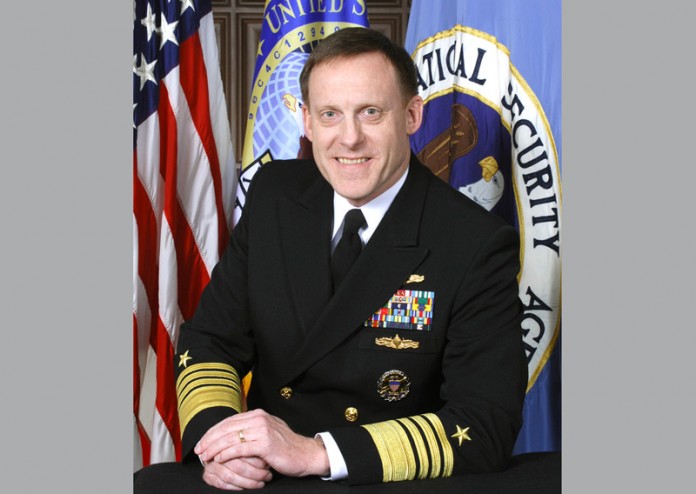
    Cybercom Chief Details U.S. Cyber Threats

    Admiral Michael S. Rogers, commander of the U.S. Cyber Command, director of the National Security Agency and chief of the Central Security Service. Photo: US Navy
    Admiral Michael S. Rogers, commander of the U.S. Cyber Command, director of the National Security Agency and chief of the Central Security Service. Photo: US Navy

    “There should be [no] doubt in anybody’s mind that the cyber challenges we’re talking about are not theoretical. This is something real that is impacting our nation and those of our allies and friends every day,” Navy Admiral Michael S. Rogers said, adding that such incidents are costing the government and industry hundreds of billions of dollars, leading to a reduced sense of security and potentially to “some truly significant, almost catastrophic failures if we don’t take action,” admiral Rogers added.

    Navy Admiral Michael S. Rogers, the commander of the U.S. Cyber Command, Director of the National Security Agency and Chief of the Central Security Service briefed members of the House Permanent Select Committee on Intelligence on  the Committee about advanced cybersecurity threats that the US is facing.

    “This is something real that is impacting our nation and those of our allies and friends every day”

    In recent weeks, cyber-related incidents have struck the White House , the State Department , the U.S. Postal Service and the National Oceanic and Atmospheric Administration . The Defense Department , the U.S. Sentencing Commission and the U.S. Treasury also have had cyber intrusions.

    Sophisticated malware has been found on industrial control systems used to operate U.S. critical infrastructure, and other major intrusions have been reported by J.P. Morgan Chase, Target, Neiman Marcus, Michaels, Yahoo! Mail, AT&T, Google, Apple and many more companies.

    “We have … observed intrusions into industrial control systems,” Rogers said. “What concerns us is that … capability can be used by nation-states, groups or individuals to take down” the capability of the control systems.”

    And “we clearly are seeing instances where nation-states, groups and individuals are aggressively looking to acquire that capability,” he added.

    Rogers said his team thinks they’re seeing reconnaissance by many actors to ensure they understand U.S. systems in advance of exploiting vulnerabilities in the control systems.

    “We see them attempting to steal information on how our systems are configured, the specific schematics of most of our control systems down to the engineering level of detail so they [see] … the vulnerabilities, how they are constructed [and] how [to] get in and defeat them,” the admiral said.

    “Those control systems are fundamental to how we work most of our infrastructure across this nation,” Rogers added, “and it’s not just the United States — it’s on a global basis.”

    Growth Areas of Vulnerability

    When he’s asked about coming trends, Rogers said, industry control systems and supervisory control and data acquisition systems, called SCADA systems, come to mind as “big growth areas of vulnerability and action that we’re going to see in the coming 12 months.”

    “It’s among the things that concern me the most,” he added, “because this will be truly destructive if someone decides that’s what they want to do.”

    What it means, he said, is that malware is on some of those systems and attackers may already have the capability to flip a switch and disrupt the activity the switch controls.

    “I’m watching nation-states attempt to obscure their fingerprints. And one way to do that is to use surrogate groups to attempt to execute these things”

    “Once you’re into the system … it enables you to do things like, if I want to tell power turbines to go offline and stop generating power, you can do that,” he explained. “If I want to segment the transmission system so you couldn’t distribute the power coming out of power stations, this would enable you to do that.”

    Criminals as Surrogates for Nation-states

    The next trend Rogers sees near-term is for some criminal actors now stealing information designed to generate revenue to begin acting as surrogates for other groups or nations.

    “I’m watching nation-states attempt to obscure, if you will, their fingerprints,” he said. “And one way to do that is to use surrogate groups to attempt to execute these things for you.”

    That’s one reason criminal actors are starting to use tools that only nation-states historically have used, the admiral said.

    “Now you’re starting to see criminal gangs in some instances using those tools,” he added, “which suggests to us that increasingly in some scenarios we’re going to see more linkages between the nation-state and some of these groups. That’s a troubling development for us.”

    Such activities across the cyberscape, he said, make it difficult for private-sector companies to try to defend themselves against rapidly changing threats.

    A Legal Framework for Cyber Sharing

    But before Cybercom can help commercial companies deal with cyber criminals and adversarial nation-states, Rogers said the command needs a legal framework “that enables us to rapidly share information, machine-to-machine and at machine speed, between the private sector and the government.”

    The framework, he added, must be fashioned in a way that provides liability protection for the corporate sector and addresses valid concerns about privacy and civil liberties.

    Such legislation has passed in the House but not in the Senate, and the Senate has created its own similar legislation that has not yet passed the full Senate.

    Rogers says there are several ways Cybercom can share what it knows about malicious source code with the private sector so companies can protect their own networks, and assure Americans that NSA isn’t collecting or using their personal information while sharing information with private companies.

    What the Private Sector Needs

    With private-sector companies, Cybercom and NSA must publicly “sit down and define just what elements of information we want to pass to each other,” he said, specifying what the private sector needs and what the government needs, and also areas that neither wants to talk about.

    “I’m not in that private-sector network, therefore I am counting on the private sector to share with us,” the admiral said.

    What he thinks the government owes the private sector is this — Here are the specifics of the threats we think are coming at you. Here’s what it’s going to look like. Here’s the precursor kinds of activities we think you’re going to see before the actual attack. Here’s the composition of the malware we think you’re going to see. Here’s how we think you can defeat it.

    “We have seen individuals, groups inside critical U.S. infrastructure. That suggests to us that this vulnerability is an area others want to exploit”

    What Rogers says he’s interested in learning from the private sector is this — Tell me what you actually saw. Was the malware you detected written along the lines that we anticipated? Was it different and how was it different? When you responded to this, what worked for you and what didn’t? How did you configure your networks? What was effective? What can we share with others so the insights of one come to the aid of many?

    “That’s the kind of back-and-forth we need with each other,” Rogers said, and legislation is the only thing that will make it happen.

    Helping Defend Critical Infrastructure

    Rogers says he tells his organization that he fully expects during his time as Cybercom commander to be tasked to help defend critical infrastructure in the United States because it is under attack by some foreign nation or some individual or group.

    “I say that because we see multiple nation-states and in some cases individuals in groups that have the capability to engage in this behavior,” the admiral said, adding that the United States has seen this destructive behavior acted on and observed physical destruction within the corporate sector, although largely outside the nation’s borders.”

    “We have seen individuals, groups inside critical U.S. infrastructure. That suggests to us that this vulnerability is an area others want to exploit,” the admiral said. “All of that leads me to believe it is only a matter of time when, not if, we are going to see something traumatic.”

    Rogers says he’s “pretty comfortable” that there is broad agreement and good delineation within the federal government as to who has what responsibilities if Cybercom is called on during a major cyberattack in the United States.

    “The challenge to me is we’ve got to … get down to the execution level of detail,” he said. “I come from a military culture [which] teaches us to take those broad concepts and agreements and then you train and you exercise. And you do it over and over. That’s what we’ve got to do next.”

    Editor: Cheryl Pellerin, DoD News

    Skunk Works and XTEND Simplify Multi-Drone Command

    0
    Lockheed Martin Skunk Works® and XTEND have achieved a major milestone in JADC2 by integrating the XOS operating system with the MDCX™ autonomy platform. This technical breakthrough enables a single operator to simultaneously command multiple drone classes, eliminating the friction of mission handoffs. From "marsupial" drone deployments to operating in GPS-denied environments, explore how this collaboration is abbreviating the data-to-decision timeline and redefining autonomous mission execution.

    From Ukraine to Taiwan: The Global Race to Dominate the New Defense Tech Frontier

    0
    As traditional defense primes face mounting competition from agile “neoprimes” such as Anduril, Palantir and Helsing, the balance of innovation is shifting toward software-defined warfare and scalable, dual-use technologies, while global industry consolidation—marked by Boeing’s integration of Spirit AeroSystems and other strategic mergers—signals an intensified race to secure control over the defense technology value chain. Our Defense-Tech weekly report highlights these trends.

    Europe’s “Drone Wall”

    0
    In early October 2025, a coordinated wave of unmanned aerial system (UAS) incursions—widely attributed to Russia—targeted critical infrastructure across at least ten European nations. The unprecedented campaign exposed the fragility of Europe’s air defenses...

    Weekly Defense Update & Global Security Assessment

    0
    Executive Summary The past week (September 18-25, 2025) represents an inflection point where strategic defense concepts have transitioned from doctrine to tangible reality. An analysis of global events reveals four primary, interconnected trends shaping an...

    U.S. Air and Space Forces Push Next-Gen Programs at the AS&C 2025 Conference and...

    0
    At the 2025 Air, Space & Cyber Conference, U.S. Air Force and Space Force leaders unveiled major updates on next-generation fighters, bombers, unmanned systems, and space initiatives, highlighting both rapid innovation and critical readiness challenges as the services race to outpace global competitors. A short version is available here, with a more detailed version for subscribers.

    TADTE 2025: Reflecting Taiwan’s Strategic Themes

    0
    The Taipei Aerospace & Defense Technology Exhibition (TADTE) 2025 crystallized around four dominant strategic themes that collectively illustrate Taiwan's comprehensive approach to defense modernization amid escalating regional tensions. Based on a detailed report by Pleronix (available upon request). Includes a Podcast discussion on TADTE 2025's highlighting Taiwan's four strategic themes beyond the post's coverage.

    Iron Beam 450 Completes Testing, Soon to Join With Operational Air Defense Units

    0
    Israel’s Iron Beam 450 high-power laser system has completed final testing, marking a major leap in air defense. Developed by Rafael, it offers precise, cost-effective interception of rockets, UAVs, and mortars, and is set for IDF deployment by 2025.