Friday, December 26, 2025
More
    Home Blog Page 123

    European Forces to Support French, African Peacekeepers in the Central African Republic

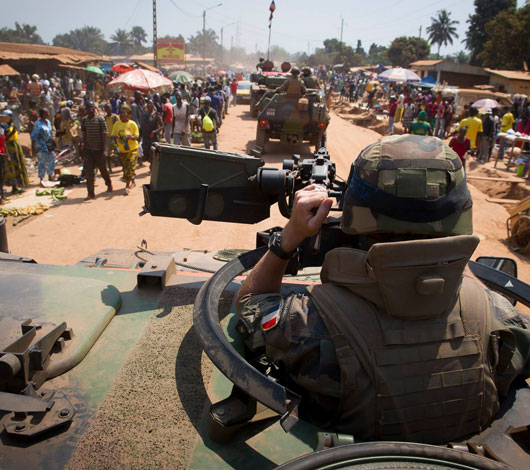
    A French army unit patrolling the streets of Bangui, capital of the Central African Republic, soon after French peacekeeping forces arrived in the country. The forces deployed with their VBL light armored vehicles and ERC-90 Sagaie armoured cars. Photo: EMA / ECPAD
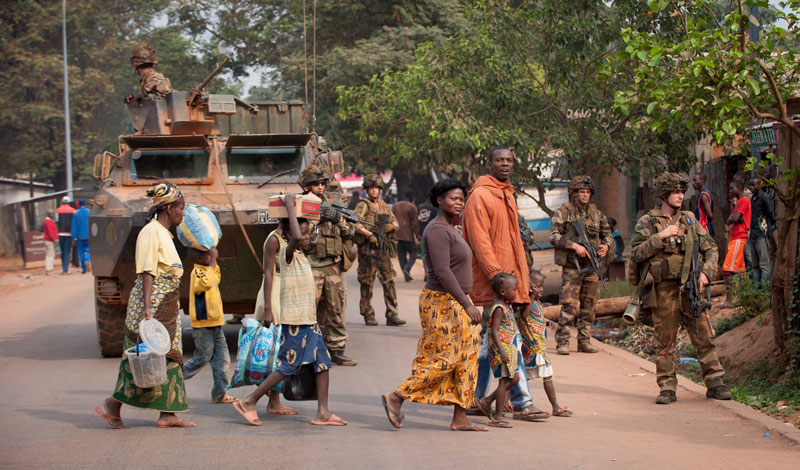
    1,600 French troops deployed to the Central African Republic under the mandate of a U.N. Security Council, to assist in peacekeeping in the war torn country. Operating under Operation Sangaris members of the French forces deployed with VAB armored personnel carriers are seen here at a security post on the streets of the capital Bangui. Photo: EMA / ECPAD
    1,600 French troops deployed to the Central African Republic under the mandate of a U.N. Security Council, to assist in peacekeeping in the war torn country. Operating under Operation Sangaris members of the French forces deployed with VAB armored personnel carriers are seen here at a security post on the streets of the capital Bangui. Photo: EMA / ECPAD

    The foreign ministers of the European Union (EU) meeting today in Brussels are expected to approve a European military intervention in the Central African Republic, a decision backing up the French and African Union peacekeeping operations already taking place in the region. Hundreds of people have died and about one million have been displaced by violence between Christians and Muslims.

    French troops prepare for a patrol with local forces in the Central African Republic, under the peacekeeping operation SANGARIS. Photo: EMA / ECPAD
    French troops prepare for a patrol with local forces in the Central African Republic, as part of peacekeeping operation SANGARIS. Photo: EMA / ECPAD

    The EU is seeking to deploy troops to support the U.N mission in CAR (BINUCA) as quickly as possible to avert what the red cross has warned as “massive humanitarian catastrophe”. The European military mission is planned to include the deployment of several hundreds of troops (up to one thousand) for a period of six months, with deployments at the capital Bangui, where thousands of refugees are concentrated seeking refuge and protection of international forces. Countries expected to send troops are France, which has already deployed 1,600 troops in the country, Estonia, Belgium, Poland, Sweden and the Norway. The EU force would likely take the form of infantry units with support such as surveillance communications, logistics, medical support and transport, including helicopters for internal mobility. Defense News wrote.

    Initial deployment of the EU force could happen within 30 days, but that depends on the force generation process and changes in the situation in CAR. A headquarters in Europe and one in the CAR would likely be set up. The deployment will require obtaining a mandate from the United Nations Security Council. The current U.N. resolution covers the deployment of 1,600 French soldiers already on the ground, alongside more than 3,500 African Union peacekeepers from Congo, Burundi and Rwanda. The forces are assisted with support from the US Africa Command.

    The EU ministers are hoping the intervention will contribute to stabling the environment and creating a firm ground for political reconciliation between the two sides. The Central African Republic’s provisional parliament is in the process of voting in a new leadership, after transitional president Michel Djotodia stepped down ten days ago under international pressure for failing to end the violence. “The current crisis is affecting the majority of the population (4.6 million, half of them children). Almost 60% of the Central Africans are in dire need of aid. As of 15 January, there were about 886,000 internally displaced persons (IDPs) in CAR. More than 86,000 Central Africans have sought refuge in neighbouring countries in the last year. Humanitarian access has been restricted by insecurity. Lack of access makes it difficult to monitor the overall humanitarian situation and deliver the urgently required assistance to those suffering the consequences of violence.” the Centre for Agricultural and Rural Cooperation (CTA) blog reports..

    RAFAEL Develops a New High Energy Laser Weapon

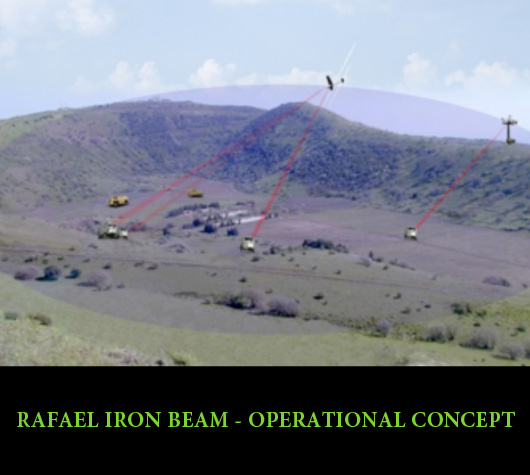
    RAFAEL's Iron Beam operational scenario. Photo: RAFAEL

    RAFAEL's Iron Beam operational scenario. Photo: RAFAELIsrael plans to implement a fifth ‘active defense’ layer in its national multi-layered air and missile defense system, aimed to provide an affordable countermeasure against threats at ‘very short range. The new capability will be able to protect border communities and military installations, offering point defense against various aerial threats.

    These elements could consist of the new ‘Iron Beam’ system, a mobile High-Energy Laser Weapon System (HELWS) developed by RAFAEL. ‘Iron Beam’ is designed to destroy targets by irradiation with a directed High Energy (HE) laser beam. The system will have a wide range of applications – from engagement of airborne targets, acting as a Counter Rocket, Artillery, Mortars (C-RAM) to Counter-Unmanned Aerial Vehicles (C-UAV)s or surface-based targets. It is designed for operation as part of air-defense system or as a stand-alone system, at day or night-time.” RAFAELs communiqué said.

    Subscribe to read the full version
    Subscribe here to read the full version of this article

    Elements of the High-Energy Laser Weapon System (HELWS) will be unveiled in February at the Singapore Airshow, with more details and system-representative elements to be displayed at the Eurosatory exhibition in June this year.

    “At the Singapore Airshow we are introducing our Iron Dome and MIC4AD air-defense integration system and a new system called ‘Iron Beam’, comprising a new C-RAM defense capability employing directed energy weapon.” Joseph Horowitz, Director of Marketing and Business Development at RAFAEL’s Air Superiority Systems Division told Defense-Update. “The directed energy component known as ‘Iron Beam’ employs a solid–state laser interceptor designed to engage targets at very short range, below the levels where we currently employ the Iron Dome.” Horowitz explained, adding “As a weapon system, Iron Beam is designed to have minimal collateral damage, minimal environmental impact and no risk to friendly air traffic around the attacked target.”

    The video above shows excerpts from the Boeing/US Army HEL-MD test in December, where the High Energy Weapon engaged unmanned vehicles and mortar bombs, destroyed in flight. (DOD Video)

    The Israeli project is not the first to enter testing. Development of similar programs was accelerated in recent years in the USA and in Europe, addressing urgent needs for better protection of NATO forward bases in Afghanistan (ISAF).

    Finland is Buying Dutch Leopards for €200 Million

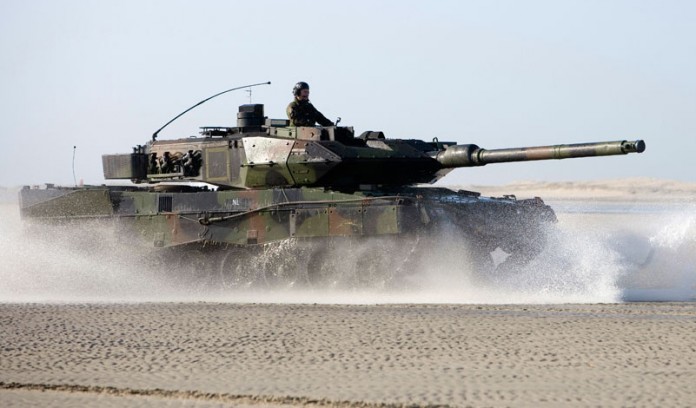
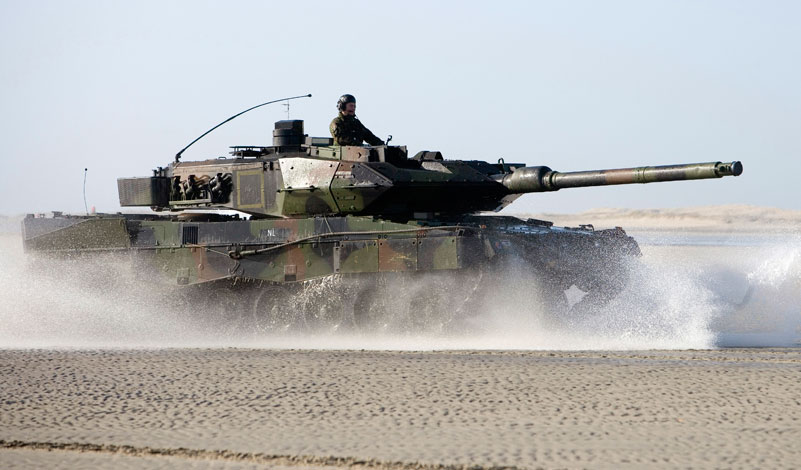
    188 Leopard 2A5 tanks were modernized by the Dutch military to the current 2A6 standard between 2000 and 2006. 100 of these tanks are to be transferred to Finland, under the newly announced 200 million deal.
    188 Leopard 2A5 tanks were modernized by the Dutch military to the current 2A6 standard between 2000 and 2006. 100 of these tanks are to be transferred to Finland, under the newly announced 200 million deal.
    188 Leopard 2A5 tanks were modernized by the Dutch military to the current 2A6 standard between 2000 and 2006. 100 of these tanks are to be transferred to Finland, under the newly announced €200 million deal. Photo: Finnish MOD

    Finland and the Netherlands have agreed to transfer most of the remaining stock of Dutch Leopard 2A6 Main Battle Tanks (MBT) to Finland over a period of four years, for amount around €200 million. Defence Minister Carl Haglund has approved the acquisition of last thursday. Under the agreement Finland will procure 100 Leopard 2A6 tanks from the with the Netherlands, along with logistics package and spare parts sustaining 10 years of operations. The agreement is expected to be signed by on 20 January in the Netherlands by Haglund and his Dutch counterpart, Jeanine Hennis-Plasschaert. Deliveries will commence in 2015 and continue through 2019. the project will secure the Army’s ability to attack highly 2030s.

    Through this acquisition Finland will be able to upgrade its armoured corps, currently using Leopard 2A4. According to Finish armed forces sources As the acquisition has been included in the funding program it wil not require additional resources outside the funds already budgeted for force modernization. According to the military planning, the upgrading of existing Leopard 2A4 into 2A6 level would have cost €5 million per tank, while the procurement of new production tanks would cost about €10 million. According to Finnish military sources the Dutch tanks being procured were upgraded to the 2A6 standard in the mid 2000s, and their performance in mobility, protection and firepower is significantly better than the current tanks operated by the Finnish military.

    The new tanks will be operated in two mechanized battle groups currently operating Leopard 2A4 MBTs and BMP-2 infantry fighting vehicles. Since the 1980s the Finnish army was operating its tanks in a brigade-size formation. Initially it was operating T-72M1 acquired from the Soviet Union in 1984-1990, when Helsinki bought 160 of the Russian tanks. Two decades later the T-72s were all replaced by 124 Leopard 2A4 tanks Finland bought from German Army surplus. Finland currently maintains 139 Leopard 2A4 in stock, these are expected to be replaced by the Dutch 2A6s toward the end of the decade.

    Shouldering NATO’s European defense throughout the Cold War, the Royal Netherlands Army became the first export customer of the German Leopard 2 tank, receiving 445 of the vehicles between July 1981 and July 1986. Most of these tanks were later sold to Austria, Canada, Norway and Portugal, some also supported combat operations in Afghanistan. Through the 1990s 330 of these were upgraded to 2A5 standard. The tanks remaining in Dutch service were upgraded again to Leopard 2A6 standard in the 2000s, remaining in service until 2011. At that time, the Dutch parliament decided to disband the two remaining armored battalions, as part of cost saving measures. Since then, about 188 Leopard 2A6s are mothballed and auctioned for sale to international customers. Deals with Indonesia and Peru failed over political and economical grounds.

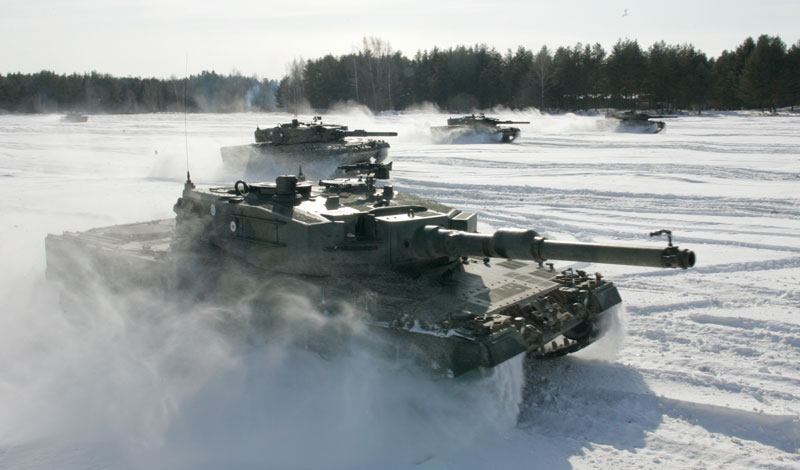
    The Dutch MBTs will gradually replace the Leopard 2A4 tanks operating with the Finnish Army since 2003. Photo: Finnish MOD
    The Dutch MBTs will gradually replace the Leopard 2A4 tanks operating with the Finnish Army since 2003. Photo: Finnish MOD

    Raytheon, L-3 demonstrate new ship protection system

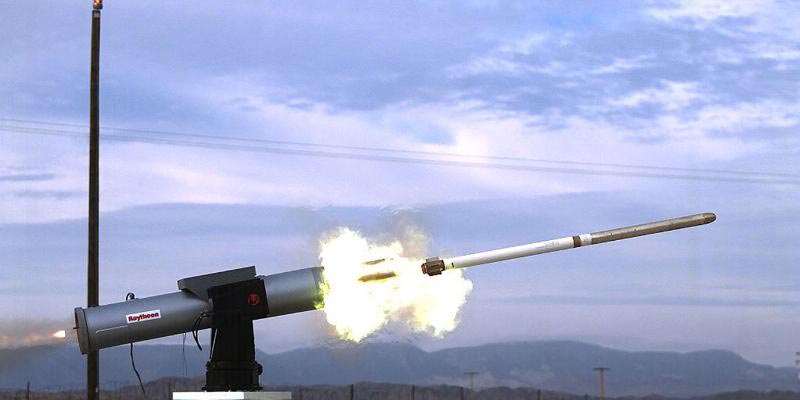
    Raytheon and L-3 Communications successfully demonstrated a vessel self-protection capability employing laser-guided rockets, that can be employed against swarming attacks of small fast boats.

    talon
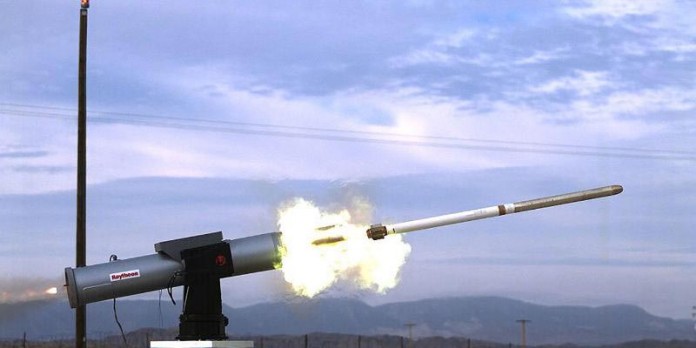
    Raytheon’s TALON laser-guided rocket is fired from an L-3 Communications remote weapon station using an LAU-68 launcher demonstrating the system’s small-ship protection capability. Photo: Raytheon

    fired Raytheon TALON laser-guided rockets from an L-3 remote weapon station using an LAU-68 launcher. The test demonstrated lightweight remote weapon systems such as L-3s’ Advanced Remote Weapon Station (ARWS) can provide extended range protection for small surface ships, by incorporating the currently fielded launcher, sensor systems and TALON laser guided rockets, that can be fired to an effective range of six kilometers.

    The LAU-68D/A launched was designed to support the 2.75″ rockets and is currently used by the US Navy, carried by US Marine Corps and US Navy helicopters and jet fighters. The launcher that connects to the aircraft pylons or hardpoints packs seven rockets stored in launch tubes. It incorporates all safety and electrical initiation controls to enable the crew to control the number and sequence of rocket fire. When carrying the TALON laser guided variant of the Hydra, the LAU-68A/D becomes part of a powerful precision guided weapon system, along with the target acquisition system and laser designation source that can be operated remotely of the launching vehicle.

    When employed on board ships the launcher can be operated remotely from the bridge, with rockets aimed at the general direction, followed by precision laser designation employed in the last few seconds before impact. “With the increase in swarming-boat threats, navies worldwide have an urgent need to protect their smaller ships,” said Rick Nelson, vice president of Raytheon’s Naval and Area Mission Defense product line. “Combining our proven TALON LGR with L-3’s Advanced Remote Weapon Station provides an affordable, effective and available solution. It also demonstrates our ability to reach across Raytheon’s wide portfolio of products and team with companies around the globe to develop new solutions.”

    In a stand-alone configuration the system would carry up to seven TALONS, and equipped with remote an electro-optical sensor and laser designator mounted on the RWS pedestal. The entire system would weigh approximately 500 pounds (226 kg). According to Raytheon officials, the system requires only a target queue to engage on-mount target tracking and can be integrated on ships ranging in size from riverine to major surface combatants.

    Rising Tension Between Chile and Peru, in Anticipation of International Court Ruling

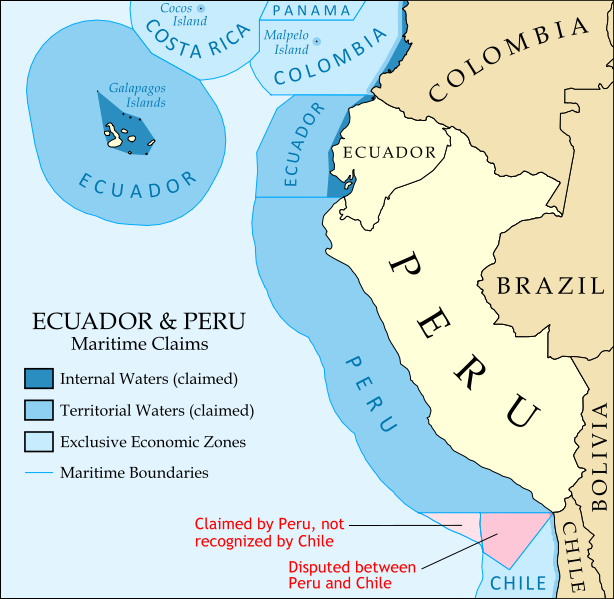
    The maritime claims south of the equatorial-pacific along the south-american coastline. Map: Political Geography now.
    The maritime claims south of the equatorial-pacific along the south-american coastline. Map: Political Geography now.
    The maritime claims south of the equatorial-pacific along the south-american coastline. Map: Political Geography now.

    Tension is rising in Peru and Chile awaiting the verdict of the International Court of Justice (ICJ) in The Hague on a maritime border dispute dating back to the 1980s. The verdict is expected on a meeting of the ICJ scheduled for January 27, 2014. Until recently, Chile was convinced that its position was legally very strong, but it now faces the potential loss of perhaps half of the contested waters. The recent outcome of the Colombia-Nicaragua case by the ICJ has led both Chileans and Peruvians to believe that their own disagreement will receive a similar ruling.

    The same tribunal has ruled on Nov. 19, on a similar dispute between Colombia and Nicaragua. The two countries were vying for sovereignty of the San Andrés islands – a group of seven small islands in the Caribbean that have been under Colombian control for over one hundred years. The ICJ allowed Colombia to maintain its sovereignty of the islands, but also, and rather unexpectedly, awarded Nicaragua the area of sea stretching from the Central American coast to the group of islands.

    The dispute between Chile and Peru is based on 37,500 square kilometers of sea located near the border between the two countries: The area was under Peruvian control from the foundation of Peru until 1879 when, as a consequence of the War of the Pacific, it passed into Chilean hands where it has remained for the last 130 years.

    The ruling from The Hague awarded something to both parties involved, in an attempt to be fair and just, but in Colombia the outcome was seen as a failure for the country and for Juan Manuel Santos’s government. In response, the Colombian government rebelled against the court’s ruling. They decided to keep their ships in the waters that were awarded to Nicaragua and, a few days later, President Santos announced that Colombia would be withdrawing from the Pact of Bogotá, a treaty dating from 1948 in which the independent republics of America agreed to resolve all territorial disputes peacefully by appealing to the ICJ in The Hague.

    So far both sides have insisted that they will abide by the judgment delivered by the International Court of Justice, but the former commander in chief of the Navy, Admiral (r) Edmundo Gonzalez, considered a complete withdrawal from the area would be ‘impossible to implement’, at least in the near term. “That’s impractical. Changing the responsibility over the SAR areas (Search and Rescue) could take a year” Admiral González commented. The admiral, who was Commander in Chief of the Navy between 2010 and 2013.

    Thales Develops a New Generation Laser Designation Pod for Rafale, Mirage 2000

    thales-Laser Designation-Pod

    NAVFLIR_DAMOCLES
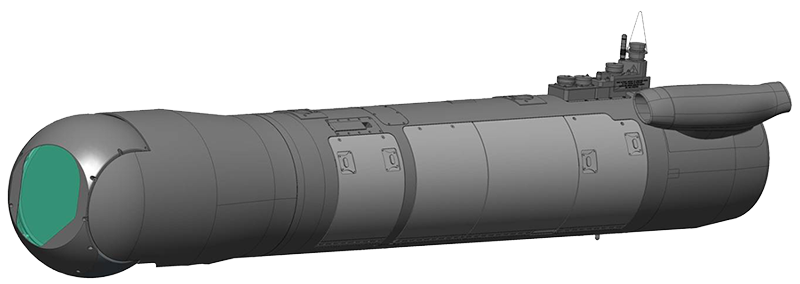
    The French Air Force currently operates the Damocles targeting pod.

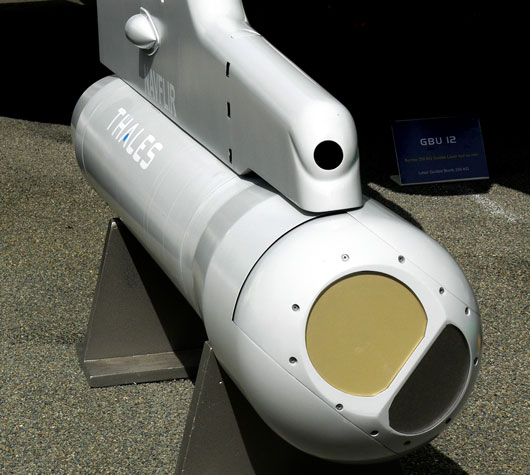
    The French defence procurement agency DGA has awarded Thales with a contract for the development of a New Generation Laser Designation Pod (PDL NG). The contract follows the completion the risk reduction phase Thales has followed through 2013. The development is expected to continue for five years, with initial series production pods expected in 2018.

    The PDL NG will provide French Air Forces fighter planes an improved day/night imaging capability, enhancing target engagement capabilities in complex theaters of operations. The new pod will be designed to integrate with both the Rafale and Mirage 2000D fighter aircraft.

    The risk-reduction phase, the first step in the development of any programme, confirmed the system’s architecture, its high level of functional integration, reliability and the development schedule.

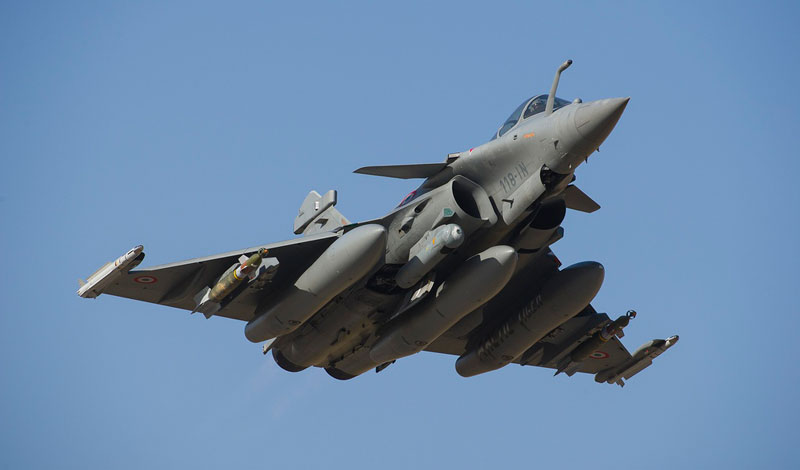
    RAFAEL and Mirage 2000 fighter jets operating with the French Air Force and Navy are currently employed with laser designation pods and DAMOCLES targeting pods, both produced by Thales. The company is now contracted to develop the next generation targeting pod for these aircraft. Photo: French Air Force
    RAFAEL and Mirage 2000 fighter jets operating with the French Air Force and Navy are currently employed with laser designation pods and DAMOCLES targeting pods, both produced by Thales. The company is now contracted to develop the next generation targeting pod for these aircraft. Photo: French Air Force

    Taurus KEPD 350 missile Flying on the Typhoon

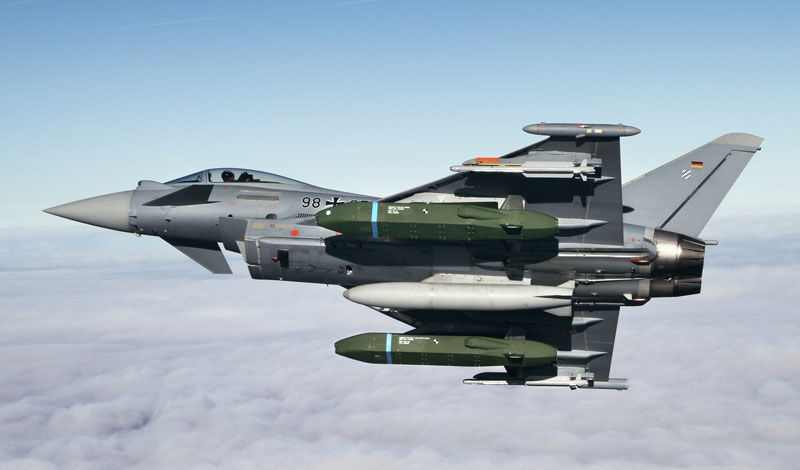
    Typhoon begins flight tests with Taurus KEPD 350 missiles. Photo: Airbus Defence (Eurofighter)

    The Taurus KEPD350 cruise missiles began flight testing on the Airbus Defence and Space (Eurofighter) Typhoon strike fighters yesterday (January 15, 2014). The Taurus stand-off precision missiles made by MBDA was flown on the Instrumented Production Aircraft 7 (IPA7), with Eurofighter Project Pilot Chris Worning at the controls. The activities are taking place as part of the Storm Shadow integration programme, in support of NATO air forces and foreign air forces requirements to gradually transfer stand-off strike missions from aging Tornado strike fighters to the Typhoon.

    The first flight took place at Manching Military Air Systems Center in the north of Munich, where the functional ground test and taxi tests, were carried out up until yesterday. The first flight evaluated flutter tests, air data system large store interference assessment and aerodynamic data gathering. Concurrent testing of these two similar missiles optimises the Storm Shadow integration and facilitates the future airframe integration of Taurus. Taurus KEPD 350 is a German/Swedish missile that is manufactured by Taurus Systems GmbH, a partnership between MBDA Germany and Saab Dynamics.

    Typhoon begins flight tests with Taurus KEPD 350 missiles. Photo: Airbus Defence (Eurofighter)
    Typhoon begins flight tests with Taurus KEPD 350 missiles. Photo: Airbus Defence (Eurofighter)

    UN Drone Crashed in Congo

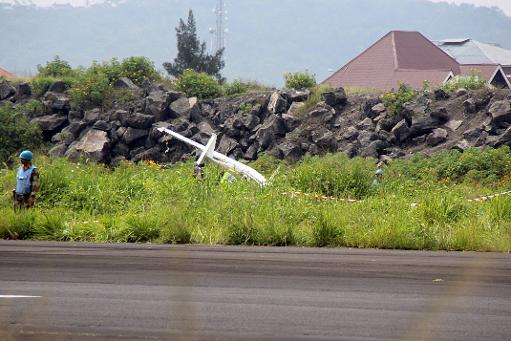
    United Nations peacekeepers stand next to a drone after it crashed at Goma's airport, on January 15, 2014 (Photo: AFP)
    United Nations peacekeepers stand next to a drone after it crashed at Goma's airport, on January 15, 2014 (Photo: AFP)
    United Nations peacekeepers stand next to a drone after it crashed at Goma’s airport, on January 15, 2014 (Photo: AFP)

    An unmanned aircraft used by U.N. peacekeepers in Democratic Republic of Congo was damaged yesterday while landing at the airport near the eastern town of Goma. The incident occurred as the Falco drone was returning from a mission, and no casualties were reported, said Lt. Col. Felix Prosper Basse, a military spokesman for the country’s peacekeeping mission. The United Nations force started using the Italian made Falco drones last month, to help it monitor armed groups operating along Congo’s border zone with Rwanda and Uganda.

    In March 2013 the U.N. Security Council authorized the use of unarmed drones on a trial basis for intelligence gathering in eastern Congo, a region where numerous armed groups continue to operate despite the defeat of the M23 rebel group late last year. In december 2013 the first of five ‘Falco’ drones destined for the mission began operations at Goma. The Falco drones used by the U.N. force are manufactured by Selex ES, a unit of Italian defence group Finmeccanica.

    Seven years ago, on October 3, 2006 a B-Hunter unmanned aircraft operated by the Belgian Army, in support of the European peace keeping force (EUFOR) in Congo crashed while operating over the Democratic Republic of Congo’s capital city of Kinshasa. One civilian was killed and three others injured in that accident, believed to be the first incident of a human casualty by an crashed unmanned aircraft.

    Austal Launches USNS Fall River (JHSV 4)

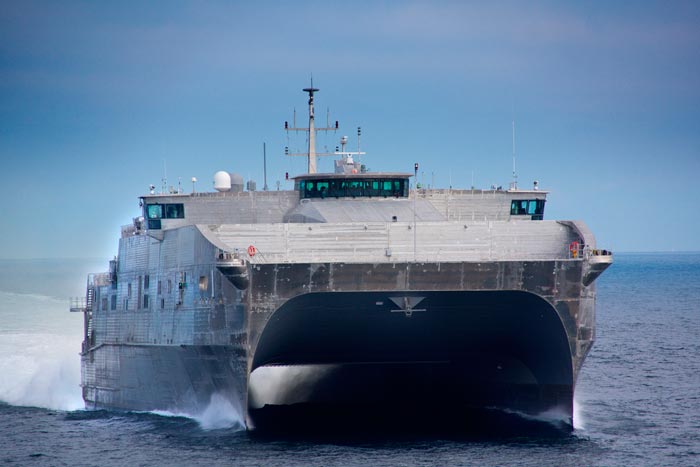
    On January 16, 2014, Austal USA successfully completed the launch process of the USNS Fall River (JHSV 4). Recently christened, this 103-meter high-speed catamaran represents the U.S. Department of Defense’s next generation multi-use platform. It is part of a 10-ship program, the funds for all of which have been appropriated, worth over US$1.6 billion.

    JHSV4
    The launch of USNS Fall River was conducted in a multi-step process that involved having Berard Transportation transfer the ship from Assembly Bay 3 onto a deck barge, which was then towed to BAE Systems Southeast Shipyard. The next day, Fall River was transferred onto BAE’s dry dock Alabama; it was floated then returned to Austal’s facility where it will undergo final outfitting and activation before sea trials and delivery to the Navy later this year.

    JHSV 4 is now one of four Austal-built Navy ships moored in the Mobile River, joining USNS Millinocket (JHSV 3), Coronado (LCS 4), and Jackson (LCS 6).

    “With JHSV 3 recently completing Acceptance Trials and preparing for delivery, and now the launch of Fall River, the JHSV program continues to progress well as we meet our commitments to the Navy. The incredible shipbuilders here at Austal should be very proud of this accomplishment” Craig Perciavalle, Austal USA President said.

    USNS Spearhead (JHSV 1) was delivered in December 2012 and is soon to be deployed. USNS Choctaw County (JHSV 2) was delivered to the Navy in June 2013. USNS Millinocket (JHSV 3) has completed Acceptance Trials and is scheduled to be delivered within the next month. Construction is well underway on Trenton (JHSV 5) which will begin final assembly in, now vacant, Assembly Bay 3 by the end of January, and construction will begin on Brunswick (JHSV 6) by the end of this month.

    JHSV1
    USNS Spearhead (JHSV 1),during its Builder’s Sea Trials (BST) on April 19, 2012. Photos: Austal

    The JHSV is a relatively new asset that will be an important Navy connector. In peacetime, JHSVs will be operating forward supporting Navy Expeditionary Combat Command and riverine forces, theater cooperating missions, Seabees, Marine Corps and Army transportation. Each JHSV also supports helicopter operations and has a slewing vehicle ramp on the starboard quarter which enables use of austere piers and quay walls, common in developing countries. A shallow draft (under 4 meters) will further enhance theater port access.

    Austal USA is also prime contractor for the construction of ten Independence-variant Littoral Combat Ships (LCS), a contract totaling $3.5 billion. Four of these ships are under construction at this time, the first of which was launched just last month.

    For the LCS and JHSV programs, Austal, as prime contractor, is teamed with General Dynamics Advanced Information Systems, a business unit of General Dynamics. For the JHSV program, General Dynamics is responsible for the design, integration and testing of the navigation and communication systems, C4I and aviation systems. As the Independence-variant LCS ship systems integrator, General Dynamics is responsible for the design, integration and testing of the ship’s electronic systems.

    Singapore to Equip F-16s with AESA Radar

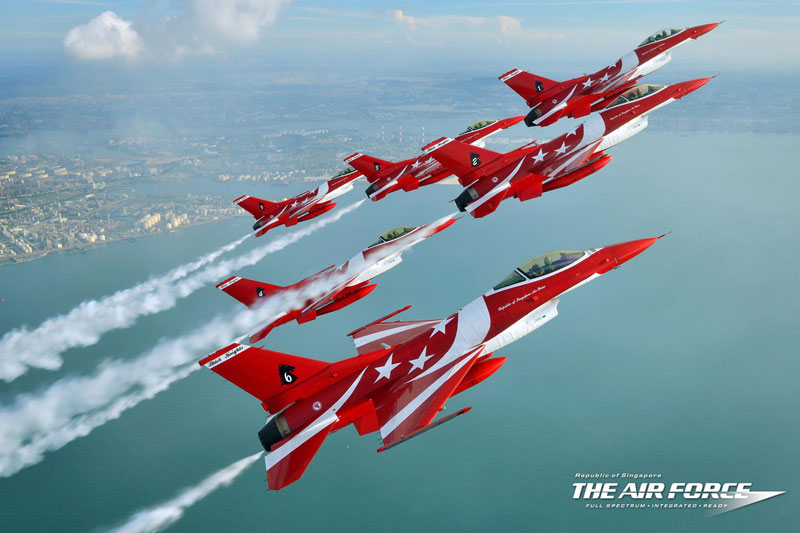
    The Black Knights have recently been re-formed, and will perform at the upcoming Singapore Airshow, to be held at the Changi Exhibition Centre from 11-16 February 2014. Photo: Republic of Singapore Air Force/Photo by Katsushiko Tokunaga (DACT).

    Singapore is planning to equip 60 of its F-16 Block 52 aircraft with Active Electronically Scanned Array (AESA) radars, as part of a $2.43 billion upgrading program. The provider of the new radar, being the main element in the modernization process, has yet to be selected yet.

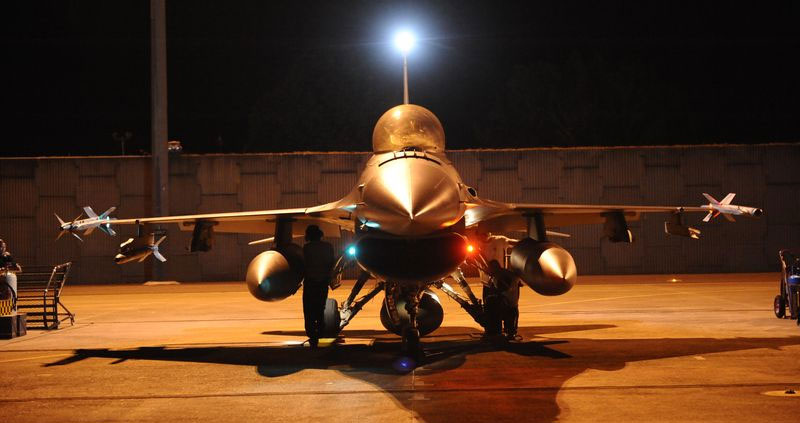
    All but 12 F-16s delivered to Singapore are based on the island. The 12 aircraft stationed at Hill AFB, Utah are used for pilot training. Photo: Singapore -MINDEF/Cyberpioneer

    All but 12 F-16s delivered to Singapore are based on the island. The 12 aircraft stationed at Hill AFB, Utah are used for pilot training. Photo: Singapore -MINDEF/Cyberpioneer

    Both Raytheon and Northrop Grumman are offering AESA radars for F-16s. Raytheon’s radar has recently been selected for a major upgrade in South Korea, to be performed by BAE Systems. Northrop Grumman is providing the radar for a similar upgrade for the US Air Force and for Taiwan, both programs to be delivered by Lockheed Martin.

    iai-125x125-Sing14

    According to the US Defense Security Cooperation Agency (DSCA) the upgrade package will also include LN-260 Embedded Global Positioning System/Inertial Navigation Systems (GPS/INS), APX-125 Advanced Identification Friend or Foe (IFF) Combined Interrogator Transponders and Joint Helmet Mounted Cueing Systems (JHMCS). Other equipment included in the upgrade comprise Modular Mission Computers, cockpit multifunction displays, radios, secure communications, video recorders and Mission Planning Systems. The package also includes integration of a number of guided weapons, including AIM-9X Block II air/air missiles, AGM-65G Maverick, GBU-50 and 38 JDAMs, GBU-12 and 49 laser guided bombs and CBU-105 sensor fused weapon dispensers.

    Singapore125x125Singapore currently operates 60 F-16C/D fighter planes in interceptor (F-16C) and two-seater strike (F-16D Block 52) configurations. Under the upgrade plan both variants will be upgraded to the latest configuration. At the Singapore Airshow 2012 Lockheed Martin launched the F-16V, the latest upgraded or new-manufactured model of the F-16. Singapore has not announced the schedule of the planned upgrade, but the first of the new fighters are expected to be re-introduced to service in 2015.

    The Black Knights have recently been re-formed, and will perform at the upcoming Singapore Airshow, to be held at the Changi Exhibition Centre from 11-16 February 2014. Photo: Republic of Singapore Air Force/Photo by Katsushiko Tokunaga (DACT).
    The Black Knights have recently been re-formed, and will perform at the upcoming Singapore Airshow, to be held at the Changi Exhibition Centre from 11-16 February 2014. Photo: Republic of Singapore Air Force/Photo by Katsushiko Tokunaga (DACT).


    Pentagon Details Israel’s MV-22 Osprey Package

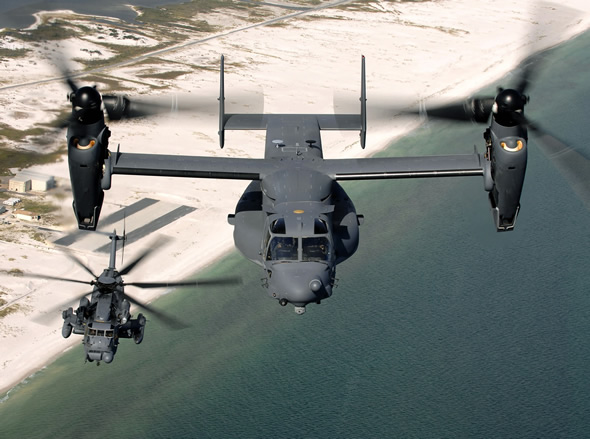
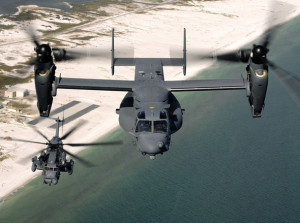
    The CV-22 Osprey will take over Air Force Special Operations Command helicopter missions when the MH-53 'Pave Low' (seen below) retires in October 2011. U.S. Air Force photo/Senior Airman Julianne Showalter
    The CV-22 Osprey will take over Air Force Special Operations Command helicopter missions when the MH-53 'Pave Low' (seen below) retires in October 2011. U.S. Air Force photo/Senior Airman Julianne Showalter
    When the CV-22 Osprey entered service with the U.S. Air Force Special Operations Corps (AFSOC) in 2011 it replaced the MH-53 ‘Pave Low’. But in Israel, the two are expected to fly together in the same squadrons for at least 10 years. U.S. Air Force photo/Senior Airman Julianne Showalter

    The US Department of Defense released details about the proposed sale of six V-22B Block C Osprey Tilt-Rotor Aircraft to Israel. Notifying the planned planned Foreign Military Sale to the US congress, the Defense Security Cooperation Agency said the estimated cost of the package, that includes six aircraft, associated equipment, parts, training and logistical support could cost up to $1.13 billion. The six aircraft are expected to be fielded with the Israel Air Force (IAF) by 2016. The IAF is planning to operate the new aircraft as part of a composite squadron operating both Sikorsky CH-53 (Yasour 2000/2025) and Bell/Boeing MV-22.

    The V-22 can carry 24 fully equipped troops or up to nine tons of cargo (using short take off run) over a radius of about 390 nautical miles (700 km), at a cruising speed of about 241 knots (440 km/h). The CH-53 can carry more troops (38) or up to five tons of cargo, on missions ranging to 90 nautical miles (160 km). Both can extend mission range by aerial refuelling. The IAF operates 23 CH-53 helicopters, comprising 18 Yasour 2000 and five modernized Yasour 2025 variants. The Air Force plans to maintain these helicopters in service at least through 2025.

    The MV-22B Block C is the current (enhanced) variant delivered to the US Marine Corps. This variant features several modifications improving the aircraft reliability, and improving environmental control (air conditioning) in the cabin. The Osprey’s Color Weather Radar system enhances situational awareness with better weather assessment, including precipitation intensity and storm cell turbulence. In addition to weather display the radar can clearly define terrain features along coastlines out to 20 nautical miles in the ground mapping mode. In the sea search mode the radar can also detect ships. 

    The pilots use helmet-mounted monocle Day Heads-up Display (HUD) to view basic flight and performance data. The Day HUD enhances the pilot’s situational awareness during tactical situations and reduced visibility conditions. At night the HUD is mounted on the Aviator Night Goggles (AVS-9) extending the pilot’s situational awareness during night operations. In the future the display will feature an embedded system is Traffic Advisory System (TAS) – intended to warn MV-22 pilots of other aircraft in close proximity or with the potential for collision. Other changes in the new model include the improvement of cabin air conditioning and installation of ‘Cabin Situational Awareness Device’, enabling troop commanders in the cabin to communicate with the troops, providing flight plan, navigation waypoints and GPS updates to handheld navigation units prior to disembarkation. 

    According to the DSCA the package the Israeli government has requested includes six aircraft and 16 Rolls Royce AE1107C engines – 12 mounted and four spares. The Bell-Boeing team is hopeful the Israeli buy will be further increased to 12 V-22 aircraft, provided the Corps will exercise options for additional 22 aircraft included in the current contract (Flight Global).

    In addition to the standard Block C avionics each of the aircraft destined to Israel will also be fitted with Government Furnished Equipment (GFE) including Electronic Countermeasures (ECM) kit (AN/APR-39 Radar Warning Receiver Systems, AN/ALE-47 Countermeasure Dispenser Systems and AN/AAR-47 Missile Warning Systems). Other avionics included are AN/APX-123 Identification Friend or Foe (IFF) Systems, AN/ARN-153 Tactical Airborne Navigation Systems, AN/ARN-147 Very High Frequency (VHF) Omni-directional Range (VOR) Instrument Landing System (ILS) Beacon Navigation Systems, AN/APN-194 Radar Altimeters, and AN/ASN-163 Miniature Airborne Global Positioning System (GPS) Receivers (MAGR). The aircraft will also carry a Multi-Band Radios supporting air-air and air-ground communications. The package also includes six AN/AVS-9 Night Vision Goggles per plane, and a Joint Mission Planning System.


    Cyber Intelligence Report – January 15, 2014

    cyber_report

    Executive Cyber Intelligence Bi-Weekly Report by INSS-CSFI

    January 15th, 2014

    Israel


    Israel: Hackers of the Islamic Cyber Resistance Group claim to have breached Israel Airports Authority computer systems

    The Islamic Cyber Resistance hacker group claimed to have breached the computer system of the Israel Airports Authority (IAA), which is responsible for the management of the Israel civil airports and border terminals. The cyber-attack is part of a cyber-campaign called Op Israel. The hackers maintain they gained access to the IAA networks and stole sensitive documents, including information on domestic and international flights. The Islamic Cyber Resistance Group said the attack has caused service disruptions and claims to have had access to the Israel Airports Authority’s systems for months already. During this period, they contend to have downloaded a “huge amount” of data and analysed Israel’s aviation systems. They have reached out to the Israel Airports Authority to see if they can comment on the incident; however, IAA has yet to comment.

    USA

    USA: Obama announces new policies in surveillance in wake of NSA scandal

    President Barak Obama is announcing alterations to surveillance programs conducted through the National Security Agency (NSA). The announcement will include protection of surveillance of non-Americans in allied countries and appoints a privacy advocate to argue in front of the Foreign Intelligence Surveillance Count, which approves surveillance. This week the NSA panel summoned by the President will also reveal its findings. No matter what the announcement holds, the results of changes occurring are a direct result of NSA whistleblower Edward Snowden. Snowden justified his actions by claiming Americans and its allies have a right to privacy.

    USA: Microsoft hacked by the SEA while making email alterations

    On January 11, Microsoft News Twitter feed was hacked for the second time by the Syrian Electric Army (SEA), which displayed messages such as: “Don’t use Microsoft emails (Hotmail, Outlook). They are monitoring your accounts and selling the data to the governments.” SEA is using the aggravation of American residents from the Edward Snowden leaks. Additionally, SEA hacked into video game console Xbox’s Twitter, Xbox Support Twitter, and Xbox’s Instagram social media accounts. Microsoft, which is the owner of Xbox stated: “Microsoft is aware of targeted cyber attacks that temporarily affected the Xbox Support and Microsoft News Twitter accounts. The accounts were quickly reset, and we can confirm that no customers’ information was compromised.”

    Yet, since December, Microsoft has been in the process of expanding and strengthening its products, including the email service Outlook.com, the Office 365 apps, the Azure cloud-computing service, and Skydrive online storage. Additionally, an encryption technology called Perfect Forward Secrecy is being constructed to thwart eavesdropping. The company is scrambling in an effort to assure users and foreign governments their data is not free for the National Security Agency’s taking. The announcement follows similar efforts by Google, Twitter, Mozilla, Facebook, and Yahoo. However, Microsoft said it will also go several steps further, by making a contractual promise to business and government customers alerting them if Microsoft receives legal orders related to their data — and fight every gag order in court.

    USA: Major retailers in the U.S. hacked during holiday season

    Massive cyber-attacks hit major U.S. retail stores of high end Neiman Marcus. Neiman Marcus confirmed a data breach involving credit card theft from customers during the holiday shopping season, where hackers rooted payment information from customers. Neiman Marcus spokesperson, Ginger Reeder, stated the company is unaware of the cause or identification of the data breach, but they informed “federal law enforcement agencies and are working actively with the U.S. Secret Service, the payment brands, our credit card processor, a leading investigations, intelligence and risk management firm, and a leading forensic firm to investigate the situation.”

    Similar breaches affected Target on Black Friday, the biggest shopping day in the U.S. Senator Edward J. Markey (D-Mass) responded to the attack stating: “In the wake of the Target breach, customers, lawmakers, and consumer advocates have stepped up calls for Congress to set up guidelines on how merchants should protect consumer data…a need for clear, strong privacy and security standards across all industries.” Target has already responded with CEO Gregg Steinhafel proclaiming to improve Target’s understanding of consumer-based scams, including removing the malware the cyber criminals installed, hiring a team of data security to investigate occurrence, and working with law enforcement. Target is also preparing to announce an education campaign on accelerating the knowledge on technology and cyber security.

    Some believe other retail stores have been affected, causing a pattern in attacks heading towards larger widespread attacks. Chris Petersen, CTO of LogRythm remarked that this would entail extremely sophisticated malware software. At this time, these are just rumours circulating, and IntelCrawler contended the attacks on Target and Neiman Marcus were separate. Nevertheless, no national breach disclosure law exists, allowing many companies who may have been attacked to not publicize it.

    Russia

    Russia: Russian online forum being formed to expand new cyber strategy

    An online discussion, involving both the Russian government and the public, will be taking place for a month in order to convene on a new cyber security strategy being developed, Senator Ruslan Gattarov, who is head of the program stated. The discussion is meant to incorporate feedback received and then analyse and edit the data into the new cyber strategy being developed by the government. This is one of many instances of Russia expanding and progressing its cyber laws in efforts to improve existing laws around information security. Examples include the announcement in August of producing a separate branch of military forces to focus on combating cyber-attacks, as well as President Vladimir Putin signing a document defining cyber-attacks as a major threat to international security.

    Arab Countries

    Iran: Cyber-attacks on 29 embassies  in Iran

    Twenty-eight embassies were affected by a cyber-attack email regarding the Syrian conflict. According to a report made by the Japanese firm Trend Micro, a cyber-attack was perpetrated during the month of November 2013. The original report did not specify in which Middle Eastern nation the cyber-attack took place; however, sources with insider knowledge surmised it was Iran. The emails carrying the malware were subjected towards the Syrian conflict. Once received, it tempted email recipients to open the virus-ridden attachments, a technique better known as “spear phishing.” Trend Micro disclosed that the coordination of the cyber-attacks indicate they were not simple hackers, but a well-orchestrated organization of cyber attackers. The cyber-attack used a new, deadly software entitled Zero Day, searching for Windows XP operating systems and 2003 Server, which have few or no cyber security measures installed. Circulated via email, the lethal program makes a backdoor entry and takes control of the server and can also pull data from the system. Last November, Microsoft issued a warning on malware in this particular form. Investigators from Trend Micro noted resources in the malware were made to stop other forms of software from pinpointing it. Many questions are left unanswered, including the identity of the hackers.

    China and APAC

    China: Cracking down on Cyber Activism

    The Chinese government is trying to fight against the growing power of cyber activism. At the end of 2013, China announced its newest objective is to handle new media. Due to its restrictive politics, China knows of the growing cyber activism movements around the country. The Chinese State Internet Information Office called for a crackdown on independent online investigation into personal details of suspected wrongdoers, known in China as the “Search.” Another announcement from the Chinese government is looking for legislation regarding online activities, examples being human flesh searches, which have been linked both cyber activism and cyber vigilantism. Citizens of China are trying to encourage and empower ordinary citizens to hold the government more accountable. In an interview with the sociologist Tricia Wang, she explained: “Flesh searchers feel like they are sharing information in a system that does not have a comprehensive or consistent rule of law.” The searches are a component of the “long revolution,” defined by Chinese scholar Guobin Yang in his 2009 book, The Power of The Internet in China, expressing how Chinese society is gradually becoming more participatory and transparent.

    South America

    Brazil: Controversial update to Brazilian Internet law

    Brazilian President Dilma Rousseff is pushing for an update to the “Civil Internet Framework” legislation through Congress in 2014, which defines the rights of the Internet. However, the bill has hit a stalemate regarding Internet neutrality, the addition being in response to revelations in September that the U.S. had been spying on President Rousseff. Internet neutrality would prohibit service providers from suppressing Internet speed based on content, allowing the Executive Branch to force certain Internet connection and program providers to build or use data centers in Brazil with a number of conditions. Many have regarded this update negatively. However, the Brazilian government points to the revelations of U.S. spying and the necessity of such acts to protect Brazil rights. Yet, those against it worry if Brazil passes such laws, other countries will, too.

    Europe

    UK: Ministry of Defense dedicates millions for ‘digital insurgency’, social networking research

    The UK’s Ministry of Defence decided to invest millions into postgraduate studies such as ‘digital insurgency’. Ministry of Defence Science and Technology Laboratory (DTSL) is  sponsoring PhD papers on the role of cyberspace social media, too. The impact of social networks such as Twitter and Facebook in period of crisis will also be mapped. Around £10 million will be invested into the program made by the DTSL. Furthermore, PhD projects will be funded nationwide at the universities of Exeter, Southampton, Glasgow, Queen Mary, and University of London in order to verify the influence of the online behaviour on societies. Exeter has been granted £82,630 by the DTSL for its PhD research on ‘Collective Action in the Digital Age: social identities and the influence of online and offline behaviour.’

    DSTL is also funding research into what they call “battle-winning technologies” and have financially backed the creation of underwater drones and the development of clothing with fully embedded electronics. On the DSTL website, they remarked: “We also work in niche areas which are sensitive, operationally critical or international in nature and must therefore be done within government… We’re extremely proud of our work which saves lives in the UK, overseas and on the front line. We’re a trading fund of the MOD, accountable to government, to the taxpayer and the UK armed forces we support in the field every day.” The UK Ministry of Defense conveyed the notion that they consider cyber security as an issue of “growing importance,” and socially engineered attacks are a “growing threat” needing to be understood and exploited so they can be defended.

    This comes after it was revealed from the UK government that cyber criminals stole more than £1 billion from residents of the UK. The most common scam has been phishing scams allowing criminals access to online banking passwords. Additionally, IO Active exposed how many apps for banking on smartphones are faulty, as a number of tests had a plus 90% statistic, including lack of jailbreak detection, fake login prompts, etc.

    UK: Investment into Cyber Streetwise

    The UK government is launching a new campaign attempting to change the attitude towards online security for consumers and small businesses, called Cyber Streetwise. Opening a website with suggestions, the £4 million campaign is led by the Home Office, which is funded by the National Cyber Security Program, and delivered in partnership with the private and voluntary sectors. The program has been praised for its accessibility and ease of usage for small businesses.

    inss150About the Cyber Intelligence Report:

    This document was prepared by The Institute for National Security Studies (INSS) – Israel and The Cyber Security Forum Initiative (CSFI) – USA to create better cyber situational awareness (Cyber SA) of the nature and scope of threats and hazards to national security worldwide in the domains of cyberspace and open source intelligence. It is provided to Federal, State, Local, Tribal, Territorial and private sector officials to aid in the identification and development of appropriate actions, priorities, and follow-on measures. This product may contain U.S. person information that has been deemed necessary for the intended recipient to understand, assess, or act on the information provided. It should be handled in accordance with the recipient’s intelligence oversight and/or information handling procedures. Some content may be copyrighted. These materials, including copyrighted materials, are intended for “fair use” as permitted under Title 17, Section 107 of the United States Code (“The Copyright Law”). Use of copyrighted material for unauthorized purposes requires permission from the copyright owner. Any feedback regarding this report or requests for changes to the distribution list should be directed to the Open Source Enterprise via unclassified e-mail at:  [email protected].

    CSFI and the INSS would like to thank the Cyber Intelligence Analysts who worked on collecting and summarizing this report.


    Israel Plans to Slash Namer Production by 60%

    13th Battalion of the Golani Brigade Holds Drill at Golan Heights
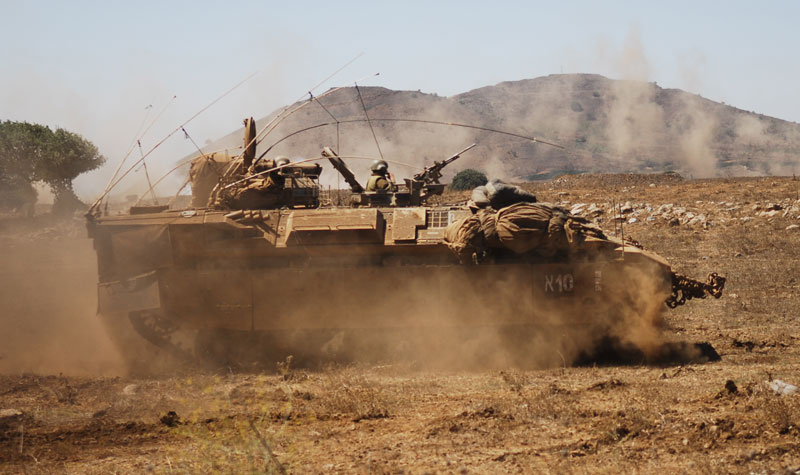
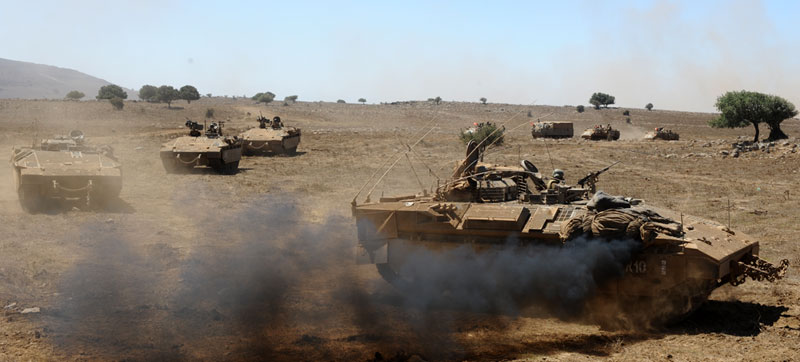
    A column of Namer Infantry Combat Vehicles (ICV) of the Golani 13th infantry battalion seen on an exercise in the Golan Height, 2012. The brigade is expected to receive the full complement of ICVs, but  the current budget is not expected to support equipping about two brigades with the new ICV. Photo: IDF Spokesman, by Staff Sgt. (res.) Abir Sultan
    A column of Namer Infantry Combat Vehicles (ICV) of the Golani 13th infantry battalion seen on an exercise in the Golan Height, 2012. The brigade is expected to receive the full complement of ICVs, but the current budget is not expected to support equipping about two brigades with the new ICV. Photo: IDF Spokesman, by Staff Sgt. (res.) Abir Sultan
    Israel Ministry of Defense is slashing its planned procurement of Namer Infantry Fighting Vehicle by more than half; Under the next multi-year plan, currently formulated in Tel-Aviv, the planned allocation for the Namer procurement will be revised to no more than 170 vehicles produced through 2017. The first batch of US produced Namer hulls were delivered to Israel by the end of 2013. The seven hulls are being fitted with Israeli-made systems in Israel, prior to delivery to the operational units. Namer ICVs are currently deployed with the infantry battalions of the Golani Brigade.

    According to Israeli and US sources, the US contractor for the program, General Dynamics Land Systems (GDLS), is renegotiating a 2011 contract with Israel that will likely include penalties due to budget-driven cuts in the number of heavy troop carrier kits Israel agreed to buy from the firm. Defense News reports. Industry sources expect Israel’s MoD to release its revised request for proposals by early February.

    Under the eight-year deal, GDLS committed to delivering kits for some 386 vehicles through 2019 at a per-unit cost of approximately $730,000 based on full-rate production of 60 vehicles per year. The initial contract covered the production of 110 vehicles. The two-part contract stated GDLS would invest in tooling of the production line US government-owned, General Dynamics-operated Joint Systems Manufacturing Center (JSMC) in Lima, Ohio. According to the contract, the Israel MOD had an option to buy 276 additional Namer AIFVs at a firm fixed price. According to Defense News, restructuring the existing agreement would result in penalties of some $17 million, with unit costs estimated at just under $900,000 due to lost economies of scale.

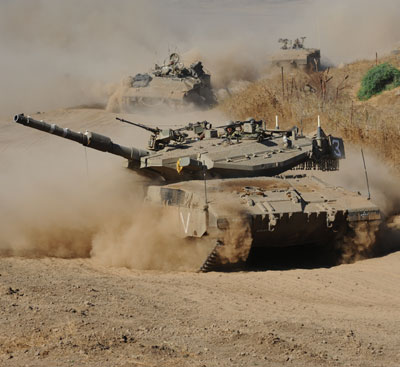
    While production of Namer ICV will be curbed at about 170, Israel continues to produce Merkava Main Battle Tanks, alas at a much slower rate than before. Photo: IDF Spokesman, by Staff Sgt. (res.) Abir Sultan

    While production of Namer ICV will be curbed at about 170, Israel continues to produce Merkava Main Battle Tanks, alas at a much slower rate than before. Photo:

    [/caption]An Israeli Defense Ministry spokeswoman said final approval of the IDF’s five-year plan is still pending, and therefore MoD could not comment on the prospective impact on the Namer program or its contract with GDLS.

    At the height of its wartime production, the joint GD/government plant at Lima employed some 1,200 workers, churning out Abrams tanks for US and foreign customers, but with budget cutbacks and the end of most war-related work, the JSMC currently employs about 700 people.

    The cut in Namer production would adversely effect JSMC, where work force has dropped in recent years from 1,100 to 700. The US Army has said it wants to stop Abrams production in 2016 and resume work in 2019 when it will start building its next-generation Abrams tank, which it is developing with General Dynamics. The production of Namer, as well as upgrade kits for M-1 Abrams tanks were essential to sustain the work force at the  through 2019. Although GDLS is one of the finalists selected for the Army’s next generation Ground Combat Vehicle (GCV) program, even if the program survives the budget cuts in the coming years and if GDLS wins that contract, the GCV will not reach production in time to fill the gap.

    Transformer Vehicle Sets for Flight Testing in California Next Month

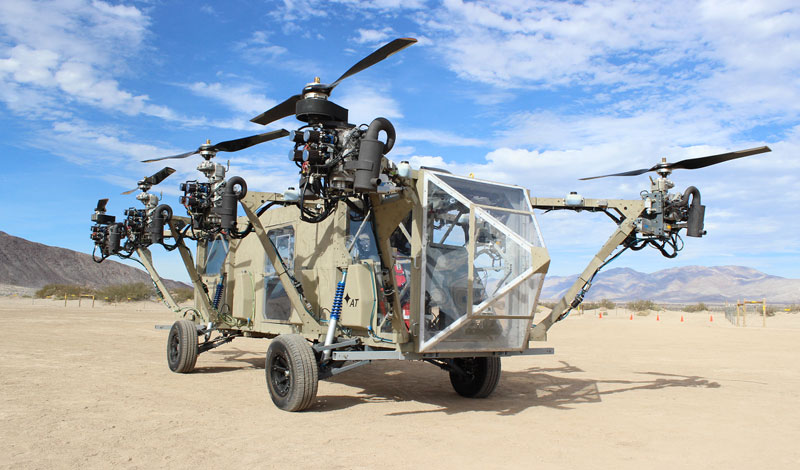
    The ‘Black Knight Transformer' is based on an innovative technology pioneered by Advanced Tactics, that combines the capabilities of a rotorcraft, and an off-road vehicle. Photo: Advanced Tactics

    A hybrid vehicle combining an off-road automobile and multirotor helicopter is set to become the world’s first roadable, vertical takeoff and landing (VTOL) aircraft.

    The ‘Black Knight Transformer' is based on an innovative technology pioneered by Advanced Tactics, that combines the capabilities of a rotorcraft, and an off-road vehicle. Photo: Advanced Tactics
    The ‘Black Knight Transformer’ is based on an innovative technology pioneered by Advanced Tactics, that combines the capabilities of a rotorcraft, and an off-road vehicle. Photo: Advanced Tactics

    A small California based aerospace company named Advanced Tactics Inc. (AT) released first details about the AT Transformer vehicle technology this week. AT is set to test its AT Black Knight Transformer technology demonstrator within the next month, following the completion of driving tests last month. The tests are performed n Southern California. Following the first flight which will be unmanned (remotely piloted) and tethered, the Black Knight Transformer will enter more expansive, iterative flight testing program leading to a full-capability demonstration in late 2014.

    AT’s ‘Black Knight’ Transformer is based on an innovative technology pioneered by AT, that combines the capabilities of a rotorcraft, and an off-road vehicle. “This design is simple and robust, by eliminating the mechanical complexity and cost of the articulated rotor system that stabilizes and controls a conventional helicopter and replacing it with a high-speed computerized feedback control system.” Rustom Jehangir AT’s Chief Engineer told Defense-Update, “Additionally, the configuration negates the need for a tail-rotor or engine transmission.” while the multirotor concept has been familiar for almost 90 years (the first helicopters, designed in the 1920 were in fact quadrotors), their application was extremely complex and unreliable using mechanical synchronization and control. “Today we can run the rotors through direct drives, while leaving the stabilization, elevation and attitude control to the computerized system that controls the engines.” Jehangir said, adding that AT developed an application that controls the rotation speed of gas or diesel engines in the resolution that enables dynamic stabilization of the octocopter.

    The full-scale transformer was tested on land in December, clearing the vehicle for flight tests in January-February 2014. Photo: Advanced Tactics
    The full-scale transformer technology demonstrator was tested on land in December, clearing the design for the flight tests in January-February 2014. Photo: Advanced Tactics
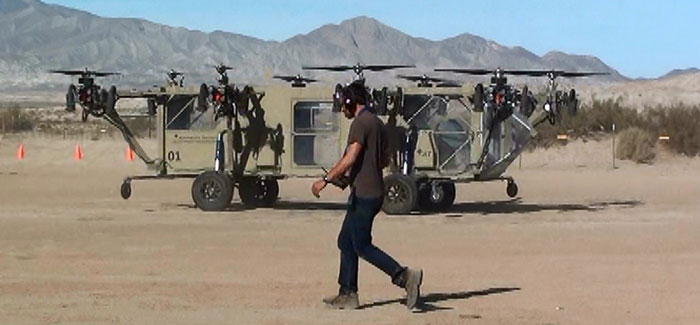
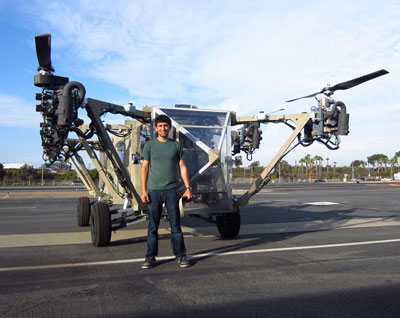
    AT engineer, Rustom Jehangir, is standing next to the transformer vehicle for scale. He is six feet tall. Photo: Advanced Tactics
    AT engineer, Rustom Jehangir, is standing next to the transformer vehicle for scale. He is six feet tall. Photo: Advanced Tactics

    The Black Knight Transformer is designed for autonomous casualty evacuation and manned or unmanned cargo resupply missions. The interior volume is comparable to a Blackhawk helicopter, thus making it suitable for cargo resupply and support missions. An unmanned transformer could be used for combat casualty evacuation (CASEVAC) while a similar optionally manned configuration could be optimized for Special Operations missions. On an typical CASEVAC mission evacuating a wounded soldier under fire from a hot battle zone, a Black Knight Transformer would dispatch to the site landing zone designated by the wounded soldier’s squad. The flexibility of the vehicle’s transportation capability means they can drive the vehicle to areas which otherwise cannot support safe rotorcraft operation.

    Development began in 2010, under congressionally funded ‘Special Interest Program’ to develop an unmanned platform for combat casualty evacuation. For the first two years the program was supported by the US Army Telemedicine and Advanced Technology Research Center (TATRC) but in 2012 the Marine Corps and Air Force Research laboratory (AFRL) have joined and expanded its scope. Despite the early start AT was not selected for the DARPA Transformer program, where transformer type vehicles are developed for similar applications. Now, with the relative maturity of the program, AT is scouting the industry to collaborate and seize joint development opportunities taking its innovative technologies into full production.

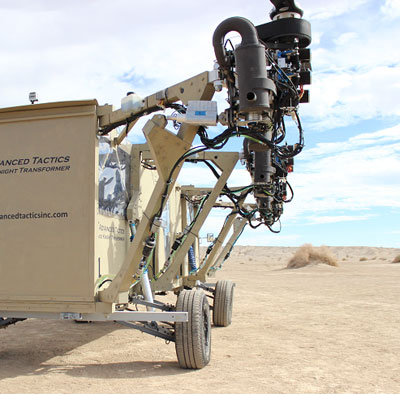
    Each of the propulsion units comprises a gas-powered internal combustion engine, two-blade rotor, and mounting rigs  carrying the gas feed and engine controls. For the operational concept design, the arms are extended with actuators. The actuators would allow the vehicle to be reconfigured in less than one minute. Photo: Advanced Tactics
    Each of the propulsion units comprises a gas-powered internal combustion engine, two-blade rotor, and fixed mounting arms carrying the gas feed and engine controls. For the operational concept design, the arms are extended with actuators. The actuators would allow the vehicle to be reconfigured in less than one minute. Photo: Advanced Tactics

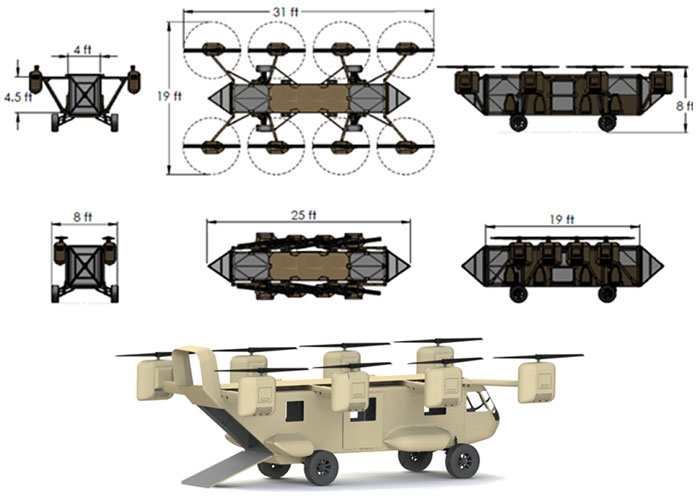
    In fact, the operational configuration of the Black Knight Transformer would meet (and possibly exceed) the DARPA Transformer requirements. It will be configured with 19 foot long cargo hold (19x4x4), carrying five passengers or payload capacity of over 1,000 lbs (454 kg). Loading will be supported by a loading ramp for quick roll-on roll-off loading and offloading. The Black Knight Transformer will be able to deploy in flight over a 250 nm range (463 km) and dash for 30 km over road or rough terrain at a speed of 70 mph (112 km/h). In the aircraft mode it will cruise at a speed of 130 kts (240 km/h). Designed from the start for special ops, the entire vehicle will be transportable inside the CV-22 cargo hold. An inherent difference from the DARPA Transformers will be the use of turbo diesel engines and open rotors, instead of electrical motors and ducted fan or counter-rotating rotors developed under the DARPA program.

    AT began work on the Black Knight Transformer in 2010 and, beginning with electrically powered models. Two years later, AT tested the first sub-scale gas-powered ‘Panther Transformer’ and by the end of 2013 the full-scale vehicle completed the first test runs on land.

    Advanced Tactics are proposing a tilt-multi-rotor propulsion system to vertically lift and operate a Medium-Altitude Long Endurance (MALE) drone from ships.
    Advanced Tactics are proposing a tilt-multi-rotor propulsion system to vertically lift and operate a Medium-Altitude Long Endurance (MALE) drone from ships. Drawing: Advanced Tactics

    The Black Knight and Panther Transformers both utilize the AT Transformer technology, which leverages the simplicity and robustness of a “multirotor” helicopter at a full-scale size. Like the small electric multicopters that are prevalent today, the AT Transformer uses engines with a direct drive connection to prop-rotors. The vehicle is stabilized in flight by balancing the thrust generated by opposing rotors – four pairs are employed for the Black Knight application. The vehicle is designed with commercial off the shelf elements, including the motors and rotor systems.

    By using direct drive, the drive chain is simplified and more reliable. Overall, the structure and automotive systems are configured into modular, field replaceable components. To support off-road mobility the vehicle has automotive suspensions and drive-trains similar to those used in off-road trucks. Large truck tires and shocks provide excellent terrain handling and soften the vehicles’ landings. The wheels are driven by an independent engine and transaxle for speeds up to 70 mph (112 km/h).

    For instance, each of the eight propulsion subsystems can be replaced in the field by two people and the payload bay can be changed from casualty evacuation life support equipment to cargo for multi-mission capabilities. Additionally, the modular automobile portion of the vehicle can be replaced with a boat hull or an amphibious hull for water operations. The AT Transformer has the ability to perform controlled engine-out flight in case of a critical component failure.

    at_transformer
    General dimension and design concept of AT Black Knight Transformer

    Skunk Works and XTEND Simplify Multi-Drone Command

    0
    Lockheed Martin Skunk Works® and XTEND have achieved a major milestone in JADC2 by integrating the XOS operating system with the MDCX™ autonomy platform. This technical breakthrough enables a single operator to simultaneously command multiple drone classes, eliminating the friction of mission handoffs. From "marsupial" drone deployments to operating in GPS-denied environments, explore how this collaboration is abbreviating the data-to-decision timeline and redefining autonomous mission execution.

    From Ukraine to Taiwan: The Global Race to Dominate the New Defense Tech Frontier

    0
    As traditional defense primes face mounting competition from agile “neoprimes” such as Anduril, Palantir and Helsing, the balance of innovation is shifting toward software-defined warfare and scalable, dual-use technologies, while global industry consolidation—marked by Boeing’s integration of Spirit AeroSystems and other strategic mergers—signals an intensified race to secure control over the defense technology value chain. Our Defense-Tech weekly report highlights these trends.

    Europe’s “Drone Wall”

    0
    In early October 2025, a coordinated wave of unmanned aerial system (UAS) incursions—widely attributed to Russia—targeted critical infrastructure across at least ten European nations. The unprecedented campaign exposed the fragility of Europe’s air defenses...

    Weekly Defense Update & Global Security Assessment

    0
    Executive Summary The past week (September 18-25, 2025) represents an inflection point where strategic defense concepts have transitioned from doctrine to tangible reality. An analysis of global events reveals four primary, interconnected trends shaping an...

    U.S. Air and Space Forces Push Next-Gen Programs at the AS&C 2025 Conference and...

    0
    At the 2025 Air, Space & Cyber Conference, U.S. Air Force and Space Force leaders unveiled major updates on next-generation fighters, bombers, unmanned systems, and space initiatives, highlighting both rapid innovation and critical readiness challenges as the services race to outpace global competitors. A short version is available here, with a more detailed version for subscribers.

    TADTE 2025: Reflecting Taiwan’s Strategic Themes

    0
    The Taipei Aerospace & Defense Technology Exhibition (TADTE) 2025 crystallized around four dominant strategic themes that collectively illustrate Taiwan's comprehensive approach to defense modernization amid escalating regional tensions. Based on a detailed report by Pleronix (available upon request). Includes a Podcast discussion on TADTE 2025's highlighting Taiwan's four strategic themes beyond the post's coverage.

    Iron Beam 450 Completes Testing, Soon to Join With Operational Air Defense Units

    0
    Israel’s Iron Beam 450 high-power laser system has completed final testing, marking a major leap in air defense. Developed by Rafael, it offers precise, cost-effective interception of rockets, UAVs, and mortars, and is set for IDF deployment by 2025.