
Friday, December 26, 2025
More
    Home Blog Page 124

    French Navy Integrates UAVs in Naval Combat Management System

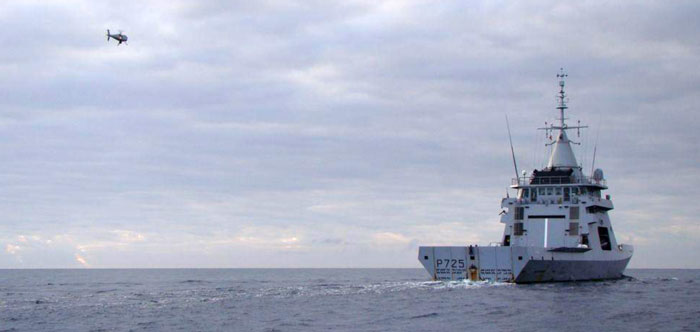
    L'adroit at sea during the S100 integration evaluation, December 2013. The inset view shows the vessel as the S100 approaches to land, during sea trials in 2011. Photos: French Navy
    S100withladroit
    S100 Camcopter hovering above OPV L’adroit approaching landing on the vessel’s aft deck. According to the drone detachment chief, Commander Marc Grozel, the drones practically doubled the surveillance area the vessel could cover on its recent European Union borders security (FRONTEX) mission performed in September 2013. Photo: French Navy

    The French defence procurement agency (DGA) and naval shipbuilder DCNS have completed a series of sea trials validating the functional integration of an unmanned aerial system operating as part of the combat system of a naval vessel. The four day test was conducted from 9-13 December 2013 as part of the SERVAL unmanned air systems (UAS) programme. (SERVAL: Système Embarqué de Reconnaissance Vecteur Aérien Léger – translated to: shipboard reconnaissance system – light air vehicle)

    Following sea trials on board the L’Adroit Gowind-class Offshore Patrol Vessel, the DGA, the French Navy and DCNS validated all functional blocks between DCNS’s Polaris combat system and the Camcopter S100 VTOL UAV developed by Schiebel of Austria. Based on the results of the trials, the DGA has issued DCNS with a permit to fly for the Camcopter S100.
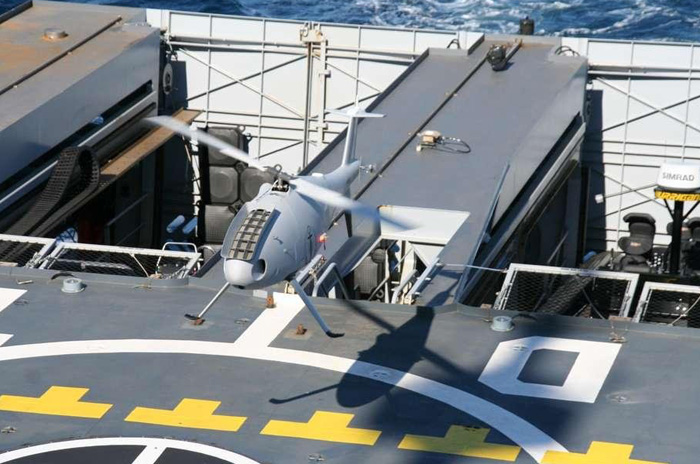
    S100 landing on the flight deck of the French OPV L'Adroite. The small unmanned rotorcraft performed over 200 landings on the vessel during the first sea trials phase conducted in the summer of 2013. Photo: French Navy.
    S100 landing on the flight deck of the French OPV L’Adroite. The small unmanned rotorcraft performed over 200 landings on the vessel during the first sea trials phase conducted in the summer of 2013. Photo: French Navy.
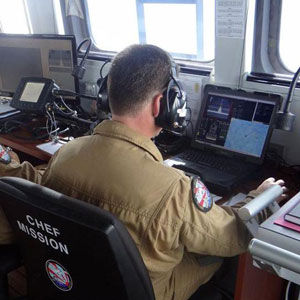
    The Camcopter mission chief operates the S100 payload from the bridge of the OPV L'adroit. PHOTO: French Navy
    The Camcopter mission chief operates the S100 payload from the bridge of the OPV L’adroit. PHOTO: French Navy

    Launching and recovering a UAV from a warship presents many complex challenges. The successful physical and functional integration of a tactical VTOL (Vertical Take-Off and Landing) UAV on board a surface combatant by DCNS, with no impact on flight safety, represents a major breakthrough for naval air forces. For these tests, L’Adroit’s single mast architecture, spacious flight deck, and helicopter hangar provided a great benefit.

    Following the tests on board the L’Adroit the French Navy plans to further test SERVAL on board the La Fayette. Operation from a frigate would be much more challenging, as the physical integration such as antenna positioning, data link integration, and space provisions for operational crew, maintenance and support are more limited. The functional integration of data from the drone in the combat system becomes imperative.

    The tests were designed to evaluate the performance of the DIOD-A module, developed by DCNS and integrated on this occasion with the Polaris combat system, for managing UAV payload data (from electro-optical sensors in this case) in real time. A further aim was to demonstrate that the interface between the UAS and the ship’s combat system has no impact on flight safety.

    The test validated that the module has met all DGA requirements, and therefore, can now deliver significant operational enhancement for the combat management system through the employment of VTOL UAV.

    “Thanks to its optical camera and long battery life, it allows you to see beyond the horizon, and greatly increases the potential that has the patrol patrol,” says Commander Luc Regnier, Capitaine of L’Adroit. The drone detachment chief, Commander Marc Grozel added that back in September 2013, when L’adroit assumed missions under the European Union borders security mission (FRONTEX), the vessel could double the surveillance area it could cover without the drones.

    Full integration of UAV data into the combat management system and the operational integration of the UAV operator into the CIC (Combat Information Centre) turn the UAV into a ‘telescopic arm’ of the ship, extending its operational capabilities by providing real-time data from the theatre of operations beyond the range of its onboard sensors. A UAV with an optronic payload constitutes an offboard sensor platform that can relay data back to the host ship to identify threats from pirates, for example, or to monitor fishing vessel inspection operations.

    Navies in Europe and around the world are expressing strong interest in offboard sensor systems. The sea trials have successfully validated integration of a VTOL UAV with a surface combatant for the first time in Europe.

    The French Navy is evaluating the use of drones on board its vessels towards the SDAM System (Naval Aerial Drone) to be implemented by 2020. SDAM is likely to be larger than the S100, and carry multiple sensors including maritime surveillance radar.

    L'adroit at sea during the S100 integration evaluation, December 2013. The inset view shows the vessel as the S100 approaches to land, during sea trials in 2011. Photos: French Navy
    L’adroit at sea during the S100 integration evaluation, December 2013. The small drone can be seen on the flight deck at the aft. inset view shows the vessel as the S100 approaches to land, during sea trials in 2011. Photos: French Navy

    PIRIOU and DCNS to Deliver Three EEZ Support Vessels for the French Navy

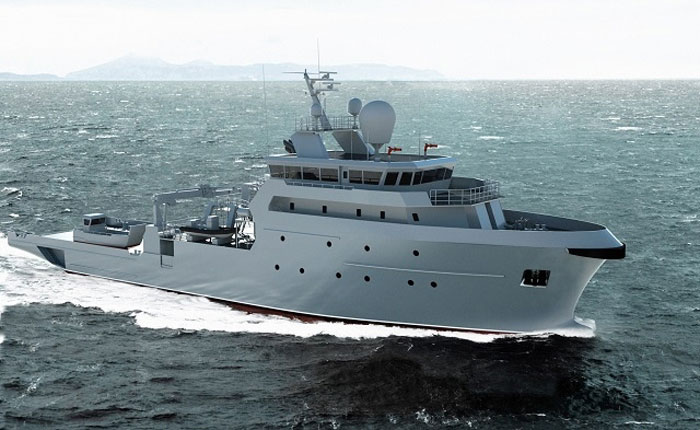
    The French Navy will receive three B2M boats by 2016, to assist in EEZ security and support operations. Photo: PIRIOU

    The French defense procurement agency DGA has awarded a shipbuilding team lead by the PIRIOU shipyard and DCNS to construct three multi-mission ocean-going vessels, with an option for a fourth. The B2M multi-mission ships are intended for operation overseas, each will have a length of 65 metres long and a displacement of 1500-2300 tons. The vessels will be delivered in 2015 and 2016.

    The French Navy will receive three B2M boats by 2016, to assist in EEZ security and support operations. Photo: PIRIOU
    The French Navy will receive three B2M boats by 2016, to assist in EEZ security and support operations. Photo: PIRIOU
    When the B2M will become operational, it will be able to better support rapid response operations, including emergency evacuation of citizens, conducting underwater intervention supporting divers and underwater surveillance missions using remotely operated vehicles (ROV).

    Apart from paramilitary missions B2M will also support enforcing the French ministerial missions Government Action at Sea (MEAs) addressing operations in the Economic Exclusion Zone; they will support fisheries police missions, fight against illegal immigration, drug trafficking and piracy and assist ships in distress, through employing towing and firefighting means.

    The vessels will have a top speed of 12 to 15 knots, with mission endurance of approximately 30 days without replenishment. The B2M are designed to enable high utilization, sustaining up to 200 days per year. The boats will have accommodations for 20 additional personnel (joint, police or gendarmerie) plus with two 4×4 vehicles along with their weapons and ammunition. Each boat will be equipped for self sustained operations. The ship will be equipped with a crane for loading and unloading containers, carry an eight-meter work boat for ship-to-shore operations and several semi-rigid (RHIBs) boats. B2M will also be capable of deploying divers. The ship will be fitted with attachments for carrying weapons and munitions. Each boat will also be equipped with firefighting equipment and will support towing capacity of up to 30 tons.

    PIRIOU will be responsible for the design and the construction of the ships. DCNS is co-contractor with PIRIOU for the military aspects of the design studies and the supply of the onboard communications systems (SITIP). DCNS will also be responsible for in-service support (ISS) of each ship for up to 6 years.

    To carry out the project the two companies have established in 2013 a joint venture named called KERSHIP.
    “This order was fundamental for us. First in practical terms, as we needed it to avoid a dip in workload in 2014, but also of course in strategic terms, since it gives substance to our collaboration with DCNS, which is boosted into orbit with excellent prospects for the future, particularly for export.” Pascal PIRIOU, Chairman and CEO of the PIRIOU group said.

    Marine Corps Infantry Completes 1,100 mile Raid Using Osprey Tilt-Rotor Aircraft

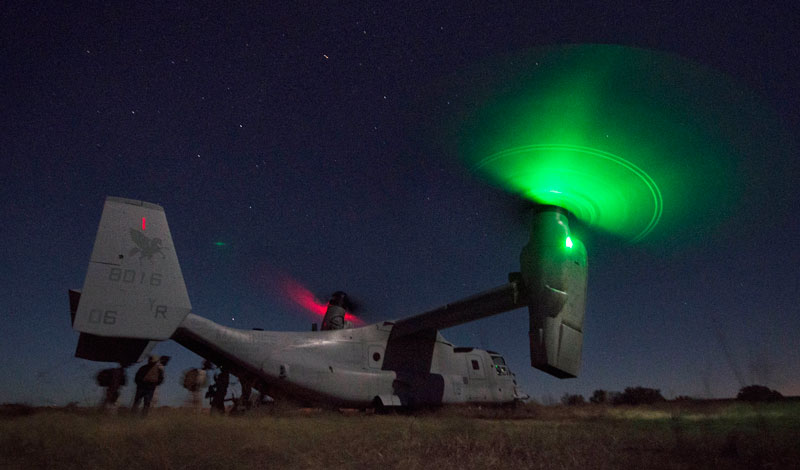
    Students from the Infantry Officer Course (IOC) at Marine Corps Base Quantico, Va., completed a "Proof-of-Concept" 1,100 mile, long-range raid from Twentynine Palms, Calif., to Fort Hood, Texas, via MV-22 Ospreys. USMC photo by Sgt. Tyler Main

    Students from the Infantry Officer Course (IOC) at Marine Corps Base Quantico, Va., recently completed a “Proof-of-Concept” 1,100 mile (1,770 km) raid using the Corps’ MV-22 tilt-rotor aircraft. The long-range mission took off from Marine Corps base at Twentynine Palms, Calif. Dec. 15, 2013, and flew to Fort Hood, Texas, via MV-22 Ospreys.

    Students from the Infantry Officer Course (IOC) at Marine Corps Base Quantico, Va., completed a "Proof-of-Concept" 1,100 mile, long-range raid from Twentynine Palms, Calif., to Fort Hood, Texas, via MV-22 Ospreys. USMC photo by Sgt. Tyler Main
    Students from the Infantry Officer Course (IOC) at Marine Corps Base Quantico, Va., completed a “Proof-of-Concept” 1,100 mile, long-range raid from Twentynine Palms, Calif., to Fort Hood, Texas, via MV-22 Ospreys. USMC photo by Sgt. Tyler Main

    At the target area the Marines fast-roped into a mock city to secure the embassy and rescue key U.S. personnel. The Marine Corps is the only military branch with the proven capability to missions of this magnitude, whether for humanitarian, rescue, combat operations or other special-forces type missions.

    “What’s different about this mission and where the Marine Corps stands today is, primarily, in the past we would receive the mission and six hours later the first aircraft lifts or the first action is taken to go ashore.” Maj. Scott Cuomo, Director of IOC, said. “Now, the moment the warning order is dropped or any type of indication that there is a significant threat, we can lift these aircraft and be two hours closer to our objective area.”

    Cuomo said many new technologies contribute to the Marine Corps expedient deployment capability including a tablet that receives images and video from nearby aircraft to update Marines in the air, and the long-range capability of the MV-22 Osprey.

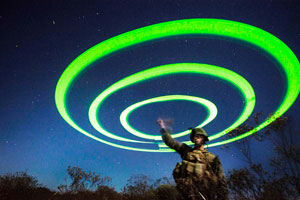
    A student from the Infantry Officer Course (IOC) at Marine Corps Base Quantico, Va. marks the rendezvous point for the raiding force upon arrival at the target. USMC photo by Sgt. Tyler Main
    A student from the Infantry Officer Course (IOC) at Marine Corps Base Quantico, Va. marks the rendezvous point for the raiding force upon arrival at the target. USMC photo by Sgt. Tyler Main

    “The [MV-22 Osprey] allows us to go over 1,000 miles and we can go even further than that,” Cuomo said.

    The Marine Corps has recently used the Ospreys capabilities in humanitarian and disaster relief missions as well to assist the Philippine people after the devastation of Typhoon Haiyan.

    It’s these rapid-response type missions that Cuomo claims are the Marine Corps primary role as a force in readiness. Since being exposed to their first mission of this sort, the students under his charge are confident in the Marine Corps ability to take on these operations.

    “If this class is any indication of what Marines can do with Ospreys then there’s no reason that the Marine Corps at large couldn’t train to this standard and execute these missions,” 2nd Lt. Ben Hooker, IOC student, said.

    “The Marine Air Ground Task Force is part of the naval service and is ready to be America’s crisis response force,” Cuomo added.

    Cuomo said that America will see the fruits of the Marine Corps labor in advancing the technologies, reach and capabilities required to complete missions like the 1,100 mile raid in Texas and the relief in the Philippines.

    “What we have now and what we’ll have going forward is a force that’s more lethal, that can go further, that can get there faster and that can be more precise than it’s ever been before to provide whatever the American people need us to provide.”

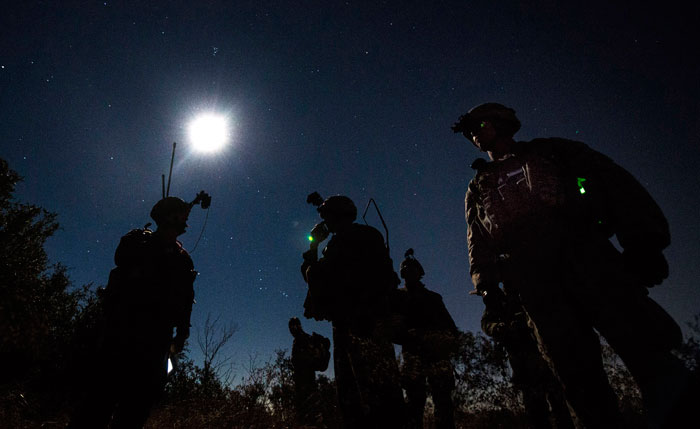
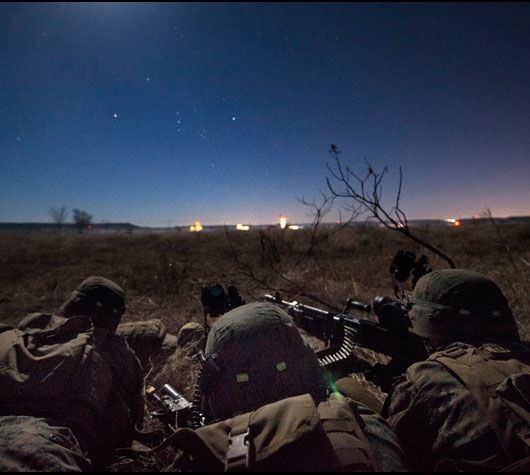
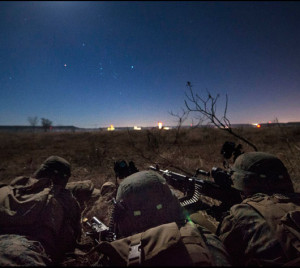
    A marine infantry unit  grouping for the raid after their landing at Ft. Hood, Texas, following the 1,100 miles flight from Twentinine Palms, CA. USMC photo by Sgt. Tyler Main
    A marine infantry unit grouping for the raid under the moonlit sky in Texas, after their landing at Ft. Hood, Texas. The troops landed  there after a 1,100 miles flight from Twentinine Palms, CA. USMC photo by Sgt. Tyler Main

    Star Trackers Harden Ground Targeting Systems from GPS Spoofing

    Students from the Infantry Officer Course (IOC) at Marine Corps Base Quantico, Va., completed a "Proof-of-Concept" 1,100 mile, long-range operation from Twentynine Palms, Calif., to Fort Hood, Texas, via MV-22 Ospreys, on Dec. 15, 2013. The Marines fast-roped into a mock city to secure the embassy and rescue key U.S. personnel. The Marine Corps is the only military branch with the proven capability to missions of this magnitude, whether for humanitarian, rescue, combat operations or other special-forces type missions. Photo: USMC by Sgt. Tyler Main.

    To deliver accurate data for precision weapon systems, the target acquisition process should rely on self positioning measurements of the highest accuracy. Global Positioning Satellite (GPS) systems were designed to deliver accurate position location, particularly when operating in the ‘military band’. But the GPS system is vulnerable to jamming, deception and interference (spoofing) that could turn it into the ‘weakest link’ of the targeting chain.

    One of the popular targeting systems provided by Northrop Grumman is AN-PED-1 laser targeting target designation system. Photo: Northrop Grumman.
    One of the popular targeting systems provided by Northrop Grumman is AN-PED-1 lightweight laser designator – rangefinder (LDDR). Photo: Northrop Grumman.

    A GPS receiver’s job is to locate four or more of these satellites, figure out the distance to each, and use this information to deduce its own location. This operation is based on a simple mathematical principle called ‘trilateration‘.

    The GPS system relies on measuring the distance to at least three satellites of the GPS constellation. But, when deceptive signals are transmitted, and mimic those satellites or jam their signals, the results processed by GPS receivers could vary significantly.

    But what if a receiver would rely on much larger constellations – star tracking rather than satellite tracking? Northrop Grumman Corporation recently announced an agreement with Trex Enterprises, to integrate Trex’ celestial navigation technology with its precision targeting systems provided to the U.S. military and allied forces. These methods used by seamen for thousands of years have also been employed by artillery forces, for site surveying. During the Cold war it was also used by bomber navigators, to determine the bomber position independent of external signals. In recent years the US Navy is also interested in implementing these stellar trackers as part of the Naval Aviation realignment to improve its capability to penetrate contested and denied airspace.

    Students from the Infantry Officer Course (IOC) at Marine Corps Base Quantico, Va., completed a "Proof-of-Concept" 1,100 mile, long-range operation from Twentynine Palms, Calif., to Fort Hood, Texas, via MV-22 Ospreys, on Dec. 15, 2013. The Marines fast-roped into a mock city to secure the embassy and rescue key U.S. personnel. The Marine Corps is the only military branch with the proven capability to missions of this magnitude, whether for humanitarian, rescue, combat operations or other special-forces type missions. Photo: USMC by  Sgt. Tyler Main.
    Students from the Infantry Officer Course (IOC) at Marine Corps Base Quantico, Va., completed a “Proof-of-Concept” 1,100 mile, long-range operation from Twentynine Palms, Calif., to Fort Hood, Texas, via MV-22 Ospreys, on Dec. 15, 2013. The Marines fast-roped into a mock city to secure the embassy and rescue key U.S. personnel. The Marine Corps is the only military branch with the proven capability to missions of this magnitude, whether for humanitarian, rescue, combat operations or other special-forces type missions. Photo: USMC by Sgt. Tyler Main.
    “The integration of celestial navigation technology marks an important milestone on the precision targeting technology roadmap,” said Gordon Stewart, vice president and general manager of Northrop Grumman’s Laser Systems business unit. “We will continue to refine and grow the application of celestial navigation for precision targeting across our production laser systems for U.S. and coalition warfighters.”

    Trex Enterprises’ is developing a multi-aperture stellar tracker able to detect stars during daylight. Trex has developed proprietary automated star pattern recognition algorithms. Working with the U.S. Navy, Trex has developed and demonstrated the Daytime Stellar Imager, an infrared sensor capable of seeing stars in daylight and at night, thus being able to create an alternative navigating system. Such system could be used onn naval surface vessels and aircraft, independent of global positioning systems (GPS) or Inertial Guidance Systems (INS). The system can deliver precision azimuth reference, for precision pointing at sea and on battlefield. Trex Enterprises developed the automated the star detection capability and pattern recognition algorithm. The system can detect a 6.3 magnitude star at daytime, at sea level.

    As one of the world’s leading manufacturers of military electro-optical (EO) targeting systems, Northrop Grumman Laser Systems has fielded thousands of portable, lightweight targeting and laser systems for ground troops and ground vehicles. The company has entered into a licensing agreement with Trex Enterprises that allows Northrop Grumman to produce and integrate Trex’ celestial navigation capability into ground targeting systems, thus improving target location precision, particularly in certain situations where reliance on other sensors is denied. The new capability has been qualified for the ground soldier targeting systems, and, according to the manufacturer, celestial navigation enhancements are already being delivered to support the immediate needs of deployed soldiers.

    US Army to Spend $440 Million on Inflatable SATCOM Antennae

    GATR Technologies announced today that it has been awarded a contract to deliver Inflatable Satellite Antennae (ISA) to the US military at an aggregate amount of up to US$440 million.

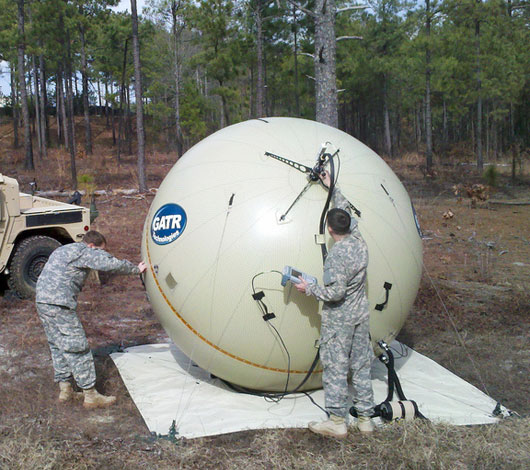
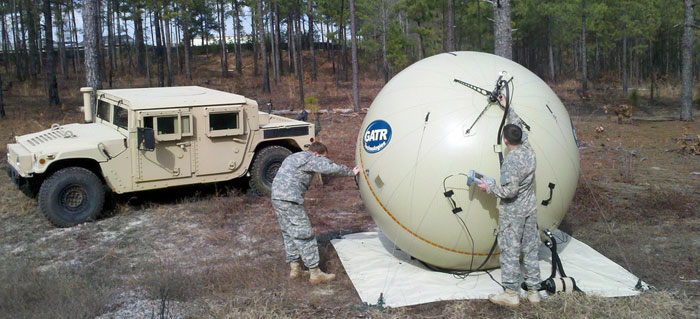
    GTAR is providing this 2.4 meter inflatable antenna sphere as a deployable SATCOM replacing heavier and more complex satellite dish antennae. Photo: GTAR.
    GTAR is providing this 2.4 meter inflatable antenna sphere as a deployable SATCOM replacing heavier and more complex satellite dish antennae. Photo: GTAR.

    The key innovation of GATR’s antenna is a flexible parabolic dish mounted within an inflatable sphere, reducing weight and packaged volume by as much as 80 percent and thereby improving the agility of deployed military and disaster response personnel. According to GATR, their ISA antenna costs less to procure than conventional deployable SATCOM antennae systems, and dramatically cuts transportation expenses due to its lightweight design. Finally, the larger dish size enables more efficient use of satellite bandwidth capacity, increasing bandwidth for users and allowing more users to communicate simultaneously. GATR currently supports 1.2, 1.8 and 2.4 meter diameter sphere dishes. These antennas perform like rigid deployable antennas of the same size, but provide significant reduction in the logistical size and weight.

    The rapid response benefits of the ISA was demonstrated last month when seven systems were deployed in the Philippines to support the recovery efforts after the devastation of Typhoon Haiyan. High-bandwidth communications are vital in coordinating efforts of this magnitude, especially when the communications infrastructure has been destroyed. GATR sent two systems to support Cisco TACOPS (a mobile team that quickly deploys to support emergencies that affect communications). Global DIRT and emergency.lu have also deployed their own GATR systems. Together these were among the first high-bandwidth satellite communications terminals deployed in key areas.

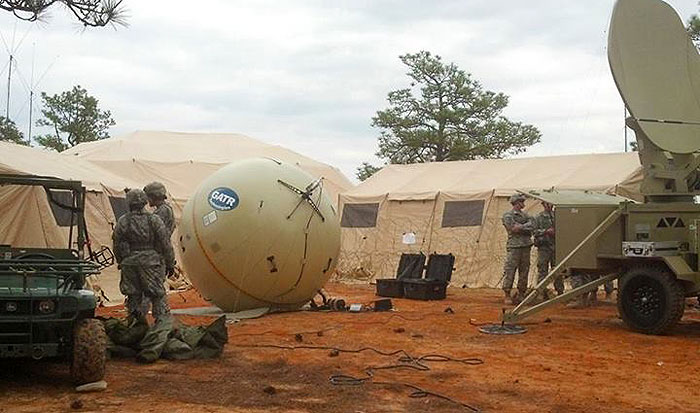
    GATR currently supports 1.2, 1.8 and 2.4 meter diameter sphere dishes. These antennas perform like rigid deployable antennas of the same size, but provide up to 80% reduction in the logistical size and weight. Photo: GTAR
    GATR currently supports Inflatable Satellite Antennae (ISA) in 1.2, 1.8 and 2.4 meter diameter sphere dishes. These antennas perform like rigid deployable antennas of the same size, but provide up to 80% reduction in the logistical size and weight. Photo: GTAR

    The five year Indefinite Delivery Indefinite Quantity (IDIQ) contract was awarded by the U.S. Army Project Manager, Warfighter Information Network-Tactical (PM WIN-T), Product Manager Satellite Communications (PdM SATCOM), Commercial SATCOM Terminal Program (CSTP) Office. Accroding to the company announcement, this contract ceiling value of $440 million will enable the United States Army, the United States Marine Corps, and other Commands and Services to procure GATR’s WGS certified Inflatable Satellite Antennas (ISA) and associated hardware, services and support. GATR President Paul Gierow remarked, “This contract validates the sustained adoption of GATR’s technology by the Warfighter and signifies our evolution as provider of integrated solutions.” “This contract validates the sustained adoption of GATR’s technology by the Warfighter and signifies our evolution as provider of integrated solutions.”

    According to Gierow, U.S. and Allied militaries have fielded over 300 GATR ISA terminals since 2008, proving the technology’s strength and reliability. “We were extremely fortunate to leverage early Small Business Innovative Research contracts and Quick Reaction Funding from the Department of Defense to help us initially field and improve our technology.” Gierow noted, “This contract allows conventional forces to take advantage of the same cost savings and lighter profile already benefitting the Special Operations community, Marine Corps Expeditionary Units, and other early adopters.”

    India’s Largest Carrier INS Vikramaditya Arrives at Karwar Home Port

    The flight deck of INS Vikramaditya illuminated for night operation evaluation. Photo: Indian Navy
    Sailing toward the home port of Karwar, in Karnataka, India - INS Vikramaditya (R-33) sailing alongside INS Viraat (R-22) and INS Talwar (F-40) Krivak II class guided missile frigate.
    Sailing toward the home port of Karwar, in Karnataka, India – INS Vikramaditya (R-33) sailing alongside INS Viraat (R-22) and INS Talwar (F-40) Krivak II class guided missile frigate. Photo: Indian Navy
    The flight deck of INS Vikramaditya illuminated for night operation evaluation. Photo: Indian Navy
    The flight deck of INS Vikramaditya illuminated for night operation evaluation. Photo: Indian Navy

    India’s newest and biggest ever warship, the aircraft carrier INS Vikramaditya, has arrived yesterday at its home port of Karwar in Karnataka, in the southwestern coast of India, after an uninterrupted six-week sail from northern Russia. In November 2013 the 44,500 ton vessel completed a modification and refurbishment process that lasted nine years.

    The aircraft carrier will now go through another refitting necessary to support the air wing that will be operating on board, and new armament, including Barak air and missile defense systems and mission systems that could not be installed in Russia. In few weeks the carrier will begin to support carrier qualification for Indian Navy pilots. The ship has the ability to carry over 30 aircraft comprising an assortment of MiG 29K/Sea Harrier, Kamov 31, Kamov 28, Sea King, ALH-Dhruv and Chetak helicopters. On its way to India Vikramaditya was escorted by a number of naval vessels, including the carrier INS Viraat. As the two carriers were sailing in close formation, Sea Harrier fighters aircraft and Ka-31 helicopters operating from INS Viraat performed simulated landings and take offs on the Vikramaditya.

    At present, Indian pilots are being trained on simulators to operate from the confines of the small flight deck. A shore-based training facility in Goa, where the MiG 29 K fighter squadrons will be based, is also set to start training pilots on landing and taking off from the carrier. The facility is a replica of the Vikramaditya flight deck — for both taking off from a ski jump and landing with arrestor wires.

    The certification of both pilots and air controllers has to be completed before the ship can formally join the fleet. A team of around 83 Russian personnel, who sailed with the ship, will remain in Karwar over the next year as part of the one year guarantee of the Sevmash shipyard, the Indian Express wrote.

    The new carrier introduces many capabilities the Indian Navy did not have sofar. To support fixed wing and rotary wing aircraft the ship is equipped with state of the art launch and recovery systems along with aids to enable smooth and efficient operation of ship borne aircraft. Its distinctive ‘ski jump’ deck elevating 14 degrees at its tip enables the launching of MiG-29K and Sea Harrier jets without the use of catapult. While the Ski Jump architecture has already been used in existing carriers such as Viraat, it was designed to support Vertical/Short Take-Off and Landing (V/STOL) aircraft such as the Sea Harrier and helicopters, but not the fixed wing aircraft like the MiG-29K, which otherwise require catapult. The MiGs will recover back on board using arresting cable. Other systems supporting aircraft operations include the LUNA Landing system for MiGs, DAPS Landing system for Sea Harriers and Flight deck lighting systems.

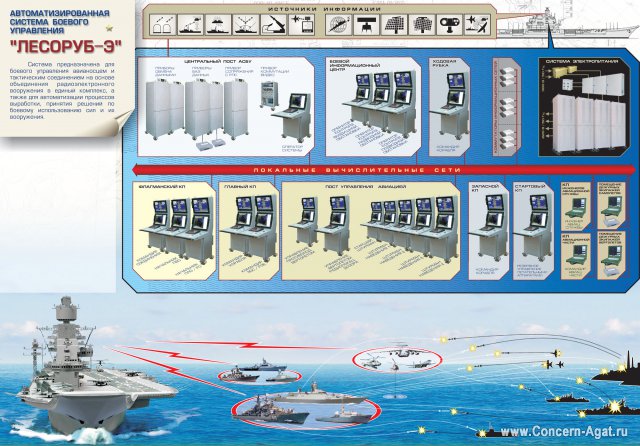
    LESORUB-E Command Information Center is the heart of the carrier operations on board the Vikramaditya. Photo: MARS JSC
    LESORUB-E Command Information Center is the heart of the carrier operations on board the Vikramaditya. Photo: MARS JSC
    The heart of the operational network that infuses life into the combat systems onboard the ship is the Computer aided Action Information Organisation (CAIO) system, LESORUB-E developed by the Russian MARS IT concern. LESORUB has the capability to gather data from ship’s sensors and data links and to process, collate and assemble comprehensive tactical pictures. This state of the art system has been specifically designed keeping in mind the essential requirement on the carrier for fighter control and direction.

    Another prominent equipment crowning the super structure’s island is the Resistor-E radar complex. As a primary situational sensor the vessels’ radar maintains a surveillance bubble of over 500 kms around the ship; Resistor-E also provides an automated sensor for air traffic control, approach/landing and short range navigation for ship borne aircraft. The system supports airborne mission planning and in-flight navigation providing flight data to aircraft operating at extended ranges from the mother ship. The precision approach guidance system aids the fighters on approach to be directed down to a distance of 30 meters short of flight deck.

    Vikramaditya also boasts of a very modern communication complex, CCS MK II, to meet her external communication requirement. Installation of Link II tactical data system allows her to be fully integrated with the Indian Navy’s network centric operations.

    Another view of INS Vikramaditya escorted by INS Talwar.
    Another view of INS Vikramaditya escorted by INS Talwar. Photo: Indian Navy

    IMI Improves 5.56mm Ammunition Performance

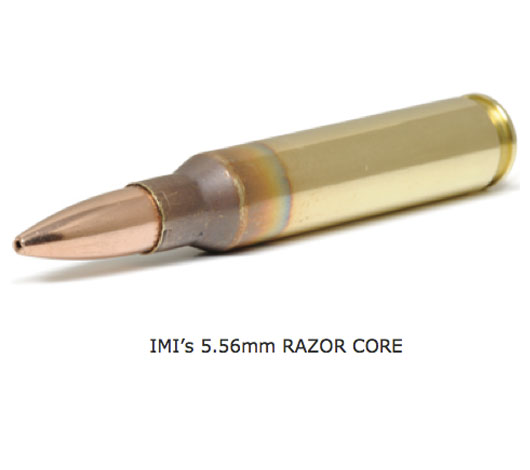
    IMI's new RAZOR CORE Cartridge. Image: IMI
    IMI’s new RAZOR CORE Cartridge. Image: IMI

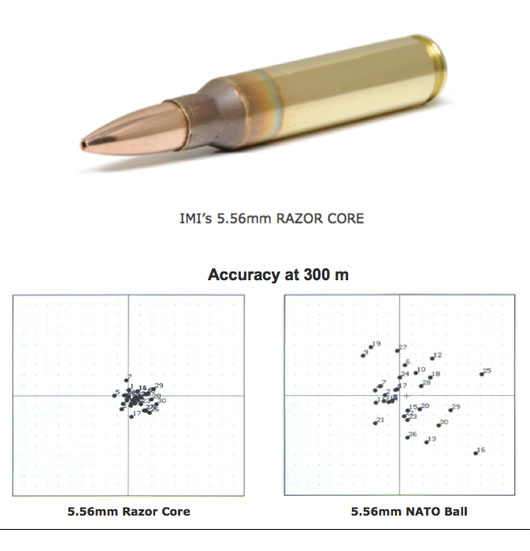
    Israel Military Industries (IMI) has announced the release of a new 5.56mm cartridge dubbed ‘Razor Core’, optimized for higher performance. According Israel to Shmilovitz, IMI Vice President and Managing Director of IMI’s Yitzhak small-caliber ammunition division, the new cartridge is designed to achieve higher accuracy, effective stopping power at extended range of up to 600 meters.

    Shmilovitz said this performance level makes the Razor Core attractive for special operations. “The Razor Core provides outstanding performance, while remaining at a very competitive price” Shmilovitz commented the new cartridge is already in production, and has been combat proven with an undisclosed customer. The 77 grain projectile is designed for use with rifles having standard 1:7 barrel twist, supporting both short and long barrel weapons, such as the M4 and M16. Its trajectory match is similar to standard ammunition, thus eliminating the need for weapon zeroing when switching ammunition types. According to IMI the Razor Core cartridge is designed for military and law enforcement applications but, its accuracy and affordability make it suitable for commercial and sport shooting as well.

    IMI’s small caliber ammunition division is recognized by the Israel Ministry of Defense as the prime supplier of small-caliber ammunition to the Israel Defense Forces (IDF). The division manufactures a complete range of ammunition, from 5.56mm to 0.5″ (12.7mm), including a wide range of armor-piercing, sniping and training ammunition. IMI’s 5.56mm BALL NATO and 9mm BALL NATO cartridges are both NATO qualified.

    US Coast Guard to Receive 14 C-27Js from Air Force Storage

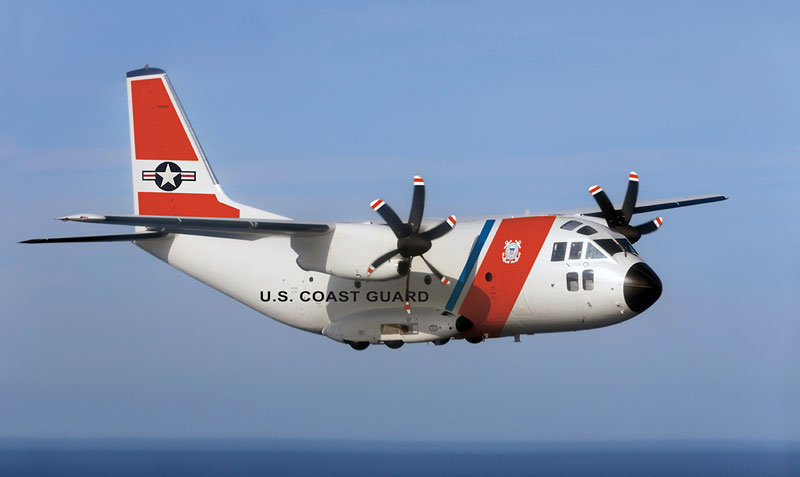
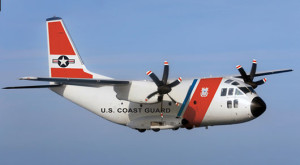
    The US Coast Guard is about to receive US Air Force 14 Alenia North America C-27J Spartan transport aircraft, to be converted into maritime surveillance configuration. This will be the first maritime application for the Spartan. Photo: Alenia NA
    The US Coast Guard is about to receive US Air Force 14 Alenia North America C-27J Spartan transport aircraft, to be converted into maritime surveillance configuration. This will be the first maritime application for the Spartan. Photo: Alenia NA

    The United States Coast Guard (USCG) will acquire 14 Alenia Aermacchi C-27Js Spartan as part of an intra-service transfer from the United States Air Force (USAF), the aircraft manufacturer, Alenia North America announced. The transfer was approved on December 19 through the Congressional passage of the 2014 National Defense Authorization Act and formally signed into law by President Obama on December 26. These aircraft were originally ordered for the US Air Force Air National Guard, replacing C-130 Hercules, but were put in storage soon after their delivery, following the Air Force decision to cancel the program. The commercial terms or agreed by the government prevented the sale or transfer of the aircraft to foreign countries but do not preclude their use by other government agencies.

    The law allows 14 of the current USAF C-27Js to be promptly transferred to the USCG with initial flight operations commencing within 6-12 months. The aircraft will be used for medium range surveillance USCG missions such as maritime patrol, drug and migrant interdiction, disaster response, and search and rescue.

    The company said it is anticipating the USCG will immediately begin the process for expanding the C-27J’s capabilities, adding mission kits tailored for its specific missions. Such kits could include surface-search radars, electro-optical sensors and mission suites to be installed on all 14 planes.

    According to Benjamin Stone, president and chief executive officer of Alenia Aermacchi’s North American business unit, the C-27J will be able to support medium and long range surveillance capabilities enhancing the coast guards’ ability to cover specific areas of interest. The guard currently operates the EADS/CASA CN-235 HC-144 ‘Ocean Sentry’ aircraft for that mission. First delivered in 2006, the USCG currently operates 15 such aircraft, and planned to but 20 more. The availability of the 14 C-27Js will obviously change these plans. It will also provide the guard the opportunity to compare operational costs and determine which aircraft of the two provides more economical for its mission profile. EADS claim to have an edge over the Spartan in terms of direct maintenance and fuel consumption. On the other hand, Alenia said its C-27J boasts the highest power-to-weight ratio in its class, thus providing USCG with greater range, endurance, speed and payload capacity over the twin turboprops currently in its inventory.

    According to Stone, the C-27J’s ability to perform fighter aircraft-like 3.0g force maneuvers — enabling it to make tight turns, and to climb and descend quickly. It can fly farther, faster and higher than any other twin engine military transport aircraft in its class.

    Seoul to Equip its New Maritime Helicopters with Israeli SPIKE Missiles

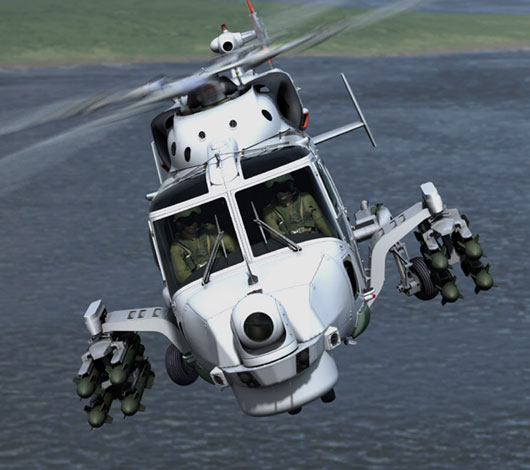
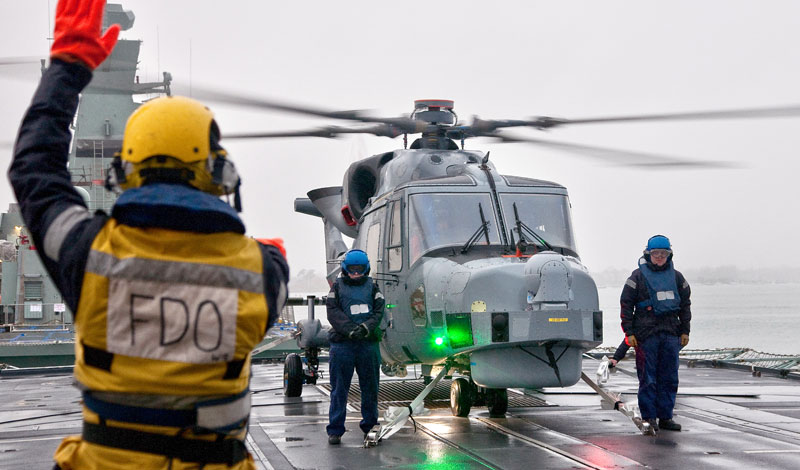
    Seoul will receive eight AgustaWestland AW159 helicopters to replace existing Lynx 99 maritime helicopters currently operational with the Korean Navy. Photo: AgustaWestland
    Seoul will receive eight AgustaWestland AW159 helicopters to replace existing Lynx 99 maritime helicopters currently operational with the Korean Navy. Photo: AgustaWestland
    Seoul will receive eight AgustaWestland AW159 helicopters to replace existing Lynx 99 maritime helicopters currently operational with the Korean Navy. Photo: AgustaWestland

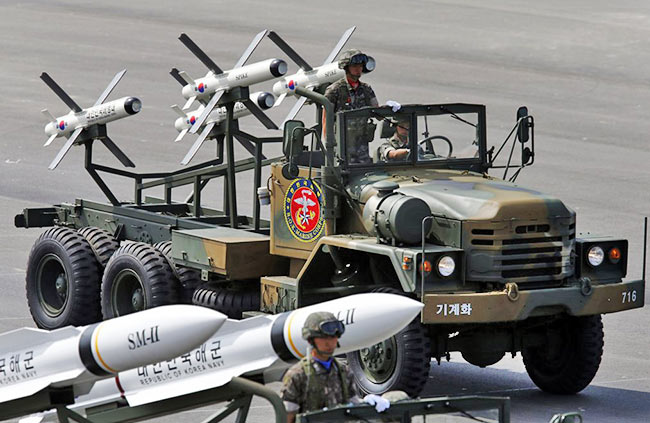
    The South Korean Defense Acquisition Program Administration (DAPA) announced Friday that the new Wildcat helicopters being acquired for the Republic of Korea Navy will be equipped with Rafael Spike NLOS missiles, marking the first deployment of this advanced missile on a maritime platform. Spike NLOS is already operational with the Korean Army. The missile can engage point targets with utmost precision, from a maximum range of 25, using autonomous or man-in-the-loop electro-optical guidance. Seoul is expecting to receive the eight AW159 Wildcat Maritime Operational Helicopters (MOH) in 2015. These new helicopters will replace AugustaWestland as replacements the Super Lynx Mk99 currently in use with the Korean Navy.

    Seoul will receive eight AgustaWestland AW159 helicopters to replace existing Lynx 99 maritime helicopters currently operational with the Korean Navy. Photo: AgustaWestland
    Seoul plans to equip those AW159 Maritime Operational Helicopters (MOH) with eight Rafael SPIKE NLOS missiles, to be used against land and maritime targets alike. (The missiles shown in this drawing are Hellfires, not Spikes, which are carried in rectangle containers) Photo: AgustaWestland

    Equipping these helicopters with the Spike NLOS missile will enable the navy the capability to strike targets from a stand-off range, with minimal exposure. Seoul is counting on the Israeli weapons to rapidly engage and eliminate rocket launchers, artillery tubes or even hovercrafts and landing crafts trying to conduct surprise landing South Korean territory.

    Seoul is investing about $560 million in the procurement of the eight helicopters. Each of them will be equipped with a Flash dipping sonar, provided by Thales, and anti-submarine torpedoes. The helicopter will be equipped for anti-submarine warfare, surface attack, maritime surveillance and search and rescue missions. Apart from the sonar, torpedoes and missiles it will also carry a maritime surveillance radar and electro-optical payload, which will also support the weapon system. Deliveries will take place in 2015 and 2016.

    In addition to the fielding of the SPIKE NLOS, Seoul is also considering other SPIKE variants, such as the Spike ER, considered as one of the options for a primary guided weapon for the future combat helicopter to be developed and produced by Korean Aerospace Industries (KAI). Other options include various laser-guided weapons including the Israeli Lahat missile from IAI MBT, BAE Systems’ APKWS and the Hellfire from Lockheed Martin/Raytheon. While the Koreans have not yet decided which partner they will team with on this multi-billion dollar campaign, it is estimated that the weapon system segment alone will be worth well over one billion US$.

    South Korea's Israeli-made Spike NLOS missiles were seen during events to mark the 65th anniversary of Armed Forces Day, in Seongnam
    South Korea’s Israeli-made Spike NLOS missiles were seen during events to mark the 65th anniversary of Armed Forces Day, in Seongnam


    How much the F-35 Really Cost?

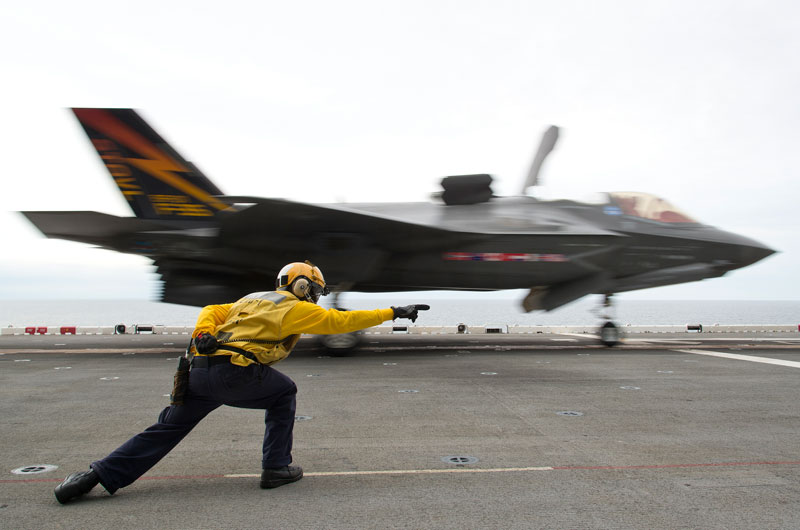
    An F-35B test aircraft is cleared for short takeoff from the deck of the USS Wasp on Aug. 19, 2013 Photo: Lockheed Martin
    An F-35B test aircraft is cleared for short takeoff from the deck of the USS Wasp on Aug. 19, 2013 Photo: Lockheed Martin
    An F-35B test aircraft is cleared for short takeoff from the deck of the USS Wasp on Aug. 19, 2013 Photo: Lockheed Martin

    There have been some wild assertions about F-35 unit cost recently.  See the Lockheed claims as reported in Breaking DefenseDefense News and others that we should expect F-35A costs to be $85 million in 2019. None of these articles acknowledged that there are ways to measure F-35 unit cost other than by mouthing Lockheed and/or Joint Program Office prognostications for the future. Winslow Wheeler, Director, Straus Military Reform Project, CDI at the Project of Government Oversight (POGO) claims these predictions do not conform with the actual procurement of costs reflected in the real numbers listed in the 2014 budget spending.

    “Try instead, empirical data from as recently as last month from sources that typically work hand-in-glove with the Pentagon.” Wheeler wrote in his blog. “They would be the House and Senate Armed Services Committees.  Their National Defense Authorization Act (NDAA) was squirted through the Senate and signed into law on December 26.  On questions like funding for high priority weapons, like the F-35, they virtually never act without consulting closely with the Pentagon, even if they don’t always cough up every penny requested.  For their 2014 bill, they did indeed take a few nicks out of the F-35 program, but the numbers, released in their “Joint Explanatory Statement” for the 2014 NDAA, give a more revealing view of F-35 unit costs than what Lockheed and some uninquisitive articles asserted at the end of 2013.”

    The cost estimates in the NDAA for the cheapest version of the F-35, the Air Force’s F-35A, are the following.  (Note these costs as just for production and do not include R&D.)

    “The 2014 procurement cost for 19 F-35As will be $2.989 billion. However, we need to add to that the “long lead” money for the 2014 buy that was appropriated in 2013; that was $293 million, making a total of $3.282 billion for 19 aircraft in 2014.  The math for unit cost comes to $172.7 million for each aircraft.

    To be fully accurate, however, we should add the additional procurement money authorized for “modification of aircraft” for F-35As for 2014; that means $158 million more, bringing the total unit production cost to $181 million per copy.

    None of that includes the 2014 R&D bill for the F-35A; that was $816 million; calculate that in if you want; I choose not to” Wheeler added.

    The Marine Corps and Navy versions are a little pricier.

    For the Marines B, or STOVL, model, the authorized 2014 buy is six (6) aircraft for $1.267 billion in 2014 procurement, $106 million in 2013 long lead money, and $147 million in 2014 aircraft procurement modifications.  That calculates to $252.3 million for each one, according to Wheeler.

    For the Navy’s C, carrier-capable (but not yet), model, we get four (4) aircraft for $1.135 billion, plus $32 million in long lead, plus $31 million in modifications.  That means $299.5 million for each one.

    “Actual F-35 unit costs are today multiples of what Lockheed says they will be.” wheeler asserted, “If you think it is reasonable to expect them to plummet to the $85 million Lockheed glibly promises (thanks to the ubiquitous “learning curve” and other manipulations)” please consider a somewhat different analysis, also in Time, available here and here.” Wheeler wrote.

    The cost data from the 2014 NDAA is not the last word.  Authorization bills actually have little to do with real money, but the House and Senate Armed Services Committees like to conform their bill to whatever the latest DOD dat

    The 100th F-35 rolls out of the Fort Worth, Texas, factory in September 2013. Photo: Lockheed Martin
    The 100th F-35 rolls out of the Fort Worth, Texas, factory in September 2013. Photo: Lockheed Martin

    a happens to be. “Keep an eye out for the 2014 appropriations bill, due out as early as next week.  That is the real money bill, and it will contain not just the latest word on F-35 costs but all the money the 2014 F-35 program will see.  My guess is that it will differ little from the NDAA, but if the numbers are different, they will likely show a cut to both total dollars and the number of aircraft bought.  That is not good news for F-35 idolaters: cuts to the F-35 top line will almost surely mean deeper proportional cuts to the number bought, and the unit cost will go up.” Wheeler warned.

    “Lockheed claims on F-35 unit costs are easy fodder for ridicule, but for some reason the press I have seen reporting on those claims did not report any data from an available alternate source.” claims Wheeler, “Because they didn’t, I am.”

    Wheeler recommends keeping an eye out for the actual F-35 costs in the 2014 appropriations bill and how the press reports on them. “After that, keep an eye out for what DOD puts in its 2015 budget request for the F-35.  It is a real question whether those data will calculate to a lower unit cost for the F-35 or a higher one, learning curve prognostications notwithstanding.”

    “Treat Lockheed’s predictions with all the respect they deserve.  Consider similarly press reports on those predictions that do not give you more reliable data or any wider perspective.” Wheeler concludes.

    Arrow-3 Missile Interceptor Performs Second Flight Test

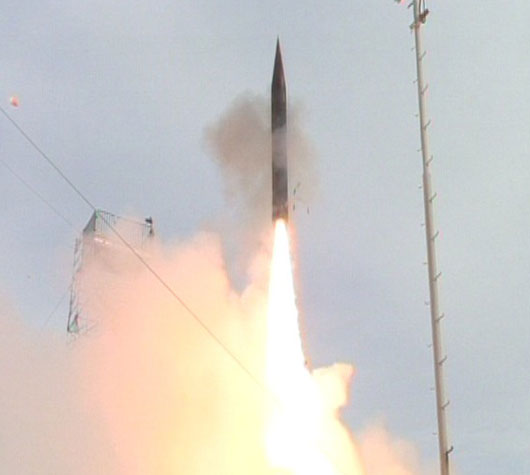
    Arrow 3 interceptor launched from the IDF missile test site on the mediterranean coast, south of Tel Aviv Photo: IMOD
    Arrow 3 interceptor launched from the IDF missile test site on the mediterranean coast, south of Tel Aviv Photo: IMOD
    Arrow 3 interceptor launched from the IDF missile test site on the mediterranean coast, south of Tel Aviv Photo: IMOD

    The Israel Missile Defense Organization (IMDO) and the U.S. Missile Defense Agency (MDA) completed a successful flight of the Arrow-3 interceptor missile this morning. This is the second flight test of the Arrow-3 interceptor.

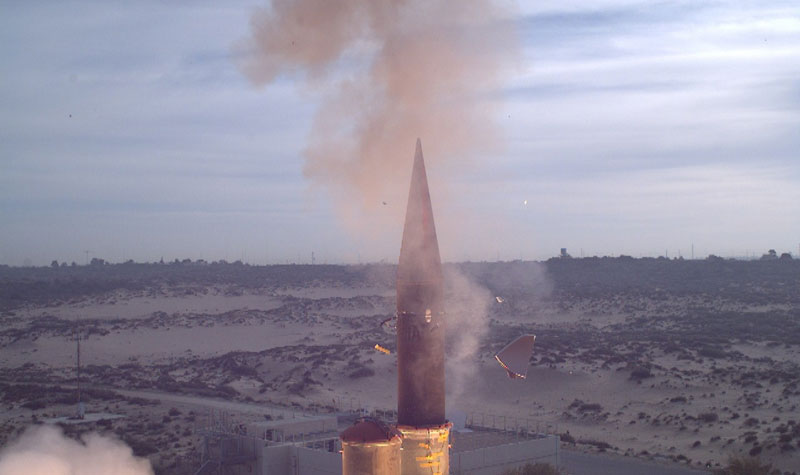
    The Arrow-3 interceptor was successfully launched on 08:00 launched and flew an exoatmospheric trajectory through space, for about ten minutes, according to the test plan. As the previous mission (September 3, 2013) today’s flight was conducted at Israeli test range over the Mediterranean Sea and did not involve an actual intercept of a target.

    According to Boaz Levi, IAI VP and General Manager of the Systems, Missiles & Space Group, the flight successfully validated the performance of the Arrow 3 interceptor and its capability to manoeuvre and intercept its targets in outer space. “It was 100% success, the interceptor was tested through a set of unique and challenging manoeuvres that fully demonstrated its unique design concept.” According to previous reports, the Arrow 3 KVs uses a thrust vectored rocket to divert the KV into the intercept course. To acquire the target through large offset angles the KV uses a gimballed seeker.

    Arrow 3 interceptor launched from the IDF missile test site on the mediterranean coast, south of Tel Aviv Photo: IMOD
    Arrow 3 interceptor launched from the IDF missile test site on the mediterranean coast, south of Tel Aviv Photo: IMOD

    Israel deployed the previous version, Arrow II, more than a decade ago and says it has scored around a 90 percent success rate in live trials. The Arrow-3 interceptor was designed to provide another layer of defense against ballistic missiles, to add interception opportunities to the joint U.S. – Israel Arrow Weapon System and to improve the active defense architecture of the State of Israel against the missile threats. When Arrow 3 is deployed it will improve Israel’s defense against the missiles the Iranian are currently developing – missiles expected to be fired from longer range than today’s and carry heavier warheads, including unconventional or nuclear warheads.

    IMOD sources said the successful test is a major milestone in the development of the Arrow-3 Weapon System and provides confidence in future Israeli capabilities to defeat the developing ballistic missile threat.

    Israel Missile Defense Organization and U.S. Missile Defense Agency officials conducted the flight test. The main contractor for the integration and the development of the Arrow Weapon System is MLM of the Israel Aerospace Industries in conjunction with Boeing providing subsystems as a subcontractor. When the missile will enter production, Boeing is expected to provide a US production site, thus increasing its share of the program.

    The majority of the financing for Arrow 2 and Arrow 3 programs, like the rest of Israel’s multi-layered missile defense programs comes from the US, with Boeing (Arrow 2, 3) and raytheon (David’s Sling, and possibly Iron Dome) sharing part of the development and production.

    IB Times: Cyber Threats 2014: Darknets, Windows XP, Adobe Passwords, Mobile Malware and more

    In the cyber security world, 2013 has been more than a bit of an eye-opener for most people. The level of sophistication and power that some people wield over your online activity has been revealed to be far greater than almost everyone ever imagined.

    But while law enforcement agencies like the NSA and GCHQ have almost limitless power to monitor your online life, cyber-criminals have also developed more and more sophisticated methods of stealing your money, and more importantly your data.

    As more and more of our lives become digital, this trend is only likely to continue, the International Business Times (IBT) asked experts around the world to tell what they think the cyber threats for 2014 will be. Following are excerpts of the original article published on IBTimes on 31 December, 2013.

    Dark web will become the only truly world-wide web
    Alexander Gostev, chief security expert at Kaspersky Lab, says one of the big results of the Snowden revelations will be the break-up of the traditional internet, with the deep web left as the only truly global network. Trend Micro’s Rik Ferguson adds that the Snowden revelations have led cyber criminals to turn to ‘darknets’, with the most popular darknet being The Onion Router (TOR), which hides a shared file’s origin and destination.

    Death of Windows XP a boon for hackers
    Ken Westin, security researcher at Tripwire says the end of life for Windows XP in April will be a boon for malicious hackers who will have “an arsenal of saved unreleased vulnerabilities at their disposal. With every Patch Tuesday hackers will be reverse engineering patches to see if the vulnerabilities for Vista through Windows 8 also affect XP.”

    Adobe passwords will be cracked
    Westin believes the 130 million encrypted passwords that were part of the Adobe compromise will be decrypted within the next few months, providing malicious hackers with a large database of passwords to use in brute force tools as well as additional compromises simply because people use the same passwords on multiple accounts.

    Mobile malware to reach new levels of sophistication
    Craig Young, security researcher at Tripwire says: “I suspect that in 2014 we will see mobile malware reach new levels of sophistication as BYOD becomes more prevalent in the workplace. Mobile devices may be targeted not only for the data they store but also for the systems and services they can access. To combat this threat, end users need to become more vigilant about the applications they install and the networks they connect to with their smartphone or tablet.”

    Cyber-criminals will find new ways to steal your money
    Kaspersky Lab’s experts expect cybercriminals to continue developing tools to steal your cash in 2014 – directly or indirectly. “To support indirect thefts, it is likely that we will see more sophisticated versions of the Trojans which encrypt the data on mobile devices, preventing access to photos, contacts and correspondence until a decryption fee is handed over. Android-based smartphones will no doubt be the first to be targeted.”

    The full article by David Gilbert is accessible on IBTimes.

    Snecma Tests Open Rotor Engine

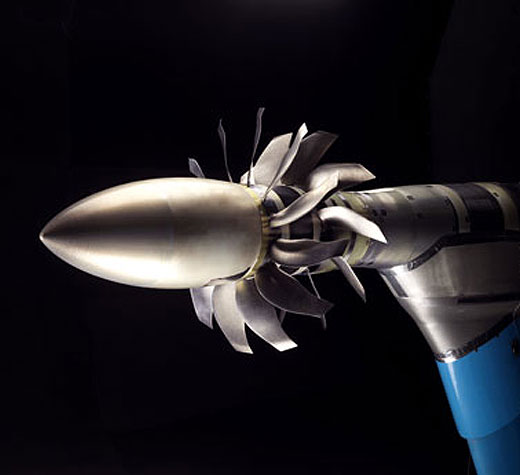
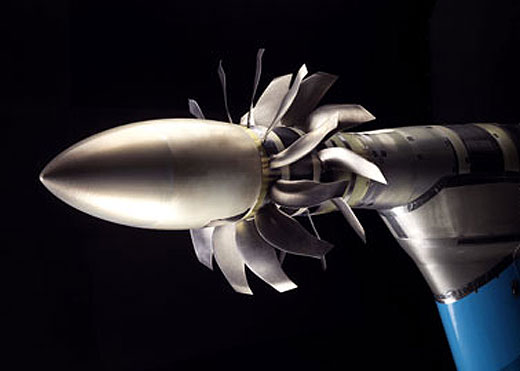
    The open rotor engine scaled down demonstrator on a wind tunnel test bench. Photo: Antoine Gonin, Snecma
    The open rotor engine scaled down demonstrator on a wind tunnel test bench. Photo: Antoine Gonin, Snecma
    The open rotor engine scaled down demonstrator on a wind tunnel test bench. Photo: Antoine Gonin, Snecma

    Snecma, the French engine manufacturer of the Safran group is working on an ‘open rotor’ engine that promises to cut fuel consumption and CO2 emission levels, and reduce acoustic signature powering the passenger airplanes in the 2030s.

    The goal of the current research is to test a jet engine that consumes 30% less fuel than today’s powerplants. This new type of engine comprises two distinct parts: a conventional gas generator, and a turbine driving two counter-rotating, unducted fans that will propel the aircraft.

    “An aircraft engine’s efficiency and consumption depend on the amount of air the fans draw and eject at slow speeds,” Snecma (Safran) Research & Technology Director Pierre Guillaume points out. “With the open rotor, we will be able to considerably increase that drawn air flow because we won’t have any ducting around the fans. And that will improve consumption and cut CO2 emissions.” In addition to fuel saving, the new engine will contribute to cutting CO2 emissions, a goal supported by the Clean Sky European initiative and the fuel-consumption and CO2 emission goals for future air traffic, set by the Advisory Council for Aeronautical Research in Europe (ACARE).

    There are still a number of challenges to tackle, starting with noise. “We are confident about this issue, after the tests we ran in July 2013 in the ONERA wind tunnel in Modane,” Guillaume explains. “The open rotor’s noise level should be similar to the LEAP’s, i.e. 10 dB below the engines flying today.” These first tests, on a 1:5 scale model, led to a new campaign at the end of the year, to test the fans’ aeronautical performance. “We measured the twinned fan thrust to make sure it matched our calculations,” Pierre Guillaume adds.

    Following the scale down model test conclusions the team is now focusing on building a full-size prototype. “That prototype should be ready for the bench by the end of 2015. This stage will be particularly complex because all the rear components rotate. We are going to be able to test the propulsion module with the reduction gearbox, control units and control system governing blade pitches. We will use the gas generator on the M88, the engine powering the Rafale, which we are already manufacturing today,” Snecma’s R&T Director added.

    The team building this demonstrator includes Snecma, Avio Aero (GE), GKN and Aircelle (Safran). The prototype should start its first flight tests on an Airbus A340 in 2019. “If we want to stay on track for entry into service in 2030, we need to move fast, because certifying this new engine generation will take time—and take extensive discussions with the relevant authorities,” Pierre Guillaume concluded.

    India Terminates Helicopter Contract with AgustaWestland over Corruption Allegations

    According to Indian media sources New Delhi has terminated a helicopter purchase from the Italian-british company AgustaWestland, following allegations that the company or its middlemen bribed Indian officials and politicians to secure the win.

    The Indian Air Force intended to operate 12 of these AW101 VVIP helicopters. The need for larger helicopters capable of operating in bad weather conditions came after a Bell 430 helicopter crashed in 2009 killing Y.S. Rajasekhara Reddy, Andhra Pradesh Chief Minister,  and four officials. Photo: AgustaWestland
    The Indian Air Force intended to operate 12 of these AW101 VVIP helicopters. The need for larger helicopters capable of operating in bad weather conditions came after a Bell 430 helicopter crashed in 2009 killing Y.S. Rajasekhara Reddy, Andhra Pradesh Chief Minister, and four officials. Photo: AgustaWestland

    Finmeccanica, AgustaWestland’s parent company said it received the MOD notification concerning the appointment of an arbitrator, and confirmed it also received the termination notice. The company said it will soon name a third arbitrator representing the company in the arbitration process. The company said it will continue supporting the three helicopters already delivered to and currently operated by the Indian Air Force. “It is the Ministry of Defence’s admitted position (PIB release of MoD statement February 14, 2013) that the tender process has been duly followed” the company communique noted, “Accordingly, the termination notice received yesterday will have to be discussed within the framework of a fair arbitration process.”

    The Indian Air Force contracted AgustaWestland to buy 12 AW101 executive helicopters in a deal valued over US$770 million. In 2010 the deal was signed but stopped following of accusations the foreign contractor exercised ‘pre contract integrity’. The company has already delivered three of the 12 helicopters, and received third of the payment.

    AgustaWestland is a subsidiary of a subsidiary of the Italian headquartered international corporation Finmeccanica. Senior officials of Finmeccanica including chief executive Giuseppe Orsi are facing trial in Italy for alleged corruption. Orsi, chief of AgustaWestland at the time, is accused of having allegedly paid bribes to secure the deal. A preliminary report filed by Italian prosecutors said about $68 million were paid in kickbacks to middlemen, Italian politicians and Indian officials. Italian investigators also named former Indian air force chief SP Tyagi in a preliminary inquiry submitted to an Italian court. Orsi and Tyagi have denied any wrongdoing.

    In its comment Finmeccanica noted it has already introduced stringent ethical procedures common to all Group companies that have harmonized their systems of rules based on the standards set by the parent company. These processes are reviewed regularly and have been further strengthened in correspondence with the most stringent international ethical standards. Also AgustaWestland applies the same strict procedures to prevent corruption in accordance with the updated Finmeccanica policies.

    More on the subject at Reuters.

    Skunk Works and XTEND Simplify Multi-Drone Command

    0
    Lockheed Martin Skunk Works® and XTEND have achieved a major milestone in JADC2 by integrating the XOS operating system with the MDCX™ autonomy platform. This technical breakthrough enables a single operator to simultaneously command multiple drone classes, eliminating the friction of mission handoffs. From "marsupial" drone deployments to operating in GPS-denied environments, explore how this collaboration is abbreviating the data-to-decision timeline and redefining autonomous mission execution.

    From Ukraine to Taiwan: The Global Race to Dominate the New Defense Tech Frontier

    0
    As traditional defense primes face mounting competition from agile “neoprimes” such as Anduril, Palantir and Helsing, the balance of innovation is shifting toward software-defined warfare and scalable, dual-use technologies, while global industry consolidation—marked by Boeing’s integration of Spirit AeroSystems and other strategic mergers—signals an intensified race to secure control over the defense technology value chain. Our Defense-Tech weekly report highlights these trends.

    Europe’s “Drone Wall”

    0
    In early October 2025, a coordinated wave of unmanned aerial system (UAS) incursions—widely attributed to Russia—targeted critical infrastructure across at least ten European nations. The unprecedented campaign exposed the fragility of Europe’s air defenses...

    Weekly Defense Update & Global Security Assessment

    0
    Executive Summary The past week (September 18-25, 2025) represents an inflection point where strategic defense concepts have transitioned from doctrine to tangible reality. An analysis of global events reveals four primary, interconnected trends shaping an...

    U.S. Air and Space Forces Push Next-Gen Programs at the AS&C 2025 Conference and...

    0
    At the 2025 Air, Space & Cyber Conference, U.S. Air Force and Space Force leaders unveiled major updates on next-generation fighters, bombers, unmanned systems, and space initiatives, highlighting both rapid innovation and critical readiness challenges as the services race to outpace global competitors. A short version is available here, with a more detailed version for subscribers.

    TADTE 2025: Reflecting Taiwan’s Strategic Themes

    0
    The Taipei Aerospace & Defense Technology Exhibition (TADTE) 2025 crystallized around four dominant strategic themes that collectively illustrate Taiwan's comprehensive approach to defense modernization amid escalating regional tensions. Based on a detailed report by Pleronix (available upon request). Includes a Podcast discussion on TADTE 2025's highlighting Taiwan's four strategic themes beyond the post's coverage.

    Iron Beam 450 Completes Testing, Soon to Join With Operational Air Defense Units

    0
    Israel’s Iron Beam 450 high-power laser system has completed final testing, marking a major leap in air defense. Developed by Rafael, it offers precise, cost-effective interception of rockets, UAVs, and mortars, and is set for IDF deployment by 2025.