Teams of aerospace researchers across the USA are signing up to compete for $500,000 in prize money by demonstrating the ability to fly unmanned aircraft through an airspace obstacle course.
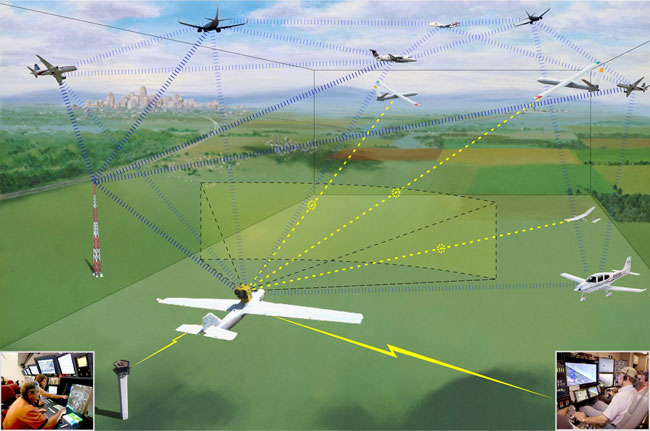
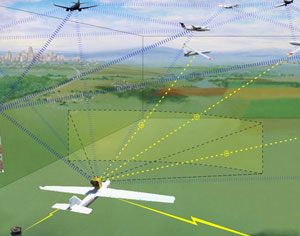
NASA 2014 Unmanned Aircraft Systems (UAS) Airspace Operations Challenge will be hosted by the Ohio/Indiana UAS Center and Test Complex and will take place at Camp Atterbury Joint Manoeuvre Training Center near Edinburgh, Indiana. Through the challenge competitors will demonstrate their ability to safely operate in airspace shared by cooperative air traffic. The competition is focused on developing and demonstrating key technologies needed for autonomous flight of unmanned aircraft systems, particularly their ability to sense and avoid other air traffic.
Advances in autonomous systems technologies will one day enable robotic aircraft to operate safely in the same airspace as piloted aircraft. Before unpiloted or remotely piloted aircraft can safely operate in the same airspace as other, piloted aircraft, robotic aircraft and their operators will need to demonstrate a high level of operational robustness and the ability to “sense and avoid” other air traffic (SAA). The Unmanned Aircraft Systems Airspace Operations Challenge (UAS AOC) is focused on developing some of the key technologies that will make UAS integration into the National Airspace System possible.
SAA, is key to successfully meeting Phase 1 competition objectives. Competitors will also demonstrate basic airmanship and air vehicle capabilities, through a series of ground and flight events intended to measure key performance capabilities, requiring a high level of robustness.
Registration began two months ago for the NASA 2014 Unmanned Aircraft Systems (UAS) Airspace Operations Challenge, coordinated by Development Projects Inc. (DPI) of Dayton, Ohio. Since then, numerous teams from industry and academia have signed up to demonstrate their capabilities and to compete in the first phase scheduled for April 2014. Registrations for the first phase will run through March 31, 2014. Other partners, including the Dayton Development Coalition and the National Center for Complex Operations (NCCO), are working together with NASA to showcase innovations supporting the successful integration of UAS into the National Airspace System (NAS).
Capability for mature sense and avoid technology, also known as SAA, is key to successfully meeting Phase 1 UAS Airspace Operations Challenge objectives. Competitors will also demonstrate basic airmanship and air vehicle capabilities through a series of ground and flight events intended to measure key performance capabilities, requiring a high level of robustness.
This Challenge will be conducted in two parts: Phase 1 of the Challenge is scheduled to be held in Spring, 2014 and Phase 2 of the Challenge will be held approximately one year after Phase 1 has been successfully completed. The winner of the first phase will grab $500,000 in prize money, while the second phase is expected to award up to $1 million in additional prize money. Unlike contracts or grants, prizes are awarded only after solutions are successfully demonstrated.
Phase 1 of the Challenge focuses on important aspects of safe airspace operations, robustness to system failures, and seeks to encourage competitors to get an early start on developing some of the skills critical to Phase 2.
Specific skills that Phase 1 competitors will need to demonstrate include safe airspace operations and system robustness, including separation assurance using ADS-B, planning and maintaining four-dimensional trajectories, ground control operations. Demonstrating system robustness and failure recovery, competitors will be required to demonstrate managing lost links, loss of GPS or unreliable GPS readings. In preparation for Phase 2, competitors will also deal with methods to handle uncooperative air traffic detection.
While there are other technical challenges that must be solved to enable the integration of UAS in the NAS, competitor that successfully demonstrates the skills required in Phase 1 will be able to field a robust UAS that is significantly closer to the goals of UAS-NAS integration embodied in the NextGen Airspace Concept, NASA commented in its invitation.
NASA’s Centennial Challenges seek unconventional solutions to problems of interest to NASA and the nation. Competitors have included private companies, student groups and independent inventors working outside the traditional aerospace industry.
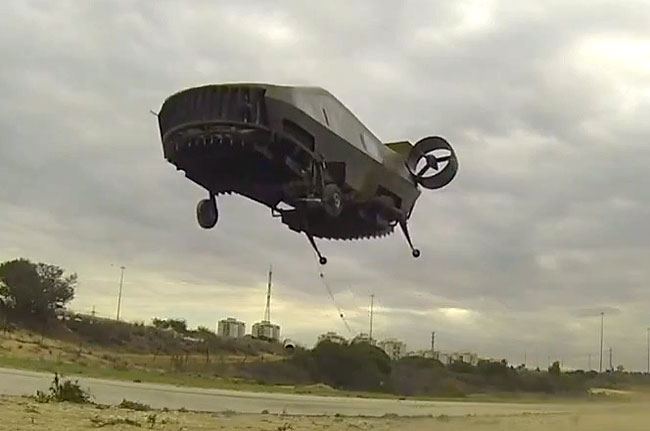
In the recent weeks the aircraft has completed several fully automatic test flights in which it carried out take-offs, flights to and from a specified location and landing back at its point of origination. Photo: Urban Aeronautics
The Israeli developed AirMule, an unmanned VTOL (Vertical Takeoff and Landing) aircraft developed by the Israeli company Urban Aeronautics successfully completed a major milestone in preparation for full mission demonstrations scheduled for next year. In the recent weeks the aircraft has completed several fully automatic test flights in which it carried out take-offs, flights to and from a specified location and landing back at its point of origination.
The 1-ton unmanned vehicle is unique from other vertical take-off and landing (VTOL) aircraft in that it has no exposed rotors. The vehicle uses two ducted fans powered by a Turbomeca Arriel turboshaft engine. This allows the aircraft to fly in densely vegetated and urban airspace that is off limits for any other aircraft. The autonomous testing also include the use of a sensor and marker used for the designation of the landing point. The marker is placed by the ground element at the landing point. During final approach the sensors are estimating the position of the marker relative to the aircraft, providing reference for the flight control plan executing an autonomous final approach for landing next to the marker.
The AirMule is the first application of Urban’s patented Fancraft technologies, the foundation for a family of internal rotor (modified ducted-fan) aircraft with both manned and unmanned, civil and military applications. Due to their internal rotors, compact design and revolutionary ‘six-degrees-of-freedom’ mobility, these aircraft are uniquely suited to flight inside of cities and other obstructed environments where both fixed wing aircraft and traditional rotorcraft are unable to operate. The system is also suitable for manned and unmanned shipboard operation, offering safe and efficient recovery on a ship landing deck even at high sea conditions. Urban’s subsidiary, Tactical Robotics Ltd was founded to develop the Fancraft technologies and market these platforms to the military and unmanned market. The Fancraft technologies are supported by 37 registered (granted) patents and 12 additional in the process.
In parallel to the ‘standard’ Fancraft design, Urban Aeronautics has developed a unique configuration that has the potential of obtaining cruise speeds of up to 250 Kts. This high speed variant will be able to introduce high-speed, unmanned cargo delivery capability.
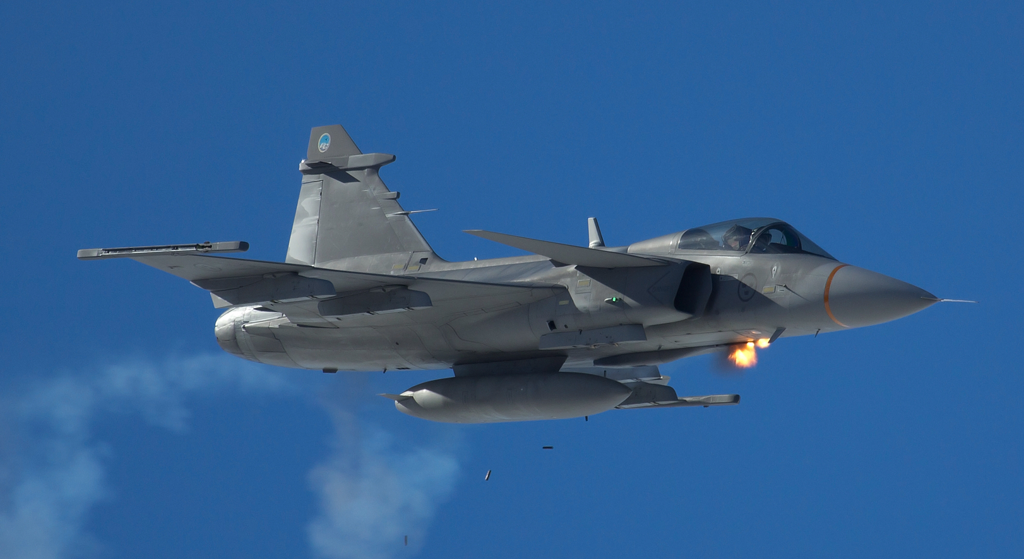
Gripen C performs a gun strafing pass over the Swiss alps, during Axalp 2013. The Swiss parliament has recently confirmed the procurement of 22 Gripen E fighters for the Swiss Air Force. Photo: Eduard Isch via Saab (Flickr)
After more than ten years of discussion, President Dilma Rousseff decided the purchase of Gripen NG fighter, the Swedish Saab, for the FAB (Brazilian Air Force) for the FX-2 program. The defense minister, Celso Amorim, and Air Force commander, Brigadier Juniti Saito, yesterday announced the acquisition of fighter jets. According to the Brazilian plan the investment is US$ 4.5 billion, to be paid over a disbursement schedule through 2023. The first aircraft is expected to arrive around 2018 – approximately 48 months after the financing agreement is signed – which is expected to occur in December 2014. Four years ago Saab has offered the same package for US$6 billion,. Folha de S.Paolo wrote.
According to Minister Amorim, the Swedish fighter was chosen for the government’s F-X2 program for technical reasons. “The choice was the object of much study and careful consideration, and took into account performance, effective technology transfer and costs, both for acquisition and maintenance. The choice was based on these three factors,” said the Minister.
‘Gripen E’, as the Gripen NG’ is now designated, is the latest production version of the Swedish JAS-39 fighter. The aircraft offers significant performance improvements compared to previous versions, including a stronger engine, longer range, more weapons, new electronic radar and more advanced avionics. If Brazil procures the Gripen system it will be joining the countries operating the Gripen System today: Sweden, South Africa, Czech Republic, Hungary and Thailand. In addition, The Empire Test Pilot School (ETPS) in the UK uses Gripen in its training programme for future test pilots. Of all these, only Sweden has formally committed to the Gripen E acquisition. During August and September 2013 both chambers of the Swiss Parliament voted yes to the procurement of Gripen. A referendum on the procurement is expected in 2014. If contract negotiations are successful, Brazil will become the third nation to operate the advanced version.
The decision, according to Brigadier Juniti Saito, was also influenced by the offset rates offered by the Saab bid, as determined by the National Defense Strategy (END). “We have several industries that have offered to contribute to the development of the fighter. At the end of its development, we will have access to all the technology used by the aircraft,” said the Commander of Brazil’s Air Force. According to Saab, the offer presented to the Brazilian Government by Saab includes Gripen NG, subsystems for Gripen NG, an extensive technology transfer package, a financing package as well as long term bilateral collaboration between the Brazilian and Swedish Governments.
”I am extremely proud of the confidence that the Brazilian government has placed in Gripen NG. Saab regards the announcement today as a strong commitment of the Brazilian Government and we are looking forward to provide the Brazilian Air Force with the world-leading and most affordable fighter. Furthermore, this announcement is very significant for the collaboration between Brazil and Sweden. We stand prepared to start the industrial collaboration as planned, with its positive effects for Brazilian industry”, says Saab CEO Håkan Buskhe. After finalized negotiations an agreement can be reached between Saab and Brazil and an order for Gripen NG placed, the company said.
Gripen NG began by Saab as an industry initiative, a move which was instrumental in winning new business in Switzerland and Brazil. The Gripen NG or Gripen E as it is formally designated – is now fully supported by the Swedish ministry of defense;
“We continue to build on the success of Gripen. Gripen is unique in its ability to combine high technology and performance with cost efficiency and we note a strong interest for Gripen on the export market,” says Lennart Sindahl, Deputy CEO and head of Saab’s business area Aeronautics. “The major performance improvements we are now performing will establish Gripen E as the fighter aircraft of the future – both for Sweden and for other countries. Our existing customers that operate the Gripen C/D version will also be able to take advantage of some of the development in their future upgrades.”
MBDA Meteor air/air missiles are currently undergoing integration on the Gripen E, fur future fielding with the Swedish Air Force. Photo: Saab
The Swedish Air Force is planning to modernize its first line aircraft fleet with the remanufacturing of current Gripen C variants into the next generation Gripen E. Saab announced this week it has received an order amounting SEK 16.4 billion (US$213 million) for serial production of the new variants. Since February 2013 Saab has received three orders under the Gripen E agreement with Swedish Defence Materiel Administration (FMV). These include the development program, spanning through 2013, the delivery of 22 new Gripen E to Switzerland (a formal contract is expected in 2014) and the modification of 60 Gripen C into Gripen E models, with initial deliveries in 2018.
In addition to the platform development, Saab has also received an award for the integration of the Meteor Air/Air weapon system on the aircraft, under an order worth SEK 186 million (US$28 million), sustaining the integration activities through 2026.
Meteor is a Beyond Visual Range Air-to-Air Missile (BVRAAM) developed to enable engagement of airborne targets at long distances. The missile is the result of a European collaborative project involving Sweden, France, Italy, Spain, Germany and Great Britain. At the end of June 2013 Saab in cooperation with FMV conducted the first test firing of the serial production configuration of Meteor. Gripen was thereby the first combat fighter system in the world with the capability to fire this version of Meteor that has been developed for Gripen, Eurofigther and Rafale.
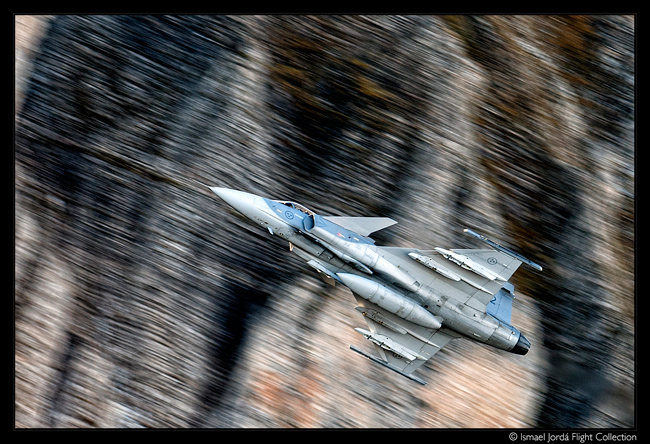
Swedish Air Force Gripen C performing over the Alps during Axalp 2013. Photo: Ismael Jordá via Saab (Flickr)
FX / FX-2 Program History
In 2000, the FX project defined the need to equip the FAB with aircrafts of air defense and air superiority capabilities compatible to the geopolitical relevance of Brazil. The FX program was the result of studies initiated in 1992, when the FAB determined the initial requirements of the aircraft that would replace the F-103 Mirage III (which had been in use in the Anápolis (GO) Air Base since the early 70s).
Key milestones associated with the FX program
2001: Brazilian Air Force Command initiates the selection of bidders for equipment compatible with the established requirements. At the end of the year, aircraft models Gripen, F-16, Mig-29, Mirage 2000 and Sukoi 30 are short-listed as potential purchases.
2003: The bidding process is suspended by the federal government at the beginning of the year, and then reestablished later in October.
2004: With the deadline for the submission of bids not until December, the government filled the gap created by the decommissioning of the F-103 Mirage III (planned for 2005) by purchasing 12 used Mirage 2000-C from the French Air Force.
2007: The Office of the Chief of Staff of the Air Force resumed its study of the operational needs and characteristics required of the new multi-mission fighters planned for purchase.
2008: The FAB creates the F-X2 Project Management Committee, responsible for overseeing processes related to the acquisition, including directly choosing the new aircraft. At the end of that year, three aircraft were “short-listed” to proceed through the acquisition: Boeing (F-18 E/F Superhornet), Dassault (Rafale) and Saab (Gripen NG). The selection took into account operational, logistical and technical aspects, as well as the offset rates and technology transfer offered to Brazil’s domestic industry.
2009: The three finalists submitted their proposals for the final selection.
2010: In January, the Air Force Command submitted the Final F-X2 Project Report to Brazil’s Ministry of Defense. The primary purpose of the Report was to assist the federal government in making its final purchase decision.
2013: Supported by the President of the Republic, Minister of Defense Celso Amorim and Commander of the Air Force Brigadier Juniti Saito announced the decision to acquire the Gripen NG aircraft from Swedish company Saab, thus ending the selection of suppliers for the F-X2 Program.
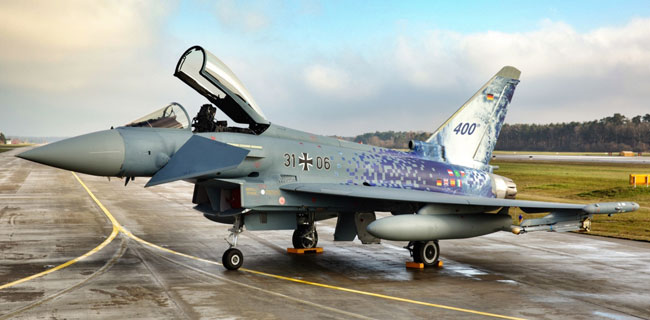
400th Typhoon delivered to the German Air Force, December 4th 2013 at Manching, Bavaria. Photo: Andreas-Zeitler, via Eurofighter
Cassidian, EADS’ military division soon to be transformed into Airbus Defense and Space) celebrated last week the delivery of the 400s Typhoons jet fighter to the customer – the German Luftwaffe. On December 4th the 400th Typhoon that received the marking ‘31+06’ at the company’s Military Air Systems Center at Manching, near Munich was the 112 Typhoon delivered to the German Air Force. With 719 aircraft under contract and 571 on order, Eurofighter Typhoon is currently the largest military procurement program in Europe. “We must focus much more strongly on export campaigns in order to win new contracts and new customers for this outstanding aircraft.” Stressed Alberto Gutierrez, Chief Executive Officer of Eurofighter Jagdflugzeug GmbH. At present, the Eurofighter Typhoon fleet comprises 20 operating units with locations in Europe, the South Atlantic and the Middle East.
In the past 10 years the global Eurofighter fleet has accumulated more than 210,000 flying hours and is expected to reach 250,000 flight hours by spring 2014. Specifically there are: 7 units in the UK (4 in Coningsby, 2 in Leuchars and 1 in Mount Pleasant, Falkland Islands); 5 in Italy (2 in Grosseto, 2 in Gioia del Colle, 1 in Trapani); 3 in Germany (Laage, Neuburg and Nörvenich), as well as 3 in Spain (2 in Morón, 1 in Albacete) and one each in Austria (Zeltweg) and Saudi Arabia. Oman will be become the eighth Typhoon operating center as it receives its delivery of 12 Typhoons in 2017.
Among the developments currently underway are about a hundred improvements enhancing the fighter’s strike capability under all weather is the upgrade cycle known as ‘Phase 1 Enhancement’ (PE1). P1E implements full Air-to-Surface capability on Eurofighter Typhoon – including the Litening 4 Laser Designating and Targeting Pod, integration of smart weapons, modern secure Identification Friend or Foe (IFF Mode 5), improved Radios and Direct Voice Input, Air-to-Surface Helmet Mounted Sight System, improved Air-to-Air capabilities including digital integration of Short Range Air-to-Air Missiles and updating the functionalities of Multifunctional Information Distribution System (MIDS) Datalink to enhance interoperability among Coalition Forces.
Other upgrades underway are the integration of the MBDA Meteor air-to-air missile; Storm Shadow and KEPD 350 standoff strike weapons and the new Captor-E Active Electronically Scanned Array (AESA) radar .
The Eurofighter Typhoon test force recently embarked on flight testing of two MBDA standoff weapons – the Storm Shadow and Taurus KEPD-350, both will be introduced to operational service within two years time. Photo: Caliaro, via Eurofighter
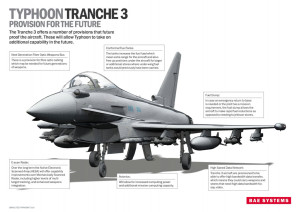
The first of a new standard of Typhoon has started its series of flight tests this month. “The latest Typhoon, known as a Tranche 3 embodies a number of under the skin changes that effectively future proof the aircraft and make it more attractive to current and potential export customers.” Said Mark Kane, BAE Systems Managing Director – Combat Air. “One of the few visual clues is a number of small panels on the fuselage which are there to accommodate the fitting of conformal fuel tanks. Once fitted, these would give the aircraft greater range and free up positions under the aircraft for larger or additional weapons. At the nose a new internal structure has been built and work has been carried out on power, cooling and electronics so that a new E-Scan radar could easily be accommodated.” Kane added.
In November the first in a major series of flight tests to integrate the MBDA Storm Shadow missile onto the aircraft took place. Earlier this year Eurofighter Typhoon announced a contract to develop the integration of the Meteor weapon system.
During the same period another development aircraft has been modified to take the CAPTOR-E (E-Scan) radar. It is currently being prepared, at Warton, ahead of its first flight. The upgrade of the radar to CAPTOR-E is expected to bring significant operational benefits, as the airframe allows the Typhoon to deliver a large electronically scanned array, increasing detection and tracking ranges, to support advanced Air-to-Air (Meteor) and Air-To-Surface capability with enhanced electronic protection measures. The large airframe also allows a wider field of regard, compared to other platforms. The new radar is being built by a consortium composed of Cassidian, Selex ES, and Indra. In November 2013 the new radar has entered the system integration phase at the Selex facility in Scotland, following the successful completion of the radar’s antenna array subsystem, a milestone reviewed by the four members of the Eurofighter consortium – Britain, Italy, Spain and Germany. Final integration of the radar into production aircraft is expected to start next spring. The new radar is expected to enter operational service by 2016.
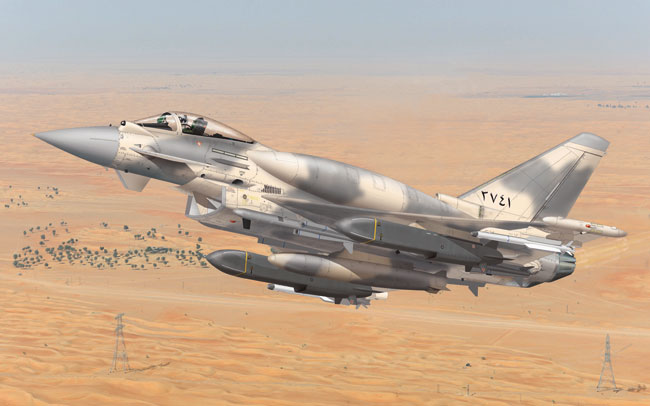
A heavily modified and enhanced Typhoon (Tranche 3) such as this variant, offered to the UAE, carries conformal fuel tanks, Storm Shadow cruise missiles and Meteor BVR-AAM. A similar variant has also been proposed to Indian Navy and to South Korea.
Further planned upgrades include: laser warning systems, enhanced Defensive aids sub systems (DASS, conformal fuel tanks, thrust vectoring for greater maneuverability; advanced targeting pods; enhanced computing abilities; and passive missile warning systems. The introduction of two standoff weapons – the Storm Shadow and Taurus are of specific importance for the air forces operating the Tornado, expected to phase out of service by the turn of the decade.
To get this infographic click on the image to subscribe.
The Storm Shadow and Taurus (KEPD-350), both are already in service with the Italian Air Force and Royal Air Force and German Air Force Tornados, are conventionally armed, stealthy, long-range standoff precision weapons designed to neutralize high value targets. These weapons systems will enable Typhoons to strike in day or night in all-weather conditions, engaging well-defended infrastructure targets such as port facilities, control centers, bunkers, missile sites, airfields and bridges that would otherwise require several aircraft and missions. The integration of Taurus will be particularly valuable for the Typhoon’s prospect in South Korea, where the new weapon was selected for the F-15K Slam Eagle and the follow-on strike fighter Seoul could be buying along with the F-35A, to replace the F-4E by 2017.
The Storm Shadow and Taurus could be introduced with Typhoon units from 2015, as the introduction of Typhoon Phase 2 Enhancements become operational. Under the Tranche 3A contract signed in 2009, a total of 112 aircraft have been ordered for the four European partner nations of Germany, Italy, Spain and the UK, with 40 aircraft bound for the Royal Air Force.
The UK MOD announced this week that the one of the oldest squadrons in the Royal Air Force is to be re-equipped with the latest Typhoon jets. The move is part of a transformation of the RAF’s combat air capability, which will see the battle proven, Tornado GR4 aircraft replaced by state-of-the-art Typhoon and F35B Lightning II fighters.
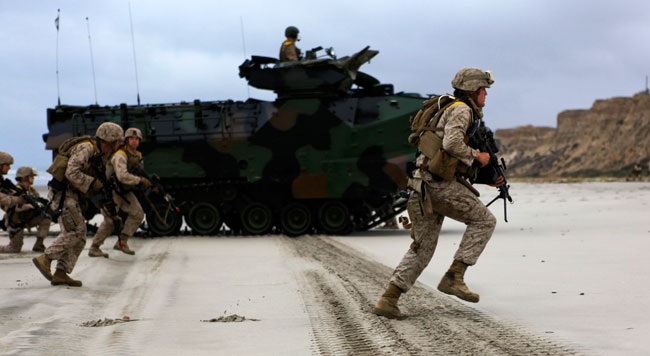
U.S. Marines conduct a beach assault training exercise during Dawn Blitz 2013 at Red Beach on Camp Pendleton, Calif., June 23, 2013. Japanese Self Defense Force (JDSF) participated in this year’s exercise, along troops from Canada and New Zealand. (Photo: USMC Lance Cpl. Darien J. Bjorndal)
Japan plans to invest ¥24.67 trillion yen (US$24 billion) over the next five years in a military buildup plan bolstering Japan’s sovereignty in the region, particularly supporting its territorial claims in the East China Sea, where Tokyo and Beijing are at odds over the Senkakus island chain (Diaoyu Islands as the Chinese call them). The plan is expected to be approved tomorrow (Dec. 17, 2014) in a Cabinet meeting, along with the National Defense Program Guidelines.
The acquisition of Global Hawk UAVs is part of the five-year ‘medium term military buildup’ plan adopted by the Cabinet meeting last week.
The recent escalation by China’s declaration of an Air Defense Identification Zone (ADIZ) over the East China Sea has triggered Japanese concern to increase its air defense capabilities over its own ADIZ, that overlaps the Chinese area. Tokyo is now renewing plans to buy three RQ-4 Global Hawk High Altitude, Long Endurance unmanned surveillance drones to bolster intelligence and surveillance capability over the region. Japan plans to station these Global Hawks at the Naha base in the Okinawa region, along with airborne early warning aircraft currently monitoring the area.
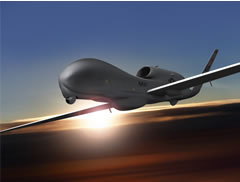
Japan plans to acquire three Northrop Grumman RQ-4 Global Hawk, to bolster its offshore surveillance capability over the disputed areas in the East China Sea.
Deployment of Global hawk over the East China Sea could face significant risk, given the Chinese countermeasures against the continuous surveillance flights performed by US Air Force RQ-4s deployed from the US base in Guam. According to the Washington Times, quoting the Chinese Aerospace Electronic Warfare technical bulletin, among the countermeasures available to the Chinese authorities is electronic jamming disrupting the aircraft datalink and control channels, spoofing GPS signals used to augment on-board navigation. An offensive strike by air defense or air/air missiles is possible, but not likely under the current situation, but the Chinese could employ a coordinated jamming and cyber attack in an attempt to hijack or crash a Global Hawk, similar to the act claimed to have done by Iran, downing a CIA RQ-170 Sentinel stealth drone.
The acquisition of Global Hawk UAVs is part of the five-year ‘medium term military buildup’ plan adopted by the Cabinet meeting last week. Japan also plans to extend its air defense capability by enhancing range and endurance of Combat Air Patrol (CAP) with additional aerial refueling planes, supporting CAP conducted by current F-15J and F-2 jet fighters. Japan’s Self-Defense Air Force (JSDAF) currently operates four Boeing 767J aerial refueling planes acquired from Boeing. According to the plan Japan is seeking to field a second aerial refueling squadron with three additional aircraft. Further spending already announced will include 28 F-35 Lightning II stealth fighter jets for the Air Self-Defense Force, and four new early-warning aircraft (Japan currently operates four Boeing 767-AEW aircraft).
One of the most significant changes in the Japanese force structure is the transformation of infantry regiments into amphibious forces, for the first time since the WWII
In addition to amphibious and air power, Japan also intends to bolster its naval forces, introducing two new AEGIS destroyers (in addition to the four already deployed), equipped with ballistic missile defense systems, and five new submarines. Three ‘compact’ high-speed destroyers, optimized for shallow sea operations are also included in the plan.
One of the most significant changes in the Japanese force structure is the transformation of infantry regiments into amphibious forces, for the first time since the WWII. Since the government put the Senkaku Islands under state ownership in September 2012, Chinese government’s vessels have repeatedly intruded into Japanese territorial waters around the islands, heightening tensions between the two countries. The Defense Ministry decided it was paramount to establish amphibious troops that will be able to take back islands in the event they are invaded and occupied.
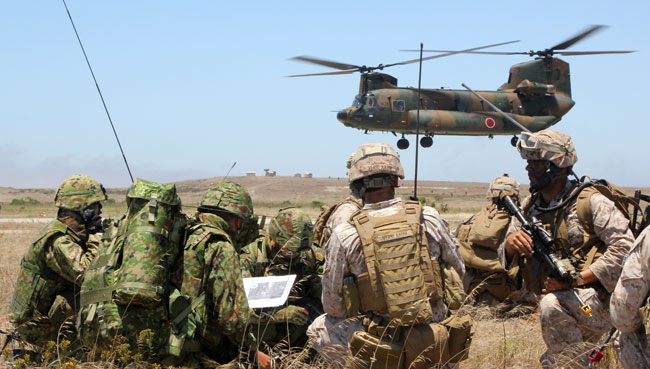
As part of exercise Dawn Blitz 2013 the Japanese Navy Ship JS Hyuga deployed troops, Landing Craft Air Cushion (LCAC) and CH-47J Chinook helicopters to support the Marine Corps exercise in Camp Pendleton, California. Photo: USMC
The escalating conflict has accelerated what have been until now quiet plans to develop a specialized unit of marine infantry. Kyle Mizokami Wrote in the US Naval Institute review (USNI). This force, mentored by the U.S. Navy and Marine Corps, is seen by Japan as essential in guarding the Senkakus, as well as other disputed territories. Like the Navy/Marine Corps team, the Japanese force will be a joint group consisting of the Ground, Air, and Maritime Self- Defense Forces, with everything from infantry to air support to the ships that carry them.
At present, Japan has no forces tailored to amphibious operations, since marines are typically considered offensive in nature and Japan has barred itself from having offensive forces. Since 2012, when Japan has eased this self-imposed policy, an amphibious force is considered essential to enable rapid response and reinforcement, in case the Chinese decide to move in to take the disputed islands.
Based at Nagasaki in southern Japan, the Western Army Infantry Regiment (WAIR) has been tasked the amphibious mission. A battalion size force, WAIR is considered only the core of a new marine force, which will be considerably larger Mizokami wrote. The regiment has no vehicles except for Mitsubishi Type 73 light trucks. Japan has asked to buy six AAV-7A1 from the US, to equip one amphibious platoon. The new acquisition plan will increase this number to 52, adding 99 wheeled assault vehicles (8×8 armored infantry carriers), representing mobility assets to carry an entire marine brigade.
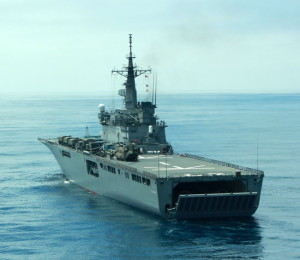
The main core supporting Japan’s amphibious assault and rapid response capability are two Hyuga class helicopter carriers, supporting up to 14 helicopters, and three Oosumi Class Landing Ship Tanks (LST), each carrying two Landing Craft Air Cushion (LCAC) vehicles and smaller landing crafts providing ship to shore transportation.
U.S. Marines from the 13th Marine Expeditionary Unit and Japanese Self-Defense Force soldiers go over maneuver tactics while conducting amphibious assault operations on San Clemente Island June 17, 2013. Photo: USMC
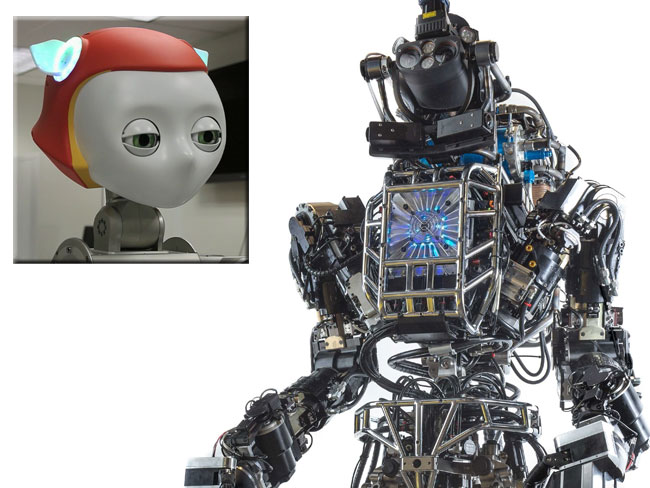
Boston Dynamics’ Atlas, a 330 pound humanoid robot built to work and survive in harsh, hazardous disastrous environments will soon be able to meet a female-like counterpart designed to care for humans – the gentle looking, soft touching ‘humanoid torso’, developed by Meka Robotics. Both companies are now part of Google’s growing cybernetic stables.
Google has revealed it has taken over eight robotics companies in the past half a year, in an effort to create a new operating unit dedicated to robotics technology. Google’s statement was released last week, following the Amazon’s announcement of its ‘Prime Air Project‘, aimed at expediting deliveries of goods using electrically powered multirototr unmanned aerial platforms but a week later it was clear that Google is after much more than UAVs.
The first seven acquisitions were small, highly specialized companies. On on Friday the internet giant confirmed that it had completed the acquisition of Boston Dynamics, a legged robotics specialist that have developed unique robotics projects for the Pentagon for years – robots the can crawl, walk, run and jump. Google said it will continue to honor the contracts Boston Dynamics has been doing for the military. Google executives said the company would honor existing military contracts, but that it did not plan to move toward becoming a military contractor on its own. Subscribe to read our commentary on the potential risks.
Apart from Boston Dynamics, Google has gathered seven companies in recent months, all are now grouped under the company’s robotics effort headed by Andy Rubin, who was previously in charge of the Android operating system. From its based in Palo Alto, California, Google’s robotics projects will run the companies located in San Francisco area and in Japan – one of the world’s leading nations in the field. According to the New York Times, the recent deal is “the clearest indication yet that Google is intent on building a new class of autonomous systems that might do anything from warehouse work to package delivery and even elder care.”
Boston Dynamics’ specialization in legged and humanoid robots will align well with the other companies Google have acquired under its robotics portfolio; among those, four are involved in different technologies related to humanoid robots, including manipulator arms, 3D vision and ‘friendly’ robotic assemblies, used for operations and control of such robots.
Founded in 1992 by Marc Raibert, a former professor at the Massachusetts Institute of Technology (MIT), Boston Dynamics was involved in numerous research programs. In recent years the company was pushing the limits of legged robotics. Among their recent successes were LS3, a legged ‘mule’ that has entered advanced testing with the Marine Corps, and ATLAS, a humanoid robot used by DARPA for the advanced phase of the DARPA Robotics Challenge (DRC). DRC is a two-year contest creating robots that can replace humans in operating in hazardous disaster areas such as the Fukushima or Chernobyl nuclear reactors.
ATLAS is a hydraulically powered robot in the form of an adult human. It is capable of a variety of natural movements, including dynamic walking, calisthenics and user-programmed behavior. Based on the Petman humanoid robot platform, Atlas was modified to meet the needs of the DARPA Robotics Challenge. Seven teams will be using an Atlas to participate in the Trials.
This photo of a low-level flying RAF Typhoon, taken by dan Kemsley, was the winning photo of the Eurofighter photo competition. Photo: Eurofighter, By Dan Kemsley
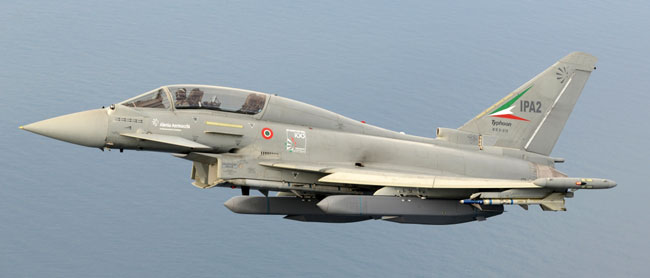
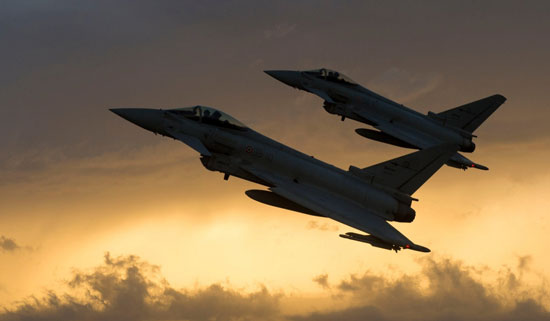
Italian Eurofighter Typhoons at Gioia del Colle. 400 Typhoons have been delivered to customers in Europe and the Middle East to date. Photo: Eurofighter / Planefocus
Typhoon has lost the bid offering 60 aircraft for the Government of South Korea. The Koreans initially favored the newest version of the Boeing F-15, known as the ‘Silent Eagle’, but later reverted to opt buying only 40 of the F-35A stealth fighter from Lockheed Martin. Given this precondition, EADS is currently offering the Koreans a mix of two jet fighters – namely, buying 40 Eurofighter Typhoons and 20 F-35s for their next-generation fighter procurement project.
According to the European company, such a split buy would offer a better blend of multi-mission capabilities, earlier than any other fighter type, given the low risk status of the Typhoon, compared to the ‘high risk’ of the F-35A, which has not been officially inducted into military service. EADS is ready to deliver the first Typhoons to South Korea by 2017, one year before Lockheed Martin could begin delivering the F35A to Seoul.
This photo of a low-level flying RAF Typhoon, taken by dan Kemsley, was the winning photo of the Eurofighter photo competition. Photo: Eurofighter, By Dan Kemsley
Seoul had initially planned to buy 60 combat jets beginning in 2017, but in September it voted down Boeing’s F-15 Silent Eagle — the only bid within the 8.3 trillion won (US$7.2 billion) budget – due to its relatively weak stealth features. Korean officials said the original technical requirements for the candidate jets were altered after the selection of the F-15SE, to reflect more advanced stealth capabilities, which experts viewed as essential to deal with the possible future threats from North Korea.
“We see the advantages of a split procurement of Eurofighters and F-35s, combining the benefits of both programs,” said Peter Maute, senior vice president of Eurofighter sales, during a press conference in Seoul. “This would be in line with the approach of some future F-35 users who will, once it is eventually in service, operate it complementary to other aircraft in a specialized role, using its stealth attributes.” Maute said this approach is similar to the UK and Italy, both have ordered the Typhoon for multi-role strike fighter and F-35 as a stealthy strike aircraft. “A split-procurement would allow Korea to take F-35 deliveries when it has reached the same phase without jeopardizing the overall time schedule for the introduction of the new aircraft fleet.”
Maute also said that should Seoul opt to buy 40 Eurofighter Typhoons, his company would maintain its promises of technology transfer and industrial participation packages, which were made when Seoul planned to procure 60 warplanes. The EADS’ industrial packages include technological support for Seoul’s so-called KF-X project to develop an indigenous warplane, and also an investment of up to $2 billion (2.1 trillion won) in the KF-X project.
Last month, Seoul decided to purchase 40 stealth warplanes for deployment from 2018-2021 and to later purchase an additional 20 warplanes, in consideration of shifts in the security environment and technological development. The requirement program, aimed at replacing the Air Force’s aging fleet of F-4s and F-5s, was initially to import warplanes from 2016, but this has been delayed until 2018.
The other fighting ground for the Typhoon is in the Middle East, where chances of selling the fighter jet seem to be diminishing, with the United Arab Emirate (UAE) having second thoughts about buying as many as 60 jet fighters as they have planned so far. The Emirate planned to spend up to $10 billion replacing their French Dassault Aviation Mirage 2000-9 fighter jets. The two options considered were the French Rafale and Eurofighter Typhoon.
After the Emirate rejected the French proposal, Typhoon was positioned as the most likely winner. The Typhoon deal, expected in London by year’s end, seems to be on hold. The Oil-rich Abu Dhabi has been the economic powerhouse of the seven-sheikdom federation known as the ‘Gulf Cooperation Council (GCC)’. Therefore, if the UAE deal collapses, Britain is also likely to lose another order with the Emirates and Bahrain, which is in the market for 12 in a deal worth more than $1 billion. The sultanate of Oman bought 12 Typhoons, along with eight Hawk jet trainers in November 2012 as part of a $4.04 billion contract.
Other prospects for selling Typhoons are in Saudi Arabia, where the UK sold 72 of these jet fighters in 2006. London is now trying to sell Riyadh 72 more Typhoons but Riyadh is currently grappling with a multi-billion arms buy from the US, modernizing their entire fleet of Strike Eagles. This leaves Europe as the main operating ground for the Typhoon, currently operated by four NATO air forces – Great Britain, Germany, Italy and Spain, and Austria.
small drones based on hobby RC models were spotted during the recent crisis in Zamboanga City, in September 2013. Photo via AP.
small drones based on hobby RC models were spotted during the recent crisis in Zamboanga City, in September 2013. Photo via AP.
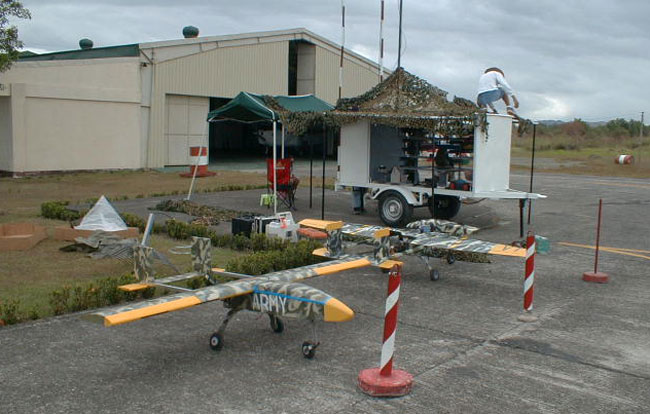
The Philippines Department of National Defense (DND) is embarking on the acquisition of six unmanned aerial systems (UAS) as part of the Marine Forces Imagery and Targeting Support System (MITSS) anticipated to improve surveillance and reconnaissance capabilities over the nations’ thousands of islands. The Philippines Army is already operating some locally made ‘tactical’ unmanned aerial systems, among them a small drone produced by OB Mapua (photo below). These small UAS will be allocated to support the nation’s three marine brigades, performing reconnaissance, surveillance missions and help in search and rescue operations. While the specific unit to receive the small drones has not been disclosed, it is likely they will be fielded with the Philippines’ Force Recon Battalion (FRBn), a special-warfare specialized unit supporting all three brigades.
The acquisition of six SUAS is one of four priority programs supporting the country’s marine corps; the budget for the MITSS programs is about US$15 million (684 million philippine peso) including the UAS systems, EO payloads and initial training, logistics and support.
From the tender details it is unclear if the Philippines are after six UAS systems or six unmanned aerial platforms. The details as outlined by the Rappler mentioned the Marines’ shopping list for the project includes:
6 sets of small unmanned aerial vehicle subsystems
9 sets of Target Acquisition Device Subsystems
12 kits of Tactical Sensor Integration Subsystems
Initial Integrated Logistics Support (1 spare MITSS, training and manuals)
These assets will be used by the 3 Marine Brigades and initial Integrated Logistics Support (ILS) system, according to the invitation to bid.
Bidding for the MITSS will be conducted through open competitive bidding procedures using non-discretionary “pass/fail” criterion,” the department announced saying the DND Bids and Award Committee will hold a pre-bid conference on Monday, December 16, 2013.
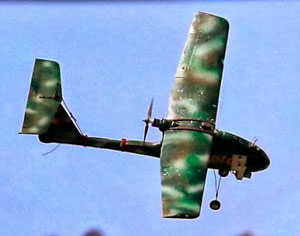
The Philippines Army is operating several of these Assunta UAVs. Built by OB Mapua and Partners under the national Self-Reliance Development Program (SRDP). With a wingspan of 120 inches (3 meters) and overall length of 50 inches (1.27 m’), the UAV can fly for two hours using a 40-cc two stroke gasoline engine. It has a maximum speed of 80 knots (148 km/h). Navigation follows GPS waypoints set before takeoff.
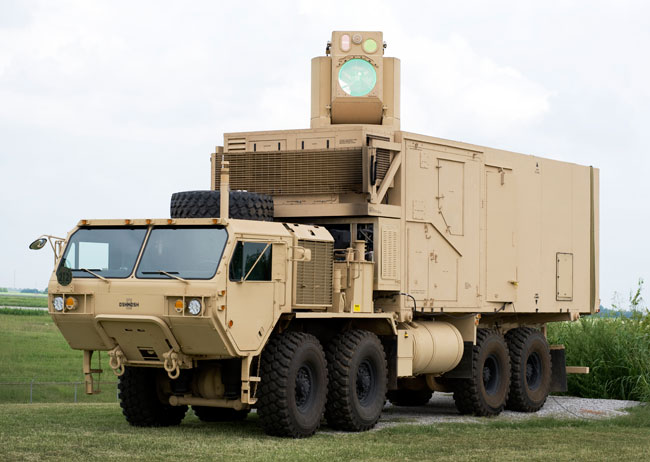
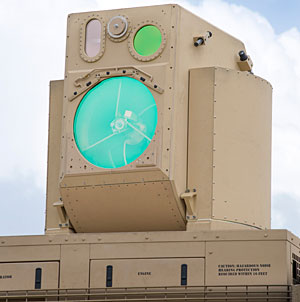
The U.S. Army's new laser truck has taken a major step toward becoming a reality. Boeing integrated a beam control system to find and track targets and point and focus a laser beam on the targets. Photo: Boeing Company
The U.S. Army’s new laser truck has taken a major step toward becoming a reality. Boeing integrated a beam control system to find and track targets and point and focus a laser beam on the targets. Photo: Boeing Company
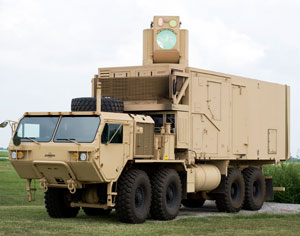
The Army High Energy Laser Mobile Demonstrator (HEL MD) underwent multiple test events between Nov. 18 and Dec. 10, at White Sands Missile Range, engaging more than 90 mortar rounds and several unmanned aerial vehicles in flight. What ‘engaged’ means? Has HEL-MD actually destroyed all those targets? – subscribe to find an answer
It was the first time the Army has tested this vehicle-mounted high-energy laser in the open, employing the system’s high power laser source and beam director, both mounted on a truck. Beside the laser system, an unspecified ‘enhanced multimode radar‘ supported the engagement by queuing the laser. The demonstration and testing confirms the capability of a mobile solid-state laser weapon system to counter mortars, UAVs, and intelligence, surveillance and reconnaissance sensors mounted on the UAVs, officials said.
The beam director, a key part of the beam control system, is a rotating, dome-shaped turret that extends above the roof of the vehicle while engaging targets. Photo: Boeing Company.
The HEL MD is being developed to show directed-energy force-protection capabilities against rockets, artillery and mortars (RAM). It is also intended to protect against unmanned aerial vehicles (UAVs), and cruise missiles. These present a broad target set for the system’s target acquisition system, considering the wide variability of target velocities, maneuverability and radar signatures.
Mortars travel at low velocities for short ranges in high-arching trajectories. Artillery shells fly much faster, at a lower trajectory while UAVs fly slow and present an extremely low radar signature. Cruise missiles, on the other hand, often fly at subsonic speed but are hidden from radar detection for most of their flight path, as they usually fly at very low altitude. According to officials at Boeing, the integration of the multi-mode radar in the tests enable the developers to acquire both target data and provide intercept computation for future integration in laser weapon systems. The Boeing Company is the prime contractor for the HEL MD program.
Initial system effectiveness was proven through low- and medium-power test demonstration that took place in 2011. Currently under Phase II High-power testing, that have now been concluded at the High Energy Laser Systems Test Facility on White Sands Missile Range, the recent testing utilized a 10-kilowatt class laser. The 3 year program began September 2012 and is expected to last through 2015. In the future, a 50-kW class laser will be integrated into the HEL MD platform, officials said. The 50-kW laser is scheduled to be upgraded to a 100-kW class laser in subsequent demonstrations, they added. As part of the planned enhancement the supporting thermal and power subsystems will also be upgraded to support the increasingly powerful solid-state lasers, according to USASMDC/ARSTRAT officials. They said these upgrades will increase the effective range of the laser or decrease required lasing time on target.
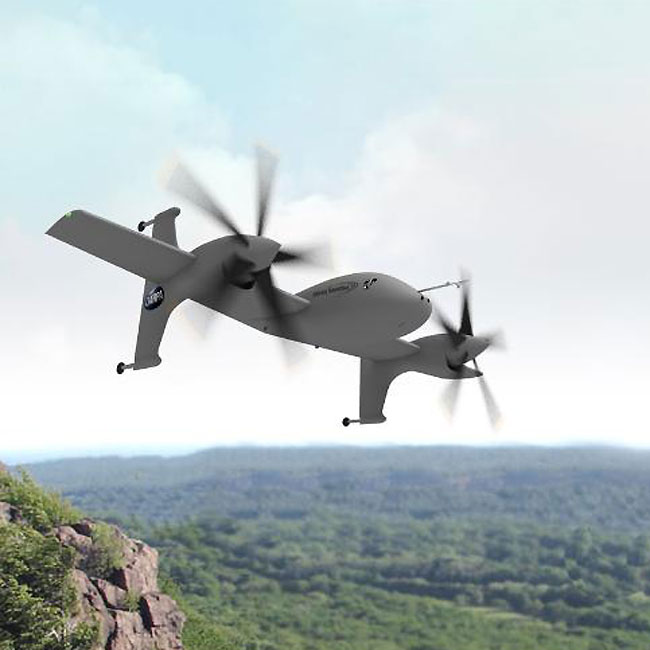
Sikorsky Innovations is teamed with Lockheed Martin’s Skunk Works for the VTOL X-Plane development of its Unmanned Rotor Blown Wing concept. (Photo: Sikorsky Aircraft Corporation)
DARPA has awarded $30 million of a planned $47 funding allocated for preliminary design for the ‘VTOL X-Plane’, an experimental aircraft that can fly at high speed, hover, and take off and land vertically (VTOL). The U.S. Defense Advanced Research Projects Agency (DARPA) awarded two contracts funding 22 month programs at Sikorsky Innovations, and Aurora Flight Sciences, for the preliminary development of new X-Planes. The program goal is to build and fly a demonstrator aircraft with first flight anticipated in the fourth quarter of 2017. The overall VTOL X-Plane program is a 52-month, $130 million effort to fly an experimental aircraft capable of exceeding 300 kt., with a hover efficiency of 75 percent or better and a cruise lift-to-drag ratio of 10 or more. According to DARPA, $47 million have been allocated for several phase I contracts, with more winners to be announced soon. Following the two-year preliminary design, the second phase of the program will focus on design, development and integration, to be followed by flight-testing in phase III.
“We anticipate that DARPA will release up to four Phase 1 awards, so this is a significant win for Sikorsky Innovations.” said Mark Miller, Sikorsky’s Vice President of Research & Engineering, “we have a non-traditional technical solution, and this is an opportunity for Sikorsky Innovations to excel, to expand our relationship with DARPA, and to embark on a great partnering opportunity with another company known for its innovative solutions – Lockheed Martin’s Skunk Works.” Sikorsky Innovations is the technology development organization of Sikorsky Aircraft Corp.
With the VTOL X-Plan DARPA plans to set a new standard for vertical take of and landing aircraft, which have relied over the past 60 years on the rotorcraft concept. The speed of conventional rotorcrafts is inherently limited to 150-170 knots, which make platforms susceptible to enemy fire. Although new VTOL designs, such as the tilt rotor, succeeded in increasing the speed of VTOL aircraft, they also incurred increased weight and reduced payload capacity, while significantly increasing design complexity.
With VTOL X-Plane DARPA hopes to challenge industry to innovate engineers to create a single, hybrid aircraft that would concurrently push engineers to develop aircraft capable of flying at higher speeds, (300-400 kts), hover and cruise more efficiently than helicopters (75% improved hover, up from 60%, 10% lift to drag ratio, up from 5-6). These new platforms should retain the current helicopter payload capacities, carrying payloads weighing about 40% of the gross weight.
“We have not made this easy” said Ashish Bagal, DARPA program manager for VTOL X-PLANE. “Strapping rockets onto the back of a helicopter is not the type of approach we are looking for. This time, rather than tweaking past designs we are looking for true cross-pollinations of designs and technologies from the fixed-wing and rotary-wing worlds”.
During Phase 1, Sikorsky Innovations and Lockheed Martin’s Skunk Works will conduct trade studies and develop the initial design. For that project Sikorsky Innovations has teamed with Lockheed Martin’s Skunk Works for the VTOL X-Plane development of its Unmanned Rotor Blown Wing concept. This concept represents a unique integration of fixed wing aerodynamics and advanced rotor control, addressing DARPA’s requirement for reduced complexity of such platform.
Sikorsky Innovations plans to lead the program from its Fort Worth office, leveraging talent from both Stratford, Connecticut, and West Palm Beach, Florida, engineering centers.
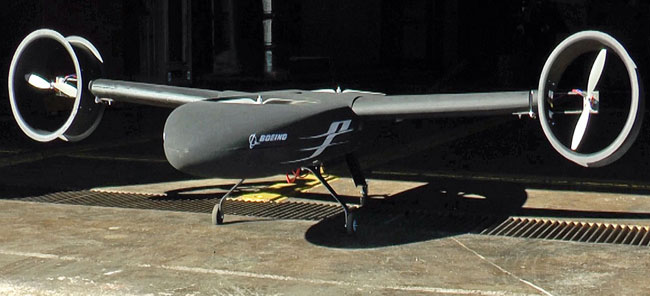
Boeing is also expecting to be the third to get an award for the VTOL X-Plane development, the company has already conducted some research in ducted-fan propulsion technology utilizing an unmanned vehicle powered by quad-fan configuration. A scale model of such vehicle, dubbed ‘Phantom Swift’ was developed in less than a month at the company’s ‘Phantom Works’ using rapid prototyping process. It will serve the Boeing VTOL X-Plane team as a flying laboratory.
“A picture is worth a thousand words, a flying model is worth a million words. No matter what words you put in a proposal, having hardware that you can demonstrate that they can tangibly see what’s being proposed goes a long way toward winning that proposal,” said Perry Ziegenbein, Phantom Swift’s chief engineer.
Phantom Swift is a rapid prototyping flying demonstrator that was designed and built in less than 30 days. Photo: Boeing
Aurora Flight Sciences has been working on a parallel program with DARPA, seeking to develop an advanced electrically powered lift fan that could be used with VTOL aircraft. Partnered with ThinGap and Trust Automation, the team’s unique approach utilizes a DC brushless ring motor, high switching rate controller, and ducted fan to deliver the required lift. The low disk loading compared to turbojets and turbofans minimizes the amount of debris kicked up during operation. The Defense Advanced Research Projects Agency (DARPA) funded contract has produced a 32-inch diameter ducted fan powered by a 70kW electric motor capable of producing over 430 pounds of thrust. The advanced aerostructure design by Aurora Flight Sciences coupled with a unique composite ring motor from ThinGap performed several thrust tests characterizing the continuous operation as well as peak performance of the integrated system. Additional testing was successfully performed using an advanced controller of Trust Automation’s design, which implemented very high switching rates and Field Oriented Control to effectively control the low inductance system. Continued development is planned to reduce weight and increase system efficiency as potential platform specific applications are pursued. This ducted electric lift technology has applications to vertical take-off and landing vehicles, helicopter tail rotors, and aircraft propulsion.
Under another program Aurora has also developed the Excalibur unmanned VTOL platform, utilizing a hybrid tilting lift fan and propulsion engines to deliver VTOL capability and high speed performance.
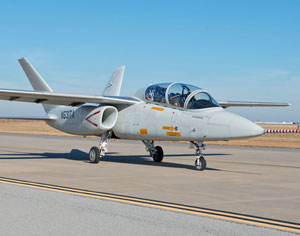
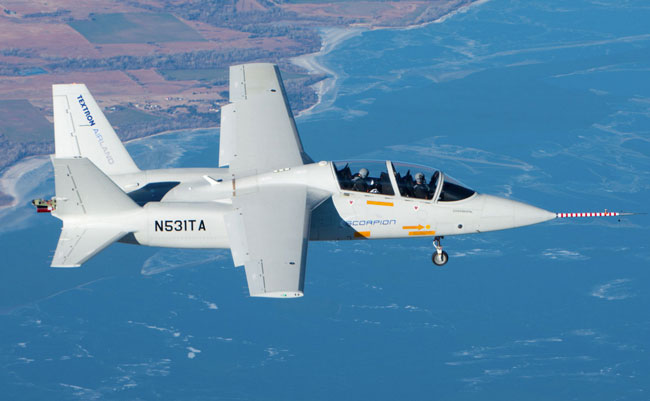
Textron Air Land, LLC announced that the Scorpion Intelligence, Surveillance and Reconnaissance (ISR)/Strike aircraft developed and built by the company has completed its first flight at 10:30 AM Central Time on Thursday, December 12, 2013. The aircraft took off from McConnell Air Force Base in Wichita, Kansas and conducted a range of handling maneuvers for approximately 1.4 hours of flight. Today’s flight marks one of the fastest developments of a U.S.-built tactical jet, progressing from initial design to first flight in less than 24 months.
Textron invested private money in the development and assembly of the Scorpion prototype, in hope for interest from the Pentagon, air force and other government agencies in the capabilities of the new and affordable combat-ISR jet concept plane. Photo: Textron Airland
Scorpion’s first flight was crewed by pilot Dan Hinson, an engineering test pilot with over 5,000 flight hours in 79 different types of aircraft, and co-pilot David Sitz. “The flight was completed according to plan,” said Hinson. “Having flown many tactical aircraft throughout my 23-year career with the US Navy and with other aircraft manufacturers, I can say that the Scorpion compares very favorably to more costly aircraft currently used for low-threat missions. It showed impressive stability and responsiveness closely matching all of the predicted parameters for today’s maneuvers – it’s going to be a highly capable aircraft for the ISR and homeland security mission set.”
The Scorpion was announced in September 2013 as a demonstration aircraft designed to accommodate the budget constraints and shifting mission requirements of the U.S. Department of Defense and U.S. partner nations. Powered by twin turbofan engines generating 8,000 lbs. of thrust, the Scorpion transitions easily between low speed and high-subsonic speed, as needed for diverse missions such as irregular warfare, border patrol, maritime surveillance, emergency relief, counter-narcotics and air defense operations.
The Scorpion has a cruising speed of up to 450 ktas (517 mph), with a ferry range of 2,400 nautical miles. The aircraft carries an internal payload of up to 3,000 lbs., as well as wing-mounted precision munitions.
According to Stephen Trimble of Flightglobal, acquisition price of the Scorpion should be “well south” of $20 million. Trimble quoted Textron AirLand president Bill Anderson saying. Direct operating costs are targeted at $3,000 per hour, compared to $12,000 per hour for the Fairchild Republic A-10, he said. Anderson confirmed that given the modular design of the Scorpion, the two-seater platform could swap into a single-seater or an unmanned configuration, if required. Anderson said the company has already talked to two potential foreign buyers, as well as both active and reserve components of the US military. Trimble added the company hopes to complete up to 500 flight test hours over the next 12 months. The flights are aimed at clearing the basic speed and altitude envelope, culminating in a mission demonstration involving both sensor and weapons tests by the end of the year, says Scorpion chief engineer Dale Tutt.
“Today’s first flight is a major milestone for the Scorpion as the program transitions into the flight test phase,” commented Textron CEO Scott Donnelly. “When the design phase began less than two years ago, we were confident that we would deliver a uniquely affordable, versatile tactical aircraft by taking advantage of commercial aviation technologies and best practices. Today’s flight met all expectations, and keeps us on track towards certification and production,” Donnelly added.
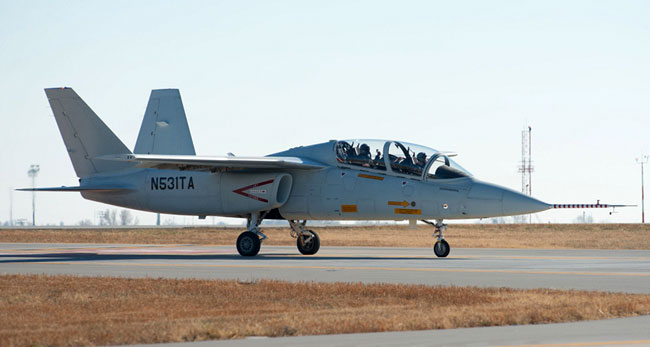
The Scorpion Jet seen on its maiden flight, December 12, 2013 over Wichita, Kansas. Photo: Textron Airland.The Scorpion seen on one of its recent taxi tests December 10, 2013 at Wichita, Kansas. Photo: Textron Airland.
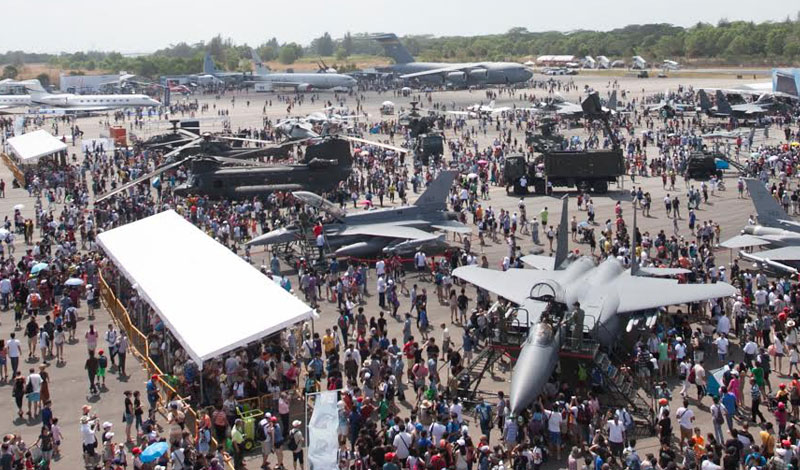
Singapore Airshow 2014 attracts close to 100,000 visitors over the public day weekend. Photo: Singapore Airshow
Over the six-day show from 11-16 February, Singapore Airshow 2014 welcomed some 146,000 visitors in total. Visitorship over the four trade days from 11-14 February stood at almost 46,000 visitors from 129 countries/regions, with 31% coming from overseas. Singapore Airshow 2014 also played host to 279 delegations from 72 countries. Singapore Airshow returns from 16 to 21 February 2016 at Changi Exhibition Centre.
Singapore Airshow 2014 attracts close to 100,000 visitors over the public day weekend. Photo: Singapore Airshow
Singapore Airshow 2014 attracted close to 100,000 visitors over the public day weekend on 15 and 16 February. In addition to the 80,000 public day tickets that were completely sold out, the Airshow also welcomed guests for the Republic of Singapore Air Force’s 45th anniversary celebrations at Singapore Airshow, exhibiting personnel, student groups and concession ticket holders over the two days.
“We are delighted with the achievements of Singapore Airshow 2014. We received good feedback from our public day visitors who enjoyed the impressive line-up of activities, especially the stunning aerial display performances, and found it convenient to access and leave the show. We will look into how we can improve on this further for the next show in 2016. We would like to thank all our partners and agencies for their support in making this another successful Airshow,” said Jimmy Lau, Managing Director of Experia Events, organiser of Singapore Airshow.
Visitors to the Airshow were treated to an impressive line-up of public day activities, including the highly-anticipated flying display, featuring the largest number of aerobatic teams in the history of Singapore Airshow. The line-up included awe-inspiring team aerobatics performances by the Republic of Singapore Air Force (RSAF) Black Knights, the Republic of Korea Air Force (ROKAF) Black Eagles and the Indonesian Air Force (TNI-AU) The Jupiters. There were also solo aerobatic performances by the U.S. Air Force, the U.S. Marine Corps and the Royal Australian Air Force (RAAF). The RSAF pavilion, part of the RSAF’s efforts to celebrate its 45th anniversary with the public at Singapore Airshow 2014, was also a major highlight of the public days.
The new public day arrangements introduced this year by show organisers, where visitors go through security clearance at Singapore Expo before boarding the shuttle bus to Changi Exhibition Centre, were well-received. In particular, the objective of getting visitors into the show swiftly and safely during the peak period in the morning before the flying display was achieved.
Defense-Update has posted a series of reports from the Singapore Airshow, including a preview, live and post event reports.
Defexpo India 2014 the Eight International Land, Naval & Internal Security Systems Exhibition will be held from 6 – 9th February 2014 at Pragati Maidan, New Delhi.
The event is being organised by the Ministry of Defence, Government of India. The biennial event provides an excellent opportunity to witness the developments in land, naval and internal security in India, particularly by the local defense industries, as well as foreign contractors seeking a foothold in the huge Indian defense market.
Defense Update editorial team present at the show will provide an extensive coverage of the event, including breaking news, daily Photoreports and our post show Videoreport. Exhibitors are invited to send press releases and story suggestions to the editor.
A preview, live and post event report DEFEXPO 2014 by Defense-Update editorial team.
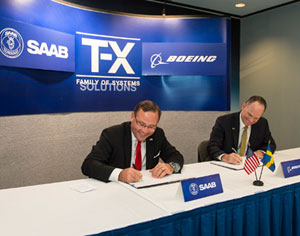
Boeing [NYSE: BA] and Saab AB [Stockholm: SAABB] have signed a Joint Development Agreement (JDA) to jointly develop and build a new advanced, cost-efficient T-X Family of Systems training solution for the upcoming competition to replace the U.S. Air Force’s aging T-38 aircrew training system. Saab President and CEO Håkan Buskhe, left, and Boeing Military Aircraft President Chris Chadwick sign the Joint Development Agreement document. Photo: Boeing
The trainer solution from Boeing and Saab with other potential team members will be a completely new designed aircraft
The US Boeing Company and Saab AB of Sweden announced today they have signed a Joint Development Agreement (JDA) to jointly develop and build a new advanced, cost-efficient T-X Family of Systems training solution for the upcoming competition to replace the U.S. Air Force’s aging T-38 aircrew training system. Boeing will be the prime contractor for the US government bid and Saab AB the primary partner. The trainer solution from Boeing and Saab with other potential team members will be a completely new designed aircraft, built to meet the needs of the Air Force. The agreement covers areas including design, development, production, support, sales and marketing.
Boeing [NYSE: BA] and Saab AB [Stockholm: SAABB] have signed a Joint Development Agreement (JDA) to jointly develop and build a new advanced, cost-efficient T-X Family of Systems training solution for the upcoming competition to replace the U.S. Air Force’s aging T-38 aircrew training system. Saab President and CEO Håkan Buskhe, left, and Boeing Military Aircraft President Chris Chadwick sign the Joint Development Agreement document. Photo: BoeingAccording to Boeing Military Aircraft President Chris Chadwick the two members are committed to developing a new aircraft, rather than offering an off the shelf solution, He said both companies have the “willingness to present an adaptable and affordable advanced pilot training solution”. “Boeing and Saab form the foundation for what will be the strongest, most cost-effective industry team. Our comprehensive Family of Systems approach provides a new, purpose-built T-X aircraft supported by innovative training and logistics support to offer total-life-cycle cost benefits to the U.S. Air Force and taxpayers.” he added.
“We are sure this is the best way to supply affordable first-class trainers to the U.S. Air Force,” said Saab President and CEO Håkan Buskhe. “We will invest in development of this completely new aircraft design over the coming years. This cooperation with Boeing is part of our strategic development and we confirm our long-term financial targets.”
Lockheed Martin Skunk Works® and XTEND have achieved a major milestone in JADC2 by integrating the XOS operating system with the MDCX™ autonomy platform. This technical breakthrough enables a single operator to simultaneously command multiple drone classes, eliminating the friction of mission handoffs. From "marsupial" drone deployments to operating in GPS-denied environments, explore how this collaboration is abbreviating the data-to-decision timeline and redefining autonomous mission execution.
As traditional defense primes face mounting competition from agile “neoprimes” such as Anduril, Palantir and Helsing, the balance of innovation is shifting toward software-defined warfare and scalable, dual-use technologies, while global industry consolidation—marked by Boeing’s integration of Spirit AeroSystems and other strategic mergers—signals an intensified race to secure control over the defense technology value chain. Our Defense-Tech weekly report highlights these trends.
In early October 2025, a coordinated wave of unmanned aerial system (UAS) incursions—widely attributed to Russia—targeted critical infrastructure across at least ten European nations. The unprecedented campaign exposed the fragility of Europe’s air defenses...
Executive Summary
The past week (September 18-25, 2025) represents an inflection point where strategic defense concepts have transitioned from doctrine to tangible reality. An analysis of global events reveals four primary, interconnected trends shaping an...
At the 2025 Air, Space & Cyber Conference, U.S. Air Force and Space Force leaders unveiled major updates on next-generation fighters, bombers, unmanned systems, and space initiatives, highlighting both rapid innovation and critical readiness challenges as the services race to outpace global competitors. A short version is available here, with a more detailed version for subscribers.
The Taipei Aerospace & Defense Technology Exhibition (TADTE) 2025 crystallized around four dominant strategic themes that collectively illustrate Taiwan's comprehensive approach to defense modernization amid escalating regional tensions. Based on a detailed report by Pleronix (available upon request). Includes a Podcast discussion on TADTE 2025's highlighting Taiwan's four strategic themes beyond the post's coverage.
Israel’s Iron Beam 450 high-power laser system has completed final testing, marking a major leap in air defense. Developed by Rafael, it offers precise, cost-effective interception of rockets, UAVs, and mortars, and is set for IDF deployment by 2025.


 Teams of aerospace researchers across the USA are signing up to compete for $500,000 in prize money by demonstrating the ability to fly unmanned aircraft through an airspace obstacle course.