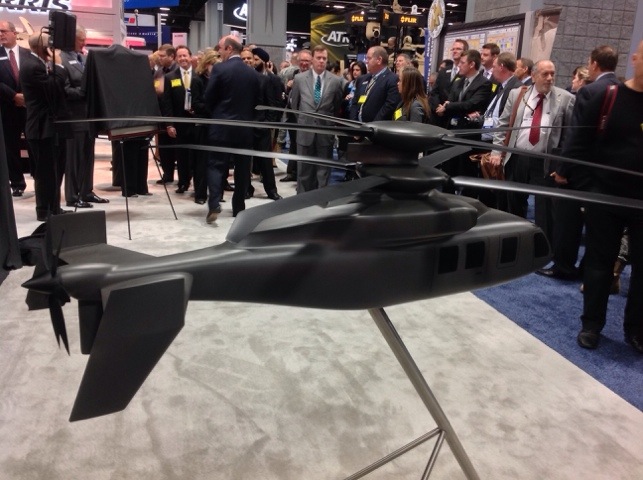
Sikorsky and Boeing have officially named their future rotorcraft partnership ‘Team Defiant’. The team has based their design on the Sikorsky’s X2 technology and Boeing’s coaxial rotor concepts? The design is one of four selected by the US Army for its Joint Multi-purpose Rotorcraft (JMR) technology demonstration program. “The cooperation is aimed on 50-60 year program, forming the backbone of the US Army aviation” Sikorsky Sam Mehta, President of Sikorsky Military Systems, said during the announcement at the AUSA exhibition today. He said a team of engineers from Sikorsky and Boeing are exploring rapid prototyping techniques that have the potential to introduce new technologies and business advantages.
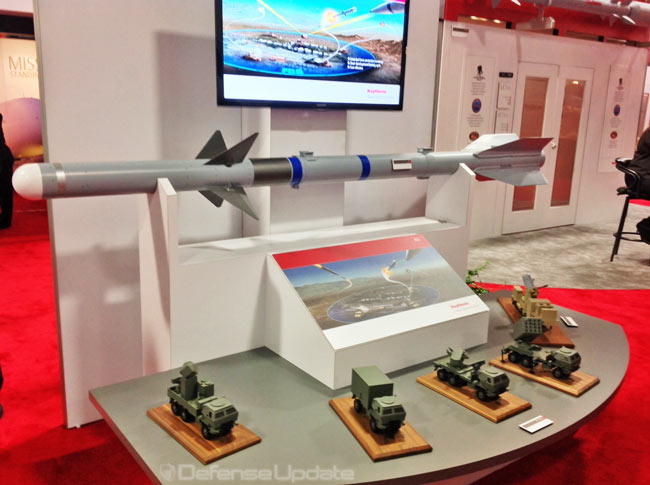
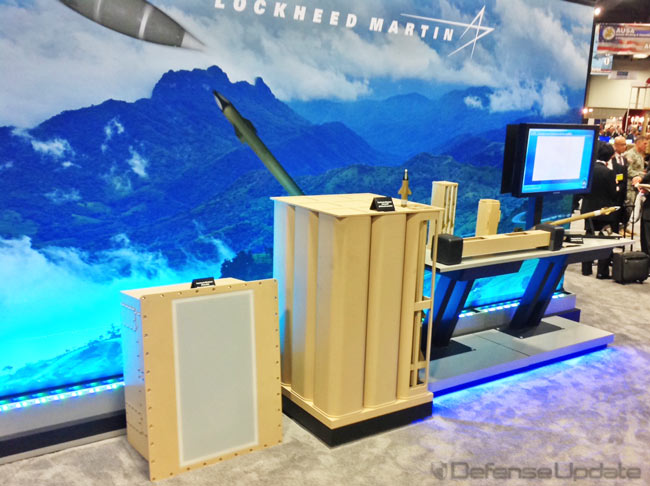
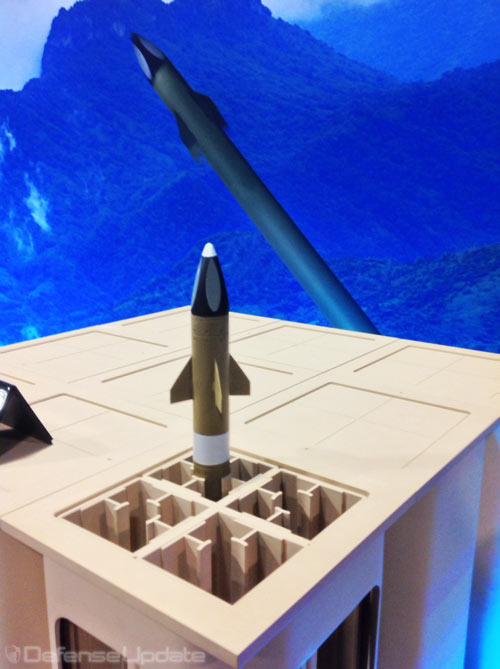
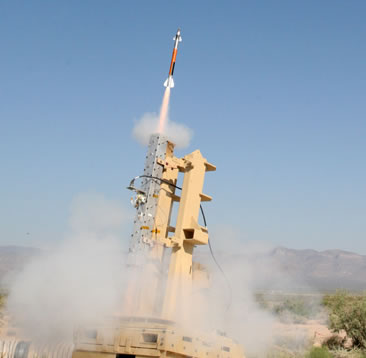
EAPS system. From left to right: Fire control module, 36x round container launcher, single missile container-launcher, six-pack container/launcher. Photo: Tamir Eshel, Defense-Update
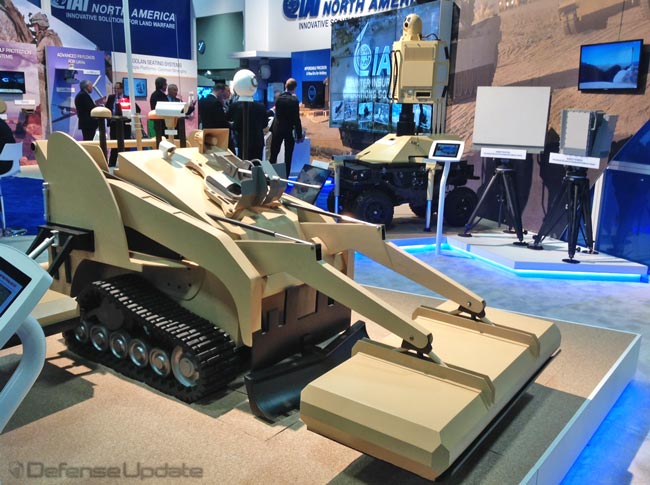
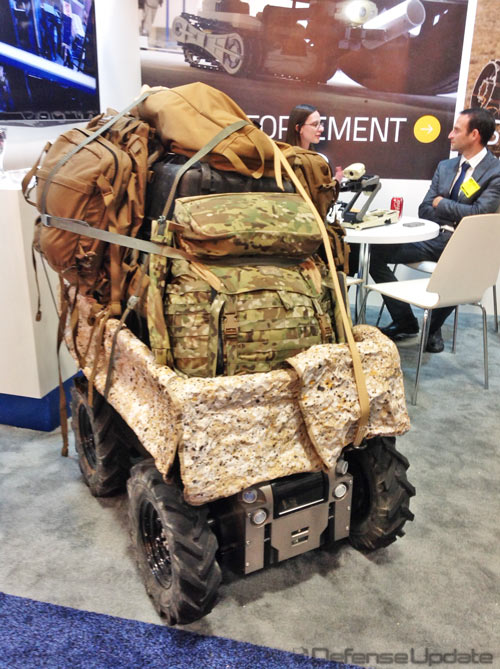
Probot, a heavy logistical robot was unveiled at AUSA by Roboteam. Photo: Tamir Eshel, Defense-Update
The Probot weighing about 100 kg can carry 250 kg of payloads offroad and over rough terrain. It is electrically powered by standard military batteries, each Probot carries eight batteries sustaining eight hours operation. The robot has integral ultrasonic proximity sensors and cameras sensing its surrounding. It can also be configured with an IAI Micropop stabilized payload for surveillance and observation.
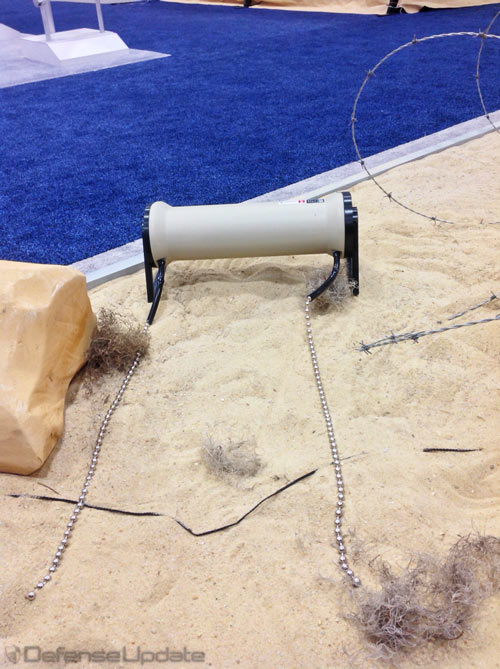
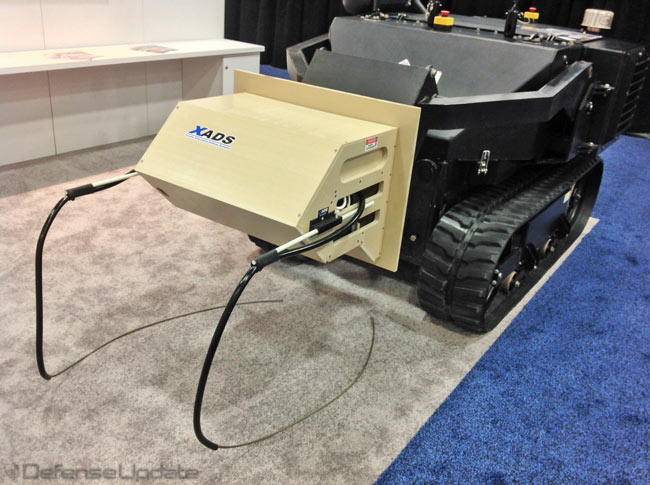
Xtreme Alternative Defense Systems (XADS) has introduced today at the AUSA exhibition a ‘game changing C-IED technology’ that allows threat clearance and remediation teams to reliably and rapidly pre-detonate undetected, suspected or confirmed IEDs from a safe stand-off distance. The operating concept of XAP is to conduct a high energy electrical pulse to the explosive initiator of an IED, thus disabling the device. According to the developer, the system complements conventional C-IED equipment with the ability to perform rapid mitigation, dramatically reducing the find-to-Mitigate timeline from hours to minutes.
The system consists of a proprietary Xap pulse generation unit, driven by a power supply, coupled to an emitter assembly. The system can be scaled to meet different types of threats, implementing various pulse rates, waveforms and energy output. The application can be tailored to route clearing systems, manned, unmanned or portable.
According to XADS, the XAP is superior to the hazardous conventional explosive countermeasures, in that it targets the initiator of the IED itself. This enables the operator to maximize stand-off distance and safely mitigate suspected or confirmed threats by targeting the initiation mechanism regardless of its proximity to the main charge. XAP also have sufficient stand-off range and power to safely detonate linked or daisy-chained devices.
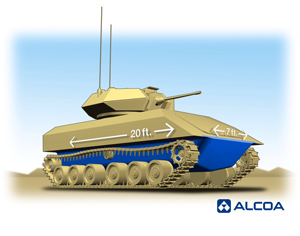
Aluminum manufacturer and processing company Alcoa has teamed with the US Army Advanced Research Laboratory (ARL) to develop a hull for a Ground Combat Vehicle armored vehicle hull made of a single piece of aluminum. Today, such hulls are manufactured from several metal plates welded together to form the hull structure. The seams are often becoming weak areas, becoming susceptible to blast damage. Replacing today’s assembled plates hulls, a single piece aluminum hull would offer a lighter, better protected structure, offering higher resistance to IED blast, be more durable to deformation, offering overall lower acquisition and life cycle cost.
“Our collaborative effort to develop a continuous and seamless aluminum hull has the potential to become a game changer for how armored vehicles are designed and made, to better protect our soldiers.” Dr. Ernest Chin of the ARL said.
The single hull structure will eliminate the use of welded armor plates, providing a single structure covering the entire vehicles’ lower hull. Alcoa plans to use advanced blast absorbent alloys, to further improve the structure’s tolerance to damage. The forging process will also enable designers to tailor the three-dimensional design and the structure’s width to meet specific protection and strength requirements in certain areas, while reducing the overall weight of the entire structure.
Reduced weight also means lighter vehicle weight, which further contributes to lower fuel consumption, and wear over the entire life cycle of the vehicle, thus contributing to lower life cycle cost. Once production processes are proven, it can be expected that the production of a single piece hull will become more economical and faster, further improving manufacturing cost.
ARL and Alcoa Defense have launched the program after Alcoa has modeled the advantages of the single piece large aluminum hull. The company already has the capabilities to forge the largest aluminum structures. Under the 18 month program ARL will coordinate the research efforts at the Alcoa Technical Center, to refine the hull design and develop the alloy requirements. Alcoa Defense will then work with Alcoa Forging and extrusions in Cleveland to produce a 20 by 7 foot demonstrator hull with the company’s 50,000 ton forging press, one of the two heaviest forging presses in the USA, to validate the performance benefits of the new hull.
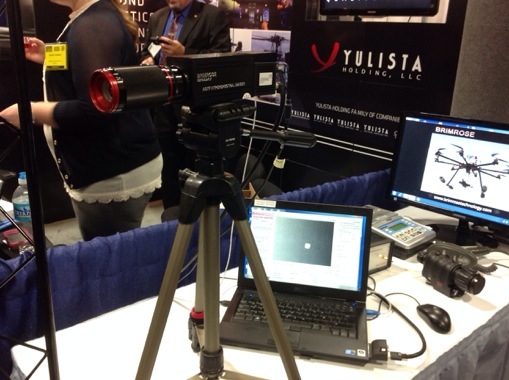
The new taggant system as demonstrated at AUSA 2013. The dot flashing on the screen is the taggant, as seen by the SWIR, emitting light on extremely narrow bandwidth. This application enables troops to identify friendly element (such as special forces under disguise) or marked targets even in crowded environment. Photo: Tamir Eshel, Defense-Update
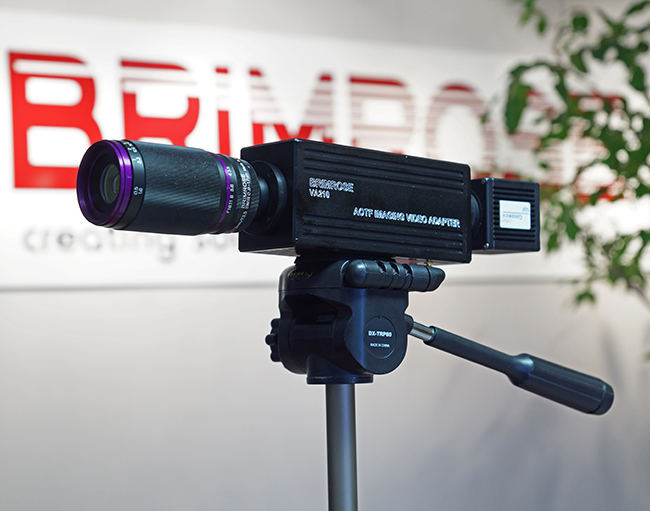
Brimrose Technology Corporation is introducing a new generation of optical taggants which will enable enhanced, covert marking and identification using unique narrow-band source ad Short Wave Infrared (SWIR) imaging systems.
Optical taggants are target identifiers located on friendly or enemy personnel or material that enable the Warfighter to make critical decisions in target identification in a tactical environment, day and night. The announcement was made at the AUSA 2013 Annual Meeting and Exposition.
“The 21st century battlefield is evolving rapidly and for the U.S. Army to stay out in front of it we need to continue to employ tools and tactics that keep us ahead of those who would do harm to our nation” says Brimrose CEO Dr. Ron Rosemeier. “With these new taggants, we are opening opportunities at the edge that will make our fighting forces more effective.” It is critical that the optical taggants only be seen by the observing party, the U.S. Warfighter. When all parties have goggles that can see the activated taggants, as is the case with 3G IR goggles, they lose their effectiveness. The new generation of Brimrose taggants can be seen only by those using SWIR technology.
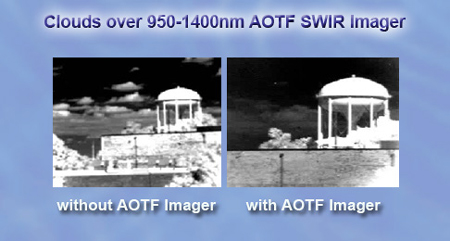
Brimrose is supplying an advanced SWIR AOTF (Short Wave Infrared Acousto-Optic Tunable Filter) hyperspectral imager to provide the Warfighter with “special eyes” to find and locate these advanced TTL (Tagging, Tracking & Locating) taggants which are not observable by commonly used 3G night vision goggles, which are globally available.
The SWIR AOTF hyperspectral imagers let the soldier in the field identify optical taggants at a highly specific wavelength which is outside of the commonly viewed IR frequencies. When the taggant activates or fluoresces, the soldier can track friendly troop and material movements.
The soldier also has a Brimrose covert source invisible to the naked eye that he can track and locate which provides critical information about enemy troop and vehicle movement, weaponry, contraband, as well as being useful for other purposes. This source is also beyond the range of 3G night goggles.
Te new taggants are visible only to US forces again let the U.S. Warfighter own the night and day in terms of being able to see and process critical information beyond what the human eye can see even with the help of 3rd generation night vision goggles.
The technology offered by Brimrose employs specially designed taggants triggered Remotely to illuminate (flash) in a very narrow band invisible to conventional I2 imagers or FLIRs. They are visible only to S wI r imaging systems, available only to a select number of government approved users. Photo: Brimrose
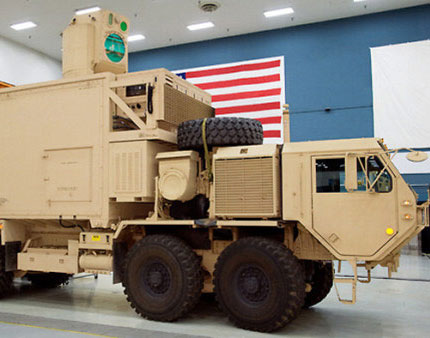
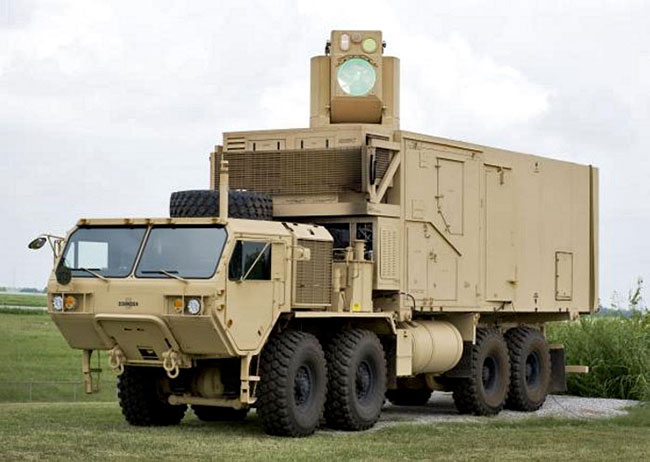
The High Energy Laser – tactical Demonstrator (HEL TD) is one of several high power, directed energy weapon programs developed by Boeing. Photo: Boeing
Israel’s defense electronics company RADA Electronic Industries announced last week that its Tactical Multi-Mission Hemispheric Radar (MHR) was selected by Boeing for evaluation with Boeing’s Future Directed Energy Tactical Systems. Field testing of the MHR, which was recently delivered to Boeing, will begin in the near future.
Boeing is developing a number of high energy laser weapon systems demonstrators, for use in tactical applications. Among the applications demonstrated with these technology demonstrators are counter Rocket, Mortar ad missile applications, and counter UAV uses. Some of the programs are developed under the US Army demonstration programs, others are funded privately by Boeing. Among these are the High Energy Laser Technology Demonstrator (HEL TD), funded by the U.S. Army; the Free Electron Laser and the Mk 38 Tactical Laser System, commissioned by the U.S. Navy; and the Tactical Relay Mirror System, being developed for the Air Force and the Office of the Secretary of Defense/Director of Defense Research and Engineering.
The Directed Energy Systems division of Boeing Strategic Missiles and Defense Systems is privately funding the development of an Acquisition Tracking and Pointing (ATP) System, designed to handle low-to-medium power laser systems. According to Boeing, ATP is optimized for homeland security and force protection. Supporting the currently deployed Avenger platform, the laser system can provide options for lethal and non-lethal weapons to counter both air and ground threats.
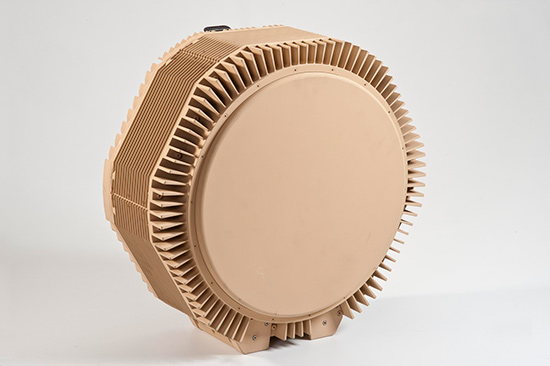
RADA MHR Radar. Photo: RADA
RADA’s Tactical Multi-Mission Hemispheric Radar provides volume surveillance and detection of multiple threat types, including UAVs, mortars, and rockets. The tests, to be carried out by Boeing, will evaluate the radar’s operability with the ATP system.
The MHR – an S-Band, Software-Defined, Pulse-Doppler, AESA radar – has sophisticated beam forming capabilities and advanced signal processing, provides multiple missions on each radar platform, and offers unprecedented performance-to-price ratio. It is compact and mobile, delivering ideal organic, tactical surveillance solutions for force and border protection applications such as C-RAM, C-UAS, GMTI, air surveillance, and more.
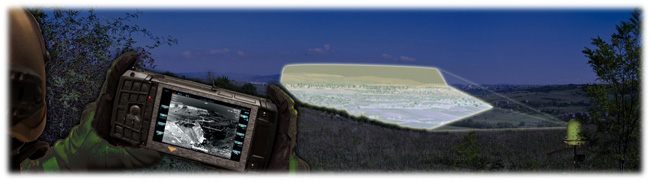
GTAS system at AUSA 2013. Photo: Tamir Eshel, Defense-Update
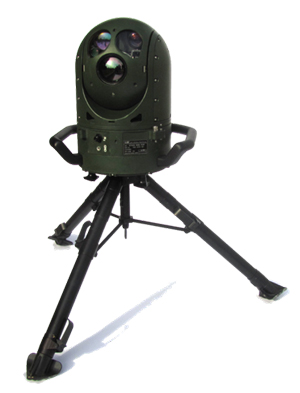
Photo: IAI
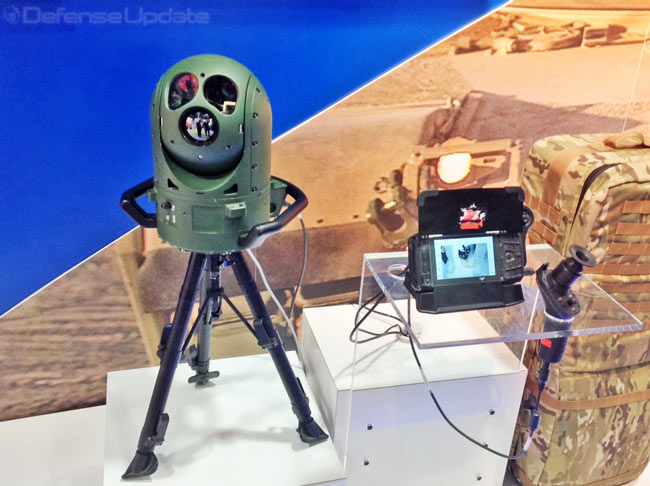
Israel Aerospace Industries’ (IAI) has recently delivered its Ground Target Acquisition System (GTAS) to a NATO country’s Artillery Forward Observer (FO) units. GTAS, developed by IAI’s Tamam Division, is based on the company’s field-proven MiniPOP, integrated with a rugged lightweight tablet, a hand-held display and control, power packs, tripod and special backpack. The total system’s weight is 14 Kg.
GTAS sensors include a FLIR, Day TV, LRF (Laser Range Finder) and optional Laser Pointer. The sensors are bore-sighted and packed in a hermetically sealed closure. The system features remote control operation, thus enabling the operator to control the system from a distant and secure location. The system’s capabilities include accurate target geolocation, automatic target tracking, versatile map capabilities, target database, media recording and playback, and connectivity to external C4I systems.
The system can be used on the ground or on a vehicle. It is carried and operated by a single soldier and can quickly be deployed without the need for calibration and fine leveling.
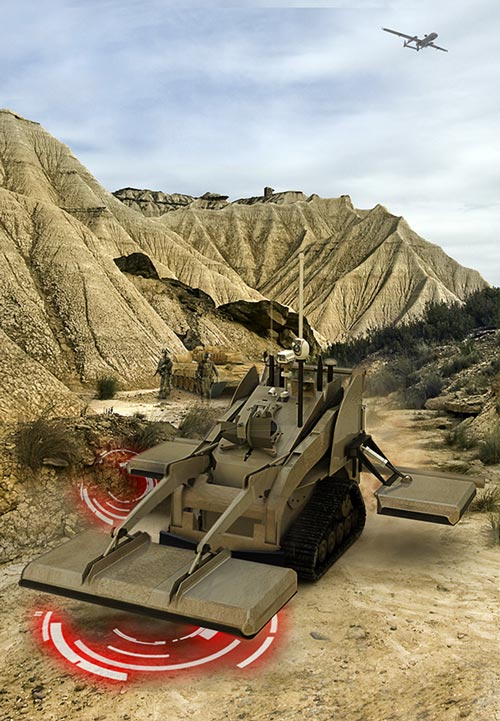
Israel Aerospace Industries’ (IAI) Ramta’s Division is developing an unmanned ground penetrating radar sensor designed to detect deep buried and surface-laid mines and Improvised Explosive Devices (IEDs). The system designated Mines and IED Detection System (MIDS) has completed the last phase of engineering testing and have begun building a technology demonstrator. The demonstrator is slated to be ready for field testing by the end of 2014.
Image: IAI
An onboard IAI-manufactured electro-optic payload with day/night cameras will provide remote operators with situational awareness and enable visual surveillance from a safe distance. On-board navigation systems allow the vehicle to travel along a precise series of preprogrammed or operator designated waypoints and record and transmit the exact location of discovered threats.
MIDS will carry a remotely-operated weapon system slaved to the electro-optic payload for self-defense against enemy combatants or for detonating threats on the operator’s command. The system will also be equipped with a small dozer blade able to clear obstructions, and a lane-painting/marking system for designating both a safe path for following vehicles/troops and for outlining the location of discovered threats.
Reducing the size, weight and power (SWaP) requirements of wearable electronics means a lot for the dismounted warfighter – both leaders and riflemen. Elbit Systems, the prime contractor for the Israel Defense Forces ‘digital army program’ (DAP) also known as Zayad has developed and deployed such systems called ‘Dominator’, in support of the dismounted commanders. Similar systems have also been exported to several armed forces, among them the Australian Army.
Over the years Dominator has also shrinked in size, into a smaller, lighter and leaner machine, comprising the PDU wearable computer, weighting merely 450 grams, an 8 inch touch-screen display used primarily for planning and debriefing, and an eyepiece tailored for combat operations. To streamline with DAP, The PDU runs a dedicated networking middleware called ‘Tiger’, which streamlines and synchronizes all data transfer to match the user’s permissions, based on classification, hierarchical, geographical and organizational lineage. The PDU runs voice, data, video and communications interfaces supporting all peripheral equipment, thus saving significant weight in previously redundant functions individually supported in legacy equipment.
The next evolutionary step for Dominator is an even lighter and leaner gear that weighs only 2.5 kilograms, known as ‘Dominator Light Warrior’ (DLW), was announced a year ago but was unveiled in public at DSEI and AUSA 2013 this year. Adhering to the modern smartphone concept, Elbit Systems’ new ruggedized computer running an Android operating system is called ‘Raptor’. It has a 4.3 inch touch screen, Android operating system built-in GPS, digital compass, moving map and a standard set of, fitted with a library of built-in services and apps that can be downloaded from the network. The Raptor supports networked and offline operating modes, as it establishes ad-hoc connectivity over wireless, or links over secure data networking, via the warfighetr’s radio set, where it can synchronize specific files among team members (sending order sets, receiving reports), as it physically links to the radio, when the Raptor is docked into the wearer’s webbing.
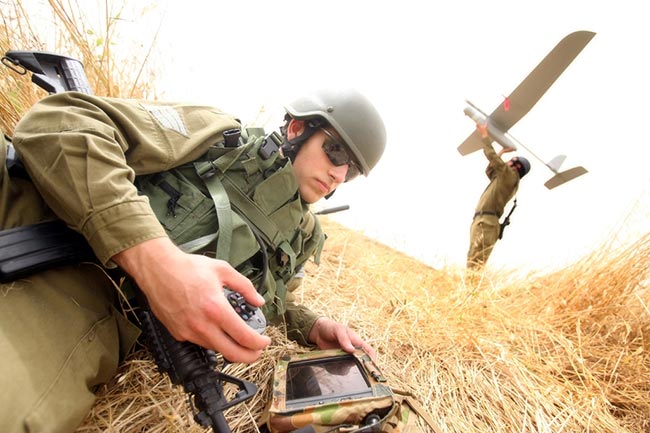
Elbit Systems demonstrated how the Skylark 1LE, a small, silent, tactical mini-unmanned aircraft systems (Mini-UAS) can be operated with standard ‘Dominator’ wearable command and control, significantly reducing the warfighter carried load, relieving forward units from the need to deploy, control and retrieve UAS and empower special operations teams with persistent, ‘semi-organic’ ISR support.
Following changes in the scale of the Air Force’s missions and responsibilities, the position of Chief of the Air Group will be divided by two brigadier generals and a new officer will be appointed to oversee coordination with the Ground Forces. These represent the most significant structural change in the Air Force has undergone since the Yom Kippur War.
The changes were required in response to the changing nature of the threats with which the IDF will contend in the coming years, as they enable the Israel Air Force to better respond to the shifting geopolitical climate in the Middle East and to the changing nature of combat. Under these changes, the Chief of IAF Air Group position will be split into two positions – Chief of Aerial Operations and Chief of the Air Group, which will deal with instruction and training.
The role of Chief of Aerial Operations will be filled by Brigadier General Tomer Bar, the current commander of the Tel Nof Airbase. The current commander of the Hatzerim Airbase, Brigadier General Tal Kalman, will be appointed as Chief of the Air Group.
The Operations Division will now come under the command of the Chief of Aerial Operations and will consist of three colonels who will oversee all operations divided into the following categories: strike operations; defensive operations (including most of the active air and missile-defense systems); and joint operations with the IDF Ground Forces.
The Air Intelligence Group will also be augmented by a new operations division which will oversee effective coordination between intelligence and operations in the Air Force.
The operations staff of the Israel Air Force has not undergone organizational restructuring on this scale for the past forty years. The historic change represents more than just an expansion of positions, it reflects the wider growing expectations and responsibilities borne by the Air Force in the current age of regional uncertainty.
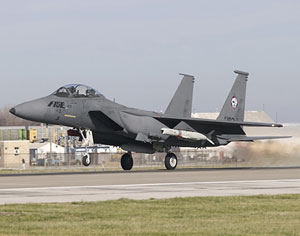
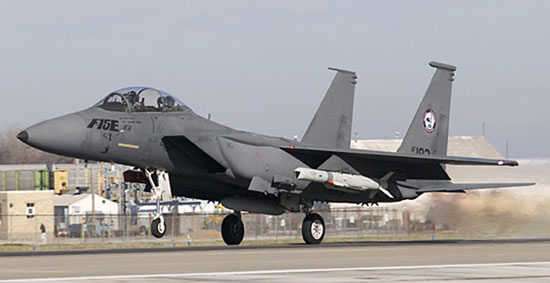
SLAM-ER long-range anti-ship / air-to-surface missiles carried on the F-15E variant slated for the Korean F-15K
In another mega weapons sales Washington is equipping Saudi Arabia and the UAE with nearly 10,000 strike weapons – the JSOW-C standoff-weapon, air-launched Harpoon anti-ship missiles, Standoff Land Attack Missiles-Expanded Response’ (SLAM-ER) – a land-attack variant of the Harpoon and and Small Diameter Bombs.
Saudi Arabia is seeking to acquire new strike weapons from the USA, to equip the fleet of new and modernized F-16SA strike fighters. According to notification to congress by the Defense Security Cooperation Agency, the total cost of missiles and associated equipment, parts, training and logistical support could sum up to US$6.8 billion. In December 2011 Saudi Arabia signed a letter of offer and acceptance (LOA) to purchase 84 new and 70 refurbished F-15SA multi-role fighter aircraft and associated weapons. The weapons included in this request are additional to that order. An additional request at a cost of four billion US$ was announced in parallel to the Saudi. This second request came from the United Arab Emirate, pertaining to armament acquisition for its F-16 Block 60 fighters.
According to the agency, the Government of Saudi Arabia has requested 650 AGM-84H electro-optically guided Standoff Land Attack Missile-Expanded Response (SLAM-ER), 973 AGM-154C Joint Stand Off Weapons (JSOW) and and 1000 GBU-39/B Small Diameter Bombs (SDB) GPS guided weapons and 400 AGM-84L Harpoon Block II anti-ship missiles . The Saudi Air Force will also get 60 AWW-13 Data Link pods to support the SLAM-ER with ‘man in the loop’ assisting the electro-optical guidance. To support weapon qualification and the acquisition will also include 40 CATM-84H Captive Air Training Missiles (CATM), 20 ATM-84H SLAM-ER Telemetry Missiles, 4 Dummy Air Training Missiles, 10 JSOW CATMs, 40 Harpoon CATMs, 20 ATM-84L Harpoon Exercise Missiles, 36 SDB Captive Flight and Load Build trainers.
To enhance their F-16 Block 60 Desert Falcons, the Government of the United Arab Emirates has requested up to 5,000 GBU-39/B Small Diameter Bombs (SDB) (with BRU-61 carriage systems), 1,200 AGM-154C Joint StandOff Weapon (JSOW) and 300 AGM-84H Standoff Land Attack Missiles-Expanded Response (SLAM-ER), expanding the fighters’ air-to-surface and maritime strike capability. The request also includes 30 AWW-13 Data Link pods. To facilitate the integration of SDB on the Block 60 the UAE will add eight SDB Guided Test Vehicles and 16 SDB Captive Flight vehicles for flight testing verification. SImilar to the Saudi program, the UAE will also receive the necessary hardware to train and support those systems.
The prime contractors associated with those programs are Boeing (GBU-39(B), AGM-84H and AGM-84L) and Raytheon (AGM-154, AWW-13). The two companies also shared the majority of multi-billion orders for the F-15SA and their integral (air/air and air/ground) weapons.
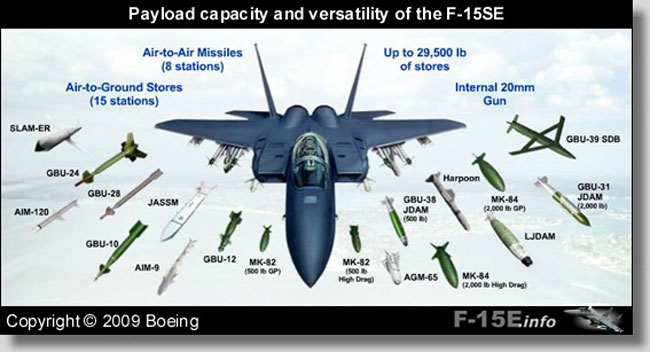
The array of weapons payload carried by the F-15SE – the Saudi F-15SA variant is based on the SE configuration. Photo: Boeing
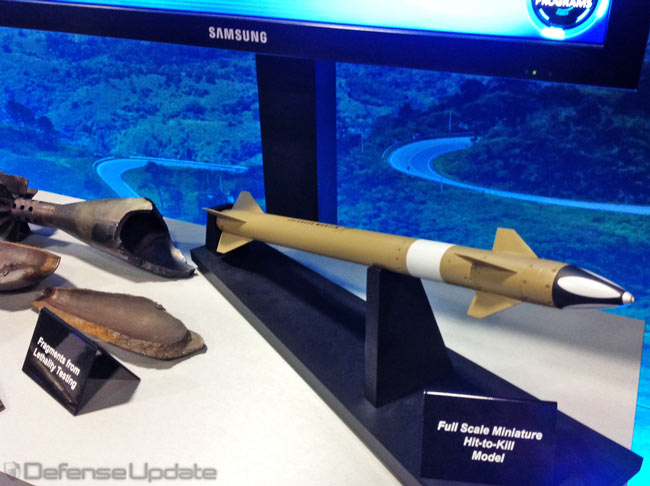
At less than 1 meter long, less than 50 millimeters in diameter and less than 3 kilograms mass at launch, the MHTK is extremely compact and very agile in flight. Photo: Lockheed martin
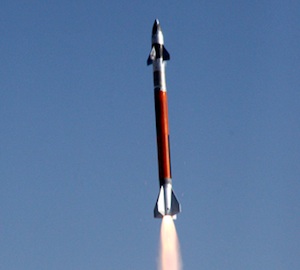
Lockheed Martin EAPS-ID missile test, 26 May 2012. Photo: Lockheed Martin
Missile maneuvering at high speed require control surfaces built to meet the extremely close geometric tolerances. Even slight deviations from design specifications can add turbulence that affects speed and trajectory, especially at supersonic speed. Even small imperfections would add turbulence that affects speed and trajectory. Manufacturers are meeting such tolerances with CNC Machining, processing each part through costly and labor intensive, inspections and measurement of each and every part.
Developing an affordable hit-to-kill weapon to intercept rockets, mortar bombs and missiles, Lockheed Martin was searching for ways to reduce each missile cost by implementing advanced manufacturing technology. Working in collaboration with Liquidmetal, the team came up with a solution tailored for the EAPS, producing the missile’s canard fins using Liquidmetal’s unique metal injection molding (MIM) technique. According to Liquidmetal, such missile control surfaces can be manufactured at a third of the cost of CNC manufacturing, and at volume prices comparable to those of conventional metal injection molding, a method unsuitable for this application.
Produced through the innovative molding process, the production cost of Liquidmetal made canard is reduced, thus affecting the cost of each round. Moreover, parts made of Liquidmetal have greater strength to weight than steel or titanium. “Lockheed Martin has been an ideal development partner for this breakthrough application for Liquidmetal Technologies, creating a high precision, high performance part at a lower cost,” said Dr. Bruce Bromage, EVP of Business Development with Liquidmetal Technologies.
Through the manufacturing process each fin is formed in a single step, injected and released from a mold where each part is precisely the same as each and every part made of the same mold. For a supersonic missile, it is critical that the top and bottom surfaces of the part be precisely symmetrical in terms of shape and weight. Liquidmetal allow typically shrinks less than 0.2%, allowing tolerances within ±0.0005” to be achieved.
Other military applications of Liquidmetal alloys include long-rod penetrators for armor-piercing munitions and conical liners for shaped charges.
A French E-2C Hawkeye lands on the Charles de Gaule during final training exercise held on board the carrier yesterday. Phoro: EMA / Marine nationale
The French Navy will improve its interoperability with the US Navy following upgrading of Identification Friend or Foe (IFF) systems on its fleet of three E-2C Hawkeye Airborne Early Warning & Control aircraft. The new system will improve commonality and interoperability with Northrop Grumman E-2D Advanced Hawkeye aircraft currently being fielded with the US Navy. The U.S. Navy awarded a $34.5 million contract to Northrop Grumman, to implement those modifications. The process will include the installation of the BAE Systems AN/APX-122A IFF Mode 5/Mode S Interrogators and AN/APX-123 IFF Mode 5/Mode S Transponders. These IFF systems enable warfighters to distinguish between friendly forces and enemies.
The French Navy has been operating the E-2C Hawkeye since 2000 when it stood up the first French E-2 Hawkeye squadron, the Flotille 4F, in Lorient. France is the only country other than the United States to operate its E-2 Hawkeyes from an aircraft carrier. This unique bond has led to multiple interoperability exercises where the two navies have operated Hawkeyes from each other’s carrier flight decks. The first of these took place in May 2001 when a U.S. Navy E-2 Hawkeye flew from the deck of the USS Enterprise to the deck of the French carrier Charles de Gaulle.
This shared operational experience has proved invaluable to ensuring that the multimission E-2 Hawkeye platform remains relevant to the warfighter, no matter where missions take them. Through collaborative efforts, each new generation of the Hawkeye has become more sophisticated, taking advantage of new technology developments to optimize the capability and reliability of the E-2 platform.
A French E-2C Hawkeye lands on the flight deck of aircraft carrier USS Dwight D. Eisenhower (CVN 69) during a coalition training exercise July 18, 2009, in the Atlantic Ocean. Photo: US Navy
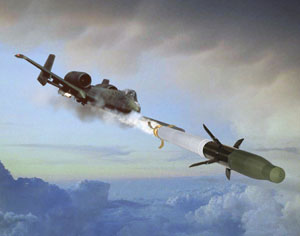
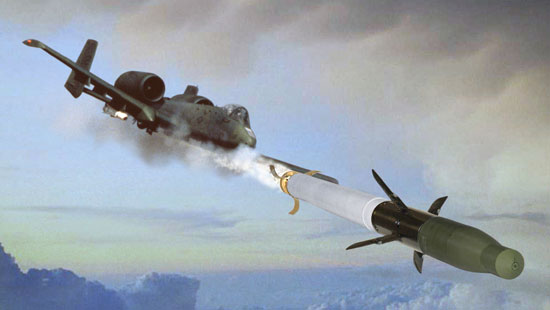
In April 2013 an Air Force A-10 Warthog launched APKWS FW guided rockets from altitudes of 10,000-15,000 ft at an airspeed of 348 knots. Image: BAE Systems
The U.S. Central Command (CENTCOM) confirmed the success of recent tests conducted with a fixed wing variant of the Advanced Precision Kill Weapons System (APKWS) laser-guided rocket. The tests were performed by the Direct & Time Sensitive Strike Weapons Program Office (PMA-242), demonstrating robust design of the and the completion of the Joint Capability Technology Demonstration (JCTD) with the U.S. Air Force, U.S. Navy, and U.S. Marine Corps. The conclusion of the JCTD is the next step toward evaluating the addition the Fixed Wing variant to the current APKWS Program of Record.
“The variety of tests helped us evaluate weapons systems build up, loading and delivery, and later, illustrate that the weapon would perform, as designed, to hit stationary and moving targets,” Bill Hammersley, the JCTD technical manager, said. “The success of these tests means that an aircraft pilot will be able to carry seven guided rockets in one launcher that weigh less than a single 500 lb. bomb, allowing for more shots in a single sortie,” added Hammersley.
“Fixed wing APKWS uses a different guidance control system to compensate for the higher altitude and longer range employments of the weapon,” Cmdr. Alex Dutko, Airborne Rockets /Pyrotechnics deputy program manager for PMA-242 explained. “The deployment mechanism had to be redesigned in order to overcome the higher aerodynamic forces of the fixed wing environment.” Guidance section tests not only demonstrated design robustness but also helped reduce risk in subsequent live-fire tests, Dutko continued. Rocket testing included ground launches and two different aerial launches, performance and MUA shots. Flight launches were tested from the A-10 Thunderbolt II, AV-8B Harrier II, and F-16 Fighting Falcon.
“These latest test results underscore the power and versatility of the APKWS technology and provide further proof that the system can be launched off of any platform capable of shooting an unguided 2.75-inch rocket,” said David Harrold, director of precision guidance solutions at BAE Systems. “Since its introduction on Marine Corps helicopters in combat operations, the APKWS rocket has proven its ability to defeat a broad range of targets. This test is an important step in bringing that same capability to fixed-wing aviators.”
During the tests held since the spring of 2013 at the Eglin Air Force Base in Florida, APKWS rockets were fired from various aircraft at different altitudes. In April BAE reported that an Air Force A-10 Warthog launched the rockets at altitudes of approximately 10,000 and 15,000 feet, at airspeeds up to 348 knots. During this test the first controlled test-vehicle shot performed a series of pre-planned maneuvers to collect in-flight data. The second shot, into a 70-knot headwind, hit the target board well within the required 2 meters of the laser spot. The shot was laser-designated from the ground with a special operations forces marker.
To date, the APKWS rocket has been qualified on the AH-1W and UH-1Y helicopters, demonstrated on the Bell 407GT, and has been flown off the OH-58D Kiowa Warrior, the Beechcraft AT-6B, AV-8B and A-10. It is expected to be similarly qualified for use on several other rotary- and fixed-wing aircraft including the AH-64D/E Apache, the armed MH-60R/S, AH-6, AV-8B, F-16, and F/A-18. BAE Systems is the prime contractor for the APKWS rocket, the only U.S. program of record delivering precision guidance for 2.75-inch rockets.
APKWS Also Cleared for AH-64D Apache
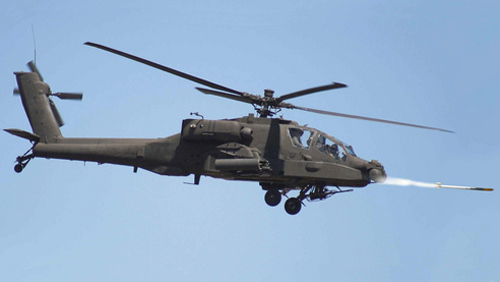
In recent weeks APKWS II has also been fired for the first time from a US Army AH-64D Apache helicopter, as part of a flight test conducted under a company initiative to obtain an Airworthiness Qualification on the helicopter, supporting future international sales. According to BAE Systems, the APKWS rocket required only eight test shots to meet the full airworthiness requirements, based on the weapon’s maturity being the U.S. military’s only guided 2.75-inch (70 millimeter) rocket program of record. During recent testing, the U.S. Army shot eight APKWS rockets from an AH-64D Apache at extreme flight configurations with airspeeds up to 150 knots and at distances of up to five kilometers from the target. The launch altitudes ranged from 300 feet to 1500 feet above ground level. Highlighting the ease of integration, which can be critical to successful deployment and weapon adoption, the APKWS rocket was installed on the Apache without modification to the platform or software.
Apache AH-64D Firing the APKWS II guided rocket. Photo: BAE Systems
Lockheed Martin Skunk Works® and XTEND have achieved a major milestone in JADC2 by integrating the XOS operating system with the MDCX™ autonomy platform. This technical breakthrough enables a single operator to simultaneously command multiple drone classes, eliminating the friction of mission handoffs. From "marsupial" drone deployments to operating in GPS-denied environments, explore how this collaboration is abbreviating the data-to-decision timeline and redefining autonomous mission execution.
As traditional defense primes face mounting competition from agile “neoprimes” such as Anduril, Palantir and Helsing, the balance of innovation is shifting toward software-defined warfare and scalable, dual-use technologies, while global industry consolidation—marked by Boeing’s integration of Spirit AeroSystems and other strategic mergers—signals an intensified race to secure control over the defense technology value chain. Our Defense-Tech weekly report highlights these trends.
In early October 2025, a coordinated wave of unmanned aerial system (UAS) incursions—widely attributed to Russia—targeted critical infrastructure across at least ten European nations. The unprecedented campaign exposed the fragility of Europe’s air defenses...
Executive Summary
The past week (September 18-25, 2025) represents an inflection point where strategic defense concepts have transitioned from doctrine to tangible reality. An analysis of global events reveals four primary, interconnected trends shaping an...
At the 2025 Air, Space & Cyber Conference, U.S. Air Force and Space Force leaders unveiled major updates on next-generation fighters, bombers, unmanned systems, and space initiatives, highlighting both rapid innovation and critical readiness challenges as the services race to outpace global competitors. A short version is available here, with a more detailed version for subscribers.
The Taipei Aerospace & Defense Technology Exhibition (TADTE) 2025 crystallized around four dominant strategic themes that collectively illustrate Taiwan's comprehensive approach to defense modernization amid escalating regional tensions. Based on a detailed report by Pleronix (available upon request). Includes a Podcast discussion on TADTE 2025's highlighting Taiwan's four strategic themes beyond the post's coverage.
Israel’s Iron Beam 450 high-power laser system has completed final testing, marking a major leap in air defense. Developed by Rafael, it offers precise, cost-effective interception of rockets, UAVs, and mortars, and is set for IDF deployment by 2025.