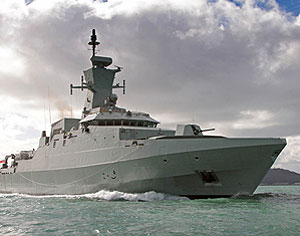
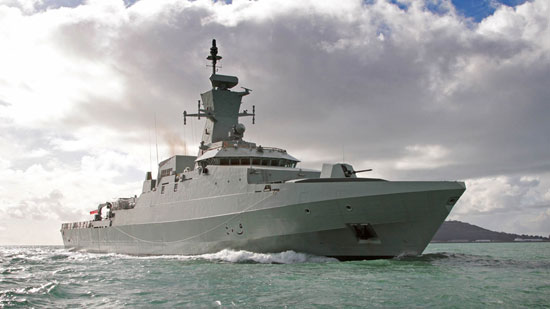
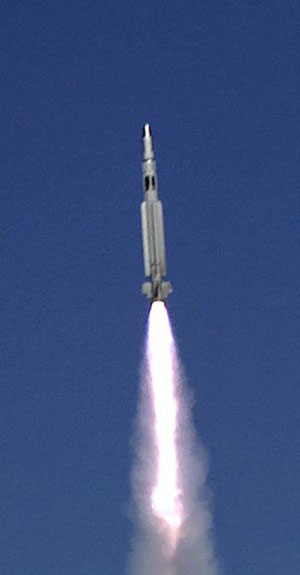
Royal Navy of Oman (RNO) new Khareef Class corvette Al Shamikh seen during its sea trials on the summer of 2013. Photo: BAE SystemsVL MICA missile launched on a test firing. The recent test launch from the RNO Al Shamikh was the first operational test launch for the new corvette. Photo: MBDA by Michel Hans
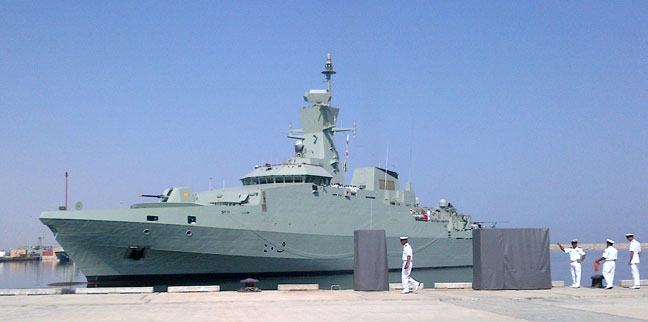
The Royal Navy of Oman (RNO) has recently accepted a new corvette – Al Shamikh – the lead ship of Khareef class. The 99 meter corvette has a displacement of 2,660 ton. It was constructed by BAE Systems at Portsmouth, UK and is designated ‘Ocean Patrol Vessel’ (OPV). Al Shamikh was launched in 2009 and accepted by the Royal Oman Navy in the UK June this year. Work at Portsmouth continues on the other two vessels of the class – Al Rahmani and Al Rasikh.
As part of the sea trials that followed the vessel conducted an operational naval firing of its VL MICA anti-air missile. Al Shamikh is the first deployment of the MICA VL Marine (MICA VL M) missile system, developed by MBDA. The live firing took place at the French MoD’s test range off the coast of the Ile du Levant in the Mediterranean Sea under the supervision and control of the French DGA – EM (Direction Générale de l’Armement – Essais de Missiles).
According to MBDA the VL MICA missile successfully intercepted and destroyed at very low altitude the target which was simulating a sea skimming anti-ship missile. “The success of this firing is evidence of the operational capability of the RNO with its new vessel and weapon system.” the announcement added.
VL MICA is the latest generation of air defence systems and deploys the MICA missile vertically launched from a canister which serves for both storage and launch purposes. In its naval version, VL MICA provides both area air defence as well as self-defence of the host vessel. MICA fire-and-forget missiles can be equipped with either IR or radar seekers and are capable of dealing with the full range of airborne threats as well as saturating attacks.
Worldwide to date, 12 armed forces have selected the MICA missile.
The new Omani corvette Al Shamikh arrives at Royal Navy of Oman (RNO) Said bin Sultan Naval Base. Photo: BAE Systems
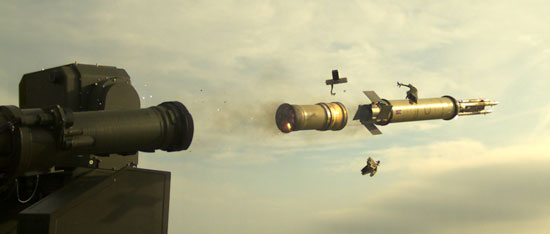
At the top speed the Starstreak reaches a speed of Mach 3. After the initial acceleration the carrier missile seen here separates into three projectiles, maneuvering separately and synchronously to strike the target in different points to maximize the damage. Photo: ThalesThe UK Ministry of Defense has contracted Thales UK for a further 200 STARStreak short-range surface-to-air missiles. Since its fielding in 1995 the Starstreak missile has been a key component of the UK’s Ground Based Air Defence (GBAD) capability. The order has been placed to increase STARStreak stocks as part of the Government’s transformation agenda for the Armed Forces, Force 2020, to equip both the Regular and Reserve forces with the STARStreak systems. Thales said it is constantly improving its systems in response to evolving military requirements.
STARStreak is the world’s fastest very-short-range air defence (VSHORAD) missile. Its peak velocity of over Mach 3 means it can cover a kilometre in under a second. Targeting and full control of the three dart missiles is maintained by the operator via the use of a unique laser beam riding guidance system throughout the entire engagement, thus increasing positive target identification and significantly reducing the risk of fratricide.
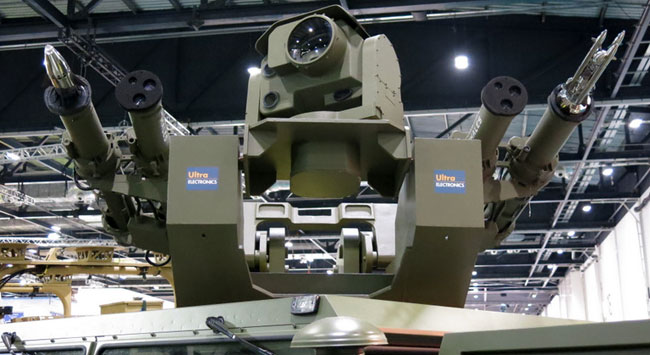
The system can be deployed from a variety of vehicle platforms such as RAPIDRanger – a highly mobile lightweight platform with the options of both Early Warning, Slew to Cue and Command and Control interfaces – or from the tripod-based Lightweight Multiple Launcher (LML) that is easy to set up and which can provide a rapid deployment capability.
Cost of ownership is low as the missiles require no maintenance through life. They have a shelf life of 15 years and a proven record of high reliability. The missile complies with up-to-date Insensitive Munitions requirements.
The new Rapidranger comprises multiple weapon launchers, electro-optical observation and guidance system. The system shown here at DSEI 2013 mounted LMM direct attack laser guided weapon and Starstreak laser guided VSHORAD weapon.
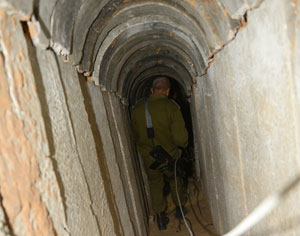
A tunnel dug by Palestinians from Gaza to Israel was uncovered last week by Israel's security forces. The tunnel, about 1.7 kilometer long, at a depth of 15 meters below ground level, was strengthened by concrete modules to protect it from collapsing. These tunnels are regularly used to smuggle goods and weapons from Sinai into Gaza, but where tunnels are directed at Israel their purpose is to abduct soldiers or citizens or launch attacks at military bases or civilian villages. Photo: IDF
A tunnel dug by Palestinians from Gaza to Israel was uncovered last week by Israel’s security forces. The tunnel, about 1.7 kilometer long, at a depth of 15 meters below ground level, was strengthened by concrete modules to protect it from collapsing. These tunnels are regularly used to smuggle goods and weapons from Sinai into Gaza, but where tunnels are directed at Israel their purpose is to abduct soldiers or citizens or launch attacks at military bases or civilian villages. Photo: IDF
On October 7, IDF soldiers discovered the opening of a tunnel built by Gazan terrorists near Israeli civilian communities. The tunnel is approximately 18 meters underground and extends 1.7 kilometers. This is the third such tunnel found along the Gaza-Israel security fence in the past year. Such smuggling tunnels have been used by terrorists in the past to execute attacks against civilians and military personnel.
The tunnel was built with approximately 500 tons of cement and concrete. Hamas and other terror organizations in the strip invest millions of dollars and resources in order to operate a thriving network of tunnels leading into Egypt and Israel. Sufficient evidence suggests that terrorists rely on construction materials transferred By Israel into the Gaza strip as humanitarian aid, in order to build such tunnels.
“Terror Tunnels” were used by the Palestinians in the past to attack Israeli fortifications. Such tunnels were dug under military bases, and filled with explosives to devastate the Israeli protected strongholds in the Gaza strip. In the past these tunnels were relatively short and were designed to facilitate protected access for the terrorists. The new tunnel is much longer and had multiple exit points, enabling terrorists to launch a coordinated attacks by multiple teams. The tunnel could also been planned to assist terrorists in abducting Israeli soldiers or citizens. This method of operation used during the 2006 attack on the military base in Kerem Shalom, where Hamas terrorists killed two Israeli soldiers and abducted Corp. Gilad Shalit. Five years later he was exchanged in return for thousand Arab terrorists and prisoners held in Israel.
Underground attacks via tunnels were used in the attack against the Termit stronghold controlling the Rafah borderline with Egypt. Three soldiers were wounded in the attack that demolished the entire fortified structure. Another attack launched in October 2004 against the Orchan stronghold in the Southern Gaza strip, killed one soldier and wounding five. It was later realized the palestinians used 170 kg of explosives in this attack. In 2006 the IDF destroyed another tunnel dug by the Palestinians under the Karni terminal connecting Gaza and Israel. Karni terminal is Gazan the lifeline, where hundreds of truckloads of supplies are moving daily between Israel and Gaza. In the planned the Palestinian terrorists planned to activate several large explosive charges under the terminal’s administrative buildings. Another explosive tunnel which has been completed and ready for attack was uncovered and destroyed by the IDF and ISA in 2008. In 2012 another tunnel dug under the border was activated by the Palestinians during IDF sweeps on the Palestinian side of the border.
The recent tunnel uncovered on 7 October 2013, is believed to be part of an infrastructure set by the Palestinians, could have been used to infiltrate arms and explosives or smuggling drugs into Israel, (the border with Gaza is constantly monitored, with a sterile zone preventing locals to get near the border fence.)
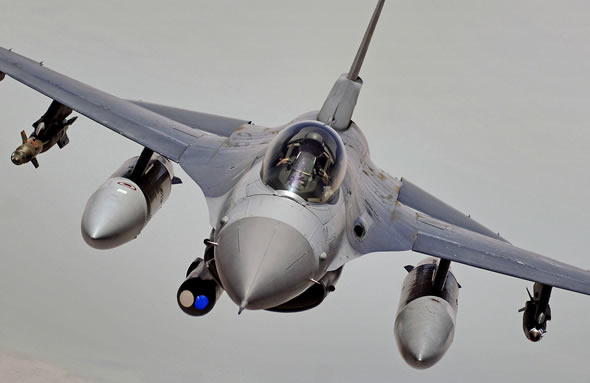
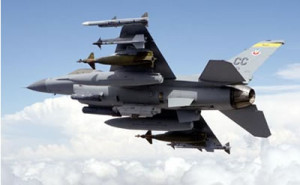
Romania is buying a squadron of F-16s from Portugal. These aircraft will replace its existing MiG-21 Lancer by 2017.Romanian Defense minister Mircea Dusa announced on Thursday October 10, that he had signed a contract with Portugal for the purchase of F-16 fighter aircraft. The first installment of 100 million euro has been paid, an advance from the total amount of 600 million euro. Delivery of the F-16s is expected to begin this fall for the upgrading and modernization process. The first of the refurbished aircraft will reach Romania in 2015 and the full squadron of F-16s will replace the current MIG 21 Lancers by 2017.
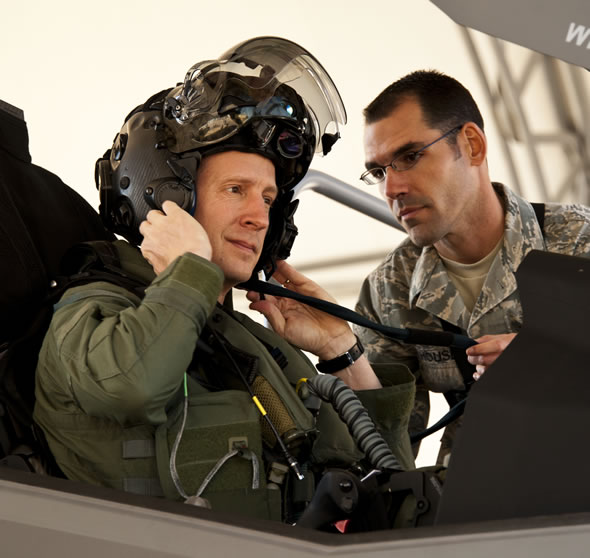
Lt. Col. Eric Smith, the 58th Fighter Squadron director of operations prepares for takeoff on the F-35A first training mission. Photo: USAF
Lt. Col. Eric Smith, the 58th Fighter Squadron director of operations prepares for takeoff on the F-35A first training mission. As all other F-35 pilots Smith is wearing the unique display helmet developed specifically for the F-35. Photo: USAF
The F-35 Joint Program Office (JPO) today informed Lockheed Martin that it has decided to halt the development of the alternate F-35 helmet and focus exclusively on maturing the Vision Systems (VSI) 2nd Generation helmet currently used in training and testing. As a result, the program will recoup approximately $45 million in funds it had originally allocated for the development of the alternate helmet. Beginning with aircraft in Low Rate Initial Production (LRIP) lot 7, the program will introduce the improvements recommended by the technical review – this 3 Gen helmet that features an improved night vision camera, new liquid crystal displays, automated alignment and software enhancements.
In 2011, program and industry officials acknowledged that there were technical issues facing the principle helmet system. Among these issues were jittering in some of the images displayed to the pilot, particularly in night condition. To ensure viable combat capability was available when needed, the program began a dual-path development plan as a risk-management strategy in the event maturity issues facing the Gen 2 helmet could not be resolved. BAE Systems began developing the alternate helmet in September 2011.
“The government’s decision to proceed exclusively with the principle helmet is indicative of their confidence in the helmet’s performance and the successful resolution of previously identified technical challenges,” said Lorraine Martin, Lockheed Martin Executive Vice President and General Manager of the F-35 Lightning II Program. “To date, more than 100 F-35 pilots have flown more than 6,000 flights and 10,000 hours with the helmet, and their feedback has been very positive. Lockheed Martin and its suppliers will continue to focus on developing and delivering the helmet’s unprecedented capabilities to the warfighter in support of the services’ declaration of Initial Operating Capability.”
The F-35’s Helmet Mounted Display Systems (HMDS) provide pilots with unprecedented situational awareness; all the information pilots need to complete their missions – through all weather, day or night – is projected on the helmet’s visor. Additionally, the F-35’s Distributed Aperture System (DAS) streams real-time imagery from six infrared cameras mounted around the aircraft to the helmet, allowing pilots to “look through” the airframe.
The Gen 2 helmet that F-35 pilots currently use, which will meet the needs for the U.S. Marine Corps to declare the F-35B Initial Operational Capability in July 2015. The follow-on Gen 3 helmet will include an improved night vision camera, new liquid-crystal displays, automated alignment and software improvements. This new helmet will be introduced to the fleet in low rate initial production Lot 7 in 2016 – to meet program requirements to complete test and development in 2017.
The helmet developer VSI is a joint venture established between Rockwell Collins and Elbit Systems of America. VSI is also the OEM providing Boeing with the JHMCS helmet display sight, operated on most USAF combat aircraft.
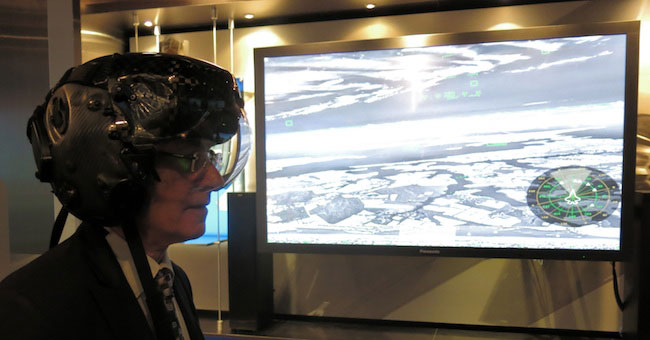
The F-35 Gen 2 helmet display provides the main flight display for the pilot. Defense-Update had an opportunity to try the helmet during a recent visit to Lockheed Martin. The system’s ability to ‘see through’ the airplane over 360 degrees is depicted on the screen.
Palestinians participating in demonstrations during the 2000 intifada. Popular support to the ‘armed struggle has waned, according to recent studies.
Current discourse on Palestinian and Lebanese social networks indicates that a surprising trend has emerged over the past six months with potential momentous consequences for Israel’s security concept and the strategic challenges before it.
According to INSS analyst Orit Perlov, the violent resistance (muqawama) against Israel by Hizbollah and Hamas has lost its legitimacy in Lebanese civil society and Palestinian society, respectively. Hizbollah and Hamas were founded as Islamic resistance movements based on the principle of violent struggle as both a vision and a means of freeing Arab lands from the “Zionist occupation.” However, since the onset of the “Arab Spring” these two movements have lost much of their political power, the support of Arab public opinion, and most important, their domestic support.
Current discourse on Palestinian and Lebanese social networks indicates that a surprising trend has emerged over the past six months with potential momentous consequences for Israel’s security concept and the strategic challenges before it. The violent resistance (muqawama) against Israel by Hizbollah and Hamas has lost its legitimacy in Lebanese civil society and Palestinian society, respectively.
The two movements were founded, Hizbollah in the early 1980s and Hamas in the late 1980s, as Islamic resistance movements based on the principle of violent struggle as both a vision and a means of freeing Arab lands from the “Zionist occupation.” The widespread support, sympathy, and admiration they earned over the past 30 years, domestically and in the Arab world, have dissipated. Since the onset of the “Arab Spring” these two movements have lost much of their political power, the support of Arab public opinion, and most important, their domestic support.
One of the most evident results of the “Arab Spring” has been the shift in focus by Arab civil societies from outside to inside – from foreign policy to domestic affairs. Civil society in the Arab world is demanding the redressing of injustices. Nationalism and Islamism have been replaced by a demand for democratization, rights, and freedom.
The Gazan and Lebanese civil societies, which have experienced civil wars and violent struggles against Israel, are not eager for revolutions or the collapse of the political and social structures. Moreover, as reflected in the social media discourse, neither the Palestinians nor the Lebanese believe any longer in violent struggle as a successful and legitimate means of achieving their political, socioeconomic, and national reforms. Trend analysis of the social networks among over one million Palestinians (which represents approximately 35 percent of the Palestinian population) and half a million Lebanese (15 percent of the population) reveals that for the first time in the past 30 years, the “enemy from within” (Hizbollah and Hamas) is regarded as more dangerous than the “from without” (Israel).
Civil society in Lebanon in large, including parts of the Shiite population), now reflects overwhelming opposition to Hizbollah’s policy in Syria and Lebanon. The announcement by US President Obama in late August that the US intended to launch a military strike againsrt Syria exposed the depth of the domestic Lebanese criticism of Hizbollah. Many Lebanese politicians attacked the organization’s policy, and Hizbollah ally Michel Aoun, a member of the March 8 Coalition, announced that if Hizbollah intervened in Syria during an American attack, he would withdraw from – and thereby dissolve – the coalition. Many TV channels mobilized to exert massive public pressure on Hizbollah not to intervene in the Syrian civil war, and many commentators and interviewees publicly opposed any Hizbollah military action against Israel. The public “turned its back on Hizbollah,” and some even tweeted that “Hizbollah is more dangerous to Lebanon than Israel.” Indeed, Israel has become marginal to the domestic Lebanese discourse, with the three main themes of being the Syrian civil war and its effect on Lebanon; the deteriorating security situation and the domestic ethnic Lebanese struggle; and the domestic effect of Hizbollah’s political weakening.
A similar picture applies to Hamas in the Gaza Strip. The wave of revolutions in the Arab world has brought about a change in domestic Palestinian discourse: from a focus on “Israel, the enemy without” to “Hamas, the enemy from within;” from a discussion of a violent nationalistic struggle to a discussion of rights, freedom, and a better standard of living. Internet discourse reveals that for the first time since the establishment of Hamas, a majority of the Gaza population want to overthrow the Hamas regime. This is the first time that Gazan public opinion has indicated that the public regards Hamas’ policy as a greater threat than Israel to their well being.
The collapse of the Muslim Brotherhood in Egypt has accelerated the process, and made it unmistakably clear that the slogan “Islam is the solution” hasn’t achieved economic prosperity either in Egypt or the Gaza Strip. On the contrary; the situation in Gaza is deteriorating. The Egyptian military has launched an unprecedented attack on Hamas in Gaza, from its leadership to tunnels to weapons smuggling and to the terrorist factions jockeying between the Gaza Strip and Sinai. A “buffer zone” between Egypt and the Gaza Strip was created, and public opinion in Egypt has even begun to demand collective punishment of Gaza: no fuel, gas, or food. The border crossing between Gaza and Egypt is almost completely closed (except for special cases), and Egyptian state media (both social networks and the press) have declared that Hamas is a “terrorist entity” and Gazans are “terrorists.” They have even stated that Hamas and Gaza currently constitute a danger to the national security of Sinai and Egypt.
The discourse on the social networks thus points to three conclusions. The first: The Lebanese and Gazan publics no longer believe that the violent struggle is an effective means of realizing their social, economic, and national aspirations. In the dialogue on the social networks, a public demand for a violent struggle against Israel no longer exists. Two, both movements are losing their political power. The slogans used by Hamas and Hizbollah, “Islam is the solution” and “ideology built on violent struggle,” are rapidly losing their legitimacy. Finally, the two movements will have to reform their internal and external policies. Otherwise, they are likely to collapse.
About the writer: Orit Perlov, a social media analyst, follows and analyzes the discourse on the social networks in Arab states. Prior to joining INSS, she served as a political advisor to the Israeli Ambassador at Large based with the informal Israeli mission in the GCC. She is the former co-editor of the Israeli Foreign Ministry website in Arabic.
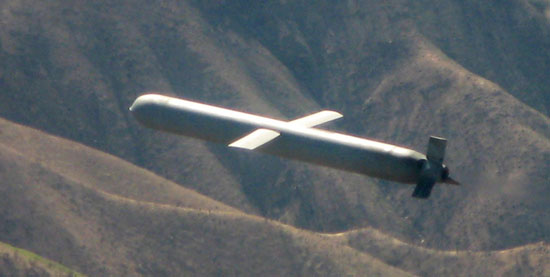
The Tomahawk Block IV missile will be able to engage moving targets by tracking them via a new ESM seeker. Photo: RaytheonA new seeker employing Electronic Support Measures (ESM) was recently tested with the Raytheon Tomahawk Block IV cruise missile, as part of the weapon’s product improvement program. The new seeker will enable the cruise missile to engage moving or relocatable targets, including ships or mobile surface-to-air missile sites, identified by their unique electromagnetic signature. The new seeker can automatically locate and track moving and stationary targets by sensing the electro-magnetic radiation they emit (i.e. radar, communications etc). A major enhancement previously introduced with the Tomahawk Block IV missile includes a two-way satellite data-link that enables a strike controller to redirect the missile in-flight to preprogrammed alternate targets or more critical targets.
Such retargeting capability will be further enhanced with the new seeker with its full spherical coverage. The new multi-mode seeker technology would allow the Navy’s Surface Action Group to fire Tomahawks from sanctuary and defeat mobile threats at long range.
“This new moving target capability would enhance Tomahawk’s already exceptional land attack mode capability by allowing it to engage moving targets on land,” said Roy Donelson, Tomahawk program director for Raytheon Missile Systems. “Raytheon is providing the U.S. Navy with a missile that can evolve its capability”
With a range of approximately 1,000 statute miles, the Tomahawk Block IV missile is a surface- and submarine-launched precision strike stand-off weapon. Tomahawk is designed for long-range precision strike missions against high-value and heavily defended targets. More than 2,000 Tomahawks have been employed in combat. Tomahawk is integrated on all major U.S. surface combatants, as well as U.S. and U.K. sub-surface platforms, including the Los Angeles, Virginia, Ohio, Astute and Trafalgar-class submarines. The seeker’s capability was validated in a realistic high-density environment after seven months of testing in anechoic chambers.
“Tomahawk is an open architecture ‘truck’ capable of integrating payloads and sensors that have high technology readiness levels. We believe this evolution would align with DOD’s vision of increasing capability while maintaining development costs.” Donelson said.
Thales UK yesterday announced that its Watchkeeper Unmanned Air System (UAS) has received a Statement of Type Design Assurance (STDA) from the UK’s Military Aviation Authority (MAA). This statement is a key component of the process that allows the UK’s Ministry of Defence (MOD) to continue towards the initial Release To Service (RTS), as it provides assurance that the air vehicle and its software have reached an acceptable level for design safety and integrity to meet the current stage of the system’s development. Watchkeeper is the first UAS to receive such an STDA from the MAA, and represents a major step forward for the acceptance of UASs in the airspace environment. This underpins military flying globally in appropriate airspace.
“The issue of a Statement of Type Design Assurance from the MAA is a major milestone for the Watchkeeper programme, and a first for a UAS programme in the UK” said Eddie Awang, Vice President of Intelligence, Surveillance & Reconnaissance at Thales UK. The MAA is the independent regulatory authority responsible for all aspects of military air safety, and was formed in 2010 following the recommendations of the Haddon-Cave report.
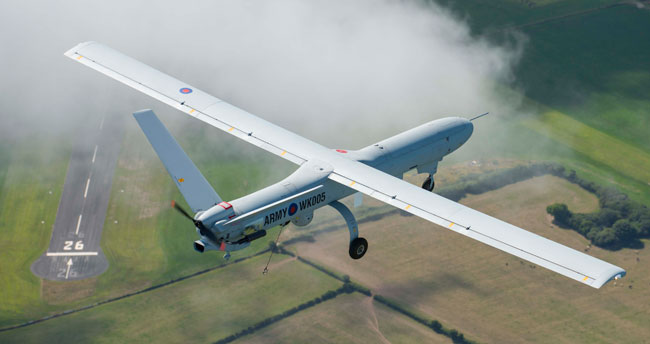
Thales’s Watchkeeper received Statement of Type Design Assurance from the UK Military Aviation Authority. Photo: Richard Seymour via Thales UK
While most of the Watchkeeper systems have already been delivered, the fielding of the system has been delayed due to the limited availability and access to UK segregated airspace reserved for unmanned systems. Other systems have been affected as well – the MQ-9 Reaper Medium Altitude Long Endurance (MALE), Hermes 450 (Tactical UAS) and Desert Hawk (mini UAS) that have faithfully supporting British and coalition forces deployed in Afghanistan are often grounded as they return home, as they cannot fly in national controlled airspace, and are limited to few segregated areas and specific operational procedures.
With the establishment of National Aeronautical Centre (NAC) last month, creating a large airspace in West Wales reserved for unmanned systems, these areas have been widened. This airspace was created through a partnership between West Wales Airport and Newquay Cornwall Airport, enabling UAS to operate in UK civilian airspace, flying over extended range, in operations where drones can fly beyond visual line of sight from their controllers. The center is open to civilian and military contractors and operators.
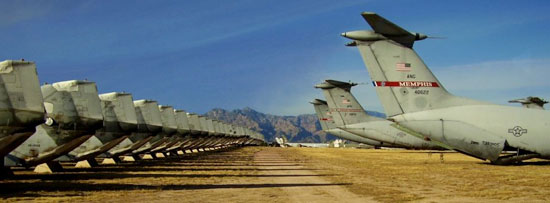
Most of the aircraft stored at the Davis Monthan ‘boneyard’ arrive there after years, even decades of faithful service. Not many arrive here in mint condition…
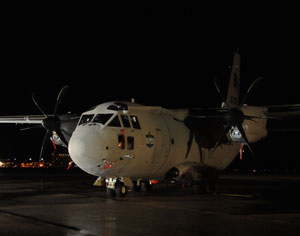
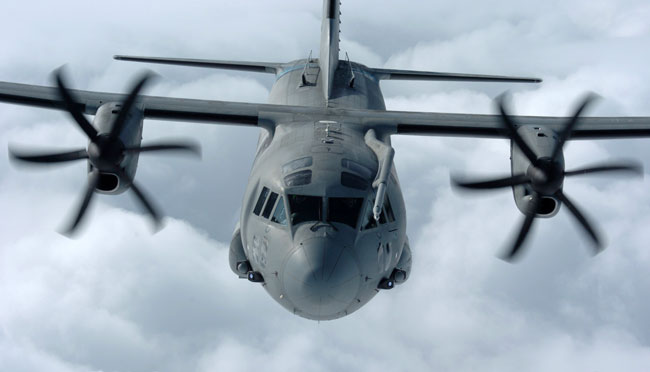
New cargo planes on order for the U.S. Air Force are being delivered straight into storage in the Arizona desert because the military has no use for them, a Dayton Daily News investigation found. A dozen nearly new C-27J Spartans have already been taken out of the US Air National Guard service and shipped to the so-called ‘boneyard’ at Davis-Monthan Air Force Base in Tucson. Five more are expected to be built by April 2014, all of which are headed to the boneyard unless another use for them is found.
The Air Force has spent $567 million on 21 C-27J aircraft since 2007, according to purchasing officials at Wright-Patterson Air Force Base. Sixteen had been delivered by the end of September. The Air Force almost had to buy more of the planes against its will, the newspaper found. A solicitation issued from Wright-Patterson in May sought vendors to build more C-27Js, citing Congressional language requiring the military to spend money budgeted for the planes, despite Pentagon protests.
Congress put the brakes on the expenditure, which was the right thing to do according to government watchers such as Mike O’Hanlon of the Brookings Institute. He said the planned additional purchase would have been “simply wasting precious taxpayer money.”
The military initially wanted the C-27J because it had unique capabilities, such as the ability to take off and land on less developed runways, according to Ethan Rosenkranz, national security analyst at the Project on Government Oversight. But when sequestration hit, the military realized the planes weren’t a necessity, but instead a luxury it couldn’t afford, he said.
Former Air Force Chief of Staff Gen. Norton Schwartz testified before Congress last year that the military wanted to divest its C-27J fleet to come in line with budget cuts. He said the C-130 can do everything currently asked for and costs $213 million to fly over its 25-year lifespan. The C-27J, on the other hand, would cost $308 million per aircraft.
Nevertheless, the C-27Js are still being produced. When asked why the Air Force can’t simply put the brakes on having the other five planes delivered, Air Force spokesman Darryl Mayer responded, “They are too near completion for a termination to be cost effective and other government agencies have requested the aircraft.”
Military officials are working to find another user for the planes. In the meantime they will be kept ‘operational’ at the ‘boneyard’ by the 309th Aerospace Maintenance and Regeneration Group, overseen by Materiel Command at Wright-Patterson. It was established near Tucson after World War II because the region’s low rainfall, humidity and soil minimize deterioration and corrosion. Also, the soil is so hard that no tarmac is needed. The sprawling desert complex currently stores more than 4,400 unused aircraft and 13 aerospace vehicles from all branches of the military and NASA, with a total value of more than $35 billion. “This aerospace fleet provides a unique savings account from which military units throughout the world may withdraw parts and aircraft,” according to the base’s website. “The government earns additional income by selling aircraft to our allies.” “It is anything but just a boneyard or a storage facility,” said Ron Fry, Materiel Command spokesman. “They have a very robust mission to turn aircraft and equipment back into service.”
The C-27J is manufactured by Alenia North America — a part of the Italian firm Finmeccanica Inc. — and prime contractor L-3 Communications.
Finmeccanica and L-3 Communications both have multi-million dollar lobbying efforts and the two companies and their PACs spent more than $1 million on campaign contributions during last year’s election cycle, according to the nonprofit Center for Responsive Politics.
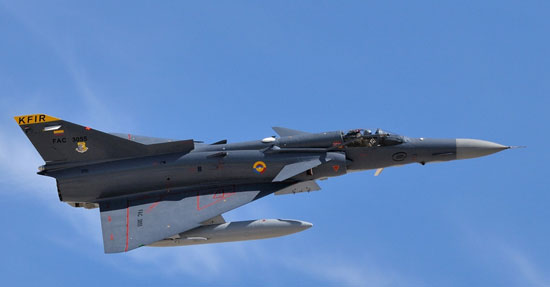
Colombian Kfir C10/12 participated in the Red-Flag 7/2012 exercise, claiming eight simulated kills of F-16 and F-15s.
Israel Aerospace Industries (IAI) is offering a modernized version of its 1970 era delta-winged Kfir Mach 2+ fighter aircraft. Equipped with advanced avionics and mission systems that, the IAI claims its old fighter jet could rank in the same class of contemporary ‘fourth generation’ fighter jets. According to sources at IAI, the company can deliver up to 50 Kfirs, configured to the newest ‘Block 60’ standard, utilizing airframes retired from IAF service in the 1990s. These aircraft were mothballed in the southern Negev desert, and are in good condition for refurbishment. Israel has offered these modernized fighter jet to Bulgaria, addressing Sofia’s planning to replace its MiG-21s and MiG-29s with western-compatible fighter jets.
Subscribe to Defense-Update to get the full version of this article
Bulgaria is interested in buying 10 ‘pre owned’ fighter jets, optimizing them to fulfill combat missions with the NATO alliance. Among the alternatives evaluated by Bulgaria is the procurement of nine used F-16 Block 15s from Portugal, at a cost of $464 million; purchasing Eurofighter Typhoon fighter jets from the Italian Air Force surplus would cost even more. According to IAI, the acquisition of Kfir Block 60 from would cost a third of that price. Bulgaria was also evaluating a Swedish proposal to buy new Gripen fighter jets from Saab.
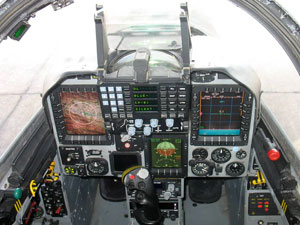
Inside the new cockpit of the Kfir C10/12 and Block 60 utilizes multiple large color displays, HUD and helmet mounted sight. Photo: IAI
The Kfir Block 60 offers a robust and versatile Mach 2+ multi-role jet fighter, carrying 5.5 tons payloads on nine hard-points under the wings and fuselage. The weaponry is enhanced to include Python 5 and Derby. Kfir Block 60 has also completed the integration of RAFAEL Spice autonomous guided weapon, (second platform offering that capability, after the F-16). Conforming to NATO standards, Kfir Block 60 supports Link-16 datalink protocol. The aircraft has combat radius of 1,000 km (540 nm) unrefueled. With refueling the aircraft can fly to a range of 1,100 nm.
Melamed claims Lahav can deliver the first Kfir Block 60 within 12 months after receiving the an order, at roughly a third of the cost of other fighter jets with similar capabilities. This assessment is based on the experience IAI Lahav has gained processing over 2500 aircraft, upgrading earlier Kfir, F-4E, F-16, A-4M, MiG-21, MiG-27, MiG-29 and Su-22. “At times where air forces are seeking cost savings, without degrading operational capabilities, the upgraded Kfir has demonstrated superior performance and reliability in operational use and combat exercises.” Melamed concludes.
Colombian Air Force Kfir C10 prepared for flight at Nellis AFB, during the July 2012 Red Flag exercise.
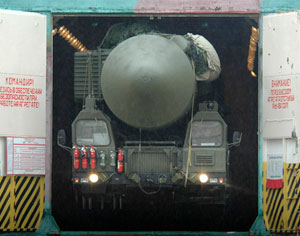
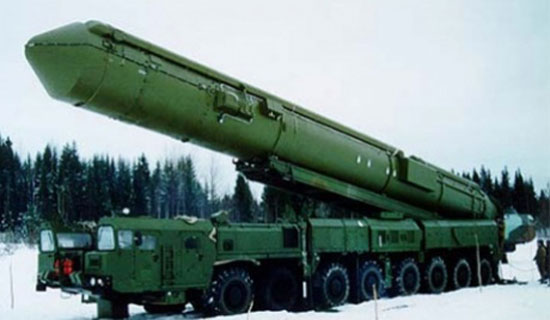
The largest mobile ICBM in Russian service is the SS-29 Yars, which uses an eight-axle transporter erector launcher (TEL) for mobilization. The new R-36 will require a size axle TEL.
The Moscow Institute of Thermal Technology (MITT) is developing a new Intercontinental Ballistic Missile (ICBM) under the name RS-26 Rubezh. This ‘medium class’ ICBM attributed as ‘fifth generation’ missile is in a different weight class from the Topol-M/Yars, as it is intended to supplement the current missile fleet as a more transportable and maneuverable land mobile weapon system. Speaking after the June 2013 test of the missile, the head of the Main Operational Directorate of the General Staff, Gen.-Col. Zarudnitskiy said the Russian Rocket Forces would receive the first Rubezh regiment in 2014, following the conclusion of five flight tests to be conducted through 2013. He said the Rubezh missile would offer higher accuracy compared to current missiles.
RS-26 has not been seen yet in public. It is estimated to weigh 36 tons and is likely to measure about 12 meter in length – about the size of the Submarine-launched R-36 Bulava. Developed by the Moscow Institute of Thermal Technology (MITT), the Rubezh will be manufactured at the Votkinsk plant in the Urals republic of Udmurtia, where all solid-propellant missiles are made. The new missile is likely to be carried and launched from a land mobile launcher, possibly the MZKT-27291. The missile is propelled by solid fuel and carries either a single warhead, or multiple independent reentry vehicles (MIRV) – both configurations were tested this year. Commenting on one of the recent tests, in June 2013, Russian Deputy Prime Minister Dmitry Rogozin, who oversees the defense industry, referred to these warheads as “missile defense killer.” Combined with advanced ICBM targeting system, which is currently being developed in Russia, the missile will be able to penetrate the most sophisticated missile defenses anywhere in the world.
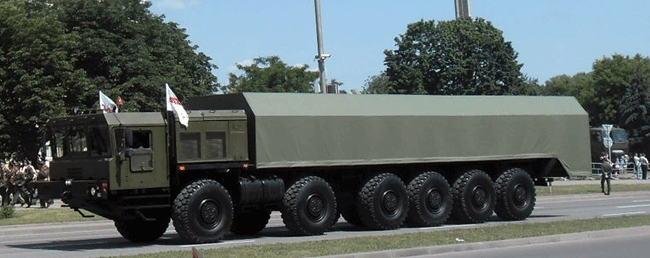
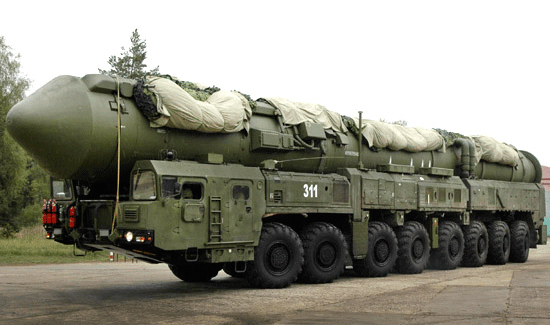
This new MZKT27291 six-axle vehicle unveiled in public in 2013 is believed to be a special purpose vehicle designed and built to provide the carrier, erector and launcher (TEL) for the new R-36 Rubezh Intercontinental Ballistic Missile.
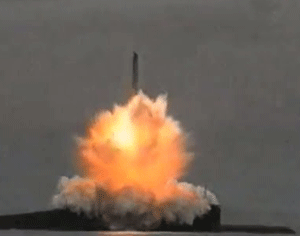
A Russian Delta IV submarine launches an SS-N-23 SKIFF intercontinental ballistic missile on a test, from a surfaced position in the arctic.
A Russian Delta IV submarine launches an SS-N-23 SKIFF intercontinental ballistic missile on a test, from a surfaced position in the arctic.
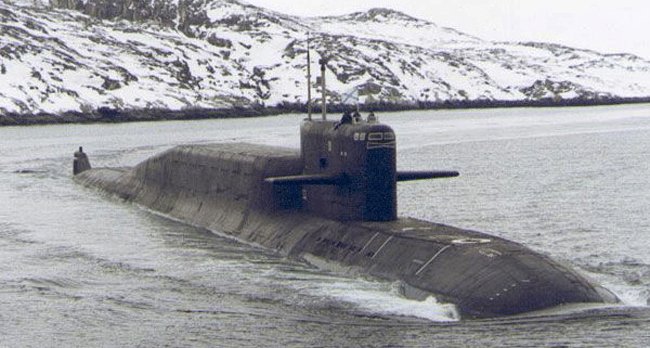
At present, the liquid-propelled SS-N-23 Skiff (Russian designation R-29RMU Sineva) is the mainstay of the Russian Navy submarine-launched ballistic missile (SLBM) force. The Delta IV ballistic missile submarines are the carriers of these missiles; every sub carries 16 such missiles, each carrying four MIRVs. The SS-N-23 entered service in 2007 and is currently operational with three delta III and four Delta IV submarines in service with the Russian Navy. All but one of seven Typhoon class mega SSBNs produced in the 1980s are now decommissioned. An improved version of this weapon is the R-29RMU2 Layner, introducing improved countermeasures, improving its capability to penetrate enemy missile defenses. Development of the new missile was completed in 2012.
Further enhancement of the Russian naval strategic force has been suspended, due to repeated technical delays and complications encountered with solid-propelled SLBM since the 1990s. These began with the failure of the follow-on to the R-39 missile program, which was terminated in 1998. Its successor, Bulava, has also encountered repeated failures. Despite these problems Bulava was commissioned with its lead carrier submarine of the new Borei class, Yuri Dolgorukiy on 10 January 2013. But after another failed launch in September 2013, the remaining missiles were returned to the manufacturer and deployment and test program were suspended, the entire production run of the missiles was then recalled for factory inspections.
The Russian Navy strategic force maintains Delta IV (above) and Delta III submarines in operation. These subs are carrying up to 16 SS-N-23 (SKIFF) submarine launched ballistic missiles (SLBM). The first Borei class submarine also entered service but is yet to receive operational its Bulava missiles.
The latest land mobile ICBM to enter the Russian Strategic Missile Force is the SS-29, Russian designation ‘RS-24 Yars’. `this 49 ton missile can carry four nuclear warheads to strike targets at a distance 11,000 km. Photo: RVSN
While ballistic missile developments in Iran, North Korea, India and China are capturing the headlines, strategic forces of the world’s two superpowers undergoing profound changes and modernization. This article highlights new developments in the Russian Strategic Missile Force (RVSN), a follow-on article will overview the evolution of the US missile defense capabilities and the status of their strategic forces, under the New START treaty. For consistency, this article will refer to all missiles by their NATO designations, and, where such designation is unavailable – by the Russian designation. The article appearing on this page is an excerpt of the full version, available exclusively to Defense-Update subscribers.
To read the full version please log in or subscribe.
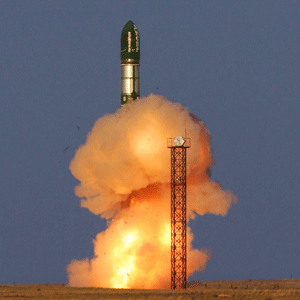
Launching an SS-18 Satan – from a silo. The NATO reporting name for this missile is ‘Satan’, its Russian name is ‘Voyevoda’. Photo: Vadim Savitsky, Pravda.Ru
According to the biennial report stating the aggregate numbers of “strategic offensive arms” under the New START treaty, the US has the largest arsenal of nuclear warheads, with 1,688 deployed weapons, compared to the Russian arsenal of 1,400 deployed warheads. The US also has largest fleet of nuclear carrying platforms – 809, compared to 473 deployed by the Russians.
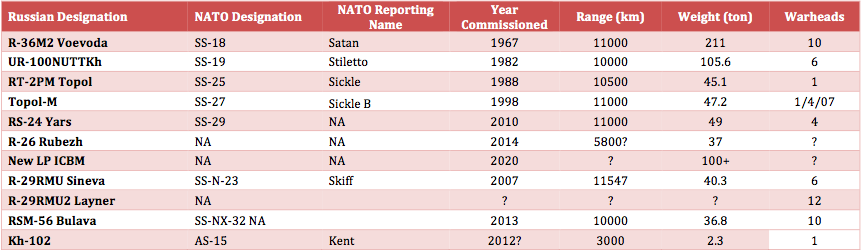
But the numbers don’t tell the whole story. While the US is maintaining and steadily reducing its inventory, to meet the treaty’s limits, the Russians strive to improve their arsenal with more capable weapons. According to open sources, the Russian Strategic Missile Forces currently operates at least 58 silo-based SS-18 Satan ballistic missiles, 160 road-mobile Topol (SS-25) missile systems, 50 silo-based and 18 road-mobile Topol-M (SS-27) systems, and 18 SS-29 Yars systems. At sea the Russians maintain eight Delta III/IV nuclear ballistic missile submarines remaining in service.
By 2020, the RVSN is expected to convert all SS-25 and SS-19 missile units to the SS-27 and SS-29, fielding eight divisions with a total inventory of over 170 mobile and silo-based SS-27 and 108 SS-29 silo-based missiles. The deployment of follow-on ICBM, the Yars-M and R-26 Rubezh, was expected in 2013, but hasn’t officially announced yet. (Read about the new missile: “New ICBM Under Development in Russia“)
Resulting from this plan, all liquid-propelled silo-based SS-19 Stiletto missiles will be decommissioned by 2017, leaving only 30 SS-18 (out of the current 58). (More on the new LP mega missiles: “Return of the Russian Missile Trains“)
Besides the missile force, the Russian strategic triad comprises submarine-launched missiles and strategic bombers, delivering air-launched nuclear weapons. The principal nuclear armed weapon to equip those platforms is the Kh55 cruise missile, and its latest variant – Kh-102 that has entered service in the 2000s. The Tu-95MS can carry eight such missiles, and the Tu-160 carries 12 on two rotary launchers. These bombers will eventually be replaced by the future bomber known as ‘PAK-DA’, under development by the Tupolev design bureau, that has won the development tender offering a subsonic, stealthy “flying wing” design. (Read more in the article: “Russian Air Force to Field a Stealth Bomber By 2020“)
The third part of the triad is a fleet of ballistic missile submarine force, carrying the SS-N-23 Submarine Launched ballistic Missile. This weapon has entered service in 2007 and is currently operational with three delta III and four Delta IV submarines in service with the Russian Navy. An improved version of this weapon is the R-29RMU2 Layner, introducing improved countermeasures, improving its capability to penetrate enemy missile defenses. Development of the new missile was completed in 2012. The solid-propelled RSM-56 Bulava has yet to become operational, after repeated failures in flight testing. (Read more on these missiles: “Russian SSBN Fleet to Receive Improved R-29 Missiles“)
A comprehensive review of the RVSN is available on Ausairpower.net.
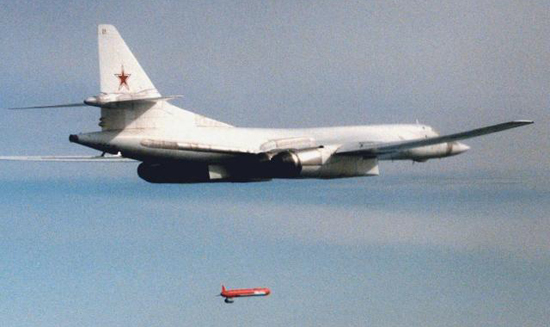
Tu-160 ‘Blackjack’ launching a Kh555 cruise missile
In April 2013 the Russian Air Force has approved the conceptual design and specification of its future strategic bomber known as ‘PAK-DA’ (future long-range aircraft), paving the way for development of components for the aircraft. Air Force Commander Lt. Gen. Viktor Bondarev was quoted by Novosti news agency saying that the PAK-DA project has been in the works for several years but was given the formal go-ahead by the Russian leadership in 2012. It is due to replace Russia’s aging fleet of 63 Tupolev Tu-95MS Bear and 13 Tu-160 Blackjack strategic bombers in the next decade. The principal nuclear armed weapon used with these platform is the Kh-102 that has entered service in the 2000s. The Tu-95MS can carry eight missiles and Tu-160 carries 12 on two rotary launchers.
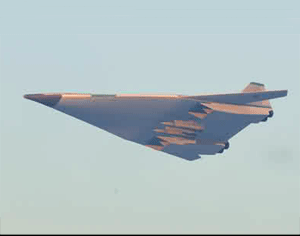
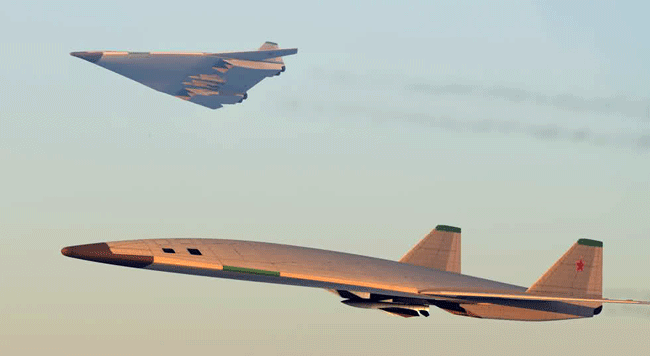
The Tupolev design bureau has won the PAK-DA development tender offering a subsonic “flying wing” design, providing advanced stealth capabilities. It was selected over more speculative ‘hypersonic bomber’ recommended by Russian Deputy Prime Minister Dmitry Rogozin. The new bomber will carry both conventional and nuclear weapons, including a new long-range cruise missile that has already been adapted for the new bomber. The characteristics of such weapon are still classified, but, according to debate that has surfaced in the Russian media this year, such missile could feature hypersonic performance. In the 1980s the Russians conducted several hypersonic missile researches, although none of the programs reached technological maturity. Experts say the combination of subsonic stealth and hypersonic flight overcoming access denial and counter-air weapons would enable the future bomber superior capabilities over existing platforms. The new bomber is expected to go in production by 2020 and will be built at a new aircraft assembly line at Russia’s Kazan plant (KAPO). The same plant previously built the Tu-95MS and Tu-160. According to defense ministry officials, the PAK-DA could enter service by the year 2025.
A hypothetical concept drawing of the future Russian strategic bomber PAK-DA, under development at the Tupolev design bureau.
Lockheed Martin Skunk Works® and XTEND have achieved a major milestone in JADC2 by integrating the XOS operating system with the MDCX™ autonomy platform. This technical breakthrough enables a single operator to simultaneously command multiple drone classes, eliminating the friction of mission handoffs. From "marsupial" drone deployments to operating in GPS-denied environments, explore how this collaboration is abbreviating the data-to-decision timeline and redefining autonomous mission execution.
As traditional defense primes face mounting competition from agile “neoprimes” such as Anduril, Palantir and Helsing, the balance of innovation is shifting toward software-defined warfare and scalable, dual-use technologies, while global industry consolidation—marked by Boeing’s integration of Spirit AeroSystems and other strategic mergers—signals an intensified race to secure control over the defense technology value chain. Our Defense-Tech weekly report highlights these trends.
In early October 2025, a coordinated wave of unmanned aerial system (UAS) incursions—widely attributed to Russia—targeted critical infrastructure across at least ten European nations. The unprecedented campaign exposed the fragility of Europe’s air defenses...
Executive Summary
The past week (September 18-25, 2025) represents an inflection point where strategic defense concepts have transitioned from doctrine to tangible reality. An analysis of global events reveals four primary, interconnected trends shaping an...
At the 2025 Air, Space & Cyber Conference, U.S. Air Force and Space Force leaders unveiled major updates on next-generation fighters, bombers, unmanned systems, and space initiatives, highlighting both rapid innovation and critical readiness challenges as the services race to outpace global competitors. A short version is available here, with a more detailed version for subscribers.
The Taipei Aerospace & Defense Technology Exhibition (TADTE) 2025 crystallized around four dominant strategic themes that collectively illustrate Taiwan's comprehensive approach to defense modernization amid escalating regional tensions. Based on a detailed report by Pleronix (available upon request). Includes a Podcast discussion on TADTE 2025's highlighting Taiwan's four strategic themes beyond the post's coverage.
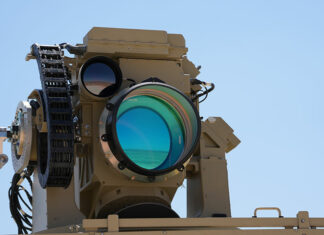
Israel’s Iron Beam 450 high-power laser system has completed final testing, marking a major leap in air defense. Developed by Rafael, it offers precise, cost-effective interception of rockets, UAVs, and mortars, and is set for IDF deployment by 2025.




 About the writer: Orit Perlov, a social media analyst, follows and analyzes the discourse on the social networks in Arab states. Prior to joining INSS, she served as a political advisor to the Israeli Ambassador at Large based with the informal Israeli mission in the GCC. She is the former co-editor of the Israeli Foreign Ministry website in Arabic.