
Friday, December 26, 2025
More
    Home Blog Page 132

    Rafael Promotes Iron-Dome to Protect the Republic of Korea from Rocket Attacks

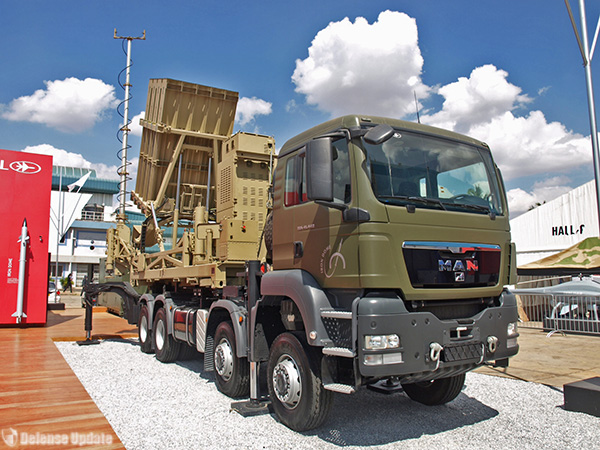
    Mobile version of the Iron Dome can cover a wider area and rapidly reposition against new threats. Provided with a full multimission radar, it can also perform air defense missions. Tamir Eshel, Defense-Update
    Mobile version of the Iron Dome can cover a wider area and rapidly reposition against new threats. Provided with a full multi-mission radar, it can also perform air defense missions. Noam Eshel, Defense-Update

    For over two years Israel’s defense company RAFAEL has been promoting its combat proven dual mission Iron Dome in South Korea. Seoul ADEX Daily News reports. Korean military officials often claim that investing in defensive could lead the country into bankruptcy as the attacker will always have cheaper means to outnumber those defenses. The same controversy followed the evolution of Israel’s missile and rocket defense systems through the 2000s. It was after the 2006 Lebanon War that Israel woke up to the reality of full-scale asymmetric attack, that lasted over a month, bringing the country’s economy to a standstill.
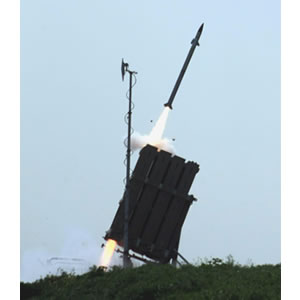
    The first upgraded Iron Dome unit is scheduled for delivery to the Israel Air Force 'within weeks', following a successful series of intercepts where the system demonstrated the enhanced capabilities against advanced threats.
    The first upgraded Iron Dome unit is scheduled for delivery to the Israel Air Force ‘within weeks’, following a successful series of intercepts where the system demonstrated the enhanced capabilities against advanced threats. Photo: Shaul Golan via RAFAEL
    The system, developed as a counter rocket, artillery and mortar (C-RAM) has also evolved to address Very Short Range Air Defense (VSHORAD) and counter-UAS capabilities, all three missions are major concerns for Seoul. Iron Dome was developed from the outset as an affordable, effective and innovative defense solution to the asymmetric threats of short-range rockets. Based on past experience and asymmetric warfare trends worldwide, these weapons are the more likely to be employed by Pyongyang, when seeking military escalation, yet trying to evading the ‘tripwire’ of retaliation and full-scale conflict.

    Since becoming operational by the Israeli Air Force in April 2011, Iron Dome successfully intercepted over 500 rockets that were fired from the Gaza Strip at Southern Israel. More significantly, the new defensive capability enabled the Israeli leaders to contain escalation that previously have drown it to forceful retaliation at the time and scale that born negative effect to Israel. These assets were instrumental in protecting strategic sites such as power stations, maritime ports, military airfields and urban centers.

    Similarly, in recent months Iron Dome units were deployed to the northern areas of Israel, prior to strategic strikes allegedly carried out by the Israel Air Force, against shipments and concentrations of advanced weaponry en-route to Iranian backed terrorists in Lebanon. These deployments provided precautionary steps protecting the country’s strategic assets from potential retaliation by rocket attacks from Syria or Lebanese Hezbollah.

    Iron Dome is an advanced defense system, designed for quick detection, discrimination and interception of rockets & mortar threats with ranges of up to 70 km and against aircraft, helicopters, UAVs and PGMs. The system is effective in all weather conditions, including low clouds, rain, dust storms or fog. Key to the system’s effectiveness is its selective defense capability – its ability to discriminate between threats headed towards the defended area and those that will fall into the sea or open fields, thus reducing cost-per-kill, limits unnecessary interceptor launches and minimizes collateral damage. A single launcher can protect against a medium-size city.

    Iron Dome uses a unique low-cost interceptor called Tamir, with a special warhead that detonates the targets in the air, within seconds from its detection, without deviating the target from its trajectory. The system has a proven record handling multiple threats and rocket salvos, simultaneously and efficiently.

    Download the Second Edition of Seoul ADEX Show Daily here
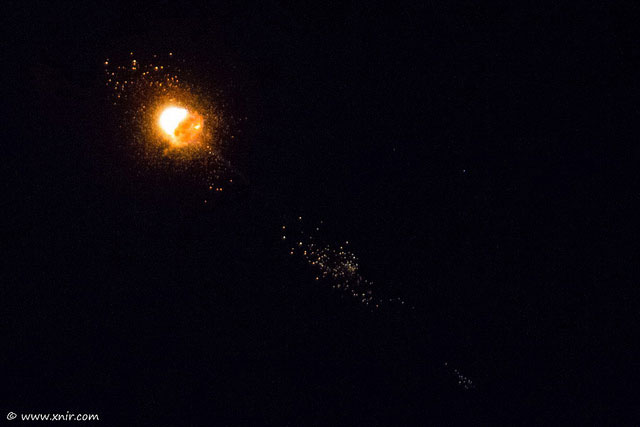
    Tamir interceptor destroys an incoming 122mm GRAD  rocket over Ashkelon during the November 2012 conflict. The interceptor is designed to destroy the incoming warhead, thus eliminating further damage from debris. Photo: Nir Ben Yosef
    Tamir interceptor destroys an incoming 122mm GRAD rocket over Ashkelon during the November 2012 conflict. The interceptor is designed to destroy the incoming warhead, thus eliminating further damage from debris. Photo: Nir Ben Yosef

    UAS Assuming Electronic Attack Missions for the US Army, Marine Corps

    General Atomics Aeronautical Systems, Inc. (GA ASI) has demonstrated employing the Predator B Remotely Piloted Aircraft (RPA) drone on Electronic Attack missions. Two demonstrations were performed at the U.S. Marine Corps’ (USMC’s) Weapons and Tactics Instructor course held at Marine Corp Air Station (MCAS) Yuma on October 22. This second demonstration expanded on the success of previous efforts between the Marine Corps, Northrop Grumman Corporation, and GA-ASI.

    The objective was to integrate a company-owned Predator B RPA into a Marine Aviation Command and Control (C2) network, enabling control of the aircraft’s Electronic Warfare (EW) payload and other assets to deliver effects across the Electro-magnetic Spectrum (EMS). This C2 capability was exercised from the Cyber/Electronic Warfare Coordination Cell located at MCAS Yuma and addressed simulated targets located hundreds of miles north at Naval Air Weapons Station China Lake. The Marine Corps is currently analyzing the jamming data in an effort to quantify the EW effectiveness better and hopes to have the official results available soon.

    The US Air Force has also developed an EA attack capability for its MQ-9 Reaper RPAs. These assets were aimed primarily at communications and improvised
    explosive device jamming. This program has also encountered potential electromagnetic interference issues caused by the jamming pod that could interfere with the aircraft’s communications link to ground station controllers. The Air Force canceled this program in its fiscal year 2013 budget submission, before these concerns were addressed.

    In 2009 Chesapeake Technology International Corporation (CTI) and AeroMech Engineering, Incorporated (AME – later acquired by Lockheed Martin) team successfully demonstrated an unmanned airborne high powered communications Electronic Attack (EA) capability, using the AME’s Fury UAS system. Another system designed by the company later supported the Marine Corps’ ‘Intrepid Tiger II’ (ALQ-231) providing a podded lightweight EA payload designed for the AV-8B and RQ-7B unmanned aerial vehicle. The AN/ALQ-231(V) was the first weapon system to include the Electronic Warfare Services Architecture (EWSA) capability. This allows the weapon to not only be controlled from within the host platforms cockpit, but also via a tactical secure radio network. This allows for the weapon to be hosted on non-traditional EW platforms, or hosting a system on board the aircraft, without adding workload on the part of the platforms aircrew. The Interpid Tiger II was first deployed with the Harrier II squadron VMA-211 since 2012, on its recent deployment in Afghanistan. While this capability proved highly desirable for use with unmanned systems, initial testing of the UAS-configured pod revealed electromagnetic interference with the RQ-7B’s safety of flight systems.

    The US Army opted to field its electronic attack payloads on its MQ-1C Gray Eagle unmanned aircraft systems. The first two systems were delivered earlier this year to support of the Army’s Networked Electronic Warfare, Remotely Operated (NERO) system. These payloads were developed by Raytheon, and delivered in May 2013 as part of a contract awarded by Navy NAVSEA-Crane in 2012. NERO is utilized on the Gray Eagle as an airborne electronic attack system capable of providing beyond-line-of-sight jamming capability to support ground troop operations.

    The NERO system builds on the Army’s Communications Electronic Attack with Surveillance and Reconnaissance (CEASAR) program. CEASAR aims to support tactical ground forces by denying and disrupting enemy communications systems and improvised explosive devices. By migrating the same pod system and advanced capability to the Gray Eagle, NERO is capable of two- to three-times longer missions with reduced operating costs compared to it’s current application on a manned twin-engine Beechcraft King Air C-12 aircraft. CEASAR was first awarded in 2010.

    “NERO provides critical jamming capabilities to warfighters in counterinsurgency environments,” said Glen Bassett, director of Advanced Communications and Countermeasures for Raytheon’s Space and Airborne Systems business. “We leveraged our combat-proven success from the manned CEASAR program to deliver this key tactical electronic attack capability onto an unmanned application.”

    More Rosomak Armored Vehicles for the Polish Army

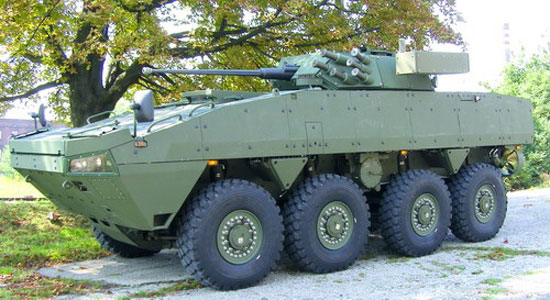
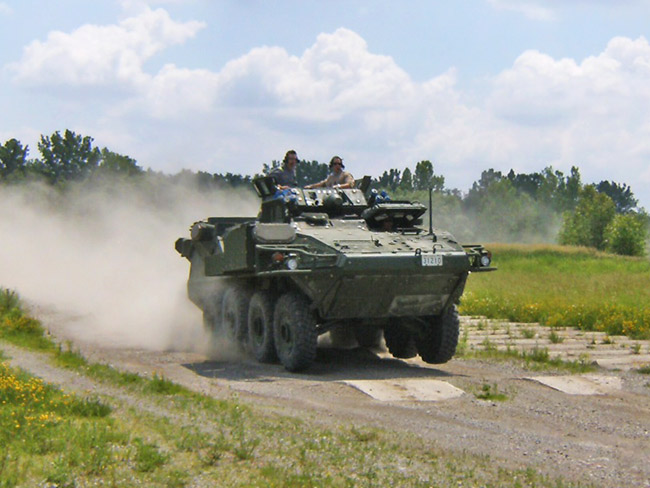
    A Rosomak IFV with the Hitfist 30P turret fitted with two Spike LR missiles. Other options include the Rafael Samson-2 and Rheinmetall Defence' Lance - both unmanned turrets will carry the Spike LR and Mk44 cannon.
    A Rosomak IFV with the Hitfist 30P turret fitted with two Spike LR missiles. Other options include the Rafael Samson-2 and Rheinmetall Defence’ Lance – both unmanned turrets will carry the Spike LR and Mk44 cannon.

    The Polish armored vehicle manufacturer WZM will resume production of Rosomak armored vehicles next year and continue production at least through 2019, assembling 307 vehicles. The new order will increase the number of Rosomak (Wolverine) combat vehicles in Polish Army inventory to 877, providing a major element in the Polish 2022 defense modernization plan. Under the zł1.65 billion (US$544 million) contract that spans over five years, WZM is likely to produce about 60 vehicles next year, primarily recce and fire support vehicles. Under a separate contract the company will also deliver 122 refurbished Rosomak vehicles fitted with remotely operated turrets integrated with Spike LR missile systems. A prototype of this vehicle is expected to be ready for testing by 2015.

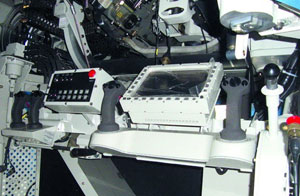
    The Spike LR control unit integrated into the Rosomak turret weapon station. Photo:  e-Raport
    The Spike LR control unit integrated into the Rosomak turret weapon station. Photo: e-Raport

    Poland first signed a contract with Patria in April 2003, for the local production of 690 AMVs, but the number was eventually dropped to 570 vehicles. 313 of these were the Rosomak Infantry Fighting Vehicle (IFV) configuration, mounting the Oto Melara Hitfist-30P turret armed with 30 mm ATK Mk44 Bushmaster II automatic gun. Under the licensing and production agreements, some 90% of Rosomak components are manufactured by Polish companies. Polish officials claim the new agreement recently concluded with Finland is more favorable for the Polish side, as it grants Poland export rights for its Rosomak variants. In recent years the Polish vehicle was displayed in a number of international exhibitions in India, France and Bulgaria. Poland The agreement with Patria extends local production rights for the AMV in Poland by ten years to to 2023 and grants repair licensing through 2052.

    The Polish Army currently operates 570 Rosomak vehicles, equipping the 12 and 17 Mechanized Brigades. In addition to the new order, 122 existing Rosomak vehicles will be rebuilt into a new infantry fighting vehicle (IFV) configuration, fitted with unmanned turrets, armed with 30-mm cannon and integrated with Spike LR missiles. The turret, (the specific type is yet to be selected) will be manufactured by Huta Stalowa Wola (HSW). Similar turrets are also likely to equip 27 reconnaissance and command vehicles (Rosomak-R1) fitted with ground surveillance radars and 61 armored recce vehicles (Rosomak-R2). Additionally, 80 platforms will be configured as fire support vehicles, fitted with Rak 120 mm automatic breech loading mortar turret, also manufactured by HSW. Other variants will include 43 Rosomak command vehicles, 33 Rosomak-WRT engineering reconnaissance vehicles, 17 Rosomak-WPT engineering vehicles; 11 Rosomak-RSK NBC reconnaissance vehicles and 12 air defence command vehicles.

    Few weeks earlier, Prime Minister Donald Tusk announced plans to consolidate the Polish defense sector. Under his plan, the country’s major armament and military equipment manufacturers will be consolidated into a single entity called PGZ (Polska Grupa Zbrojeniowa – for the ‘Polish Armaments Group’). Under the plan, the new Group will be comprised of the 11 subsidiaries of the Huta Stalowa Wola S.A. group (Overhaul and Manufacturing), OBR Marine Science Center and Companies from the Polish Defense Holding (formerly the BUMAR group). All will be merged into one business entity that is likely to be traded on the Warsaw Stock Exchange.

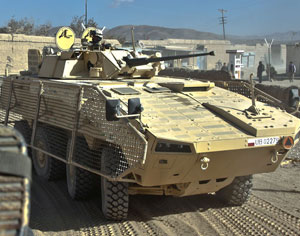
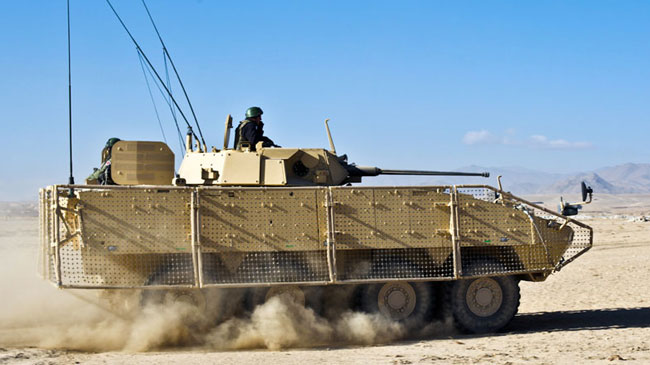
    The Rosomak has proved effective in combat operations supporting the Polish contingent in ISAF in Afghanistan.
    The Rosomak has proved effective in combat operations supporting the Polish contingent in ISAF in Afghanistan.

    South Korean Research Center Unveils Radar Absorbing ‘Stealth Paint’

    A radar-absorbing paint developed by the Korea Maritime and Ocean University’s Stealth Technology Center could provide camouflage of surface naval vessels, military aircraft and combat vehicles Yonhap News reports. The new ‘stealth paint’ was unveiled by the university laboratory during the Navy Week event held in the southeastern port city of Busan last week. Addressing the South Korean military interest on the development of radar-evading and anti-stealth technology as part of its long-term defense strategy, the center has been developing various types of paints to meet different requirements for the Navy and Air Force, and is consulting with local defense contractors.

    According to Korean Navy captain (ret) Kim Yong-hwan, vice president and director of the Stealth Technology Center, the radar-absorbing material can be sprayed on the surface of the protected platform, providing a lighter, durable and cheaper application, compared to contemporary tile or metal sheet-type electromagnetic wave absorbers. “This paint greatly decreases warships’ visibility on radars to help raise their survivability from missile attacks,” Yong-hwan said, showing an iron sheet coated with the paint that absorbs up to 99 percent of radar waves.

    The new material is expected to first be applied in naval weapons systems, following successful certification in 11 categories by the Korea Testing & Research Institute. Daewoo Shipbuilding & Marine Engineering is among the companies that are eyeing the material for their latest Navy destroyers under development. “It is easy to apply evenly to any surface as it is a spray, saving considerable time compared to other sheets or tiles,” Hwang said. “Plus, it’s much cheaper than the normal paint.”

    Normandie, the Second French FREMM Multimission Frigate Begins Sea Trials

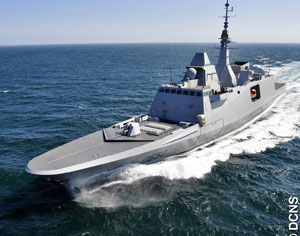
    FREMM frigate Normandie. Photo: DCNS
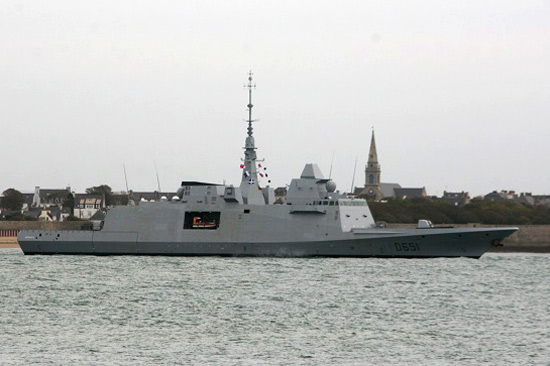
    FREMM frigate Normandie seen at Brest. Photo: DCNS

    FREMM frigate Normandie, the second of the Aquitaine class for the French Navy, was put to sea for the first time on 25 October. This milestone marks the beginning of the ship’s sea trials, which will take place off Brittany and are expected to last several weeks. According to FREMM programme manager Anne Bianchi, The construction of this second-of-class FREMM frigate for the French Navy is proceeding on schedule and on budget. The FREMM multipurpose frigate (Frégate multi-mission) is a class of frigate designed by DCNS/Armaris and Fincantieri for the navies of France and Italy.

    These preliminary trials will offer an opportunity for crew familiarization and testing of the ship’s propulsion and navigation systems.  The first three days will be the ‘familiarisation’ phase, enabling the crew and other personnel to evaluate the ship’s safety systems and equipment, including fire-fighting, flood control and emergency response systems and evacuation procedures as well as manoeuvrability and mooring performance.

    The following tests will focus on the propulsion system. The FREMM’s high-performance hybrid CODLOG (COmbined Diesel eLectric Or Gas) power package combines a gas turbine for mechanical propulsion at speeds exceeding 27 knots and electric motors for quiet, low-speed propulsion. This phase will also include extensive testing of the ship’s navigation (log, position, heading) and other basic systems.

    On completing these preliminary trials, FREMM frigate Normandie will return to DCNS’s Lorient shipyard for several weeks of quayside work. In early 2014, the ship will put to sea for a second series of trials focusing on the combat system.

    The lead ship of the class, Aquitaine, was commissioned during November 2012 in the French Navy. In France the class is known as the Aquitaine-class, while in Italy they are known as the Bergamini-class. In 2007, Morocco ordered one anti-submarine variant of FREMM. The first vessel of this class, Mohammed VI will be commissioned November 23, 2013, to be followed a month later by the commissioning of the second Italian vessel of this class, Virginio Fasan.


    GMLRS Completes Engineering Development Flight Tests with Alternative Warhead Configuration

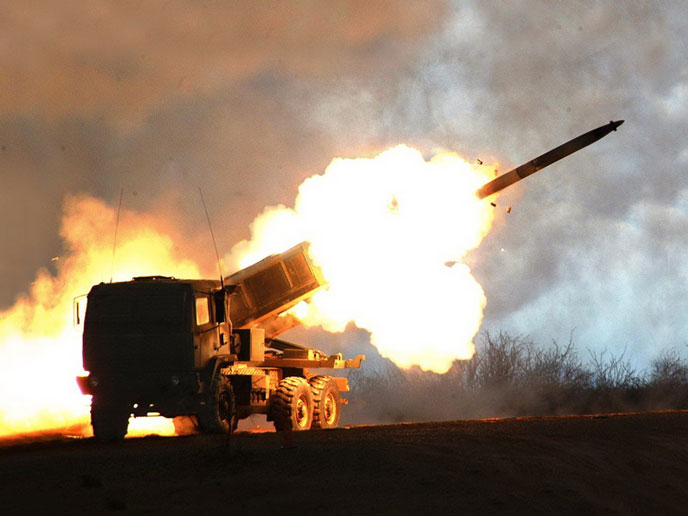
    Lockheed Martin's Guided Multiple Launch Rocket System (GMLRS). Photo: Lockheed Martin
    Lockheed Martin's Guided Multiple Launch Rocket System (GMLRS). Photo: Lockheed Martin
    Lockheed Martin’s Guided Multiple Launch Rocket System (GMLRS). Photo: Lockheed Martin

    Lockheed Martin successfully conducted the third  engineering development test flight of the new Guided Multiple Launch Rocket System (GMLRS) Alternative Warhead at White Sands Missile Range, N.M. Preliminary data indicate all test objectives were achieved. During the short-range test, three GMLRS rockets were launched from an MLRS M270A1 launcher and each destroyed its respective ground-based target approximately 17 kilometers away. This was the final engineering development flight test in the series before the program continues to production qualification testing.

    The Alternative Warhead Program (AWP) is part of a U.S. Department of Defense plan to create a GMLRS variant designed to achieve the same area-effects as older submunitions warheads, but without the lingering danger of unexploded ordnance. The Alternative Warhead is being developed by ATK under subcontract to Lockheed Martin.

    In April 2012, Lockheed Martin received a $79.4 million contract from the U.S. Army to develop AWP. Under the terms of the contract, the EMD phase of the program runs 36 months, focusing on system performance, warhead qualification and producibility.

    Austrian Forces to Receive Tracker Mini-UAS from Cassidian

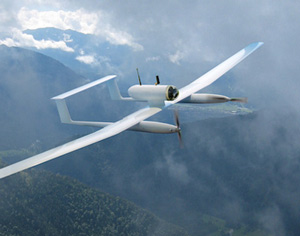
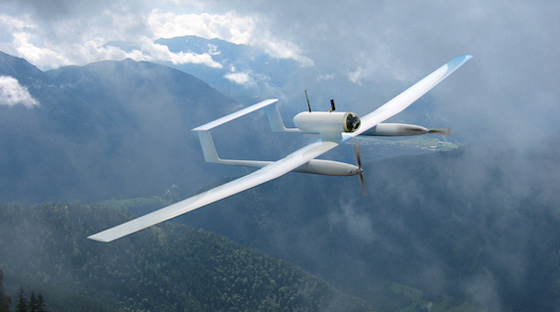
    The Tracker is a short-range mini UAS/UAV with two low noise electric engines. Photo: Cassidian
    The Tracker is a short-range mini UAS/UAV with two low noise electric engines. Photo: Cassidian

    The Austrian Ministry of Defence has ordered six Tracker mini unmanned air systems (comprising a total of 18 aircraft) under an initial contract worth €3 million. These systems will provide the initial inventory for operational evaluation with the Austrian Armed Forces. Follow-on procurement of more systems is expected by 2016 and 2017, according to the Austrian Defense Forces capability development plan. The entire program is estimated to cost €18 million (US$25.1 million).

    The competition for this contract was won by Survey Copter, a wholly-owned subsidiary of Cassidian SAS, responsible for the development and manufacturing of miniature aircraft and helicopter UAVs, in cooperation with the Kapsch Group, a Vienna headquartered international road telematics, information technology and telecommunications company. Kapsch will provide local support and training.

    The Tracker will enhance the Austrian forces operability, particularly in peacekeeping contingencies. Its missions including detection, reconnaissance, identification, classification, tracking, over-the-hill targeting, target or axis designation, special force and anti-terrorism action, littoral / border control, force protection, convoy support, dismounted warfighter missions and Military Operations in Urban Terrain (MOUT). Following a pre-programmed and reconfigurable plan in the course of the mission, the Tracker flies entirely automatically, which enables the operators to devote themselves to their reconnaissance assignment.

    Composed by an aircraft and a ground station, the short-range mini-UAS Tracker is a hand-launched system, carried as a backpack. The ground station, consisting of two PCs and control units with joysticks, is coupled to a data link antenna tracking the aircraft in real-time.

    Increasing the situational awareness and reconnaissance capabilities, the Tracker features an advanced ergonomic man-machine interface (MMI), automatic and safe procedures, low-noise electric engines and is optimised to provide stealthy intelligence gathering capabilities for military, security and civil authorities. The system’s uniquely comprehensive technical features include visible-light and infrared high-resolution cameras integrated in a three-axis gyro-stabilised plug and play turret called the “T120”, specifically developed by Survey Copter.

    Taranis UCAV Makes Maiden Flight

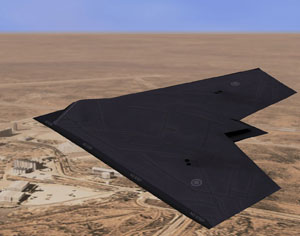
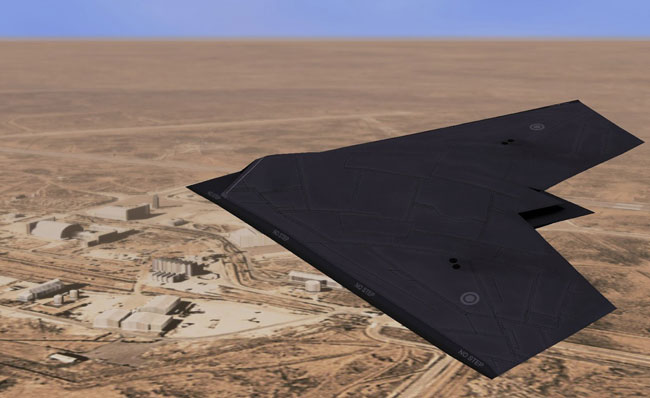
    An artist concept of the BAE Systems' Taranis unmanned combat aerial system (UCAS) technology demonstrator in flight. The actual aircraft has recently been flown on its maiden flight in Australia. Image: BAE Systems
    An artist concept of the BAE Systems’ Taranis unmanned combat aerial system (UCAS) technology demonstrator in flight. The actual aircraft has recently been flown on its maiden flight in Australia. Image: BAE Systems

    The BAE Systems Taranis unmanned combat air vehicle (UCAV) demonstrator has made its maiden flight and is currently conducting initial flight trials, the UK Ministry of Defence (MoD) confirmed in written statement submitted to the UK parliament’s defence select committee. “Flight trials are currently ongoing,” an MoD spokesperson said. Neither the MoD nor BAE Systems were able to confirm the date of the maiden flight at this stage. However, a full statement by the MoD will be issued when the Taranis flight trial programme has been completed, the spokesperson said.

    BAE System/MOD Taranis seen for the first time on the official rollout ceremony. Photo: UK MOD
    BAE System/MOD Taranis seen for the first time on the official rollout ceremony. Photo: UK MOD

    Flights are understood to be ongoing at the Royal Australian Air Force’s Woomera Testing Range in South Australia where previous unmanned flight test campaigns took place, including the Mantis, Herti, Corax and Raven systems. The United Kingdom is highly secretive about the Taranis UCAV, which is known to have been seen in public on only two occasions.

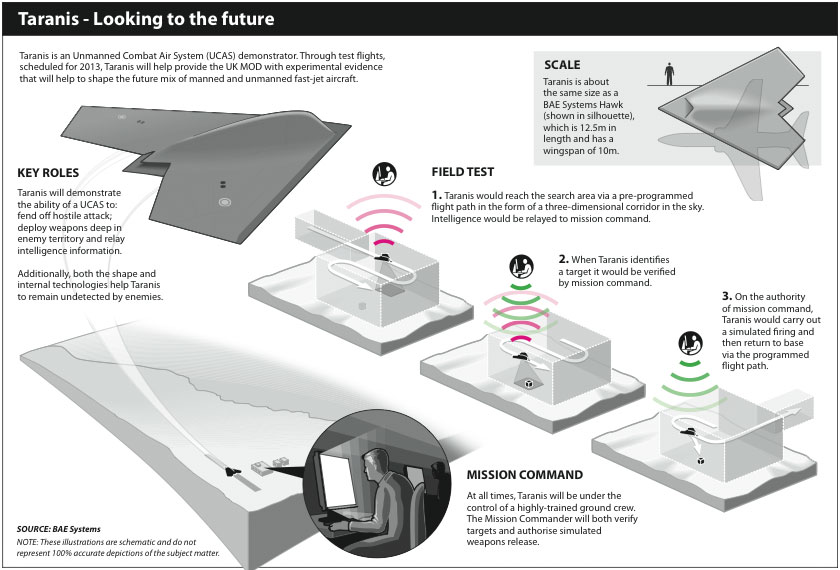
    taranis_info
    Subscribe to view Infographic.

     The aim of the Taranis concept is to explore stealthy unmanned aircraft capabilities in striking targets with real precision at long range is possible, maintaining the human control in the loop.

    Testing such an unmanned system requires a different approach and testing regime, when compared to the testing of traditional manned platforms, as flights are comprehensively simulated and tested on the ground before the actual flight. This procedure is necessary to ensure that all functions and flight algorithms are properly responding to all flight conditions, thus reducing the risk involved in such unmanned flight

    The first flight of Taranis follows on from the maiden flight of the pan-European Neuron UCAV technology demonstrator on 1 December 2012 and extensive carrier-based testing of the Northrop Grumman X-47B in 2013.

    As a technology demonstrator vehicle (TDV) Taranis is not intended to enter production. According to the MoD evidence to Parliament, “It will provide the MoD with experimental evidence on the potential capabilities, helping to inform decisions on the future mix of manned and remotely piloted systems.” The total cost of the Taranis project is GBP £180 million (USD291.3 million).

    Initial ground trials began in 2010 and continued through 2012. Before shipping to Australia the low observable (LO) platform completed radar cross section tests at BAE Systems’ Warton site and the initial analysis has indicated that the programme has met and potentially exceeded the extremely challenging targets jointly aspired to by the UK’s Ministry of Defence (MOD) and Industry. In parallel, testing of the propulsion system has been completed at Rolls Royce. These tests also included infra-red signature measurement, confirming the platforms’ low observable characteristics.

    Initial flight trials were originally planned in 2011/2012 but were shifted to 2013 after the UK MOD requested further ground testing in 2012. “The progress being made on the programme, and the learning we are taking from it, is very positive and the drive now to getting Taranis in the air clearly shows the confidence Industry and the UK’s MOD has in the UK’s ability to develop world-leading unmanned combat aircraft technologies and capabilities.” Tom Fillingham, Future Combat Air Systems Director at BAE Systems said prior to the aircraft delivery for testing in Australia.

    The prime contractor for Taranis is BAE Systems. The company has formed a teaming arrangement combining Rolls-Royce, the Systems division of GE Aviation (formerly Smiths Aerospace) and QinetiQ. BAE Systems, as prime contractor, is responsible for the low observability, systems integration, control infrastructure and full autonomy elements (developed in partnership with QinetiQ), while Rolls-Royce will is focusing on the development of the propulsion system (believed to be a derivative of the  Adour Mk.951 turbofan) and GE Aviation is responsible for delivering other vehicle systems.

    taranis_info
    Design: Richard Palmer Graphics

    Enhanced Tow System for the US Marine Corps’ LAV-AT

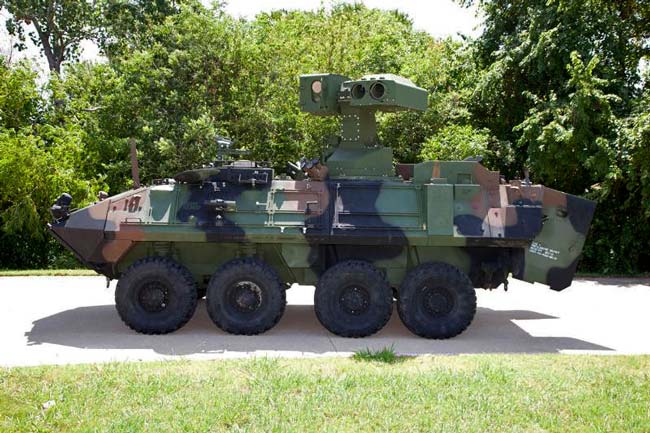
    U.S. Marine Corps Light Armored Vehicle Anti-Tank (LAV-AT) weapon system. Photo: Raytheon
    U.S. Marine Corps Light Armored Vehicle Anti-Tank (LAV-AT) weapon system. Photo: Raytheon

    Raytheon successfully completed an initial round of live-fire testing with a new U.S. Marine Corps Light Armored Vehicle Anti-Tank (LAV-AT) weapon system. Equipped with the TOW-II missile, the upgraded LAV-AT weapon system is designed to protect reconnaissance and light infantry teams. Its mission is to defeat threats at long-range, day or night, and in all weather conditions.

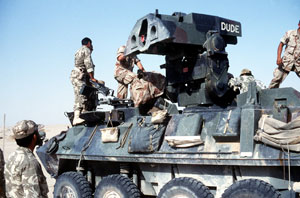
    The Marine Corps LAV-AT seen here with the 2nd Marine Division during Desert Storm in 1991 remains the only platform in US inventory to use the obsolete M901 Emerson turret. This turret and M224 TOW system are now replaced to standardize with the M4 SABER system used by the US Army.
    The Marine Corps LAV-AT seen here with the 2nd Marine Division during Desert Storm in 1991 remains the only platform in US inventory to use the obsolete M901 Emerson turret. This turret and M220A3 TOW system are now replaced to standardize with the M41 SABER system used by the US Army. (Photo: DOD)
    “Raytheon is delivering an enhanced capability designed to save Marines’ lives,” said Michelle Lohmeier, vice president of Land Warfare Systems for Raytheon Missile Systems. “The new turret and thermal systems can perform surveillance and targeting on the move, providing greater situational awareness. Raytheon has also reduced the size of the equipment to provide more crew space inside the vehicle.”

    In April 2012, the U.S. Marine Corps awarded Raytheon a contract to develop and integrate an anti-tank weapon system on four LAV-ATs. The LAV-AT Modernization Program was required to deal with the obsolescence of the original system, the M901 Emerson turret, which is no longer in production and has been retired from the U.S. Army inventory. Along with the vehicular mounted turret the M220A3 TOW system has also been replaced by the M41 SABER system, which is already in use with infantry and the tank battalions of the Marine Corps. The program will procure 118 Anti-Tank Weapon Systems (ATWS) of which four are being produced under the current Engineering Manufacturing Development (EMD) Phase. All four vehicles will go into development testing later this year, with operational testing to follow in late 2014.

    Boeing, Lockheed Martin Team to Offer a New Bomber for the USAF

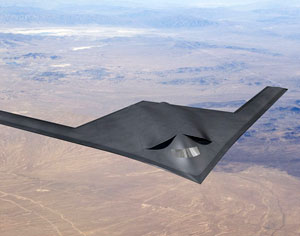
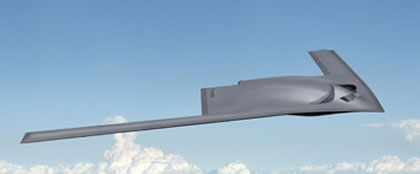
    The future Long Range Strike Bomber could build upon the experience gained with the past Next Generation Bomber program. Boeing
    The future Long Range Strike Bomber could build upon the experience gained with the past Next Generation Bomber program. Boeing

    The Boeing Company and Lockheed Martin Corporation announced they are teaming again to compete for the United States Air Force’s (USAF) Long-Range Strike – Bomber (LRS-B) program, with Boeing acting as the prime contractor and Lockheed Martin as the primary teammate. The program is aimed at delivering 80-100 very stealthy, long-range bombers to the Air Force, with an initial operational capability in 2024-26, and with a unit cost ceiling of $550 million. In addition to the manned bomber capability  the Long Range Strike (LRS) family of systems will also combined with other long endurance unmanned platforms and cruise missiles .

    The two companies have teamed in 2008 to develop the ‘Next Generation Bomber’ program, but that team dissolved upon the program termination in 2010. The two companies have also partnered in the past on the F-22 Raptor stealth fighter, where Lockheed Martin was the prime and Boeing the primary team mate.
    The Long Range Strike Bomber is one of USAF three top priorities programs. The other two are the F-35 produced by Lockheed martin and KC-46 flying tanker built by Boeing. Winning the bomber program would secure the two companies dominant position for decades. The team will compete against Northrop Grumman, the manufacturer of the B-2 Spirit stealth bomber, also believed to be a prime contractor developing a secret stealth aircraft under another black program.

    “Boeing and Lockheed Martin are bringing together the best of the two enterprises, and the rest of industry, in support of the Long-Range Strike Bomber program, and we are honored to support our U.S. Air Force customer and this important national priority,” said President and Chief Executive Officer Dennis Muilenburg, Boeing Defense, Space & Security. “Stable planning, along with efficient and affordable development and production approaches, enables our team to reduce development risk by leveraging mature technologies and integrating existing systems.”

    The team brings together nearly two centuries of combined experience designing, developing and testing aircraft for defense customers around the world. The companies also bring expertise in integrating proven technologies, and their skilled workforces and critical infrastructure and scale, to meet the U.S. Air Force’s cost and schedule requirements. According to the joint announcement, the combined team will be able to produce unique and affordable solutions that could not be achieved without partnering.

    “Building on decades of manned and unmanned weapon systems experience, we’re proud to bring our collection of technologies, capabilities and resources to affordably design, develop, produce and sustain the bomber program,” said Orlando Carvalho, Executive Vice President of Lockheed Martin Aeronautics. “We’re confident that our team will meet the well-defined system requirements and deliver a world-class next generation Long-Range Strike Bomber to the U.S. Air Force within the budget and timeframe required.”

    Update: Turkey Remains Defiant About Co-Producing Missile Defense System with China

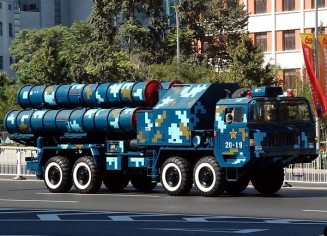
    HQ9 on display at the Army Day in Beijing

    Despite criticism from its NATO allies, Turkey would only give up co-producing an air and missile defense system with the ‘China Precision Machinery Import and Export Corp’ (CPMIEC), if the Chinese company drops the bid. Prime Minister Recep Tayyip Erdogan said on Thursday, as reported by the Turkish publication Today`s Zaman. CPMIEC was sanctioned by the United States in February for violations of the Iran, North Korea and Syria Nonproliferation Act.

    Erdogan reiterated that Turkey will go ahead with purchasing the Chinese defense system as the firm is the only one that is willing to co-produce the defense system with Turkey and is also offering the cheapest price for the tender. According to Erdogan, the Chinese FD-2000 (an export version of the HQ9 system) was the least expensive of all proposals for the Turkish Long-Range Aerial and Missile Defense system (T-LORAMIDS); the combined French and Italian bids were one billion dollar higher than the Chinese for their SAMP/T Aster 30, the US Patriot required $1.2 billion more and the Russian S-400 required $4 billion more, but was also rated the best of all offers.

    The Hurriyet newspaper added that Turkish Foreign Minister Ahmet Davutoğlu said Oct. 26 Turkey was open to new bids in its plan to acquire its first long-range anti-missile system, should negotiations with China come to nothing. “It is not a finalised deal yet. If the American and European companies make us better offers, we will continue to talk with them,” Davutoğlu, was quoted as saying. He also stressed that co-production was an unnegotiable condition for Ankara and only the Chinese firm had complied with it.

    The Turkish selection has angered the US, saying the system would not be compatible with those of Turkey’s other allies. NATO Secretary-General Anders Fogh Rasmussen stated on Tuesday that arms purchases were national decisions but stressed the importance of interoperability between the systems nations plan to acquire and the systems of other NATO countries. “My answer to NATO is that nine of its members still hold Russian made missiles. They had to get those missiles out of their inventory. The Chinese system will be checked to see if it fits the NATO standards,” Erdogan said. The main challenge is the integration of the Chinese system with NATO’s ‘air situational picture’ command and control network shared among all the alliance countries. According to US industry sources, while the system could be operated side by side with NATO systems, full integration remains a challenge as NATO is not familiar with the Chinese system. Even if limited integration is met, ongoing support for such systems would not be possible. “Those in Turkey responsible for the development, production and fielding of those systems should be aware of this” the source said.

    Turkey has asked the United States to extend the pricing on Raytheon Co’s Patriot missile defense system proposal, two sources familiar with the discussions told Reuters on Monday, a sign that Ankara is keeping its options open in case its talks with the preferred Chinese supplier fall through. “As the final decision has not been taken, the other firms on the list always have the possibility to improve their bids,” a senior Turkish official told Reuters.

    China dismissed concerns about Turkey’s decision to co-produce a long-range air and missile defense system with the Chinese firm, (CPMIEC), saying that the US and others were needlessly politicizing a purely commercial deal. “The cooperation between the Chinese firm and Turkey is normal military cooperation between the two countries. We hope that all relevant parties can objectively and rationally view this cooperation, and should not politicize normal commercial competition,” said Chinese Foreign Ministry spokeswoman Hua Chunying. Chunying added that there was nothing to worry about, especially as China had very strict rules on arms exports to ensure no impact on regional or global peace and stability.

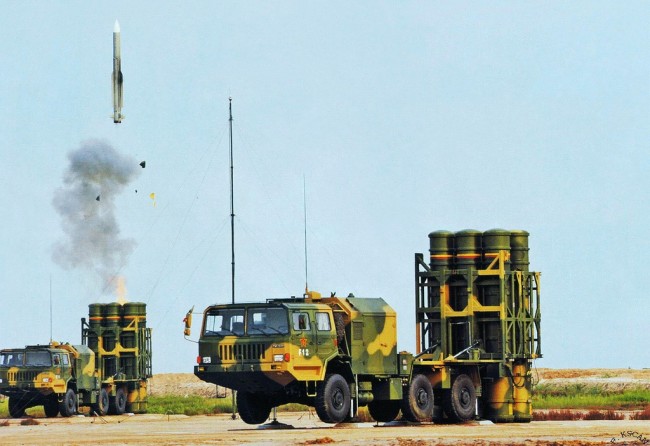
    FD2000 is the export version of the HQ-9 (dubbed the Chinese S300). FD2000 provides improved anti-stealth capability by incorporating the Type 120 low altitude search radar, and Type 305A AESA search radar for full anti ballistic missile capability, and YLC-20 passive sensor, improving counter-stealth capability.
    FD2000 is the export version of the HQ-9 (dubbed the Chinese S300). FD2000 provides improved anti-stealth capability by incorporating the Type 120 low altitude search radar, and Type 305A AESA search radar for full anti ballistic missile capability, and YLC-20 passive sensor, improving counter-stealth capability.

    IAI to Supply Heliborne Weapon Systems Based on LAHAT Missiles

    lahat_lnch_heli
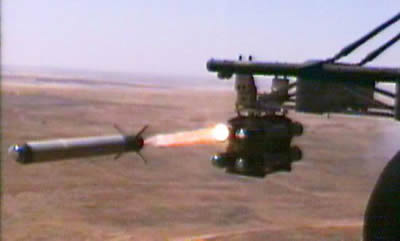
    LAHAT fired from an Indian Mi 8 during test trials in India. Photo: IAI

    Israel Aerospace Industries (IAI) was recently awarded a ‘substantial contract’ for the delivery of a ‘large number’ of LAser Homing ATtack (LAHAT) missile systems, to be used as a primary weapon system combat helicopters, the company announced yesterday. The land based variant of the missile has already been selected to equip the Indian Arjun MKII in its gun-fired configuration.

    The contract (the awarding country was not disclosed) includes the integration and necessary modifications supporting the new capability. The system comprises multiple quad-pack launchers (up to 4 per helicopter), the MOSP-3000 (Multi-mission Optronic Stabilized Payload) day/night observation, targeting and designation system, a firing computer, avionics and multifunction displays – all manufactured by IAI. The installation and testing of the systems on board the helicopters will also be performed by IAI.

    The LAHAT missile is an advanced lightweight guided missile with pinpoint accuracy at long ranges (> 8km). The missile is carried in a quad-pack launcher that weighs about 75 kg, including four missiles, canisters and launcher. The complete system comprising four, eight or 16 missiles, can be installed on different types of helicopters in addition to existing systems. The system significantly improves the combat capability of current and new attack, assault and utility helicopters, by extending missile range, improving accuracy and increasing the weapon quantity carried by each platform.

    Additional capabilities include Line Of Sight (LOS) and Non-Line of Sight (NLOS) firing, a small launch signature and an extremely light launcher. This enables the helicopter to carry a sufficient number of missiles (8-16), substantially enhancing its firepower, while maintaining its maneuverability and endurance even at high temperatures and high altitudes.

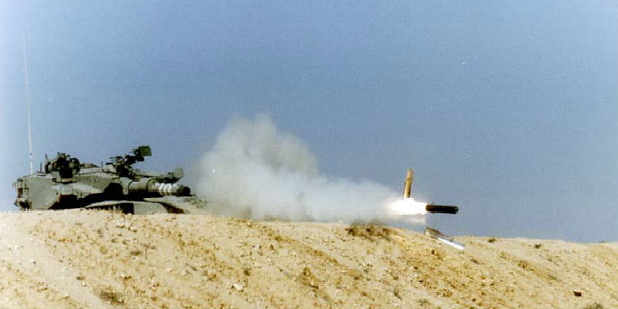
    Originally developed as a gun-launched missile, LAHAT has already been demonstrated to be launched from 105 and 120mm gun barrels, as well as from rail launchers on combat vehicles, small patrol boats, special operations vessels and dismounted ground launchers.

    More insight available for Defense-Update subscribers

    LAHAT tested firing from the 120mm gun of the Merkava Mk III during firing trials. Photo: IMOD / Defense-Update
    LAHAT tested firing from the 120mm gun of the Merkava Mk III during firing trials. Photo: IMOD / Defense-Update

    Improved Gray Eagle Flies Over 45 Hours Non-Stop

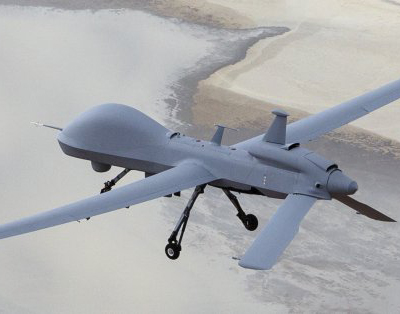
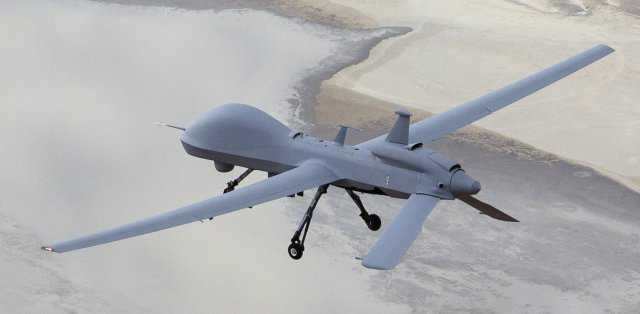
    GA-ASI's Improved Gray Eagle Flies Over 45 Hours Non-Stop.  Endurance Flight Marks First of Two Planned U.S. Army-Sponsored Tests. Photo: GA-ASI
    GA-ASI’s Improved Gray Eagle Flies Over 45 Hours Non-Stop.
    Endurance Flight Marks First of Two Planned U.S. Army-Sponsored Tests. Photo: GA-ASI


    General Atomics Aeronautical Systems announced  the successful completion of the first of two planned U.S. Army endurance demonstration flights with its Improved Gray Eagle (IGE) aircraft. IGE, a next-generation derivative of the Gray Eagle Unmanned Aircraft System (UAS), lifted off from GA-ASI’s El Mirage Flight Operations Facility in Adelanto, Calif., at 6:56 a.m. on October 11th and landed 45.3 hours later at 4:16 a.m. on October 13th.

    “This first endurance flight is a significant accomplishment for Improved Gray Eagle as it demonstrates the aircraft’s game-changing potential for saving the lives of Army Soldiers abroad by providing extended surveillance coverage, along with the ability to self-transit to other remote distant locations,” said Frank W. Pace, president, Aircraft Systems Group, GA-ASI.

    IGE was developed by GA-ASI on Internal Research and Development (IRAD) funds to demonstrate the increased endurance potential and higher payload capacity with minor modifications to the existing Block 1 Gray Eagle platform. The Army Unmanned Aircraft Systems Project Office is supporting testing of the aircraft by funding two demonstration flights this year that are designed to validate the enhanced capabilities. The first endurance test was performed with the aircraft in a Reconnaissance, Surveillance, and Target Acquisition (RSTA) configuration. During the second demonstration, which is planned for later this year, IGE will carry a wing-mounted external payload and weapons.

    IGE has a Max Gross Takeoff Weight (MGTOW) of 4,200 pounds, utilizing the 205HP Lycoming DEL-120 engine. Gray Eagle has a GTOW of 3,600 pounds with a 160HP rated engine. IGE’s deep belly design and 500-pound centerline hard point allows for 850 pounds of internal fuel load, with an optional external fuel pod that can accommodate an additional 450 pounds (Gray Eagle’s fuel load is 575 pounds). Use of this extra fuel would allow for RSTA missions in excess of 50 hours.

    In addition, IGE has a maximum 540-pound internal payload capacity, compared to Gray Eagle’s 400 pounds. This internal payload capacity, combined with the increased engine horsepower, provides growth capability for an improved airworthiness design, with the potential of incorporating lightning protection, damage tolerance, and Traffic Collision Avoidance System (TCAS) features.


    Trophy APS successful in live fire tests on LAV III in Canada

    The RAFAEL Trophy installation on the LAV III included four IAI Windguard radar panels covering the entire vehicle surrounding and two modules accommodating the active elements of the Trophy APS, mounted on the two sides. Photo: Rafael
    The RAFAEL Trophy installation on the LAV III included four IAI Windguard radar panels covering the entire vehicle surrounding and two modules accommodating the active elements of the Trophy APS, mounted on the two sides. Photo: Rafael


    DRS Technologies announced Tuesday, October 22, that the Trophy Actie Protection System it has integrated on a General Dynamics LAV III successfully completed a series of firing tests in Canada. The tests were performed in cooperation with General Dynamics Land Systems (GDLS). The APS, developed by Rafael, was integrated on the LAV III under a ten-month combat vehicle integration and live fire testing program featuring Active Protection technology.

    As part of its strategic initiative to demonstrate next generation anti-armor survivability technologies for its combat vehicle fleets, and following an international tender process, GDLS chose the combat-proven Trophy Active Protection System for its full-scale integration and testing program on a General Dynamics LAV III armored vehicle.

    DRS and Rafael Advanced Defense Systems, partners on the Trophy system, worked in close cooperation with GDLS to perform the detailed mechanical, electrical, and electronic systems design integration and installation of the Trophy system on the LAV III without degrading the original performance level of the vehicle.

    Following a series of mobility trials to stress the Active Protection integration on the vehicle, the system underwent a comprehensive, 3-month live fire test regimen at a Canadian test range against multiple rocket-propelled grenade variants, recoilless rifle, and anti-tank guided missiles. These tests were performed in various challenging engagement scenarios — including short range, moving vehicle, multiple threats, and high clutter environments. Besides performance testing to validate the system functionality, additional test data included arena sampling for collateral effects, residual penetration, vehicle/crew safety, and electronic safe/arm performance.

    “The successful performance of Trophy during the test program, coupled with the robustness of the vehicle integration design, demonstrates that Active Protection technology – and the Trophy system in particular – is both effective and mature,” said Joseph Matteoni, Vice President/General Manager of DRS Sustainment Systems Inc. “We owe it to our troops to do the utmost to avoid another “IED-like” surprise on the next battlefield.”

    Trophy has already been fielded in large numbers to tank units of the Israel Defense Forces and has proven to save lives in several documented combat engagements.  Capable of defeating the full spectrum of direct fire, anti-armor rockets, missiles, and tank-fired high-explosive rounds, the system rapidly detects and tracks an incoming threat, classifies it, computes the optimal intercept point in space, and, if necessary, neutralizes it away from the platform. Additionally, the system reduces the probability of collateral injury in the vehicle vicinity to below one percent.

    Trophy also calculates the location of the shooter, alerts the crew for immediate action, and reports the engagement to the battle management network for situational awareness across the formation.

    Skunk Works and XTEND Simplify Multi-Drone Command

    0
    Lockheed Martin Skunk Works® and XTEND have achieved a major milestone in JADC2 by integrating the XOS operating system with the MDCX™ autonomy platform. This technical breakthrough enables a single operator to simultaneously command multiple drone classes, eliminating the friction of mission handoffs. From "marsupial" drone deployments to operating in GPS-denied environments, explore how this collaboration is abbreviating the data-to-decision timeline and redefining autonomous mission execution.

    From Ukraine to Taiwan: The Global Race to Dominate the New Defense Tech Frontier

    0
    As traditional defense primes face mounting competition from agile “neoprimes” such as Anduril, Palantir and Helsing, the balance of innovation is shifting toward software-defined warfare and scalable, dual-use technologies, while global industry consolidation—marked by Boeing’s integration of Spirit AeroSystems and other strategic mergers—signals an intensified race to secure control over the defense technology value chain. Our Defense-Tech weekly report highlights these trends.

    Europe’s “Drone Wall”

    0
    In early October 2025, a coordinated wave of unmanned aerial system (UAS) incursions—widely attributed to Russia—targeted critical infrastructure across at least ten European nations. The unprecedented campaign exposed the fragility of Europe’s air defenses...

    Weekly Defense Update & Global Security Assessment

    0
    Executive Summary The past week (September 18-25, 2025) represents an inflection point where strategic defense concepts have transitioned from doctrine to tangible reality. An analysis of global events reveals four primary, interconnected trends shaping an...

    U.S. Air and Space Forces Push Next-Gen Programs at the AS&C 2025 Conference and...

    0
    At the 2025 Air, Space & Cyber Conference, U.S. Air Force and Space Force leaders unveiled major updates on next-generation fighters, bombers, unmanned systems, and space initiatives, highlighting both rapid innovation and critical readiness challenges as the services race to outpace global competitors. A short version is available here, with a more detailed version for subscribers.

    TADTE 2025: Reflecting Taiwan’s Strategic Themes

    0
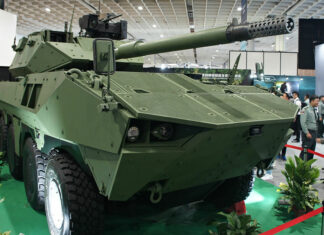
    The Taipei Aerospace & Defense Technology Exhibition (TADTE) 2025 crystallized around four dominant strategic themes that collectively illustrate Taiwan's comprehensive approach to defense modernization amid escalating regional tensions. Based on a detailed report by Pleronix (available upon request). Includes a Podcast discussion on TADTE 2025's highlighting Taiwan's four strategic themes beyond the post's coverage.

    Iron Beam 450 Completes Testing, Soon to Join With Operational Air Defense Units

    0
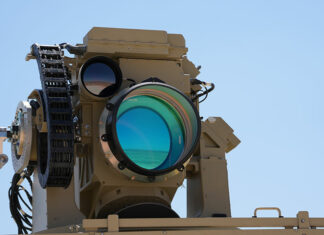
    Israel’s Iron Beam 450 high-power laser system has completed final testing, marking a major leap in air defense. Developed by Rafael, it offers precise, cost-effective interception of rockets, UAVs, and mortars, and is set for IDF deployment by 2025.