

Sunday, December 28, 2025
More
    Home Blog Page 156

    China Moves Ahead of the United Kingdom to Become the World’s Fifth Largest Arm’s Exporter

    chinaThe latest report on international arm’s trade published by the Stockholm International Peace Research Institute (SIPRI) places the People’s Republic of China (PRC) in fifth place among the world’s top exporters of weapons. SIPRI’s Trends in International Arm’s Transfers report places China in the fifth spot for the first time since the Institute’s 1986-1990 reporting period. With China’s ascension to the fifth spot, the United Kingdom now drops to sixth place for the first time since 1950, the year SIPRI published its first report.

    China is estimated to account for 5 percent of the world’s arm’s exports with the United States still commanding a strong lead with 30 percent of the international export total. Pakistan, listed in the report as the world’s third largest arm’s importer, is China’s most important customer.

    As an independent international institute, SIPRI is renowned for the validity of its research data and analysis. The institute’s data is based on the volume of trade as reflected in arm’s deliveries and does not represent the monetary value of such trades.

    SIPRI manages a comprehensive database of arm’s transfers that details imports and exports dating back to the 1950s. Information contained in the database is averaged over five-year periods to present a trend that accounts for variations in sales and purchase volumes from year to year.

    Between 2008 and 2012, China’s weapon’s exports jumped 162 percent in comparison to the last five-year period covering the years of 2003 to 2007. This increase reflects a rise in China’s share of the international total from 2 percent to five percent.

    Pakistan was the recipient of 55 percent of China’s weapon’s exports during the period covered by this report. This trend is very likely to continue for some years to come considering the large volume of outstanding Pakistani orders as yet to be filled and proposed future orders. Pakistan is expected to initiate additional future orders for submarines, frigates, and combat aircraft.
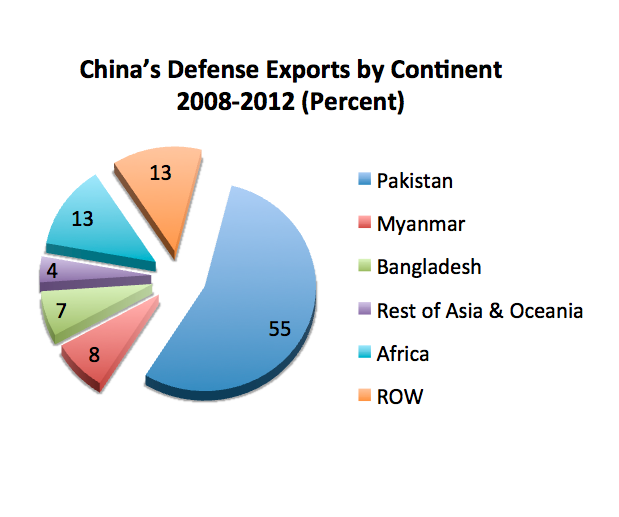
    China's Defense Exports - 2008-2012 (%)
    China’s Defense Exports – 2008-2012 (%) Source: SIPRI

    China has been pursuing an aggressive campaign to increase arm’s exports and these efforts are obviously paying dividends. Myanmar, although undergoing critical reforms supported by the United States, accounted for 8 percent of China’s weapon’s exports. Bangladesh has been right on Myanmar’s heels claiming 7 percent of China’s arm’s shipments. Other key nations including Morocco, Algeria, and Venezuela have also been solid Chinese customers.

    SIPRI’s report also identifies China as being the world’s second place importer of arms with 6 percent of the international total. India is the world’s number one importer with 12 percent of the global total. The report indicates that the Asia-Pacific region has become the world’s largest importer of weapons with India, China, Pakistan, South Korea, and Singapore claiming title to the top five spots. Now, the region accounts for 47 percent of the global total of conventional arm’s imports.

    As the world’s second-leading economy, China has been able to increase defense spending by double digits throughout most of the past two decades. This increased infusion of funding has financed the efforts of domestic contractors in developing high-quality weapons that are beginning to rival the best produced by Russia and the United States. As China’s defense industry grows and matures, its reliance on foreign imports will likely begin to decline significantly in future years.

    With numerous restrictions complicating China’s access to arm’s imports; domestic contractors have become increasingly important in Beijing’s efforts to build a modern military force capable of supporting its future political and economic interests on a global stage.

    The United States remains the world’s number one arm’s exporter with a 30 percent share of the global market followed closely by Russia with a 26 percent share. Germany and France are a distant third and fourth with a 7 percent and 6 percent share respectively.

    The world has witnessed a sharp increase in arm’s trading since 2003, growing almost 50 percent to an international total of more than $1.4 trillion. Despite the economic woes weighing down many nations, the market for conventional weapons is likely to remain strong as Asian-Pacific nations race to keep pace with a much improved and growing Chinese military presence, a presence many nations fear may eventually become too great to challenge.

    Read the report at SIPRI website
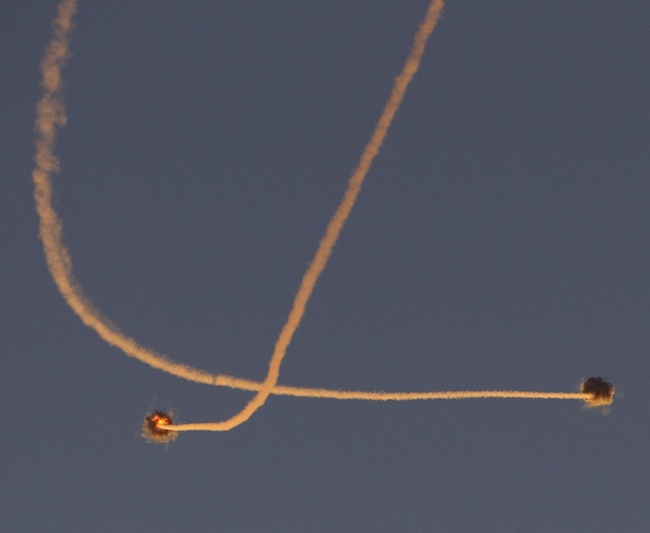
    How Many Rockets Did Iron Dome Shoot Down?

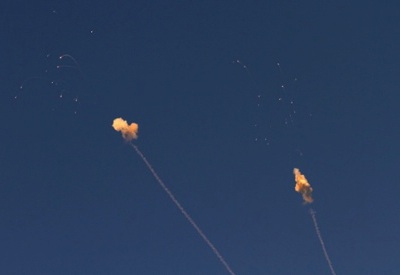
    Smoke trails from two Iron Dome interceptors defeating Grad rockets launched from Gaza at Sderot. November 15, 2012. REUTERS/Ronen Zvulun
    Two Iron dome rockets explodes to intercept rockets launched from the Gaza Strip. These explosions, as many others, clearly show asymmetrical distribution, contrary to Postol's claim. AP Photo, Photo/Ariel Schalit
    Two Iron dome rockets explode, intercepting rockets launched from the Gaza Strip. These explosions, as many others, clearly show asymmetrical distribution, contrary to Postol’s claim. Debries from the target and warhead are clearly seen in this photo, as in many others. AP Photo, Photo/Ariel Schalit

    Defense-Update: A number of articles published recently in Israel and abroad – including one in Haaretz daily newspaper, by Reuven Pedatzur which was widely quoted worldwide – have questioned the performance of the Iron Dome counter-rocket, artillery and missile (C-RAM) system praised for defeating most of the rockets fired at Israel by Palestinians during  Operation Pillar of Defense, in November 2012.

    MIT Prof. Ted Postol
    MIT Prof. Ted Postol

    The source of these articles is a study conducted by Professor Theodore Postol, a well-known expert at MIT, together with Israeli researcher Dr. Mordechai Shefer and an unnamed engineer from Raytheon.

    Unlike past studies published by Postol, we have not yet managed to access the Iron Dome study online and, therefore, rely on second hand review by Reuven Pedazur’s article which was widely referred to online in recent weeks.

    The article said Postol’s report claims that Iron Dome was able to intercept only five percent of all the rockets fired at Israel during Operation Pillar of Defense in November 2012, a far cry from the 85 percent success rate boasted by Israel.

    Pedazur, a long time critic of all Israel’s missile defense programs, said Postol claims that Iron Dome did not succeed in hitting the warheads of the enemy rockets and shooting them out of the sky. Since the MIT researcher did not get scientifically recorded evidence, he reached this conclusion mainly from an analysis of video footage of interceptions (gathered online from youtube etc.)

    “There is a major difference between legitimate criticism and adamant claims that the Israel defense establishment’s claims about Iron Dome are fraudulent, and that these lies are typical of the defense establishment. Such mudslinging is unreasonable and unacceptable.”

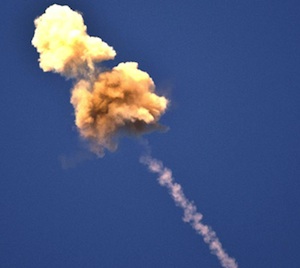
    An asymmetric smoke cloud created after an explosion of the Iron Dome warhead near a target. Two 'puffs' are clearly seen.
    An asymmetric smoke cloud created after an explosion of the Iron Dome warhead near a target. Two ‘puffs’ are clearly seen.

    According to the report’s authors, most of the explosions appear spherical, which indicates that the interceptor missile warhead is exploding, and that this is not a secondary explosion of the rocket’s warhead. Otherwise, they contend, there would have been two explosions visible, or at least something asymmetrical. They also identified Iron Dome interceptors exploding shortly after they made a sharp turn. In their opinion, this was a pre-programmed trajectory and not pursuit of a target. Another ‘anomaly’ that testified to the Israeli authorities lying about the C-RAM success is the Israeli Property Tax Authority reports indicating that 3,200 claims were made for damages caused by the rockets, as well as a report from the southern district of the Israel Police that 109 rockets fell in built-up areas, which is almost double the 58 reported by the IDF.

    Yiftah Shapir Senior Research Fellow and Director, Military Balance Project at INSS
    Yiftah Shapir
    Senior Research Fellow and Director, Military Balance Project at INSS

    The Israeli Institute of National Security Studies published a rebuttal to these claims, raising serious doubts about Postol’s methods and conclusions.

    “The report’s claims appear puzzling, to say the least, particularly the contention that Iron Dome did not succeed in causing the rocket’s warhead to explode. This claim is reminiscent of claims from the 1991 Gulf War, directed then at the Patriot missiles, which in fact were not successful in hitting the Scud warheads, for the simple reason that the Patriot was designed to intercept and shoot down planes, not missiles. It appears that criticism of Iron Dome draws on claims made against US missile defense systems and pasting them on to the Israeli system, while ignoring the clear differences between the systems and between the different strategic situations.” Yiftah Shapir, INSS researcher commented.

    “A Grad rocket is not a Scud,” Shapir commented, “Professor Postol claims that he knows exactly what happens when an Iron Dome Tamir interceptor explodes next to a pipe several meters long with a 20 kilo warhead. However, the fact is that the defense establishment has understandably not published this information, and therefore we can only guess what actually occurs.”

    “The report’s findings are based on an analysis of dozens of video clips. These clips were not filmed during sophisticated trials; they were taken by civilians who photographed them using their smartphones and uploaded them to YouTube. In general, it is not possible to know where they were filmed or the direction in which the person filming was looking. It could be that the dozens of clips on Youtube belonged to a single interception and were filmed by different people from different directions. It is very difficult to conduct precise analyses, and it is generally difficult to learn from the film about the geometry of the missile’s flight.”

    Moreover, it is also important to remember that not all the rockets that fell in built-up areas were failures of Iron Dome, for the simple reason that not all cities in Israel were protected in the first place by Iron Dome. “A rocket hitting an unprotected target, painful though it may be, does not indicate that Iron Dome failed.” Shapir added. The critics see them as proof that the defense establishment is lying: 109, not 58. However, the Israel Police reported calls from citizens, and these include reports on falling fragments, rocket parts, and duds. How many of the reports were really about rockets? Even if 109 rockets were actually falling on target, that means 1391 did not – and a substantial number were defeated by ‘something’, definitely, not something scoring five percent kill rate. About claims to Property Tax Authority, it is obvious that 58 rockets did hit populated targets, killing and wounding civilians and causing significant damage to property. The fact that 3,200 claims were filed actually shows the devastated effect of such rocket strikes and the need for an ‘Iron Dome’ to defend from such attacks.

    “It appears, then, that critics are happy to disparage the Iron Dome system and belittle the lessons from Operation Pillar of Defense, using only dubious research without access to credible data. Debating various aspects related to Israel’s defense establishment, weapon systems, and strategic choices is both legitimate and welcome, if deliberations are based on reliable data.” Shapir concluded, “However, there is a major difference between legitimate criticism and adamant claims that the Israel defense establishment’s claims about Iron Dome are fraudulent, and that these lies are typical of the defense establishment. Such mudslinging is unreasonable and unacceptable.”


    Source: Defense-Update

    How Effective Anti-Ballistic Missile Defense is Against Countermeasures?

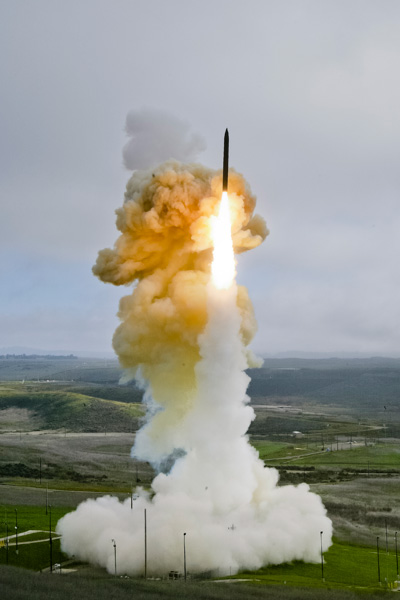
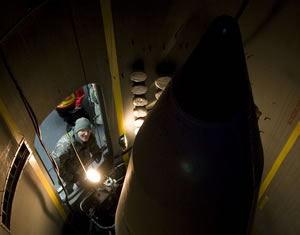
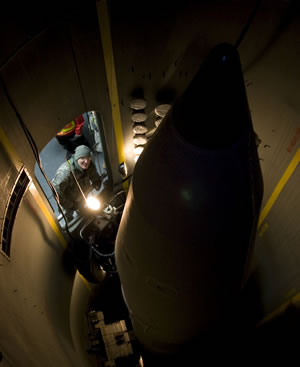
    Ground Based Interceptor (GMD) launched on a flight test from a silo in Vandenberg AFB. Photo: MDA
    Ground Based Interceptor (GMD) launched on a flight test from a silo in Vandenberg AFB. Photo: MDA
    Ground Based Interceptor (GMD) launched on a flight test from a silo in Vandenberg AFB. Photo: MDA

    While the US administration openly stated confidence in its Ground Based Interceptors (GBI), research analysts from the Union of Concerned Scientists (UCS) warn that such weapons may not be sufficient to protect from a deliberate attack launched by North Korea, since the current level of missile defense technology has not matured yet to the level enabling the defense systems to engage realistic-complex targets, or discriminate between real decoys and real warheads.

    David Wright, co-director and senior scientist at UCS say it is likely that the US will face a ‘reactive enemy’ that will be able to develop and deploy decoys and other countermeasures to make it more difficult for U.S. defenses to defeat such missiles. “After all, if North Korea has the capability of building a long-range missile and a nuclear warhead to put on it and has the motivation to fire it at the U.S., you have to assume it also has the capability and motivation to build countermeasures into that missile to make it effective against the defense it knows the U.S. is building.” Wright commented.

    “Lightweight decoys can be released with the warhead, which is itself disguised to look like a decoy (this is called “anti-simulation”).” Wright said, “Not all the decoys need to look exactly the same; in fact the best approach is to have them all look and behave slightly differently so that nothing identifies an object as a decoy versus a warhead. Enough is known publicly about the [U.S.] defense system and its sensors that the attacker can design its countermeasures with the aim of denying those sensors the information the defense would need to identify the warhead.”

    David Wright UCS
    David Wright UCS

    “None of the intercept tests conducted so far of the U.S. ground-based or ship-based systems has included realistic countermeasures that you should expect in a real-world attack from North Korea.”

    “The tests haven’t even included a warhead that is tumbling—intentionally or not—which is a very hard target for interceptors to hit. Some tests have included objects referred to as “decoys” but in each case the warhead and “decoys” looked different and the interceptor was told in advance which object to attack. (MIT Such scripted tests may be appropriate at this relatively early stage of development of the system, but they do not show the system will be effective against a real-world attack.

    “None of the intercept tests conducted so far of the U.S. ground-based or ship-based systems has included realistic countermeasures that you should expect in a real-world attack from North Korea.” Wright stressed, “The Pentagon still doesn’t know how to solve this problem… That’s why the large difference in technical sophistication between the U.S. and North Korea does not automatically tip the balance in favor of the U.S. in this challenge.”

    “People frequently downplay the countermeasures issue, in part because it makes the problem so difficult. But unfortunately it is real.” Wright concludes, “The bottom line is that it makes no sense to add interceptors and/or an east-coast deployment site until the system has been shown to be effective against a real-world threat.”
    India Tests BrahMos Missile Launch From an Underwater Platform

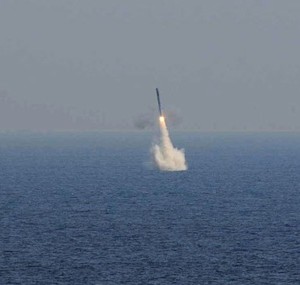
    Brahmos first submarine launched March 20, 2013
    Brahmos first submarine launched March 20, 2013
    Brahmos first submarine launched March 20, 2013

    India successfully carried out the maiden test firing of a submarine-launched BrahMos missile, lunching the 290 km-range supersonic missile over a test range in the Bay of Bengal. India is the first country to demonstrate such capability. The missile was fired from a submerged ponton simulating a submarine launcher. Ship and ground-launched versions of the missile have been successfully tested and put into service with the Indian Army and the Navy.

    “BrahMos missile is fully ready for fitment in submarines in vertical launch configuration which will make the platform one of the most powerful weapon platforms in the world,” BrahMos company chairman Sivathanu Pillai said. Submarines having vertical launch tubes are not yet available with the Indian Navy. The first submarine, INS Arihant is expected to enter sea trials this year (2013) and, following commissioning, will provide a launch testing platform for three missiles – K15, BrahMos and Nirbhai cruise missile. The first of three Arihant class ballistic missile submarines (SSBN) was originally scheduled to be commissioned in 2013, to be followed by two sister ships thereafter.

    The maiden test of the submarine-launched version of BrahMos comes over a week after the indigenously built long-range subsonic cruise missile Nirbhay failed to hit its target in its first test.

    Despite The Economic Slowdown, Israel’s Top 3 Defense Companies Sold $7 Billion in 2012
    Israel Top 3 Defense Companies Sales - 2012
    Israel's Top 3 Defense Companies 2012 Financial Results
    Israel’s Top 3 Defense Companies 2012 Financial Results

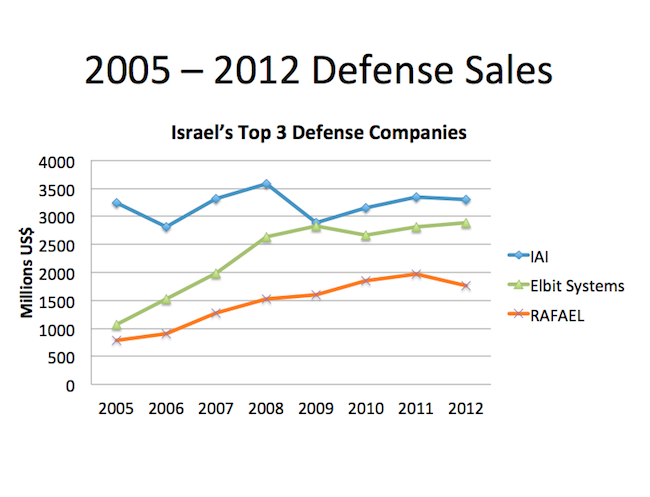
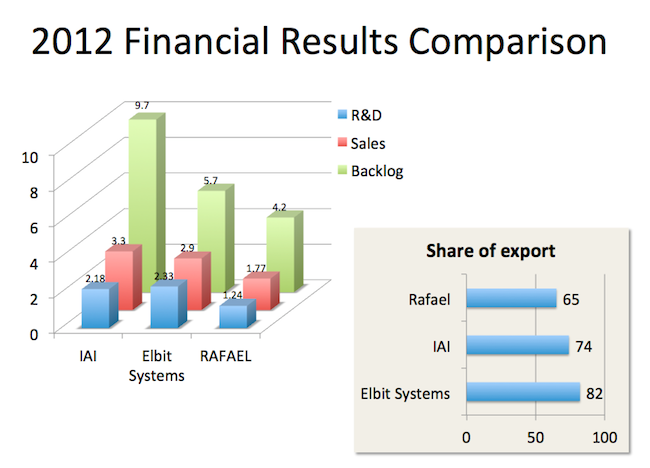
    Israel’s top three defense industries have reported about their financial performance in 2012 in the past week. Elbit Systems, RAFAEL and Israel Aerospace Industries (IAI) all performed well last year. Elbit gained momentum with record revenues of US$2.88 billion and net income of 168 million; operating profit also improved, compared to 2011.

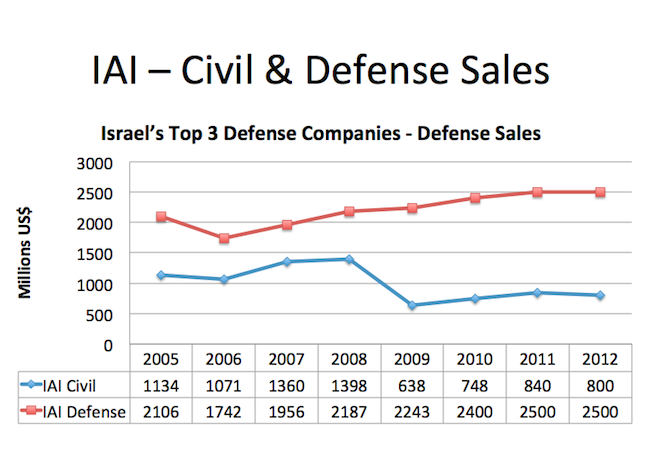
    iai_civil_militaryIAI reported sales of $3.3 billion in 2012, holding the level of defense sales it has maintained since 2010. while IAI’s sales continue to grow, sales to the commercial market are stagnant, after the drop in demand for business aircraft since the 2008 financial crisis and slowdown in aircraft conversion in past years.

    These difficulties and the business environment are pressing the companies net profit, that has reached $69 million in 2012, eroding for the second year. The company also reported negative cashflow of $294 due to delay in advance payments from customers that missed the past quarter report.

    RAFAEL’s sales dropped slightly in 2012, from $1.945 to $1.775 Billion; the company attributed the decline to accounting policy related to a significant deal that is undergoing contract updates. In fact, the company reports order increase or 449 million in 2012, up 23% over 2011.

    The aggregate backlogs reported by Israel’s top 3 companies reach nearly US$20 billion, reflecting a healthy flow of business to the country’s defense sector and hundreds of subcontractors depending on the market leaders for their lifeline. The
    Defense activities of the three companies reached over $7 billion in 2012 with aggregated aerospace & defense export amounting $5.9 billion. Domestic sales, primarily to domestic prime contractors and to the Israel Defense Forces (IDF) represented $2.2 billion for the three companies.

    Elbit Systems’ performance were attributed to the airborne systems and C4ISR systems areas of operations. The major increase was in the airborne systems area of operations, primarily due to the increased revenues from North American customers of avionic system, aerostructures and maintenance services. The decrease in the land systems area of operations was mainly due to a decline in revenues of fire control and life support systems in Israel and North America.

    Rafael’s profits in 2012 were achieved for the most part from air defense and air superiority, defense systems for MBT’s and armored vehicles, air-to-ground missiles, electro-optical-tactical precision missile systems, navigating, targeting and tactical reconnaissance pods, various types of armor and protection systems, remote-controlled weapon stations, breaching munitions, space propulsion, and more.

    Israel Top 3 Defense Companies Sales - 2012
    Israel Top 3 Defense Companies Sales – 2012

    US B2, B-52 Flaypast over Korea – Warning Signal to Pyongyang

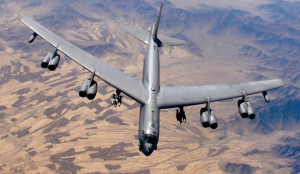
    B-52H Stratofortress
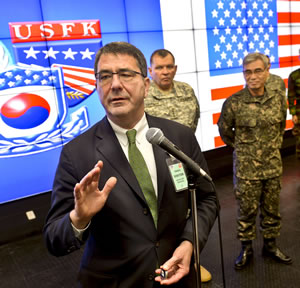
    Deputy Defense Secretary Ash Carter met with members of South Korean President Park Geun-hye’s new administration, and with U.S. military and diplomatic officials. Photo: USFK
    Deputy Defense Secretary Ash Carter met with members of South Korean President Park Geun-hye’s new administration, and with U.S. military and diplomatic officials. Photo: USFK

    The United States Air Force announced it is sending two B-2B Spirit stealth bombers to support Exercise Foal Eagle in South Korea. began flying B-52 bombers over South Korea, amid rising tensions with North Korea, Pentagon officials said today. Pentagon press secretary George Little said one B-52 flew over South Korea on Friday, March 8 and another mission flew Tuesday 19th, this time the bomber flew at low altitude, and was clearly visible from the ground. In response, North Korea warned of “strong military counter-action” if the U.S. again flies B-52 bombers over the Korean peninsula.

    The B-52 Stratofortress can carry conventional and nuclear weapons, including air-launched cruise, however, according to the Pentagon, the bombers on the mission supporting the Korean exercise are not armed with such weapons.

    The bombers are supporting exercise Foal Eagle. Participation of such aircraft in international exercises is not uncommon but the Pentagon used the occasion to draw attention to the fact that B-52 bombers could provide an American nuclear “umbrella” over South Korea and Japan, deterring a potential missile attacks from North Korea. “We’re deeply concerned about North Koreans’ behavior and rhetoric,” Little said.

    Exercise Foal Eagle is an annual combined and joint unit tactical field training exercise conducted jointly by the U.S. and Republic of Korea. The exercise began March 1 and lasts through April 30, testing the readiness and operational capabilities of the forces in the Korean peninsula. The exercise comprises a series of 20 separate but inter-related joint and combined field training exercises conducted by Combined Forces Command and U.S. Forces Korea components spanning ground, air, naval, expeditionary, and special operations. Approximately 10,000 U.S forces (mostly units coming from abroad) along with ROK military personnel are participate in the exercise.

    U.S. Deputy Defense Secretary Ashton Carter is visiting Seoul this week. Carter said that the provocations that are part of a continuing North Korean pattern pose a serious threat to the United States, to South Korea and to regional stability. “If the North Koreans think this kind of thing is going to get them anywhere, they’re mistaken,” Carter said. “The only effect it’s having is to bring down upon North Korea the opprobrium of the entire world.”

    The United States is working with friends and allies around the world to employ an integrated response to these unacceptable provocations, Carter added. The response includes United Nations Security Council resolutions with unprecedentedly strong sanctions against North Korea, and more unilateral sanctions of great effect, and the nation’s resulting progressive isolation, he said.

    “In the military sphere, the United States remains steadfast in its defense commitments to the Republic of Korea,” the deputy defense secretary observed. “Together, we are taking important steps to advance the alliance military capabilities.” In particular, the United States remains committed to extended deterrence offered by the U.S. nuclear umbrella, and to ensuring that all capabilities remain available to the alliance, he added. The B-52 flights over Korea reiterated his statement.

    F-35 Enters Operational Testing at Edwards and Nellis Air Force Bases

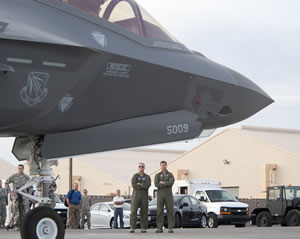
    Maj. Gen. Jeff Lofgren (left), U.S. Air Force Warfare Center commander, and Brig. Gen. Charles Moore (right), 57th Wing commander, wait to greet the pilots of the two F-35 Lighting IIs that arrived at Nellis Air Force Base, Nev., March 6, 2013
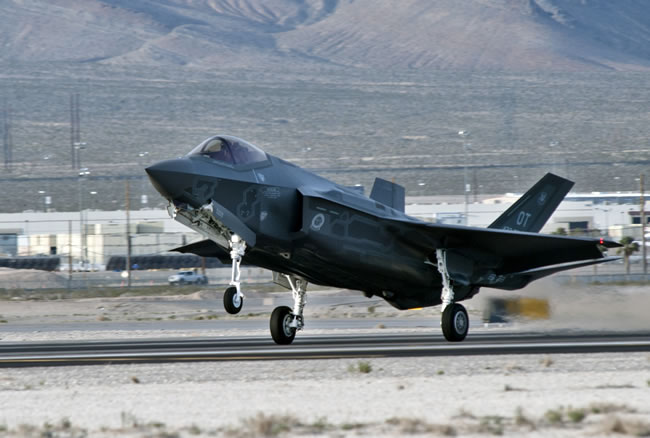
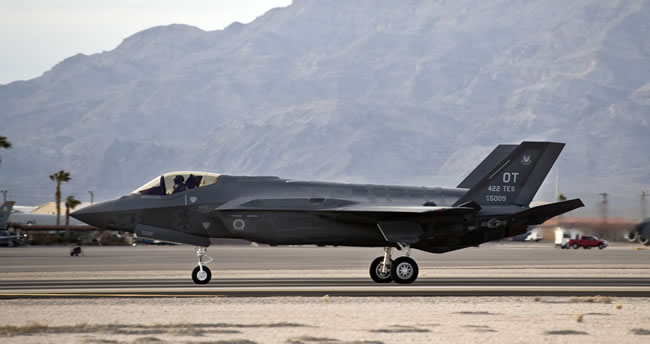
    A Lockheed Martin F-35 Lightning II lands at Nellis Air Force Base, Nev., March 6, 2013. The aircraft will be assigned to the 422nd Test and Evaluation Squadron and the aircraft will be used for development test support, force development evaluation, and supporting operational test aircraft at Edwards AFB, Calif. Photo: Airman 1st Class Jason Couillard, U.S. Air Force
    A Lockheed Martin F-35 Lightning II lands at Nellis Air Force Base, Nev., March 6, 2013. The aircraft will be assigned to the 422nd Test and Evaluation Squadron and the aircraft will be used for development test support, force development evaluation, and supporting operational test aircraft at Edwards AFB, Calif. Photo: Airman 1st Class Jason Couillard, U.S. Air Force

    The F-35 Lightning II program at the Air Forces’ flight test center at Edwards FAB has entered a new phase of testing with the arrival of the first two operational test aircraft March 6, 2013. Team members from the 53rd Wing’s 31st Test and Evaluation Squadron, a tenant unit here, will determine how to best tactically operate the F-35A. Another 53rd Wing squadron, the 422nd Test and Evaluation Squadron (TES) at Nellis AFB, Nev., also received four F-35As on Tuesday (March 19, 2013) and will take part in the operational test process of the new aircraft.

    “We’ve got a brand new tool with a whole new set of capabilities that has never been used by the combat air forces. We have to take that tool and find out the best way to utilize it, to go out and defeat an enemy on the battlefield – Lt. Col. Steven J. Tittel, the 31st TES commander

    “As part of the Joint Operational Test Team, we take the aircraft hardware and software released from developmental test, our training from the 33rd Fighter Wing at Eglin (AFB, Fla.), the administrative and logistics support we get from the Joint Program Office and Lockheed Martin, and we integrate all of these disparate elements with maintenance practices, tactics, techniques and procedures required to create an incredibly lethal weapon system that can go out and win the nation’s wars,” said Lt. Col. Steven J. Tittel, the 31st TES commander. “We’ve got a brand new tool with a whole new set of capabilities that has never been used by the combat air forces. We have to take that tool and find out the best way to utilize it, to go out and defeat an enemy on the battlefield,” he continued.

    Maj. Gen. Jeff Lofgren (left), U.S. Air Force Warfare Center commander, and Brig. Gen. Charles Moore (right), 57th Wing commander, wait to greet the pilots of the two F-35 Lighting IIs that arrived at Nellis Air Force Base, Nev., March 6, 2013
    Maj. Gen. Jeff Lofgren (left), U.S. Air Force Warfare Center commander, and Brig. Gen. Charles Moore (right), 57th Wing commander, wait to greet the pilots of the two F-35 Lighting IIs that arrived at Nellis Air Force Base, Nev., March 6, 2013

    With the F-35A slated to replace the A-10 and F-16, pilots selected for F-35 operational test and evaluation were hand-picked from among the best in the Air Force and bring a wide variety of expertise to the program. “Basically, this jet is going to encompass all of our air-to-ground roles and including some of our air-to-air roles as well. What they wanted was expertise from all those different platforms that will eventually be replaced by the F-35,” said Maj. Matthew L. Bell, the 31st TES Operations Flight commander. “The bottom line is we have all these jets with specialized capabilities and you want to make sure that if you’re eventually going to replace these airframes with one jet, none of that corporate knowledge is lost,” he added.

    Bell, an A-10 Thunderbolt II pilot with more than 1,500 hours in the jet transitioned to the F-35 in December of 2012, bringing extensive knowledge of air-to-ground capabilities, close-air support, and forward-air-control to the operational test and evaluation program. Five additional pilots will be working alongside Bell with F-15E Strike Eagle and F-16 Fighting Falcon experience that adds a dimension of air-to-air expertise and an in-depth knowledge of deep strike capabilities. The 422nd TES is unique in that it is the Air Force’s only flying squadron to have all fighter aircraft with A-10s, F-15Cs, F-15Es, F-16s, F-22s, and now the nation’s newest airframe, the F-35.

    What we do here over the next few years will absolutely play a large part in determining the jet’s effectiveness in real-world operations for the next 30 to 40 years

    “We did that intentionally. The F-35 is designed to replace different legacy aircraft throughout the fleet. So we pulled together as much experience from different mission sets as we possibly could so we have a good baseline for evaluating the aircraft across all the missions it will be expected to perform in the future,” Tittel said. Together, their corporate knowledge will help shape combat tactics of the F-35A.

    “We’re not necessarily trying to make this jet operate exactly like an F-15, F-16 or an A-10; we’re trying to figure out how to make an F-35 operate tactically. We’re trying to combine all that knowledge into a new set of tactics for the U.S.’ newest fighter and make sure that those tactics all make sense,” Bell said.

    The Air Force also recruited top maintainers to support the F-35 operational test and evaluation efforts. These maintainers have been diligently preparing for the work ahead.

    “We have a lot of top-notch maintenance troops out there that were highly sought after to come into this program. They have been going through a lot of training either across the ramp with the 461st Flight Test Squadron or down at Eglin AFB (Fla.), with a lot of hands-on academics,” Bell said. “Maintenance is out there and they’ve been aching to get their hands on the jets for a long time.”

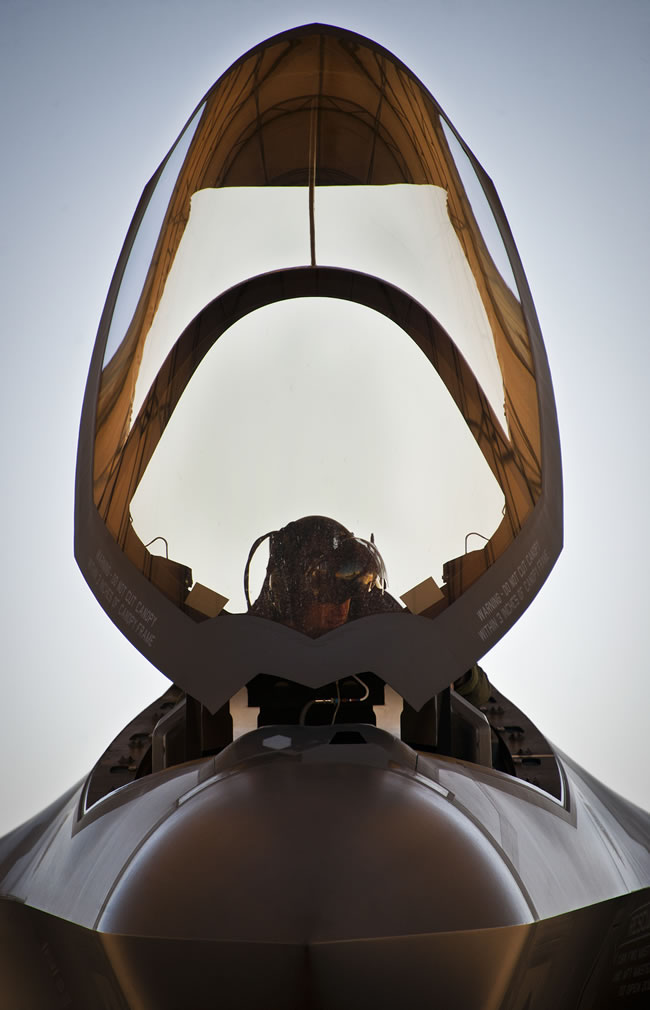
    Lt. Col. Benjamin Bishop, the 422nd Test and Evaluation Squadron director of operations, completes preflight checks before his first sortie in an F-35A Lightning II at Eglin Air Force Base, Fla., March 6. Bishop is among the first pilots to begin the official training that began in January. Bishop and other 422nd TES pilots will begin operational testing of the joint strike fighter later this year at Nellis Air Force Base, Nev. Photo: Samuel King Jr., U.S. Air Force.
    Lt. Col. Benjamin Bishop, the 422nd Test and Evaluation Squadron director of operations, completes preflight checks before his first sortie in an F-35A Lightning II at Eglin Air Force Base, Fla., March 6. Bishop is among the first pilots to begin the official training that began in January. Bishop and other 422nd TES pilots will begin operational testing of the joint strike fighter later this year at Nellis Air Force Base, Nev. Photo: Samuel King Jr., U.S. Air Force.

    In total for the 31st TES, there are approximately 150 personnel involved in operational test and evaluation for the F-35A. The 31st TES has grown over the past two years to include nearly 250 personnel; who can be found working in the combined test forces located throughout the base.

    They also work on programs such as the B-1 Lancer, B-2 Spirit, RQ-4 Global Hawk and MQ-9 Reaper; in addition to the F-35 Lightning II.

    While formalized testing is approximately a year and a half away, the necessary steps along the way will continue to benefit the F-35 operational test and evaluation program.

    According to Bell, once the ground engine runs for maintenance are completed, he expects the flying to begin shortly thereafter. Initial flying operations will help pilots become familiar with their new airframe.

    “Regardless of the experience we had before, this is still a new jet. In my mind, there is a large spin-up time to become experienced enough for the high-tempo scenarios we’re going to be involved in,” Bell said. “While actual formal testing will begin in about a year and a half, everything that we’re going to be doing up to that point will benefit the program.”

    Formalized testing will evaluate the production-representative F-35A, as well as support equipment and the logistics supply system in an operationally representative environment; with the ultimate goal of determining whether or not the program is suitable and effective in a real-world combat environment.

    It encompasses the aircraft’s survivability, as well as the ability to support and execute flight operations and maintenance at home and in deployed locations.

    “We are the Air Force element of the larger joint and international test effort that will occur here at Edwards to get the F-35 through its initial test and evaluation, both for the Block 2 and Block 3 software,” Tittel said.

    “We’re very much tactics developers, but we’re still evaluating the aircraft from an operational perspective; from the time we get it to the time we finally send it out as a completed product to the combat air forces,” he continued.

    The men and women of the 31st TES will not only shape the future of air combat tactics for the F-35A, but they will ensure that the program is effective, sustainable and efficient in the real-world combat environment – a top priority for the Air Force of tomorrow.

    “The Joint Operational Test Team has moved into a new phase. What we do here over the next few years will absolutely play a large part in determining the jet’s effectiveness in real-world operations for the next 30 to 40 years, at least,” Tittel said. “It’s a privilege to be on the leading edge of integrating new technologies into a combat airframe and then releasing it out to the combat air forces.”

    The 31st TES and 422nd are geographically separated units of the 53rd Wing, headquartered at Eglin AFB.

    The Air Force plans to base 36 F-35 fighter aircraft at Nellis between 2012 and 2020; By 2019 12 jets will support operational testing and tactics development and evaluation, in the following years 24 additional planes will be deployed with the weapon school training. Flight activities will occur at the base and the Nevada Test and Training Range north-west of Nellis.

    by Laura Mowry, 412th Test Wing public affairs.
    This article was first published by the US Air Force

    One of two Lockheed Martin F-35 Lighting IIs lands at Nellis Air Force Base, Nev., March 6, 2013. Photo: Airman 1st Class Christopher Tam, US Air Force
    One of two Lockheed Martin F-35 Lighting IIs lands at Nellis Air Force Base, Nev., March 6, 2013. Photo: Airman 1st Class Christopher Tam, US Air Force

    K-MAX to Stay in Afghanistan Until the 2014 Withdrawal

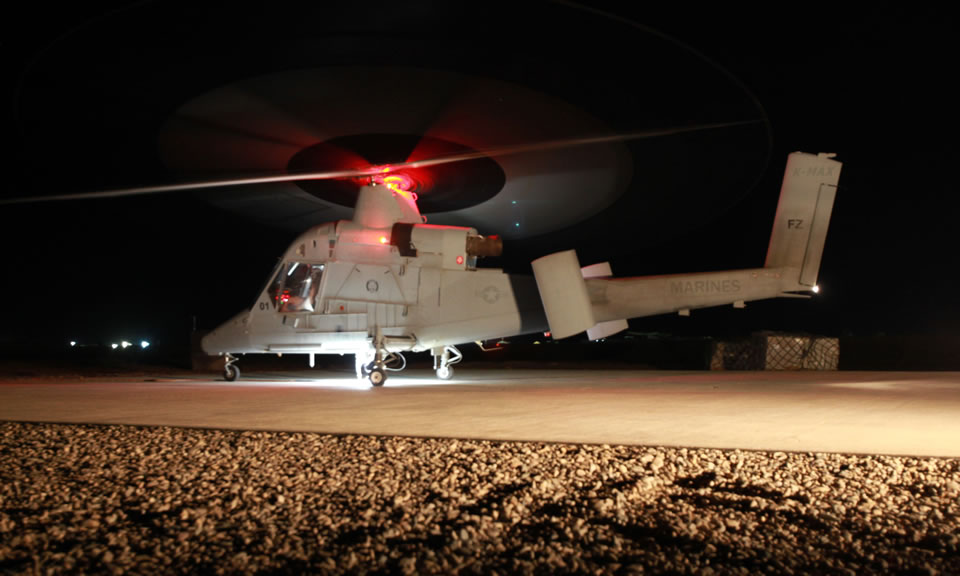
    A K-MAX helicopter with Marine Unmanned Aerial Vehicle Squadron 1 rests on a Helipad prior to liftoff for a supply mission in Helmand province, Afghanistan, April 30. The K-MAX has flown more than 400 missions supporting Marines at various locations. Photo: US Marine Corps Cpl. Isaac Lamberth
    A K-MAX helicopter with Marine Unmanned Aerial Vehicle Squadron 1 rests on a Helipad prior to liftoff for a supply mission in Helmand province, Afghanistan, April 30. The K-MAX has flown more than 400 missions supporting Marines at various locations. Photo: US Marine Corps Cpl. Isaac Lamberth

    The U.S. Marine Corps will keep the two K-MAX unmanned helicopters in Afghanistan ‘indefinitely’, at least, until the withdrawal or US troops from the country next year, a Navy spokeswoman said, noting the aircraft kept re-supply trucks off the road and reduced the threat of roadside bombs. The two helicopters built by Kaman Aerospace and Lockheed Martin have logged over a thousand supply missions supporting Marines in Afghanistan since November 2011. On these missions the K-MAXs hauled more than 3 million pounds of cargo that would have otherwise been transported by trucks, which are vulnerable to roadside bomb attacks.

    Despite the high utilization of these assets Jamie Cosgrove, a spokeswoman for the Navy command, which also oversees Marine Corps aircraft told Reuters there were no current plans to buy more K-MAX helicopters, but the two aircraft in Afghanistan would remain there “until otherwise directed.”

    The K-MAX was sent to Afghanistan in response to an ‘urgent operational need’, and was maintained in theater by the contractor. Since its first deployment missions were extended every 6-7 months, the most recent extension announced in August 2012 and expired March 2013. The current extension will see the helicopters stay in theater at least until the withdrawal of US forces from the country, or even beyond that, supporting elements that may remain there longer. Cosgrove said Marine Corps officials were now assessing how to use the helicopters after this deployment. As the helicopter addresses a “niche” solution, its future within the Marine Corps aviation plans is not clear.

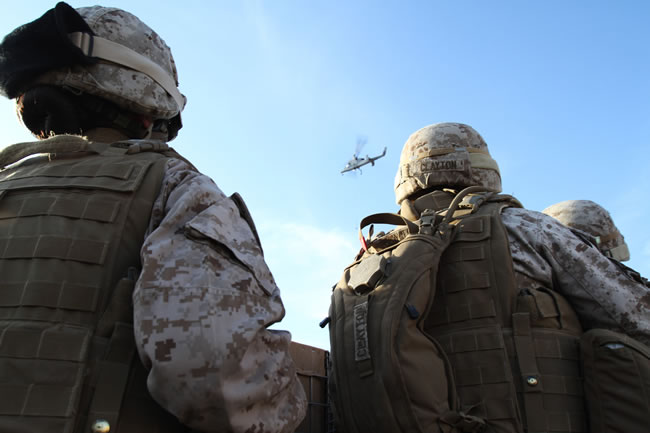
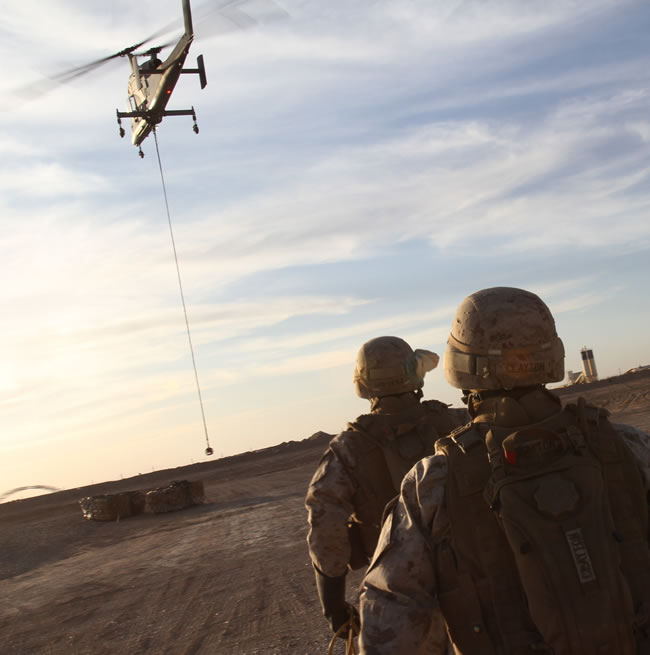
    Landing support team Marines with Combat Logistics Battalion 5 rush toward a hovering Kaman K1200, "K-MAX," unmanned helicopter in Helmand province, Afghanistan, May 22. Marine Unmanned Aerial Vehicle Squadron 2 made history with the CLB-5 Marines by performing the first ever unmanned, mid-flight cargo hookups, also known as "hot hookups." Photo: USMC Cpl. Lisa Tourtelot
    Landing support team Marines with Combat Logistics Battalion 5 rush toward a hovering Kaman K1200, “K-MAX,” unmanned helicopter in Helmand province, Afghanistan, May 22. Marine Unmanned Aerial Vehicle Squadron 2 made history with the CLB-5 Marines by performing the first ever unmanned, mid-flight cargo hookups, also known as “hot hookups.” Photo: USMC Cpl. Lisa Tourtelot

    IISS: Less than a quarter of the Syrian Army Remain Loyal to Assad

    Syrian President Bashar Assad
    Syrian President Bashar Assad
    Syrian President Bashar Assad

    The annual assessment of the world’s military power published last week by the International Institute of Strategic Studies (IISS) provides a fresh look at the deteriorating military situation in Syria; in the annual publication The Military Balance 2013 IISS tries to assess the state of the Syrian Army, decimated through almost two years of civil war in Syria.

    Across that country, ethnic and sectarian faultlines have deepened. It is likely that government capability and support will further diminish. From a notional strength of 220,000, the Syrian army’s effective strength had fallen by autumn 2012 to about half that number. Essentially, the regime could only be certain of the loyalty of the mainly Alawite Special Forces, the Republican Guard, and the elite 3rd and 4th Divisions – perhaps 50,000 troops in total. The cumulative effect of defections, desertions, battlefield losses and damage to morale will weigh heavily in determining the outcome of the conflict.

    External support for the rebels is increasing, in terms of non-lethal assistance, funding for weapons procurement and, possibly in the near future, overt foreign supply of combat-capable equipment. They are now able to acquire some limited capabilities from foreign sources. Though a notionally united opposition emerged after talks in Qatar last November, concern persists about the sheer number of rebel groups, their aims, and the presence of jihadists. While the rebels’ capability is increasing, the embattled Assad regime is aware of two things: on the one hand, the many rebel groups share a common objective to remove it; but on the other hand, they share little else, are disunited and un-coordinated. Instances of rebel-on-rebel violence have been seen, as have confrontations between rebel forces and ethnic militias.

    The Assad regime is also aware that direct foreign intervention remains unlikely, so long as no red lines are crossed, for example through the use of chemical weapons. Syria will not be another Libya. But events in that country will provoke concerns about the aftermath of a regime collapse. A year and a half after the fall of Muammar Gadhafi, many Libyan rebel groups have still to disarm. If Assad falls, there will be considerable focus among regional states and international actors about the intent of armed groups and the fate of government and rebel weapons. There is a considerable risk that a rapid end to the conflict is likely to be as destabilising as its prolongation.

    IISS: Defense Spending Increasing Worldwide, but Declining in Europe, US

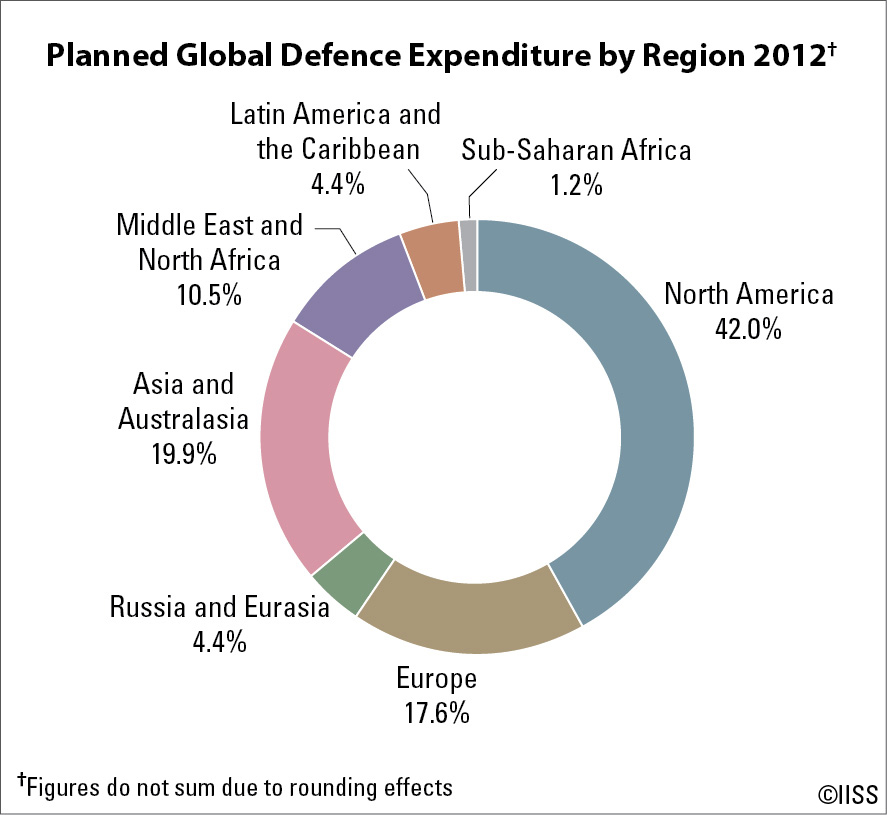
    Planned Global Defense Expenditure by Region - 2012 (IISS Military Balance 2013)

    The World Military Balance 2013 published by the International Institute of Strategic Studies (IISS) reflects the recent trends in the global redistribution of military power. Reflecting the subdued global economic climate, total defence spending fell in real terms in 2012 for a second year running. However, real increases were seen in the Middle East and North Africa, Russia and Eurasia, Latin America and in Asia, while real declines were seen in North America and Europe. As predicted by IISS last year, the report indicated nominal Asian defence spending overtake that of NATO European states for the first time in 2012.

    Planned Global Defense Expenditure by Region - 2012 (IISS Military Balance 2013)
    Planned Global Defense Expenditure by Region – 2012 (IISS Military Balance 2013)

    This is not simply a result of Asia spending more; it is as much a result of states in Europe spending less. In 2012, European NATO members’ defence spending was, in real terms, around 11% lower than in 2006. This reduction continues to shape military capabilities, and especially in the United Kingdom, France, Germany, Italy and Spain which account for almost 70% of European spending. According to IISS data, total military personnel in European NATO states have reduced from 2.51 million in 2000 to 1.86m for the same set of states now, a decline in excess of 25%. The intention was that reduced numbers, when combined with structural reforms, would produce an increase in the usability of armed forces. But in many European countries, this has not happened. The budget crisis exacerbates the trend. Regardless of their strategic intent to maintain forces suited to present-day needs, defence ministries are playing ‘catch-up’, adjusting force structures to match immediate financial priorities.

    2013 Defense Survey
    2013 Defense Survey

    Related Reports:

    Global Defense Survey 2013
    Business Outlook, Key Markets and Opportunities


    In 2011, European capability gaps were underscored by the war in Libya. The 2013 operation in Mali again highlighted shortcomings in airborne refueling, airlift and ISR. Discussions on pooling, sharing and role specialisation continue, and NATO promotes its ‘smart defence’ initiative. But progress towards better cooperation remains limited, with national capitals concerned about loss of sovereignty and jobs. This is occurring as it becomes ever more clear that Europe should not presume that the US will provide the same level of operational support. The restricted nature of the US role in Libya, and again this year in Mali, could be seen as an incentive for European countries to work together to develop a wider spectrum of capabilities. But there is little sign of this happening.

    Defence spending is also in decline in the United States. The Pentagon was already implementing cuts of $487 billion over five years, and as a result of sequestration will now need to make additional reductions of $600bn over ten years. The inflexible design of sequestration and the exemption of military personnel accounts from the process limit the DoD’s room for manoeuvre.

    It needs to be remembered, however, that the defence budget of the United States still dominates the world’s defense spending, and the United States still intends to remain engaged globally. Although much has been said about ‘rebalancing’ to the Pacific, in military terms there is less to this than first appeared. It will of course be important in the longer term, but the rebalance should mainly be seen as a signal that the US will remain engaged in Asia-Pacific security, reflecting not just US economic ties to the region but also the emergence of China as a regional competitor in both economic and military terms.

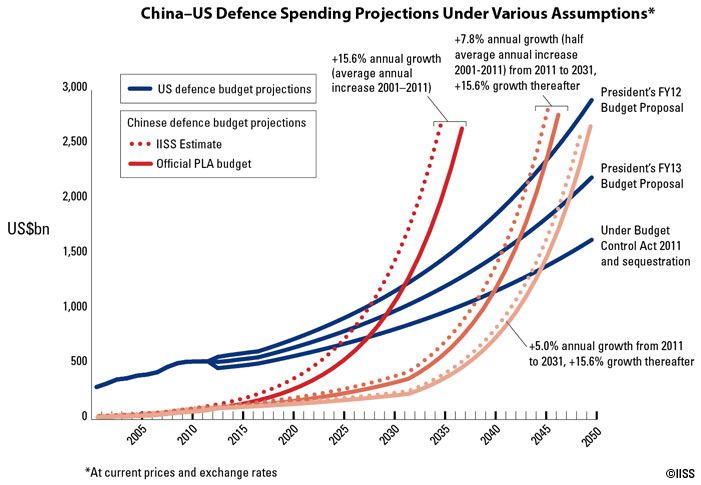
    China-US Defense Spending Projections 2005-2050
    China-US Defense Spending Projections 2005-2050

    China’s indigenous capacity to produce advanced equipment is gradually transforming the People’s Liberation Army. China’s rise, and its growing strategic reach, was illustrated by the commissioning of its first aircraft carrier in September, and the first at-sea landing of the J-15 combat aircraft two months later. But China is still learning how to operate carriers, the J-15 remains largely developmental and the PLA Navy’s ability to carry out integrated carrier task group operations remains embryonic. Attention should also be paid to the new Type-052D destroyer, possibly designed to provide a blue-water air-warfare destroyer capability, the modular Type-056 corvettes, and new maritime patrol aircraft as well as recent developments in China’s guided weapons systems.

    China’s military developments are fuelled by continuing increases in defence spending, witnessed by the 10.7% rise in its official defence budget announced last week. China now spends more on defence than neighbouring Japan, South Korea and Taiwan combined. When might Chinese spending rival that of the United States? If the 15% average annual increasesin China’s official defence spending seen over the past decade continue into the medium term, Chinese defence outlays could rival US base defence-budget spending by 2025. If additional elements of military spending widely believed to be excluded from the official PLA budget are included, convergence could occur in 2023, just a decade away. The graph above shows a comparison of China-US defence spending projections under various assumptions.

    China Increasing Defense Spending by 10.7 Percent

    chinaIISS: China Could Par with US Within the Next Decade

    The People’s Republic of China (PRC) has announced plans to increase defense spending by 10.7 percent in 2013. The announcement came as China’s outgoing premier, Wen Jiabao, formally opened the National People’s Congress. If China’s defense spending increases continue at the current rate, China’s defense spending may equal that of the U.S. within a decade, the London-based International Institute of Strategic Studies published Thursday, March 14.

    China-US Defense Spending Projections 2005-2050
    China-US Defense Spending Projections 2005-2050

    A brief story released by China’s official news outlet, Xinhua News Agency, confirmed the planned increase with a note emphasizing the point that the 2013 budget, even with the increase, still represents only 1.3 percent of the nation’s GDP.

    The 10.7 percent increase will boost defense funding to $115.7 billion, a far cry from the United States’ military budget of $656.2 billion. Of equal interest is the Chinese claim that defense spending totals only 1.3 percent of GDP while the United States devotes as much as 4.8 percent of the nation’s GDP to defense expenditures.

    Beijing’s official defense spending, while reportedly being far less than that of the United States, is believed by many analysts to be woefully understated. Actual spending is believed by some to be as much as 50 percent higher than the numbers publicly announced. China routinely excludes expenditures for space activities and nuclear missile forces from official budget announcements. Were these two programs to be included in the official budget numbers, a practice commonly followed by most nations, total defense spending would be significantly higher and could equal as much as 2 percent of GDP.

    While this budget increase was not unexpected, it does send a strong message to the world that China’s economic growth and resilience remain strong while the United States and other Western nations are facing significant budget cuts as they wrestle with faltering economies.

    According to Chinese officials, aggregate government spending for 2013 is projected to increase 10 percent to a total of approximately $2.2 trillion. China’s leaders have set a goal of GDP growth for the year at 7.5 percent. This GDP target is less than in years past, but is still significantly higher than many Western economies.

    As in previous years, the 2013 budget announcement is lacking in details as China continues to resist demands for more transparency and quantifiable disclosure. A portion of the defense budget increase is expected to be applied toward improving the working and living conditions of military personnel, modernizing the military’s information-technology capabilities, and increasing the mechanized assets of the armed forces. Other funds will, of course, be used to enhance China’s national defense posture and warfighting capabilities.


    Related Market Reports ($):

    1. Market Profile: The China Defense Industry – Market Attractiveness and Emerging Opportunities to 2017
    2. The China Defense Industry – Competitive Landscape and Strategic Insights to 2017
    3. The China Defense Industry – Industry Dynamics to 2017

    Reports published by the Xinhua News Agency claim that the 2013 budget will also be used to procure additional weapons and specialized training for the People’s Liberation Army (PLA) as it sharpens its skills in fighting terrorism. Additional training in conducting humanitarian relief operations is also scheduled.

    Although not specifically addressed in the new budget, it is reasonably certain that substantial funds will also be earmarked to finance development of advanced aircraft engines, sophisticated weapon’s technology, and cutting-edge sensor systems.

    While the United States continues to enjoy both a technological and a real-world warfighting advantage over China, the numbers alone do not tell the whole story. The United States is a global power with global responsibilities requiring massive sums of money to maintain its much-vaunted reputation of being the world’s most capable military power in the world.

    Until recently, China has dedicated the bulk of its funding to protecting the nation’s immediate borders and the sea lanes close to home. With this focus on areas close to home, Beijing’s leaders were able to dedicate a larger portion of their less-generous funding to modernization and emerging technologies.

    Now, the situation in the Pacific has changed and China’s ambitions have evolved. With the Obama administration’s much heralded “pivot to the Pacific” and China’s neighbors determined to strengthen their own defense capabilities, Beijing will need considerable funding to sustain its plan to transform the PLA from its current status as a regional force of limited reach into a modern force with a global reach.


    Related Reports – Companies ($):

    1. China North Industries Group Corporation
    2. China National Electronics Import & Export Corporation
    3. China Aerospace Science and Technology Corporation
    4. China State Shipbuilding Corporation
    5. Guizhou Space Appliance Co.
    6. AviChina Industry & Technology Co., Ltd.

    China has also not been immune from the effects of economic reality anymore so than the rest of the world. China’s economy is slowing and inflationary pressures have diluted the value of the Yuan. When viewed from the perspective of constant value, China’s increases in defense spending throughout the past twenty years represent a much smaller rate of growth than is frequently cited by the news media.

    In general, the increases in defense spending have tracked closely with the real growth in GDP and have never represented the primary government expenditure. In fact, China’s 2013 budget for internal security will again surpass the projected funding for national defense. At an estimated $122 billion, the internal security budget appears to indicate that Beijing continues to worry more about domestic issues than international hostilities. Of course, most analysts speculate that the defense budget is grossly understated and we may never know the true value of China’s defense spending.

    Given China’s rapid economic growth and the prospects for future growth, defense spending has considerable room to grow well beyond what has been spent in the past. In light of Beijing’s fervent desire to be recognized as a world leader and power broker, future expenditures for defense-related projects will undoubtedly need to increase at a rate consistent with that desire.

    The People’s Liberation Army Navy (PLAN) has been the most active of China’s military forces as it contends with territorial disputes involving Japan, Taiwan, the Philippines, Brunei, Malaysia, and Vietnam over island outposts in the South and East China Seas. These activities coupled with China’s dispatch of naval forces to the Gulf of Aden and the Mediterranean as part of the United Nations’ efforts to curtail the excesses of Somalian pirates have commanded an increasingly larger percentage of China’s defense budget.

    When considering these additional commitments, a 10.7 percent increase in defense spending begins to look rather paltry. To achieve what is most desired on the international stage – recognition as a “real” player in global events – China will need to dedicate increasingly larger amounts to the defense arena. The 2013 budget increase is barely enough for the PLA to continue the status quo and not enough yet to make anyone too nervous.


    ($): The related reports listed in this post are recommended market reports published by ICD Research and Strategic Defence Intelligence and marketed under cooperation with Defense-Update. They are not part of Defense-Update premium content.

    Alaska’s Ground Based Interceptors to Pivot US Defenses Against North Korea

    Lieutenant General Patrick J. O'Reilly, Missile Defense Agency, Director, visits the missile defense complex in Fort Greely, Alaska.
    Lieutenant General Patrick J. O’Reilly, Missile Defense Agency, Director, visits the missile defense complex in Fort Greely, Alaska.

    The US is scaling down the European Missile Defense program, by limiting the system’s interceptors against intercontinental ballistic missiles. Secretary of Defense Chuck Hagel announced yesterday the increase in the number of Ground Based Interceptors to be positioned in Alaska, and the planned deployment of a second TPY-2 radar to Japan, two immediate steps to better protect the United States of America from potential missile attacks from North Korea and Iran. The cost of these measures, estimated at one billion US$ is expected to come from delaying or cancelling future enhancements of the SM-3 Block II/B, a step which would undoubtedly relieve the tension between Moscow and Washington over the European missile defense issue.

    What alreted the US were two new developments in North Korea – the recent nuclear test, which may have tested a miniaturized device that could be fitted into a missile warhead, and the continued development of the North Korean KN-08 missile, sofar attributed as an ’Intermediate Range Ballistic Missile’ (IRBM). “We believe the KN-08 probably does have the range to reach the United States” Admiral James Winnefeld, Vice Chairman, Joint Chiefs Of Staff said, admitting the Korean threat has evolved faster than expected. “we’re not reacting to those timelines” “We have continually built this hedge — a set of tools from which we can select, if the threat either goes faster or slower than we thought.” Adm. Winnefeld emphasized, rebuffing claims that past reductions in the missile defense program were done prematurely. “We are ahead of any timelines of any potential threat” Secretary Hagel stressed.


    “We believe the KN-08 probably does have the range to reach the United States” Admiral James Winnefeld, Vice Chairman, Joint Chiefs Of Staff said, admitting the Korean threat has evolved faster than expected.


    The new measures include the increase the number of combat-ready interceptors stationed in silos at Fort Greely, Alaska. The second measure will place a second AN/TPY-2 missile-defense forward-based radar in Japan. Hagel added the administration continues to move forward with an environmental study for a 3rd United States missile defense site, on the East Coast.According to the new plan announced Defense Secretary Hagel yesterday, the US is moving to maintain at least 44 Ground Based Interceptors (GBI) at Fort Greely in Alaska, up from 30 in the current inventory, and move forward to deploy GBI assets in two additional bases in the US, but will no longer seek to equip its future forward deployed AEGIS Ashore missile units with advanced SM-3 Block II/B interceptors. Fort Greely currently has 30 interceptors in 34 silos – the number is expected to grow to 40 in full occupancy, with the planned activation of Missile Field 1 that was mothballed since 2011. At the time, Pentagon officials told Congress that to be viable, the six silos on site must be hardened. Reactivating the six silos in Missile Field 1 would take two years and cost approximately $200 million.

    The Pentagon expects all interceptors to be positioned at Fort Greely Alaska by 2017, up from 26 currently maintained there. The future of this enhanced capability is hinged on the intercept test planned toward the end of this year. The enhanced kill vehicle known as CE-2 is already in production, and the interceptor is expected to be ready for testing toward the end of the year, preceded by a test of the current interceptor (CE-1) earlier in the summer. Provided that testing and verification of the enhanced kill-vehicle are successful, all 44 interceptors will gradually receive the new warhead, James Miller, Undersecretary for Policy, Department Of Defense said. The first interceptors to be upgraded into CE-2 will be spares and those intended for testing, to be followed by the production of additional 14 missiles providing adequate spares and continue support for the program.


    chuck_hagel300
    Secretary of Defense Chuck Hagel

    “By shifting resources from this lagging program to fund the additional GBIs as well as advance-kill vehicle technology that will improve the performance of the GBI and other versions of the SM-3 interceptor we will be able to add protection against missiles from Iran sooner, while also providing additional protection against the North Korean threat.”


    Originally, the Pentagon expected the European missile defense system will be able to provide an early intercept of threats directed at the US by 2020, thus enhancing the defenses provided by the GBI. “The timeline for deploying this program had been delayed to at least 2022 due to cuts in congressional funding. Meanwhile, the threat matures.” Hagel said “By shifting resources from this lagging program to fund the additional GBIs as well as advance-kill vehicle technology that will improve the performance of the GBI and other versions of the SM-3 interceptor we will be able to add protection against missiles from Iran sooner, while also providing additional protection against the North Korean threat.” Hagel explained.
    The SM-3 Block IIB has been a controversial program, fuelling much of the Russian opposition to the establishment of US lead European Missile Defense plan. Moscow suspected the advanced SM-3 Block II missiles that were intended to replace all existing SM-3s beginning 2020 will diminish its own deterrence, turned against Russian intermediate and intercontinental ballistic missiles early in their flight, thus destabilizing the balance of forces between the two superpowers.

    In fact, the Russian claim was not too far from the truth. ‘With this weapon MDA planned to deploy higher velocity land-based interceptor equipped with advanced discrimination technologies and backed by enhanced command and control, designed to intercept large raids of Medium Range Ballistic Missiles (MRBMs), Intermediate Range Ballistic Missiles (IRBM) and ‘non-advanced Intercontinental Ballistic Missiles (ICBMs) early in flight. What ‘non advanced’ meant in MDA terminology is probably ‘non Russian’, but Moscow wasn’t ready to buy that.

    Following the US announcement, the Russians were not thrilled. “That is not a concession to Russia, nor do we regard it as such,” Russian Deputy Foreign Minister Sergei Ryabkov said. “All aspects of strategic uncertainty related to the creation of a U.S. and NATO missile defense system remain. Therefore, our objections also remain.”

    Dempsey, chairman of the Joint Chiefs of Staff will travel to Moscow soon to hold discussions with his Russian counterpart on the missile defense and further nuclear reductions. Detailed discussions between Washington and Moscow are already ongoing in recent weeks. Dempsey had said in the past the US will find common ground with Russia on the European Phased Adaptive Approach because it is not threatening strategic nuclear deterrence.

    Funding these decisions Missile Defense Agency is restructuring the Phased Adaptive Approach missile defense for Europe into three rather than four phases, essentially dropping the development and deployment of ‘next generation AEGIS interceptor’ (also known as SM-3 IIB). The main drive behind this phase was to extend the capabilities of the European missile defense system beyond Europe, with interceptors capable of defeating intercontinental ballistic missile (ICBM) targeting the U.S. Forward of the future SM-3 Block IIB missile program. Three industry teams have been involved in the concept definition and risk reduction phase, with request for proposal (RFP) and source selection of developing teams was planned for 2014.


    “The Europeans will see no difference in their ballistic missile defense… Phase-Adaptive Approach will involve deploying about 24 SM3 IIA interceptors – same timeline, same footprint of U.S. forces to support that.”


    The fate of the ‘Next Generation AEGIS Interceptor’ is unclear, Secretary of Defense Hagel was less deterministic in addressing the future of the program, saying “the restructuring of the SM-3 Block IIB program will result in greater support for a new and enhanced kill vehicle for the modernization of missile defense interceptors. “

    “We no longer intend to add them [SM-3 Block IIB] to the mix, but we’ll continue to have the same number of deployed interceptors in Poland that will provide coverage for all of NATO in Europe” Undersecretary Miller said. “The Europeans will see no difference in their ballistic missile defense. The phase four for the SM3-IIB was about continuing defense of Europe, but also being able to extend that defense to part of the United States. As for the deployment in Poland, “Phase-Adaptive Approach will involve deploying about 24 SM3 IIA interceptors – same timeline, same footprint of U.S. forces to support that. “Miller added.

    Whether or not it was intended to, the decision to cancel plans for the long-range interceptors will help the president’s arms control goals. Missile defense has been a contentious issue since President George W. Bush sought to base long-range interceptors in central Europe to stop Iranian missiles from reaching the U.S. Russia believed the program was aimed at countering its own missiles and undermining its nuclear deterrent. Soon after taking office in 2009 President Obama announced a revised plan, canceling the planned GBI interceptor bases in Poland and a radar in the Czech Republic, opting for AEGIS SM-3 based interceptors considered more suitable for intermediate range missile intercepts. Under that plan interceptors were to be upgraded gradually over four phases, culminating early next decade with those intended to protect both Europe and the United States.

    North Korea Test Fires Short-Range Missiles Into Sea Of Japan

    nok

    Unconfirmed reports are claiming North Korea test fired two short-range missiles that eventually landed in the Sea of Japan on 15 March. South Korea’s Yonhap News Agency reported receiving a tip from an anonymous military officer announcing the missile test.

    This unidentified source is quoted by Yonhap as saying the test missiles were short-range types launched “on a military-unit level, not at a national level.” It is not known if North Korea’s leader, Kim Jong-un, ordered the test launch.

    The missiles are believed to be North Korea’s short-range KN-02 Toksa (Viper) missiles. The KN-02 is an upgraded variant of the Soviet-designed SS-21 Scarab A developed in the North by reverse-engineering a Syrian SS-21.

    The KN-02 is a solid propellant missile fired from a mobile platform designed to give ground forces additional firepower on the battlefield. The missile is considered to be the most accurate in Pyongyang’s arsenal with an estimated range of between 120 and 140 kilometers. Preferred targets for this type of missile include airfields, bridges, command and control facilities, large buildings, troop assembly areas, and storage facilities.

    Although the KN-02 is normally fitted with a fragmentation warhead, the standard warhead can be replaced with one capable of delivering a chemical, biological, or nuclear strike.
    Pyongyang has engaged in a furious series of threats since the UN Security Council on 7 March adopted a comprehensive list of new sanctions to be applied against the North. The new UN sanctions were adopted in response to a prohibited nuclear test the North conducted on 12 February.

    Kim Jong-un and other government officials in Pyongyang have unleashed an unceasing litany of war-like announcements since adoption of the new UN sanctions including threats of renewing hostilities with Seoul and promises to employ nuclear weapons capable of turning Washington, DC into a “sea of fire.”

    News of this launch comes only one day after Kim Jong-un made a widely-publicized visit to an artillery unit on the Yellow Sea border with the South to observe a live-fire drill. South Korea and the United States are also currently engaged in annual training exercises, Foal Eagle and Key Resolve, which Pyongyang protests are aimed at destroying the North and constitute acts of war.

    Many analysts believe Pyongyang has an arsenal of as many as 1,000 missiles. Most of these missiles are believed to have sufficient range to strike much of South Korea with some missiles capable of reaching key military facilities in Japan.

    In a related development, US Secretary of Defense Chuck Hagel announced on 15 March that the United States would deploy an additional 14 ground-based anti-missile interceptors (GBIs) to Fort Greely in Alaska to augment the 26 interceptors now located at Fort Greely. Another four GBIs are currently in place at Vandenberg Air Force Base in California. Secretary Hagel also confirmed that the United States would proceed with the deployment of a second TPY-2 radar system to Japan to reinforce missile detection in the Pacific.

    IAI to Convert Two Boeing 767 Into Flying Tankers for Brazil

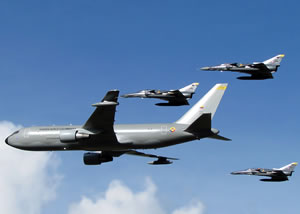
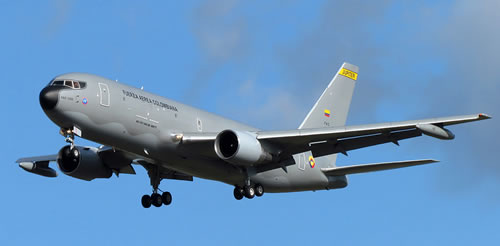
    IAI's first B767 MMTT conversion was the 'Jupiter' currently operated by the Colombian Air Force (FACH).
    IAI's first B767 MMTT conversion was the 'Jupiter' currently operated by the Colombian Air Force (FACH).
    IAI’s first B767 MMTT conversion was the ‘Jupiter’ currently operated by the Colombian Air Force (FACH). photo: via CAS

    The Brazilian Air Force Command has selected Israel Aerospace Industries (IAI) to convert two Boeing 767-300ER commercial aircraft into military, multi-mission tanker and transport (MMTT) aircraft under project KC-X2. According to Israeli sources the conversion program will cover three aircraft with options for more in the future.  The KC-X2 aircraft will replace four KC-137 (militarized Boeing 707) operating with the Brazilian Air Force since 1986.

    The two MMTTs will support the Brazilian Air Force performing refueling, strategic troop and cargo transport, and aeromedical evacuation, according to the requirements formulated by the Brazilian Air Force. Each of the aircraft will be configured similar to the current KC-137 – with two refueling pods, used to refuel the current fighters operating with the Brazilian Air Force. It will also be compatible with any of the three fighters Brazil is considering for the future F-X2 program.

    The Brazilian Air Force has embarked on the KC-X2 Project in 2008. Brazil currently operates the KC-137s were manufactured in the 1960s. Each of the aircraft is equipped with two refueling pods carried on the outer wing. These aircraft were supplied as military surplus by the US, and incorporated into the FAB in 1986, four are operating under the 2nd (Cosario) squadron, under the 2nd transport group at Galeao. (Only three are curntly operational).

    IAI is offering the Boeing 767 in a flexible configuration comprising hose and drogue pods, boom or both. IAI has already delived a Boeing 767 tanker to Columbia, where it received the nickname ‘Jupiter’. the MMTT was delived as part of Kfir C10 upgrade package. IAI is also offering its boeing 767 MMTT to Poland. On typical conversions of MMTT configured aircraft IAI is buying the used aircraft from commercial airlines, overhaul and convert them into tanker-transport planes and certify the planes in their new configuration. “We consider the Brazilian Air Force an important strategic customer… we intend to work with a number of Brazilian companies as subcontractors for the program.” IAI President and CEO of IAI commented.

    Skunk Works and XTEND Simplify Multi-Drone Command

    0
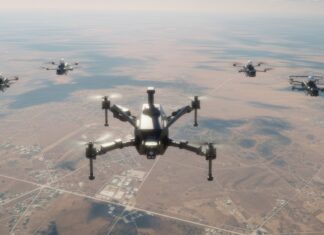
    Lockheed Martin Skunk Works® and XTEND have achieved a major milestone in JADC2 by integrating the XOS operating system with the MDCX™ autonomy platform. This technical breakthrough enables a single operator to simultaneously command multiple drone classes, eliminating the friction of mission handoffs. From "marsupial" drone deployments to operating in GPS-denied environments, explore how this collaboration is abbreviating the data-to-decision timeline and redefining autonomous mission execution.

    From Ukraine to Taiwan: The Global Race to Dominate the New Defense Tech Frontier

    0
    As traditional defense primes face mounting competition from agile “neoprimes” such as Anduril, Palantir and Helsing, the balance of innovation is shifting toward software-defined warfare and scalable, dual-use technologies, while global industry consolidation—marked by Boeing’s integration of Spirit AeroSystems and other strategic mergers—signals an intensified race to secure control over the defense technology value chain. Our Defense-Tech weekly report highlights these trends.

    Europe’s “Drone Wall”

    0
    In early October 2025, a coordinated wave of unmanned aerial system (UAS) incursions—widely attributed to Russia—targeted critical infrastructure across at least ten European nations. The unprecedented campaign exposed the fragility of Europe’s air defenses...

    Weekly Defense Update & Global Security Assessment

    0
    Executive Summary The past week (September 18-25, 2025) represents an inflection point where strategic defense concepts have transitioned from doctrine to tangible reality. An analysis of global events reveals four primary, interconnected trends shaping an...

    U.S. Air and Space Forces Push Next-Gen Programs at the AS&C 2025 Conference and...

    0
    At the 2025 Air, Space & Cyber Conference, U.S. Air Force and Space Force leaders unveiled major updates on next-generation fighters, bombers, unmanned systems, and space initiatives, highlighting both rapid innovation and critical readiness challenges as the services race to outpace global competitors. A short version is available here, with a more detailed version for subscribers.

    TADTE 2025: Reflecting Taiwan’s Strategic Themes

    0
    The Taipei Aerospace & Defense Technology Exhibition (TADTE) 2025 crystallized around four dominant strategic themes that collectively illustrate Taiwan's comprehensive approach to defense modernization amid escalating regional tensions. Based on a detailed report by Pleronix (available upon request). Includes a Podcast discussion on TADTE 2025's highlighting Taiwan's four strategic themes beyond the post's coverage.

    Iron Beam 450 Completes Testing, Soon to Join With Operational Air Defense Units

    0
    Israel’s Iron Beam 450 high-power laser system has completed final testing, marking a major leap in air defense. Developed by Rafael, it offers precise, cost-effective interception of rockets, UAVs, and mortars, and is set for IDF deployment by 2025.