
Wednesday, December 31, 2025
More
    Home Blog Page 190

    Eurosatory 2012 – a Compass for the 
Global AFV Market

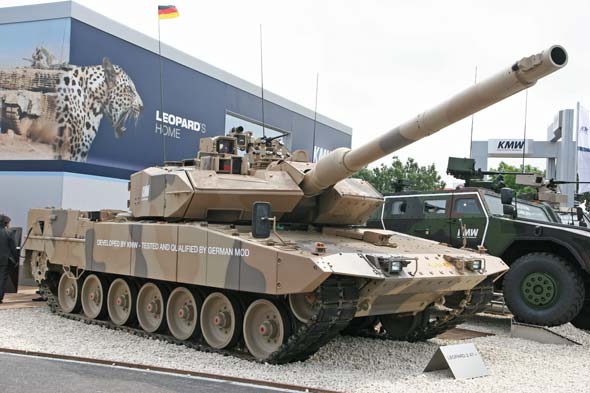
    Leopard 2A7+ was displayed at the 2010 Eurosatory expo. Photo: Noam Eshel

    Eurosatory provides an excellent insight into the global armored vehicle industry, indicating the trends, technologies and evolving requirements reflected by the vehicles on display, live demos as well as the technologies shown by tens, even hundreds of suppliers and innovators.

    Lighter is Better?

    The most obvious trend is the shift from the heavy armored fighting vehicles (AFV) to lighter, more maneuverable yet highly protected AFVs. This trend is indicated mainly in western programs, in countries that foresee their military to be involved in contingencies overseas, mainly in lower intensity conflicts – like U.S., Canada, U.K., France, Germany, Italy, Spain, Denmark, Netherlands, Norway, Sweden and, to some extent – Brazil.


    These countries have ceased producing Main Battle Tanks (MBT), and have shifted their focus to tracked AIFVs such as FRES, PUMA, CV90 and Dardo. Overall, the balance between tracked and wheeled platforms is maintained, yet the share of MBTs in these countries’ Order of Battle (ORBAT) continues to decline.

    Since most of these programs are in production, teaming for new ones is key for future success of specialized original equipment manufacturer (OEMs). The US Ground Combat Vehicle (GCV), Joint Light Tactical Vehicle (JLTV) and, Marine Personnel Carrier (MPC) programs, Israeli Namer AIFV, Canadian Close Combat Vehicle (CCV) and Tactical Armored Patrol Vehicle (TAPV), the French Scorpion and VBMR, the British FRES-SV and Australian Land 121/4 programs are some of the main opportunities currently underway. More could be on the horizon as coalition forces return from Afghanistan and begin to reset and rebuild their forces and capabilities for future challenges.

    More insight into each of these programs will be included in Defense-Update Show Live editions. Click here to subscribe.

    Leopard 2A7+ was displayed at the 2010 Eurosatory expo. Photo: Noam Eshel


Opportunities for New Designs

    Eurosatory will provide ‘reality check’ for new trends. In past years (2008-2010) the coalition forces involved in the Iraq and Afghanistan conflicts demanded more protection and were willing to pay for armor. Today, defense budgets are tighter and requirements focused on short-term, with the 2014 withdrawal from Afghanistan in sight. AFVs are still making the basis for any military force. In fact, Armor and blast protection is considered ‘part of the package’, an obvious capability that must be provided for in a modern combat vehicle.

    However, threatened by the cheaper, ever more capable and precise anti-tank weapons, armor protection must be increased to hitherto unaffordable weight and size. Hence, some of the solutions considered by the military include the introduction of alternative means of protection, such as soft-kill and hard-kill active protection, therefore ‘peeling off’ some of the heaviest armor layers, designed to defeat tandem high-explosive hollow-charges (Tandem HEAT) as well as high speed kinetic penetrators fired by enemy tanks. Protecting the crew and weapon systems against blast can also be achieved by introducing new materials and blast-absorbing techniques, that could further reduce weight.

    More insight into each of these programs will be included in Defense-Update Show Live editions. Click here to subscribe.

    MBTs Still Going Strong in Asia

    Countries facing potential cross-border opponents and likely to engage in high intensity land warfare still value the use of Main Battle Tanks and therefore continue to develop, build, and upgrade MBTs – these include Russia, South Korea, India, Pakistan, Iran, Saudi-Arabia, Egypt, Israel and Turkey, each maintaining running MBT production or upgrading programs, with all countries, except Saudi-Arabia and Egypt, opting to develop indigenous designs rather than buy off-the shelf foreign tanks. Most countries retain domestic manufacturing capabilities in terms of metalwork, manufacturing and assembly of automotive systems, yet some are still lacking the knowhow and capabilities in developing and producing composites and ceramic protection modules, advanced main armament and ammunition. Other opportunities for OEM (Other Equipment Manufacturers and subcontractors) are in the field of self-protection, electronics and optronics and CBRNE (life support). Camouflage and concealment, which requires multi-disciplinary expertise in signature measurement and reduction is also a field often requiring expert advise. Introduction of health management capabilities to improve logistics could also be an opportunity for foreign suppliers improving the sustainment of such complex systems.

    More insight into each of these programs will be included in Defense-Update Show Live editions. Click here to subscribe.
    Second Hand Tanks are Popular

    As western armies have been phasing out their advanced tanks (primarily Leopard II), a growing market for second hand tanks has also evolved, primarily for the Leopard II. Tanks withdrawn from German, Dutch and Danish armies were sold in recent years as military surplus. More tanks are likely to be offered by the Austrian and Swiss armies, as these countries are implementing planned cuts. Among the countries buying those tanks were Canada, Chile, Brazil and Singapore.

    These markets open new opportunities for suppliers, offsetting for the loss of some domestic markets. Yet, for some, expanding operations overseas means higher cost of operation, at a time they are most vulnerable. One’s weakness is always the someone else’s opportunity, and, for cash rich distributors in developing markets in South Korea, India, Singapore, Turkey or Brazil – leveraging knowhow and low-volume production lines of certain parts and subsystems could offer sensible business opportunities.

    More insight into each of these programs will be included in Defense-Update Show Live editions. Click here to subscribe.
    Poland Embarks on Helicopter Acquisition Program Worth up to US$1 Billion

    Sikorsky is already producing the S70i in Poland.

    The Polish Ministry of National Defense is embarking on the acquisition of a new transport helicopter for the Polish military, at an estimated budget of US$1 billion. This multi-phase helicopter procurement will be divided into several stages, the first will include the acquisition 26 aircraft for the Army, Navy and Air Force through 2017.

    The Air Force will also receive three helicopters configured for Combat SAR (CSAR). The three companies have entered the competition are Sikorsky, Eurocopter and AgustaWestland.


    The American company Sikorsky and Italian-British Agusta Westland are both expected to face each other competing for the Polish tender, as they did in other markets recently. Sikorsky is expected to offer the battle hardened S70i while Augusta-Westland is likely to offer the ultra-modern AW 149.

    Both players are well positioned in Poland – Sikorsky owns PZL Mielec and runs the S70i assembly line in the country while Augusta-Westland have acquired PZL Świdnik, an experienced manufacturer of Sokół helicopters widely used by Polish Army and Navy.

    The Franco-German Eurocopter has also joined the competition. A part of the EADS group, Eurocopter has already gained a foothold in the civilian market in Poland – Eurocopter sold 23 aircraft for the state operated Air Medical Emergency Service (Lotnicze Pogotowie Ratunkowe). Eurocopter could offer the Cougar (and possibly EC275 for the Naval and Air Force tenders).

    AgustaWestland will be promoting the AW149 for the Polish tender. If they win, production would probably move to their new local subsidiary PZL Świdnik.
    The Kaman SH-2G Super Seasprite augments the Polish Navy frigates in operations at sea. Photo: Marian Kluczynski

    The fourth company thought to be a contender for the program is NH Industries, a joint venture between AgustaWestland, Eurocopter and the Dutch company Fokker. However, NH Industries opted not to compete for this tender, to avoid competition against its parent companies. Nevertheless, given the strong footing of the NH90 in NATO, the Polish military would have  benefit from acquiring the NH90.

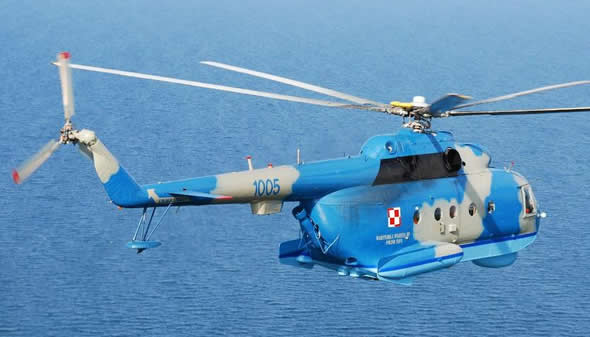
    The Polish Navy currently uses the Mi14PL for anti-submarine warfare missions. Photo: Marian Kluczynski

    The Polish Army currently operates a fleet of different Mil helicopter types, including Mi-2, Mi-8 and Mi-17 transport helicopters and 29 Mi-24 attack helicopters. In addition, the inventory includes more than 30 locally built W-3 Sokól multipurpose medium helicopters manufactured by Polish helicopter company PZL-Swidnik.

    Russia Testing Italian Centauro Wheeled Tanks

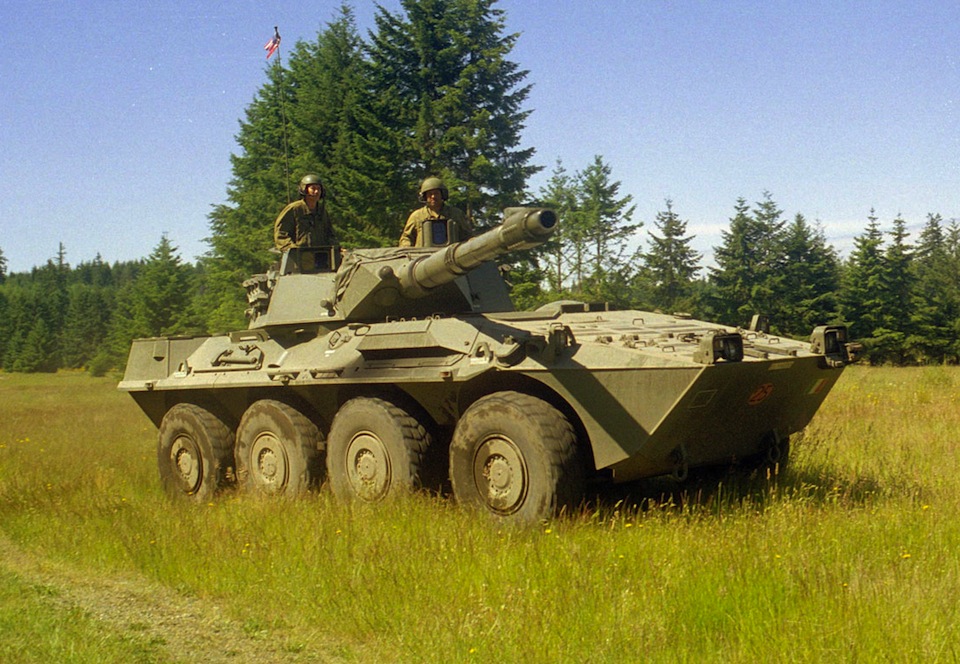
    In the early 2000s Centauro was one of the candidates for the US Armored Gun System.
    In the early 2000s Centauro was one of the candidates for the US Armored Gun System.

    Russia is testing Italy’s B1 Centauro 8×8 ‘wheeled tank’ and considering building it under license. The company has already delivered two Centauro vehicles, the original design with the 105mm gun and another fitted with a Russian 125mm cannon. Two additional variants due to arrive in Moscow in six weeks will be fitted with NATO standard 120mm cannon and a turreted 30mm automatic gun. According to Oto-Melara representative, the vehicles will take part in technical evaluations, automotive testing and firing trials to span until the end of 2012.

    The Italian company is interested in establishing a joint venture with a Russian military vehicle maker for production of these wheeled armored vehicles. Russian news agency Novosti named truck maker Kamaz in Naberezhny Chelny could be involved in the deal, according to a source in Russian arms sales holding Rosoboronexport. Russia has already procured Italian light armored vehicles.


    Under a contract signed last December in Moscow, 60 Lynx light multirole armored vehicles (LMV) are in production at the Oboronservis joint enterprise (OJSC) in Voronezh, central Russia. 57 of the vehicles are due to enter service with the Russian military forces in 2012.

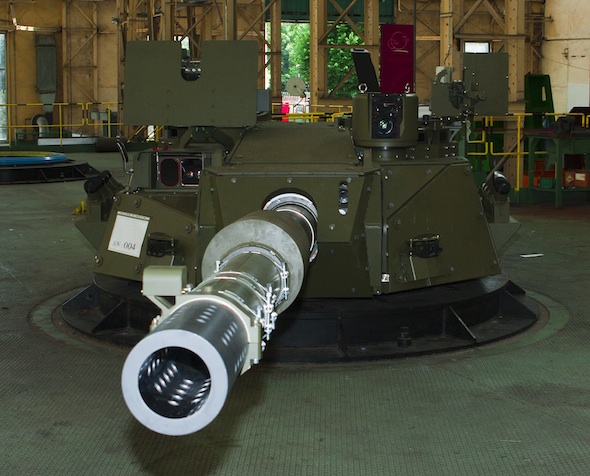
    HITFACT 120mm turret designed for the low pressure 120mm cannon for the Centauro. Photo: Oto Melara

    The Centauro is produced by the CIO Joint Venture established by Iveco Fiat and Oto Melara. Iveco Fiat was the design authority for the chassis and automotive systems and Oto Melara was responsible for the weapon system design and integration. Italy already has 400 Centauros in service. The Italian Army has also fielded 249 VBM Freccia infantry fighting vehicles equipped with 30mm turrets and anti-tank missiles. The 30mm variant mentioned in the Russian testing is believed to be the Freccia.

    Russia has an established line of wheeled armored vehicles that traces back to the 8×8 BTR-60, the latest being the BTR-90 platform, which was designed as an armored personnel carrier in the mid 1990s. The BTR-70/80 is one of the most widely fielded wheeled APC, with over 5,000 fielded with over 30 military forces worldwide. The BTR-90 offers better power/weight ratio compared to the Centauro but is less adaptable for heavy turrets, a quality the Italian design has demonstrated for many years. The rapid integration of the 125mm cannon for the Russian test has underlined this capability and opens the market for additional export opportunities for the Italian vehicle. Assumably, if the Italian wheeled armored gun design will be selected by the Russians, it will be deployed with additional variants of the same platform (infantry carrier, command vehicle, mortar carrier, armored ambulance and recovery vehicles) to maximize commonality.

    Many officials within the Russian military industry circles are objecting the Russian openness to western products, reflected in the acquisition of French vessels, Italian armored vehicles and Israeli unmanned aircraft. Yury Borisov, first deputy head of the military-industrial commission was quoted by Novosti as saying Russia will only buy foreign weapon models on a one-off basis to study the manufacturing technology and then set up its own production. However, it is unlikely the western manufacturers would agree to such attitude.

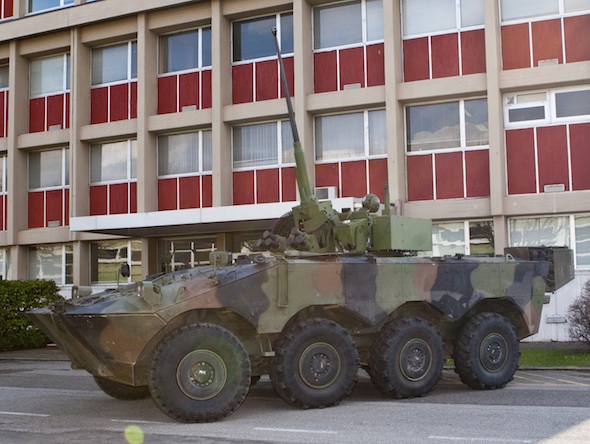
    The Freccia armored vehicle with the HITFIST 30mm overhead weapon system. Phot: Oto Melara

    UK Makes It Official – Back To The F-35B STOVL

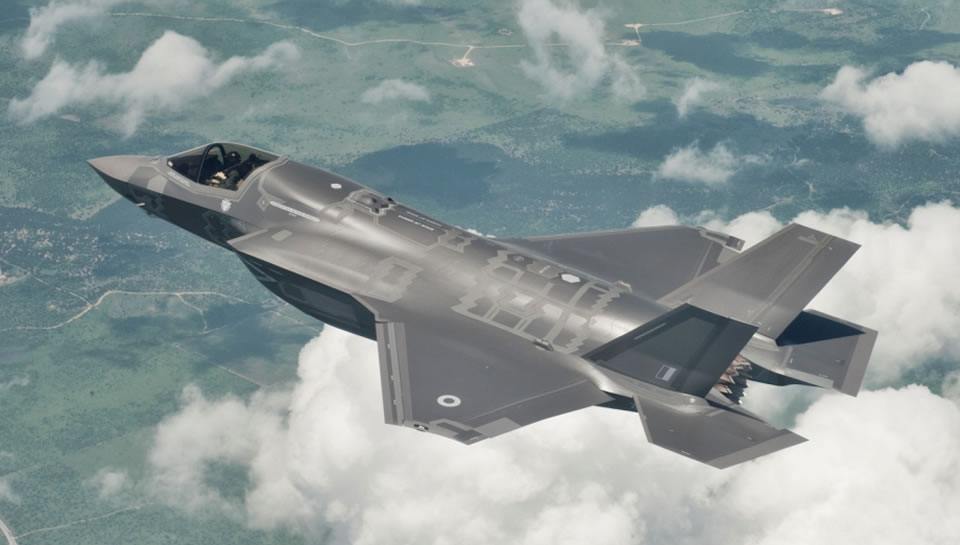
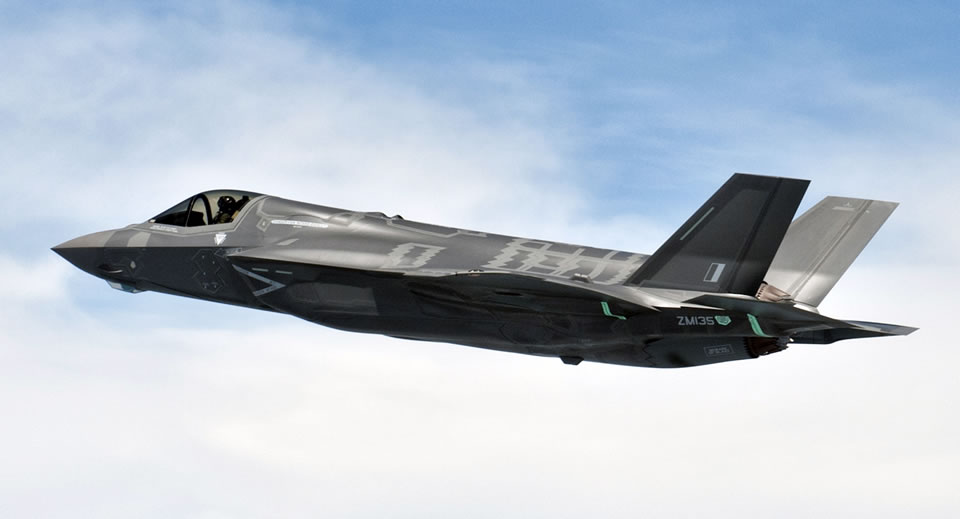
    The first British F-35B seen on its first flight, 13 April 2012. Photo: Lockheed Martin

    In a much awaited announcement, the United Kingdom has decided to reverse its previous selection and will now focus its efforts on acquiring the Lockheed Martin F-35B Short Take-Off and Vertical Landing (STOVL) aircraft instead of the conventional F-35C naval model of the Joint Strike Fighter (JSF).


    In an address to Parliament on 10 May, Defense Secretary Philip Hammond confirmed that the government had decided to dump plans to purchase the F-35C naval model in recognition of unanticipated cost increases and delays in converting the Royal Navy’s Queen Elizabeth-class aircraft carriers to accommodate the F-35C conventional aircraft.  Secretary Hammond said that the cost of converting only a single aircraft carrier had escalated to an amount at least double the original estimate of $1.6 billion; an amount he said would adversely impact other national defense capabilities.

    The ousted Labour Party originally selected the F-35B STOVL for deployment aboard the Royal Navy’s new 65,000 ton aircraft carriers then under construction, a decision that was dropped in favor of the conventional F-35C fighter by the Conservative Party’s coalition government in their Strategic Defense and Security Review (SDSR) published in September of 2010. The government’s 2010 SDSR cited the lower cost of the F-35C as grounds for the change as well as the longer range and enhanced performance of the F-35C variant.

    Britain is officially back with the STOVL F35B. Photo: Lockheed Martin

    The British government is now attempting to downplay the enhanced capabilities of the F-35C when compared to the B variant. One senior source within the Defense Ministry stated that a return to the F-35B STOVL will not have any significant effect on the Royal Navy’s air operations. This source said that the weapon’s payloads originally planned for the F-35 would not change considering the missions to be flown and the longer range of the C variant was of little importance since inflight refueling would overcome any differences in range between the B and C models.

    With a return to the F-35B STOVL variant, the Ministry of Defense can now discontinue the costly modifications being performed on the Royal Navy’s two Queen Elizabeth-class carriers, modifications that would be needed to accommodate the F-35C. To operate a conventional fighter, the carriers required installation of catapults and arresting gear, the so-called “cats and traps.”

    Design modifications needed to convert the Queen Elizabeth-class carriers to handle the conventional F-35C proved to be more complex and invasive than expected requiring changes in 250 compartments instead of the originally planned 80 compartments.  Installation of the General Atomics manufactured Electromagnetic Aircraft Launch System (EMALS) and arresting gear. These modifications, Secretary Hammond noted, would delay the operational deployment of the carrier strike force until 2023, an unacceptable delay of at least three years beyond initial plans.

    Part of the cost escalation, according to an unnamed defense source, is the result of American government insistence that the General Atomics-built EMALS be procured through the US Foreign Military Sales (FMS) program instead of directly from the manufacturer.  The source claims this requirement added as much as seven percent to the modification costs.

    Carrier modifications have already cost between $65 million and $81 million with additional exit costs to US contractors anticipated and still being negotiated.  Additional funds would be required to install takeoff ramps on the two carriers.  The UK has already spent nearly $3 billion on the F-35 program in development costs and production fees.

    In a statement, the Ministry of Defense confirmed it was still committed to interoperability with US and French naval forces, but emphasized that the Royal Navy’s renewed focus will “now be much less on being able to fly our aircraft off US or French aircraft carriers and vice versa, but more on ensuring that our carrier strike capability can integrate with allied forces in joint or coalition operations.”  The Ministry further stated that the critical issue with the French was ensuring the two nations could have at least one aircraft carrier operational at all times to provide “cover for each other during refit periods.”

    In the 2010 SDSR plan, the sitting government at the time admitted that, in selecting the conventional F-35C variant, the Royal Navy would be unable to maintain a continuous air arm at sea and only one of the new aircraft carriers would be modified with catapults and arresting gear while the second vessel would either be mothballed or be sold.  Since the Royal Navy and the Royal Air Force would be operating the F-35 jointly, an aircraft carrier could be deployed on a much reduced schedule.

    Implied in the decision to revert to the F-35B, the government appears to be entertaining the prospect of commissioning and operating both carriers allowing the Royal Navy to maintain a continuous sea presence with one ship at sea while the other is undergoing refit or maintenance. Publicly, the Ministry of Defense admits that no money has been budgeted to fund a crew or support requirements for a second carrier and no decision would be forthcoming until the 2015 Strategic Defense and Security Review is released.  Secretary Hammond also stated that the number of F-35Bs the UK will procure will not be decided until the 2015 SDSR is completed.

    Under the 2010 plan, the first carrier, the Queen Elizabeth, would have been laid up or sold off once completed with the second carrier, the Prince of Wales, to begin operations sometime in 2020 after being equipped with catapults and arresting gear to fit the F-35C. The new plan calls for the Queen Elizabeth to begin sea trials sometime in 2017 with the initial carrier-deck test flights of the F-35Bs scheduled for 2018 and operational deployment in 2020. The Prince of Wales is likely to follow shortly after this.

    Hammond told members of Parliament that both carriers would be completed with a “STOVL configuration – giving us the ability to provide continuous carrier availability throughout the life of the ships.”

    Rolls-Royse, manufacturer of the LiftSystem propulsion system integrated with the Pratt & Whitney F-135 engine to power the F-35B, and BAE Systems, the fabricator of the B variant’s aft fuselage, will both benefit from this decision.

    The decision to revert to the B variant also continues the UK’s storied history using STOVL aircraft. This history looked to come to an end with the UK’s early retirement of its fleet of Harrier GR7/9s.

    Lockheed Martin is scheduled to deliver the first of three UK aircraft for test and evaluation during a special ceremony at Eglin Air Force Base, Florida following the Farnborough Air Show.  A second F-35B model is scheduled for flight testing soon with a third model to follow sometime in 2014.

    India to purchase US M777 Howitzers from BAE Systems

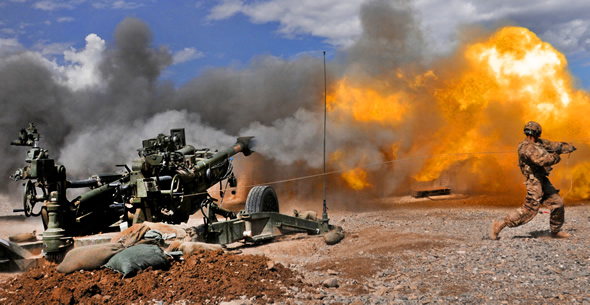
    An M-777 155mm howitzer fires at a low ballistic trajectory in Afghanistan. Photo: U.S. Army
    An M-777 155mm howitzer fires at a low ballistic trajectory in Afghanistan. Photo: U.S. Army

    Nearly 27 years after the controversy over the purchase of howitzers from Swedish-based AB Bofors the Government of India approved today the purchase of 145 M77 155/39-caliber howitzers at a total cost of $650 million from BAE Systems. The decision to go ahead with the procurement of US made howitzers under the Foreign Military Sales (FMS) route was taken at a meeting of the Defence Acquisition Council (DAC) headed by Defence Minister AK Antony. The projects approved by the DAC will now be put up before the Finance Ministry for clearance before they are taken up by the Cabinet Committee on Security (CCS) for final approval.


    These lightweight guns are expected to deploy in the states of Arunachal Pradesh and Jammu and Kashmir that have border with China. It is widely believed that the deployment of the M777 in the areas bordering China is a direct reply to China’s forward deployment in these areas for the last 3 years.

    The maximum firing range of the gun is 24.7km with unassisted rounds, and 30km with rocket-assisted rounds. The M777A2 can fire the the Raytheon / Bofors XM982 Excalibur GPS/Inertial Navigation-guided (GPS/INS) extended-range 155mm projectiles using the Modular Artillery Charge Systems (MACS). Excalibur has a maximum range of 40km and accuracy of 10m. The M777 matches the firepower of current generation 155mm towed systems at less than half the weight. The Howitzer is equipped with a 39-calibre barrel. The muzzle velocity (at Charge 8 super) is 827m/s. The Towed Artillery Digitization (TAD) artillery improvement package including a digital fire control system with onboard ballistic computation, navigation, pointing and self-location, providing greater accuracy and faster reaction times. TAD also includes a powered projectile rammer, a breech mounted laser ignition system, replacing conventional chemical primers and electric drives for the howitzer’s traverse and elevation.

    At an overall weight of 3,745kg the M777 can be transported by helicopter, transport aircraft or ship. On land the howitzer can be towed by standard air-braked 4×4 vehicle greater than 2.5t. The gun is mounted on hydrostrut suspension system provided by Horstman Defence Systems of the UK, allowing travelling on road at a maximum speed of 88km per hour, or towed cross-country at a speed of 50km/h. The load on the towing eye is rated at 60kg. The towing ground clearance is up to 660mm.

    Improved AEGIS Conducts Successful Intercept

    SM3 Block 1B launched from USS Lake Eire. Photo: US Navy, NAVAIR
    SM3 Block 1B launched from USS Lake Eire. Photo: US Navy, NAVAIR

    The missile fired from the USS LAKE ERIE (CG 70) missile cruiser successfully intercepted a short-range ballistic missile target over the Pacific Ocean. The missile cruiser detected the target missile launched from Kauai, Hawaii, tracked it with its onboard AN/SPY-1 radar and developed a fire control solution for the interceptor with its Aegis BMD 4.0.1 weapon system.

    Following the launch of the interceptor LAKE ERIE continued to track the target, sending trajectory information to the SM-3 Block IB interceptor in-flight. According to the MDA brief the SM-3 Block 1B maneuvered to a point in space, as designated by the fire control solution, and released its kinetic warhead. The kinetic warhead acquired the target, diverted into its path, and, using only the force of a direct impact, engaged and destroyed the threat in a hit-to-kill intercept.


    The recent test was the second test flight of the SM-3 Block IB and the first successful intercept of the new missile, in combination with the second-generation Aegis BMD 4.0.1 weapon system. Previous successful intercepts were conducted with the Aegis BMD 3.6.1 weapon system and the SM-3 Block IA interceptor, which are currently operational on U.S. Navy ships deployed across the globe. FTM-16 Event 2a is the 22nd successful intercept in 27 flight test attempts for the Aegis BMD program. Across all Ballistic Missile Defense System programs, this is the 53rd successful hit-to-kill intercept in 67 flight test attempts since 2001.

    Aegis BMD 4.0.1 and the SM-3 Block IB interceptor improve the system’s ability to engage increasingly longer range and more sophisticated ballistic missiles that may be launched in larger raid sizes. The SM-3 Block IB interceptor features a two-color infrared seeker, which improves sensitivity for longer-range target acquisition and high-speed processing for target discrimination. The SM-3 Block IB interceptor also features an upgraded onboard signal processor and a more flexible throttleable divert and attitude control system to maneuver the IB interceptor to intercept.

    Eurosatory Show Live

    The cover page of our first 8 page preview.

    The full edition of Defense Update Show Live, Eurosatory 2012 is available for subscribers only. If you are interested in the excerpts of this report, please follow this link.

    The first edition covers the new trends in armored fighting vehicles and in modern networking. Highlights also include interesting products ‘watchlist’. Companies reviewed are indicated with booth numbers to enable quick location on site. The preview edition is available in PDF format, and is readable on any browser, notepad and smartphone using an Acrobat reader.




    Why should you subscribe?

    If you are planning your business trip to Eurosatory, our previews will provide you with vital information and insight into the trends, new opportunities and highlights related to your areas of activity. Our editorial team has prepared a thorough coverage of the show, we are also contacting many experts and senior executives for interviews and will publish those in forthcoming editions.

    You are invited to send your information and news for editorial consideration. For advertising opportunities please contact: [email protected].

    Need a hotel in Paris for the Eurosatory week?
    For the best rate and 24/7/365 availability
    Defense Update is Recommending:

    The full edition of our weekly preview is available for €4.95 per edition. The first edition (11 May 2012) is available for trial at no charge. The total charge will be €19.80.- in forthcoming weeks from May 24 through June 14. You can cancel your subscription at any time. Clicking on the ‘Subscribe’ button will link you to Paypal for the secure payment process. If you would like to opt for another form of payment, please contact us.

    Washington Allocates a Billion US$ to Support Israel’s Active Rocket & Missile Defenses

    David's Sling is scheduled for a full system test later in 2012, toward initial deployment in 2013. Photo: Rafael

    The US House Appropriations Defense Subcommittee included multiple allocations with a total amount of $947 million in the next year budget (FY 2013) to support Israel’s multi-level active rocket and missile defense programs. This is the highest single-year Appropriation ever for Iron Dome, David’s Sling, and Arrow.


    “President Obama, Chairman Bill Young, and all of the members of the House Appropriations Defense Subcommittee understand how important it is to be at the cutting edge of anti-missile technology, both to safeguard our own citizens and troops as well as the citizens and troops of the Jewish State of Israel.” Congressman Steve Rothman (NJ-9), a member of the House Appropriations Defense Subcommittee said. Given the concern and attention that we are focusing now on every dollar we are expending on behalf of the US taxpayer for all purposes, including the defense of the America and its allies, this appropriation shows how vitally important these systems are for our nation’s national security.” Rothman added.

    These rocket and missile defense systems allow Israel the ability to protect its civilians while giving its leaders the strategic space and time to take the appropriate action to root out terrorists and carefully plan their next steps.

    Raptor Pilots Talk in Public about Hypoxia Effects

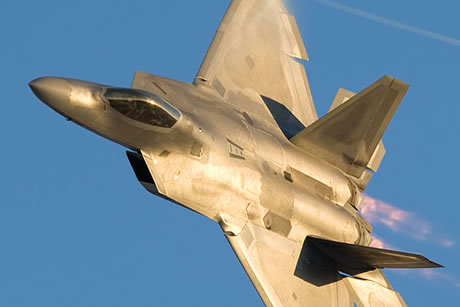
    F-22A. Photo: Lockheed Martin

    Hypoxia (oxygen depravation) conditions often affecting pilots during and after flying in F-22s remain unsolved even after comprehensive investigation was launched after the 2011 Capt. Jeff “Bong” Haney, Alaska Air National Guard pilot was killed in a crash on November 2010. In December 2011 an Air Force investigation determined the cause for the mishap was pilot error although at least 13 cases of hypoxia were reported since the aircraft became operational in 2005.


    The investigation did not determine what has caused this error. The Air Force has previously denied the crash was connected with the hypoxia conditions experienced by other pilots in the past. However, following the accident the Raptor fleet was grounded for a total of four months from May till September 2011. Since the F-22 returned to operational flying in september 2011, the Raptors logged 12,00 flight hours and pilots reported at least 11 new cases of hypoxia, CBS 60 Minutes reported. The Air Force has confirmed that they never seen such high rates of hypoxia events in any other aircraft, with 36 out of 200 pilots reporting such incidents. The cause for the problem has not been found, despite extensive investigations by engineers, medical experts, NASA scientists and even Navy medical specialists familiar with similar decompression conditions experienced by Navy divers.

    Among the systems inspected for faults were that toxines have entered somehow to the aircraft air and on-board oxygen supply. Although no such toxines were detected, the Air Force installed filters to remove them from the air supply, and collect samples for further investigation, but in some cases, the filters caused more problems than solutions. Other aspects currently explored are the pilot gear, particularly add-on anti-exposure or cold-weather gear worn on top of the standard G-suit. Meanwhile, until a more permanent solution is found, the Raptor pilots are wearing pulse oximeters to monitor their oxygen saturation levels during flight. Any time a pilot’s oxygen saturation drops below 85%, he is required to immediately return to base to allow officials to gather data.

    last night CBS’s 60 Minutes aired a special story which included interviews with two F-22 pilots, Maj. Jeremy Gordon and Capt. Josh Wilson, both flying with Langley VA based Air National Guard 192nd Fighter Wing, described hypoxia effects they suffered during flights. Both informed their command in January that they were going to stop flying. General Michael Hostage, head of the Air Combat Command acknowledged the cause of the problem is unknown but said, the Air Force has driven the risk down to a level where the Raptor can safely operate.

    Gen. Hostage said a certain amount of risk always is involved and must be balanced with the requirement for the capability. “In a peacetime training circumstance, we want to operate at as low of risk is prudent for the level of training we get out of a mission,” he explained. “When we go into combat, risk goes up, but the reason to assume that risk goes up as well.

    “We live in a community where risk is part of our lives,” Hostage continued. “If we think the risk has gone to a level where we just can’t accept it, we either reduce that risk or eliminate it. But right now, we believe that risk — although it’s not as low as we would like it — is low enough to safely operate the airplane at the current tempo.”

    Air force officials compare this to the early days of the F-16 Fighting Falcon. Although the first F-16 had its first operational flight in 1970, the combat edge aircrew flight equipment, which was optimized for high-G flight, wasn’t fielded until about 1988, Air Force Maj. Gen. Charles W. Lyon, Air Combat Command’s director of operations said. Hostage said a similar situation exists with the F-22 regarding the unknown effects of human physiology and technology. “What we’re looking at is human physiology and the regime this airplane operates in,” he said. “This airplane does things airplanes have never done before in regimes of flight that we’ve never operated in before.” Hostage said he’s confident a solution for what he calls “the most tactically-capable aircraft in the world” will come.

    “We have initiated 17 life support enhancements to the F-22 as direct risk mitigation steps,” Lt. Gen. Janet Wolfenbarger, Assistant Secretary of the U.S. Air Force for Acquisition testified before congress on May 8. Wolfenbarger added that many of these enhancements are already fielded, including a modification to the emergency oxygen activation handle and an aircrew blood oxygen sensor.

    May 15, 2012 Update: A week later the Secretary of Defense directed the Air Force to expedite installation of an automatic backup oxygen system for the entire fleet of Raptors. The new oxygen systems will undergo flight tests through November, with installation beginning in December and proceeding in January 2013 at a rate of 10 planes per month. Additionally, the Air Force will have to fly its Raptors near a “proximate landing location” to make sure that pilots can land quickly if their planes’ oxygen systems begin to fail. Spencer Ackerman reported in Wired Danger Room.

    India is Shopping for Nine Bizjets for Special-Missions

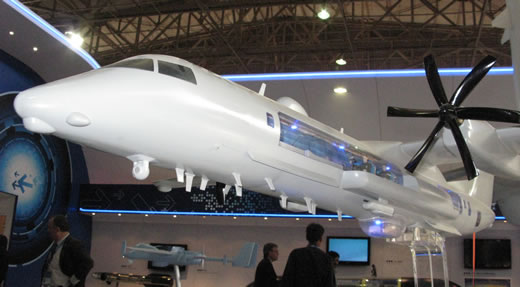
    IAI Elta is expanding the line of special mission aircraft with the introduction of Maritime Search Aircraft platform based on the Bombardier Q300 and Q400, turbo-prop powered aircraft are considered more cost effective and better performing in maritime missions, requiring frequent changes in patrol altitude.

    The Indian Air Force has floated a brand new requirement to support the acquisition of nine special mission aircraft for airborne Signals Intelligence (SIGINT), Communications Jamming (COMJAM), ground survey and target towing.

    According to the request for information sent out to global vendors, two of the nine aircraft should be certified to perform the SIGINT role, since the mission systems required for the SIGINT role commonly demand permanent changes and adaptations to the airframe.

    The remaining seven aircraft should be configured by the prime contractor and certified for the multi-mission role, supporting aerial survey, target towing, COMJAM and flaring. These missions will be flown in addition to their original role in carrying passenger and cargo roles.


    Nonetheless, all nine aircraft will share the same platform complying with FAA/JAAR or equivalent standards, to save in operations, training, logistics spares and support. India is likely to consider the Gulfstream GV platform proposed by IAI/Elta Systems, special mission systems based on platforms offered by Gulfstream (GV) and Bombardier (a special-mission derivative of the Dash-8 Q400 was displayed at Aero India expo in Bangalore in 2011.) Other companies likely to be considered are Northrop grumman, Boeing, Raytheon and L-3. Among the European participants BAE Systems, Thales and Saab also offer suitable systems and platform and are likely to bid. For platforms, some of the bidders are likely to consider the Embraer EBR-145, which has already been selected for the DRDO lightweight AEW program. The Indian Air Force already operates five EMB-135BJ Legacy business jets. For the SIGINT mission the IAF operates two Learjet 29A and three Gulfstream III SRA platforms.

    Embraer EMB-145I uses the Emb-145 business jet platform modified to the specifications set by the Indian AEW requirements. Photo: CABS

    Distrust, the Main Theme at the Moscow Missile Defense Conference

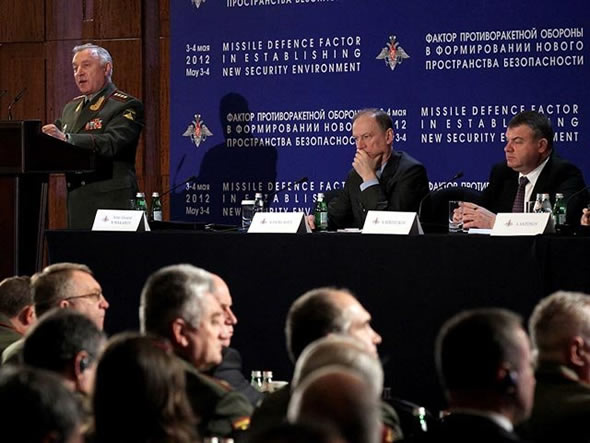
    General Makarov speaking at the Moscow Missile Defense Conference, May 2012

    The United States has ruled out reports that it might give up the idea of putting interceptor missiles in the European missile system in Poland considering Russia’s concerns that it poses threat to strategic stability. “There’s no indication that we might give up the interceptors in Poland. We’re not agreeing to any limitations on our systems,” Madelyn Creedon, U.S. Assistant Secretary of Defense for Global Strategic Affairs, said at a special briefing on Wednesday.

    Creedon Madelyn

    Creedon, along with Ellen Tauscher, Special Envoy for Strategic Stability and Missile Defense, is leading a U.S. delegation at the Missile Defense Conference organized by the Russian Ministry of Defense. She insisted that “the United States is and remains committed to implementing the missile defense system in all of its four phases. She made it clear that Washington will not accept any limitations on either the number or the capabilities of these systems.

    Tauscher said the United States had listened to Russia’s concerns and had taken them seriously. “We have been transparent with Russia and have held close consultations with them over the last several years. We have discussed how the European missile system is designed and configured to counter ballistic missile threats from the Middle East. We have demonstrated through technical discussions that the system is not directed at Russia and cannot intercept Russian ICBMs. And we believe the best way for Russia to be convinced is to join us in missile defense cooperation. Russia can use its own eyes and ears to see for itself that our missile defenses cannot negate or undermine its strategic deterrence,” she told reporters.

    Ellen Tauscher

    Tauscher reiterated that while the two governments could work in cooperation, Washington could not agree to pre-conditions outlined by the Russian government. “We cannot agree to any limitations on our missile defense deployments,” she added.

    However, Tauscher said the U.S. side was ready to agree to a political statement that its missile defenses were not directed at Russia. Such a political statement would publicly proclaim “our intent to cooperate and chart the direction for cooperation, not limitations,” she said.

    Tauscher expressed the hope that her “Russian colleagues recognize that we have no capability or intent to undermine strategic stability, that our objective is not about winning public relations points, and that our cooperation is a much better approach than sticking to the previous pattern of competition.” .

    General Nikolai Makarov

    Russia’s top military officer has threatened to carry out a pre-emptive strike on U.S.-led NATO missile defense facilities in Eastern Europe if Washington goes ahead with its controversial plan to build a missile shield. President Dmitry Medvedev said last year that Russia will retaliate militarily if it does not reach an agreement with the United States and NATO on the missile defense system.

    Chief of General Staff Nikolai Makarov went even further Thursday. “A decision to use destructive force pre-emptively will be taken if the situation worsens,” he said at the international conference attended by senior U.S. and NATO officials. Russian Defense Minister Anatoly Serdyukov also warned on Thursday that talks between Moscow and Washington on the topic are “close to a dead end.”

    U.S. missile defense plans in Europe have been one of the touchiest subjects in U.S.-Russian relations for years. Moscow rejects Washington’s claim that the missile defense plan is solely to deal with any Iranian missile threat and has voiced fears it will eventually become powerful enough to undermine Russia’s nuclear deterrent. Moscow has proposed running the missile shield jointly with NATO, but the alliance has rejected that proposal. Makarov’s statement on Thursday doesn’t seem to imply an immediate threat, but aims to put extra pressure on Washington to agree to Russia’s demands.

    The two-day conference in Moscow is the last major Russia-U.S. meeting about military issues before a NATO summit in Chicago later this month. Russia has not yet said whether it will send top officials.

    In a candid, lively exchange during a conference side session, officials talked about the high level of distrust remaining between the two sides.

    “We can’t just reject the distrust that has been around for decades and become totally different people,” Russian Deputy Defense Minister Anatoly Antonov said in addressing U.S. and NATO officials. “Why are they calling on me, on my Russian colleagues, to reject distrust? Better look at yourselves in the mirror.”

    U.S. State Department special envoy Ellen Tauscher responded that neither country can afford another arms race. “Your 10-foot fence cannot cause me to build an 11-foot ladder,” Tauscher said. “It’s going to have to take a political leap of faith and it’s going to take some trust that we have to borrow, perhaps, from each other and for each other, but why don’t we do it for the next generation?”

    The Obama administration tried to ease tensions with Russia in 2009 by saying it would revamp an earlier Bush-era plan to emphasize shorter-range interceptors. Russia initially welcomed that move, but has more recently suggested the new interceptors could threaten its missiles as the U.S. interceptors are upgraded.

    The U.S.-NATO missile defense plans use Aegis radars and interceptors on ships and a more powerful radar based in Turkey in the first phase, followed by radar and interceptor facilities in Romania and Poland.

    Russia would not plan any retaliation unless the United States goes through with its plans and takes the third and final step and deploys defense elements in Poland, Antonov said Wednesday. That is estimated to happen no earlier than in 2018. Russia has just commissioned a radar in Kaliningrad, its western outpost near the Polish border, capable of monitoring missile launches from Europe and the North Atlantic.

    Meanwhile, U.S. Senator John McCain, on a visit to Lithuania, lashed out at Russia’s plans in Kaliningrad.
    McCain said using missile defense as an “excuse to have a military buildup in this part of the world, which is at peace, is really an egregious example of what might be even viewed as paranoia on the part of Vladimir Putin.”

    Nikolai Patrushev

    On Thursday, at the start of the conference attended by representatives from about 50 countries, Russia’s Security Council secretary reiterated Moscow’s offer to run the missile shield together with NATO. Nikolai Patrushev said such a jointly run European missile defense system “could strengthen the security of every single country of the continent” and “would be adequate for possible threats and will not deter strategic security.”

    NATO’s deputy secretary general, Alexander Vershbow, told the conference that the U.S.-led missile shield is “not and will not be directed against Russia” and that Russia’s intercontinental ballistic missiles are “too fast and too sophisticated” for the planned system to intercept.

    Kazakhstan to Jointly Produce Ukrainian BTR-4 APCs

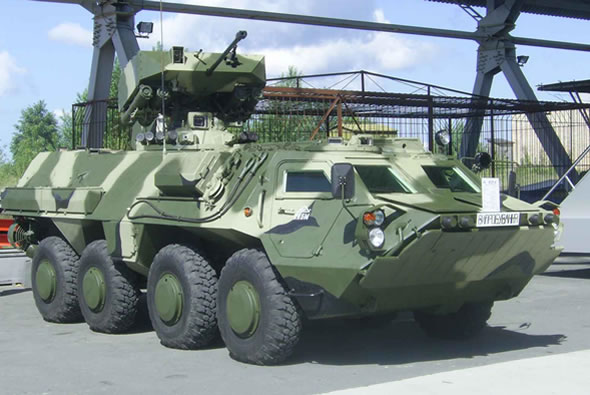
    The BTR-4 with the Grom turret mounting 30mm cannon, 7,62 coaxial machine gun, 30mm automatic grenade launcher and four Konkurs or Barrier anti-tank missiles.

    An unexpected agreement was signed at Kadex 2012 Show by the representatives of Kiev and Astana about a local production of the Ukrainian 8×8 BTR-4 wheeled Armored Personnel Carrier (APC) of which Kazakhstan is meant to receive 100. The contract’s value is being estimated around US$150 million.

    The BTR-4 was developed by the Ukraine based KMDB  company and was unveiled in 2006. A year later the company sealed its first export contract, for the delivery of  336 BTR-4 vehicles to Iraq, as part of a multi-billion program. First shipments of 88 such vehicles were delivered in 2011.

    The BTR-4 with the Grom turret mounting 30mm cannon, 7,62 coaxial machine gun, 30mm automatic grenade launcher and four Konkurs or Barrier anti-tank missiles.


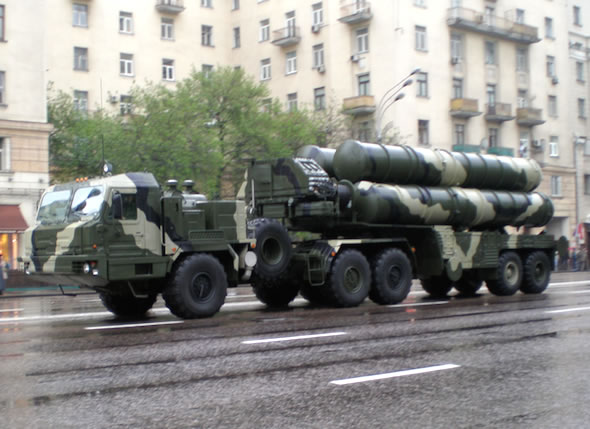
    China is Interested in the Russian S400 Triumf

    China is interested in the Russian S400 Triumf (SA-21)
    China is interested in the Russian S400 Triumf (SA-21)

    According to some sources Beijing expressed interest to acquire Russian S-400 counter-missile system. To date the Chinese use the components of the S-300 system but are said to be willing to enter closer co-operation on military and technological levels which would eventually lead to implementation of the S-400’s in a near future. Russia is currently developing its replacement, i.e. S-500 which is about to enter the line around 2020.


    While China could become a major customer for the Russian air defense system, negotiations will be tough, since the Russians are becoming more protective on intellectual property and reverse engineering, as practiced by China in the past. A planned procurement of Su-35 that seemed a done deal has recently collapsed after the Russians refused to compromise on these demands.

    DigitalGlobe Rejects GeoEye Proposed Acquisition

    DigitalGlobe plans to launch the WorldViwe3 high resolution imaging satellite, to deliver panchromatic, short and medium wave infrared imagery 24 hours a day. Photo: Digitalglobe
    In 2014 DigitalGlobe plans to launch the WorldViwe3 to deliver superspectral imagery 24 hours a day. Photo: Digitalglobe

    The Board of Directors of DigitalGlobe unanimously rejected the acquisition proposed last week by GeoEye, saying the offer undervalues the company’s financial performance. DigitalGlobe noted that prior to GeoEye’s hostile solicitation, GeoEye made previous private unsolicited proposals, beginning on February 7, 2012. Nevertheless, Jeffrey R. Tarr, DigitalGlobe CEO presented a counter-offer in a letter to GeoEye CEO Matthew M. O’Connell. Tarr said his company was willing to discuss a contra-deal where his company would acquire GeoEye establishing a 60/40 owned company.

    Last week satellite imagery company GeoEye Inc offered to buy rival DigitalGlobe Inc today for $792 million in cash and stock as it tries to make up for a possible revenue loss from U.S. defense spending cuts. If the offer is accepted, the two companies will merge into the world’s largest fleet of high-resolution commercial imagery satellites, strengthening US dominance in the growing geospatial services market.

    GeoEye offered DigitalGlobe shareholders $17.00 per share in a ‘friendly transaction’, payable $8.50 per share in cash and $8.50 in GeoEye stock, (or 0.3537 shares of GeoEye stock for each share of DigitalGlobe stock.) According to Matthew M. O’Connell, CEO, President & Director of GeoEye, this offer price represents a 26% premium to DigitalGlobe’s closing share price yesterday.


    GeoEye said it would consider other alternatives from 100% stock or 100% cash offerings, if required. DigitalGlobe acknowledged receiving the unsolicited proposal and will review it by independent financial and legal advisors, but advised stockholders to take no action at this time pending the review of the proposal by the Company’s Board of Directors.

    Both companies reported strong performance in the first quarter of 2012, but are aware of future difficulties, since the recent increase in the yield of government owned satellites, and proposed budget cuts in government orders for commercial satellite imagery beyond the current level. The two companies are sharing the National Geospatial-Intelligence Agency (NGA) EnhancedView multi-year geospatial imaging Service Level Agreement (SLA) program awarded in 2010, granting the government options to buy imagery from commercial providers worth US$7.3 billion over the next couple of years. DigitalGlobe is believed to possess a larger image database delivered by multiple satellites (Quickbird, Worldview 1 and Worldview 2), enabling it to provide about 80% of the imagery needed by the government, for 62.5% of the SLA contract revenue (Indie Research). Therefore, if the government cuts its spending on satellite imagery, as President Obama Fiscal Year 2013 budget request reflects, GeoEye is likely to be effected more than its rival. Hence, its current motivation to tap into its competitor’s main asset. Moreover, the proposed cuts are expected to have a profound impact on the National Geospatial Intelligence Agency’s Enhanced View (EV) Program. “A weakened U.S. commercial imagery industrial base would create a real opportunity for foreign competitors, particularly in Europe, to take over the industry.” warns the Space Enterprise Council at TechAmerica, a Washington based space commerce loby.


    While the proposed merger would consolidate US orders into one entity while better position the operation to compete with foreign providers in international markets it will also allow the company to reduce operating expense by introducing synergies and reduced capital requirements for their operations. To fulfill their SLA commitments, the two companies are planning to place new satellites in orbit – GeoEye is planning to launch GeoEye 2 next year while DigitalGlobe plans to deploy the Worldview3 by the end of 2014.

    According to O’Connell the proposal is structured to provide DigitalGlobe shareholders with the opportunity to participate in the dynamic future growth of the combined company. “Given our financial strength and longstanding supportive banking relationships, we are highly confident that financing will not represent an impediment to the consummation of the proposed transaction.” O’Connell wrote Jeffrey R. Tarr, President and CEO of DigitalGlobe, adding that Cerberrus Capital Management, GeoEye’s largest shareholder, are prepared to contribute substantial capital in support of the proposed transaction.

    “We will also continue to invest in new information, analytic services and the most technologically advanced commercial satellites for government and commercial customers around the world.” The company said in a statement.  “In the face of significant pressure on the U.S. defense budget and intensifying international competition, a combined company will be better positioned to provide the U.S. government with the time-sensitive geospatial intelligence that is needed to support its mission in a very cost-effective manner during these fiscally conservative times. The government is looking to its providers for innovative solutions, and we believe this is the best option to achieve that.” O’Connell said.

    Skunk Works and XTEND Simplify Multi-Drone Command

    0
    Lockheed Martin Skunk Works® and XTEND have achieved a major milestone in JADC2 by integrating the XOS operating system with the MDCX™ autonomy platform. This technical breakthrough enables a single operator to simultaneously command multiple drone classes, eliminating the friction of mission handoffs. From "marsupial" drone deployments to operating in GPS-denied environments, explore how this collaboration is abbreviating the data-to-decision timeline and redefining autonomous mission execution.

    From Ukraine to Taiwan: The Global Race to Dominate the New Defense Tech Frontier

    0
    As traditional defense primes face mounting competition from agile “neoprimes” such as Anduril, Palantir and Helsing, the balance of innovation is shifting toward software-defined warfare and scalable, dual-use technologies, while global industry consolidation—marked by Boeing’s integration of Spirit AeroSystems and other strategic mergers—signals an intensified race to secure control over the defense technology value chain. Our Defense-Tech weekly report highlights these trends.

    Europe’s “Drone Wall”

    0
    In early October 2025, a coordinated wave of unmanned aerial system (UAS) incursions—widely attributed to Russia—targeted critical infrastructure across at least ten European nations. The unprecedented campaign exposed the fragility of Europe’s air defenses...

    Weekly Defense Update & Global Security Assessment

    0
    Executive Summary The past week (September 18-25, 2025) represents an inflection point where strategic defense concepts have transitioned from doctrine to tangible reality. An analysis of global events reveals four primary, interconnected trends shaping an...

    U.S. Air and Space Forces Push Next-Gen Programs at the AS&C 2025 Conference and...

    0
    At the 2025 Air, Space & Cyber Conference, U.S. Air Force and Space Force leaders unveiled major updates on next-generation fighters, bombers, unmanned systems, and space initiatives, highlighting both rapid innovation and critical readiness challenges as the services race to outpace global competitors. A short version is available here, with a more detailed version for subscribers.

    TADTE 2025: Reflecting Taiwan’s Strategic Themes

    0
    The Taipei Aerospace & Defense Technology Exhibition (TADTE) 2025 crystallized around four dominant strategic themes that collectively illustrate Taiwan's comprehensive approach to defense modernization amid escalating regional tensions. Based on a detailed report by Pleronix (available upon request). Includes a Podcast discussion on TADTE 2025's highlighting Taiwan's four strategic themes beyond the post's coverage.

    Iron Beam 450 Completes Testing, Soon to Join With Operational Air Defense Units

    0
    Israel’s Iron Beam 450 high-power laser system has completed final testing, marking a major leap in air defense. Developed by Rafael, it offers precise, cost-effective interception of rockets, UAVs, and mortars, and is set for IDF deployment by 2025.