
Wednesday, December 31, 2025
More
    Home Blog Page 191

    Brits Testing 2012 London Olympic Security on a Week-Long Exercise

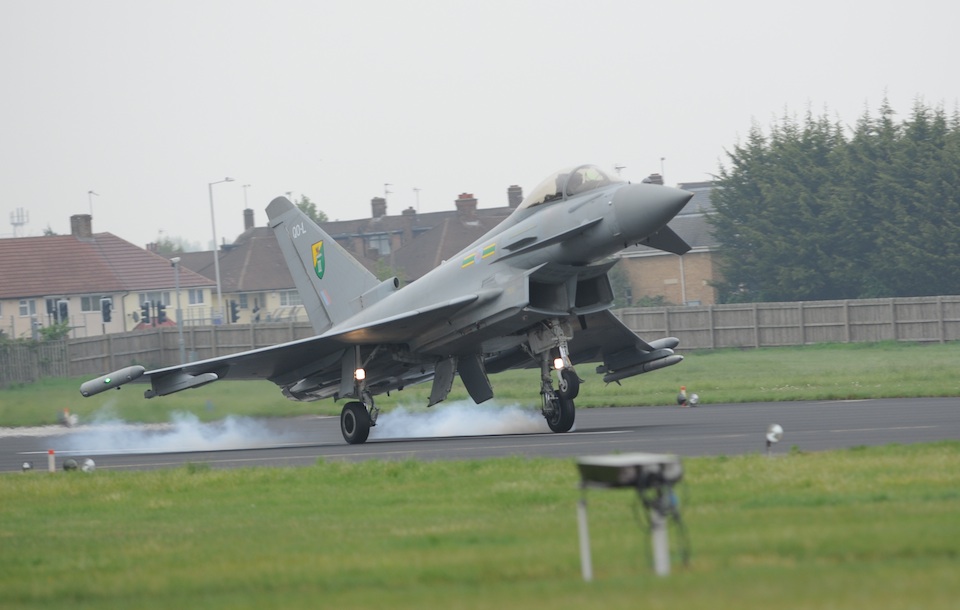
    A 3 Squadron, RAF Typhoon jet fighter based at RAF Coningsby arrives at RAF Northolt, West London to support the Olympics air security exercise.
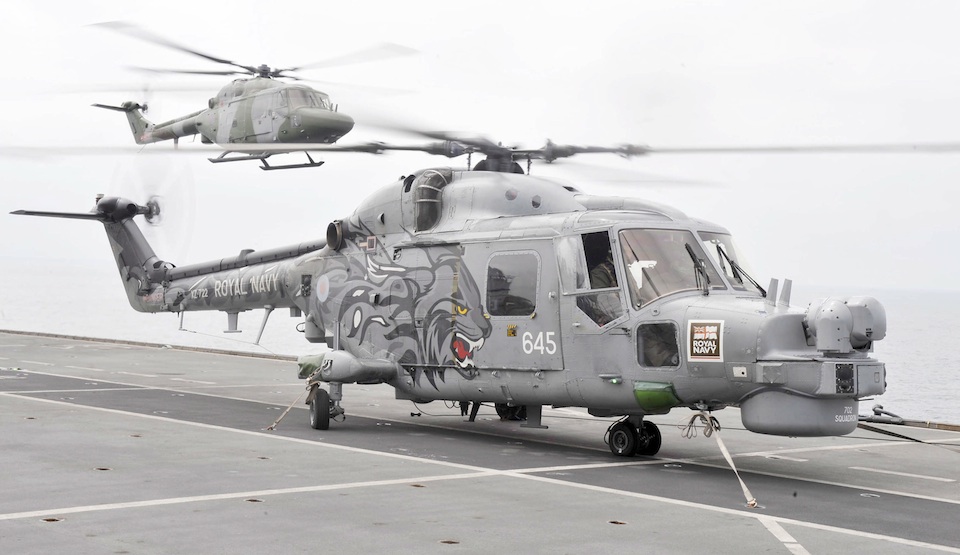
    Navy and Army Lynx helicopters on HMS Ocean. Photo: Royal Navy

    The primary form of air defense is provided by RAF Typhoon aircraft which will form the outer ring of defense outside London. They will be assisted by Royal Navy Lynx and RAF Puma helicopters armed with snipers with Ground Based Air Defense forming the final line of security. Under the Air Security Plan, 30-miles (48km) of airspace surrounding the Olympic Park would become a restricted flying zone.

    The Air Security Plan for the Olympic Games builds on the Royal Air Force’s existing defense of UK airspace, which includes round-the-clock radar surveillance and Typhoon fighters held at high readiness 24/7. The exercise integrates the additional forces being used to ensure the safety of the Olympics, as part of the Ministry of Defence’s role to ensure a safe and secure Games this summer.


    These include the Typhoon fighter jets that arrived at RAF Northolt on Wednesday May 2nd, (the first time fighter planes are stationed at the base since the end of World War II). They are testing the procedures military aircrews will use to intercept and communicate with aircraft breaching the restricted airspace during the Olympic Games. It will also evaluate the actions pilots must take in response. Pilots entering the restricted airspace can expect to be intercepted by Typhoon fighters, or military helicopters.
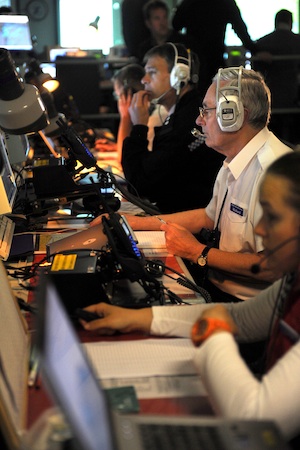
    A view of the 'nerve centre' of Operation 'Olympic Guardian', Otherwise known as the Combined Ops Room or COR. Photo: Cpl Joe Blogs/MoD.

    RAF Puma helicopters, along with Royal Navy and Army Lynx, carrying teams of RAF Regiment snipers will be on high alert to intercept intruders into restricted airspace, while airborne surveillance by RAF E-3D Sentry Airborne Early Warning & Control (AWACS) and Royal Navy Sea King ASACS (Airborne Surveillance and Control System) provide integration and airspace control.

    On the ground, the RAF is providing further mobile ground radar systems (Type 101 radar), while the Army is deploying air observers at 14 additional locations. High Velocity Missile (HVM) and Rapier missile systems will also provide radar detection and active defense capability, to provide additional layers of early warning and low-level air-defense coverage. These Rapier and Starstreak High Velocity Missiles (HVM) air defense systems were also deployed in six sites in and around London.

    Lynx MK8 from 815 NAS, leaving HMS Ocean with Rt Hon Phillip Hammond MP, Secretary of State (SofS) for Defence on board. Canary Wharf in visible the background. The Ocean and Bulwark are currently deployed in the Thames in London support for Exercise Olympic Guardian. Photo: Royal Navy, Crown Copyright.

    While aircraft activity over the urban area is expected to increase, Air Vice-Marshal Stuart Atha, Air Component Commander for Olympics Air Security assured the disturbance to the public will be minimal: “We have sought to limit the amount of flying to the minimum required to ensure that our Forces are ready for their important role delivering air security for the Olympics, balancing this against the need for us to reduce disturbance to a minimum.
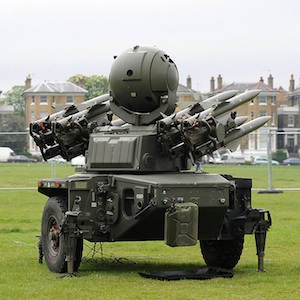
    Rapier Mk2 missiles fire unit deployed at Blackheath Common, one of six sites selected for deployment of Ground Based Air defense (GBAD) units during the Olympic Games this summer. Photo: Richard Watt, MOD

    On May 4th the Royal Navy’s largest warship HMS Ocean has arrived on the River Thames in preparation for the London Olympics. Berthed at Greenwich, the ship will act as a launch pad for four Royal Navy Lynx helicopters and four Army Air Corps Lynx which will patrol the airspace over the capital. Royal Marines snipers from 539 Assault Squadron and 43 Commando will be on board the Navy Lynx helicopters, ready to shoot out the engines of suspicious vessels on the water while RAF Regiment snipers will do the same from the Army Lynx against light aircraft intruding.

    P2000 patrol vessels sailing the Thames river are set to ensure safety and security and will investigate any unknown craft or people on the water. Air security will be tested throughout the weekend during the exercise while river operations are set to take place from Tuesday.

    Captain Andrew Bretton, Commanding Officer of HMS Ocean said: “As a former Commanding Officer of HMS Westminster, a ship with such great links to London, I am particularly pleased to be bringing HMS Ocean to Greenwich to be part of the Olympics, a truly once-in-a-generation event.” HMS Ocean is the largest ship in the Royal Navy and is ideally suited to the task of supporting the police in providing security for the world’s largest and most famous sporting event. Captain Bretton said.
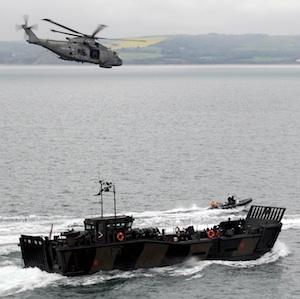
    RAF Merlin supporting Royal Navy surface assault landing craft operating with the Dorset Police, as part of 'Operation Olympics' LIVEX. Photo: Cpl Joe Blogs/MoD.

    Olympic Guardian also saw Fleet Flagship HMS Bulwark stage her own security rehearsals ahead of the Olympic sailing competition off Weymouth Bay and Portland Harbor. HMS Bulwark will act as the command platform during the Olympics for the Dorset Police Authority as well as representatives from the Maritime Coastguard Agency (MCA), RNLI and regional civil authorities. Royal Navy bomb disposal experts will be on board and are set to ensure the area is safe for sailing while Merlin helicopters from 814 Naval Air Squadron and embarked Royal Marines will ensure safety from the skies.

    As part of their exercise, the team on board HMS Bulwark practiced their communications systems and ran through the workings of the airborne and surface assets. HMS Bulwark’s Commanding Officer Captain Alex Burton is responsible for the military presence in Dorset during the Games.
    Japan and US Agree To US Marine Realignment In Pacific

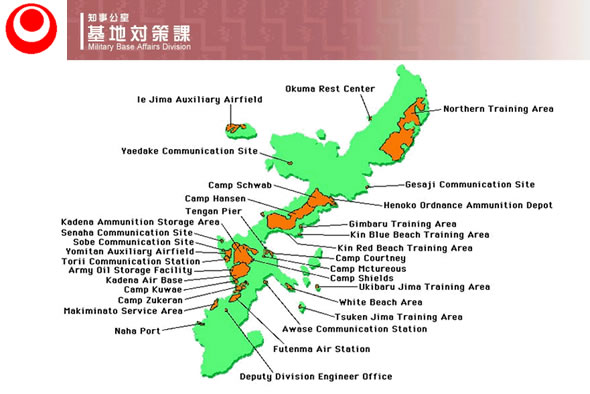
    After sixteen long years of debate and aggravating delays, the United States and Japan have reached an agreement to reduce the presence of US Marines on the southern Japanese island of Okinawa. Okinawa, some 400 miles south of the Japanese main islands has been a key strategic forward base for the United States in the Pacific since it was captured by US forces at the end of World War Two in 1945.


    Joint statements were issued in Washington and Tokyo on 26 April hopefully bringing a resolution to an issue that has often been a political “hot potato” for the leadership of both nations and has, at times, posed a serious threat to the long-standing US-Japanese defense alliance. Japan remains a key partner in America’s strategic vision to guarantee stability in the Asia-Pacific region and in so doing, encourages the political and economic development of the entire region.

    Okinawa has long served as home to a sizeable US military force conditioned and trained to act as a quick reaction force capable of responding to any credible military threat in the region. For many years the US focus was on blunting Cold War Soviet Union aspirations of encroachment in the Pacific. These forces also represent a key deterrent to prevent a repeat of North Korea’s 1950 invasion of the South.

    Okinawa is presently host to more than half of the 47,000 US forces stationed in Japan, a fact that has been the source of intense opposition from Okinawan residents.

    The present air-ground-logistics capabilities of the III Marine Expeditionary Force (III MEF), coupled with the USAF air assets at Kadena Air Force Base, are considered to be a critical counterbalance to offset China’s military growth and aggressive pursuit of natural resources in the region. The US military forces in Okinawa and Japan proper have also developed into a humanitarian response force capable of providing rapid assistance to nations in the region that are overwhelmed by natural disasters.

    A 2006 relocation proposal, revised in 2009, called for the movement of approximately 8,700 Marines and more than 9,000 dependents from Okinawa to facilities on the island of Guam some 1,500 miles to the southeast. This plan carried a price tag of some $21.1 billion in construction costs to execute. This plan has garnered increasingly antagonistic opposition from members of the US Congress. Key members of the Senate Armed Services Committee earlier this year suspended funding for the relocation until they received detailed briefings from the Pentagon to satisfy their demand that all viable options had been explored fully.

    Under the new proposal, Japan will accept responsibility for $3.1 billion of the $8.6 billion cost for relocation. The plan fits nicely with an agreement concluded with Australia authorizing the rotation of 2,500 Marines through Darwin. The first contingent of Marines have already deployed to Australia.

    As outlined, 4,700 Marines would be permanently moved to Guam with an additional 2,700 being moved to Hawaii and other locations in the Pacific on a “rotating” basis. That will still leave approximately 10,000 Marines in Okinawa and eventually another 2,500 in northwest Australia. A significant number of these Marines are expected to be deployed away from their home bases for extended periods of time further reducing the burden on local hosts.

    This realignment will place integrated Marine air-ground task-organized forces at strategic locations forming an arc throughout the Asia-Pacific region. Okinawa will continue to be the nerve center of Marine forces. The two nations have agreed that Okinawa will continue to host aviation operations, the 31st Marine Expeditionary Unit (31st MEU), and the III MEF’s command structure.

    As part of this force realignment, the Marine Corps also plans to rotate units through the Philippines, South Korea, Thailand, and other sites for training and the US Navy is expected to deploy ships in and out of Singapore. The US and the Philippines are rumored to be negotiating a separate joint basing scheme that was not addressed by Pentagon officials.

    Once completed, the realignment will feature a chain of bases stretching some 7,700 miles from California to Japan with the ability to provide force projection as far as the Indian Ocean. A key part of the relocation effort is a return to the Unit Deployment Program (UDP) where individual units are deployed to the Pacific for six-month rotations after which they return to their home base. The UDP operation was greatly curtailed during the Iraq/Afghan conflicts.

    Another significant feature of this new proposal is a tentative agreement for both nations to establish working groups to discuss cooperative arrangements for building the first ever joint training facilities in Guam or possibly Tinian in the Northern Mariana Islands. This idea is a major advance for Japan given its pacifist constitution and political environment.

    This realignment of forces was developed as a practical means of lessening the level of uncertainty and tension among Asia-Pacific nations that threatens economic growth and political development in the region. The plan also helps to strengthen the US-Japan defense alliance and opens the door for further integration of US and Japanese forces.

    Also, the force realignment will serve to better protect US forces from attack by hostile elements equipped with sophisticated weaponry and cyber warfare capabilities. A dispersion of forces makes them more difficult to locate, target, and disrupt.

    US Department of Defense representatives consider it essential that a force-in-readiness numbering some 19,000 Marines be maintained in the Asia-Pacific region to meet whatever contingencies may arise. These forces will be organized into integrated air-ground task forces that can be structured to meet specific needs. Both nations agree that this continued Marine presence is critical to the maintenance of stability in the Pacific.

    US Congress Formally Notified of Japan’s F-35 Purchase

    F35 for Japan
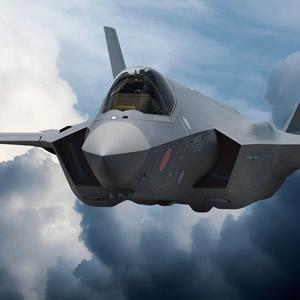
    Concept vision of the F-35J for Japan

    The US Defense Security Cooperation Agency (DSCA) formally notified the United States Congress on 30 April of a potential Foreign Military Sale of Lockheed Martin F-35A Joint Strike Fighters (JSF) to Japan.  The sale includes an initial order for four F-35A Conventional Take-Off and Landing (CTOL) stealth fighters with an option for the purchase of an additional 38 F-35A CTOL aircraft. The cost of the purchase is estimated to be $10 billion.

    The announcement was published in a DSCA press release of 1 May. US law requires the Congress be notified of potential foreign sales and does not represent a completed contractual obligation.


    Each aircraft carries an estimated cost of $238 to $240 million that includes support throughout the aircraft’s lifetime. The overall deal includes the aircraft itself, Pratt & Whitney F-135 engines (including five spare engines), electronic warfare systems, command and control computers, software development and integration, spare parts, training, logistical support, and US government and contractor technical support and services. Other equipment in the package includes intelligence capabilities, navigation systems, an autonomic global logistics support system, GPS systems, and a flight mission trainer.

    Japan has wanted to add a stealth aircraft to its air fleet for a long time, but failed in its efforts to negotiate a deal to acquire the Lockheed Martin F-22 Raptor.

    The F-35 Lightning II was selected by Japan in December of last year beating out competing aircraft that included the Boeing F/A-18 E/F Super Hornet and the Eurofighter Typhoon. The F-35 is intended to replace Japan’s aging fleet of McDonnell Douglas/Mitsubishi F-4EJ Kai Phantoms. The plan is to retire the Phantoms as the F-35s are placed into operation. Japan hopes to take delivery of the first four F-35As by 2017. Full-scale production is expected to begin no earlier than 2019 should no further delays be encountered.

    The DSCA press release stated that execution of the sale could take as long as fifteen years, but some defense analysts project that deliveries might begin as early as 2016.

    Repeated delays, cost increases, and technical difficulties have plagued the JSF program from its inception.  The situation has created some fairly widespread discontent among promising customers. Norway, Canada, Australia, Italy, and the United States have either delayed their purchase plans or reduced the initial numbers of aircraft they expected to acquire.

    Japanese Minister of Defense Naoki Tanaka previously announced that Japan might find it necessary to cancel its preliminary order should the JSF program suffer further delays or if the price tag increases to an unacceptable amount.

    Lockheed Martin has indicated that the F-35A can be delivered at an average cost of approximately $75 million per aircraft once full-scale production begins. This cost estimate is linked to the assumption that the United States and the eight partner nations involved in the JSF program will order a minimum of 3,100 aircraft over the next twenty-five years. Should the numbers ordered drop below this minimum, costs can be expected to escalate.

    The prime contractors will be Lockheed Martin and Pratt & Whitney Military Engines and no offset agreement is known to be tied to this sale. US government technicians and contractor representatives will need to have a continuing presence in Japan to conduct training, assembly activities, technical support, and program management for an estimated fifteen years.

    Lockheed Martin’s Director of F-35 International Customer Engagement, Dave Scott, announced during the Singapore Airshow in February that Japan would be nominated as a final assembly and inspection site. With US government approval, this would allow the assembly of the four major aircraft components to be completed in Japan along with installation of electronics and the conduct of test flights.

    As one of America’s most important and longstanding allies in the Asia-Pacific region, Japan’s self-defense capabilities are of extreme concern to the United States. Japan represents a key player in the maintenance of stability and peace in the region and is host to the largest US military presence in the Pacific.

    This sale will go far in modernizing Japan’s aerial combat capabilities and will further strengthen US-Japan defense cooperation.  Should all go well with this procurement, Japan might increase its F-35A order to between 100 and 120 aircraft allowing for the replacement of its existing force of Mitsubishi F-15 J/DJ fighters as well.

    Asia-Pacific Defense Update

    Following are excerpts from recent news articles published ib Defense-Update, covering the Asian defense market. The countries included in this report are: Afghanistan | Australia | Brunei | Bangladesh | China | India | Indonesia | Japan | Malaysia | Myanmar | North Korea | Pakistan | Philippines | Singapore | South Korea | Sri-Lanka | Taiwan | Thailand | Vietnam. For an insight into each of the countries, click on the country name for a detailed report listing the 10 recent news items for that specific country.

      Australia’s New Shadow 200 Enhance ISR Support in Afghanistan

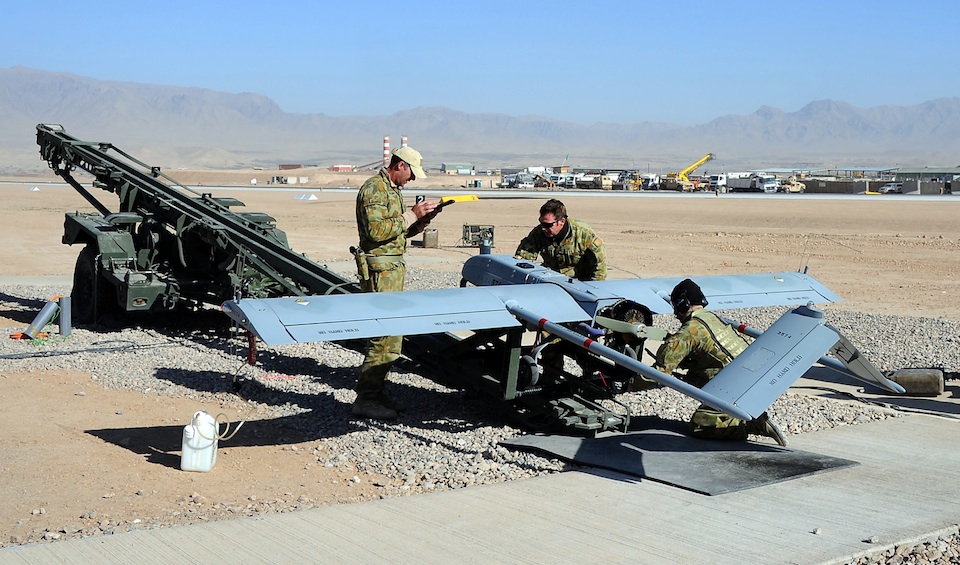
      The Textron Systems (AAI) RQ-7B Shadow 200 Tactical Unmanned Aerial System (TUAS) has officially commenced operations with Australian forces in Afghanistan, providing an enhanced capability to the International Security Assistance Force (ISAF). The Shadow 200 is replacing the ScanEagle leased by the Boeing Company, which has been in operation since mid 2007. “ScanEagle has been the vehicle for the Australian Army to develop its Unmanned Aerial Vehicle (UAV) capability and the Army is now taking the next step by employing the Shadow 200 TUAS” said Chief of Joint Operations, Lieutenant General Ash Power. The first Shadow 200 was delivered in August 2011, ahead of schedule.

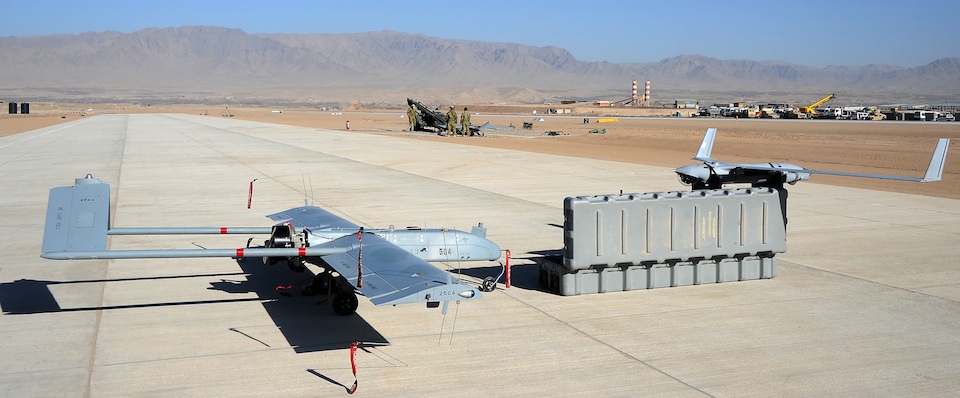
      An RQ-7B Shadow 200 Tactical Unmanned Aerial System (left) and a Scan Eagle Unmanned Aerial System (right) parked at Multi National Base Tarin Kot in Uruzgan, Afghanistan. Photo: Sergeant Mick Davis, Australian Defence

      The Shadow 200 system captures full motion video during both day and night operations, Sensor images and metadata is sent back to a ground control station up to 125 kilometres away. It can recognize targets on the ground while operating at an altitude of up to 10,000 feet.

      The Scan Eagle UAS was leased by Boeing in 2007, few months prior to the official termination of another UAS called I-View, developed jointly by Boeing Australia and Israel’s IAI Malat for the Australian JP129 contract in 2006. This project was terminated in 2008 with Scan Eagle fulfilling the ISR gap, supporting Australian troops in Afghanistan and Iraq. Studying alternatives available at the time, the Australians realized the Shadow 200 was the only available choice, but the system was not available for export at the time, fulfilling the US Army and Marine Corps urgent needs for organic brigade-level ISR. In July 2010 the US cleared an Australian request for the AAI Textron Systems RQ-7B, paving the way for formal orders from Australia, Italy and Sweden.

      A Shadow 200 Tactical Unmanned Aerial System launches at Multi National Base Tarin Kot. Note the multi-payload configuration, comprised of the IAI/Tamam POP300 multi-sensor EO payload and com relay antennae on the wingtips. Photo: Sergeant Mick Davis, Australian defence.

      Overall the Australian order under Joint Project 129 Phase 2 would be worth about $218 million, which covers two units and four ground control systems (GCS) modules to support multiple operational sites and training facilities. Each Shadow 200 system comprises five aircraft, ground control stations, a launch and recovery element, and associated equipment, logistics and training. Nevertheless, the Australian Army quoted much lower (A$90) million investment in the systems, which may relate to the unmanned aircraft, but not the mission Payloads which are often as expensive as the aerial vehicles carrying them. The Shadow 200 carrying the IAI/Tamam 20kg (51 lbs)  POP300D multi-sensor EO payload has the capacity to carry concurrently an electro-optic camera, infra-red camera, and three separate lasers – for target designation, pointing and range finding, along with communication relay payload. (These were the requirements the Australians originally wanted the I-View to deliver, five years ago).

      The first operational rotation of Australian personnel has been trained in 2011 in the United States; simulation equipment has arrived; and the first test flights have been flown at Woomera. As of early 2012 the units are currently based in Multi National Base Tarin Kot in Uruzgan, Afghanistan.

      During almost five years the ScanEagles supporting the Australian forces have flown over 6,200 missions logging approximately 32,000 hours in Afghanistan, and made significant contributions to the force protection and situational awareness of the Coalition Force soldier on the ground, Gen. Power said. “This was an average of 22 hours per day over the four years and 10 month period – a tremendous effort. While the Shadow 200?s sorties are shorter in duration than those of its predecessor, the ScanEagle, it provides a substantial increase in capability.


      Approximately 180 ADF personnel deployed in support of ScanEagle, with the bulk from 20th Surveillance and Target Acquisition Regiment. Other contributing units include 16 Air Defence Regiment, Defence Imagery and Geospatial Organisation, 1st Topographical Survey Squadron and 16 Aviation Brigade. Their operations supported the Reconstruction Task Force, Mentoring and Reconstruction Task Force, Mentoring Task Force, Combined Team – Uruzgan and the Special Operations Task Group.

      Philippines Seeks US Assistance in Strengthening its Military

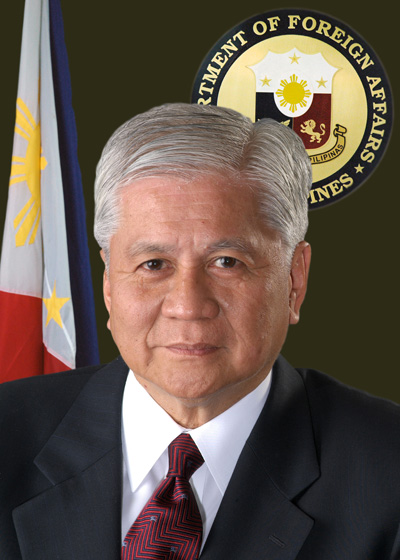
      Philippine Foreign Secretary Albert del Rosario

      Following high-level defense discussions between the Philippines and the United States, Philippine Foreign Secretary Albert del Rosario announced in prepared comments that his nation is asking the United States to assist in upgrading the Filipino military in light of the South China Sea standoff with China at Scarborough Shoal.


      During a speech at the Heritage Foundation “think tank,” Del Rosario stressed the need for the Philippines to achieve “maritime domain awareness” while having the capability of countering armed incursions into those regions claimed as sovereign territory by the Philippines. He went on to say that the Philippine government had submitted a list of equipment and assets needed to satisfy this need to senior US representatives. He added that other “international partners” would also be approached with requests for assistance.

      Specifically, Secretary del Rosario said the Philippines needed naval patrol vessels, aircraft, advanced radar systems, and coastal surveillance facilities to ensure his nation could field a “minimum credible defense.”

      Secretary del Rosario is calling for the United States to increase its funding of Filipino military capabilities. Some funding was placed on hold since 2008 in response to reputed human right’s violations; funding del Rosario says is desperately needed. According to the Philippine Embassy, in a press release of 1 May, the United States gave indications that it was working out the details for sharing more “real-time” intelligence data gathered from the sea areas surrounding the Philippines and would likely double its initial foreign military financing this fiscal year to a total of $30 million. This claim has not yet been confirmed by the United States.

      The United States transferred a previously decommissioned US Coast Guard Cutter to the Philippines last year, a ship that now serves as the flagship of the Philippine Navy. A second cutter is scheduled to be delivered to the Philippines later this year.

      As for other “international partners,” del Rosario mentioned ongoing efforts of his government to broaden Filipino partnerships with Australia, Japan, South Korea, and other Pacific neighbors with a focus on improving the region’s disaster response abilities, humanitarian efforts, and maritime security.

      Secretary del Rosario also said that joint exercises and cooperative activities between the United States and the Philippines should be expanded to include “more locations” and “in a more frequent manner.” He pointed out that the United States needed a strong ally in the area willing to accept more responsibility for protecting the peace and promoting stability throughout the region. It is “in the strategic interest of the US,” he continued, “to invest in the development of the Philippines’ defense and military capability.”

      China and the Philippines are engaged in a standoff in the South China Sea stemming from a dispute over the sovereignty of Scarborough Shoal, an atoll-shaped collection of outcroppings that lie some 200 kilometers west of the northern Philippines. The area is known to be a rich fishing ground. The Philippines claims sovereignty because the Shoal is within the 200-nautical mile exclusive economic zone recognized under international maritime law. China’s claim is based on a map submitted to the UN in 2009 outlining its claim to sovereignty over most of the South China Sea without regard to existing international conventions.

      The United States has already made it clear that it would not intervene on behalf of the Philippines in this sovereignty dispute, but would lend support in any arbitration hearings.

      Australia Delays in F-35 Procurement

      F-35C CF-2 flew over the Andrews Joint Services Open House airshow on 21 May 2011. US Navy Lt. Cdr. Eric Buus was the pilot on this seventh test flight of the aircraft—and the first flight that originated from NAS Patuxent River, Maryland. Photo: Lockheed Martin

      In an unexpected statement 3 May, Australian Defense Minister Stephen Smith announced Australia’s decision to delay its purchase of 12 Lockheed Martin F-35A Joint Strike Fighters (JSF) for at least two years. Minister Smith said he had spoken to US Secretary of Defense Leon Panetta early 3 May regarding this decision with assurances that the delay would in no way affect the US-Australian defense alliance.


      Minister Smith added that the delay would align Australia’s JSF delivery schedule to that of the United States in light of the US Department of Defense decision earlier this year to delay procurement of 150 F-35s. Australia’s defense budget will be released next week and this procurement delay is expected to save the government approximately $1.64 billion.

      The announcement is yet another piece of bad news for Lockheed Martin. Production delays, massive cost increases, and technical difficulties have plagued the JSF program almost from its inception. Norway, Japan, and Canada have also expressed serious concerns about the program and Italy previously announced a decision to delay its F-35 purchase schedule. Some technical analysts have also criticized F-35 performance and capabilities giving the aircraft unfavorable reviews compared to rival Chinese and Russian aircraft.
      Australia’s delay adds additional uncertainty to the JSF program and further aggravates concerns about the aircraft’s eventual cost. Few days earlier details of the Japanese order for 42 F-35A were disclosed with the notification to congres of the Japanese deal. Japan will be ordering only four aircraft, with options for 38 more, to be assembled in Japan. The cost of the total purchase is estimated to be $10 billion.

      With a contractual obligation for only the first two F-35As, which have already been delivered in the US for use in training pilots and ground crews, the second batch of 12 aircraft were originally scheduled for delivery between 2015 and 2917 with a follow-on order for at least 58 more aircraft.

      Boeing is anxious to sell Australia additional F/A-18 E/F Super Hornets, a proposal Minister Smith has long maintained is a realistic option. Australia now has 71 F/A-18 Conventional Hornets and 24 Super Hornets in service. Smith noted that he felt confident that the nation’s existing fleet of Hornets would be adequate to satisfy air combat requirements until the F-35s are delivered, but he has also left the door open for the acquisition of additional Hornets should that be determined to be in Australia’s best interest.

      As a key American ally, Australia and the United States have recently expanded their defense alliance with President Obama’s shift of US attention to the Asia-Pacific region adding to Australia’s importance as a defense partner. The United States is now in the initial phase of stationing 2,500 US Marines at Darwin with further cooperative arrangements a very real future possibility.

      Australian Prime Minister Julia Gillard elaborated on Minister Smith’s JSF announcement with comments addressing the government’s proposed defense budget.

      Minister Gillard announced that additional cost savings would be realized with the cancellation of plans to procure self-propelled howitzers for the Army, but the government was committed to continuing with its project to acquire 12 new, more advanced submarines as replacements for the existing fleet of aging Collins boats. Initial design and development is budgeted at $214 million with an estimated overall cost of $40 billion.

      Funding to acquire a replacement for the Royal Australian Air Force’s Caribou transport aircraft also appears to be intact, good news for the defense contractors seeking a lucrative contract.

      While critics have already attacked the spending cuts featured in the defense budget, both Gillard and Smith have defended their position as necessary to ensure the nation can achieve a budget surplus next year. Gillard stated that the national defense would not be adversely impacted by the spending cuts and no military personnel cuts were being proposed.

      9th Virginia Class Nuclear Sub Delivered to the US Navy One Year Ahead of Schedule and Under Budget

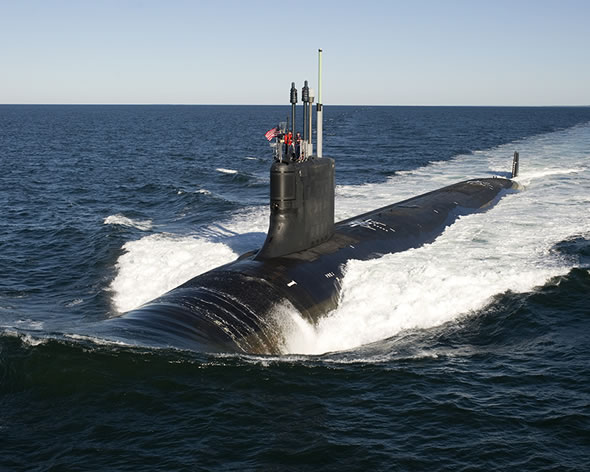
      The U.S. Navy took delivery of PCU Mississippi (SSN 782) from General Dynamics Electric Boat (GDEB) yesterday May 2, 2012 one year early to the submarine’s contract delivery date of April 30, 2013. PCU Mississippi took just more than 62 months to build, which set the record for the Virginia Class Submarine Program’s fastest delivery. Prior to delivery, Mississippi conducted Alpha and Bravo Sea Trials before successfully completing the Board of Inspection and Survey (INSURV) Trials April 27. Mississippi will be commissioned June 2, in a ceremony in Pascagoula, Miss. The subsequent major Virginia-class milestone will be the PCU Minnesota (SSN 783) christening this fall.

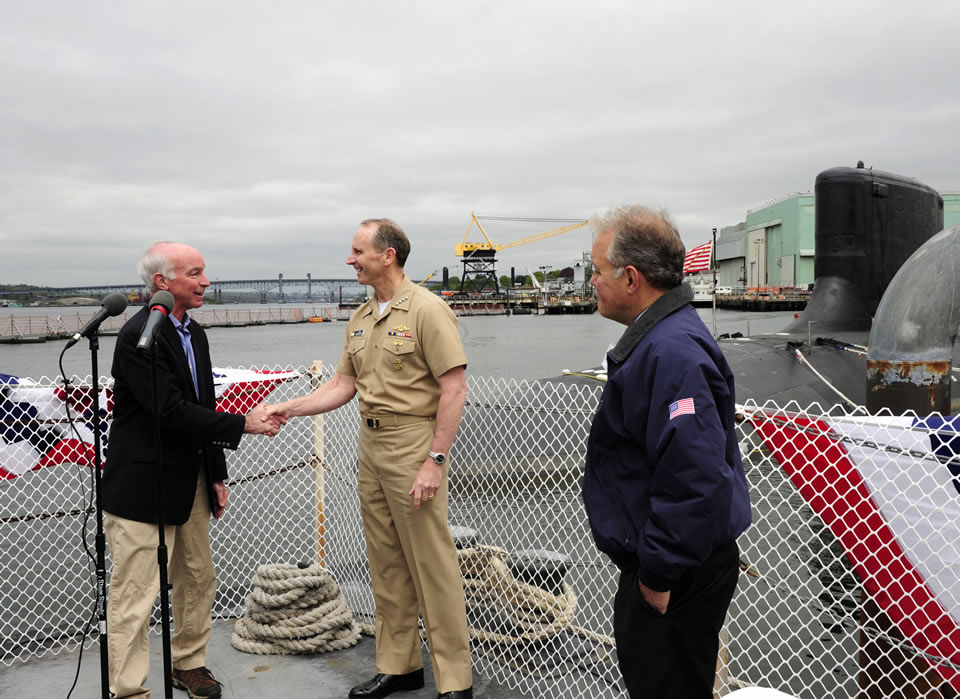
      Chief of Naval Operations (CNO) Adm. Jonathan Greenert shakes hands with U.S. Rep. Joe Courtney from Connecticut during a press conference at the General Dynamics Electric Boat shipyard to announce the Navy's acceptance of the Virginia-class attack submarine Pre-Commissioning Unit (PCU) Mississippi (SSN 782). US Navy photo

      GDEB delivered the submarine to the U.S. Navy 363 days ahead of contract schedule and more than $60 million below target cost. “Delivery came the most complete, combat-ready Virginia-class submarine yet delivered” said Rear Adm. David Johnson, Program Executive Officer for Submarines. Johnson said the Mississippi received the highest marks to date from the Navy’s independent assessor – the Board of Inspection and Survey. “As the demand signal for these multi-mission platforms increases, we are working to intelligently drive down schedule and put the world’s best submarines into the hands of the operators to execute missions of national importance.”

      Johnson noted the Mississippi delivered almost three months faster than USS Missouri (SSN 780) – the last submarine delivered by GDEB. The submarine began construction in February 2007, and like all Virginia-class submarines, it is built under a unique teaming agreement between GDEB and Huntington Ingalls Industries – Newport News Shipbuilding (HII-NNS) in Newport News, Va.

      USS Mississippi badge

      The submarine builder have also benefited from cost savings, said John Holmander, vice president and Virginia program manager for General Dynamics Electric Boat. “When compared with the lead ship of the Virginia Class, we have reduced our construction span time by two years, and implemented improvements that reduced construction labor hours by 30 percent” Holmander said. Electric Boat and its major subcontractor, Newport News Shipbuilding, have received contracts to build the first 18 submarines of a planned 30-ship Virginia Class under a unique teaming agreement. Mississippi is the ninth ship of the Virginia Class.

      Virginia-class submarines are designed to dominate the world’s littoral and deep waters, while conducting anti-submarine; anti-surface ship; strike; special operation forces; intelligence, surveillance, and reconnaissance; irregular warfare; and mine warfare missions. Their inherent stealth, endurance, firepower, and sensor suite directly enable them to support five of the six maritime strategy core capabilities – sea control, power projection, forward presence, maritime security, and deterrence.

      HDW Delivers the Fourth Dolphin Class Submarine to the Israel Navy

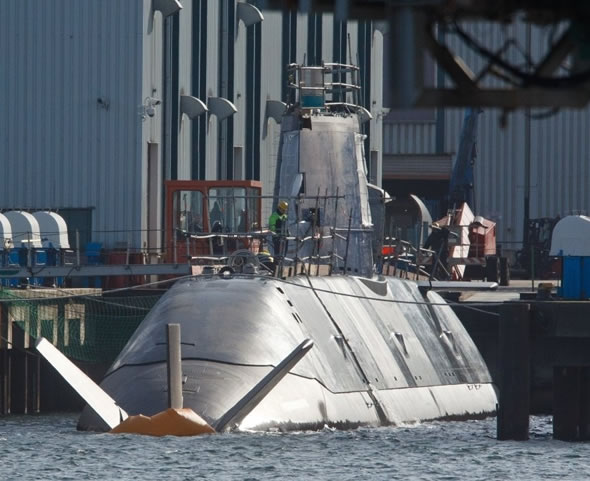
      INS Tanin on the dry dock at Kiel, February 2012 Photo: kielnavyblog

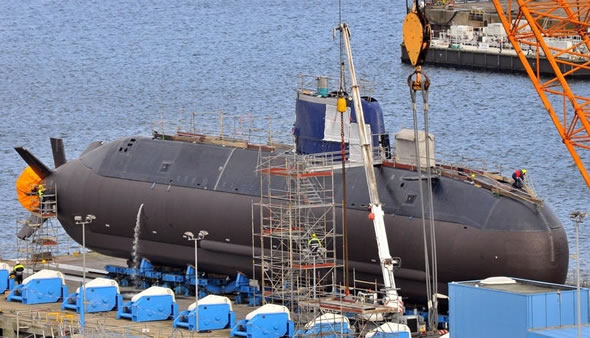
      Following successful builder’s sea trials the Howaldtswerke-Deutsche Werft (HDW) shipyard in Kiel delivered today the forth Dolphin class submarine, designated INS “Tanin” to the Israel Navy. The 68 meter long ‘Super Dolphin’ submarine is believed to be the largest produced in Germany since World War II. With further sea trials commencing this year, INS Tanin is due to arrive in Israel in 2013 with the sister ship Rahav scheduled to join the Israel Navy in 2014.

      INS Tanin undergoing final construction before its official launching. Photo: kielnavyblog

      In 2006 the Israel Navy has embarked on a strategic increase of its submarine force, doubling the number of submarines and significantly extending mission range and endurance. Apart their conventional anti-ship armament that includes torpedos, according to foreign sources, Israel’s Dolphin submarines are equipped with land-attack or cruise missiles capable of carrying nuclear tactical warheads. These allegedly strategic assets provide this small sized country with ‘second strike’ capability that should deter possible hostile action by opponents tempted to ‘finish it with one blow’. As the strategic balance has changed since the early 2000s, with countries like Iran building an unconventional, nuclear threat, Israel would need to maintain submarines on longer patrols at sea, keeping all potential targets within reach at all times. Hence the need for more submarines.
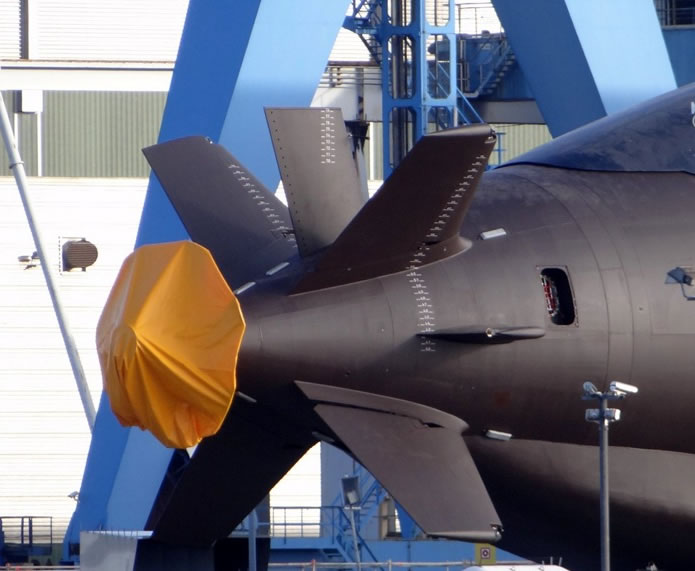
      A rear view of the INS Tanin floating at the docks at Kiel. February 2012 Photo: kielnavyblog

      Last month Defense Minister Ehud Barak was in Germany to sign the contract for the sixth Dolphin submarine, to be delivered in 2017. According to Ehud Barak, Israel considers the new submarines as a powerful force multiplier adding to the already impressive fighting capabilities of the IDF, facing the constantly growing regional challenges. The Navy has been undergoing a number of strategic changes in recent years; changes that place it as the strategic long arm of the IDF, at the very forefront of the campaign to secure the State of Israel.

      The tail design is different from similar submarines having seven tail surfaces, providing higher level of maneuverability at low speed. Photo via: kielnavyblog

      Submarines are strategic platforms allowing the navy to operate in the Mediterranean, as well as in any other region where its presence is required. The Israel Navy currently operates three Dolphin class subs – Dolphin, Leviathan and Tekuma. They are believed to be some of the most advanced diesel-electric submarines in the world. The new Dolphins are dubbed ‘Super Dolphin’, being equipped with the new Air Independent Propulsion (AIP) system, a fuel cell supporting the electrical propulsion and supply system and provides life- support without the need to surface or ascend to ‘snorkel’ level, thus providing more survivable and stealthier missions, operating submerged over several weeks, without surfacing. Until the introduction of AIP such capabilities were only available to nuclear powered submarines. The Israel Navy opted to integrate AIP in all its three ordered Super Dolphins, while the currently operational Dolphin submarines could be converted into AIP-supported versions, through their future mid-life upgrade.

      As the prime contractor HDW was responsible for development, construction and integration of all Dolphin class submarines and the advanced combat systems with which the vessel is equipped. The acquisition of the three submarines is estimated to cost about US$1.5 billion, with a third of the cost covered by German Government assistance. The Israel Navy commander, Admiral Ram Rothberg noted this important support “at a time when threats are becoming global in their nature, the relationship between Israel and Germany is more critical than ever.” The Director General of the Ministry of Defense, retired Major General Udi Shani lauded the German Government assistance and contribution to the strengthening of Israel’s submarine force. “The ceremony, more than anything, symbolizes the strong and unique bond between Germany and Israel”.

      The submarine named INS Tanin, is the third submarine carrying this name to serve in the Israel Navy. The first INS Tanin designated Z-71 (or S-71) was one of two ex-Royal Navy S- class submarine, commissioned in 1945, which served in the Israel Navy between 1959 to 1968. The second Tanin was also built in the UK, based on the German Type 206 (Gal) design; it entered service in 1977 and was decommissioned in 2002.

      Aeronautics to Supply Finland with 55 Orbiter Mini-UAV Systems

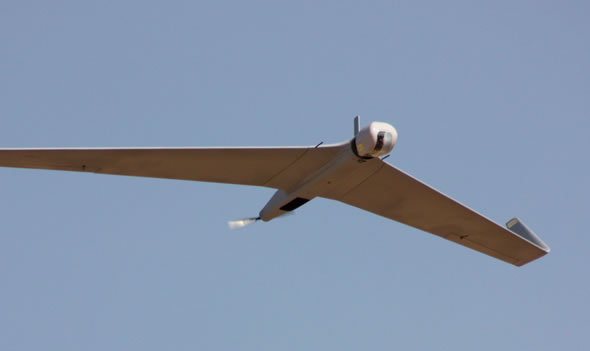
      Orbiter 2 is configured to carry the STAMP family stabilized EO payloads, including daylight, IR, IR-Zoom and the new multi-sensor (M-STAMP). Photo: Aeronautics
      The Orbiter - from Aeronautics

      Finland has selected the Israeli Orbiter-2 mini-UAV system for its next generation Unmanned Aerial System to be used in support of the tactical ground forces. The acquisition of 55 systems is expected to be worth about 23 million Euros. The Orbiter has already been exported to several international customers, among them Poland.


      At a maximum takeoff weight below 10kg, this electrically powered aircraft, Orbiter uses a classical 3 meter span flying-wing design, to stay in the air on a four hour mission, at a range of 30-80 km, and a ceiling up to 18,000 ft, carrying a nose mounted stabilized electro-optical payload (STAMP) provided by Aeronautics’ subsidiary Controp(Aeronautics owns 51 percent of the company while Rafael owns 49 percent). With the Orbiter’s payload capacity it can carry one payload on a mission – either the daylight, thermal or thermal-zoom variants of the STAMP, weighing up to 1.2 kg. Aeronautics has recently demonstrated the support of the Controp M-STAMP multi-sensor payload (1.2kg) carrying both CCD and a thermal imager. With this advanced payload the Orbiter supports advanced observations modes, including inertial target tracking, hold or point to coordinate, scan or mosaic modes and ‘pilot window’ support.

      Aeronautics is also offering a larger version of the Orbiter, capable of missions lasting seven hours. For this version Controp is providing a larger, multi-sensor payload known as the T-STAMP, carrying day and night sensors plus laser designator. However, the Finnish Army was interested in the medium-weight version only.

      United Nations Approves Sanctions Against North Korean Companies

      On 2 May the United Nations’ Security Council approved sanctions against three North Korean state-controlled firms ordering all nations to immediately initiate a freeze on all the assets of the companies. The sanctions are being imposed for the firm’s role in the failed 13 April North Korean satellite launch. The Security Council determined that the 13 April launch attempt violated existing UN Resolutions prohibiting Pyongyang from engaging in missile development and nuclear testing. Although the US, the EU, Japan, and South Korea recommended other firms also be subjected to sanctions, China differed and would agree only to the three firms finally approved.


      On 16 April the Security Council gave the Sanctions Committee, comprised of representatives of all 15 Security Council members, 15 days to submit recommendations to be added to the sanctions list. The European Union submitted a list of some 40 names while the United States, South Korea, and Japan also submitted individual lists. China delayed submission of a list until just prior to the deadline and would agree to naming only three companies.

      The three companies are all involved in weapon’s manufacture, procurement, financing, or export. The Green Pine Associated Corporation handles approximately half of North Korea’s weapon’s export activities. The Amroggang Development Banking Corporation, a financial entity managed by the Tanchon Commercial Bank, is responsible for arranging the sale of “conventional arms, ballistic missiles, and goods related to the assembly and manufacture of such weapons” according to the Sanctions Committee. And a trading company, Korea Heungjin, is involved in acquiring electronic digital controllers that can be used in missile development. The US Ambassador to the UN, Susan Rice, told reporters that other items were added to prohibited lists related to missile development and nuclear material managed by the Missile Technology Control Regime and the Nuclear Suppliers Group.

      The Missile Technology Control Regime, an oversight group representing 34 countries, tracks the exchange and transfer of equipment, material, and technology related to missile development and weapons of mass destruction. The Nuclear Suppliers Group, an organization of nations with codified rules governing the import/export of nuclear technology, works to deter the illicit procurement and development of nuclear weapons. Both groups maintain an extensive list of prohibited items, lists that haven’t been updated since 2009.

      Ambassador Rice also told reporters that the United States and other member nations of the UN are convinced the three identified North Korean companies are engaged in covert activities related to the acquisition and transfer of missile and nuclear technology and the development of unauthorized weapon’s systems.

      The ambassador further stated that the sanctions represent a reasonable international answer to Pyongyang’s repeated “provocations.” The ambassador expressed her opinion that the new sanctions would serve to further isolate North Korea and make it more difficult for the North to “move forward with its illicit programs.”
      These latest restrictive measures mark the third occasion in six years that the United Nations has approved sanctions against North Korea. In 2006 and again in 2009, following Pyongyang’s previous nuclear tests, sanctions were applied against six trading firms, a bank, and the General Bureau of Atomic Energy as well as five individuals.

      With the Last F-22A Delivered, the Raptor’s Modernization is Only Beginning

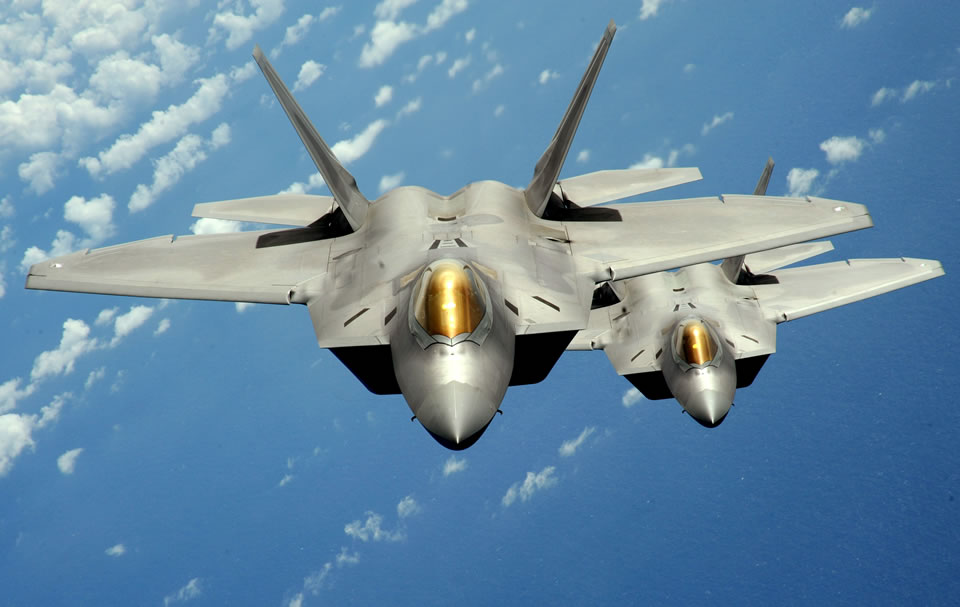
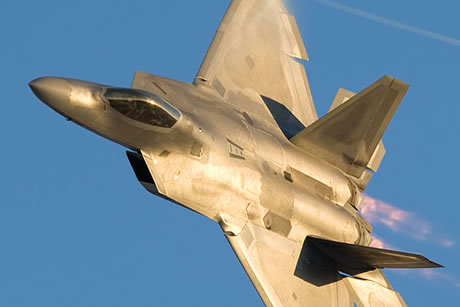
      The Lockheed Martin F-22A is designed as an all-aspect stealth fighter. Photo: US Air Force
      F-22A. Photo: Lockheed Martin

      Lockheed Martin delivered today the 195th and last F-22 Raptor to the U.S. Air Force, in a ceremony at the Lockheed Martin Aeronautics site in Marietta, GA. With this delivery, the U.S. Air Force now possesses the world’s only 5th generation stealth fighter aircraft fleet in the world.

      “There is no longer any nation that wishes us ill or any adversary who wishes us harm that has any doubt that their actions will have consequences – that they will be held to account and that our response will be undeterred,” said Robert J. Stevens, Lockheed Martin’s chairman and CEO.


      In all, Lockheed Martin delivered 195 F-22s to the Air Force beginning in 1997, with eight Raptors used as test aircraft. Four Raptors were lost in accidents. This final Raptor 4195 joins a U.S. Air Force fleet of 187 operational F-22s and will join other F-22s in the Air Force’s 3rd Wing at Joint Base Elmendorf-Richardson, Alaska.

      F-22s are assigned to seven U.S. bases. Flight testing takes place at Edwards AFB, Calif. Operational tactics development continues at Nellis AFB, Nev. Pilot training takes place at Tyndall AFB, Fla. Operational F-22 aircraft are assigned to Joint Base Langley-Eustis, Va.; Joint Base Elmendorf-Richardson, Alaska; Holloman AFB, N. M.; and Joint Base Pearl Harbor-Hickam, Hawaii.

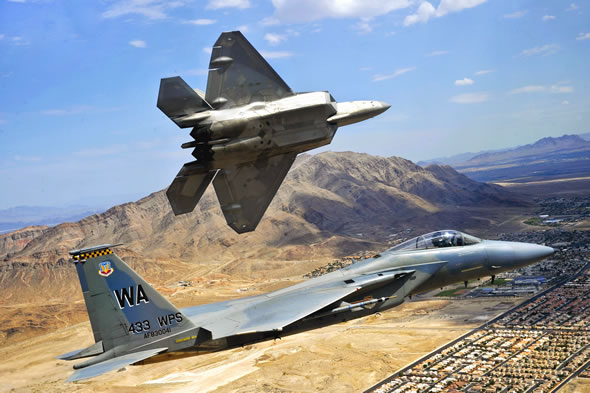
      An F-22 Raptor pitches out for landing while an F-15 Eagle flies the approach July 16, 2010, at Nellis Air Force Base, Nev. The aircraft are from the U.S. Air Force Weapons School at Nellis AFB. (U.S. Air Force photo/Master Sgt. Kevin J. Gruenwald)

      Production of new Raptors has ended now, but work on the F-22 continues, as part of the ongoing modernization and enhancement plan. According to a recent Government Accountability Organization (GAO) report, modernizing the operational Raptor fleet could cost $9.7 billion, or more than $50 million per aircraft, spent over the next 20 years. That’s about the cost of a new Super Hornet or about 40 percent of a new F-35, just for the upgrades. According to GAO, the high cost of modernization is attributed to the fact that the Raptor was not prepared for upgrades, but designed to deliver the ultimate range of capabilities in the basic design. As such, the development was costly and every upgrade must be designed from the baseline, rather than employ pre-planned product-improvement infrastructure reserved in the basic design for such future upgrades.

      Part of the current upgrades include the conversion of the air dominance fighter into a multi-role strike fighter, providing the hardware, sensors and software to support carrying, targeting and delivery of precision guided weapons carried internally or with underwing pylons.

      The current upgrades are part of the F-22 modernization plan known as Increment 3.1, that allows for pilots to map the ground using the radar before dropping the munitions (the Raptor does not have the integral EOIR targeting system integrated in the F35). Previously, the Raptors had to rely on outside sensors and data to locate targets and provide coordinates before dropping a weapon, the data-links delivering such information is often slow, complex and less integrative, compared to Raptor-Raptor ‘stealth’ type comms. Increment 3.1 drops have, until now, only been accomplished on test missions. Since April 2012 the Increment 3.1 upgrades have been integrated with part of the Raptors of the 3rd Wing based in Alaska.

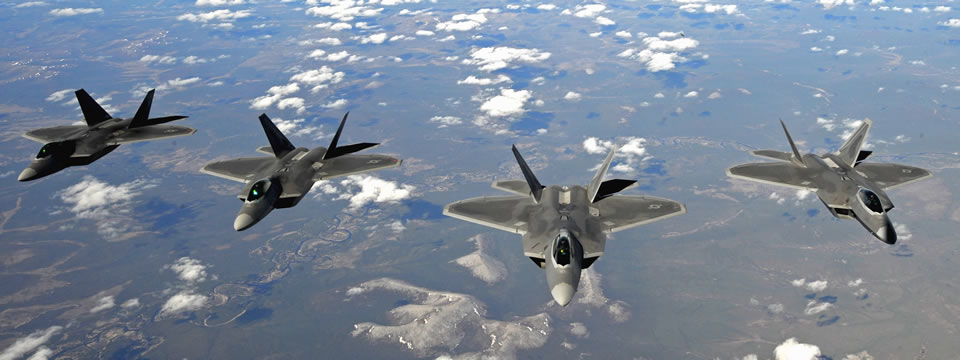
      A flight of F-22 Raptors from Elmendorf Air Force Base, Alaska, fly over Alaska May 26, 2010. (U.S. Air Force photo/Staff Sgt. Brian Ferguson)

      Other enhancements are likely to comprise new data-links, enabling the Raptors (and F35s) to better interoperate in mixed groups as well as with non stealth aircraft. The previous operational concept favored by the Air Force was of using 5th generation fighters independent of other support elements, therefore, they could use proprietary and exclusive data-links. However, with the number of operational Raptors capped at the current 178, and F35s slow to arrive, the Air Force is developing new operational procedures where Raptors and F-15/F16s are combined, supporting each other in defeating against enemy fighters, surface-to-air assets and other high priority targets. To enable such combined operations, the Raptor will have to be equipped with command, control and communications systems that can share, transfer and co-process information, targeting data and situational picture across different types of technologies.

      The F-22 Raptor is the world’s only operational 5th generation fighter, making it an unmatched national security asset. The Raptor is designed to defeat denied-access threats, enable joint and coalition operations in contested areas, and globally promote deterrence and security.

      Switzerland to Pick an Israeli Successor for the Ranger

      The Swiss defense acquisition authority Armaswiss has shortlisted two Israeli Medium Altitude Long Endurance (MALE) unmanned aerial systems (UAS) for the next generation Swiss reconnaissance drone. The Heron 1 drone from Israel Aerospace Industries (IAI) and Hermes 900 proposed by Elbit Systems were the two systems shortlisted by the Swiss evaluation team, out of 11 potential systems considered for the program. Flight evaluation is expected in Switzerland in September and October 2012, following to the submission of formal proposals by the two companies in August. Final selection is expected by early 2014. Funding for the acquisition is included in the Swiss 2015 defense budget, Aviation Week  reported.

      Both systems are designed to cope with weather conditions better than average MALE UAS, equipped with automatic takeoff and landing and deicing systems, enabling the UAS to fly through icing conditions that have already caused several losses to similar platforms in the past. Both UAS are currently operational with the Israel Air force and by several operators worldwide. The Swiss military has no current plans to arm the unmanned aircraft.

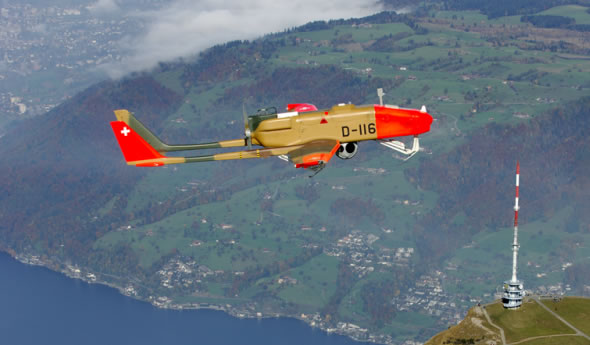
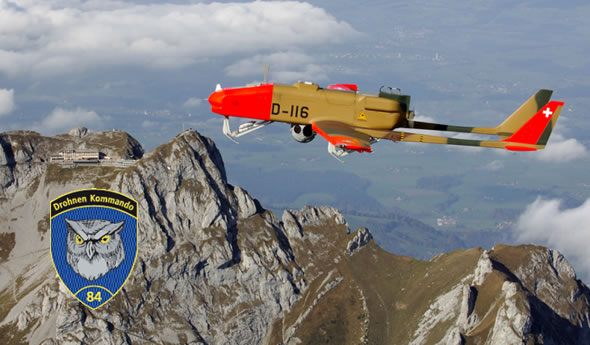
      This ADS 95 Ranger drone (tail #116) is operated by the Swiss Air Force 84th UAV Command. The Ranger is equipped with an IAI/Tamam MOSP. This multi-sensor payload often integrates daylight, thermal imagers, a laser rangefinder and target designator. Photo: Swiss Air Force

      The Swiss military is currently operating the Ranger Model 95 reconnaissance drone (also designated ADS 95), custom designed UAV developed by IAI and under Swiss based RUAG. This model will reach the end of its operational service life. The new MALE UAS will offer significantly longer endurance and better payload capacity, and are expected to yield lower operational cost, compared to the current Ranger.

      The current ADS 95 drone system is operated by the Swiss Air Force in support for the Swiss Army and Air Force, but it also makes a valuable contribution to civil security, for example in assisting the border guard and police.

      Research: Armored Vehicles Market to Shrink by one Billion US$ over the next Decade

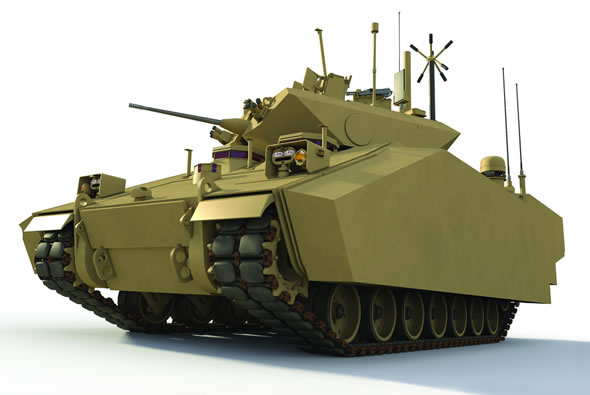
      The US Army Ground Combat Vehicle (GCV) is one of the largest AFV acquisition programs on the horizon. This is likely to be the vehicle proposed by BAE Systems team.
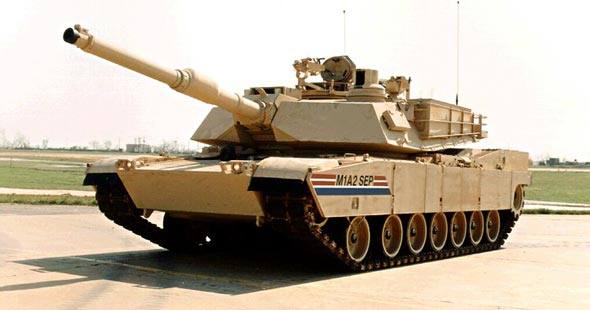
      M-1A2 SEP

      Market research company ICD predicts the global market for armored and counter IED vehicles which was valued at US$25.1 billion in 2011 will decline during the next nine years, as global operations in Afghanistan and Iraq drawing down toward the second half of the decade. As a result, the global AFV market is expected to register a negative combined annual growth rate of -0.43% during the 2011-2021 period, to reach US$24.1 billion by 2021. Nevertheless, the cumulative market value for armored vehicles and counter IED vehicles acquisition during the forecast period is estimated at US$265 billion. More information on this report.


      Changing Focus of Regional Markets

      Despite the high fiscal deficit of North American countries, this region is expected to account for the largest share of the armored vehicles market during the forecast period, with a share of 31.9%. Countries in Europe are also facing high fiscal debt, which will reflect in the declining market for armored vehicles during the forecast period. Europe is expected to account for 26.5% of the total armored vehicles market during this time.

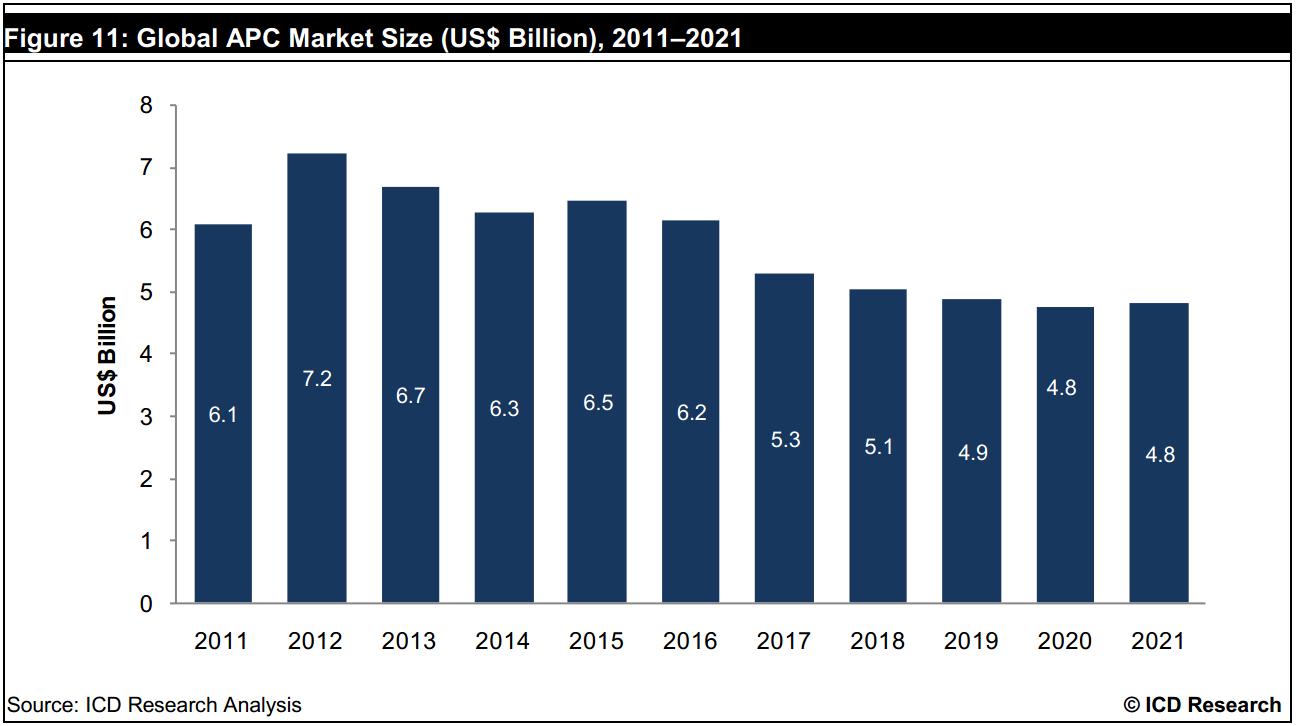
      Global APC Market 2011-2021 (US$ Billions)

      Strong economic growth, territorial disputes, domestic violence and the large troop size of regional forces will create a significant demand for armored vehicles in Asia, which will account for a share of 24.1% of the total armored vehicles market during the forecast period. Soaring oil prices and high economic development in the Middle East is expected to be reflected in the demand for armored vehicles in the region, which will account for 8.8% of the total armored vehicles market during the forecast period.

      Latin American countries are expected to modernize their armed forces over the forecast period; and their main modernization priority is expected to be on the air force and navy, and for other electronic and cyber warfare capabilities. As a result, the demand for armored vehicles in the region will witness a slight increase, and South America will account for just 4.7% of the global armored vehicles market during the forecast period.

      The demand for armored vehicles in Africa is expected to be strong in the forecast period, driven by the discovery of new mineral and oil resources, and territorial and ethnic disputes. However, the small defense budget of countries in the region will result in a small market share of 4.1%.

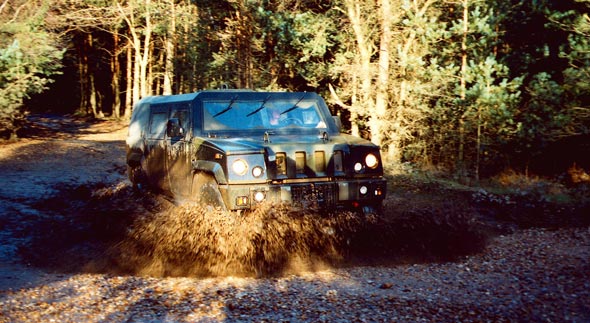
      The Iveco LMV.

      Growth in the Infantry Fighting & Support Vehicles Segment

      Together, APCs and IFVs are expected to account for the largest share of the total armored vehicles market across the forecast period. APCs are expected to account for 24.4% of the total market, while IFVs are expected to account for 23.2%. Increasing global troop sizes and overseas operations are expected to increase the demand for tactical trucks for operational efficiency and LMVs for deployability and mobility, with tactical trucks accounting for 18.3% and LMVs accounting for 15.4% of the total armored vehicles market during the forecast period.

      Countries facing conventional threats such as territorial disputes and hostile neighbors will drive the demand for MBTs, which are expected to account for 12.7% of the total armored vehicles market. The end of the Iraq war and Afghanistan war, coupled with the integration of mine protection technology in all other classes of vehicles, will result in MRAPs contributing a share of 6% to the armored vehicles market.

      Overall, the key factors behind the increasing demand for armored vehicles on a global level are overseas peacekeeping missions, the military modernization initiatives of governments around the world, and the territorial disputes and internal insurgencies faced by many countries.

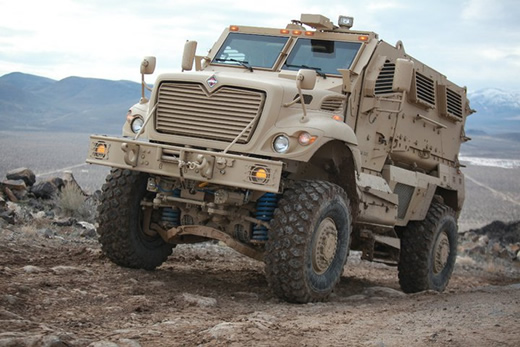
      Upgrades of the MRAP vehicles, such as this MaxxPro Dash, included the integration of independent suspensions The MaxxPro received an IS from DXM. Photo: Navistar

      Modernization Spurred by Technological Innovations

      The changes in threats, terrain and tactics, further complicated by the increasing complexity of technology, has forced armed forces to modernize their fleets with platforms that cater to 21st century warfare. Therefore, modern armored vehicles must incorporate technological advancements in the fields of survivability, connectivity, mobility, maneuverability, lethality and sustainability. These capability enhancements are made possible by the advancements in processor technology, and are supplemented by the concepts of interoperability and network centric capability. Finding an optimum balance amongst protection, payload and performance, and improving the efficiency of the vehicle as a whole while simultaneously inventing ways and means to reduce operational and through-life support costs, will continue to drive research throughout the forecast period.

      Considerable market growth for modular multirole vehicles

      Recent changes in the global strategic security situation have resulted in a shift in the nature of warfare to increasingly asymmetric strategies. Increased urbanization and the concentration of the population along shoreline mean that future battlefields are increasingly likely to be urban littorals. This change, combined with an increase in peacekeeping and stabilization operations, requires the rapid intervention and deployment of forces, creating a demand for light- and medium-weight armored vehicles.

      These technologically advanced weapons platforms must be increasingly multirole in order to meet the roles and demands of troops in various mission profiles. The integration of multirole capabilities takes time and are expensive to develop, resulting in the increased demand for commercial off-the-shelf technology. This in turn increases the demand for modularity and plug and play capability, providing the advantage of capability insertion as the technology matures and becomes available in the future.

      Western Austerity Measures Encourage Consolidation

      The global defense cuts, combined with a substantial increase in the cost of developing technologically superior weapons platforms, have encouraged collaboration between governments, services and industries. This has led to in-country and cross border consolidation, and an increase in joint development and procurement programs, which are expected to continue in the next ten years.

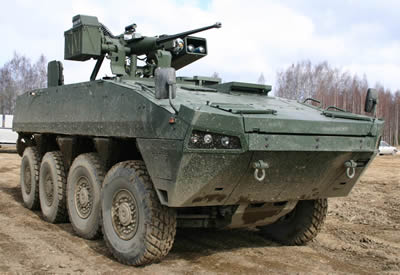
      The Patria Advanced Modular armored Vehicle fitted with the Rafael Samson 30mm remotely operated weapon station. Photo: Patria

      The US and Canada are the largest defense spenders in North America, and IFVs, LMVs and tactical trucks are expected to dominate the armored vehicles market in the region. The top markets in Europe for armored vehicles are expected to be Russia, the UK and France, where APCs, IFVs and LMVs are expected to account for the largest share of the market. India, China and South Korea are the leading markets for armored vehicles in Asia, as these countries face threats such as territorial disputes and domestic violence, resulting in considerable demand for MBTs.

      The large troop sizes of Asian countries also create additional demand for APCs and tactical trucks through attempts to improve operational efficiency. The South Africa dominates the African armored vehicles market, with a total expected value of over US$1 billion for the forecast period. The country is expected to procure tactical trucks, APCs and MRAPs. Latin American countries, represented by Brazil and Colombia in this report, are expected to procure APCs, MBTs and tactical trucks. Middle Eastern procurement, represented by the UAE, Saudi Arabia and Israel, is expected to centre on APCs, MBTs and tactical trucks, due to threats of regional disputes and terrorism.

      For more information on “The Global Armored vehicles Market 2011-2021″ (product # Defense-update DF0001SR Request for Quotation). The report is available in electronic form from ICD. Single User License costs: $4,800.-

      To order this report and request more information please Contact Customer Support

      Skunk Works and XTEND Simplify Multi-Drone Command

      0
      Lockheed Martin Skunk Works® and XTEND have achieved a major milestone in JADC2 by integrating the XOS operating system with the MDCX™ autonomy platform. This technical breakthrough enables a single operator to simultaneously command multiple drone classes, eliminating the friction of mission handoffs. From "marsupial" drone deployments to operating in GPS-denied environments, explore how this collaboration is abbreviating the data-to-decision timeline and redefining autonomous mission execution.

      From Ukraine to Taiwan: The Global Race to Dominate the New Defense Tech Frontier

      0
      As traditional defense primes face mounting competition from agile “neoprimes” such as Anduril, Palantir and Helsing, the balance of innovation is shifting toward software-defined warfare and scalable, dual-use technologies, while global industry consolidation—marked by Boeing’s integration of Spirit AeroSystems and other strategic mergers—signals an intensified race to secure control over the defense technology value chain. Our Defense-Tech weekly report highlights these trends.

      Europe’s “Drone Wall”

      0
      In early October 2025, a coordinated wave of unmanned aerial system (UAS) incursions—widely attributed to Russia—targeted critical infrastructure across at least ten European nations. The unprecedented campaign exposed the fragility of Europe’s air defenses...

      Weekly Defense Update & Global Security Assessment

      0
      Executive Summary The past week (September 18-25, 2025) represents an inflection point where strategic defense concepts have transitioned from doctrine to tangible reality. An analysis of global events reveals four primary, interconnected trends shaping an...

      U.S. Air and Space Forces Push Next-Gen Programs at the AS&C 2025 Conference and...

      0
      At the 2025 Air, Space & Cyber Conference, U.S. Air Force and Space Force leaders unveiled major updates on next-generation fighters, bombers, unmanned systems, and space initiatives, highlighting both rapid innovation and critical readiness challenges as the services race to outpace global competitors. A short version is available here, with a more detailed version for subscribers.

      TADTE 2025: Reflecting Taiwan’s Strategic Themes

      0
      The Taipei Aerospace & Defense Technology Exhibition (TADTE) 2025 crystallized around four dominant strategic themes that collectively illustrate Taiwan's comprehensive approach to defense modernization amid escalating regional tensions. Based on a detailed report by Pleronix (available upon request). Includes a Podcast discussion on TADTE 2025's highlighting Taiwan's four strategic themes beyond the post's coverage.

      Iron Beam 450 Completes Testing, Soon to Join With Operational Air Defense Units

      0
      Israel’s Iron Beam 450 high-power laser system has completed final testing, marking a major leap in air defense. Developed by Rafael, it offers precise, cost-effective interception of rockets, UAVs, and mortars, and is set for IDF deployment by 2025.