
Saturday, December 20, 2025
More
    Home Blog Page 51

    Future Drones: Essential Changes Lead to Higher Autonomy

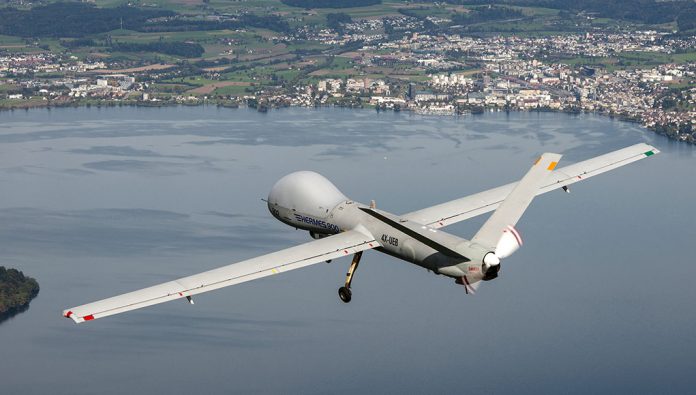
    Elbit Systems'Hermes 900 Medium Altitude, Long Endurance (MALE) drone is designed for autonomous operation for the majority of its mission. Photo: ArmaSwiss via Elbit Systems

    This post continues our discussion on Future Drones

    Significant changes are required to make such autonomy a reality.

    Trusted navigation

    Inherent to their unmanned operation UAVs are dependent on external input for navigation and positioning. Global Navigation Satellite System (GNSS) is the most common, but not the only navigational aid. Unfortunately, such services are vulnerable to interference and exploitation, rendering military operation useless, if UAVs are not adequately protected. Use of other navigation aids, such as navigational beacons and odometry (distance measuring) is sometimes used, with limited success. Inertial measurement, Image-based navigation, even star tracking could also be used to augment existing navigation aids, in situations the GNSS data is not trustable.
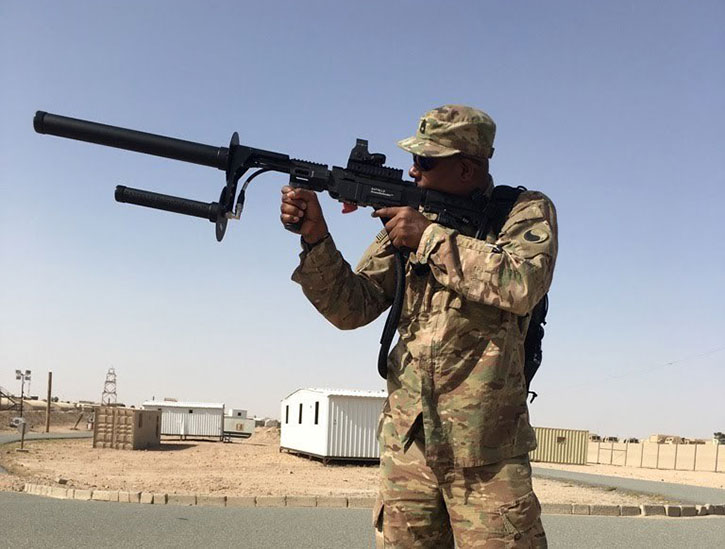
    DroneDefender, a point-and-shoot, electromagnetic, rifle-shaped weapon is used to disrupt communications between a remote-controlled drone and its operator. Photo: US Air Force by Capt. Nicole Vajda.

    Communications and Security

    Bound to operate under human control, unmanned platforms are dependent on maintaining a continuous link via terrestrial, airborne or space-based communications. The more sensors operate on board, the more bandwidth is needed to transfer the data they collect. High-capacity wireless communications links are relatively easy to jam because of their limited margins. High capacity links are often limited to maintain a line of sight with other nodes – further limiting the platform’s operation. Datalinks must also be highly immune. In the past, UAV communications channels used open analog links, but these are mostly obsolete today, as new digital links entered the field. However, datalink channels are still vulnerable to enemy attacks – jamming, interference, deception or exploitation via cyber-attacks. Overall, minimizing the platform’s dependency on external communications would render drones less vulnerable to jamming and more immune to exploitation, deception and ‘hijacking’ by cyber-attack.

    Without a human presence on board, standard communications will suffice in operations in denied airspace, where communications and navigation are under electronic attack. Enhanced communications will increase survivability in a communications-denied area while minimizing aircraft detection. Advanced communications methods could include very short bursts to transmissions transferring information to and from the aircraft, enabling drones to receive and transmit signals over a very wide band, via a variety of communication mediums. When self-diagnostics detect a malfunction on board, the aircraft should be able to determine the most appropriate course of action, to continue the mission or return to safety.
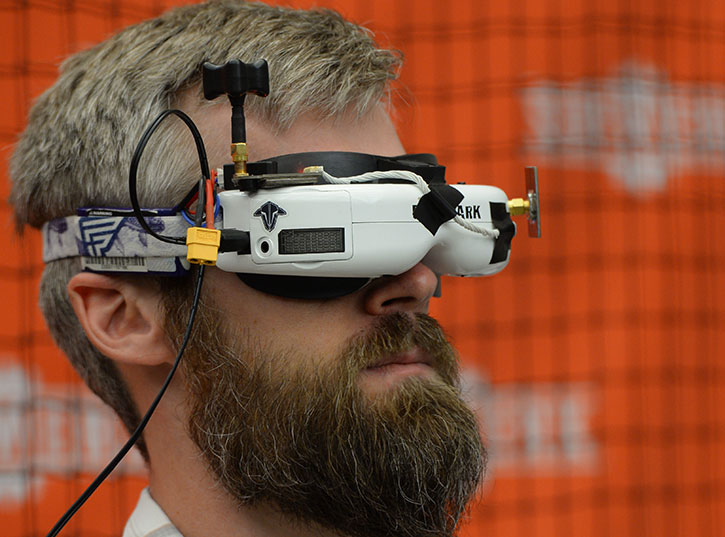
    As the drones themselves become smarter and autonomous, operators can focus on the mission using immersive display systems such as these VR goggles, and delegate the entire mission control to the machine. Photo: U.S. Air Force by Barry Loo

    Command and Control

    Today’s drones depend on the human operation, at least, for part or all their missions.Some platforms support autonomous operation for most of their missions, where the human pilot or operator’s functions are mostly supervisory. Others rely mostly on remote operations by trained pilots, using automated flight modes only as a backup. Both methods of operation consider the human pilot the highest authority on the mission, even though they may not have the best situational awareness and fast response needed to deal with emergencies. Introduction of fail-safe systems and situational awareness devices, such as sense and avoid (SAA) sensors, along with deep learning and artificial intelligence processors on board, will enable ‘smart autopilots’ to deal with emergencies faster and more effectively than the human, resulting in safer, more reliable operation.

    The US Air Force evaluates such future capabilities under the Cooperative Automated Multi-Aircraft Operation (CAMARO) concept that defines evolving technologies – including multi-aircraft control, loyal wingman and drone swarms. All need autonomy, cooperation, and enhanced communications.

    These ‘thinking machines’ could work with military drones but are yet to be adopted in the commercial world, since there are no procedures to certify such advanced routines to civil flight regulations. Therefore, innovators had to invest limited funds to implement specific functions that contributed to the mission efficiency and reduced losses but were not able to transform the market.
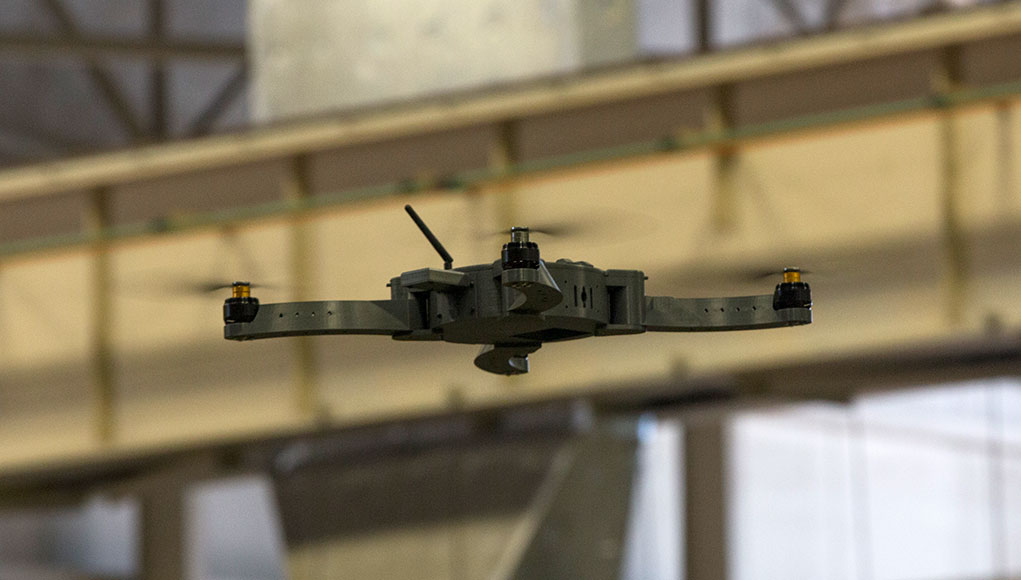
    The U.S. Marines Corps have tested the Nibbler drone, a miniature multirotor aircraft produced through 3D printing. The Nibbler is designed as a low-cost item, easily repaired and require simple maintenance to allow Marines to use it in the field. Photo: U.S. Marine Corps, Taylor N. Cooper.

    Assured, Affordable Autonomy

    UAVs have limitations on the size, weight and power consumption of the payload and limited range and endurance. These limitations cannot be overlooked and are particularly relevant when considering deep learning algorithms to be run onboard.

    Deep learning is recently showing outstanding results for solving a wide variety of robotic tasks in the areas of perception, planning, localization, and control. Its excellent capabilities for learning representations from the complex data acquired in real environments makes it extremely suitable for many kinds of autonomous robotic applications. In parallel, Unmanned Aerial Vehicles (UAVs) are currently being extensively applied for several types of civilian tasks, in applications going from security, surveillance and disaster rescue to parcel delivery or warehouse management. In this paper, a thorough review has been performed on recent reported uses and applications of deep learning for UAVs, including the most relevant developments as well as their performances and limitations. In addition, a detailed explanation of the main deep learning techniques is provided. We conclude with a description of the main challenges for the application of deep learning for UAV-based solutions.

    Despite their advanced capabilities, the deployment of autonomous systems in safety-critical military applications remains challenging and controversial. ”To become truly effective, robots must be trustable, and this still presents a major challenge for humans.” Sandeep Neema, Assured Autonomy program manager at DARPA explains. DARPA launched the Assured Autonomy research program in 2016 to establish trustworthiness at the design stage of Cyber-Physical Systems (CPS).

    The program explores new concepts and tools to enable Learning Enabled CPS (LEC) to meet ’functional measures of assurance’ and safety goals that will make such systems more trustable. LEC is defined as a component, whose behavior is driven by “background knowledge” acquired and updated through a “learning process,” while operating in a dynamic and unstructured environment. According to Neema, testing autonomous systems that evolve through their life is becoming a major goal for the program.

    “Historically, assurance has been approached through design processes following rigorous safety standards in development, and demonstrated compliance through system testing,” Neema explains, these standards were developed primarily for predictable processes involving human-in-the-loop systems, and don’t extend to self-learning autonomous systems. The program will prioritize solving problems in the militarily relevant autonomous vehicle space, but, eventually will become available for use in commercial as well.

    More in the ‘Future Autonomous Drones‘ review:

    More in the ‘Future Drones’ series:

    Future Drones: Minimizing Dependence on Human Skills

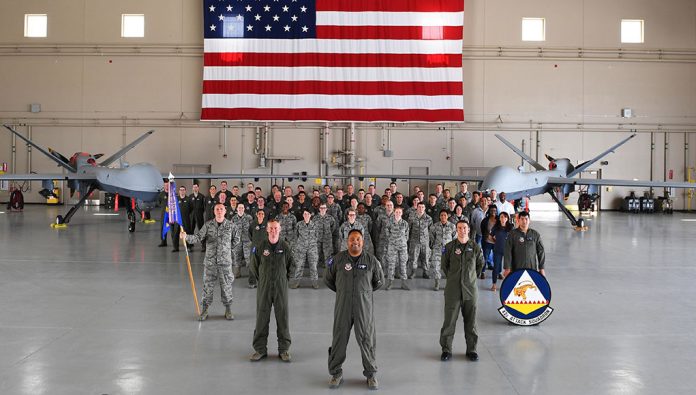
    The 42nd Attack Squadron reach it's centennial anniversary June 13, 2017. It's lineage can be traced back to World War I where it was a training unit. In 2006, the 42nd became the first MQ-9 Reaper squadron and continues today providing dominant persistent attack and reconnaissance to the combatant commanders 24/7/365. Photo: U.S. Air Force by Christian Clausen.

    This post continues our discussion on Future Drones

    Although unmanned aircraft do not require a pilot to fly, they do need significant human control and support to operate. Remote pilots and system controller are operating the systems throughout the flight and, when flights are extended over time, multiple crews are necessary. Between sorties, support teams prepare drones for the next mission, as any aircraft do. As with manned aircraft, the human skills supporting UAVs are scarce and complex and, to ease some of the burdens, UAS developers introduced autonomy to reduce the need for specific human skills, without compromising safety and mission effectiveness. In fact, when fully implemented, autonomy may improve mission success, as human-related mishaps are eliminated.

    Takeoff and landing are the most demanding phases of a drone’s mission that cause many of the accidents and losses of UAS. As one of the pioneers in autonomous unmanned systems, IAI Malat has automated this process, by introducing autonomous takeoff and landing. This technology enables Heron operators to manage missions rather than fly the drones, while the UAV performs their commands autonomously. Today these capabilities are expanded to enable autonomous control if a loss of communications, pilot error or other malfunction occurs or when operator control is otherwise compromised, the drone continues the mission autonomously or automatically selects a landing site, fly to it and perform a safe landing without any information exchange with the ground controller.

    Legacy GCS require at least two crew members, operating under a stressful workload. Photo: US ANG

    Operation of drones in a dense airspace, where many manned and unmanned military and civilian vehicles run is of special importance. Today, such operations call on the drone pilot to develop situational awareness based on flight data and sensors readout provided by the vehicle. Full autonomy for drones will introduce a higher level of autonomy for the drone to develop an ‘understanding’ of the air picture around it and respond in accordance with flight rules, with or without human control.

    Full autonomy of platforms control calls for the next wave of transformation that will come from the commercial market. New autonomous capabilities that will become part of the future of aviation, as autonomous air vehicles transporting passengers and hauling cargo in the sky will become common, will benefit military users.

    Autonomy functions contribute to smaller crews operating each drone, up to a single operator controlling multiple drones.

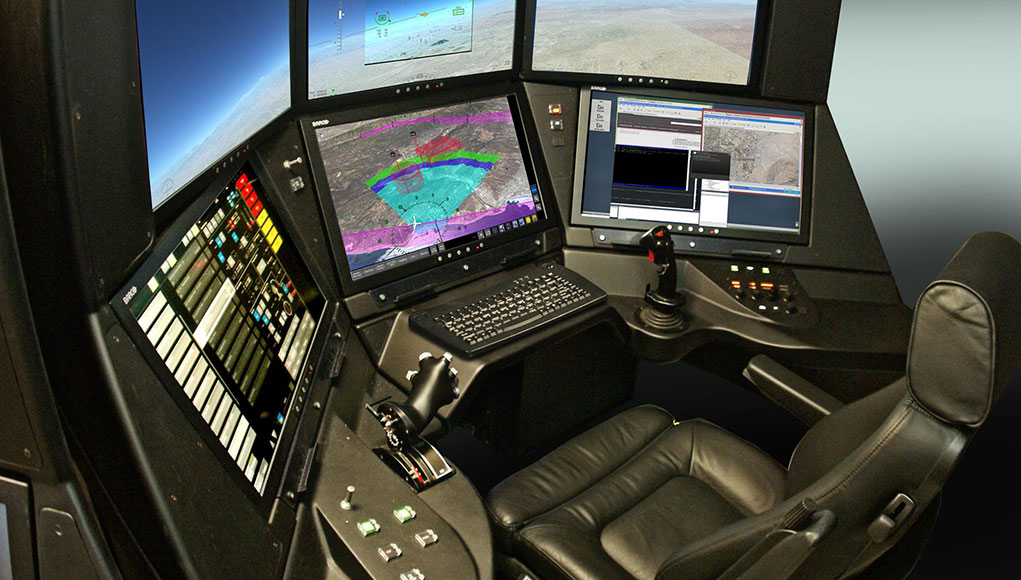
    The first generations of MALE drones required a crew of five operators (the current Chinese MALE drones still operate this way). The next generation of Ground Control Station (GCS) for the US Air Force Predator and Reaper drones known as ‘Block 50 ‘, is designed for single seat operations that can reduce manpower at the user’s discretion. With complete ‘Hands on Throttle and Stick’ for flight, weapons, payload, and sensor system control, aircrew situational awareness is greatly enhanced with a Common Operational Picture on a synthetic combines modern multi-screen touch sensitive design displaying synthetic videos, 3D graphics, and moving maps.

    The Advanced Cockpit Ground Control Station (GCS) was designed for use with Reaper and Predator UAS offers significantly improved situational awareness and reduced pilot workload. Photo: GA-ASI

    General Atomics Aeronautical Systems Inc (GA-ASI) completed the Critical Design Review (CDR) of the new GCS in June 2017, which included a review of some 700 customer requirements further supporting automation and functionality. The Block 50 architecture has full physical and functional payload separation from the drone’s safety-critical Operational Flight Program, allowing for quicker integration, testing, and fielding of new payloads and systems.

    Missions involving persistent 24×7 operations require integration of new functions that enable the control of multiple aircraft by a single team, at least during transit to and from a mission and on ‘parking’ orbit. Such capabilities are provided by Elbit Systems, for their Hermes drones utilizing the latest version of Universal GCS that enables a single crew to monitor and control multiple aircraft simultaneously while on a shift. Its side-by-side identical and redundant operator consoles feature ruggedized COTS hardware and commercial software tools for quick and easy mission planning, management and control. Built-in data exploitation and dissemination also supports “single-operator” GCS function.

    Highly sophisticated controls are not limited to the big and expensive drone GCS. Mini-UAVs designed for operation at the tactical level also use advanced levels of autonomy to simplify the control of small unmanned vehicles and enable operation by ordinary soldiers. Initially, various automation functions are employed at the ground control segment to enhance performance, supporting the ‘camera guide’ functions and ‘move to point’, where the drones‘ flight destination and orientation are automatically set to maintain the target within the sensor’s field of view. More advanced functions, such as ‘convoy mode’ instruct the drone to track the operator’s movement, maintaining automatic surveillance ahead of the moving vehicles. Such mode enables the operator to focus on the mission, rather than flying the drone from a moving vehicle. Other functions including ‘return to launch point’ are triggered automatically upon loss of communications.

    Practical Steps Toward Smarter Drones

    More in the ‘Future Drones’ series:
    Defense Exhibitions: Q1 2018

    Subscribe to see past events

    Travelling abroad? Try our Travel Partner Agoda – attractive deals – recommended hotels


    Joint Tactical Networks Summit – 18-19 January 2018 – SDSU, San Diego, California, USA.


    Intersec – 21-23 January 2018 – Dubai, UAE.


    International Armoured Vehicles (IAV),
    22-25 January 2018 – Twickenham Stadium, London, UK.
    The largest, annual and international gathering of armoured mobility experts is the world’s premier forum dedicated to the armour community is where you can make your contribution by sharing experiences and networking with colleagues from across the world. Defense Update is a proud sponsor of IAV 2018


    DGI Europe – 23-25 January 2018 – Lancaster, London UK.


    Shot Show – 23-26 January 2018 – Sands Expo Center, Las Vegas, NV, USA.


    Cyber Defense & Network Security – 23-25 January 2018 – London UK.


    Cybertech – 29-31 January 2018 – Tel Aviv, Israel.


    Ilan Ramon Aerospace Conference – 29-30 January 2018 – Herzlia, Israel.


    International Military Helicopters – 30 January – 1 February 2018 – London UK


    Asia Milisim – 30-31 January 2018 – Marina Bay Sands, Singapore.


    UDT Asia – 30-31 January 2018 – Marina Bay Sands, Singapore.


    Maritime Defence Asia – 30-31 January 2018 – Marina Bay Sands, Singapore.


    EW Singapore – 30-31 January 2018 – Marina Bay Sands, Singapore.


    Surface Warships – 30-31 January 2018 – UK.


    Maritime Reconnaissance & Surveillance – 30-31 January 2018 – Rome, Italy.


    Border Security Expo – 31 January – 2 February 2018 – San Antonio, TX, USA.


    Need a hotel in February? Accommodation is available for all destinations.


    Mobile Deployable Communications – 1-2 February 2018 – Marriott, Warsaw, Poland.


    Network Centric warfare
    – 1-2 February 2018 – Rome, Italy.


    Military Additive Manufacturing – 1-2 February 2018 – Tampa, FL, USA.


    Marine West – 1-2 February 2018 – MCB Camp Pendleton, CA, USA.


    Unmanned Systems – (Defense & Security) – 6-8 February 2018 – National Harbor, MD, USA.


    Singapore Airshow – 6-11 February 2018 – Changi Exhibition Center, Singapore.


    Automated ISR – 13-14 February 2018 – Mary M. Gates Learning Center I Alexandria, VA, USA.


    AM – Additive Manufacturing – for Aerospace & Space – 20-22 February 2018 – Munich, Germany.


    GPEC – Police Special Equipment – 20-22 February 2018 – Frankfurt, Germany.


    Border Security – Border Security Conference – 21-22 February 2018 – Rome, Italy.


    FSIE – Fire & Security India – 22-24 February 2018 – BIEC, Bangaluru, India.


    UMEX – 25-27 February 2018 – ADNEC, Abu Dhabi, UAE.


    SOLIC – 26-28 February 2018 – Crystal Gateway Marriott, Arlington VA, USA.


    Countering Drones – Middle East – 27-28 February 2018 – Amman, Jordan.


    Heli-Expo – 27 February – 1 March 2018 – London, UK.


    Military Engineering – 27 February – 1 March 2018 – Las Vegas, NV, USA.


    Need a hotel in March? Accommodation is available for all destinations.


    Defense Logistics – 6-7 March 2018 – Hotel Angelo, Prague, Czech Republic.


    Counter Terror Expo – 6-8 March 2018 – Olympia, London, UK.


    ISC – Brasil Security Conference – 6-8 March 2018 – Sao Paulo, Brazil.


    Police K9 – 6-8 March 2018 – Las Vegas, NV, USA.


    ISNR – National Security & Resilience – 6-8 March 2018 – ADNEC, Abu Dhabi, UAE.


    Security & Policing – Home Office Event – 6-8 March 2018 – Farnborough, UK


    Security Expo – 7-10 March 2018 – Inter Expo Center, Sofia, Bulgaria.


    Unmanned Systems – 7-8 March 2018 – AUSA Conference Center, Arlington VA, USA.


    ENFORCE TAC – Police Equipment – 7-8 March 2018 – Nurnberg, Germany.


    IWA 9-12 March 2018 – Nurnberg, Germany.


    DIMDEX – 12-14 March 2018 – National Convention Center, Doha, Qatar.


    Future Soldier Technology – 12-14 March 2018 – Copthorne Tara Hotel, London, UK.


    Coastal & Maritime Surveillance – 19-21 March, 2018 – Accra, Ghana.


    SECUREX West Africa – 20-21 March 2018 – Lagos, Nigeria.


    Joint Civil & DoD CBRN Symposium – 21-22 March 2018, Mary M Gates Learning Center – Alexandria, VA, USA


    Military Flight Training – 26-28 March 2018, London, UK.


    Maritime Security & Coastal Surveillance – 27-28 March 2018, Jakarta, Indonesia.


    AUSA Global Force Symposium – 26-28 March 2018, Huntsville, AL, USA


    DEFEXPO 2018 – Moved to April 11-14, to location near Chennai, India.

    Travelling abroad? Try our Travel Partner Agoda – attractive deals – recommended hotels

    Want to include your event in our list?

    Include your event in our list
    Sending

    Defense Exhibitions: Q2 2018

    Subscribe to see past events

    Traveling abroad? Try our Travel Partner Agoda – attractive deals – recommended hotels


    FIDAE 3-8 April 2018 Santiago, Chile.


    SECUTEC – 5-7 April 2018 – Mumbai, India.


    Sea Air Space Expo (Navy League) – 9-11 April 2018 – Gaylord National Convention Center, MD USA.


    Defexpo 2018 – 11-14 April 2018 – Arulmiku Nithyakalyana Perumal Temple, Thiruvidanthai, Thiruporur Taluk, Kanchipuram, Tamil Nadu, India.


    Future Armoured Vehicles Situational Awareness – 11-12 April 2018 – London, UK.


    Marine South Security Conference – 12-13 April 2018 – Camp Lejeune, NC, USA.


    ICS West Security Conference – 13-14 April 2018 – Las Vegas, NV, USA.


    SPIE DSS – 15-18 April 2018 – Gaylord Palms Resort, Orlando, FL, USA.


    Defense & Security Asia – 16-19 April 2018 – Kuala Lumpur, Malaysia.


    Air Mission Planning – 17-18 April 2018 – London, UK.


    RAPID+ 3D Manufacturing – 23-26 April 2018 – Fort Worth Convention Center, Fort Worth, TX, USA


    Expo Seguridad Security Expo – 24-26 April 2018 – Mexico City, Mexico


    Robotic Autonomous Systems – 25-26 April 2018 – London, UK.


    Military Space Situational Awareness – 25-26 April 2018 – London, UK.


    AAAA Army Aviation Convention (QUAD-A) – 25-27, April 2018 – Nashville, TN, USA


    ILA Berlin Airshow – 25-29 April 2018 – Berlin Messe, Berlin, Germany.


    FireExpo Fire & Security Expo – 25-27 April 2018 – Nangang Exhibition Center, Taipei, Taiwan.


    Future Ground Combat Vehicles International – 30 April – 2 May 2018 – Detroit, MI, USA


    XPONENTIAL – (AUVSI) -30 April – 3 May 2018 – Colorado Convention Center, Denver, CO, USA


    C4ISR Summit Middle East – 30 April – 1 May 2018 – Abu Dhabi, UAE


    Autonomous Systems An AUSA Event – TBD April 2018 – Detroit, MI, USA.


    Need a hotel in February? Accommodation is available for all destinations.


    GISEC Gulf Information Security – 1-3 May 2018 – Dubai World Center, UAE.


    SOFEX Special Operations Expo – 7-10 May 2018 – Amman, Jordan.


    IDEB Special Operations Expo – 9-11 May 2018 – Expo Arena, Bratislava, Slovakia.


    Future Artillery – 14-16 May 2018 – Stamford Bridge, London, UK


    MilSatCom – Asia Pacific – 14-15 May 2018 – Singapore.


    ITEC Training & Simulation – 15-17 May 2018 – Stutgart, Germany.


    CIEPE Asia-Pacific & China Police Expo – 15-18 May 2018 – National Convention Center, Beijing, China.


    MAST Europe Maritime & Air Systems – 15-18 May 2018 – Bristol, UK.


    Aerospace A&DM Aerospace & Defense Conference – 15-18 May 2018 – Sevilla, Spain.


    Full Spectrum Air Defence Asia – 16-17 May 2018 – Novotel, Singapore Clarke Quay, Singapore.


    Unmanned Maritime Systems – 16-17 May 2018 – London, UK.


    BSDA Black Sea Defense & Aerospace – 16-18 May 2018 – ROMEXPO, Buccarest, Romania.


    Homeland Security Expo – 17-18 May 2018 – Pragati Maidan, New Delhi, India.


    Future Armoured Vehicles – Central & Eastern Europe – 21-22 May 2018 – Prague, Czech Republic.


    SOFIC Special Operations Expo – 21-24 May 2018 – Tampa, FL, USA.


    SECUREX SA Commercial, Homeland & Cyber Security – 22-24 May 2018 -Johannesburg, South Africa.


    Helicopter Technology – Central & Eastern Europe – 23-24 May 2018 – Prague, Czech Republic.


    KADEX 23-26 May 2018 – Astana, Kazakhstan.


    HeliRussia 24-26 May 2018 – Corcus Expo IEC, Moscow, Russia.


    Intelligence Analytics 28-30 May 2018 – Washington DC, USA.


    Intelligence Analytics 28-30 May 2018 – Washington DC, USA.


    CANSEC – Defense and Security in Canada – 30-31 May 2018 – Ey Centre, Ottawa, Canada.


    HEMUS – Bulgarian Defense & ANti Terrorism Expo – 30 May – 2 June 2018 – Polodiv, Belgrad, Bulgaria.


    Air & Missile Defense Conference – TBD May 2017 – Tel Aviv, Israel.


    Need a hotel in February? Accommodation is available for all destinations.


    West Africa National Security Conference – 4-5 June 2018 – Accra, Ghana.


    EW Europe – 5-7 June 2018 – Congres Beaulieu, Lausanne, Switzerland.


    MCT Future Armored Vehicles – Weapon Systems – 5-6 June 2018 – London, UK.


    Close Air Support – 6-7 June 2018 – London, UK.


    EUROSATORY – 11-15 June 2018 – Parc des Exposition, Paris, France.

    The world’s largest land forces event, Eurosatory provides the primer venue for land forces and security technology innovation, attracting a global audience of professionals from services, government, and industry.


    MCT Mission Critical Technologies – 13-14 June 2018 – ExCel, London, UK.


    IFSEC – 19-21 June 2018 – ExCel, London, UK.


    Cyber Security for Defense – 25-27 June 2018 – Washington DC, USA.


    MilSatCom USA – 25-28 June 2018 – Arlington VA, USA.


    UDT Global – 26-28 June 2018 – Glasgow, UK.


    Armored vehicles India – 26-27 June 2018 – Radisson Blu Hotel New Delhi Paschim Vihar, New Delhi, Delhi, India.


    Big Data For Defence – 27-28 June 2018 – Millennium and Copthorne Hotels, London, UK.


    Security Week TBD June 2018, Tel Aviv, Israel.


    International Ground Warfare & Logistics – TBD June 2018 – Latrun, Israel.


    Traveling abroad? Try our Travel Partner Agoda – attractive deals – recommended hotels

    Want to include your event on our list?

    Include your event in our list
    Sending

    Defense Exhibitions: Q3 2018

    Subscribe to see past events

    Travelling abroad? Try our Travel Partner Agoda – attractive deals – recommended hotels


    RIAT – Air Tatoo – 13-15 July 2018 – Fairford, UK.


    Farnborough International – 16-22 July 2018 – Farnborough, UK.


    EAA Air Ventures – 23-29 July 2018 – Wittman Regional Airport in Oshkosh, Wisconsin, USA.


    Army 2018 – 21-26 August 2018 – Patriot Park near Kubinka (Moscow Region), Russia.


    Global EOD Summit – 14-15 August 2018 – Bethesda North Mariott, Bethesda, MD, USA.


    Counter UAS – 14-15 August 2018 – Hilton Crystal City, Reagan National Airport, VA, USA.


    Military Radar – 28-30 August 2018 – Hilton London Kensington, London, UK.


    ISDEF Japan 2018 – 29-30 August 2018 – Todoroki Arena, Tokyo, Japan.
    ISDEF Japan is the Premier International HLS Exhibition in Japan, that brings together government and officials, industry members, end users and decision makers from Japan and around the world. With the 2020 Tokyo Olympics on the horizon, ISDEF Japan will bring together global companies specializing in the latest equipment and technologies for HLS, mega-event protection, cybersecurity, and counter-terrorism, providing a unique platform of advanced technologies and knowledge transfer to ensure public safety.


    Land Forces Australia – 4-6 September 2017 – Adelaide, Australia.


    MS&D Maritime Systems & Technology – 4-7 September 2017 – Hamburg Messe, Hamburg, Germany.


    SPIE Security & Defense – 10-13 September 2017 – Estrel Berlin Hotel, Berlin, Germany.


    Military Tactical Communications Summit – 12-13 September 2018 – The Mary M Gates Learning Center, Alexandria, VA, USA.


    AFA – Air Space & Cyber Convention (AFA) – 15-19 September 2018 – Gaylord National Harbour, MD, USA.


    Military Airlift – 17-19 September 2018 – Hilton, Canary Wharf, London, UK.


    Joint Undersea Warfare Technology – 17-19 September 2018 – US Naval Submarine Base New, Groton CT, USA.


    GEOINT & OSINT Analysis – 18-19 September 2018 – Spire Events Center, Washington DC, USA.


    Autonomous Capabilities for Defense – 19-20 September 2018 – The Mary M Gates Learning Center, Alexandria, VA, USA.


    HLS Indonesia 2018 – 19-20 September 2018 – Jakarta Convention Center (JCC), Jakarta, Indonesia.


    Defence Exports Conference 19th – 20th September 2018 – Rome, Italy.


    Full Spectrum Air Defense – 19-21 September 2018 – Rheinmetall Air Defense, Zurich, Switzerland.


    AAD African Aerospace & Defense – 19-23 September 2018 – Tshwane, South Africa.


    Sobra Aerospace & Defense Expo – 20-22 September 2018 – Gornja Radgona, Slovenia.


    Annual C4ISR Summit – Middle east – 24-25 September 2018 – Kuwait.


    Disruptive Technology for Defense Transformation – 24-25 September 2018 – Hilton Canary Wharf, London, UK.


    Armored Vehicles Eastern Europe 25-26 September 2018, Crowne Plaza, Bucharest, Romania.


    Modern-day Marine 25-27 September 2018, Quantico, VA, USA.


    Offshore Patrol Vessels 25-27 September 2018, Twickenham Stadium, London, UK.


    Maritime ISR Global 25-27 September 2018, Sheraton Parco de’ Medici Rome Hotel, Rome, Italy.


    ADEX Azerbaijan Defense Expo – 25-27 September 2018 – Baku Expo Center, Baku, Azerbaijan.


    ADAS Asia Defense, Security & Crisis Management – 26-28 September 2018 – World Trade Center Metro, Manila, Philippines.


    AIREX Istanbul Airshow – 27-30 September 2018 – Istanbul Ataturk Airport, Istanbul, Turkey.


    MSPO – TBD September 2018 – Kielce, Poland.


    AUS&R – TBD September 2018 – Rishon LeZion, Israel.


    SECPROTEC Security & Protection Technology – TBD September 2018 – Nairobi, Kenya.


    Travelling abroad? Try our Travel Partner Agoda – attractive deals – recommended hotels

    Want to include your event in our list?

    Include your event in our list
    Sending

    Defense Exhibitions: Q4 2018

    Subscribe to see past events

    Travelling abroad? Try our Travel Partner Agoda – attractive deals – recommended hotels


    FireEye Cyber Defense Summit – 1-4 October 2018 – Washington Hilton, Washington DC, USA.


    Defence Safety Conference 1-2 Supported by The Defence Safety Authority, UK MoD – October 2018 – Copthorne Tara, Kensington, London, UK


    Aerospace & MRO Matrade Exhibition & Convention Centre
    – 2-4 October 2018 – Quala Lumpur, Malaysia.


    AUSA 2018 Annual Meeting – 8-10 October 2018 – Washington DC, USA.


    Protection Technologies, Arms & Security – 9-12 October 2018 – Kiev International Exhibition Centre, Kiev, Ukraine.


    Military Flight Training – 10-11 October 2018 – London, UK.


    Helitech – 16-18 October 2018 – RAI International Exhibition & Congress Centre, Amsterdam, Netherlands.


    Homeland Security Week – 22-24 October 2018 – College Park Mariott, Hyattsville, MD, USA.


    Euronaval – 22-26 October 2018 – Paris, France.


    Air & Missile Defense – 23-24 October 2018 – Angelo Hotel, Prague, Czech Republic.


    MEDEVAC 2018 – 23-25 October 2018 – Hilton Olympia, London, UK.


    Future Mortars – 23-25 October 2018 – London, UK.


    Presicion Strike Technology Symposium – 23-25 October 2018 – John Hopkins University Applied Physics Lab, Laurel, MD, USA.


    Airborne ISR Conference – 24-25 October 2018 – London, UK.


    Unmanned Maritime Systems & Surface Ships – 24-26 October 2018 – Norfolk, VA, USA.


    Interpolitex Means for State Security – 23-26 October 2018 – VVC, Moscow, Russia.


    Milipol Qatar – 29-31 October 2018 – Doha Exhibition Centre, Doha, Qatar


    Armored Vehicles Asia – 30-31 October 2018 – Bangkok, Thailand.


    Military Power Systems – 31 October – 1 November, 2018 – London, UK.


    Directed Energy Systems – 31 October – 1 November, 2018 – London, UK.


    Airshow China 6-11 November 2018 – Zhuhai, China


    20th Annual Global MilSatCom

    6th – 8th November 2018 – London, United Kingdom


    Dubai Helishow 6-8 November, 2018 – Meydan Racecourse, Dubai, UAE.


    ISR & C2 Battle Management 6-8 November, 2018 – Crowne Plaza Old Town Alexandria, Alexandria, VA, USA.


    ISR & C2 Battle Management 6-8 November, 2018 – Crowne Plaza Old Town Alexandria, Alexandria, VA, USA.


    Aircraft Survivability Symposium 6-8 November, 2018 – Naval Postgraduate School, Monterey, CA, USA.


    Synthetic Training 7-9 November, 2018 – Orlando, FL, USA.


    IndoDefence – 7-10 November 2018 – Jakarta, Indonesia.


    Israel’s Homeland Security & Cyber Expo – 12-15 November 2018 – Tel Aviv, Israel


    Smart Border Management – 13-15 November 2018 – Hilton Canary Wharf, London, UK.


    International Fighter Symposium – 13-15 November 2018 – Melia, Berlin, Germany.


    Armoured Vehicles Survivability – 13-15 November 2018 – London, UK.


    BIAS Bahrain International Airshow – 14-16 November 2018 – Sakhir Air Base, Bahrain.


    Africa Border Management & Security Expo – 20-21 November 2018 – Johannesburg, South Africa.


    Maritime Information Warfare – 26-27 November 2018 – Copthorne Tara Hotel, London UK


    I/ITSEC – 26-30 November 2018 – Orange County Convention Center, Orlando, FL


    Maritime Security & Coastal Surveillance – Asia – 27-28 November 2018 – Singapore.


    Military Airlift Asia – 27-28 November 2018 – Singapore.


    Cyber Threat Intelligence – 27-29 November 2018 – Hilton London Kensington, London, UK.


    Future Indirect Fires – eastern Europe – 27-29 November 2018 – NH Prague City Hotel, Prague, Czech Republic.


    IDEAS – 27-30 November 2018 – Karachi Expo Center, Pakistan.


    JA2018 – Japan Aerospace 27-30 November, 2018 – Tokyo Big Sight, Tokyo, Japan.


    MAST Maritime Systems & Technology – 28-30 November 2018 – New Delhi, India.


    Army Autonomy and Artificial Intelligence 28-39 November 2018 – COBO Centre, Detroit, MI, USA.


    Future Ground Combat Vehicles 28-30 November 2018 – Detroit, MI, USA.


    Military Airlift and Air-to-Air Refuelling

    – 3-5 December 2018 – Rome, Italy


    Egypt Defense Expo – 3-5 December 2018 – International Expo Center, Cairo, Egypt


    EXPONAVAL – 4-7 December 2018 – Aeronaval Vino del Mar, Valparaiso, Chile.


    Military Flight Training – 5-7 December 2018 – San Antonio, TX, USA.


    Cyber Security for the Maritime Sector – 11-13 December 2018 – Rotterdam, NL


    Countering Drones Global – 11-13 December 2018 – Hilton Canary Wharf, London, UK


    American Aerospace & Defense Summit – 12-13 December 2018 – Renaissance Pheonix Glendale Hotel, Scottsdale, AZ, USA


    Traveling abroad? Try our Travel Partner Agoda – attractive deals – recommended hotels

    Want to include your event in our list?

    Include your event in our list
    Sending

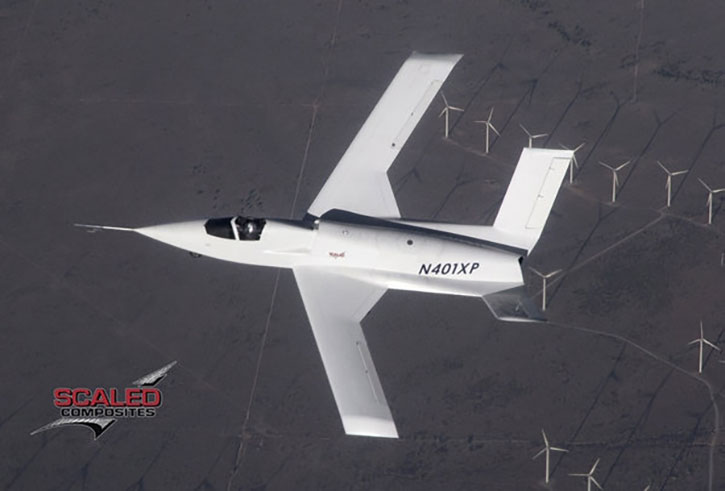
    Mysterious New Jet Takes to the Air

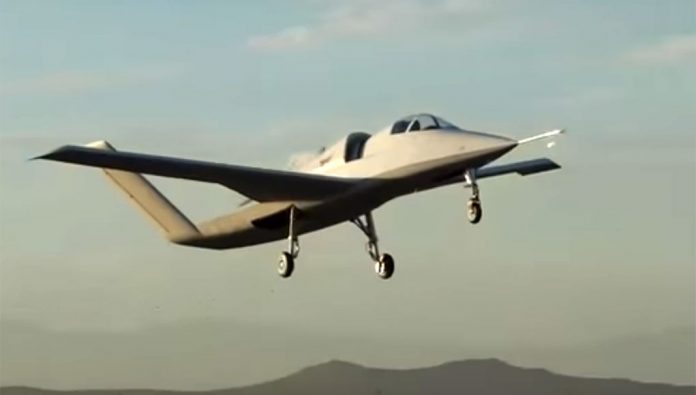
    Model 401 takeoff on its first flight at Mojave, CA. Photo: Scaled Composites

    Scaled Composites announced the first flight of its newly developed, experimental aircraft Model 401. The company produced two such aircraft for an undisclosed customer, to demonstrate advanced, low-cost manufacturing techniques and research flight services for the United States government. This successful first flight is the beginning of the flight test phase for vehicle number 1. The Scaled team plans to continue envelope expansion on the first aircraft as they move toward first flight of the second vehicle.

    Model 401 design indicates several signature reduction features, including the dorsal engine and exhaust. Photo: Scaled Composites

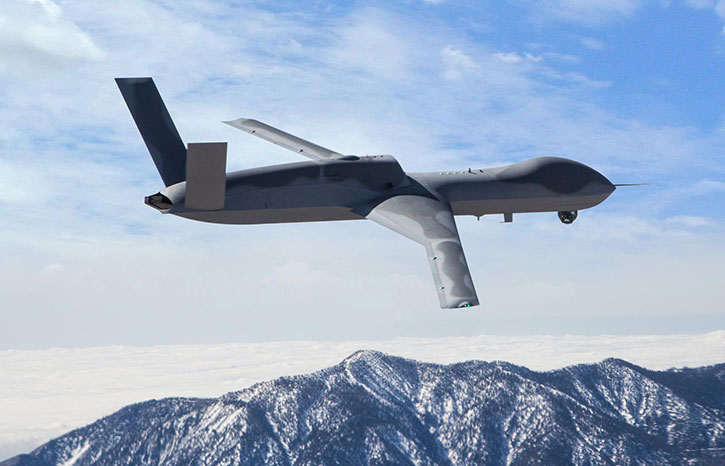
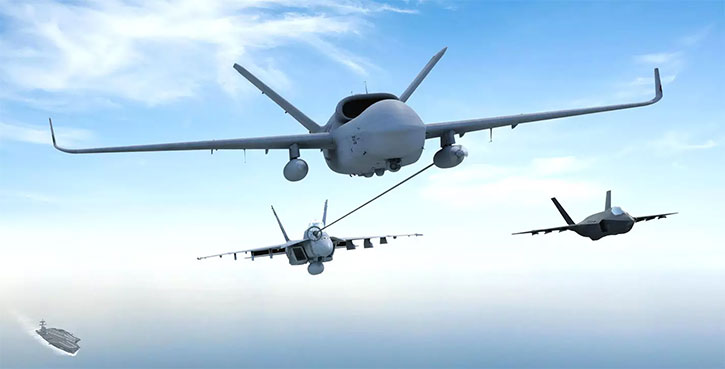
    Scaled Composites is known for its advanced, innovative design and unique óne of a kind’ aircraft production legacy. Model 401 introduces new features, including signature reduction design features. Design similarities to the General Atomics Predator C Avenger could hint at a manned test platform for certain manned/unmanned applications. Scaled Composites is a wholly owned subsidiary of Northrop Grumman Corporation, one of General Atomics’ competitors on the U.S. Navy’s MQ-25 carrier-based unmanned tanker aircraft program, for which GA has proposed an Avenger derivative.

    The aircraft is powered by a single Pratt & Whitney JTD-15D-5D engine developing 3,045 pounds of thrust, flying up to Mach 0.6 with a service ceiling of 30,000 feet and mission endurance of up to three hours. The two aircraft produced are identical in outer mold line. The Model 401 has a maximum takeoff weight of 8,000 lbs., double its empty weight. They have a wingspan and length of 11.60 meters (38 feet).

    General Atomics’ Predator C Avenger is a jet-powered unmanned aircraft that scales about three times larger than Model 401. The two vehicles are strikingly similar in their design features. Photo: GA-ASI
    General Atomics is proposing a derivative of the Predator C Avenger for the US Navy carrier based unmanned refueling aircraft – Stingray. Photo: GA-ASI/USNI

    Unmanned Rovers Run on Hydrogen Power

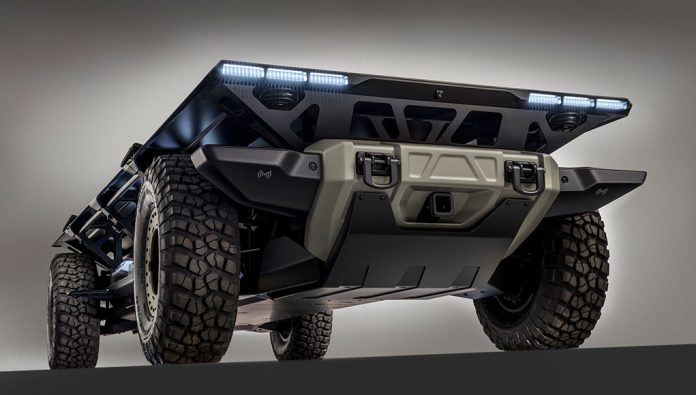
    Silent Utility Rover Universal Superstructure (SURUS) platform is a flexible fuel cell electric platform with autonomous capabilities. SURUS was designed to form a foundation for a family of commercial vehicle solutions that leverages a single propulsion system integrated into a common chassis. Photo: GM

    GM’s proposes a versatile, electrically powered platform that uses hydrogen fuel-cell technology to support energy-dependent military applications such as sensor platforms, high energy lasers, command posts, communications sites, field medical facilities, and emergency power and water generation facilities.

    The military user relies on fossil fuels for all most of its logistical support – transportation and energy production. The trend in the commercial world is toward clean, emission-free transportation is bound to present new realities to military logistics, and open new opportunities as the Army moves to rely more and more on electrical energy.

    For the commercial market, clean, zero-emission energy calls for the use of non-pollutant fuels, such as hydrogen, that can be produced (‘reformed’) from hydrocarbon or other fuels. As liquid fuels, hydrogen-powered vehicles can be refueled in the field, thus extend the operational range indefinitely, wherever hydrogen refueling facilities are available.

    In contrast, battery operated vehicles would enable users to top-up their vehicles at their base, even from renewable sources, thus adapting to operations within a limited range. Heavier electrical-powered vehicles, such as the Tesla Semi truck soon to be unveiled, are expected to offer longer operating range and higher torque that will also open new applications for military users, particularly in semi-autonomous supply convoys that will be able to maximize the use of autonomous transportation, relying on minimal or no human presence.

    Colorado ZH2 has a top speed above 60 mph. With 12 inches of ground clearance, 48-degree approach and 39-degree departure angles, it has the ability to ascend, descend and restart on 40 percent grade with 20 percent side slope. Photo: GM

    In the past 18 months General Motors (GM) and the U.S. Army Tank Automotive Research, Development, and Engineering Center (TARDEC) collaborated to develop and test the Chevrolet Colorado ZH2. This test vehicle evolved from contract to concept in less than a year. The Army received the first vehicle in April 2017 and has been testing it since. ZH2 is a hydrogen fuel-cell powered, off-road capable midsize pickup truck.

    The Chevrolet Colorado ZH2 is powered by a 93kW fuel-cell system that, assisted by battery, drives a 132-kW electric motor. Photo: GM

    Last week GM introduced a new member in its hydrogen-powered vehicle family – Silent Utility Rover Universal Superstructure (SURUS) – a new concept for manned/unmanned “chassis” that extends the ZH2 capabilities to a new level. The new platform leverages many of GM’s commercial vehicle technologies developed for the forthcoming autonomous transportation revolution. These include the Hydrotec fuel cell system and autonomous vehicle operation. SURUS will be reconfigurable in the field to support different missions and uses.

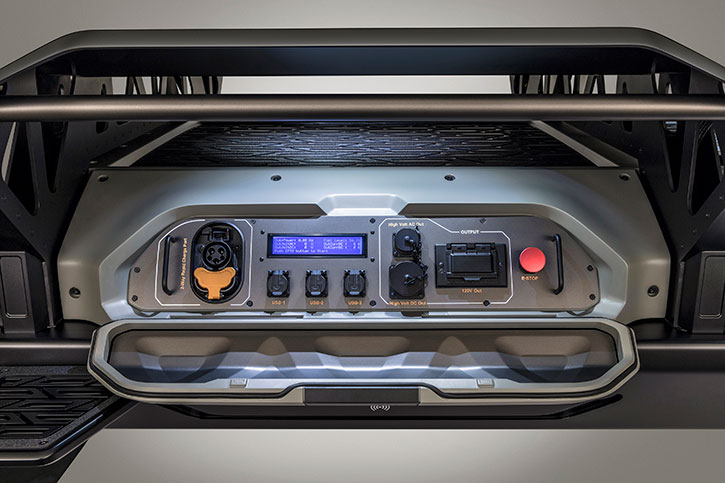
    SURUS provides Exportable Power Takeoff (EPTO) that access the fuel cell’s high-voltage DC to operate power tools or be converted to AC driving different utilities in the field. (Photo: GM)

    The basic SURUS chassis is designed for off-road mobility, using four in-hub electrical motors providing instantaneous high torque at all speeds and RPM. Field refueling will enable logisticians to support field operations at extended range, with refueling support similar to those used with fossil fuels. Apart from field mobility, the SURUS platform will also support field units with exportable power and water generation.

    As for ZH2, testing is progressing well. In addition to the hydrogen fuel cell propulsion system and its associated battery, ZH2 has a specially modified suspension that helps the vehicle negotiate rough terrain. Through these tests, ZH2 demonstrated high stealth and versatility, and efficiency. Coupled with an onboard battery, the fuel cell system delivered 174 HP of sustainable, enough to negotiate rough terrain and enable troops to get closer to enemy positions, thanks to the low acoustic and thermal signature of the vehicle. Thes 174 horsepowers are converted to 236 lb.-ft. (33 kg/m) of instantaneous torque delivered to the transfer case and a 4-wheel drive system with front- and rear- electronic locking differentials. Off-road performance is further enabled by proprietary damper technology that provides body control for trail running and expanded wheel travel for rock crawling.

    In addition, the vehicle could provide 25 kW of sustainable electrical power (up to 50kW peak power), enough to power all mission systems on board. ZH2 also has an Exportable Power Take-Off unit (EPTO) that allows the fuel cell to power activity away from the vehicle. This capability is used to support deployed facilities such as command posts or field medical facilities, where electrical power is produced using generators. The system can power a subdivision, tools at a worksite, communications equipment or a small field hospital for hours. Thanks to its ‘zero emission’ propulsion, ZH2 also produced two gallons of drinking water – a useful benefit for deployed forces.

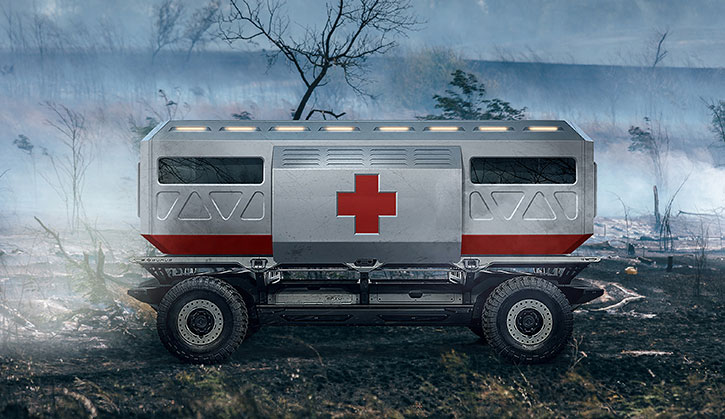
    SURUS platform configured with an ambulance module. Photo: GM
    SURUS configured as emergency response energy supply platform, fitted with solar panels and fuel-cell power generators. Photo: GM
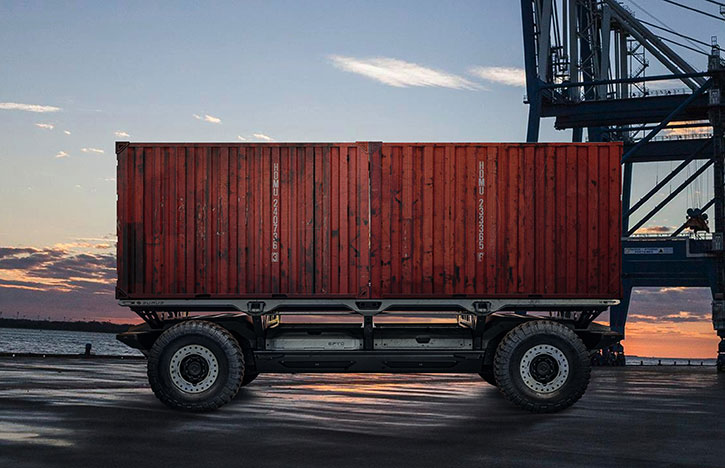
    SURUS platform can operate as an autonomous carrier of shipping containers (Photo: GM)

    U.S. Army Releases the Key for Future Vehicle Protection Systems

    The U.S. Army Tank Automotive Research Development & Engineering Center (TARDEC) has just released the MAPS Framework (MAF) – the key element in TARDEC’s roadmap to standardize the development and upgradability of Active Protection Systems (APS) and subsystem technologies utilized to protect ground vehicle platforms. The newly released document outlines the different standards that guide system providers in government and industry to develop products that are modular, upgradable, safe, and secure.

    The adoption and implementation of MAF 1.0 is the first step to establish ‘MAPS compliant’ products that are affordable, common, interchangeable and able to be integrated with any APS subsystem on any ground vehicle platform across the Army. MAF was released as a Beta version in February 2016. “Over the past months, we have built on that baseline by conducting integration efforts using three different APS defeat approaches and demonstrating the first end-to-end engagement, from cue to defeat using the MAPS approach.” Said Jeff Koshko, TARDEC’s associate director, Ground Vehicle Survivability & Protection. “The modular framework will continue to evolve, but we are confident this version will provide our collaboration partners an excellent starting point for adapting their APS technologies for MAF compliance.”

    Earlier this year TARDEC evaluated initial integration for the U.S. Army’s Modular Active Protection System (MAPS) based soft-kill demonstrator developed by Lockheed Martin and Northrop Grumman. The system uses an Open Architecture Processor developed by Lockheed Martin with Passive Infrared Cueing Sensor (PICS) and Multifunction EO System (MEOS) countermeasure provided by Northrop Grumman. The team completed initial integration in March and are set to deliver a full system demonstrator for testing on an M1 Abrams tank this year. A soft-kill capability enables the active protection system to confuse an incoming sensor-based weapon system through spoofing, interference or obscuration, resulting in the elimination of the threat.

    The Army also introduced yesterday at the AUSA convention three systems that are already in different stages of development, designed to protect main battle tanks and armored personnel carriers. These systems are designed to adapt MAPS in their advanced evolutionary phases.

    MAF 1.0 is one of two primary products that will result from the MAPS program. The other MAPS product is the Modular APS Controller (MAC) that that enables the integration and control of APS sensors and countermeasures, and the entire MAPS- compliant APS onto a ground vehicle platform.

    When applied to an APS subsystem, the MAC and associated MAF provide ground vehicles the capability to defend against current threats and the upgradeability to defeat evolving threats. Furthermore, as standards-based systems, they allow for more competition and diversity within the APS industry.

    The MAPS program uses a concept called Knowledge Points (KPs) to release an update government, industry and academic partners on MAF’s progress on a periodic basis to keep potential future collaboration partners up to date on MAF progress. MAF 1.0 was released under KP7 which represents the largest and most important KP release so far and consolidates all of the KPs released to date. MAF 1.0 establishes a stable baseline for use by the MAPS Community of Interest (COI) and other collaboration partners and enables them to continue updating or developing APS technologies for MAF compliance.

    “The release of MAF 1.0 is a result of many months of investigation by a team of qualified government and industry personnel and academic researchers focused on APS design, system modeling, functional hierarchy development, requirements engineering, functional allocation, behavior modeling, assessment of APS function safety criticality, power architecture, networking and communications standards and review activities,” said Dan Torres, MAPS chief integrator for modularity. “Essentially, MAF 1.0 is the first, large-scale milestone in the quest for a modular APS. Future releases will continue to add functionality and build on the foundation laid in MAF 1.0.”

    The release of MAF 1.0 signifies a major step toward delivering a framework and controller that will enable consistent integration of APS across the ground vehicle fleet. MAPS will provide protection from advanced threats at an optimized weight, facilitate transition with commonality across the ground vehicle fleet and allow APS to be tailored to meet specific needs. These products will lay the foundation for future Vehicle Protection Systems (VPS) technologies.

    U.S. Army to Equip Its European-Based Armored Brigade with TROPHY APS

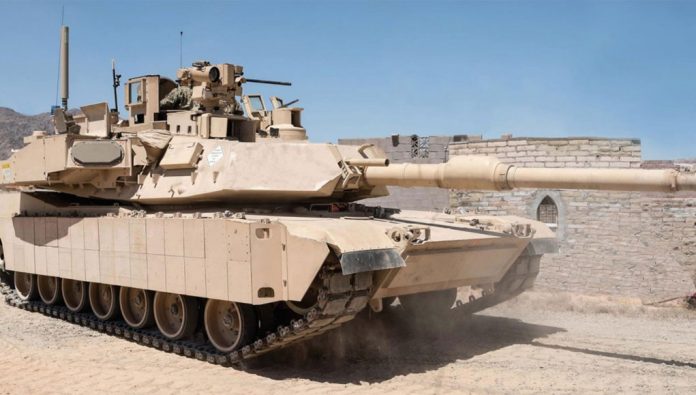
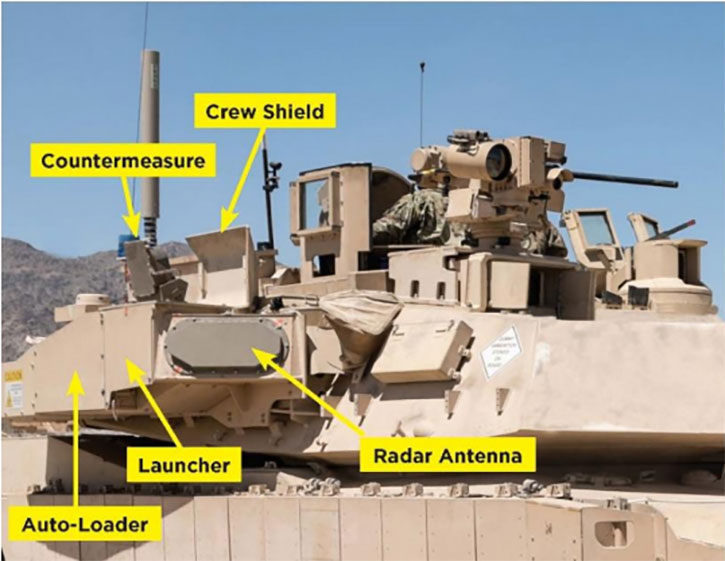
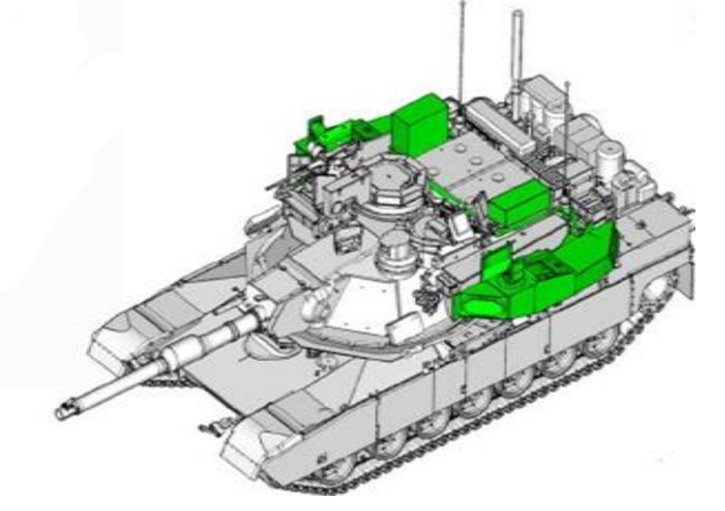
    The M-1A2 TROPHY integration used turret-side mounted modules, similar to those used on Israel's Merkava Mk4. The M-1A2SEPv2 is seen here fitted with the Abrams Reactive Armor Tile (ARAT) package recently added to the Abrams' survivability kit. Photo: US Army via Leonardo

    After years of evaluations and experimentation with active protection systems (APS) technologies, the US Army finally moves fast to equip its M-1A2 SEPv2 main battle tanks with lifesaving APS – Israel’s TROPHY was selected, realizing it is the only system of its kind that has proved its worth in real combat. M-1A2SEPv2 is the latest operational variant of the M-1 Abrams tank. These systems are expected to enhance the operational effectiveness of the U.S. main battle tank, enabling tank formations to become more survivable and decisive against anti-tank threats.
    The U.S. Army has recently received the latest modernized version (SEPv3) of the tank and has recently awarded the original manufacturer of the tank, General Dynamics Land Systems (GDLS), to propose new upgrades for a follow-on SEPv4 variant.

    Relying on non-developmental technology, the integration of Trophy on the M-1A2 SEPv2 took only six months, and in the evaluations, its performance TROPHY exceeded the Army expectations. Following the successful completion of the first phase, the program moves to the next testing phase. Since Trophy is an operational system that has proved its worth, the Army is not waiting for the completion of this second testing phase and simultaneously enter production, to meet the Army’s tight fielding schedule.

    THROPY integration on M1A2 used turret-side mounted modules, adapted from theose deployed on IDF Namer and Merkava Mk4. Photo: Leonardo

    The acquisition of the TROPHY brigade set for the M-1A2 SEPv2 is limited to one brigade set and is managed under the modification and support contract of the Abrams tank as an urgent material release. The U.S. already has one armored brigade deployed in Europe on an annual rotation; the APS-equipped brigade is expected to remain in Europe on a permanent basis. Future equipping decisions will be taken under the APS ‘Program of Record’ after the system integrates the forthcoming Modular APS (MAPS) architecture, that will enable the Army to ‘plug and play’ new, emerging detection and defeat technologies. The current system employs four IAI Elta ELM-2133 Windguard radars According to RAFAEL Advanced Defense Systems, the system’s developer, and its US team-member DRS Technologies of the Leonardo Group, TROPHY is designed with the ability to accept future technologies and capabilities.

    The Israeli Ministry of Defense and Defense Forces put TROPHY through a four-year safety certification process before approving its operational use aboard the Merkava Mk4 tank in 2010.

    Subscribe to read the full article (625 words)

    The M-1A2 TROPHY integration used turret-side mounted modules, similar to those used on Israel’s Merkava Mk4.

    DSEI 2017 Reflects the Latest Trends

    The biennial Defense Security Equipment International Exhibition (DSEI) held in London in September 2017 provided insight into British defense programs. The event attracted strong international participation, both visitors and exhibitors from 42 countries, many of which addressed UK and European defense and security requirements.

    The exhibition considered the second largest of its kind in the west, covered aviation, maritime and land warfare, as well as defense electronics, training simulation, security and cyber. DSEI reflected the growing concern of the Russian threat among countries within NATO. At the backdrop of DSEI was ZAPAD-2017, the large-scale military exercise held along the Russian Army with Belarus, along with its border with Europe. Another concern reflected here was the terror threat, both to military and the homeland. Several exhibitors displayed here innovative solutions that address evolving threats, including land, marine and airborne IEDs and mines.

    Main Highlights:

    SeaGull Demonstrates Autonomous ASW Capabilities

    Although wars are often fought on land, the maritime domain poses many challenges to military forces, from the air, surface, and underwater. Underwater activity is increasing both in irregular and high-intensity warfare, due to the difficulty of detecting such underwater threats, by submarines, submersible vehicles, divers, and mines, such threats pose the acutest danger to vessels, harbors, offshore facilities and coastal infrastructure.

    Submarines and divers are the most familiar type of underwater threat but, in fact, activity, sea mines and underwater improvised explosive devices (UW-IED) are more likely to inflict damage on naval and merchant vessels, especially in form of terror attacks on strategic seaports, or by irregular groups attempting to disrupt military intervention in territories such groups control, denying maritime activity in critical merchant shipping lanes or the access of logistical support into theater.

    Current counter mine (MCM) warfare include minesweeping designed to detect and neutralize mines deployed on shipping lanes. The procedures have not changed dramatically in the recent decades, as most assets taking part in MCM operation use surface or helicopter-based minesweeping and neutralization equipment operated and controlled by manned operators and divers. This high-risk operation requires a slow, methodical process that often brings maritime activity in the area to a standstill, to ensure an uninterrupted environment for the MCM operation to succeed. Based on these procedures, MCM operations could take weeks to complete, limiting naval and merchant shipping operations in the area. A recent mine alert in a major European port caused three weeks of disruption to the port activity, illustrating the potential damage such UW-IED attacks could have on the country’s economy.

    If mines represent the lower end of the underwater maritime threat, submarines represent the highest level, with more than 120 submarines of various types and capabilities are expected to enter service in the near future, over half of these will be operated by NON-NATO or adversary navies, 42 percent of the world’s submarine fleet will operate in Asia-Pacific. Given their stealth, long endurance underwater, and long-range weapons and sensors, and the relative limitations of surface and airborne anti-submarine assets, submarines currently have the advantage over surface vessels. Unmanned vessels operating ahead of the surface fleet, with long endurance, operating quietly in a relatively quiet area, have the potential to turn the odds against the submarine in a potential engagement.

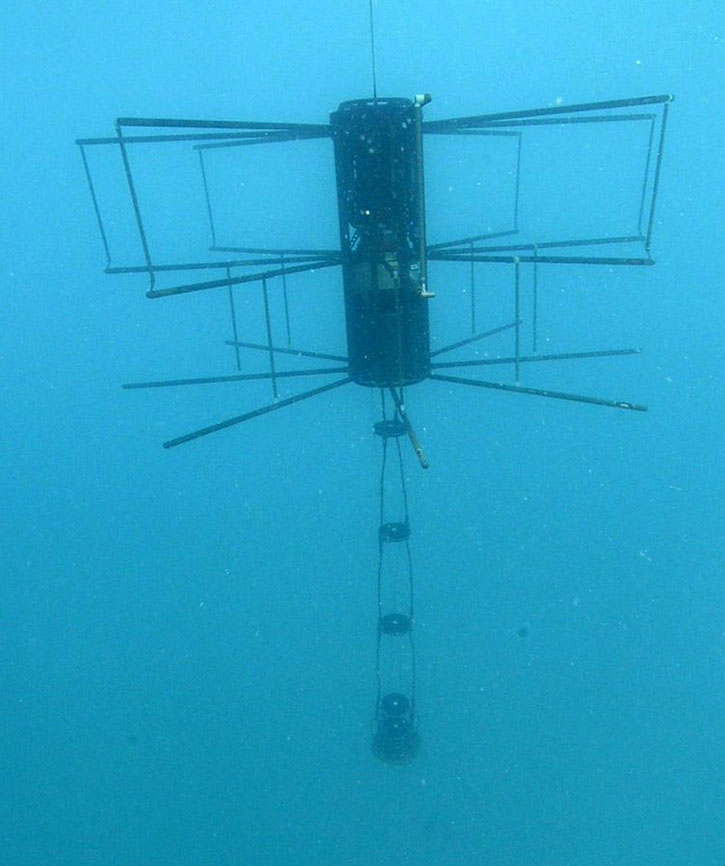
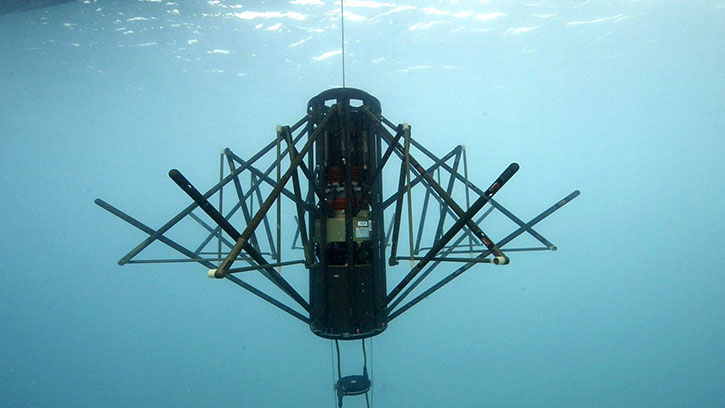
    The DS-100 Helicopter Long-Range Active Sonar (HELRAS) was designed as helicopter-operated dipping sonar and modified with Elbit Systems for operation from USVs. The wet end comprises a descending vertical transmit array of seven projector elements and a receive array of eight hydraulically driven arms that expand to a diameter of 2.6 meters when deployed. Photo: Elbit Systems

    While the most common are submarines activity, sea mines, and underwater improvised explosive devices are also likely to be employed, especially by irregular groups attempting to disrupt military intervention in territories such groups control, denying maritime activity in critical merchant shipping lanes or the access of logistical support into a theater.

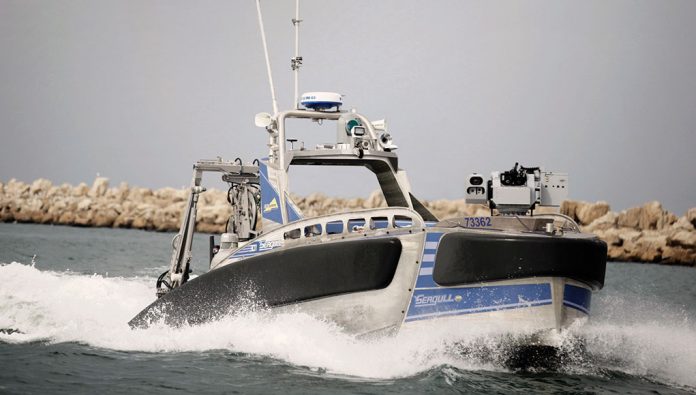
    Elbit Systems has developed an unmanned anti-submarine warfare (ASW) and mine countermeasure (MCM) vessels that enable navies to detect and defeat enemy submarines and neutralize sea mines in a safer, more efficient and affordable way. At the DSEI exhibition this week the company has demonstrated how the unmanned Seagull boats can autonomously perform anti-submarine operations over a distance of 1,890 nautical miles (3,500 km), with the mission controlled over a satellite link from the company’s exhibit at DSEI in London. Operating its dipping sonar and Elbit Systems proprietary software, Seagull performed real-time detection and classification of objects, demonstrating the capability to deter and dissuade hostile subsurface activity. The Seagull team included two operators, a USV operator and sonar operator.

    The HELRAS uses low active center frequency generated by a transducer using proprietary beam-forming technologies, that allow multiple boundary interactions, reduced reverberation contamination of the received signals, and interoperability with shipboard sonars and sonobuoys in bistatic or multistatic employment. Photo: Elbit Systems

    The Seagull is a 12-meter aluminum boat designed to carry 2.5 tons of useful payload in interchangeable mission modules and operate autonomously for up to four days. The boat is powered by two 425 HP diesel engines accelerating the Seagull to a top speed of 32 knots. The boats carry a complete sensor and weapon suite for ASW or MCM roles the unmanned boat replaces much larger manned assets required to operate highly dangerous missions, in routines performed at much slower speed. The ASW mission employs assets such as sonars and torpedoes, similar to those operational on ASW helicopters and larger frigates dedicated for the ASW role, modified for use from floating boats. On such missions, Seagull unmanned boats can perform such missions for four hours, compared to 2-3 hours endurance by helicopters. The boats can remain on station much longer, for up to four days.

    ASW operations with Seagull are particularly effective as the boats can deploy to a theater packed in standard 40-foot containers, or be flown into the theater by A-400M or C-17. Once they arrive at the operational area the boats can be operated from a ship or from shore, using a line of sight communications or satellite link. The boats are designed for operation in a rough sea. The SeaGull proved its high performance in a recent MCM trials held by the Dutch and Belgian navies in the North Sea. During the trials, Seagull operated successfully in sea state 6, at winds exceeding 35 knots and 1.5 meter high waves. Seagull can also assume other missions, including protection of harbor, offshore facilities, and vessels at sea. On routine missions the boat surveys the sea surface with its sonar, providing detailed maps of the sea surface at coastal areas and waterways, thus improving detection capabilities in familiar waterways.

    Lockheed Martin UK Developed a Submarine-Launched UAV

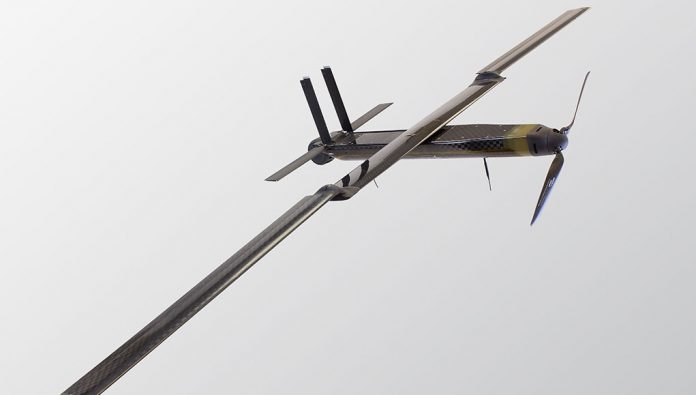
    A miniature, expendable drone launched from submarines while underwater at periscope depth was unveiled today by Lockheed Martin UK at the DSEI exhibition. The OUTRIDER is a lightweight, canister launched UAS designed to be used in environments where conventional, larger unmanned air systems are not practical.

    At only four inches wide and weighing only 1.7 kilograms, OUTRIDER is small enough to be launched from a NATO standard submarine signal ejector. The drone can also be launched from vehicles or dropped from aircraft and helicopters.

    Despite its size, OUTRIDER can travel up to 50 knots and reduces speed to loiter over the target area for an extended endurance of up to 2.5 hours. The key to the drone’s performance is the patented, high aspect ratio folding wing design that maximizes endurance whilst folding into a small package for storage and launch.

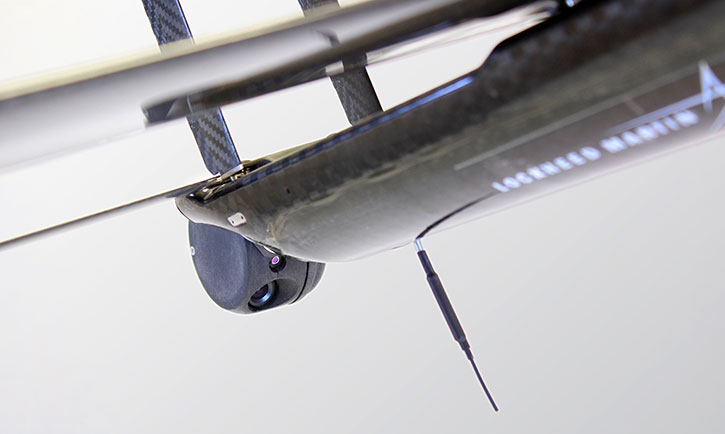
    OUTRIDER carries a small EO payload at the tail, the gimbal comprises a thermal and video camera. Photo: Lockheed Martin

    OUTRIDER can be operated remotely or has the ability to be autonomous. Thd micro drone carries a small EO payload placed at the tail, taking high-definition TV and infrared imaging. The system currently uses a commercially available controller that is already used with other Lockheed Martin UAS. The system has the capacity to operate multiple OUTRIDERS simultaneously from one controller.

    The OUTRIDER was designed by engineers at Lockheed Martin UK’s Havant facility in partnership with Wirth Research, an engineering company with specialization in aerodynamics and composite materials. As a UK developed product OUTRIDER is exempt from the limitations of U.S. International Traffic in Arms Regulations (ITAR). Several customers have already expressed interest in the system. The system has already demonstrated the most complex launch from the underwater canister, successfully deploying the drone using a specially designed buoyant structure and compressed air launch. Similar canister launched systems will be used for vehicular applications while on air-dropped deployments the drone will be dropped down from its storage canister.

    “We are proud to offer OUTRIDER which has been designed and built in the UK for the international market. It provides secure leading edge situational awareness capabilities in its class for ground, surface, air or Sub-surface operational environments and can be launched at the press of a button,” said Paul Livingston, vice president and group managing director, Lockheed Martin UK – Integrated Systems.

    Royal Navy Set to Test the DragonFire Laser Weapon by 2019

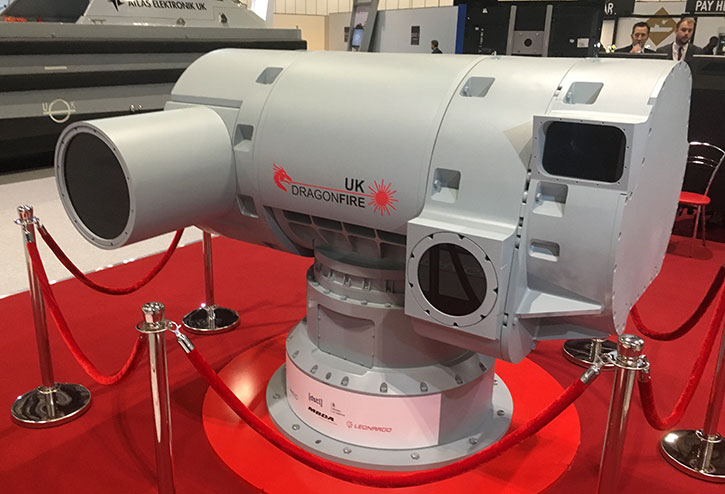
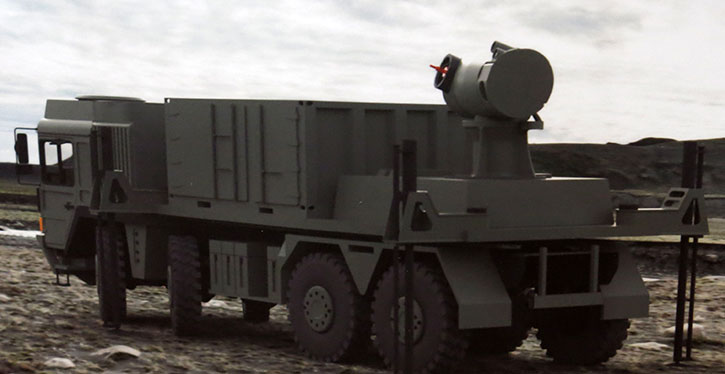
    The maritime application of the Dragonfire laser is to provide force protection. Designed as a scalable system the laser will be able to deploy on various platforms, including land vehicles and combat aircraft.

    A new laser weapon demonstrator being built for the UK Ministry of Defence has been unveiled today by the UK Dragonfire consortium at DSEI 2017 in London. Known as the Laser Directed Energy Weapon (LDEW) Capability Demonstrator Programme (CDP), the effort will see UK Dragonfire trial this new sovereign capability in the maritime and land domains in 2019.

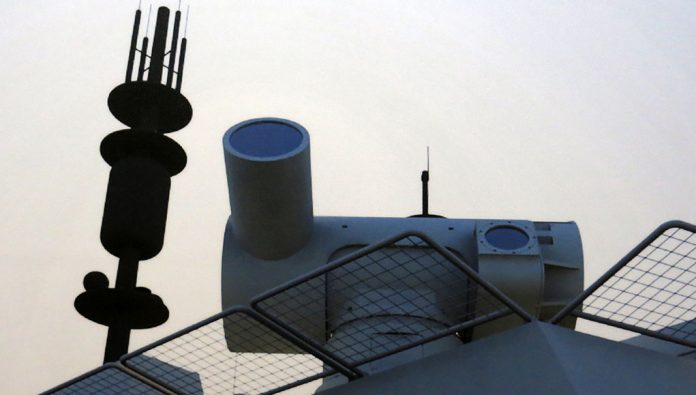
    The Dragonfire laser effector is designed to operate offensively or defensively. A full-scale model of the system was displayed at DSEI 2017.

    A key benefit of the Dragonfire LDEW technology is that the base system is highly adaptable and its effects are scaleable. As such it offers a range of different engagement solutions depending on the tactical scenario, these include tracking, deterring, dazzling the sensors of a potential threat, up to damaging or destroying it.

    The laser developed by QinetiQ employs a scalable, coherent beam combining technology to create laser source with a power level of ‘several tens of kilowatts’. The system will be scalable to higher power levels, as required. The coherently combined fibre laser technology developed by QinetiQ associates phase control system that provides a high precision laser source that can be effectively directed at dynamic targets and achieve high power density on target in the presence of turbulence. Beam combining is a technology that is able to achieve enhanced power densities at target, reducing defeat times and increasing engagement range. Therefore, although the system is not of a ‘100 kW’, power level which is considered for weapon grade lasers, the Dragonfire beam director designed by Leonardo optimises the laser beam to optimize to atmospheric conditions that otherwise would dissipate much of the energy.

    Among the uses of LDEW systems are providing very short-range air defense capability, close-in protection for naval vessels, counter-unmanned aerial vehicle (UAV), and protecting friendly forces from mortar and artillery attack.

    The consortium developing the UK Dragonfire, led by MBDA, under contract to the Defence Science and Technology Laboratory (Dstl), the project brought together Britain’s leading specialists in laser, EO and electronics, to develop a future laser-based technology for the UK Armed Forces.

    At DSEI the team showed the beam director developed for the laser weapon trials. The beam director is an optical system integrated into a turret. The system, developed by Leonardo, integrates QinetiQ’s powerful laser emitter, as well as world-class electro-optics for target identification and tracking. MBDA is the prime contractor and also delivered command and control (C2) and image processing for the system.

    UK Dragonfire was awarded a GBP30 million contract for the LDW CDP in early 2017 after a rigorous competitive evaluation. The team capitalizes on the strengths of all the companies involved, including Leonardo, QinetiQ, MBDA, Arke, BAE Systems, Marshall and GKN.

    The Dragonfire is a scalable designed for deployment on ships, land vehicles and combat aircraft. It can be used for a wide range of effects, from non-lethal deterrence and dazzling to destruction of threats.

    Skunk Works and XTEND Simplify Multi-Drone Command

    0
    Lockheed Martin Skunk Works® and XTEND have achieved a major milestone in JADC2 by integrating the XOS operating system with the MDCX™ autonomy platform. This technical breakthrough enables a single operator to simultaneously command multiple drone classes, eliminating the friction of mission handoffs. From "marsupial" drone deployments to operating in GPS-denied environments, explore how this collaboration is abbreviating the data-to-decision timeline and redefining autonomous mission execution.

    From Ukraine to Taiwan: The Global Race to Dominate the New Defense Tech Frontier

    0
    As traditional defense primes face mounting competition from agile “neoprimes” such as Anduril, Palantir and Helsing, the balance of innovation is shifting toward software-defined warfare and scalable, dual-use technologies, while global industry consolidation—marked by Boeing’s integration of Spirit AeroSystems and other strategic mergers—signals an intensified race to secure control over the defense technology value chain. Our Defense-Tech weekly report highlights these trends.

    Europe’s “Drone Wall”

    0
    In early October 2025, a coordinated wave of unmanned aerial system (UAS) incursions—widely attributed to Russia—targeted critical infrastructure across at least ten European nations. The unprecedented campaign exposed the fragility of Europe’s air defenses...

    Weekly Defense Update & Global Security Assessment

    0
    Executive Summary The past week (September 18-25, 2025) represents an inflection point where strategic defense concepts have transitioned from doctrine to tangible reality. An analysis of global events reveals four primary, interconnected trends shaping an...

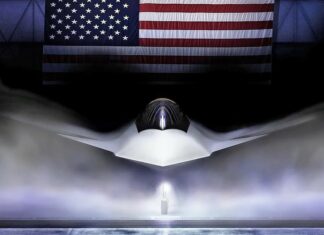
    U.S. Air and Space Forces Push Next-Gen Programs at the AS&C 2025 Conference and...

    0
    At the 2025 Air, Space & Cyber Conference, U.S. Air Force and Space Force leaders unveiled major updates on next-generation fighters, bombers, unmanned systems, and space initiatives, highlighting both rapid innovation and critical readiness challenges as the services race to outpace global competitors. A short version is available here, with a more detailed version for subscribers.

    TADTE 2025: Reflecting Taiwan’s Strategic Themes

    0
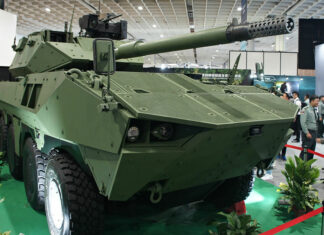
    The Taipei Aerospace & Defense Technology Exhibition (TADTE) 2025 crystallized around four dominant strategic themes that collectively illustrate Taiwan's comprehensive approach to defense modernization amid escalating regional tensions. Based on a detailed report by Pleronix (available upon request). Includes a Podcast discussion on TADTE 2025's highlighting Taiwan's four strategic themes beyond the post's coverage.

    Iron Beam 450 Completes Testing, Soon to Join With Operational Air Defense Units

    0
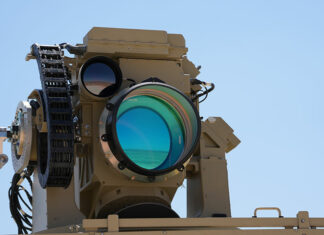
    Israel’s Iron Beam 450 high-power laser system has completed final testing, marking a major leap in air defense. Developed by Rafael, it offers precise, cost-effective interception of rockets, UAVs, and mortars, and is set for IDF deployment by 2025.