Thursday, December 25, 2025
More
    Home Blog Page 114

    production AH-6i Light Armed Scout Helicopter makes first flight

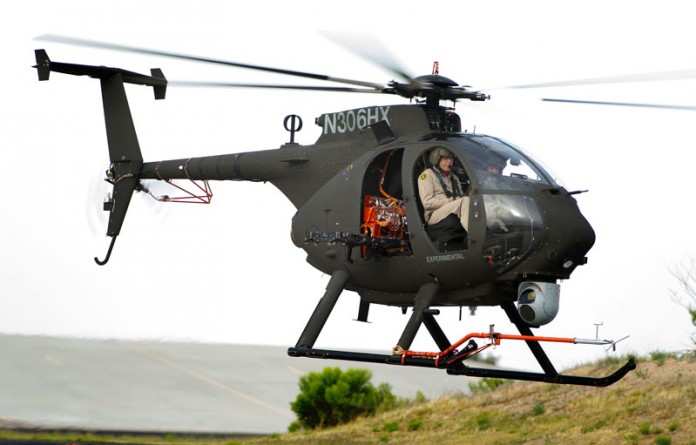
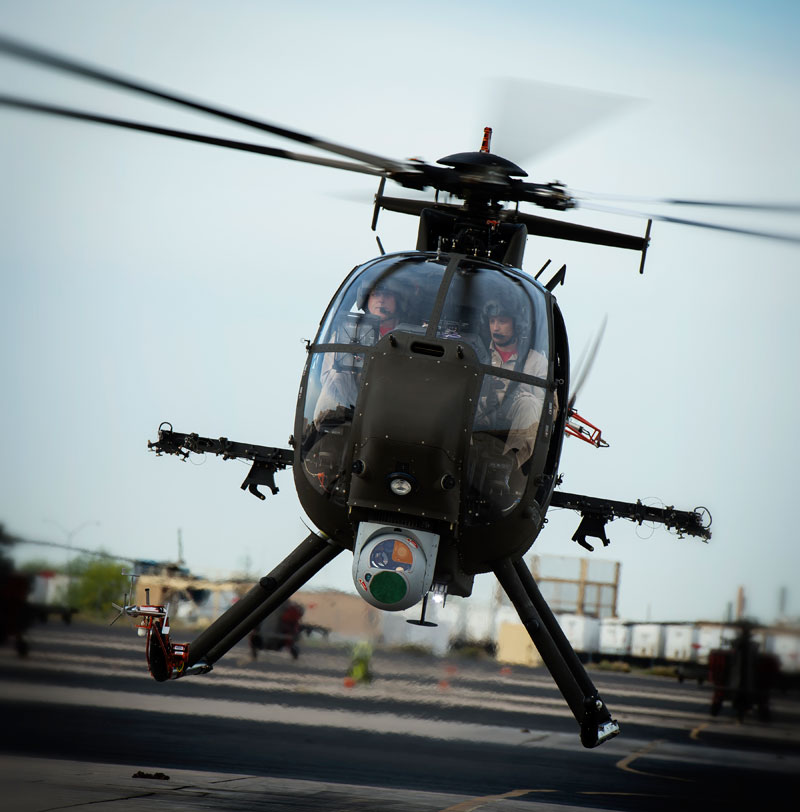
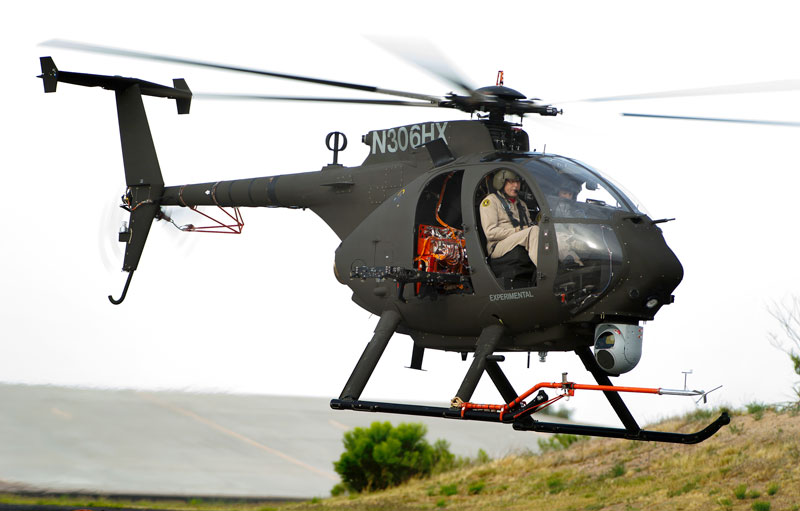
    A production variant of the Boeing AH-6i flew for the first time recently. Several countries in the Middle East are interested in this mini-gunship. Photo: Boeing
    A production variant of the Boeing AH-6i flew for the first time recently. Several countries in the Middle East are interested in this mini-gunship. Clearly visible is the helicopter is configured with L-3 Wescam MX-15Di EO/IR targeting sensor payload system and two weapon carrying racks, that can be loaded with two M260 pods carrying seven rockets each, including laser-guided 70mm rockets or Hellfire semi-active laser (SAL) missiles. Photo: Boeing

    The AH-6i armed scout helicopter has made its first flight in its production configuration, moving the program another step closer to full-scale production, the manufacturer Boeing announced yesterday.

    The AH-6i prototype of the helicopter flew on September 16, 2009. The helicopter is intended to provide close-air support for land-based forces and serve as an attack platform for destroying tanks, armored vehicles and fortifications. The new helicopter has been developed primarily for export, eying specific interest from several middle-eastern countries, including Jordan, Saudi Arabia. Chile has also expressed interest in the helicopter.

    On that first flight Boeing pilots flew the aircraft for less than 20-minutes at low speeds in forward, rearward and sideward flight at low elevations during a recent test. Future tests will expand the flight envelope over the next several months.

    “This first AH-6 flight in the production configuration takes us closer to delivering an advanced light attack and reconnaissance helicopter that meets the needs of defense forces around the world,” said Boeing AH-6 Program Director Scott Rudy. The aircraft will be produced at Boeing’s Mesa plant in Arizona, under the terms of an existing agreement with MD Helicopters.

    The AH-6i is a single-turbine helicopter that is based on the combat-proven OH-6A Cayuse. It is an advanced variant of the AH-6M helicopter operated by the U.S. Army Special Operations Forces. Boeing has also proposed to provide SOCOM with an upgraded variant dubbed ‘AH-6S Phoenix’. According to Boeing, the new version incorporates advanced technologies from adapted from the AH-64E Apache attack helicopter.

    ah6i800

    Common Anti-air Modular Missile (CAMM) Assessed as Rapier FSC Replacement

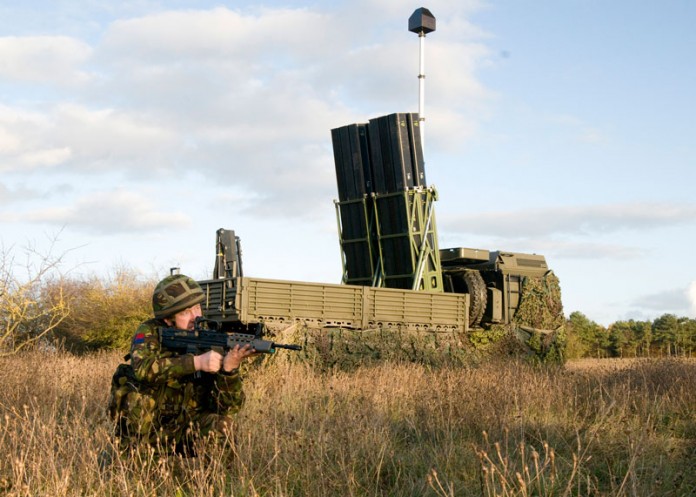
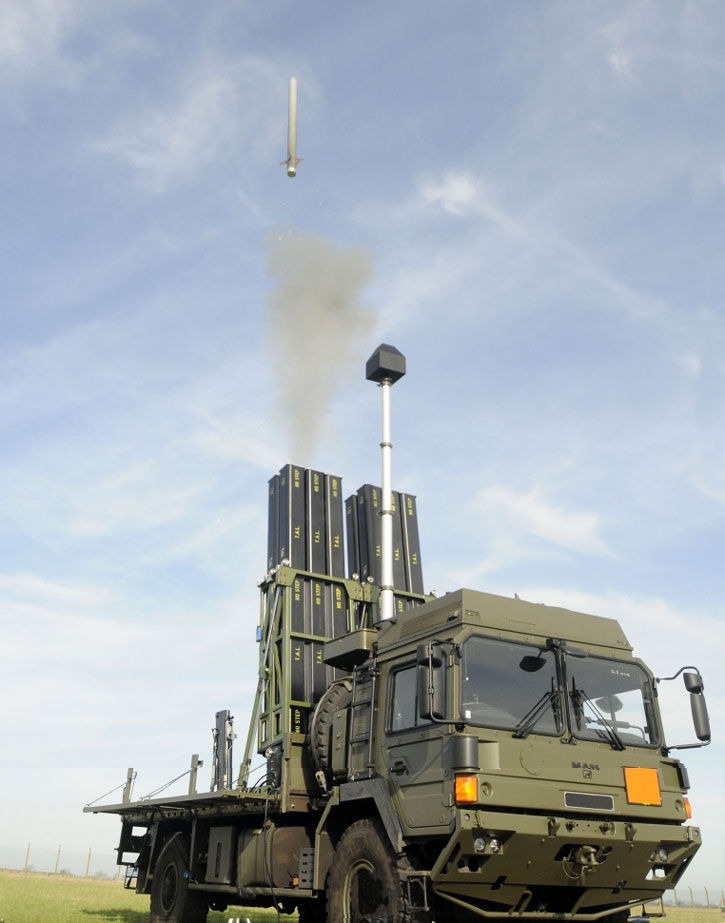
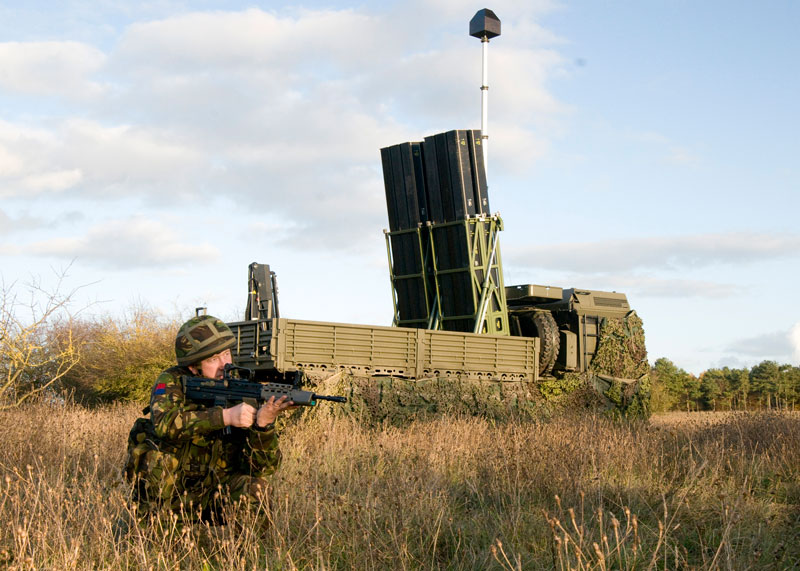
    A mockup of a FLAADS system loaded on a military truck, carrying 12 ready to fire, vertically launched CAMM missiles and a hemispheric covering mast-mounted target acquisition and guidance radar. Photo: MBDACAMM deployed in open space
    A CAMM missile tested Soft Vertical Launch from vehicle
    MBDA’s Common Anti-air Modular Missile (CAMM) tested in ‘soft vertical launch’ from a vehicle-mounted launcher. Photo: MBDA

    A £36M contract from the UK Ministry of Defence (MOD) has been placed with MBDA for the Land variant of the Future Local Area Air Defence System (FLAADS Land). The new system will eventually replace the Rapier Field Standard C (FSC) currently in in British Army service. Rapier FSC has been in service since 1996 and is coming to the end of its service life.

    The future local area air defence system (FLAADS) is a ground-based missile system whose missiles can travel at 1,000 metres per second and is able to simultaneously defend UK territories against a number of threats, including jets or cruise missiles travelling at supersonic speeds. The FLAADS Land system will be a derivative of MBDA’s Common Anti-air Modular Missile (CAMM) and its weapon command and control system, which are already contracted for installation onto the Royal Navy’s (RN) Type 23 Frigates under the ‘Sea Ceptor’ weapon system.

    This approach leverages the existing investment to deliver the UK MOD with an affordable but highly capable air defence system for both the Army and Royal Navy, with a shared support and future upgrade path across both services. The current investment fund an assessment phase of the new program, by demonstrating the evolution and core weapon system subsystems (e.g. command & control) and their adaptation to the land combat environment. Following the assessment phase, a decision on whether to buy FLAADS as a replacement for Rapier is expected to be made in 2015.

    According to MBDA, the opportunity to exploit a CAMM-based air defence system on land and sea will provide potential international customers with the opportunity to share in the benefits that the UK is reaping from the multi-service adoption of the missile. MBDA is delivering the FLAADS Land programme under the Portfolio Management Agreement (PMA), tasking the company with the development of a number of advanced weapon systems’ (complex weapons) based on a long-term roadmap.

    “By extending the FLAADS programme to land applications, the British MOD is showing that MBDA continues to be its Complex Weapons company of choice and recognises its ingenuity in maximizing cost benefits through modularity and the re-use of existing technologies.” Antoine Bouvier, Chief Executive Officer of MBDA said.

    A mockup of a FLAADS system loaded on a military truck, carrying 12 ready to fire, vertically launched CAMM missiles and a hemispheric covering mast-mounted target acquisition and guidance radar. Photo: MBDACAMM deployed in open space
    A mockup of a FLAADS system loaded on a military truck, carrying 12 ready to fire, vertically launched CAMM missiles and a hemispheric covering mast-mounted target acquisition and guidance radar. Photo: MBDACAMM deployed in open space

    Saudi Arabia unveils part of strategic missile force – a deterrent move against Iran?

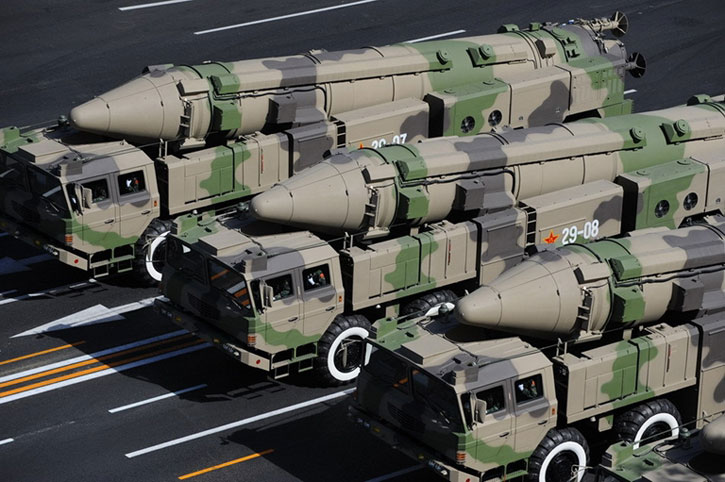
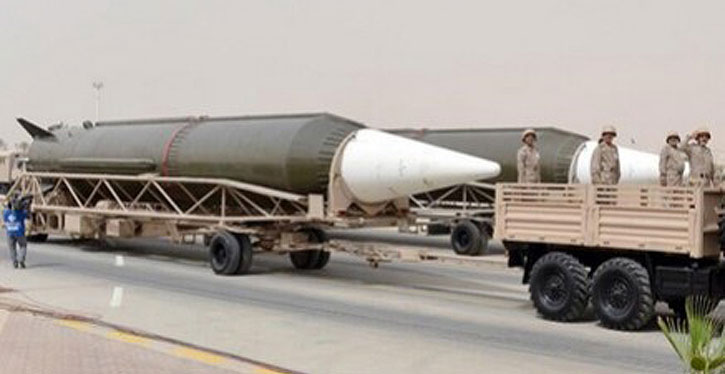
    The Chinese DF-3 missile is powered by liquid fuel. Towering to a height of 24 meters, the missile is fuelled before launch, at the launch site. This  process is extremely sensitive, requires extensive logistical support and can take up to three hours.
    The Chinese DF-3 missile is powered by liquid fuel. Towering to a height of 24 meters, the missile is fuelled before launch, at the launch site. This process is extremely sensitive, requires extensive logistical support and can take up to three hours.

    Saudi Arabia publicly displayed its Dong Feng-3 (DF-3) ballistic missiles for the first time in a 29 April 2014 on a parade that marked the end of the largest ever military exercise held in the kingdom. The military exercise and official display of the ballistic missiles, which were acquired secretly from China in 1987 were clear signals Riyadh is directing to both Washington, Tehran and Baghdad. Riyadh acquired the missiles from China during the height of the ‘city war’ phase of the Iran-Iraq, after Washington refused selling short range ballistic missiles to the kingdom.

    The DF-3 is deployed with the Chinese strategic missile force since 1971. According to IHS Janes Defense Weekly , Saudi Arabia is estimated to have acquired at least 30 missiles. The missiles are based in underground shelters, There were unconfirmed reports that Saudi Arabia has been upgrading its strategic missile force since 2007, introducing DF-21 (CCS-5) ballistic missiles, also carrying conventional warheads. The advanced DF-21 has a shorter range of 1,100 miles (about 1,700 km) but higher accuracy, which makes it more useful as a conventional weapon. Carried in a Transporter Erector Launcher (TEL) canister it is set to deploy quickly from its underground hideouts and launch within very short time. Its terminal speed is believed to be Mach 10, which makes it highly difficult to engage by missile defense.

    According to press reports Since 2007 Saudi-Arabia has augmented or replaced the DF-3 (CSS-2) with more accurate, solid fuleled DF-21 (CSS-5) ballistic missiles that are stored in ready to launch canisters, moving on all-terrain trucks.
    According to press reports Since 2007 Saudi-Arabia has augmented or replaced the DF-3 (CSS-2) with more accurate, solid fuleled DF-21 (CSS-5) ballistic missiles that are stored in ready to launch canisters, moving on all-terrain transporters.

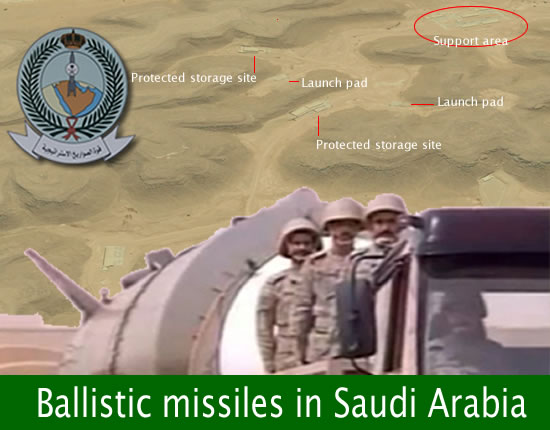
    The Saudi Arabian strategic missile force currently operates ballistic missiles located at least in three bases south and west south west of Riyadh. Bases with similar facilities were located since the early 2000s north of Al Sulayyil, and at a mountain range in Al Jufayr, the third base near Al-Watah was reported only recently. As part of its modernisation the Royal Saudi Strategic Missile Force has moved in 2010 into a new and modern headquarters facility located in Riyadh. The main advantage of this missile is that it is solid-fuelled, therefore being more responsive and survivable. The CSS-2 is powered by liquid fuel, and therefore requires a lengthy preparation before flight. Through the fuelling process that could take up to three hours the missiles are vulnerable and exposed to pre-emptive attack. 

    Although an old and relatively inefficient missile, Dong Feng-3 (CSS-2) is considered the biggest and most potent ballistic missile currently operational in the Middle East. The Chinese built missile was developed to carry nuclear warhead, although China has provided the US guarantees that the missiles delivered to Saudi Arabia were modified to carry only conventional warheads. The missile’s range is 1,646 miles (2,650 km) and its payload weight is around two tons.

    DF-3A ballistic missiles unveiled at a military parade in Saudi Arabia April 29, 2014
    DF-3A ballistic missiles unveiled at a military parade in Saudi Arabia April 29, 2014

    According to the Saudi media, the exercise, code-named Abdullah’s Shield, involved Saudi troops. The manoeuvres were held in the kingdom’s Eastern province at King Khaled Military City, in Hafr al-Batin, facing Iran and Iraq, and were timed to coincide with the ninth anniversary of King Abdullah’s ascension to the throne. A long list of VIPs attending included the King of Bahrain, Crown Price of Abu Dhabi, and Kuweiti minister of defense. An interesting preeminent guest at the exercise and parade was Gen. Raheel Sharif, the Pakistani chief of Army Staff. According to persistent rumours spreading in the Arab media, Pakistan has helped Saudi Arabia to equip some of its ballistic missiles with nuclear warheads.

    The Saudis wanted to signal several things with the exercise and their guest list.” Bruce Riedel, the director of the Intelligence Project at the Brookings Institution wrote in Al Monitor, “First is a message of deterrence to Tehran and Baghdad. The Saudis see the two Shiite-dominated states as existential foreign threats to the kingdom and view the increasingly tight alliance between them as a clear and present danger.

    Such Saudi commentators as former intelligence chief Prince Turki bin Faysal have been outspoken in warning that if Iran obtains a nuclear capability, Riyadh will have to develop its own. As one of the architects of the Saudi-Pakistan alliance in the 1970s and 1980s, Turki’s remarks implicitly and deliberately signal where and how Riyadh would acquire its deterrent.” Another message is directed at the White House, Bruce Riedel continues, “US-Saudi relations are far from broken, but they remain strained. Riyadh wants Washington to be tough on Iran and to keep the sanctions regime in place even if a nuclear deal is reached. It fears Iranian mischief-making and subversion as much as nuclear blackmail. Abdullah remains astonished at how naive the United States was in promoting Shiite majority rule in Iraq after the 2003 invasion, an error in judgment the king finds irresponsible to this day. He likes to remind American visitors that he warned against it for years before the war. “

    Jordan to unveil new AC-235 Gunship at SOFEX next week

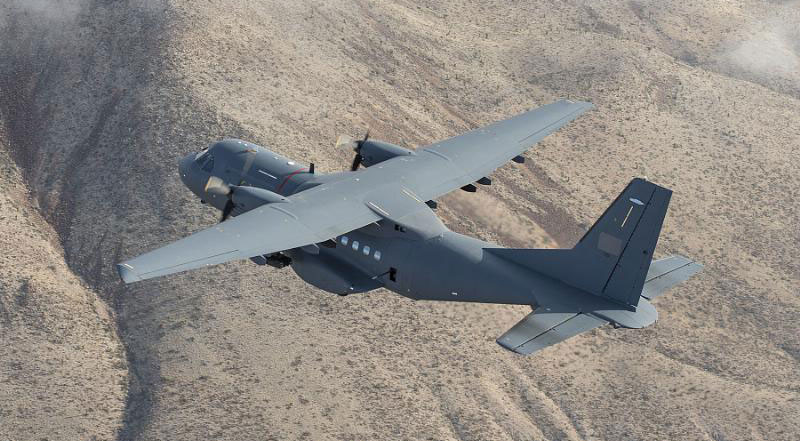
    ATK has delivered the first modified CASA-235 light gunship aircraft to the Hashemite Kingdom of Jordan. Photo: ATK
    ATK has delivered the first modified CASA-235 light gunship aircraft to the Hashemite Kingdom of Jordan. Photo: ATK

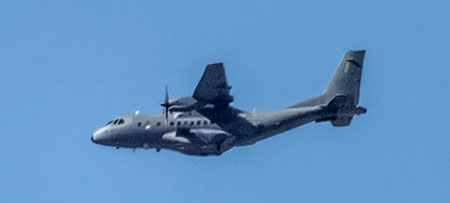
    ATK and the King Abdullah II Design and Development Bureau (KADDB) have delivered the first modified CN-235 light gunship aircraft to the Hashemite Kingdom of Jordan. The completed aircraft re-designated AC-235 will be unveiled at the 10th Special Operations Conference and Exhibition (SOFEX) exhibition taking place in in Amman, Jordan next week.

    ATK has equipped the aircraft with an electro-optical targeting systems, a laser designator, aircraft self-protection equipment, and an armaments capability that includes Hellfire laser-guided missiles, 2.75-inch rockets, and a M230 link-fed 30mm chain gun. ATK’s M230 family of guns serves on the Apache helicopter.

    The AC-235 will be fitted to carry Advanced Precision Kill Weapon System (APKWS) laser guided rockets; on that accord, the, U.S. Navy has signed an agreement with the Hashemite Kingdom of Jordan on April 14. The initial Foreign Military Sale (FMS) includes procurement of the weapons as well as logistics and engineering support for integration on the Jordanian CN-235 gunship. The Navy and industry partner BAE Systems plan to deliver APKWS to the Jordanian Kingdom in 2016.

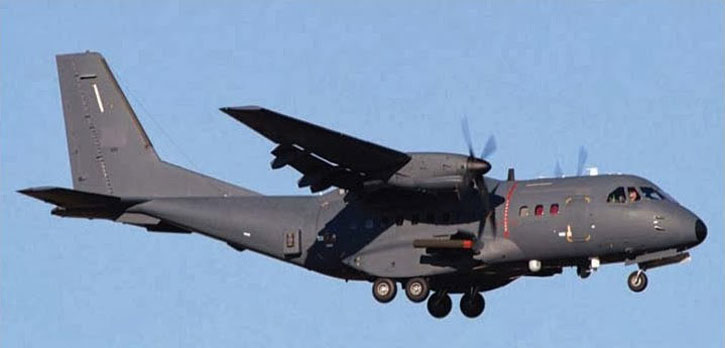
    the CN-235 CN processed by ATK-235 Gunship to the Jordanian Air Force. Note the weapons pylon on the side and ECM installation on the aircraft tail. The photo has been taken last October at Meachem International Airport in Fort Worth, Texas.
    the CN-235 CN processed by ATK-235 Gunship to the Jordanian Air Force. Note the weapons pylon on the side and ECM installation on the aircraft tail. The photo has been taken last October at Meachem International Airport in Fort Worth, Texas.

    The APKWS modifies standard unguided 2.75-inch rockets with a semi-active laser guidance section, to transform standard rockets currently used in the Jordanian fleet into low-cost, precision guided munitions.

    Currently employed from U.S. Navy MH-60 Seahawk and Marine Corps UH/AH-1 Light Attack helicopters, APKWS has been successfully demonstrated from a variety of fixed wing platforms capable of firing the weapon in comparable flight regimes.

    In collaboration with KADDB, ATK developed and provided the system integration and aircraft modifications to turn a CN-235 cargo plane into a multi-mission gunship. Modifications included the installation of an electro-optical targeting system, a laser designator, aircraft self-protection equipment, a synthetic aperture radar and an armaments capability that provides sustained and precise firepower in a variety of scenarios using Hellfire laser-guided missiles, 2.75-inch rockets, and a side-mounted M230 link-fed 30mm chain gun. The ATK-supplied gun is controlled by the fire-control system, automatically linking the gun’s aim point to the selected target of interest, as illuminated by the mission operators using the laser designator. These capabilities are integrated with and controlled by ATK’s Mission System that provides both day and night reconnaissance and fire control capabilities, and the ability to acquire, monitor and track items of interest.

    ATK and KADDB began the U.S.-based flight and gun test program in the fall of 2013. The comprehensive test program validate the performance of the gunship and performed the system checkouts. Testing included a full suite of aircraft flying qualities, sensor and weapons testing, with accuracy validation completed in March 2014.

    CN-235 gunship modified by ATK for the Royal Jordanian Air Force seen landing at
    CN-235 gunship modified by ATK for the Royal Jordanian Air Force seen landing at Meachem airfield, Ft Worth Texas.

    Cyber Intelligence Report – May 1, 2014

    cyber_report

    Israel

    Developments in IDF cyber campaign for officials

    The Israeli Defense Force (IDF) exposed its in-house newsfeed, which is published through Ynet. The site is referred as “inet” and operated under the intelligence army unit for over a year and a half. The goal is to provide online strategic security updates to the Prime Minister, Defense Minister, Chief of General Staff, and several hundred more authorized personnel. The site supplies unclassified information and live video surveillance cameras and satellites. An example for “inet” was Operation Full Disclosure, were visitors received live and developing updates during the operation, long before publication occurred to the general media.

    It has been exposed that attacks had been made against the IDF cyber war room and the IDF. Apparently in the last year, a tank and an F-16 were infected by random malware. However, the cyber-attack was never confirmed by another source, news agency, or the military. Colonel Ronen Schneider, Head of the C4I Department, stated on the C4I military base that IDF computers in tanks are exposed to cyber-attacks like any other computer; therefore, the IDF is planning to open a cyber body in order to defend on the land branch weapons as well.

    Revelations about secret Israeli cyber unit, S-74

    A month after #OpIsrael began, revelations about the power of Israel’s cyber security revealed a secret unit in the Israeli Security Agency (Shabak), referred to as the S-74 unit. S-47 tracks movements of Anonymous worldwide and prevents cyber-attacks from disrupting the system before they occur by performing operations in networks and computers worldwide and collecting data this way. An S-74 member explained: “we follow networks around the world closely and collect intelligence through HUMINT and SIGINT.” Further, staff of S-74 run through constant simulations to prevent real time attacks, citing timing is critical. Simulations and research were an essential part of preparing for the #OpIsrael attacks. Because of the quantity of attacks, it is difficult to diagnosis how real the threat is; however, the Shabak has the capabilities to test and analyze all invading disruptions. The unit developed “tools to identify anomalous networks, abnormal movements, and to isolate and contain them,” the Shabak source explained. He adds that they provide information to CEOs for them to increase cyber security, such as the Israel Railways office with safe measurements in place already. Yet, this level of cyber intelligence has demonstrated to be essential, as the S-74 unit was accredited for providing the information necessary to kill senior Hamas operative Hamza Abu Aljeha in Jenin.

    USA

    Heartbleed bug takes general public by storm

    Finnish computer experts discovered a crucial security hole in the encrypting software OpenSSL, referred to as the Heartbleed bug. The National Security Agency (NSA) revealed prior knowledge to the bug for two years. OpenSSL is used by two thirds of all Internet browsers and is supposed to make passwords and email contents unreadable for third parties. The Heartbleed bug deceives servers into draining data from its memory, giving hackers (aware of the vulnerability) access to sensitive information such as credit card numbers, email contents, and passwords. Heartbleed was introduced as part of an upgrade in 2011, which allowed criminals to disguise themselves as another website to acquire data. Antti Karjalainen, one of the IT experts who found the hole, explained: “They are used for proving that you are who you really say you are. So this was potentially the worst vulnerability in the history of the Internet.” Affected platforms include Google, Facebook, Yahoo, Flickr, Twitter and Tumblr. Facebook reported a spike in password changes in response to the bug, while Google and Yahoo declined to comment, though it appears major companies took the threat extremely seriously. Two-factor authentication, forcing users to have two separate pieces of confirmation, is recommended to rid of Heartbleed and other similar bugs, while password management apps have had a surge in response to the bug. NSA defended its position by not revealing the bug to the public in order to examine and explore its vulnerabilities and see if significant risk could occur through an adversary group. “Too little transparency and citizens can lose faith in their government and institutions, while exposing too much can make it impossible to collect the intelligence we need to protect the name. We weigh these considerations through a deliberate process that is biased toward responsibility, disclosing the vulnerability, and by sharing… we want everyone to understand what is at stake,” NSA spokesperson declared. It appears Heartbleed has begun a transition in the general public’s response to its own cyber security as well as the American government exploiting major flaws for intelligence purposes.

    FBI informant related to campaign of cyber-attacks against foreign countries

    Former Anonymous member and now informant working for the FBI, Hector Xavier Monsegur alias “Sabu,” was shown related to cyber-attack campaigns conducted in 2012 targeting foreign websites, after his arrest speculating the FBI used him to gather data on foreign countries. According to the New York Times, documents revealed Monsegur’s involvement in targeting foreign websites hosted in Brazil, Turkey, Iran, Syria, and Pakistan, as well as government websites such as the Polish Embassy in Britain. Monsegur extracted bank records, login information, etc. and upload the information to a FBI server. He received assistance from other members of Anonymous by informing them of weaknesses in the foreign websites. According to court documents, to conduct these cyber espionage attacks, Monsegur exploited hosted software vulnerabilities and extracted data in over 2,000 foreign websites, which was then forwarded to a server controlled by the FBI. Monsegur, who is one of the founders of LulzSec (an affiliate to Anonymous), was first arrested by the FBI on June 7, 2011, and rather than sent to prison and abandoning his daughter, he agreed to work as an informant for the FBI against Anonymous and LulzSec. Though the FBI has taken no credit in the attacks, it is not surprising to see cooperation between government agencies and hackers, but in reality, many governments use hackers to conduct cyber operations against other hacker organisation or foreign governments to gather intelligence. These cyber operations are commonly referred to as “an offensive cyber policy.” 

    Hagel urges trilateral work for threat assessment, cybersecurity

    During his first meeting with Canadian Defense Minister and Mexico’s Secretary of National Defense and Naval Secretary, Defense Secretary Chuck Hagel stated: “Cybersecurity is another common challenge that knows no borders…. Each U.S. defense institution works individually to address potential cyber threats and the Defense Department has worked to elevate the importance of cybersecurity in the National Security Strategy.” He noted, “While our defense institutions do not have the lead in our respective countries for cybersecurity, we all share a common interest in [protecting] military communications.”  He proposed cooperation in order to establish a cyber working group to identify potential opportunities to share best practices and lessons learned.

    Russia

    U.S. scared of Russian cyber-attack against financial system

    It is reported that American authorities fear cyber-attacks from Russia hackers due to the implementation of new sanctions against the country. U.S. officials and security experts explained that malicious attempts of interference in the system of banks and other companies in the U.S. are to be expected in response to Western sanctions. However, the Financial Services Roundtable organization is confident these actions on the part of Russia are expected to be background of the conflict, which was aroused by recent political inconsistency between Ukraine and Russia.

    Middle East

    Saudi Arabia ranks second in Gulf for exposure to cyber attacks

    A report by Kaspersky Lab, recently concluded among Middle Eastern countries, the United Arab Emirates came first in exposure to cyber-attacks with 38, followed by Saudi Arabia with 29% rate. Egypt came third with 10%, followed by Qatar with 9.5%, and Kuwait, at just over 6%. Less than 1% of financial attacks in 2013 targeted the region, which were mostly launched in a bid to obtain usernames, passwords, and credit card details. Attackers targeted e-mails potentially sent by official government bodies, such as banks, in order to receive details, the report explained.

    Iran calls for broader int’l cooperation in campaign against cyber crimes

    Head of Iran’s Cyber Police (FATA) General Seyed Kamal Hadianfar recently said in meeting with the representative of the UN Office on Drugs and Crime (NODC) to Tehran, Leik Boonwaat, there is a collective need globally to prevent the spread of cyber-crimes. During the meeting, General Hadianfar stated: “Effective international cooperation is an important and determining factor in prosecuting and confronting cyber-crimes.” For his part, Boonwaat vowed the UNODC would seriously pursue a campaign against cyber-crimes in Iran. Eight regional countries, representatives of Interpol and the NODC, and Iran’s Cyber Police chief took part in the conference.

    SEA attacks RSA conference

    The RSA conference website was the next target for the Syrian Electronic Army (SEA). SEA chose the RSA conference because of an uploaded video depicting methods to prevent cyber-attacks from SEA, presented by Ira Winkler. In the video, Winkler discussed rumors of previous members from SEA and stated the cyber-attacks are “low tech” attempts, calling SEA cockroaches of the Internet. SEA defaced the website with the following message: “Dear Ira winkler, Do you think you are funny? Do you think you are secure? You are NOT….” Winkler, in response to the defacement, blogged that the SEA was unable to literally breach the RSA conference website or the hosting service, but conducted a phishing attack against the DNS service company the hosting service uses. Nevertheless, SEA has not been deterred and continues to threaten Winkler and the RSA conference.

    China and APAC

    China spying operation against Australian Parliament

    According to an Australian newspaper, in 2011 a cyber-attack occurred on the Australian parliamentary computer network, causing weaknesses allowing the Chinese intelligence services to gain access to Australian parliamentary information. The computer network of the Australian Parliament is a private network containing emails and unclassified documents used by federal lawmakers. It can however sometimes contain sensitive discussions between MPs. By having access to the network, China gathered significant information about the political and social links of and to the Australian leaders. Indeed, different intelligence agencies believe China intends to use this information to establish a map with Australian relations. Australia is one of the top countries for communication intelligence and cyber security. However, it seems they continue to have a weakness in national cyber security. For China, this cyber spying operation is just another major cyber spying campaign conducted by the Chinese government and state sponsored hacking groups.

    Europe

    UK: A new chief to lead British communication intelligence agency

    Robert Hannigan, a senior British civil servant was chosen to be the next chief of the Government Communications Headquarters (GCHQ), which is the British intelligence agency responsible for SIGNIT, Internet surveillance, and cryptanalysis. His appointment was announced last week, and he will begin in August, 2014. He joined the civil service after working in the private sector and held several government positions, such as Director of Communications for the Northern Ireland Office; Head of Security, Intelligence, and Resilience at the British Cabinet Office; and finally moved to the Foreign and Commonwealth Office. By choosing Hannigan, the British government is enlisting change. The future head of the GCHQ declared that it was a “privilege” to be asked to lead GCHQ. Like the MI5 and MI6, GCHQ’s mission is to ensure the security of the United Kingdom. Its challenges include counter terrorism, drug traffic, cybercrime, and countering cyber spying activities. The GCHQ today is the second biggest communication intelligence agency after the American NSA with whom they work in close collaboration.

    UK costs of preventing cyber-attacks increase

    The cost of preventing cyber-attacks has risen, even though the UK has decreased the scale of attacks in the recent year. A major scale on a small organization can range from £65,000 to £115,000 and for a large organization between £600,000 and £1.15 million. Although large scale attacks have been reduced, the cost of maintaining the security has risen significantly. The survey conducted depicted a rise in attacks for smaller organizations as opposed to larger ones.

    (ISC)2 launches new European qualification

    A major problem for information security today is the inability countries face in fighting cybercrime as a worldwide unit. Because the crime scenes are so broad, (ISC)2 is aware of collaboration in all aspects of security, including technology, analytics, law enforcement, and business. The CCFP certificate has so far been available in the US and South Korea; however, it took  more time for it to adapt in the EU, due to the law-related disparities among countries. The addition of a new certificate is a sign that cyber forensics is maturing into a serious discipline, separated from fields like data management and systems security. The applicants must hold a BA degree or regional equivalent and have at least three years of cumulative paid, full-time, professional experience in digital forensics or IT security and will be tested in six (ISC)2 common body of knowledge (CBK) domains: legal and ethical principles, investigations, forensic science, digital forensics, application forensics, and hybrid and emerging technologies. The first exam took place on April 30 at Pearson VUE test centers in the UK.

    DARKNET

    New cyber search engine for buying illegal products

    The black market upgraded to a new search engine called “Grams.” The new dark website: (http://grams7enufi7jmdl.onion), allows users to buy illegal drugs, guns, fake IDs, or other contraband items online. The attraction of “Grams,” as opposed to other search engines on the darknet, is its similarity to Google. “Grams” enables users to type in requested data through a search bar, were results appear in a matter of minutes directing the user to a series of possible links. The new site joins a long list of many search engines: Agora, BlackBank, C9, Evolution, Mr. Nice Guy, Pandora, The Pirate Market, and SilkRoad2. The“Grams” creator, who refers to himself as Gramsadmin, wrote on Reddit: “I am working on the algorithm so it is a lot like google’s it will have a scoring system based how long the listing has been up, how many transactions, how many good reviews. That way you will see the best listing first. I am going to add a filter market this week so a use can search only the markets they have accounts for.” It can be concluded that “Grams” is meant to provide user convenience and improve web surfing experience in the growing darknet.

    inss150About the Cyber Intelligence Report:

    This document was prepared by The Institute for National Security Studies (INSS) – Israel and The Cyber Security Forum Initiative (CSFI) – USA to create better cyber situational awareness (Cyber SA) of the nature and scope of threats and hazards to national security worldwide in the domains of cyberspace and open source intelligence. It is provided to Federal, State, Local, Tribal, Territorial and private sector officials to aid in the identification and development of appropriate actions, priorities, and follow-on measures. This product may contain U.S. person information that has been deemed necessary for the intended recipient to understand, assess, or act on the information provided. It should be handled in accordance with the recipient’s intelligence oversight and/or information handling procedures. Some content may be copyrighted. These materials, including copyrighted materials, are intended for “fair use” as permitted under Title 17, Section 107 of the United States Code (“The Copyright Law”). Use of copyrighted material for unauthorized purposes requires permission from the copyright owner. Any feedback regarding this report or requests for changes to the distribution list should be directed to the Open Source Enterprise via unclassified e-mail at: [email protected]. CSFI and the INSS would like to thank the Cyber Intelligence Analysts who worked on collecting and summarizing this report.


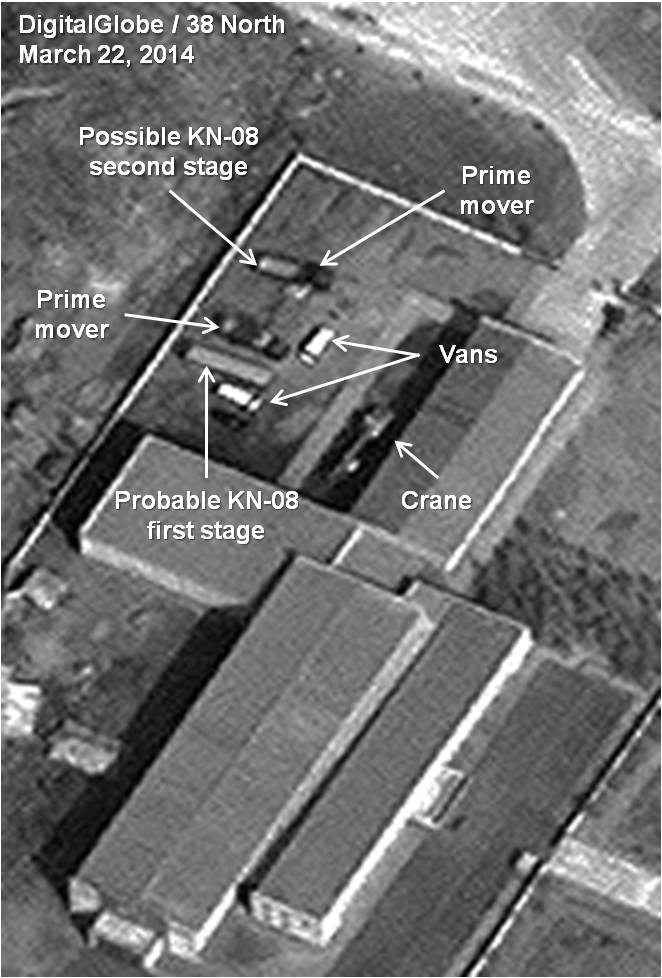
    Satellite imagery indicates progress in North Korean KN08 ballistic missile

    Probable KN-08 stages and vehicles prior to movement to the test stand. Photo: Digital Globe via 38North.
    Probable KN-08 stages and vehicles prior to movement to the test stand. Photo: Digital Globe via 38North.
    Probable KN-08 stages and vehicles prior to movement to the test stand. Photo: Digital Globe via 38North.

    Recent commercial satellite imagery indicates that North Korea is conducting a number of significant activities at the Sohae Satellite Launching Station (“Tongchang-ri”) related to the development of larger space launch vehicles (SLVs) and long-range ballistic missiles. 38North reports. Click on the images to access the larger versions shown on the 38North website:

    One and maybe more engine tests of what is probably the first stage of a KN-08 road-mobile intercontinental ballistic missile (ICBM) were conducted in late March/early April 2014. With this latest activity, three KN-08 rocket engine test series have been identified for the first and possibly second stages dating back to mid 2013. As this effort progresses, the next technically logical step in the missile’s development would be a flight test of the entire system.

    Satellite images showing the launch pad before and after a possible test of the KN08 engine in March-April 2014. The next logical phase is a test flight of the entire system, 38North predicts. Photo: Digital Globe, Airbus Defense & Space via 38North
    Satellite images showing the launch pad before and after a possible test of the KN-08 rocket engine in March-April 2014. The next logical phase is a test flight of the entire system, 38North predicts. Photo: Digital Globe, Airbus Defense & Space via 38North

    Continued modification of the gantry previously used to launch the Unha SLV intended to enable it to launch larger rockets of up to 50 meters in height. Construction may not be completed until early summer, effectively preventing a launch from the facility in the meantime.
    New construction of what appears to be a circular structure with a diameter of about 40 meters and multiple interior walls. The purpose of the project—which has progressed rapidly over the past month, indicating a high priority — remains unclear, although the possibility that it is a new launch pad cannot be ruled out.

    The report on the engine testing comes a week after the 38North reported heightened activities at the North’s nuclear test site at Punggye-ri, indicating it was ready to conduct a fourth nuclear test.

    The KN-08 missile currently in development in North Korea has already appeared in military displays but has yet to be tested in flight. It is believed to have a range of more than 10,000 km (6,000 miles).

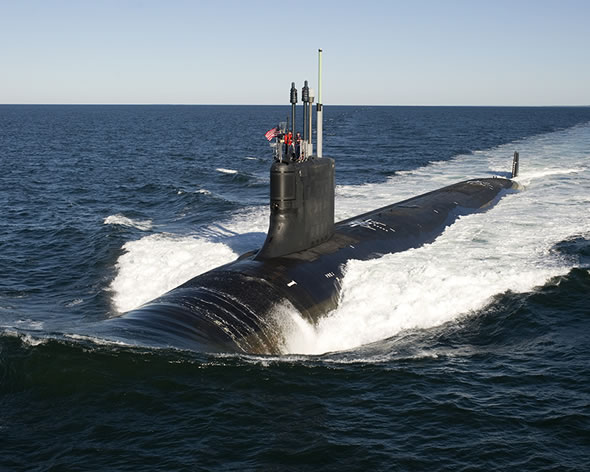
    U.S. Navy orders Block IV Virginia Class submarines worth $17 billion

    The U.S. Navy awarded General Dynamics Electric Boats a record $17.645 billion contract today, Funding the construction of 10 new SSN 774 Virginia-class Block IV nuclear-powered attack submarines.

    “The Block IV award is the largest shipbuilding contract in US Navy history in terms of total dollar value,” said Rear Adm. Dave Johnson, program executive officer for submarines at Naval Sea Systems Command (NAVSEA). “The new contract would result in additional reductions in procurement costs and will also lower operating costs.”He added.

    “The Navy and shipbuilders worked together to produce a contract that is both fair to the Navy and industry,” Johnson said. “This contract lowers the per-ship cost compared to Block III.” Johnson said the contract would also reduce the number of major maintenance visits for the submarines to three from four, which meant that each of the new subs would be able to carry out 15 full-length deployments instead of 14.

    “With the decrease in cost and the increase in capability, we are essentially getting more for less,” he said.

    The Navy is already operating 10 Virginia-class submarines, with eight more submarines from the third block under contract.

    The order secures submarine building work at the prime contractor General Dynamics Electric Boat and chief subcontractor Huntington Ingalls Newport News Shipbuilding for the next four years, at a pace of two submarines per year. Each yard will deliver one sub per year.

    And the largest number of boats ordered to date in a single contract block. The Block IV award covers hull numbers SSN 792 through SSN 801. None of the ships have yet been named. SSN 792 is funded in fiscal 2014. Construction of SSN 792, Electric Boat said, will begin May 1. SSN 801 is scheduled to be delivered to the fleet in 2023.

    Ten Virginia-class submarines already have been delivered and are in service, while another eight are under construction or on order. The North Dakota, first of the Block III group, is to be delivered this summer.

    Each submarine displaces 7,800 tons submerged, with a hull length of 377 feet and diameter of 34 feet. They are listed as “capable” of speeds greater than 25 knots with a diving depth greater than 800 feet, while carrying Mark 48 advanced capability torpedoes, Tomahawk land-attack missiles and unmanned underwater vehicles.

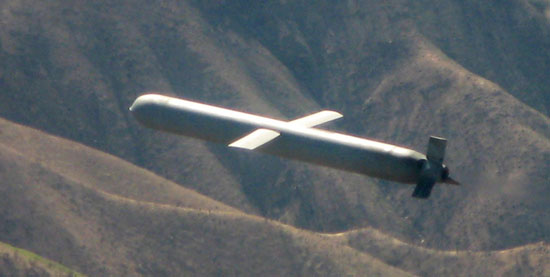
    Raytheon tests new RF targeting system for the Tomahawk cruise missile

    The Tomahawk Block IV missile will be able to engage moving targets by tracking them via a new ESM seeker. Photo: Raytheon

    Raytheon Company successfully completed a passive seeker test designed for a Tomahawk Block IV cruise missile using company-funded independent research and development investment. The captive flight test, using a modified Tomahawk Block IV missile nose cone, demonstrated that Raytheon’s advanced, next-generation; multi-function processor can enable the cruise missile to navigate to and track moving targets emitting radio frequency signals.

    For the test, the nosecone of a Tomahawk Block IV missile was equipped with passive antennas integrated with Raytheon’s new modular, multi-mode processor, and fitted to a T-39 aircraft. Flying at subsonic speed and at varying altitudes, the aircraft simulated a Tomahawk flight regime. The passive seeker and multi-function processor successfully received numerous electronic signals from tactical targets in a complex, high density electromagnetic environment.

    “Completion of this test is a significant milestone in Raytheon’s effort to quickly and affordably modernize this already advanced weapon for naval warfighters,” said Mike Jarrett, Raytheon Air Warfare Systems vice president. “We have assessed our company-funded multi-mission processor at Technical Readiness Level 6, enabling it to move to the engineering, manufacturing and development phase. Besides Tomahawk, the processor could be used in other sophisticated weapon systems.”

    A Raytheon-funded active seeker test with the company’s new processor inside a Tomahawk nosecone is planned for early next year. That event will demonstrate the processor’s ability to broadcast active radar as well as passively receive target electromagnetic information – a critical step in enabling the missile to strike moving targets on land and at sea.

    With a range of approximately 1,000 statute miles, the Tomahawk Block IV missile is a surface- and submarine-launched precision strike stand-off weapon. Tomahawk is designed for long-range precision strike missions against high-value and heavily defended stationary targets. The new targeting system will extend the weapon’s capability to engage moving targets.

    More than 2,000 Tomahawks have been employed in combat. More than 500 Tomahawk flight and production validation tests have been completed. The missile is integrated on all major U.S. surface combatants, as well as U.S. and U.K. sub-surface platforms, including the Los Angeles, Virginia, Ohio, Astute and Trafalgar class submarines.

    Counter-IED techniques to be demonstrated at the Counter Terror Expo in London this week

    On the battlefield, in the public transport arena and within the urban environment, the threat from Improvised Explosive Devices (IEDs) remains potent. Advanced threat detection methods, threat handling techniques and threat containment solutions are helping to mitigate the danger inherent in safe IED detection and disposal.

    Stay tuned for the upcoming IED - Beyond Afghanistan' report, soon available exclusively to Defense-Update members. (Click to join)
    Stay tuned for the upcoming IED – Beyond Afghanistan’ report, soon available exclusively to Defense-Update members. (Click on photo to join)

    “Operational forces are so busy dealing with current operations that planning for the future and looking at all the new technology and our adversaries’ TTP (tactics, techniques and procedures) ends up too low a priority,” says Bob Shaw, a director at Optimal Risk, acting as lead organiser of the C-IED Demonstration Zone at the upcoming Counter Terror Expo taking place this week in London, UK. With the nature of the threat evolving all the time, Counter Terror Expo 2014 will this year incorporate a C-IED Demonstration Zone dedicated to showcasing the latest developments from some of the leading companies working in this critical area. Just how critical was confirmed only recently by news reports that the republican terror alliance known as the new IRA has claimed responsibility, using a codeword confirmed by Scotland Yard, for a series of some seven separate parcel bombs sent to military careers offices across England.

    As part of his role within the C-IED Zone, Bob will be providing a live commentary on six different scenarios that will be enacted over the course of the two days of the show. Covering the full spectrum of IED threats in all parts of the world, the scenarios will feature some of the latest equipment available.

    Examples of the operations that will be featured in the scenarios include:

    Clearing landmines – important not only from a humanitarian point of view but because mines can be recycled by terrorists. Mines contain high grade military explosives, so IEDS made from them are particularly destructive and can fragment and penetrate armoured vehicles.

    Conventional ordnance disposal – for example, anything dropped from a plane. The technology and equipment required for more traditional bombs, like those used in WWII are still required, as you never know when a bomb might be constructed out of old equipment, using old techniques, by an organisation operating with limited funds.

    High Risk Search – This involves a Royal Engineer search team, in conjunction with an IEDD operator, isolating an area – possibly whilst under enemy fire – to allow for the detection of IEDs. Using metal detectors that also have ground penetrating radar to detect changes in the soil, the searches can be done more accurately, avoiding the previous false alarms caused by seeding (where alarms are triggered by deliberately placed scrap metal decoys).

    Heavy IEDD Team – dealing with a Vehicle Born IED, where the car itself is the device, designed to attack major infrastructure, often in crowded market places, and possibly deployed in a suicide mission.

    Post Room – demonstrating the equipment used for dealing with a postal device, including the personal protection equipment used by an IEDD operator and the small disrupters designed for selective disruption, to minimise damage and maximise forensic exploitation of the device.

    Bomb Making Factories – highlighting the role of an Assault IEDD team entering an environment where terrorists are making producing IEDs (most likely to be in a domestic setting) and disposing of the devices whilst possibly finding themselves under armed attack.

    Among the organisations exhibiting their products and services within the C-IED Demonstration Zone will be Microdrones, a manufacturer of multirotor Unmanned Aerial Systems, Sentinor (formerly Becatech Systems) who specialise in tactical intrusion prevention and the securing of fixed infrastructure, Tactical Electronics demonstrating tactical camera systems and EOD equipment.

    defense-Update will attend the event and report live from the show.

    The C-IED Demonstration Zone is part of the free to attend exhibition. Visitors can register for their free exhibition pass at www.counterterrorexpo.com/register.

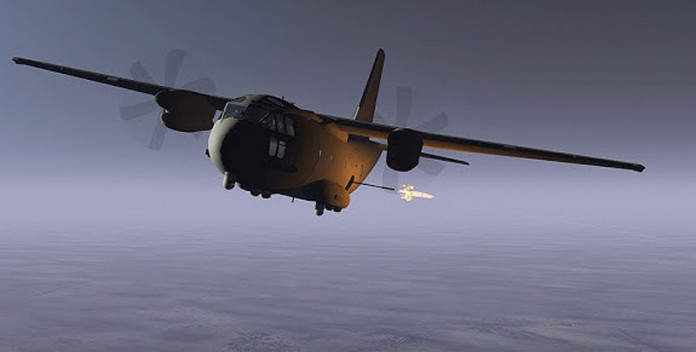
    MC-27J multi-mission tactical transport aircraft completes first flight

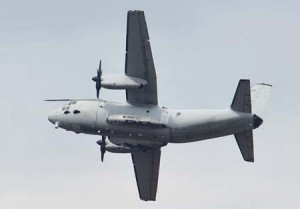
    Fully configured MC-27J multi-purpose tactical transport on its first flight from Turin, Italy. The gun pallet will be assembled in May and go through in-flight firing tests in June 2014. Photo: Alenia
    Fully configured MC-27J multi-purpose tactical transport on its first flight from Turin, Italy. The gun pallet will be assembled in May and go through in-flight firing tests in June 2014. Photo: Alenia

    Alenia Aermacchi has recently completed the first flight of a fully customized MC-27J multi-mission tactical transport aircraft at the company’s test flight center at Turin, Italy. The aircraft was built as a fully configured flight demonstrator of the MC-27J version developed with ATK. The new configuration was announced at the Farnborough 2012 airshow in the UK,

    The modified C-27J representing the MC-27J successfully completed a first phase of ground and flight tests in the spring of 2013. The current version is representing a fully configured platform. The installation of both the ATK developed modular roll-on/roll-off mission and weapon system, and a modified side door for the GAU-23 30 mm cannon installation will be completed in May. In June 2014 the aircraft will enter a new series of flight tests, part of which will test the GAU-23 30mm side-mounted cannon.

    The demonstrator aircraft was modified with an L-3 Wescam MX-15Di Electro-Optical and Infrared Turret that was mounted under the nose of the aircraft and is optimized for ISR (Intelligence, Surveillance and Reconnaissance) and SAR missions (Search and Rescue); and with Link-16 datalink software and hardware provisions that will prepare the aircraft for the ATK palletized
    mission system installation. Provisions for upgraded Selex ES communication system with crypto capability have been also set up.

    Last year the first tests series was conducted by ATK and Alenia Aermacchi personnel at the Eglin Air Force Base in Florida. The tests demonstrated the C-27J’s ability to host a self-contained, roll-on/roll-of gun pallet (RORO) using the GAU-23 30mm cannon in a side firing configuration. The modules were demonstrated the quickly transition from a cargo configuration to a weaponized configuration and the palletized cannon went through live fire tests, with the aircraft meeting or exceeding all test objectives, Alenia said.

    The MC-27J will provide customers with the ability to quickly go from a tactical cargo mission capability to a persistent multi-mission capability utilizing RORO pallets for the integrated mission system consoles, the GAU-23 cannon, and Precision Guided Munition weapon systems that enable C2/ISR architectures.

    Airbus invites partners to test mission payloads with Zephyr 8 ‘Pseudo-Satellite’

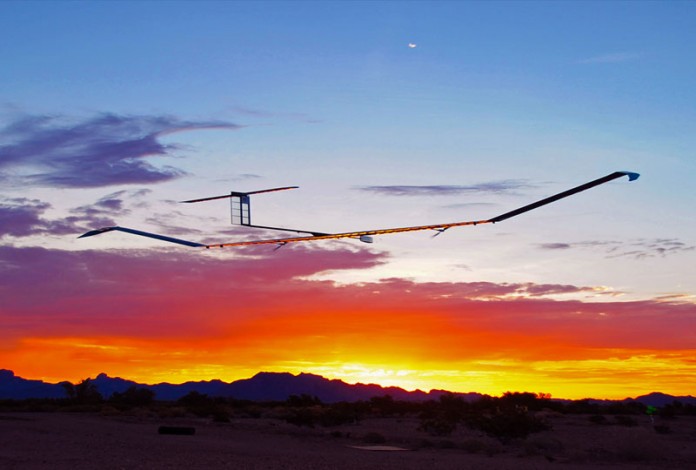
    Five months after the acquisition of Zephyr from QinetiQ, Zephyr 7 flown by Astrium (Airbus Defence and Space) at the Polygon Test Yuma, Arizona (USA) in August 2013. The company is working now on an enhanced Zephyr 8, that will be able to carry various mission payloads. Testing approvals for Zephyr 8 were received from test ranges in the USA, Australia and Europe. Photo: AIrbus Defence and Space

    Airbus Defence and Space has launched a High Altitude Pseudo Satellite (HAPS) program developing a commercial variant of the world record setting Zephyr 7 high altitude long endurance (HALE) solar-powered unmanned aerial vehicle. Zephyr 8 will develop the next generation platform, designed to operate at very high altitude, as a pseudo-satellite.

    Airbus’ subsidiary Astrium has been working on HAPS since 2008 in cooperation with the group’s defence subsidiary Cassidian and Innovation Works. For several years the program was managed as a cross-divisional nursery project, integrated a team of space and aviation specialists. In 2013 Astrium, now part of Airbus Defence and Space acquired the Zephyr assets from QinetiQ, integrating the Zephyr staff into Airbus’ HAPS organization.

    Astrium is now set to develop a High Altitude Pseudo-Satellite offering that will provide a valuable augmentation to its existing space based services for communications and remote sensing

    Running exclusively on solar power and flying at high altitudes above the weather and above commercial air traffic, Zephyr 8 will bridge the gap between satellites and UAVs. Unlike reconnaissance satellites that monitor the earth surface from low-earth orbit, these HAPS will be able to persist over an area of interest providing satellite-like communications and intelligence, surveillance and reconnaissance (ISR) services without interruption. Through these evaluations Airbus’ Zephyr team is ready to help customers design, build and operate the mission payloads, or provide the necessary interface to integrate those payloads in upcoming test flights.

    In 2010 the Zephyr 7 successfully achieved several world records, including the longest flight duration without refuelling (14 days), that was ten times longer than any other aircraft achieved before. It also flew at very high altitude, as high as 70,740 ft. The Zephyr 7 went through final testing in 2013, clearing the way for the next generation Zephyr 8.

    According to Jens Federhen, Airbus HAPS program manager the team is now focused on the follow-on Zephyr 8, that will be able to carry and test various mission payloads. “We are ready and looking forward to demonstrating its unique capabilities to customers, in flight” Federhen said.

    “Zephyr 7 was years ahead of any other HAPS system.” Zephyr Technical Director Chris Kelleher said, “We spent the last year analysing and designing exactly what we need to improve it”. Kelleher said Airbus has received permissions to fly Zephyr in test ranges in Australia, the USA and Europe.

    Five months after the acquisition of Zephyr from QinetiQ, Zephyr 7 flown by Astrium (Airbus Defence and Space) at the Polygon Test Yuma, Arizona (USA) in August 2013. The company is working now on an enhanced Zephyr 8, that will be able to carry various mission payloads. Testing approvals for Zephyr 8 were received from test ranges in the USA, Australia and Europe. Photo: AIrbus Defence and Space
    Five months after the acquisition of Zephyr from QinetiQ, Zephyr 7 flown by Astrium (Airbus Defence and Space) at the Polygon Test Yuma, Arizona (USA) in August 2013. The company is working now on an enhanced Zephyr 8, that will be able to carry various mission payloads. Testing approvals for Zephyr 8 were received from test ranges in the USA, Australia and Europe. Photo: Airbus Defence and Space

    U.S. Force in Afghanistan May Be Cut to Less Than 10,000 Troops

    The number of U.S. troops in Afghanistan may drop well below 10,000 – the minimum demanded by the U.S. military to train Afghan forces – as the longest war in American history winds down, the New York Times reports. The decision to consider a small force, possibly less than 5,000 U.S. troops, reflects a belief among White House officials that Afghan security forces have evolved into a robust enough force to contain a still-potent Taliban-led insurgency.

    Military leaders, including American General Joe Dunford, who heads U.S. and NATO forces in Afghanistan, has identified 10,000 soldiers as the minimum needed to help train and advise Afghan forces fighting the insurgency, arguing a smaller force would struggle to protect itself.

    The small U.S. force that would remain could focus on counter-terrorism or training operations. That belief, the officials say, is based partly on Afghanistan’s surprisingly smooth election, which has won international praise for its high turnout, estimated at 60 percent of 12 million eligible votes, and the failure of Taliban militants to stage high-profile attacks that day.

    There are now about 33,000 U.S. troops in Afghanistan, down from 100,000 in 2011, when troop numbers peaked a decade into a conflict originally intended to deny al Qaeda sanctuary in Afghanistan after the September 11, 2001, attacks.

    A U.S. force significantly below 10,000 might focus almost exclusively on counter-terrorism, tracking militants affiliated with a greatly weakened but resilient al Qaeda insurgency based on the Afghanistan-Pakistan border. With British and other foreign troops scheduled to depart in lock step with U.S. soldiers, the size of any residual U.S. force could add fuel to a debate in Washington over whether Taliban-led violence will intensify amid the vacuum left by Western forces, as some U.S. military officials expect.

    During a March visit to Washington, Dunford told lawmakers that without foreign soldiers supporting them, Afghan forces would begin to deteriorate “fairly quickly” in 2015. The Afghan air force, still several years away from being self-sufficient, will require even more assistance, he said.

    MBDA demonstrates firing MMP missiles from confined space

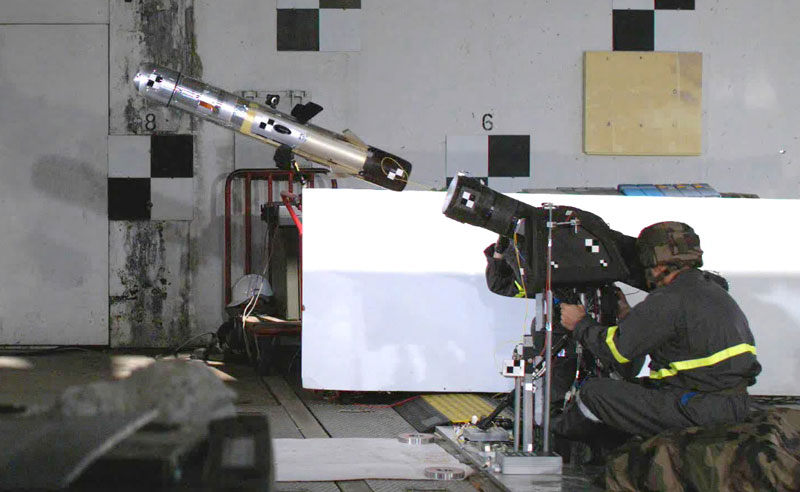
    MBDA has just demonstrated the firing capabilities of its MMP missile in an operational configuration. The launch tests were carried out in a confined space in the presence of the operator, using his firing post, and the team leader. Photo: MBDA
    MBDA has just demonstrated the firing capabilities of its MMP missile in an operational configuration. The  launch tests were carried out in a confined space in the presence of the  operator, using his firing post, and the team leader. Photo: MBDA
    MBDA has just demonstrated the firing capabilities of its MMP missile in an operational configuration. The
    launch tests were carried out in a confined space in the presence of the operator, using his firing post, and the team leader. Photo: MBDA

    MBDA has demonstrated the firing capabilities of its MMP missile in an operational configuration, fired from a confined space. The weapon’s warhead has also passed an important milestone, demonstrating its lethality against modern main battle tanks.

    The launch tests were carried out in a confined space in the presence of the operator, using his firing post, and the team leader. The new warhead developed for the missile has also passed an important milestone, as tests have confirmed its efficiency against targets representing latest generation Main Battle Tanks.

    Two rail firings were carried out at the beginning of the year at the French Direction Generale de l’Armement’s (DGA) battlefield technology centre in Bourges. The first firing validated the functioning of the lethality chain at maximum speed, a necessary step in order to replicate an impact under real conditions. A target equipped with a latest generation reactive module provided the principal challenge for the second firing. The warhead detonated the outer explosive reactive armour layer, and the main armour behind was pierced, thereby confirming the future weapon’s lethality chain.

    The tests was carried out in MBDA’s test tunnel at its Bourges facility in central France. The test confirmed the safety of use of the missile and its firing post. The launches were carried out under simulated hot and cold climatic conditions, representing different operational theatres.

    MMP is a new generation land combat missile based on the concept of ‘fire and forget’ with the facility for ‘man in the loop’ operation. This allows for the destruction of different ground targets with very high levels of precision at ranges of up to 4km while at the same time minimising the risk of collateral damage.

    The missile, which can be fired from a networked infantry firing post or from a vehicle turret, features a wide range of functions, one of which is firing on coordinates which allows non line of sight targets to be engaged.

    Wireless Terrorism On the Rise

    by Dr Dave Sloggett | Terrorists have long exploited the Internet as a means to try and attract recruits to their cause. Recent images have shown the last moments of an alleged British suicide bomber from Crawley in West Sussex preparing for his final mission in Syria where he is about to attack a prison in a vehicle that has been given additional armour plating on its front. Other images have also appeared of Britons who it is alleged have also been killed in fighting in Syria. While precise details are difficult to establish at this moment in time it is thought that at least seven British people have died fighting in Syria on behalf of those opposing the Assad regime.

    They are drawn into travelling into Syria by a host of sophisticated messages that are posed through social media. On-line magazines, chat rooms and the use of social media (such as Facebook) to project the images of the dreadful events that are occurring in places such as Syria provide the central grievance that motivates people to travel.

    The pictures, often containing graphic content, are transmitted into the bedrooms of vulnerable young men and women across Western Europe have seen the trickle of recruits making the journey to take part in Jihad turn into a stream. While that has yet to turn into a torrent it is generally agreed that upwards of 2,000 young men who previously lived in Western Europe have now made the journey through Turkey into Syria to fight alongside groups affiliated with Al Qaeda.

    Through social networks those already involved in Syria are actively projecting a message that it is “cool” to get involved in fighting against the regime in Damascus. It is, to quote one individual positing on his Facebook page, “five-star jihad” and he adds that it is also very relaxing”.

    Others have labelled it “Jihad with an iPad, hair gel and Kit Kats”. These messages are clearly designed to convey a sense that anyone becoming involved is not subject to the kind of privations that have previously been associated with the living conditions of jihadists who travelled to Pakistan and Afghanistan.

    While detecting specific trends in what is a chaotic environment is difficult one thing that is emerging is that those fighting alongside Al-Qaeda linked groups are also pushing the boundary of ways of using contemporary technologies in novel ways to help them on the battlefield. For example a recent image from the battlefield in Syria shows a rebel fighter using the carpentry application on an iPad to more accurately aim a mortar.

    This is not the first time that terrorists have resorted to exploiting current technologies to support their planning and execution of an attack. During the attack on Mumbai in November 2008 the terrorists made extensive use of mobile phones they picked up from those they had killed to look at how the events were being portrayed by the international media.

    It became a way of emboldening them to continue the fight over the sixty-two hours it lasted. Those involved knew through social media they were having a dramatic impact on the world stage.

    Throughout the attack the terrorists were also kept informed through satellite mobile telephony of any reporting in the media of how the authorities in India were mobilising their security forces to counter the attack.

    This gave the terrorists a command and control capability. From a safe house in Pakistan where they had originated reports derived from live broadcasts from major news channels that were giving almost saturation coverage to the events in Mumbai were filtered and key points fed onto the terrorists in Mumbai. This allowed them to remain ahead of some of the somewhat cumbersome response launched by the local and national government in India.

    A similar approach was also adopted during the recent Westgate attack in Nairobi in Kenya. This time the terrorists also used Wi-Fi enabled social media (Twitter) for the first time to communicate their intentions with the outside world.

    They also used it to broadcast imagery of the carnage that was occurring inside the shopping centre to increase their impact on the international media. Their imagery was highly graphic in its content.

    The perpetrators were clearly intent on using Wi-Fi networks to get the full scale of their actions out into the world’s media and onto their audiences. When the authorities tried to take down the networks the terrorists quickly switched to another account. That kind of flexibility and agility takes time and involves some pre-planning to make sure it can occur smoothly. Clearly what happened at Westgate was pre-planned quite carefully by those involved.

    Those civilians caught up in the attack also used social media to provide a running commentary of what was happening.

    The fact that the terrorists were asking questions of people they cornered in the shopping mall to ascertain if they were Muslims quickly became apparent. Others who were sheltering from the onslaught inside Westgate used their mobile phones to help them memorise key phrases and points of history from Islamic teaching.

    Using mobile phone technology and the availability of Wi-Fi networks in the Westgate Shopping Centre the terrorists were also able to monitor media coverage of the attack. This proved helpful on at least one occasion when a Kenyan Minister went on record to say that the mobilisation of their Special Forced would take time.

    This enabled the terrorists inside the Westgate Shopping Centre to take time to fortify their own defensive position. Similar public statements by senior people involved in the response to the Mumbai attacks confirm this use of Wi-Fi to enable terrorists to get inside the decision-making cycles operated by the authorities.

    This use of mobile technologies to access media reporting and also receive updates from remotely based commanders is just another application of contemporary technologies that terrorists have made.

    Their use of social media to help plan attacks has also been well known for some time. Secure email applications, with high levels of encryption, are technologies that groups such as Al Qaeda are all too familiar. But do they have other avenues they can explore?

    In the immediate aftermath of the attack in London on 7 July 2005 the Metropolitan Police ordered the suspension of mobile phone coverage over the capital in an attempt to prevent bombs potentially being detonated remotely.

    As it was the suicide bombers involved in that attack simply applied wires to a battery to physically detonate the devices. The remote detonation of Improvised Explosive Devices (IED) using mobile phone technologies is a well-known tactic that has been used by terrorists overseas. As a tactic it remains a major concern for the authorities in the west. But if terrorists cannot use mobile phones to trigger an explosion what about using Wi-Fi?

    Travel anywhere these days in a major city and the increasing availability and coverage of Wi-Fi networks is self-evident. For terrorists seeking to exploit such networks it would be important for them to conduct a reconnaissance of the target to ensure the coverage of the network was reliable.

    For the terrorists it would be more than unfortunate for them to have gone through all the planning just to find the reception of the Wi-Fi signals at a specific location was insufficient to allow them to remotely detonate a device.

    For the Police this extra means of potentially remotely detonating a device is another cause for concern. However closing down the multitude of Wi-Fi networks that could be available in a major metropolis is likely to be far more difficult that simply issuing an order for the mobile phones networks to be temporarily suspended.

    Of course there is another side to the argument. Having those caught up in the attack able to act as citizen journalists and send their own images through of what is happening does have its advantages to those trying to respond.

    This would be particularly helpful in the case of a marauding–firearms attack. Having instant access to images broadcast by those caught up in the attack would help the situational awareness of firearms teams trying to formulate a rapid response. Such attacks are often dynamic, as Mumbai showed, with gunmen moving onto new targets quickly, trying to stay ahead of the authorities trying to halt the situation. Deploying medical and fire teams into such an environment involves risks and anything that could minimise the dangers would be welcome.

    This all leads to a simple conclusion. Despite the risk the case for disabling the mobile phone or Wi-Fi networks in the event of a terrorist attack, like many things in life, is not clear. For those training and preparing to respond to the next major terrorist attack, wherever it may occur, it is just another factor they have to build into their planning and exercises.


    About the author:

    Dr Dave Sloggett is a provider of training to the Emergency Services fraternity and the MoD on the nature and direction of international terrorism. Dr Sloggett has over 40 years of experience in the international security sector. He is a speaker, author and researcher working in the field of counter terrorism. Historically Dr Sloggett led the teams implementing the ANPR systems and pioneering work in the e-Borders field. He delivers a range of lectures for all branches of the Emergency Services providing insights into the current trends and future direction of domestic and international terrorism. He is also a specialist in the CBRN field having written numerous papers on the threat from WMD for a range of publications to which he contributes. He also provides advice to the MoD and is a frequent visitor to theatres of conflict.

    Skunk Works and XTEND Simplify Multi-Drone Command

    0
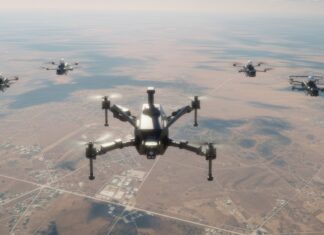
    Lockheed Martin Skunk Works® and XTEND have achieved a major milestone in JADC2 by integrating the XOS operating system with the MDCX™ autonomy platform. This technical breakthrough enables a single operator to simultaneously command multiple drone classes, eliminating the friction of mission handoffs. From "marsupial" drone deployments to operating in GPS-denied environments, explore how this collaboration is abbreviating the data-to-decision timeline and redefining autonomous mission execution.

    From Ukraine to Taiwan: The Global Race to Dominate the New Defense Tech Frontier

    0
    As traditional defense primes face mounting competition from agile “neoprimes” such as Anduril, Palantir and Helsing, the balance of innovation is shifting toward software-defined warfare and scalable, dual-use technologies, while global industry consolidation—marked by Boeing’s integration of Spirit AeroSystems and other strategic mergers—signals an intensified race to secure control over the defense technology value chain. Our Defense-Tech weekly report highlights these trends.

    Europe’s “Drone Wall”

    0
    In early October 2025, a coordinated wave of unmanned aerial system (UAS) incursions—widely attributed to Russia—targeted critical infrastructure across at least ten European nations. The unprecedented campaign exposed the fragility of Europe’s air defenses...

    Weekly Defense Update & Global Security Assessment

    0
    Executive Summary The past week (September 18-25, 2025) represents an inflection point where strategic defense concepts have transitioned from doctrine to tangible reality. An analysis of global events reveals four primary, interconnected trends shaping an...

    U.S. Air and Space Forces Push Next-Gen Programs at the AS&C 2025 Conference and...

    0
    At the 2025 Air, Space & Cyber Conference, U.S. Air Force and Space Force leaders unveiled major updates on next-generation fighters, bombers, unmanned systems, and space initiatives, highlighting both rapid innovation and critical readiness challenges as the services race to outpace global competitors. A short version is available here, with a more detailed version for subscribers.

    TADTE 2025: Reflecting Taiwan’s Strategic Themes

    0
    The Taipei Aerospace & Defense Technology Exhibition (TADTE) 2025 crystallized around four dominant strategic themes that collectively illustrate Taiwan's comprehensive approach to defense modernization amid escalating regional tensions. Based on a detailed report by Pleronix (available upon request). Includes a Podcast discussion on TADTE 2025's highlighting Taiwan's four strategic themes beyond the post's coverage.

    Iron Beam 450 Completes Testing, Soon to Join With Operational Air Defense Units

    0
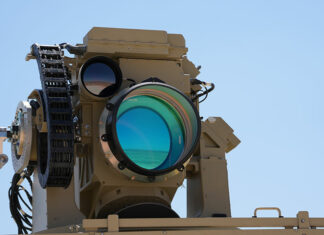
    Israel’s Iron Beam 450 high-power laser system has completed final testing, marking a major leap in air defense. Developed by Rafael, it offers precise, cost-effective interception of rockets, UAVs, and mortars, and is set for IDF deployment by 2025.