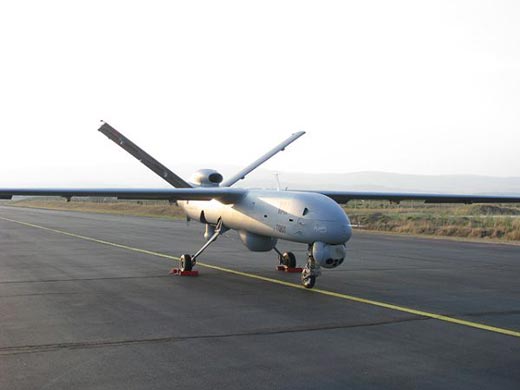
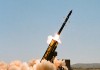
Turkish Aerospace Industries ANKA UAV Unmanned Aerial Vehicle. Photo: TAI
Turkey is ready to sell the new ANKA Medium Altitude Long Endurance (MALE) unmanned aerial vehicles to Egypt. Ankara has already approved a contract signed between with Egypt, for the transfer of six fast intervention vessels.
Egypt was one of the pioneers in unmanned aerial systems, fielding the Teledyne Ryan Model 324 Scarab high speed drone and SkyEye tactical UAVs in since the early 1980s. The addition of a MALE platform will fulfill the gap offering better persistence, improved imagery and multi-payload capacity. According to Ertem, other Middle East countries have also expressed interest in the Anka, as they prefer the Turkish product over U.S. or Israeli competitors.
Turkish and Egyptian officials have discussed military cooperation during the recent visit of Turkish Prime Minister Recep Tayyip Erdoğan to Cairo last week. According to Özcan Ertem , Vice President of Turkish Aerospace Industries (TAI) the prospects of selling the new Anka MALE UAV were discussed. He said the Turkish UAV is raising interest in the region, in Saudi Arabia and other North African countries, markets free from Israeli competition. Ertem said the Anka is currently being tested and certified with the flight testing campaign expected to be concluded in the spring.
According to Turkish sources, Turkey will also deliver to Egypt six multi-role tactical platform, MRTP-20 ‘fast-intervention crafts’, produced by Yonca-Onuk. Three boats will be constructed in Istanbul and the others in Egypt’s Alexandria shipyard using Turkish supplied kits.
During the CHAMP test the missile was pointed at a set of simulated targets, confirming that the missile could be controlled and timed while using a High-powered Microwave (HPM) system against multiple targets and locations. Photo: artist concept of the CHAMP weapon
The Boeing Company has successfully completed the first flight test of a counter-electronics missile carrying a high power microwave (HPM) payload designed to zap enemy electronic system. The program called Counter-electronics High-powered Microwave Advanced Missile Project (CHAMP) is run by the U.S. Air Force Research Laboratory at Kirtland AFB, N.M. The missile’s first flight test was conducted earlier this year at the Utah Test and Training Range at Hill Air Force Base. the tests did not include a live HPM payload. Under the three-year $38 million contract Boeing will provide five missiles, two of which will be integrated with HPM payloads provided by Ktech.
During the CHAMP test the missile was pointed at a set of simulated targets, confirming that the missile could be controlled and timed while using a High-powered Microwave (HPM) system against multiple targets and locations. Photo: artist concept of the CHAMP weapon
CHAMP is a nonlethal alternative to kinetic weapons that neutralizes electronic targets. It would allow the military to focus on these targets while minimizing or totally eliminating physical collateral damage. (Collateral damage to civilian electronic equipment could be excessive, depending on the target location, targeted spectrum bands and employment techniques). CHAMP is considered a cost effective alternative to current kinetic (explosive) weapons, that cannot penetrate hidden, underground targets. The HPM pulse can penetrate through metal elements leading into underground command centers, to damage and even destroy sensitive components in computers, power supplies or communications gear associated with the targeted systems.
During the test the missile was pointed at a set of simulated targets, confirming that the missile could be controlled and timed while using a High-powered Microwave (HPM) system against multiple targets and locations. The software used was identical to the software required for a vehicle with a fully integrated HPM system on board.
“It was as close to the real thing as we could get for this test,” said Keith Coleman, CHAMP program manager for Boeing Phantom Works. “This demonstration, which brings together the Air Force Research Laboratory’s directed energy technology and Boeing’s missile design, sets the stage for a new breed of nonlethal but highly effective weapon systems.”
For a future HPM weapon USAF planners are looking at a quick recharging payload device capable of delivering aimable multiple HPM bursts at different targets, a series of targets. Such payloads could be carried by cruise missiles or loitering platforms to maximize effect and suppression of enemy air defenses, command and control networks and national infrastructure, delivering military devastating effect at no collateral damage.
Boeing is developing CHAMP under a the three-year, $38 million joint capability technology demonstration program that includes ground and flight demonstrations that focus on technology integration risk reduction and military utility. Boeing received the contract in April 2009. As the prime contractor, airborne platform provider and system integrator. Ktech Corp. of Albuquerque, N.M. supplies the HPM source while Sandia National Laboratories provides the pulse power system under a separate contract with the Air Force Research Laboratory.
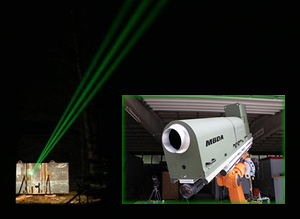
MBDA have tested a 10kW laser to demonstrate future C-RAM capability. Photos: MBDA
MBDA have tested a 10kW laser to demonstrate future C-RAM capability. Photos: MBDA
MBDA Germany successfully tested a 10kW laser illuminator designed for use with future Counter Rocket, Artillery, Mortar (C-RAM) laser weapon system. The laser evaluated in the recent test series was a 10kW illuminator matched with beam direction optics trough geometric coupling technology patented by MBDA Germany. The system enabled the laser to dwell for few seconds on a moving target, located more than two kilometers away while retaining a high quality beam. According to EADS announcement the system demonstrated tracking of dynamic objects and the effects on the object, performed over a distance of more than 2,300 m and an altitude differential of 1,000 m under real-life environmental conditions.
The successful tests by MBDA Germany have been conducted on behalf of the German Federal Office for Defence Technology and Procurement (BWB) at the latter’s WTD 52 testing site.
A laser weapon capable of engaging incoming rockets and mortars could offer an important improvement in the capability to protect forward operating bases. Yet, developing an operation system must overcome some significant technical challenges – the wide variety of threat types – high speed artillery munitions, small, low signature mortar munitions, and simultaneous threat posed by rocket salvos dictate target intercept at ranges beyond 1,000 meters. Operating at the speed of light, the laser weapon offers the optimal solution addressing different facets of the challenge with highly responsive, adaptive engagement process.
However, since countermeasures against RAM must be carried out within a few seconds, it is necessary to achieve high laser power and a high quality laser beam against a fast moving target at distances of between 1,000 m and 3,000 m. This is the only way to guarantee the protection of a field camp using such a laser weapon.
According to MBDA Germany this demonstration lays the groundwork for the development of a C- RAM laser weapon system. The program began in 2009 as part of a European Defence Agency (EDA) study. Following the recent demonstration, the team lead by MBDA Germany will conduct hardware integration and final selection of a platform for the laser weapon system, in close consultation with users and suppliers. MBDA Germany comprises LFK-Lenkflugkörpersysteme GmbH together with its subsidiaries (TDW and Bayern-Chemie).
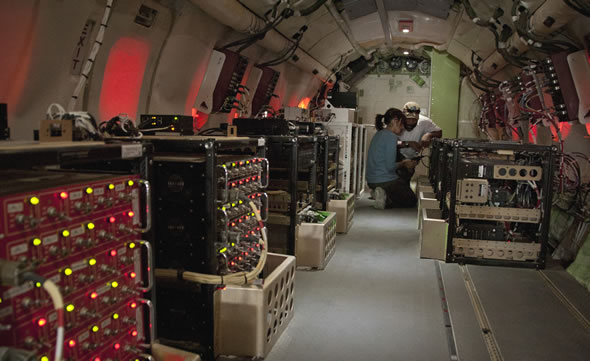
Carrie Premus (left), 451st Tactical Airborne Gateway hardware engineering contractor, and Reggie Green, 451st Tactical Airborne Gateway payload quality assurance contractor, operate communication equipment on a E-11 aircraft at Kandahar Airfield, Afghanistan, Aug. 22, 2011. The TAG Squadron conducts flying missions in support of 451st Air Expeditionary Wing operations. Photo: Senior Airman Corey Hook,
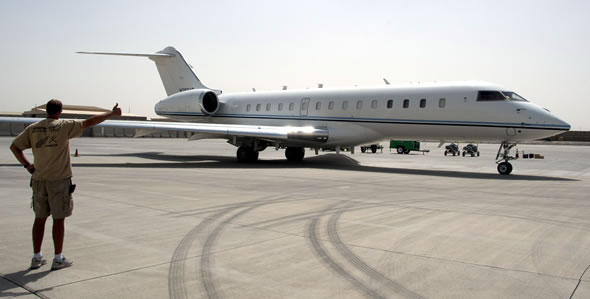
The U.S. Air Force has extended the deployment of two E11 Bombardier BD-700 Global Express executive jets operated by Northrop Grumman for operations in Afghanistan, serving as airborne communications nodes. The company was awarded an initial $18 million service contract in June, to deploy and operate the two aircraft to Kandahar, Afghanistan. This contract has now extended over five-month at an additional cost of $43 million. The Air Force plans to deploy three E-11 aircraft in Afghanistan, to be augmented by BACN installation on two Global hawk Block 20 unmanned aircraft deployed over the Afghan theater of operation. The company has deployed the prototype BACN in Afghanistan since 2008.
This Bombardier/Northrop Grumman E-11 carrying the BACN airborne communications relay bridge is operated from Kandahar airfield in Afghanistan by the U.S. Air Force 451st Air Expeditionary Wing. The current contract will also pay for the aircraft painting, as the leased executive jets are now formally owned by the Air Force. Photo: Senior Airman Corey Hook
The payload carried by the aircraft is the BACN, or Battlefield Airborne Communications Node – a system that bridges between different radio frequencies and “translates” among incompatible communications systems to enable information sharing and enhanced situational awareness. Northrop Grumman developed BACN under a $276 million Defense Microelectronics Activity contract as part of the Interim Gateway program, meeting urgent requirements operational need.
The system employs gateway manager algorithms and Internet protocols to support ground elements a consistent and reliable communications in all types of terrain, using different radio waveforms.
Carrie Premus (left), 451st Tactical Airborne Gateway hardware engineering contractor, and Reggie Green, 451st Tactical Airborne Gateway payload quality assurance contractor, operate communication equipment on a E-11 aircraft at Kandahar Airfield, Afghanistan, Aug. 22, 2011. The TAG Squadron conducts flying missions in support of 451st Air Expeditionary Wing operations. Photo: Senior Airman Corey Hook,
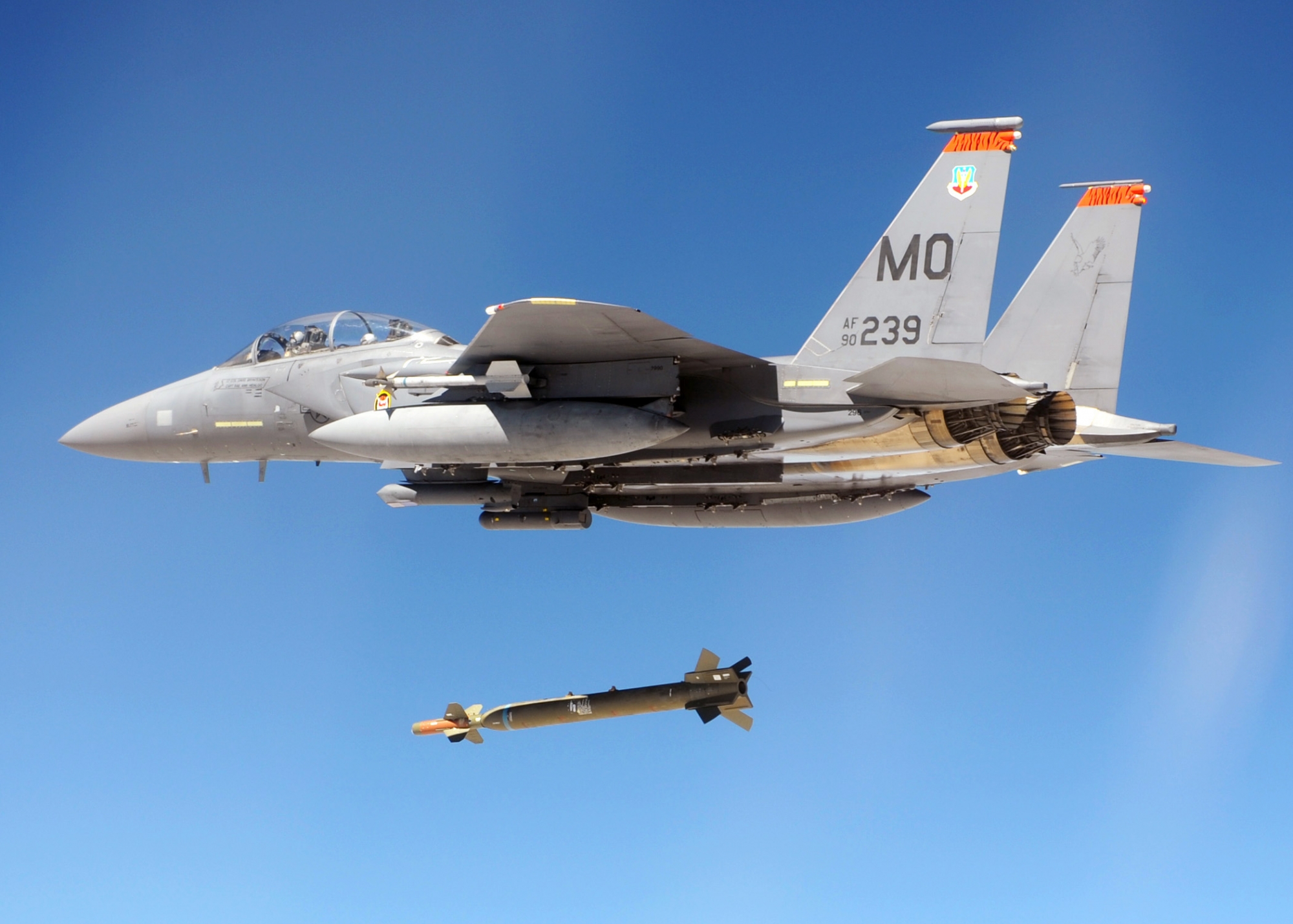
A Boeing F-15E drops a GBU-28 deep penetration bomb on a test flight.
A Boeing F-15E drops a GBU-28 deep penetration bomb on a test flight.
N.Y. Times: U.S. Finally Delivers GBU-28 Bunker-Busting Bombs to Israel
The U.S. has recently delivered deep penetration guided bombs to Israel, according to the New York Times quoting unidentified U.S. officials. In the past, Israel requested such weapons several times but delivery was halted due to political pressure. EGBU-28 weapons were already on the way to Israel two years ago but the shipment was diverted elsewhere. The EGBU-28/BLU-113 Hard Target Penetrator was first deployed during the First Gulf War in 1991 as a laser guided munition. The 4,400 pounds (2.2 tons) weapon can destroy reinforced concrete protected targets buried 30 meters in the ground. (Defense-Update)
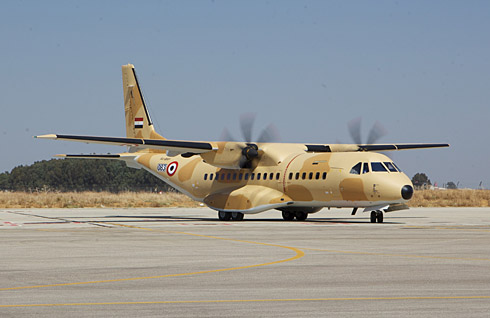
The first Airbus Military C295 was delivered today to the Egyptian Air Force. Photo: Airbus Military
Airbus Military Delivers First C295 Medium Transport to Egypt
September 23, 2011: The Egyptian Air Force (EAF) today has taken delivery of its first of three Airbus Military C295 transport aircraft ordered by the EAF in October 2010. The other two aircraft are to be delivered during the last quarter of 2011. The C295 is configured with standard equipment as well as the Cargo Handling and, Aerial Delivery system (CHADS). It can also be equipped for paratrooping and medical evacuation, and humanitarian relief missions. It can carry payloads of up to 9 tonnes, in standard cargo pallets, or 71 soldiers in transport missions, or be equipped with 50 paratroopers.
Turkish Aerospace Industries ANKA UAV Unmanned Aerial Vehicle. Photo: TAI
Turkey, Egypt Discuss Possible Export of Anka UAV
September 22, 2011: Turkey is offering Egypt its latest Anka Medium Altitude Long Endurance (MALE) unmanned aerial vehicles (UAV). Ankara has already approved a contract signed between with Egypt, for the transfer of six fast intervention vessels. (Defense-Update)
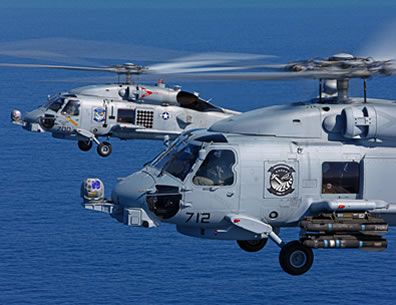
MH60R. Photo: US Navy
Qatar to Buy Six MH-60R Maritime helicopters
September 22, 2011: Qatar is positioned to become the second export customer for the MH-60R SEAHAWK Multi-Mission Helicopters, manufactured by Sikorsky Aircraft. The maritime helicopter is fitted with full mission system developed by Lockheed Martin. The estimated cost is $750 million. Earlier this year Australia selected the MH-60R for its next generation maritime /Anti-Submarine Warfare helicopter. 24 helicopters will be procured under the AU$3 billion Air 9000 Phase 8 program.
UAE to Buy Hellfire Missiles, Link 16 Datalinks
September 22, 2011: The UAE’s ‘Desert Falcons’ (F-16 Block 60) will receive the Multifunctional Information Distribution System/Low Volume Terminals (MIDS/LVT) LINK 16 Terminals enhancing communications between ground control and airborne fighters as well as among coalition air forces. 107 systems are to be delivered at a cost of $401 million. The U.S. also announced the sale of 500 Hellfire II missiles (AGM-114R3) to the UAE, seeking to modernize its missile inventory. The ‘Romeo’ is the latest version of the Hellfire II missile, equipped with multi-purpose warhead and improved field of regard for the laser seeker.
m119A 105mm howitzer. Photo: US Army
Saudi Arabia to Equip Three Artillery Regiments with U.S. Howitzers
September 21, 2011: Saudi Arabia is seeking to buy M777A2 lightweight, air-mobile howitzer guns from the U.S., three artillery battalions (53 guns) and associated target acquisition and fire locating radars, in an arms package worth about $886 million. (Defense-Update)
Rafael performed successful firing of the Spike ER missile, in compliance with Indian 3rd generation anti-tank missile procurement program. Photo: RAFAEL.
Rafael Fires Spike ER Missiles for Indian Evaluation
September 19, 2011: RAFAEL completed a successful test firing of three Spike ER multi-purpose air-to-surface missiles from an Israeli air force helicopter, qualifying the israeli company proposal for the Indian Air Forces’ 3rd Generation Anti-tank weapon program. The Indian Air Force can now proceed with the final selection between the two competitors, MBDA’s PARS3LR and RAFAEL’s Spike ER, to equip its Light Combat Helicopters (LCH). (Flight Global)
Elbit Systems won a $40 million contract to supply the IDF with automated Cardom SP mortars. Photo: Elbit Systems
Israel defense Forces to Deploy Additional Automated 120mm Mortars
September 18, 2011: Elbit Systems announced announced a $40 million contract award by the Israeli Ministry of Defense (IMOD), for the supply of self propelled 120mm Cardom mortars for the Israel Defense Forces (IDF) providing infantry and armored battalions an organic fire support capability. The system is manufactured by Elbit Systems’ subsidiary Soltam Systems Ltd., First units of the Cardom (IDF designation: Keshet) were initially delivered to the IDF in 2007 and have already participated in combat operations in Gaza in 2009. The current contract covers systems supplied over a period of four years.
Bahrain to Buy Wireless TOW 2 Missiles
September 14, 2011: Bahrain has requested to buy 44 TOW launcher vehicles fitted with launchers firing the RF-guided TOW-2A/B Missiles. The $53 million package includes 290 TOW 2A/B missiles of three types including BGM-71E-4B-RF (Radio Frequency TOW-2A), AERO-TOW-2B and BGM-71H-1RF Bunker Buster Missiles plus associated logistics.
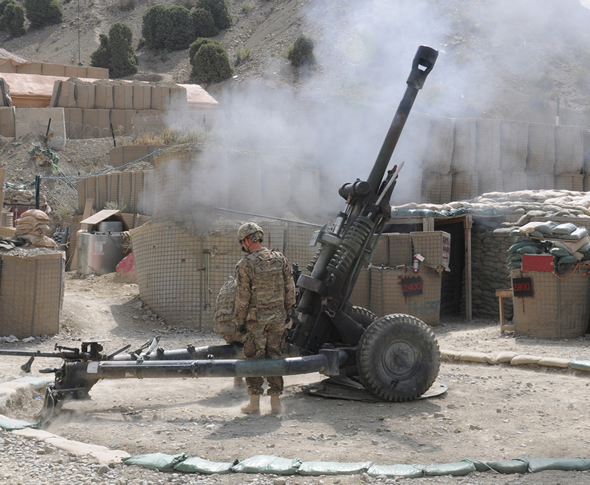
An M-777 155mm howitzer fires at a low ballistic trajectory in Afghanistan. Photo: U.S. Army
Saudi Arabia is seeking to equip three field artillery regiments, two will be equipped with advanced lightweight M777A2 towed howitzers and one with air-transportable M119As, both produced by BAE Systems. The three artillery battalions (53 guns) and associated target acquisition and fire locating radars, in an arms package worth about $886 million.
An M-777 155mm howitzer fires at a low ballistic trajectory in Afghanistan, as 3rd Platoon, Alpha Battery, 1st Battalion, 77th Field Artillery Regiment, 172nd Infantry Brigade, supported ISAF operations in Afghanistan, September 3, Photo by U.S. Army photo by Spc. Ken Scar, 7th MPAD
The package includes two regiments (36 guns) of M777A2 and one regiment equipped with17 M119As howitzers, each unit to be supported by with two TPQ-36 ‘Fire Finder’ radar systems. The units will also deploy with standard U.S. Army artillery C4I systems (Advanced Field Artillery Tactical Data Systems – AFATDS). The package will also include 19,440 rounds of ammunition, including 17,136 rounds of the M107 High Explosive (HE) rounds and 2,304 extended range, Rocket Assisted Projectiles (M549 RAPs). The package will also include 60 M1165A1 High Mobility Multipurpose Vehicles (HMMWVs), 120 M1151A1 HMMWVs, 252 M1152A1 HMMWVs, and export versions of the Single Channel Ground And Airborne Radio Systems (SINCGARS) supporting the C4I system.
Among the companies providing the hardware for this package are BAE Systems in the United Kingdom, the prime contractor for the howitzers, AM General, providing the vehicles and ITT Defense and Information Solutions providing the radios. Thales Raytheon Systems will deliver the radars. Other suppliers include Smith Detection, SRCTec, Northrop Grumman Corporation and General Dynamics C4 Systems.
M119A howitzer supports ISAF forces in Afghanistan. High trajectory fire is often employed in mountainous terrain, enabling the firing unit to be based in the valley where access is easier, but reach targets beyond the ridges surrounding it. Photo: U.S. Army
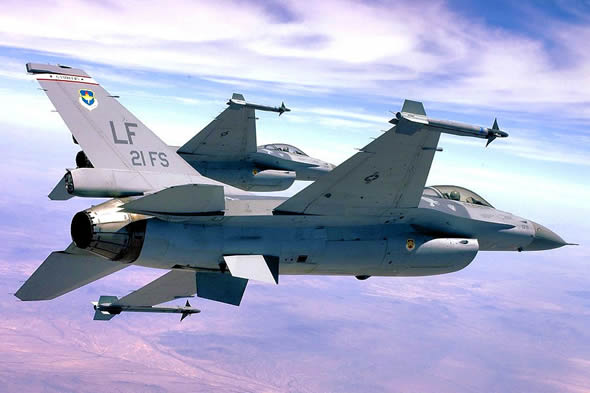
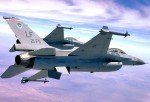
While formal request for the upgrade of Taiwan's F-16A/B (Block 20) fighters is still pending, According to the Defense Security Cooperation Agency (DSCA), the Economic and Cultural Representative Office of Taipei is seeking to sustain continued long-term support of its pilot training program, and logistics support for the 18 F-16 aircraft stationed with the 21st fighter squadron at Luke Air Force Base. Photo:
After dragging Taiwan’s request for 66 new F-16C/Ds for five years, the U.S. administration seems to agree to upgrade the island state’s 145 F-16A/B fighters for a hefty budget of up to US$5.3 Billion, reflecting an average cost of more than $36 million per aircraft. The package includes the integration of an unspecified AESA radar, helmet mounted cueing system (JHMCS) supporting AIM-9X air/air missiles and advanced electronic warfare and self-protection systems. Targeting pods and precision guided munitions will also enhance the fighters’ air/ground capability.
While formal request for the upgrade of Taiwan's F-16A/B (Block 20) fighters is still pending, According to the Defense Security Cooperation Agency (DSCA), the Economic and Cultural Representative Office of Taipei is seeking to sustain continued long-term support of its pilot training program, and logistics support for the 18 F-16 aircraft stationed with the 21st fighter squadron at Luke Air Force Base. Photo: taiwanairpower.org
The upgrade program includes 176 sets of Active Electronically Scanned Array (AESA) radars; Embedded Global Positioning System Inertial Navigation Systems (GPS_INS) and 128 Joint Helmet Mounted Cueing Systems (JHMCS) and Night Vision Goggles sets expanding the aircraft fighting envelope using all-aspect air/air and precision targeted air/ground weaponry. The suppliers of the AESA radar have yet to be announced, but previous reports named Northrop Grumman (SABR) and Raytheon (RACR) as possible suppliers.
For the air/air mission the U.S. is ready to deliver 140 AIM-9X Sidewinder missiles and support systems. Upgrades to the APX-113 Advanced Identification Friend or Foe (IFF) combined interrogator transponders and HAVE GLASS II which includes the ‘golden canopy’ derived from the F-22 Raptor and other treatments for radar and thermal signature reduction.
With the new upgrades, the U.S. offers a significant weapons package for the upgraded Viper, including GPS guided bombs (GBU-31v1 and GBU-38 JDAM), Laser JDAM (GBU-56) or GPS Enhanced Laser Guided Weapons (GBU-10 Enhanced Paveway II) and Enhanced Paveway III 200 pound laser guided bombs. Also included are CBU-105 sensor fused weapons.
Part of the upgrade will also include the modernization of the aircraft electronic warfare and self protection systems, to include the ALQ-213 Electronic Warfare Management systems. The package also includes upgrades to the islands’ 82 existing ALQ-184 Electronic countermeasures (ECM) pods, to incorporate Digital Radio Frequency Memory (DRFM) technology. Alternatively, the Pentagon offers new ECM pods (either AN/ALQ-211(V)9 Airborne Integrated Defensive Electronic Warfare Suites (AIDEWS) or AN/ALQ-131 pods, both delivered with DFRM).
Supporting precision strike and close-cooperation with ground forces, the Pentagon suggests equipping the Taiwanese Vipers will be equipped are 86 tactical data link terminals, deliver 26 advanced targeting pods – both the AN/AAQ-33 SNIPER from Lockheed Martin or Northrop Grumman’s AN/AAQ-28 LITENING. In addition, Taiwan’s existing 28 Sharpshooter electro-optical infrared targeting pods will be upgraded. The new supply of targeting systems will double the number of Taiwan’s air force fighters carrying advanced targeting systems for use with precision guided weapons.
Through the modernization process the aircraft could also be fitted with improved engine, replacing the original F100-PW-220 powerplant with the latest model F100-PW-229 engines. Other upgrades could include the replacement of Modular Mission Computers, cockpit multifunction displays, communication equipment, Joint Mission Planning Systems.
While the formal request for the upgrade of Taiwan’s F-16A/B fighters has not been issued yet, Taipei is requesting U.S. approval for a pilot training program worth about half a billion US$, to include continued training of Taiwan’s fighter pilots at the Luke Air Force Base in Arizona, in addition to associated equipment, parts, training and logistical support. Taipei has also requested approval for acquisition of US$52 million worth of spare parts to support its U.S. built F-16A/B, F-5E/F and C-130H aircraft, and U.S. manufactured spares supporting Taiwan’s Indigenous Defense Fighter (IDF) aircraft. (Sept 21, 2011)
As expected, China expressed its concern over the U.S. decision. “China strongly urges the United States to be fully aware of the high sensitivity and serious harm of the issue, seriously treat the solemn stance of China, honor its commitment and immediately cancel the wrong decision,” vice foreign minister Zhang Zhijun told Locke, according to the official Xinhua news agency. China snapped military exchanges with the United States in January 2010 after President Barack Obama’s administration approved an earlier $6.4 billion package that included helicopters and Patriot missiles, although cooperation resumed within months.
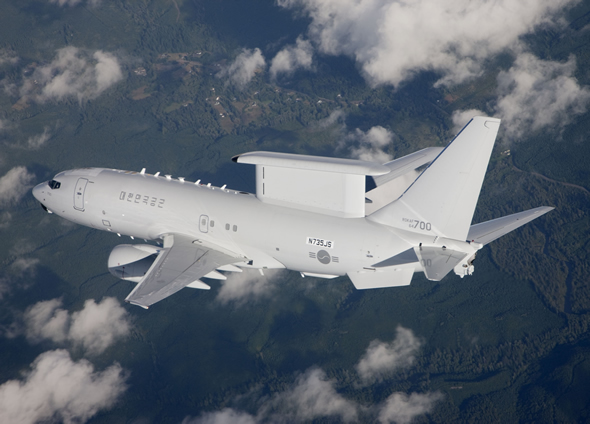
The Peace-Eye is designed to provide airborne battle-management capability utilizing situational picture generated by the on-board advanced multirole electronically scanned radar that tracks airborne and maritime targets simultaneously, supporting interrogator friend/foe (IFF) and electronic support measures (ESM). Photo: Boeing
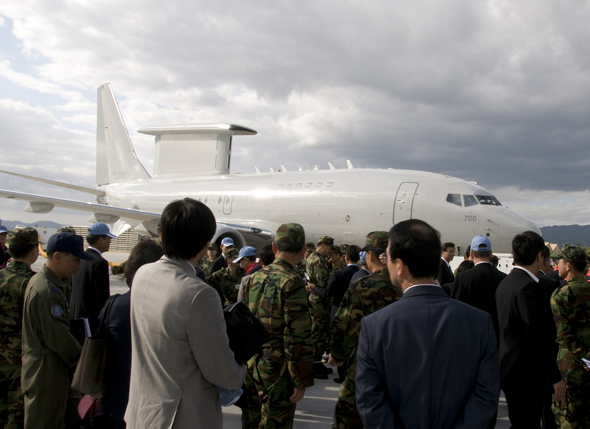
The first Peace-Eye 737 Airborne early Warning & Control (AEW&C) aircraft was delivered today to the Republic of Korea Air Force (ROKAF). The aircraft landed at the ROKAF Base Gimhae, the main operating base for the aircraft. Boeing is expected to deliver three additional aircraft, supported by extensive infrastructure including mission crew training, mission support and system maintenance. The platform is based on the Boeing Next-Generation 737-700 commercial airplane.
The Peace-Eye is designed to provide airborne battle-management capability utilizing situational picture generated by the on-board advanced multirole electronically scanned radar that tracks airborne and maritime targets simultaneously, supporting interrogator friend/foe (IFF) and electronic support measures (ESM). Photo: Boeing
The Peace-Eye is designed to provide airborne battle-management capability utilizing situational picture generated by the on-board advanced multirole electronically scanned radar that tracks airborne and maritime targets simultaneously, supporting interrogator friend/foe (IFF) and electronic support measures (ESM). All the system’s electronic racks and 10 mission crew consoles are accommodated in the cabin. 737 AEW&C aircraft also are in production for the governments of Australia and Turkey.
First Peace Eye 737 AEW&C Arrives in South Korea. Photo: Boeing
A new GPS-enabled telemetry system developed by the government team in U.S. Navy Weapons Test Center at China Lake enables highly-accurate, high-rate, three dimensional time, space and position information to be collected during missile fly-out. The AN/DKT-89-3 Airborne Telemetry Equipment provides real-time and post-flight data at very high precision, a significant improvement over existing methods that are difficult to estimate how close the missile passed by the target. The new system, designed and built by the government team in China Lake, allows engineers to better quantify missile characteristics and endgame performance against the target. The new system was recently used to monitor developmental testing of the Raytheon AIM-9X Block II air/air missiles.
Rafael performed successful firing of the Spike ER missile, in compliance with Indian 3rd generation anti-tank missile procurement program. Photo: RAFAEL.
DRDO Shourya Ballistic Missile
Second Successful Launch of the Indian Shourya Ballistic Missile
India has tested the Shourya nuclear-capable surface/surface missile, at the Integrated Test Range (ITR) at Chandipur off Orissa coast, about 15 km from Balasore. The missile can carry a warhead weighing one ton, a weight sufficient for a nuclear device. However, its massive warhead combined with relatively high accuracy of less than 30 meters (aided GPS) make the Shourya effective for conventional attack of high value targets. Shourya is scheduled to enter service in 2013. (Defense-Update)
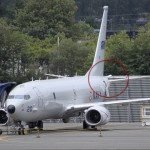
The first Boeing P-8I ‘Neptune’ long range maritime reconnaissance (LRMR) aircraft for the Indian Navy is being readied att the Boeing Renton site for its initial flight, targeted by the end of the month. Distinguishing the Indian version from its U.S. counterpart is the CAE-supplied AN/ASQ-508A magnetic anomaly detector seen here projecting aft (circled).
Neptune Prepared for Flight
September 21, 2011: The first Boeing P-8I ‘Neptune’ long range maritime reconnaissance (LRMR) aircraft for the Indian Navy is being readied for its initial flight, targeted by the end of the month. Following a development and training program lasting just over one year, the first P-8I will be delivered in January 2013 as part of an arms package worth up to $3.1 billion. The Indian model is an export version of the P-8A Poseidon, modified to address Indian requirements. (Guy Norris, Ares Blog)
Cyber Espionage Compromises Technical Data at Japan’s Defense Giant
September 21, 2011: One of japan’s largest defense contractors reported a cyber attack occurred last month may have compromised sensitive information on its servers. Mitsubishi Heavy Industry said in a statement that following an infection of its servers by a virus, system information such as network addresses was leaked from its internal network, resulting in leaking of data ‘relating to our products and techniques’ outside the company. An investigation has found that 45 servers and 38 computers were infected with eight types of viruses at 11 facilities in Japan, including its headquarters in Tokyo and shipyards in Nagasaki and Kobe. ‘Some of the infected machines were forcibly connected to overseas web sites, leading to the leak of Internet Protocol addresses and other network system information’ the company reported.
Taiwan developing asymmetrical strategies to deal with China
September 21, 2011: Taiwan is developing “asymmetrical strategies” utilizing unconventional capabilities to counter China’s military buildup, Deputy Defense Minister Andrew Yang said at a conference in Richmond, Virginia, this week, addressing the U.S.-Taiwan Defense Industry Conference. (Taiwan Focus)
China military growth to boost arms sales to Asia
September 21, 2011: China’s military build-up is forcing its Asian neighbors to ramp up their defenses, offering a new source of growth to western arms makers keen to offset belt-tightening in their home markets. A UK analyst expects “a sharp increase in spending on defense and security from many Asian nations who are keen to protect their borders, in part due to the growing influence of China in the region.” (Reuters)
Taiwan has 18 F-16A/B with the 21st fighter squadron stations at Luke AFB.
Taiwan to Invest Half a Billion US$ for Pilot Training Program
U.S. Defense departments’ Defense Security Cooperation Agency released today details of Taiwan’s request for the upgrading of 145 F-16A/B fighters at a cost of $US5.3 BILLION (!!). The package includes the integration of an unspecified AESA radar, helmet mounted cueing system (JHMCS) supporting AIM-9X air/air missiles and advanced electronic warfare and self-protection systems. Targeting pods and precision guided munitions will also enhance the fighters’ air/ground capability. Taipei is also requesting U.S. approval for a pilot training program worth about half a billion US$, to include training Taiwan’s pilots at the Luke Air Force Base in Arizona, in addition to associated equipment, parts, training and logistical support. According to the Defense Security Cooperation Agency (DSCA), the Economic and Cultural Representative Office of Taipei is seeking to sustain continued long-term support of its pilot training program, and logistics support for F-16 aircraft stationed at Luke Air Force Base. Taipei has also requested approval for acquisition of US$52 million worth of spare parts to support its U.S. built F-16A/B, F-5E/F and C-130H aircraft, and U.S. manufactured spares supporting Taiwan’s Indigenous Defense Fighter (IDF) aircraft. (Defense-Update)
First Peace Eye 737 AEW&C Arrives in South Korea. Photo: Boeing
Boeing Delivers Peace-Eye 737 AEW&C to Korea
September 21, 2011: The first Peace-Eye 737 Airborne early Warning & Control (AEW&C) aircraft was delivered today to the Republic of Korea Air Force (ROKAF). The aircraft landed at the ROKAF Base Gimhae, the main operating base for the aircraft. (Defense-Update)
Rafael performed successful firing of the Spike ER missile, in compliance with Indian 3rd generation anti-tank missile procurement program. Photo: RAFAEL.
Rafael Fires Spike ER Missiles for Indian Evaluation
September 19, 2011: RAFAEL completed a successful test firing of three Spike ER multi-purpose air-to-surface missiles from an Israeli air force helicopter, qualifying the israeli company proposal for the Indian Air Forces’ 3rd Generation Anti-tank weapon program. The Indian Air Force can now proceed with the final selection between the two competitors, MBDA’s PARS3LR and RAFAEL’s Spike ER, to equip its Light Combat Helicopters (LCH). (Flight Global)
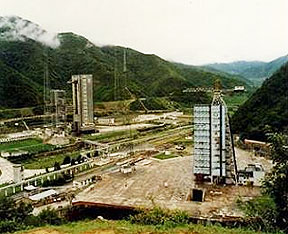
Chinasat 1A satellite was launched on a DF-4 launcher from the Xichang spaceport.
China Launches a New Military Communications Satellite
September 18, 2011: China has launched the Chinasat 1A spacecraft on a Long March rocket. The The 11,500-pound satellite, thought to be a military communications satellite was launched into a geosynchronous transfer orbit with a high point of more than 22,200 miles, a low point of almost 120 miles and an inclination of 27 degrees, according to U.S. military tracking data. According to Chinese news agency Xinhua the satellite was built by the China Aerospace Science and Technology Corp. (Spaceflightnow.com)
September 15, 2011: BCL to deploy the First Immersive Tactical Trainer in India
Raytheon Company has signed a contract with BCL Secure Premises of India to provide a virtual immersive training system to the New Delhi-based company. BCL serves as an exclusive re-seller of Raytheon’s VIRTSIM in the region. VIRSIM was developed by Motion Reality, Inc. (MRI) to provide fully-immersive 3-D simulation for tactical training of small unit. The system supports a full squad of up to 13 individuals, providing interactive training in customized mission scenarios with complete freedom of motion. The Delhi installation will be the first in India, will support demonstrations and training scenario development for military, law enforcement and security in the region.
Lockheed Martin has submitted its contract proposal for full-rate production of the AN/TPQ-36 (EQ-36) Counterfire Target Acquisition Radar, developed by the company since 2007 under a separate contract. The company has already received contracts to deliver 29 such radars responding to urgent operational needs in Afghanistan. The radar detects rockets, mortars and artillery. It can detect, classify, track and locate the source of enemy indirect fire in either 360- or 90-degree modes. EQ-36 is slated to replace legacy AN/TPQ-36 counter artillery and AN/TPQ-37 mortar locating medium-range radars now in the Army’s inventory. The development addressed an urgent needs statements for this 360-degree capability. Lockheed Martin EQ-36 team also includes SRC, of Syracuse, NY.
Since 2009 the company has delivered 12 systems under a low rate initial production contract. The last system was handed over to the Army in November 2010. operational radars began deploying to Iraq and Afghanistan in September and October of 2010. In April 2010, the company received an additional order for 17 more EQ-36 radar systems. In August 2011, the first two of these radars were delivered ahead of schedule and a contract option was exercised to expand the order to 20 systems.
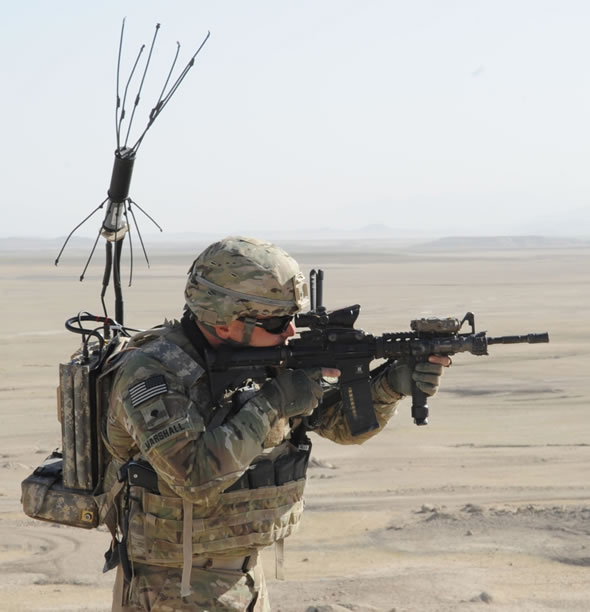
U.S. Army Spc. Timothy Marshall, a member of the Kandahar Provincial Reconstruction Team's security force, scans his surroundings through the scope of his weapon during a visit to the Dahla Dam in Kandahar province, Afghanistan, Sept. 20, 2011. Force members provided security the following day during a dam assessment with the Canadian International Development Agency. (U.S. Air Force photo by Senior Airman Sean Martin)
This photo, released today by the Pentagon, shows a member of a security force securing the Dahla Dam in the Kandahar province. Spc. Marshall carries what seems to be a backpack carried IED jammer, one we haven’t spotted before…
U.S. Army Spc. Timothy Marshall, a member of the Kandahar Provincial Reconstruction Team's security force, scans his surroundings through the scope of his weapon during a visit to the Dahla Dam in Kandahar province, Afghanistan, Sept. 20, 2011. Force members provided security the following day during a dam assessment with the Canadian International Development Agency. (U.S. Air Force photo by Senior Airman Sean Martin)
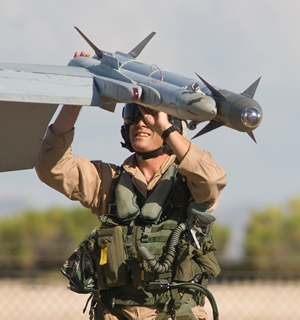
A Navy pilot inspects the AIM-9X mounted on the wingtip of his F-18. Photo: Raytheon
The Raytheon AIM-9X Block II Sidewinder air/air missile has passed ‘Milestone C’ on June 24, 2011 – clearing the program for Low Rate Initial Production. Successful test firing at the Naval Air Warfare Center Weapons Division in China Lake, Calif. as part of a developmental testing of the missile that began in September 2010, are leading to AIM-9X Block II missiles toward final operational testing in 2012. Raytheon has delivered more than 3,600 AIM-9X Block I missiles to eight countries and is on contract to deliver missiles to two additional countries.
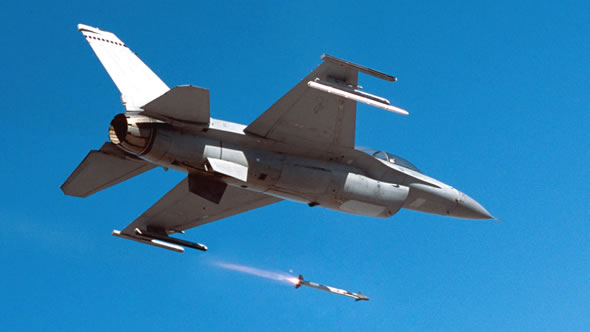
F-16 launches an AIM-9X Sidewinder over te Eglin weapon test range. Photo: RaytheonAn Air Force F-15E Pilot checks an AIM-9X Sidewinder missile on a preflight inspection. Photo: Raytheon
The Block II version of the Sidewinder AIM-9X is the latest version of the missile, and the first short range guided missile adapted for the latest fifth generation fighters. Among the improvements implemented in the new version are improved seeker performance and addition of a two-way data-link facilitating ‘Lock On AFter Launch’ (LOAL) capability, enabling the missile to operate from internal carriage systems of the F-22A Raptor and F-35 Lightning II stealth fighters. Other improvements include infrared counter-countermeasures, enhanced kinematics. According to the U.S. Navy, the Block II Relying on homing on a thermal image of the target, the new missile has ability to operate with immunity against modern threat radar counter measures such as Digital RF Memory Jammers, Towed Decoys, and Stealth airframes.
Following ‘Milestone C’ approval, Raytheon was authorized to enter low rate initial production. The company is expected to begin production of more than 5,000 operational AIM-9X Block II rounds for U.S. Navy and U.S. Air Force over the life of the program. Following the recent tests, is expected to be cleared for operational deployment in 2012. To date, more than 4,500 AIM-9X Block I missiles and 175 AIM-9X Block II captive air training missiles and test rounds have been fielded.
A Navy pilot inspects the AIM-9X mounted on the wingtip of his F-18. Photo: Raytheon
Sidewinder’s Surface Attack Capability
The U.S. Air Force has evaluated the use of AIM-9X and AIM-9X Block I missiles against surface targets, employing the missile’s imaging sensor as a surface target seeker. The first test was conducted in March 2007, as a U.S. Air Force F-15C fired an AIM-9X and destroyed a fast-moving armored personnel carrier. In April 2008, a U.S. Air Force F-16 launched an AIM-9X and sank a maneuvering boat. This was repeated in September 2009 with an AIM-9X fired from a U.S. Air Force F-16C fighter sinking a rapidly moving target boat in the Gulf of Mexico. However, this surface attack capability tested again with the Block I version in March and May 2010 delivered mixed results. The tests included seven captive carry flights and six live fire tests, and achieved 66% success rate. Four missiles scored direct hits of the ground mobile targets, one hit a different target than fired against, and one lost track on the selected target.
The U.S. Air Force plans to resume flight operations of its 170 F-22A Raptor fleet after four months stand down. The commander of Air Combat Command directed a stand-down of the fleet May 3 as a safety precaution, following 12 separate reported incidents where pilots experienced hypoxia-like symptoms (oxygen depravation). The incidents occurred over a three-year period beginning in April 2008. In November 2010 an Air Force pilot Capt. Jeff “Bong” Haney was killed on a crash caused by a malfunction associated with the aircraft engine’s bleed air system, that caused the jet’s Environmental Control System (ECS) and On-Board Oxygen Generating System (OBOGS) to automatically shut down. According to the Air Force, investigators rulled out Hypoxia as a cause of this crash.
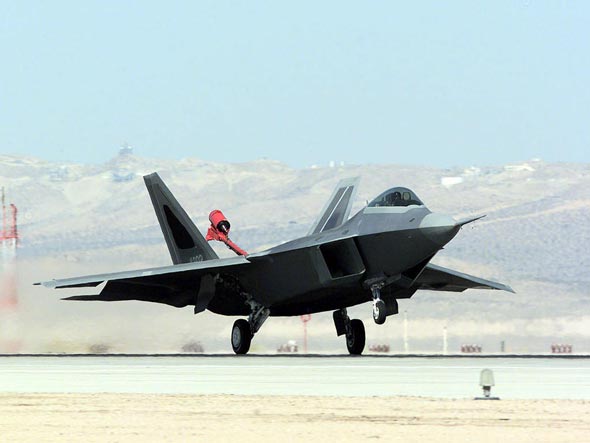
F-22 fleet to resume flight operations. U.S. Air Force Photo by Derk Blanset
The Secretary of the Air Force Michael Donley and Chief of Staff Gen. Norton Schwartz have recently approved an implementation plan developed by Air Combat Command, implementing several risk mitigation actions, to include rigorous inspections, training on life support systems, and continued data collection. As part of the process, the entire Raptor fleet will undergo an extensive inspection of the life support systems before returning to flight, with follow-on daily inspections, officials said. The aircraft is capable and authorized to fly above 50,000 feet. Pilots will use additional protective equipment and undergo baseline physiological tests. The return-to-fly process will begin with instructor pilots and flight leads regaining their necessary proficiency, then follow with other F-22 wingmen.
“We now have enough insight from recent studies and investigations that a return to flight is prudent and appropriate,” Schwartz said. “We’re managing the risks with our aircrews, and we’re continuing to study the F-22’s oxygen systems and collect data to improve its performance.”
Prior to the stand down, ACC officials convened a Class E Safety Investigation Board (SIB) in January 2011 to look into hypoxia-related reports. At the same time, a Hypoxia Deep-Dive Integrated Product Team began an in-depth study on safety issues involving aircraft oxygen generation systems. The Air Force Scientific Advisory Board has been commissioned in June 2011 to continue the oxygen generation study concurrent with the ongoing SIB.
Lockheed Martin Skunk Works® and XTEND have achieved a major milestone in JADC2 by integrating the XOS operating system with the MDCX™ autonomy platform. This technical breakthrough enables a single operator to simultaneously command multiple drone classes, eliminating the friction of mission handoffs. From "marsupial" drone deployments to operating in GPS-denied environments, explore how this collaboration is abbreviating the data-to-decision timeline and redefining autonomous mission execution.
As traditional defense primes face mounting competition from agile “neoprimes” such as Anduril, Palantir and Helsing, the balance of innovation is shifting toward software-defined warfare and scalable, dual-use technologies, while global industry consolidation—marked by Boeing’s integration of Spirit AeroSystems and other strategic mergers—signals an intensified race to secure control over the defense technology value chain. Our Defense-Tech weekly report highlights these trends.
In early October 2025, a coordinated wave of unmanned aerial system (UAS) incursions—widely attributed to Russia—targeted critical infrastructure across at least ten European nations. The unprecedented campaign exposed the fragility of Europe’s air defenses...
Executive Summary
The past week (September 18-25, 2025) represents an inflection point where strategic defense concepts have transitioned from doctrine to tangible reality. An analysis of global events reveals four primary, interconnected trends shaping an...
At the 2025 Air, Space & Cyber Conference, U.S. Air Force and Space Force leaders unveiled major updates on next-generation fighters, bombers, unmanned systems, and space initiatives, highlighting both rapid innovation and critical readiness challenges as the services race to outpace global competitors. A short version is available here, with a more detailed version for subscribers.
The Taipei Aerospace & Defense Technology Exhibition (TADTE) 2025 crystallized around four dominant strategic themes that collectively illustrate Taiwan's comprehensive approach to defense modernization amid escalating regional tensions. Based on a detailed report by Pleronix (available upon request). Includes a Podcast discussion on TADTE 2025's highlighting Taiwan's four strategic themes beyond the post's coverage.
Israel’s Iron Beam 450 high-power laser system has completed final testing, marking a major leap in air defense. Developed by Rafael, it offers precise, cost-effective interception of rockets, UAVs, and mortars, and is set for IDF deployment by 2025.