
Monday, December 29, 2025
More
    Home Blog Page 230

    Turkish FNSS Finalize Armored Vehicle Procurement Deal with Malaysia

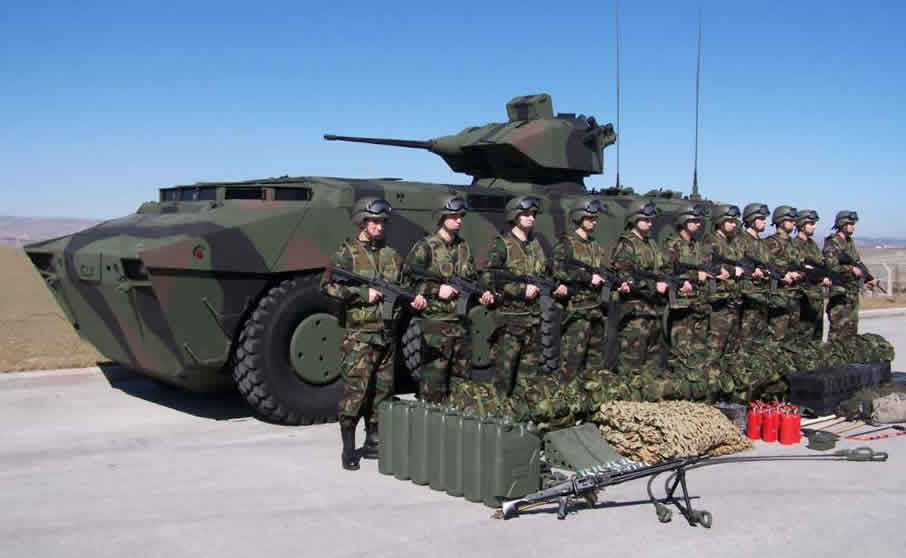
    Malaysia will locally produce 257 AV8 wheeled 8x8 armored vehicles based on the Turkish PARS 8x8 design from FNSS. Photo: FNSS buying

    The Malaysian procurement of 257 wheeled armored vehicles from the Turkey has moved a step forward with the signature of ‘letter of offer and acceptance’ by DRB-Hicom Defence Technologies (Deftech) for the design, development and manufacture of the vehicles. Deftech will be FNSS’  local partner, manufacturing and supporting the $559 million program in Malaysia. FNSS is a joint venture between BAE Systems, Inc., and Turkey’s Nurol Holding. Four months earlier Deftech received the letter of award from the Malaysian government, for the design, development, manufacturing, commission, supply and delivery of these vehicles.

    The government award covers seven years of deliveries and is valued at RM 7.55 billion (about $2.51 billion). How this cost is compared with the $559 million Deftech has committed to pay FNSS, and why Deftech will get four times that amount has yet to be explained. Certainly, 80% mark-up is a bit too high by any standard. At a cost of $2 million apiece, including development of 12 versions, the AV8 looks highly competitive, but at nearly $10 million per unit it becomes extremely expensive by any standards (read more). The justification of spending much of the money on infrastructure development in Malaysia cannot justify the cost either. Development costs that could be separated from the production contract could justify the difference, but the ‘letter of offer acceptance’ covers the development in the $599 package.

    The AV-8 vehicle selected by the Malaysian military is based on the FNSS-designed PARS 8×8 multi-purpose, multi-mission, wheeled armored vehicle. The contract includes technology transfer arrangements to Deftech and logistics support for the Malaysian army, positioning the vehicle and its 12 variants to become Malaysia’s first indigenous family of 8×8 armored wheeled vehicles.

    Deftech already operates a vehicle production line at the Malaysian city of Pekan in Pahang State where FNSS designed ACV-300 (M-113 derivatives) are assembled. According to Nail Kurt, chief executive of FNSS, the new project builds on the successful industrial partnership with Deftech, producing 259 Adnan Armored Combat Vehicles and eight 120mm ACV Mortar Carriers for the Malaysian Army under a contract signed in 2000. Deftech is scheduled complete the delivery of the last 48 Adnan ACVs order underway since 2008.

    “This effort will not only benefit the Malaysian army but will also further develop the indigenous capability in Malaysia,” John Kelly, vice president of exports and international business for BAE Systems’ Land and Armaments sector, said. “BAE Systems, Inc., actively looks to support FNSS in its ambition to market its land vehicle expertise globally.” FNSS is currently offering the PARS 8×8 to other potential customers in the region, including Indonesia. The UAE has also been interested in the vehicle for several years.

    Malaysia will locally produce 257 AV8 wheeled 8x8 armored vehicles based on the Turkish PARS 8x8 design from FNSS. Photo: FNSS buying

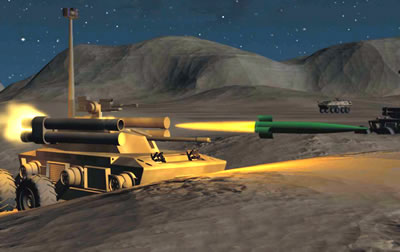
    Compact Kinetic Energy Missile CKEM

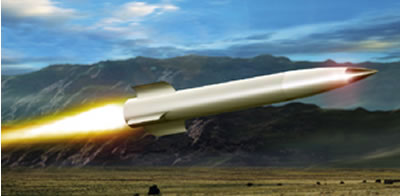
    The Compact Kinetic Energy Missile (CKEM) is about 1.5 meter (60 inches) long, weighing less than 45 kg (100 pounds). It is designed to operate as short as  400 meters and at extended range, engaging tanks and other armored vehicles well beyond their effective range.

    The missile’s kill effector is a hyper-velocity (+6.5Mach) long rod, defeating the target by kinetic energy. It is designed to defeat armored and fortified (structures) targets, including targets protected by explosive reactive armor and active protection systems. CKEM can be fired within or beyond line-of-sight, relying on passive target acquisition and engagement. The high velocity, hit-to-kill and advanced guidance  provides the warfighter with near fire-and-forget capability, overwhelming lethality and a high probability of first-round kill. The system demonstrated extreme lethality against bunkers, constructed structures and armored targets at both short and extended ranges.

    The US Army identified armor and structure defeat requirements as capability gaps for the Infantry Brigade Combat Team and the Stryker Brigade Combat Team. These gaps could be bridged by future deployment of CKEM at both close extended ranges.

    CKEM is designed for the Army’s Future Combat Systems (FCS). The weapon will be integrated into the Future Combat Vehicle (FCV), heavy ground platforms, and rotor wing platforms. CKEM program is a follow-on to the currently deployed Line Of Sight Anti-Tank (LOSAT) system.

    In September 2006 Lockheed Martin performed a second successful test of the Compact Kinetic Energy Missile (CKEM), against a reinforced urban structure. The next two tests scheduled for this year will demonstrate the weapon’s ability to defeat enhanced reactive armor.  Lockheed Martin received a $78 million contract in 2003 for CKEM’s ATD phase. Successful completion of sled tests and ATD work will ensure the missile is ready to enter the SDD phase of development later this year.

    The Pentagon Allocates Half a Billion US$ to Outfit Afghans with New AFVs within 18 Months

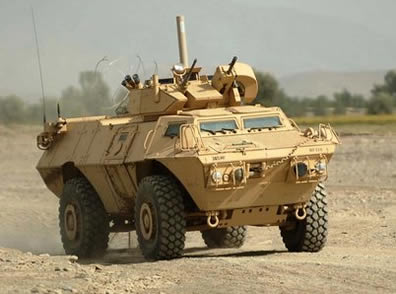
    Derivatives of the M1117 Armored Security Vehicle (ASV) are operating with the U.S. forces, Iraqi military and police, and the military forces of Colombia and Bulgaria.

    Textron Marine & Land Systems will provide 440 Medium Armored Security Vehicles (MASV) to equip the Afghanistan National Army (ANA) within 18 months for a total cost of $543 million.

    The MASV family of armored vehicles comprises nine variants, configured for specific missions; the vehicles are derivatives of the M1117 Armored Security Vehicle (ASV) operated by the U.S. forces. ASV Armored Personnel Carriers (APC) are also operating with the Iraqi military and police, and the military forces of Colombia and Bulgaria.

    Textron Systems unveiled the MRAP-level protected variant of the Armored Security vehicle in 2009. The vehicle is currently competing for the Canadian TAPV program. The vehicles to be delivered to Afghanistan could include similar protection measures. Photo: Tamir Eshel, defense Update

    The ASV missions within the U.S. Army include Military Police operations in support of convoy protection, checkpoint security, perimeter security and reconnaissance, as well as Field Artillery Combat Observation and Lasing Teams (COLT) with the M1200 Armored Knight configuration. The MASV mission variants include command and control, ambulance, engineering, maintenance, mortar, and reconnaissance vehicles.

    The vehicles ordered for the ANA will be configured with Enhanced Survivability (ES) capability, which improves blast protection to mine-resistant, ambush-protected (MRAP) levels. The new ES-equipped vehicles will continue to utilize the M1117 V-shaped hull design, improved with additional protection design features that enable it to meet MRAP blast protection standards.

    The total value of the program, with all options included, could reach over half a billion US$. The production will be performed at Textron Marine & Land Systems’ facilities in the New Orleans area. Sofar this facility has delivered 3,100 ASV vehicles. Textron Marine & Land Systems is an operating unit of Textron Systems, a Textron Inc. (NYSE: TXT) company.

    The vehicles will be contracted through the U.S. Army Foreign Military Sales (FMS) process and funded through the Afghan Security Forces Funds (ASFF). The contract covers the $257 million first year baseline order contract, with follow-on options for additional deliveries in subsequent years. The initial funding of $125.9 million has been authorized, funding the production of 240 vehicles to be delivered by June 2012. The contract includes options to produce up to an additional 200 vehicles, plus two option years for training and logistics support, with a potential value of $286 million. While these additional vehicles, if ordered, would have an estimated completion date of December 2012.

    These vehicles will be delivered with associated support equipment, spare parts, field service representatives, training and training aids. If the options are, training and logistics support would continue through the first quarter of 2014, in time for the planned withdrawal of U.S. forces from the country.

    Derivatives of the M1117 Armored Security Vehicle (ASV) are operating with the U.S. forces, Iraqi military and police, and the military forces of Colombia and Bulgaria.

    Indian Police Seeking More Mini-UAVs

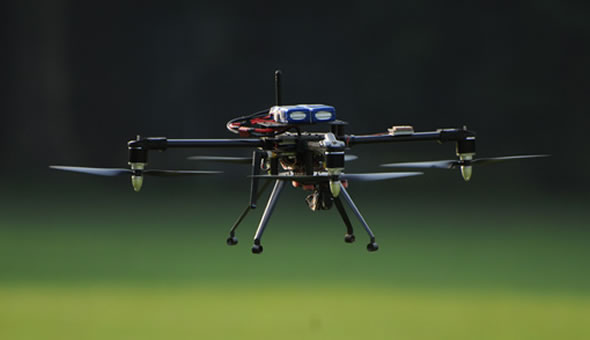
    Netra can be operated at distances of up to 1.5 km, flying at an altitude of 200 meters above ground sending live video streaming to the ground station.

    The growing interest in unmanned systems for use by Indian police and law enforcement agencies is bringing the Home Ministry to evaluate some of the technologies available for paramilitary use. Indian police forces are expressing interest in deploying mini and micro UAVs for years, and some have embarked on experimental evaluation programs, but only recently the interest was translated into action, with the procurement of the first two system by the Chandigarh Police.

    Golden Hawk, developed by the DRDO was recently acquired for first use by the Chandigarh Police in Indian.
    The first Unmanned Aerial Vehicle (UAV) used by police forces in India is the ‘Golden Hawk’, expected to be followed by the ‘Netra’, both developed by India’s Defense Research & Development Organisation (DRDO). Following the official roll-out with the Chandigarh Police in North-Western India, and training of specialist police teams in operating the new systems, the mini-drones were used operationally monitoring large rallies and marches, providing bird’s eye view  for law enforcement officers, improving situational understanding.
    Netra can be operated at distances of up to 1.5 km, flying at an altitude of 200 meters above ground sending live video streaming to the ground station.

    Netra, a vertically take of and landing UAV that unlike the Golden Hawk, can also hover, was developed by DRDO Research and Development Establishment (RnDE) lab. Netra can send live video or thermal imaging via wireless link, to the operator system located several kilometers away. The system was recently tested in Chatisgarh to evaluate its utility to fight Naxal insurgency in these areas. The use of such lightweight hovering platforms seems to better conform with police uses, since its localized, low-level operational envelope better conforms with air traffic limitations.


    The private sector in India is embracing the opportunity, offering indigenously developed or imported systems addressing the new police requirements. Following Chandigarh, another unit at Haryana has expressed interest in the mini-drones, inviting the Bangalore-based Israeli company BlueBird Aerosystems to demonstrate its MicroB, which has been in use by Israel’s security forces for several years. Another domestic company specializing in civil applications of small UAVs is Aurora Integrated Systems (AIS), vertically integrated specialist company offering UAS and aerostat based aerial sensors.
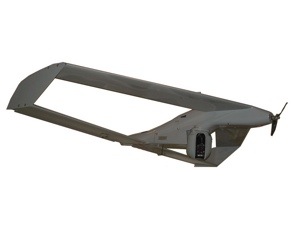
    Swallow Systems is small company that also specializes in small unmanned systems. At Aero India 2011 Swallow Systems introduced the Skimmer UAS, a 2.5 kg portable, hand launched, battery operated UAV that looks as a copy of the U.S. Raven but, according to the manufacturer, offers much improved performance and reliability. The company offers the Swallow for military, paramilitary and civil applications, including aerial reconnaissance with recordable live video down feed in the events of forest fires, natural calamities and for wildlife monitoring, area mapping, and perimeter surveillance.

    Elsewhere, police forces in the U.S. and the U.K. have already been using micro drones for several years, but the level of usage is limited by restrictions imposed by conflicting air traffic regulations banning unmanned vehicles operations in civil airspace. For example, in Texas, Special Weapons and Tactics (SWAT) teams were using the Aerovironment Wasp drone, originally developed for the U.S. Special Operations and Marine Corps while the Miami Police has tested the Honeywell T-Hawk since 2008.

    The wide use of drones has been limited due to the potential risk they pose to flying activity. In the U.S. police units planning to operate UAVs must file request for permission for such activity with the Federal Aviation Administration (FAA), which controls the national airspace. By 2013, the FAA expects to have formulated new rules that would allow police across the country to routinely fly lightweight, unarmed drones up to 400 feet (122 m’) above the ground – high enough for them to be largely invisible eyes in the sky.

    Lockheed Martin to Deliver 110 Vehicular/Portable Surveillance Systems

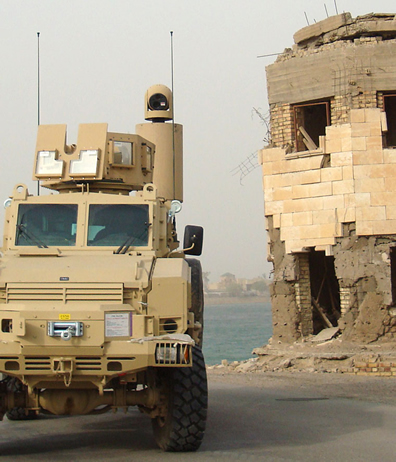
    An RG-31 mine protected armored vehicle mounting the VOSS system, on patrol in Iraq. Photo: Lockheed Martin

    Lockheed Martin received a $58.6 million contract from the U.S. Marine Corps for more Vehicle Optic Sensor Systems II (VOSS II) and Portable Rapid Deployment Surveillance Systems (PRDSS). Under the contract, Lockheed Martin will provide 110 VOSS II and 30 PRDSS, plus additional field services and equipment in support of these systems.
    The new kits are designed as lightweight and portable systems, offering combat teams riding in MRAPs a 360 Degree “eyes on” camera system. The equipment will be produced at the Lockheed Martin Gyrocam Systems facility in Sarasota, Fla., and the period of performance will continue through March 2012.

    The PRDSS derivative of the system provides a portable surveillance system that can set up in urban, rural and extreme terrain environments and provides command personnel a bird’s eye view of activity in the area. The VOSS, developed by the Lockheed Martin Gyrocam company, is a mast-mounted sensor system, that can be mounted on vehicles or expeditionary installation, offering remote controlled surveillance. The lightweight, remotely controlled sensor mounted on a 30 foot (about 10 meters) telescopic mast, comprises high-resolution color, night vision and thermal sensors packed in a 15-inch class gyro-stabilized gimbal. The acquisition is managed by the Marine Corps’ MRAP Detection Systems Program Office. Lockheed Martin Gyrocam Systems has installed more than 900 Gyrocam camera systems on Mine Resistant Ambush Protected vehicles throughout Afghanistan and Iraq.

    An RG-31 mine protected armored vehicle mounting the VOSS system, on patrol in Iraq. Photo: Lockheed Martin

    South Korea Receives the Tenth Slam Eagle

    The 41th F-15K seen on its first flight. Photo: Boeing

    Boeing has delivered the tenth F-15K Slam Eagle to the Republic of Korea Air Force on May 30, 2011. Photo: Boeing

    The Republic of Korea Air Force (RoKAF) received the tenth F-15K Slam Eagle on May 30, delivered by the Boeing Company at the RoKAF Daegu Airbase. The Slam Eagles, a derivative of the F-15E Strike Eagle, marked F-15K49 and F-15K50 left Boeing St. Louis facility on May 25 and made stops in Palmdale, Calif., Hickam Air Force Base, Hawaii, and Anderson Air Force Base, Guam, before arriving in Korea.

    These aircraft are part of the South Korean Next Fighter II program buying additional 21 advanced strike fighters in the U.S.Boeing delivered the first six of 21 F-15Ks it is producing under the Next Fighter II contract in 2010 and two more in April. The remaining 11 aircraft will be delivered through April 2012. Six of the new F-15K Slam Eagles are scheduled to return to the U.S. next year, to participate in the ‘Red Flag’ air combat training exercise at Nellis Air Force Base, Nev., in early 2012. This follow-on order was signed in 2010, after Boeing completed the delivery of the initial order of 40 aircraft in 2008.

    Ethiopia Orders 200 Upgraded T-72s from Ukraine

    The Ethiopian Army already operates about 60 T-72s bought from Yemen Army surplus in 2003. Photo: Ethiopiaforums.com

    Ethiopia has ordered more than 200 T-72 upgraded tanks from Ukraine, in a deal worth over US$100 million. State controlled arms exporter Ukrspecexport SC has signed the contract yesterday with the Defense Ministry of Ethiopia.

    T-72s on the march. Based on the announced value of the deal, the upgraded Ukraine tanks are being sold at a bargain price of $500,000 a peace... Photo: DefenseWeb


    The Ethiopian Army already operates about 60 T-72s bought from Yemen Army surplus in 2003. Photo: Ethiopiaforums.com

    This order, expected to be delivered from Ukraine military surplus, is the largest export order Ukraine has signed in the past 15 years and also, one of the largest single deliveries of Main Battle Tanks in recent years.
    The T-72s to be delivered to Ethiopia will be equipped with a new engine, have a suite of reactive armor and be capable of firing guided missiles through the main gun such as the 9K120 Svir (AT-11). The Ukrainians are expecting to get more value from the deal by supporting these tanks over their life span. Ammunition deliveries could further increase the value over time.

    The Ethiopia Army already operates some 60 T-72s obtained from Yemen in 2003. In recent years the country has also increased the number of T-55 tanks available to ins mechanized units. Ethiopia has bolstered its military power to better deal with deteriorating security along its border with neighboring Eritrea and Somalia.

    Read more on:

    Indian Police Reserve Suffer Heavy Casualties from Multiple IED Attacks

    The Indian security forces have upgraded the mine protection capability of their armored vehicles several times, to meet the growing threat from heavy IEDs employed by the Maoist Naxal movement. Photo: The Hindu

    Indian police forces continue to suffer attacks by Naxal insurgent groups. Two ambush attacks by the Maoist groups that took place in the past 48 hours have claimed the lives of 18 members of Indian Police Forces (Jawans) and Special Police Officers (SPO). The two attacks were aimed at troops traveling in protected supply vehicles and armored trucks, supporting units deployed in the area.

    The most recent attack took place last night in the Chhattisgarh’s Dantewada district, when Naxals guerillas blew up a mine protected vehicle (MPV), killing seven SPOs and three policemen. Most casualties were suffered after the rebels stormed the vehicle, hitting the occupants trying to escape from the crippled vehicle. The vehicle was carrying 13 troops, the other three were injured in the attack. Two days earlier a similar attack claimed the lives of eight Jawans, wounding 13 more.

    According to news sources, the MPV was hit by a large Improvised Explosive Device (IED), when it was approaching a bridge near Gatan village. Teams of guerillas standing by at the ambush site opened automatic fire, killing the troops that survived the blast. A day earlier Naxals guerillas conducted an attack near the Indian Armed Forces camp in the Naraynpur district, killing four jawans and leaving another injured. two days earlier, eight jawans of the paramilitary Central Reserve Police Force were killed and 13 were injured when their armored vehicle was hit by an IED in Bijapur district of Chhattisgarh. The vehicle was hit when travelling on National Highway 16, near the Pedakodepal village, 14 km away from the district headquarters in Bijapur.

    The Indian security forces have upgraded the mine protection capability of their armored vehicles several times, to meet the growing threat from heavy IEDs employed by the Maoist Naxal movement. Photo: The Hindu

    IEDs pose a major problem for the Indian security forces, as the Maoist guerillas adapt new, more powerful means countering heavier armored vehicles introduced by the authorities. The Indian police forces introduced basic armored vehicles with basic ‘anti-landmine’ capability, withstanding Improvised Explosive Devices (IEDs) weighing 12-15 kg. After encountering a growing threat of IEDs weighing 30-40 kilograms, the vehicle’s underbelly protection was beefed up. Now, Naxals have stepped up their attacks, burying 60-80 kilograms IEDs deeper underground, where detection is virtually impossible, seemingly challenging these vehicle’s protection beyond their design limits. Although the Indian home office has ordered hundreds of MPVs for the police and CRFP, these new vehicles have yet to reach the front lines.

    While the armor cage effectively protects the vehicle from the explosion, the blast effect and secondary impact cause major injuries to the occupants, hit by flying debris or by impact with sharp, metal objects such as handles, equipment etc. Part of the vehicle modification is aimed at reducing these threats, by replacing metal objects with alternative parts developed for the automotive industry.

    This deadliest series of attacks by the Maoist insurgents guerilla marks an increase in the conflict over the disputed area, the Indian security forces are waging counter-insurgency activities over more than four decades. The outlawed Communist Party of India-Maoist (CPI-Maoist), is now active in dozens of districts across the country, and its militant leaders expressed their commitment to continue attacks on security forces. Indian officials admit that the CPI-Maoist movement has gained control over the sparsely populated, forested interiors of mineral-rich Bastar region, gaining the backing and support of local tribal population.

    The Indian actions in the region, waged mainly by CRFP, suffered a major blow April 6, as an 84 men CRFP patrol was annihilated after walking into a a Maoist ambush in the village of Chintalnar in Dantewada. 76 members of the unit were killed in the fight, which lasted couple of hours as the men were surrounded and trapped by the ambush. After the policemen ran out of ammunition, the Maoists moved in from the hills, shot the injured and looted weapons. Only seven CRPF men survived the fight, after reinforcements managed to arrive at the scene. The reinforcements could retrieve only three weapons from the scene. CRFP investigation indicated that the armed People’s Liberation Guerilla Army (PLGA) cadres numbered close to 350 who were assisted by about 200 local militia and from nearby villages. The Maoist ambush took place three weeks after the CRFP penetrated into the Maoist controlled area, killing 36 insurgents. 3 SPOs were killed and 9 others were injured in these fights. The death toll from the Maoist insurgency in Chhattisgarh continued increasing in May, with rebels attacks killing 50 people throughout the region, mostly security forces.

    Areas affected by the Naxal maoist insurgency movements, in East Central India. Map: South Asia terrorism Portal

    U.S. Navy Allocates $107.5 Million for First Dutch F-35A

    Lockheed Martin received yesterday over $107.5 million to produce the first F-35A for the Royal Netherlands Air Force (RNLAF). Hague is committed to fund two early production F-35, a decision made in April this year despite drastic cuts in the government budget.

    The Netherlands was an early development partner in the F-35 program, committing $800 million to research and development and agreeing to buy two planes to participate in operational testing. The Dutch had ordered one airplane earlier but sofar withheld the decision on funding the other plane.

    Read more: http://www.star-telegram.com/2011/06/09/3141446/business-briefs-dutch-are-back.html#ixzz1OsKWJrMv

    The aircraft is the 32nd production aircraft ordered under the multi billion fixed price incentive contract for low rate initial production, (LOT IV) managed by the US Navy Navair command, Patuxent River, Md. The funding for the Dutch plane was provided as a modification to that contract.

    Most of the work will be performed in the USA (80 percent) with the remaining work done in the UK. According to the Pentagon announcement , the work will be completed in less than who years (by February 2013).

    Agni III, Long Range Ballistic Missile Inducted with India’s Strategic Forces

    India tested the nuclear-capable Prithvi II short range surface-to-surface ballistic missile from a military base in Orissa on the morning of June 9, 2011. Photo: DRDO

    By the end of this year India plans to test a much larger Agni-V Inter-Continental ballistic missile (ICBM), capable of hitting targets at a range of 5,000 km. Agni III intermediate range ballistic missile has already been tested and inducted into the Indian armed forces, offering extended reach (3,000 km) for its deterrent forces said DRDO chief VK Saraswat. he added that the first test of the new ICBM is scheduled for will be tested by the end of this year. “The first trial is expected to start in December this year followed by a series of modifications and further trials over the next few years. This missile would be based on the concept of re-entry vehicle capable of covering whole of Pakistan and China.” DRDO officials aded.
    In addition to developing ballistic missile capability, DRDO is working on developing missile defense. The agency has carried out six tests in the last two years, of which four have been successful. The BMD program comprises a two-tiered system called Prithvi Air Defense PAD for high-altitude interception at 50-80 km and Advanced Air Defense AAD for low-altitude interception 15-30 km.

    India tested the nuclear-capable Prithvi II short range surface-to-surface ballistic missile from a military base in Orissa last Thursday. The launch was carried out as part of the regular training exercise of the armed forces. “The missile reached the predefined target in the Bay of Bengal with a very high accuracy of better than 10 meters,” Indian military sources said. Prithvi is India’s first indigenously built ballistic missile. It is one of the five missiles being developed under the country’s Integrated Guided Missile Development Program. The missile has a range of 350 km, a flight duration of 483 seconds reaching a peak altitude of 43.5 km, has the capability to carry a 500 kg warhead. The missile uses certain countermeasures against anti-ballistic missiles (ABM). It uses an advanced inertial guidance system providing maneuvering capabilities and reaches its target with a few meters of accuracy.

    Innocon to sell 50 Micro-Falcon Man Portable UAS in Asia

    Innocon announced today the signature of a contract for the supply of 50 MicroFalcon Systems to an unnamed customer in Asia. All 50 systems will be delivered through 2012. The MicroFalcon is designed for close range low altitude surveillance missions. Innocon has already sold the MicroFalcon in Peru, the first system is due for delivery in August 2011.

    MicroFalcon from Innocon is a miniature aerial vehicle, weighing about six kilograms, carrying a stabilized EO payload for aerial surveillance and reconnaissance. It is operated by a single person. Photo: Tamir Eshel, defense Update

    The miniature man-portable drone will be able to support military forces and first responders gaining real-time situational awareness on emergencies. One of the capability gaps identified by the Japanese response to the recent earthquake and tsunami events was the lack of real time understanding of what was happening in the damaged reactors, which have led to further damage. The new micro UAV will be able to improve such rapid response capabilities at the tactical level.

    MicroFalcon System consists of a high performance, small unmanned aerial vehicle, carried, launched and operated by a single person. Each system includes three UAVs and a portable ground control station. The MicroFalcon uses the miniature, STAMP stabilized mini EO payload made by Controp. Relying on a unique biplane boxed type wing design, MicroFalcon endures harsh weather conditions. The light weight, 6kg UAS operates at an altitude of 15,000 feet and stays airborne for two hours day or night. Micro Falcon can land upside down using a parachute, thereby increasing survivability of its mission payload (miniature stabilized sensor) and cutting down on redeployment time cycle.

    Innocon displaying the MicroFalcon to personnel of the Israeli police. Photo: Tamir Eshel, Defense-Update.

    Modernized AN/TPQ-37 Artillery Fire Locating Redeployed in Iraq

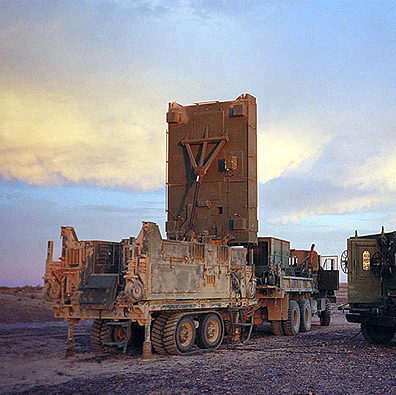
    AN/TPQ-37 artillery fire location radars modernized under the RIM program are now deployed in Iraq and are scheduled for deployment in Afghanistan this year. The upgrade will keep these systems operational at least until 2018.

    A modernized version of the AN/TPQ-37 Firefinder fire locating radar has been fielded in Iraq, supporting and protecting U.S. troops and allies. The upgraded Firefinders are scheduled to be deployed into Afghanistan in the coming months. The radar are precise detection and location systems designed to find enemy artillery, mortar and rocket firing positions. The radar also predicts impact zones and transmits data to friendly forces, allowing time for effective counter-fire tactics.

    In service with the U.S. Army since 1976, this Weapon Locating Radar system went through a series of enhancements, improving reliability and maintainability to support an extended service life with reduced life-cycle costs. The most recent Reliability Maintainability Improvement (RMI) program introduces a new modular, air-cooled transmitter, a new operations control shelter; and a new common radar processor.

    The RMI program applied across the U.S. Army’s entire fleet of AN/TPQ-37 Firefinder systems is already 40% underway, with final deliveries in two years. It is conducted by the system manufacturer RaytheonThalesSystems, in conjunction with Tobyhanna Army Depot. According to the company, nearly 400 Firefinders are currently deployed by 18 nations worldwide.
    AN/TPQ-37 artillery fire location radars modernized under the RMI program are now deployed in Iraq and are scheduled for deployment in Afghanistan this year. The upgrade will keep these systems operational at least until 2018.

    Airbus Military Tests AEW&C Configured C295

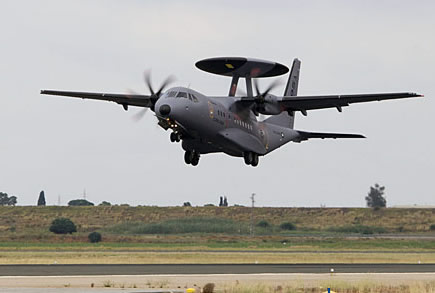
    The first Airbus Military C295 development aircraft fitted with an Airbone Early Warning sand Command (AEW&C) rotodome has successfully completed its first flight on 7th June 2011 at Airbus Military’s site in Seville (Spain). Flight testing will continue during the next three months to complete the feasibility study and fully validate the concept. Photo: Airbus Military

    The first Airbus Military C295 development aircraft fitted with an Airbone Early Warning sand Command (AEW&C) rotodome has successfully completed its first flight on 7th June 2011 at Airbus Military’s site in Seville (Spain). The flight follows extensive research and development work, including wind tunnel testing, leading to the conversion of a C295 to be fitted with the in-house developed rotodome.

    The six meter diameter rotodome fitted for the initial trials is a fixed dummy structure intended to verify aerodynamic and structural impact of the rotodome on the aircraft’s overall structure, handling qualities and performance. Flight testing will continue during the next three months to complete the feasibility study and fully validate the concept. On production aircraft the rotodome would be a fast-rotating device housing a state-of-the-art radar providing full 360 degree and continuous coverage of a selected area.

    The C295 is currently used for other Intelligence, Surveillance & Reconnaissance applications such as maritime patrol, anti-submarine warfare or environmental protection missions. The purpose of the current trials is to demonstrate the C295’s capability in the AEW&C domain, thereby expanding the range of C-295 applications beyond the current missions. In recent months the smaller C-235 has been mentioned as a potential aerial gunship, to be modified by ATK for Jordan’s King Abdullah II Design and Development Bureau.

    As an AEW&C platform the Airbus Military’s C295 will offer relatively large cabin, compared to business-jet based platforms (Gulfstream G550 or Embraer ERJ-145). The Fully Integrated Tactical System (FITS) avionics architecture offers efficient integration of on-board sensors, including operation and monitoring of the future radar system and display of the aerial picture.

    The first Airbus Military C295 development aircraft fitted with an Airbone Early Warning sand Command (AEW&C) rotodome has successfully completed its first flight on 7th June 2011 at Airbus Military’s site in Seville (Spain). Flight testing will continue during the next three months to complete the feasibility study and fully validate the concept. Photo: Airbus Military


    Israel Considers Tilt-Rotor Ospreys to Modernize its CSAR, Special Operations

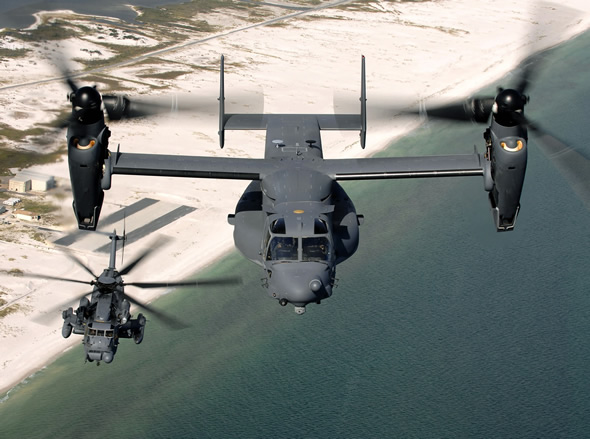
    The CV-22 Osprey will take over Air Force Special Operations Command helicopter missions when the MH-53 'Pave Low' (seen below) retires in October 2011. U.S. Air Force photo/Senior Airman Julianne Showalter

    Moving to bolster its special operations and combat search and rescue capabilities, the Israel Air Force (IAF) is re-evaluating the Bell-Boeing V-22 Osprey tilt-rotor aircraft as an optional future vertical lift capability. The IAF evaluated the tilt-rotor plane for several years, until 2009 when the issue was removed from the IAF agenda for the quadrennial procurement plan.

    According to Israel’s Jerusalem Post newspaper, the IAF plans to send a delegation of officers to the United States, to meet with Marine Corps representatives and review the V- 22 Osprey’s performance, and adaptability for operations in Israel.

    Israel’s expressed interest in the V-22 Osprey is timed for the quadrennial defense plan 2012-2016. With the Air Forces’ main acquisition program – F-35A delayed beyond the horizon of the current plan, IAF attention is given to other priorities, including CSAR, combat transport and special operations. Photo: U.S. Marine Corps

    The MV-22 producer, Bell-Boeing leverage the successful rescue of the USAF F-15E aircrew from Libya in March this year, by a pair of U.S. Marine Corps V-22s, aided by AV-8B Harriers, to highlight the versatility and usability of vertical take-off and landing aircraft for Combat Search and Rescue, Special Operations and rapid response operations.

    Israel has eyed the V-22 for years, to augment and potentially replace existing heavy lift helicopters, but funding the expensive aircraft was not a priority in past acquisition plans. Although the V-22 cannot entirely replace the IAF upgraded CH-53D (Yasour 2025), particularly for the helicopter’s capability to carry vehicles internally, the Osprey offers much heavier payload capacity (nine tons Vs. the Yasour current 5 tons). The cruising speed of the V-22 is faster than the Sea Stalion (250 vs 170 knots), the Osprey also has much lower acoustic signature, making it more suitable for covert operations.

    The MV-22 can transport 24 combat troops, or more than 9 tons of cargo, carried internally and externally (sling load). The Osprey has a mission range exceeding 1,600 km, (compared to 1,000 km of the CH-53D), making it attractive augmenting the IAF operations at very long range.

    While the MV-22 could augment the operational capabilities of the IAF, its success is not dependent on its own performance, but on cooperation with other assets to fulfill a mission. The mission in Libya was achieved by a coordinated team of AV-8B Vertical Take-Off and Landing (VTOL) fighter jets securing the area for the Ospreys, using their VTOL capabilities to land and snatch the downed pilot. Operating along with conventional rotary-wing aircraft (such as AH-64 Apache or AH-1 Cobra) would have degraded the Osprey’s advantages, flying along with much slower support aircraft. Alternatively, relying on fighter jets would reduce the mission endurance of the aircraft or require a larger, more complex task force.

    Given a positive decision about the Osprey, could therefore lead the IAF to reconsider the F-35B Short Take Off Vertical Landing aircraft, which could be deployed effectively from forward locations, supporting the new assets. The F-35B could also offer advantages in dispersing air combat assets to temporary operational bases, avoiding infrastructure damages at air bases, caused by enemy missile and rocket attacks.

    If Israel will eventually decide to buy the Osprey, it is likely the final configuration for the IAF will follow the U.S. Air Force Special Operations variant (CV-22) than the Marine Corms MV-22 version. Israel is apparently interested in a ‘sub size’ squadron of up to ten MV-22s. The Pentagon does not allow export of the Air Forces’ Special Ops equipped CV-22, although Boeing officials say the two aircraft are basically identical, with the CV-22 having more mission equipment that could be applied in country.

    The CV-22 Osprey will take over Air Force Special Operations Command helicopter missions when the MH-53 ‘Pave Low’ (seen below) retires in October 2011. U.S. Air Force photo/Senior Airman Julianne Showalter

    Skunk Works and XTEND Simplify Multi-Drone Command

    0
    Lockheed Martin Skunk Works® and XTEND have achieved a major milestone in JADC2 by integrating the XOS operating system with the MDCX™ autonomy platform. This technical breakthrough enables a single operator to simultaneously command multiple drone classes, eliminating the friction of mission handoffs. From "marsupial" drone deployments to operating in GPS-denied environments, explore how this collaboration is abbreviating the data-to-decision timeline and redefining autonomous mission execution.

    From Ukraine to Taiwan: The Global Race to Dominate the New Defense Tech Frontier

    0
    As traditional defense primes face mounting competition from agile “neoprimes” such as Anduril, Palantir and Helsing, the balance of innovation is shifting toward software-defined warfare and scalable, dual-use technologies, while global industry consolidation—marked by Boeing’s integration of Spirit AeroSystems and other strategic mergers—signals an intensified race to secure control over the defense technology value chain. Our Defense-Tech weekly report highlights these trends.

    Europe’s “Drone Wall”

    0
    In early October 2025, a coordinated wave of unmanned aerial system (UAS) incursions—widely attributed to Russia—targeted critical infrastructure across at least ten European nations. The unprecedented campaign exposed the fragility of Europe’s air defenses...

    Weekly Defense Update & Global Security Assessment

    0
    Executive Summary The past week (September 18-25, 2025) represents an inflection point where strategic defense concepts have transitioned from doctrine to tangible reality. An analysis of global events reveals four primary, interconnected trends shaping an...

    U.S. Air and Space Forces Push Next-Gen Programs at the AS&C 2025 Conference and...

    0
    At the 2025 Air, Space & Cyber Conference, U.S. Air Force and Space Force leaders unveiled major updates on next-generation fighters, bombers, unmanned systems, and space initiatives, highlighting both rapid innovation and critical readiness challenges as the services race to outpace global competitors. A short version is available here, with a more detailed version for subscribers.


    TADTE 2025: Reflecting Taiwan’s Strategic Themes

    0
    The Taipei Aerospace & Defense Technology Exhibition (TADTE) 2025 crystallized around four dominant strategic themes that collectively illustrate Taiwan's comprehensive approach to defense modernization amid escalating regional tensions. Based on a detailed report by Pleronix (available upon request). Includes a Podcast discussion on TADTE 2025's highlighting Taiwan's four strategic themes beyond the post's coverage.
    Iron Beam 450 Completes Testing, Soon to Join With Operational Air Defense Units

    0
    Israel’s Iron Beam 450 high-power laser system has completed final testing, marking a major leap in air defense. Developed by Rafael, it offers precise, cost-effective interception of rockets, UAVs, and mortars, and is set for IDF deployment by 2025.