Saturday, December 20, 2025
More
    Home Blog Page 24

    Franco-German Alliance – First Step on a 20-Year MGCS Development

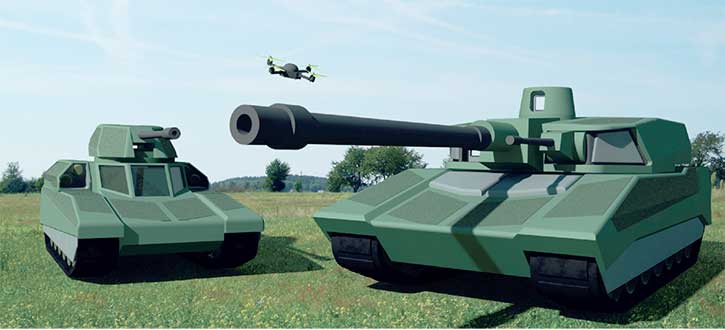
    One version of a notional MGCS depicted by Rheinmetall Defence. Illustration: Rheinmetall Defence

    Germany and France began to harmonize requirements and concepts, with the intention to formalize joint system architecture for their future main battle tank, currently known as the ‘Main Ground Combat System’ (MGCS). This future combat system is expected to succeed the Bundeswehr’s Leopard 2 and the French Army’s Leclerc beginning in 2035. Lead by the German side, MGCS is one of two major collaborations between France and Germany. The second program is the Future Combat Air System (FCAS), lead by France, in cooperation with Germany and Spain.

    The aim of the study is to harmonize the operational requirements of the two armies into the final MGCS concepts drawn in the previous phase, to analyze further details, and to propose a common multi-platform architecture. The three contractual partners will assess various aspects of different concepts including:

    • Technical feasibility in the projected timeframe allotted for the program
    • Ability to fulfill the operational needs of both armies
    • Efficiency and compatibility with national “systems of systems” (SCORPION for
      France and Digitization of Land-Based Operations (D-LBO) for Germany).

    What would the MGCV look like? too early to tell, but most likely, MGCS will be a family of heavy combat vehicles, that will provide the core of heavy, most lethal, and highly protected element, built to dominate any one-on-one direct effect engagement against peer opponent in a future battlespace. Most charts depict MGCS as a group of vehicles delivering a balanced ‘triangle’ – firepower, maneuver, and survivability.

    Subscribe to read the full article

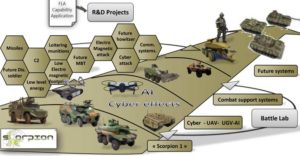
    French Army roadmap for Scorpion includes the introduction of MGCS with unmanned elements by 2035-2040. Picture: French Army

    The formal commitment to the MGCS joint program was given at the Franco-German Ministerial Council meeting in Toulouse on 16 October 2019, by the defense ministers of both nations, Florence Parly and Annegret Kramp-Karrenbauer. Two months later, in December 2019, Krauss-Maffei Wegmann (KMW), Nexter Systems, and Rheinmetall AG established the ARGE working group (ARGE is the German acronym standing for Arbeitsgemeinschaft, or “working group”.) The signature of the contract last week, for the 20-month ‘System Architecture Definition Study Stage-I’ (SADS Part 1), marked the beginning of the MGCS Demonstration Phase. An investment of up to €150 million for SADS Part I will be split equally between Germany and France. Commencing in 2028, the procurement phase will likely be managed under the European cooperative defense equipment organization – OCCAR. Workshares in the SADS Part 1 are to be distributed equally between France and Germany.

    An MGCS concept of a gun combat system and support vehicle, depicted by Nexter in an artist impression from 2018. Illustration: Nexter


    Milrem Robotics Introduces a 12-ton Robotic Vehicle for Mechanized, Armored Warfare

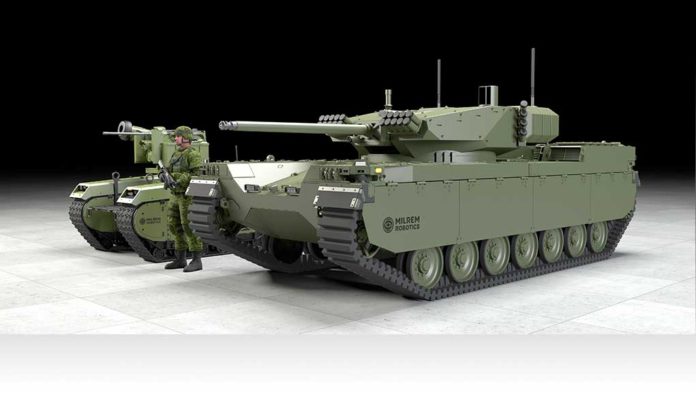
    The Milrem Robotics company from Estonia has developed a Robotic Combat Vehicle (RCV) known as Type-X, introducing new and exciting manned-unmanned capabilities to modern combat. “Milrem planned to unveil the mockup of Type-X at the Eurosatory 2020 event,” Kuldar Väärsi, Milrem CEO told Defense Update, “We plans to complete the prototype of the vehicle by the end of the 3rd quarter of 2020 and begin mobility testing in October.” Väärsi expects its new robotic combat vehicle to weigh about 25 percent and cost about 50-33 percent of an equivalently armed, conventional combat vehicle. The development is funded by an unnamed customer.

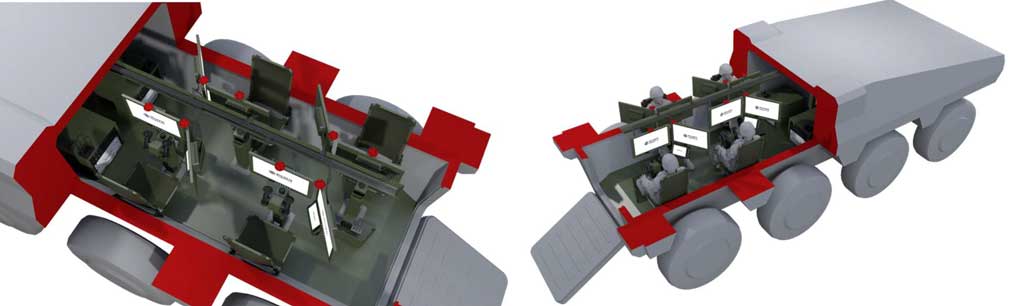
    Four operators stationed in a ‘Mothership’ APSC will be able to operate an entire RCV platoon. Similar actions will be done from main battle tanks or ACVs. Illustration: Milrem Robotics.

    Type-X is a modular chassis that accommodates various configurations; the first variant will be used to assess the performance of the chassis. Such a turret weighs about two tons, along with ammunition and protection, leaving up to an extra ton for more mission payloads. The prototype will carry a generic turret, mounting a 30 mm cannon, and is upgradable to 50mm. Production vehicles provide standard mechanical and electronic interfaces to accommodate different turrets and mission payloads from different manufacturers.

    Using a hybrid (diesel-electric) propulsion system, the RCV maintains mission autonomy for up to 600 km, at a maximum speed of 80 km/h on the road or 50 km/h off-road. Maximum range denotes using fully charged batteries and full tank of JP8. The vehicle uses rubber tracks delivering superior mobility even on rough surfaces.

    Type-X RCV – Rear View. Illustration: Milrem Robotics

    A length of 6-meters and 12-ton weight ensure the Type-X stability for fire precision with an automatic 30 or 50mm cannon. Other advantages derived from the small size are the height of 2.2 meters, providing a low silhouette, and ample clearance for internal air transport in C-130 aircraft (2.9-meter width).

    Mission agility increases with more mobility options, including air mobility by aircraft, parachute, or helicopter sling loading. The current vehicle can cross water but do not have amphibious (swim) capability. Milrem considers providing such capability in the future.

    At a gross vehicle weight of 12 tons, other air-delivery options are available, including airdrop by parachute, low altitude parachute extraction (LAPES) as well as sling-loading under heavy transport helicopters such as Chinook and Super Stallion (CH-47D/F and CH-53G/K). Such capabilities are currently unattained by other combat vehicles of this type.

    A Modular Design

    The drive train uses a hybrid-electric power system, comprising battery banks in front and a diesel generator in the rear. Running continuously at optimal power load when charging, the diesel dissipates lower heat signature, with minimal frontal exposure. Stored energy is used for silent operation, and batteries are recharged while the diesel engine is running. The vehicle maintains significant storage of electrical energy, driving electric motor propulsion and mission systems over a central software-controlled power bus that can distribute several hundreds of kilowatts of high-voltage DC power.

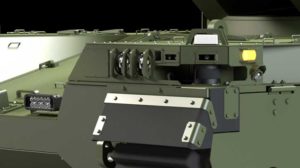
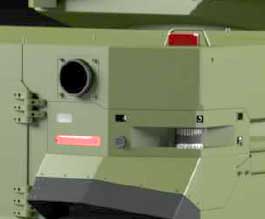
    Type-X sensor group comprises visual, thermal, and LIDARs providing the vehicle all the sensing it needs for autonomous operation. Image: Milrem Robotics
    A close-up view of the combined sensor unit at the rear of Type-X RCV. Illustrartion: Milrem Robotics.

    “The chassis is designed as an independent and autonomous vehicle, equipped with computing power, propulsion, sensing, navigation, communications, energy generation, and storage to support full mission autonomy.”  Chief Engineer of the TypeX project Sverker Svärdby explained. The electronic systems are grouped into Line Replaceable Units (LRU), enabling quick repairs in the field.

    This is an excerpt from the article. Subscribe to Read full version

    According to Chief Engineer Svärdby, all sensors interface with a high-performance computing system using powerful algorithms to produce the tertian map and movement decisions for the vehicle. Actual movement decisions consider these terrain and situational maps, controller’s and mission commands to control the vehicle’s Drive by Wire system.

    New Concepts of Operation

    According to Väärsi, the Type-X RCV design features modularity and agility to enable future configuration supporting a ‘family of RCVs’, to carry out different missions in support of manned and unmanned combat operations.

    Type-X is designed to enable fully autonomous performance, moving on road, in-formation or off-road, conducting overwatch and intelligence, surveillance and reconnaissance (ISR) missions, and target acquisition. Specific countermeasures could also be employed automatically, under certain operational concepts. However, Type-X is not designed to employ its weapons autonomously – but wait for an order from a human operator to engage targets with lethal effects.

    Embedding RCV in tactical formations increases the combatant reaction time and reduce the cognitive load of the commander, contributing to a more effective battle command. Using Artificial Intelligence (AI) and Machine Learning (ML) are employed to assist robots and operators in target detection and acquisition and can also help establish and update the tactical situational picture and help commanders make decisions.

    This is an excerpt from the article. Subscribe to Read full version

    Mission support of rapid deployment – for their compact size and weight, Type-X could be deployed as load carriers, mission support vehicles, electrical power generation units, and weapon carriers for base protection and patrols. On such logistical support missions, a turretless Type-X chassis will be able to haul 5-6 tons, – 2.5 – 3 tons onboard the vehicle itself and up to additional 3 tons loaded on a trailer. These capabilities could become quite useful for peacekeeping operations.

    Hidden Gems in US-Israeli Defense Industrial Cooperation

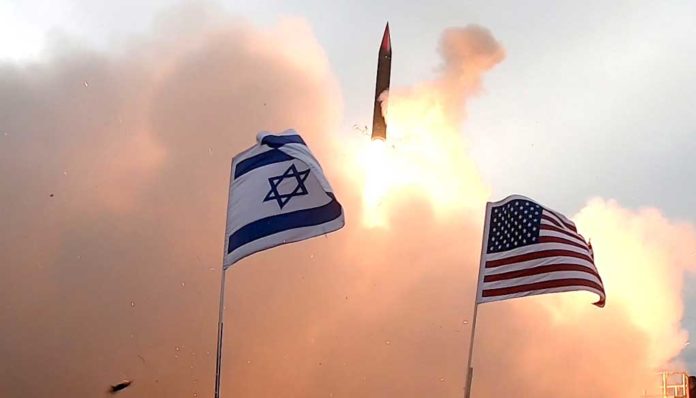
    Over the next decade the U.S. will provide Israel $38 billion military aid. But this generous assistance comes with a price tag, as Israel will have to restrict the use of this money to the procurement of U.S. products. Cooperative developments, such as the Arrow anti-ballistic missile will have to be funded on both sides. Photo: IMoD

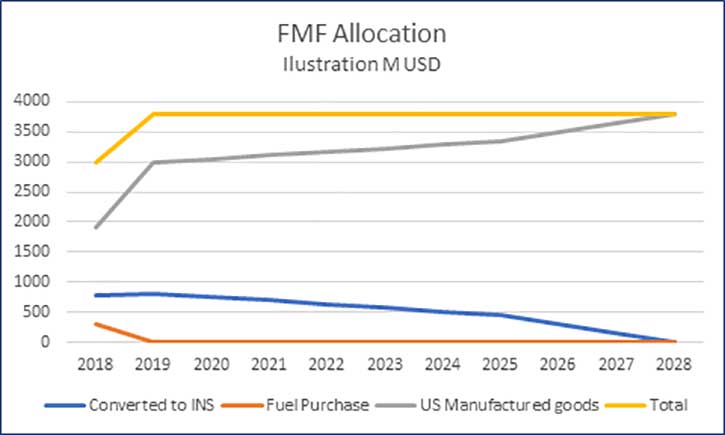
    In September 2016, the United States and Israel signed a Security Assistance Memorandum of Understanding (MoU), in which the U.S. agreed to allocate $38 billion in foreign military financing (FMF) to Israel throughout the decade from 2019-2028, reflecting an increase from 30.0 billion in the previous decade.

    Unlike the past agreement, the FMF gradually reduces allowance for the procurement of equipment and products from Israel. Until 2019, Israel could convert about 26% of FMF into Israeli shekels (ILS) and spend it domestically. The new agreement reduces the share of aid that Israel is allowed to convert. The total of $815 million Israel could convert to local currency in 2019 will be cut by half to $450 million in 2025 and finally to zero in 2028.

    In addition to the above conversion restriction, the agreement prohibits the practice of using FMF dollars to purchase fuel from the U.S. (mainly jet fuel) from as early as 2019. Going forward, this amount of $300-400 million per year (depending on fuel prices) will have to be funded from the domestic budget of the Israeli Ministry of Defense (IMoD) in local currency.

    The combination of these two limitations deprived the IMoD of $1 billion in ILS in 2019 and up to $1.88 billion per annum by 2028.
    Until now, these missing funds were the main source of financing for local defense industries, and their elimination causes significant concern for Israel’s defense companies. In domestic currency, such a vast amount of missing funds poses a significant challenge to the IMoD’s ability to maintain the current level of defense R&D invested with local industries and the academic establishment.

    COVID-19 Impact

    According to the April 2020 IMF report, U.S. GDP is expected to shrink by 5.9 percent in 2020 due to the COVID pandemic. Meanwhile, the Eurozone economy will dive by 7.55 percent, while the scope of global trade is expected to decline by 11 percent.

    There are reasons to believe that the DOD procurement of weapon systems continues, thus helping the administration cope with the economic crisis caused by the pandemic. The U.S. could probably refrain from cuts in the FMF, especially now when a more significant portion of it is spent in the U.S. creating jobs that help stimulate the economy.

    However, the situation in Israel is different. More than 70% of the revenues of Israeli defense industries come from exports. Most analysts expect that during the long and challenging path to economic recovery, the new Israeli government would be forced to shift budgets from defense to fund social and healthcare services. Government stimulus would be channeled toward Hitech, mainly in the sectors in which Israel has a relative advantage: I.T., biotech, automotive, and medical devices. Concurrently, while IMoD balances its procurement by optimizing the utilization of FMF to fill the gaps.

    The slowdown of the U.S. economy would most certainly drive the administration to push back on a possible Israeli request to ease the requirement to send aid dollars in the United States. It would likely insist on the timely implementation of the shift or even demand to speed up the schedule and have all FMF spent in the U.S. to create new jobs and support the beleaguered local aerospace and defense industries.

    These two factors would deny domestic funding to the Israeli defense industry. Moreover, being heavily dependent on exports, these industries would take another hit from the predictable decrease in military imports worldwide, following the need of all countries to support their local industries. The combination of these trends threatens to severely reduce the Israeli defense industries’ revenues and force them into extensive cutbacks.

    The Silver Lining

    Suffering in silence is not the only way for Israeli firms to respond to these dramatic changes. Hiding in this dire situation is a positive prospect that presents a new opportunity for the struggling defense industry.

    Every year now, the IMoD will have access to more and more funds that can be spent only in the U.S., climbing gradually from $2.2 billion in 2018 to $3.8 in 2028, a surge of more than 72%. This translates into an additional $1.2 billion of available budget per annum to purchase goods from U.S. companies.

    The FMF guidelines allow the IMoD to procure weaponry not only from U.S. defense contractors but from Israeli-owned companies located in the U.S. as well. Therefore, Israeli suppliers of IMoD who can swiftly transfer production to the U.S. will be able to compete for increasing volumes of IMoD contracts there. The IMoD is expected to encourage this trend, considering its desperate need to free chunks of ILS budgets to preserve unique R&D personnel and capabilities in Israel.

    Accordingly, a smart Israeli defense company would transfer its technology (ToT) to a U.S. company. The IMOD would then contract with the U.S. entity using FMF. Then, with the profits from their U.S. operation, they would be able to fund the required R&D in Israel, support the IMoD’s unique requirements, and continue their growth in both countries.

    ToT Models

    Several Israeli defense industries are ahead of the curve on this matter. They have transferred their know-how and manufacturing to the U.S., positioning themselves to take advantage of the growth in the total FMF by pursuing several different models, as follows:

    • The M&A model, which characterizes Elbit’s long-standing practice in the U.S. this model is based on the acquisition of American companies that, in turn, are restructured as divisions under Elbit Systems of America (ESA). ESA holds a Special Security Arrangement (SSA) with the DOD that allows it to deal with classified products and information, erecting a firewall between it and the parent company in Israel. ESA is an entirely American company with a business volume of the same order of magnitude as that of all other Elbit facilities worldwide combined.This model requires significant capital investments that no other Israeli defense company can afford – certainly not before the currency-conversion window of opportunity is closed. Furthermore, the U.S. government has declared the termination of the SSA classification mechanism. Therefore, any new Israeli company formed in the U.S. will have to go through a more complex and grueling proxy path that requires disengagement of all business and technological ties with the parent company, except for financial reports.
    • The royalties model has been followed by Rafael since long ago in the 1990s when it transferred the production of the Popeye cruise missiles (AGM-142) to Lockheed Martin in exchange for royalties. Rafael applied this model again recently, transferring the production of the Tamir missiles (Iron Dome projectile) for the IMoD to Raytheon utilizing FMF dollars. Rafael also teamed with Leonardo DRS to sell the Trophy active protection system to the U.S. Army. The IAI implemented a similar model in the 2000s by transferring the production of Arrow missile components to Boeing.
    • The organic growth model is represented by ELTA’s U.S. operations. Based on the establishment of an Israeli-owned U.S. enterprise, ELTA North America (ENA) is an entirely American company driving its growth of two business pillars. First, transfer of production (build to print) of subcomponents for systems intended for the IMoD. Second, in-house cultivation of marketing and engineering capabilities, offering unique solutions to DoD and DHS requirements, relying on Israeli R&D and source technologies. ENA prides itself on its capacity to customize these building blocks to swiftly address DoD and DHS specifications. Their modus operandi requires a security clearance and a proxy board of directors to build and maintain the firewall between the American entity and its foreign parent company. Impressively, from 2014 to 2017, ENA’s backlog grew from zero to $200 million, while returning all the setup debt to its owners.
    • The combined model is implemented by smaller companies such as Plasan Sasa, which transferred some production to its U.S.-based facility, Plasan North America. The locally produced kits are sold to DoD prime contractor, Oshkosh. This model is suitable for responding to DoD tenders but does not represent a full solution for utilizing FMF dollars for IMoD RFPs, as it lacks an independent engineering force that is key for such projects.

    Facing the ToT Challenge

    Despite the hype about a flat world and global village, American and Israeli companies and entrepreneurs have significantly different business cultures, work at entirely different paces, and operate in vastly different business mentalities. This cross-cultural gap is exacerbated in the defense industry’s case by the strict security restrictions of both governments concerning all defense R&D and production.

    Consequently, creating a U.S. entity or merely transferring know-how to an existing U.S. company are challenging projects for an Israeli company, requiring multiple and complicated procedures that may easily take 3-4 years before the entity turns profits. ToT is not a walk in the park.

    The major industry players from Israel need only enhance their existing U.S. production capabilities and streamline their activities to address the impending IMoD’s ILS shortage. In contrast, for smaller companies with no U.S. presence, production overseas is a challenging, expensive, and time-consuming task, which requires expertise, breathing space, and personnel they do not possess.

    Accordingly, mid-sized and smaller Israeli companies seeking to offer their solution to the IMoD in return for FMF dollars need to urgently seek ways to reduce the time it takes to bite into this growing pie. Their need represents an opportunity for those that possess expertise in this niche, such as ENA, which over the last decade has gone through the process of developing procedures that comply with the demands of both governments, and has recently obtained a facility clearance. Moreover, any U.S. partner with experience in ToT for FMF projects can streamline the process for Israeli companies and conduct relationships with the DoD and the IMoD’s N.Y. delegation on their behalf, which is necessary to utilize FMF budgets.

    Once the Israeli company decides to work with a U.S.-based partner, the ToT will require frequent visits of representatives of the U.S. facility in Israel and vice versa. Experience proves that these frequent interactions may create undesirable tension due to business culture gaps, slowing down, or even jeopardizing the entire effort. A wise way to mitigate this risk would be to outsource the inter-facility relationship. The challenge to this is the fact that there are very few professionals with the cultural expertise to work seamlessly in both worlds.

    Switching back and forth between the Israeli and American corporations requires simultaneously speaking the appropriate professional jargon on either side of the ToT, and conducting their affairs according to suitable business codes and cultural nuances. Retaining such experts can significantly increase the probability of conducting a smooth and swift ToT and reaching actual sales sooner.

    Summary

    The reform in FMF utilization, combined with the expected cut in Israel’s defense budget due to the pandemic, forces Israeli defense industries to transfer their production to the U.S. This is a major undertaking for smaller companies that requires expertise, time and personnel many of them lack. The yellow brick road for these players – not only to survive but to thrive in this new era – is to take advantage of existing infrastructure and expertise that would enable them to seize this lucrative opportunity and turn it into profit.

    Joel Alon has more than 30 years of experience in business development, planning, marketing, and operations, in the U.S. and in Israel. As a Senior V.P. Marketing at IAI Alon also led the establishment of IAI’s U.S. subsidiary Elta North America, acting as a shadow CEO for four years.


    A European Team Integrates Aircraft Radar, Radio & ECM Into One Unit

    The Spanish electronics consortium Indra announced it will lead the CROWN research and development project to develop and equip European fighters and other aircraft with a combined, software-defined radar, communications, and electronic defense enabling future aircraft to dominate the radioelectronic space. The goal is to develop a compact, yet a powerful avionic device that will be able to detect, track, and fix the target, and exchange data with other platforms on land, sea, and air and protect the platform by means of electronic attack. Future applications may also include ground and naval platforms.

    CROWN will provide common electronic equipment including active electronic scan array (AESA) antennae that will integrate all functions into a single compact and lightweight equipment item, mounted at the aircraft nose cone or embedded in the fuselage, wings, or hung underwing in external pods (such as with unmanned aircraft). The development will also include the algorithms controlling the multi-function and optimal operation of those units.

    The integration of multiple functions on common hardware and software will bring major advantages through the integration of active and passive electronic sensors, electronic defense (jamming and deception), and communications data links. With this capability, the radar adapts to operate in a congested and contested electronic environment. Electronic defense and attack could operate in synch, over the same hardware, along with communications that will gain range, bandwidth, data transfer capacity, and data link resilience.

    Under its role as the CROWN project leader, Indra will coordinate the work of a European industries consortium formed by Thales, Office National D’Etudes et de Recherches Aerospatiales (ONERA), Hensoldt, Fraunhofer-Gesellschaft, SAAB, Totalforsvarets Forskningsinstitut (FOI), Netherlands Organisation for Applied Scientific Research (TNO), Leonardo, Elettronica, and Baltijos Pazangiu Technologiju Institutas (BPTI).

    The Spanish Government has recently appointed Indra as the national industrial coordinator in the European Defence Program FCAS (Future Combat Air System), the largest joint European Defence program to date and the most ambitious in terms of technological development. Indra will carry out this work together with the industrial leaders appointed in turn by France and Germany, Dassault and Airbus, respectively. As a member of the Euroradar consortium, Undra supported the development of Captor E-Scan active electronically scanned array (AESA) radar for integration into the Typhoon fighter aircraft.

    Next Gen Jammer Nears Flight Testing

    NGJ-MB testing
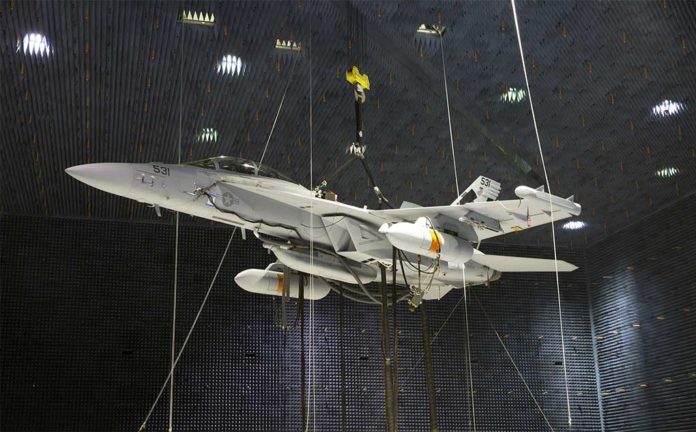
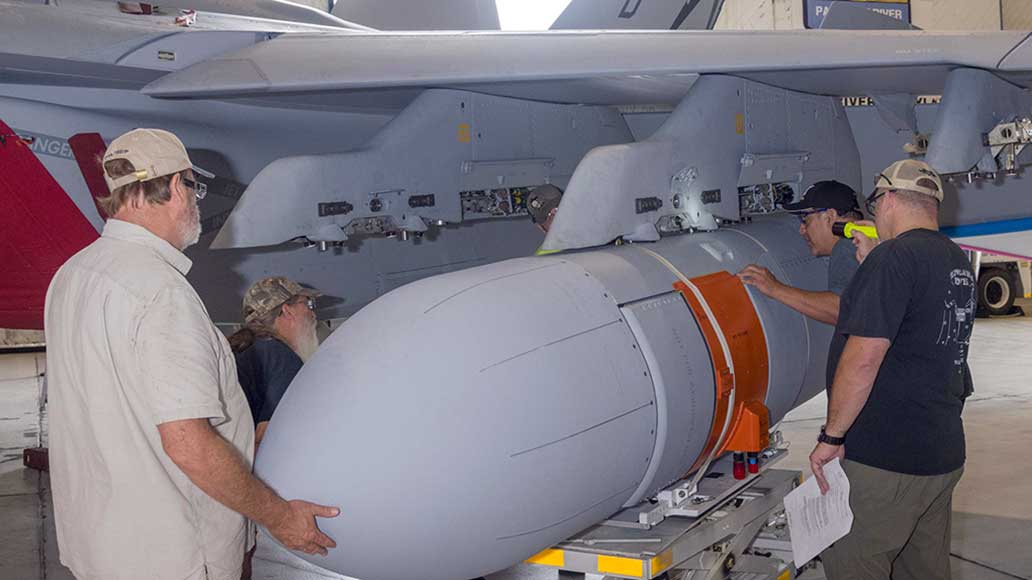
    Two Next Generation Jammer Mid-Band pods, attached to an EA-18G Growler, undergo testing in the Air Combat Environmental Test and Evaluation Facility anechoic chamber at Naval Air Station Patuxent River, Md. (U.S. Navy photo)

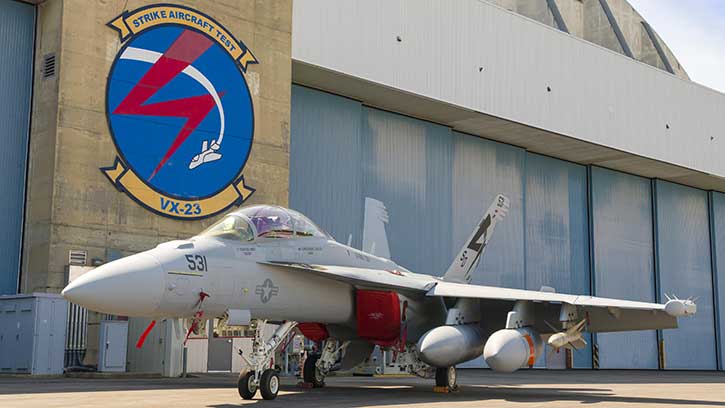
    The U.S. Navy recently completed a portion of developmental testing of the Next Generation Jammer Mid-Band (NGJ-MB) electronic warfare (EW) pod. The program will enter flight testing at the Air Test and Evaluation Squadron (VX) 23 by late June or early July 2020. The program’s Milestone C is projected for the end of this fiscal year and is expected to become operational in 2023.

    “NGJ-LB is the next step in the evolution of Airborne Electronic Attack that is needed to meet current and emerging electronic warfare gaps, and our team is dedicated to delivering this capability to the fleet as quickly as possible,” said Capt. Michael Orr, Airborne Electronic Attack Systems (PMA-234) program manager. Orr spoke today at the EMS Summit, a virtual event conducted by the AOC.

    NGJ-LB is part of a larger NGJ weapon system that will augment, and ultimately replace the legacy ALQ-99 Tactical Jamming System (TJS) currently used for Airborne Electronic Attack on the EA-18G Growler aircraft. Unlike most capabilities that instantly replace its predecessor, the NGJ-MB systems will initially augment the legacy ALQ-99 Tactical Jamming System until the low- and high-band components are ready to deploy.

    The first Next-Generation Jammer Mid-Band Engineering Development Model pod arrived at Naval Air Station Patuxent River after a trek across America late July. Members of the combined Airborne Electronic Attack Systems Program Office (PMA-234), Air Test and Evaluation Squadron (VX) 23 and industry partner test teams navigate the newly arrived pod to its temporary home at the VX-23 squadron. The pod will start various verification and test procedures in preparation for the second pod delivery early fall. (U.S. Navy photo)

    The NGJ-MB system consists of two pods, referred to as a shipset, which will be loaded onto EA-18G Growler aircraft. Production pods to be delivered to the US Navy and the Australian Air Force are expected to achieve initial operational capability in 2023. The system will provide significantly improved Airborne Electronic Attack (AEA) capabilities against advanced threats in the mid-band frequency range through enhanced agility and precision within jamming assignments, increased interoperability, and expanded broadband capacity for greater threat coverage against a wide variety of radio frequency emitters.

    NGJ-MB Engineering Development Model (EDM) pods developed by the Raytheon Company in El Segundo, California completed more than 400 test hours on this ground testing phase, covering basic functionality, Electromagnetic Environmental Effects (E3) data collection, and performance evaluation over a period of three months.

    “This chamber test period was instrumental to the NGJ-MB Developmental Test program, and its success was the direct result of outstanding teamwork among the Program Office, Integrated Test Team, and Raytheon stakeholders,” said Orr. “Data captured during this period not only supports our initial flight clearance but also provided lessons learned that will benefit the entire NGJ-MB test program moving forward.”

    Some of the tests were performed in the Air Combat Environmental Test and Evaluation Facility anechoic chamber at Naval Air Station Patuxent River, Maryland. More tests will be done at the Air Combat Environmental Test and Evaluation Facility and the Facility for Antenna and RCS Measurement (FARM) through this summer. The 20-month DET contract has been a collaborative effort with industry partners to assess technical maturity.

    The first Next-Generation Jammer Mid-Band (NGJ-MB) engineering development model pod delivered to the Navy is fit checked on an EA-18G Growler in September. The fit check verifies the pod securely attaches to the Growler in preparation for flight tests scheduled to begin later this year. Airborne Electronic Attack program office (PMA-234) is carrying out testing of the NGJ-MB. NGJ-MB is a high-capacity and power airborne electronic attack weapon system for the Growler designed to protect air forces by denying, degrading, and disrupting threat radars and communication devices. (U.S. Navy photo)

    U.S. Army to Test 120mm Semi-Automatic Mortars from Finland

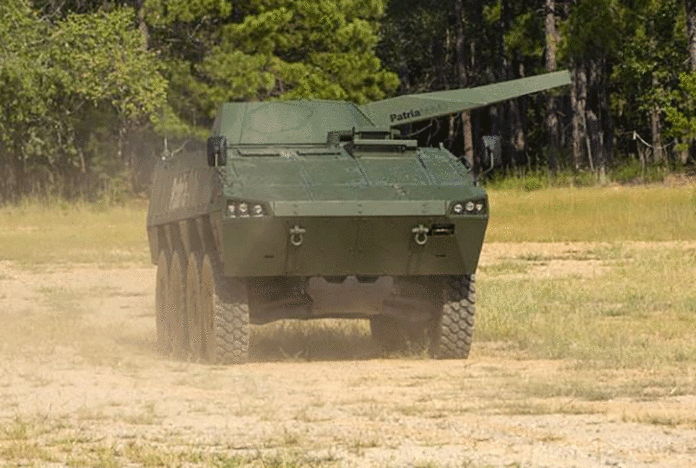
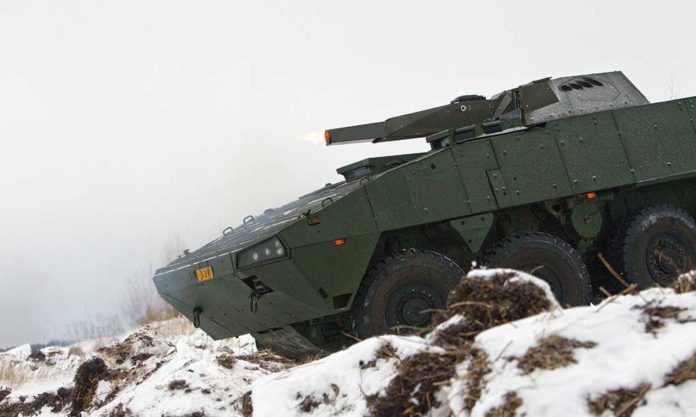
    Nemo 120mm turreted mortar can be employed in indirect and direct firing modes. Photo: Patria

    Patria and the U.S. Army have entered into an agreement for a feasibility study of incorporating a turreted, breech-loaded 120 mm mortar weapon system in U.S. mortar carriers. The evaluation will also assess the integration of carrier weapon platforms and fire control systems and the use of current U.S. 120 mm mortar ammunition in a breech-loaded system.

    The Cooperative Research and Development Agreement (CRADA) agreement between the Army’s Combat Capabilities Development Command Armaments Center and Finland’s company Patria, follows an Army study conducted by late 2018, seeking sources to develop and produce the 120 mm Mortar Future Indirect Fire Turret (FIFT). Patria answered the market survey based on its Nemo mortar system. The evaluation of Nemo turrets is part of a continued search in enhancing the capabilities of Armored and Stryker Brigade Combat Teams with rapid, precise indirect and direct fire capability. The turreted design provides more protection for the crew, and reduces the physical burden of loading bombs. The Russian military has been using turreted mortars in indirect and direct firing modes for decades but until now, the concept has not been successful in the Western military.

    The U.S. Army currently employs the Cardom 120mm mortar system produced by Elbit Systems. Cardom systems are installed on Stryker and M-113 (or AMPV) armored vehicles and are manually loaded. The Marine Corps has recently decommissioned 120mm mortars and is looking for alternatives that will deliver the firepower expected from mortars, but with enhanced effects.

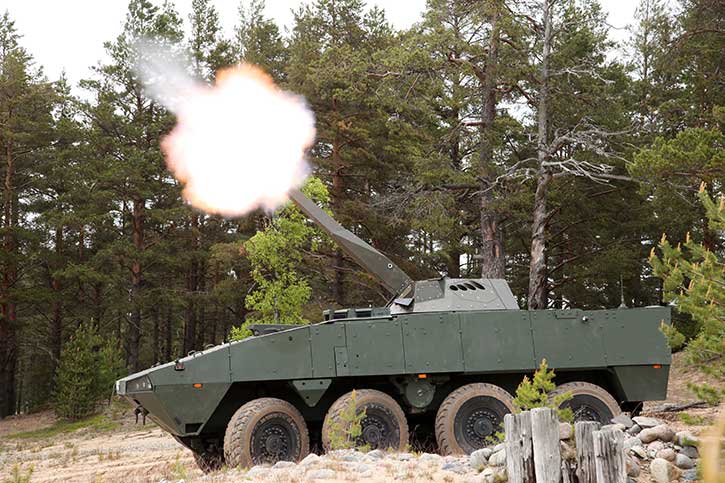
    Nemo 120mm turreted mortar installed on a Patria AMV armored vehicle. Photo: Patria

    The NEw-MOrtar (Nemo) is a turreted, remote-controlled 120 mm smoothbore mortar system with both direct and indirect fire capability. It is a lighter version of Patria’s Amos twin-barrel system in use by the Finish Army since 2013. Like Amos, Nemo is capable of rapid firing using electrically operated semi-automatic loading enables the system to fire in quick succession. Nominally, Nemo can deliver up to 10 rounds per minute at a maximum rate of fire, and six rounds in the sustained firing. It takes only 30 seconds to fire a first round, with two additional rounds in 15 seconds.

    By trimming elevation to different trajectories Nemo can be programmed to hit a target simultaneously with up to six bombs fired from a single mortar on a “Multiple Rounds Simultaneous Impact” (MRSI) fire mission. Such a capability requires highly coordinated fire by a full battalion. In addition to being highly protected, the system employs a hydropneumatic recoiling system to soften firing loads, and with a total weight of about 1,900 kg, it is compact and light enough for installation on light, tracked chassis, wheeled armored vehicles, or navy boats.

    Since 2012 Patria has supplied 60 Nemo mortar turrets to several customers, among them Slovenia (AMV), UAE (installed on naval boats), and Saudi Arabia (LAV-II). The later was acquired under a U.S. Foreign Military Sales contract.

    Hermes 900 to Assume SaR Missions in the South China Sea

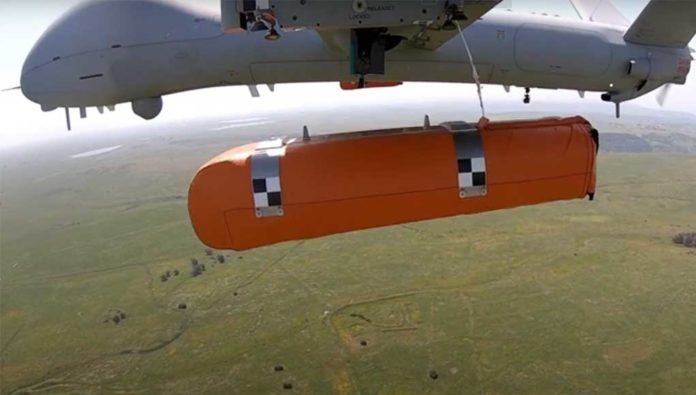
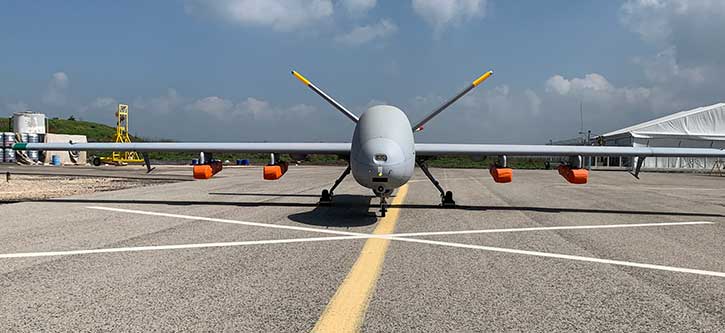
    Hermes 900 can carry up to four, six-person life-rafts under its wings. A gradual inflation process of the life-rafts is initiated after dispatch and is completed upon landing. Photo: Elbit Systems' video

    Elbit Systems has recently delivered Unmanned Aerial Systems equipped for maritime search and rescue to an undisclosed customer in South-East Asia. In this configuration, the Hermes 900 is equipped with detection and identification systems, precision dispatch capability, and up to four inflatable life rafts, each can rescue six survivors. This configuration enables the drone to perform long-range maritime Search and Rescue (SaR) missions, and deliver life-saving assistance quickly upon detection of survivors.

    Drones are complementing traditional manned SaR operations as they offer long endurance and long-range operations since adverse weather conditions and limited mission endurance of the crew often degrade the SaR capabilities of manned aircraft. With mission endurance exceeding 24 hours, drones can operate in extended missions and in adverse weather conditions in both day and night. Equipped with the new SaR capability Hermes 900 UAS can increase the number of SaR missions that can be safely executed and improve the safety and effectiveness of maritime SaR response.

    With a wingspan of 15 meters, the 1.2 Ton Hermes 900 Maritime Patrol is a long-range maritime surveillance system tailored for littoral and blue water operations. On typical SaR missions, Hermes 900 Maritime Patrol can carry up to four, six-person life-rafts that are carried by underwing hardpoints. Using an onboard maritime search radar the UAS can detect the vessel in distress and assess survivor situation. Such drones also employ satellite communication, an automatic identification system receiver, and an Emergency Position-indicating Radio Beacon receiver.


    Hermes 900 Maritime Patrol can carry up to four, six-person life-rafts that are integrated on its wings.

    Upon detection, the UAS’ Electro-Optic/Infra-Red (EO/IR) payload is deployed to provide visual identification, and a rapid calculation of the drop-point is performed, enabling the UAS to dispatch life rafts from a low-altitude of 600 ft. to a pinpointed location at a safe distance from the survivors. A gradual inflation process of the life-rafts is initiated after dispatch and is completed upon landing.

    Related post: Thai Navy to Operate Hermes-900 on Maritime Surveillance and SaR Missions

    IAI To Produce, Market Zibar Offroad Vehicles

    Zibar Mk2 all terrain vehicle Photo: Ido Cohen

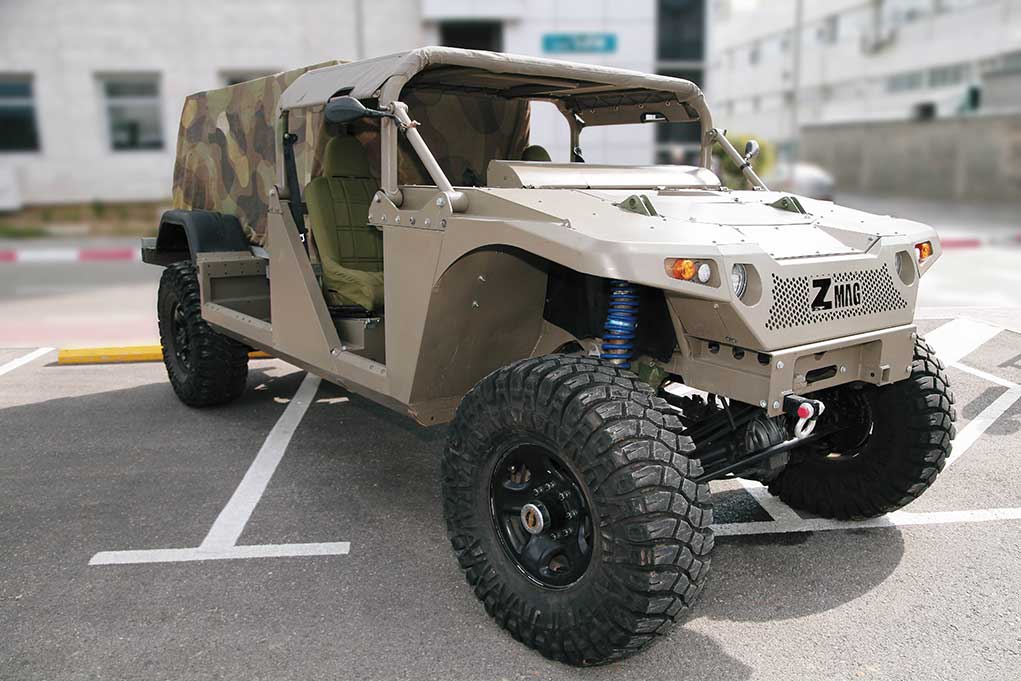
    ZMAG – Combining lightweight but tough chassis with a powerful drivetrain and specially tuned suspension components creates high payload capabilities while maintaining high off-road mobility. Photo: IAI

    IAI acquires the manufacturing operations of the Zibar offroad tactical vehicle, designed and built by Israeli offroad entrepreneur Ido Cohen. The Z family activities being acquired include the Zibar, Zmag – a light version of the platform, and ZED – the armored off-road vehicle. IAI ELTA will design and produce the vehicles in its manufacturing site in Beer Sheva, where RAM vehicles are currently built. The company intends to compete with this vehicle for an upcoming Israel MOD tender for commando vehicles, according to Israel’s Calcalist website. The company plans to adapt and configure the vehicles for military and homeland defense applications, and now, acting as the vehicle design authority will be well-positioned to address specific customer requirements.


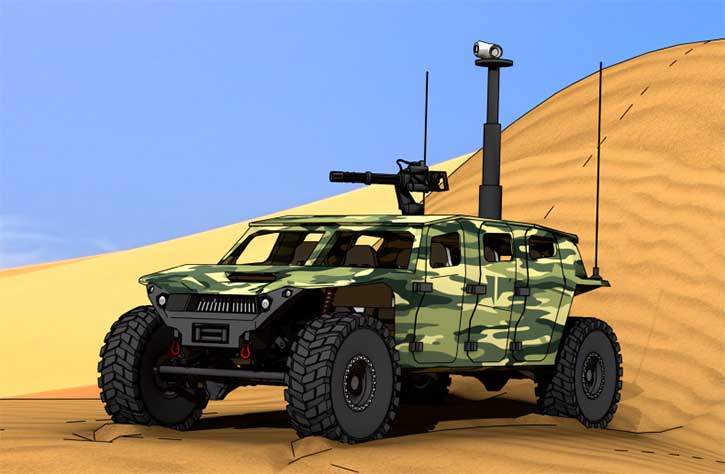
    ZEDD – representing an armored extreme-mobility offroad vehicle. Concept: Ido Cohen

    IAI’s ELTA new ground forces facility is under construction at an investment of tens of millions. ELTA Beer Sheba will also perform the vehicle configuration development and upgrading to provide integrated system solutions. As ELTA is also responsible for IAI’s land robotics, such expertise could also apply to optionally manned or unmanned variants of the vehicle. IAI will market the military vehicles exclusively, while Ido Cohen continues to manufacture and sell the vehicles in its civilian applications.

    Zibar was designed and is manufactured entirely in Israel. The vehicles offer excellent performance and mobility and are capable of traversing harsh off-road conditions. “The off-road vehicles fulfill the operational needs of the ground forces for defense, assault, and intelligence.” Yoav Turgeman, IAI VP and CEO of ELTA, explained, “We are excited to collaborate with Ido Cohen, a visionary vehicle manufacturer from Israel. IAI offers a broad range of ground intelligence, robotics, autonomous vehicles, and remote sensing capabilities. Integrating these capabilities on the Z Vehicle Family provides significant added value to the operational capabilities ELTA provides existing and future customers.”

    Greece Leases Heron Drones from Israel

    IAI Heron UAS shown here in a Maritime configuration. Photo: IAI

    Representatives of the governments of Greece and Israel have signed today an agreement for the leasing of Heron I unmanned aerial systems (UAS) configured for maritime surveillance missions. The agreement covers three years of service, including the training of Greek operators. According to previous media reports, the Herons will be based on the island of Crete and will be tasked primarily with border security and maritime surveillance. Herons already operate over the region, since the drone was cleared to operate in civil airspace by Israel’s Civil Aviation Authority in 2007.

    “The great security relations between Israel and Greece are expanding,” Head of the International Defense Cooperation Directorate (SIBAT), Brig. Gen. (Res.), Yair Kulas commented, “We see great importance in the choice made by Greece to equip its forces with an Israeli system, particularly during the global corona crisis. This is a clear expression of confidence in the capabilities and strength of the Israeli defense industry. We hope to sign additional agreements with Greece as well as other European partners, assisting them in addressing security challenges – in times of the corona pandemic and beyond.”

    The deal has been in the making since 2018, addressing Athens’ growing concern about Turkish drones activity over the Aegean. In recent years Ankara has developed and deployed several types of UAS that took an increasing role in surveillance and combat operations, in Syria and Libya. Some of those drones cover Greece’s territorial waters and Economic Exclusion Zone (EEZ) from Turkish territory. Since Greece does not produce drones locally, Athens invited known drone manufacturers to demonstrate such systems for its evaluation. In 2018 IAI flew 600 hours with Heron I in support of the European Union’s FRONTEX border agency. In January, General Atomics concluded a 10-day evaluation of its Sea Guardian deployed to Larissa Air Force base in central Greece.

    The leasing of Heron I drones provided a timely solution for these urgent operational needs. The agreement provides Athens with an option to buy Heron drones after the three-year lease. In 2018 local media in Greece reported that the deal is worth €35.5 million could cover up to seven aircraft. Current reports mentioned only three aircraft.

    General Director of the General Directorate for Defense Investments and armaments, Lieutenant General (retd.) Theodoros Lagios (HAF), on his visit to IAI in 2019. Photo: GDDIA

    IAI’s Maritime Heron is equipped with a multi-sensor suite comprised of radar, SIGINT, COMINT, and day and night electro-optical sensors and satellite communications terminal, that enabling operators to cover the entire east Mediterranean sea area on a high-altitude flight path. The maritime Heron was the first maritime surveillance drone to assume operational maritime and coastal surveillance patrols. Since 2017 it has replaced the manned maritime surveillance aircraft in Israel. Several customers have leased Heron drones from IAI, among them Germany, Australia, and Canada. The German Herons are currently deployed to Mali, in support of UN operations in the Sahel. Germany is also leasing the larger Heron TP drones.

    Loyal Wingman Prototype Rolls Out in Australia

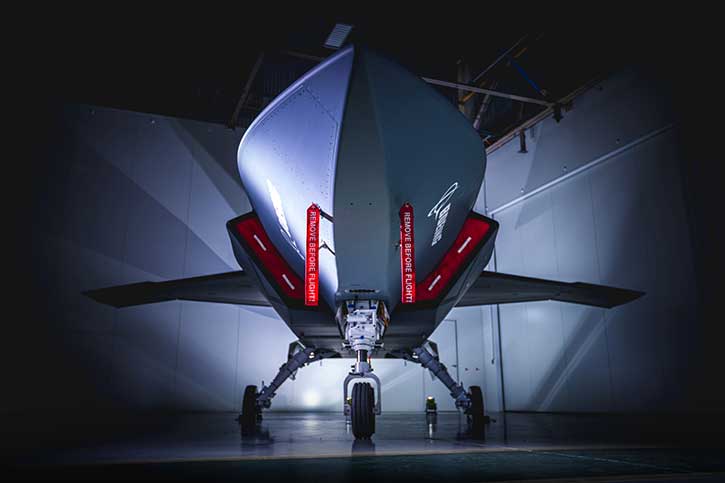
    Boeing unveiled today in Australia its 'Loyal Wingman' prototype. Photo: Boeing

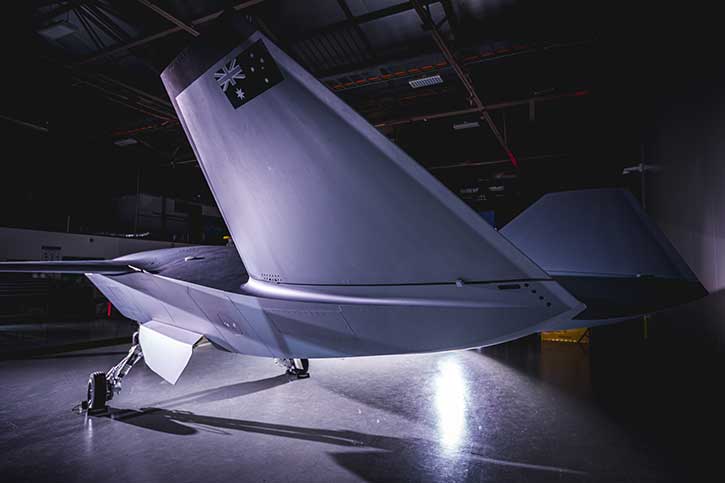
    The first prototype unmanned Loyal Wingman aircraft was unveiled in Australia yesterday. The Loyal Wingman prototype now moves into ground testing, followed by taxi and a first flight later this year. The aircraft is the first of three prototypes built under the Australian Loyal Wingman program. The Loyal Wingman will have a range of more than 3,700km, providing a significant force-multiplier for current F/A-18E/F Super Hornets and F/A-18G Growlers currently operated by the Australian Air Force. By helping project power forward, these unmanned assets will help to keep manned platforms out of harm’s way.

    The event marked the launch of the first Australian-built aircraft for more than 50 years. The unmanned aircraft was designed and built under a partnership between the Royal Australian Air Force and Boeing Australia.

    Boeing has developed this unique unmanned aircraft as part of its ‘Airpower Teaming System’ (ATS), employing manned and unmanned assets in a complex that leverages artificial intelligence (AI) enable unmanned platforms to enhance capabilities currently requiring human supervision. ATS is Boeing’s largest investment in an unmanned aircraft outside of the United States. The Australian Government has added $40 million investment in the program.

    A forward view of the ‘Loyal Wingman’ IA-driven unmanned aircraft. Photo: Boeing

    “The Loyal Wingman will be pivotal to exploring the critical capabilities our Air Force needs to protect our nation and its allies into the future.” said the Hon. Scott Morrison MP, Prime Minister of Australia. “The new capability would help protect and support Australia’s most valuable Defence aircraft and the pilots who fly them,” Mr. Morrison added. “We’re investing to enhance the agility and capability of the Australian Defence Force so we can protect our nation and our allies. It means Australia can sharpen its edge and prepare for the future,” Mr. Morrison said.

    The program helps support around 100 high-tech jobs in Australia. More than 35 members of the Australian industry are supporting prototype work across four Australian states.

    “We look forward to getting the aircraft into flight testing and proving out the unmanned teaming concept,” said Kristin Robertson, vice president and general manager of Autonomous Systems for Boeing Defense, Space & Security. “We see global allies with those same mission needs, which is why this program is so important to advancing the development of the Boeing Airpower Teaming System.”

    Anticipating such global market demand for highly capable but extremely affordable unmanned aircraft, Boeing applied advanced design innovation and manufacturing techniques to achieve those goals. The Loyal Wingman aircraft was engineered using a digital twin to model its structures, systems, capabilities, and full life-cycle requirements; manufactured with Boeing’s largest-ever resin-infused single composite piece; and assembled using proven advanced manufacturing processes.

    The canted twin tail is part of the platform’s low-observability features. Photo: Boeing


    US Army, Foreign Customers to Invest $6 Billion in Patriot PAC-3 Enhancement

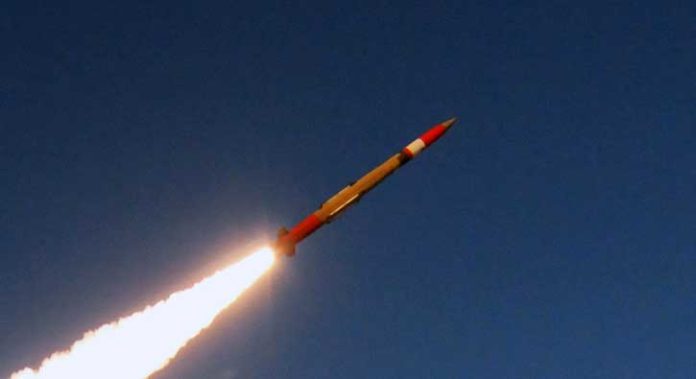
    Patriot PAC-3 MSE launched on a test flight. 2018. Photo: Lockheed Martin

    Lockheed Martin has received a $6.07 billion contract from the U.S. Army for the production of Patriot Advanced Capability-3 (PAC-3) Missile Segment Enhancement (MSE) interceptors and associated equipment, to be delivered across FY21, FY22, and FY23 contract years.

    PAC-3 MSE provides the latest enhancement of the MIM-104 Patriot weapon system. The system leverages an advanced multi-mission interceptor that expands the Patriot weapon system’s capability against advanced tactical ballistic missiles, cruise missiles, and aircraft. The contract calls for the production and delivery of PAC-3 MSE interceptors, launcher modification kits, associated equipment, and non-recurring efforts to support the United States and global customers. Ten nations – the United StatesQatarJapanRomaniaPoland, the United Arab EmiratesSweden, Korea, Bahrain, and Germany – have signed agreements to procure PAC-3 MSE interceptors.

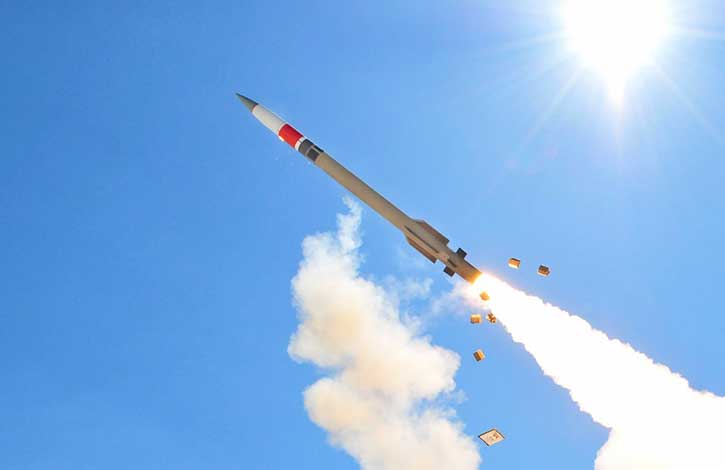
    With a large, dual-pulse solid rocket motor the PAC-3 MSE interceptor extends the intercept range and height, compared to legacy PAC-3. The larger control fins and upgraded actuators increase maneuverability adding to the improved kinematics. The missile retains the PAC-3 Hit-To-Kill technology.  The system achieved the Initial Operating Capability in 2016. Lockheed Martin has also improved the PAC-3 interceptors under the PAC-3 Cost Reduction Initiative (CRI), intended to improve the reliability and readiness of fielded PAC-3 missiles. 

    The interceptor of Patriot PAC-3 CRI shown on a launch test. Photo: Lockheed Martin

    “This contract demonstrates our customer’s continued confidence in our ability to deliver unmatched Hit-to-Kill technology that defeats the ever-expanding global threats of today and tomorrow,” said Scott Arnold, vice president, Integrated Air & Missile Defense at Lockheed Martin Missiles and Fire Control.

    To meet customer demand and increase production capacity, Lockheed Martin is currently building an 85,000-square-foot expansion at the Camden, Arkansas, facility where PAC-3 MSE interceptors are assembled. The building is expected to be complete by the fourth quarter of 2021, with operations beginning in the first quarter of 2022.

    Fincantieri to Design, Build a New Class of Frigates for the US Navy

    Fincantieri selected to design and build FFG(X) frigates for the US Navy
    US Navy selects Fincantieri to design and build 10 FFG(X) frigates frigates. Image: US Navy

    WASHINGTON: The US Navy awarded Marinette Marine Corporation (MMC) a contract to design and produce the next generation small surface combatant, the Guided Missile Frigate (FFG(X)). MMC is part of the Fincantieri Marine Group (FMG), a subsidiary of the Italian shipbuilder Fincantieri. The contract covers the production of up to 10 Guided Missile Frigates.

    The current award at the amount covers the detail design and construction (DD&C) of the base ship. If all options are exercised under this contract, nine more ships will be built at a total value of $5.58 billion. The total cost of the lead ship will be $1.281 billion, with $795 million of that covering the shipbuilder’s detail design and construction costs and the rest covering systems delivered by the US Government. The lead ship of this (yet unnamed) class will be delivered in 2026 and is expected to reach initial operational capability by 2030. Nine additional ships will be ordered until 2024. By 2025 the Navy will decide how and who will produce the remaining ten ships of this class.

    The FFG(X) will be based on the successful ‘European multi-purpose frigate’ designed by Italian shipbuilder Fincantieri and the French Naval Group. Ships of this design are already operated by the French, Italian, Egyptian and Moroccan and will also be supplied to Brazil. FREMM is a versatile ship built with the multi-mission capability to conduct air warfare, anti-submarine warfare, surface warfare, electronic warfare, and information operations.

    A model of the FREMM-based FFG(X) was displayed by Fincantieri at the Sea-Air-Space event in 2019. Photo: Chris Cavas via Twitter.

    The vessel will be 151 meters long, with 21 m’ overall beam. It will be powered by a Combined diesel-electric and gas (CODLAG) system offering a sustained maximum speed above 26 knots, or economic (electrical powered) cruising at 16 kt. The ship will accommodate up to 200 sailors and equipped to operate at a range of more than 6000 nm. 

    Unlike the European vessels of this class, the FFG(X) will be equipped with US-made systems derived from existing destroyers, specifically the Enterprise Air Surveillance Radar (EASR based on Raytheon’s SPY-6 Air and Missile Defense Radar), Baseline Ten (BL10) AEGIS Combat System from Lockheed Martin, which will also produce the Mk 41 Vertical Launch System (VLS). Other government-furnished equipment includes communications systems, BAE Systems’ MK 57 Gun Weapon System (GWS), countermeasures, EW/IO area, and design flexibility for future growth.

    Fincantieri’s proposed FFG(X).
    Fincantieri displayed this model of an FFG(X) based on the FREMM design. Note the large aft deck and hangar. The ship has the storage and deck space to support all manned and unmanned vertical-lift aviation operated by the US Navy. Photo: Chris Cavas via Twitter

    The ship is designed with space and power for future enhancements, including the addition of laser weapons, to enhance point defense, and to free up VLS tubes for offensive weaponry. Each ship will also accommodate one manned helicopter and one unmanned air vehicle and will have storage and deck space to support all manned and unmanned vertical-lift aviation operated by the US Navy.

    The acquisition process for FFG(X) began in 2017. Since then the Navy has worked closely with Industry to balance cost and capability. The accelerated selection process took less than a year, as the Navy released the FFG(X) DD&C Request for Proposals to industry on June 20, 2019. “Throughout this process, the government team and our industry partners have all executed with a sense of urgency and discipline, delivering this contract award three months ahead of schedule.” James Geurts, assistant secretary of the Navy for research, development, and acquisition said. Marinette Marine was in competition with four other shipyards for the contract: Austal USA of Alabama; Bath Iron Works in Maine; Huntington Ingalls of Mississippi: and Lockheed Martin in Maryland. Following the selection, the Wisconsin yard plans to invest up to $100 million to maintain a production rate of two FFG(X) frigates per year.

    Lockheed Martin’s New Tactical Missile Scores Successful Flight Test

    PrSM Missile Launched on test flight
    Lockheed Martin PrSM missile candidate launched on its third test flight. Photo: Lockheed Martin

    White Sands Missile Range, New Mexico: Lockheed Martin successfully tested today the long-range missile designed for the Army’s Precision Strike Missile (PrSM) program. It was the third and final flight demonstration the company delivered as part of the program’s Technology Maturation and Risk Reduction phase. Previous flights were tested in March and December last year were also successful.

    PrSM was fired from Lockheed Martin’s High Mobility Artillery Rocket System (HIMARS) launcher and flew approximately 85 kilometers to the target area, culminating in a highly accurate and lethal warhead event. On previous tests the missile flew 270 and 180 km.  PrSM is designed for a minimum range of 60 km and a maximum range of “exceeding 499” km.

    “Today’s PrSM test, a highly stressful short-range shot, represents the third successful flight test proving the effectiveness, survivability, and reliability of the tactical baseline missile,” said Gaylia Campbell, vice president of Precision Fires and Combat Maneuver Systems at Lockheed Martin Missiles and Fire Control. “We’ve validated the design and performance of our baseline tactical missile and are already working with our Army partner on Engineering Design Testing, production readiness and fielding requirements to support the future needs of the Soldier,” Campbell said.

    This range was limited by the now-collapsed American-Russian Intermediate-Range Nuclear Forces Treaty (INF). As the 500 km range is now irrelevant, as PrSM is deployed in 2023 it will be able to reach 550 km. As the missile employs an open architecture and modular design, it is expected to improve in the future, extending the range to 750 km. With this potential reach, PrSM will become an important part of the Army’s future multi-domain capability. A maximum range is expected to be part of an upcoming test. Other enhancements will include the integration of a multi-mode seeker, enabling the missile to engage moving and relocated targets.

    PrSM InfographicTest objectives included confirming flight trajectory, range, and accuracy from launch to warhead event, as well as warhead lethality, HIMARS launcher integration, and overall missile performance.

    Last month, the company was selected by the Army to move to the next phase and continue the maturation of the next-generation long-range precision fires solution for the U.S. Army.

    PrSM will deliver enhanced capabilities for attacking, neutralizing, suppressing and destroying targets at depth on the battlefield and gives field artillery units a new long-range capability while supporting brigade, division, corps, Army, theater, Joint and Coalition forces.

    The program now enters a 14-month technology maturation risk reduction phase that will lead to the delivery of 30 missiles by late 2023 under an urgent material release. The total request is in excess of 2,400 missiles.

    PrSM is designed to replace the ATACMS missile, fielding with HIMARS and M270 rocket and missile launch platforms, carrying two PrSM rounds per launch pod.

    Russia Conducts Direct-Ascent Anti Satellite Weapon from Plesetsk

    Contrails left after a Russian anti-satellite weapon test on April 15, 2020
    Contrails left after a Russian anti-satellite weapon test on April 15, 2020

    Russia has been engaged in direct ascent anti-satellite (DA-ASAT) anti-satellite weapon tests in the past months. On April 15 a missile launch from the Plesetsk test site on the arctic circle. Initially, it was unclear what missile was launched that day or if that missile actually hit any space objects, like an old Russian satellite.

    Russian media sources reports said the missile tested called ‘Nudol’ has reached over 7,000 m/sec, thus positioned in the ‘hypersonic‘ category. Prior to the test, large airspace along the missile’s flight path was closed, with an area typical for a two-staged missile. en. John W. “Jay” Raymound, USSPACECOM commander and U.S. Space Force Chief of Space Operations called the test a real, serious, and growing threat to the U.S. and allied space systems.

    Nudol missile test
    A Nudol missile tested in 2018. Photo: Russian Defense Ministry.

    Other tests of anti-satellite weapon systems were previously conducted under the “Sistema A-235 / RTTS-181M Nudol” program which has been tested at least nine times in the past. Those tests simulated a target impact to avert creating excessive space debris. Nudol was developed as part of the Russian strategic missile defense capability can be armed with a blast fragmentation or nuclear warhead.

    In February 2020 the US Space Command raised the awareness on another Russian initiative – on-orbit testing of a satellite interceptor comprising two satellites, the COSMOS 2542 and COSMOS 2543. These satellites, have “exhibited characteristics of a space weapon.” According to the blog site Russian strategic nuclear forces, published by security and nuclear disarmament expert Pavel Podvig, the Cosmos-2542 satellite in December last year released what appeared to be an inspector satellite, the Cosmos-2543, which then was tailing a U.S. spy satellite, an act Space Command interpreted the “irresponsible and potentially threatening.”

    Several countries have already demonstrated the capability to conduct ASAT operations. Russia, China, and India. The US has also developed air-launched ASAT weapons. Other countries like China, Iran, and North Korea have used high power lasers to blind and potentially damage the sensors of reconnaissance satellites.

    “This test is further proof of Russia’s hypocritical advocacy of outer space arms control proposals designed to restrict the capabilities of the United States while clearly having no intention of halting their counter-space weapons programs.” Gen. Raymound said.

    Skunk Works and XTEND Simplify Multi-Drone Command

    0
    Lockheed Martin Skunk Works® and XTEND have achieved a major milestone in JADC2 by integrating the XOS operating system with the MDCX™ autonomy platform. This technical breakthrough enables a single operator to simultaneously command multiple drone classes, eliminating the friction of mission handoffs. From "marsupial" drone deployments to operating in GPS-denied environments, explore how this collaboration is abbreviating the data-to-decision timeline and redefining autonomous mission execution.

    From Ukraine to Taiwan: The Global Race to Dominate the New Defense Tech Frontier

    0
    As traditional defense primes face mounting competition from agile “neoprimes” such as Anduril, Palantir and Helsing, the balance of innovation is shifting toward software-defined warfare and scalable, dual-use technologies, while global industry consolidation—marked by Boeing’s integration of Spirit AeroSystems and other strategic mergers—signals an intensified race to secure control over the defense technology value chain. Our Defense-Tech weekly report highlights these trends.

    Europe’s “Drone Wall”

    0
    In early October 2025, a coordinated wave of unmanned aerial system (UAS) incursions—widely attributed to Russia—targeted critical infrastructure across at least ten European nations. The unprecedented campaign exposed the fragility of Europe’s air defenses...

    Weekly Defense Update & Global Security Assessment

    0
    Executive Summary The past week (September 18-25, 2025) represents an inflection point where strategic defense concepts have transitioned from doctrine to tangible reality. An analysis of global events reveals four primary, interconnected trends shaping an...

    U.S. Air and Space Forces Push Next-Gen Programs at the AS&C 2025 Conference and...

    0
    At the 2025 Air, Space & Cyber Conference, U.S. Air Force and Space Force leaders unveiled major updates on next-generation fighters, bombers, unmanned systems, and space initiatives, highlighting both rapid innovation and critical readiness challenges as the services race to outpace global competitors. A short version is available here, with a more detailed version for subscribers.

    TADTE 2025: Reflecting Taiwan’s Strategic Themes

    0
    The Taipei Aerospace & Defense Technology Exhibition (TADTE) 2025 crystallized around four dominant strategic themes that collectively illustrate Taiwan's comprehensive approach to defense modernization amid escalating regional tensions. Based on a detailed report by Pleronix (available upon request). Includes a Podcast discussion on TADTE 2025's highlighting Taiwan's four strategic themes beyond the post's coverage.

    Iron Beam 450 Completes Testing, Soon to Join With Operational Air Defense Units

    0
    Israel’s Iron Beam 450 high-power laser system has completed final testing, marking a major leap in air defense. Developed by Rafael, it offers precise, cost-effective interception of rockets, UAVs, and mortars, and is set for IDF deployment by 2025.