
Saturday, December 20, 2025
More
    Home Blog Page 25

    Armata Tank Field Tested in Syria

    T-14 Armata tank on display at the Army 2019 exhibition. Photo: Defense-Update

    Russia has been testing its latest and most advanced tank – the T-14 Armata in Syria. Since the tank is currently in a developmental testing phase, it is likely that its mission to Syria is considered a field trial rather than a combat mission. Russia has used Syria as a testbed for its new combat systems since the beginning of its intervention (or as it is called ‘stabilization support’) in the Syrian Civil War.

    Russian Minister of Industry and Trade Denis Manturov confirmed those tests yesterday. According to the Tass News Agency, the initial delivery of tanks is expected this year (2020), these tanks will be used by the Army in operational field trials. The first Army field unit is expected to get the tanks in 2021. According to Manturov, the high cost of the T-14 reflects its current status as a developmental complex. Following those trials modifications and changes are to be done, commencing by serial production next year, that is expected to meet contract goals.

    According to Manturov, Armata has attracted significant foreign interest reflected in a few preliminary orders. He said that firm orders could be expected after the new tank gets export permission from the Russian government.

    Russian Army Receives New T-90M MBT

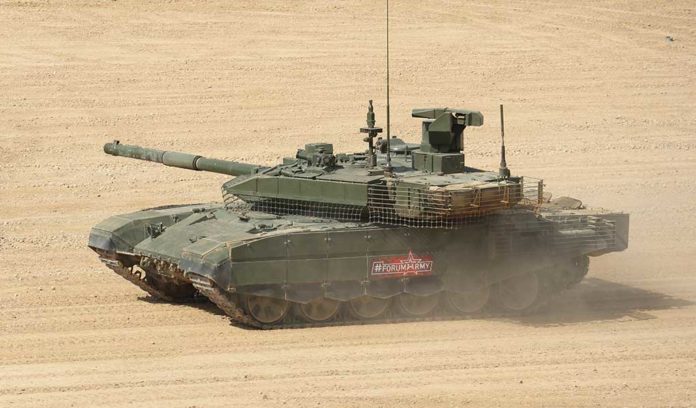
    T-90M performing a maneuver and firing demonstration at the Army 2018 event. Photo: Defense-Update

    The Russian Army has recently received the first batch of T-90M main battle tanks. The upgraded variant of the T-90 was developed by the T-90 manufacturer Ural Vagon Zavod (UVZ) enterprise. The plant, located at Yekaterinburg in the Ural region, is one of two major tank manufacturers in Russia, a producer of tanks since the T-54/55, 72, T-90 to the Armata family MBT.

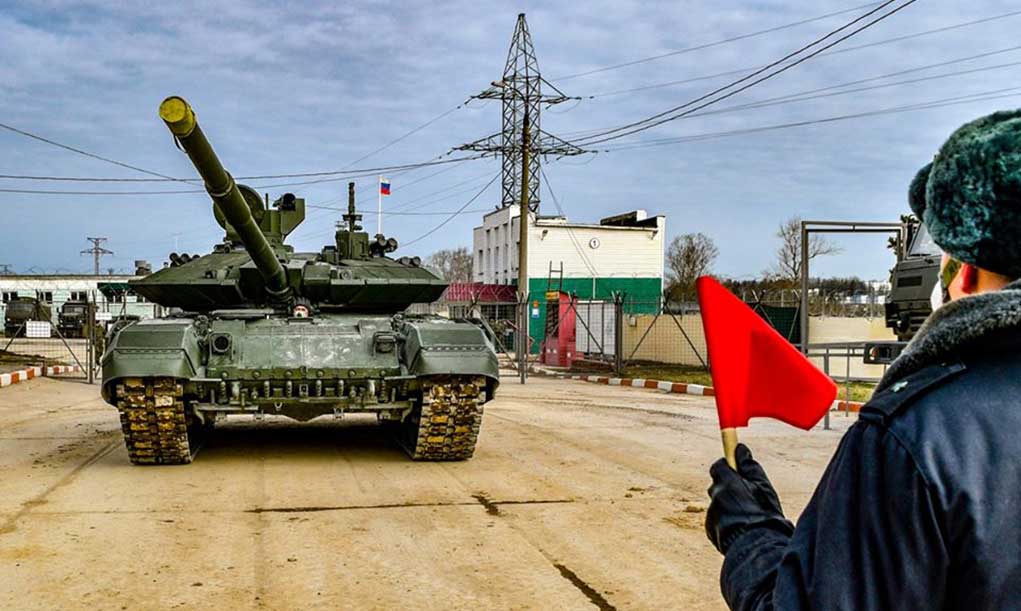
    The first batch of T-90M tanks delivered to a Russian Army unit.

    The latest upgraded version of the T-90 – the Proryv-3 (Breakthrough) T-90M has recently completed field tests by the Russian Ministry of Defense, commencing deliveries to field units. In April 2020, the Russian MOD reported the first deliveries to the Tamanskaya Motor Rifle Division, a unit of the Guard Tank Army deployed in the Western Region. The unit and its new tanks are expected to take part in the 9 May victory parade in Moscow. In the coming years, the Russian Army is also fielding upgraded variants of the T72M, T72B3M, and T80BVM. The Russian MOD plans to upgrade 350-400 T-90s to the new standard, deferring mass production of Armata tanks due to their high cost.

    These tanks provide a temporary solution addressing capability gaps and technological advancement before deploying next-generation AFVs such as the T-14/15. While the next-generation tanks are already developed, they still face technical hurdles and are too expensive for large scale procurement. The cost of T-14 Armata MBT is estimated at US$8-12 million, compared to $1.5-2.5 million, the cost of an upgraded T-90. Nevertheless, the T-90M benefits from technological achievements and systems implemented in the expensive export version T-90MS and the Armata MBT.

    Some of the outstanding new features of the T-90M are a new turret mounting an improved version of the 2A46 125mm stabilized cannon. Improved precision derives from the muzzle drop measurement and fire control systems borrowed from the new T-14 Armata tank. This cannon fires kinetic rounds that are longer and faster than previous rounds, thus being able to penetrate thicker armor. The fire control is programmed to fire three types of rounds – High-speed Kinetic (APFSDS), HEAT-AT, and High Explosive airburst fragmentation projectile, used against soft targets and structures. Gun-launched anti-tank missiles of the 9M119 Svir/Refleks family (NATO Reporting Name: AT-11 SNIPER) are used against targets at ranges up to 5,000 meters.  The tank can also use the entire range of older ammunition.

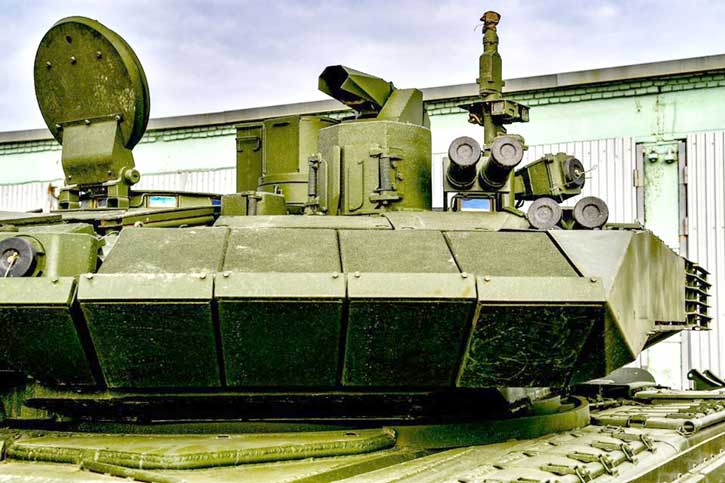
    The side of the turret of T-90M showing Relikt armor, laser warning units and smoke canisters, part of the tank’s self-defense system. The remotely controlled weapon station (the weapon is not mounted), commander’s independent sight (closed) gunner’s sight (closed), laser guidance unit for REFLEX missiles (closed) and meteorological probe with video cameras are also visible. Photo: Russian MOD

    A coaxial 7.62mm machine gun is placed along with the main gun. The KORD-MT remotely controlled weapon station that mounts a 7.62/12.7 mm machine gun is placed near the commander’s cupola and is controlled by the crew from inside the vehicle. This method was also employed in the T-14 and T-90MS. The turret shape enabled designers to increase the ammunition stowage by 3 (to a total of 43 rounds), of which 22 – 24 pairs of projectiles and propelling charges are placed in the automatic loader’s carousel (plus 4-6 missiles). The remaining rounds and propelling charges are stored in a new turret bustle rather than in the crew compartment, thus avoiding the risk of explosion.

    Related post: New KE Ammunition for Russian Tanks

    Another new system implemented here is the Kalina automatic target tracker and fire control computer developed for the T-14. This system enables the gunner to lay the gun on target, lock, and automatically fire while on the move.

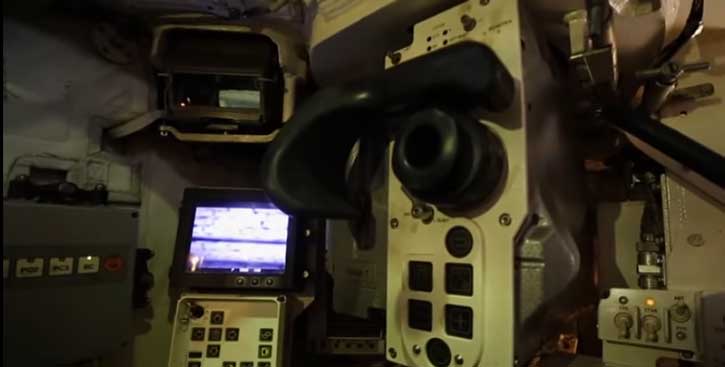
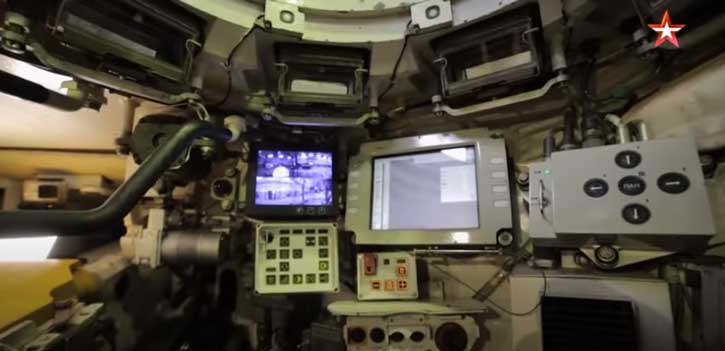
    Gunner’s sight and fire control.
    Visibility from inside the tank is provided by the commander’s sight (right), panoramic views (left) showing the views of four cameras mounted on the meteorological. Standard optical vision blocks provide back-up viewing around the turret.

    The tank has an independent panoramic commander’s sight with day/night channels. The gunner uses a separate sight, laser rangefinder, and a missile director associated with the beam-riding gun-launched REFLEKS missiles.

    The lack of soft or hard-kill APS hints the Russian Army has been satisfied with the level of protection its new tank provides. The level of protection of the T-90M has been improved to defeat kinetic threats capable of penetrating 1,100 to 1,300 mm and shaped-charge threats penetrating up to 1,350 mm of rolled homogenous steel (RHS).

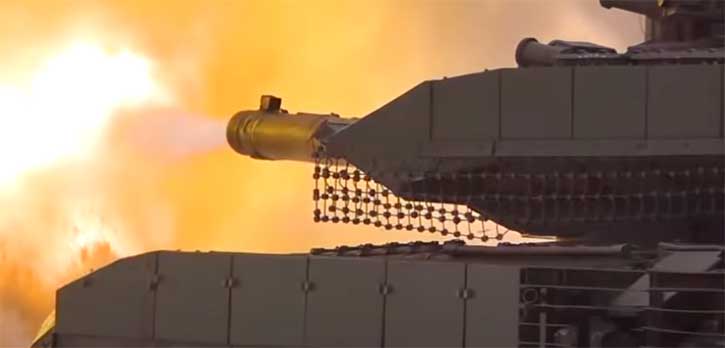
    Additional protection layer was added to withstand such threats, comprising steel plates added with the 3rd generation reactive protection known as RELIKT. Additional protection using statistical protection is added around the turret and engine compartment at the rear. The lower sections of the turret sides and rear are applied with net-shaped RPG-protection, with slat-type armor applied to the engine compartment sides and rear. The type can also use large reactive protection bags applied to the sides, on top of the bazooka plates, protecting against roadside IEDs and EFP.

    T-90M firing. Note the flat panels of Relikt reactive protection and the flexible, mesh-type RPG protection on the side.

    These add-on armor solutions were developed based on the lessons learned during the Syrian Civil War, where T-72 tanks suffered significant losses to anti-tank guided missiles and RPGs. Similar configurations are also applied to T-72 tanks and BMPT Terminator infantry support tanks. While earlier T-90 versions were equipped with the SHTORA-1 soft-kill active defense system comprised of two ‘red eye’ infra-red flashlights, the current variant does not use such measures, Russian sources relate to it as ‘laser countermeasures’. Four units are mounted on the turret, two units are pointed forward and two sideways. Further protection is provided by the 81mm multi-spectral canisters deploying smoke screens, which can be triggered by the laser warning.

    An interesting note is the lack of hard-kill active protection means. The Russian MOD has evaluated several types of APS, including ARENA on T-72/90 and AFGANIT on T-14/T-15 and other AFVs. It has been confirmed that models of the T-90SM have been equipped with APS addressing foreign interest, but apparently, lack of such interest in Moscow has left the T-90M without such protection.

    The new design also reduces the tank’s signature, especially in the thermal reduction of engine exhaust heat.

    With the 1,300 hp engine (up from 1,000 hp of the T-90S) the 46.5-ton vehicle has a 1:26 power to weight ratio, thus maintaining good mobility and obstacle crossing capability, particularly when assisted with the integral dozer blade, assisting the tank in digging up firing positions. For mobility in muddy terrain tank units employ tree log barricades built from trunks carried on each tank. Traditionally these trunks are placed in the rear, but the T-90M carries its log on the starboard side (right side), thus enabling a quick release.

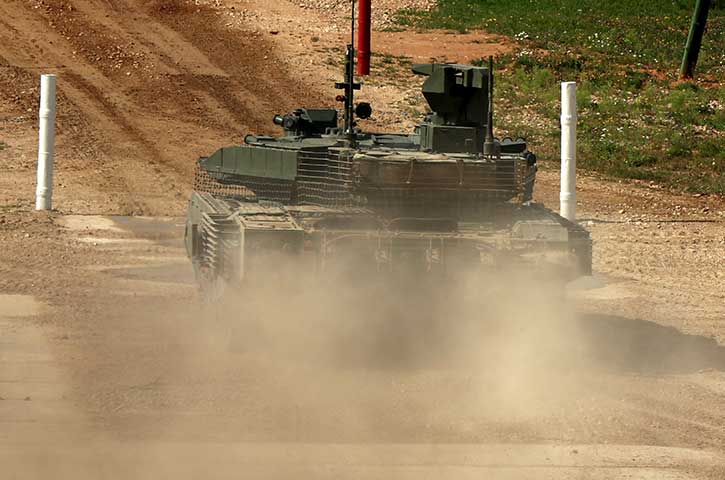
    T-90M down range (Photo: Defense-Update)

    Measurements:

    • Gross Vehicle Weight: 46.500 kg
    • Length: 9.430 (Chassis only: 6.900 m.)
    • Width: 3.800 m.
    • Height: 2.200 m.
    • Crew: 3

    Firepower:

    • Main Gun: 2A46M-4/8
    • Elevation: -6 +14
    • Ammunition: 40-43 (22 in carousel)

    Protection & Survivability:

    • Hull: Welded steel
    • Add on armor: RELIKT reactive armor
    • Anti-RPG net around the turret
    • Soft kill: Laser detection & Warning, Multi-spectral Smoke

    Mobility:

    • Powerplant: Diesel 1,300 hp
    • Max speed: Road: 60-70 km/h, off-road: 45 km/h
    • Autonomy: 550 km

    Russian Tanks get Advanced Kinetic Ammunition

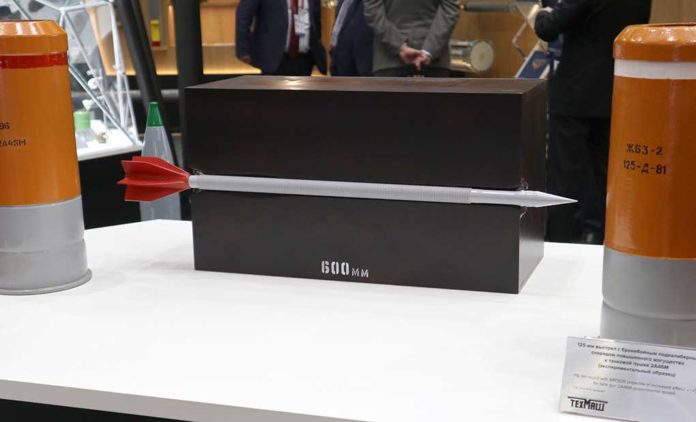
    The long rod penetrator made of Tungsten is used with Svinets KE projectiles. It penetrates 600 mm of steel, the penetrator made of depleted uranium can penetrate up to 700 mm of steel. Photo: Defense-Update

    The Russian military has been using a family of kinetic 125mm ammunition known as ‘MANGO’ since the mid-1980s, with all 125mm guns used on main battle tanks, tank destroyers including the D-81. This family comprised the 3VBM17 cartridge and the 3BM42 long rod penetrator made of steel. About ten years later a new family of kinetic ammunition known as SVINETS was in the making.

    SVINETS represent the family of new rounds designed to meet a new performance level set by the American M829 that were loaded with depleted uranium penetrators, that made their debut in Operation Desert Storm in Iraq, 1991. The original M829 could penetrate 540 mm of RHA target at 2,000 meters. The advanced types of M829 (A3/4) long rod DU penetrators are fitted with a special fin designed to defeat ERA.

    T-90M firing. Note the mesh-type RPG protection on the side.

    Harnessing Technology and Innovation to Fight COVID-19

    Several years ago, when IAI started to advance the integration of innovative technologies in its operations, that move was not meant to fight a hidden enemy, such as the Coronavirus. Rather, the initiative was aligned with IAI’s innovation in its classical operations: aerospace and defense. Then as the Coronavirus started spreading across the globe, the lateral innovation processes within IAI took a new direction, seeking to save lives.

    The infrastructure we built at IAI in recent years allows us to be more flexible and agile in our current operations, while leveraging the connections we have established with startups and accelerator ecosystems, enables us to work in an Open Innovation framework. Faced with the COVID—19 pandemic, IAI began evaluating various assistance scenarios that could be beneficial at the national level in Israel. We worked on two channels: collaborating with the defense and healthcare ministries and working with the Israeli Corporations Authority to understand the healthcare needs from the field. The new connection and forum, which was created between defense and healthcare agencies, has led to a joint platform to which the hospitals bring forth their needs while we work to devise solutions.

    The new forum allows a two-way flow of information and feedback, which is productive for both parties. We ventured into profound need identification, established contact with the hospitals and toured their premises. We then worked on focused solutions addressing the needs of medical professionals. Those same professionals are committed to this process despite the immense workload they shoulder. Those needs were communicated to IAI R&D and innovation leaders, who then set about finding solutions and helping the world during this crisis.

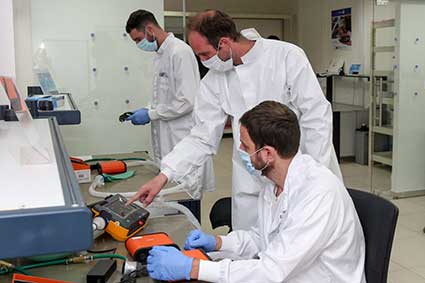
    Testing the initial batch of Ventway Sparrow respirators produced at IAI. Photo: IAI

    This orchestrated effort has resulted in a range of technological solutions: ventilators, sanitation, diagnostic, protective and even disease predictive systems. These solutions are being developed following prioritization of medical needs, demonstrating the unique value of IAI: a combination of innovation, technology, and, fast, exceptional solutions.

    In early April 2020, we inaugurated an assembly line for ventilators at IAI’s missile division, in collaboration with the Ministry of Defense and Inovytec, which specializes in emergency medical systems. The first shipments comprising dozens of ventilators have already been delivered to the Health Ministry. Shortly, we will be able to manufacture hundreds of ventilators per week. The turbine-based Ventway Sparrow Ventilator is lightweight, easy to use and provides invasive or non-invasive ventilation to children or adults. It complies with the strictest medical standards and is used by hospitals and emergency care centers in Israel and abroad. It provides life-supporting respiratory treatment in a wide range of medical scenarios, including the Coronavirus.

    Another unique solution, developed within only a week, involves sanitation of medical rooms with UVC technology. IAI engineers developed their solution following consultation with the staff of Shamir Medical Center where it is currently undergoing test and evaluation. Once test results have been assessed, IAI will be able to build hands-free sanitation systems capable of disinfecting a room within 30 minutes.

    Yet another development allows remote measurement of physiological parameters. This system, which was developed in collaboration with the Directorate of Defense Research and Development (DDR&D) at the Israel Ministry of Defense and the Technion, uses radar, Electro-Optic, and AI data analysis to measure pulse, temperature, saturation and breathing rate. It is being tested now at hospitals in Israel.

    Based upon our commitment to provide our best capabilities and people to fight the Coronavirus, IAI is partnering in dozens of other ventures that help fight the pandemic. We send our appreciation and gratitude to the medical teams in Israel and abroad, who are heroically fighting the virus. Now is the time to join forces, work, and overcome the challenges!

    Read more on IAI’s COVID-19 related activities.

    Future Armored Vehicles – Weapon Systems Event Becomes a Webinar

    With the current coronavirus situation, SMi, the organizers of Future Armored Vehicles Weapon Systems Conference decided to shift the conference into a webinar, to be held on the same days 3rd – 4th June. Two other events – Military Robotics and FAV-Situational Awareness were pushed back to September. SMi Group Defence announced today that the Weapon Systems event will be available to participants via remote access.

    We salute SMi and its sponsors John Cockerill and Lockheed Martin for their bold decision and commitment to the armor community for keeping this event going, operating this important venue to update us and providing unique networking opportunities despite the social distancing and travel restrictions imposed on us around the world. Attendees will be able to hear presentations from senior officers and executives from the UK, USA, Germany, Netherlands, Israel.

    Among the presentations, we expect to hear the keynote from event Chairman, Lieutenant General (ret.) Jonathon Riley, Former Deputy Commander ISAF, British Army. The topic is “Predicting Future Operational Requirements for Allied Armored Elements”. A panel of British Army officers will also discuss Efforts to Enhance Lethality Across British Army Components. US Army Brigadier Matthew J. Van Wagenen will discuss the upgrading of Armored Capabilities for Allied Cavalry Elements in the European Arena.

    Discussing specific weapon systems currently in development and testing, Lieutenant Colonel Robert Page, Commanding Officer, Armoured Trials and Development Unit, British Army will discuss the CTAI-40mm armored trials. Captain Tom Quant, Regimental Intelligence Officer, and Project Streetfighter Lead, Royal Tank Regiment, British Army will present the CR2 STREETFIGHTER and its role in Urban Fighting. An officer from the Israel Army will brief about the IDF Carmel FCV Program.
    You can download the full program at the conference site linked here.

    The price to be a part of this conference is £999 (remote access) and registration is available via the conference website www.fav-ws.com

    IAI’s Battle Management Solution Changes the Rules of Combat

    First unveiled by Israel Aerospace Industries’ (IAI) in April 2019, OPAL is designed to allow warfighters to respond effectively to combat threats characterized by Time Critical Targets (TCT), and forces that operate both in conjunction with other units and in remote areas, away from C2 coverage, according to Barak Israel, Product Line Manager.

    According to Israel, military forces have been hampered by the combat platform’s inability to directly communicate with each other, this limitation is evident in the lack of connectivity that existed between fourth and fifth-generation fighter jets. “Modern warfare is very dynamic. If you don’t respond immediately, the threat won’t be there,” Israel stated.

    Information Sharing

    The need to share information among various forces and the critical requirement of militaries to see the same picture and speak the same language was the driving force behind OPAL’s development. “If you see something that I can’t see – I want to see what you’re seeing. Not through verbal descriptions, but through image and video sharing or data set transmissions. My physical location isn’t relevant for this to happen,” Israel stated.

    Military forces have been struggling with the need to acquire sensor to shooter cycles that deliver sufficient information in time. Traditional solutions for combat needs moved slowly. OPAL introduced a focused and affordable solution to share actionable information in a very short timeframe. The end result, Israel said, is significantly enhanced lethality and survivability for customers, as well as savings on life cycle costs and time.

    We took the Android concept and brought it to network-centric warfare

    OPAL creates networking connectivity and enables data sharing among all members of a fighting force, irrespective of whether they are airborne, naval or land-based. It uses software-defined radios and any existing data links to share large amounts of real-time data, in line with operational needs, enabling end-users to take swift and relevant actions.

    One of the unique capabilities in the OPAL networking layer is that it provides realtime communications. Unlike traditional datalinks that provide update rates of several seconds, OPAL operates in milliseconds, as it employs a real-time network that has been used to prevent mid-air collisions between fighter jets flying in close formations.

    Developed over the past 15 years using open architecture, OPAL allows customers to program their own applications to match operational needs after the initial infrastructure is delivered by IAI.

    Apps for the Strike Force

    According to Eyal Yogev, Project Manager, Conversions and Upgrades Division at Aviation Group at IAI, the system is inspired by Android-like architecture, which all relies on common infrastructure, instead of the traditional military systems that rely on dedicated hardware running specific and unique software. “We took the Android concept and brought it to network-centric warfare (NCW). OPAL can be installed on any platform – aircraft, helicopters, UAVs, ground forces and ships. It supports any operational capability though this infrastructure, making it shareable by the network members, similar to how smartphone applications function,” he said.

    OPAL is comprised of a range of different hardware Line Replaceable Units (LRU) configures and optimized for each application, platform or end-user. This solution delivers an advanced application middleware with optimized applications and, where needed, advanced networking and connectivity services. OPAL features high processing and graphic capabilities, and deliver essential battlefield services to the participating members, enabling all users to share a common operating picture in real-time and to communicate in the same language.

    In terms of operational doctrine, an important advantage OPAL provides is introducing new capabilities in a very short time

    The ability to share accurate real-time data among the different elements of the fighting forces significantly improves the efficiency and survivability of the different members, within the formation and among other forces, such as supporting elements, air and ground forces. “The implications for close air support, for example, are major,” Israel stated. “This represents a new and transformative capability for the military.”

    OPAL shares local data over selected radio links with other users, ensuring that information is transported across network nodes in real-time, regardless of range, location, terrain obstacles, weather conditions, or the operational condition.

    A Network Linking All Generations

    OPAL provides customers with a high degree of operational independence. Customers have the option of ordering IAI’s radio systems and datalinks as a part of the OPAL battle management system or acquiring OPAL while utilizing existing communications and datalink networks. Moreover, customers can employ operational capabilities developed by the manufacturer, or develop their own applications, relying on OPAL’s inherent application infrastructure.

    “In terms of operational doctrine, an important advantage OPAL provides is introducing new capabilities in a very short time,” said Israel “Once the system is installed, clients are independent. We transfer the relevant capabilities and tools so that users can develop their own capabilities.”

    OPAL is proven and operational on jets, training aircraft, refuels, helicopters, mission aircraft, command and control centers, and ships as well as other platforms.

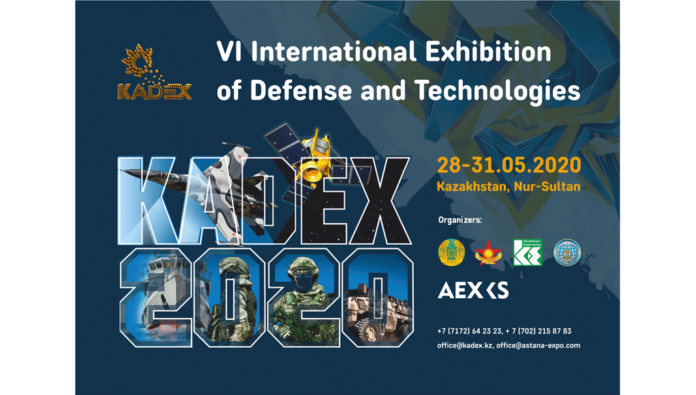
    KADEX 2020

    Location: Nur-Sultan, Kazakhstan
    Days: 11 – 13 June 2021
    Organizer: Astana Expo
    Event Website Link

    As Kazakhstan’s main defense, aerospace, and cyber exhibition Kadex is also a major regional exhibition providing an important business platform for defense and security companies to present their solutions to the relevant decision-makers.

    Over 400 exhibitors from 45 countries are expected to be at the show, occupying 86,500 square meters of exhibit space. 60 delegations will attend Kadex, some headed by defense ministers from across the region.

    The event will also cover key topics including advanced defense technologies, cybersecurity, and aerial mobility and transportation.


    Israel Debuts New Persistent Surveillance Capabilities at the Singapore Airshow

    Microlite WAPS payload integrated on an Orbiter 4 Small Tactical UAS. Photo: Rafael

    In a trend to improve wide-area persistent surveillance (WAPS) beyond existing capabilities, Israel’s defense industries unveil groundbreaking, lightweight WAPS systems designed for small, tactical unmanned aerial systems (STUAS). These platforms are designed to operate with tactical forces and provide intelligence support to the units in direct contact with the enemy.

    At the Singapore Airshow Rafael unveiled today the MicroLite, a small multi-sensor payload developed by Rafael and carried on Aeronautics’ Orbiter 4, demonstrating the synergy between Rafael’s EO capabilities and Aeronautics’ aerial platforms.

    Utilizing Orbiter 4’s 24-hour mission endurance capability MicroLite applies a gimballed-turret design, which enables a horizon-to-horizon field of regard. The 11 kg payload comprises HD TV color camera and high-resolution Midwave Infrared (IR), to enable day and night operability. In addition, when a suspected target is spotted the same payload can also designate targets with a laser.

    Part of the view obtained by the MicroLite, with a ‘window of an area interest’ showing one of 10 such windows the system supports.

    The system uses onboard data processing and storage providing advanced image processing in real-time. By continuously monitoring a large area, MicroLite creates a wide footprint, by which the entire area is continuously revisited at a very high rate, enabling simultaneous high-resolution tracking and investigation of multiple targets, including small targets. Developed by Rafael based on the anticipation of customer requirements, MicroLite has been integrated with the Orbiter 4 and is expected to begin flight evaluation.

    IAI also presents the Wasp, just above half the weight of MicroLite, Wasp is a smaller sensor for wide-area persistent surveillance that implements Wide Area Motion Imagery (WAMI) to detect moving targets, based on high-resolution visual imagery delivered by its sensors in the day and at night. Wasp is designed to operate with IAI’s BirdEye 650D small tactical UAS.

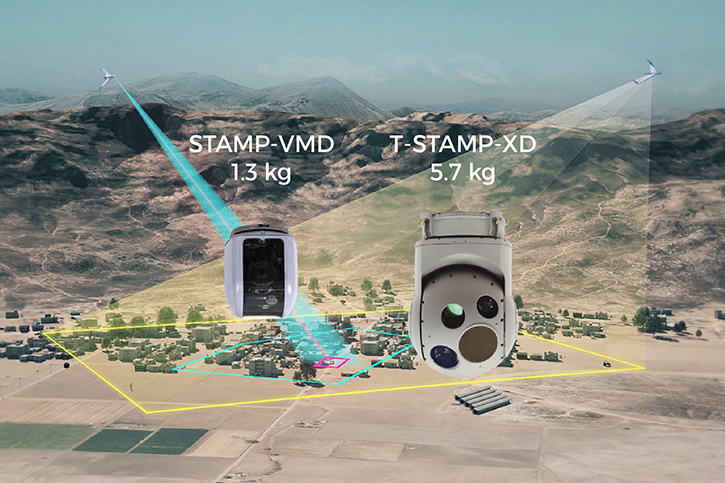
    STAMP-VMD covers a wide area providing motion detection, other, directing other, narrow field of view payloads to investigate and designate targets. Photo: Controp

    Controp Precision Technologies offers the smallest and lightest wide-area sensors STAMP-VMD – a member of the STAMP micro-payload family weighing only 1.3 kg. It is designed for operation on electrically powered Group-1 (smallest) UAVs, such as the Orbiter 2. Designed for low altitude operation, it enables the drone to perform missions even in rough weather. Flying below cloud base at 1,500ft, it covers an area of one square kilometer with continuous video-motion detection.

    This sensor uses an advanced multi-megapixel day camera that features automatic movement detection and tracking capabilities, enabling simultaneous monitoring of multiple targets. STAMP-VMD uses an integrated sensor data processer do employ detection algorithms thus reducing datalink bandwidth consumption. Providing a wide-area sensor for other platforms, it sends moving target coordination on demand to other platforms, for designation and precision attack.

    Iran Unveils Raad-500 – A New Tactical Ballistic Missile

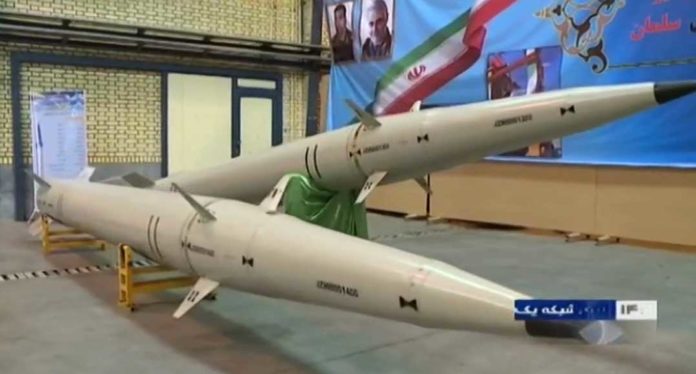
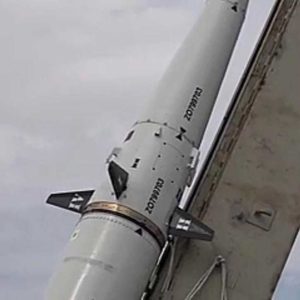
    Iran's Revolutionary Guards Corps (IRGC) unveiled today the existence of a new tactical ballistic missile representing a generation leap in ballistic missile technology. The 4th Generation Raad-500 (Thunder) introduces an improved aerodynamic design, composite casing rocket propulsion, and terminal precision capability recently demonstrated by Iran on its attack on the US Airbase of Al Assad in Iraq.
    The guidance section of Raad-500 is different from the one used on the Fateh 110 and is considered to be a more mature design tailored for the missile.

    Iran’s Revolutionary Guards Corps (IRGC) unveiled today the existence of a new tactical ballistic missile representing a generation leap in ballistic missile technology. The 4th Generation Raad-500 (Thunder) introduces an improved aerodynamic design, composite casing rocket propulsion, and terminal precision capability recently demonstrated by Iran on its attack on the US Airbase of Al Assad in Iraq.

    A video frame showing the Raad 500 warhead section striking the target with high precision.

    It shares the physical dimensions with the Fateh 110, but improves payload to weight ratio. The new missile weighs half the weight of the Fateh 110 (3320 kg) while extending the Fateh 110 range to 500 km (adding 200 km). The missile used a separable maneuvering warhead that shapes the warhead stage trajectory after separation to improve impact accuracy.

    The missile uses four canard fins placed at the main contributor to this improvement is Zohair, a new rocket engine made with carbon fibers composite rocket casing, designed to withstand pressures up to 100 bars at temperatures of 3,000 degrees (Celsius).

    Until now rocket casing made of steel was used for this purpose. Tehran also unveiled a bigger rocket engine designed to propel satellites and missile’s upper stages in space. This rocket engine also implements composite casing and thrust vectoring enabling a missile to shape its trajectory as it moves in space. This capability is useful for placing satellites in orbit and improving the accuracy of reentry vehicles before entering the earth’s atmosphere.

    Israel’s Eitan 8×8 APC to be Fielded by the End of 2021

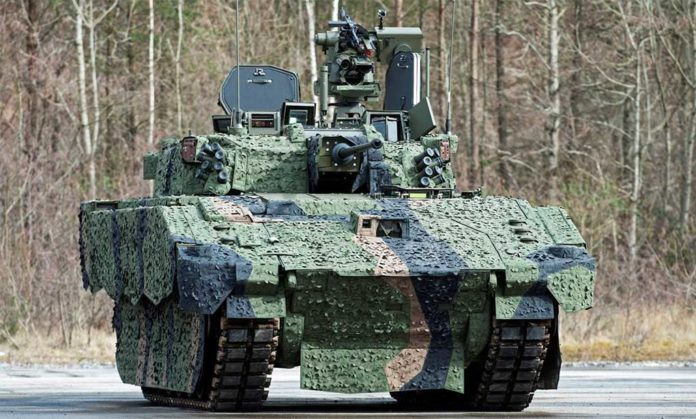
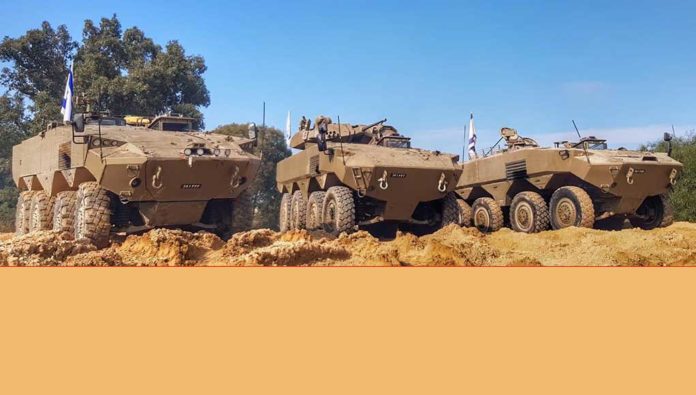
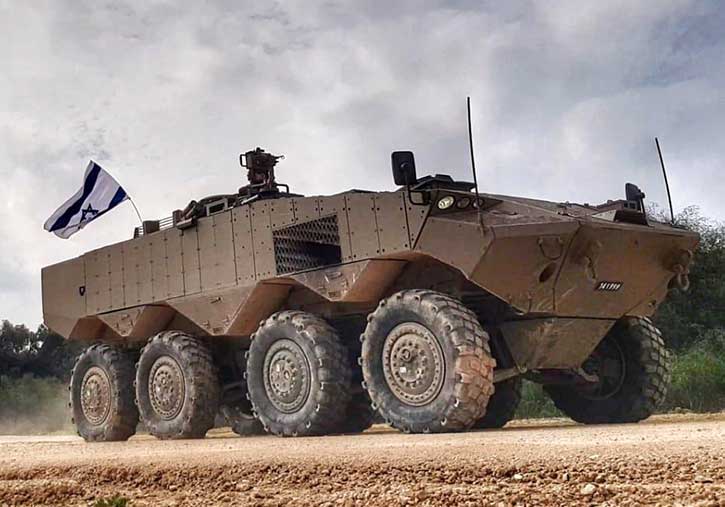
    Israel's three Eitan 8x8 wheeled armored personnel carrier (APC) prototypes. The vehicle will be produced in three configurations - APC, turreted APC (unmanned turret) and command vehicle. Photo: Israel MOD

    Israel will soon begin serial production of Eitan 8×8 armored personnel carriers (APC) at the IDF Technical and Logistics Directorate Development and Maintenance Center, where Merkava and Namer heavy armored fighting vehicles are produced. Eitan is expected to become operational at the end of 2021, replacing the half-century-old M-113 APC.

    Eitan is Israel’s late entry into the wheeled AFV generation, a trend endorsed by armies throughout the world since the 1960s. The IDF evaluated several types of wheeled APCs but rejected the concept due to the lack of protection and off-road mobility, where tracked vehicles have superior performance over wheeled ones.

    With gross vehicle weight exceeding 30 tons, and the availability of active protection systems to protect such platforms wheeled APC has reached a point where the IDF could accept such vehicles to equip light infantry formations, particularly those designed for combat in urban terrain. Unlike tracked vehicles that cause extensive damage to infrastructure, wheeled vehicles are less restricted in movement on paved and unpaved roads. Modern 8×8 combat vehicles often use double steering and central tire inflation systems to improve maneuverability, obstacle crossing and mobility in sand and mud.

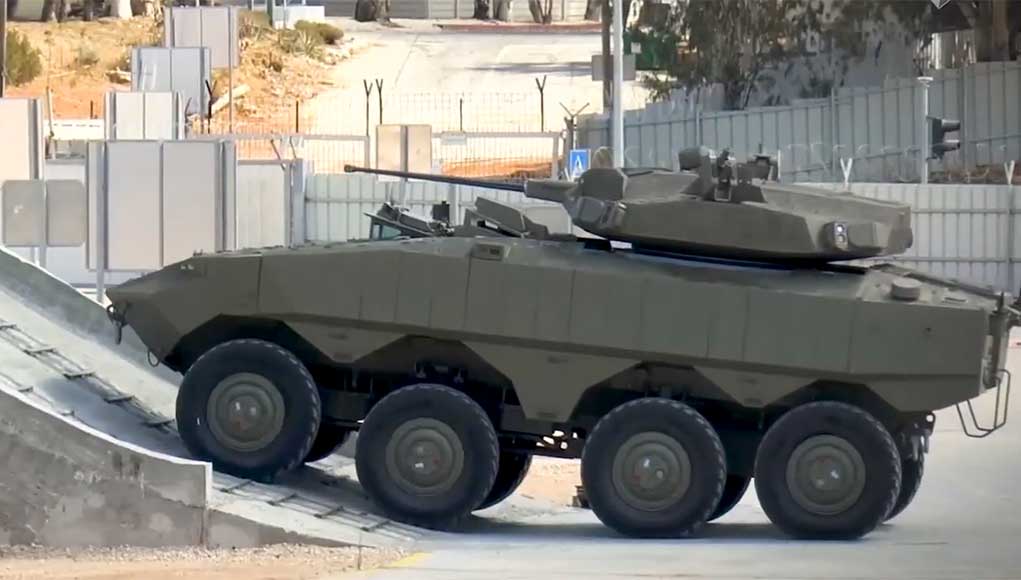
    Eitan is equipped with an unmanned turret mounting a 30mm cannon, coaxial 7.62 machine gun and Spike guided missiles. The turret also mounts the Elbit- Systems Iron Fist (IFLD) active protection system. Photo: IMOD

    The development and production of the Eitan are led by the Armored Vehicles Directorate at the Israel Ministry of Defense (IMoD), in cooperation with the IMoD Mission to the United States and the Directorate of Production and Procurement. The Eitan will be manufactured simultaneously in more than 60 industries in Israel and the United States.

    Subscribe to access the gallery

    The Eitan will be built in three variants – an APC, a command vehicle and an infantry combat vehicle, equipped with an unmanned turret mounting a 30mm cannon and Spike missiles. Other configurations are expected to follow. The displayed the MOD vehicles show different armor configurations, with an ‘Iron Fist’ active protection system installed on the variant with the unmanned turret. The vehicle is powered by a 750 hp engine and has a maximum road speed of 90 km/h. Operated by three crew members Eitan can carry a squad of nine fully-equipped soldiers in its fighting compartment. The vehicle has rear ramp access and roof hatches.

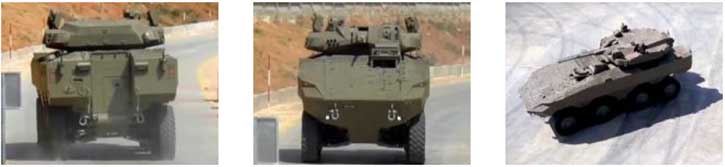
    Eitan 8X8 APC will soon enter production in Israel. Photo: IMOD

    An IDF Brigade to Field AI-Empowered Networked Fires by 2022

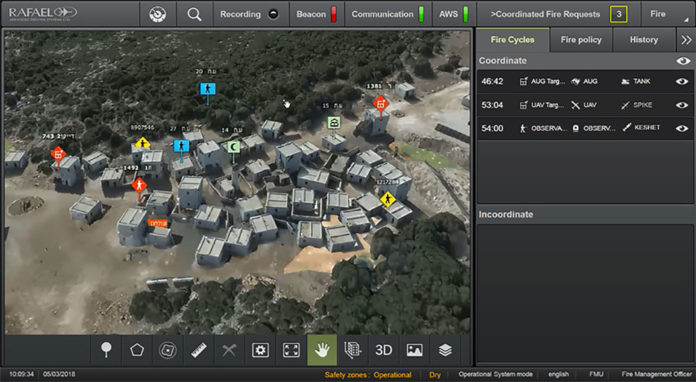
    Fire Weaver Management Terminal enables the attack officer to control the system and set its level of autonomous behavior, define safety zones, and time limits for attack processes, thus adapt the system's activity to the situation at hand. The attack officer also approves, declines or reprogram the fire solution suggested by the system at any time. Photo: Rafael

    Israel’s Ministry of Defense (IMOD) has signed a contract with Rafael Advanced Defense Systems to implement the ‘Fire Weaver’ a multi-domain networked sensor-to-shooter system with Israel Defense Forces (IDF) brigades. Fire Weaver, locally known as ‘smart trigger’ was demonstrated in 2018 at a battalion level exercise. In the next two years, the system will undergo full-scale development and is scheduled to become operational with the first brigade in 2022. In the future, they will become the standard connecting all sensors and shooters operated by the IDF. As such, both legacy and new systems will be connected will be ‘Fire Weaver enabled’.

    Fire Weaver was designed to perform in multiple engagements in high-intensity combat as well as in the urban environment in asymmetric warfare, where it enables combat elements to engage enemy targets faster in seconds, rather than minutes. This capability enables small forces to deliver firepower against the ‘disappearing targets’ that are characteristic in today’s asymmetric battlespace.

    Fire Weaver was developed by the IDF’s ground forces command, IMOD’s Directorate of Defense Research and Development (DDR&D) and Rafael, under the IDF’s battlefield digitization process. The system connects the combat maneuver elements with the effectors participating in the land battle, creating a ‘fires exchange’, where units in contact with the enemy can ‘publish’ a tender – a call for fire specifying the exact target location. The tender is instantly distributed to the fire elements, based on ‘bids’ of each effector, positioned within range, ready to fire, within the safety limits, in the shortest time and the lowest cost.

    Fire Weaver acts as an exchange connecting the most efficient response to the call for fire, by closing a rapid, precise, effective and secure sensor-to-shooter loop. The system also processes all options against different rules and restrictions – including safety limits, keep-out zones, rules of engagement or legal aspects. Fire Weaver can process multiple requests and multiple fires simultaneously, introducing new levels of efficiency and response.

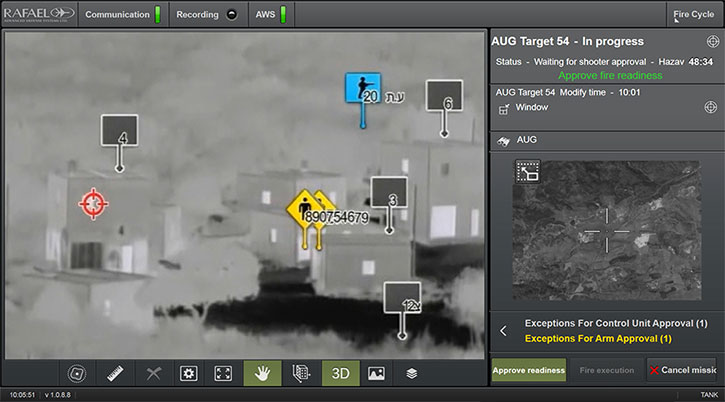
    Fire Weaver’s sensor view indicates the exact target location with the details of the request for fire. The location of that target with metadata is transferred to the shooter using the Geo-Pixel spatial language, enabling each shooter to view the same target from their specific line of sight. Photo: Rafael
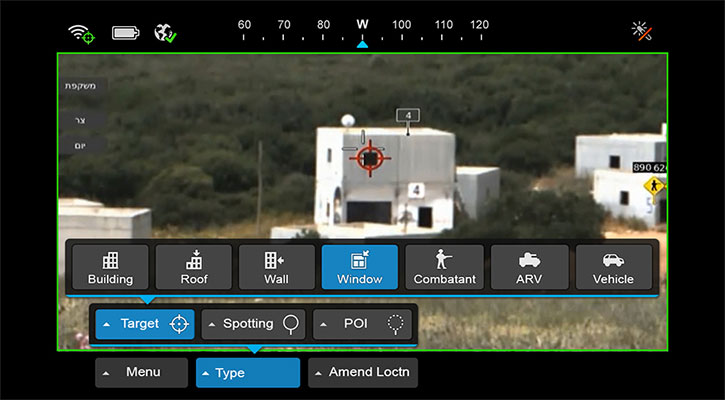
    The Fire Weaver weapon view provides the target view with the target, friendly and uninvolved elements at the vicinity, shown in the augmented display on the sight. Photo: Rafael

    An essential capability of Fire Weaver is the GPS-independent geo-pixel-based tactical common language developed נט Rafael. The Geo-Pixel designates a location on a 3D model and using computer vision technology to present that location viewed from different angles. With target designated by 3D Geo-Pixels shared among all the sensors and shooters participating in the system, the language ensures safe and secure exchange of spatial information, enabling users to share target information and common situational picture from different lines of sight.

    Fire Weaver enables participants to share targets, blue forces, sensitive locations and other points of interest. Their location and status are shown as an augmented display on the sights or battle management systems. Since the system only transfers the target geo-pixel and metadata, its bandwidth requirements are lower than systems relying on images, video, and speech.

    Fire Weaver employs advanced artificial intelligence algorithms to process the battle data in real-time, analyze it, and prioritize fire allocation based on availability, priorities, and requirements. The system constantly calculates the optimal shooter for each target, based on parameters such as location, line-of-sight, effectiveness, current ammunition status, etc., while minimizing collateral damage and fratricide, taking into consideration the rules of engagement in real-time.

    Rafael has integrated the Fire Weaver as a central enabler within its advanced two-men crew concept demonstrator developed for the IMOD Carmel program. Photo: Rafael

    “Fire Weaver is a main milestone in the IDF’s battlefield digitization effort.” Lieutenant Colonel R, Project Leader at MAFAT commented. “The innovative system essentially creates an ‘operational internet’ and brings to the battlefield the same innovation that the internet brought to the civilian world, the smart home and the smart cities. Fire Weaver enables operational connectivity between Joint forces and simplifies integration processes between naval, air and ground forces”.

    The system includes a Fire Management Terminal application, which provides the commander with full control of the entire process, including cases of multiple sensor-to-shooter loops in parallel.

    As Fire Weaver is complementary to any C4I system, it will be employed by the IDF with the ‘digital army program’ (DAP) implemented by Elbit Systems. In contrast to such C4I systems, that are designed for operations at headquarters, and the command level, the new Fire Weaver is implemented at battalion level and below, empowering the combat echelon by providing more effective firepower support to the fighting units. Fire Weaver edge elements are associated with each effector and combat unit, embedded in the binoculars, target acquisition spotting and weapon sights. Targets and calls for fires are displayed directly on the battle management and fire controls of fire support elements, reducing the risk of friendly fire and prevents collateral damage. Fire Weaver is designed with full compliance with the MIL-STD 882 safety standard.

    In addition to the IDF, the system has been selected by the German Federal Office for Equipment, Information Technology and Use of the Federal Armed Forces (BAAINBw), to provide advanced experimentation as part of the “glass battlefield to support dynamic operations (ErzUntGlas)”.

    The technologies Behind Fire Weaver

    Heron II Joins IAI’s MALE Family

    IAI's Heron II will debut next month at the Singapore Airshow. Singapore is one of 20 nations (six in Asia) operating Heron family drones. Photo: IAI

    IAI has unveiled a new version of its Heron Medium Altitude Long Endurance (MALE) drone, designated Heron Heron MK II. It is the newest variant of IAI’s MALE family introduced in 1994. The Heron family is operational with the Israeli Air Force and over 20 other organizations worldwide.

    According to IAI, Heron II is ready for delivery, fully developed and tested. Photo: IAI

    The new variant improves performance over the Mk I variant, by providing a larger, redesigned fuselage and new powerplant optimized for its mission profile. The engine is a derivative of the Rotax 915iS, an aviation certified engine modified specifically for IAI’s requirements for operations at high altitude. While the original engine is rated up to 23,000 ft of altitude, with Heron II the 915is can operate efficiently and reliably at 35,000 ft. The engine also provides sustained power for a maximum speed of 140 knots and faster ascent, improving the drone’s rate of climb by 52 percent. Carrying a 470 kg payload weight the maximum takeoff weight has increased to 1,350 kg., while mission endurance remained at 45 hours.

    With a stronger and wider fuselage, Heron II is more adaptive to multi-payload configurations, offering a more spacious payload bay, an integral satellite communications terminal and a separate mission computer, allowing users to introduce changes in the mission system while maintaining airworthiness flight-control functions intact. Heron 2 also incorporates an integral wideband satellite communications link with a backup channel serving multiple payloads simultaneously. The UAV also has a server onboard, providing user access to large amounts of raw or processed sensor data stored on the flight.

    IAI has previously offered several members of the Heron family. The T-Heron replacing the Searcher UAS is positioned to support missions at the tactical level, the new Heron II replaces Heron I at the operational-strategic level. For users seeking heavy fuel engine, IAI offers the Super Heron, with performance level like Heron II. For strategic missions requiring heavy payloads and long endurance, IAI positions the turboprop-powered Heron TP/XP and Heron TP heavy MALE drones.

    Heron UAS Family Members
    Model MTOW (kg) Payload (kg)
    Searcher MkIII 450 120/td>
    T-Heron 600 180
    Heron I 1,150 250
    Heron II 1,350 470
    Super Heron 1,450 450
    Heron TP-XP 5,400 450
    Heron TP 5,400 1,000

    Future Armored Vehicles: Protection Systems USA

    Location: Hilton Arlington, 950 North Stafford Street, Arlington, Virginia, USA
    Dates: 11-12 June 2020
    Organizer: SMI Group
    Event Website Link

    SMi Group proudly presents the 2nd annual Future Armored Vehicles: Protection Systems USA conference, taking place on the 11th and 12th June 2020, in Arlington, Virginia USA.

    This two-day conference aims to provide unique briefings onto the development and integration of advanced Vehicle Protection Systems. Recent technological innovations, and the limitations of existing passive protection measures, calls for Armed Forces to utilize more effective and efficient forms of survivability systems, to maintain operational capabilities. Future Armored Vehicles: Protection Systems USA 2020 will delve deeper into different and innovative ways to maintain maximum armored vehicle staying power in modern battlespaces through the use of advanced Vehicle and Active Protection Systems (APS).

    As a leading conference focusing on the software developments within vehicle protection systems, delegates can anticipate exclusive updates from leading military and industry experts on the latest in; modular technology, hard/soft kill systems, integrated mission systems and the future of the technology, data management considerations any many more!

    Key reasons to attend the 2020’s event:

    The only conference with a unique focus on vehicle protection systems, with particular emphasis on the integration of Modular Active Protection Systems and the software developments that will enhance long-term vehicle survivability.
    Strong host nation support: Hear key updates from senior US officers from the likes of PEO GCS, GVSC, PEO IEW&S, Army Research Laboratory and more…

    Emphasis on international speakers: Top military figures from Australian DSTG, British Army, Czech Military Research Institute, Israeli Defence Forces, Turkish MoD and many more will be in attendance

    Early Bird discounts:
    Book by 31st March to save $200
    Book by 30th April to save $100
    For registration and event information, visit http://www.fav-aps.com/defupdate


    Military Flight Training

    Location: Pestana Chelsea Bridge Hotel, London, UK
    dates: 8 – 9 December 2020
    Organizer: DefenceIQ
    Event Website Link

    Concurrent with today’s operational context, Military Flight Training 2020: Equipping Aircrew of the Future will discuss key challenge areas.

    Topics at the event include training for contested and degraded environments, delivering LVC in mixed inventories of new and legacy platforms, solving red air deficiency, LVC interoperability, rotary-wing training, recruitment & retention, operational conversion training, and crew resource management, integrated synthetic/virtual training capabilities, and effective threat emulations.


    Skunk Works and XTEND Simplify Multi-Drone Command

    0
    Lockheed Martin Skunk Works® and XTEND have achieved a major milestone in JADC2 by integrating the XOS operating system with the MDCX™ autonomy platform. This technical breakthrough enables a single operator to simultaneously command multiple drone classes, eliminating the friction of mission handoffs. From "marsupial" drone deployments to operating in GPS-denied environments, explore how this collaboration is abbreviating the data-to-decision timeline and redefining autonomous mission execution.

    From Ukraine to Taiwan: The Global Race to Dominate the New Defense Tech Frontier

    0
    As traditional defense primes face mounting competition from agile “neoprimes” such as Anduril, Palantir and Helsing, the balance of innovation is shifting toward software-defined warfare and scalable, dual-use technologies, while global industry consolidation—marked by Boeing’s integration of Spirit AeroSystems and other strategic mergers—signals an intensified race to secure control over the defense technology value chain. Our Defense-Tech weekly report highlights these trends.

    Europe’s “Drone Wall”

    0
    In early October 2025, a coordinated wave of unmanned aerial system (UAS) incursions—widely attributed to Russia—targeted critical infrastructure across at least ten European nations. The unprecedented campaign exposed the fragility of Europe’s air defenses...

    Weekly Defense Update & Global Security Assessment

    0
    Executive Summary The past week (September 18-25, 2025) represents an inflection point where strategic defense concepts have transitioned from doctrine to tangible reality. An analysis of global events reveals four primary, interconnected trends shaping an...

    U.S. Air and Space Forces Push Next-Gen Programs at the AS&C 2025 Conference and...

    0
    At the 2025 Air, Space & Cyber Conference, U.S. Air Force and Space Force leaders unveiled major updates on next-generation fighters, bombers, unmanned systems, and space initiatives, highlighting both rapid innovation and critical readiness challenges as the services race to outpace global competitors. A short version is available here, with a more detailed version for subscribers.

    TADTE 2025: Reflecting Taiwan’s Strategic Themes

    0
    The Taipei Aerospace & Defense Technology Exhibition (TADTE) 2025 crystallized around four dominant strategic themes that collectively illustrate Taiwan's comprehensive approach to defense modernization amid escalating regional tensions. Based on a detailed report by Pleronix (available upon request). Includes a Podcast discussion on TADTE 2025's highlighting Taiwan's four strategic themes beyond the post's coverage.

    Iron Beam 450 Completes Testing, Soon to Join With Operational Air Defense Units

    0
    Israel’s Iron Beam 450 high-power laser system has completed final testing, marking a major leap in air defense. Developed by Rafael, it offers precise, cost-effective interception of rockets, UAVs, and mortars, and is set for IDF deployment by 2025.