
Saturday, December 27, 2025
More
    Home Blog Page 246

    Iranian Ballistic Missile Scores a Direct Hit on a Target Ship

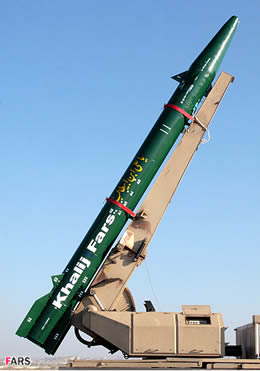
    Iran demonstrated today its capability to hit a floating target with precision guided, short range ballistic missile of the Fatah 110 (M-600) class. Photo: FARS news agency

    Iran demonstrated today a new type of short-range ballistic missile (SRBM) based on the Fatah 110 platform, capable of hitting targets at a range of up to 250-300 km with high precision. During an operational demonstration the missile was fired at a target vessel floating in the Persian Gulf, scoring a direct hit. Accordingly, the new missile was named ‘Persian Gulf (Khalij Fars).
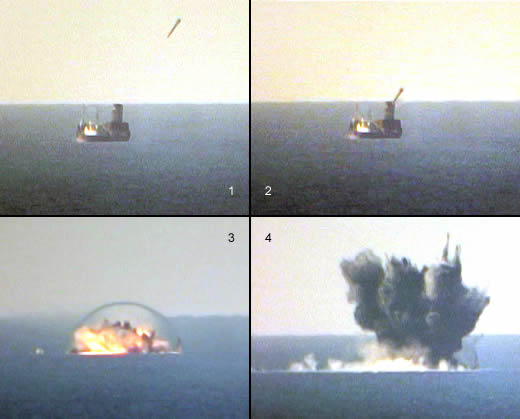
    Iran demonstrated today its capability to hit a floating target with precision guided, short range ballistic missile of the Fatah 110 (M-600) class. Photo: FARS news agency
    The guided version of Fateh 110 can strike targets on land or at sea with 450kg warhead. Photo: FARS news agency

    The missile apparently uses mid-course inertial guidance (INS) and an electro-optical homing seeker to achieve terminal attack precision. Previous versions of the Fateh 110 (also designated M-600 in Syrian use) used a tipped nose, while the current model has a rounded nose presumably housing the guidance kit. As the new version demonstrated in this test, the accuracy of the new missile is far better than the 0.3% of the range, attributed for the earlier model of Fateh 110 which relied only on inertial guidance. This type of solid-rocket propelled missile can carry a 450 kg warhead.

    The new missile was endorsed by the commander of the Islamic Revolution Guards Corps (IRGC), Major General Mohammad Ali Jafari.  He also announced that the IRGC has completed the development of a long-range, passive radar covering a 1,100km-radius. The new radar is intended to provide effective detection of surface naval targets. According to western analysts, Iran’s Fateh 110 is based on the Chinese DF-11A SRBM. However, the Chinese missile has not been reported to have anti-ship capabilities.

    With Iran possessing such capabilities, the implications for the U.S. Navy are serious. The combination of passive targeting system with the precision demonstrated by the new Iranian missile means that Iran could potentially track U.S. Navy carrier groups at long distances, when they operate in the Arabian Sea, at relatively long distances from their coastline.
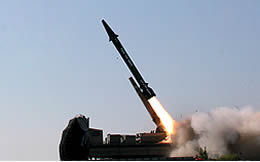
    EO Guided version of Fateh 110 (M-166) Iranian missile With this data the Iranians could try to target the US carriers without early warning. It also means that the U.S. Navy cannot consider presence at the Arabian Gulf as safe, until AEGIS destroyers demonstrate their capability to effectively engage and eliminate guided ballistic missile threats such as the ones demonstrated by Iran.
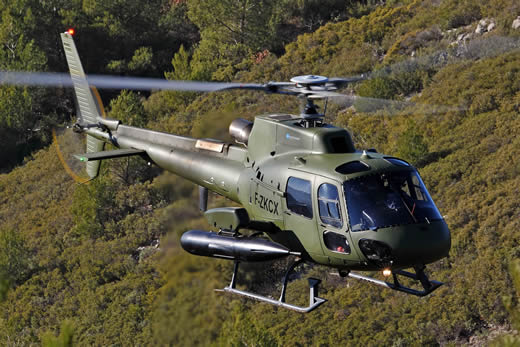

    Eurocopter’s AS550 C3 Fennec helicopter is making its Indian public debut

    Eurocopter is showcasing two of its military helicopters at Aero-India 2011: The Fennec AS550C3, competing for the Indian Army's scout helicopter and AS565 Naval Panther, proposed for the Indian Navy and Coast Guard. Photo: Eurocopter

    Aero India 2011. Fennec is considered one of the leading candidates for India’s acquisition of new armed scout helicopter. In preparation for this tender, the AS550 C3 Fennec recently completed field trials with full mission equipment for the Indian Armed Forces’ reconnaissance and surveillance applications. The Indian Army is planning to replace the existing fleet of Indian-produced Cheetah and Chetak helicopters (both which are based on Eurocopter Alouette II and III rotary-wing aircraft.)

    Eurocopter is showcasing two of its military helicopters at Aero-India 2011: The Fennec AS550C3, competing for the Indian Army’s scout helicopter and AS565 Naval Panther, proposed for the Indian Navy and Coast Guard. Photo: Eurocopter
    Our Sponsor: RAFAEL

    The military-certified and combat-proven AS550 C3 Fennec offers exceptional performance at high altitudes and in hot weather conditions. In addition to operating in Chile’s Andes Mountains at altitudes over 5,000 meters, Fennec helicopters have landed on Mount Everest and the Sziachin glacier in the Himalayas. Last month, a Royal Malaysian Navy Fennec assisted in the rescue of a hijacked Malaysian chemical tanker and its crew, firing on the Somali pirates’ mother ship to keep it at bay.

    Along with the Fennec’s presence at Aero India 2011, Eurocopter’s participation will also focus on the AS565 Naval Panther – a version of the Dauphin family, which is well suited for requirements of the Indian Navy and Coast Guard.

    Boeing Awarded $80 Million to Replenish Apache’s Combat Losses

    Boeing has received delivery orders for 17 Apache attack helicopters, supplying the U.S. Army with 14 AH-64D war replacement aircraft plus additional three Apaches, requested to replenish Israel Air Force operational losses during the 2006 2nd Lebanon War. The total amount awarded by the two contracts is worth about $80 million. The announcement did not disclose the model to be supplied to Israel. The IAF lost three Apaches during the 2006 war, two were of the latest AH-64D model. Both deliveries are due to take place before the end of 2012.

    Airbags Designed to Save Helicopters Hard Landing on Rough Terrain

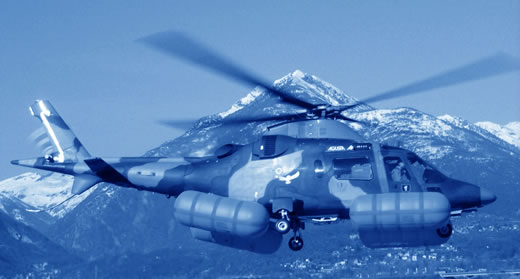
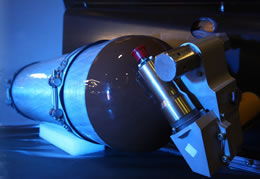
    Aero Sekur’s shock attenuation system is designed to aid crew and helicopter survival. The system is expected to be ready for flight next year. Phoro: Aewro Sekur

    A new safety device developed for civil and military medium helicopters, Aero Sekur’s shock attenuation system is designed to aid crew and helicopter survival. It is the industry’s first integrated solution to aid unscheduled descents on both land and water. Aero Sekur estimates that the new helicopter landing system will be available in 2012.

    The shock absorption/flotation airbag system is designed to minimize airframe crash damage by limiting inertia load on the fuselage and frame. This initiative has the potential to lead profound change with manufacturers’ approach to helicopter safety solutions, utilizing lighter airframe construction for helicopters, offering improved performance with enhanced crashworthy capability.

    Aero Sekur’s shock attenuation system is designed to aid crew and helicopter survival. The system is expected to be ready for flight next year. Phoro: Aewro Sekur
    Airshow-Live sponsor: IAI
    The shock absorption/flotation airbag system developed by Aero Sekur is designed to minimize airframe crash damage by limiting inertia load on the fuselage and frame. Photo: Aero Sekur

    Aero Sekur has partnered with Bangalore based Sika Interplant Systems as its Industrial Partner in India.

    “Working closely with leading aero industry manufacturers, we identified a need for a solution to increase survival rates of helicopter crews.” Aero Sekur’s Chief Executive Officer, Mark Butler said, indicating that the new safety systems could be deployed to address un-scheduled landings suitable for all landing terrains. “The shock attenuation aspects of the system were originally developed as part of our work for the ESA ExoMars program.” Butler explained relating to Aero Sekur’s shock attenuation airbags used to deliver Mars probes safely to rest on the red planet.

    Åkers Krutbruk to Provide Protection Suite for New Swedish AMVs

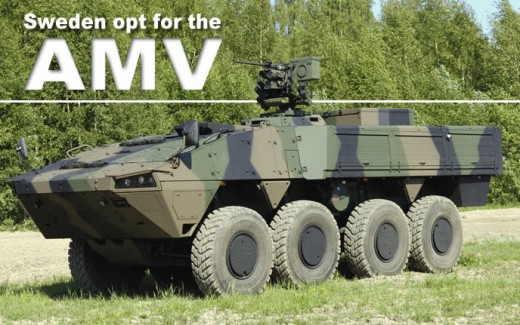
    The Swedish FMV provided this photo representing the AMV. This armored personnel vehicle configuration features external storage on the vehicle's sides, and a Protector remote weapon station. Photo: Patria

    Swedish armor specialist Åkers Krutbruk was selected to provide the protection suite for the Patria AMV 8×8 wheeled armored vehicles being produced for the Swedish army.

    Åkers announced today that the company has won a record order from Patria Land Systems, part of the contract for the delivery of 113 armored vehicles, awarded to Patria by Sweden’s defence procurement agency FMV. Åkers Krutbruk is part of the German owned IBD-group. According to the contract signed between the two companies, Åkers Krutbruk will provide complete protection solution for the vehicles. According to Åkers, the contract is significant and the biggest ever for Åkers Krutbruk.

    The Swedish FMV provided this photo representing the AMV. This armored personnel vehicle configuration features external storage on the vehicle's sides, and a Protector remote weapon station. Photo: Patria

    The vehicles will begin to be delivered in 2012 and will be in operational service in 2014. Swedish Armed Forces has an option to order 113 supplementary vehicles. “This is our biggest contract ever” says Niclas Sahlgren, CEO, Åkers Krutbruk “In the short term the order will create 20 to 25 new jobs since we will need both engineers and production staff. It will also be an important deal for the entire community of Strängnäs in a long period of time since we will involve local suppliers.

    Army Dissolves Early-Brigade Combat Team, Discontinue Class I UAV, UGS

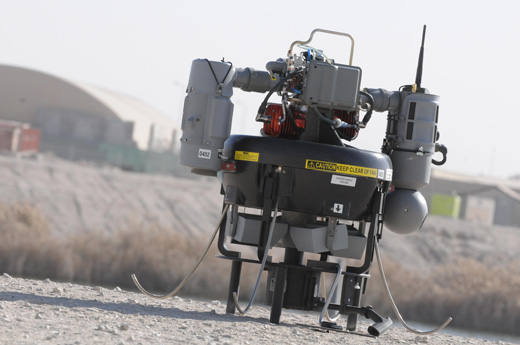
    The RQ-16A T-Hawk unmanned aerial vehicle hovers over a group of coalition forces and civilians, during a technical display performed by Honeywell at Kandahar Airfield. Technicians from Honeywell International invited coalition forces to witness how the miniature air vehicle can be be used on routine operations. (U.S. Army Photo by Spc. Jonathan W. Thomas)

    The Department of the Army announced today that it decided to continue low-rate initial production of two elements of the Early-Infantry Brigade Combat Team (E-IBCT) program – the Small Unmanned Ground Vehicle (SUGV) produced by iRobot, and the Tactical Network System. The Army considers the E-IBCT investment of network technologies and software provide a foundation for growth of the Army’s tactical network. The Army will transition the procurement of small unmanned ground vehicles and tactical network systems to program executive offices with primary responsibility for these systems.

    The other systems that have reached maturity under the FCS / E-IBCT program will discontinue – these are theUnattended Ground Sensors produced by Textron Systems and the Class 1 Unmanned Air System (T-HAWK) produced by Honeywell.

    The U.S. Army Plans to discontinue the Class I UAV (RQ-16A T-Hawk) and the Unattended Ground Sensor (UGS) programs. Only two remnants of the Future Combat Systems - the Network integration node and Small Unmanned ground Vehicle (SUGV) will continue under independent programs. (U.S. Army Photo by Spc. Jonathan W. Thomas)
    The Miniature UGS and its big brother, the Warrior seen at the live demonstration at AUVSI's 5th Unmanned Systems Demonstration. Photo: Defense-Update

    An E-IBCT acquisition decision memorandum, signed by the under secretary of defense (acquisition, technology and logistics) on Feb. 3, 2011, formalized this decision. The Army developed the E-IBCT program in an effort to accelerate fielding of key network and sensor capabilities. According to the Army announcement, the decision allows the Army to pursue an acquisition approach enabling the continued development of the tactical network.

    Update: Boeing and iRobot Team Delivers 1st SUGVs to US Air Force

    The Boeing Company and partner iRobot Corp.  announced that they have delivered the first 30 Small Unmanned Ground Vehicles (SUGV) under a contract with the U.S. Air Force for the service’s Explosive Ordnance Disposal (EOD) team. This is the first task order of an indefinite delivery, indefinite quantity contract which runs through September 2012.

    SUGV- Small unmanned ground vehicle. Photo: Boeing

    “We are pleased to work with iRobot to enable Air Force EOD technicians to perform reconnaissance while reducing their exposure to unexploded ordnance,” said Mike Huddleston, Robotics program manager for Boeing Network & Tactical Systems.

    “Unmanned ground vehicles have been saving lives for years on asymmetric battlefields,” said Robert Moses, president of iRobot’s Government and Industrial Robots division. “SUGV represents an important advancement in UGV technology because of its light weight and state-of-the-art capabilities. It gives warfighters the ability to deploy the robot at a moment’s notice when faced with a variety of dangerous missions.”

    X-47B Preform First Flight

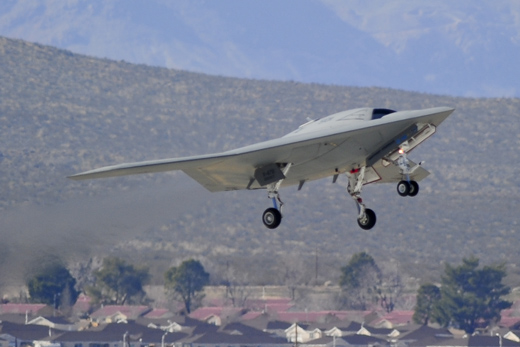
    Photo: Northrop Grumman

    On February 4th The Northrop Grumman – built U.S. Navy X-47B  aircraft successfully completed its historic first flight at Edwards Air Force Base, California.

    Conducted by a U.S. Navy/Northrop Grumman test team, the flight took off at 2:09 p.m. PST and lasted 29 minutes. This event marks a critical step in the program, moving the team forward to meet the demonstration objectives of a tailless fighter-sized unmanned aircraft to safely take off from and land on the deck of a U.S. Navy aircraft carrier.

    Photo: Northrop Grumman

    “First flight represents the compilation of numerous tests to validate the airworthiness of the aircraft, and the robustness and reliability of the software that allows it to operate as an autonomous system and eventually have the ability to take-off and land aboard an aircraft carrier,” said Capt. Jaime Engdahl, the Navy’s UCAS-D program manager.

    “Designing a tailless, fighter-sized unmanned aircraft from a clean sheet is no small feat,” said Janis Pamiljans, vice president and UCAS-D program manager for Northrop Grumman’s Aerospace Systems sector. “Commitment, collaboration and uncompromising technical excellence among the Navy, Northrop Grumman and the UCAS-D team industry partners made today’s flight a reality. We are indeed honored to have given wings to the Navy’s vision for exploring unmanned carrier aviation.”

    Taking off under hazy skies, the X-47B climbed to an altitude of 5,000 feet, flew several racetrack-type patterns, and landed safely at 2:38 p.m. PST. The flight provided test data to verify and validate system software for guidance and navigation, and the aerodynamic control of the tailless design.

    As with all test programs, first flight represents the culmination, verification and certification of pre-flight system data collected and analyzed by both the Navy and Northrop Grumman. Airframe proof load tests, propulsion system accelerated mission tests, software maturity and reliability simulations, full system taxi tests, and numerous other system test activities were all completed and certified prior to first flight.

    X-47B first flight at Edwards AFB. Edwards AFB is in the background of the picture.Vertical shot. Feb 4, 2011 Photographer: Bobbi Zapka

    The first of two aircraft that took of on the maiden flight will complete its initial testing in late 2011 and the second aircraft will begin testing shortly thereafter. After completion of initial airworthiness testing in California, each aircraft will be transported to Patuxent River Naval Air Station, Md. for the remainder of the carrier demonstration program. There, the entire system will undergo additional tests to validate its readiness to begin testing in the maritime and carrier environment. The UCAS-D program is preparing the X-47B for carrier trials in 2013.

    The Navy awarded the UCAS-D prime contract to Northrop Grumman in August 2007. The six-year contract calls for the development of two X-47B fighter-sized aircraft. The program will demonstrate the first-ever carrier launches and recoveries by an autonomous, unmanned aircraft with a low-observable-relevant planform. Autonomous aerial refueling will also be performed after carrier integration and at-sea trials.

    U.S. Navy Selects Integrators to Evaluate Four Competitive Cyber-Warfare Concepts

    Four system integrators were selected by the U.S. Navy Space and Naval Warfare Systems (SPAWAR) to develop cyberspace operations systems for the U.S. Navy, supporting the tactical, operational and strategic levels. The four include General Dynamics Advanced Information Systems, (GD-AIS) Science Applications International Corp. (SAIC), Northrop Grumman Systems Corp. and Booz Allen Hamilton, Inc. At its preliminary phase, the program addresses architecture assessment, examination, and demonstration, assessing operations requirements and analysis, concept formulation and development, feasibility demonstrations and operational support. Further phases include software design and implementation as well as systems integration, test and evaluation and demonstration. Total contract value awarded for the first 12 months is worth $311 million, with future Increments expected to bring the program’s value to about one $ billion over the next three years.


    The command is working with the other services, to develop joint electromagnetic spectrum operation plan to ensure networks compatibility with these new capabilities, enabling the different forces and elements to operate within a spectrum in which maneuver space is restricted not only by adversary and competitor, but also by the expanding commercial enterprise allotment of radio-frequency bands. “The sheer number of radio frequency users proves that it is not enough to be able to defend ourselves from kinetic and directed network attacks, but we must be able to secure our network operations that take place over the air.” VADM Bernard J. McCullough, III, Commander, Fleet Cyber Command said.

    One of the main challenges in developing future cyber warfare capabilities is the coordination of future operations among the different participating elements, within other commands and services sharing the network, grid or spectrum. “Coordination across domains is critical. Efforts to secure one system or provide a network defense must be coordinated to prevent unintentional interference with friendly systems.” Says VADM McCullough. Cyber Command is also the Navy’s operational authority on Electronic Warfare (EW) and electromagnetic spectrum operations. Among these, the command coordinates the operational aspects of airborne Electronic Attack platforms such as EA-18G Growler aircraft and shipboard SLQ-32 jammer systems, to prevent unintentional interference with friendly systems.

    Cyber operations are to be managed by the Fleet Cyber Command, recently established with the 10th fleet. The new formation is responsible for the operational security of the naval segment of the Global Information Grid, to detect network threats and secure network responses. It is also responsible for the Navy cryptologic operations. Cyber Command is also responsible for the fleet’s global cyberspace operations, to deter and defeat aggression and to ensure freedom of action to achieve military objectives in and through cyberspace.

    Goodrich to Show ACES II Ejection Seats at Aero-India

    Goodrich is displaying its F-16 ACES II advanced concept ejection seat at Aero-India. ACES II is credited with saving over 600 lives to date. These ejection seats are the designed with active pitch stabilization, providing consistent performance capability at airspeeds of zero to 600 KEAS (knots equivalent airspeed) and altitudes of zero to 60,000 feet. In addition to ejection seats for fighter jets, Goodrich is also displaying here the Common Crash Resistant Troop Seat, designed for installation on multiple helicopter platforms. Goodrich is located at Hall B Booth 19c.

    Our Sponsor: Elbit Systems

    Goodrich main activity in India was focused at the commercial aviation sector. The company has established considerable local operations in Bangalore. At its a campus Goodrich is manufacturing evacuation slides for Airbus, Boeing and Embraer platforms, seating and cargo systems, interior and exterior lighting along with motors, actuation systems and electronic controllers. Goodrich employs over 1,200 individuals in assembly, quality control, MRO and customer service. In addition, the India design center employs over 450 engineers across multiple engineering disciplines.

    DARPA Challenge Aims at a new Breed of Light Armed Scouts

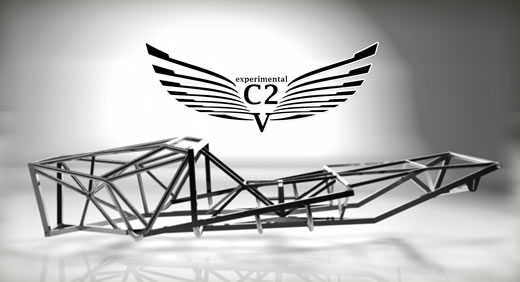
    Competitors in the new DARPA XC2V challenge are required to design a functioning, buildable body that will be able to fit on the 'Rally Fighter', a tubular steel chassis, built by Local Motors (shown above), coupled to a GM LS3 V8 powertrain to be used as the baseline for all contest vehicles.

    DARPA has announced a new ‘challenge’ for the development of a concept vehicle utilizing flexible and innovative manufacturing, enabling the military to rapidly adapt to changing battlefield requirements. Past DARPA challenges addressed autonomous mobility in open and urban terrain, development of armor protection systems and the development of lean manufacturing technologies.

    The new challenge is a design challenge, addressing the long, complex and expensive development cycle of combat vehicles. Unlike past challenges seeking to demonstrate the innovation in real-world scenario, the current challenge is about ideas – improving traditional development with concepts derived seeking ideas for more efficient and effective combat vehicles leveraging the ‘power of the crowd’. The Experimental Crowd-derived Combat-support Vehicle (XC2V) is a design Challenge, facilitated by Local Motors, Inc. It asks individuals to conceptualize a vehicle body design for two different missions – Combat Reconnaissance and Combat Delivery & Evacuation.

    Competitors in the new DARPA XC2V challenge are required to design a functioning, buildable body that will be able to fit on the 'Rally Fighter', a tubular steel chassis, built by Local Motors (shown above), coupled to a GM LS3 V8 powertrain to be used as the baseline for all contest vehicles.

    DARPA would like to see contribution of ideas and initiatives from service members, race and auto enthusiasts, and those with an interest and talent in engineering, materials, industrial design, etc. Final submissions are due March 3, 2011. The winning ideas will be transformed into fully functioning concept vehicles and the winners will also be rewarded with up to $7,500 in prizes. The challenge site is available at http://www.local-motors.com/XC2V.

    Competitors are required to design a functioning, buildable body that will be able to fit on the Rally Fighter’, a tubular steel chassis, built by Local Motors, coupled to a GM LS3 V8 powertrain to be used as the baseline for all contest vehicles. This chassis offers light, yet very rigid and strong chassis, providing the speed, maneuverability and responsiveness over rough terrain. The overall concept is to focus on fast and agile vehicle, rather than heavy and highly protected platform. “Fast, lightweight, highly capable vehicle will make speed and agility its two centers of gravity.” Local Motors communiqué explain.

    “This will allow it to be easily deployed through rough ground corridors or via airdrops into inaccessible regions for example, and the vehicle’s drivers will rely on its speed and agility to get into and out of life threatening situations quickly in order to conduct their missions. An armed scout vehicle configured as a ‘recce fighter’ would be equipped sensor package for day/night observation and targeting, and would rely on speed, rough terrain capability, and low noise and visual signature to move around the battlefield. Other missions suggested for the new platform include combat delivery and evacuation, as well as non-combat evacuation and support in disaster recovery missions.

    Germany Expand iDZs Soldier Systems with 400 Additional Systems

    Many modern military services are pursuing ‘modern soldier systems’ to achive such goals. Two important wins for Cassidian’s Soldier Systems Program announced in daily succession this week have underlined the company’s position among the European leading soldier modernization providers.

    In view of the increasingly asymmetric threat situations arising and the challenges presented by missions within the context of network-enhanced operations, individual soldiers and small infantry units are required to act faster, control larger areas while avoiding friction with non-combatants. They can do so by having better communication, coordination and control of distributed, dismounted forces, able to operate more decisively and effectively, assertively, and rapid, depending on secure information exchange through powerful information and communication systems. Among the armies to have already implemented modern soldier systems is the German Bundeswer, pioneering the ‘modern infantry system’ since 2004. Germany was followed by the U.S. Army, that currently equip two brigade combat teams with the Land warrior system developed by General Dynamics, the France Army fielding the first regiment equipped with Felin systems from Sagem. Other countries pursuing such programs are the U.K with FIST developed by Thales; Norway with the NORMANS, Italy with Selex’ Soldato-Futuro and Israel, developing the ANOG infantry system designed by Elbit Systems.

    On March 2nd the German Federal Office of Defence Technology and Procurement (BWB) contracted Cassidian to deliver additional 400 basic versions of the ‘Future Soldier System’ (Infanterist der Zukunft or iDZ BS) combat suites to support German troops operating in Afghanistan, raising the Bundeswehr’s total number of IdZ BS equipment sets to 2,900. The system entered service with the German Army, Navy and Air Force back in 2004 and has since proved its worth on the Bundeswehr’s foreign missions. It offers soldiers better protection, increased situational awareness improved command and control, navigation and weapon employment.

    An IdZ BS system for equipping an infantry squad (ten soldiers) consists of an identical basic configuration for all soldiers (including modular bullet-proof vest in protection class I to IV, C4I equipment including NaviPad for situational awareness and transmitting messages, target data and images, night vision device, tactical radio) and various special items (such as laser range finder, camera, thermal image sighting device).

    Cassidian and Rheinmetall defense were competing head to head on the development and anticipated procurement of the second generation phase of iDZ, for which Cassidian was developing the Warrior21 system. But Switzerland, not Germany, is expected to be the first to utilize Cassidian’s advanced soldier system.

    Russian New Military Satellite Lost in Space

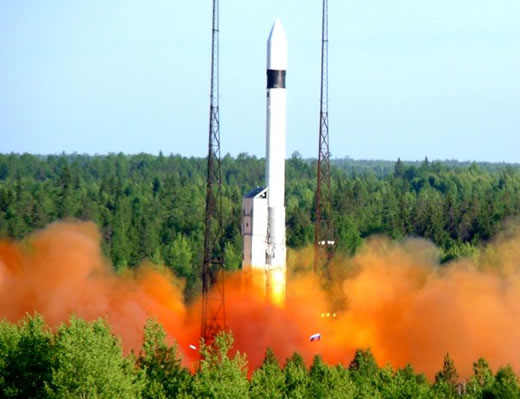
    Rokot LV satellite launcher lifting the military Gonets-M satellite into orbit on its 14th flight. This was the Plestek spaceport, September 2010. Rokot is based on the SS-18 intercontinental ballistic missile, carrying the Breeze-KM upper stage as the third stage. It is capable of lifting up to two tons payload into low-earth orbit (LEO).

    The Russian military has lost contact with a satellite launched from the Plesetsk spaceport earlier today. According to state-owned Khrunichev, the satellite’s launcher manufacturer, the satellite, designated the GEO-IK-2 Reshetnev is a designed for geodetic (3D earth mapping) studies. Several weeks later, the Russian defense ministry decided to abandon the satellite now circling earth in a wrong orbit.

    The satellite was launched by a107 ton Rokot satellite launcher, based on the SS-18 intercontinental ballistic missile, augmented by Briz-KM upper stage, both manufactured by Khrunichev. Following a successful launch the satellite apparently entered a different orbit than the one planned for the mission, as GEO-IK-2 failed to appear in the footprint of the ground control antennas, to establish radio contact. According to Russian sources ground control is trying to determine the satellite’s orbit in an attempt to establish contact with the lost spacecraft.

    Rokot LV satellite launcher lifting the military Gonets-M satellite into orbit on its 14th flight. This was the Plestek spaceport, September 2010. Rokot is based on the SS-18 intercontinental ballistic missile, carrying the Breeze-KM upper stage as the third stage. It is capable of lifting up to two tons payload into low-earth orbit (LEO).

    The apparent mishap follows a failed launch of three GLONASS-M satellites in December. Russia’s space agency Roscosmos plans to launch another stack of three Glonass-M satellites on board a Proton heavy carrier rocket later this year to complete the orbiting Glonass grouping. Russia has switched on two reserve Glonass-M satellites in orbit to compensate for the ones that were lost. Roscosmos will also launch a Glonass-K satellite in Feb.-March to bring the current number of operational satellites in orbit to 23. The complete constellation is designed to operate maintain  24 operational and 2-3 reserve satellites for continuous global coverage of thr Glonass network.

    Rosoboronexport

    The Federal State Unitary Enterprise Rosoboronexport is the sole company in Russia authorized to export full range of defense–related and dual-use products, technologies and services. The official status of Rosoboronexport secures the guaranteed state support in all operations. Rosoboronexport is ranked among the major companies on the global arms market and accounts for over 80% of Russia’s annual arms sales. Russia maintains military-technical cooperation with over 70 countries worldwide.

    Harris RF Communications

    Harris RF Communications is a leading global supplier of secure radio communications and embedded high-grade encryption solutions for military, government and commercial organizations. The company markets the Falcon family of software-defined tactical radio systems, which includes manpack, handheld and vehicular communications radios.

    Falcon III is latest version of VHF tactical combat net radio, supporting the U.S. military’s Joint Tactical Radio System (JTRS) requirements, as well as network-centric operations worldwide. The company also offers advanced High Frequency radios as part of the Falcon II series.
    The company also provides communications systems for public safety, utility and transportation markets supporting advanced IP voice, data networks, portable and mobile, single- and multiband radios.

    Skunk Works and XTEND Simplify Multi-Drone Command

    0
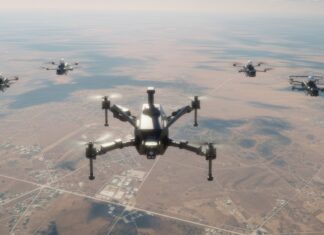
    Lockheed Martin Skunk Works® and XTEND have achieved a major milestone in JADC2 by integrating the XOS operating system with the MDCX™ autonomy platform. This technical breakthrough enables a single operator to simultaneously command multiple drone classes, eliminating the friction of mission handoffs. From "marsupial" drone deployments to operating in GPS-denied environments, explore how this collaboration is abbreviating the data-to-decision timeline and redefining autonomous mission execution.

    From Ukraine to Taiwan: The Global Race to Dominate the New Defense Tech Frontier

    0
    As traditional defense primes face mounting competition from agile “neoprimes” such as Anduril, Palantir and Helsing, the balance of innovation is shifting toward software-defined warfare and scalable, dual-use technologies, while global industry consolidation—marked by Boeing’s integration of Spirit AeroSystems and other strategic mergers—signals an intensified race to secure control over the defense technology value chain. Our Defense-Tech weekly report highlights these trends.

    Europe’s “Drone Wall”

    0
    In early October 2025, a coordinated wave of unmanned aerial system (UAS) incursions—widely attributed to Russia—targeted critical infrastructure across at least ten European nations. The unprecedented campaign exposed the fragility of Europe’s air defenses...

    Weekly Defense Update & Global Security Assessment

    0
    Executive Summary The past week (September 18-25, 2025) represents an inflection point where strategic defense concepts have transitioned from doctrine to tangible reality. An analysis of global events reveals four primary, interconnected trends shaping an...

    U.S. Air and Space Forces Push Next-Gen Programs at the AS&C 2025 Conference and...

    0
    At the 2025 Air, Space & Cyber Conference, U.S. Air Force and Space Force leaders unveiled major updates on next-generation fighters, bombers, unmanned systems, and space initiatives, highlighting both rapid innovation and critical readiness challenges as the services race to outpace global competitors. A short version is available here, with a more detailed version for subscribers.

    TADTE 2025: Reflecting Taiwan’s Strategic Themes

    0
    The Taipei Aerospace & Defense Technology Exhibition (TADTE) 2025 crystallized around four dominant strategic themes that collectively illustrate Taiwan's comprehensive approach to defense modernization amid escalating regional tensions. Based on a detailed report by Pleronix (available upon request). Includes a Podcast discussion on TADTE 2025's highlighting Taiwan's four strategic themes beyond the post's coverage.

    Iron Beam 450 Completes Testing, Soon to Join With Operational Air Defense Units

    0
    Israel’s Iron Beam 450 high-power laser system has completed final testing, marking a major leap in air defense. Developed by Rafael, it offers precise, cost-effective interception of rockets, UAVs, and mortars, and is set for IDF deployment by 2025.