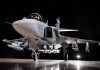

Åkers Krutbruk was established in the year 1552, at the order of King Gustav Vasa, providing Sweden with gunpowder manufacturing capability. Today, the company focuses on armor and ballistic protection solutions, primarily focusing on ballistic protection, mine protection, active protection measures and body armor. Åkers Krutbruk is a part of the German armor protection specialist IBD Deisenroth Engineering family of companies.
Honeywell Takes T-Hawk for Afghanistan Roadshow
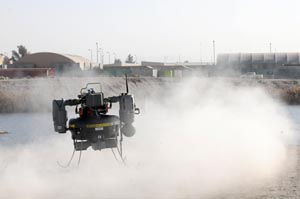
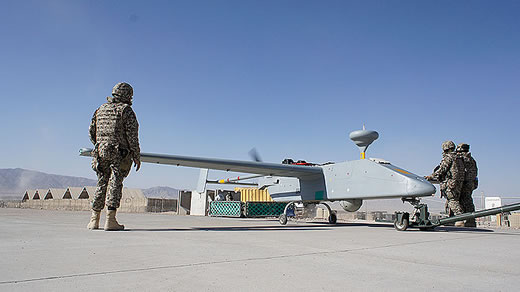
On 14 January a group of soldiers and civilians from coalition forces gathered at the Kandahar Airfield in southern Afghanistan to witness how the Honeywell RQ-16A T-Hawk miniature unmanned aerial vehicle can support combat and security operations throughout the armed forces.
The T-Hawk is already been used for route clearance and by explosive ordinance disposal teams. However, the unmanned vehicle has the capability to do more – operation perimeter security in night and day, as well as reconnaissance missions, providing critical information to commanders in real-time.

Todd Patterson, a field service engineer for Honeywell International, said he would like to see the use of the T-Hawk expanded to every branch of the armed forces. He hopes that a greater number of dismounted troops will have the ability to survey an area before putting themselves in harm’s way.

The T-Hawk features two sensors: one forward and one downward facing camera. These cameras can be interchanged to provide both day and night surveillance.
“The T-Hawk can go from flying straight to hovering over a point of interest,” said Prabha Gopinath, campaign director for Honeywell International. “You can stop and get low to the ground and examine every detail from every possible angle. The sun doesn’t bother it, the dust doesn’t bother it, you can make a very concise determination.”
Managing to weigh less than 20 pounds total, the T-Hawk’s engine can propel the UAV for almost an hour at more than 40 miles per hour.
Reporting from afghanistan: Spc. Jonathon Thomas.
Army Funds Additional $139 Million for HIMARS Rocket Systems

Lockheed Martin has received a $139.6 million contract to provide 44 High Mobility Artillery Rocket Systems (HIMARS) to the U.S. Army. This order will increase the Army’s HIMARS launcher fleet to 375, with deliveries continuing through January 2013.
The system can accommodate a six-pack of Guided MLRS rockets or one Army Tactical Missile System missile. HIMARS, a highly mobile artillery rocket system based on the Army’s FMTV five-ton truck, is designed to launch the entire MLRS Family of Munitions.

Offering high mobility, and suitability to move on and off roads, HIMARS proved itself as a valuable weapon. “Half of the more than 1,900 Guided Multiple Launch Rocket System (MLRS) rockets expended by the U.S. Army and Marine Corps in Iraq and Afghanistan have been fired from HIMARS,” said Scott Arnold, vice president for Precision Fires at Lockheed Martin Missiles and Fire Control.
HIMARS is designed to enable troops to engage and defeat artillery, air defense concentrations, trucks, light armor and personnel carriers, as well as support troop and supply concentrations, HIMARS can move away from the area at high speed following missile launch, well before enemy forces are able to locate the launch site. The U.S. Army and Marines operate HIMARS, as do several international allies. Unlike the tracked MLRS, HIMARS maintains intra-theater mobility through C-130 transportability, as it can be deployed into areas previously inaccessible to heavier launchers and provides a force multiplier to the modular brigade.
Brazil to re-evaluate $6B Warships Plan
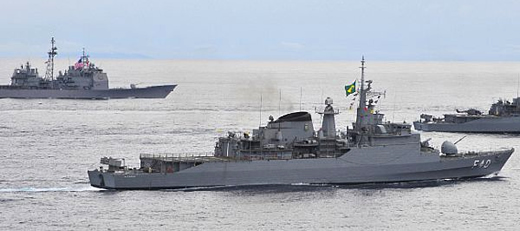
Following the delay in decision about the Brazilian Air Force future fighter, Brazilian President Dilma Rousseff will reevaluate a 10 billion real ($6 billion) plan to purchase 11 offshore patrol vessels for the Brazilian Navy, as she seeks to streamline government expenses, according to news agency Reuters quoting local newspaper Folha de S.Paulo, citing people familiar with the decision.

The need for the new ships derive from growing offshore drilling at Brazils’ economic exclusion zone (EEZ), located more than 120 miles (193 km) into the Atlantic Ocean. Potential bidders for the program include BAE Systems from the U.K., Thyssenkrupp from Germany and the Franch DCNS company, which is already under contract since 2009 to build Brazil’s future submarines as part of an 20 billion reais arms procurement plan. Other bidders likely to join the tender include the South Korean company Daewoo group and Italian ship builder Fincatieri.
Super Tucano Lands in Jacksonville, Waiting for Federal Contract
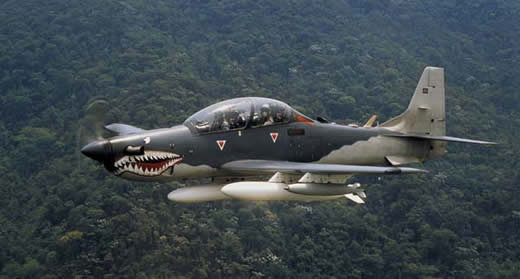
A Brazilian Super Tucano aircraft was seen at Jacksonville International Airport (JIA) in Florida on Sunday. The light attack/trainer aircraft would be assembled there if Embraer seals the deal on a contract with the U.S. Department of Defense.
The company hopes to win a defense contract to build a new aircraft in Jacksonville. An announcement about the possible selection is expected by June 2011. If the $950 million is approved, Embraer would invest $3.8 million in a vacant 40,000-square foot hangar at JIA to assemble the Super Tucano aircraft. News4JAX reports.

The Super Tucano aircraft are in use by seven air forces around the world. The aircraft was originally designed for training missions, can be converted into a light attack aircraft which can carry several bombs and has a .50-caliber machine gun in each wing. It has seen extensive use against narcotics cartels in Colombia. It also has surveillance equipment for intelligence gathering, law enforcement and disaster relief. The Super Tucano is competing against the U.S. made Hawker Beechcraft AT-6, positioned for use with the U.S. Air Forces’ LAAR program, as well as covert operations supporting the special operations community.
U.S. Rep. Ander Crenshaw of Jacksonville, who sits on the House Defense Appropriations Subcommittee, said the plane is designed with operations in Afghanistan and Iran in mind.
“I’ve been to Afghanistan a couple of time and I’ve seen firsthand the need for a sort of light-attack aircraft,” Crenshaw said. “And walking up and taking a firsthand look, I see why our Navy SEALs are so in love with that kind of equipment.”
Related articles:
Washington Opens for Indian Request for F-35
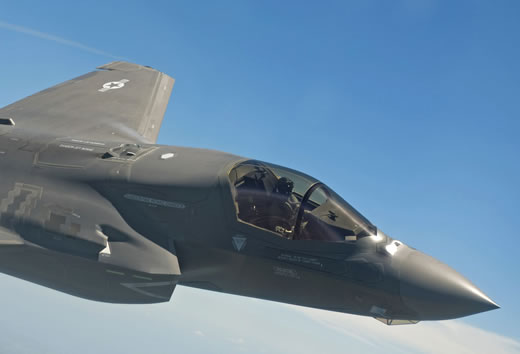
The United States may allow India to purchase its fifth generation F-35 Lightning II stealth fighter. According to Pentagon acquisitions Chief Ashton Carter, “there is nothing on our side, no principle which bars […] Indian participation in the Joint Strike Fighter. The decision to pursue the F-35 is India’s alone”. Offering the F-35 to India is not new – in 2007 Lockheed Martin briefed Indian officials on the F-35, but eventually the move was blocked by Washington.

Indeed, India has asked for the F-35. Lockheed Martin vice president Orville Prins confirmed his company already received a request for information from the Indian Navy, concerning the naval variants of the F-35 aircraft (F-35B STOVL and F-35C carrier conventional take off variants), both capable of operating from current and future Indian aircraft carriers. “We are going to offer our aircraft to them.” Prins confirmed. The aircraft are required to operate off two indigenously built aircraft carriers currently being constructed in India and due to enter service toward the end of this decade. The Indian Navy currently operates 11 Sea Harriers and has bought a squadron of MiG-29Ks to operate from the ex Russian Navy carrier due for delivery to India by 2012.
The possible release of JSF technology to India implies a substantial shift in U.S. policy toward India, which could be related to Washington shift to toward New Delhi, becoming a closer strategic ally that is equally concerned over the military growth of China. Sofar such a move was restrained by an effort to maintain U.S.-Pakistani relations at equal terms with U.S.-Indian relations. The new shift in Washington may indicate that the Pentagon is concerned about the status of the F-35, the program’s delays and the integrity of the JSF alliance, especially vis-a-vis the rapid progress of competitive programs in China and Russia – the latter, being a joint program with India. If the U.S. would wait for the PAK-FA program to mature, the U.S. could lose an opportunity to tap the Indian market for its 5th generation fighters. India is said to consider buying 250 T-50 5th generation fighters to be jointly developed with Sukhoi in Russia.
Another indicator of the policy shift is the rumor over a possible participation of a U.S. Air Force Lockheed Martin F-22A Raptor stealth fighter at Aero-India. It is yet unclear if the aircraft will land at Bangalore or fly in for short flight display. Until now the participation of Raptors in international shows was limited to the U.K., and Japan.
Carter also referred to India’s Medium Multi-Role Combat Aircraft (MMRCA) competition, where two U.S. fighters – Lockheed Martin F-16IN Super Viper and Boeing F/A-18E/F Super Hornet are competing against European and Russian rivals Eurofighter Typhoon, Dassault Rafale, Saab JAS-39 Gripen and the Mikoyan MiG-35 for an order of 126 aircraft. According to Carter, the U.S.-built fighters are the most technologically advanced aircraft in the competition.
One of the key factors stressed by the Americans is the operational AESA radars integrated in their aircraft. While the Russian and European fighters are offered with AESA radars that have not been integrated yet on the aircraft, both F-16 and A/F-18E/F are operationally flying with second generation AESA radars. Highlighting affordability, Carter stressed the importance of lifecycle costs, attributed to 70 percent of a platform’s life cycle cost. The U.S. officials argue that both the F-16 and F/A-18 offer the lower lifecycle costs than the competition.
New Delhi was never critical over the level of technology represented with the U.S. fighters, but was reluctant to be lured into deals that could not be supported by technology transfer. In this field, the Americans are way behind, bound by complex regulation. The European competitors, primarily Sweden were eager to offer everything they could to pave the way for their fighters to win the Indian hearts and minds. In contrast, the U.S., limited by complex technology transfer regulation could not offer technology transfer and, when it comes to the moment of truth, may not be able to offer everything the Indians want to get.
U.S. Air Force Awards $214 Million to Improve Space Situational Awareness

Tens of thousands of small man-made objects known as ‘space junk’ are orbiting the earth, posing significant hazard to satellites, the International Space Station and other space hardware. Some objects are debris that separated from spacecraft in orbit while others are complete satellites that have ended their life and maintained in ‘parking’ orbit around earth.
While the U.S. is tracking space objects 10 cm or larger since the 1960s, the need for better tracking of space debris became critical after the February 10th, 2009 collision of a U.S. Iridium communications satellite and a Russian Cosmos 2251 communications satellite, which created hundreds more pieces of debris flying in low-earth orbit.

“The 2009 collision of an operational communications satellite with a defunct satellite illustrates the real risk space debris poses to both our manned and unmanned space missions,” said John Morse, director of Lockheed Martin’s Space Fence program. “Space situational awareness is a national security priority and Space Fence will greatly enhance our ability to track and catalog orbiting objects which number in the tens of thousands.”
This week the Raytheon Company, Integrated Defense Systems and Lockheed Martin Corporation, Mission Systems & Sensors have received two competitive orders worth $107 million each, for preliminary design of the Space Fence Program. Through this phase, the two teams will continue development, to reduce total program risk through the development of a preliminary system design with mature technologies that meet or exceed Technology Readiness Level (TRL) 6 and Manufacturing Readiness Level 6. Both companies should complete preliminary design, performance analysis and prototype evaluation by the summer of 2012. The follow-on production contract could be valued up to $3.5 billion and bring the system to operational capability by 2015.
The new system will offer much higher resolution, operating multiple radars transmitting in higher frequencies (S-Band), capable to detect and track very small objects in low Earth orbit. Current space tracking radars developed in the 1960s are operating in the lower VHF band. In addition to continuous tracking, the new system will be able to focus on high priority assets, alerting the space station, or other critical space assets in advance on potential collision with space debris. The new system will maintain interoperability with the current fence, to ensure uninterrupted transition to the new capability later in the decade.
New Multi-Purpose Ammo Improves IDF Armor Counter-Insurgency Response
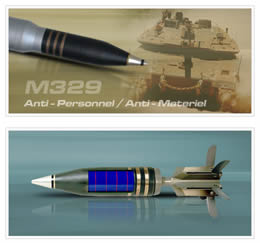

The IDF is equipping the Merkava Mk4 deployed along the Gaza strip with M329 High-Explosive/Multi-Purpose (HE/MP) 120mm tank rounds.
The newly developed tank round is based on the perception of using one kind of round against a wide range of targets and scenarios in the modern battlefield, ultimately decreasing the different kinds of tank rounds used before. The fuse of the tank round is programmable after it is loaded in the chamber, enabling the crewmen increased capability in both handling and in accomplishing News Releasetheir goals in all fighting scenarios- against fortifications, urban structures, Light Armored Vehicles (LAVs), as well as, anti-tank and ambush infantry squads.
When used against fortified structures or bunkers, the round effectively penetrates the obstacle before detonating, scattering thousands of deadly fragments inside.
These tanks were also fitted with Trophy active protection systems (APS), following recent attacks by Palestinian Kornet missiles. In a recent missile attack launched early January 2011 the missile penetrated the armor but did cause casualties of further damage to the tank.
Compact JP-8 Diesel-Powered Fuel-Cell Demonstrates Long Operation Durability
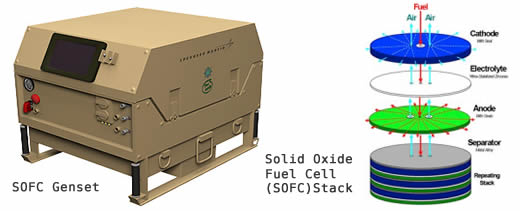
The Department of Defense (DOD) has more than 100,000 electrical generator systems (“gensets”) deployed around the world. Supporting field installations with power for lighting, air conditioning, run computers, communications or medical equipment, these generators are major consumers of fuel. Running on diesel engines, these gensets consume expensive fuel that, by the time it reaches the field unit, costs over a hundred US$ per gallon, in addition to the risk of human lives – as tankers are among the most exposed targets in the battlefield.

Fuel Cells offer a more efficient method in converting expensive fuel into electricity. Unlike combustion engines in today’s diesel generators, Fuel Cells use a chemical reaction to produce electricity – cutting fuel consumption by 50-66 percent. This emerging technology offers the potential of reduced emissions and higher fuel efficiency. One of the main challenges for such system is dealing with the corrosive effect of the military’s high sulfur JP-8 standard fuel.
Technology Management Inc., (TMI) a Cleveland Ohio based company announce has developed the AnywherEnergy Fuel Cell system running on standard JP-8 (diesel) fuel, which has recently demonstrated a high level of maturity passing an operating milestone of 1,000 hours running exclusively on untreated JP-8 military logistic fuel.
Benson Lee, TMI’s President and CEO. “JP-8 contains sulfur and is highly corrosive to other fuel cell systems and to my knowledge this is the only known complete fuel cell system in the world to reach this milestone running on untreated military JP-8.”
The milestone system run was conducted at the Lockheed Martin’s Advanced Fuel Cell Development Lab located at in Akron, Ohio. TMI is teamed with Lockheed Martin and prime contractor Stark State College of Technology on two Ohio Third Frontier Programs. In 2010 the U.S. Army Communications-Electronics Research, Development and Engineering Center (CERDEC) has awarded the team a $1.7 million contract to further develop fuel cell technology and to develop a prototype system to reduce fuel consumption. Under the program the fuel cell system will be ruggedized, to withstand harsh military environments. “Fuel cell based genset are cleaner, more efficient and more cost effective than existing military gensets, potentially saving billions in fuel costs.” Steve Sinsabaugh, Lockheed Martin fellow commented.
TMI has focused on the design of a small-scale system since its earliest development nearly 20 years ago. The company implements low-cost, solid oxide fuel cell (SOFC) technology originally developed in Cleveland at the world R&D laboratories of SOHIO (later to become BP America). The system design has specifically focused on a platform that could be easily manufactured by Ohio’s automotive and appliance manufacturers. Over the years, TMI has deployed multiple demonstrations that have set industry milestones including a 30-day, on-farm demonstration in 2009 funded by the Ohio Soybean Council utilizing raw soybean oil as the sole fuel source. “Fuel cells have the potential to spearhead a huge new clean energy industry for both Ohio and the nation,” Lee said. “As TMI continues to reach critical milestones, and obtains the necessary funding and investments, we could be commercialized in military and residential market within 3 years.”
TMI’s system provides primary power as an option for end users who want or need 24/7 energy availability. This option can be in parallel with or independent from the utility grid. TMI’s modular 1-kW system provides the advantages of being sited almost anywhere, including indoors where surplus heat can be used for cogeneration (e.g., heating and cooling).
More about the Beast – RQ-170 Sentinel Show Again at Kandahar
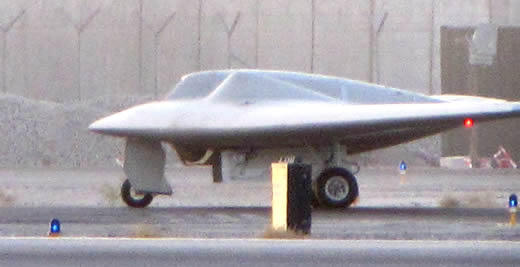
New pictures published today on the Secret Projects forum provide a better view of the Lockheed Martin RQ-170 Sentinel operating from the Kandahar airfield in Afghanistan. Bill Sweetman of Aviation Week, who gave the RQ-170 the nickname ‘The Beast’, estimate the RQ-170 size to match the MQ-9A Reaper, and assumes the two aircraft carry a similar payload, although the ‘Beast’ would have shorter mission endurance given its thirsty jet propulsion.

Sweetman assesses the level of signature reduction (‘stealth’) to be ‘moderate’, the side views of the aircraft show the belly fairing which looks lite it houses an electro-optical/infrared sensor at the front. A side looking AESA radar could be housed behind it, in the belly supporting all-weather, high resolution radar-imaging by Synthetic Aperture Radar processing. While the new photos provide a better view of the airplane they do not help solving the mystery about the overwing fairings nor does it offer a clue about what is hidden beneath.

“One possibility: they contain antennas that can be rotated, when not in use, to reduce their reflectivity, given that the best bandwidth-selective radome can only do so much. So if your UAV is being illuminated by radar, you turn to place that radar on one side of the aircraft and use the antenna on the opposite, “shadow” side of the aircraft to communicate.” Sweetman speculate. “Both the satellite links and the belly fairing could be modular payloads, making it possible to configure the aircraft for strike missions or to carry a high-power microwave source – such as the one mentioned in this Lockheed Martin news release as “requiring an aerial delivery platform”. It could also be an effective “stand-in” jamming platform to support other aircraft.” He concludes in his Ares blog post. These photos where provided by members of the British Secretprojects blog.

nEUROn Subsystems Begin to Assemble at Istres

Saab AB has delivered to Dassault the front and central fuselage sections of the European UCAV technology demonstrator nEUROn. Dassault Aviation the Prime contractor for the nEROn. As subassemblies and parts of the unmanned aircraft are arriving at Istres, nEUROn program is entering the critical phase of assembly and integration of the final air vehicle.


The rear fuselage section has already been delivered in mid-January by Greece’s Hellenic Aerospace Industries (HAI). The fuselage section is due to arrive from Sweden in February. ‘Stealth’-related parts manufactured by Dassault Aviation in France will be delivered in several shipments until March. Other structural elements expected here include the ordnance release pantograph built by RUAG in Switzerland, due to arrive by the end of February; to follow by the two half wings sent from in Spain by EADS-CASA early March. Alenia is building the two weapon bay doors in Italy due to arrive from Italy in March. Saab will also deliver the three landing gear doors in April.
According to Prime contractor Dassault, the team has already drawn substantial lessons from the program, including in the field of program management and schedule optimization. The Dassault team, assisted by the teams delegated to Istres by the various industrial partners, will perform the final layout, piping, electrical wiring and equipment fitting, as defined in the digital mock-up reference established by the six partners on the virtual plateau, as well as the final assembly. Then, during the last quarter of 2011, the Dassault Aviation team will perform the ground tests of the nEUROn, followed by the first engine run-up by end 2011, aiming at a maiden flight in mid-2012.

Singaporean Searchers on a Mission in Afghanistan
The Singaporean troops will stay in Afghanistan until the end of 2011 supporting ISAF operations in the country. The deployments were supposed to have ended by April 2011 But Deputy Prime Minister Teo Chee Hean announced their mission will be extended. Since 2007 Singapore has deployed several military teams to Afghanistan, providing medical assistance, training and reconnaissance and surveillance in support of the International Security Afghanistan Force (ISAF).

Sixteen servicemen from the Singapore Armed Forces (SAF) are likely to remain stationed there to teach Afghan soldiers to fire artillery guns and take part in coalition operations involving pilotless surveillance planes. Singapore also operates a 52-man Unmanned Aerial Vehicle (UAV) detachment operating four Singaporean IAI/Malat Searcher II UAVs are operated from Tarin Kowt, in Afghanistan’s Uruzgan province. The Searchers were deployed here following the withdrawal of the Dutch contingent operating Aerostars UAVs leased from the Israeli company Aeronautics.
Prior to the Singaporean mission Spanish forces also operated Searchers from Herat in Western Afghanistan.
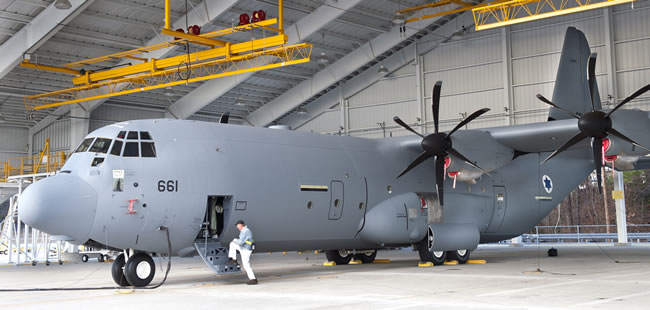
Samson – the New Name for the Israel Air Force C-130J

AESA Equipped Strike Eagle Begins Flight Testing at Eglin

An F-15E Strike Eagle equipped with new and improved APG-82(V)1 electronically scanned array technology (AESA) radar began flight testing in Florida last week. The APG-82(V)1 upgrade is part of through the F-15E service life extension, intended to maintain the Strike Eagle operational beyond 2035. Developmental testing is scheduled to continue through 2012, while early operational testing conducted in parallel beginning March 2011 with elements of the Eglin based 53rd Wing. Modification of a 53rd Wing F-15E to equip with the new radar has already begun. Serial modification of 244 F-15Es is scheduled to begin by 2014.

Modified under the Radar Modernization Program (RMP), this Strike eagle is the first to be equipped with the Raytheon developed radar, introducing major improvements over the original APG-70 mechanically scanned array (MSA). The advantage AESA radar has over traditional MSA is its near-instantaneous ability to redirect its focus from air-to-air to air-to-ground mode. “One AESA-equipped F-15E can detect and track multiple targets simultaneously and gain the same battle picture and prosecute the same number of attacks that currently require several mechanically scanned radar assets,” said Brad Jones, the Boeing director for U.S. Air Force development programs. “By no longer having to wait for the array to physically move to a new area of interest, the aircrew receives better situational awareness in less time,” 1st Lt. Nathaniel Meier, a radar modernization project manager with the OFP Combined Test Force (CTF) added.

Capt. Chris Dupin, a 40th FTS member and the weapons system officer for the first flight, said he noticed improved capabilities during the initial flight. He said the radar was able to detect F-16s much farther away than ever before. “The kill chain for anything is the ability to detect, identify, target and engage a threat,” Captain Dupin said. “If we can detect an air target earlier or farther away, that leaves more time and space to complete the rest of the kill chain. Completing the kill chain faster and earlier means we’re better able to gain or maintain airspace superiority.”
The new radar will also introduce a new dimension in F-15E readiness and support. Meyer estimates the new radar works to have approximately a 20-fold improvement in aircraft reliability. An average failure for the APG-70 radar component was previously measured in tens of hours and can now be measured in hundreds of hours, Lieutenant Meier said. The APG-82 improved reliability also cuts down on the time needed for repairs and the cost of replacement parts.
The development of APG-82(V)1 spanned over four-years and relied on elements proven in other AESA radars programs – the APG-79 flying on the F/A-18E/F, the EA-18G and the and APG-63(V)3 flying on F-15C platforms. Originally this radar was designated APG-63(V)4. The modification of the first aircraft took six months and involved members from Boeing, Raytheon and 46th Technical Support Squadron and OFP CTF. Serial improvements of operational F-15Es is expected to become much faster through. The new radar is designed to be inserted as a ‘plug-in-play’ system, introducing much improved performance with higher reliability derived from solid-state technology, fewer moving parts and newer, easily replaceable modules.
Other AESA radars are already operational on the F-15s. Singapore was the first F-15E user to adapt the APG-63(V)3 AESA radar with its F-15SG. The U.S. Air Force is equipping F-15C/Ds with the APG-63(V)3. Another user selecting this radar is Saudi-Arabia, to equip all the 84 new F-15SA with AESA technology.

Skunk Works and XTEND Simplify Multi-Drone Command
Lockheed Martin Skunk Works® and XTEND have achieved a major milestone in JADC2 by integrating the XOS operating system with the MDCX™ autonomy platform. This technical breakthrough enables a single operator to simultaneously command multiple drone classes, eliminating the friction of mission handoffs. From "marsupial" drone deployments to operating in GPS-denied environments, explore how this collaboration is abbreviating the data-to-decision timeline and redefining autonomous mission execution.

From Ukraine to Taiwan: The Global Race to Dominate the New Defense Tech Frontier
As traditional defense primes face mounting competition from agile “neoprimes” such as Anduril, Palantir and Helsing, the balance of innovation is shifting toward software-defined warfare and scalable, dual-use technologies, while global industry consolidation—marked by Boeing’s integration of Spirit AeroSystems and other strategic mergers—signals an intensified race to secure control over the defense technology value chain. Our Defense-Tech weekly report highlights these trends.

Europe’s “Drone Wall”
In early October 2025, a coordinated wave of unmanned aerial system (UAS) incursions—widely attributed to Russia—targeted critical infrastructure across at least ten European nations. The unprecedented campaign exposed the fragility of Europe’s air defenses...
Weekly Defense Update & Global Security Assessment
Executive Summary
The past week (September 18-25, 2025) represents an inflection point where strategic defense concepts have transitioned from doctrine to tangible reality. An analysis of global events reveals four primary, interconnected trends shaping an...

U.S. Air and Space Forces Push Next-Gen Programs at the AS&C 2025 Conference and...
At the 2025 Air, Space & Cyber Conference, U.S. Air Force and Space Force leaders unveiled major updates on next-generation fighters, bombers, unmanned systems, and space initiatives, highlighting both rapid innovation and critical readiness challenges as the services race to outpace global competitors. A short version is available here, with a more detailed version for subscribers.
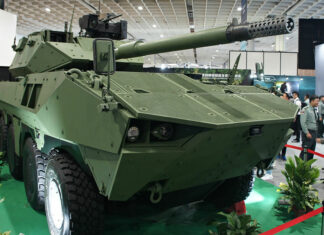
TADTE 2025: Reflecting Taiwan’s Strategic Themes
The Taipei Aerospace & Defense Technology Exhibition (TADTE) 2025 crystallized around four dominant strategic themes that collectively illustrate Taiwan's comprehensive approach to defense modernization amid escalating regional tensions. Based on a detailed report by Pleronix (available upon request). Includes a Podcast discussion on TADTE 2025's highlighting Taiwan's four strategic themes beyond the post's coverage.
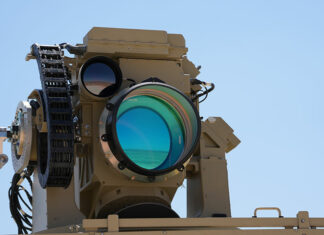
Iron Beam 450 Completes Testing, Soon to Join With Operational Air Defense Units
Israel’s Iron Beam 450 high-power laser system has completed final testing, marking a major leap in air defense. Developed by Rafael, it offers precise, cost-effective interception of rockets, UAVs, and mortars, and is set for IDF deployment by 2025.