Sunday, December 21, 2025
More
    Home Blog Page 60

    New Evidence of Russian Iskander M Missile Deployment in Syria

    Iskander units were first spotted at Hmeimim in March 2016.

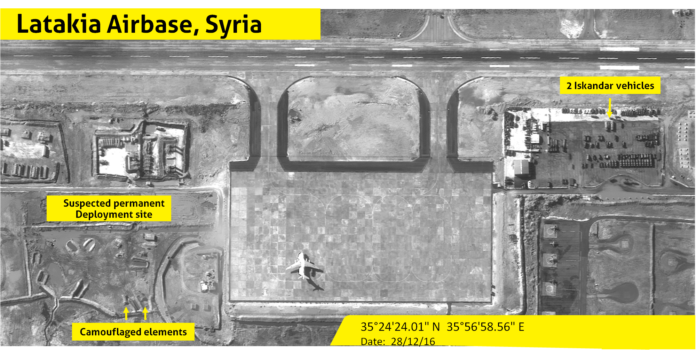
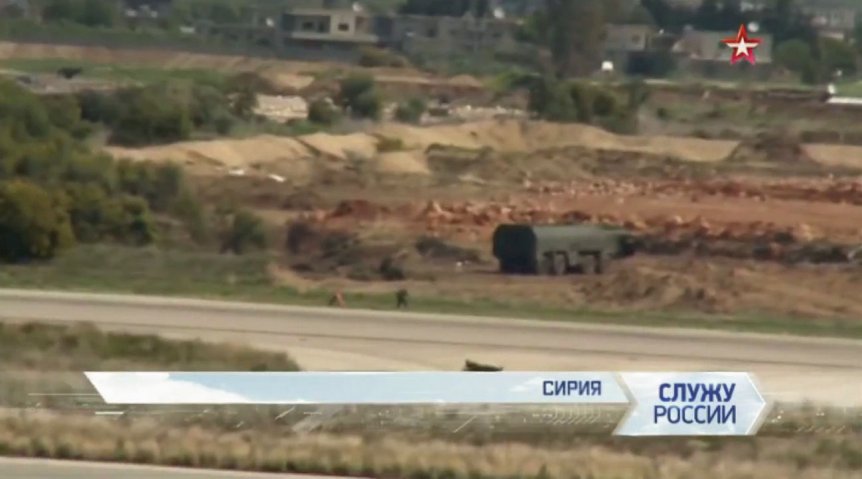
    Satellite imagery analysis by Imagesat International (ISI) intelligence experts revealed deployment of Iskandar (SS-26 “Stone”) advanced missile system vehicles as a part of the Russian deployment at Hmeimim airbase in Latakia, Syria. A single Iskander Transporter Erector Launcher (TEL) was first spotted in footage broadcast by Russia’s Zvezda TV channel in March, 2016. In the ISI images, two Iskandar Vehicles are clearly visible at a logistic site beside the northeastern part of the runway. Those two elements are most probably SS-26 Trans-Loading vehicles (Transloaders). The Iskander missile system elements are mounted on 8×8 MZKT-7930 chassis.

    The satellite imagery is the first visual evidence of the system presence in Syria. This geospatial evidence approves several unconfirmed reports of the presence of Iskandar missiles in Syria and details the system’s deployment site.

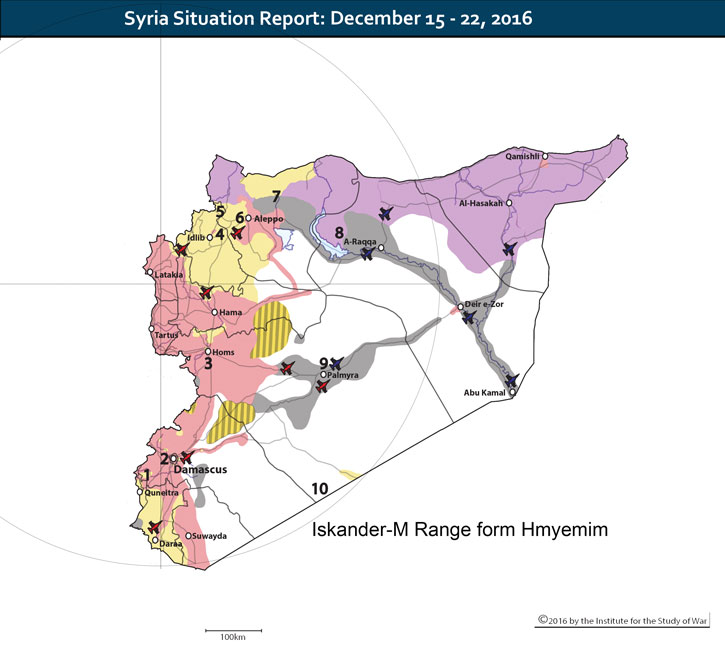
    With an effective range of 500 km the Iskander-M missiles positioned at Hmeimim can hit any Syrian rebel position throughout Syria, and part of the areas controlled by Daesh (ISIS), including Raqqa and Palmyra, but not Dir E-Zor and Abu Kamal on the Iraqi border. Map: Defense-Update and ISW.

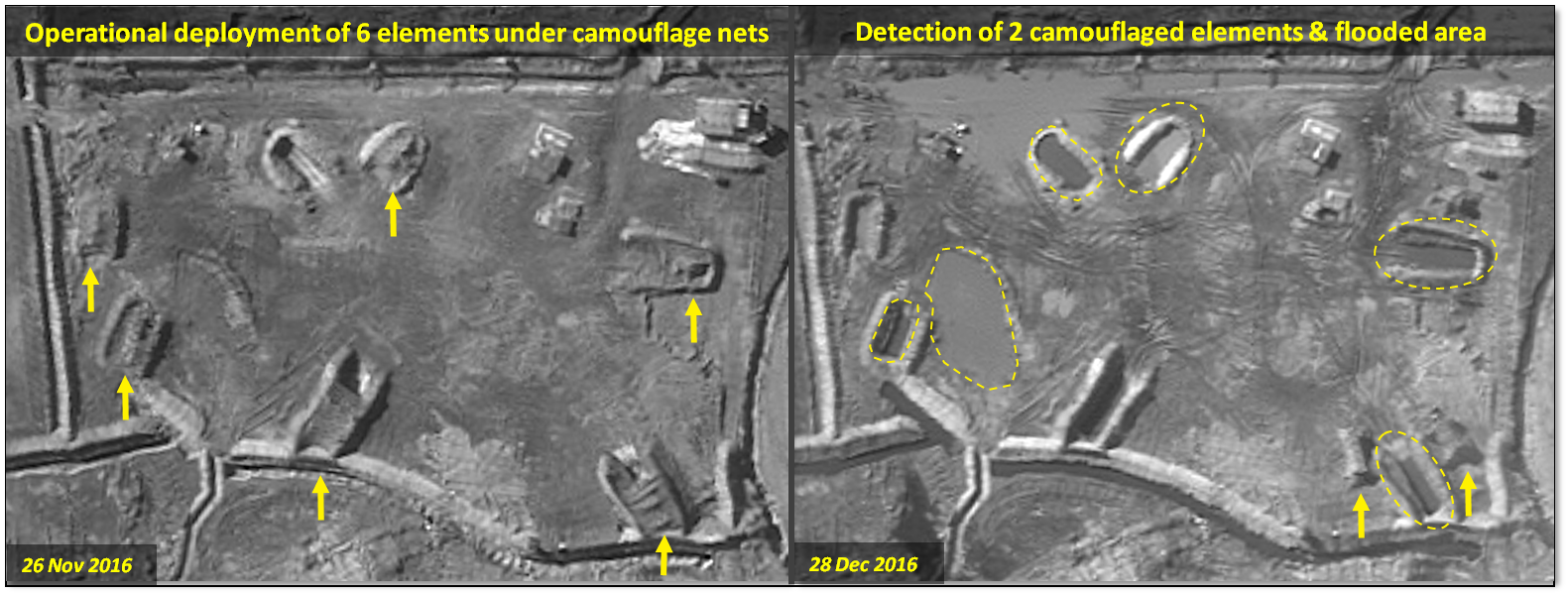
    According to high-resolution images taken by ISI’s EROS-B satellite, the analysts assume the system is routinely deployed under camouflage nets at a nearby unpaved compound. Most probably, heavy rain and floods forced the re-deployment of those two elements to the location in which they were revealed by ISI. Further analysis uncovered two additional elements covered by camouflage nets deployed at the compound, which are most probably part of the Iskandar system.

    In March 2016 press reports indicated Russia had deployed Iskander missile systems to its Hmeimim Air Base in Syria, but it was unclear these vehicles carried ballistic or cruise missiles. Russia has repeatedly used sea-launched and air-launched cruise missiles in supporting the Syrian Army in its battle against rebels, but so far refrained from using ballistic missiles. The Syrian regime has used ballistic missiles of all types, through the five-year conflict and have asked Moscow to send the export variant – Iskander-E but there were no indications such shipments were made.

    From its base in Hmeimim the strike range of the SS-26 system covers the entire area of Syria, In service with the Russian Ground Forces since 2006 the 9K720 Iskander-M system carries two short-range tactical ballistic missiles. Each missile carries a warhead of 480-700 kg. Various warheads are available, including penetrating high explosives (HE), fragmenting HE, fuel-air explosives, and submunitions. The Russians have also developed a nuclear warhead for this type.

    Iskander-M has a range of 400-500 km (depending on the warhead used). It uses several guidance methods, including inertial, Glonass and scene matching techniques to achieve very high hit accuracy (4-7 meters).

    Moscow often emphasizes the deployment of these weapon systems, particularly in the Kaliningrad enclave in the Baltic Sea, where it is considered mainly as a political deterrent move against Europe.

    Additional missile launchers could be parked in these protected positions near the Hmeimim airbase. Photo: Imagesat

    Spy’Ranger – a New Mini-Drone for the French Army

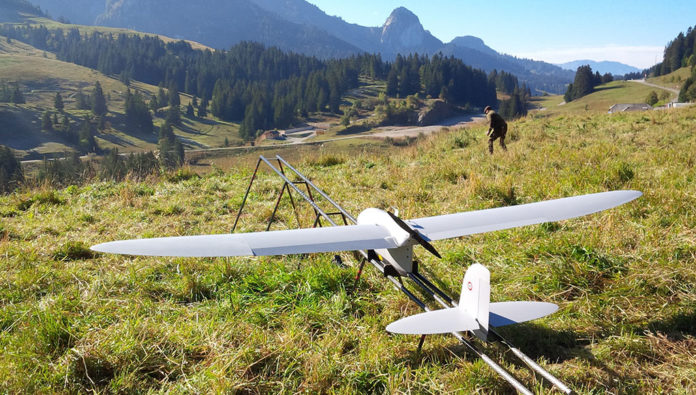
    Spy'Ranger will replace the DRAC in service with the French Army. Photo: Thales

    The French defense procurement agency (DGA) selected Thales to provide up to 70 ‘Spy’Ranger’ Mini-Drone Reconnaissance Systems (SMDR) for the French Army. Induction of the first batch of 35 systems is expected to begin in 2019. The total cost of the contract, with options, could reach €104.3 million (US $108.8 million).

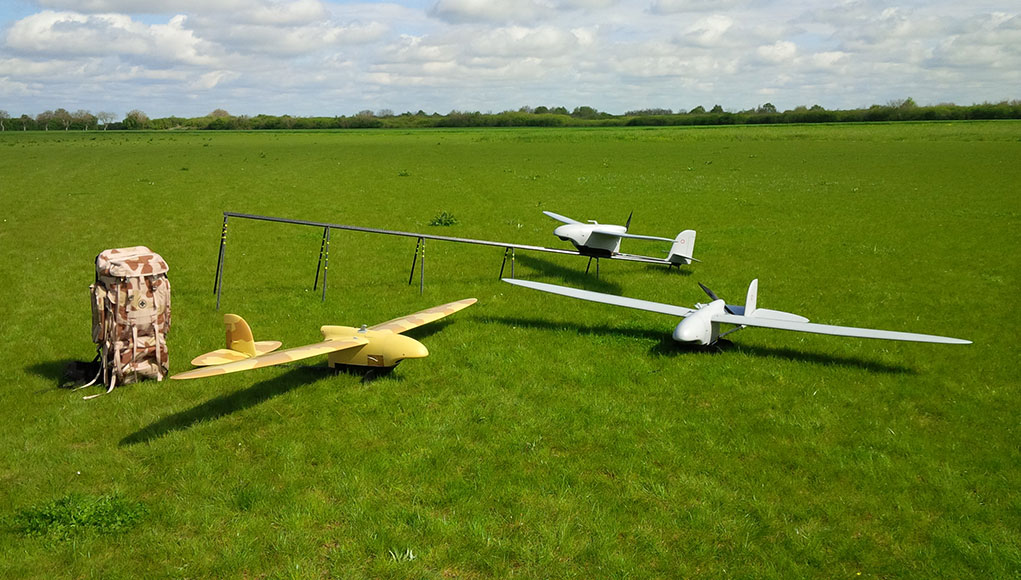
    Each Spy’Ranger system consists of three drones, a ground segment (launcher, control unit, and communications module) and associated technical support. Its man-portable configuration consists of two drones and the ground segment packed in two backpacks weighing 25kg each. Thales developed the Spy’Ranger system in less than 13 months, under a cooperation Thales established with two small French companies – Aviation Design and Merio. The Spy’Ranger will equip the services and succeeds the Airbus DS Drac system, which entered service with the Army in 2008. The Spy’Ranger won over the rival Airbus and SurveyCopter that offered the SkyGhost ER.

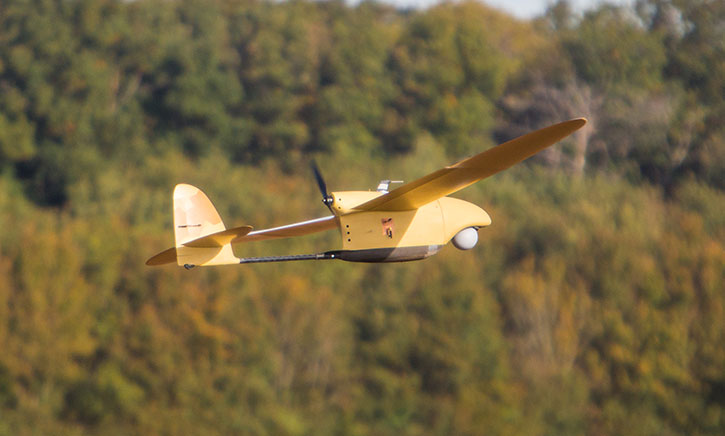
    The French army required a reconnaissance system that consists of mini-UAVs that can operate in day and night over a distance of up to 30 km, with an endurance of 150 minutes. The drone’s maximum take-off weight is 14kg, including payload weighing up to 1.2 kg. Battery powered and electrically propelled, it is inaudible at 200 meters. The Spy’Ranger has a wing span of 3.8 meters; it can operate at an altitude of 4,500 above sea level, at speed up to 90 km/h. Its endurance is 180 minutes. The drone can operate at wind conditions below 19 m/s. According to Thales, the system operation is simple and does not require special skills.

    The new mini-drone weighs 14.5 kg on takeoff. Electrically driven by battery power, the drone is inaudible from a distance of 200 meters. Photo: Thales

    Mission preparation would usually take about 12 minutes, preparing the mini-drone to launch from a light ramp provided with the system. Once airborne Spy’Ranger is fully autonomous, operated by a single operator. Operating options include assisted modes, providing dynamic route selection to follow moving targets. The system also employs electronic stabilization, automatic target detection, geotracking, and video tracking.

    The mini-drone carries a single gyro-stabilized multi-sensor electro-optical payload and protected, tactical datalink that transmits the video in real-time to the user. The high resolution of the HD IR&TV system enables positive identifications of objects on the ground. The system will be able to operate under a regimental intelligence, surveillance and reconnaissance command, and control system (C4ISR) or independently, as a stand-alone asset operated at the tactical level.

    The selection of Thales for this contract strengthens the French group’s position in the unmanned systems sector, offering complete systems from micro-drones, mini and tactical drones, as well as on-board sensors, communication means, and ground control stations.

    The Spy’Ranger system consists of three drones, and a ground segment comprising the command unit, communications link and launch rail. A man-packed system that includes two drones weighs around 50 kg. Photo: Thales

    Iran Test Fires Sayyad-3 High Altitude SAM

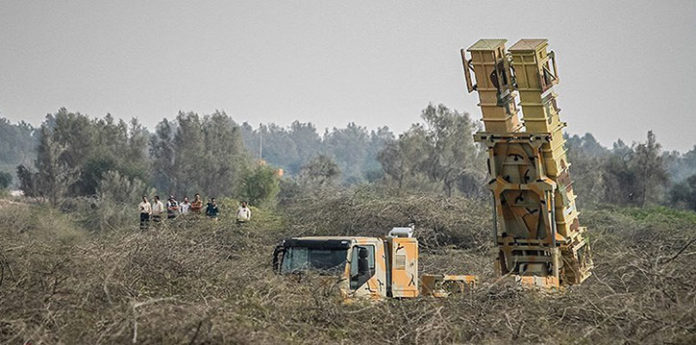
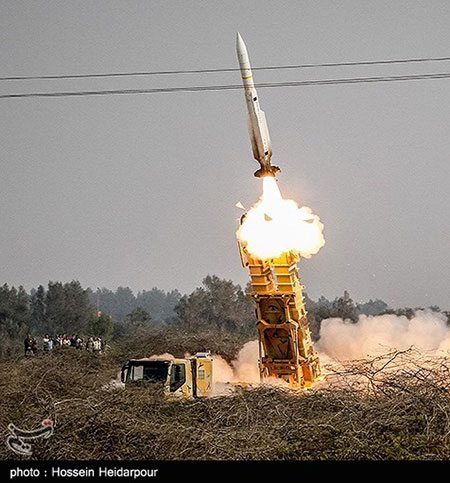
    Sayyad-3 high altitude missile interceptor fired from a mobile launcher during a recent air defense exercise in Iran. Photo via Tasnim News

    Iran’s Air Defense employed an upgraded version of the locally-made Sayyad-3 high-altitude air-defense missile yesterday. According to the Iranian news agency Tasnim, this was the first operational deployment of the missile, part of a large-scale exercise known as ‘Defenders of Velayat Skies 7’, taking place in Southern Iran this week. The annual exercise spans an area of nearly half a million square kilometers in the provinces of Hormozgan, Bushehr and Khuzestan.

    The Sayyad-3 high altitude interceptor is operated as part of the Talash air defense missile system which also employs the Sayyad-2 interceptor variant against targets flying at medium altitude. This system intercept targets at ranges up to 150 km and is effective at high altitude. It can track 30 targets and engage 12 of them simultaneously. The system is integrated into the early warning radars operating at the strategic level to maintain a situational picture of the entire airspace, and employs a locally manufactured fire control radar known as Ofoq.

    The system gradually replaces the S-200 missiles that exclusively provided high-altitude air-defense until the introduction of the Russian supplied S-300 air defense systems in 2016. Iran is also developing an extended range version known as Sayyad-4, for the Bavar 373 air defense system locally developed as an alternative to the S-300.

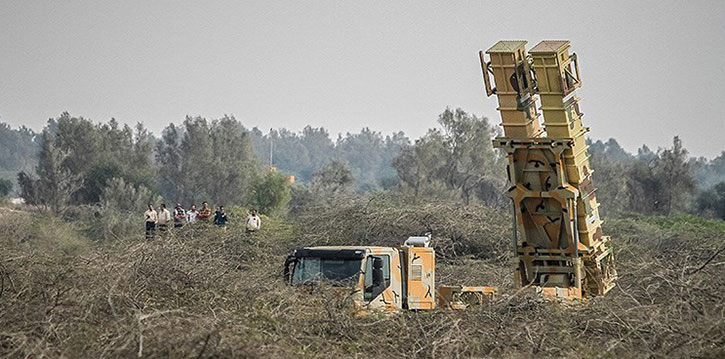
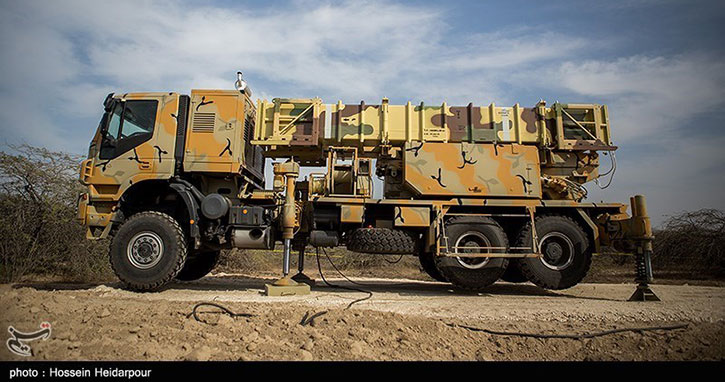
    Sayyad-3 provides the upper layer of the Talash air defense system with Sayyad-2 maintaining defense in the medium altitude. The missile uses this mobile Transporter-Erector-Launcher (TEL) carrying two missiles in sealed canisters. Photo: Hossain Heidarpour, Tasnim

    Russians Used Cyber Bots to Target Ukrainian Artillery

    The availability of Smartphones and other computing devices using commercial, network based operating systems in military use enable developers to introduce innovative solutions that add efficiency and improve processes, but also compromises organizations to exploitation by adversaries. When it comes to military organizations, such compromise can lead to defeat.

    A recent example is ‘Попр-Д30.apk’, an artillery support app developed in 2013 by an officer of the Ukrainian 55th Artillery Brigade officer. As the filename suggested, the app relates specifically to the D-30 122mm towed howitzer, an artillery weapon first manufactured in the Soviet Union in the 1960s but still in use today. According to the developer Yaroslav Sherstuk, the application computes the traditional manual process of positioning, planning and firing tables, thus dramatically reducing the time to fire the D-30. Although the app was not distributed in the open, Sherstuk claim it had a user base of 9000 users. (A video covering the artillery units using the application is shown below).

    In-depth reverse engineering by Crowdstrike revealed that the original application package was ‘contaminated’, probably as early as 2014, by a Trojan malware identified as an Android variant of X-Agent, the command and control protocol was closely linked to observed Windows variants of X-Agent, and utilized a cryptographic algorithm called RC4 with a very similar 50-byte base key.

    The likely role of this malware is strategic in nature. The capability of the malware includes gaining access to contacts, Short Message Service (SMS) text messages, call logs, and internet data, and FANCY BEAR would likely leverage this information for its intelligence and planning value.

    What was the purpose of this attack? According to Crowdstrike analysis, “successful deployment of the FANCY BEAR malware within this application may have facilitated reconnaissance against Ukrainian troops. The ability of this malware to retrieve communications and locational data from an infected device makes it an attractive way to identify the general location of Ukrainian artillery forces and engage them.”

    Open source reporting indicates that Ukrainian artillery forces have lost over 50% of their weapons in the 2 years of conflict and over 80% of D-30 howitzers, the highest percentage of loss of any other artillery pieces in Ukraine’s arsenall. It is possible that the deployment of this infected app may have contributed to the high-loss nature of this platform.

    The Trojan may not be the sole cause for this massive loss, but likely served to support the reconnaissance role of traditional battlefield assets. Although traditional overhead intelligence surveillance and reconnaissance (ISR) assets (drones) were likely still needed to finalize tactical movements, the ability of this application to retrieve communications and gross locational data from infected devices, could provide insight for further planning, coordination, and tasking of ISR, artillery assets, and fighting force.

    A tool such as this has the potential ability to map out a unit’s composition and hierarchy, determine their plans, and even triangulate their approximate location. This type of strategic analysis can enable the identification of zones in which troops are operating and help prioritize assets within those zones for future targeting.

    Mr Sherstuk denied the possibility the application he developed was hacked. On his Facebook page, he commented about the Crowdstrike report, saying it was “delusional and written for amateurs… So it is clear to everyone, distribution of the software is still under my control and is not in the public domain, and the activation is controlled personally by me,” the Telegraph wrote.

    This previously unseen variant of X-Agent represents FANCY BEAR’s expansion in mobile malware development from iOS-capable implants to Android devices, and reveals one more component of the broad-spectrum approach to cyber operations taken by Russia-based actors in the war in Ukraine. Crowdstrike assessed that FANCY BEAR is likely affiliated with the Russian military intelligence (GRU), and works closely with Russian military forces operating in Eastern Ukraine and its border regions in Russia.

    Attacked the US Democratic Committee used the same tools a cyber espionage group known as ‘Fancy Bear’ reportedly spied after Ukrainian artillery units using an infected application developed by a Ukrainian Army officer for use with Ukrainian artillery technical staff. The US based Crowdstrike that reported today on this attack identified the code that infected the app as X-Agent, the same malware used in the intrusions into the U.S. Democratic National Committee (DNC), and other political organizations.

    Crowdstrike analysts assess the Ukrainian application is likely only the initial iteration of this type of malware. While it was initially discovered in a battlefield environment, an adversary could also leverage it in attacks against non-military targets. Mobile devices and internet-connected technology have increasingly proliferated civilian and military organizations. This technique may very likely be deployed in the political, government, or non-governmental sectors soon.

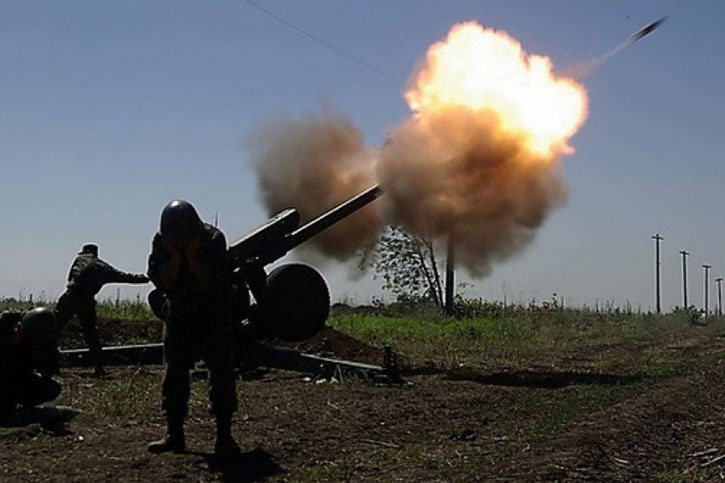
    Ukrainian D-30 122 gun firing.

    Acquisition of Israeli Radars – First Phase of Czech Air Defense Modernization

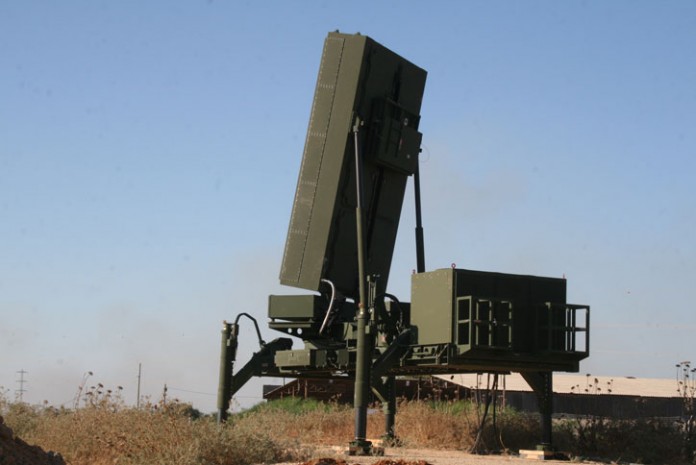
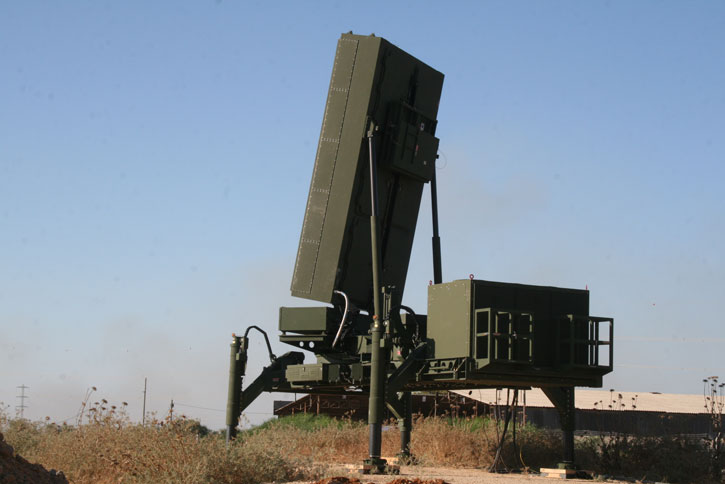
    The EL/M-2284 Multi-Mode Radar produced by IAI Elta for the David's Sling, is now committed to the new Iron Dome unit. Photo: IMOD
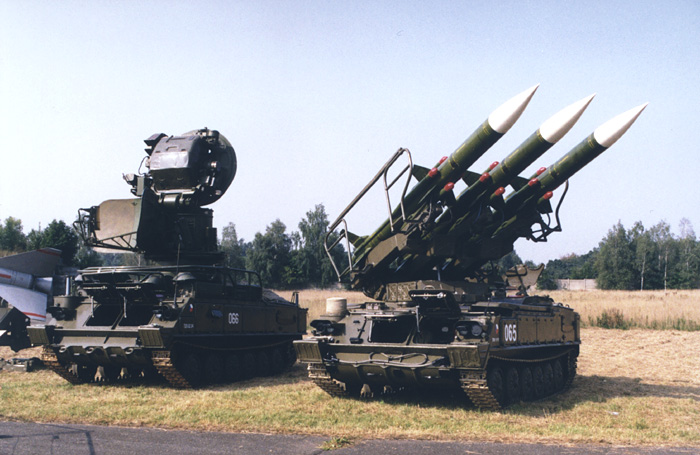
    The Czech Army 25th Air Defence Missile Regiment based in Strakonice, south Bohemia, has four Soviet-made KUB systems equipped with missiles whose lifespan will expire in 2020. The SA-6B GAINFUL Mod 1 is the last version of the system with reinforced protection to electronic jamming. It was produced until 1992 and is slated for replacement in the 2020 period. Photo: Czech MOD

    Israel Aerospace Industries (IAI), Elta Systems division, was selected to deliver eight ELM 2084 MultiMission Radar (MMR) systems to upgrade the air defense systems of the Czech Republic. The radar that already supports Israel’s Iron Dome and David’s Sling air defense systems has also been ordered and delivered to some countries worldwide.

    The cost of the eight systems is likely to total $125 million. The contract was awarded to IAI in 2019. The Czech Republic published an international tender to acquire new 3D mobile air defense radars (3D MADR) to replace the target acquisition radars associated with the Russian-built SA-6 (2K12 KUB CZ) anti-aircraft missile systems the Czech military received in 1991.

    Prague considered replacing these SAMs with western weapons that would be compatible with NATO systems and extend the range and altitude of the systems beyond the capability of the SA-6. Raytheon, MBDA and IAI are among the likely candidates to compete for the SA-6 replacement opportunity.

    Based on the latest agile electronic scanned array (AESA) technology, the 3D MADR provides larger area coverage, handles more targets simultaneously, and more immune to electronic attack, thus improving air defense systems performance.

    The selection of the ELM 2084 is associated with the planned SAM acquisition. The current tender covered the radars associated with the system. The MADR systems will be delivered in 2021, tested, licensed, and inducted in service by 2023. The systems will be adapted to operate in accordance with the Czech and NATO command and control systems. IAI won over Saab and Thales that were also among the finalists.

    Earlier the Czech Army considered modernizing the 2K12 KUB CZ by replacing the original Vympel 3M9M3 interceptors with Italian MBDA Aspide 2000 missiles and a new fire control system provided by Retia, a local integrator. However, this modification was not pursued.

    The EL/M-2284 Multi-Mode Radar produced by IAI Elta for the David’s Sling, is also used with Israel’s upgraded Iron Dome units. This radar was also selected by the Czech MOD for the 3D MADR program. Photo: IMOD

    New Wings for the Italian Air Force

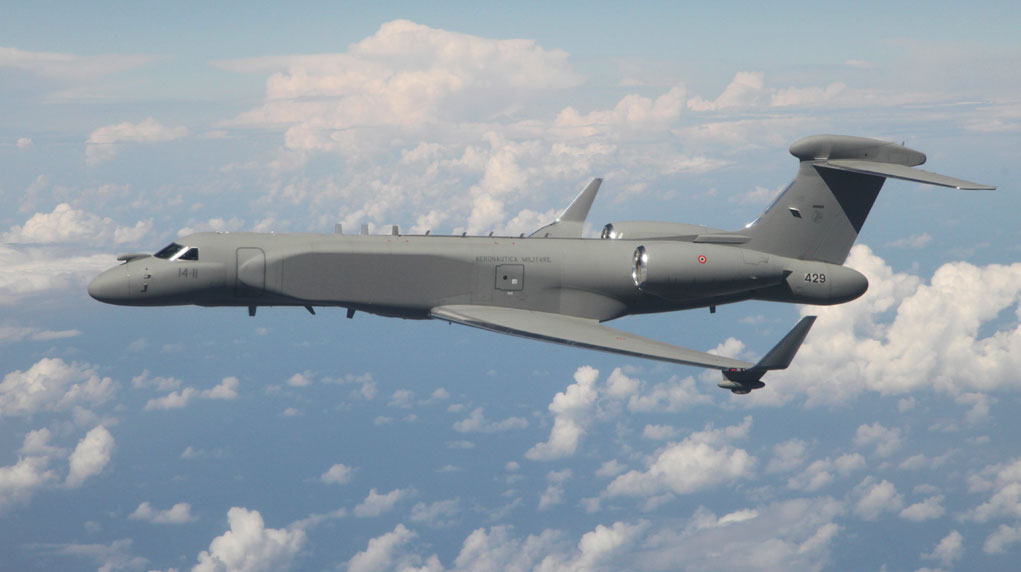
    IAI delivered the first of two airborne early warning aircraft to Italy today. Photo: IAI
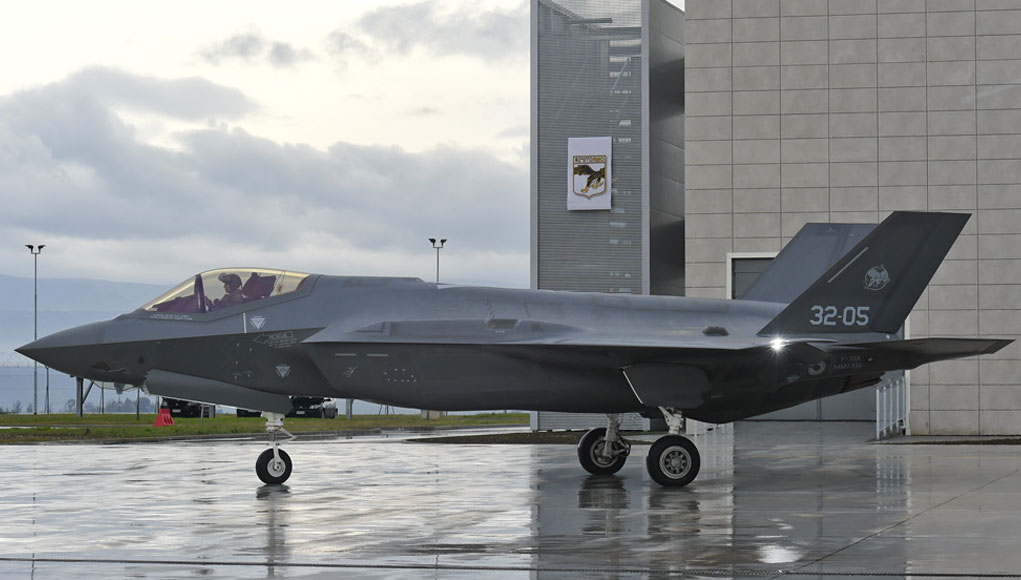
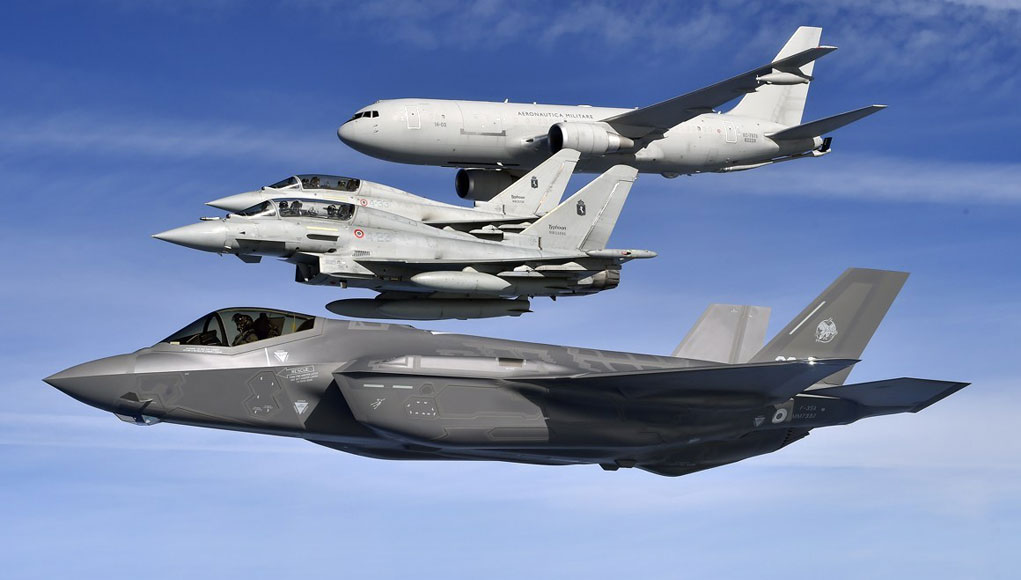
    The first two F-35 Lightning II fighters arrive at Amendola. This base is the first in Europe to receive aircraft assembled in Italy, at the Final Assembly and Check Out (FACO) of Cameri. And the event represents the achievement of an important goal for the defense and security of the country. Photo: Italian MOD

    In the past week, Italy received several brand new aircraft that will take its air force to new heights. On December 12, the 13° Gruppo (Squadron) of the 32° Stormo (Wing) of the Aeronautica Militare (Italian Air Force, ItAF) received its first two F-35A Lightning II at Amendola airbase, in southeastern Italy.

    The first two aircraft F-35 Italians have landed at the 32 ° Stormo of Amendola (FG), an air wing recently reconstituted to accommodate the Joint Strike Fighter. The wing is also responsible for the operation of Italy’s Predator remotely piloted aircraft systems (RPAS) operated by the 28° Gruppo.

    Since this event happened few hours before two F-35I were delivered to Israel, the Italians were the very first service to take delivery of the 5th generation stealth jet outside of the U.S.

    Unlike the Dutch, Brits and Israelis that made the arrival of the F-35 in their country a major media event, the Italian Air Force has kept a ‘low profile’ about its achievements with the F-35 so far.

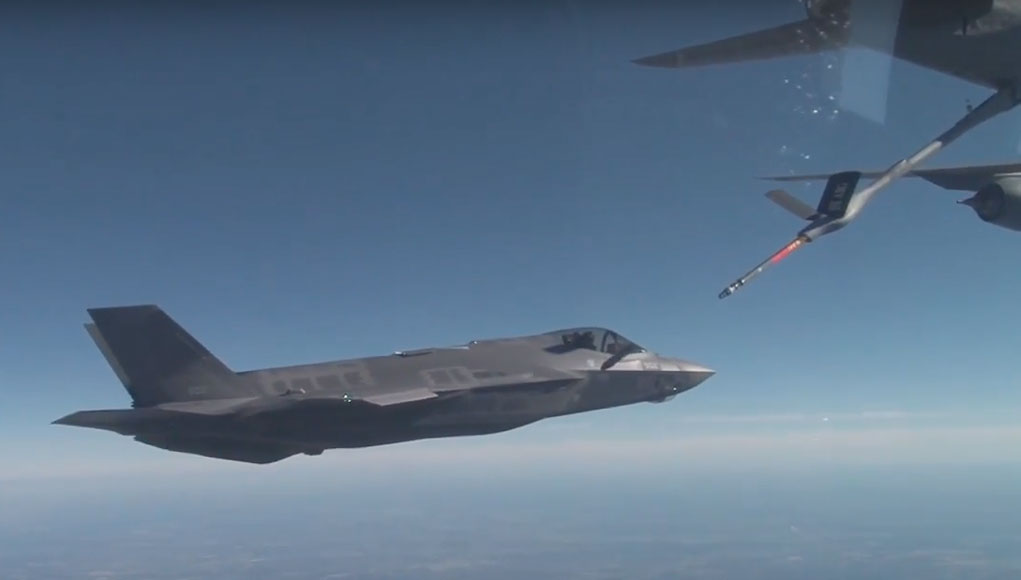
    According to David Cenciotti, editor of the Aviationist, Italy has done some significant work on the Lightning II: on Dec. 3, 2015, the ItAF welcomed the first F-35 at the Final Assembly and Check Out (FACO) facility at Cameri, in northwestern Italy. That aircraft was also the first assembled and delivered outside the U.S. On Feb. 5, 2016, the first Italian Air Force F-35, successfully completed the type’s very first transatlantic crossing landing at Naval Air Station Patuxent River, Maryland. To prepare for the 7-hour transoceanic flight the Italian Air Force conducted tanker trials in the U.S. (in July 2015) with its KC-767A, that became the first tanker not operated by the U.S. Air Force to undergo refueling certification trials with an F-35 (photo below). Three Italian F-35s are currently deployed at Luke’s multinational F-35 pilot training center.

    New fighters and Early Warning Aircraft will augment the Italian Air Force airpower, currently operating the Typhoon and older Tornado and AMX combat aircraft.

    The F-35 program presents a multi-billion dollar opportunity for Italy. Over 100 Italian industries have secured $826 million in F-35 production contracts and are expected to exceed $9.9 billion over the life of the program. Besides, Engine manufacturing has resulted in $24 million dollars in contracts to Italian companies, with a total program value expected to exceed $4 billion.

    One of the most important facilities is the Final Assembly and Check Out (FACO) center at Cameri – one of three such assembly plants producing the F-35. The main site is in Fort Worth Texas and the other, for Japan is in Nagota, Japan.

    IAI delivered the first of two airborne early warning aircraft to Italy today. Photo: IAI

    Marking another milestone for Italy and Israel, Israel Aerospace Industries (IAI) today delivered the first of two modified G-550 Conformal Airborne Early Warning (CAEW) aircraft to Italy. The CAEW is an early warning and air control system developed by ELTA systems, an IAI subsidiary. The second aircraft included in the agreement is expected to be delivered to the Italian Air Force during 2017. The aircraft are equipped with advanced mission systems including radar, electronic intelligence, self-defense and advanced communications systems to NATO standards.

    The Singapore Air Force operates four such aircraft and the Israel Air Force currently operates three more. The US Navy has also selected this platform for range control missions.

    Italy has also ordered an OPSAT 3000 reconnaissance satellite from IAI, the satellite is scheduled for launch on an Arian Vega launcher next year.

    USAF Selects Boeing to deliver podded High Energy Laser

    The Boeing Company has been awarded an estimated $90 million indefinite-delivery/indefinite-quantity (IDIQ) contract for the development and delivery of an experimental laser pod. The contractor will provide research and development of high energy laser technologies through the next five years.

    The laser pod referred to in this award is likely to be the Self-Protect High Energy Laser Demonstrator (SHiELD). In August Northrop Grumman was selected to develop the laser beam director turret for this high energy laser weapons system designed to protect tactical fighter planes from incoming missiles.

    Super Hornets Getting New, Thermal Eyes

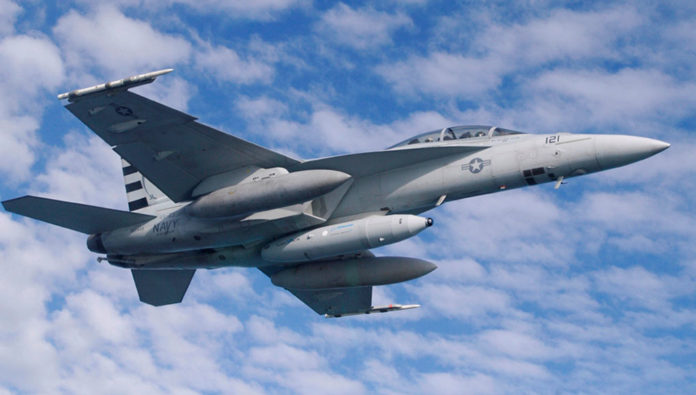
    The F/A-18E/F IRST is a passive, long-wave infrared sensor system that searches for and detects heat sources within its large field-of-regard, enabling long-range detection and track of enemy targets under normal and electronic attack environments. Photo: Lockheed martin

    The Boeing Co., St. Louis, Missouri, is being awarded an $82 million fixed-price-incentive-firm contract for the procurement of 12 low-rate initial production Infrared Search and Track (IRST) systems for the F/A-18E/F aircraft. Delivery of the new sensors will be completed by 2020.

    The IRST system developed and built by Lockheed Martin is a long-wave infrared (LWIR) detection system housed in a centerline pod. The IRST targets airborne vehicles in a radar-denied environment.

    IRST is a critical element of the U.S. Navy’s F/A-18E/F Block II Super Hornet Flight Plan, a series of planned capability enhancements planned to maintain the Super Hornet ahead of emerging threats over the coming decades. According to the Navy’s plans, up to 150 IRST systems could be procured to support the U.S. Navy’s F/A-18E/F fleet.

    “Fireball, We’re Taking It Down!”

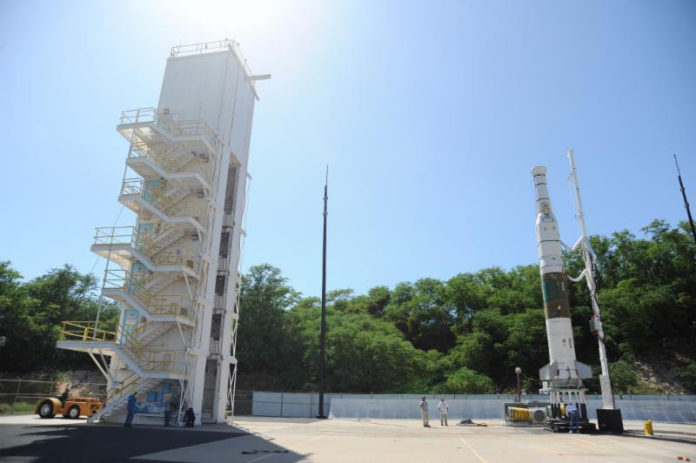
    The new target missile and launcher at PMRF in Hawaii used during MDA FTX-21 on May 17, 2016. Photo: via MDAA
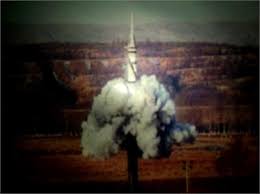
    An image reportedly showing a launch of a Chinese DF-21D. The missile’s warhead carries independently targeted hypersonic reentry vehicles, each capable of destroying an aircraft carrier.

    Last night the United States Navy tracked and intercepted the most capable and maneuverable ballistic missile deployed in the Pacific today, a target missile, representing the Dong- Feng 21 Chinese “carrier killer.” On this intercept the SM-6 was employed in a salvo firing, launching one missile following another, for increased Probability of Kill (PK).

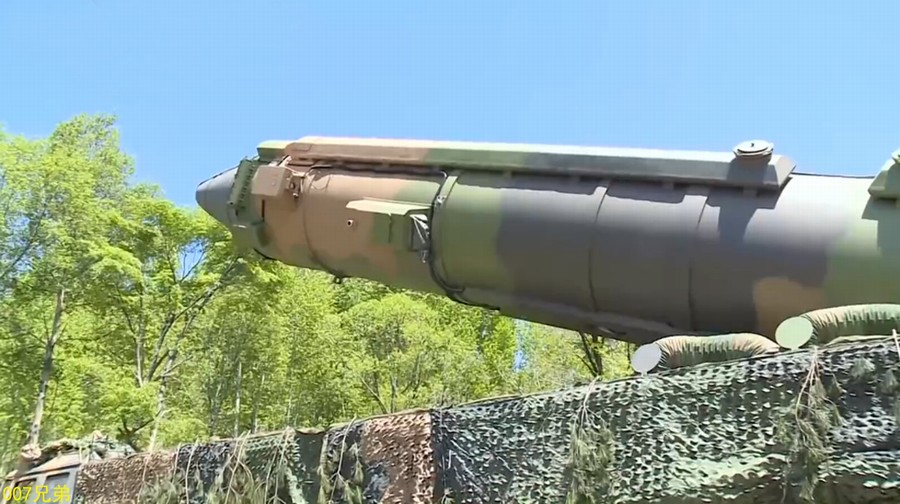
    The Chinese DF-21D is a road mobile, medium-range, anti-ship, nuclear-capable ballistic missile with maneuverable capabilities in space and in reentry that is currently deployed by the Chinese and designed to sink U.S. Aircraft Carriers. Since 2010, when the DF-21 – with a range of 1,000 to 1,700 miles and employing maneuverable re-entry vehicles – was declared to have reached initial operating capability by the United States Department of Defense (DoD) as a high hypersonic land-based anti-ship missile capable of targeting a moving aircraft carrier strike group, the United States has worked and invested to develop a ship-based interceptor to defeat this missile. Last night the MDA’s and the United States Navy’s investments in technology and engineering from the current capability to defeat the DF-21 came to fruition with the already deployed SM-6 interceptors and is a historic event for the defense of the U.S. Navy’s Carrier Strike groups.

    The new medium target missile was flown for the first time on May 17, 2016 launching out of the Pacific Missile Range Facility (PMRF) in Hawaii. On that flight test, designated Flight Test Other-21 (FTX-21), USS John Paul Jones (DDG 53) successfully demonstrated the ability of an Aegis Baseline 9.C1 (BMD 5.0 Capability Upgrade) configured ship to detect and track a medium-range ballistic missile (MRBM) target within the Earth’s atmosphere.

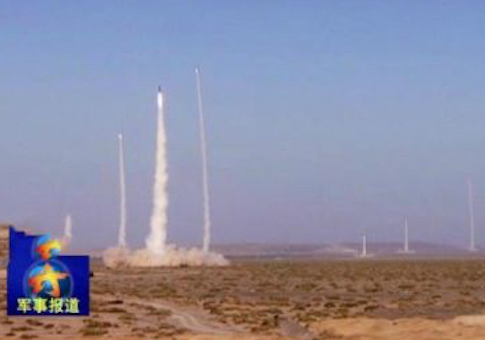
    Seven DF-21 salvo launch shown on this undated Chinese television clip.

    China reportedly has 7 anti-ship missile brigades, each with the capabilities of launching 24-32 anti-ship ballistic missiles simultaneously. Chinese video releases have shown DF-21 missiles launched in salvos of six missiles at a time. Each launcher can reload to launch a second volley within hours.

    Chinese Dong Feng DF-21D missile erected from the carrier vehicle. Photo from video via CCTV.

    Beefing up Defense Against Chinese ‘Carrier Killers’

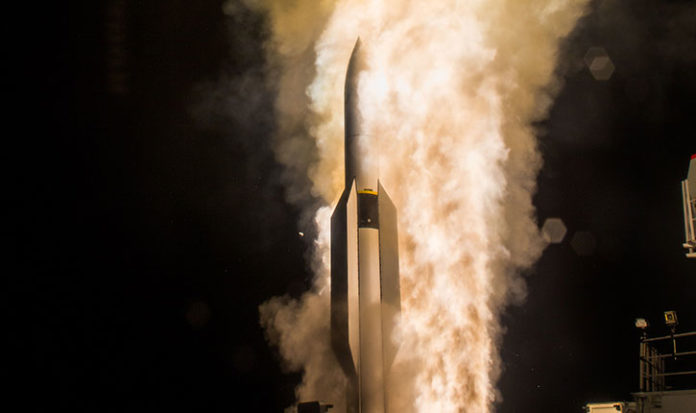
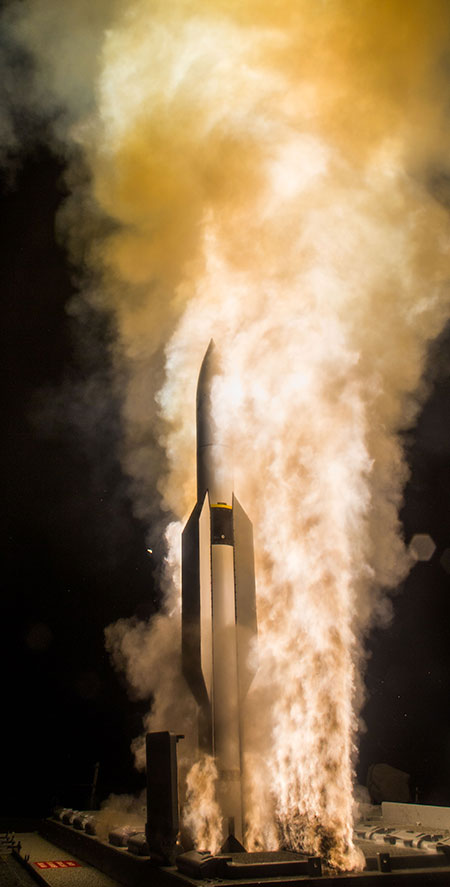
    The Missile Defense Agency and sailors aboard USS John Paul Jones (DDG 53), an Aegis baseline 9.C1 equipped destroyer, successfully fired a salvo of two SM-6 Dual I missiles against a complex medium-range ballistic missile target, demonstrating the Sea-Based Terminal endo-atmospheric defensive capability and meeting the test’s primary objective. Photo: MDA

    The U.S. Navy yesterday performed a first intercept test of a medium-range ballistic missile target using the new Standard Missile 6 dual mission (SM-6 Dual I) interceptor. The missile was launched by USS John Paul Jones (DDG 53), an Aegis baseline 9.C1 equipped destroyer, supporting the Missile Defense Agency (MDA) AEGIS Missile Defense tests. “The test met its primary objective,” the agency said in a statement. Program officials will continue evaluating system performance based upon telemetry and other data obtained during the test.

    “This test demonstrated the capabilities MDA and the Navy are delivering to our fleet commanders,” said MDA Director Vice Adm. Jim Syring. “The SM-6 missile and the Aegis Weapon System continue to prove that they are critical components of our nation’s multilayered, robust ballistic missile defense system.”

    The destroyer fired a salvo of two SM-6 Dual I missiles against a complex medium-range ballistic missile (MRBM) target, demonstrating the sea-based terminal endo-atmospheric defensive capability of the vessel. The test was conducted off the coast of Hawaii just after midnight on Dec. 14.

    The SM-6 missile uses an explosive warhead to defeat ballistic missile threats, differing from other missile defense interceptors, such as the Standard Missile-3, which use non-explosive hit-to-kill technology. This intercept is the first time the SM-6 ‘Dual I’ engages an MRBM target.

    Unlike the AEGIS ships equipped with the SM-3 interceptor that can defend land masses from against ballistic missile attacks, vessels equipped with the SM-6 are designed to defend themselves, and the carrier task forces they are assigned to protect, against all aerial threats. The updated threat assessment calls for defense against a wide range of targets – from manned and unmanned aircraft, guided missiles launched from surface ships, submarines or aircraft at stand-off range, to ballistic ‘carrier killers’ missiles, such as the Chinese DF-21, that may be launched from ranges of 2,000 away, against enemy surface vessels and aircraft carriers. Intercepting such targets, attacking from steep angles, at a velocity of Mach 10, the navy has tasked dedicated interceptors that were not useful for other purposes.

    The SM-6 has been developed with this threat in mind – and upgraded to successfully engage land-attack anti-ship cruise missiles in flight; ballistic missiles in their terminal, or final, stage of flight over land or sea; as well as surface targets (floating ships or land targets). The missile will succeed the SM-2 Block IV missile currently used as a dedicated ballistic missile interceptor on AEGIS surface ships.

    Vertically launched from an MK 41 VLS canister, the SM-6 missile is compatible with existing AEGIS cruisers and destroyers and future cruisers and destroyers. The system’s operational modes include semi-active homing and active homing to provide highly accurate target engagement, and it incorporates the advanced signal processing and guidance control capabilities of the AMRAAM air-to-air missile.

    But the initial version of the SM-6 did not have a capability against ballistic missiles. The SM-6 is to be given a terminal-phase anti-ballistic missile capability in two phases. The first (Sea-Based Terminal – SBT Increment 1) is designated the ‘Dual I’ upgrade that adds a more powerful processor that runs more sophisticated targeting software to hit a warhead descending from the upper atmosphere at extreme speed. The second phase planned for 2018-2019 will include classified capabilities to be included in the ‘Dual II’ configuration.


    The U.S. Navy fired an SM-6 “Dual-I” missile in July 2015 for the first time. three ‘Multi-Mission Warfare’ (MMW) tests were conducted that year – successfully demonstrating intercepts of a short-range ballistic missile, supersonic high-diver and subsonic, low-altitude cruise missile targets. The “Dual 1” is part of the Missile Defense Agency’s Sea-Based Terminal program and is slated for additional testing. It will succeed the SM-2 Block IV missile.

    Other upgrades to the system to further integrate into the Naval Integrated Fire Control-Counter Air concept (NIFC-CA). In September 2016 the U.S. Navy further expanded the integration of SM-6 weapon system, targeting the weapon with information provided from an airborne F-35B joint strike fighter. Performed at the Navy’s Aegis test site at the White Sands Missile Range, New Mexico, the test tasked a standard Marine Corps F-35B that provided early warning and target detection to the AEGIS system, communicating via it’s stealthy and jam-proof MADL datalink. The AEGIS launched an SM-6 missile that struck the Beechcraft MQM-107 target representing an adversarial fighter. Using any variant of the F-35 as a broad area sensor, the aircraft can significantly increase the Aegis capability to detect, track and engage.
    While MADL-AEGIS links have yet to be fielded, Lockheed Martin has already demonstrated such interface to the AEGIS Baseline 9 systems.

    Combining the missile defense with traditional air defense capabilities in the same package the SM-6 Dual-I will increase air defense capabilities of these vessels. The upgraded configuration was scheduled to reach initial operational capability in 2016 but such status has not been announced yet.

    Israeli F-35Is Are Airborne

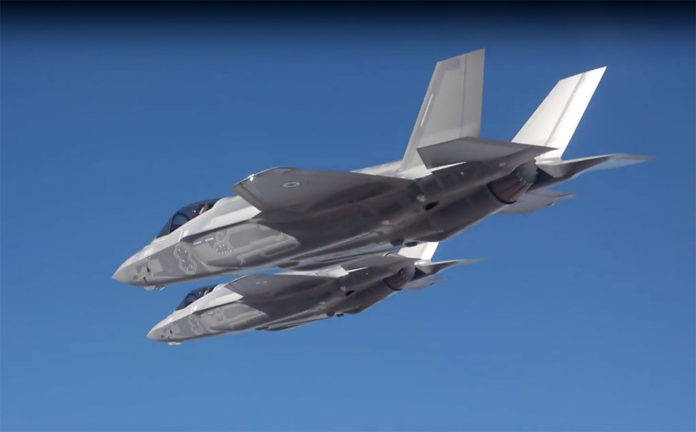
    The two F-35s were escorted by F-16I Sufa fighters. No. 140 squadron, the IAF first F-35 fighter squadron is expected to achieve initial operational capability in few months and have nine operational jets within a year. Photo: IDF Spokesman
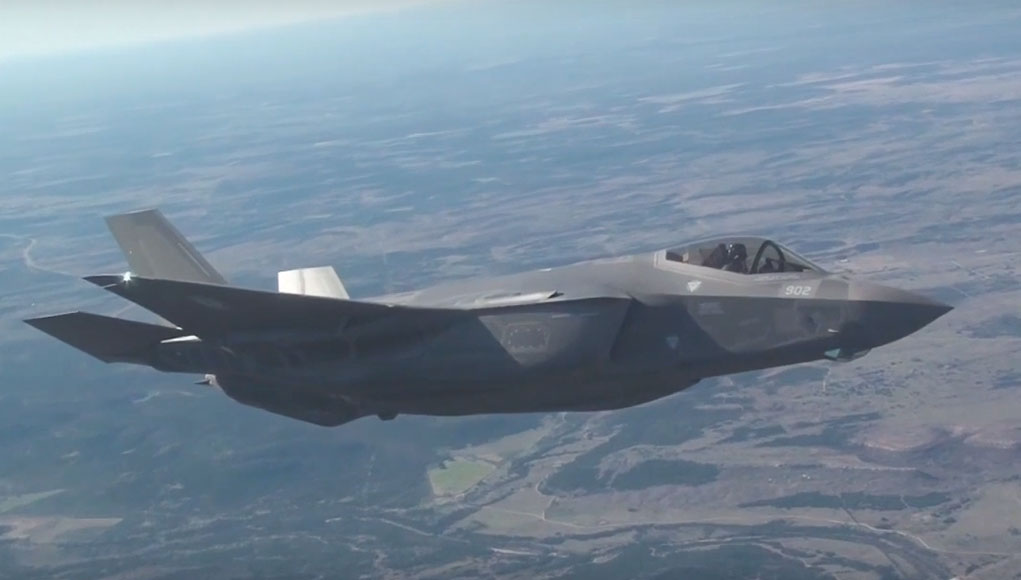
    Israel Air Force (IAF) pilots made the maiden flight today on the two new F-35Is that arrived yesterday. The American pilots that brought the two jets (#901 and #902) will stay in Israel for a while to help train the local pilots. These pilots went through flight training at Luke air force base in the USA but did not fly the actual planes. Photo: IDF Spokesman

    The two F-35s were escorted by F-16I Sufa fighters. No. 140 squadron, the IAF first F-35 fighter squadron is expected to achieve initial operational capability in few months and have nine operational jets within a year. Photo: IDF Spokesman

    Startup Ventures Showcase New Developments at Israel’s Defense Innovation Hub

    The first class of startups graduated today the IHLS Defense Accelerator at the Lighthouse in Ra'anana. Photo: Tamir Eshel, Defense-Update

    Eight startup companies that ‘graduated’ today from the first class of Israel’s Defense and HLS Accelerator in Lighthouse Ra’anana mark an important milestone for Israel’s defense innovation – a privately funded initiative sponsored and supported exclusively by the defense business community.

    “What makes our accelerator unique is bringing together the startups with potential customers. This networking help shape the inventor’s ideas into practical solutions for early adoption by the users,” Tal Catran, Program Director of the IHLS Accelerator told Defense-Update. “This is an essential stage to attract investment, mature products and rapid access to defense and security markets. This graduation, is also a ‘demo day’ that attracted users from the defense community is a proof of this strategy.” This networking helped startup to develop new solutions very quickly.” In only four months, most of the start up ventures that participated have met significant milestones such as prototype development, proof of concept, product and demo designs, capital fund raising and more.

    Among these were Listenapp, a developer of a smartphone app that alerts users when their calls are recorded, or subjected to eavesdropping or information on their phone is compromised. Few months after launching its development Listenapp is planning to launch its app online soon.

    Faception performs advanced face classification enabling authorities to categorize unanimous people into groups with common social or behavioral attributes, based on facial analysis. Terrorists (for example, the group of terrorists that took part in the Paris attack and were not known to the HLS authorities). Other groups, including white collar offenders and pedophiles were marked within test groups of unanimous people, which Faception demonstrated identification accuracy exceeding 80 percent. Photo: Faception

    Another venture making significant progress is Faception. The company implements a proprietary face recognition process to enable security agencies and businesses to detect personality groups based on facial images and patterns. Unlike face recognition which categorizes individual based on lists of known suspects, Faception enables organizations with access to large image databases, or as well as robots, to categorize unanimous people into groups with common attributes. Terrorists, white collar offenders and pedophiles were identified among a test group of unanimous people. Faception demonstrated identification accuracy exceeding 80 percent. On a test made by the company after the Paris terror attack in October 2015 the algorithms classified nine of the suspects eventually aprehended by the police as ‘potential terrorists’ based on their facial attributes, although the system had no prior knowledge of their relations to the three suspects that had prior record. In addition to security inspection the technology can also be used for screening, by pointing to individuals who are potential offenders, with a high degree of certainty.

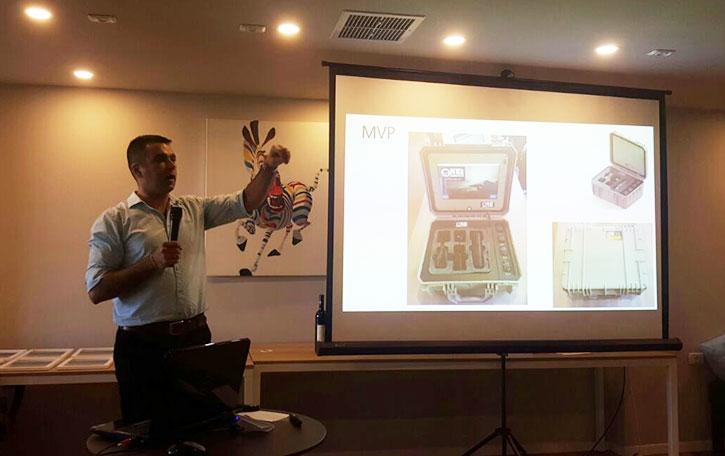
    Waleed Kies, CEO and founder of OneZeroingShot presents his start up progress. Photo: I-HLS.com
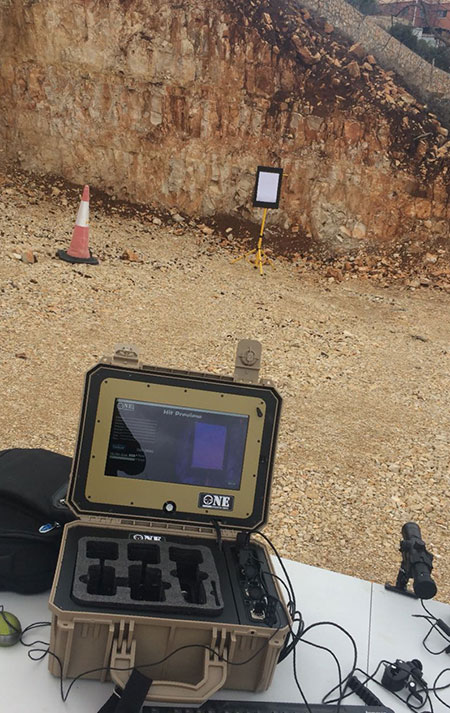
    The first field testing of the OneZeroingShot kit was done in September. The system quickly and simply aligns any firearm sight with one shot. Photo: Waleed Kies.

    Tackling the issue of firepower accuracy, OneZeroingShot has developed an effective method to improve the accuracy of firearms. Unlike other zeroing procedures that require lengthy and complex procedures, OneZeroingShot provides a quick, and cost effective solution that offers shooters to zero-in any rifle with any sight, at any distance within one minute and using one shot. In recent months the new method was validated and a prototype of a field deployable produced.

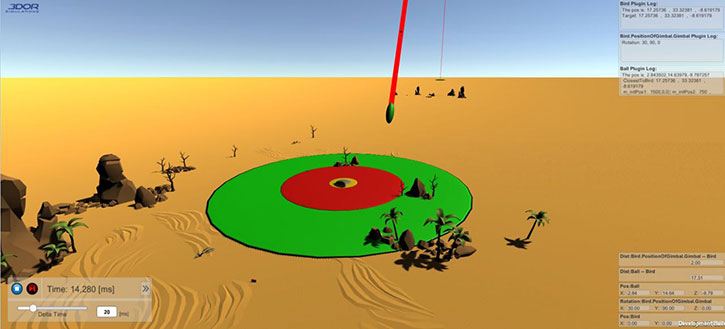
    A different innovation presented here was the generic 3D kinematic simulation engine developed by 3DOR. The engine runs complex motion interaction scenarios analyzing object behaviors for operational research used by defense manufacturers and the military in operational research and evaluation, algorithm testing and real-time solutions. Unlike other startup companies 3DOR is an established business, supporting customers in the MOD, military and defense community, the Accelerator enables companies like 3DOR to broaden their reach domestically and abroad.

    The 3DOR simulation engine runs complex motion interaction scenarios analyzing object behaviors. It is used by defense manufacturers and the military in operational research and evaluation, algorithm testing and real-time solutions. Image: 3DOR

    Tackling a different problem in product development cycle, TETATE is merging 3D modelling, animation and Virtual Reality (VR), to bring new concepts and innovations in their early stage to (virtual) reality. With a small group of experienced producers, programmers and technical experts TETATE takes a concept, design or product and embed it into a VR scenario, enabling designers, potential users or customers to experience the system in its early stage. Integrating props such as weapons, system controls or other assets (such as a rifle, or fire extinguisher), the hyper-realistic scenarios can also be used for training.

    Addressing the increasing use of drones in the combat zone, ‘D-NEST’ developed by Safeland offers solution that enables multirotor drones to operate continuously and autonomously over a wide area. Developed to address civilian uses of multirotor drones in future delivery and commerce, D-NEST is equipped with localization, communications, and electrical charging – all necessary to sustain continuous drone activity in rural or urban areas. The system is equally suitable for operation in an urban war zone is, where the forces require constant UAV support that often expose drone operators in open area. During their residence in the accelerator Safeland completed prototype development and demonstration, of a man portable D-NEST system that supports dismounted forces.

    Introducing Quality Learning (Q-Learning) solutions to defense and HLS and the National Security Group (NSG) employs on the job training solutions that have become part of today’s enterprise culture, for security and defense training. NSG provides courses for armed forces, law enforcement, security agency and private security firms. Using interactive, game based scenarios, NSG combines vocabulary, reading and tests to assure learning.

    Lightline has evolved as a ‘seed’ from the DSIT group, to pursue the development of linear sensor solutions based on fiber optics. The new sensor employs DSIT’s extensive know how in acoustic processing to enable users to detect anomalies along the sensor, over long distances (up to 100 km, and tens of meters away from the sensor). Lightline offers its linear fiber optic sensor solutions for perimeter defense, oil, gas, water and communications line security, highway and railway monitoring as well as surveillance of large urban areas, enhancing ‘smart city’ and ‘safe city’ systems. Lightline motivation to join the Accelerator was the defense focused nurturing and support and visibility they gained to companies and users in the defense community in Israel and abroad.

    The Israeli defense & HLS accelerators is one of few innovation centers that have evolve in Israel in recent years. What is unique about this one is it is actually operating within another accelerator – the Lighthouse, established few months ago in Raanana. As Lighthouse keeps its own momentum, the defense accelerator is now launching the second ‘class’, with more innovations on the way. These innovations are attracting the attention of angel investors, venture capital (VC) funds, defense companies.

    In fact, the organizers are already raising a substantial investment fund to finance some of the startup companies with seed and A round funding. The accelerator also established leads overseas – a recent Memorandum of Agreement signed with GT Korea formalized links to investors, innovators and major corporations on South Korea. Similar agreements are also pursued in other Asian and European markets.

    Fair Disclosure: The writer is a founder and an executive at TETATE.

    Israel’s Submarines Acquisition – Strategy or Greed?

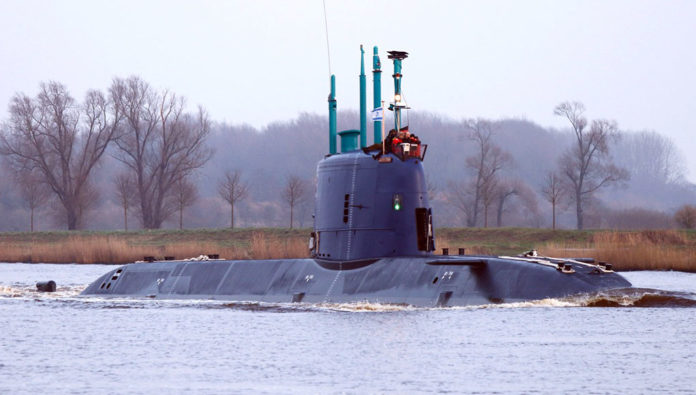
    INS Rahav undergoing sea trials in the Baltics, 2015. Photo via Israel Navy

    Stretched along the eastern Mediterranean Sea and linked to the Indian Ocean through the Gulf of Eilat and the Red-Sea, Israel has always strived to maintain a naval force to protect its maritime border and sea lines of communications. Since the 1970s, following repeated terror attacks from the sea, the Israeli Navy assumed the responsibility to combat terror at sea and along the coast. Since the late 2000s, after major discoveries of natural gas reserves offshore, the Navy also added a new role – the security of the country’s Economic Exclusion Zone (EEZ) and protection of offshore marine infrastructures. 

    Since the induction of the Dolphin class submarines in the 2000s, the Israeli Navy also assumed a strategic Deterrent role. According to unconfirmed foreign reports, Israel’s Dolphin class submarines are equipped with oversized tubes capable of launching nuclear-tipped cruise missiles that can provide the country a retaliatory second strike capability, in case Israel is attacked and its first line of strategic assets – ballistic missiles and attack aircraft – are destroyed by surprise, nuclear attack.

    These added responsibilities come with a growing piece of Israel’s defense pie, a larger share of the acquisition budget and more attention at the highest levels in the Ministry of Defense and Prime Minister office. In recent years, senior naval officers were selected for prominent positions in the MOD R&D department (DR&DD), Defense Export Agency (SIBAT), Intelligence agencies (Mossad), the National Security Council (Malal) and major government operated defense companies, to name only a few.

    Unlike the air and land forces, that rely heavily on US Foreign Military Sales (FMS), the Navy maintained independent procurement sources in Israel and Europe. Since the 1960s Israel’s Navy surface ships were all constructed in Israel by the Israel Shipyards and IAI. The exception were two Shimrit class hydrofoils built in the USA in the 1980s (and scrapped a few years later), and three Saar V corvettes, constructed in the 1990s in the USA and are in service today. 

    As for the submarine force, since the late 1960s Israel maintains a fleet of three submarines (which allows the Navy to keep at least two operational subs at any time). The loss of INS Dakar in 1968 left the Navy with only two subs for eight years, until the first Type 209 Gal class submarine 1976 was launched. Type 209 were the first subs designed and built specifically for the Israeli requirements by the German submarine designer Howaldtswerke-Deutsche Werft (HDW), although these boats were built in the UK.

    The Israel Navy maintained close relations with HDW in the following years, with the design and construction of a larger class subs – the Dolphin. These submarines were built in Kiel in Germany and provided a significant boost strengthening the German shipyard.

    The acquisition cycles of Israeli submarines accelerated over time. From 20 years between the Gal and Dolphin generation, the period reduced to 12-16 years between Dolphin I and Dolphin II (AIP). The reduced cycle means the Israel Navy can now operate several submarines simultaneously, while the other are undergoing heavy maintenance. The recent decision to buy three additional, yet unnamed submarines in the next ten years sets the next cycle at only 10-13 years, from the current buy, maintaining Israel’s capability to operate four submarines simultaneously through the 2030s.

    What is the rush? Why does Israel require such increased capability? 

    The simple answer: increased operational tempo that evolved with the growing operations of naval forces in the area; however, this argument is weak. The ongoing peace with Egypt, the Syrian Civil War and crippled state of Libya all mean reduced threat to Israel’s security, at least from the symmetric, naval side.

    However, the Iranian threat is growing. The reasonable need to maintain long-range deterrence patrols added new missions to Israel’s submarine force. According to foreign sources, Israel’s submarines carry cruise missiles that can attack targets at ranges beyond 1,000 miles. While such missiles could hit targets in western Iran, when launched from the Eastern Mediterranean, the Israeli subs could hold the entire territory of Iran at risk, from positions in the Indian Ocean or inside the Persian Gulf. 

    Israel would likely keep these patrols secret and avoid sailing in the Suez Canal, thus sending its subs on voyages that would take weeks, through the Atlantic and Indian Oceans. Once one operational submarine is committed to such extended patrols, the Navy would likely require two boats for missions in the Mediterranean.

    Such arguments would likely be part of the rhetoric used by Israel’s leadership, arguing for the increase of the nation’s submarine force to six, even nine boats. However, this recommendation faced stiff opposition from the Ministry of Defense, due to the high acquisition and operational cost (€500 – 650 million per boat) competing with other priorities. The resignation of Defense Minister Ya’alon from office paved the way for the submarine deal to continue.

    But there is another side of the coin – the German side. As explained above, the Israeli Navy has been a loyal and regular client of the HDW shipyard in Kiel, which is now part of the ThyssenKrupp Marine Systems (TKMS) industrial conglomerate. These close relations are likely to continue – despite the revelations that Iranian and UAE corporations have minority holding in it. Notwithstanding these ties, Israel and Germany have signed a contract worth €430 million to build four Saar VI Magen stealth corvettes, based on the German Blohm & Voss designed Classe 130. Soon to be launched third Dolphin II class submarine – Dakar is also a major undertaking soon expected in Kiel.

    But the workload at the shipyards has diminished dramatically in recent years. As Type 212 deliveries to the German and Italian Navies completed and construction of Type 214 designs moved overseas, the shipyard will be under pressure to lay off part of its workforce. These hands are critical to maintaining the skills and know-how for the two Type 218SG submarines on contract for the Singapore Navy (the first slated for delivery in three years). Earlier in 2016 TKMS management still hoped to win an A$36 Billion mega-deal in Australia, but after losing this opportunity, the submarine shipyards are striving for a sustainable business for the remaining of the next decade. The prospects for the near term are slim – a future submarine support program in Peru and shortlisting as one of two bidders in Norway. Hence, reaffirming Israel’s commitment to buy three submarines in the future would be a life saver for the crippled shipyard, even if it means a long term prospect.

    The decision to proceed with a memorandum of agreement between the Governments of Israel and Germany at this stage is understandable and serves the interests of both sides. But the attempts on both sides to cover the deal are wrong.

    Prime Minister Netanyahu claim that the decision is a matter of national security is true but, setting all strategic arguments aside, these moves should be managed by Government officials and diplomats, not by sales agents or private counselors. Furthermore, the investigation of the former deputy of Israel’s National Security Council, who was an active supporter of the submarine deal, adds an unpleasant odor of corruption to the top of Israel’s national security pyramid.


    F-35I ADIR – Mission Autonomy, Stealth to Transform Air Warfare in the Middle East,

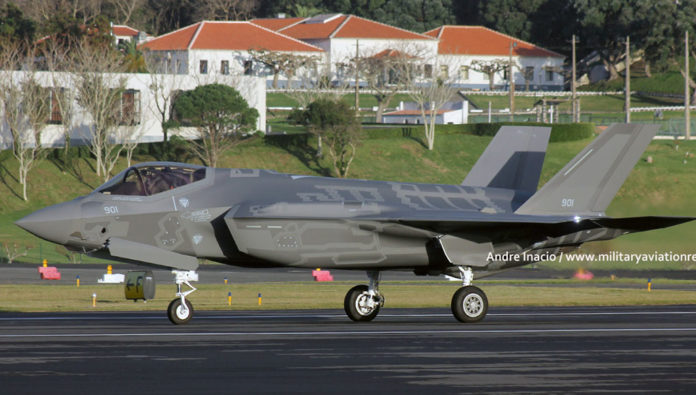
    Israeli Air Force Lockheed F-35I 901 arriving at Lajes on 06.12.16 (Miltary Aviation Review - Andre Inacio)
    The new emblem of IAF 140 Squadron, the first to fly the F35 ADIR. Photo: IAF

    The first two F-35s expected to land in Israel next week will be the first 5th Generation jet fighters the U.S. hands out to a foreign ally. The two ADIR Jets are only the beginning. Over the next eight years, Israel will receive 50 aircraft forming two full ADIR squadrons flying the F-35. No. 140 Squadron will be the first to receive the new fighters. The initial batch of 19 is being delivered in the standard ‘A’ configuration while the remaining 31 will be fully equipped F-35Is, fitted with indigenous Israeli systems and weapons.

    As the first 5th Generation stealth combat aircraft to enter operational service outside the USA, the ADIR introduces new dimensions of air warfare, hitherto available only for the US Air Force. The new fighter will benefit from extremely low radar signature, enabling it to operate undetected inside enemy territory and within missile defended airspace. Besides, the unique networking capability allows a team of several F-35s to share sensor information, situational picture, and tactical decisions,  thus dominate an airspace much larger than previous generation fighters could do.

    While the F-35 is not as fast as its predecessors, it is designed to fly longer and faster than most fighter jets, using internally stored fuel and armament, thus maintain the low-observable characteristics of the aircraft. Such sensor fusion and cooperative mission performance will enable ADIR to operate autonomously, without dependency and support on other aircraft that may be vulnerable to enemy defenses or provide early warning to the enemy. These capabilities and other attributes of the new fighter will provide the Israel Air Force a game-changing platform that has not been seen in the region since the introduction of the F-15 Eagle (by the IAF), 40 years ago.

    Israel is the first, but not the only nation getting new Christmas gifts this year; Saudi Arabia is also expecting its first six ‘Advanced Eagles’ this month. As for the F-35, all other operators except Israel are keeping their jets at Luke Air Force Base in the USA to support the joint training center. The US Air Force’s 944th Fighter Wing is the training unit responsible for supporting all foreign customers, including Israel, South Korea, Japan, and the F-35 partner nations – Australia, Canada, Denmark, Italy, the Netherlands, Norway and Turkey. However, unlike all other countries Israel opted to have its planes delivered to the country, to get the first unit operational as quickly as possible. By the end of 2017, Israel is expected to have nine ADIR jets operational.

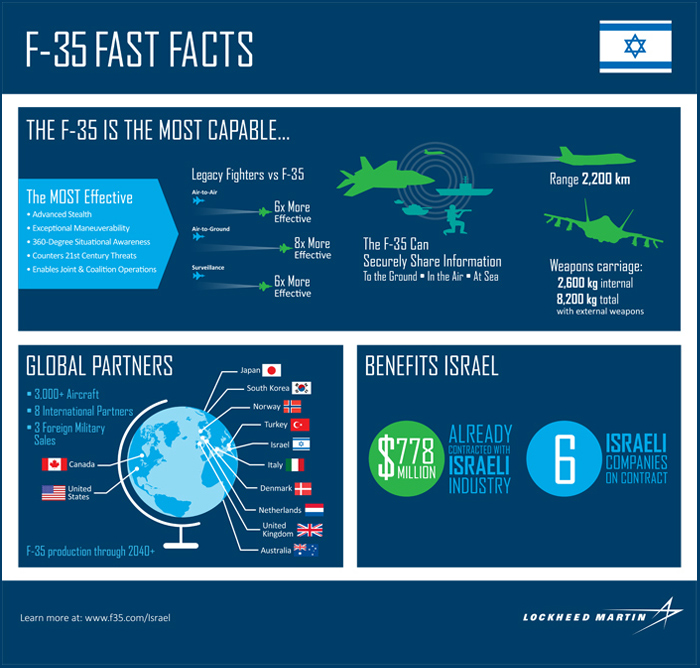
    Infographic: Courtesy: Lockheed MartinCou

    Israel Air Force Base in Nevatim will be the first ADIR operating base. The first aircraft that arrive on Monday will help train the unit’s cadre of aircrews and ground support personnel, by the first teams that returned from training in the USA. The new squadron is expected to reach initial operational capability (IOC) in few months. The pilots selected to man the first unit are all experienced fighter pilots but the F-35 will not be exclusive for veterans – in two years pilots fresh from flight school will be accepted to transition to the new fighter.

    The first two Lockheed F-35As for the Israeli Air Force are flying from Fort Worth to Nevatim Air Force Base in Israel this week. The transit flight is supported by a US Air Force KC-135R tanker. Photo via IDF Spokesman

    Throughout the training and operational use, the IAF plans to utilize flight simulators extensively. Pilots are expected to fly about half the flight hours on the aircraft and half on simulators. The rate of the simulator to flight hours may even increase after the air force gains experience with the new platform. Maintenance, including the most complex D-checks, will also be done in the country, in maintenance and support facilities that will be established specifically for the new jet.

    36 years back, in July 1980 when Israel received the first F-16A fighter jets, it took the first squadron few weeks to achieve IOC and, once operational status validated, eight of the new aircraft were sent on the longest mission the IAF ever flew until then, to attack the Iraqi nuclear reactor. Nowadays Israel operates regularly over the Middle East, although Jerusalem rarely takes credit for these activities. Having a stealth fighter that can go anywhere, virtually unseen, would become a significant capability to maintain Israel’s claimed freedom of action.

    Israel’s appetite for the new stealth fighter is not satisfied with the 50 jets it has already committed to buying. The Israel Air & Space Force (IAF) plans (and lobbies locally and abroad) to get the third squadron, which is likely to fly the F-35B Vertical Short Takeoff and Landing (VSTOL) variant also used by the US Marine Corps. Although the B variant is often used from aircraft carriers (RAF) and landing support ships (USMC), the fact that it can use short runways will enable the IAF to maintain operational tempo even after its bases suffer attacks from ballistic missiles or rockets. Israel already faces constant threats from hundreds of thousands of such rockets and missiles, some of them equipped with precision guidance capability enabling an efficient attack on strategic targets such as air bases. The IAF prepares for such contingency, but the introduction of VSTOL capable F-35B along with V-22B Tilt Rotor aircraft that could be used for aerial refueling of these jet fighters would provide a significant improvement in this field. While the acquisition of the B model is supported at the political level, officials within the IAF are not keen on acquiring this aircraft, due to its shorter range, the limited payload carrying capability and higher cost.
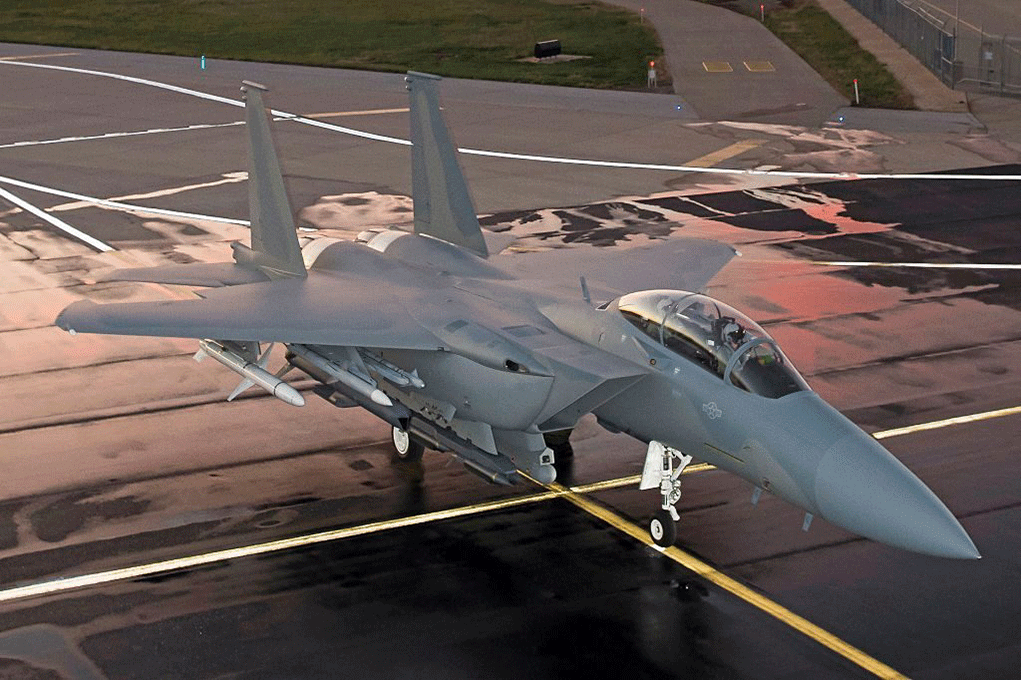
    The first six F-15 Advanced (formerly F-15SA) aircraft were completed and are slated for delivery to Saudi Arabia this month. Photo: Boeing

    The alternative to the F-35 has always been buying more F-15s. The F-15 is still in production, and, in fact, keep getting better over time. Designated ‘F-15 Advanced’ (formerly F-15SA) the new fighter jet is currently undergoing test and evaluation flights, before delivery of the first six aircraft to Saudi Arabia. Riyadh is expected to receive the new planes in few weeks. They will be based at the Royal Saudi Air Force airbase in Tabuk. The Saudi aircraft is considered the most advanced F-15 variant ever built. It is equipped with many advanced features, including two powerful engines, new AESA radar, redesigned cockpit a new generation electronic-warfare (EW) self protection system that implements capabilities developed for 5th Generation fighters (F-22/35) and infra-red search track (IRST) pods. Its speed and payload carrying capability exceed that of the F-35A, but the ADIR is superior in maneuverability, stealth, and sensor fusion performance. Qatar has also selected the F-15QA – the 36 Advanced Eagles will replace French Mirage 2000 jets made by Dassault Aviation. Qatar has an option to double the number of planes it will buy. The first batch of 36 will cost US$4 billion.

    The F-35 acquisition is the most expensive procurement project ever made by Israel, but it is not the only one on the table. The IAF still maintains a powerful strike force of F-15I ‘Raam’ (Thunder) aircraft that entered service in 1998. As demand for F-15s is maintained, particularly within the Middle East, the Advanced Eagle production line is expected to remain hot at least until late 2019, allowing Israel to buy few more of these planes. As a temporary measure, the Pentagon agreed to transfer 10 F-15D (two seaters) aircraft from US Air Force surplus to Israel, to compensate for attrition and provide spare parts. However, as reflected from the Qatari deal, the cost of a new F-15 (improved over the current Israeli I model) is over $110 million. In comparison, the cost of the F-35A continues to decrease, with higher volume and implementation of cost cutting measures. Despite these efforts, the price of an F-35A including its engine is still above $100 million but is expected to go below $85 million when production lines of aircraft and engines pick up higher volumes.

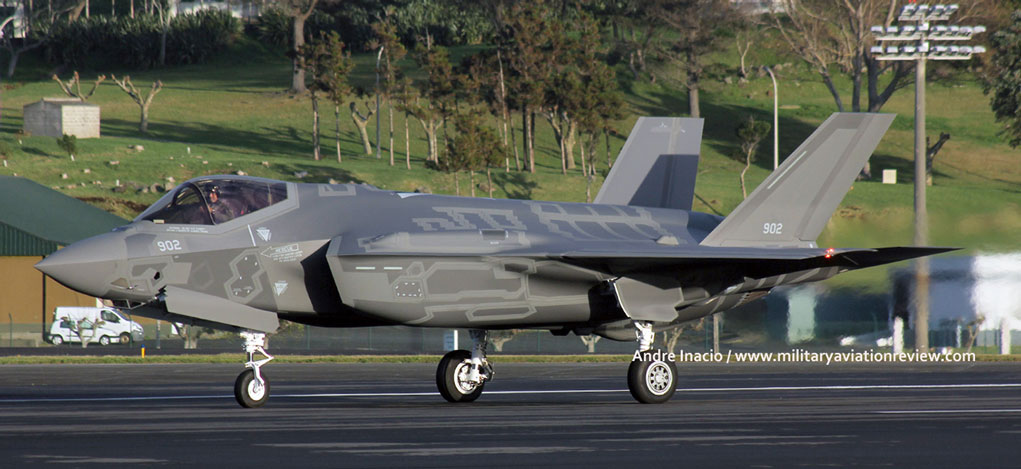
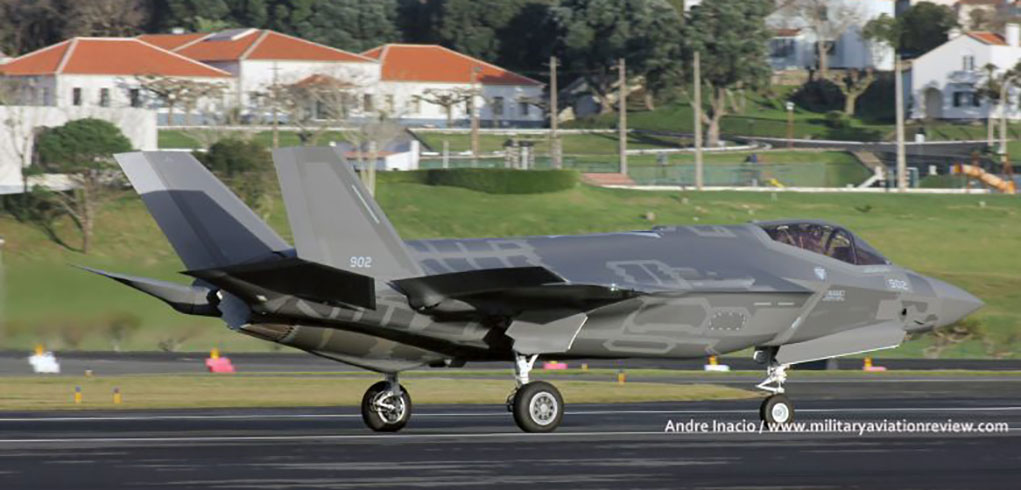
    Photos of the F-35 taken at the Lajes air force base in the Azores, are published here courtesy of Miltary Aviation Review – Andre Inacio

    Above and below – Israeli Air Force Lockheed F-35I 902 arriving at Lajes on 06.12.16; The two aircraft arrived at the Lajes Air Base in the Azores on December 06, 2016. The aircraft wore serials 901 “Retro11” and 902 “Retro12” and were supported by US Air Force KC-135R 64-14836 “Blue71”. (Photo: Miltary Aviation Review – Andre Inacio)

    Skunk Works and XTEND Simplify Multi-Drone Command

    0
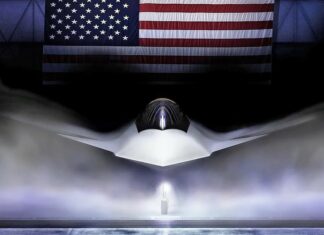
    Lockheed Martin Skunk Works® and XTEND have achieved a major milestone in JADC2 by integrating the XOS operating system with the MDCX™ autonomy platform. This technical breakthrough enables a single operator to simultaneously command multiple drone classes, eliminating the friction of mission handoffs. From "marsupial" drone deployments to operating in GPS-denied environments, explore how this collaboration is abbreviating the data-to-decision timeline and redefining autonomous mission execution.

    From Ukraine to Taiwan: The Global Race to Dominate the New Defense Tech Frontier

    0
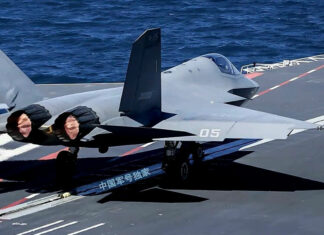
    As traditional defense primes face mounting competition from agile “neoprimes” such as Anduril, Palantir and Helsing, the balance of innovation is shifting toward software-defined warfare and scalable, dual-use technologies, while global industry consolidation—marked by Boeing’s integration of Spirit AeroSystems and other strategic mergers—signals an intensified race to secure control over the defense technology value chain. Our Defense-Tech weekly report highlights these trends.

    Europe’s “Drone Wall”

    0
    In early October 2025, a coordinated wave of unmanned aerial system (UAS) incursions—widely attributed to Russia—targeted critical infrastructure across at least ten European nations. The unprecedented campaign exposed the fragility of Europe’s air defenses...

    Weekly Defense Update & Global Security Assessment

    0
    Executive Summary The past week (September 18-25, 2025) represents an inflection point where strategic defense concepts have transitioned from doctrine to tangible reality. An analysis of global events reveals four primary, interconnected trends shaping an...

    U.S. Air and Space Forces Push Next-Gen Programs at the AS&C 2025 Conference and...

    0
    At the 2025 Air, Space & Cyber Conference, U.S. Air Force and Space Force leaders unveiled major updates on next-generation fighters, bombers, unmanned systems, and space initiatives, highlighting both rapid innovation and critical readiness challenges as the services race to outpace global competitors. A short version is available here, with a more detailed version for subscribers.

    TADTE 2025: Reflecting Taiwan’s Strategic Themes

    0
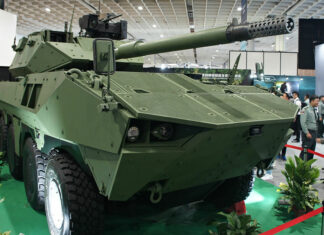
    The Taipei Aerospace & Defense Technology Exhibition (TADTE) 2025 crystallized around four dominant strategic themes that collectively illustrate Taiwan's comprehensive approach to defense modernization amid escalating regional tensions. Based on a detailed report by Pleronix (available upon request). Includes a Podcast discussion on TADTE 2025's highlighting Taiwan's four strategic themes beyond the post's coverage.

    Iron Beam 450 Completes Testing, Soon to Join With Operational Air Defense Units

    0
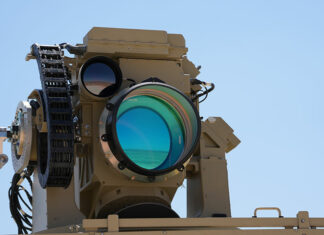
    Israel’s Iron Beam 450 high-power laser system has completed final testing, marking a major leap in air defense. Developed by Rafael, it offers precise, cost-effective interception of rockets, UAVs, and mortars, and is set for IDF deployment by 2025.