Wednesday, December 24, 2025
More
    Home Blog Page 93

    Washington, Delhi to discuss local production of Raven Mini-UAVs

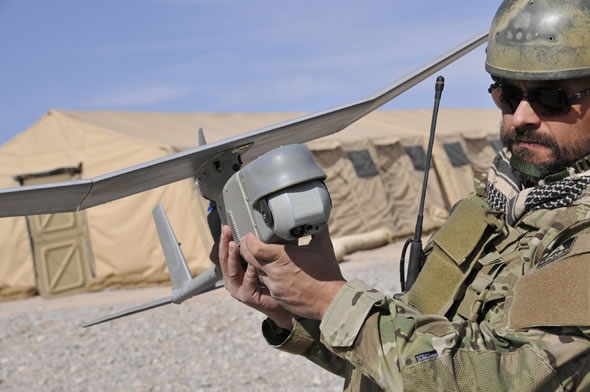
    RQ-11B Raven small UAS fitted with the Mantis gimballed EO Payload
    RQ-11B Raven small UAS fitted with the Mantis gimballed EO Payload. Photo: Aerovironment
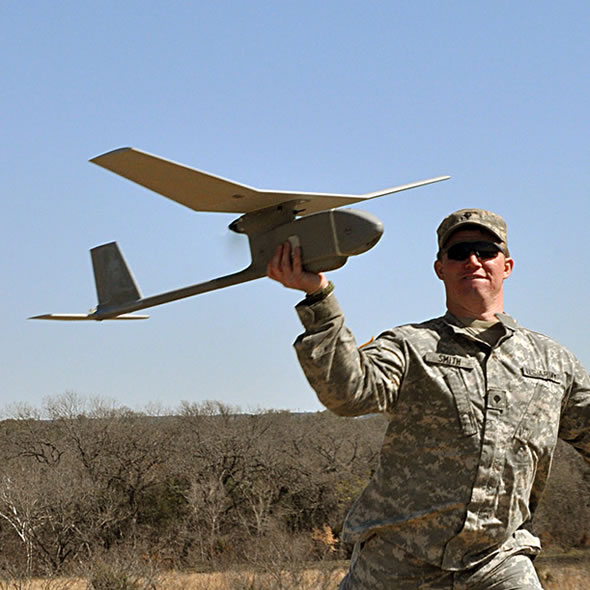
    Following th e'digital upgrade', Ravens are now open to get new enhancements. Photo: US Army
    Following th e’digital upgrade’, Ravens are now open to get new enhancements. Photo: US Army

    The US and India are discussing possible opportunities for collaborative production programs, Reuters reported. Two of the programs under discussion are the local assembly of RQ-11B mini UAVs and integration and manufacturing of mission packages designed for C-130J tactical transport planes, to be used for emergency response.

    While Indo-American cooperation on major defense programs has not yet succeeded, particularly due to the restricted US policy on defense export and technology transfer related to weapon systems, unmanned technology and defense electronics, it is believed that technologies related to mini-UAV systems that have been widely exported could be released to India. The Raven RQ-11B built by Aerovironment has been exported to 25 international operators, including the Netherlands, Denmark, Lebanon, Pakistan, Czech Republic and, most recently Canada.

    The Indian military, government agencies and local law enforcement have multiple requirements for mini UAVs, although none have reached selections stage yet. The Indian interest attracted many UAV manufacturers from India and abroad. Matured as an operational, combat proven UAV system operated and maintained by soldiers, Raven could be suitable for part of these opportunities. However, the Raven is likely to be ‘over qualified’ for others, particularly those supporting law enforcement and security missions.

    JPO: F-35 weapon testing complete for scheduled certification

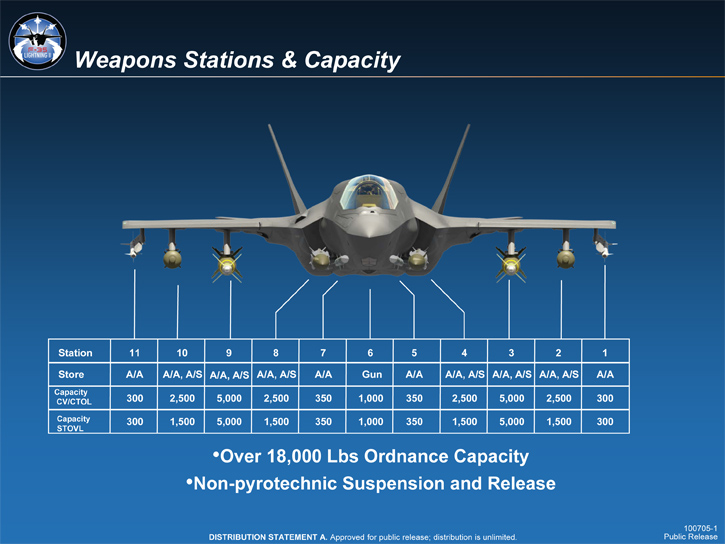
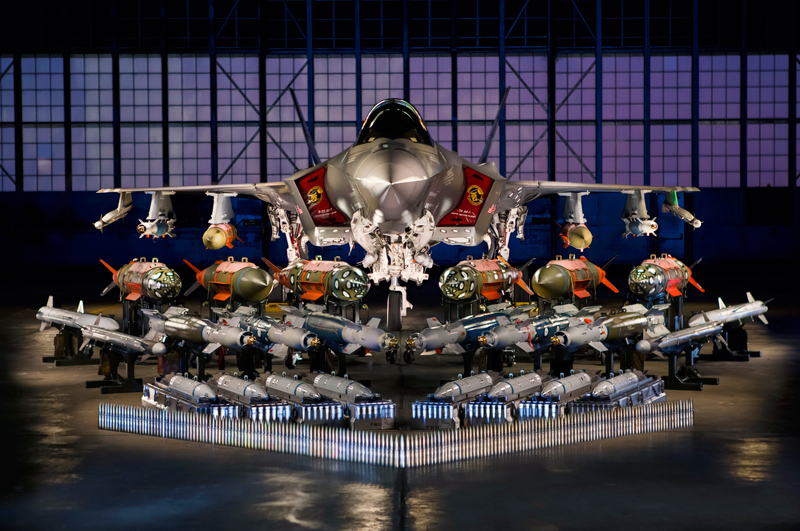
    F-35 Weapons Stations Capacity
    F-35 Weapons Stations Capacity. The Initial weapons configurations supported by the F-35 Block 2B software version include the AIM-9X, AIM-120C5/7, GBU-31/32 Joint Direct Attack Munition (JDAM) and GBU-12 laser guided bombs. Photo: Lockheed Martin by

    The F-35 is on course toward full weapon certification this year, Lockheed Martin announced. “All three variants of the F-35 Lightning II continue on a path toward full weapons certification, by successfully completing numerous milestones during the previous four months.” The company said in a press release.

    Among the weapons tests performed recently are AIM-120 (AMRAAM) and AIM-132 ASRAAM air/air missiles. The AMRAAM test was performed at supersonic speed for the first time, completing separation testing needed for the Block 2B milestone. The air/ground tests included delivery of JDAM and GBU-39 Small Diameter Bomb. The air/ground weapon delivery missions included separation tests of a GBU-39 and full engagement of two targets designated with coordinates delivered by the F-35 integral Electro-Optical Targeting System (EOTS) – the first test involving the new targeting system developed especially for the F-35.

    “The weapons development program continues to track forward on the plan laid out by the Technical Baseline Review approved in 2010,” said Lt. Gen. Chris Bogdan, F-35 Program Executive Officer. “All weapons tests needed for 2B software, the software the U.S. Marine Corps will use to declare IOC, is complete and will be ready to go for their combat capability certification.”

    Marine Corps F-35B IOC shall be declared when the first operational squadron is equipped with 10-16 aircraft, and US Marines are trained, manned, and equipped to conduct CAS, Offensive and Defensive Counter Air, Air Interdiction, Assault Support Escort, and Armed Reconnaissance in concert with Marine Air Ground Task Force resources and capabilities. Based on the current F-35 JPO schedule, the F-35B will reach the IOC milestone between July 2015 (Objective) and December 2015 (Threshold). The Air Force F-35A will reach the IOC milestone in August-December 2016. The US Navy’s F-35C is expected to accomplish this task between August 2018 and February 2019.

    f35family1725
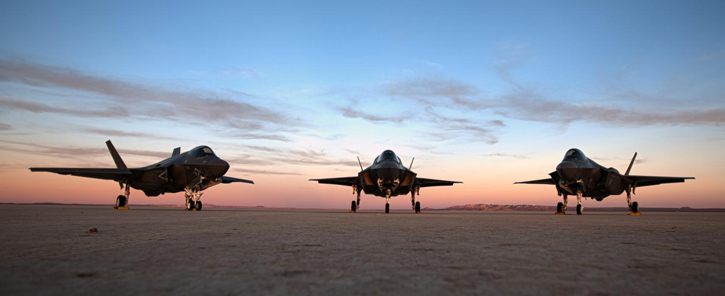
    Marine Corps F-35B is expected to declare the F35B operational as early as July 2015. The Air Force F-35A could reach that milestone in August-December 2016 with the F-35C becoming operational with the US Navy no later than February 2019. Lockheed martin photo.

    Most of the current activities are focused on the initial weapons configurations prepared as part of the Marine Corps’ Initial Operational Capability planned for July 2015. The aircraft completed day and night mission Effectiveness evaluation of the Close Air Support (CAS) mission, one of the critical tasks required for the Marine Corps F-35 Block 2B mission software. The tests also included day and night missions flown with Gen III helmet mounted display, developed for the fourth version of the next phase software block – 3IR4.

    Additional weapons are due for integration at later stages. Among these is the FAU-22 four-barrel gun. Preparations for flight testing are due to begin mid-year at Edwards AFB, Calif., and will include ground fire tests, muzzle calibration, flight test integration and in-flight operational tests. The 25mm missionized gun pod carried externally, centerline mounted on the F-35B and F-35C also begins testing this year to meet U.S. service’s desired schedule for full warfighting capability software known as 3F. The Block 3F software is currently planned for delivery with the Low Rate Initial Production nine (LRIP 9) U.S. aircraft in 2017. Absence of a gun as part of the F-35B weapons was claimed as a major flaw, due to the Marines’ need for close air support for ground forces.

    Activities accomplished in the past four months included validating 2B weapons software and successfully executing several weapons separation and engagement tests. “The most recent accomplishments are in support of the first military service Initial Operational Capability (IOC) declaration by the U.S. Marine Corps in July.” The announcement said.

    The services are also beginning to integrate the aircraft into weapons and tactics planning. The first F-35 was delivered yesterday (January 15, 2015) to  the Weapons School’s at Nellis AFB, Nevada where it will be used to drive tactics and curriculum development for the Weapons School’s first F-35 course.

    The F-35 program has surpassed 25,000 combined flight hours in December with F-35 military fleet aircraft (16,200 hours) nearly doubling the System Development and Demonstration (SDD) test aircraft (8,950) hours.

    F-35A_Weapons_Carriage800
    An F-35A, at Edwards AFB, Calif., is pictured with its F-35 Systems Development and Demonstration Weapons Suite the aircraft is designed to carry. The F-35 can carry more than 35-hundred pounds of ordinance in Low Observable (stealth) mode and over 18-thousand pounds uncontested. (Lockheed Martin Photo by Matt Short)


    Cyber Intelligence Report – January 15, 2015

    cyber_report

    ISRAEL

    New agreement signed between Israel and Japan regarding cyber

    The cooperation between Israel and Japan was recently announced. The purpose of this agreement is to strengthen and tighten relations between Israel and Japan, even attempting to reach levels of relations similar to other East Asian countries including South Korea and India. The base of the cooperation will incorporate Israel’s defense and hi-tech industry by focusing on cyberspace and cyber security.


    USA

    North Korea sanctioned by US for cyber attacks

    Earlier this month, US President Barak Obama sanctioned several North Korean companies and personnel including government companies KOMID and “Korea Tangun” due to recent cyber-attacks on Sony. President Obama accused the North Korean regime as the operator behind the harsh cyber-attack. The companies are the main suppliers for the North Korean army and war industry, specializing in ballistic missiles and R&D. Additionally, the FBI revealed tracks of North Korean intervention during the cyber-attack as the hackers “Guardians of Peace” attacked via servers available only in North Korea.

    More than 13,000 user passwords of Amazon, Walmart, and Brazzers were hacked

    A group of hackers associated with “Anonymous” claimed to have hacked more than 13,000 password combinations for popular sites, including Amazon, Walmart, Xbox Live, and PlayStation networks. Several EA game accounts were suspected to have been hacked after users found purchases they did not recall making. Experts believe the EA attack was conducted by stolen credentials from other sites. The information stolen from the Amazon and Walmart attack was potentially the base for the EA attack and possibly more in the near future. This attack is notable after the well-publicized “Lizard Squad” attack on Sony and Microsoft game servers, estimating to affect more than 150 million users worldwide. In response to the attacks against Microsoft and Sony game serves, Ryan Kivimaki, 17 years old, was arrested recently by the FBI. Additionally, Vinnie Omari, another member of “Lizard Squad,” was arrested by the British police for PayPal cyber frauds during 2013-2014.


    RUSSIA

    German government website under cyber-attacks by pro-Russian group

    Several German government websites, including Chancellor Angela Merkel’s official page, have been crippled in an unprecedented cyber-attack claimed by a pro-Russian group referred to as “CyberBerkut.” The attack was carried out in response to Prime Minister Merkel and Ukraine Prime Minister Arseniy Yatsenyuk meeting with the pro-Russian group demanding Germany sever ties with Ukraine. The cyber group demanded that Germany should not provide any political or financial support to the “criminal regime in Kiev, which is engaged in a bloody civil war” in Eastern Ukraine. “CyberBerkut” is infamous among the cyber community as taking an active position through committing major cyber-attacks to various Ukrainian government institutes and offices, such as blocking access to the websites of the Federal Press Office, the Chancellery, the Bundestag, and the Foreign Ministry for several hours by denial of service (DoS) attacks.


    MIDDLE-EAST

    Islamic State hackers might be behind series of attacks on news organizations

    The US Central Command announced hours after the IS (the “Islamic State”) cyber-attack that no harm occurred in affiliation, mentioning that no military network or classified information was revealed. The US Central Command was not the only recent cyber-attack from IS-affiliated organizations. The Twitter accounts for the Albuquerque Journal and Maryland’s WBOC 16 were also recently hacked, with the Cyber Caliphate hacking group claiming responsibility as well as attempts to access FBI databases. Cyber Caliphate claims to be associated with IS and intends to carry out a series of cyber-attacks on homes and offices across the United States. In a message posted onto their Facebook page (which was removed afterwards) they stated: “You’ll see no mercy infidels. We are already here; we are in your PCs, in each house, in each office. With Allah’s permission, we began with New Mexico and will come to every state, inshallah. We will not stop… We know all your personal data: where you live, what you eat, your diseases, and even your health insurance cards.” The hack enabled them to post several confidential documents including driver’s licenses, corrections records, and spreadsheets listing hundreds of names and addresses. The FBI has been investigating Cyber Caliphate’s claim in connection to IS.


    CHINA and APAC

    Japan increases national cyber security by establishing new cyber center

    Japan has finally launched its National Center of Incident Readiness and Strategy for Cybersecurity (NCIRSC) in efforts to coordinate security against cyber-attacks. It will serve as the secretariat for the government’s cybersecurity strategy headquarters and take on more supervisory and management responsibilities than when it operated under the National Information Security Center. The mission of NCIRSC is to organize measures against cyber-attacks in cooperation with the National Security Council, to coordinate international cooperation, and train specialized personnel. NCIRSC will be headed by Assistant Chief Cabinet Secretary Nobushige Takamizawa and will have approximately 100 employees arriving either from other agencies or be newly recruited from the private sector. “We are confronting an extremely crucial issue,” said Chief Cabinet Secretary Yoshihide Suga, addressing the new organization at the ceremony. “With the Olympics set to be held here, you have a tremendous role to play.”


    AFRICA

    New Kenyan security law to allow electronic evidence

    The new controversial Security Law (Amendment) 2014 Act, signed by the Kenyan president last year, allows for electronic and digital evidence to be admissible in court proceedings. The amendment act seeks to add or alter previous laws to enable the country to combat the growing terrorism threat. Section 31 of the amendment act outlines rules and guidelines on how electronic evidence will be presented to the court. The section reads: “In any legal proceedings, electronic messages and digital material shall be admissible as evidence.” The law requires that the evidence be presented to it in its original form and puts weight on how it has been handled.


    EUROPE

    UK suffering from several cyber-attacks against power grid

    It has recently been established that cyber-attacks against the UK power grid have increased and are a major threat, according to British Parliament member James Arbuthnot. He added: “Our National Grid is coming under cyber-attack not just day-by-day but minute-by-minute.” These cyber-attacks have been reported by the UK Computer Emergency Response statistics. The increase of cyber-attacks targeting critical infrastructure emerged after the massive cyber-attack against the Iranian nuclear power center in 2010, as hackers began comprehending they could potentially damage critical infrastructure by developing malware and other cyber weapons (as seen with the recent attack against the German steel factory last month). The UK Cabinet Office declared in December 2014 that they would increase the cyber security program budget to 860 million pounds from an original 650 million pounds that was established over for a four year period in 2011. The UK has probably the largest budget for a national cyber security plan in Europe. This massive investment in cyber security is not only aimed to help the United Kingdom in protecting themselves from cyber-attacks targeting all industries, but also to anticipate potential cyber warfare.

    France targeted by hacktivists under OpFrance cyber-attack campaign

    Muslim Hacktivist groups such as the Tunisian Hacker Team, Middle East Cyber Army, and the pro-Palestinian group AnonGhost have launched a series of cyber-attacks against several French websites in response to the recent terror attacks in Paris. The targeted attacks included the website of French politician Patrick Devedjian and the website of the Embassy of the Republic of Tajikistan in France. The hackers left a message stating in French: “Je ne Suis pas Charlie et je suis Mussulmen” (I am not Charlie and I am Muslim). This is in reference to the slogan adopted by thousands of supporters on the web supporting the newspaper Charlie Hebdo. These cyber-attacks are the beginning of a cyber-campaign named OpFrance that is expected to reach its peak mid-January. Some groups have even gone so far as to release a list of targets including French Banks and government websites. To perform these cyber-attacks, Islamist hacktivist groups are either using open source hacking and vulnerability scan tools or developing their own.


    inss150About the Cyber Intelligence Report:

    This document was prepared by The Institute for National Security Studies (INSS) – Israel and The Cyber Security Forum Initiative (CSFI) – USA to create better cyber situational awareness (Cyber SA) of the nature and scope of threats and hazards to national security worldwide in the domains of cyberspace and open source intelligence. It is provided to Federal, State, Local, Tribal, Territorial and private sector officials to aid in the identification and development of appropriate actions, priorities, and follow-on measures. This product may contain U.S. person information that has been deemed necessary for the intended recipient to understand, assess, or act on the information provided. It should be handled in accordance with the recipient’s intelligence oversight and/or information handling procedures. Some content may be copyrighted. These materials, including copyrighted materials, are intended for “fair use” as permitted under Title 17, Section 107 of the United States Code (“The Copyright Law”). Use of copyrighted material for unauthorized purposes requires permission from the copyright owner. Any feedback regarding this report or requests for changes to the distribution list should be directed to the Open Source Enterprise via unclassified e-mail at: [email protected]. CSFI and the INSS would like to thank the Cyber Intelligence Analysts who worked on collecting and summarizing this report.


    Setting the Stage for Your Digital Campaigns

    DMD_header_wlogos725

    As you are reading this blog, you are obviously using digital, online media as part of your daily ‘media diet’. What about your target audience? Are your customers online, and ready to listen? Can you bring them to remember and understand your information correctly?

    This tutorial is currently available only to Defense-Update Gold Members. It will be opened to all readers on Wednesday, January 14, 2014. Future tutorials in this series will be available as abstract, with full edition open to our Gold Members. Subscriptions are available for only $7.95 / month.

    Top 10 Defense Websites – December 2014

    DMD_header_wlogos725

    The ‘Digital Marketing for defense’ (DMD) forum discusses the means and best practices used by marketers in the defense sector. With your cooperation we are planning to establish benchmarks for successful campaign implementation, highlight the best in class websites, online campaigns, and provide our members with insight about the means and resources necessary to gain competitive and successful online campaigns.

    For the survey of defense websites DMD teamed with a SimilarWeb, one of the most powerful website traffic estimator tools and web measurement services, providing an unprecedented insight into website structure, performance and audience. As part of this cooperation, DMD is publishing a list of the top 25 defense websites. The list will be updated on a monthly basis, reflecting the trends, interest and destinations of the defense audience online.

    Subscribe ($7.95/month) to get the full list (Top 25) and more data

    Following is the listing of the top 10 defense websites, according to a survey conducted by Digital Marketing for Defense (DMD) and SimilarWeb.com

    Top 10 Defense Websites (December 2014)

    1. top10dmd90x220Lockheed Martin
    2. Boeing
    3. BAE Systems
    4. Thales
    5. Northrop Grumman
    6. Rostec
    7. Raytheon
    8. FLIR Systems
    9. L-3 Communications
    10. HAL India

    All top 10 websites indicated growth trends, except the #1 site Lockheed Martin which was flat compared to December, and Rostec, which dropped in the past month, compared to its peak position in November and December. Full details are available in our member-exclusive service.

    Subscribe ($7.95/month) to get the full list (Top 25) and more data

    Submit your site

    dmd_award_invitation725 Top-25_DMD1214blurredbutton

    dmd_award_header725

    DMD is also launching an annual survey of the defense website, ranking best of class among defense industries, government, associations and community. You are invited to suggest your favorite defense-related website for nomination to this survey.

    Continue to the presentation

    Tutorial: Digital Marketing for Defense #1: Campaign Planning Essentials

    US considers Extended Range THAAD, enhanced BMS to defend against attacking hypersonic gliders

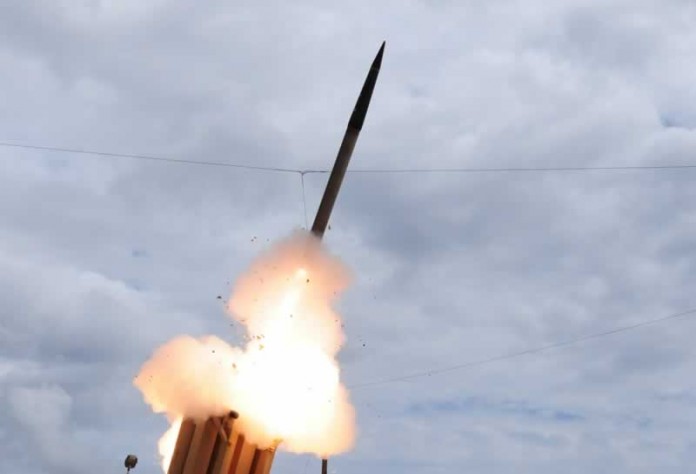
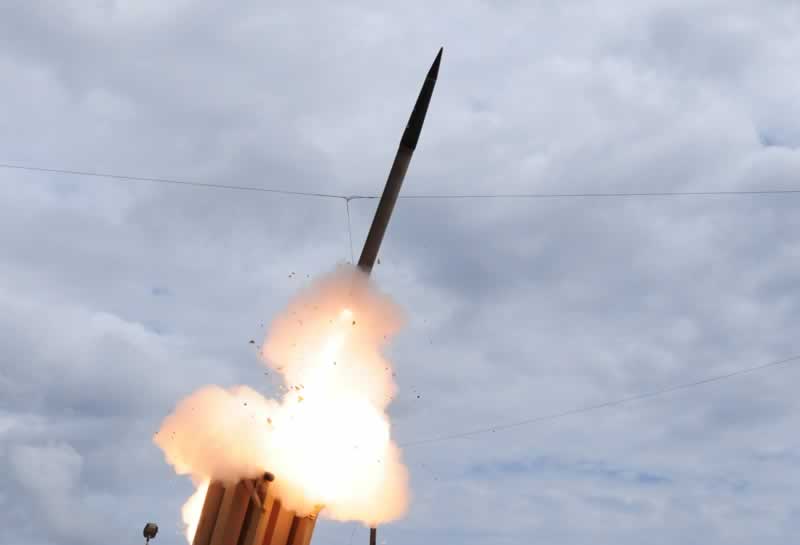
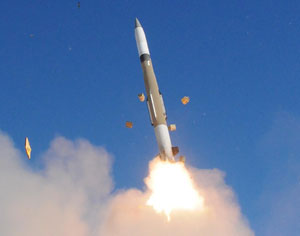
    THAAD interceptor seen here launched on its tenth test flight. Photo: MDA
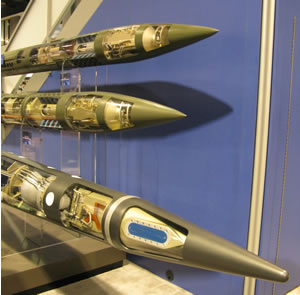
    Lockheed Martin's air and missile defense systems - Patriot PAC-3 (upper), enhanced version (MSE) and the THAAD (lower), shown on a missile display at Lockheed Martin's display.
    Lockheed Martin’s air and missile defense systems – Patriot PAC-3 (upper), enhanced version (MSE) and the THAAD (lower), shown on a missile display at Lockheed Martin’s display.

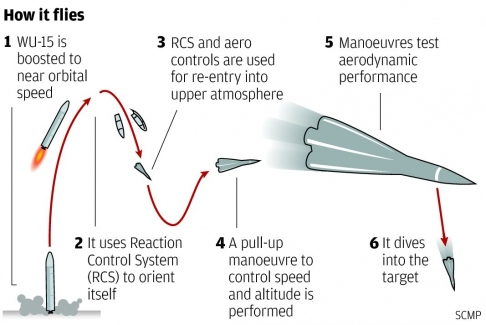
    The US Missile defense Agency (MDA) is seeking future missile defense measures that will be able to defeat hypersonic glide vehicles, similar to those being developed by China, Russia and India. A Chinese hypersonic glide vehicle (HGV) tested in January 2014 demonstrated China’s technological ability to fly such vehicles at a speed 10 times the speed of sound (Mach 10). While interceptors can deal with targets flying at such speed, the less predicted flight path and the friction with upper atmosphere make it more difficult for intercept, at least from the ground, analysts suggest.

    On its third test in December the Wu-14 HGV successfully flew at a speed of Mach 8. In previous test last January a similar glider reached a speed of 12,359 km/h (about Mach 10). Another test conducted in August failed. Experts believe the Chinese hypersonic glide test vehicle was clearly designed as a weapon delivery vehicle meant to break through U.S. defenses. Analysts suggest the HGV is more suitable for delivering a conventional weapon rather a nuclear one, given the high precision and extended range it can achieve over ballistic missile delivery system.

    Among the possible solutions, Lockheed Martin is evaluating an extended range variant of the Terminal High Altitude Area Defense (THAAD ER) that could be used to intercept such ultra-fast gliding warheads. THAAD ER is a concept that Lockheed Martin is recommending to the Missile Defense Agency as a way to evolve the THAAD program. Similar effects could also be achieved with other exo-atmospheric interceptors designed with high divert capability.

    Illustration: South China Morning POst (SCMP)
    Illustration: South China Morning POst (SCMP)

    Current missile defense systems are designed to defeat ballistic missiles flying in predictable, high trajectories. More advanced interceptors currently in development are designed to deal with maneuvering targets, but hypersonic gliders flying just above the edge of earth’s atmosphere would pose extremely difficult targets to beat, due to the combination of flat trajectory and high speed (8-10 Mach) which would challenge the limited maneuverability interceptors can develop in that boundary layer, where aerodynamic maneuvering (in the atmosphere) is limited and reaction control thrusters, used to divert the interceptor toward its target in space are not brought to their full effect.

    Subscribe to read more on THAAD ER and hypersonic weapons

    THAAD ER is currently in a company funded concept phase. MDA has provided us with approximately $2 million in FY14 funding to study the potential concept of operations.

    THAAD interceptor seen here launched on its tenth test flight. Photo: MDA
    THAAD interceptor seen here launched on its tenth test flight. Photo: MDA

    F-35 in – Special ops out as part of US forces realignment in UK and Europe

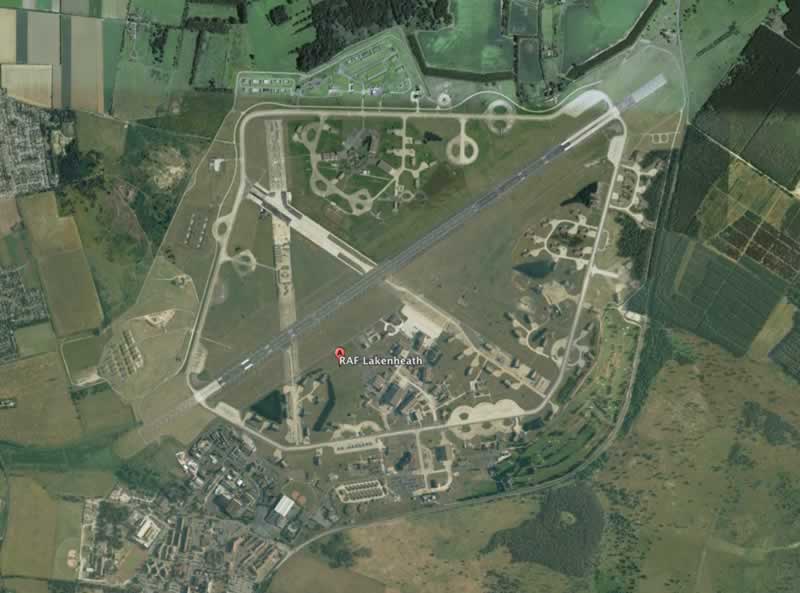
    Two US Air Force F-35A squadrons will be permanently based in RAF Lakenheath in the UK by 2020. Photo: Google Earth
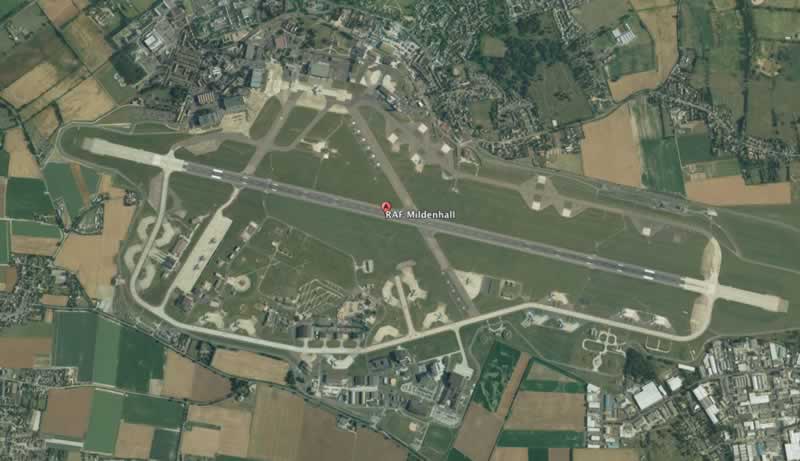
    US Air Force to leave RAF Mildenhall. Photo: Google Earth
    US Air Force to leave RAF Mildenhall. Photo: Google Earth

    The US military plans to reduce presence in Western Europe as part of a military infrastructure consolidation announced today at the Pentagon. The decision followed a thorough review of infrastructure requirements in Europe that considered ongoing force reductions, a changing security environment, the ongoing tough fiscal climate and technological advancements enabling better and efficiencies. “The adjustments and resulting efficiencies will help ensure the U.S. can maintain a persistent and capable presence in Europe.” Air Force Gen. Philip M. Breedlove the commander of U.S. European Command said.

    Under the planned consolidation US forces will leave fifteen military bases across Europe. The move will save Washington $500 million every year. The UK, Germany, Belgium, Netherlands, Italy and Portugal will see partial and full closures of bases, consolidation and closures of US facilities, as well as reduction in duty and civilian personnel.

    The most significant changes are related to US Air Force operations. As part of the consolidation and realignments the Air Force plans to permanently deploy two of its future F-35 squadrons at RAF Lakenheath, currently operating F-15E strike fighters. While RAF Lakenheath will receive the new unit by 2020, US operations at RAF Mildenhall will close down and its 3,200 personnel removed. Located only few miles from Lakenheath, RAF Mildenhall currently supports US Air Force RC-135 electronic reconnaissance operations, special operations and aerial refueling. The intelligence operations will move to other bases in the UK (the RAF currently operates such aircraft). The KC-135s aerial tankers and the 352nd Special Operations Group, flying CV-22 Osprey and MC-130J will both relocate to Germany.

    The realignment also includes military facilities in Germany, Netherlands, Belgium, Italy and Portugal, to be returned to the host nations.

    Other European bases, in Bulgaria and Greece are not expected to change while US presence in certain locations such as Romania and Spain is even expected to grow, but these decisions are not part of the announced realignment. For example, the US has recently asked Spain to grant permanent status for the deployment of US troops at the joint-use Morón Air Base in Spanish Andalusia. According to recent Spanish media reports Washington has asked for Spanish permission to increase the presence of troops in Morón from the current 850 to over 3,000. These personnel are supporting US operations in Africa. Another Spanish base serving the US Navy is Rota, providing the home-port for several AEGIS cruisers and destroyers providing part of the European missile-defense network.

    “The United States remains strongly committed to NATO and our forward presence of military forces in Europe,” general Breedlove said. “We have invested heavily in our European infrastructure in the last several years in order to ensure that we are ready and able to defend U.S. interests and meet our security commitments to our allies and partners now and in the future. “In the context of a challenging fiscal environment, we must seek greater efficiencies with respect to our presence in Europe and ensure we are focusing resources where they can have the greatest effect.” Breedlove explained that the move would create efficiencies that enable the United States to maintain a persistent and capable presence in Europe. He added the actions are part of a continued Defense Department effort to match infrastructure with operational requirements and military force structure.

    Two US Air Force F-35A squadrons will be permanently based in RAF Lakenheath in the UK by 2020. Photo: Google Earth
    Two US Air Force F-35A squadrons will be permanently based in RAF Lakenheath in the UK by 2020. Photo: Google Earth

    Lockheed Martin hopes ‘NAREW’ could offer MEADS a second chance in Poland

    MEADS tested in 2013
    MEADS tested in 2013

    The tri-national Medium Extended Air Defense System (MEADS) program returns to the Polish air defense arena, positioned as a candidate for the Polish for Short Range Air Defense (SHORAD) requirement. MEADS is now positioned to fulfill three European programs, in Germany, Italy and Poland.

    MEADS is currently being evaluated as a candidate for the German Taktisches Luftverteidigungssystem (TLVS), a new generation of air and missile defense that requires a flexible architecture based on strong networking capabilities. MEADS is also expected to become the basis of a national defense system in Italy. Formal decisions are expected from Germany and Italy early in 2015, and a follow‐on plan is being developed for transition.

    According to MEADS program management agency NAMEADSMA analysis, MEADS is designed to defend up to eight times the coverage area of existing Patriot systems, with far fewer system assets with significantly reduced demand for deployed personnel and equipment and for airlift. MEADS is also designed for high reliability and needs fewer personnel to operate.

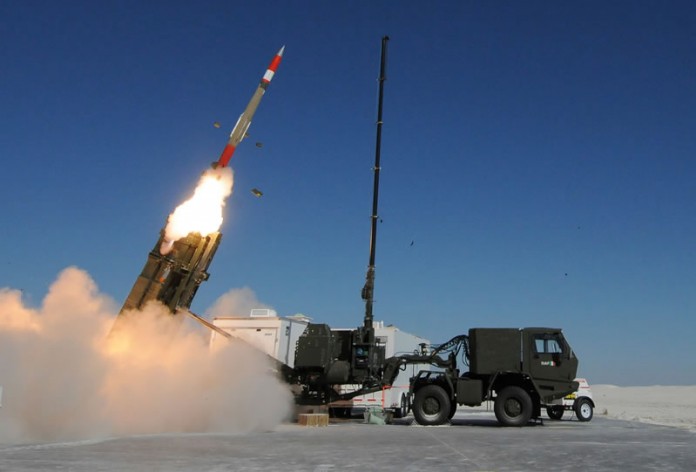
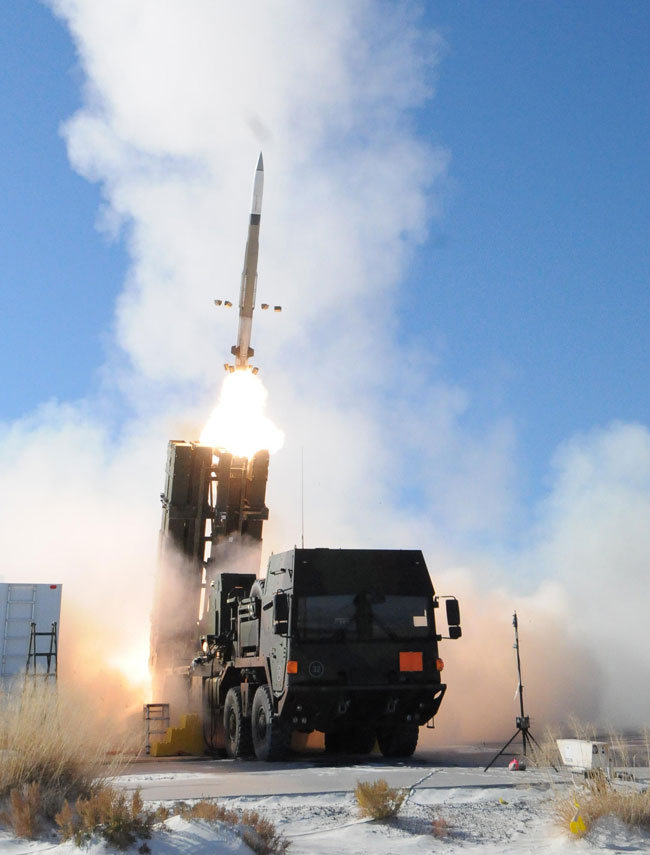
    MEADS firing two Patriot MSE missiles in a 'shoot-shoot' protocol, engaging a balistic missile target on a flight test at White Sands yesterday. Photo: MEADS International.
    MEADS firing two Patriot MSE missiles in a ‘shoot-shoot’ protocol, engaging a ballistic missile target on a flight test at White Sands. Photo: MEADS International.

    Poland has considering the multinational US-European MEADS program for its medium range air defense system (also known as WISLA). But MEADS has not made it to the finals, as the Poles demanded that only operationally proven systems will be considered (MEADS is still in the development phase).

    Subscribe for the full report

    Although MEADS is ‘over qualified’ for such mission, MEADS International was invited to participate in the technical discussions expected to be held in the first quarter of 2015. “We have built and tested a new generation of networked air and missile defense radars, launchers and battle managers,” said MEADS International executive vice president Volker Weidemann. “MEADS is now ready for continuation programs in Germany and Italy, and for Poland’s Narew program.”

    While ‘Narew’ requires less than what MEADS delivers, MEADS officials are confident their weapon system could provide a common system addressing Polands’ short and medium range requirements. ‘If MEADS would be selected for ‘Narew’, we believe Poland could reconsider the system for WISLA as well’ company officials commented.

    “The nations recognize the need for a more versatile capability in air and missile defense,” said NAMEADSMA general manager Gregory Kee. “MEADS is designed to be flexible, agile and lethal against the evolving threats our adversaries are developing.”

    The U.S. Army Aviation and Missile Research, Development and Engineering Command has recently reviewed the program to respond to interest within the US Department of Defense in leveraging MEADS technology. MEADS represents a $4 billion effort to develop, implement and prove next-generation air and missile defense system technology.

    Israel’s firefighting unit to expand with six new planes

    Air-Tractor-802F_725
    the AT-802F firefighter plane produced by Air Tractor, is a single-engine aircraft, capable of carrying approximately 3,000 liters of water and fly three hours without refueling. Photo: Elbit Systems

    Elbit Systems Ltd. announced today that it was awarded an approximately $100 million contract from the Israeli Ministry of Defense (IMOD) to procure six new firefighting aircraft and operate the firefighting squadron, which will consist of a total of 14 aircraft, including eight aircraft previously procured by the company.

    The contract, to be performed over an eight-year period, also covers flight hours, infrastructure upgrade, maintenance, airstrip operation, handling of fire retardants and other aspects of operating the squadron.

    Air-Tractor-802F800
    AT-802F firefighter.Photo: Elbit Systems

    The six new firefighting aircraft, manufactured by Air Tractor, are single-engine aircraft, capable of carrying approximately 3,000 liters of water and flying three hours without refueling.

    The Elad firefighting squadron was founded in 2011 following the disastrous Mount Carmel forest fire that claimed 44 lives, making it the deadliest in Israeli history. One of the victims was the fire scout Elad Riben.

    Since then, Elbit Systems has been cooperating with the IAF, firefighting units, the Jewish National Fund and the Israel Nature and Parks Authority in developing the squadron’s operational procedures and qualifying designated airstrips. The aircraft will be flown by CHIM-NIR’s pilots, the project’s subcontractor.

    Since its inauguration in 2011, the firefighting squadron has performed over 4,600 missions, accumulated over 2,500 flight hours and has helped extinguish over 500 potentially destructive fires across the country, providing a prompt and professional solution.

    Pakistani boat explodes after an Indian Coast Guard pursuit

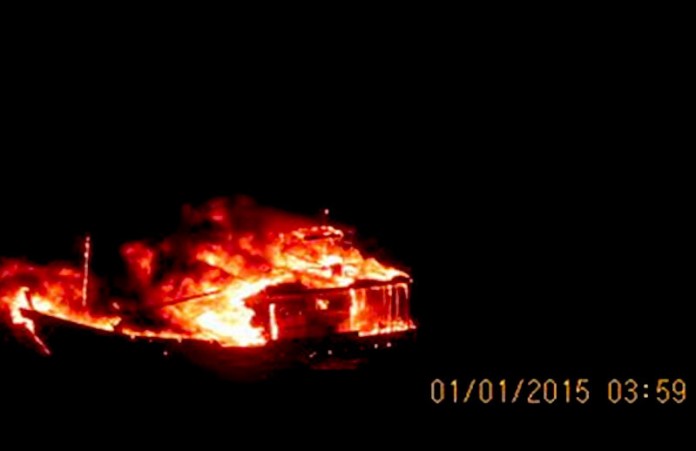
    An Indian Coast Guard patrol boat illuminates the burning Pakistani fishing boat. The crew of the suspected boat burned and exploded their boat after an hour long pursuit by the Indian vessel. The Coast Guards was on high alert following intelligence warning about a possible attack in the area.
    An Indian Coast Guard patrol boat illuminates the burning Pakistani fishing boat. The Coast Guards was on high alert following intelligence warning about a possible attack.
    pak_fishing_boat
    The crew of the suspected boat burned and exploded their boat after an hour long pursuit by the Indian vessel.

    An explosives-laden Pakistani trawler blew itself up late on December 31 night after being intercepted by the Indian Coast Guard in the Arabian Sea off Porbandar, Gujarat.

    The boat stopped after the coast guard fired shots but the four-man crew had by then set it on fire, triggering a major explosion and sinking the trawler, a defence ministry spokesperson said.

    Indian Security agencies have been on high alert on the high seas following intelligence inputs on an increased terror threat from the sea. A specific intelligence alert issued on Wednesday reported on fishing boat sailing from Keti Bunder near Karachi, planning some kind of an operation in the Arabian Sea.

    Based on that input the Coast Guard launched an Do 228 aerial patrol that located the fishing boat. It then directed coast guard boats patrolling in the area to intercept the suspected target approximately 365 km from the port of Porbander, leading to first contact around midnight of December 31.

    “The Coast Guard warned the boat to stop but it increased speed and tried to run away. After being stopped, the four persons on board the boat blew themselves up. The boat sank at the spot. Search operations are still in progress” defense ministry sources told Times of India.

    The Indian Navy and Coast Guards are on high alert since the terrorist attempt to hijack Pakistani Navy Ship PNS Zulfiqar on September 6. The terrorists planned to use the vessel use to attack US warships in the Indian Ocean. The raid at a naval base in Karachi was allegedly carried out with the help of Pakistani naval personnel, heightening fears of terrorist infiltration into the Pakistan military.

    The recent incident comes six years after the 26/11 attack on Mumbai, when 10 terrorists travelled from Karachi in a boat, hijacked an Indian fishing vessel and steered it to Mumbai to go on a three-day rampage during which they killed 166 people.

    Innocent looking fishing boats are often used by terrorists as transportation means prior to attacks on larger targets. Another terrorist attack involving fishing boats happened on November 12, 2014 in the Eastern Mediterranean sea, where four fishing boats attacked an Egyptian Navy vessel at sea, about 70 km off the northern port of Damietta. Air Force fighters were called in to assist and sunk the fishing boats. The naval vessel reportedly caught fire in the assault. Five crewmen were wounded and eight were missing following the attack. Some reports claimed the attack could be a terrorist attempt to hit Israeli vessels or offshore facilities off the Israeli coast.

    The most famous attack was the bombing of USS Cole. In October 2000, suicide bombers exploded a small boat alongside the US Navy destroyer in the Yemeni port of Aden, killing 17 American sailors and injuring another 39.

    China targeted by ISIS

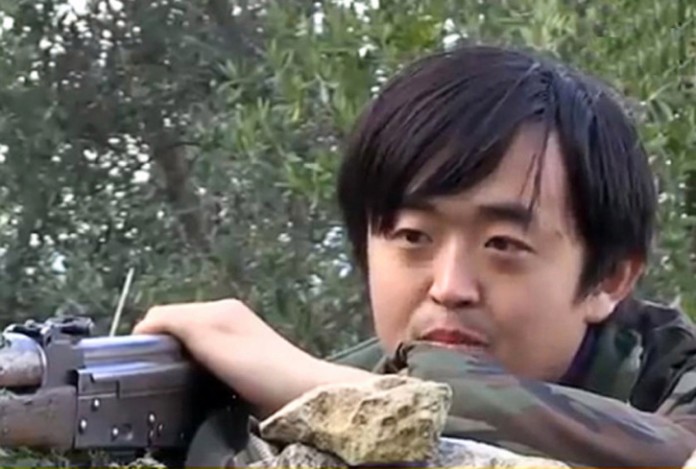
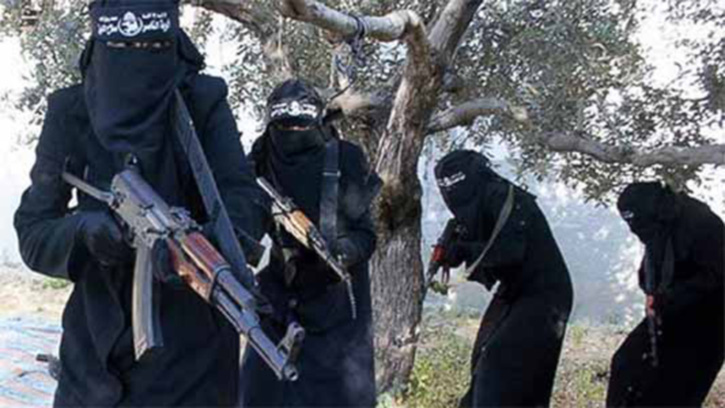
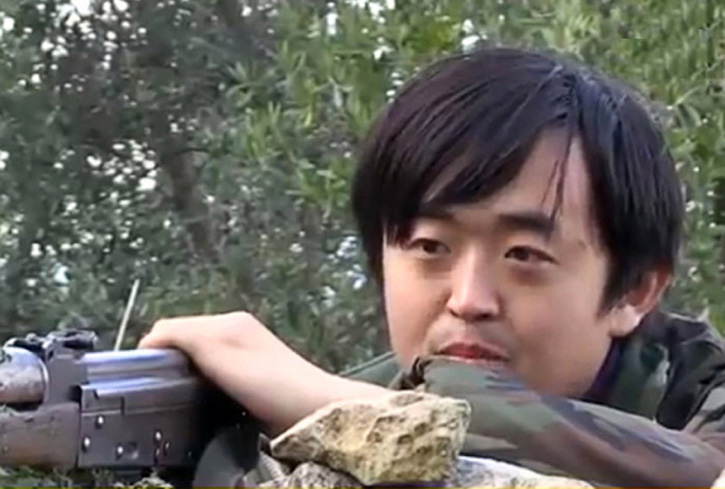
    Shown in a video released by ISIS supporters on Youtube, this person, identified as 'Bo Wang' was the first Chinese national openly shown to be fighting with ISIS in Syria.
    Five people were killed and 40 wounded when a car slammed into a crowd in Tiananmen square in Beijing in 2013. The Chinese denied it was a terror attack but executed five of the perpetrators a year later, in August 2014.
    Five people were killed and 40 wounded when a car slammed into a crowd in Tiananmen square in Beijing in 2013. The Chinese denied it was a terror attack but executed five of the perpetrators three months later.
    chalipha725
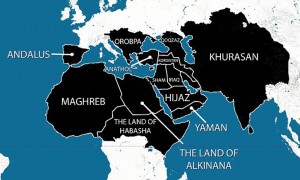
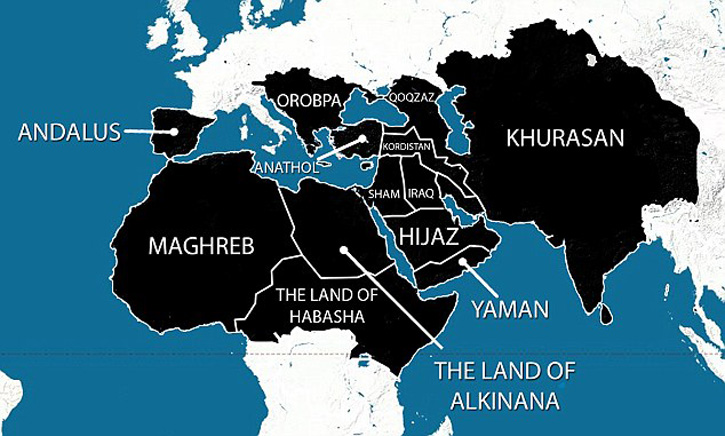
    The map published by ISIS in July shows the ultimate goals of the Islamic Chaliphate. Claimed as part of the ‘Wilayat of Khurasan’, are parts of western China, as well as India and Sri-lanka, Pakistan and Iran, the Kazakhstan, Uzbekistan and Turkmenistan. Since this map was drawn additional groups in South-East Asia – Indonesia, Malaysia, Thailand and Philippines have joined ISIS.

    The latest development in the creation of the revived Islamic Caliphate comes out of China. On 4 July 2014, ISIS leader Abu Bakr al-Baghdadi effectively declared war on China by publishing a map of its aspirant caliphate that threatened to occupy China’s Xinjiang, and named China first in a list of 20 countries that had “seized Muslim rights.” China’s Uighur Muslim population is known predominantly in the western regions of the country, which is often marginalized by the officially atheist Chinese government.

    Yin Gang, a West Asian and African Studies scholar at the Chinese Academy of Social Sciences, reported in a western news media, that hundreds of Chinese nationals are currently fighting for the Islamic State, citing previous examples of Chinese citizens joining al-Qaeda in Afghanistan. It is becoming apparent that Uighur separatists are joining ISIS in the Middle East.

    a_group_photo_with_two_chinese_fighters725
    A group photo of foreign volunteers fighting with ISIS showing at least two unidentified but unmasked Chinese fighters.
    Shown in a video released by ISIS supporters on Youtube, this person, identified as 'Bo Wang' was the first Chinese national openly shown to be fighting with ISIS in Syria.
    Shown in a video released by ISIS supporters on Youtube, this person, identified as ‘Bo Wang’ was the first Chinese national openly shown to be fighting with ISIS in Syria.

    For the Uighur in Xinjiang province, the Muslim, Islam religion is an important part of their life and identity. Their language is related to Turkish, and they regard themselves as culturally and ethnically close to Central Asian nations.

    The region has had intermittent autonomy and occasional independence, but what is now known as Xinjiang came under Chinese rule in the 18th Century. The Uighur culture leans more towards Central Asia than China and the recent Islamic developments have already created spells of unrest in the province. As result, Uighur commercial and cultural activities have been gradually curtailed by the Chinese state.

    Many of the Uighur do not identify as Chinese and have long been resentful of China’s heavy-handed policies. Indeed, Uighur terror cells have already been active in China.

    With Xinjiang comprising the furthest eastern flank of the planned caliphate, Chinese strategists will now have to worry about how ISIS’s pivot east will impact China’s energy security and its own march west across the new silk roads to the Greater Middle East. Although the Beijing government is maintaining strict security measures on all information, recent Photos are nevertheless circulating online in China of what is suspected to be Chinese citizens fighting for the Islamic State militant group ISIS. Though the photos initially surfaced some time ago, there still has been no official confirmation on the identity or nationality of the suspects, nor any indication as to where these photos were taken.

    However, unofficial sources in Beijing already expect Iraqi oil supply to figure heavily into its energy policy towards the Middle East, with China’s most productive upstream activities in the Middle East located in that region.

    As the United States and its Coalition allies are still dragging their feet in activities trying to curb ISIS operations, it seems that placing “boots on the ground” will eventually come from the Far East and Chinese forces might become the first candidates if ISIS will continue its subversive activities in the strategic Xinjiang province.

    China’s military forces, especially in number of fighting infantry cannot be underestimated. Numbering some 2.3 million active duty soldiers, with approximately 1 million reservists and some 15 million militia it is a huge force to be reckoned with in any confrontation which Beijing will decide to deploy.

    China’s foreign policy has traditionally been based upon an attitude of non-intervention. Their policy was codified in 1953 and later added to the Preamble of the Chinese Constitution. The fact is, that China’s primary objective is stability, and from their perspective, the surest way to destabilize a region is by intervening militarily. However, despite its best efforts to do otherwise, China will soon find itself entangled in the messy international struggle against Islamic-fundamentalist movements, once ISIS or its Muslim affiliates increase their active presence in China, or threaten its economic and strategic interests.

    Because of its economic interests in the region, China has recently deviated slightly from its non-interventionist policies by expressing support for anti-ISIS military activities.

    However, threats to its economic interests should be the least of China’s concerns. This is because ISIS is currently the greatest actual security threat China faces in the world. Chinese Muslim Uighur separatists have been joining ISIS in Iraq and Syria. Eventually (if not already) these battle-hardened Uighur separatists will begin to make their way back into China and open a campaign of terrorism on a scale previously unimaginable in China. In order to stem the flow of training, support, and weaponry coming back over its borders via the ISIS-trained Uighur, China’s largely untested military will have to gain needed combat experience, to be effective in counter terror activities. And time is already running out fast in China itself. The Muslim Uighur who have joined ISIS are receiving an elite education in terrorism and combat. They are building a valuable network of different Muslim extremist groups who can supply them with weapons, as well as logistical and ideological support. Perhaps the most significant lessons being taught to the Uighur extremists is in organization.

    Things have escalated in 2009, with large-scale ethnic rioting in the regional capital, Urumqi. Some 200 people were killed in the unrest, most of them Han Chinese, an ethnic group making the majority of mainland China.

    A most spectacular terror attack happened right in China’s Beijing’s Tiananmen Square in October 2013, when a suicide bomber drove his car into a crowd killing several people. Another such incident happened on May 2014 when two cars ploughed into a market in Urumqi and terrorists threw explosives killing and wounding scores of civilians.

    In August 2014 China has executed eight people for “terrorist” attacks in its restive far western region of Xinjiang, including three who “masterminded” a dramatic car crash in Tiananmen Square in 2013, state media said.

    Although maintaining its traditional non-intervention policy in Mid Eastern conflicts, China is already showing uncharacteristic support for foreign military actions against ISIS. Even more unusual is China’s open support for US airstrikes in Iraq and Syria. So far, the Chinese policy remained virtually unchanged regarding any active intervention, but this could change rapidly once ISIS-trained Uighur extremists begin to trickle back into China. Then the Chinese government will find itself battling an entirely different element.

    Once this happens, the world can expect to see a China that is much more willing to involve itself in military intervention, creating a historic precedent for China in international disputes. This willingness to use force will have profound implications on China’s ongoing territorial disputes with surrounding Asian nations, in which Pyongyang has already been flexing its military might in this context.

    Should the influence of ISIS escalate into an organized terror threat inside China, one can expect a new military superpower, as China expands its military capabilities into unknown proportions.

    Islamic State’s Activity spreads into the Far East

    According to news reports Malaysian women  recently joined ISIS,  among other females from the UK and Australia, who are now supporting the Islamic State fighters.
    According to news reports Malaysian women recently joined ISIS, among other females from the UK and Australia, who are now supporting the Islamic State fighters.

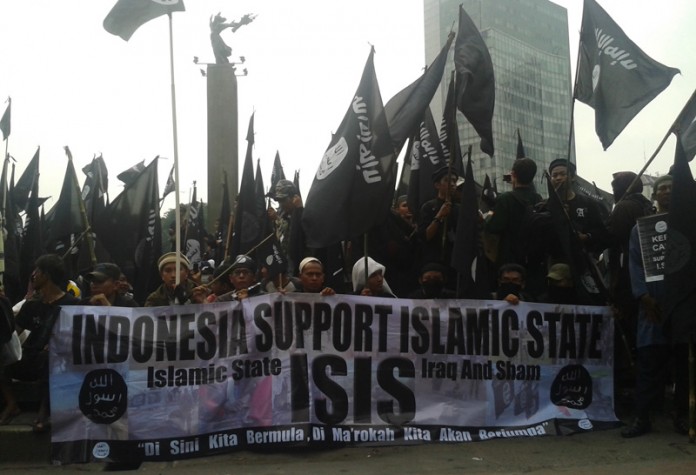
    As the Islamic State continues its armed campaign in Iraq and Syria, its ideology is drawing fans and fighters from as far as Southern Asia and China. Importantly, four new terrorist organizations are already aiming to establish an Islamic Caliphate in the Far East region called Daulah Islamiyah Nusantara that is to comprise Malaysia, Indonesia, Singapore, southern Thailand and southern Philippines.

    In these countries, Muslim cells have emerged and are embarking on an aggressive recruitment drive to join the Islamic State (IS). Its desire to form an Islamic Caliphate in the Far East will become more and more feasible, as extremist Islamic elements grow in strength, deeply encouraged by the dramatic fighting in Iraq and Syria and the European Muslims already joining the Jihad in greater numbers.

    chalipha725
    The map published by ISIS in July shows the ultimate goals of the Islamic Chaliphate. Claimed as part of the ‘Wilayat of Khurasan’, are parts of western China, as well as India and Sri-lanka, Pakistan and Iran, the Kazakhstan, Uzbekistan and Turkmenistan. Since this map was drawn additional groups in South-East Asia – Indonesia, Malaysia, Thailand and Philippines have joined ISIS.

    The latest development in the creation of the revived Islamic Caliphate comes out of China. Although the Beijing government and keeps strict security measures on all information, recent photos are nevertheless circulating online in China of what is suspected to be Chinese citizens fighting for the Islamic State militant group (ISIS). Though the photos initially surfaced some time ago, there still has been no official confirmation on the identity or nationality of the suspects.

    However, Iraqi military sources claim to have caught a Chinese citizen fighting for the Islamic State militant group. China’s Muslim population is known predominantly in the western regions of the country, which is often marginalized by the officially atheist Chinese government. Yin Gang, a West Asian and African Studies scholar at the Chinese Academy of Social Sciences, reported in a western news media that hundreds of Chinese nationals are currently fighting for the Islamic State, citing previous examples of Chinese citizens joining al-Qaeda in Afghanistan.

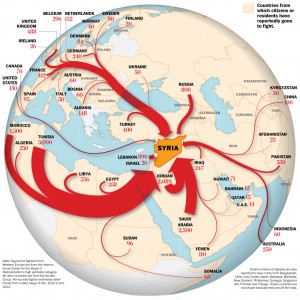
    ISIS attracts volunteers from around the world, mainly from the Middle east and North Africa but a growing number of supporters are now coming from South-East Asia as well. Image: ISIS Study Group
    ISIS attracts volunteers from around the world, mainly from the Middle east and North Africa but a growing number of supporters are now coming from South-East Asia as well. Image: ISIS Study Group

    ISIS’s growing influence across Southeast Asia indicates trouble for the region. Malaysia will remain under threat, and IS-inspired fighters will worsen the low-intensity conflicts in Indonesia and the Philippines. By default, this puts ever-vigilant Singapore at risk, which is always in the crosshairs of Islamist jihadists. IS might also inspire Thailand’s otherwise local Islamist-Pattani nationalist insurgency that has increased violence in the face of failing negotiations with the government. According to the rebel manual, ‘Fight for the Liberation of Pattani’, they want a local caliphate, too. Burma’s small Muslim vs. Buddhist conflict has already spilled over into Indonesia and Malaysia with a few bombings and assassinations. Therefore, it is candidate for IS provocation as well.

    Abu Muhamad al Indonesi appeared in a recent ISIS video.
    Abu Muhammad al-Indonesi appeared in a recent ISIS video.

    On July 22, the IS media company Al-Hayat released a video in which a group of eight jihadist fighters from Indonesia were shown to have arrived in Iraq and were part of the Islamic State. In the video, Abu Muhammad Al-Indonesi, one of the fighters, delivered a message urging Indonesians to join the Islamic State and swear fealty to Al-Baghdadi.

    In May 2014, a group of jihadists from the Philippines declared support for the ISIS. In August, it released a video in which the jihadists, who belonged to Jama’at Ansar Al-Khilafa (JAK), formally swore fealty to Abu Bakr Al-Baghdadi. The video, in which the faces of the jihadists were blurred, was produced by the jihadi media outlet Al-Battar.

    In August 2014, it emerged that scores of Filipino jihadists have joined the Islamic State in Iraq. Fidel Ramos, the former president of the Philippines, told a newspaper: “At least a hundred of our young Filipino-Muslims have infiltrated Iraq where they get training and they can launch jihad when they come back to the Philippines.”

    Malaysian authorities recently stopped a major ISIS-influenced attack, and Indonesian and Philippine officials are scrambling to prevent their own growing flocks of Islamic inspired terrorists from going on the rampage. The Philippines’ Foreign Ministry says that 200 of its citizens have gone to war under ISIS’s flag in the Middle East. Most of these are orphans of dead fighters from domestic Islamist insurgent groups such as the Abu Sayyaf Group (ASG) and Moro National Liberation Front.

    Indonesia, long troubled by radicals that have fought for a caliphate for decades, recently banned its citizens from joining ISIS. Jailed terrorist kingpin Abu Bakar Ba’asyir, the radical Indonesian cleric who heads Jemmah Anshorut Tauhid (JAT) was already causing the authorities considerable headache. His activities are gaining power with ISIS cells encouraging young Muslim recruits to join its ranks. Last August, Indonesia’s police counter terror unit, Detachment 88, arrested JAT official Afif Abdul Majid and two others for joining ISIS. Malaysian Special Branch (SB) arrested several ISIS suspects, planning to carry out terrorist attacks in the country. Security sources claimed that at least 20 of its citizens — and probably more — have joined ISIS fighting in the Middle East, and at least three have been killed.

    The plan for a regional Islamic caliphate – Daulah Islamiah Nusantara – was also confirmed in August by Ayob Khan Mydin Pitchay, the Malaysian counter-terrorism official whose investigations led to the arrest of the 19 jihadists in Malaysia. Ayob Khan confirmed that the militants “had visions of establishing a hardline Southeast Asian caliphate spanning Malaysia, Indonesia, Thailand, the Philippines and Singapore, and planned to travel to Syria” to learn from the Islamic State.

    ISIS is currently the greatest actual security threat China faces in the world. Chinese Muslim Uighur separatists who have been have been joining ISIS in Iraq and Syria. Eventually (if not already) these battle-hardened Uighur separatists will begin to make their way back into China and begin a campaign of terrorism on a scale previously unimaginable in China.

    The Muslim Uighurs are part of the population of the Xinjiang region in Western China. Many Uighurs have joined ISIS in Iraq and Syria, where they are trained in terrorism and combat. These terrorists are building a valuable network of different Muslim extremist groups who can supply them with weapons, as well as logistical and ideological support.
    So far the effectiveness of Uighur attacks in China have been limited because the separatist groups are largely unorganized and fractured. But as ISIS-trained Uighur extremists begin to trickle back into China, the Chinese government will find itself battling an entirely different.
    Once this happens, the world can expect to see a China that is much more willing to involve itself in military intervention creating a historic precedent for China in international disputes. This willingness to use force will have profound implications on China’s ongoing territorial disputes with surrounding Asian nations, in which Pyongyang has already been flexing its military might in this context. Should the influence of ISIS escalate into an organized terror threat inside China, one can expect a new military superpower, as China expands its military capabilities.
    Taiwan set to design, build new, indigenous submarines

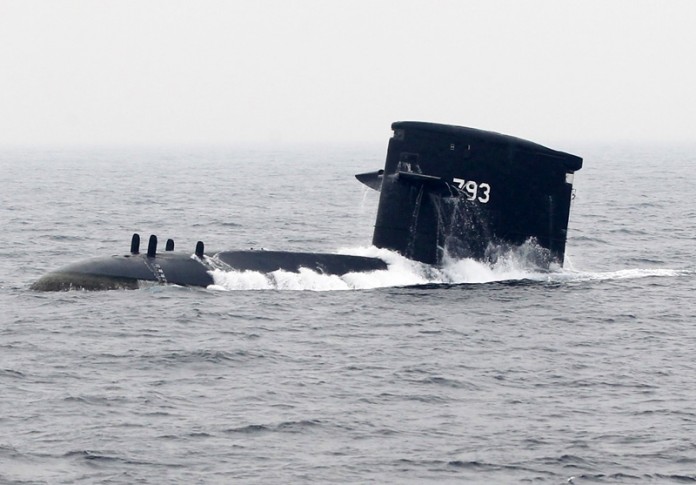
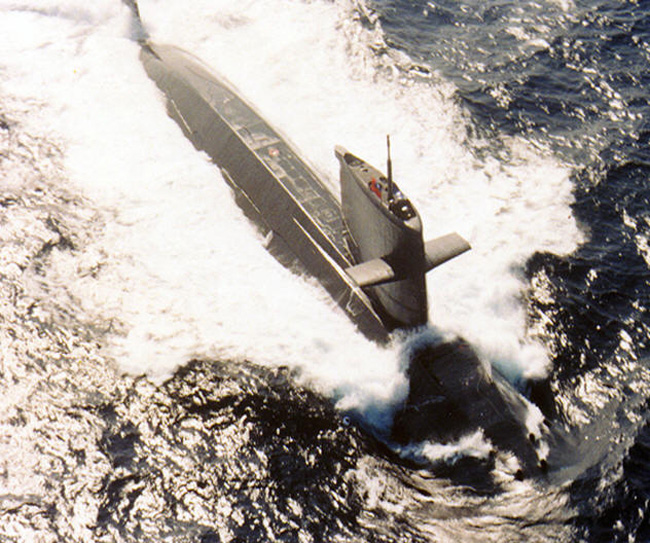
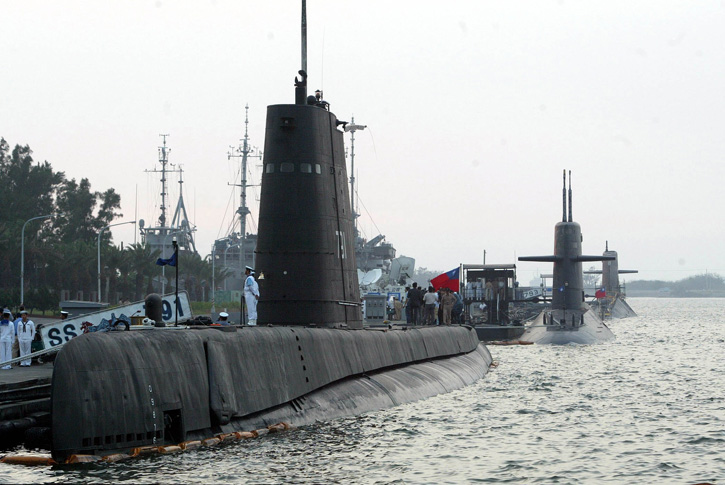
    ROCN SS-793 Hail Lung is one of two ex-Dutch Swordfish class submarine acquired from the Netherlands in 1982.
    SS-793 Hai Lung has been operational with Taiwan's Navy since 1982.
    SS-793 Hai Lung has been operational with Taiwan’s Navy since 1982.

    Taiwan said Monday it was launching a project to build a fleet of eight indigenously designed submarines, after years spent waiting in vain for US models. AFP reported.

    The Defense ministry at Taipei approved guidelines for the design of a four year contract for the design of an indigenous submarines. Work on the design is slated to begin in 2016 and span over four years at a total cost of about US$95 million. (Tw$3 billion). Preparatory work expected to begin this year is likely to include a study evaluating different alternative designs considering submarines ranging from 1,200 to 3,000 tons.

    The Taiwanese navy ruled out the use of a large fleet of 120 ton midget submarines instead of using conventional submarines. The use of midget submarines was one of the alternative plans promoted by the US administration seeking to bolster the region’s military might against the Chinese expansion along the Pacific rim. Opponents didn’t exclude the midget submarine concept but not as an alternative for a fleet of full size submarines.

    Taiwan currently operates two Hai Lung class submarines designated 793 and 794, acquired from Dutch Navy surplus in 1982. (these were formerly the Dutch ‘Swordfish’ class submarines). Taiwan was planning to buy additional four boats of this class but they were turned down by the Netherlands Government because of pressure from the People’s Republic of China.

    Taiwan is operating two of the world’s oldest working submarines. The Hai Shin (SS-791) and WW II built submarines, both ex-USS Tusk (SS-426), and ex-USS Cutlass (SS-478). Both were built during WW II, and modernized to Guppy II class in 1949. The two submarines were transferred to Taiwan in the early 1970s and are still operational today, although not in combat ready role.

    Taipei repeatedly requested the US to assist in renewing its submarine fleet. In 2001 then-US president George W. Bush approved the sale of eight conventional submarines as part of Washington’s most comprehensive arms package to Taiwan since 1992. Since then, however, there has been little progress, as the US do not produce conventional submarine while other nations are reluctant to risk their business with China, by supplying arms to its rival – Taiwan.

    The submarine modernization will be part of a major 20 year modernization of the entire navy. The plan includes commissioning 4-8 submarines of 1,200-3,000 tons each, build four destroyers of 10,000 tons, and 10-15 catamaran frigates of 3,000 tons (the first of this class was commissioned recently), and new amphibious ships.

    hai_shin_ss791_taiwan_725
    Republic of China Navy (ROCN) Hai Shih (SS-791) is the world’s oldest active submarine – it is the ex-USS Cutlass (SS-478), built during WWII. The two ex-Dutch submarines, Hai Hu (SS-794) and Hai Lung (SS-793) are seen in the background. The two Guppy II class submarines were acquired from the US Navy in 1972. Photo via HuronSerenity, Reddit.


    Lebanon orders armored vehicles from Italy and Brazil

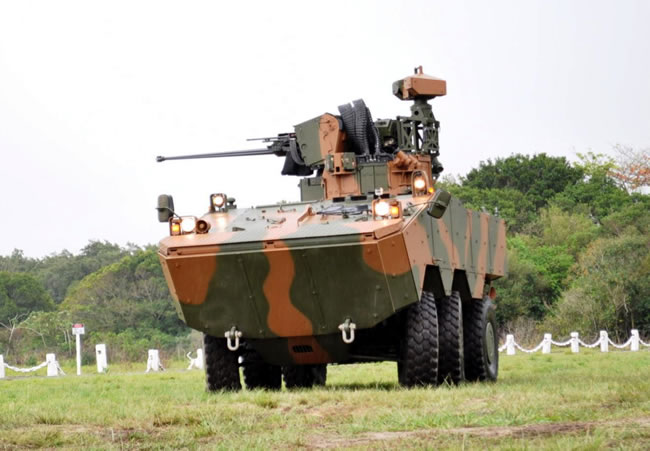
    The Brazilian Army has already inducted over 86 VBTP-MR GUARANI 6x6 APCs armed with remote weapon stations. The Brazilian Army plans to induct additional 2,044 units by 2030.
    The Iveco LMV.
    The Iveco LMV.

    The Italian vehicle manufacturer Iveco has signed a contract to sell 80 vehicles to the Lebanese military and police. According to Italian industrial sources the deal, worth about 30 million euros, was signed in mid-December.

    The contract includes 25 Light Multi-role Vehicles (LMV), five heavy armor and mine protected troop carriers (MPV) and ten VBTP 6×6 armoured fighting vehicles VBTP-MR. The remaining vehicles include unarmored military trucks.

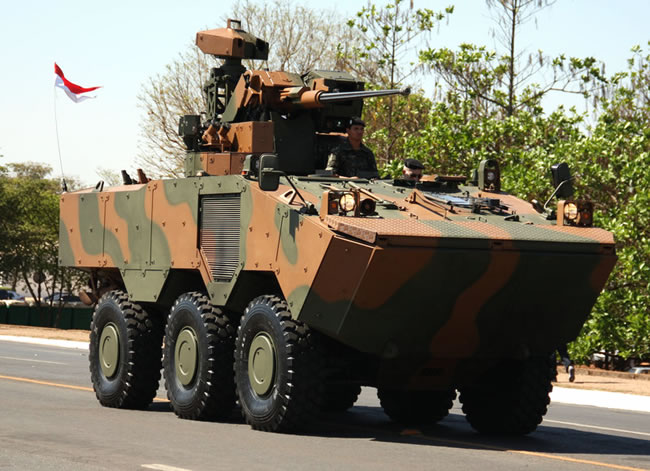
    The VBTP-MR (Viatura Blindada de Transporte de Pessoal) was developed by Iveco for the Brazilian Army and is currently in production under an order for 2044 vehicles. The VBTP is an amphibious, 18 ton 6×6 vehicle; they are capable of carrying 11 soldiers. Some of the Brazilian VBTPs are equipped with remotely operated weapon system developed and produced by Elbit Systems, but these weapon systems are unlikely included in the configuration offered to the Lebanese.

    Jane’s Defense Weekly mentioned that the VBTP-MR are to be produced in Brazil by Iveco Latin America at its plant in Sete Lagoas, State of Minas Gerais, and dispatched directly to Lebanon without armament.

    This order represents the first export contract for Brazil since 1993. In the 1980s Brazil exported thousands armoured vehicles of different types produced by Engessa. The company entered bankruptcy in 1993 and was liquidated, following the collapse of its leading customer – the Iraqi Army in the 1991 Gulf War.

    The Brazilian Army has already inducted over 86 VBTP-MR GUARANI 6x6 APCs armed with remote weapon station under the URUTU-3 modernisation programme to replace their EE-11 URUTU by 2015.
    The Brazilian Army has already inducted over 86 VBTP-MR GUARANI 6×6 APCs armed with remote weapon station under the URUTU-3 modernisation programme to replace their EE-11 URUTU by 2015.

    Skunk Works and XTEND Simplify Multi-Drone Command

    0
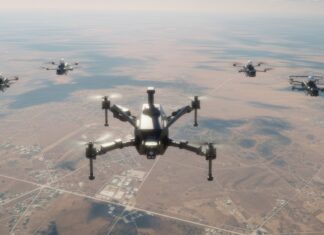
    Lockheed Martin Skunk Works® and XTEND have achieved a major milestone in JADC2 by integrating the XOS operating system with the MDCX™ autonomy platform. This technical breakthrough enables a single operator to simultaneously command multiple drone classes, eliminating the friction of mission handoffs. From "marsupial" drone deployments to operating in GPS-denied environments, explore how this collaboration is abbreviating the data-to-decision timeline and redefining autonomous mission execution.

    From Ukraine to Taiwan: The Global Race to Dominate the New Defense Tech Frontier

    0
    As traditional defense primes face mounting competition from agile “neoprimes” such as Anduril, Palantir and Helsing, the balance of innovation is shifting toward software-defined warfare and scalable, dual-use technologies, while global industry consolidation—marked by Boeing’s integration of Spirit AeroSystems and other strategic mergers—signals an intensified race to secure control over the defense technology value chain. Our Defense-Tech weekly report highlights these trends.

    Europe’s “Drone Wall”

    0
    In early October 2025, a coordinated wave of unmanned aerial system (UAS) incursions—widely attributed to Russia—targeted critical infrastructure across at least ten European nations. The unprecedented campaign exposed the fragility of Europe’s air defenses...

    Weekly Defense Update & Global Security Assessment

    0
    Executive Summary The past week (September 18-25, 2025) represents an inflection point where strategic defense concepts have transitioned from doctrine to tangible reality. An analysis of global events reveals four primary, interconnected trends shaping an...

    U.S. Air and Space Forces Push Next-Gen Programs at the AS&C 2025 Conference and...

    0
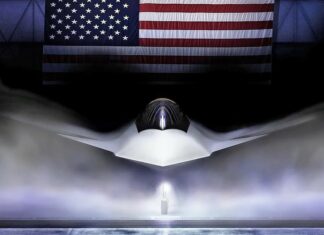
    At the 2025 Air, Space & Cyber Conference, U.S. Air Force and Space Force leaders unveiled major updates on next-generation fighters, bombers, unmanned systems, and space initiatives, highlighting both rapid innovation and critical readiness challenges as the services race to outpace global competitors. A short version is available here, with a more detailed version for subscribers.

    TADTE 2025: Reflecting Taiwan’s Strategic Themes

    0
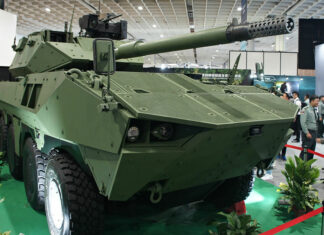
    The Taipei Aerospace & Defense Technology Exhibition (TADTE) 2025 crystallized around four dominant strategic themes that collectively illustrate Taiwan's comprehensive approach to defense modernization amid escalating regional tensions. Based on a detailed report by Pleronix (available upon request). Includes a Podcast discussion on TADTE 2025's highlighting Taiwan's four strategic themes beyond the post's coverage.

    Iron Beam 450 Completes Testing, Soon to Join With Operational Air Defense Units

    0
    Israel’s Iron Beam 450 high-power laser system has completed final testing, marking a major leap in air defense. Developed by Rafael, it offers precise, cost-effective interception of rockets, UAVs, and mortars, and is set for IDF deployment by 2025.