A video recently aired on YouTube shows an alarming situation happening in Iraq, where heavy equipment delivered by the U.S. To the Iraqi Army reaches extremist groups in the country – some are jihadists fighting against the government (ISIS and its supporters) and others are Iranian backed extremist groups presently supporting the Iraqi Forces.
The convo shown in this video shows a long group of vehicles, comprising mainly pickup trucks, but also various vehicles provided by the USA to the Iraqi Forces, including M1A1 main battle tanks, transported on standard US Army Heavy Equipment Transporter (HET), M113 Armored Personnel Carriers and M151, military trucks hacked with rocket launchers to become mobile rocket launchers. Unlike tanks shown by ISIS, that were damaged in battle, this equipment seems intact, and may have been taken by the Hezbollah from Iraqi storage of abandoned by military units.
According to The Long War Journal, Kata’ib Hezbollah, receives funding, training, logistics, guidance, and material support from the Iranian Qods Force, the external operations wing of the Iranian Revolutionary Guard Corps. The radical militia has joined the fight against the Islamic State in Iraq. In addition, other Iranian-supported Shia militias, such as Asaib al Haq, Badr Organization, and Muqtada al Sadr’s Promised Day Brigades have played a prominent role on the battlefield.
Despite this, the group was unofficially assisted by US airstrikes when Iraqi and Kurdish forces broke the siege of Amerli in Salahaddin province, although, according to US announcements, the call for fires were at “the request of the Government of Iraq” and “in support of an operation to deliver humanitarian assistance to address the humanitarian crisis and protect the civilians trapped in Amerli.
After four months of continuous fighting, Kurdish forces declared today victory in the battle for the Syrian city of Kobani. “Kobani is now “100% cleared” of Islamic State fighters, said Idres Nassan, Kobani’s deputy foreign minister. Kurdish forces want to continue the momentum, pushing Islamic State militants further out of nearly 400 villages surrounding the city, Nassan said. Later today YPG Syrian Kurdish fighters have already retaken three villages in the eastern side of the city. AP reports.
The Kurdish fighters had fought against Islamic State since mid-September, backed by airstrikes from a U.S.-led coalition and a group of 150 Kurdish Peshmerga fighters from Iraqi Kurdistan, who arrived with heavy weapons in late October. Militias with the Free Syrian Army also took part in the long battle for the city. “The Peshmerga will stay as long as the YPG will need them however much time it takes to clear the villages,” said Peshmerga Brig. Halgord Hekmat.
Despite the Kurdish cheer, senior US State Department official told Reuters the setback for Islamic State in Kobani did not mean “anyone is declaring mission accomplished or this is a significant turning point.” Reuters reported. The official said the majority of militants fighting in Kobani were made up of some of Islamic State’s best foreign fighters from Chechnya, Canada, Australia and Belgium. It became obvious in November they were struggling to hold the town as Iraqi Kurdish pershmerga fighters advanced on the ground, backed by U.S. air strikes, the official added.
Raytheon has acquired Sensintel Inc., a privately-held company providing unmanned aircraft systems (UAS) solutions to the US intelligence and special operations markets. The company specializing in expendable, remote sensing and UAS engineering. It also provides training, technical and operational support to military, scientific and commercial sectors. Sensintel has developed relationships with the Special Operations Command (SOCOM), Office of Naval Research and U.S. Air Force Research Laboratory.
L ocated in Tucson AZ, Sensintel has about 50 employees . It will become part of Raytheon’s Missile Systems business. The transaction is not expected to materially impact Raytheon’s sales or earnings in the first quarter or full year 2015. Terms of the agreement were not disclosed. “The acquisition of Sensintel enhances the growth prospects of our UAS business and the advanced capabilities we can offer our customers.” said Dr. Taylor W. Lawrence, Raytheon Missile Systems president.
A Greek F-16 fighter jet crashed into a line of jet fighters and helicopters during NATO training at Los Llanos base in Albacete, southeastern Spain Monday, killing nine French and the two aircrews of the Greek fighter, and injuring 21. Nine of the dead were French. 11 of the injured were Italian and 10 were French. Material damage, in addition to the Greek fighter include a French air force Alpha Jet, Mirage 2000s and Italian A-1 AMXs.
The two-seat F16 was taking off but lost thrust and crashed into an area of the base where other aircraft involved in the NATO exercise were parked. At least five jets were damaged and the Italian statement said “numerous” helicopters were damaged.
The jet that crashed was taking part in a NATO training exercise called the Tactical Leadership Program. The 10 NATO countries participating in the program are Belgium, Britain, Denmark, France, Germany, Greece, Italy, the Netherlands, Spain and the United States.
Washington and New Delhi are expanding their defense technology cooperation. On his visit to India, President Obama and Indian Prime Minister Narendra Modi discussed the extension and expansion of the bilateral Defense Technology and Trade Initiative (DTTI) agreement that has been in place since 2005. The DTTI will be expanded to another 10-year framework, but this time it will be focused on specific programs that both countries are interested in.
” This renewed framework will support stronger military-to-military engagement, including deeper maritime cooperation and increased opportunities in technology and trade. ” US defense secretary Chuck Hagel noted. Part of the cooperation will establish joint training between the two military forces, Hagel said. These military exchanges will include expanded joint combat exercises, maritime security operations as well as the opening of intelligence-sharing channels. “By establishing a new military education partnership, we will help shape the next generation of military leaders in both our nations, fostering relationships that will draw our defense establishments closer together for years to come.”
The DTTI that has been in place since 2005 did not yield significant results. The two sides are hopeful the new agreement will succeed to jumpstart few collaborative programs, as it will initially focus on four “pathfinder” projects.
These programs will include the development of an enhanced version of Aerovironment Raven mini-UAV, designed with longer mission endurance (up to six hours) and extended range (18 km). Another project being discussed is modular intelligence gathering module tailored for the C-130J Super Hercules (aircraft that are already supporting the Indian Special Forces. The cooperative programs will also look into mobile hybrid-electric power sources and uniform integrated with Chemical & Biological protection measures.
Both Obama and Modi promised the DTTI would take the bilateral defence cooperation to a new level altogether with “additional joint projects in the near future”. These include a working group to explore aircraft carrier technology sharing and design; (among the technologies India is seeking to get is the Electromagnetic Launch System (EMALS) that replaces the steam catapult on the US Navy new Ford class aircraft carriers. Other areas for technology sharing would include jet engine technology – as India is already planning to rely on the GE F414 engine from General Electric for its enhanced variant of Light Combat Aircraft (LCA II). Hagel said the US will also benefit from the cooperation, “We will begin to realize the enormous potential of the U.S.-India defense industrial partnership. We have further strengthened this partnership with an agreement that will allow us to continue science and technology collaboration for the next 15 years.”
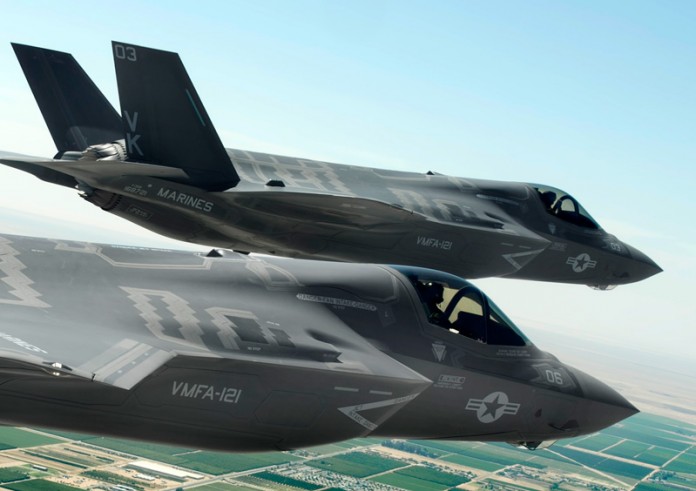
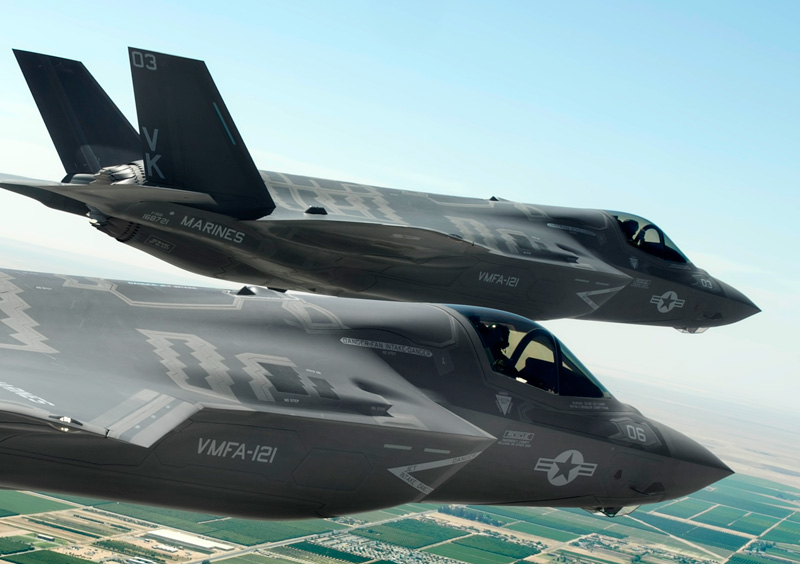
Marine Fighter Attack Squadron 121 (VMFA-121) at Marine Corps Air Station (MCAS) Yuma - is expected to be the first Marine Corps F-35 unit declared 'operationally ready' by the end of July 2015. Photo: Lockheed Martin.
Lockheed Martin and the F-35 Joint Program Office (JPO) are conducting extensive testing toward the program’s main milestone – declaring Marine Fighter Attack Squadron 121 (VMFA-121) at Marine Corps Air Station (MCAS) Yuma – the first Marine Corps F-35 unit ‘operational ready’ by the end of July 2015. Part of the tests are demonstrating how the ‘Lightning II’ can communicate with other aircraft, including coalition fighters, as well as with ground forces, using Link 16 and combat networks using legacy SINCGARS radios.
The effort is shared by elements training, testing and supporting the aircraft and its equipment, with the Marine Corps, Air Force and navy. Although only the USMC unit flying F-35B is due for this clearance, some of the testings are done on the Air Force’s F-35A and Navy F-35Cs, since many of elements of the different variants, particularly the software versions – are identical.
This procedure was recently highlighted by the Pentagon’s Director of Operational Test & Evaluation (DOT&E) in his annual report. “Rather than carrying out a full Operational Utility Evaluation (OUE), JPO is conducting ‘limited assessments’ of Block 2B capability, using F-35A operational test aircraft at Edwards AFB, California. Adhering to OUE testing with F-35B with Block 2B capability would have delayed the start of the evaluation into late 2016. This in turn threatened to delay the development of Block 3F software.
Developmental testing of the Block 2B software is expected to be complete in february 2015, earlier than the DOT&E predicted in its 2013 report (May to November 2015). Moreover, the consolidation of test points from earlier blocks into 2B testing has accelerated the process, eliminating 840 test points, equivalent to four months of testing.
The review highlight concern about the ability of the aircraft to identify hostile radars, creating ‘significant operational risk to fielded unit’ the report stated that the necessary software updates will not be available until November 2015. Other concerns are with the aircraft unique ‘Distributed Aperture System’ (DAS), providing the pilot a panoramic view of the aircraft surroundings and automatic threat warning and identification. The report said DAS still “exhibit high false-alarm rates and false target tracks, and poor stability performance, even in later versions of software.”
Marine Fighter Attack Squadron 121 (VMFA-121) at Marine Corps Air Station (MCAS) Yuma – is expected to be the first Marine Corps F-35 unit declared ‘operationally ready’ by the end of July 2015. Photo: Lockheed Martin.
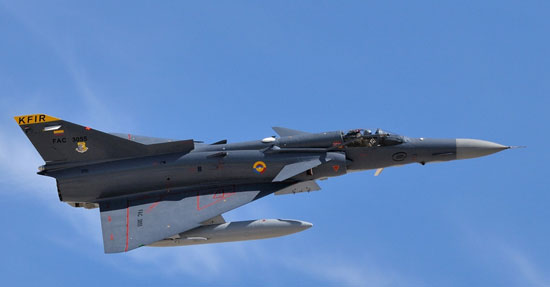
Colombian Kfir C10/12 participated in the Red-Flag 7/2012 exercise, claiming eight simulated kills of F-16 and F-15s.
The Colombian Air Force (FAC) has reportedly grounded its entire fleet of Kfir C-10 jet fighters following a crash of one of the aircraft, while performing approach manoeuvers near the Air Combat Command Base No. 1 in Colombia last month, Defensa.com reported.
The aircraft was one of 24 Kfirs built and modernized by Israel Aerospace Industries (IAI).
Preliminary investigation has indicated that the aircraft lost power at low altitude, as the J79-GE J1EQD jet engine suffered ‘flameout’, forcing the pilot to eject. Flameout occurring at higher altitude would enable the pilot few seconds to try and restart the engine, but at low altitude, ejection is the procedure to follow under such conditions.
A flameout refers to the run-down of a jet engine caused by the extinction of the flame in the combustion chamber. It can be caused by a number of factors – some due to pilot error – such as fuel starvation, compressor stall, or insufficient oxygen at high altitudes. Other causes are from foreign object damage (often caused by birds strike at low altitude). Severe inclement weather, cold temperatures and mechanical failures are also probable causes.
The Colombian investigation has ruled out bird air strike hazard (BASH) or an ingestion of birds by the turbojet engine. IAI will inspect the engine to try and understand the cause of the mishap. IAI’s Lahav division has been performing maintenance and repair of the Colombian Kfir engines since their introduction into service. The Colombian Air Force is expected to have 24 Kfir C-10 aircraft in its inventory.
According to Colombian sources J79-GE J1EQD engines are believed to have caused four accidents involving the Kfir TC12/C10, in a series of accidents that claimed the life of one pilot. Two variants of this engine were used to power the McDonnell Douglas F-4E Phantom. While flameout was relatively common, it rarely occurred simultaneously at low altitude, thus providing redundancy at such emergencies.
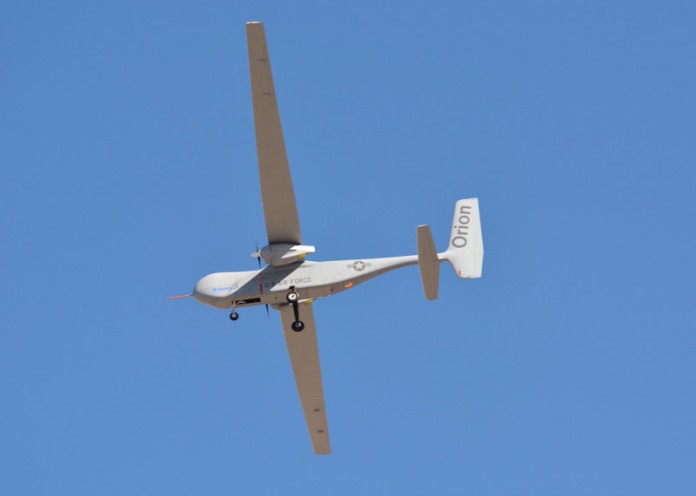
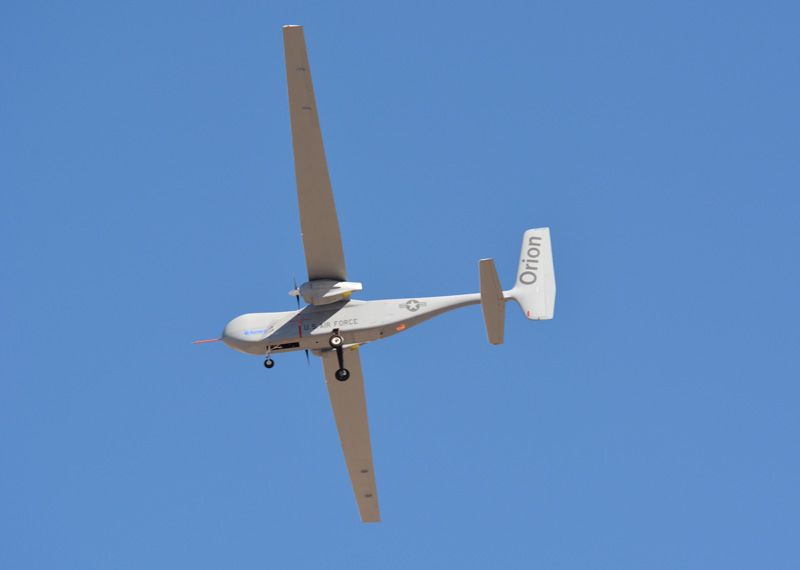
Orion seen on its record setting flight, December 8, 2014. Photo: Aurora Flight Sciences
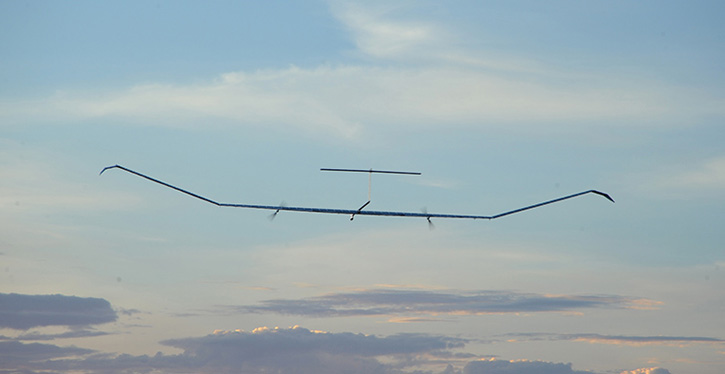
The world endurance record for UAVs was set in 2010 by QinetiQ with Zephyr 7. The program has since acquired by Airbus which has recently renewed testing, demonstrating the solar-powered drone’s ability to perform a complete day and night operational cycle at an altitude over 60,000 ft. Photo: Airbus
Aurora Flight Sciences announced that it has filed for an official world endurance record following an 80 hour flight by its Orion unmanned aircraft system (UAS). The previous official record of 30.5 hours was set in 2001 by the RQ-4 Global Hawk UAS. Observers from the National Aeronautic Association (NAA) were on hand to inspect the aircraft and witness the takeoff on Friday, December 5, 2014. They supervised the entire flight and witnessed the landing on Monday, December 8. The absolute endurance record for UAS is held by Qinetiq’s Zephyr 7 since 2010, for its flight from 9 July to 23 July 2010, lasting 336 hours and 22 minutes (2 weeks). Zephyr also demonstrated its high altitude cruising capability, reaching an altitude of 61,696 ft., while completing a full day / night cycle of operation over the UAE in September 2014. Airbus is intending to offer Zephyr for civilian, scientific, communications and surveillance applications.
The Orion, on the other hand, is designed primarily for military applications, providing users longer missions offering higher persistence and extended range of operation with heavier payloads. “The need for persistent surveillance in areas far from U.S. bases is a geo-political fact of life,” said Aurora CEO John Langford. “Orion can do this at operational costs significantly below any competing system. There are also important applications for this airplane in areas such as communications relay and Internet service provision.”
Orion is managed by the U.S. Air Force. The program began in 2007 when Aurora was competitively selected for the “Ultra Long Endurance” program sponsored by the Air Force Research Lab (AFRL). In 2009 Orion was selected as a Joint Capability Technology Demonstration (JCTD). Orion made its first flight on August 23, 2013. The record attempt was the 18th flight in the test effort.
The Orion UAS was designed by Aurora in Manassas, Virginia and was built by Aurora in Columbus, Mississippi. The mission was flown by four pilots: Peter Lehew, Cody Allee, Joel Walker and Dave Gerhardt. The flight was conducted at altitudes between 4,500 and 10,000 feet above Mean Sea Level. Orion landed with approximately 1,700 pounds of fuel remaining, with endurance being limited by range availability, enough for 37 more hours…
This record breaking flight was the 18th for the Orion, which has logged 158 flight hours, reaching altitudes up to 18,000 ft. Aurora plans to demonstrate the design 120 hour endurance later this year, performing the mission at 20,000 ft. carrying a 1,000 lb. payload.
Unlike the US Air Force Blue Devil 2 and Army Long Endurance Multi-Intelligence Vehicle surveillance airships that were canceled, the ultra long endurance drone built by Aurora under a joint-capability technology demonstration is still flying, although the system performed only 158 flight hours since its first flight in August 2013. Not much for a year and a half, as the 156 hours already include the 80 hour mission flown on the current record setting mission.
Despite the impressive performance of the system, the Air Force is not interested in buying more systems, Aviation Week reported. “Additional flight testing is planned and funded . . . [but] there is currently no plan for procurement of Orion,” says the Air Force, as there is “no formal requirement” for the aircraft. “An operational deployment is not within the current scope of the demonstrator test program.”
Orion seen on its record setting flight, It took off on December 5th and landed December 8, 2014, after flying an 80 hour mission supported by four pilots. Photo: Aurora Flight Sciences
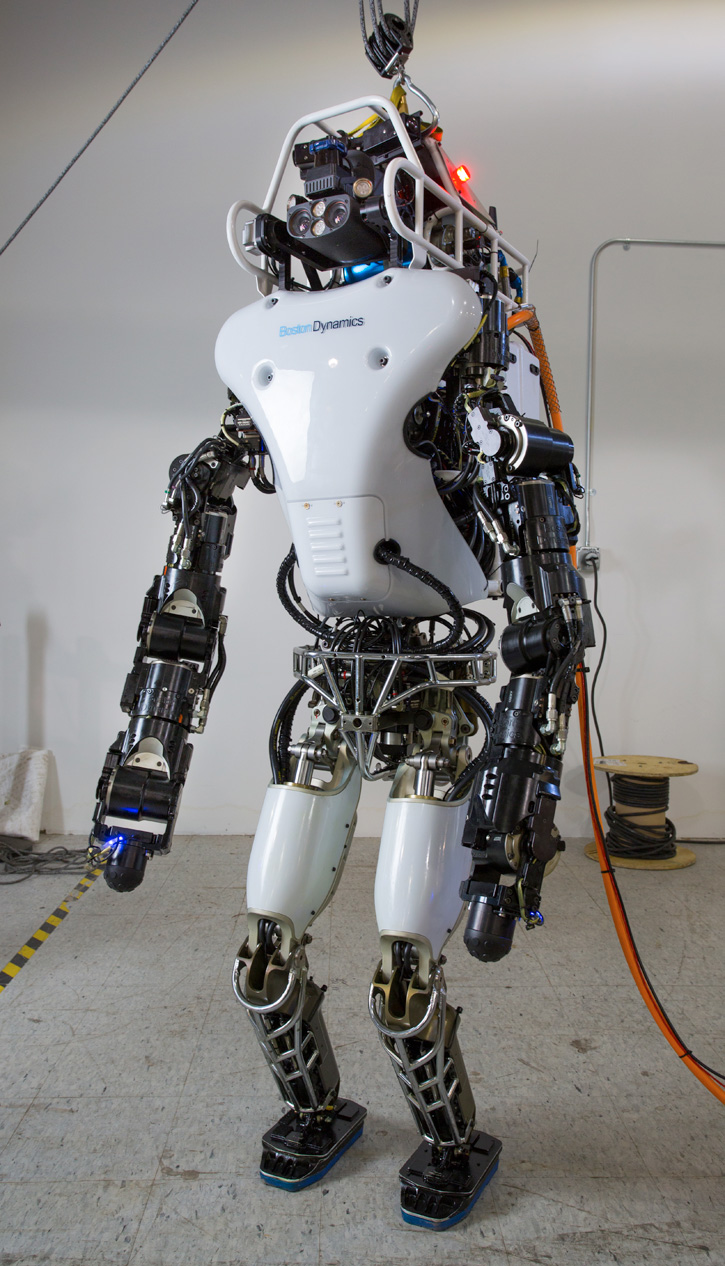
Teams are likely to keep their robots connected to fall arrestors during much of the remaining months of training as a safeguard against premature damage to the robot. DARPA demonstrated the new Atlas with a fall arrestor in place. “Risk mitigation is part of the game,” Pratt said. “It’s up to the teams to decide what chances they’re willing to take during training and risk falls and damage, but come the DRC Finals, the cords are cut.” Photo: DARPA
The Atlas humanoid robot will operate under wireless control for the first time at the final event of the DARPA Robotic Challenge (DRC), which will be held June 5-6, 2015 at Fairplex in Pomona, California. DARPA announced yesterday that robots performing at this final phase will have to operate completely free – without power cords, fall arrestors or wired communications tethers. DARPA informed teams they will have to communicate with their robots over a secure wireless network.
Being free doesn’t mean the mission will be easier. As the operating environment at the DRC is designed to mimic a disaster area, robots may encounter unexpected obstacles, debris and unstable surface as well as interference to wireless links. “DARPA will intentionally degrade communications between the robots and human operators working at a distance.” the communique said, “The idea is to replicate the conditions these robots would face going into a disaster zone. Spotty communication will force the robots to make some progress on their own during communications blackouts.”
Movement would also be susceptible to disruption and lack of fall arresting cable means robots may have to recover, without any external intervention. “Teams are not allowed any physical intervention with their robot after it begins a run.” DARPA said, “If a robot falls or gets stuck, it will have to recover and continue with the tasks without any hands-on assistance. If a robot cannot sustain and recover from a fall, its run will end.”
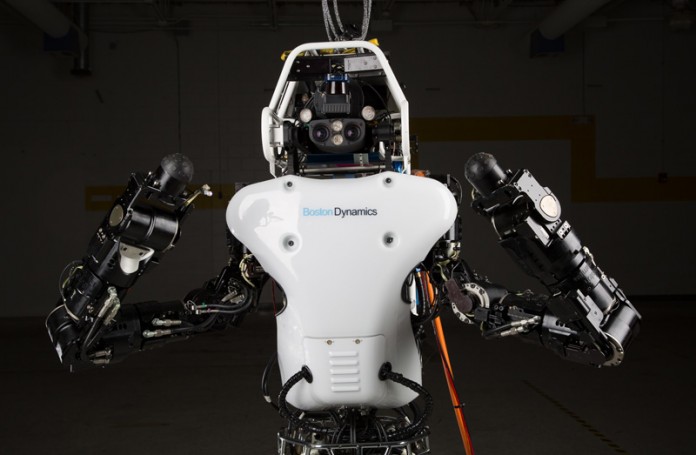
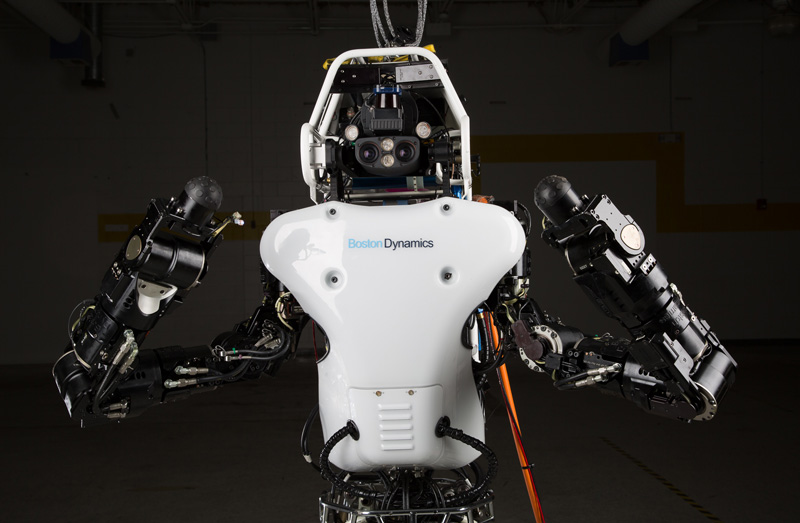
The teams using the DARPA-developed Atlas robot got their first look at the newly upgraded system during a technical shakeout the week of January 12th in Waltham, Mass. The upgraded Atlas is 75 percent new — only the lower legs and feet were carried over from the original design. Lighter materials allowed for inclusion of a battery and a new pump system with only a modest increase in overall weight; the upgraded robot is 6-foot-2 (1.88 meters) and weighs 345 pounds (156.5 kilograms).
Teams are likely to keep their robots connected to fall arrestors during much of the remaining months of training as a safeguard against premature damage to the robot. DARPA demonstrated the new Atlas with a fall arrestor in place. “Risk mitigation is part of the game,” Pratt said. “It’s up to the teams to decide what chances they’re willing to take during training and risk falls and damage, but come the DRC Finals, the cords are cut.”
The most significant changes are to the robot’s power supply and pump. Atlas will now carry an onboard 3.7-kilowatt-hour lithium-ion battery pack, with the potential for one hour of “mixed mission” operation that includes walking, standing, use of tools, and other movements. This will drive a new variable-pressure pump that allows for more efficient operation.
“The introduction of a battery and variable-pressure pump into Atlas poses a strategic challenge for teams,” said Gill Pratt, program manager for the DRC. “The operator will be able to run the robot on a mid-pressure setting for most operations to save power, and then apply bursts of maximum pressure when additional force is needed. The teams are going to have to game out the right balance of force and battery life to complete the course.”
The Atlas robot was redesigned with the goal of improving power efficiency to better support battery operation. Approximately 75 percent of the robot was rebuilt; only the lower legs and feet were carried over from the original design. Photo: DARPA
Other major upgrades to Atlas focused on increasing efficiency, dexterity, and resilience, and include:
Repositioned shoulders and arms allow for increased workspace in front of the robot and let the robot view its hands in motion, thus providing additional sensor feedback to the operator.
New electrically actuated lower arms will increase strength and dexterity and improve force sensing.
The addition of an extra degree of freedom in the wrist means the robot will be able to turn a door handle simply by rotating its wrist as opposed to moving its entire arm.
Three onboard perception computers are used for perception and task planning, and a wireless router in the head enables untethered communication.
Re-sized actuators in the hip, knee, and back give the robot greater strength.
A wireless emergency stop allows for safe operation.
As a result of the new pump, Atlas is much, much quieter than before!
Seven of the 11 teams competing in the DRC will be using the new ‘Atlas Unplugged’, The teams are scheduled to receive their upgraded robots by the end of this month (January 2015). The robots will be delivered with a “battery emulator,” a training tool temporarily mounted in the robot that simulates how the real battery will perform. This will allow them to switch modes between constant voltage for routine practice and metered voltage to simulate actual battery life.
Given their identical hardware, the Atlas teams will have to differentiate themselves through software, control interfaces, and competition strategy. Teams will have a few options on the selection of tasks they choose to attempt and the order they do them—and must manage time and battery life during their runs—but DARPA expects that the top-placing teams will complete all of the tasks.
“During periodic reviews with the DRC teams we’re already seeing them perform at a much higher level than they were last year. We’re excited to see how much further they can push the technology,” said Pratt. “As any team will tell you, we’re not making it easy. DARPA has been consulting with our international partners to decide on what steps we need to take to speed the development of disaster-response robots, and the DRC Finals will reflect those realities.”
The competing teams have been operating under extreme pressure since the 2013 DRC Trials, working to upgrade their robots and software for the more demanding DRC Finals. In June 2014, DARPA announced a series of additional hurdles that teams will face in the Finals.
A total of $3.5 million in prizes will now be awarded to the top three finishers in the DARPA Robotics Challenge (DRC), the final event of which will be held June 5-6, 2015, at Fairplex in Pomona, Calif. The new prize structure was created in recognition of both the significant progress already demonstrated by teams toward development of human-supervised robot technology for disaster response and the increased number of teams planning to compete in the Finals, including those funded by the European Union and the governments of Japan and South Korea. Aside from the previously announced $2 million grand prize, DARPA plans to award $1 million to the runner-up and $500,000 to the third-place team. DARPA expects at least twenty teams to compete in the DRC Finals.
New teams interested in competing in the DRC have until February 2, 2015, to register and submit qualification materials. DARPA will announce the roster of qualified teams in early March.
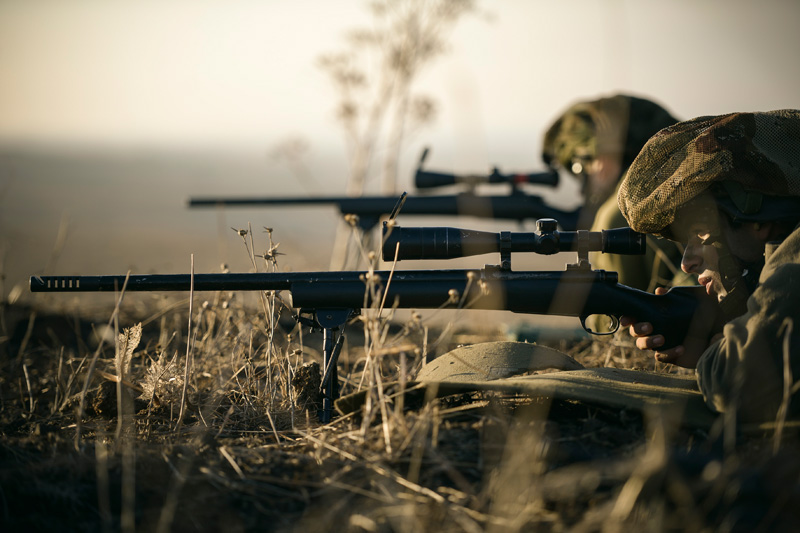
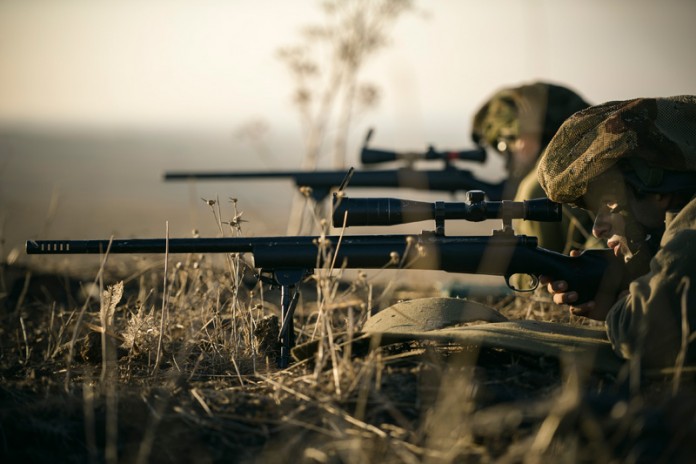
Using LAPUA .338" 250 Grain ammunition enables snipers to engage targets at ranges beyond 1,000 yards with a 7.62 type weapon, rather than 0.5" CAL.
IMI is introducing a broader ammunition range at Shot Show 2015 in Las Vegas. The company showcased the combat proven 9mm Di-Cut round, “Razor-Core” 5.56mm 77 Gr. and 7.62 mm 175 Gr. LR & .338” LAPUA 250 Gr. sniper ammo. “What is unique about our new, premium ammunition line is the combination of high accuracy and high stopping power.” explains Israel Shmilovitz, VP IMI & Managing Director Small Caliber Ammunition Division, “These two attributes ensure you hit your target, deliver maximum effect but also avoid collateral damage.”
IMI is the exclusive supplier of small caliber ammunition to Israel’s security agencies, law enforcement and to the Defense Forces (IDF). In recent years the US Army has purchased over 300,000,000 of IMI small caliber ammo. IMI was commended as a reliable, dependable ammunition supplier, meeting customer demand, delivering on time and meeting the highest standards.
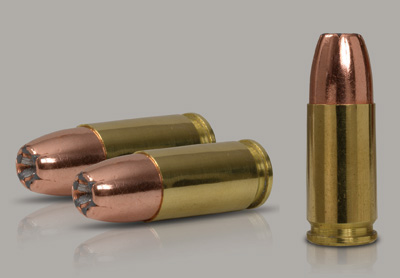
115 Grain Di-Cut rounds for 9mm from IMI. Photo: IMI
IMI is now expanding its US sales channels to Law Enforcement and commercial markets and adding new dealers to its nationwide distribution network.
One of the new ammunition types is the 9mm Di-Cut 115 Grain – a premium round designed for use for self defense and law enforcement in operational areas requiring high stopping power while avoiding collateral damage. Slits placed on the bullet’s ogive enhance this small caliber round, by creating controlled expansion inside the target, increasing impact and stopping power. Overall, 9mm Di-Cut 115 Grain cartridges have demonstrated superior performance even when tested against higher caliber Jacketed hollow-point (JHP) rounds.
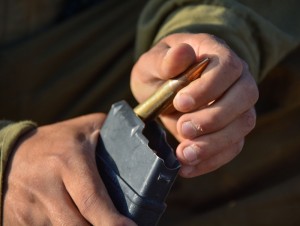
As seen in this image, taken during a live exercise of an elite unit in the Golan height, some of the IDF units are using open tip rounds such as this IMI .338 LAPUA, which improves accuracy of 7.62mm ammunition at long range. Photo: IDF
Another high performance round from IMI is the “Razor Core” 5.56mm 77 Grain offering twice the accuracy of standard NATO M855 5.56 rounds. The “Razor Core” also has significantly higher lethality when compared to standard ammunition, as it is designed to stop inside the target, thus increasing lethality and reducing the risk of collateral damage. It is designed for use at distances up to 550 Yard (500 m). “Razor Core“ has been qualified for military use and is operational and proven with special-forces units. IMI is also offering the following premium rounds designed for snipers.
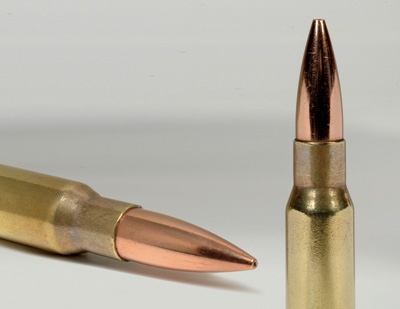
7.62 mm 175 Grain ‘Long Range match’ ammo for snipers – effective for shooting up to 880 Yards. Photo: IMI
The 7.62mm 175 Grain Long Range Match is designed for shooting at distances of up to 880 Yards (800 m). Proven for many years in operational use with Special Forces and SWAT teams, this premium round is also offered commercially for hunting and sports.
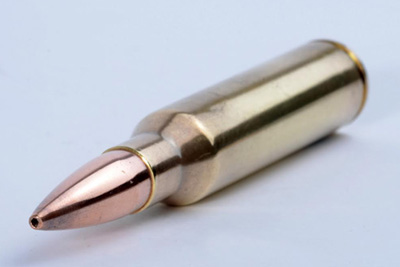
.338 LAPUA 250 gr. round. Photo: IMI
Completing the range is the .338” Lapua 250 Grain Long Range Tactical. This is yet another type of 7.62 round, extending sniper’s reach beyond 1,100 Yards (1,000 m). IMI’s .338” Lapua 250 Gr. is designed for extended range sniping, as an alternative to the 0.5” Caliber, providing both a lighter carry and more flexible platform for snipers. A fully loaded sniper weapon system firing IMI’s .338” Lapua 250 Grain rounds would weigh about a third of an equivalent weapon firing the 0.5” ammunition.
Using LAPUA .338″ 250 Grain ammunition enables snipers to engage targets at ranges beyond 1,000 yards with a 7.62 type weapon, rather than 0.5″ CAL.
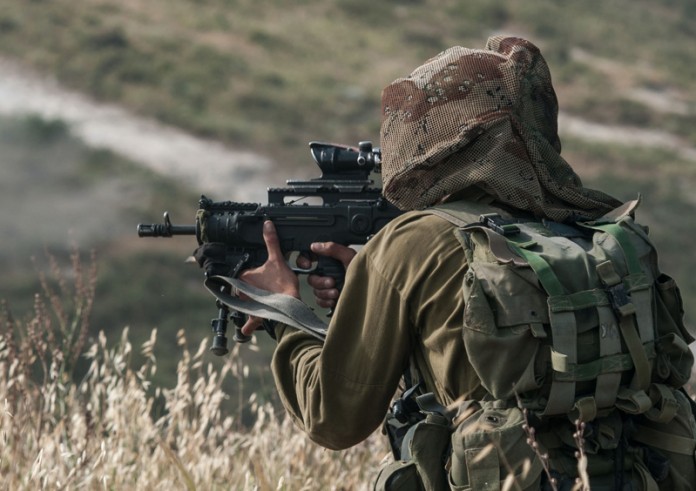
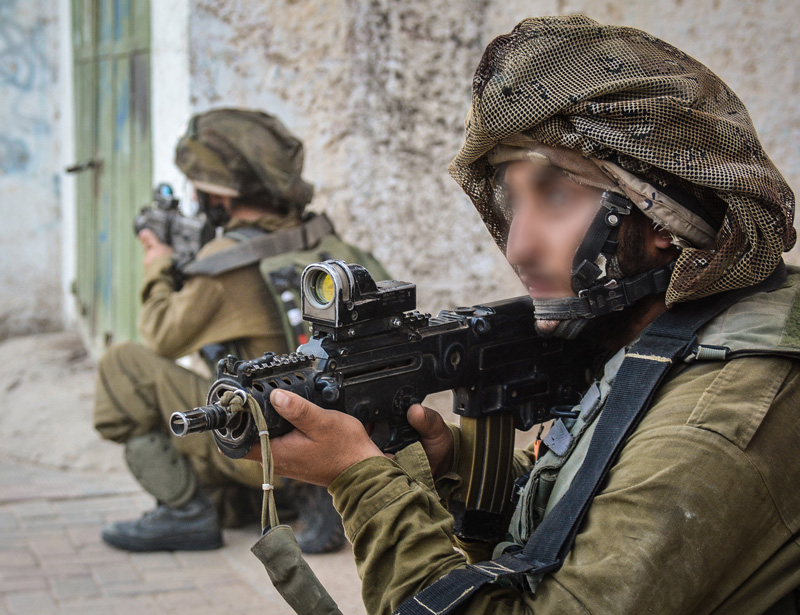
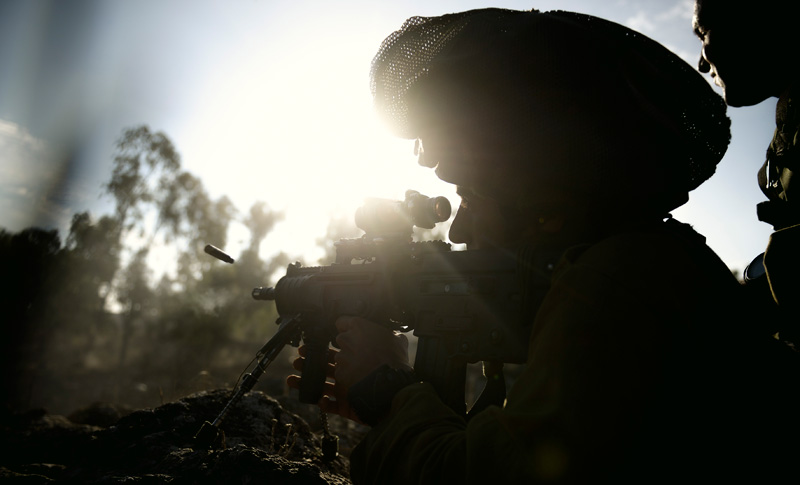
The Tavor family was developed in close cooperation with the Israel Defense Forces (IDF), based on lessons learned from actual combat. Tavor is the standard issue small caliber weapon for the IDF and Micro Tavor (also known as X-95) is a weapon of choice for elite infantry elite units. It is seen here with the Mepro 21 sight. Photo: IDF
In recent years IWI US has introduced the combat proven Tavor SAR in the US market, where the weapon has created much interest both in the law enforcement community and among weapon enthusiasts. By March 2014 the company announced it had shipped the 20,000th Tavor SAR sold in the US.
The company positions its Tavor SAR as the weapon of choice for use as close quarter patrol rifle, since this compact weapon allows officers to operate and easily control the rifle with one hand, if the officer is signaling, using additional tools or controlling his K-9.
Built on the 18” (457.2mm) barrel model, fitted with a non-removable 2” muzzle break, the weapon has an overall length (OAL) of 30” (762mm). Tavor SAR is built for .223”/5.56mm NATO ammunition and is supplied with a 10-round magazine.
The flattop weapon incorporates a full length MIL-STD Picatinny top rail, in addition to the standard short rail, mounted at a 45° angle opposite the charging handle. Backup Iron Sights (BUIS) are embedded and spring loaded in the top of the Picatinny rail, and the front post contains a Tritium insert on a standard AR thread, fully adjustable for windage and elevation.
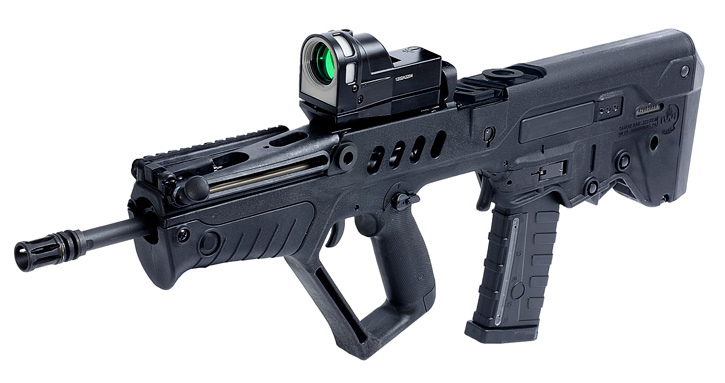
IWI offers a compact version with 16.5″ barrel and fitted with an integral MEPRO-21 reflex sight (standard issue for the IDF). Photo: IWI US
The Tavor family was developed in close cooperation with the Israel Defense Forces (IDF), based on lessons learned from actual combat. It has been proven in combat service by the IDF Infantry and Special Forces, as well as in other countries throughout the world.
The company also offers a compact version with 16.5″ barrel and fitted with an integral MEPRO-21 reflex sight (standard issue for the IDF). The standard caliber is 5.56 NATO (.223REM), with conversion kits available in 9mm Luger Parabellum and 5.45X39mm.
Adapting the weapon for the US market, IWI has introduced several changes. The body, offered in black or flat dark earth colors, is crafted from high-strength polymer. The weapon comes with removable 18” or 16.5” chrome-lined barrels with 1:7 twist.
To expand its US sales nationwide, IWI US introduced several ‘Restricted States’ models (RS) to meet local restrictions imposed by several states, including California, Maryland, New Jersey, and Massachusetts. For example, the weapon sold in California comes with 16.5” barrel, and 4” removable muzzle brake, while types sold in MD, MA and NJ use the standard 18” barrel with shorter, non removable, welded muzzle break. All versions support an AOL of 30”, and the standard 10 round magazines. They also do not have the bayonet lug available on standard models.
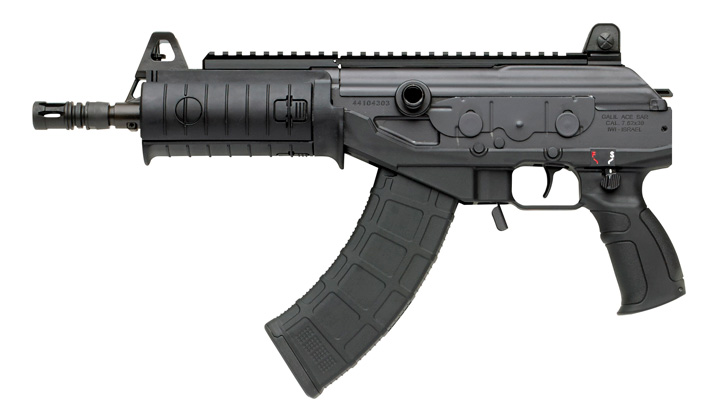
IWI Galil ACE pistol, available in the 7.62x39mm caliber with an 8.3” barrel at an overall length of 18″. Photo: IWI
ACE GALIL PISTOL
Another compact weapon offered by IWI in the USA is the Galil ACE pistol, available in 7.62x39mm caliber with an 8.3” barrel at an overall length of 18″. The weapon accepts standard AK-style magazines.
Galil ACE pistol has a two-piece Picatinny rail with adjustable front and rear sights, with Tritium post on the front site. The Tri-Rail forearm system features removable covers, including a protected pressure switch area.
A feature of the Galil ACE is the new location of the charging handle. It has been moved to the left side, enabling the user to maintain control over the pistol while charging and also allows for faster target reacquisition. The safety selector is available on either the right or the left sides.
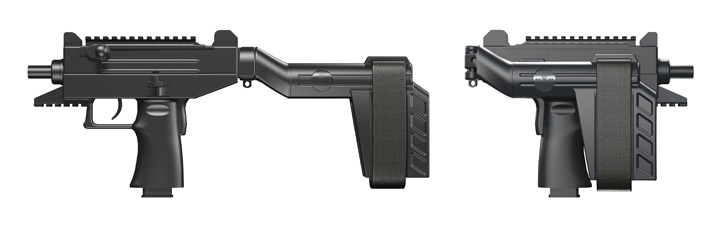
Utilizing customized assembly originally designed for large frame pistol control and stabilization, the Uzi Pro SB can be fired with or without the brace extended, depending on the shooters need. With the brace in the folded position, storage space required for the weapon is minimized. Photo: IWI US
UZI PRO PISTOL
At Shot Show 2015, IWI US is introducing the Uzi Pro Pistol SB – the latest evolution of the legendary UZI sub-machine gun developed by Uziel Gal in Israel in the early 1950s.
Two versions of the Uzi Pro Pistol will be available in the US – the basic pistol and Uzi Pro SB, fitted with a side-folding stabilizing brace. Utilizing customized assembly originally designed for large-frame pistol control and stabilization, the Uzi Pro SB can be fired with or without the brace extended, depending on the shooters need. With the brace in the folded position, storage space required for the weapon is minimized.
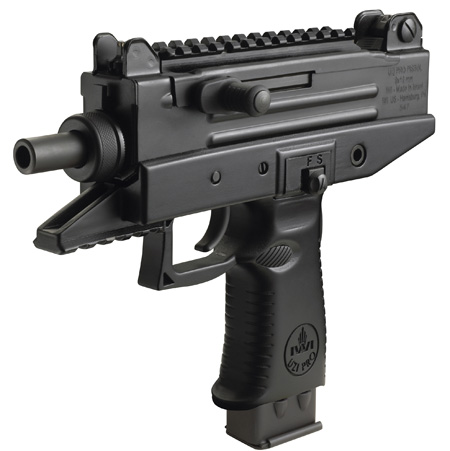
The new Uzi Pro and Uzi Pro SB feature three safety mechanisms: a conventional manual thumb safety, a firing pin block and a proven grip safety that must be fully depressed before the gun can be cocked and fired. Photo: IWI US.
The new Uzi Pro and Uzi Pro SB feature three safety mechanisms: a conventional, manual thumb safety, a firing pin block, and a proven grip safety that must be fully depressed before the gun can be cocked and fired.
This 9mm Luger Parabellum version available in the US market uses an advanced polymer pistol grip that reduces weight and incorporates an integrated magazine release button for fast and easy magazine changes. The cocking handle is located on the receiver side, allowing for a full-length Picatinny rail on the top receiver cover. A short Picatinny rail is also incorporated into the polymer body, mounted below the barrel, for additional accessory placement. Each Uzi Pro Pistol. comes with one 20-round and one 25-round magazine.
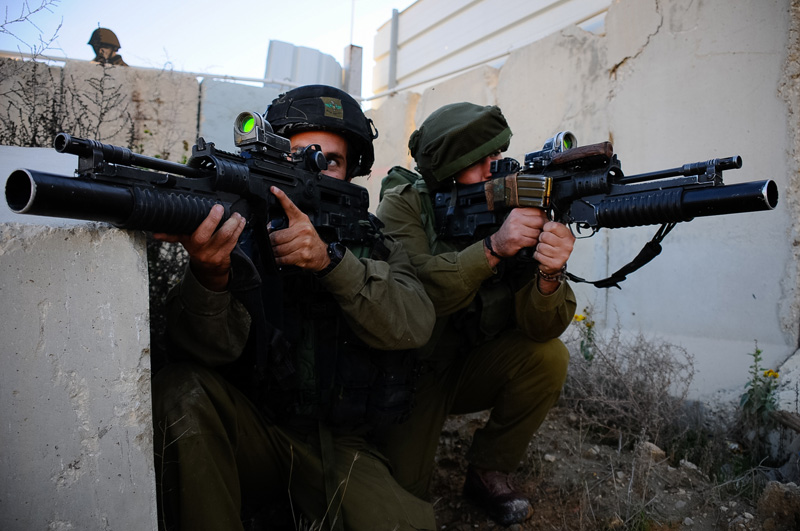
The Tavor Assault Rifle can be equipped with 40mm grenade launcher (GTAR-21). The weapon has an 18″ barrel, it is fitted with an underbarrel grenade launcher and associated sights (Mepro 21 and MOR). Various types of launchers can be used, including one developed by IWI. Photo: IDF
The Japan Ministry of Defense has selected the V-22 tilt rotor aircraft produced by Bell and Boeing, and E-2D Advanced Hawkeye and RQ-4 Global Hawk unmanned aircraft, both produced by Northrop Grumman to equip its armed forces as part of its ongoing military modernization. The official selection was madd in November 2014. Tokyo has already selected the Lockheed Martin F-35 5th Generation stealth fighter to become its future front line fighter jet.
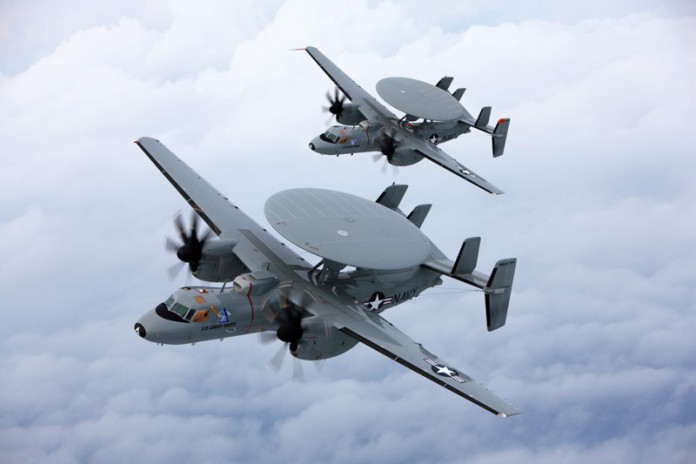
According to the Japanese multi-year defense plan, the four E-2D will replace the E-2Cs currently operational, providing aerial surveillance for the Japanese military. The Advanced Hawkeye was favoured over the Boeing 737 AEW&C proposed by Boeing.
The Global Hawk was preferred over a modified Predator B proposed by General Atomics under the designation ‘Guardian ER’. Up to three such drones will be operated by the Japanese Self defense Air Force as a strategic reconnaissance assets, flying high-altitude, long endurance (HALE) intelligence collection missions.
In addition, Japan also announced its interest in procuring the V-22 osprey tilt-rotor aircraft, Tokyo has a requirement for 17 such aircraft. The total number could double over the longer term. The V-22s will be operated by the Japanese Army, supporting amphibious and rapid reaction forces, along with 52 new amphibious assault vehicles Japan intends to field as part of its the $240 billion defense acquisition plan.
Type selection identifies the capabilities and systems to be purchased to meet specific defense requirements. Following selection, the U.S. government will be asked to enter into the foreign military sale (FMS) process for these items. Contract terms, timing and quantities of aircraft are yet to be determined and, as such, details are not available at this time.
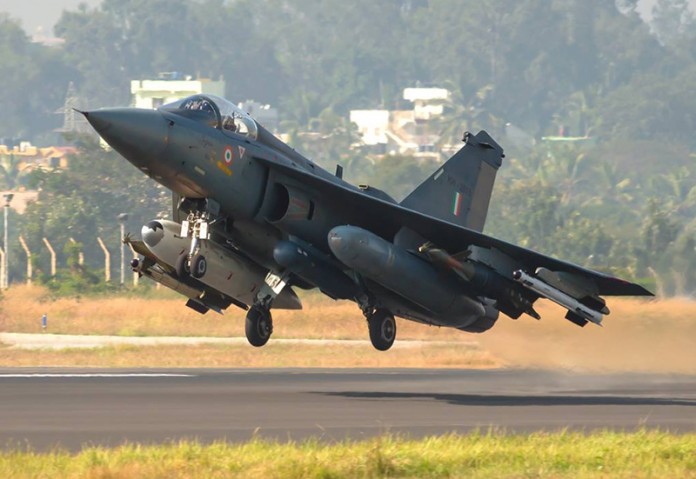
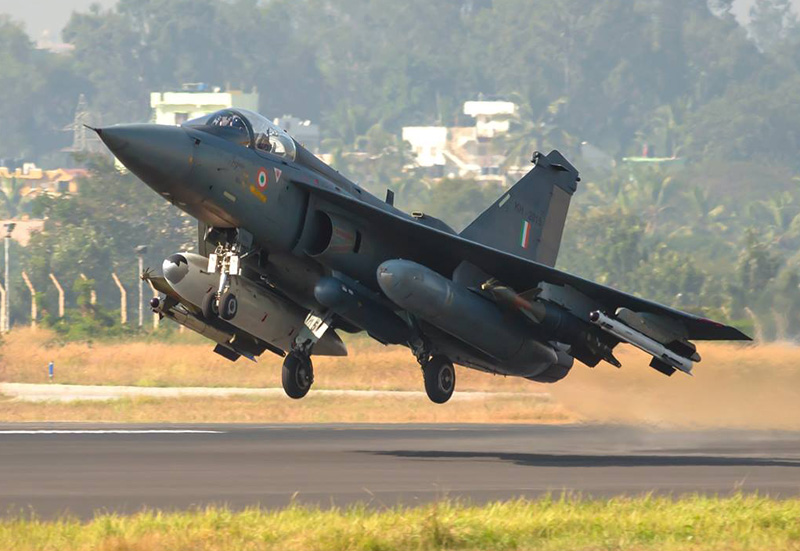
LCA LSP-5 (KH2015) that flew its first flight on – 19 November 2010 represented the IOC standard. The aircraft was fitted with all sensors, including night lighting in the cockpit, and an auto-pilot. Photo: ADA
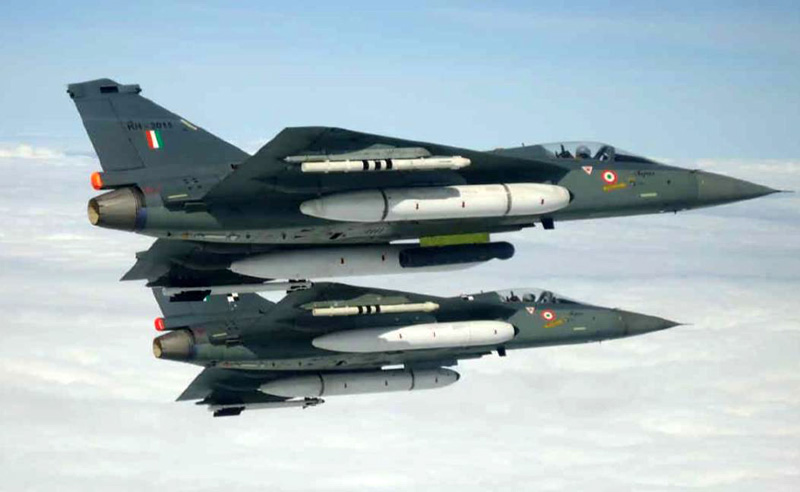
Two of the 15 pre-production Tejas jet fighters produced by HAL and used for test and evaluation. The LCA made its maiden flight on January 4, 2001. Photo: ADA
The Indian Air Force (IAF) today received the first indigenously built Light Combat Aircraft (LCA) designed by the Aeronautical Development Agency (ADA) and built by Hindustan Aeronautics (HAL). The LCA, also named ‘Tejas’, was handed over today by Defense Minister Manohar Parrikar to the Indian Air Force Chief Air Marshal, Arup Raha, in Bangalore. Parrikar congratulated all parties involved in the program for their achievement and called upon them to ‘think out of the box’ to meet the schedule and challenges by applying the right management tools. “Work culture should modify by adapting better technology and tools to achieve better results” Parrikar urged his audience.
LCA LSP-5 (KH2015) that flew its first flight on – 19 November 2010 represented the IOC standard. The aircraft was fitted with all sensors, including night lighting in the cockpit, and an auto-pilot. Photo: ADA
LCA-SP1, the first aircraft handed over to the air force, rolled off the HAL assembly line in September and, since then, has been inspected to Initial Operational Clearance II, attesting its airworthiness for operational missions. Previous Tejas fighters delivered to the IAF since 2011 have been used primarily for training, as they were qualified only under ‘IOC-I’ rating. Full operational clearance of the LCA is expected by the end of 2015.
Initially HAL will produce only six aircraft per year, the goal is to build 20 aircraft by 2018 to equip Bangalore based No. 45 Squadron (Flying Daggers) – the first IAF squadron to fly the Tejas. Production will slowly ramp up to 16 aircraft per year. Overall the IAF plans to deploy 10-14 squadrons, each equipped with 21 Tejas.
As part of the extensive testing, LCA performed, more than 2,800 sorties from different locations across India, from the highest, operational airfield at Leh in the Himalayah, testing cold, winter operations, to desert conditions tested in Jaisalmer, Jamnagar, Uttaralai Gwalior, Pathankot and Goa. The aircraft performed extensive weapon delivery testing, launching air/air missiles and dropping standard and guided bombs using laser designation provided by Litening pods.
32 Years of Development
Meeting deadlines has not been the strong side of the LCA program. Launched in 1983 to replace India’s Russian-made MiG-21 fighter jets, the LCA took 32 years to mature to this stage – an extremely long process, even by Indian standards. Most of the MiGs it was supposed to replace have already been phased out; about a hundred that still remain in service are to be retired by 2017. With the French Rafale contract signing nowhere in sight, and LCA gearing up slowly to deliver only a single squadron in two years, the IAF will have to deactivate 10 squadrons by 2017, against a force structure requirement of 42 squadrons originally planned.
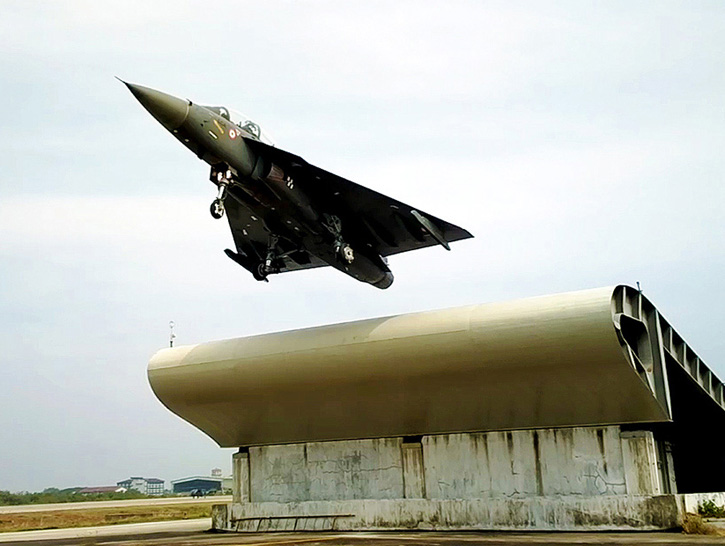
The navalized LCA made the first take off of from a land-based simulated ski jump carrier deck in December 2014. Photo: ADA
Development costs have been high – an amount equivalent to US$2.75 billion (17,000 crore) has been spent to date on the development and manufacturing of 15 prototype and pre-production aircraft. The IAF plans to operate 200 single-seat fighters and 20 twin-seat trainers, while the Indian Navy expects to field 40 naval variants of the aircraft, designed to operate from aircraft carriers equipped with ski-jump decks.
As production gears up, the Tejas is expected to begin to produce a return on investment – the unit cost of the aircraft is expected to be between $27 and $32 million (170-200 Crore), which is less than half the cost of an Indian-built Su-30MKI and significantly lower than other, fully equipped western alternatives, such as the Gripen and F-16. However, the Tejas will be more expensive than the less=equipped Chinese or Korean fighters, such as the JF-17 and F/A-50.
Subscribe to access the full version of this article
Among the causes for the lengthy development cycle was the Indian insistence on the local development of technology and manufacturing capabilities. As opposed to the Chinese developers which relied on spying and the reverse engineering of foreign designs, the Indian scientists and engineers did it all by themselves. As the program dragged along, and certain foreign technologies nevertheless still had to be used, the Indians obtained them with permission and through dialogue. They should be commended for their persistence and dedication in achieving their goals without the dubious Chinese methods.
Indian Made, but Not totally indigenous
Although India presents the LCA as an indigenous aircraft, even HAL admits it is not fully domestic, as its engine, some of the avionics, and some of the weapon systems are foreign. In fact, only 60 percent of the aircraft is ‘indigenous’. When the program began the intention was to make the LCA fully indigenous. This would have required Indian industry to master new production techniques and to develop an indigenous engine, as well as indigenous electronic, electro-optical and electro-mechanical systems, and software systems, including flight controls and mission management systems.
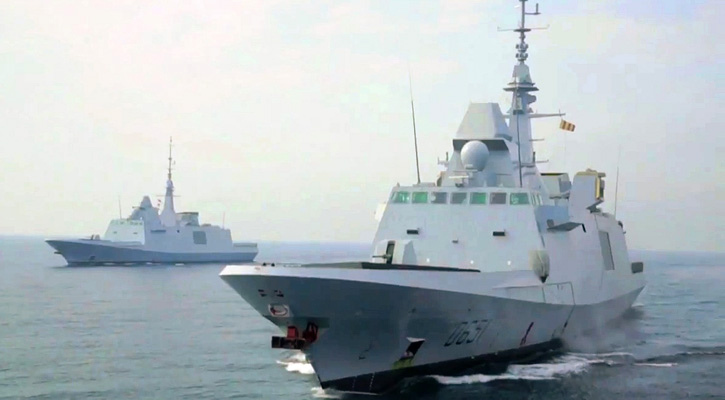
The French Navy is expected to operate eight Aquitaine class (FREMM) frigates. The first two – L’Aquitaine and Normandie are seen in this picture taken early 2014 in the Atlantic. Egypt considers buying two such frigates for 1.8 billion Euros as part of its naval modernization plan.
France and Egypt are ‘close to agreement’ on a large scale arms deal that could cost 5-6 billion Euros and include naval vessels and fighter aircraft, La Tribune reports.
The French proposal includes one or two FREMM multi-mission frigates worth 1.8 billion euros ($2.07 billion), to be built by DCNS, and 20 Rafale combat aircraft from Dassault, worth 3.6 billion euros ($4.15 billion). Both platforms will be armed with missile systems manufactured by MBDA. On February 12 the French President confirmed Egypt is about to order a single FREMM vessel along with 24 Rafale fighter jets.
The CEOs of these companies visited Cairo this week to promote the deal. This visit was the latest stage in the dialog between the two countries, which also included the visit of Egyptian President Abdel Fattah al-Sisi in Paris in November 2014, followed by a high level Egyptian delegation that discussed the deal for 10 days in December. A French delegation also travelled to Cairo last week, to discuss financial aspects of the project.
While Rafale has yet to strike its first export contract, FREMM, as a multi-national program has been more successful in this realm, providing vessels for three navies. If selected, Egypt would be the fourth FREMM operator after Italy, France and Morocco. Egypt intends to make the FREMM frigate the flagship of the Egyptian Navy and wants to acquire the two frigates as quickly as possible. In consequence, France is ready to deliver vessels currently on order for the French Navy, if the deal is signed soon. Egypt wants to have at least one ship for the planned inauguration ceremony of the expanded Suez Canal planned for 2015.
The Egyptian interest in the FREMM follows the acquisition of four Gowind 2500 corvettes for about one billion euros. The lead corvette will be delivered from France, while the remaining three will be built in Egypt.
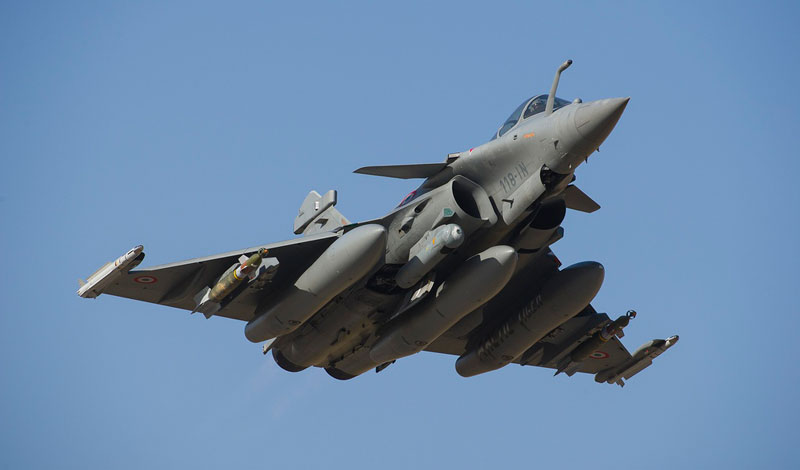
Dassault has delivered over 130 Rafale fighter jets to the French Air Force and Navy. Egypt considers buying 20 such aircraft for 3.6 billion Euros. Photo: French Air Force
The Rafale could be an alternative to Russian or Chinese aircraft the Egyptian Air Force needs to modernize its forces, which currently rely almost exclusively on the Lockheed Martin F-16 supplied by the USA. The latest acquisition of 20 F-16 Block 50/52 aircraft was approved in 2010, but was only partly delivered due a US embargo on weapons delivery to Egypt, which was imposed after the ‘Arab Spring’ of 2011, that lead to the fall of president Moubarak in 2011 and the military coup in 2013 that brought general Sisi to power. Although Washington has since approved the delivery of some of the embargoed weapons, Cairo has not been trusting Washington and is seeking reliable alternative sources.
Rafale seems to be a viable alternative, as Dassault is seeking orders to beef up its production line, which currently produces only one aircraft per month, stretching production of the remaining 43 aircraft ordered for the French Air Force and Navy until 2018, as the F3R upgrades will be introduced.
Update: The deal was officially confirmed on February 12 by French President Francois Hollande confirmed the conclusion of the first contract of sale of 24 Rafale fighter aircraft to Egypt, which will be signed on February 16, the Elysee Palace said in a statement Thursday.
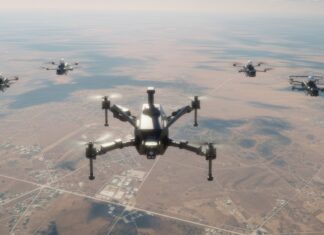
Lockheed Martin Skunk Works® and XTEND have achieved a major milestone in JADC2 by integrating the XOS operating system with the MDCX™ autonomy platform. This technical breakthrough enables a single operator to simultaneously command multiple drone classes, eliminating the friction of mission handoffs. From "marsupial" drone deployments to operating in GPS-denied environments, explore how this collaboration is abbreviating the data-to-decision timeline and redefining autonomous mission execution.
As traditional defense primes face mounting competition from agile “neoprimes” such as Anduril, Palantir and Helsing, the balance of innovation is shifting toward software-defined warfare and scalable, dual-use technologies, while global industry consolidation—marked by Boeing’s integration of Spirit AeroSystems and other strategic mergers—signals an intensified race to secure control over the defense technology value chain. Our Defense-Tech weekly report highlights these trends.
In early October 2025, a coordinated wave of unmanned aerial system (UAS) incursions—widely attributed to Russia—targeted critical infrastructure across at least ten European nations. The unprecedented campaign exposed the fragility of Europe’s air defenses...
Executive Summary
The past week (September 18-25, 2025) represents an inflection point where strategic defense concepts have transitioned from doctrine to tangible reality. An analysis of global events reveals four primary, interconnected trends shaping an...
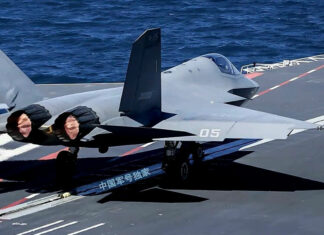
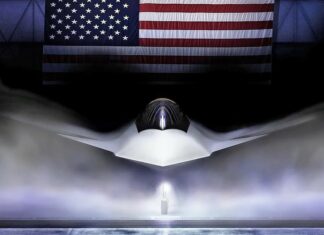
At the 2025 Air, Space & Cyber Conference, U.S. Air Force and Space Force leaders unveiled major updates on next-generation fighters, bombers, unmanned systems, and space initiatives, highlighting both rapid innovation and critical readiness challenges as the services race to outpace global competitors. A short version is available here, with a more detailed version for subscribers.
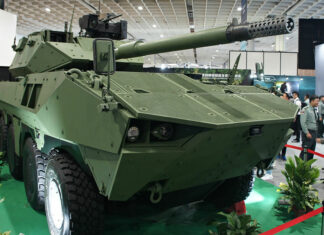
The Taipei Aerospace & Defense Technology Exhibition (TADTE) 2025 crystallized around four dominant strategic themes that collectively illustrate Taiwan's comprehensive approach to defense modernization amid escalating regional tensions. Based on a detailed report by Pleronix (available upon request). Includes a Podcast discussion on TADTE 2025's highlighting Taiwan's four strategic themes beyond the post's coverage.
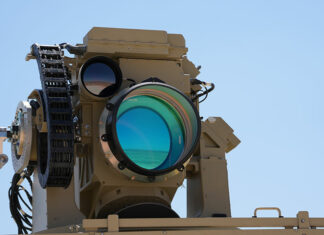
Israel’s Iron Beam 450 high-power laser system has completed final testing, marking a major leap in air defense. Developed by Rafael, it offers precise, cost-effective interception of rockets, UAVs, and mortars, and is set for IDF deployment by 2025.




 IMI is introducing a broader ammunition range at Shot Show 2015 in Las Vegas. The company showcased the combat proven 9mm Di-Cut round, “Razor-Core” 5.56mm 77 Gr. and 7.62 mm 175 Gr. LR & .338” LAPUA 250 Gr. sniper ammo. “What is unique about our new, premium ammunition line is the combination of high accuracy and high stopping power.” explains Israel Shmilovitz, VP IMI & Managing Director Small Caliber Ammunition Division, “These two attributes ensure you hit your target, deliver maximum effect but also avoid collateral damage.”