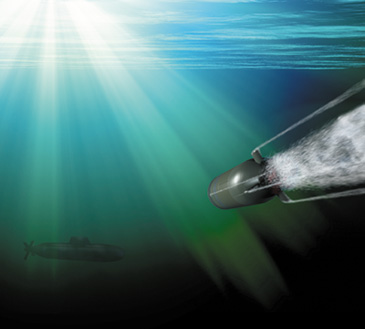
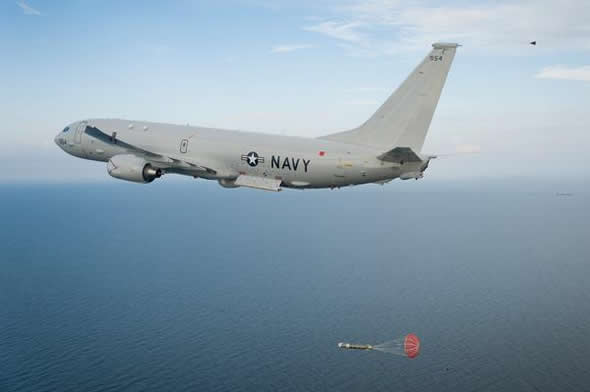
The Australian Navy plans to order up to 100 MK 54 lightweight torpedoes to equip is new MH-60R Seahawk helicopters and the P-8A Poseidon Increment 2 Maritime Patrol and Response aircraft. The $83 million planned order reported yesterday by the US Defense Security Cooperation Agency (DSCA) amounts 100 MK 54 torpedoes, 13 exercise rounds and recoverable exercise torpedoes. Australian navy is already using the Mk 54 torpedo on other platforms.
Boeing P-8A Poseidon T3 performs the first Mk54 Torpedo separation test (US Navy photo)
A vehicle crew of Iraqi army soldiers trains with the first M113 APCs delivered by the US Army in 2011, at Kirkush Military Training Base, Iraq, April 27. Photo: US Army
The Iraqi Army is receiving 1,026 M113A2 armored personnel carriers (APC) from the U.S. Army’s surplus, the delivery will be made through the Pentagon’s Foreign Military Sales program, after the vehicles are refurbished by an Army Materiel Command through a public-private partnership. The APCs will equip part of the six armored divisions the US is helping to build with the Iraqi Army. The initial package that included 586 vehicles was announced in 2010 and followed by a second batch of 440 vehicles. The contract was awarded to BAE Systems, with Anniston Army Depot, Ala. (ANAD), assisting with part of the refurbishment work.
“The M113 is also just a great vehicle and offers a lot of versatility. Obtaining these through [Excess Defense Articles] also made this an affordable option for the Iraqis,” said Col. Sammy Hargrove U.S. Army Security Assistance Command’s, or USASAC’s, CENTCOM regional operations director, who also served as the Army team chief and USASAC liaison officer for the Iraq-Security Assistance Mission prior to his current position.
The work on the M113s began in February 2011 and was conducted in partnership with defense contractor BAE systems, which provided supply chain management. Refurbishment also included repairs to the vehicle’s powerpacks and engines that were not included in the original plan. Overall, ANAD worked 43,084.4 core hours on the vehicles, and with the additional work from BAE, the total contract cost for all 1,026 vehicles was $51 million.
“This was a win-win situation for both the Iraqis and the U.S. because in the Iraqi’s case, they went from a non-existent armored capability in 2010, to plans for six divisions,” explained Hargrove, “For the U.S., we divested ourselves of 1,026 M113s, most of which were incurring storage costs at Sierra Army Depot (Calif.) for close to 20 years. Demilitarizing that many vehicles can be cost-prohibitive. Using the [Foreign Military Sales] process ultimately saves the U.S. money.” The estimated U.S. cost avoidance for the storage and demilitarization of the 1,026 M113s is $31 million. Another advantage of using Foreign Military Sales, or FMS, as an Excess Defense Articles, known as EDA, divestiture tool is the opportunity for the organic industrial base to provide its services for refurbishment, modernization and/or repair and return to the customer country.
Harris Corporation will supply the Polish Ministry of National Defense new radio sets under an order worth US$61 million. Poland is acquiring Harris Falcon III AN/PRC-117G manpack and AN/PRC-152A handheld radios for the next phase of its tactical radio modernization. These radios will provide Poland’s armed forces with secure wideband combat net radio, tactical satellite and ground-to-air communications. Both radios are equipped with the Harris Adaptive Networking Wideband Waveform (ANW2), which enables military forces to leverage advanced battle management applications such as collaborative chat, streaming video and intelligence collection. “Our Falcon III radios will enable Polish military personnel to communicate seamlessly with U.S. and NATO forces during joint warfighting missions,”’ said Brendan O’Connell, president, international business, Harris RF Communications. According to O’connell, more than 40,000 of these radios are currently in use by all branches of the U.S. Department of Defense and 15 allied nations.
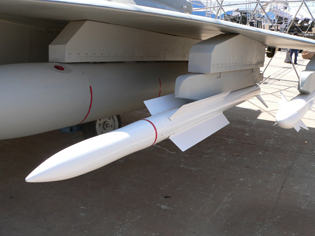
India’s first air-to-air Astra missile is finally back on track now after an excruciatingly long delay due to technical glitches. The beyond visual range (BVR) missile, with an eventual strike range of over 100km, will be fired for the first time from a Sukhoi-30MKI fighter this year. The Times of India reports.
Astra will have a Mark-I version with a 44-km range, which will be followed by the over 100km Mark-II version. “Astra will be a state-of-the-art missile that will first be fitted on Sukhoi-30MKIs and then Tejas Light Combat Aircraft, followed by others. We are pretty confident it will happen soon,” said DRDO chief Avinash Chander candidly. “The missile was repeatedly failing since the aerodynamically controlled interactions were very severe.” Chander admitted. “Finally, we changed the entire missile configuration. It has now undergone three successful ground trials. It then underwent captive flight trials in a Sukhoi-30MKI this April. We are over the hump now. We hope to actually fire it from a Sukhoi-30MKI by year-end,” said Chander.
With these “developmental flight trials” slated to soon kick off, which will involve a battery of tests covering the entire flight envelope, the aim is to make Astra ready for induction by mid-2015 “if there are no further surprises”, added the DRDO chief.
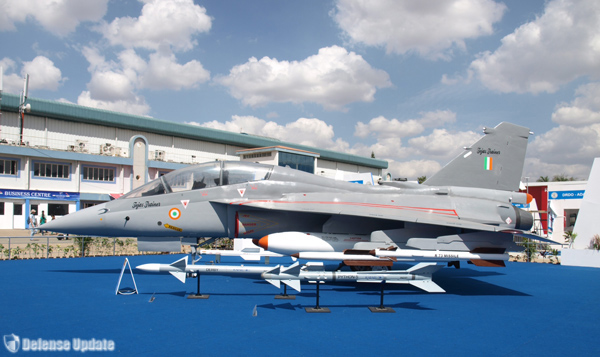
At the Aero-India 2013 exhibition the Tejas LCA was shown with models of the Astra and AA8 missiles underwing. It was also displayed with the Israeli Derby and Python 5 missiles for the first time. Tamir Eshel, Defense-Update
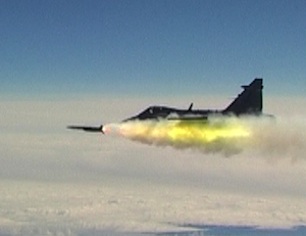
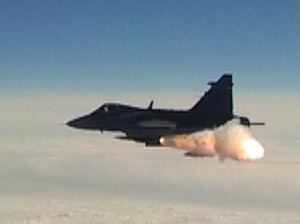
A Gripen test aircraft has completed a recent firing test of the MBDA Meteor Beyond Visual Range Air-to-Air Missile (BVRAAM) missile. The test was performed in cooperation with the Swedish Defence Materiel Administration (FMV) and the Saab Company. This was the first test firing of a production version of the Meteor radar-controlled air-to-air missile, which has been developed for Gripen, Eurofighter and Rafale.
The test occurred at the end of June, with two Meteor missiles fired from the Gripen at a remote-controlled target. The test firing demonstrated separation from the aircraft and the link function between the aircraft and missile, as well as the missile’s ability to lock in on the target. The target was engaged, however the missile was destroyed just before impact, in order to save the target. The test firing was also used to verify the command support that has been developed for the pilot.
Meteor uses a throttleable ducted rocket maintaining a cruising speed over Mach 4 and engagement range beyond 60 nm (100km).
Meteor is one of the first ‘network-enabled’ air/air missiles, equipped with a datalink that allows the launch aircraft to provide mid-course target updates or retargeting if required, including the transfer of data from off-board third-parties (such as a wingman or AWACS). Two versions of datalinks are developed for the Meteor – a one-way datalink supporting the rafale. A two-way datalink supporting the Typhoon and Gripen will be able to midcourse data to the missile and transmit missile information back to the launching platform, including functional and kinematic status, information on multiple targets, and notification of target acquisition by the seeker.
“Testing has been completed as planned and we’ve now taken yet another important step in work with integration and development of Gripen C/D,” says Michael Östergren, FMV’s project manager for the Meteor. “I’m impressed with the results that we’ve jointly accomplished and it instills considerable confidence in continued work with integrating the Meteor on Gripen.”
The Meteor is a BVRAAM (Beyond Visual Range Air-to-Air Missile) developed to enable engagement of airborne targets at long distances. The missile is the result of a European collaborative project involving Sweden, France, Italy, Spain, Germany and Great Britain. Great Britain has responsibility for contracts and work is led by UK’s defence procurement and support organisation – Defence Equipment and Support (DE&S).
“Once again it’s clear that Gripen is the leading combat fighter system with great opportunities for fast and cost-efficient continuous integration of new capabilities, such as weapons and sensors, thanks to our efficient way of working and Gripen’s innovative design. Gripen with the Saab PS05 radar and the Meteor missile represent the absolute best in the world when in comes to air defense,” says Lennart Sindahl, Head of Saab’s business area Aeronautics.
The test team included representatives from Saab, FMV and British MBDA. During the autumn, additional tests will be conducted so that delivery of the new capabilities can be made during 2014.
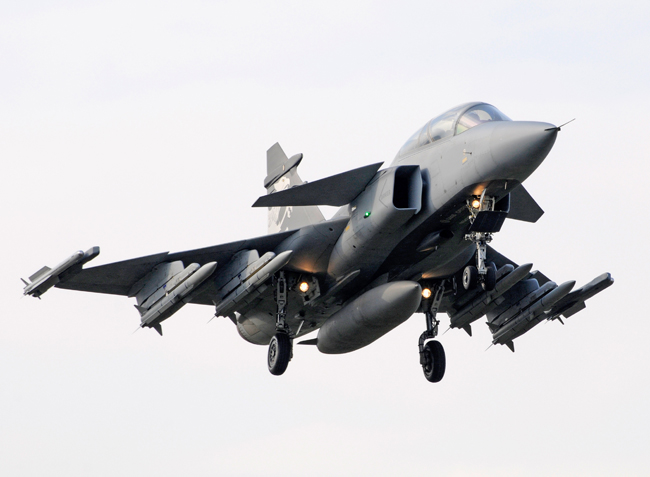
A Gripen fires the production version of the MBDA Meteor air/air missile. Photo via SAABThis Gripen NG demonstrator landing at Switzerland for the 2012 demonstration came in an air-dominance configuration, comprising four dummy missiles of the Meteor AAM and two IRIS-T heat-seeking AAMs at the wingtips. Photo: SAAB
ILS Proton Breeze M is a heavy launch vehicle based on a former Russian “super ICBM” designed to carry a 100-megaton nuclear warhead over a distance of 13,000 km
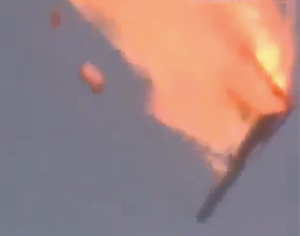
A launch of three Russian Glonass navigation satellites failed today as the Proton M rocket failed immediately after liftoff, tumbled, veered off its trajectory, caught fire in midair and crashed near the launch pad at the Baikonur cosmodrome in Kazakhstan. It seems that the first-stage engine was the cause for the accident. The launcher carried three Glonass M navigation satellites for the Russian Government. The satellites were riding on a Block DM upper stage. Those satellites were aimed to augment the Russian satellite based navigation system. A typical Proton Breeze M, provided by ILS, is a three-stage rocket with restartable upper stage, capable of lifting six tons of payload to geosynchronous transfer orbit. The launcher’s length is 58.2 m (191 ft) and its gross launch weight is 705 tons (1.554 million pounds).
An official message released by the Russian Space Agency following the disastrous crash said “a rocket carrier fell to the ground and exploded on the territory of the cosmodrome,” the space agency said in a statement, adding that the rocket fell on the territory of the Baikonur cosmodrome which Russia leases from ex-Soviet Kazakhstan. The agency said that during the accident, which took place 10-15 seconds after takeoff, toxic rocket fuel was released into the air but Kazakh officials said the fumes that may present a danger to the local population. The Propellants include Nitrogen Tetroxide (N2O4) and Unsymmetrical DiMethyl Hydrazine (UDMH). According to the head of the Kazakh space agency, Talgat Musabayev, the rocket carried 600 tonnes of kerosene, heptyl and amyl which are highly poisonous components of rocket fuel.
This accident brought to memory a rocket explosion at the Baikonur cosmodrome that occured in 1960, when the R-16 prototype rocket exploded on the launch pad, and released the highly poisonous rocket fuel known as the “devil’s venom.” 126 people were burned alive or vaporised altogether by the inferno, while others died of noxious fumes or succumbed to burns later. In recent years the Russian space program has suffered major setbacks, notably losing expensive satellites and an unmanned supply ship sent to the International Space Station.
The same Proton Breeze M launcher type recorded more failures in less than two years, which were attributed to various causes, a trend that has raised questions about the technical capability and workmanship of this satellite launcher.
Since the introduction of the Proton launcher 387 launches were recorded, 81 of them under ILS supporting commercial customers. ILS has maintained a healthy backlog which now equates to approx. 1.5 billion dollars for 15 missions. Over the past 6 years, Proton has launched an average of 10 times per year. Prior to the recent failure, three more missions were planned for July, August and the fourth quarter of 2013.
While ILS claims its rockets carry about a third of the global commercial payloads the program has also recorded major failures in recent years. In 2007, a Proton-M rocket carrying a Japanese communication satellite did not reach its orbit and crashed. On August 2011, a similar launcher failed to deliver a communications satellite into orbit and a year later, on August 6, 2012, a Protom M carrying two satellites again failed to reach orbit; A similar problem repeated four months later, December 9, 2012 as a Proton-Breeze M third stage failed to insert a payload into orbit.
Following these failures, a wide-spread review of the entire Breeze M upper stage was launched, and is expected to be completed by early to mid- 2014. “The purpose of this reliability study is to identify any weaknesses in the Breeze M design, manufacture and testing with the goal of increasing the demonstrated actual reliability to the calculated theoretical reliability” an ILS communique said during the recent Paris Airshow. Russian aerospace experts from qualified organizations are working with Khrunichev State Research and Production Space Center (KhSC) experts to analyze the various Breeze M systems, such as propulsion, avionics, telemetry and guidance. “We are paying particular attention to issues of quality control and this is not something of a singular effort, it is an ongoing program. All products have to come with the level of quality which is required to accomplish mission success,” Alexander Seliverstov, director general of KhSC said.
KhSC has also expanded purchasing and installation of new automated equipment and tooling that will ensure consistency and lower the chance of technician error in the production, assembly and test of Proton Breeze M. “In order to ensure that the operators and technicians assembling, testing and processing the Proton Breeze M are maintaining the highest level of training and certification, KhSC is establishing more stringent and frequent re-training and re-certification programs.” company officials said. Since Proton’s return to flight in March, ILS has had four consecutive successful launches over a four month period.
Raytheon Company was awarded a contract with the U.S. Naval Air Systems Command (NAVAIR) to build an integrated multi-intelligence (Multi-INT) system to safeguard forward deployed forces. The Persistent Surveillance System Cross Domain Solution (PSS CDS) gives warfighters an advantage by providing a complete picture of impending threats, from both classified and unclassified sources. Last year the Navy and Army have tested a version of the PSS CDS system integrated with precision guided weapons, demonstrating how actionable intelligence gathered by the system can be employed to eliminate potential threats. Griffin missiles are employed by the US Special Forces community, on AC-130 gunships among other platforms.
PSS CDS, a software package small enough to mount onboard an aircraft, transfers sensor data, high-definition surveillance video, and traditional and non-traditional ISR imagery, as well as situational awareness data, to give warfighters a complete picture of impending local threats, including suspected improvised explosive devices identifications or group of insurgents identified on the vicinity. Additionally, the system protects U.S. forces by gathering intelligence from hundreds of miles away using sensors on aerostats, towers and unmanned aerial vehicles, allowing warfighters to make confident and informed decisions in real-time.
“The PSS CDS is a proven solution and one that offers protection to our warfighters in hostile, remote environments by granting them real-time access to secure, multi-domain intelligence, surveillance and reconnaissance data,” said Mark Kipphut, Tactical Intelligence Systems director for Raytheon’s Intelligence, Information and Services business. “What makes this system unique is its game-changing capability to quickly share data between classified and unclassified environments.” The contract was awarded in Raytheon’s second quarter of 2013.
In August 2012, NAVAIR and the U.S. Army Aviation and Missile Research Development and Engineering Center (AMRDEC)’s Precision Fires Management (PFM) program completed a test of Raytheon’s PSS CDS, which culminated with the the successful live fire of two Raytheon Griffin missiles.
While the South Korean F-X Phase 3 program is out for grabs for about two weeks, Boeing, Lockheed Martin and EADS are not rushing to take this opportunity at the lowest cost. According to Seoul’s news agency Yonhap, Seoul has extended bidding on the $7.3 billion fighter jet project after a second round of bidding ended Friday 28th 2013 with all three bidders offerings coming above the estimated cost. “The bidding ended, and an additional bidding will resume on July 2,” said Baek Yoon-hyeong, spokesman for the defence acquisition agency (DAPA) quoter by Reuters.
Seoul opened the bidding two weeks ago, for a requirement for 60 fighter aircraft to be delivered over a period of four years beginning in 2017. Although the agency has conducted 30 bidding sessions, all offerors submitted proposals over the target budget. Three competitors are running for this opportunity – Lockheed Martin Corporation offering the F-35A, Boeing offering the stealthy variant of the Slam Eagle dubbed F-15SE and EADS’ offering Eurofighter Typhoon.
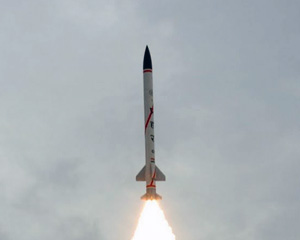
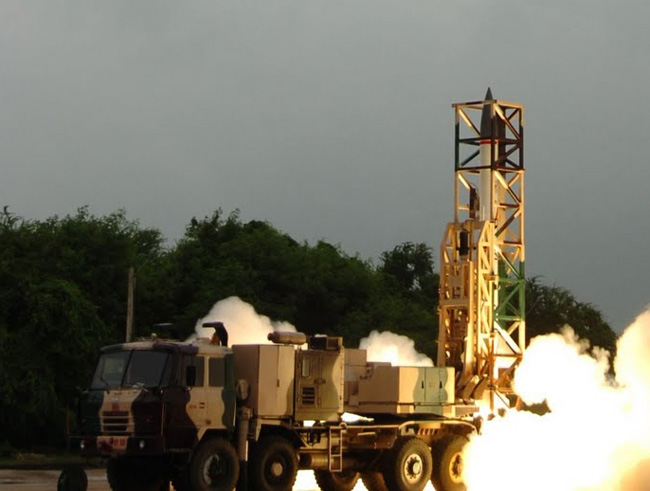
Prahar missile on its maiden test flight. Photo: DRDO
India plans to withdraw the Prithvi I tactical ballistic missile from active service, replacing it with the more advanced, solid-propelled Prahar. According to the Indian Defense Research and Development Organization (DRDO) chief Avinash Chander, “We are withdrawing the tactical 150 km-range Prithvi missiles and will replace them with the Prahar missiles, which are more capable and have more accuracy.” According to Chander, the Prithvi I missiles withdrawn from service would be upgraded to be used for longer ranges, he said. Defense-Update reports. Prithvi I (also known as SS150) was the first tactical ballistic missile inducted into service by the Indian military.
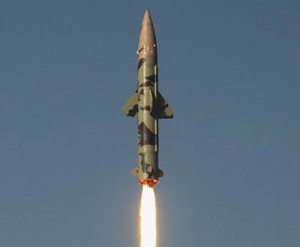
The Prithvi missile was developed by India under its Integrated Missile Development Programme in the 1980s. The Prithvi I was inducted into Army service in 1994 and a longer-range version, Prithvi II was inducted with the Indian Army and Air Force in 2004.
Prithvi 2 missile launched
The Prahar tactical ballistic missile was first test launched in 2011. It was developed to provide quick reaction, all-weather battlefield support and counter-strike option for theater ground forces. The missile is designed to extend the range of the Indian Army artillery corps to 150km, beyond the 90km range currently covered by the Pinaka and Smerch 300mm rocket system. Prahar maintains the same range of the India Army’s Prithvi I (150km) but does that at a much smaller footprint and with attributes better suited for tactical deployment. The 7.3 meter long Prahar is much smaller (42 cm in diameter) compared to Prithvi (9 meter long, 110cm diameter), as the total weight of the whole missile (1,280 kg) is almost as heavy as the Prithvi’s warhead alone (1,000 kg).
In addition, it offers ‘quick rection’, and rapid salvo firing, as its propulsion system uses solid propulsion rather than the Prhitvi’s liquid propellant system. The Indian Air Force uses a different version – Prithvi II – carrying a smaller warhead, with a strike distance of 350km.
Prahar was test-fired successfully on 21 July 2011 from the Integrated Test Range (ITR) at Chandipur. During the test Prahar travelled a distance of 150 km in about 250 seconds meeting all launch objectives and striking pre-designated target in the Bay of Bengal with a high degree of accuracy of less than 10 meters.
The warheads employed by the two missiles also differ significantly – Prithvi carries a classic 1,000 kg warhead and is designed primarily for nuclear attack while Prahar carries either a conventional or tactical nuclear payload, of a weight of 200kg. The feasibility of the use of conventional warhead is derived by the higher accuracy of the Prahar navigation system and the ability to carry six missiles on each Transporter, Erector Launcher (TEL) vehicle.
DRDO developed the Prahar missile over a period of two years, between 2009 and 2011. The missile and its systems will be built by Bharat Dynamics Ltd., (BDL), India’s largest missile producer. The missile fills the short-range tactical battlefield missile role as required by the Indian Army and the Indian Air Force, to take out strategic and tactical targets. The mobile launch platform will carry six missiles. Launch preparation takes 2-3 minutes, without any preparation, providing significantly better reaction time and higher survivability for the all-terrain missile carrying.
Prahar will be deployed on an 8×8 all-terrain transporter-erector-launcher vehicle carrying six missiles in sealled canisters, ready for launch. Photo: DRDO
RSA, introduced the next generation of its Silver Tail web threat detection solution, with the ability to quickly separate the activities of friend from foe, and enabling security and fraud teams to investigate and mitigate web session and mobile applications threats in real time. I-HLS reports.
RSA STS technology
Designed to ensure that organizations have the tools to identify more threats faster and to investigate them much more efficiently, the Silver Tail solution adds new one-click incident management capabilities and an intelligent user interface to help organizations gain better visibility into activities on their website across millions of concurrent user web sessions.
RSA STS profile analyzer
Additionally, with Streaming Analytics and click-by-click threat scoring, Silver Tail 4.0 technology is built to leverage the power of Big Data to identify threats, malicious traffic and revealing behavior trends that could not otherwise be detected by analyzing the details of web session logs alone.
As a result, organizations may be able to experience a reduction in both direct and indirect costs associated with fraud, security and other disruptive uses of websites. This includes account takeover, password guessing, distributed denial-of-service, site scraping and business logic abuses such as exploitation of shopping cart functionality or online rebates.
RSA STS forensics
The new features of the Silver Tail solution include:
1. Streaming Analytics – Silver Tail technology is designed to offer click-by-click threat scoring that supports more intelligent, risk-based behavioral threat discovery and results in faster detection and mitigation of web threats.
2. Incidents Functionality – Designed to allow for faster and easier threat detection and provide additional context to help teams understand the causes of the threat for a more efficient investigation.
3. Intelligent User Interface – Built to adapt to the way security and fraud teams work. The new UI is designed to bring in Big Data visualization capabilities that include highly interactive features to help simplify and prioritize threat detection and investigation.
Silver Tail technology is a key component of the RSA anti-fraud and enterprise security portfolio. Using a Big Data-driven approach, the Silver Tail solution is designed to gather and analyze massive amounts of real-time data to detect anomalies, IT security threats, fraud, business logic abuse and other malicious activity. By translating clickstream details into web session intelligence, it is engineered to provide organizations with the visibility to help identify the crucial difference between customer activity and criminal activity happening on ecommerce web sites, e-government portals and online banking web sites.
Dr. Alon Kaufman, R&D and Innovation Director in RSA: “The Silver Tail technology complements the advanced fraud prevention technologies that we develop in our R&D center in Herzliya. It is an additional layer in the set of solutions based on BigData computational learning developed by RSA.” RSA is a division of the EMC2 corporation.
China’s top law enforcement official has ordered 24-hour security patrols in the country’s western Xinjiang region in response to the worst violence seen in the ethnically-mixed area in years.
Chinese state media said Meng Jianzhu visited the regional capital of Urumqi on Saturday to give the instruction for non-stop patrols of Xinjiang communities in “all weather conditions.”
His order came three days after a riot erupted in Shanshan county, killing at least 35 people in the region’s deadliest such incident since 2009, when about 200 people were killed in ethnic fighting in Urumqi. Xinjiang has seen years of tension between ethnic Uighurs, a mostly Muslim indigenous group, and majority Han Chinese.
The Uyghur American Association, a Washington-based rights group, has said it expects security to remain tight in Xinjiang through July 5, the fourth anniversary of start of the 2009 riots.
Xinjiang’s government posted new details of the June 26 riot on its website on Sunday, blaming it on an Islamist group that it accused of regularly listening to recordings promoting violence. It said the 17-member group had been raising money and buying knives and gasoline since mid-June to prepare to carry out attacks.
The Xinjiang administration said it captured a member of the group on Tuesday, prompting the other members to go on a rampage in Lukqun township the next day. State media have said they attacked a police station, a local government building and a construction site, killing 24 people, including 16 fellow Uighurs. The reports said Chinese police killed 11 of the assailants and captured the others, the last of them on Sunday.
In the region’s latest violent incident, state media said more than 100 people carrying knives and riding motorcycles attacked a police station in Hotan county on Friday. There was no immediate word on casualties.
Beijing blames much of Xinjiang’s recent unrest on what it calls Uighur terrorists affiliated with the banned East Turkestan Islamic Movement (ETIM) and trained in neighboring Pakistan. Uighur rights activists deny that their kinsmen engage in terrorism, saying most of the violence in Xinjiang is the result of Han Chinese suppression of Uighur culture and economic opportunities.
Lockheed Martin Skunk Works® and XTEND have achieved a major milestone in JADC2 by integrating the XOS operating system with the MDCX™ autonomy platform. This technical breakthrough enables a single operator to simultaneously command multiple drone classes, eliminating the friction of mission handoffs. From "marsupial" drone deployments to operating in GPS-denied environments, explore how this collaboration is abbreviating the data-to-decision timeline and redefining autonomous mission execution.
As traditional defense primes face mounting competition from agile “neoprimes” such as Anduril, Palantir and Helsing, the balance of innovation is shifting toward software-defined warfare and scalable, dual-use technologies, while global industry consolidation—marked by Boeing’s integration of Spirit AeroSystems and other strategic mergers—signals an intensified race to secure control over the defense technology value chain. Our Defense-Tech weekly report highlights these trends.
In early October 2025, a coordinated wave of unmanned aerial system (UAS) incursions—widely attributed to Russia—targeted critical infrastructure across at least ten European nations. The unprecedented campaign exposed the fragility of Europe’s air defenses...
Executive Summary
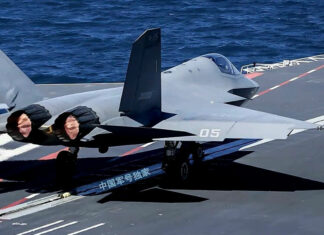
The past week (September 18-25, 2025) represents an inflection point where strategic defense concepts have transitioned from doctrine to tangible reality. An analysis of global events reveals four primary, interconnected trends shaping an...
At the 2025 Air, Space & Cyber Conference, U.S. Air Force and Space Force leaders unveiled major updates on next-generation fighters, bombers, unmanned systems, and space initiatives, highlighting both rapid innovation and critical readiness challenges as the services race to outpace global competitors. A short version is available here, with a more detailed version for subscribers.
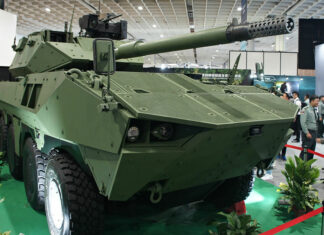
The Taipei Aerospace & Defense Technology Exhibition (TADTE) 2025 crystallized around four dominant strategic themes that collectively illustrate Taiwan's comprehensive approach to defense modernization amid escalating regional tensions. Based on a detailed report by Pleronix (available upon request). Includes a Podcast discussion on TADTE 2025's highlighting Taiwan's four strategic themes beyond the post's coverage.
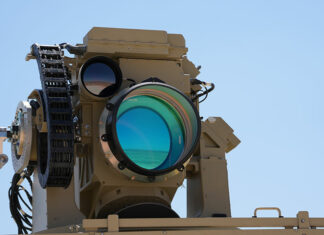
Israel’s Iron Beam 450 high-power laser system has completed final testing, marking a major leap in air defense. Developed by Rafael, it offers precise, cost-effective interception of rockets, UAVs, and mortars, and is set for IDF deployment by 2025.







 Big Data Fusion for HLS, 28 January , 2014 – Tel Aviv, Israel






 China’s top law enforcement official has ordered 24-hour security patrols in the country’s western Xinjiang region in response to the worst violence seen in the ethnically-mixed area in years.