
Saturday, December 27, 2025
More
    Home Blog Page 142

    Update: GMD Interceptor fails to hit missile target over the Pacific

    Over the Pacific Ocean today the United States missed a long-range ballistic missile in an operationally realistic test with its first generation Ground-Based Interceptor (GBI) that is currently deployed to defend the United States against a target missile flown out of Kwajalein Atoll in the western Pacific.

    The Ground-based Midcourse Defense (GMD) element of the U.S Ballistic Missile Defense System failed yesterday as a three-stage Ground-Based Interceptor (GBI) interceptor missile was fired from Vandenberg AFB in California failed to intercept a long-range ballistic missile target launched from the U.S. Army’s Reagan Test Site on Kwajalein Atoll, Republic of the Marshall Islands. During the test, a target missile was fired at 11:30 a.m. PDT; the interceptor was launched Five minutes later. “Program officials will conduct an extensive review to determine the cause or causes of any anomalies which may have prevented a successful intercept.” the Missile Defense Agency announced.

    The test was part of an integrated exercise conducted yesterday by the U.S. Air Force 30th Space Wing, Joint Functional Component Command, Integrated Missile Defense (JFCC IMD) and U.S. Northern Command.

    “Preliminary findings into last week’s missed intercept test by the first generation Ground-Based Interceptor (GBI), leads into speculation of a failure to separate on the final stage of the GBI rather than a failure of the Kill Vehicle itself or system, to detect, track, and discriminate the incoming ballistic missile reentry warhead launched from Kwajalein Atoll.” Riki Ellison, Chairman of the Missile Defense Advocacy Alliance commented July 10th. “Initial indications show the fundamental elements of the ballistic missile defense system to detect, track, discriminate, and target worked from the multiple sensors in space, land, and sea to the communication of that collective data processed and transferred by our missile defense war fighters into the correct firing solution onto the GBI that was targeted and launched correctly. ”

    This failure to separate has not been seen in previous tests of this GBI which could lead to an anticipated anomaly of one missile as the cause of its failure. Confidence and reliability of the system would vary greatly from an anomaly of one to a systematic issue with all of the GBIs. In either case, annual intercept testing of this system would have dealt with this issue of separation and could have resolved it as early as four years ago as well as other problems that might have occurred through regular use of these interceptors. Regular and consistent testing of our GBIs, as our nation does with our offensive missiles, will greatly increase our reliability and confidence to our GBIs as we have with our ICBMs.

    “As a result, [of this failure] there is reduced confidence and reliability in regards to GBIs capability to defend all of the United States of America against the current and future North Korean long-range nuclear ballistic missiles as well as the future first generation Iranian long-range ballistic missiles.”

    “This reduced confidence is reflective of the current testing record of this GBI first generation interceptor class deployed today in Alaska and California. That testing record is at eight intercepts out of 14 intercept attempts. The last successful intercept of this system was December 15, 2008. A product of this test will most likely be an increased shot doctrine and a higher number of these GBIs will most likely be used against a single incoming ballistic threat rather than the reduced the shot doctrine had the test been successful and brought more confidence, efficiency and reliability in interception. The fact of hitting 8 intercepts by this GBI first generation gives baseline confidence but comes at a heavy price using a lot of our limited 30 GBI inventory.” Ellison warned.

    “As the technical data unfolds over time and analysis of the roots to the cause of this failure, the underlying factors is the lack of testing on an annual basis to the GMD system and acceptance of high adversity to risk by the Department of Defense to not test these GBIs regularly because of the chance of failure. This has to be remedied so that we may learn from failures and quickly adjust to fix, modernize and launch again until the corrections are completed of the existing issues. We, as a nation, with this critical mission to defend our population cannot afford to wait every four years to test this system. This system needs to be tested at least two times a year for intercepts.

    We must have the fortitude to fix the issues that caused the failures quickly, soundly and as soon as possible. This system is all our nation has today to stop and intercept long-range nuclear missiles. We have to have it.”
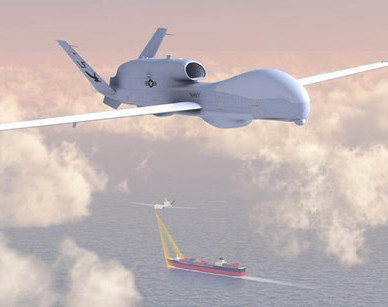
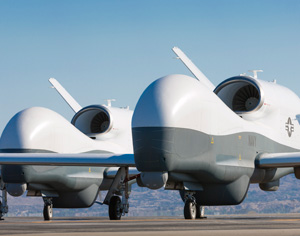
     

    Northrop Grumman displays MQ-4C Triton maritime surveillance drone in the UK

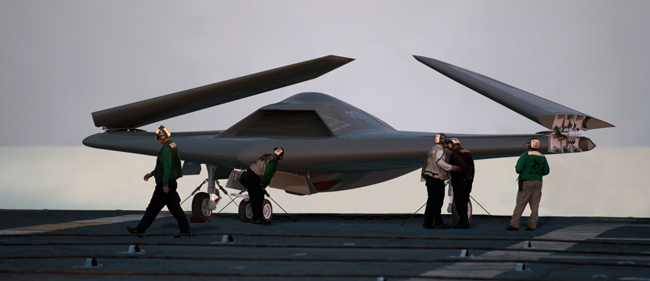
    MQ-4C BAMS will soon become the first unmanned system in US service committed to the maritime patrol mission.
    The first MQ-4C Triton maritime surveillance drones were recently delivered to the US Navy. Photo: Northrop Grumman
    The first MQ-4C Triton maritime surveillance drones were recently delivered to the US Navy. Photo: Northrop Grumman

    After avoiding high profile, expensive events such as the Paris Airshow, Northrop Grumman opted to become one of the principal industry sponsors at the 19th annual Waddington International Air Show, being heldJuly 6-7 at RAF Waddington, Lincolnshire in the UK. Defense-Update reports.

    The company will display here a full scale model of the MQ-4C Triton maritime surveillance drone it is building for the US Navy. There are several reasons for the appearance of the Triton here – the US Navy is seeking overseas basing for this drone, and Northrop Grumman is looking for new international markets for the aircraft, the UK is likely to be one of these markets.

    For the Brits, the maritime surveillance capability of Triton could fulfil a capability gap created after the Nimrod maritime patrol aircraft (MPA) were phased out in 2010 and development of a new generation MPA aircraft terminated under the Strategic Defence and Security Review.

    In December 2012 Defence secretary Philip Hammond said the Libya campaign had shown Nato’s over reliance on the US, he added that using unmanned aerial vehicles (UAVs) would be cheaper and less risky than developing a manned maritime surveillance aircraft. “It may be that we will move straight to unmanned reconnaissance vehicles that can do the task at lower cost and much less risk to the crew.” Hammond told members of the Parliament’s joint committee on the national security strategy. 

    Triton is the most advanced intelligence, surveillance and reconnaissance unmanned aircraft system ever designed for use across vast ocean areas and coastal regions. Triton is designed to fly surveillance missions of up to 24 hours duration and at altitudes of more than 10 miles, allowing coverage out to 2,000 nautical miles at a time.

    Manila to pay $400 million for two Italian frigates

    ffg-maestrale

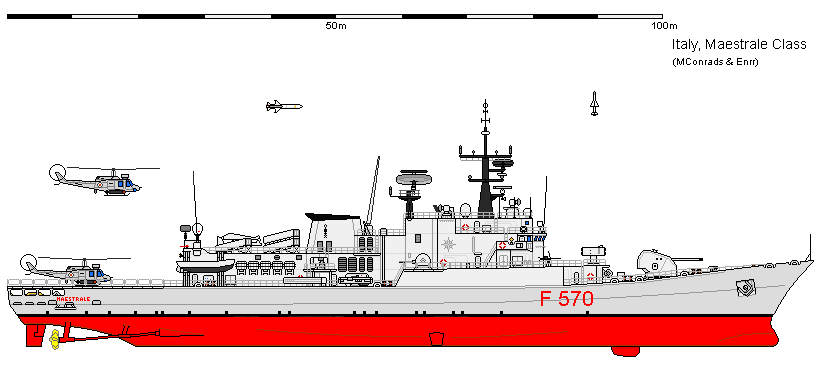
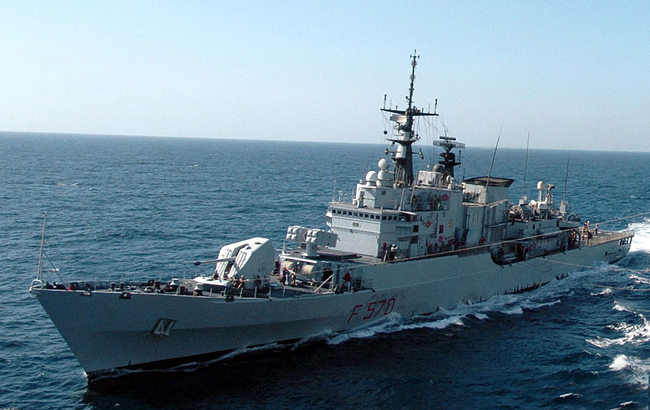
    The Philippines is set to buy two Maestrale-class frigates from Italy, Defense Undersecretary Fernando Manalo said Wednesday. The acquisition of the two frigates, along with 12 FA-50 fighter aircraft bought from South Korea, are the most significant items on the government’s $1.7 billion (75 billion peso) military modernization budget over the next five years.

    The main drive for this military modernization is the continued conflict with China, over the Philippine-claimed areas in the South China Sea. The Philippines initially considered buying the frigates from Italian Navy surplus, but later opted for more expensive, yet brand new vessels of the same type. The vessels are likely to be built by the original designer, the Italian shipbuilder Fincantieri, that have built eight such frigates in 1981 – 1985. The Italian made frigates would be able to carry a more powerful weaponry, compared to the two refurbished and re-armed Hamilton-class cutters Manila acquired from the USA. 

    Manalo said the navy had already decided to acquire two new Maestrale-class frigates instead of buying used ones from the Italian navy (the Italians wanted $270 million for the refurbished vessels). As it seems, Manila has added $130 to get brand new vessels of the same type, for about $400 million. The Philippines could be ready to tender by the end of the year, Manalo added. The modernization budget also provides for building or improving facilities to berth and provide maintenance to the vessels on the military’s shopping list, Manalo said. A similar amount was allocated for the South Korean fighter planes, he added.

    ITS Maestrale (F570) at sea in the Indian Ocean. Photo via Wikimedia
    ITS Maestrale (F570) at sea in the Indian Ocean. Photo via Wikimedia

    Russian arms exporter Rosoboronexport Reports $34 Billion in orders

    Russia’s state arms exporter said Wednesday that its order portfolio stood at $34 billion as of June 1. Rosoboronexport delivered $6.5 billion worth of weaponry to foreign customers in the first half of this year, deputy head Igor Sevastyanov announced, adding that the current order portfolio included contracts with 67 countries. Russian news agency Novosti reports.

    Russia, which last year sold $15.2 billion worth of weaponry, is the world’s No. 2 arms exporter, behind the United States. Russia’s main arms customers are India, Algeria, China, Venezuela, Malaysia and Syria. Vietnam also emerged as a significant purchaser in 2010, when it signed a deal to buy submarines, aircraft and other military hardware.

    Sevastyanov added that his company was in talks regarding contracts worth a total of more than $80 billion. But it was not immediately clear in what time frame those contracts could be concluded.

    Update: Vikramaditya begins sea trials at the White Sea

    Five years after it was originally due to be delivered, and more than twice over budget, the Russian aircraft carrier Vikramaditya refurbished by the Russians for the Indian Navy has set sail wednesday for final sea trials prior to handover.

    The trials in the White Sea will continue for about 25 days and include the testing of maneuverability and other technical characteristics of the vessel. After that, the Carrier will sail to the Barents Sea, for further tests including aircraft operations, including MiG-29K naval fighter aircraft and naval helicopters would. A final report concluding the sea trials is expected before October 15, 2013, shortly before the handover of the carrier to the Indian Navy.

    The Vikramaditya (formerly Admiral Gorshkov), has been refitted at the Sevmash shipyard in northern Russia, is due to he handed over in fall this year. A mixed Russian-Indian crew is on board the warship, while the Indian sailors learn how to operate the vessel.

    Vikramaditya at sea on its second sea trials late 2012. Photo: Maksim Vorkunkov via Flickr.
    Vikramaditya at sea on its second sea trials late 2012. Photo: Maksim Vorkunkov via Flickr.

    Weapons Bay of J20 Revealed

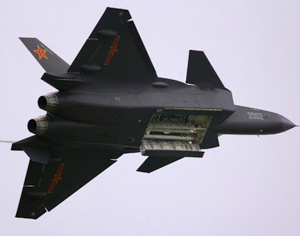
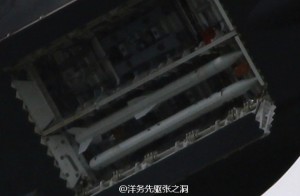
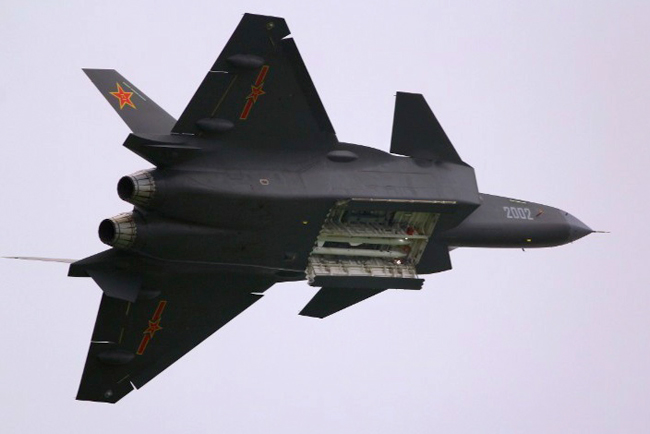
    A clear view of the 2nd prototype J20 flying low with weapons bay open. The configuration shown here carries four radar-guided Beyond Visual Range air/air missiles. Additional weapons bays on the fuselage sides can also carry passive, heat-seeking AAM.
    The open weapon's bay was captured on one of a recent test flight. Note the folding hinged panels clearing a large, unobstructed opening for large, outsized payloads. Photo: China Defence Mashup
    The open weapon’s bay was captured on one of a recent test flight. Photo: China Defense Mashup

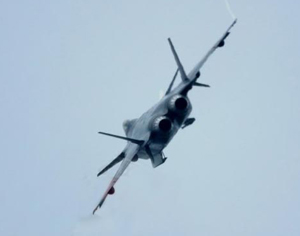
    Defense Update VideoReport presents a remix depicting selected moments from J-20 test flights, captured by Chinese amateur photographers on the Chengdu airfield perimeter. A recent shot captured another interesting aspect of the aircraft – the opened cover of the main weapon’s bay.

    The storage and release of weapons from these containers seems to be different from the method used by US aircraft designers.

    weaponbayj20
    The folding hinged panels clearing a large, unobstructed opening for large, outsized payloads.

    The J20 seems to use expandable weapons mounts that position the weapon into the air stream before launch, similar to a conventional (non stealth) pylon. For the fuselage weapon bay the panel design is also different from the US method employed in the F-22, F-35 and B-2 – the Chinese stealth fighter use folding panels that clear much larger opening for the weapon’s bay.

    Although this method generates considerable drag and radar reflection, the larger, unobstructed opening is more suitable to accomodate outsized ordnance. This method also clears more space for multiple weapons, unlike the confined storage space used in the F-35 that leaves only minimal clearance for specific weapons systems.

    A clear view of the 2nd prototype J20 flying low with weapons bay open. The configuration shown here carries four radar-guided Beyond Visual Range air/air missiles. Additional weapons bays on the fuselage sides can also carry passive, heat-seeking AAM.
    A clear view of the 2nd prototype J20 flying low with weapons bay open. The configuration shown here carries four radar-guided Beyond Visual Range air/air missiles. Additional weapons bays on the fuselage sides can also carry similar weapons or passive, heat-seeking AAMs.
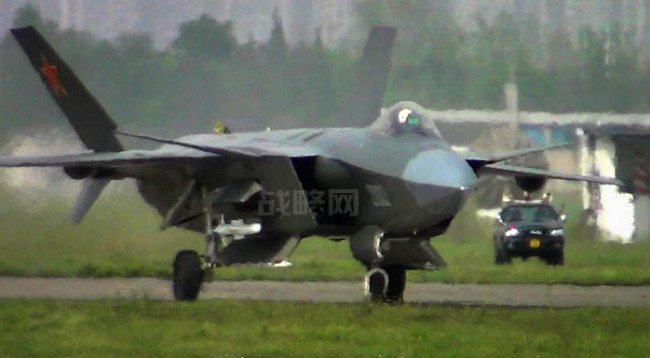
    J20 preparing to a flight test carrying a dummy missile in its starboard weapon bay.
    J20 preparing to a flight test carrying a dummy missile in its starboard weapon bay. The main (fuselage) weapon’s bay door also seems open.

    India deploys first IRNSS navigational satellite in space

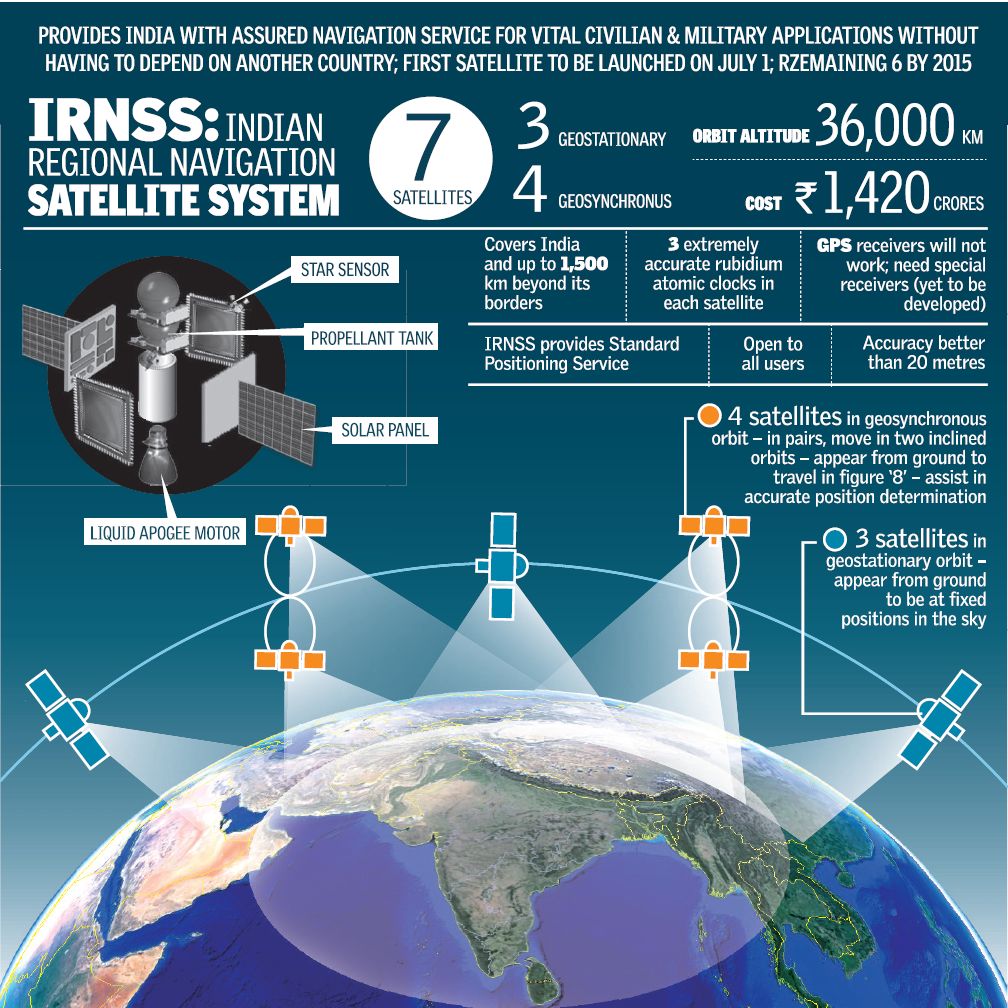
    India successfully launched its first navigational satellite into orbit Monday July 1 2013, from the Satish Dhawan Space Centre, in Sriharikota. IRNSS-1A, the first of seven satellite constellation to be deployed under the Indian Regional Navigation Satellite System (IRNSS) program to be completed by 2015-2016. This is the twenty third consecutively successful mission of PSLV. The ‘XL’ configuration of PSLV was used for the mission. Previously, the same configuration of the vehicle was used thrice to launch Chandrayaan-1, GSAT-12 and RISAT-1 satellites.

    The IRNSS-1A Satellite, weighing 1425 kg was separated from the launch vehicle 20 minutes 17 seconds after launch, and injected to the intended elliptical orbit of 282.46 km X 20,625.37 km. after activation the Indian Space Research Organization’s (ISRO) Master Control Facility assumed the control of the satellite. In the coming days, five orbit maneuvers will be conducted from Master Control Facility to position the satellite in its Geosynchronous Circular Orbit at 55 deg East longitude.

    IRNSS-1A is the first of the seven satellites constituting the space segment of the Indian Regional Navigation Satellite System. IRNSS is an independent regional navigation satellite system designed to provide position information in the Indian region and 1,500 km around the Indian mainland. IRNSS would provide two types of services – Standard Positioning Services (SPS) – provided to all users – and Restricted Services (RS) provided only to authorised users. A number of ground stations responsible for the generation and transmission of navigation parameters, satellite control, satellite ranging and monitoring, etc., have been established in as many as 15 locations across the country.

    Inside_IRNSS_1499475a

    Belarus eyes Vietnam, Laos for arms export growth

    In recent years Vietnam has become a growing market for Eastern and Western defense exporters seeking to offset their declining domestic sales by attracting more business abroad. Belarus which has not been too active in defense exports, is eyeing Southeast asia as a potential growth market for its military sales, According to defense analyst Aliaksandr Alesin Belarus will help Laos modernize tanks and air defense systems. Through the years Laos has relied on equipment of Russian and Chinese origin supplied by the Vietnamese government. This hardware has not modernized in recent years. The president of Laos Choummaly Sayasone recently conducted a visit to Belarus where he was received as a guest of the armed forces.

    According to Alesin, Laos is interested in upgrading its existing systems, particularly armored vehicles and air defense systems. They are also interested in unmanned aerial systems, radios, electronic surveillance and intelligence, surveillance and reconnaissance (ISR) systems, Alesin noted. While Belarus is already producing radiolocation equipment, communication equipment and equipment for radio-electronic warfare the country will have to rely o other suppliers for the modernization or supply of main platforms.

    Online warning alert Syrians on missile attacks by their own government…

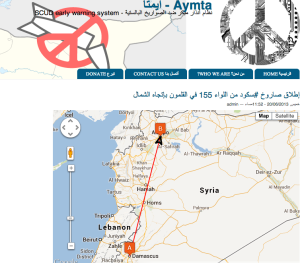
    Amyta.com provides early warning Syrian citizens of potential SCUD attacks. Harnessing crowdsourcing of spotters reporting on missile launches, the system calculates trajectory and time of arrival to provide subscribers in the targeted cities an early warning about imminent missile attacks.
    Amyta.com provides early warning Syrian citizens of potential SCUD attacks. Harnessing crowdsourcing of spotters reporting on missile launches, the system calculates trajectory and time of arrival to provide subscribers in the targeted cities an early warning about imminent missile attacks.

    On February 25, 2013, a 26-year-old Syrian “hacktivist” who had fled Damascus was sitting up late in his apartment in a Washington suburb watching the Syrian civil war unfold on Twitter. A man living near an air base southwest of Damascus tweeted that a SCUD missile had been fired and its fiery tail could be seen streaking north. Syria is believed to have at least 700 such SCUDs. Having done his compulsory military service in a Syrian artillery unit, Dlshad Othman knew that this SCUD was likely headed for the northern Syrian city of Aleppo. He also knew the missile would be landing in roughly six minutes. But who would see the Tweet in time? As he waited helplessly for the SCUD to land, Othman hatched an idea: Set up an early warning system that could take citizen reports of a ballistic missile launch, calculate the likely target, and send alerts in real time to civilians inside the strike zone. The Atlantic reports.

    Othman’s SCUD early warning system began operating on Wednesday. It is called Aymta (dot com), which means “when” in Arabic. Users can opt to receive alerts by phone, text message, SMS, e-mail or RSS feed, or, if the regime cuts off internet access, as it often does, via a broadcast on satellite television or radio frequencies outside of regime control. Within the first 24 hours, 16,000 people viewed his website and 87 had registered to receive his alerts – although up to 40 percent of Syria was reportedly experiencing power outages at the time. Two satellite television stations also signed up for alerts. Some Syrians have already registered from abroad to track impending attacks on their hometowns and alert their families.

    The software automatically calculates the trajectory and likely arrival time of the missile. The more data it receives about where and when attacks are imminent, the more its accuracy will improve. A major concern for the operators is the security of their informers. Aymta’s secure reporting systems recognize that Syrian cellphones and internet traffic are monitored. The Syrian government has proved adept at infiltrating opposition computers, including in one case building malware into a piece of circumvention software that was supposed to let opposition forces evade government surveillance. Wary of such traps, Othman has equipped a group of trusted civilian monitors with hardened digital communication technologies that allow them to transmit information from a variety of sources, including visual sightings of SCUD launches and other reliable information, into a well-defended computer network. “We are doing our best to deliver 99 percent security,” said Othman.

    There is no such thing as a “100 percent secure” computer network, only one that is engineered to be difficult to penetrate, said Ian Schuler, a former State Department specialist in internet freedom and security digital technologies, now at the nonprofit New Rights Group. “Anything can be cracked.” By Saturday, the Syrian regime had apparently found Aymta, judging by the large cyber-attack that took down the site for 20 minutes. Othman had expected such a distributed denial of service (DDOS) attack and is trying to speed up his defenses.

    Jeffrey Lewis, a missile expert following the Syrian conflict at the Monterey Institute for Strategic Studies, who has advised Othman on the project, is worried both about Othman’s own safety and the potential for mass arrests by the Syrian regime of anyone near a SCUD base. “I don’t want to know how you know your spotters,” Lewis told Othman. “You need to make sure your spotters don’t know one another and one person doesn’t know multiple spotters… It’s built on trust,” Othman replied. He is in contact with opposition coordinators in Syria who know and trust one another. He has applied for asylum protection in the United States and has decided to use his real name for the project. “If I will not use my real name, people will not trust this,” he said.

    Though the U.S., Turkey, and other countries may have radar or other data that could warn of SCUD launches, they don’t share, said Lewis. He believes the U.S. should provide whatever information it can to the residents of Aleppo and other cities under attack. Civilians in war zones have a right to collective self-defense, but can rarely exercise that right in high-tech modern warfare. President Obama’s newly announced lethal aid to the Syrian rebels includes small arms and undefined intelligence-sharing, but does not include early warning that could have saved many lives if it would have supported Aymta with real-time alerts.

    Syria has fired dozens of SCUDs and other missiles at targets in northeastern Syria. According to the Syrian Missile Launch Database, maintained by the Washington Institute of Near East Policy, between December 2012 and March 2013 the Assad regime fired dozens of surface-to-surface missiles against opposition-held areas, including major cities and towns such as Aleppo, Al Raqqah, and Der Ez Zor. Human Rights Watch reported that four SCUDS fired on Aleppo in February killed 141 civilians, including 71 children.

    Most of the casualties from those missile attacks are caused by buildings collapsing onto people. Othman says merely instructing people to run out into the street or into a basement would increase the odds of survival. SCUDs are among the slowest of missiles, and in theory, a few minutes’ warning should be enough, especially if activists in the target zones rig up local public address systems to sound air raid sirens when Aymta sends a warning.

    Aymta is part of a growing movement among by idealistic “hacktivists” to deploy advanced technologies for peace-building. A 13-year-old Israeli developed an iPhone app called Color Red that sounds an alarm based on data from the Israeli Defense Forces about incoming missile fire from Gaza. The distance from launch to target is so short that citizens have as little as 15 seconds to take cover. Even so, the app has been downloaded at least 130,000 times.

    Othman and his partners intend to expand the Aymta system to warn civilians of other types of threats — including approaching tanks, convoys of militia fighters, or other information. Othman plans to share his open-source software for use by activists in other countries. “This is not just for Syria,” he said. “We believe there are a lot of people in the world who are in a bad situation like ours.”

    Source: Defense-Update

    U.S. Navy Looks at a Common Control System for future Naval UAS Operations

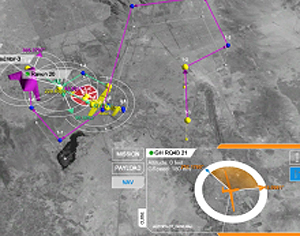
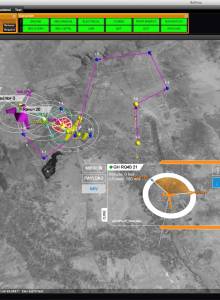
    Ballista multi-UAV control system demonstrates how three naval unmanned systems - MQ-4C Triton, UCLASS and RQ21A Integrator are tasked on a single mission by a single operator. Photo: Lockheed Martin
    Ballista multi-UAV control system demonstrates how three naval unmanned systems – MQ-4C Triton, UCLASS and RQ21A Integrator are tasked on a single mission by a single operator. Photo: Lockheed Martin
    .

    The US Navy has recently evaluated the operation of multiple types of unmanned aerial systems (UAS) from a single command and control (C2) system. During the demonstration, a team set by Lockheed Martin team integrated command and control (C2) and and intelligence, surveillance and reconnaissance (ISR) systems to provide mission planning, sensor and common operational control for multiple UAS platforms to provide operators with one comprehensive mission picture. The demonstration was executed in support of the Navy’s upcoming Unmanned Carrier Launched Airborne Surveillance and Strike System (UCLASS) and Common Control System programs. defense-Update reports

    For this demonstration the team used a new open architecture framework integrated with DreamHammer’s Ballista drone control software and Navy compliant software protocols, enabling a single operator to manag multiple UAS platforms simultaneously. The team also accessed the new ‘Navy Cloud’ capability to demonstrate control of the ISR sensors and fully integrate the data into one complete mission picture. The team then used this picture to rapidly re-task and re-route the UAS assets. In addition to using DreamHammer’s Ballista drone control software in this UCLASS demonstration, Lockheed Martin is teamed with DreamHammer Government Solutions in pursuit of the upcoming Navy Common Control System contract.

    “This demonstration is an important step to fulfilling the Navy’s requirement for a Common Control System that leverages multiple architectures from varied operational systems,” said Rob Weiss, executive vice president of Advanced Strike and Intelligence and Reconnaissance Systems for Lockheed Martin Aeronautics. “A combined C2 and ISR capability will be essential as the Navy integrates UAS, beginning with UCLASS, into its ISR enterprise. We believe in their vision and this demonstration is an example of our work to reduce risk and make the Common Control System a reality.”

    “This demonstration underscores the critical role that common command and control systems can play in actual operations by highlighting the ability to enrich the overall ISR picture and increase the speed of decision making,” said Jim Quinn, vice president of C4ISR Systems for Lockheed Martin Information Systems and Global Solutions. “An integrated battlespace picture emerges when we link the platforms, sensors, and information collected into one enterprise view that will enable the U.S. Navy to better achieve their C2 and ISR missions.”

    Ballista is an intelligent control platform that integrates unrelated unmanned drones and robots from different manufacturers into one system. The system is built on an open platform which allows for autonomous and simultaneous control of multiple unmanned vehicles across all domains – space, air, sea and land — and can be run from nearly any computer including a tablet or a smartphone. DreamHammer has been licensing the software and providing support services to U.S. military and intelligence customers since August 2011. The system is currently available commercially, while previous releases were only made available to U.S. military and intelligence customers.

    Lockheed martin is one of four companies submitting proposals for the US Navy future, unmanned carrier launched aircraft system (UCLASS)
    Lockheed martin is one of four companies submitting proposals for the US Navy future, unmanned carrier launched aircraft system (UCLASS)

    Source: Defense-Update


    AUSR-180x250Autonomous Unmanned Systems & Robotics

    As one of the world’s leading technological drivers of unmanned systems and robotics, Israel provides a hub for technological innovation, technical knowhow and practical, operational experience.

    The upcoming Autonomous Unmanned Systems & Robotics conference will provide an opportunity for local and international experts in the field, for networking and exchange of ideas.

    Defense-Update is a Media Partner of AUS&R. Defense-Update membersRegister here!


    Taiwan Air Force forms an Anti-Submarine Air Group

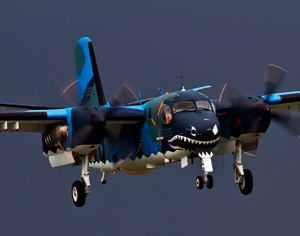
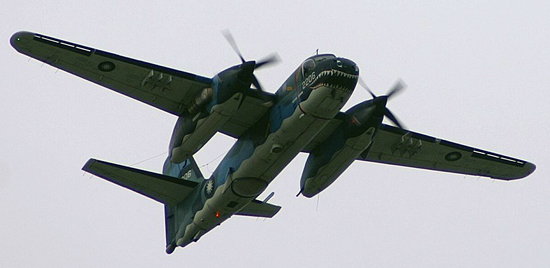
    S2T Tracker 2205 1st Aviation Group ROCN. Photo: Mark Rourke via Flickr
    S2T Super Tracker of the Republic of China (ROC) Naval Aviation group.
    S2T Super Tracker of the Republic of China (ROC) Naval Aviation group.
    S2T Tracker 2205 1st Aviation Group ROCN. Photo: Mark Rourke via Flickr
    S2T Tracker 2205 1st Aviation Group ROCN. Photo: Mark Rourke via Flickr

    Taiwan’s Ministry of National Defense announced the establishment of an Air Force anti-submarine group, maintained by eleven S-2T Turbo Tracker anti-submarine planes transferred from the Navy. The announcement was made by Chief of the General Staff Gen. Yen Ming during a commissioning ceremony at an air force base in Pingtung County, southern Taiwan. The main missions of the anti-submarine group will include countering the threat of submarine attack by opposing forces. The Turbo Trackers were originally built by the Grumman company (now Northrop Grumman).

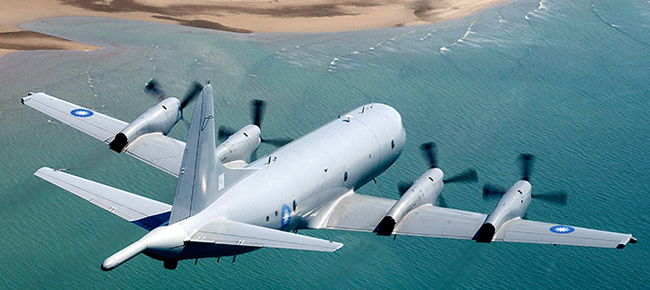
    The commissioning of the new group was made in advance of the delivery of 12 P-2C Orions, the first is expected to be delivered from US Navy surplus by the end of 2013 and the entire delivery is expected to complete in 2014. The delivery of the P-3C was approved by the U.S. government in 2007, under a US$1.96 billion foreign military sale program.

    Upgrades to the aircraft involved installation of new mission system avionics and service life extension kits to extend the operational life for 15,000 additional flight hours. Lockheed will also install complimentary navigation message ECP to update RINU-G and control display unit software for a message set. The Harpoon Block 2 missile requires the new message set for precision targeting. Other elements of the package include upgrades to the ALR-97/electronic support measures and ALR-95 system, as well as an upgrading of Mode 4 software to Mode-T.

    Taiwan is about to receive 12 refurbished P-3C from the US, under a US$1.96 billion foreign military sale program signed in 2007. Photo: Lockheed Martin
    Taiwan is about to receive 12 refurbished P-3C from the US, under a US$1.96 billion foreign military sale program signed in 2007. Photo: Lockheed Martin

    Australian MH-60R completes first flight

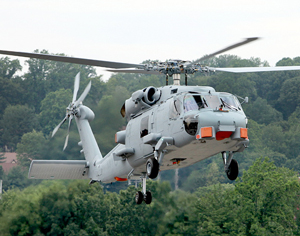
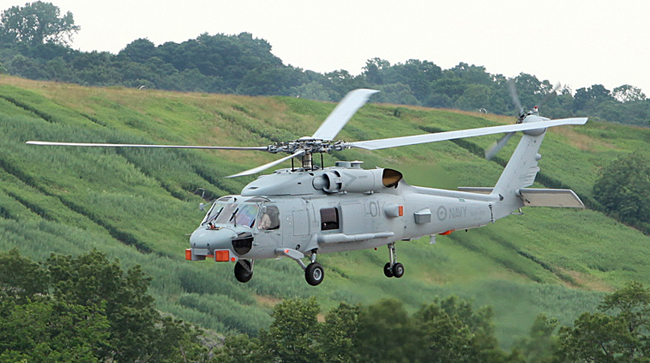
    Australia's first MH-60R Seahawk Romeo aircraft, complete with RAN kangaroo roundel aircraft markings, conducts its initial test flight at Sikorsky's production facility in Stratford, Connecticut, USA. Mid-Caption Project AIR 9000 Phase 8, the Seahawk Romeo helicopter program, reached a significant milestone on June 26, 2013. Carrying the tail number N48-001, Australia's first Seahawk Romeo completed its initial test flight at Sikorsky's production facility in Stratford, Connecticut, USA. The helicopter successfully passed a range of tests during the 1 hour and 20 minute sortie including controllability, engine performance, vibration analysis and navigation. A second sortie later that day completed the 'Contractor Flight Acceptance' phase. The helicopter will now be fitted with its highly capable mission systems and sensors at Lockheed Martin's facility in Owego, New York. The first two MH-60R helicopters are scheduled to be handed over to the Royal Australian Navy in December 2013.
    Australia's first MH-60R Seahawk Romeo helicopter (N48-001) conducted its initial test flight at Sikorsky's production facility in Stratford, Connecticut, USA June 26, 2013. Australia will receive 24 such helicopter to equip its surface combatants under Project AIR 9000 Phase 8.
    Australia’s first MH-60R Seahawk Romeo helicopter (N48-001) conducted its initial test flight at Sikorsky’s production facility in Stratford, Connecticut, USA June 26, 2013. Australia will receive 24 such helicopter to equip its surface combatants under Project AIR 9000 Phase 8. Photo via Australian MOD.

    The first of 24 MH-60R ‘Seahawk Romeo’ naval helicopters destined for the Australian Navy has successfully completed its first test flight at Sikorsky production facility on June 26, 2013. During the 80 minute flight the helicopter successfully passed a range of tests including controllability, engine performance, vibration analysis and navigation as well as the ‘Contractor Flight Acceptance’ phase. The first helicopter is now being prepared for transit to Lockheed Martin’s facility in Owego, New York, where it will be fitted with its highly capable mission systems and sensors. A further three Australian helicopters are currently in various stages of assembly with the first two planned to be handed over to the RAN in December 2013. Aircrew and maintainers from 725 Squadron have already commenced training with the United States Navy at Naval Air Station, Jacksonville, Florida, USA while they await the arrival of their own aircraft in 2014.

    The 24 helicopters will replace 16 MH-60B Seahawk helicopters currently in service, expanding naval surface strike capability with will additional air-to-surface strike capability.

    Commodore Vince Di Pietro, Commander of the Navy’s Fleet Air Arm, said the flight is exciting news for the Navy. “The RAN will very shortly be flying the most capable Anti-Submarine and Anti-Surface helicopter in the world and it will be a quantum increase to our current helicopter force – both in numbers and capability,” CDRE Di Pietro said. The acquisition of 24 Seahawk Romeos allows the Royal Australian Navy (RAN) to provide at least eight helicopters embarked at any one time with Australia’s Anzac Class frigates and the new Hobart Class air warfare destroyers, with the remainder based at HMAS Albatross in Nowra.

    “This first flight occurred only two years after contract signature, some six months ahead of the original schedule approved by Government in 2011.” Minister for Defence Materiel Dr Mike Kelly said. “The Federal Government has invested over $3 billion in acquiring 24 MH-60R Seahawk Romeo helicopters, representing a sizeable commitment toward Australia’s ongoing air combat capability,” he added.

    Defense Events – Conferences, Exhibitions & Airshows 2014

    January – March | April – June | July – September | October – December


    Farnborough International 2014, 14-20 July, 2014 – Farnborough Airfield, UK

    Oboronexpo 2014 – International weapons forum – August 13-17, Zhukovsky, Russia.

    MSPO 2014, 1-4 September, 2014 – Kielce, Poland

    3rd UVID Conference , 17 September, 2014 – Airport City, Israel

    GPEC 2014 – General Police Equipment Exhibition, 9-11 September 2014 – Leipzig, Trade Fair, Germany

    Azerbaijan Defence Exhibition (ADEX 2014) – 11-13 September, 2014 – Baku Expo Center, Azerbaijan

    Modern Day Marine 2014, September 23-25, 2014 – Quantico, VA

    African Aerospace & Defense 2014, September 17-21, 2014 – Pretoria, South Africa


    January – March | April – June | July – September | October – December


    DRS to supply border surveillance radars to Egypt

    DRS Radar Systems, was awarded an US$8 million firm-fixed-price, multi-year, foreign military sales contract for the procurement of a border surveillance system for Egypt. The contract announcement published by the Pentagon did not specify the type of radar, nevertheless, the company’s main product – AN/PPS5-C Manportable Surveillance and Target Acquisition Radar (MSTAR) is the most likely to be delivered.

    The MSTAR provides wide-area surveillance to a maximum range of 42 km, day or night and in all weather conditions. According to DRS, over 1,400 such systems have been delivered to date, and employed in both combat and peacekeeping missions, including significant use in the Balkans, Afghanistan and Iraq.  DRS has also been involved in the design, integration and installation and operational support of security systems in Egypt and Jordan, including sections around the world where major refugee crises are currently underway.

    Skunk Works and XTEND Simplify Multi-Drone Command

    0
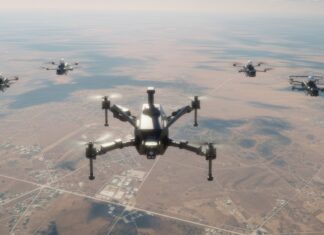
    Lockheed Martin Skunk Works® and XTEND have achieved a major milestone in JADC2 by integrating the XOS operating system with the MDCX™ autonomy platform. This technical breakthrough enables a single operator to simultaneously command multiple drone classes, eliminating the friction of mission handoffs. From "marsupial" drone deployments to operating in GPS-denied environments, explore how this collaboration is abbreviating the data-to-decision timeline and redefining autonomous mission execution.

    From Ukraine to Taiwan: The Global Race to Dominate the New Defense Tech Frontier

    0
    As traditional defense primes face mounting competition from agile “neoprimes” such as Anduril, Palantir and Helsing, the balance of innovation is shifting toward software-defined warfare and scalable, dual-use technologies, while global industry consolidation—marked by Boeing’s integration of Spirit AeroSystems and other strategic mergers—signals an intensified race to secure control over the defense technology value chain. Our Defense-Tech weekly report highlights these trends.

    Europe’s “Drone Wall”

    0
    In early October 2025, a coordinated wave of unmanned aerial system (UAS) incursions—widely attributed to Russia—targeted critical infrastructure across at least ten European nations. The unprecedented campaign exposed the fragility of Europe’s air defenses...

    Weekly Defense Update & Global Security Assessment

    0
    Executive Summary The past week (September 18-25, 2025) represents an inflection point where strategic defense concepts have transitioned from doctrine to tangible reality. An analysis of global events reveals four primary, interconnected trends shaping an...

    U.S. Air and Space Forces Push Next-Gen Programs at the AS&C 2025 Conference and...

    0
    At the 2025 Air, Space & Cyber Conference, U.S. Air Force and Space Force leaders unveiled major updates on next-generation fighters, bombers, unmanned systems, and space initiatives, highlighting both rapid innovation and critical readiness challenges as the services race to outpace global competitors. A short version is available here, with a more detailed version for subscribers.

    TADTE 2025: Reflecting Taiwan’s Strategic Themes

    0
    The Taipei Aerospace & Defense Technology Exhibition (TADTE) 2025 crystallized around four dominant strategic themes that collectively illustrate Taiwan's comprehensive approach to defense modernization amid escalating regional tensions. Based on a detailed report by Pleronix (available upon request). Includes a Podcast discussion on TADTE 2025's highlighting Taiwan's four strategic themes beyond the post's coverage.

    Iron Beam 450 Completes Testing, Soon to Join With Operational Air Defense Units

    0
    Israel’s Iron Beam 450 high-power laser system has completed final testing, marking a major leap in air defense. Developed by Rafael, it offers precise, cost-effective interception of rockets, UAVs, and mortars, and is set for IDF deployment by 2025.