
Saturday, December 27, 2025
More
    Home Blog Page 145

    Alenia Aermacchi Carves A Niche For a New Jet Trainer

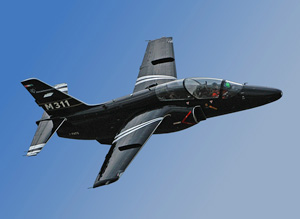
    M311 in flight
    Alenia Aermacchi M345 Basic-Advanced Trainer. Photo: Alenia Aermacchi
    Alenia Aermacchi M345 Basic-Advanced Trainer. Photo: Alenia Aermacchi

    The company has teamed with the Italian Ministry of Defense to define the operational specifications for such a trainer. The agreement was signed at the Paris Air Show last week, between Alenia Aermacchi Chief Executive Officer Guiseppe Giordo and Italian air force Gen. Claudio Debertolis, of the Secretariat General of Defence/National Armaments Directorate of the Italian Ministry, of Defence. The agreement paves the way for the collaboration on the development of a new basic-advanced trainer, the M-345 HET (High Efficiency Trainer) and expected to enter service between 2017-2020.

    The agreement calls for the immediate creation of a joint working team between the Defence and industry to define the technical specifications of this new aircraft and identify the steps necessary for the preliminary study and its consequent development, taking into account the principles of cost effectiveness and to satisfy the possible requirements of the global market.

    paris13-125x125The M-345 is offered as a basic-advanced lightweight fast jet trainer with Life-Cycle Costs comparable to those of heavyweight turboprops such as the Beechcraft T-6, Pilatus PC-21 and Embraer’s A-29 Super Tucano which, according to the company, offer only part of the requirements for cadets trained to fly jet fighters. The company claims the jet-trainer provides much better training effectiveness over turboprop powered trainers, as it offers a real jet environment and real jet handling. With its flexibility and flying qualities, in particular at high operational speed, the aircraft allows significant “downloading” of flying hours from the advanced training phase.

    The yet unsold aircraft, called the M-345 High Efficiency Trainer (HET), is the latest attempt by Alenia to find a market for its M-311 single-engine jet trainer, which was derived from the decades-old SIAI-Marchetti S.211. The M345 is designed to address training phases in advance of the more advanced syllabus supported by the M-346 Master – two of which have already been delivered to the Italian Air Force.

    The M-345 HET will be equipped with a turbofan engine in the 1.600 kg (3,500 lb) thrust class and will offer long endurance and high load factors between +7/-3,5 g. Furthermore, it will feature a new, low-cost HUD (Head Up Display) and an associated image repeater in the rear cockpit, operating with multi-function digital displays for both pilot stations. Both crew-members will also have full Hands On Throttle-And-Stick (HOTAS) controls.

    To reduce operating costs Alenia plans to offer the aircraft operators a simplified, two-level maintenance concept, eliminating the third and most onerous level of general revision of the aircraft. This support method relies on the design of Condition-Based-Maintenance and easy access to on-board systems and extensive use of Health and Usage Monitoring System (HUMS) providing all the information on the state of the aircraft structure, engine and system. The introduction of the pressure refueling system and of an OBOGS (On-Board Oxygen Generating System) will further easing the skill levels required for ground support, thus reducing the interval time between flights.
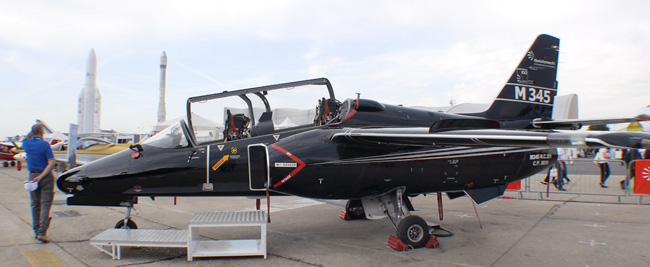
    M345 displayed at the Paris Air Show 2013. Photo: Noam Eshel, Defense-Update
    M345 displayed at the Paris Air Show 2013. Photo: Noam Eshel, Defense-Update

    Chinese Air Force Gets More H-6K Strategic Bombers

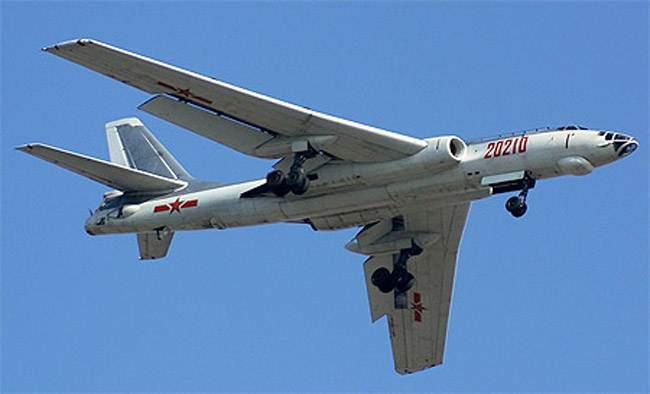
    H6K In flight. Internet photo
    H6K In flight. Internet photo
    H6K In flight. Internet photo
    Variants of the CJ-10 anti-ship/land attack cruise missile can be launched from different platforms. Six are carried by Xian H-6K strategic bomber, The missile is also carried on board the Type 095 and 052D destroyers and on land-based mobile launchers.
    Variants of the CJ-10 anti-ship/land attack cruise missile can be launched from different platforms. Six are carried by Xian H-6K strategic bomber, The missile is also carried on board the Type 095 and 052D destroyers and on land-based mobile launchers.

    The Chinese People’s Liberation Army Air Force (PLAAF) recently received 15 Xian H-6K bombers with nuclear capabilities, according to Jane’s Defence Weekly.

    The H-6K, an updated version of the H-6 bomber (originally, a locally built version of the 1960s vintage Russian Tupolev Tu-16 bomber), is a medium-sized craft designed for long-range attacks, stand-off attacks and large-area air patrol. Unlike its predecessor, the H-6K can carry cruise missiles under its wings. The H6-K also

    maneuvers more deftly than the H-6 and requires a smaller crew to operate. H-6K reportedly has a combat radius of 3,500 km. It can carry weapons in the internal weapon bay and on four underwing pylons. The nuclear-capable Changjian-10 (long sword) CJ-10A cruise missiles it carries have a range of 1,500-2,000 km, effectively extending the bomber’s combat range to 4,000-5,000 km – long enough to reach Okinawa, Guam and even Hawaii from China’s mainland.

    Analysts stipulated that PLAAF missiles be able to reach Taiwan, southwestern Japan and Guam, a range of control that requires a 3,000 km combat radius and powerful attack capability. Only the combined combat radius of the H6-K and Changjian-10 strike range currently satisfy the length requirement for those missions.

    Latest Chinesse media photo of the H6K Bomber
    Latest Chinesse media photo of the H6K Bomber


    Boeing Receives US Army $4 Billion Multi-year Contract for Chinook Helicopters

    Boeing has won a five-year contract with the U.S. Army for as many as 217 CH-47F Chinook helicopters
    Boeing has won a five-year contract with the U.S. Army for as many as 217 CH-47F Chinook helicopters
    Boeing has won a five-year contract with the U.S. Army for as many as 215 CH-47F Chinook helicopters

    In an agreement that will save the U.S. government more than $800 million, the Army and Boeing have signed a $4 billion multi-year contract for 177 CH-47F Chinook helicopters, with the Army holding options that could increase its total buy to 215 aircraft. Deliveries from the agreement, which is a cost-effective alternative to annually contracting for the aircraft, begin in 2015.

    “This multi-year contract provides unprecedented savings for the U.S. Army and American taxpayers,” said Col. Robert Barrie, U.S. Army project manager for Cargo Helicopters. “But the most important benefit is the continued support these aircraft will provide to soldiers in the field and civilians in distress.”

    The tandem-rotor Chinook is the backbone of combat, logistics and humanitarian operations for the U.S. Army and 18 other operators around the world. This order would eventually bring the Army’s CH-47F total procurement close to its target of 464 aircraft, including 24 to replace peacetime attrition aircraft. The Army’s current inventory stands at 241 F-model aircraft.

    There are 15 Army active duty and National Guard units operating the CH-47F, and a 16th is currently being equipped. CH-47F units have logged more than 86,000 combat hours in Afghanistan, maintaining an operational readiness rate of over 80 percent while conducting air assault, transport, and medical evacuation and support missions.

    P-8A Poseidon Fires Harpoon Anti-ship Missile

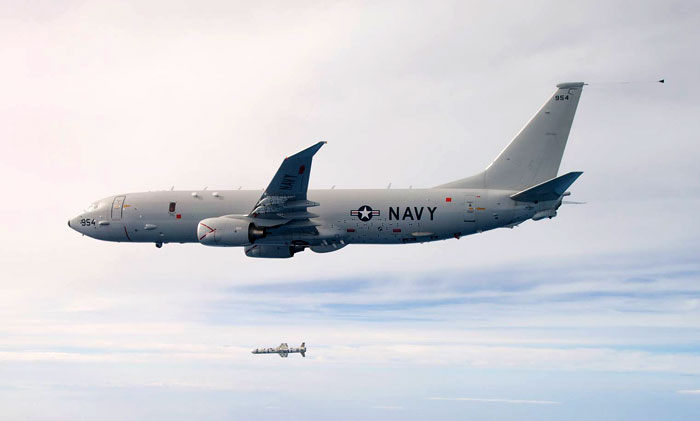
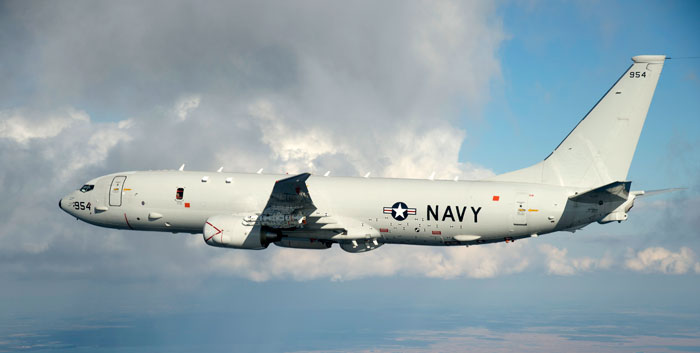
    The US Navy P-8A Poseidon, the newest maritime patrol and reconnaissance aircraft completed a test firing of a Harpoon anti-ship missile on June 24, 2013, during a live fire event in California at the Navy’s Point Mugu Sea Test Range and scored a direct hit on a Low Cost Modular Target.

    p8a_harpoon_release_test
    On the test at Point Mugu the P-8A successfully launched a Harpoon AGM-84D Block IC missile on the first hot run scoring a direct hit run on a Low Cost Modular Target. This flight test, along with past tests, demonstrates the P-8’s operational effectiveness and overall mission capabilities. U.S. Nay Photo

    Prior to the live fire the Poseidon completed one practice dry run. The aircraft was flown by  Air Test and Evaluation Squadron (VX) 20. successfully fired a Harpoon AGM-84D Block IC missile from station 10 on the first hot run, which was later confirmed by onsite explosive ordnance disposal personnel.

    “As the Navy’s replacement for the P-3 Orion, the P-8A Poseidon will be performing maritime surveillance missions as needed by the operations tempo and the success of this testing evolution brings us one step closer to Initial Operational Capability [IOC] this fall,” said Capt. Scott Dillon, Maritime Patrol and Reconnaissance Program Office (PMA-290) Program Manager. “The test was very successful and the Harpoon directly hitting the target proves the system’s capability and lethality.” The purpose of this test was to validate the weapons hardware and software integration. At the completion of this developmental testing, the P-8A will be ready for Harpoon operational testing to support fleet IOC.

    The P-8A Poseidon will replace the P-3C Orion as a long-range anti-submarine warfare (ASW), anti-surface warfare, intelligence, surveillance and reconnaissance aircraft, capable of broad-area, maritime and littoral operations. This valuable addition to naval air forces will protect the sea base and to enhance the Navy’s forward presence.

    Boeing-P-8I-neptun
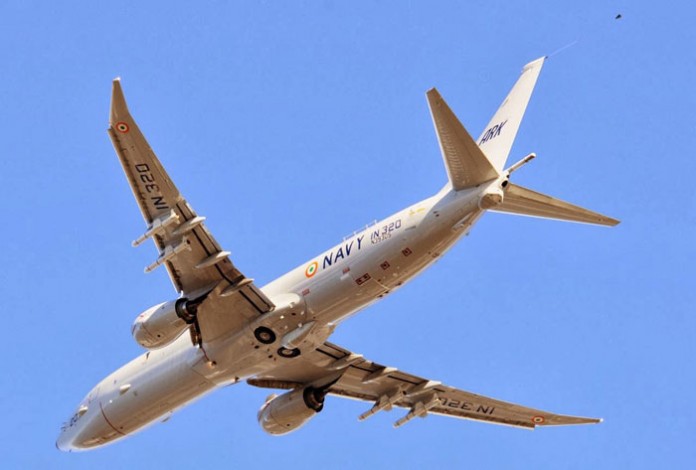
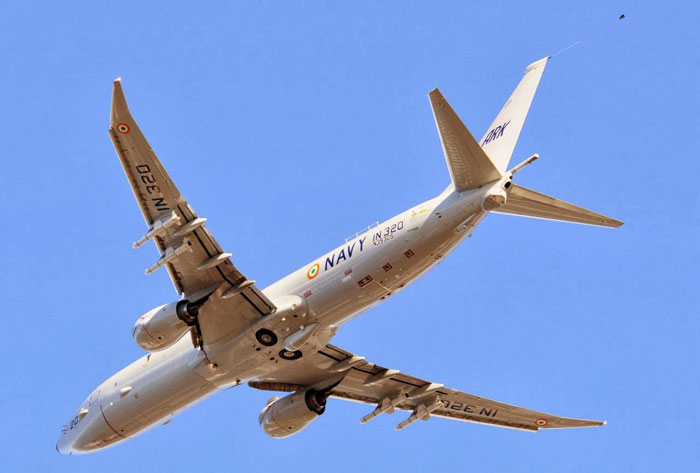
    Boeing P-8I Neptune carrying four Harpoon anti-ship missiles under its wings. The aircraft can also carry anti-submarine torpedoes and sonobuoys.
    P-8A-Poseidon_harpoon700
    P-8A Poseidon carrying four Harpoon missiles under its wings. US Navy photo

    Airbus Military A400M successfully demonstrates flares release

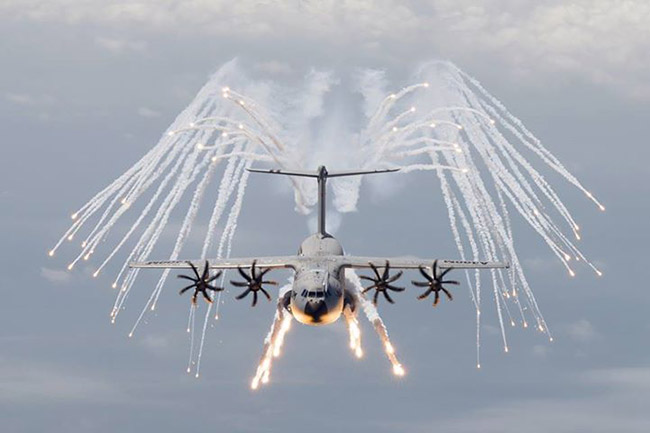
    Airbus Military A400M demonstrates the release of decoy flares. Photo: Airbus Militarty
    Airbus Military A400M demonstrates the release of decoy flares. Photo: Airbus Militarty

    Airbus Military has successfully demonstrated the release of decoy flares from the A400M new generation airlifter as part of the development of the aircraft´s self-protection systems. The flares are designed to mislead heat-seeking anti-aircraft missiles, particularly surface-to-air missiles (SAM).

    Flares are a crucial part of the self-protection system because of the A400M´s ability to operate from short and unpaved airstrips close to the scene of military action where SAMs may be fielded by an enemy.


    South Korea Kicks off Bidding for US$7.3 Billion Fighter Jet Tender

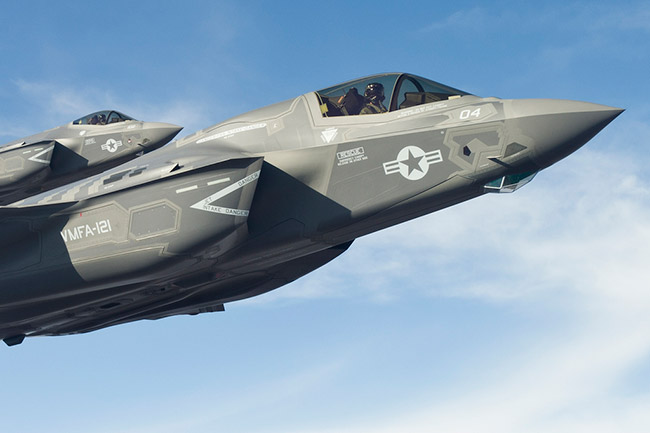
    The choice will be between Boeing's F-15 Silent Eagle, Lockheed Martin's F-35 Lightning II and the EADS Eurofighter Typhoon. F-35 Photo: Lockheed Martin
    The choice will be between Boeing's F-15 Silent Eagle, Lockheed Martin's F-35 Lightning II and the EADS Eurofighter Typhoon. F-35 Photo: Lockheed Martin
    The choice will be between Boeing’s F-15 Silent Eagle, Lockheed Martin’s F-35 Lightning II and the EADS Eurofighter Typhoon. F-35 Photo: Lockheed Martin

    South Korea started the bidding process Tuesday to pick a contractor to provide 60 advanced fighter jets for US$7.3 billion, the Defense Acquisition Program and Administration (DAPA) said. Seoul faces a tough decision in selecting either the Lockheed Martin’s F-35 Lightning II stealth jet, Boeing’s F-15 Silent Eagle or the European Aerospace Defense and Space Company (EADS)’s Eurofighter Tranche 3 Typhoon, to replace the Air Force’s aging fleet of F-4 and F-5 jets.
    The bidding is expected to last 11 days, and once completed DAPA will assess the three jets before making a final decision in a meeting slated for early next month, officials said. Seoul has officially said they are looking for affordable yet highly capable aircraft, but many expect the companies will propose prices that exceed Seoul’s budget and adopt a wait-and-see approach during the competitive bidding sessions.
    If prices proposed by the three firms exceed the budget approved by parliament last year, the acquisition plan will need to be re-examined by the finance ministry, which handles state budget allocations.
    Dancing Parrots – Robot Air-Show

    iai paris13-125x125

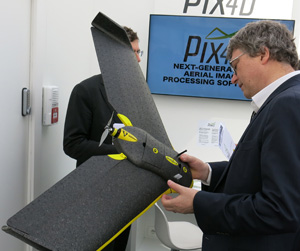
    The EBEE Sensfly micro-drone developed byParrot, is designed to collect aerial photography of 1-10km2 in a single flight, at down to 5cm precision. eBee has a flight time of up to 45 minutes, allowing to cover such areas in a single flight.
    The EBEE Sensfly micro-drone developed byParrot, is designed to collect aerial photography of 1-10km2 in a single flight, at down to 5cm precision. eBee has a flight time of up to 45 minutes, allowing to cover such areas in a single flight.

    The showstopper at the 2013 Paris Air Show is definitely Russian Su-35S performing the daily combat aerobatic display flying breathtaking stunts streaking through the Paris sky.  closer to the ground, a team of eight robots performed an equally impressive demonstration of ultra-complex coordinated flight, formation keeping and choreography.

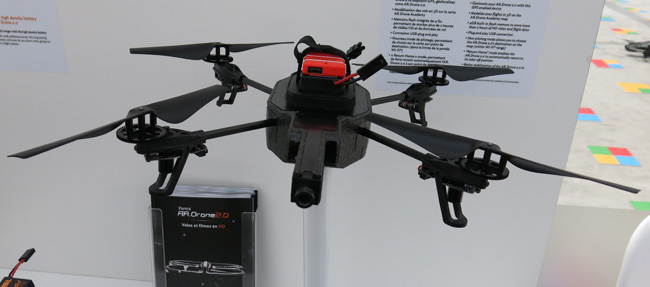
    This is the Parrot show, starring eight AR.drone 2.0 quadcopters, performing their show every few minutes at a specially geared scene located at the static display, near the IAI corral. Designed for outdoor or indoor use, the Parrot AR.drone carries an HD video camera and is intuitively controlled via an android or iOS (iPhone or iPad) devices. On the choreographed display here at the Airshow the eight drones are operated individually, sequenced to synch maneuvers and queued by the graphical patterns on the floor to keep away from each other.

    rafael banner stati 125The drone has a smart stabilization system used here to perform impressive stunts including flips and rolls, without losing control. The main difference between the outdoor and indoor units is the rotor guard used in the indoor model. Each drone is powered by 1000mA Lithium Polymer battery, driving the our electrical motors running at 28000 RPM, driving independently controlled rotors that deliver the maneuverability and stabilization control. sufficient for 12 minutes of flight. A more powerful cell can increase endurance to 18 minutes.

    Controlling the drones is done via the AR.FreeFlight app downloaded free from Google Play or AR.Drone app available on the Appstore.

    While the AR.Drone may be considered a recreational drone, Parrot is also offering a professional, fully autonomous aerial mapping system, dubbed Swinglet Cam. This electrically powered mini drone weighs only 500 grams (1.1 lbs) but carries a 16 Megapixel camera that collects aerial photography of areas up to 6 km2 on a single flight. Multiple drones can operate simultaneously to cover a larger area in a short period of time. The drone uses a built-in autopilot to provide safe, fully autonomous flight from takeoff to landing.

    The Swinglet Cam mission is planned and controlled via eMotion 2 that provides mission planning and monitoring, control, recovery and safety control. The system can control multiple drones simultaneously, thus accelerating area coverage. Postflight Terra LT post-mission processing system supports users analyzing image overlaps, creating an orthomosaic within minutes, at 25% of the original image resolution, while the survey team is still in the field. This mode provides a useful function, where it provides the background map for the days’ mission planning.

    ardrone
    the Parrot AR.drone carries an HD video camera and is intuitively controlled via an android or iOS (iPhone or iPad) devices.

    Panther on Israeli navy’s ships?

    Larger configurations of the patented Panther tilt-rotor design, developed by IAI are prepared to carry two persons and equivalent payload. Photo: Noam Eshel, Defense Update
    Panther UAV
    Panther UAV

    Paris Le Bourget, 19 June 2013: The Israel navy will evaluate the Israel Aerospace Industries (IAI) Panther tilt rotor unmanned air system (UAS) for operation on board some of its ships. According to Israeli sources at the Paris Air show, the evaluation will focus on “achieving the full effectiveness while operating from a ship.” I-HLS reports.

    AUS&R 180x250The Panther uses an innovative automatic flight control system that controls the transitions between the hovering takeoff phase to forward flight and vice versa before landing.

    The Panther takes off and lands automatically by a simple click of the operator console, thus eliminating the need for an external pilot. According to IAI the Panther is powered by 3 ultra-quiet electrical motors. The Panther has a takeoff weight of 65 kg and an endurance of 6 hours.

    The Israeli navy is currently using helicopters on its SAAR-5 missile ships. The Israeli sources said that the Panther and other UAS under development will eliminate the future use of helicopters on the navy’s ships.

    GA-ASI’s VideoSAR Turns Radar Images into Full-Motion Video

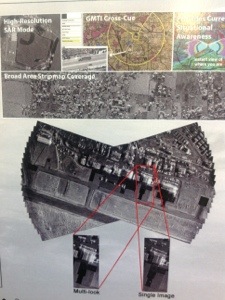
    General Atomics Aeronautical Systems, Inc. (GA‑ASI), has successful developped, integrated and operationally tested a system enabling the transfer of Synthetic Aperture Radar (SAR) data in in full, High-definition (HD) video format (1080p). This capability, called VideoSAR, provides continuous, real-time, all-weather, day/night Synthetic Aperture Radar (SAR) surveillance.

    “VideoSAR is an exciting follow-on development, building on the highly reliable, battle-proven Lynx Multi-mode Radar, allowing users to see vehicles at-rest, moving fast, and everything in-between,” said Linden Blue, president, Reconnaissance Systems Group, GA-ASI. “While Lynx provides photographic-quality still imagery of targets, VideoSAR elevates that capability by delivering high-resolution SAR imagery in full-motion video format, further expanding the situational awareness of ground commanders.”

    The prototype system was installed on a King Air 200 aircraft and flown successfully on March 25, 2013 in Ramona, Calif. During the company-funded test, VideoSAR imaged a wide variety of stationary and moving vehicles, marking the first real-time flight demonstration of the hi-resolution VideoSAR mode. Additionally, this new mode enables automatic Ground Moving Target Indication (GMTI) with very low minimum detectable velocity and precise SAR geo-location accuracy, enabling VideoSAR to detect both stationary and moving objects while maintaining non-stop, uninterrupted eyes on target.

    20130619-124056.jpgThe VideoSAR flight was conducted using a Lynx Block 20A radar, the most advanced variant in the Lynx family of radars. Lynx Block 20A is equipped with SAR/GMTI, Dismount Moving Target Indicator (DMTI), and Maritime Wide Area Search (MWAS) modes. The VideoSAR processors are currently being ruggedized for flight on RPA, including Predator C Avenger.

    Featuring photographic-quality resolution, the Lynx Multi-mode Radar detects time-sensitive targets and offers a long-range, wide-area surveillance capability that can provide high-resolution SAR imagery slant ranges well beyond EO/IR sensor range. Lynx also incorporates a broad area GMTI scanning capability to detect moving vehicles, operating day and night. The radar is currently operational with the U.S. Air Force, U.S. Department of Homeland Security, U.S. Army, Royal Air Force, Italian Air Force, and the Iraqi Air Force.

    Boeing-Embraer Tighten KC-390 Cooperation

    img_zoom_aircraft_overview
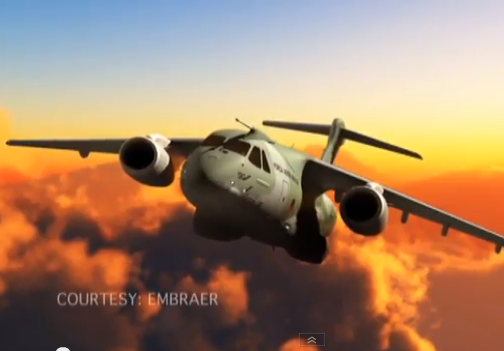
    Embraer Defense KC-390 medium transport

    The growing cooperation between Boeing and Embraer on the Brazilian KC-390 programme. According to this agreement Boeing will lead sales, marketing, training and sustainment of the KC-390 in selected markets. I-HLS reports.

    Boeing and the Brazilian company Embraer have expanded the technical agreement signed in the spring of 2012. The two companies have agreed to expand their cooperation, with Boeing becoming responsible of sales efforts in the U.S. and the U.K. and some Middle East countries, Luiz Carlos Aguiar, head of Embraer’s defense business, said today at the Paris Air Show. The jet will vie for a market of more than 700 planes, he said.

    paris13-125x125The two companies intend to offer the KC-130 as a cheaper replacement to the Lockheed MARTIN C-130J. Critical design review for the airlifter is set for next month. The first order is expected to be announced in the first quarter of next year. Two KC-390 prototypes are set to roll out later this year.

    EMBRAER is developing the KC-390 under contract with the Brazilian Air Force. With the initial test flights planned for 2014, the initial delivery of KC-390 is planned for 2016.

    Embraer has awarded AEL Sistemas S.A. (“AEL”), the Brazilian subsidiary of Elbit Systems  development contracts to provide three additional systems, valued at $25 million for the new KC-390 military transport and refuel jet: Self-Protection Suite (SPS); Directional Infrared Countermeasures (DIRCM); and pilot orientation Head-Up Display (HUD). This selection is in addition to the earlier selection of AEL as the provider of the mission computer for the new jet.

    Paris Airshow Review – Photo Report

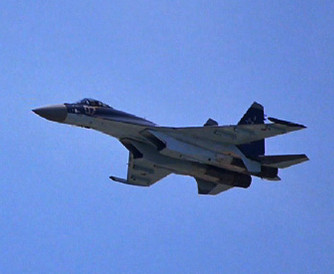
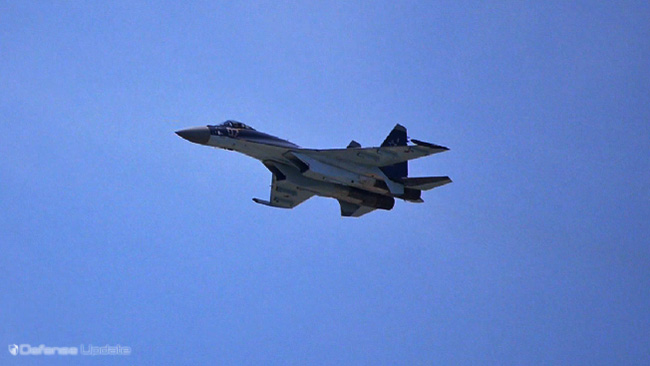
    Sukhou Su-35C streaking through the Paris sky on its international debut
    Sukhou Su-35C streaking through the Paris sky on its international debut
    Sukhou Su-35C streaking through the Paris sky on its international debut

    All photos: Noam Eshel, defense-Update

    The Russian Su-35S, making its international debut here at the Paris Airshow, stole the show with breathtaking aerobatic performance that would compete with the best stunt pilots flying aerobatic planes.

    paris13-125x125The Russian fighter, equipped with 3D thrust vectored nozzles, and a new integrated flight and propulsion system showed here some maneuvers that no other fighter can dare do. The famous ‘Cobra’ dynamic deceleration is now enhanced with low-airspeed turn, and flat spins, inverted and upright, under full control.

    Why the Su-35S need these maneuvers, that would bleed airspeed dramatically to make the aircraft a ‘sitting duck’ in air combat? rafael banner stati 125According to Bill Sweetman, Editor of Aviation Week DTE, the use of unpredictable flight paths could challenge guidance algorithms of any missile guidance system, and rapid nose pointing can permit a short range missile launch with greater kill probability. On the other hand, supporters of 5th generation stealth fighters would argue that the close-in dogfight belong to the past, and in modern and future wars, air combat engagements will be won from standoff positions, using network-centric battle planning by stealth fighters that attack without being detected.

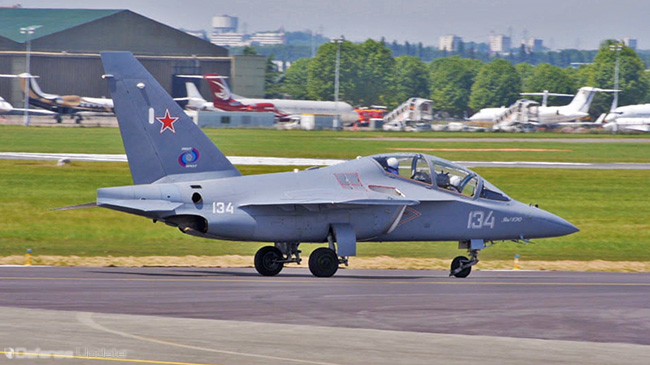
    yak-130
    Yakovlev Yak-130 from Irkut, Russi

    Another new sight here was the Yakovlev Yak-130 from Irkut, Russia. This advanced trainer was selected to become the future trainer of the Russian Air Force, initial deliveries have already been made by Irkut. Its remote cousin M346 fom Alenia will also become the trainer of choice for the Italian, Israeli and Singapore air forces.

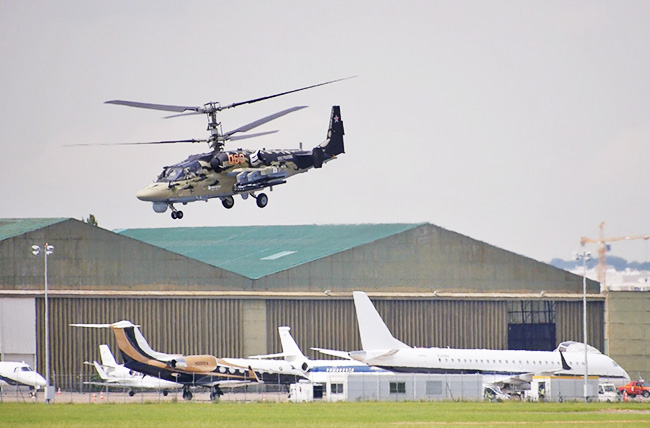
    aligator
    Kamov Ka-52 Alligator attack helicopter

    Alenia also displayed here the MC-27J transport fitted as a flying gunship. The aircraft is equipped with a weapons kit integrated by ATK including multispectral sensor suite, synthetic aperture radar and moving ground target indicator (SAR/GMTI), palletized precision launched from he rear ramp and side-firing 40mm automatic cannon.

    Flying low and slow, these gunships would require effective protection against heat seeking man-portable anti-aircraft air defense missiles (MANPADS), such systems were on display by Selex ES and Elbit Systems.

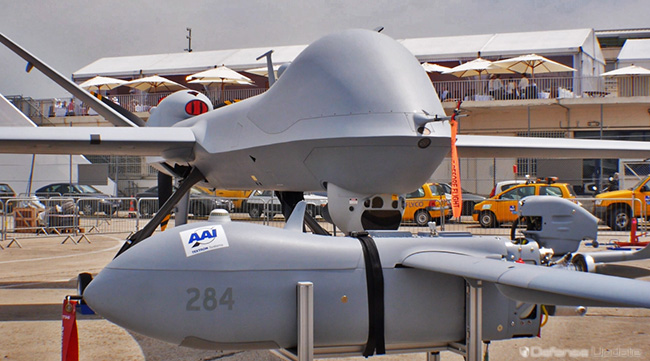
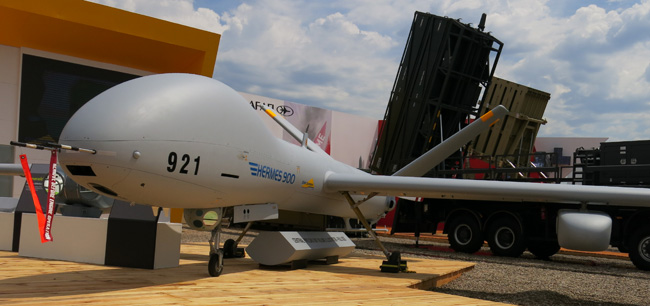
    predator-scaneagleaIn the unmanned systems domain, the Paris Airshow 2013 provided an insight to a number of promising systems, many of them from Israel, and the USA. The General Atomics MQ-9 Reaper (Predator B) recently ordered by France was displayed here. Among the Israeli drones on display were two of the proven Medium Altitude Long Endurance (MALE) drones, the IAI Heron I, in service with the air forces of France and Germany, and the Hermes 900 from Elbit Systems, which, since it debut in 2009 has been selected by five international customers.

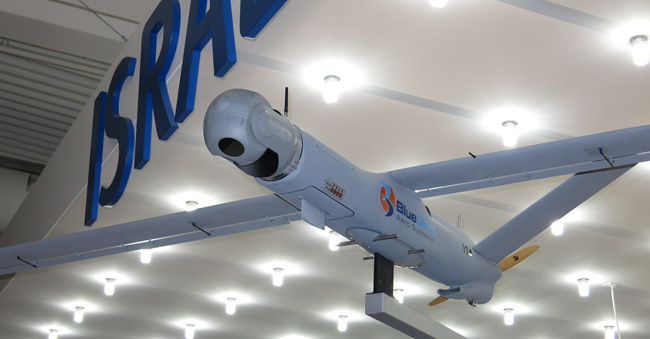
    Another drone unveiled here was the ThunderB from BlueBird Aero Systems, carrying the multi-sensor payload S-STAMP, on mission up to 24 hours in endurance.

    Among the Counter Insurgency (COIN) aircraft designed for Irregular warfare, several companies displayed aircraft, Embraer showing he Brazilian A-29 Super Tucano, Hawker Beechcraft showing the AT-6, and Archangel displaying the Air Tractor loaded with different types of air/ground weapons.

    bluebird_thunderb
    ThunderB from BlueBird Aero Systems, carrying the T-STAMP multi-sensor payload from Controp, on missions up to 24 hours in endurance

    Piaggio Aero Unveils Hammerhead P-11HH Unmanned MALE Aircraft

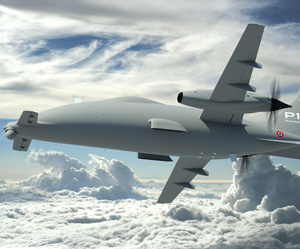
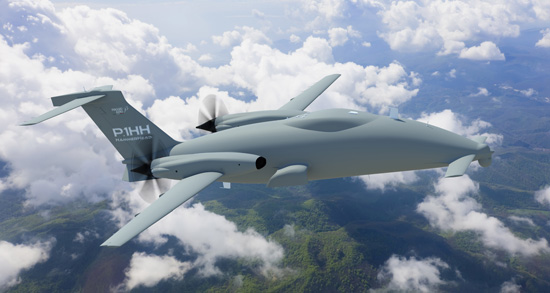
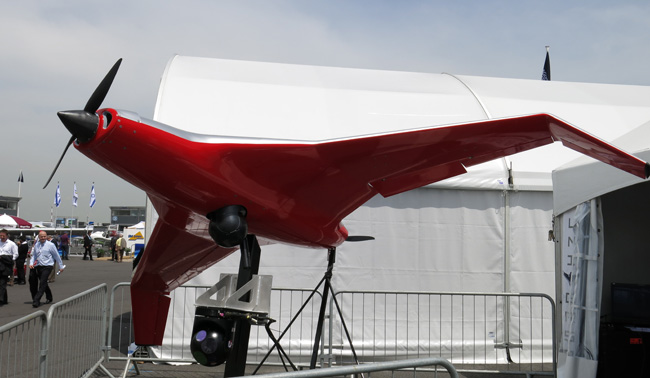
    Piaggio Aero P-11HH Hammerhead unmanned aircraft. Artist concept: Piaggio Aero
    hammerhead
    Piaggio Aero claims its new drone will offer an unmatched combination of range, wide operative speeds, fast climb gradient, high operational ceiling and the capability to carry a variety of payloads, providing end users with a powerful yet flexible defense system that outperforms other MALE Systems.

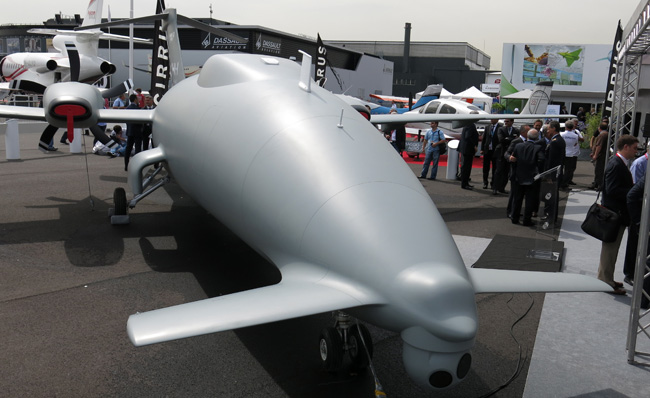
    Piaggio Aero Industries unveiled at the 2013 Paris Air Show today, the Piaggio Aero P.1HH “HammerHead”- Unmanned Aerial System (UAS). The P.1HH HammerHead technological demonstrator was designed and built in less than one year and it has already successfully completed low speed taxi tests. Defense-Update reports.

    paris13-125x125Piaggio Aero claims its new drone will offer an unmatched combination of range, wide operative speeds, fast climb gradient, high operational ceiling and the capability to carry a variety of payloads, providing end users with a powerful yet flexible defense system that outperforms other MALE Systems.

    The unmanned variant is longer tan the Avanti II and is using a modified airframe, longer wings with high aspect ratio, and various installations of mission payloads, satellite links and line-of-site payloads. The Hammerhead is bound to become the largest UAS in Europe.

    The design of the P.1HH HammerHead aims to be a unique ISR platform, able to climb up to 45.000 feet, loitering quietly at low speed (135 KTAS) with an endurance of up to 16 flight hours and capable of deploying at very high speed – up to 395 KTAS – to targets. Its capabilities include being able to host several payload combinations and to perform multiple missions: aerial, land, coastal, maritime and offshore security, COMINT/ELINT, electronic warfare as well as other roles.

    A larger version is available to members

    Selex ES was assigned the responsibility for the P.1HH’s Mission System, delivering effective and flexible scenario planning, simulation and concepts of operations (CONOPS). Selex ES also provides the datalink and ground control system.

    The drone will support 16 hours mission on station, with a payload weight of 500 lbs. with less fuel, the aircraft will be able to carry 200 pound payloads and fly up to a ceiling of 45,000 ft. The aircraft is developed in partnership between Avatnti and Selex ES was first announced during the IDEX 2013 show in Au Dhabi this year. Since then the first aircraft has performed taxi tests, in preparation for flight testing.

    piaggio_hammerhead

    Paris Air Show Photo Report – Unmanned Systems

    piaggio_hammerhead
    Piaggio Aero Industries unveiled at the 2013 Paris Air Show today, the Piaggio Aero P.1HH “HammerHead”- Unmanned Aerial System (UAS). The P.1HH HammerHead technological demonstrator was designed and built in less than one year and it has already successfully completed low speed taxi tests.

    All photos: Noam Eshel, defense-UpdateAUSR650x90

    nEUROn UCAV, sheltered from the pouring rain in its styled protective bubble at the 50th Paris Air Show. Photo: Dassault
    nEUROn UCAV, sheltered from the pouring rain in its styled protective bubble at the 50th Paris Air Show. Photo: Dassault

    iai paris13-125x125

    hermes900_with_payloads
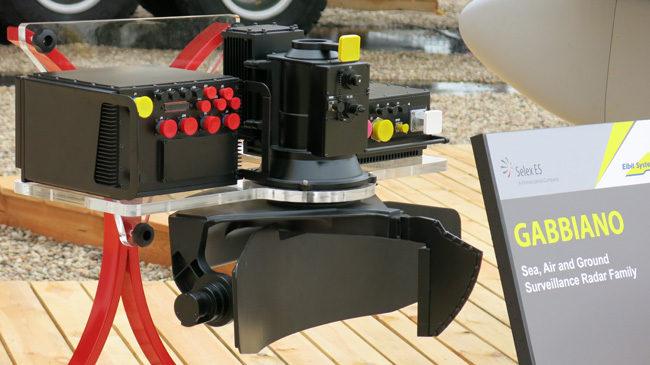
    Elbit Systems’ Hermes 900 MALE drone was displayed here carrying a number of payloads, including the Skyfix SIGINT pod, the AMPS long-range VISINT payload and Gabbiano maritime search radar from Selex ES (below).

    paris13-125x125

    The Gabbiano maritime search radar from Selex ES was displayed with Elbit Systems' Hermes 900, where it is used with the Maritime hermes 900 system.
    The Gabbiano maritime search radar from Selex ES was displayed with Elbit Systems’ Hermes 900, where it is used with the Maritime hermes 900 system.
    A surveillance UAS designed by SI Schweitzer for a variety of industrial, geographical and infrastructure monitoring missions.
    A surveillance UAS designed by SI Schweitzer for a variety of industrial, geographical and infrastructure monitoring missions.
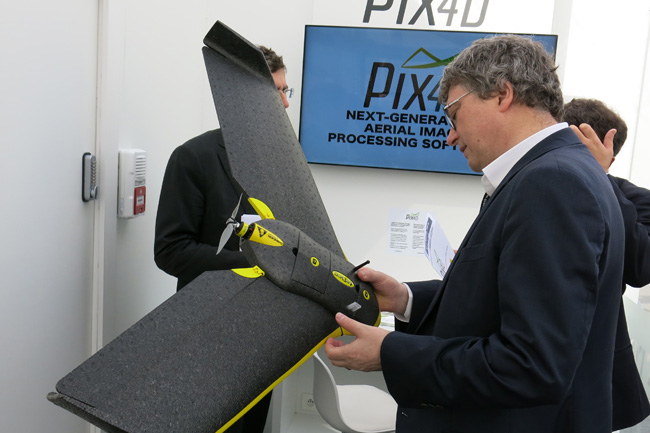
    The EBEE Sensfly micro-drone developed byParrot, is designed to collect aerial photography of 1-10km2 in a single flight, at down to 5cm precision. eBee has a flight time of up to 45 minutes, allowing to cover such areas in a single flight.
    The EBEE Sensfly micro-drone developed byParrot, is designed to collect aerial photography of 1-10km2 in a single flight, at down to 5cm precision. eBee has a flight time of up to 45 minutes, allowing to cover such areas in a single flight.
    bluebird_thunderb
    ThunderB from Israel’s Bluebird Aero Systems can stay on a mission for 24 hours, carrying the Controp T-STAMP payload.

    rafael banner stati 125

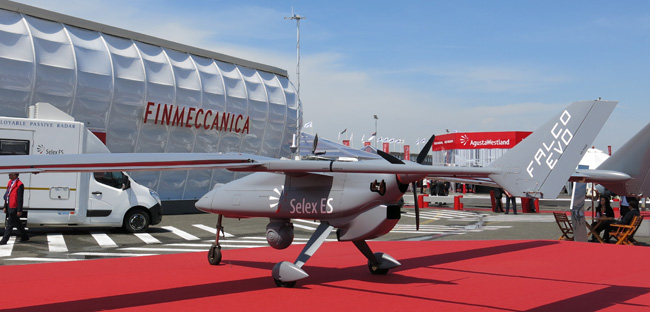
    falco-evo
    Falco EVO (Evolution) from Selex ES is aimed at expanding the spectrum of tactical missions the Falco unmanned air system can carry out.
    ardrone
    Eight AR.Drone quadcopter robots performing an impressive ‘robodance’ show at the Paris Airshow
    The new ELK3075 HFDF sensor from IAI Elta.
    The new ELK3075 HFDF sensor from IAI Elta.

    AUSR650x90

    Rafale Deliveries Could Begin in 2016-2017

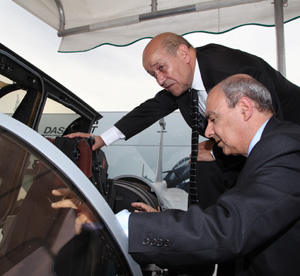
    Visit of Jean-Yves Le Drian, Minister of Defence, accompanied by Eric Trappier, Chairman and CEO of Dassault Aviation, on Dassault Aviation's military static display. Monday June 18th. Photo: Dassault
    Visit of Jean-Yves Le Drian, Minister of Defence, accompanied by Eric Trappier, Chairman and CEO of Dassault Aviation, on Dassault Aviation’s military static display. Monday June 18th. Photo: Dassault

    Paris, Le Bourget: On the occasion of the Paris Air Show, Hindustan Aeronautics Ltd Chairman, Dr RK Tyagi and Dassault Aviation chairman, Eric Trappier and their respective Senior Executives met to review the progress in ongoing projects. Among the projects on the agenda is the Indian procurement of Medium Multi-Role Combat Aircraft (MMRCA) project estimated to be worth around $20 billion, for which the French Rafale won as a lowest bidder (L1). Dassault was expected to provide 18 Rafale fighter jets in “fly-away” condition while state-run Hindustan Aeronautics Limited or HAL was expected to manufacture the rest in India.

    rafael banner stati 125

    However, more than a year after the announcement, the Indian government and the French suppliers have not reached an agreement about the responsibilities, schedules and work sharing in the program.

    Last week French Defence Minister Jean-Yves Le Drian, said he is hoping France could make its first deliveries of the Rafale fighter aircraft to India between 2016 -2017. France’s draft defence budget was based on an assumption that the first deliveries of the Dassault Aviation-built fighters would start in 2016. Le Drian is expected to visit New Delhi soon to conclude the Indian MMRCA contract, the report added.

    Part of the rift between the two sides was about the French vendor insisting on selecting a local prime partner that who enable the French company to commit to delivery schedules. HAL has been the favorite prime contractor for all the military aircraft built in India, leveraging technology transfer from the foreign company. However, this process has been mired with delays caused by slow learning curve, which further stretched delivery schedules.

    With the MMRCA program the government imposed significant penalties which the French side has tried to avoid by having a deeper involvement in local manufacturing, through the implementation of manufacturing technologies, delivering the quality level required for such advanced plane. On their meeting at the Paris Air Show, both Chairmen expressed satisfaction on the work already achieved by the integrated teams and renewed their commitment towards successful completion of the various projects.

    Rafale awaiting visitors during the thunderstorm yesterday at the Paris Airshow at Le Bourget. Dassault is also awaiting resolution of the contract negotiations with India, about the work content and responsibility over teh $20 billion program to sell 126 Rafale fighters to India. Photo: Sébastien Rande, Dassault.
    Rafale awaiting visitors during the thunderstorm yesterday at the Paris Airshow at Le Bourget. Dassault is also awaiting resolution of the contract negotiations with India, about the work content and responsibility over teh $20 billion program to sell 126 Rafale fighters to India. Photo: Sébastien Rande, Dassault.

    Skunk Works and XTEND Simplify Multi-Drone Command

    0
    Lockheed Martin Skunk Works® and XTEND have achieved a major milestone in JADC2 by integrating the XOS operating system with the MDCX™ autonomy platform. This technical breakthrough enables a single operator to simultaneously command multiple drone classes, eliminating the friction of mission handoffs. From "marsupial" drone deployments to operating in GPS-denied environments, explore how this collaboration is abbreviating the data-to-decision timeline and redefining autonomous mission execution.

    From Ukraine to Taiwan: The Global Race to Dominate the New Defense Tech Frontier

    0
    As traditional defense primes face mounting competition from agile “neoprimes” such as Anduril, Palantir and Helsing, the balance of innovation is shifting toward software-defined warfare and scalable, dual-use technologies, while global industry consolidation—marked by Boeing’s integration of Spirit AeroSystems and other strategic mergers—signals an intensified race to secure control over the defense technology value chain. Our Defense-Tech weekly report highlights these trends.

    Europe’s “Drone Wall”

    0
    In early October 2025, a coordinated wave of unmanned aerial system (UAS) incursions—widely attributed to Russia—targeted critical infrastructure across at least ten European nations. The unprecedented campaign exposed the fragility of Europe’s air defenses...

    Weekly Defense Update & Global Security Assessment

    0
    Executive Summary The past week (September 18-25, 2025) represents an inflection point where strategic defense concepts have transitioned from doctrine to tangible reality. An analysis of global events reveals four primary, interconnected trends shaping an...

    U.S. Air and Space Forces Push Next-Gen Programs at the AS&C 2025 Conference and...

    0
    At the 2025 Air, Space & Cyber Conference, U.S. Air Force and Space Force leaders unveiled major updates on next-generation fighters, bombers, unmanned systems, and space initiatives, highlighting both rapid innovation and critical readiness challenges as the services race to outpace global competitors. A short version is available here, with a more detailed version for subscribers.

    TADTE 2025: Reflecting Taiwan’s Strategic Themes

    0
    The Taipei Aerospace & Defense Technology Exhibition (TADTE) 2025 crystallized around four dominant strategic themes that collectively illustrate Taiwan's comprehensive approach to defense modernization amid escalating regional tensions. Based on a detailed report by Pleronix (available upon request). Includes a Podcast discussion on TADTE 2025's highlighting Taiwan's four strategic themes beyond the post's coverage.

    Iron Beam 450 Completes Testing, Soon to Join With Operational Air Defense Units

    0
    Israel’s Iron Beam 450 high-power laser system has completed final testing, marking a major leap in air defense. Developed by Rafael, it offers precise, cost-effective interception of rockets, UAVs, and mortars, and is set for IDF deployment by 2025.