

Tuesday, December 30, 2025
More
    Home Blog Page 180

    Raytheon Report Reflects US Army Contracts Drought

    Raytheon reported today its financial performance for the second quarter of 2012. Overall, net sales were US$5.99 billion, representing a 3 percent drop compared to the second quarter in 2011. The half-year sales volume is also representing a 3 percent drop compared to the first half of the last year. Although the order intake has reduced in the first half of 2012 Raytheon’s funded backlog has increased from $22.462 Billion to $23.085 billion. The total backlog at the end of the first half of 2012 was $33.923 Billion, reflecting $1.6 billion drop since December 2011. Nevertheless, due to recent stock repurchasing, the company increased ‘earning per share’ (EPS) by 13 percent. Optimistic this trend will continue, Raytheon has increased its full-year 2012 outlook guidance for EPS and operating cash flow from continuing operations. Following is an overview of the main highlights of three Raytheon segments involved in military programs.


    The largest division was Space and Airborne Systems (SAS) that recorded net sales of $1,377 million in the second quarter, up $33 million compared to $1,344 million in the second quarter 2011. This increase came from an international tactical radar program. Improved program performance has also impacted the operating income that jumped $28 to $204 million in the second quarter 2012 (compared to the second quarter of 2011). In this period the division booked $462 million on a number of classified contracts and $205 million in new orders for multi-spectral targeting systems (MTS) payloads for Unmanned Aerial Vehicles to the U.S. Air Force.

    The second largest operation, Raytheon Missile Systems (MS) delivered net sales of $1,355 million in the second quarter, $11 million below the second quarter last year, nevertheless, operating profit was $169 million, 18 million above last year’s operating income, reflecting improved program performance. (Second quarter 2011 included an unfavorable $15 million adjustment related to a contractual settlement.) During the second quarter Raytheon’s Missile Systems booked contracts worth over $1.3 Billion with the US Missile Defense Agency and US Navy.

    Network Centric Systems (NCS) delivering net sales of $962 million in the period, 15% drop from the $1,135 million in the second quarter 2011. This drop in sales is attributed to lower sales on U.S. Army programs. This lower volume impacted the operating income reported: $123 million, down 28% from $170 million reported in the second quarter 2011. The change was also attributed to a change in contract mix. The single major Army program won in this quarter was a new contract worth $82 million for the Army Advanced Field Artillery Tactical Data System (AFATDS) program.

    Technical Services (TS) had second quarter 2012 net sales of $821 million compared to $851 million in the second quarter 2011; operating income of $75 million was reported, $3 million above the second quarter 2011. Among the prominent achievements were $568 million booked on domestic training programs and $90 million on foreign training programs, in support of Warfighter FOCUS activities.

    Boeing: Solid Performance in Commercial & Military Operations

    The Boeing Company reported yesterday that second-quarter net income rose to $1.0 billion, on revenue of 
$20 billion. “Commercial airplane deliveries increased 27 percent in the second quarter, and our defense, space and security business also produced higher revenues and strong margins in a difficult market environment.” said Chairman, President and Chief Executive Officer Jim McNerney. “As a result of this solid first-half performance, we have strengthened our outlook for the year, and our people remain focused on disciplined execution, quality and productivity, and meeting customer commitments.”

    The Boeing Company Defense & Space operations increased by 7 percent to $8.2 billion in the second quarter, amid tougher operating conditions, reflected by a drop in operating margin by 1.5 points to 9.1 percent. Earning from operations was down in all segments except global service and support. The backlog remained at $72 billion – more than two times the unit’s projected annual revenue.


    Boeing Military Aircraft (BMA) revenues increased to $4.1 billion in the second-quarter, primarily due to higher delivery volume in the CH-47 Chinook business. However, operating margin decreased 1.8 points to 8.8 percent, as inventory adjustment on the A160 unmanned system program erodded other healthier program performance.

    Global Services & Support (GS&S) reported an increase in revenue in second-quarter, a total of $2.2 billion. Operating margin was 11.9 percent, reflecting improved performance in maintenance, modification and upgrades. During the quarter, GS&S was awarded the F-15 Singapore follow-on performance-based logistics contract.

    Network & Space Systems (N&SS) revenue decreased to
$1.9 billion, impacted by Brigade Combat Team Modernization reduction. N&SS was awarded its first international cybersecurity contract during this quarter.

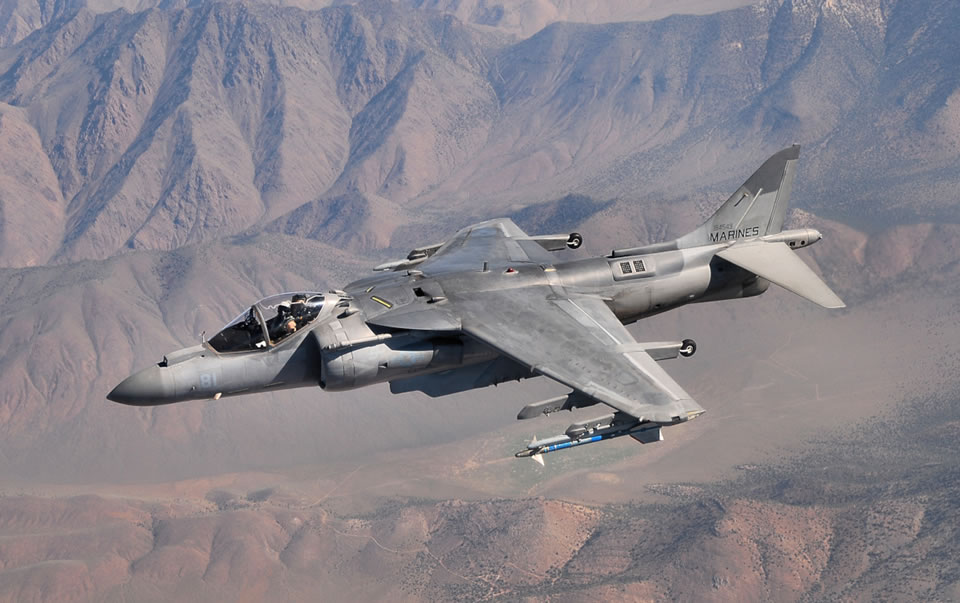
    Marine Corps AV-8B Harrier Crashes in Arizona

    Marine Corps AV-8B, photo by US Navy CDR Ian Anderson
    Marine Corps AV-8B, photo by US Navy CDR Ian Anderson

    A Marine Corps AV-8B Harrier crashed in the Arizona desert about 15 miles northwest of Marine Corps Air Station (MCAS) Yuma during a training mission at 3:30 p.m. on 25 July. The pilot ejected safely only moments before the aircraft crashed on the desert floor and is reported to have suffered only minor injuries.

    The aircraft came down in an unpopulated area and was a total loss. After parachuting to the ground the pilot, who remains unidentified, used his cell phone to contact the Air Station to request assistance. A Marine Corps Explosive Ordnance Disposal (EOD) team was dispatched to the crash site to disarm two five hundred-pound bombs the aircraft was carrying at the time of the mishap. The bombs did not detonate upon impact and were disarmed by nightfall.


    The aircraft was assigned to Marine Attack Training Squadron 203 (VMAT-203) home based at MCAS Cherry Point, North Carolina. The squadron, nicknamed the “Hawks,” trains pilots in the operational flying of the Harrier. The squadron is on assignment to Arizona to conduct aerial combat training exercises.

    While the cause of the incident is still under investigation, preliminary findings cited by Marine Corps officials indicate that the aircraft crashed as the result of a mechanical failure. This is the second high-profile aircraft crash for the United States military in a single week. An Air Force F-16 crashed off the northeast coast of Japan on 22 July.
    Although unrelated, these accidents are likely to stir up more opposition from Japanese citizens protesting the US presence in Okinawa and the eventual deployment of Marine Corps MV-22B Ospreys to Okinawa that were delivered to MCAS Iwakuni, Japan on 23 July.

    More Japanese opposition to US military air operations can be expected in the aftermath of these mishaps especially since the AV-8Bs are also operational in Japan with Marine Corps squadrons.

    Raytheon Awarded $925 to Develop, Manufacture SM-3 Block IIA Interceptors

    The Missile Defense Agency has awarded a $925 million contract to Raytheon for continued development of the Standard Missile-3 Block IIA missile, which is a co-development effort between the U.S. and Japan. The company said in a statement the SM-3 IIA is on track for deployment in 2018. This advanced missile is one of several variants of the Standard Missile SM-3 ballistic missile interceptor and SM-6 naval air defense missile, to be assembled at Raytheon’s Missile Integration Facility at the Redstone Arsenal industrial mix in Alabama later this year.

    “As the threat continues to evolve, so does our ability to counter that threat,” said Dr. Taylor W. Lawrence, president of Raytheon Missile Systems. “We’re honored to work with our Japanese allies to bring this next-generation defensive capability to the world.”

    Used by the U.S. and Japanese navies to destroy short- to intermediate-range ballistic missiles, the SM-3 is the only defensive weapon of its kind, according to the company. The SM-3 Block IIA will have a 21-inch second- and third-stage rocket motor and a larger, more capable kinetic “hit-to-kill” warhead. The SM-3 Block IIA marks the third evolution of the SM-3 family and builds on the legacy of the first two variants: the SM-3 Block IA and SM-3 Block IB.

    The SM-3 Block IA, built in Camden, Ark., is now used aboard Navy Aegis Ballistic Missile Defense ships and Japan’s Kongo-class ships. The system is part of the Missile Defense Agency’s overall “layered” ballistic missile defense program, which uses land, sea and space-based sensors and radars to detect an enemy’s ballistic missile launch, track the threat and then fire missiles to hit and destroy it.

    Naval Systems Support Improve DCNS’s Bottom Line

    The marine and shipbuiling group DCNS reported its half-year The French marine and shipbuiling group DCNS reported strong performance in its half-year financials today. Revenues increased to €1.4 billion, and Operating profit of €98 million, but orders intake dropped from €1.2 billion to €813 million, yet, maintaining the company order book at €14.2 billion, same as 12 months ago.

    The new orders incurred in this half year included mostly through-life support for the French Navy’s submarines and FREMM multi-mission frigates representing stable ongoing programs. “Our growth was in line with our target to double Group revenue between 2010 and 2020.“ said Patrick Boissier, Chairman & CEO of DCNS, “Despite the current economic environment… [the DCNS order book] represents five years of revenue. This strong order book fuels the Group’s future growth.”


    The revenue in the period increased to €1.4 billion, compared with €1.2 billion for the first half of last year. This gain was attributed to good progress on industrial programs for the French Navy (Barracuda submarines, FREMM frigates and through-life support for front-line ships) as well as ongoing export programs in Brazil, India and Russia. Operating profit also increased in the reported period, to €98 million, (7.0% of revenue), compared with €85 million, or 6.9% of revenue, for the same period last year.

    In line with the growing operations the full-time equivalent employee headcount has also increased to 12,987 as of June 2012, from 12,742 twelve months earlier. According to Boissier, the Group is reaping the benefit of the transformation program launched in 2010 as part of the championship strategic growth plan. This strong bottom line will enable DCNS to continue to invest in technological innovation, market development as well as industrial resources and skills.

    New Flight Control Mode Improves F-35C Handling on Landing Approach

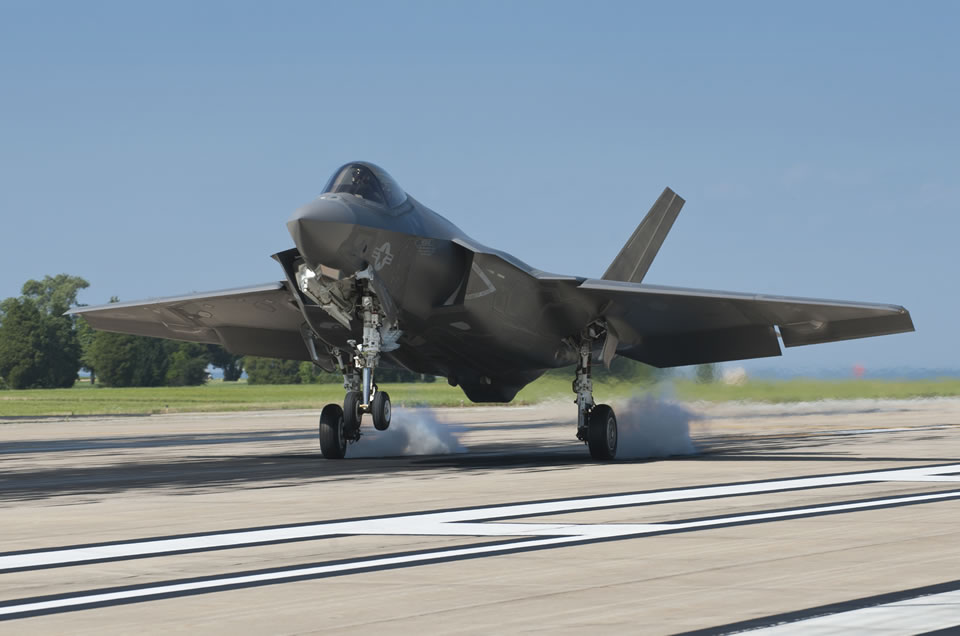
    The carrier variant of the F-35 Joint Strike Fighter has been flying with new flight control modes improving final approach and landing on an aircraft carrier. Photo: Lockheed Martin

    Flying approaches for a carrier landing just might be a little easier in the future. The F-35 Integrated Test Force at Patuxent River completed the first dedicated test flight May 4 to evaluate the F-35C Lightning II Joint Strike Fighter’s approach handling characteristics with new flight control laws. Part of software version 2A the new flight control software, called Integrated Direct Lift Control (IDLC), translates pilot commands into choreographed changes to engine power and control surface movement, greatly improving glide path control, according to one test pilot.


    “I’ve landed [F/A-18] Hornets on a carrier, and I can tell you there is a lot less lag in the F-35C with the IDLC,” said Marine Corps Lt. Col. Matthew Taylor, an F-35 test pilot. “I would have been comfortable making the approaches in the carrier environment after just two to three passes.” Precise glide path control is critical to landing safely on the carrier as a pilot concentrates on maintaining glide slope, angle of attack and lineup.

    “Landing on a carrier with current fleet aircraft requires the pilot to make dozens of precise three-part power corrections,” said Lt. Cmdr. Robert Bibeau, carrier suitability department head for Air Test and Evaluation Squadron (VX) 23. “It’s an acquired skill, needs practice and intense concentration, like hitting a baseball.”


    Pilots typically qualify to land on a carrier by completing around 30 landings while in initial flight training and at their fleet replacement squadrons. “We have to spend a significant amount of training time on carrier landings, especially night landings,” Bibeau said. “To make all the little high-pressure adjustments takes headwork, intellect and reflexes. It’s unforgiving.” But with the new flight control software IDLC in the F-35, Taylor sees “the potential to reduce the training burden for new pilots going to the ship.”

    The F-35C carrier variant of the Joint Strike Fighter is distinct from the F-35A and F-35B variants with its larger wing surfaces and reinforced landing gear to withstand catapult launches and deck landing impacts associated with the demanding aircraft carrier environment. The F-35C is undergoing test and evaluation at NAS Patuxent River prior to delivery to the fleet.

    Another change to the F-35C is the redesigned tail hook. Lockheed Martin is confident the redesigned tailhook will be ready for the planned carrier flight tests currently scheduled for 2014. The original hook did not perform well and casued the aircraft to miss the arresting cable too often.

    The carrier variant of the F-35 Joint Strike Fighter has been flying with new flight control modes improving final approach and landing on an aircraft carrier. Photo: Lockheed Martin

    Ex USNS Ships Concord and Kilauea Sunk by Australian, Canadian Submarines

    USNS Concord suffers a devastating hit by a Canadian torpedo launched by HMAS Victoria. The vessel went down several minutes later. Photo: DND Combat Camera
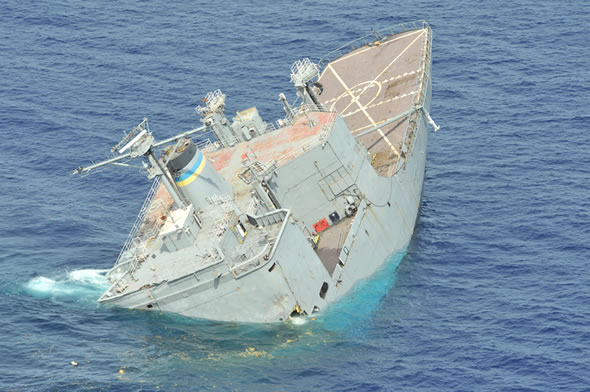
    Ex USNS Kilauea sinking after being hit by an Australian Mk 48 torpedo fired by the Collins Class submarine, as part of the RIMPAC exercise in the Pacific Ocean. Photo: Australian Defence.

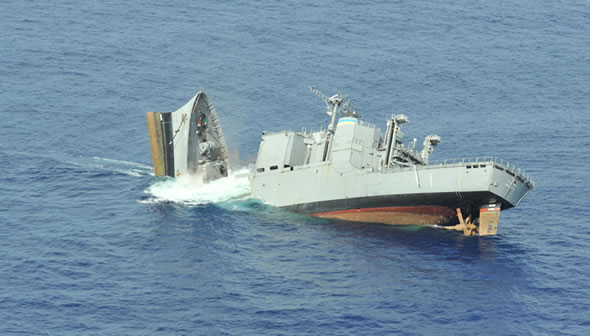
    The Royal Australian Navy’s (RAN) Collins Class submarine HMAS Farncomb has successfully sunk a target ship, the 12,106-tonne former USNS (United States Navy Ship) Kilauea in Hawaii. Farncomb, a Collins Class submarine, fired one Mark 48 Torpedo and achieved a hit just below the bridge of the ship as part of a sinking exercise, or “SINKEX,” at Exercise Rim of the Pacific (RIMPAC) 2012. The former USNS Kilauea broke into two parts and sank about 40 minutes later.

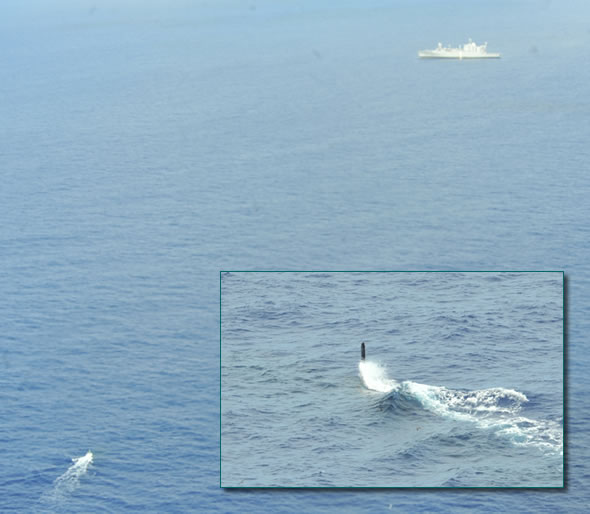
    Pacific Missile Range Facility, off Hawaii, this week. Submerging at periscope level, HMAS Farncomb (bottom left and insert) closes in on the target ship (top of picture), former USNS Kilauea, to launch the Mk 48 torpedo that sent the Kilauea to the bottom. Photo: Ausralian defence.

    The submarine’s Commanding Officer, Commander Glen Miles, said the firing is a significant milestone for both himself and his 60-strong crew.“This is the result of professionalism and teamwork,” Commander Miles said. “Those of us who drive these boats know that the Collins’ weapons systems are among the most capable in the world.”

    USNS Concord suffers a devastating hit by a Canadian torpedo launched by HMAS Victoria. The vessel went down several minutes later. Photo: DND Combat Camera

    Few days earlier, on July 17 2012 the Canadian submarine Her Majesty’s Canadian Ship (HMCS) Victoria (SSK 876) sunk the decommissioned USNS Concord target vessel at the Pacific Missile Range Facility Barking Sands, in Kauai County, Hawaii.

    Australia and Canada are among 22 nations attending Exercise RIMPAC that includes six submarines and 40 surface ships participating in a realistic maritime warfare scenario.

    Former United States Navy Ship Kilauea breaks apart and sinks following a torpedo attack from the Collins Class submarine HMAS Farncomb, on the Pacific Missile Range Facility (PMRF) off Hawaii, during RIMPAC 2012. HMAS Farncomb fired a Mark 48 Torpedo into the Kilauea’s hull, striking the ship below the bridge. Photo: Australian defence.

    Northrop Grumman Turns Lower Sales into Higher Earnings

    Northrop Grumman Corporation reported today its earnings from continuing operations in the second quarter of 2012 declined to $480 million, compared with $520 million in the first half of 2011. “Our businesses continue to perform well,” said Wes Bush, chairman, chief executive officer and president. “We’re especially pleased with this quarter’s robust level of new business capture,” Bush said. His company has received new orders worth $8.8 billion in the second quarter sending the total backlog of $41.5 billion. The company’s strong cash generation enabled continued stock repurchase. In this quarter, the company repurchased additional 4.9 million shares, improving earning per share levels despite the reduction in revenues. Northrop Grumman is confident its year end’s earnings will increase to the range of $7.05 to $7.25 per share. The following report outlines part of the programs, related to the military and security fields.


    Sales of Northrop Grumman’s main activity, the Aerospace Systems, declined 3 percent in the second quarter, due to lower volume for space systems and military aircraft programs, In both the B-2 and the F-35 (due to the adoption of units-of-delivery revenue recognition beginning with low rate initial production lot 5) and fewer F/A-18 deliveries than in the prior year period. The transition of the F/A-18 program from the multi-year 2 contract to the lower margin multi-year 3 contract, has also eroded income. On the brighter side, higher volume incurred for the E-2D program and the activity in the unmanned systems programs was also healthier, including Fire Scout and NATO AGS. Space systems sales declined due to lower volume for restricted programs and the termination of a weather satellite program. The operating income of the Aerospace Systems unit declined 9 percent in the second quarter, with operating margin rate declining to 12.1 percent from 12.9 percent.

    The Electronic Systems business unit also dropped 3 percent in sales in the recent quarter, reflecting management decision to de-emphasize its domestic postal automation business. With infrared countermeasures program transitioning, defense operations were not enough to offset this drop. Operating income for the second quarter declined 3 only percent, with operating margin rate comparable to the prior year period at 15.8 percent.
    Information Systems second quarter 2012 sales declined 9 percent due, suffering lower volumes in all its defense programs, reflected by the termination of the Joint Tactical Radio System Airborne, Maritime and Fixed (JTRS AMF) program, winding down of the F-22. Nevertheless, despite lower sales, Information Systems second quarter 2012 improved its financial performance by increasing operating income by 7 percent and operating margin rate increased to 10.9 percent up from 9.3 percent. These improvement reflect better performance in the company’s civil systems.

    Cautioned About Further Delays, GD Reduces Earning Expectations

    General Dynamics reported today second-quarter 2012 earnings from continuing operations of $634 million, compared with $666 million in the second quarter of 2011. Revenues in the quarter were $7.9 billion. Net earnings for the second quarter of 2012 were $634 million, compared to $653 million. Funded backlog has also declined slightly in the second quarter, compared to first-quarter 2012. “General Dynamics’ operating results in the second quarter reflect our continued focus on disciplined execution and effective cash conversion across the corporation,” said Jay L. Johnson, chairman and chief executive officer.


    According to the report, demand for information technology (IT) services was strong in the quarter. The company’s total backlog at the end of second-quarter 2012 was $52.4 billion. In addition, the estimated potential contract value was an additional $26.2 billion, representing management’s estimate of value under unfunded IDIQ contracts and unexercised options, bringing the sum of all backlog components exceeded $78 billion at the end of the quarter.

    “Heading into the second half of 2012, I remain very confident in our continued ability to execute. However, given the impact of first-half award delays in IS&T’s tactical communications business, as well as the likelihood of further delays in the second half, I believe it is prudent to revise the full-year earnings guidance range downward to $7.00 to $7.10 per share, fully diluted.”

    Raptors to Deploy to Japan – Despite Oxygen Issues

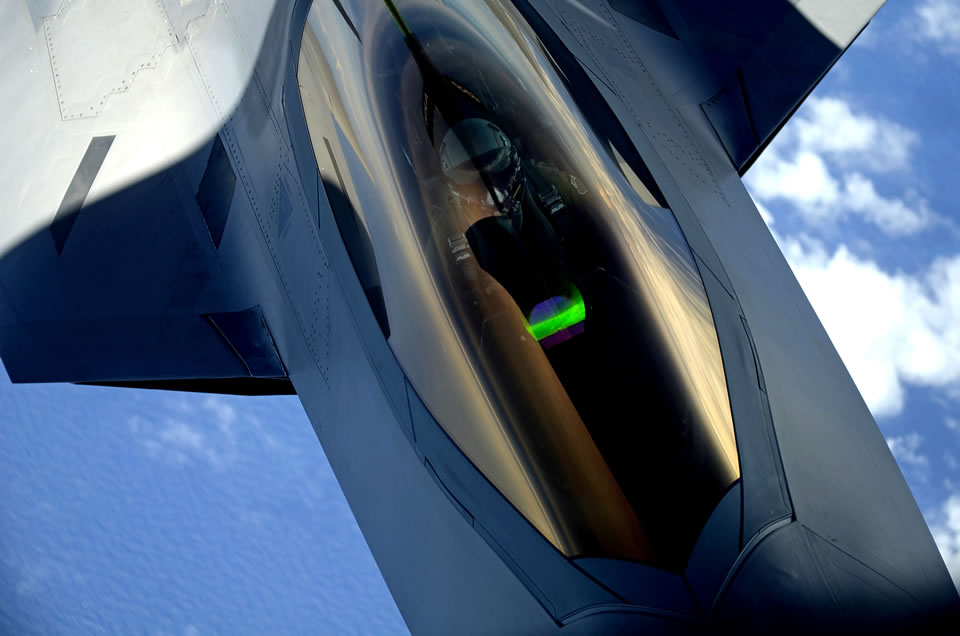
    A U.S. Air Force F-22 Raptor aircraft with the 1st Fighter Wing in flight. July 10, 2012. (DoD photo by Master Sgt. Jeremy Lock, U.S. Air Force)
    A U.S. Air Force F-22 Raptor aircraft with the 1st Fighter Wing in flight. July 10, 2012. (DoD photo by Master Sgt. Jeremy Lock, U.S. Air Force)

    The US Air Force says its scientists have identified the root cause of the hypoxia-like events occured in its F-22A Raptor stealth fighters and linked it the supply of oxygen delivered to pilots, rather than the quality of oxygen the pilots are breathing. The Air Force is implementing two changes to correct the oxygen supply issue – removing a diagnostic filter to increasing the air flow and curb high altitude pressure suite, suspected to cause some of the problems. Air Force Secretary Michael B. Donley, Air Force Chief of Staff Gen. Norton A. Schwartz and other Air Force leaders briefed Defense Secretary Leon Panetta last week on this issue. Following the Air Force briefing last week, Panetta decided to lift restrictions on the aircraft gradually. Beginning today, F-22s may resume long-duration flights for deployments, aircraft deliveries and repositioning of aircraft.

    As a more permanent solution, the vest will be modified by replacing a valve in the upper pressure garment vest worn by pilots during high-altitude missions. This valve inflates the vest at high altitude, but also cause the vest to remain inflated under conditions where it was not designed to do so, thereby causing breathing problems for some pilots. This garment has been suspended from flight since June 2012 with F-22 missions restricted to low-medium alttudes, where such garments are not required. These restrictions could be removed by early fall, following the testing of the modified upper pressure garment and completion of the Scientific Advisory Board recommendations, and NASA independent analysis. (The issue was described in details by Dave Majumdar on the DEW Line back in June 2012)


    Increasing the volume of air flowing to pilots will be achieved by removing the diagnostic filter installed after the first reports on hypoxia incidents occured, to determine whether there were any contaminants present in the oxygen system. As Oxygen contamination was ruled out this filter is no longer needed. The Air Force is also exploring improving the oxygen delivery hose and its physical connections. The Air Force also plans to instal a new backup emergency oxygen system, along witha cockpit-mounted oxygen sensor and improved pilot oxygen sensor, all recommended by the NASA and Scientific Advisory Boards. To be on the safe side, the Air Force has surveyed F-22 pilots, and found “the vast majority have expressed confidence in the aircraft”…

    The F-22 aircraft have flown more than 7,000 sorties, totaling more than 9,000 hours, since the last unexplained incident involving hypoxia-like symptoms occurred on March 8, 2012. Two incidents involving oxygen-related concerns since then were determined to be mechanical malfunctions, in other words, explained incidents. On June 26, an incident at Langley Air Force Base was caused by a faulty valve in the cockpit. On July 6, at Hickam Air Force Base, indicators in an F-22 signaled a possible oxygen problem, but the issue resolved itself in flight. In other words, these two incidents haven’t clarified why past ‘unexplained’ incidents occurred.

    ince September 2011, at least five ground crew members working on the F-22 have also experienced hypoxia-like symptoms such as “dizziness, nausea and other signs of oxygen deprivation,” Brig. Gen. Daniel Wyman, surgeon general of Air Combat Command, told Air Force Times. But the maintenance workers don’t use the pilots’ breathing equipment or oxygen valve. According to the Air Force, the incidents experienced by the maintainers are not connected with the physiological incidents experienced by the pilots. “Because of the symptoms’ ambiguities, the deciding evidence was the absence of compounds in quantities capable of causing symptoms,” Air Force spokesperson Lt. Col. Edward T. Sholtis said, adding that the Air Force and outside experts tested and analyzed more than 2,000 samples. (POGO)

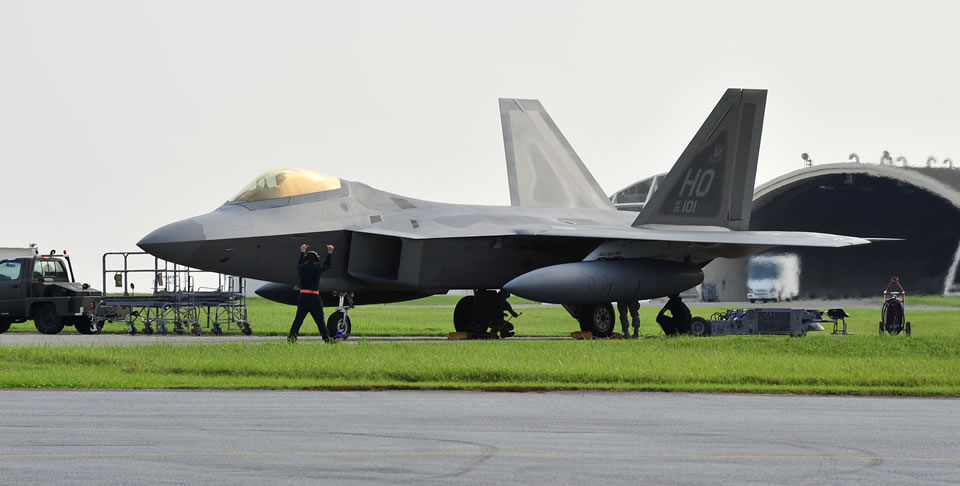
    Nevertheless, the secretary has approved the Air Force planned sequence of actions to remove flight restrictions over time, after receiving assurances that these corrective measures would minimize hypoxia-like events in the aircraft. The F-22 has been flying under restrictions ordered by Secretary Panetta since May 15 of this year. These restrictions have limited the deployment of Raptors overseas. A unit of F-22A has been deployed in the UAE for some time, but a forward deployment to Japan has been delayed sofar. Following the decision to return to normal operations, Secretary Panetta has authorized the deployment of a squadron of F-22s to Kadena Air Base in Japan. The aircraft will fly to Japan under altitude restrictions via the North Pacific transit route. If all goes well on that flight, the Air Force will recommend resuming most long-duration flights.

    As the altitude and range restrictions are still in effect, the Air Force is planning this trans-oceanic deployment to Japan with extreme caution. The planes will fly at lower altitude, which means that pilots won’t have to use the problematic upper garment vest. In addition, at anytime on their route aircraft will have to be within 30 minutes of a landing field (even when flying over the ocean).

    Following the completion of these corrective actions and the installation of the backup oxygen system, the Air Force will request resumption of the aerospace alert control alert missions in Alaska. Until that time, this mission will continue to be flown by other aircraft.

    F-22 Raptors park on the ramp after landing at Kadena Air Base, Japan, May 27. F22A arrives at Kadena AFB in Okinawa, Japan on its first international deployment in 2010. The aircraft were deployed from Holloman Air Force Base, NM as part of an air expeditionary force rotation. (U.S. Air Force photo/Senior Airman Amanda Grabiec)

    Watchkeeper Heading to France for Operational Trials

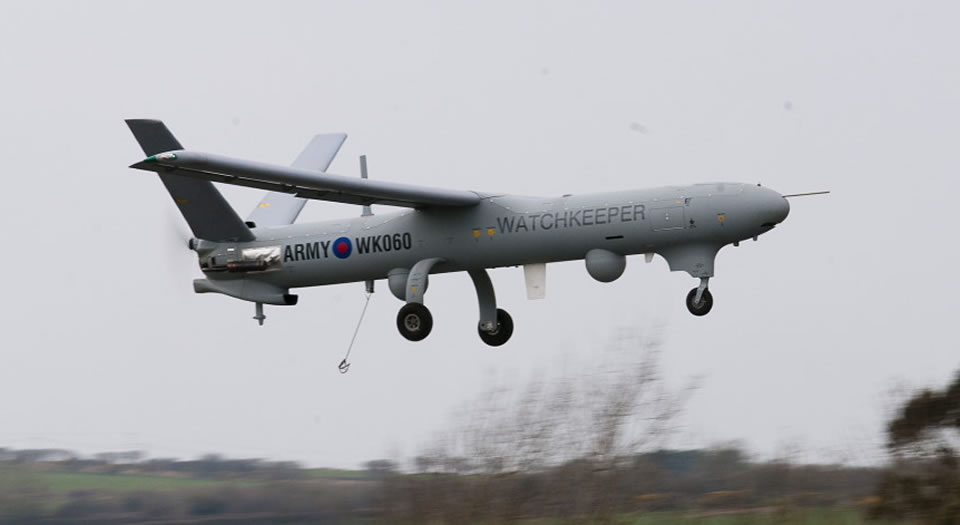
    Watchkeeper UAV during his first flight at MoD in Aberporth on April 14th, 2010. The Watchkeeper, tactical UAV (Unmmaned Aerial Vehicle), consists of the WK 450 UAV with advanced technologies sensors. This system is for all weather intelligence, surveillance, target acquisition and reconnaissance (ISTAR) use. This program is delivered to the British Army. Thales UK, as Prime Contractor for the WATCHKEEPER programme, will deliver equipment, training and facilities. Photo: Thales UK by Peter Russell
    Watchkeeper drone during its first flight milestones. Photo: Thales UK

    The French Ministry of Defense plans to conduct an operational assessments and flight trials of the Thales Watchkeeper Unmanned Aerial System (UAS) beginning 2012, under the 2010 Lancaster House cooperation treaty with the UK. Becoming the dominant tactical reconnaissance and target acquisition system for the British Army, the Watchkeeper UAS system currently being fielded by the British Army. The system is considered Europe’s largest and most advanced tactical UAS system. Following more than 400 missions, (of which 200 hours were performed with the Army), the Watchkeeper system continues field trials with the British Army toward its induction into service.

    The announcement was made yesterday after a bi-lateral meeting in London between UK Secretary of State for Defence Rt Hon Philip Hammond MP and French Defence Minister Jean-Yves Le Drian. The French government will allocate eight million euros for this evaluation.


    Victor Chavez, Chief Executive of Thales UK, said: “The battle-winning operational edge that UAVs bring to operations is well understood and these systems are rightly a central pillar of UK-French defence collaboration. The announcement today that France will undertake trials of Watchkeeper demonstrates both nations commitment to cooperation on the battlefield and in the development of this strategically important sector”.

    The French MOD is planning to expand the use of UAS in coming years. Currently the French Air Force operates the Harfang, based on the Israeli Heron I, while the Army uses the Sperwer tactical UAS (SDTI) developed by Sagem DS of France. According to plans, both systems will be replaced by enhanced systems. For replacement of the Harfang, France is considering the Heron TP, to be produced and equipped by Dassault under a cooperation with IAI while the Watchkeeper is evaluated as the SDTI successor.

    On their meeting the French and British ministers agreed the the launch of another collaborative demonstration programme, for the Future Combat Air System (FCAS), an other unmanned combat air system (UCAS) that could become operational in 20-30 years time. At present the two governments agreed to spend 12 million euros ($14.5 million) with British BAE systems company and the French aircraft manufacturer Dassault Aviation, to evaluate possible designs for the FCAS. The two companies are leading parralel research programs – Taranis and Neuron, with flying demonstrators scheduled for flight trials next year.

    The collaboration between the UK and France will deliver direct cost benefits, technological advances and operational flexibility to both sides, said Pierre Eric Pommellet, SVP of Thales Defence Mission Systems. “The twinning of the British Royal Artillery 32nd Regiment and the French Artillery’s 61st Regiment, whose relationship will only be deepened by joint operation of Watchkeeper, are the embodiment of the human links which are being formed across the Channel,” Pommellet added.

    Victor Chavez emphasized: “Industrially, UAVs are central to the defence sector’s renewal over the next period, and there are huge opportunities for European companies to succeed in this growing market. Watchkeeper, as Europe’s largest UAS programme, positions Thales as a leading company in the design, development and deployment of UAS systems.

    The delivery of Watchkeeper equipment to the British Army is on track and over 200 hours of flying trials have taken place. Watchkeeper is expected to replace the Elbit Systems Hermes 450 UAS, a Thales tactical UAV service provided as an Urgent Operational Requirement, which has already flown more than 65,000 hours in Afghanistan and Iraq, providing life-saving intelligence and reconnaissance.

    The Watchkeeper system, based on an enhanced Hermed 450B air vehicle configuration, is built in the UK. This vehicle is designed as the first tactical UAV to meet European airworthiness criteria – completing over 100 flights in the UK as part of its trials programme. Its mission payloads comprises multiple high-performance sensors. The basic platform is delivered in a dual-payload configuration, that includes enhanced electro-optic / infrared sensors, with laser target designator, as well as an advanced synthetic aperture radar / ground moving target indicator radar (SAR/GMTI). The information and images collected by the airborne sensors are provided to a network of mobile ground control stations and remote viewing terminals, where UK military operators will control the whole mission and interface within a network-enabled environment. High-resolution optical and radar image exploitation and dissemination provides valuable intelligence for operational commanders.

    Thales UK, as Prime Contractor for the Watchkeeper programme, will also deliver equipment, training and facilities. Production of the Watchkeeper system will take place at the joint venture company U-TacS (UAV Tactical Systems Ltd), established by Thales UK and Elbit Systems in Leicester, UK.

    Watchkeeper UAV during his first flight at MoD in Aberporth on April 14th, 2010. The Watchkeeper, tactical UAV (Unmmaned Aerial Vehicle), consists of the WK 450 UAV with advanced technologies sensors. This system is for all weather intelligence, surveillance, target acquisition and reconnaissance (ISTAR) use. This program is delivered to the British Army. Thales UK, as Prime Contractor for the WATCHKEEPER programme, will deliver equipment, training and facilities. Photo: Thales UK by Peter Russell

    Navy, Marines Share Lessons of Cargo UAV Missions in Afghanistan

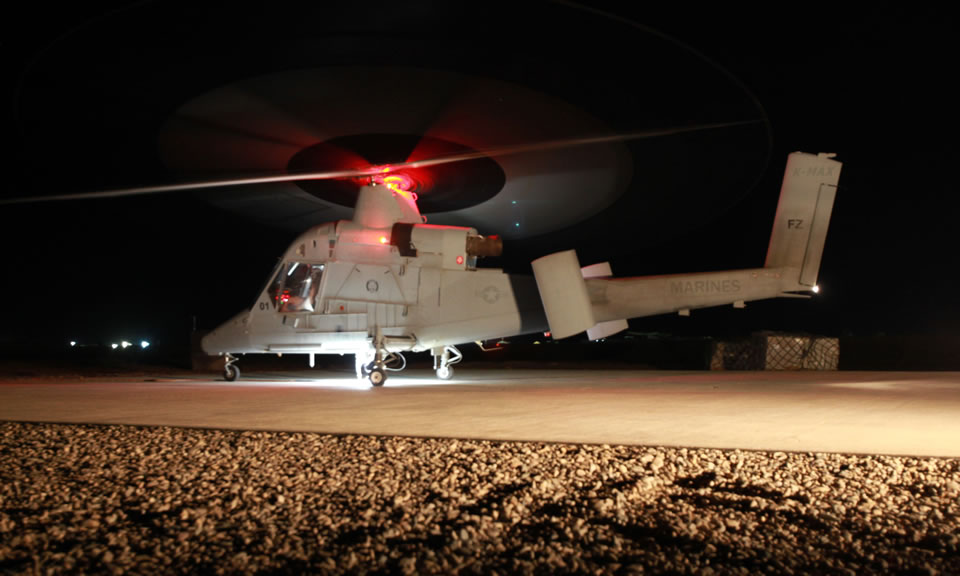
    A K-MAX helicopter with Marine Unmanned Aerial Vehicle Squadron 1 rests on a Helipad prior to liftoff for a supply mission in Helmand province, Afghanistan, April 30. The K-MAX has flown more than 400 missions supporting Marines at various locations. Photo: US Marine Corps Cpl. Isaac Lamberth

    The US Navy and Marine Corps are evaluating the lessons learned from five months of operations of the Cargo Resupply Unmanned Aerial System (CRUAS) in Afghanistan and are likely to issue their recommendations for future CRUAS capability in the following phase. “Developing a standardized platform with modular components for several types of missions would capitalize on the KMAX’s reliability” said Maj. Kyle O’Connor, officer in charge, Unmanned Aerial Vehicle Squadron (VMU) 1 Cargo Detachment. Typical modular payloads could include a camera payload that would be added for an intelligence, surveillance and reconnaissance (ISR) mission; the hook and long line added for cargo pick-up; fuel pods for a long-range mission and missiles or rockets for a strike mission.


    “Considering budget issues, you would want one standard platform with standard logistics, supply, training and pipeline,” he said. “The CRUAS IPT and the Marine Corps will review and analyze the after-action reports, feedback, data and theses from the Naval Post Graduate School as well as quantify the costs before making any recommendations” cautions Capt. Patrick Smith, PMA-266 program manager.

    “We accomplished our mission, collected test data and proved that Cargo UAS is a viable capability,” said Maj. O’Connor of VMU-1 Cargo Detachment that flew the unmanned K-MAX K-2000 in theater. The system was deployed to AFghanistan in December 2011 and flew with VMU-1 for five months. Today, the KMAX remains deployed in Afghanistan flying missions operated by VMU-2.

    The K-MAX is the Marine’s first unmanned helicopter designed for resupplying troops in remote locations. Aviation history was made when Marine Unmanned Aerial Vehicle Squadron 1 operated a K-MAX during its historic 90-minute flight, Dec. 17. Today, the KMAX remains deployed in Afghanistan flying missions operated by Unmanned Aerial Vehicle Squadron 2. (Photo courtesy of Lockheed Martin)

    In the commercial world, the KMAX is used for firefighting, construction and lumbering. “Built as a fully operational helicopter, it requires a start-up and shut-down pilot unlike other unmanned aerial systems,” said Capt. Caleb Joiner, CRUAS mission commander. “In Afghanistan, the unmanned K-MAX flew only during the night.” Joiner said, “The two KMAX systems flew 485 sorties, or combat mission flights, for a total of 525 flight hours” he added. Most missions lasted about 1 hour and included a 20-minute turnaround time during which a pilot climbed into the helicopter to shut it down, refuel it, hook up the cargo and then start it back up. “That was a pretty short turnaround time, and allowed us to conduct six sorties per night. We could have done more,” Joiner noted. By the end of the deployment — and after receiving permission to hover — turnaround times with cargo hook-ups took 6 or 7 minutes to complete. Overall, the KMAX was very responsive, especially when compared to a convoy, a C-130 [Hercules] or an H-53 mission. According to Joiner, “Towing the KMAX out of the hangar to wheels-up, could take as little as 15 minutes.”

    “Since it was an unmanned system, we were able to conduct flights during inclement weather when other helicopters couldn’t fly,” O’Connor said. “We flew during the night, in the rain, dust and some wind.” The KMAX handled up to 4,500 pounds of cargo per mission, he said. “The reliability of the KMAX was impressive, It was fully mission capable 90 percent of the time.” O’Connor said. Inclement weather accounted for 5 percent of the downtime and maintenance and scheduling issues accounted for the other 5 percent, he said. The KMAX required less than two hours of maintenance per flight hour, which equates to a low cost, O’Connor added.

    Nevertheless, the operations encountered some difficulties, particularly related to coordination, airspace management and the level of flexibility in mission planning. Deployment challenges included flight clearance approvals for changes to the original plan, safety zone restrictions associated with a UAS and the over-simplicity of the operator interface, O’Connor said. Other issues raised by the evaluators included the size and weight of the UAS system containers, noisy generators that produced fumes and lack of a remote “kill switch” to turn the helicopter off. The control interface was also an issue for improvement, with the simplistic graphic user interface, (GUI), designed for an untrained Marine operators. “The highly trained operators could have handled a lot more control of the UAS,” O’Connor said. “However, we made a conscious decision to stick with the simplified system because we wanted to validate the concept as written.”

    The mission of the VMU-1 detachment in Afghanistan was to fly routine, scheduled cargo UAS missions to build flight hours and gather reliability, and to support the needs of the Marine Corps by delivering cargo via an external sling load. The result was a capability that exposes fewer warfighters to the risk of roadside improvised explosive devices (IEDs) and hostile fire. “This is a great example of integration while fulfilling the ‘urgent needs’ of the warfighter,” said NAVAIR Commander Vice Adm. David Architzel as he opened the seventh Meet the Fleet post-deployment debrief here July 10. “Every time you can eliminate even a portion of a convoy, you eliminate the possibility of someone losing their life from an IED on the roads.”

    The CRUAS IPT’s response to the Marine Corps’ urgent need to prove the viability of a cargo UAS and deploy the first cargo UAS within 11 months from contract award has won two accolades. The project’s speed and success earned the team an acquisition excellence award from the Office of the Secretary of the Navy in June 2012 and a Naval Air Warfare Center Aircraft Division Commander’s Innovation Award in December 2011.

    Singapore navy Tests Barak Missiles at the South China Sea

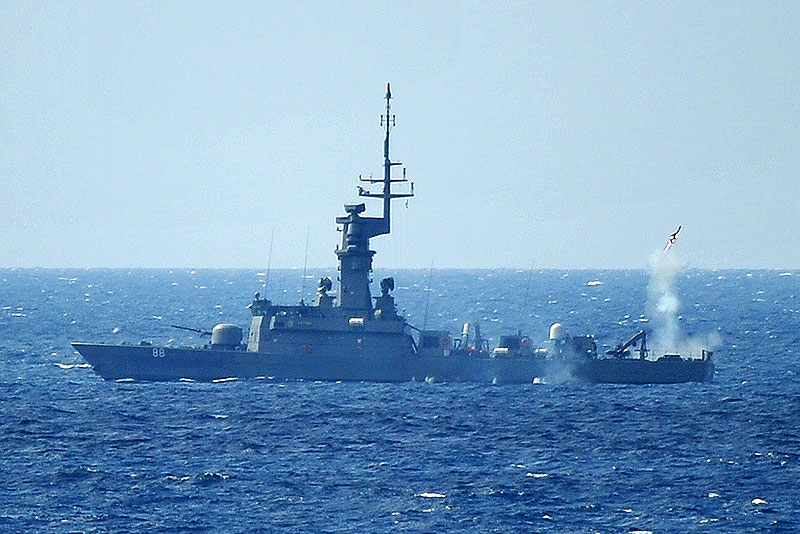
    RSN missile corvette RSS Victory fires a Barak missile at a target drone. Photo: MINDEF
    RSN missile corvette RSS Victory fires a Barak missile at a target drone. Photo: MINDEF

    The Republic of Singapore Navy (RSN) conducted a live-firing of the Rafael Barak anti-missile missile in the South China Sea yesterday, as part of the 18th annual Cooperation Afloat Readiness and Training (CARAT) exercise which Singapore is conducting with the United States. The missile was fired by the upgraded RSN missile corvette RSS Victory against an aerial target drone simulating an attacking profile. The target was successfully destroyed.

    Commanding Officer RSS Victory Lieutenant Colonel (LTC) Eric Tan Wei Hong said that the exercise was professionally valuable to both the RSN and the United States Navy. “The CARAT exercise allows personnel from both navies to work and interact closely with each other and this has also deepened our friendship and mutual understanding”, said LTC Tan. Commenting on the success of the missile firing, Weapon Systems (Control) Supervisor Military Expert 2 Jeyabal Sundaraju, who fired the Barak missile said, “the realism and tempo of the exercise has been a fruitful experience for me and my team onboard RSS Victory. Our training and preparation ensured that we were ready and we are glad that we have hit the target and achieved mission success.”

    The firing was witnessed by Chief of Navy Rear-Admiral Ng Chee Peng. Similar missile firings have been conducted in previous CARAT exercises. The exercise is presently ongoing and will conclude on 27 Jul 2012.

    Home Robots Help iRobot Offset Declining Sales of Military Robots

    The steadily increasing sales and global reach of iRobot’s Home Robot business enables the company to “substantially offset the continuing impact of U.S. government funding on our Defense & Security business”  Colin Angle, chairman and chief executive officer of iRobot said, adding this civil/military balance enables his company to remain on track to meet its revenue and increase profit expectations for fiscal year 2012.


    He said the company has been awarded recently three new contracts totaling approximately $27 million for SUGV and PackBot robots, spares and software upgrades. However, U.S. government funding and program delays, continue to negatively impact the company’s Defense & Security business unit. “We have reflected that impact in our lower full-year expectations for this business unit” Colin added.

    iRobot reported today its revenue for the second quarter of 2012 was $111.4 million, compared with $108.1 million for the same quarter one year ago. Net income in this period was $7.4 million, compared with $8.0 million a year ago.

    Skunk Works and XTEND Simplify Multi-Drone Command

    0
    Lockheed Martin Skunk Works® and XTEND have achieved a major milestone in JADC2 by integrating the XOS operating system with the MDCX™ autonomy platform. This technical breakthrough enables a single operator to simultaneously command multiple drone classes, eliminating the friction of mission handoffs. From "marsupial" drone deployments to operating in GPS-denied environments, explore how this collaboration is abbreviating the data-to-decision timeline and redefining autonomous mission execution.

    From Ukraine to Taiwan: The Global Race to Dominate the New Defense Tech Frontier

    0
    As traditional defense primes face mounting competition from agile “neoprimes” such as Anduril, Palantir and Helsing, the balance of innovation is shifting toward software-defined warfare and scalable, dual-use technologies, while global industry consolidation—marked by Boeing’s integration of Spirit AeroSystems and other strategic mergers—signals an intensified race to secure control over the defense technology value chain. Our Defense-Tech weekly report highlights these trends.

    Europe’s “Drone Wall”

    0
    In early October 2025, a coordinated wave of unmanned aerial system (UAS) incursions—widely attributed to Russia—targeted critical infrastructure across at least ten European nations. The unprecedented campaign exposed the fragility of Europe’s air defenses...

    Weekly Defense Update & Global Security Assessment

    0
    Executive Summary The past week (September 18-25, 2025) represents an inflection point where strategic defense concepts have transitioned from doctrine to tangible reality. An analysis of global events reveals four primary, interconnected trends shaping an...

    U.S. Air and Space Forces Push Next-Gen Programs at the AS&C 2025 Conference and...

    0
    At the 2025 Air, Space & Cyber Conference, U.S. Air Force and Space Force leaders unveiled major updates on next-generation fighters, bombers, unmanned systems, and space initiatives, highlighting both rapid innovation and critical readiness challenges as the services race to outpace global competitors. A short version is available here, with a more detailed version for subscribers.

    TADTE 2025: Reflecting Taiwan’s Strategic Themes

    0
    The Taipei Aerospace & Defense Technology Exhibition (TADTE) 2025 crystallized around four dominant strategic themes that collectively illustrate Taiwan's comprehensive approach to defense modernization amid escalating regional tensions. Based on a detailed report by Pleronix (available upon request). Includes a Podcast discussion on TADTE 2025's highlighting Taiwan's four strategic themes beyond the post's coverage.

    Iron Beam 450 Completes Testing, Soon to Join With Operational Air Defense Units

    0
    Israel’s Iron Beam 450 high-power laser system has completed final testing, marking a major leap in air defense. Developed by Rafael, it offers precise, cost-effective interception of rockets, UAVs, and mortars, and is set for IDF deployment by 2025.